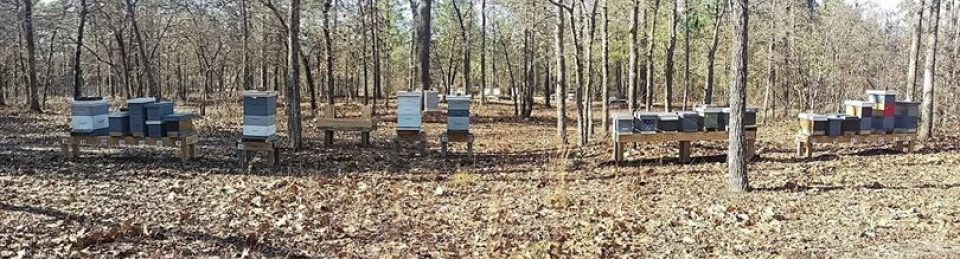
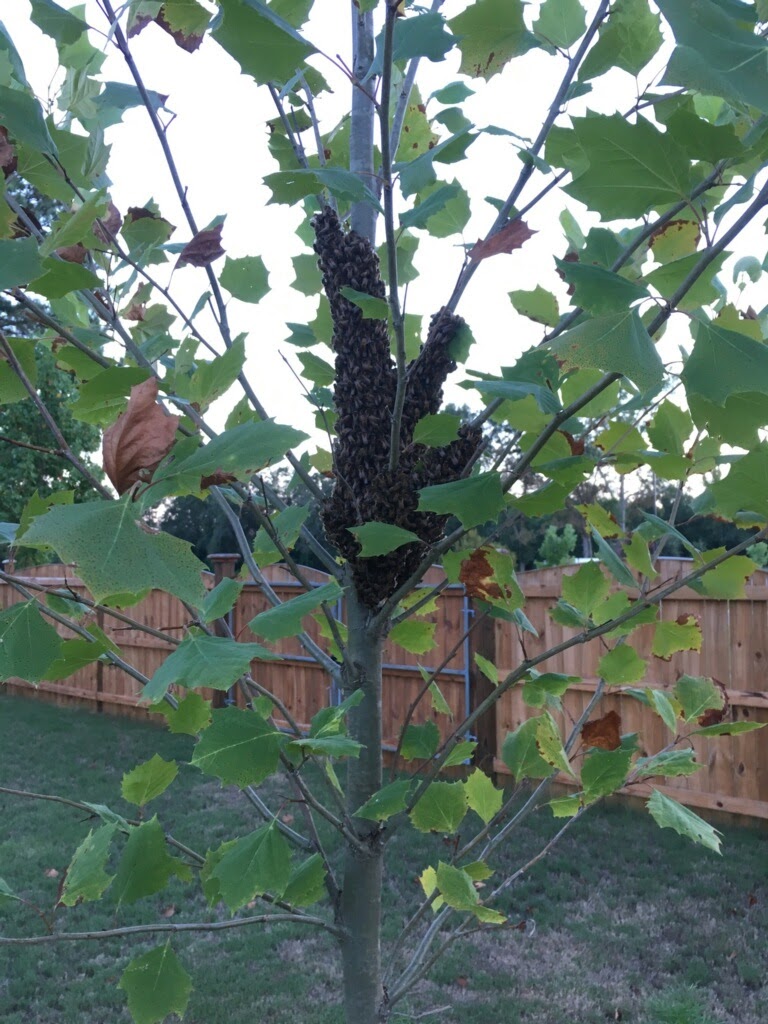
Every beekeeper eventually arrives at the same irritating discovery: the fanciest lure on the market gets outperformed by an old, unwashed hive body that you didn’t want to clean. It isn’t superstition. Scout bees house-hunting for swarm are running a chemical audit, and an old brood comb has already passed it. Years of larvae, cocoon silk, propolis, and beeswax leave behind a residue of fatty acids and aromatic compounds that read, to a bee’s antennae, as “colony here, safely, for a long time.” A fresh bait box with a dab of lemongrass oil is a hopeful advertisement. An old hive full of drawn comb is a track record. That your old, blowtorch-scheduled hive keeps getting occupied before you can sterilize it isn’t bad luck so much as the bees reading the listing correctly.
The chemistry underneath both the folk methods and the modern lures traces back to one gland: the Nasonov gland, tucked at the tip of a worker’s abdomen. When a forager finds something worth telling the colony about — a good forage patch, or a promising cavity for a swarm to move into — she fans this pheromone to draw her sisters in. Its main components are citral (a mix of geranial and neral), plus geraniol and small amounts of nerolic and geranic acid — a lemony, slightly rosy blend. That’s precisely why lemongrass oil, rich in citral and geraniol, works as well as it does: it’s not masking the bees’ own signal, it’s counterfeiting it convincingly enough that scouts treat the box as pre-vetted by one of their own. Lemongrass-based lures show up across the literature and the hobbyist world alike, from Peru to Europe, to the swarm-trapping forums, and it’s the active ingredient in most commercial lures.
The the Middle East, tradition has a longer paper trail than most. Melissa officinalis — lemon balm — carries a name that is itself a fossil of this practice: “melissophyllon,” bee-leaf, a term used by classical writers describing beekeepers rubbing the herb inside empty skeps to draw swarms in, a habit that persisted through Ottoman and Persian beekeeping into more recent village practice. Its citronellal and geraniol content puts it in the same chemical family as lemongrass, which is presumably why it works by the same mechanism. Firing the traps and letting the oils soak into porous clay or willow is a reasonable way to make a short-lived scent last through a whole scouting season, since the wood or clay becomes a slow-release reservoir rather than a one-time spritz.
In Japan, the orchid genus Cymbidium includes species Cymbidium floribundum that attracts the Japanese honey bee by producing 3-hydroxyoctanoic acid and 10-hydroxy-(E)-2-decenoic acid. That second compound, 10-HDA, is the single most abundant component of queen mandibular pheromone: it’s part of the chemical signature a colony uses to recognize “queen present, all is well.” The orchid isn’t quite mimicking a swarm-aggregation call so much as borrowing a fragment of the queen’s own scent to get workers to visit.
Every lure, from a $30 can of commercial swarm attractant, to a Peruvian handful of lemongrass, to your own home recipe, is trying to counterfeit the one thing you can’t fake — a cavity that has already proven itself. The bees are not swayed by marketing. They’re swayed by evidence, and your old comb has more of it than anything you can buy.

