• Sassafras Bee Farm
  • About
  • Contact

Beekeeping365

~ The more I studied beekeeping, the less I knew, until, finally, I knew nothing. But, even though I knew nothing, I still had plenty to unlearn. Charles Martin Simon

Beekeeping365

Category Archives: beekeeping

It Always Starts with Assessment

14 Wednesday Oct 2026

Posted by Beekeeping365 in beekeeping, beekeeping management, hive inspections, inspections

≈ 3 Comments

Tags

assessment, beekeeping, colony assessment, hive assessment, honey bees, management

12472778_10207294429973861_7343056154124547156_n

Ever wonder why beekeepers are either reluctant to give advice OR you end up with multiple suggestions in response to the same question?

One reason is because seldom does the beekeeper being asked have a full picture of the issue being discussed. The problem and visual is clear enough in the mind of the person asking the question but usually their assessment isn’t clearly presented to the mentor or bee buddy. So what often happens is the mentor steers clear of guessing to avoid giving bad advice OR they venture a guess based on inadequate data. Since it is inadequate data it isn’t too difficult to wonder why multiple answers are sometimes suggested.

Good assessment data increases the odds of getting accurate suggestions.

So, as above, it always starts with Assessment.

APIE – Assessment, Planning, Implimentation, Evaluation

I worked in a hospital setting much of my work career. When it came to people’s lives I didn’t guess before administering treatments, care, medications, or interventions. I either was assured of my initial assessment or I stopped and re-assessed before proceeding further.

Measure twice; cut once! Well, sort of…

Of course beekeeping doesn’t quite have the same level of accountability and errors are not as devastating as in healthcare. However, the same methods can be applied which, if followed, should result in better outcomes for the bees and beekeeper. Until one Assesses how can they make a suitable Plan? And how do I decide on the proper Implimentation until a Plan is developed? And if I am to learn anything at all in this process I must Evaluate my results. Otherwise I make the same mistakes over and over, year after year, never understanding why.

But, again, it all starts with Assessment.

A Google search will yield many assessment sheets and data collection tools. Use them especially when first starting with bees. At some point it’s likely they will become second nature. And by second nature I mean you’ll do them without the need for prompting with a piece of paper. Let’s look a some things you may want to consider with regard to Assessment:

It’s easy – look, listen, smell! Touch and taste – not so much…

Approaching the hive:
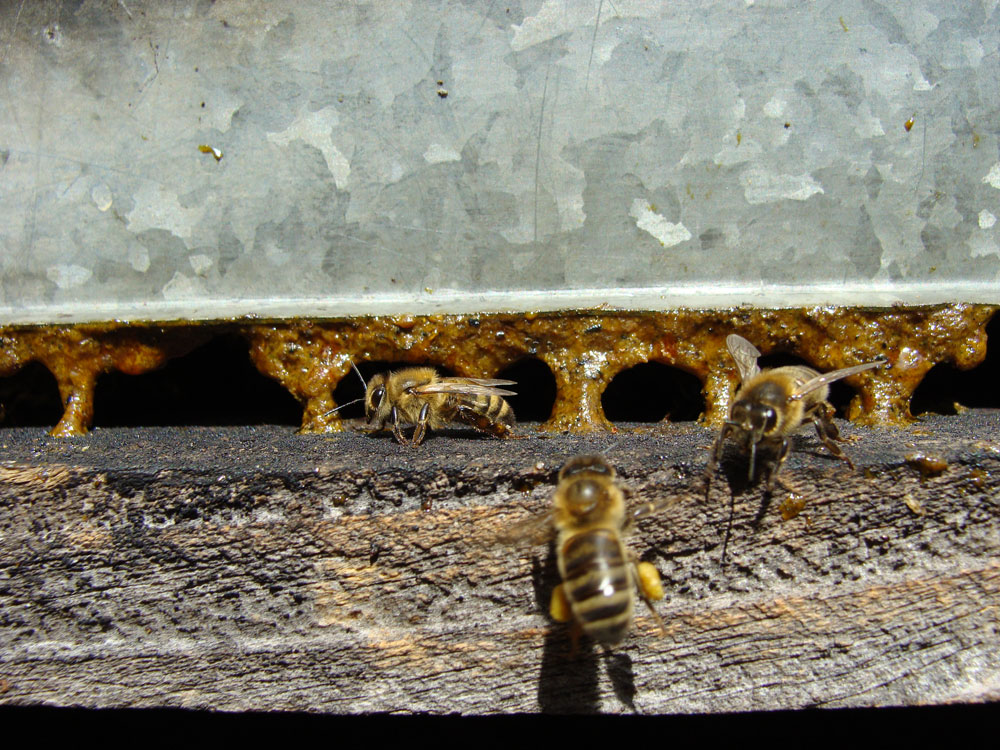
Are they flying? Is the temperature such that they should be flying? Are they guarding the entrance? If not ask yourself, why not? Is the exterior of the hive marked up with bee poop? Are there dead larvae on the landing board? Dead bees? If so, was there a cold snap or is it appropriate cleansing, chilled brood, drone evictions? Are some hives flying and others not? Are there bees circling any hives looking for entrances? Are there bees fighting on the landing board? Are the foraging bees launching themselves into the air on departure? Are bees coming back to the hive heavy or with pollen? Are there yellow jackets, flies, or other pests hanging around the entrance? Do I have an appropriate entrance guard on based on the bees ability to guard? Any signs of dead bees in front of the hive? Any signs of wax cappings under the hive? Any moth or spider webs? Isn’t this easy – you haven’t even suited up yet!

Entering the hive:
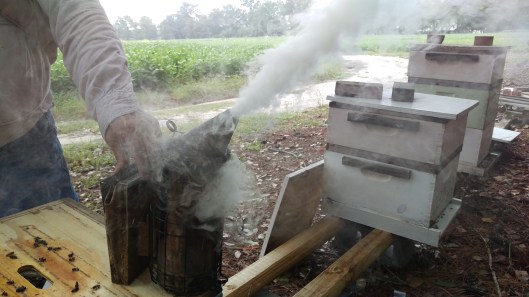
What’s your idea on weight when you lift the hive from the rear? Is the number of boxes as expected for the time of year and history of the colony? What is the reaction to a puff of smoke at the entrance? What is the reaction to removing the inner cover? What does the hive smell like? Are there SHB inside the inner cover? Any sign of other pests? Is either the bottom or top box empty of bees? Do the bees run down between the frames when you give them a gentle puff of smoke or fly away? Are they unusually testy? Does what you are seeing, smelling, hearing correspond correctly with the season and temperatures? Does the top bars of the uppermost box have an appropriate amount of bees on them? Is there burr comb on the inner cover?

Frame examination:
Is there a well defined brood area? Where is it located within the hive (upper boxes? bottom boxes? chimney?) Is the capped brood density appropriate or spotty? Any cappings perforated? Appropriate worker brood to drone ratio? Is there a band of pollen over the brood and honey above that? Can you locate the queen either by sight or based on brood area? Is she where you want her? As you work, is the colony tolerating you? Are they giving you a roar to leave? Any signs of pests? If so how bad is the pest level? Any signs of PMS? Is the size of the colony in bee population appropriate for the number of boxes you have? What is your impression of the bee density and the number of frames covered with bees? Can they guard the amount of comb space you have given them to guard? Is there adequate stores? white wax? good brood pattern? Is the open larvae swimming in food? Is the hive functioning as a fine tuned machine?

And always, the follow-up question to the unexpected is, “Why?”

And so it goes with many many more questions that sometimes have different answers based on temperature, weather, seasons, bloom, dearth, and so forth. But it costs you nothing to ask these questions of yourself. Ask away and take note of your answers. And when the answers don’t add up to what you expect, are out of sync with season, or other hives, or just not what you expect look further for more questions to ask. Be the detective. Re-interview the witnesses and suspects. Get to know them well enough to spot the odd response or presentation.

If you think this is going to take years, you may be right. But I do think we get a little better every year. Keep asking questions of yourself and the bees until you see patterns and you know what follows various presentations.


Feel free to share this on:

  • Share on Facebook (Opens in new window) Facebook
  • Share on X (Opens in new window) X
  • Share on Pinterest (Opens in new window) Pinterest
  • Email a link to a friend (Opens in new window) Email
  • Share on LinkedIn (Opens in new window) LinkedIn
  • Share on Reddit (Opens in new window) Reddit
  • Share on Tumblr (Opens in new window) Tumblr
  • Print (Opens in new window) Print
  • Share on Telegram (Opens in new window) Telegram
  • Share on WhatsApp (Opens in new window) WhatsApp
Like Loading...

Happy Birthday Jay J. Smith

13 Tuesday Oct 2026

Posted by Beekeeping365 in beekeeping

≈ Leave a comment

Links below to get his books on Queen Rearing.

Born October 13th 1871, Tampico, Illinois

Died: October 30th 1926, Vincennes, Indiana

Jay Smith was an active writer in the bee journals of his day and wrote two of the most loved and used of the queen rearing books still being used and followed by many today. He is most famous for his other book, Queen Rearing Simplified, but his second book, Better Queens, written 25 years later is the culmination of his work in queen rearing.

From Michael Bush’s website where both of Mr. Smith’s books may be read in their entirety:

“I wanted this book available because I think Jay Smith was one of the great beekeepers of all time and one of the great queen breeders of all time. There are many queen breeding books by scientists or small-scale breeders, but this is by a beekeeper who raised thousands of queens every year. I think that is much more applicable to practical queen rearing. It is also a method that does not require grafting, good for those of us who can’t see well enough to graft, and does not require the purchase of special equipment, good for those of us lacking in the funds to buy one of the graftless systems on the market.” Michael Bush

Biography and Contributions to Beekeeping
Born in Tampico, Illinois, Jay Smith was one of the most skilled queen breeders in American history. His books Queen Rearing Simplified (1923) and Better Queens (1949) set out practical methods, including rearing queens in strong colonies and the Jay Smith cell-starter. Queen breeders still study his methods today.

Better Queens (1949) and Queen Rearing Simplified include photos of his methods and equipment. Scanned copies are on the Internet Archive (archive.org). Michael Bush also hosts a transcription of Better Queens on his website, bushfarms.com.

Old bee journal archives. Jay Smith, who worked out of Vincennes, Indiana, wrote often for Gleanings in Bee Culture and the American Bee Journal from the 1910s to the 1940s.

Click on photos below to read the books.

Queen Rearing Simplified

From the Find a Grave Website:

Better Queens

Jay J. “The Bee King” Smith (1877-1926) – Find A Grave Memorial


Feel free to share this on:

  • Share on Facebook (Opens in new window) Facebook
  • Share on X (Opens in new window) X
  • Share on Pinterest (Opens in new window) Pinterest
  • Email a link to a friend (Opens in new window) Email
  • Share on LinkedIn (Opens in new window) LinkedIn
  • Share on Reddit (Opens in new window) Reddit
  • Share on Tumblr (Opens in new window) Tumblr
  • Print (Opens in new window) Print
  • Share on Telegram (Opens in new window) Telegram
  • Share on WhatsApp (Opens in new window) WhatsApp
Like Loading...

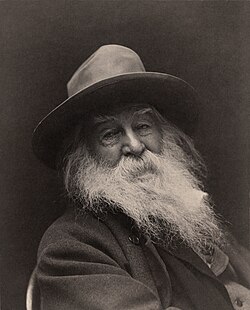
Miracles by Walt Whitman

12 Monday Oct 2026

Posted by Beekeeping365 in beekeeping, honey bees

≈ 2 Comments

Tags

honey bees, Miracles, Walt Whitman, poetry

Miracles

Why, who makes much of a miracle?
As to me I know of nothing else but miracles,
Whether I walk the streets of Manhattan,
Or dart my sight over the roofs of houses toward the sky,
Or wade with naked feet along the beach just in the edge of the
water,
Or stand under trees in the woods,
Or talk by day with any one I love, or sleep in the bed at night
with any one I love,
Or sit at table at dinner with the rest,
Or look at strangers opposite me riding in the car,
Or watch honey-bees busy around the hive of a summer
forenoon,
Or animals feeding in the fields,
Or birds, or the wonderfulness of insects in the air,
Or the wonderfulness of the sundown, or of stars shining so
quiet and bright,
Or the exquisite delicate thin curve of the new moon in spring;
These with the rest, one and all, are to me miracles,
The whole referring, yet each distinct and in its place.

To me every hour of the light and dark is a miracle,
Every cubic inch of space is a miracle,
Every square yard of the surface of the earth is spread with the
same,
Every foot of the interior swarms with the same.

To me the sea is a continual miracle,
The fishes that swim—the rocks—the motion of the waves—the
ships with men in them,
What stranger miracles are there?

Walt Whitman, 1856

“Miracles” was first published in Whitman’s Leaves of Grass (Fowler & Wells, 1856) as “Poem of Perfect Miracles.”

Walter “Walt” Whitman, May 31, 1819 – March 26, 1892) was an American poet, essayist, and journalist. A humanist, he was a part of the transition between transcendentalism and realism, incorporating both views in his works. Whitman is among the most influential poets in the American canon, often called the father of free verse. His work was very controversial in its time, particularly his poetry collection Leaves of Grass, which was described as obscene for its overt sexuality.

Born in Huntington on Long Island, Whitman worked as a journalist, a teacher, a government clerk, and—in addition to publishing his poetry—was a volunteer nurse during the American Civil War. Early in his career, he also produced a temperance novel, Franklin Evans (1842). Whitman’s major work, Leaves of Grass, was first published in 1855 with his own money. The work was an attempt at reaching out to the common person with an American epic. He continued expanding and revising it until his death in 1892. After a stroke towards the end of his life, he moved to Camden, New Jersey, where his health further declined. When he died at age 72, his funeral became a public spectacle. ~Wikipedia

Video Music Credit: Comfort Zone by General Fuzz


Feel free to share this on:

  • Share on Facebook (Opens in new window) Facebook
  • Share on X (Opens in new window) X
  • Share on Pinterest (Opens in new window) Pinterest
  • Email a link to a friend (Opens in new window) Email
  • Share on LinkedIn (Opens in new window) LinkedIn
  • Share on Reddit (Opens in new window) Reddit
  • Share on Tumblr (Opens in new window) Tumblr
  • Print (Opens in new window) Print
  • Share on Telegram (Opens in new window) Telegram
  • Share on WhatsApp (Opens in new window) WhatsApp
Like Loading...

What Do You Know?

11 Sunday Oct 2026

Posted by Beekeeping365 in beekeeping, education

≈ Leave a comment

Tags

beekeeping education, Journeyman Beekeeper, MBP

Coming soon to a blog near you. What Do You Know? for aspiring Journeymen beekeepers.

In 2018 my local bee association hosted a Journeyman course over a few weekends. It was attended by ~32 beekeepers from around the state. We had some wonderful speakers and covered many topics. I was on the organizing committee, and we took every opportunity to squeak in as much as possible with assigned reading between classes, homework, and other assignments. As we approached the last meeting, when the Journeyman test and lab practical would be offered, the students asked for material to prepare them for the testing. Well, of course, the material is what they had been sitting and listening to but they wanted just a bit more preparation, like a mock test.

Thinking back, I decided to offer them an outline of my own notes from when I attended my Journeyman’s course and sat for the testing. Then after giving them a week to digest this, I offered them a mock test. It all reminded me of an abbreviated Dr. Clarence Collison’s book, What Do You Know?

So, for those aspiring Journeymen out there I offer it here in all its imperfection. (If this whets your appetite for more Journeyman material to study, stay tuned or email me if you just can’t wait.)

What Do You Know – Review.pdf

Journeyman Quiz.pdf

Journeyman Quiz with answers.pdf

(Dr. Clarence Collison wrote a book titled What Do You Know? in which he offers thousands of bee questions with answers. The questions were a compilation of questions from a regular column he wrote for Bee Culture over many years. It’s not light reading but may be a book you’d like to acquire as you continue your journey from Journeyman to Master.)


Disclaimer: This review outline has been created using my notes from a SCBA Journeyman class taken some years ago. I’ve tried to make corrections if new data has presented itself. Its purpose is to offer some guidelines for the Journeyman level class content. The Journeyman test is created by the SCBA MBP Committee and I have not reviewed the current test. To guide you in test preparation, use your PowerPoints, lecture notes, and The Hive and the Honey Bee. In case you find discrepancies, or errors in my outline, I defer to your current instructors and The Hive and the Honey Bee.
Good luck!

Feel free to share this on:

  • Share on Facebook (Opens in new window) Facebook
  • Share on X (Opens in new window) X
  • Share on Pinterest (Opens in new window) Pinterest
  • Email a link to a friend (Opens in new window) Email
  • Share on LinkedIn (Opens in new window) LinkedIn
  • Share on Reddit (Opens in new window) Reddit
  • Share on Tumblr (Opens in new window) Tumblr
  • Print (Opens in new window) Print
  • Share on Telegram (Opens in new window) Telegram
  • Share on WhatsApp (Opens in new window) WhatsApp
Like Loading...

Fall Nectar Flow

10 Saturday Oct 2026

Posted by Beekeeping365 in fall nectar flow, nectar flow, beekeeping

≈ Leave a comment

Tags

beekeeping, fall management, honey bees, management, nectar flow, seasons

Goldenrod flowers blooming in a meadow beside a woodland trail
Goldenrod blooms brighten a sunny meadow beside a quiet woodland path.
14467201_10208635144370883_6909928576204668928_n
14467311_10208635147410959_6847432434066128896_n

The Fall flow is officially on in my corner of Southeastern Lexington County, South Carolina. Weight gain, white wax, and increased activity indicate a nectar flow. I went out to feed some of the lighter hives and noticed some white wax as well as some weight gain on hives since 10 days ago. As the day warmed the bees were definitely flying with intent with some congestion on the landing boards. Even with the lack of rainfall, fall flow is on over here in the barren sand hills of Southeastern Lexington County. If it’s on here in this sandbox it’s likely you may find it’s on elsewhere in the Midlands. Bees flying with intent, launching themselves off the landing board immediately after exiting the hive entrance, increased incoming traffic as well landing and hurrying inside, other bees show excited behavior on the landing board, overall appearance of heightened purposeful activity, some white wax noted inside, the smell of goldenrod and sight of yellow pollen coming in.

It was a happy day indeed to be able to save some of that syrup until another day. I found a renewed interest in the pollen feeder which baffles me a little but may be a result of some increased brood rearing… I don’t know. All these things are a pleasant change from the doldrums of dearth. Pray for some rain to sustain the flow. Order up – winter bees please.

Feel free to share this on:

  • Share on Facebook (Opens in new window) Facebook
  • Share on X (Opens in new window) X
  • Share on Pinterest (Opens in new window) Pinterest
  • Email a link to a friend (Opens in new window) Email
  • Share on LinkedIn (Opens in new window) LinkedIn
  • Share on Reddit (Opens in new window) Reddit
  • Share on Tumblr (Opens in new window) Tumblr
  • Print (Opens in new window) Print
  • Share on Telegram (Opens in new window) Telegram
  • Share on WhatsApp (Opens in new window) WhatsApp
Like Loading...

Many Uses of Beeswax

09 Friday Oct 2026

Posted by Beekeeping365 in beekeeping, beeswax

≈ 2 Comments

Tags

beekeeping, beeswax

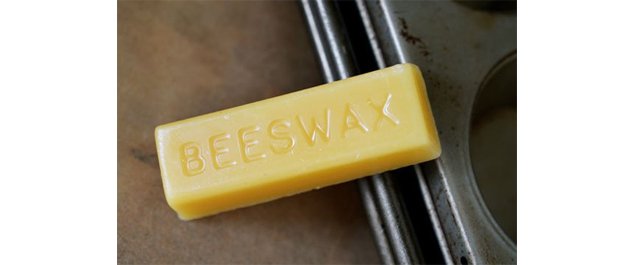
beeswax-5

For the young lady who came up to me at last night’s farmer’s market and purchased two bars of beeswax. I asked what your plans were and you said you didn’t know yet. We discussed some things that came to the top of my mind but as I drove home I remembered lots more uses which I wish I had shared. I hope you see this post which, actually, is just the beginning. An internet search on any of these items adding in the term “recipe” should get you more detailed information on homemade applications.

To start, a good article titled “25 Uses of Beeswax” by Paleomama can be found here:

http://thepaleomama.com/2015/11/25-ways-to-use-beeswax/

and for a quick list of brainstormed uses here are some quick ideas:

101 Uses for Beeswax

Thank you Crafting Montana for coming up with this great list

1) lubricant for very old furniture joints.

2) Smooth movement for doors and windows.

3) Component for mustache creams.

4) Prevents bronze items from tarnishing.

5) Use as a rest prevention.

6) Furniture polish when mixed with linseed oil and mineral spirits in equal parts.

7) covering cheeses and preservatives to protect from spoilage.

8) Conditioner for wood bowls and cutting boards.

9) Coat nails and screws to prevent wood from splintering.

10) Used by NASA with an enzyme to mop up oceanic oil spills.

11) Cake guitar bodies to boost longevity.

12) Coat tambourine surfaces for thumb roll playing technique.

13) Coat reeds for woodwinds to get a tight fit.

14) Egg painting in a Ukraine folk art of Pysanky.

15) An essential ingredient in Indian art of fabric dyeing called Batik printing.

16) Candles that don’t drip and have no smoke.

17) In candy like gummy bears, worms and jelly beans.

18) To water proof leather.

19) Molten beeswax to polish granite counter tops.

20) To make crayons.

21) With palm oil for soap.  The palm oil reduces scars and the wax a natural moisturizer.

22) Mix with palm wax for a natural hair remover.

23) To reduce bow string friction.

24) on whips to water proof.

25) in bullets.

26) With comfery and chick weed powder to alleviate itching.

27) Wire pulling.

28) Sewing to strengthen the thread and prevent snagging.

29) To fill seams between pieces of slate when setting up a pool table.

29) Plucking the feathers from fowl.

30) As a flexible mold for a variety of mediums.

31) Jewelry.

32) Clean your clothes Iron.

33) In glass Etching.

34) Encausting Painting.

35) To make earplugs.

36) Ear Candling.

37) When fashioning Dreadlocks.

38) To make Dental floss.

39) For cracked animal hooves.

40) When making cosmetics.

41) When making chocolates.

42) Copper sinks.

43) Removing previous waxes.

44) In Blacksmithing.

45) Basketry.

46) To coat Baking pans for smooth exit of goods.

47) To coat the hemp strings on Bag Pipes.

48) To make balms.

49) Barbeque preparation.

50) When making healing salves, creams and ointments.

51) Use in pharmaceuticals.

53) In manufacturing of electronic components and CDs.

54) As a polish for shoes and floors.

56) To unsticking drawers.

57) Keep zippers moving smoothly.

58) To water proof boots and saddles.

59) To coat hand tools to prevent rust.

60) To lower cholesterol, ulcers, diarrhea and hiccups.

69) To relief pain, swelling (inflammation)

70) In beverages.

71) In manufacturing as a thickener or emulsifier.

72) In fragrances in perfumes.

73) To seal documents.

74) An ingredient in surgical bone wax.

75) Blended with pine rosin to serve as an adhesive.

77) A metal injection molding binder component.

76) In the embalming process.

78) As a stabilizer in the military explosive Torpex.

79) To coat hemp strends – an alternative use to lighters.

80) A natural Air purifier (when used in candles).

81) Glazing of fruits and vegetables.

82) Chewing beeswax can help quit the habit of smoking.

83) As a hair pomade.

84) Grafting plants.

85) In the restoration of pictures.

86) Wax fly fishing lines so they float.

87) To keep saws sharp.

88) Grinding and polishing of optical lenses.

89) Used in crafting of dentures and other dental equipment.

90) To seal and polish smoke fired pottery.

91) Used on snow skis for a good glide.

92) Used for base ring for toilets (in the past).

93) Use3d to cover a broken wire on braces until you get to your orthodontist.

95) To prevent stretch marks.

96) Saturate cardboard with beeswax and use as a fuel for a backpackers fuel for stove.

97) Beeswax candle as emergency heat when trapped in a car or small space.

98) Temporary filling until you can see your dentist.

99) To seal stick matches to stay dry when boating, fishing or skiing.

100) To prevent slippage for belts in vacuums and sewing machines.

101) As a wood filler

read more Crafting Montana


Feel free to share this on:

  • Share on Facebook (Opens in new window) Facebook
  • Share on X (Opens in new window) X
  • Share on Pinterest (Opens in new window) Pinterest
  • Email a link to a friend (Opens in new window) Email
  • Share on LinkedIn (Opens in new window) LinkedIn
  • Share on Reddit (Opens in new window) Reddit
  • Share on Tumblr (Opens in new window) Tumblr
  • Print (Opens in new window) Print
  • Share on Telegram (Opens in new window) Telegram
  • Share on WhatsApp (Opens in new window) WhatsApp
Like Loading...

Autumn Absconding and Other Odd Events

08 Thursday Oct 2026

Posted by Beekeeping365 in absconding, beekeeping, beekeeping seasons, CCD, seasons, ursurpation, varroa

≈ 4 Comments

Tags

absconding, beekeeping, CCD, dearth, fall management, hunger swarm, seasons, swarms, ursurpation

small swarm

(above) Small October cluster on bluebird box. Collected after the flood of 2015 – reproductive swarm or abscond?

Late summer and autumn swarming does occur but is an exception and probably occurs only in unique situations. Biology says when the parent hive is ripe for reproduction and all conditions are met the goal is to swarm. Queens that fail to reduce laying during dearth, well fed colonies, with the addition of a brief nectar and pollen flow may indeed swarm during this time of year. Inspect overachieving hives and disrupt the colony by adding empty drawn comb, sharing excess  brood with weaker hives, or  taking off excess honey stores. This makes the parent hive less than ready and disrupts their plans. Only after all conditions are met will they swarm and if nature or the beekeeper gives them work to do at home they will typically stay. In general, however, this time of year it’s hard for them to feel that conditions are optimal for swarming.

What we saw last year was an apparent increase in abscondings or colony failures where all of the bees left the hive and did not return. Abscondings are typically related to poor conditions in the hive or environment. i.e. starvation, drought, mites, SHB, yellow jackets, critters. Historically these were termed “hunger swarms” but may occur with or without food being present. I like to think of the conditions that precipitate abscondings as stress related. Think of it this way, if your house was overrun with fleas you might stay a while but eventually you’d gather your family up and say, “I’m not sure where we’re going but we’re not staying here.” Same for food; if you lost your income, no job prospects, and had no cash flow for food eventually you’d say, “I don’t know if I can get a job in Timbuktu but I know there are no jobs here so we’re moving.”

How are reproductive swarms and abscondings different?

Swarms are generally reproductive in nature and motivated by the organism’s innate drive to reproduce as a result of positive and plentiful stimuli. This is why they usually occur slightly before and at the start of the main nectar flow when resources are at their highest. This gives the swarm the greatest chance of survival. Late season swarms are probably generated by the occasional but less likely situation where the hive is simply full of stores, lacks room for expansion, yet is being stimulated with brief fall pollen and nectar flows. It’s a bad time for them to swarm and in all probability will not have a positive outcome for the issuing swarm.

Abscondings are different in that most of the bees in the hive will leave. It’s like one day they decide they’ve had enough of the poor conditions (stressors) and decide to leave. Unlike a swarm, it is precipitated by negative stressors. The beekeeper comes to the bee yard and finds the hive almost empty. The bees inside are usually bees that were left behind due to being out foraging at the time of the absconding or they are newly emerged bees. If there is little capped brood you can assume they have been stressed for some time – scant brood decreases the attractiveness of the bees to the colony.

After last year’s events most beekeepers remarked that they never saw a cluster hanging in a tree nor any new colonies in swarm traps. One possibility is usurpation. Usurpation is when one colony forces its way into another hive and takes over. Apis mellifera scutellata is rather noted for its tendency to usurp calmer races of honey bees. One author promotes the idea that usurpation is more common than we think. The event goes unnoticed as there is no clustered swarm and the landing is not in a tree limb or swarm trap but another hive in the bee yard where they take over operations. Actually, as a survival mechanism, this is quite clever whereby a colony over run with stressors during a time of poor nectar production can unite with another weaker colony and increase its chances of survival.

What about the queen? That may be the $64,000 question. Colony Collapse Disorder symptoms where the queen and a few bees are all that’s left behind continues to mystify many researchers. I’m not going to say I have the answer that the researchers have yet to answer. It is a mystery. But I will say that it’s no mystery that the queen isn’t the only card in the game when it comes to honey bee behavior. Most beekeepers, after a few years in the hives, understand other powers at play within the colony like lack of brood pheromone, population balance, and the host of chemical pheromone balances that signal wellbeing or decline. Leaving without a queen is typically viewed as colony suicide, but as we have already covered above, usurpation might provide an answer to why one colony might leave a failing queen behind.

Another answer proposed to account for the events experienced last year is that the bees died while foraging or failed to return home. While this may be possible, it does not account for the lack of thousands of nurse bees that should have never left the confines of the hive.

In closing, I’m not offering any single cause to what you hopefully will not see this autumn in your bee yard. Last year, here in the Midlands as well as elsewhere, we witnessed multiple accounts of bees absconding. Almost no one saw a cluster hanging in a tree, captured a swarm, or otherwise accounted for the missing bees. We know many of these events were recounted by the beekeeper as having occurred within the course of a week. Forty thousand bees one weekend; two hundred the next weekend. Stressors last year included exceptionally high heat during dearth period, approximately half of normal rainfall, and of course the ever present Varroa mite.

We did an impromptu survey to see if a particular cause could be identified. However, no single cause was identified. In some instances it appeared to be related to mites, in other instances, poor forage or lack of feeding, the much higher than normal temperatures experienced, and/or a rainfall approximately half of typical for our area. Conversely, our survey data showed that those that offered their bees more supportive measures had fewer or no abscondings. Respondents with no abscondings had higher reporting for feeding during the dearth period, treatment for Varroa, availability of water, and overall higher supportive management of their colonies. This would seem to indicate that while no specific stressor could be implicated, a lowering of the stress level by increased supportive management reduced colony abscondings.

Feel free to share this on:

  • Share on Facebook (Opens in new window) Facebook
  • Share on X (Opens in new window) X
  • Share on Pinterest (Opens in new window) Pinterest
  • Email a link to a friend (Opens in new window) Email
  • Share on LinkedIn (Opens in new window) LinkedIn
  • Share on Reddit (Opens in new window) Reddit
  • Share on Tumblr (Opens in new window) Tumblr
  • Print (Opens in new window) Print
  • Share on Telegram (Opens in new window) Telegram
  • Share on WhatsApp (Opens in new window) WhatsApp
Like Loading...

One Cake a Day

07 Wednesday Oct 2026

Posted by Beekeeping365 in beekeeping

≈ Leave a comment

Tags

baking, food, life, recipes, writing

Layered honey cake topped with honeycomb beside tea and honey
A richly layered honey cake topped with honeycomb and herbs sits beside a warm cup of tea.

My son Danny called from Albuquerque the other day. We talked about the food of New Mexico, red and green chiles, and a dozen other things that didn’t need to go anywhere. Then he told me about a bakery.


It keeps short hours, eleven to three. There are tables, and a case full of pastries and breads, and people line up before the door opens. Here is the part that stayed with me: they bake one cake a day. One. Anyone can buy as much of it as they like. When it’s gone, it’s gone.


Danny got there at noon. I asked him if he got any cake. He said no. The case was empty.
I have thought about that empty case more than a cake probably deserves.


The Baker’s Discipline
Consider what the baker faces every morning. A line at the door is an argument, and a persuasive one. It says: you could sell more. Bake three. Bake ten. Nobody would call that greed. Most of us would do it and call it good business.


They don’t. The owner has decided what the work is, and will not let the length of the line redefine it. They aren’t in the business of meeting demand. They are in the business of making a cake. Those sound like the same thing until the line gets long enough to test the difference.


Marcus Aurelius reminded himself that if he wanted tranquility, he should do less: only what is necessary and do that properly. Most of what we say and do, he noticed, isn’t necessary at all, and cutting it away gives us both more ease and more time. I suspect the baker arrived at the same place by way of flour and butter. One cake means one set of hands paying full attention. The oven isn’t crowded. The batter isn’t rushed. The recipe isn’t quietly bent to survive a bigger batch. The cake is what it is because there is only one.


Seneca warned his friend Lucilius that a man who is everywhere is nowhere. He was talking about reading, about skipping from book to book and never digesting any of them, but it holds for making things too. A baker who tries to be everything to everyone ends up with a case full of cakes that are each a little less than they could have been. Refusal to bake more isn’t doing more. It is integrity.


The Empty Case
Now the other side of the counter, where Danny stood at noon.


Epictetus tells us to conduct ourselves in life as we would at a banquet. A dish comes around. If it reaches you, take a modest portion. If it passes you by, don’t reach after it. If it hasn’t come to you yet, don’t strain toward it with your appetite. Wait your turn. Treat everything this way, he says, and you will be a worthy guest of the gods.


That bakery is Epictetus’s banquet made literal. The dish came around once, sometime before noon, and Danny wasn’t at the table.


The bakery’s decision was never his to make. The hour he arrived was. His response to the empty case certainly was. He could take it as an injury, a failure of service, something done to him. Or he could see it for what it is: a condition announced in advance and applied to everyone alike. That is the line Epictetus drew through all of life, between what is up to us and what is not. Most of our unhappiness, he taught, comes from confusing the two.


There is a gift in the empty case as well. When a thing is always available, we stop seeing it. A cake in endless supply is just a cake. A cake that exists once a day, and can be missed, becomes something you notice, plan for, and are grateful for when you get it. The Stoics practiced imagining the loss of good things, not to make themselves gloomy, but so they would value those things properly while they had them. The bakery performs that exercise for its customers without anyone having to try. Everyone in that line knows the cake can run out. That knowledge is part of the flavor.


The Bee Yard
I have kept bees for sixteen years, and I recognized that bakery right away. My bees run on the same terms.


A colony gives what the season gives. Down at the Congaree yard, when the tupelo blooms on the floodplain, the bees work it hard, and for a few weeks there is more nectar coming in than they seem to know what to do with. Eight miles west, at the home yard in the Sandhills, among scrub oak and tall pines on poor sandy soil, it is a leaner living. And by early June here in the Midlands, the dearth sets in. The flowers are done. The case is empty.


No amount of wanting changes that. I can manage my hives well. I can keep them strong, give them room, watch for trouble. But I cannot talk a colony into more honey than the flowers offered. A beekeeper who pushes for yield at any cost, who takes too much and leaves the bees short going into winter, may have a bigger harvest this year. He usually has weaker bees the next. That is production at the expense of the very thing doing the producing. It is the tenth cake, rushed out of a crowded oven.
The good harvest is the one taken with respect for what the hive is. I take what the bees can spare and leave them what they need. Some years that is a generous share. Some years it is very little. Tupelo honey, like that one cake, comes once a season. When it’s gone, it’s gone, and there is no baking more of it until the trees bloom again.


The bees, for their part, don’t fret the dearth. When the flow stops, they tighten up. They guard the entrance, rob if they can, and live on what they have stored. They don’t rage at the empty fields. They accept the season they have been given and do the work in front of them. I have learned a good deal of Stoicism standing beside a hive, and much of it came from watching them do exactly that.


As their keeper I am a guest at the same banquet Epictetus described. The flow comes around. I take a modest portion. When it passes, I don’t grab after it. I wait for the next spring.


Tomorrow’s Cake

Danny didn’t get any cake. But he came away with something, and he passed it along to me, and now it has become a meditation. I expect that next time he will be in line at a quarter to eleven.
And if he is late again, there is always tomorrow’s cake, the way there is always next spring’s tupelo. One at a time, made well, and gone when it’s gone.

Feel free to share this on:

  • Share on Facebook (Opens in new window) Facebook
  • Share on X (Opens in new window) X
  • Share on Pinterest (Opens in new window) Pinterest
  • Email a link to a friend (Opens in new window) Email
  • Share on LinkedIn (Opens in new window) LinkedIn
  • Share on Reddit (Opens in new window) Reddit
  • Share on Tumblr (Opens in new window) Tumblr
  • Print (Opens in new window) Print
  • Share on Telegram (Opens in new window) Telegram
  • Share on WhatsApp (Opens in new window) WhatsApp
Like Loading...

Certified Beekeeper Level Study Guide

06 Tuesday Oct 2026

Posted by Beekeeping365 in beekeeping

≈ Leave a comment

Open beekeeping guide with bee illustrations, notes, magnifying glass, and protective hat

Some years ago, after receiving my Journeyman Beekeeper certificate, I was asked to teach a module at my local beekeeping association’s annual beginner’s class. Over the years, I have continued to teach at least one module most years. Now, some years later I find that I have, over the years, taught most of the topics.

Here we have extracted the information from the PowerPoints, program agendas, and verified by online research. Chapters, each about three pages, make this a short and concise study guide.

The mock test provided here is an opportunity to test your knowledge and immediately grade yourself with the answer key following each section of the test. Rationale and references are provided for deeper dives into the material.

You may find an error(s). For that reason and towards that end, I have provided references to take you forward in your own research.

If you find it of some value let me know. If you find it a liability you can let me know that too.

Read it. Keep it. Share it.

Certified_Beekeeper_Study_Guide_Ver3.0.pdf

Certified Beekeeper Test Bank – Combined.pdf

Feel free to share this on:

  • Share on Facebook (Opens in new window) Facebook
  • Share on X (Opens in new window) X
  • Share on Pinterest (Opens in new window) Pinterest
  • Email a link to a friend (Opens in new window) Email
  • Share on LinkedIn (Opens in new window) LinkedIn
  • Share on Reddit (Opens in new window) Reddit
  • Share on Tumblr (Opens in new window) Tumblr
  • Print (Opens in new window) Print
  • Share on Telegram (Opens in new window) Telegram
  • Share on WhatsApp (Opens in new window) WhatsApp
Like Loading...

The Long Apprenticeship

05 Monday Oct 2026

Posted by Beekeeping365 in beekeeping

≈ Leave a comment

Why the Path from Beginner to Master Craftsman Matters
 
Anyone can buy a package of bees, set up a hive, and call themselves a beekeeper. The bees will usually forgive a great deal. But there is a difference between keeping bees and understanding them, and that difference is what the progression from beginning beekeeper to certified, journeyman, master, and finally master craftsman exists to close. It is a ladder worth climbing, for the climber and for the whole craft.


Why structure matters
Beekeeping is learned in fragments. A mentor shows you one way to read a frame of brood. A YouTube video contradicts it. A neighbor swears by a treatment schedule that a book calls obsolete. Without a framework, new beekeepers collect opinions rather than knowledge, and the gaps stay hidden until a colony pays for them.


A tiered program replaces that patchwork with a map. The certified level establishes the fundamentals: biology, equipment, seasonal management, pests, diseases, and safe handling. These are the things every beekeeper should know before their mistakes affect other people’s colonies. Nobody keeps bees in a vacuum, and a colony that crashes with mites or American foulbrood can carry the consequences into every apiary within flight range. The first rung is a duty to your neighbors as much as an achievement.


Testing what you think you know

The most underrated value of certification is the examination itself. Every beekeeper believes they understand more than they do. Studying for a test exposes the places where confidence outran knowledge: the swarm-cell question you answered by habit rather than reason, the disease you could name but not distinguish. A practical assessment is even less forgiving than a written one, because bees do not care what you memorized. A program that makes you demonstrate skill, rather than merely claim it, builds the humility that good husbandry depends on.


Journeyman: where practice becomes judgment
The journeyman stage is where the program stops asking what you know and starts asking what you can do consistently. Knowledge of queen rearing, colony assessment, and management across a full season has to show up in the field, year after year. This is also where beekeepers begin to teach. Explaining a concept to a beginner reveals whether you truly hold it. Through the journeyman stage, the beekeeper moves from consumer of knowledge to contributor, which marks the difference between a hobbyist and a practitioner.


Master: depth, breadth, and service
The Master Beekeeper level demands both depth and breadth. It rewards the beekeeper who has gone beyond the colony in front of them to study honey bee science, pollination, products, regulations, and the larger ecology in which bees live. Mastery here is not about owning the most hives. It is the ability to diagnose, to reason from first principles when a situation matches no checklist, and to give sound advice when colonies are failing.


In an era of honey bee decline, pesticide pressure, and widespread misinformation, trained, credentialed beekeepers function as a stabilizing force. They are the people local associations can rely on, the ones who staff the educational offerings, bring up and mentor Journeymen, and come through when the Department of Agriculture asks for input. A Master Beekeeper credential tells the public that someone has been tested and can be trusted. That kind of trust is a form of public infrastructure.


Master Craftsman: the craft turned outward
The final step differs in kind rather than degree. Master Craftsman recognition traditionally goes to those who have added something to the craft itself: original research, teaching at scale, authorship, program leadership, or sustained contribution to the beekeeping community. If the earlier levels ask how well you keep bees, this level asks what you have given back to the craft.


That is the oldest idea in any craft tradition: the apprentice receives, the journeyman practices, the master refines, and the master craftsman passes the work forward. Each generation of beekeepers stands on those who documented, tested, and taught before them. The craftsman repays that debt.


The case for beginning now
The strongest argument for starting the journey is that the path itself produces the benefits, long before any title arrives. Studying makes you a better observer. Observing makes you a more patient manager. Mentoring makes you a clearer thinker. Community involvement connects you to people who will help when a colony fails in February. And the habit of continuing education keeps you current in a field where best practices change with every new pest, pathogen, and research finding.


There is also a quieter reward. Bees are an endless teacher, and the beekeeper who commits to a structured path gets far more out of every season. A frame of brood becomes a text to be read, and a failed colony becomes data rather than just grief.


The ladder is long, and no one is required to climb all of it. But the beekeeper who begins, who earns the first certification and keeps asking what the next rung demands, will keep better bees, serve their community more fully, and find in the work what every genuine craft offers: a lifetime of learning that never runs out.

Feel free to share this on:

  • Share on Facebook (Opens in new window) Facebook
  • Share on X (Opens in new window) X
  • Share on Pinterest (Opens in new window) Pinterest
  • Email a link to a friend (Opens in new window) Email
  • Share on LinkedIn (Opens in new window) LinkedIn
  • Share on Reddit (Opens in new window) Reddit
  • Share on Tumblr (Opens in new window) Tumblr
  • Print (Opens in new window) Print
  • Share on Telegram (Opens in new window) Telegram
  • Share on WhatsApp (Opens in new window) WhatsApp
Like Loading...

Poor Man’s Yellow Jacket Trap

04 Sunday Oct 2026

Posted by Beekeeping365 in beekeeping, pests

≈ 5 Comments

Tags

beekeeping, beekeeping pests, pests, yellow jacket trap, yellow jackets

yellow jacket trap

I’ve made several traps in the past with varying degrees of success. Here’s one specifically designed that allows the yellow jackets to enter but not the honey bees. I think it is a 5/32 size hole. Last year I tinkered with the mix formula. Instead of totally sweet which would attract the honey bees I stumbled onto a mix of apple sauce, vinegar, and a spoonful of sugar (just enough to get a fermentation going). The yellow jackets like the CO2 and I think and the vinegar is not attractive to the honey bees. I used a 2 liter bottle and filled it about half way full in a short time. If you get your bait mix down it will not attract the bees at all and you can then open up the entrances for the yellow jackets.

Feel free to share this on:

  • Share on Facebook (Opens in new window) Facebook
  • Share on X (Opens in new window) X
  • Share on Pinterest (Opens in new window) Pinterest
  • Email a link to a friend (Opens in new window) Email
  • Share on LinkedIn (Opens in new window) LinkedIn
  • Share on Reddit (Opens in new window) Reddit
  • Share on Tumblr (Opens in new window) Tumblr
  • Print (Opens in new window) Print
  • Share on Telegram (Opens in new window) Telegram
  • Share on WhatsApp (Opens in new window) WhatsApp
Like Loading...

Gallery

How to Succeed in Beekeeping

03 Saturday Oct 2026

Posted by Beekeeping365 in beekeeping

≈ Leave a comment

This gallery contains 1 photo.

Surfing the web, and on various discussion boards, the prospective beekeeper looking for advice is repeatedly told: 1) join a …

Continue reading →

What Bees Actually Smell When They Choose a Home

02 Friday Oct 2026

Posted by Beekeeping365 in beekeeping

≈ Leave a comment

Every beekeeper eventually arrives at the same irritating discovery: the fanciest lure on the market gets outperformed by an old, unwashed hive body that you didn’t want to clean. It isn’t superstition. Scout bees house-hunting for swarm are running a chemical audit, and an old brood comb has already passed it. Years of larvae, cocoon silk, propolis, and beeswax leave behind a residue of fatty acids and aromatic compounds that read, to a bee’s antennae, as “colony here, safely, for a long time.” A fresh bait box with a dab of lemongrass oil is a hopeful advertisement. An old hive full of drawn comb is a track record. That your old, blowtorch-scheduled hive keeps getting occupied before you can sterilize it isn’t bad luck so much as the bees reading the listing correctly.

The chemistry underneath both the folk methods and the modern lures traces back to one gland: the Nasonov gland, tucked at the tip of a worker’s abdomen. When a forager finds something worth telling the colony about — a good forage patch, or a promising cavity for a swarm to move into — she fans this pheromone to draw her sisters in. Its main components are citral (a mix of geranial and neral), plus geraniol and small amounts of nerolic and geranic acid — a lemony, slightly rosy blend. That’s precisely why lemongrass oil, rich in citral and geraniol, works as well as it does: it’s not masking the bees’ own signal, it’s counterfeiting it convincingly enough that scouts treat the box as pre-vetted by one of their own. Lemongrass-based lures show up across the literature and the hobbyist world alike, from Peru to Europe, to the swarm-trapping forums, and it’s the active ingredient in most commercial lures.

The the Middle East, tradition has a longer paper trail than most. Melissa officinalis — lemon balm — carries a name that is itself a fossil of this practice: “melissophyllon,” bee-leaf, a term used by classical writers describing beekeepers rubbing the herb inside empty skeps to draw swarms in, a habit that persisted through Ottoman and Persian beekeeping into more recent village practice. Its citronellal and geraniol content puts it in the same chemical family as lemongrass, which is presumably why it works by the same mechanism. Firing the traps and letting the oils soak into porous clay or willow is a reasonable way to make a short-lived scent last through a whole scouting season, since the wood or clay becomes a slow-release reservoir rather than a one-time spritz.

In Japan, the orchid genus Cymbidium includes species Cymbidium floribundum that attracts the Japanese honey bee by producing 3-hydroxyoctanoic acid and 10-hydroxy-(E)-2-decenoic acid. That second compound, 10-HDA, is the single most abundant component of queen mandibular pheromone: it’s part of the chemical signature a colony uses to recognize “queen present, all is well.” The orchid isn’t quite mimicking a swarm-aggregation call so much as borrowing a fragment of the queen’s own scent to get workers to visit.

Every lure, from a $30 can of commercial swarm attractant, to a Peruvian handful of lemongrass, to your own home recipe, is trying to counterfeit the one thing you can’t fake — a cavity that has already proven itself. The bees are not swayed by marketing. They’re swayed by evidence, and your old comb has more of it than anything you can buy.

Feel free to share this on:

  • Share on Facebook (Opens in new window) Facebook
  • Share on X (Opens in new window) X
  • Share on Pinterest (Opens in new window) Pinterest
  • Email a link to a friend (Opens in new window) Email
  • Share on LinkedIn (Opens in new window) LinkedIn
  • Share on Reddit (Opens in new window) Reddit
  • Share on Tumblr (Opens in new window) Tumblr
  • Print (Opens in new window) Print
  • Share on Telegram (Opens in new window) Telegram
  • Share on WhatsApp (Opens in new window) WhatsApp
Like Loading...

Midlands Beekeeping Calendar for October

01 Thursday Oct 2026

Posted by Beekeeping365 in calendar, beekeeping calendar, management, beekeeping seasons, beekeeping, beekeeping chores

≈ Leave a comment

Tags

beekeeping, beekeeping calendar, beekeeping chores, management, seasonal management

kudzu

Kudzu blooms, Purdue Extension photo/Chris Parker

As always, All beekeeping is local. Here’s my offering for the beekeeping calendar for the South Carolina Midlands for the month of October:

Plan on checks once or twice this month but otherwise do not work unless necessary to prevent the triggering of robbing behavior. Try to not be too disruptive in order to allow them to get their house (brood box) in order for winter.

If you have not yet treated for varroa it’s important that this is done before your winter bees are exposed to the smorgasbord of viruses that varroa transmits when it feeds. Also, it’s not sufficient to just treat. You also need to have some idea that the treatment was effective in reducing the numbers of varroa in the colony.

Expect the break in the weather to occur during mid-October. Local legend has it that the State Fair brings autumn to the Midlands. Looking forward, our average date for first frost is the last week in October and the first freeze the first week of November. That said, the bees still have plenty of flying days ahead before winter.

Notice goldenrod and asters along the roadways. Kudzu will also provide forage if available in your area.

October:

1) Remove fall flow honey if appropriate. In my few years of beekeeping I have never had enough of a fall nectar flow to take honey. However, I have had colonies that were so large at the end of the spring flow that I was unable to reduce their cavity size to winter configuration until October. When this happens I am usually pleasantly surprised to be able to take some surplus frames from the bees, still leaving them enough for winter. Remember if you treated for Varroa using a product that affects the honey you will not be able to eat this honey but the bees will be happy to get it back in late winter / early spring.

2) October is your chance to make sure you “right size” your hives for the coming winter months. If you have not reduced your hives to winter configuration, early October is one of the last times which will still allow the bees time to propolize any cracks before winter and get their food stores properly situated. Typically, for the Midlands, a standard configured ten-frame Langstroth hive of bees will need 30- 35 lbs of honey to overwinter. This, along with living quarters, equates to at ten-frame deep (brood box) and a ten-frame shallow or medium above the brood box (sometimes called the feed chamber). To “right size” your hives remove hive bodies (supers) above the feed chamber. i.e. any empty, partial, or full supers. Extract and store these (protected from wax moths until temperatures drop and we have a hard freeze). Or, in the case of supers with stores, you may share these resources with colonies that do not have adequate stores (equalizing).10203677770399632

2) Process supers and store for winter. After any extracting your options for cleaning the sticky frames are to either place the supers back on the hive or place them out in the yard for clean-up. If placed out in the yard expect some comb tearing as the bees rob the supers of leftover honey. I am lucky that I do not have neighbors close and can separate the sticky supers from the bee yard by 100 yards or more. If you don’t have these options don’t leave sticky supers out where they can create a nuisance for your neighbors and cause a feeding frenzy spreading to your weaker hives. Instead consider simply placing them back on the hive and your bees will do the work of cleaning the supers and placing the leftover honey in the hive bodies below. Remove the cleaned supers in a few days returning your hives to winter configuration.

3) Protect your drawn comb. After it gets cold wax moths will no longer pose a threat. Until we get cold weather (end of November) you will need to protect any drawn comb you have removed from the hive. Methods vary from placing the frames in the freezer, placing outside open to light and air, using Paramoth (paradichlorbenzene) or use of BT (bacillus thuringiensis aizawai).  BT is available from bee vendors. Clemson article on wax moth IPM.

4) Reduce entrances if not yet done. The appropriate amount of reduction is what your bees can guard. I like to see 20-30 bees on my landing board guarding the entrance. If you have this or more, and your entrance is well defended, and you may not have to reduce the entrance from its current setting. A three to four inch entrance is typical for this time of year. Addition of an upper entrance such as a notched inner cover is advisable prior to entering colder weather to allow for ventilation and allow moisture to escape.

5) It’s time to change to 2:1 syrup feeding to add stores and weight. Feed bees as necessary. As you recall, we started stimulating brood production in late August with a full 1:1 sugar syrup mix. Your bees, by now, should have some weight on them and you should be seeing an increase in orientation flights. When you see foragers bringing in goldenrod and other fall pollens they are raising your winter bees. Your colonies should have some open nectar for brood rearing available from the feeding you have already provided. If they have plenty of open nectar but are still not heavy with stores it’s time to increase to 2:1 syrup to put some weight on the colony.

6) Any colonies that are lagging behind in weight should be fed aggressively at this time. Assuming you have reduced them down to overwintering configuration, now is the time to make sure they are increasing their stores in preparation for winter. Use 2:1 sugar syrup via your normal feeding method. Whenever they run out of syrup, refill. If using a jar feeder enlarge the feeder holes just a bit to allow them good access to the thicker syrup. The 2:1 syrup, fed rapidly, creates a situation where the bees cannot consume it as fast as they empty the feeder thereby creating a situation where they must store the thick syrup. Also remember, soon it will be more difficult for the bees to remove excess moisture (after the temperatures cool) so use 2:1 early to enable them to ripen the syrup and store. If you have colonies with more frames of stores than needed, consider sharing the bounty with less fortunate colonies.

7) Continue to tip colonies forward from the rear to assess their weight. Notice the number of frames of honey stores inside so that you can compare what you are feeling with what is actually inside. You will need this assessment skill during the cold of winter on days when you shouldn’t open the hives.

8) Pollen: Usually we get a nice pollen flow in the Midlands during the month of October. New beekeepers will notice, perhaps for the first time, the yellow and orange blooms along the roadways. That “smelly sock” odor you may notice in your hives this time of year is attributed to goldenrod. Kudzu blooms in late summer and will continue into early autumn producing a beautiful purple pollen. The bees will use autumn pollen to both raise winter bees and to stockpile for use during next year’s spring buildup.

9) Remove any queen excluders on hives. A queen excluder during the winter will prevent the queen from moving up with the winter cluster as the bees consume honey and move upward clustering and staying warm.

10) I’ve never had problems with mice in my bee yard but if you have a local mouse population consider placing a mouse guard on this month. An inexpensive method is to reduce the current opening’s size, top to bottom, to 3/8 inch.

11) Attend your local monthly meeting. Volunteer to educate the public on the importance of honey bees by signing up to work a shift at the upcoming South Carolina State Fair booth. There you can network with other local beekeepers, share stories, and have some fun finding the queen and educating the public about our favorite insect!

12) Attend the South Carolina State Fair. Visit the South Carolina Beekeepers Association’s booth. Marvel at the beautiful honey display! Point out your prize ribbon to friends and family.

Honey Display

The above are general guidelines for the average bee colony in the Midlands of South Carolina. We all have hives that may be outperforming the average. We also have colonies that underperform the average. Use your judgement in making changes suggested here. Beekeeping is an art as well as a science. Only you know the many, many particulars associated with your physical hives as well as the general health and population of your colonies.

Feel free to share this on:

  • Share on Facebook (Opens in new window) Facebook
  • Share on X (Opens in new window) X
  • Share on Pinterest (Opens in new window) Pinterest
  • Email a link to a friend (Opens in new window) Email
  • Share on LinkedIn (Opens in new window) LinkedIn
  • Share on Reddit (Opens in new window) Reddit
  • Share on Tumblr (Opens in new window) Tumblr
  • Print (Opens in new window) Print
  • Share on Telegram (Opens in new window) Telegram
  • Share on WhatsApp (Opens in new window) WhatsApp
Like Loading...

Seasonal Beekeeping Guidebook for the South Carolina Midlands

01 Thursday Oct 2026

Posted by Beekeeping365 in beekeeping

≈ Leave a comment

A Management Plan for the South Carolina Midlands

Seasonal Beekeeping in the Midlands – A Management Plan for the South Carolina Midlands

Feel free to share this on:

  • Share on Facebook (Opens in new window) Facebook
  • Share on X (Opens in new window) X
  • Share on Pinterest (Opens in new window) Pinterest
  • Email a link to a friend (Opens in new window) Email
  • Share on LinkedIn (Opens in new window) LinkedIn
  • Share on Reddit (Opens in new window) Reddit
  • Share on Tumblr (Opens in new window) Tumblr
  • Print (Opens in new window) Print
  • Share on Telegram (Opens in new window) Telegram
  • Share on WhatsApp (Opens in new window) WhatsApp
Like Loading...

Feeding Bees for Winter

30 Wednesday Sep 2026

Posted by Beekeeping365 in beekeeping, feeding bees

≈ Leave a comment

Tags

feeding bees

What a fun time and learning experience feeding the bees in preparation for fall and winter.

Feel free to share this on:

  • Share on Facebook (Opens in new window) Facebook
  • Share on X (Opens in new window) X
  • Share on Pinterest (Opens in new window) Pinterest
  • Email a link to a friend (Opens in new window) Email
  • Share on LinkedIn (Opens in new window) LinkedIn
  • Share on Reddit (Opens in new window) Reddit
  • Share on Tumblr (Opens in new window) Tumblr
  • Print (Opens in new window) Print
  • Share on Telegram (Opens in new window) Telegram
  • Share on WhatsApp (Opens in new window) WhatsApp
Like Loading...

Happy Birthday John S. Harbison, early Californian Beekeeper, Inventor, Author

29 Tuesday Sep 2026

Posted by Beekeeping365 in beekeeping, birthday, birthdays

≈ Leave a comment

Tags

author, beekeeper, beekeeping, birthday, inventor, San Diego

John S. Harbison

John S. Harbison (1826–1912)

Born: September 29, 1826 — near Freedom, Beaver County, Pennsylvania Died: October 12, 1912 (aged 86) — San Diego, California

Timeline

  • 1857 — Made the first successful shipment of bees into California, introducing commercial beekeeping to the state and laying the foundation for its honey industry.
  • 1857 — Invented the section honey box.
  • 1859 — Invented the Harbison, or California, hive; received a patent for the section box on January 4, 1859.
  • 1860 — Authored An Improved System of Propagating the Honey Bee.
  • 1860 — Helped organize the Pacific Apiarian Society, the first beekeepers’ association west of the Mississippi.
  • 1861 — Authored The Beekeeper’s Directory, a 440-page work still regarded decades later as one of the most practical manuals of its kind.
  • 1869 — Partnered with R. G. Clark to introduce beekeeping to San Diego County, shipping 110 colonies south by steamer.
  • 1873 — The firm of Clark & Harbison shipped the first carload of honey to cross the continent from California.
  • 1874 — Relocated permanently to San Diego with his family.
  • 1876 — Awarded a medal and diploma for his San Diego County honey at the Centennial Exposition in Philadelphia.
  • 1912 — Died in San Diego at age 86.

Frontier stock

Harbison came from people who had already done the hard work of settling a wilderness once. His grandparents, John and Massey Harbison, were among the first white settlers of western Pennsylvania, near Freeport on the Allegheny River, where his grandfather built and ran the region’s first grist mill — and where the family endured the raids and reprisals of the frontier wars along the Allegheny, Erie, and Ohio frontier. His grandfather fought in the punitive campaigns led by St. Clair and Wayne that eventually ended the fighting. On his mother’s side, his grandfather William Curry was a Continental Army armorer and one of Washington’s minutemen, present at the Delaware crossing and the surprise attack on the Hessian garrison at Trenton. It was a lineage built on showing up for hard, dangerous, foundational work — which is more or less what Harbison went on to do for an entire industry.

He grew up on a farm in Beaver County, and there is nothing in his early life to suggest beekeeping — the family trade, apparently, since his brothers William Curry Harbison and Andrew also became beekeepers and nurserymen.

Gold fever, then a nursery

In 1854, at 27, Harbison caught the same fever that pulled tens of thousands of young men toward California. He sailed from New York that October aboard the steamship Northern Light, crossed via the Nicaragua route, and connected on the Pacific side with the Sierra Nevada — filling in for the Yankee Blade, which had just wrecked off the California coast. He reached San Francisco on November 20, 1854, and went straight for the gold camp at Campo Seco in Amador County.

Mining, it turned out, was not for him. After a few discouraging weeks of hard labor and thin returns, he gave it up, moved to Sacramento, and took work at the Sutterville sawmill to get by while he figured out what he actually wanted to do. What he wanted to do was work with plants: he sent to Pennsylvania for seed and a small shipment of fruit trees, and by early 1855 had established the first fruit and shade tree nursery in the Sacramento Valley, at Sutterville. He followed it with larger importations from prominent Eastern nurseries in the fall and winter of 1855 and again in 1856 — stock that, by most local accounts, became the founding genetic base for the orchards that eventually lined the Sacramento River.

Bringing bees to California

Nurseries were a warm-up. In May 1857, Harbison went back east specifically to bring bees to California — an undertaking that had essentially never been done at commercial scale, since colonies did not travel well and no one had moved them across a continent and an isthmus. He left New York with 67 colonies and, after roughly a month in transit, landed them safely in Sacramento. The gamble paid off well enough that he repeated it again that fall with a second shipment, equally successful. He had, in effect, single-handedly founded California’s honey industry: before Harbison, there were essentially no managed honey bees west of the Rockies; after him, there was a state that would come to dominate American honey production for the rest of the century.

He kept the nursery and apiary businesses running together near Sacramento, and by 1870 his operation along the Sacramento River had grown to roughly 2,000 colonies — an extraordinary scale for the time, requiring a crew of hired hands to manage.

The business was not without enemies. Harbison had ongoing friction with fruit growers in the area — bees and orchardists have never entirely trusted each other — and at one point the tension turned violent: an entire apiary of his was burned, the hives doused in kerosene and set alight, a form of sabotage evidently common enough in beekeeping disputes of the era to have its own recognized method.

The section honey box and the Harbison hive

Harbison’s most consequential invention came in December 1857: the section honey box, a small removable frame that let a colony produce honey already packaged, cleanly and attractively, in a small salable unit — as opposed to the messier business of cutting comb out of a fixed hive body. It was, by the assessment of his contemporaries, the single most important innovation in comb-honey production of the era; he was granted a patent for it on January 4, 1859, and first exhibited section box honey publicly at the California State Fair in Marysville in September 1858. Two years later he built the section box concept into a complete hive design — the Harbison hive, sometimes called the California hive — which he described fully in The Beekeeper’s Directory in 1861. It became one of the very few hive designs, alongside the Langstroth movable-frame hive being developed contemporaneously in the East, to see wide standardized adoption, remaining the dominant design in California apiaries for decades.

Between the two inventions, Harbison also found time to write. An Improved System of Propagating the Honey Bee appeared in 1860, and The Beekeeper’s Directory — 440 pages covering the whole of practical bee culture — followed in 1861. Even a subsequent generation of beekeepers, writing decades later, considered it one of the most useful and practical manuals the field had produced.

In 1860 Harbison also helped organize the Pacific Apiarian Society, believed to be the first beekeepers’ association formed west of the Mississippi River — an early sign that he saw himself not just as an individual operator but as a builder of an industry that needed its own institutions.

San Diego and “King of the Beekeepers”

In the fall of 1869, Harbison partnered with R. G. Clark to extend the business into San Diego County, then still largely unsettled scrubland. The two men selected 110 colonies from Harbison’s Sacramento apiaries and shipped them south aboard the steamer Orizaba, landing in San Diego on the morning of November 28, 1869. Clark stayed on the ground, scouting the county’s canyons and mesas for the best forage ranges — chiefly the native sage that would make San Diego honey famous — while the partnership expanded with further shipments over the next four years. When Clark and Harbison dissolved the partnership in 1873, Clark took his share of the proceeds into the El Cajon Valley, where he planted the county’s first raisin vineyard; Harbison moved his family permanently to San Diego in February 1874, settling not far from the valley that would come to bear his name, Harbison Canyon, near the Sweetwater River about 23 miles east of the city.

The results of the Clark & Harbison venture were, by any measure, spectacular. San Diego sage honey developed a reputation that reached international markets, and the operation’s visible success drew a wave of new settlers to the county — many of whom took up land specifically to farm and keep bees themselves, on the strength of what Harbison and Clark had proven possible. By the mid-1870s Harbison was operating thousands of colonies across a dozen locations in the county and was, by some contemporary accounts, the largest honey producer in the world. In 1873, the firm shipped the first carload of honey to cross the continent by rail from California — a shipment that, within a few years, grew into ten-car honey trains bound for New York and made the Harbison name recognizable in Eastern markets that had never before seen San Diego on a map. Three years later, in 1876, his San Diego County honey won a medal and diploma at the Centennial Exposition in Philadelphia — the World’s Fair marking the republic’s hundredth birthday, and about as prominent a stage as American agriculture had at the time.

It was this combination — inventor, industry founder, and now the visible face of California’s most improbable export — that earned Harbison the honorific by which the beekeeping press knew him for the rest of his life: “King of the Beekeepers.”

Family and later life

Harbison married Mary J. White of New Castle, Pennsylvania, in 1865. They had three children: a son who died in infancy, and two daughters, including Florence, who moved with the family to San Diego in 1874.

He settled into San Diego life as more than a beekeeper — building a two-story residence at 12th and C Streets where he lived until his death, and investing in real estate, orchards, and a wholesale grocery concern, the Harbison Wholesale Grocery Company. He kept bees on a diminishing scale into old age; by the early 1890s he maintained roughly 500 colonies, mostly leased out to others to work, and at his death owned about 100. He died in San Diego on October 12, 1912, at age 86, having lived long enough to see the industry he had personally founded in 1857 become one of the signature agricultural products of an entire state.


Sources: San Diego History Center — John S. Harbison: Pioneer San Diego Beekeeper; Alpine Historical Society — John Stewart Harbison, Pioneer Beekeeper; East County Magazine — Historic Tale: John Harbison, King of the Beekeepers; John S. Harbison Papers, 1857–1920, Online Archive of California.

Source:
Image The City and County of San Diego: Illustrated and Containing Biographical Sketches of Prominent Men and Pioneers, Page 157, 1888
The ABC of Bee Culture, A. I. Root, 1903 page 415

Additional information here: http://www.sandiegohistory.org/journal/1969/october/harbisonimages/

Feel free to share this on:

  • Share on Facebook (Opens in new window) Facebook
  • Share on X (Opens in new window) X
  • Share on Pinterest (Opens in new window) Pinterest
  • Email a link to a friend (Opens in new window) Email
  • Share on LinkedIn (Opens in new window) LinkedIn
  • Share on Reddit (Opens in new window) Reddit
  • Share on Tumblr (Opens in new window) Tumblr
  • Print (Opens in new window) Print
  • Share on Telegram (Opens in new window) Telegram
  • Share on WhatsApp (Opens in new window) WhatsApp
Like Loading...

Out Yards and Bringing them Home

28 Monday Sep 2026

Posted by Beekeeping365 in beekeeping, hive placement, out yards, outyards, sustainable

≈ Leave a comment

Tags

beekeeping

14344298_10208507541980903_2490703624420101337_n

Bringing them home from the out yard. It will take a couple days of moving to get all the hives back home. The first step was simply lightening them up a bit by pulling a box of capped honey off each hive. It has been a good year

Feel free to share this on:

  • Share on Facebook (Opens in new window) Facebook
  • Share on X (Opens in new window) X
  • Share on Pinterest (Opens in new window) Pinterest
  • Email a link to a friend (Opens in new window) Email
  • Share on LinkedIn (Opens in new window) LinkedIn
  • Share on Reddit (Opens in new window) Reddit
  • Share on Tumblr (Opens in new window) Tumblr
  • Print (Opens in new window) Print
  • Share on Telegram (Opens in new window) Telegram
  • Share on WhatsApp (Opens in new window) WhatsApp
Like Loading...

The Mouse They Couldn’t Carry Out

27 Sunday Sep 2026

Posted by Beekeeping365 in beekeeping

≈ Leave a comment

A mouse gets into a hive in October, drawn in by the warmth and the stores the way anything with sense would be, and the bees kill it — stinging it to death is well within their means, guarding an entrance a mouse fits through easily enough. What they can’t do is remove it. A field mouse dead in the bottom of a Langstroth deep is a problem with no exit: too heavy to carry off the way a dead bee gets carried off, one worker to a corpse, out over the landing board and dropped in the grass. So, the bees do the other thing available to them. They coat it. Propolis first — that dark, resinous, faintly bitter substance foragers pull off poplar and pine buds not because it feeds anyone but because it plugs gaps — and then wax over that, layer after layer, until the mouse is entombed inside the hive it broke into, mummified, sealed against the rot and disease a decomposing body would otherwise seed into the colony’s air. The intruder doesn’t leave. It becomes part of the wall.

Marcus Aurelius wrote that the rational mind is like a fire: throw anything onto a strong enough one and it becomes fuel, material the fire uses for its own purposes rather than material that defeats it. He wasn’t writing about bees, and probably never watched a colony entomb a mouse — but the bees perform this without the philosophy, constitutionally, the way they do everything. They didn’t evolve a way to remove every threat that gets into a hive. They evolved a way to convert what they can’t remove into something that can’t hurt them anymore. The obstacle becomes the wall around the obstacle.

Epictetus said it more plainly, a couple of centuries before Marcus wrote his private fire metaphor down: every situation has two handles, one by which it can be carried and one by which it can’t. A dead queen is the clean beekeeping version of this. Open a hive in May and find no eggs, no queen, workers running the comb in that aimless way that tells you before you’ve confirmed it — and the colony has exactly the two options Epictetus described. If there’s no young larva anywhere in the box, the colony is carrying the situation by the handle that breaks: it dwindles for a few weeks, laying workers start dropping unfertilized eggs into cells built for one, and it’s over by summer, no rescue available once that clock runs out. But if there’s larva under three days old anywhere in the box, the same crisis has the other handle. Workers select several of those larvae, flood the cells with royal jelly, and in sixteen days there’s a virgin queen ready to fly out, mate, and requeen the colony that supposedly just lost its queen. Identical event. A dead queen either kills the colony or restarts it, and the difference isn’t luck — it’s which handle got grabbed, which in this case just means whether the beekeeper caught it in time to know there was a choice at all.

A swarm teaches the same lesson from the other direction, and it stings more because it looks like the beekeeper’s failure rather than the bees’ success. You miss a week in April — busy, or it rained, or you told yourself the colony wasn’t strong enough yet to need checking — and you come back to find half the bees gone, a fistful of capped queen cells left in the box, a virgin due to emerge any day. Carried by the first handle, that’s just a loss: half a colony’s population and most of a season’s honey crop, gone into somebody’s tree or somebody’s chimney. Carried by the other handle, it’s the most honest inspection report you’ll get all year. The colony just told you, without ambiguity, exactly what your spring management missed — that you supered too late, or didn’t check for swarm cells in the roughly 5 and a half day period between egg and capped queen cell, or left a queen in her second year past the point her pheromones still suppresses the urge. Take that seriously and the fix isn’t complicated: earlier supering next April, a swarm-cell check built into the calendar instead of left to memory, a requeening schedule that gets ahead of the colony’s own plans instead of reacting to them. The swarm cost you bees. It also handed you, for free, the one piece of information that prevents the next one.

That’s the whole operation, really, run across every setback a season produces. A queen that turns out to be a drone layer isn’t just a dud — it’s a question about where she was sourced, and whether that apiary had the drone saturation to guarantee a solid mating flight, worth asking before the next order goes in. A hive robbed out isn’t just a dead-out — it’s a lesson in how fast an entrance needs reducing once a flow closes, learned once, at the cost of one colony, so it doesn’t have to be learned twice at the cost of three. Wax moth damage in a stack of stored supers isn’t wasted equipment — it’s rendered down, the good comb salvaged, the moths themselves an argument for tighter storage next winter that costs nothing to implement once you’ve seen what loose storage costs. Every one of these is the same shape: something happens that you didn’t want, and underneath the loss there’s a piece of information, a skill you now have that you didn’t, a change worth making to how the yard runs, an old arrangement worth renegotiating, some steadiness you didn’t have in March that you have by August. None of that undoes the loss. The dead-out is still dead. But it stops being only a loss the moment you go looking for what it left behind.

None of this is a trick for feeling better about a bad season, and the bees aren’t doing it to feel better either — they don’t feel better or worse about a mouse in the hive, they just seal it and move on to the next frame. That’s the part worth taking from them literally: not the acceptance, which comes cheap, but the conversion, which takes actual work — prying the lid back off a box that disappointed you and asking what it’s made of now instead of just what it cost. The mouse is still in there. It just isn’t a threat anymore. It’s wall.

Feel free to share this on:

  • Share on Facebook (Opens in new window) Facebook
  • Share on X (Opens in new window) X
  • Share on Pinterest (Opens in new window) Pinterest
  • Email a link to a friend (Opens in new window) Email
  • Share on LinkedIn (Opens in new window) LinkedIn
  • Share on Reddit (Opens in new window) Reddit
  • Share on Tumblr (Opens in new window) Tumblr
  • Print (Opens in new window) Print
  • Share on Telegram (Opens in new window) Telegram
  • Share on WhatsApp (Opens in new window) WhatsApp
Like Loading...

Happy Birthday – Christoph Johann Heinrich Gravenhorst

26 Saturday Sep 2026

Posted by Beekeeping365 in beekeeping

≈ Leave a comment

Christoph Johann Heinrich Gravenhorst
Born 26 September 1823  ·  Died 21 August 1898

Image: Wikimedia Commons — Unknown author (Public domain)

A schoolteacher from Brunswick, Gravenhorst invented the Bogenstülper, a straw skep with curved movable frames. It combined the warmth of a traditional straw hive with modern comb management. His textbook Der praktische Imker (1873) went through many editions, and in 1883 he founded the Illustrierte Bienenzeitung, an important German bee journal.

Feel free to share this on:

  • Share on Facebook (Opens in new window) Facebook
  • Share on X (Opens in new window) X
  • Share on Pinterest (Opens in new window) Pinterest
  • Email a link to a friend (Opens in new window) Email
  • Share on LinkedIn (Opens in new window) LinkedIn
  • Share on Reddit (Opens in new window) Reddit
  • Share on Tumblr (Opens in new window) Tumblr
  • Print (Opens in new window) Print
  • Share on Telegram (Opens in new window) Telegram
  • Share on WhatsApp (Opens in new window) WhatsApp
Like Loading...

Beeswax Fair Entry

25 Friday Sep 2026

Posted by Beekeeping365 in beekeeping, beeswax, honey judging, state fair

≈ 1 Comment

Tags

beekeeping, beeswax, honey judging

14448867_10208603932670610_8920119836431881540_n
So, I show my 15 year old son my State Fair wax entry which has taken me probably 8 pours to get at least good enough to hopefully not be disqualified. He looks at it and makes for the grab with his grubby, greasy, paws to inspect it. Having lived with him for 15 years, I head him off and swoop the wax away, right from under his grasp. Kids don’t realize we’ve been watching their antics from the beginning and possess parental clairvoyance.

Feel free to share this on:

  • Share on Facebook (Opens in new window) Facebook
  • Share on X (Opens in new window) X
  • Share on Pinterest (Opens in new window) Pinterest
  • Email a link to a friend (Opens in new window) Email
  • Share on LinkedIn (Opens in new window) LinkedIn
  • Share on Reddit (Opens in new window) Reddit
  • Share on Tumblr (Opens in new window) Tumblr
  • Print (Opens in new window) Print
  • Share on Telegram (Opens in new window) Telegram
  • Share on WhatsApp (Opens in new window) WhatsApp
Like Loading...

Beekeeping Vocabulary: “Q” is for…

24 Thursday Sep 2026

Posted by Beekeeping365 in beekeeping, biology, honey bee biology, queens

≈ Leave a comment

Tags

biology, honey bee biology, queens

Adult_queen_bee

Queen bee with attendants by Pollinator at English Wikipedia


Today’s beekeeping vocabulary word is, “Queen.”

Queen honey bees are created when worker bees feed a single female larvae an exclusive diet of a food called “royal jelly“.[35][36]Queens are produced in oversized cells and develop in only 16 days; they differ in physiology, morphology, and behavior from worker bees. In addition to the greater size of the queen, she has a functional set of ovaries, and a spermatheca, which stores and maintains sperm after she has mated. Apis queens practice polyandry, with one female mating with multiple males. The highest documented mating frequency for an Apis queen is in Apis nigrocincta, where queens mate with an extremely high number of males with observed numbers of different matings ranging from 42 to 69 drones per queen.[39]The sting of queens is not barbed like a worker’s sting, and queens lack the glands that produce beeswax. Once mated, queens may lay up to 2,000 eggs per day.[36] They produce a variety of pheromones that regulate behavior of workers, and helps swarms track the queen’s location during the swarming.[36]

Source Wikipedia: https://en.wikipedia.org/wiki/Honey_bee#Queens

Feel free to share this on:

  • Share on Facebook (Opens in new window) Facebook
  • Share on X (Opens in new window) X
  • Share on Pinterest (Opens in new window) Pinterest
  • Email a link to a friend (Opens in new window) Email
  • Share on LinkedIn (Opens in new window) LinkedIn
  • Share on Reddit (Opens in new window) Reddit
  • Share on Tumblr (Opens in new window) Tumblr
  • Print (Opens in new window) Print
  • Share on Telegram (Opens in new window) Telegram
  • Share on WhatsApp (Opens in new window) WhatsApp
Like Loading...

Bees Down by The Congaree River

23 Wednesday Sep 2026

Posted by Beekeeping365 in beekeeping, hive placement, nectar flow

≈ Leave a comment

Tags

beekeeping

14355622_10208515577621789_762363444586965641_n

I have this theory. It’s about soil type, moisture, and water sources. These hives placed down by the Congaree River have all three.


Feel free to share this on:

  • Share on Facebook (Opens in new window) Facebook
  • Share on X (Opens in new window) X
  • Share on Pinterest (Opens in new window) Pinterest
  • Email a link to a friend (Opens in new window) Email
  • Share on LinkedIn (Opens in new window) LinkedIn
  • Share on Reddit (Opens in new window) Reddit
  • Share on Tumblr (Opens in new window) Tumblr
  • Print (Opens in new window) Print
  • Share on Telegram (Opens in new window) Telegram
  • Share on WhatsApp (Opens in new window) WhatsApp
Like Loading...

Beekeeping Vocabulary – “N” is for…

22 Tuesday Sep 2026

Posted by Beekeeping365 in beekeeping, beekeeping vocabulary, honey bee vocabulary

≈ Leave a comment

Tags

beekeeping, beekeeping vocabulary, honey bee vocabulary

Liriodendron_tulipifera_tulip_close

Tulip poplar, Credit: Dcrjsr, Duke University

Today’s beekeeping vocabulary word is “Nectar.”

As is the case with many beekeepers, I sell honey. Mostly at farmer’s markets, food co-ops, and local events and festivals.  I am always amazed at the how eager people are to learn more about honey bees and beekeeping. But one thing that very often opens their eyes in a big way is when I mention that every drop of honey in my jars is from the nectar of flowers. “What, from flowers?” I gently explain that flowers very often contain a sweet syrup in them and that’s one of the things the bees are gathering. Almost everyone remembers childhood days of sucking honeysuckle flowers so when I mention this a lightbulb comes on for them. I sure do get a kick out the occasional person that has just simply never thought about it though. They usually walk away saying, “Wow, I never through of that!”

From Wikipedia:

Nectar is a sugar-rich liquid produced by plants in glands called nectaries, either within the flowers with which it attracts pollinating animals, or by extrafloral nectaries, which provide a nutrient source to animal mutualists, which in turn provide antiherbivore protection. Common nectar-consuming pollinators include mosquitoes, hoverflies, wasps, bees, butterflies and moths, hummingbirds, and bats. Nectar plays an important role in the foraging economics and overall evolution of nectar-eating species; for example, nectar and its properties are responsible for the differential evolution of the African honey bee, A. m. scutellata and the western honey bee.

Nectar is an ecologically important item, the sugar source for honey. It is also useful in agriculture and horticulture because the adult stages of some predatory insects feed on nectar. For example, the social wasp species Apoica flavissima relies on nectar as a primary food source. In turn, these wasps then hunt agricultural pest insects as food for their young. For example, thread-waisted wasps (genus Ammophila) are known for hunting caterpillars that are destructive to crops. Caterpillars however, do eventually become butterflies and moths, which are very important pollinators.[citation needed]

Nectar secretion increases as the flower is visited by pollinators. After pollination, the nectar is frequently reabsorbed into the plant.[1]

More here: https://en.wikipedia.org/wiki/Nectar

Feel free to share this on:

  • Share on Facebook (Opens in new window) Facebook
  • Share on X (Opens in new window) X
  • Share on Pinterest (Opens in new window) Pinterest
  • Email a link to a friend (Opens in new window) Email
  • Share on LinkedIn (Opens in new window) LinkedIn
  • Share on Reddit (Opens in new window) Reddit
  • Share on Tumblr (Opens in new window) Tumblr
  • Print (Opens in new window) Print
  • Share on Telegram (Opens in new window) Telegram
  • Share on WhatsApp (Opens in new window) WhatsApp
Like Loading...

Beekeeping Vocabulary – “O” is for…

21 Monday Sep 2026

Posted by Beekeeping365 in beekeeping

≈ Leave a comment

Tags

beekeeping

This week’s vocabulary term is:

“Orientation Flight”

Age related tasks of honey bees culminate in foraging, this being the final group of tasks they perform before death. Although the starting age for foraging is variable, it commonly peaks in bees over 20 days of age. Until this point the bees that were mainly nest bound leave the colony to collect nectar, pollen, water, and propolis so therefore need to familiarize themselves with the landscape and landmarks outside the nest and the position of the nest entrance. They do so by taking orientation flights in the days preceding their first foraging flights. Young bees walk out of the hive, fly a short distance in front, turn by 180 degrees so that they are facing the hive, then hover back and forth in arcs. After a few moments the orientation flight becomes characterized by the ever increasing circles around and above the hive and after a few minutes the bee returns to its hive without carrying any pollen or nectar (Capaldi and Dyer 1999). The orientation flights tend to take place on warm windless afternoons.  Interestingly, on these flights, ‘foragers to be’ take the opportunity to void their feces, as they had not had a chance to cleanse previously (Winston, 1987).

Source and for full article: http://www.arnia.co.nz/honey-bee-orientation/


Feel free to share this on:

  • Share on Facebook (Opens in new window) Facebook
  • Share on X (Opens in new window) X
  • Share on Pinterest (Opens in new window) Pinterest
  • Email a link to a friend (Opens in new window) Email
  • Share on LinkedIn (Opens in new window) LinkedIn
  • Share on Reddit (Opens in new window) Reddit
  • Share on Tumblr (Opens in new window) Tumblr
  • Print (Opens in new window) Print
  • Share on Telegram (Opens in new window) Telegram
  • Share on WhatsApp (Opens in new window) WhatsApp
Like Loading...

Beekeeping Gloves

20 Sunday Sep 2026

Posted by Beekeeping365 in beekeeping, beekeeping equipment, equipment

≈ Leave a comment

Tags

beekeeping

14457283_10208553928580539_6876330731677156130_n

Blew the thumb out on the glove to the far left. Sad to see this pair of gloves go. But at least I still have the almost new, excellent, serviceable gloves on the right.

I’m unashamed of using gloves. I admit to moving too fast at times, going in when I probably shouldn’t, using too much or too little smoke, and otherwise making errors leading to stings. And I admit I don’t care for being stung.

Not to mention the black widow spider I find sometimes lurking under a hive stand.

Feel free to share this on:

  • Share on Facebook (Opens in new window) Facebook
  • Share on X (Opens in new window) X
  • Share on Pinterest (Opens in new window) Pinterest
  • Email a link to a friend (Opens in new window) Email
  • Share on LinkedIn (Opens in new window) LinkedIn
  • Share on Reddit (Opens in new window) Reddit
  • Share on Tumblr (Opens in new window) Tumblr
  • Print (Opens in new window) Print
  • Share on Telegram (Opens in new window) Telegram
  • Share on WhatsApp (Opens in new window) WhatsApp
Like Loading...

Two Takeaways from the Eastern Apicultural Society’s Summer 2017 Conference

19 Saturday Sep 2026

Posted by Beekeeping365 in beekeeper education, beekeeping, education

≈ Leave a comment

Tags

beekeeping, education

eas photo

Last month, upon returning from the Eastern Apicultural conference in Newark, Delaware, a friend of mine asked me what was the single most meaningful thing I learned. I sat there and a hundred things ran through my mind. I finally said, “Every day offered me new information and different ways to look at what I’m doing in the bee yard.” Now that I’ve had a couple weeks to process some of the material (I took about 75 pages of notes), I have two things that I’ll share here that I think are important for this time of year and going forward.

The first is the ever present focus on mites. Almost every lecture I attended, no matter what the title, mentioned the need to deal effectively with Varroa mites. It seemed like some of the speakers were somewhat apologetic regarding the historically cautious use of some methods used to kill mites. One speaker said the commercial beekeepers got it right by treating at select intervals between pollination contracts and honey flows to deliver 2 or 3 treatments a year to control Varroa levels. Hobbyists, instead, were told to monitor mites and treat accordingly. Add to that the sometimes cumbersome mite assessment methods and too many people simply did not treat at all leading to lost colonies and mite bombs for their other hives and their neighbor’s hives.

Another comment I heard more than once concerned mite assessment. Whereas in the past we assessed to determine the need to treat, now the focus is on assessment to determine if our treatments are effective. It’s now official, “You have mites.” The only thing in question is how many. Given that thresholds for treatment have been reduced over the past years, plus with unexpected mite bombs, it’s now prudent to periodically treat your bees for mites. The reason for doing mite counts now is to determine pre-treatment and post-treatment mite levels. And, you might ask, which is now considered the most important? The later, post-treatment mite level because if the treatment was not effective in lowering your mite level to an acceptable level then another treatment is in order. Without this post-treatment mite level you’re simply left scratching your head if your colony dies over winter. And if you’re pressed for time, as we sometimes are, and don’t have time for a pre-treatment mite count, treatment, and post-treatment count? Well, it’s not ideal and you won’t gather as much information, but the pre-treatment mite count is the first to omit if you must.

So, what did I hear mentioned regarding treatments? I was somewhat surprised at the number of speakers that said they were treating with Apivar (Amitraz), a hard chemical. Why were they using a hard chemical? The outstanding efficacy of 97 – 99% knockdown of mites along with no residual in wax seemed to be its primary selling points. It is a 42 day treatment and honey for human consumption should be removed. Additionally, speakers talked of rotating their use of treatments and not using the same treatment repeatedly. Oxalic acid is still a favorite and perhaps the cheapest if applied by drizzle during the broodless period. Randy Oliver and the University of Georgia are running trials on oxalic acid shop towels and if the results are favorable it is hoped EPA approval will follow. Other treatments are also considered and used based on the time of year, if honey supers are on or off, and dependent on temperature. Commercial operators also factor in the hive movements between crops, before or after spring splits, and other factors. It seems mite treatments are now a given and the only thing to consider is the time you can get one (or more) done between seasons, honey, broodlessness, the fall spike in mite populations, and pollination contracts. It’s a dance but a serious dance for those who make their living from bees and need to keep them alive and healthy.

The other thing I learned (remember I said I’d mention just two) is honey bee nutrition and its importance. When we think of feeding the bees we often think in terms of syrup and various concentrations of syrup. But pollen is where it’s at nutritionally. Poor quality pollen makes weak bees. Nutritious pollen from diverse sources makes lots of bees, healthy bees, and strong bees able to handle the many stressors bees face nowadays. Many years ago I sat in a nutrition class in college and my professor said in no uncertain terms that protein was the currency standard for nutrition. It seems that applies as well to bees.  Bees’ immune systems are compromised with poor nutrition. At the same time we see now, more than ever, they are faced with having to detox from man made and environmental chemicals. Only good nutrition provides them with the tools needed to keep themselves healthy, make strong future generations, and combat environmental stressors.  Of course, for the beekeeper, finding land with optimum forage is difficult but we must also do what we can to not overtax areas with too many hives while we seek out better environments for our bees or improve their current settings. While nutritional supplements were mentioned the jury is still out on some of these supplements. It seems good pollen is always a good choice. One solution is pollen harvesting during times of plentiful pollen. In response to the beekeeper trapping some pollen the bees will “assign” more pollen collectors to make up for the beekeeper’s trapping. The beekeeper can store the collected pollen for later use during those times when pollen is either of poor quality or during pollen dearth.  I’ll be placing pollen traps on some of my  hives this coming year. It should be interesting and if I have extra it will be yet another product of the hive for me to sell at market.

I really could go on for hours here. At EAS there are multiple workshops, lectures, and educational offerings going on simultaneously over the course of 5 full days and evenings. Often I would arrive at 7:00AM  for breakfast and not return to my dorm room until 8:00 or 9:00PM at night. It’s exhausting and exciting. I do recommend you attend one and here’s my surprise for those that have endured my article: EAS will be in Greenville, South Carolina in 2019! If you really want to experience a honey bee learning experience like never before make plans to be there. You won’t regret it.

For more information on EAS click here.

Feel free to share this on:

  • Share on Facebook (Opens in new window) Facebook
  • Share on X (Opens in new window) X
  • Share on Pinterest (Opens in new window) Pinterest
  • Email a link to a friend (Opens in new window) Email
  • Share on LinkedIn (Opens in new window) LinkedIn
  • Share on Reddit (Opens in new window) Reddit
  • Share on Tumblr (Opens in new window) Tumblr
  • Print (Opens in new window) Print
  • Share on Telegram (Opens in new window) Telegram
  • Share on WhatsApp (Opens in new window) WhatsApp
Like Loading...

The Queen Your Worst Winter Leaves You

18 Friday Sep 2026

Posted by Beekeeping365 in beekeeping, beekeeping management, beekeeping pest management, beekeeping seasons, mites, Winter

≈ Leave a comment

It’s September. The colony has never looked stronger, there is no visible danger anywhere in the yard, and this is exactly the point at which winter is either being prepared for or it isn’t.

By September the part of the year that actually decides winter survival has narrowed down to a couple of windows most beekeepers don’t notice closing in. The clearest is the mite treatment. The bees a colony rears in September and October aren’t built like the bees it reared in June — they’re the diutinus generation, fed differently as larvae, carrying the fat reserves and vitellogenin that let a bee live four or five months on cluster instead of the ordinary six weeks a summer forager gets. Whether that generation comes out of the cell healthy or compromised is decided while it’s still capped brood, which means a mite treatment timed to catch it in September works, and the same treatment applied in November is a beekeeper doing the right thing on the wrong date. There’s no makeup exam. The winter bee is reared soundly or she isn’t, and the difference won’t be visible from outside the box until one week in February when it’s far too late to matter.

The other window is stores, and the South Carolina Midlands version of this is a little different from the version in the beekeeping books written for colder places. The winters here are short and mild enough that colonies rarely starve for lack of total honey the way a colony in the upper Midwest can. What often kills a well-provisioned Midlands hive in January is isolation — a cold snap that locks the cluster in place for four or five days straight, on a frame it has already stripped, while two frames over sits capped honey the bees never got cold enough, for long enough, to be forced to cross to. Beekeepers here lose colonies with the pantry two inches from the corpse pile, both of them found under the same lid. The fix isn’t more honey. It’s how that honey gets arranged in the box in the fall, and whether it’s positioned before the first hard cold arrives or noticed after.

None of that is dramatic work. It’s a syringe of oxalic acid timed to a brood cycle, a frame moved six inches to the left, a hive vented with a small notch to allow moisture to escape. It happens in weather so mild you’d have to remind yourself there’s a reason to be out there at all. And then winter arrives and does the only thing winter was ever going to do, which is reveal, without negotiation, whatever got decided in September. There’s nothing left to diagnose or manage in the moment by February. The beekeeper who prepared is, in February, watching an undercover buildup of spring bees. The beekeeper who failed to prepare finds out what nature actually thought of their plan.

Some years that revelation can be devastating. You open six hives in the first mild week of March and five of them are dead — a fist of bees, heads down in empty cells, no visible disease, nothing wrong except that the September work wasn’t enough, or wasn’t done, or was done late for a mite load that had already gotten ahead of the treatment. That’s the shock the whole enterprise runs on, the possibility everyone who keeps bees for more than a couple of winters eventually meets: the apiary you built over three seasons reduced to one box by a cold snap in January.

But look at what the sixth hive is. It isn’t luck exactly, though it can feel that way standing over the wreckage of the other five. That colony’s queen, in that exact yard, with that exact mite load and that exact arrangement of stores, is the one whose genetics and whose beekeeper’s fall work actually held. She’s not just a surviving queen. She’s a data point nobody else in the yard produced, and by May you can graft off her — raise two dozen queen cells from larvae she laid, distribute them into splits made from nothing but comb and bees, and rebuild the apiary from one box back up to six or eight, every one of them carrying the exact combination of thrift and resistance that got her through the winter that killed her neighbors. The catastrophe doesn’t just survive total failure. It gets used as the selection event, you’d otherwise have to pay a breeder to run for you. Whatever culled the rest of the yard is also what tells you, with more certainty than any book written on bees ever could, which queen was actually worth keeping.

Many of the actual variables were ever under your control. You don’t control whether the winter runs hard or mild, whether a neighboring beekeeper’s untreated colony gets robbed out in October and hands your yard a mite load you never generated yourself, whether a warm stretch in January fools a cluster into breaking early right before a real cold front arrives to punish it for trusting the weather. What you do control is the September work — the treatment applied before the winter bees are compromised, the honey moved into reach before the cluster is committed to a single frame, the small venting notch you made in the inner cover. And you control going forward after a hardship.  The decision to requeen from your own survivor colonies turning an unplanned event into an opportunity to improve your stock. 

Moving forward is making our best decision in the here and now. 

Feel free to share this on:

  • Share on Facebook (Opens in new window) Facebook
  • Share on X (Opens in new window) X
  • Share on Pinterest (Opens in new window) Pinterest
  • Email a link to a friend (Opens in new window) Email
  • Share on LinkedIn (Opens in new window) LinkedIn
  • Share on Reddit (Opens in new window) Reddit
  • Share on Tumblr (Opens in new window) Tumblr
  • Print (Opens in new window) Print
  • Share on Telegram (Opens in new window) Telegram
  • Share on WhatsApp (Opens in new window) WhatsApp
Like Loading...

Beekeeping Vocabulary – “P” is for…

17 Thursday Sep 2026

Posted by Beekeeping365 in beekeeping, beekeeping vocabulary, honey bee vocabulary

≈ 3 Comments

Tags

beekeeping, beekeeping vocabulary, honey bee vocabulary

Diadasia_Bee_Straddles_Cactus_Flower_Carpels_close-up

By Jessie Eastland – Own work, CC BY-SA 4.0, https://commons.wikimedia.org/w/index.php?curid=58944849


This week’s beekeeping vocabulary word is “Pollen.”

Pollen is collected by honey bees and other pollinators and used as a food source. In the process of these pollinators travels they transfer pollen from one flow to another thus satisfying the reproductive needs of plants. The result is the production of a fruit, nut, seed by the flower of the pollinated plant. It’s a symbiotic relationship whereby the bee gathers a source of food containing proteins, lipids, and vitamins and the plant gets successfully pollinated.

From Wikipedia:

The transfer of pollen grains to the female reproductive structure (pistil in angiosperms) is called pollination. This transfer can be mediated by the wind, in which case the plant is described as anemophilous (literally wind-loving). Anemophilous plants typically produce great quantities of very lightweight pollen grains, sometimes with air-sacs. Non-flowering seed plants (e.g. pine trees) are characteristically anemophilous. Anemophilous flowering plants generally have inconspicuous flowers. Entomophilous (literally insect-loving) plants produce pollen that is relatively heavy, sticky and protein-rich, for dispersal by insect pollinators attracted to their flowers. Many insects and some mites are specialized to feed on pollen, and are called palynivores.

In non-flowering seed plants, pollen germinates in the pollen chamber, located beneath the micropyle, underneath the integuments of the ovule. A pollen tube is produced, which grows into the nucellus to provide nutrients for the developing sperm cells. Sperm cells of Pinophyta and Gnetophyta are without flagella, and are carried by the pollen tube, while those of Cycadophyta and Ginkgophyta have many flagella.

When placed on the stigma of a flowering plant, under favorable circumstances, a pollen grain puts forth a pollen tube, which grows down the tissue of the style to the ovary, and makes its way along the placenta, guided by projections or hairs, to the micropyle of an ovule. The nucleus of the tube cell has meanwhile passed into the tube, as does also the generative nucleus, which divides (if it hasn’t already) to form two sperm cells. The sperm cells are carried to their destination in the tip of the pollen tube. Double-strand breaks in DNA that arise during pollen tube growth appear to be efficiently repaired in the generative cell that carries the male genomic information to be passed on to the next plant generation.[12] However, the vegetative cell that is responsible for tube elongation appears to lack this DNA repair capability.[12]

Feel free to share this on:

  • Share on Facebook (Opens in new window) Facebook
  • Share on X (Opens in new window) X
  • Share on Pinterest (Opens in new window) Pinterest
  • Email a link to a friend (Opens in new window) Email
  • Share on LinkedIn (Opens in new window) LinkedIn
  • Share on Reddit (Opens in new window) Reddit
  • Share on Tumblr (Opens in new window) Tumblr
  • Print (Opens in new window) Print
  • Share on Telegram (Opens in new window) Telegram
  • Share on WhatsApp (Opens in new window) WhatsApp
Like Loading...

Helpful Hints as You Prepare Your South Carolina State Fair Entry

16 Wednesday Sep 2026

Posted by Beekeeping365 in beekeeping, beeswax, comb honey, education, honey, honey judging, state fair

≈ 8 Comments

Tags

beekeeping, beeswax, comb honey, education, honey, honey judging

Entering your honey and beeswax in competition can be fun and profitable. The payouts for first through fourth place awards aren’t going to make you wealthy but that ribbon should make you proud of your accomplishment. Your honey will be judged by Certified Honey Judges, trained in the art and science of honey judging. Your entry speaks highly of your efforts to be recognized as producing a South Carolina beekeeping product that represents the very best South Carolina beekeepers have to offer.

Let me begin by saying I’m no expert. I decided to enter last year’s State Fair for the simple reason that I enjoy almost all aspects of beekeeping. Entering the fair competition was, for me, a way to explore another aspect of something I find rewarding. I had no idea I’d win anything; I just wanted to participate. After doing my research I found that the rules vary a bit from show to show but there are common threads that run throughout – cleanliness, consistency, presentation, and beauty. Your entry should reflect your pride in your product while following the presentation guidelines of the particular show.
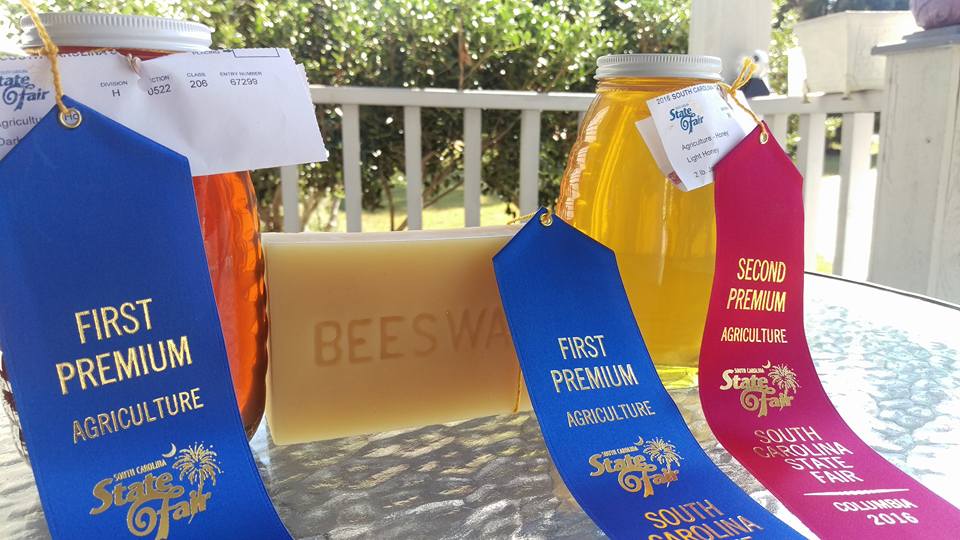
Wax and ribbons

This article will attempt to explain how to enter your honey and beeswax for judging at the South Carolina State Fair. It is not all inclusive and the reader is encouraged to visit the State Fair website for particulars related to entry dates, categories, drop off and pickup dates, and other particulars. At the end of the article I’ll list important links to the State Fair and the entry department. Registration may be made either online or via postal mail. And the cool thing is it’s free to enter as long as you do so during the regular registration dates. This year Regular Registration begins July 1st and closes September 1st. You can enter after these dates (until September 16th) but there is a rather costly entry fee to pay for each entry during late registration.

The South Carolina State Fair accepts entries in the following categories related to beekeeping:

1 pound jar extracted honey (light)

1 pound jar extracted honey (dark)

1 pound Muth jar (light)

1 pound Muth jar (dark)

Pint jar extracted honey (light)

Pint jar extracted honey (dark)

Quart jar extracted honey (light)

Quart jar extracted honey (dark)

Pint jar extracted honey with comb (light)

Pint jars extracted honey with comb (dark)

Quart jar extracted honey with comb (light)

Quart jar extracted honey with comb (dark)

1 pound cut comb honey (light)

1 pound cut comb honey (dark)

1 pound beeswax

Also, dipped and molded taper candles, and molded ornamental beeswax have also been added.

Best Beekeeper Exhibit – The topic for beekeeper display is Honey Bees Contribution to our World.
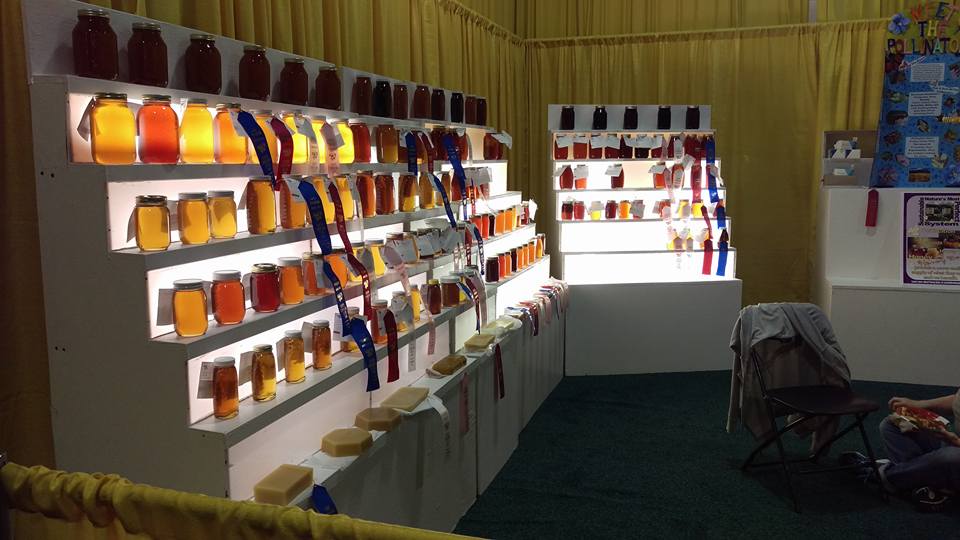
Honey Display

That’s a lot of categories to enter. Wow! And most have 1st place through 4th place awards! Let’s get started talking about how you’re going to take home a ribbon this year!

Before we begin, let’s talk about your timeline. Decide now what categories you wish to enter. Calculate how much honey you’re going to be entering in this year’s State Fair. Do the math. You may find that you’ll need quite a bit of honey. After you determine the categories and the amount of honey you will be entering set aside an additional 25 – 50%. This will provide you with a margin of safety in case of a spill, you need to re-strain, and provides for loss due to pouring from one jar to another. Don’t worry about setting aside too much as it will still be saleable afterwards should you have more than needed. You just don’t want to run short as you prepare your entries – you want consistency in your show batch and that will be easier if you have a bit more rather than a bit less than you plan on entering.

Once you decide what categories you will be entering, register online or by mail. It’s free if you register before September 1st so why wait? Registering will also help you get mentally into setting your timeline of tasks for preparing your entries.

Tip: Fiona Apple sang a song titled, “Slow Like Honey” but you shouldn’t be slow getting started in preparing your entries. Honey moves slowly. Bubbles and foam rise slowly. The steps needed to produce your final entry will take time and your best entry will be one that’s not rushed. It’s one of those hurry up and wait situations. So get started now, be patient, then during the preparation period tweak your entry and progress towards your final finished product.

First let’s talk about those entries involving Extracted Honey in 1 pound, 2 pound, pint, and quart jars:

Extracted honey will be judged on:

Density – water content above 18.6% will be disqualified.
Absence of crystals.
Cleanliness of honey – Without lint, without dirt, without wax particles, without foam.
Flavor – ONLY for honey flavor adversely affected by processing.
Container appearance and cleanliness.
Accuracy of filling.

While all honey entered must be in glass jars, the 1 pound jars must be in Queenline type glass jars. There is also a category for 1 pound Muth type jars. These can be purchased at most bee supply companies. If you can visit a local bee supplier that carries them you should do so as this will enable you to select the clearest jar without flaws, bubbles, scratches, and other imperfections. At this point you may be thinking, “What does the jar have to do with honey judging?” and you’d be right to think this but remember your presentation is extremely important if you’re going to win against the best beekeepers in South Carolina. We already know you’ve got the best tasting honey in South Carolina, just like I have, but what sets dozens of excellent honey entries apart is going to be the fine points and that starts with presentation. Just like a fine dinner at a nice restaurant versus a trip to your favorite fast food joint, the experience counts. So, start with a jar as perfect as you can find.

Tip: Take that jar and wash it inside and out. Place it in the dishwasher and turn on the extra shine setting. Clean it and polish it until it shines inside and out.

Density – moisture content above 18.6% will be disqualified.
Your honey will be checked for density. Hopefully you remember from your beginning beekeeping class that honey should contain no more than 18.6% moisture. The USDA standard for Grade A and Grade B honey states honey should contain a solids minimum of 81.4% (or 18.6 moisture). All honey submitted for judging will be checked and a moisture content above 18.6 will be disqualified.

Tip: Check your honey before submission to ensure a moisture content of 18.6% or less by using a refractometer. I recently saw one on Amazon for $24.00 but I’m sure someone in the club will check your moisture for you if you don’t have one. A good rule of thumb is capped honey will be 18.6% or less in moisture so take no chances on the honey you’re going to enter by only using capped honey and you should be safe. Rationale:  Honey with lower moisture content resists fermentation. The best grades of honey will not ferment due to the lack of moisture.

Absence of crystals:

Absence of crystals in the entry will also be checked. All honey will crystalize given enough time. The ratio of sugars contained in the honey determines how fast the honey will crystalize. Depending on the floral source some honeys may crystalize in a matter of months. Other honeys may last a year or even longer. Other factors contributing to the crystallization process include the presence of particles in the honey such as pollens as well as storage temperatures.  The judges will check for crystallization by shining a light through the honey to detect minor crystals. Using last year’s winning entry would probably not result in a repeat performance as the honey will probably have detectible crystals. Rationale:  Although we know that honey can always be re-liquified, the lack of crystals assures the market customer that the honey has been properly stored and is fresh.

Cleanliness of honey – Without lint, without dirt, without wax particles, without foam.

Of course no one wants to see a bee body part floating around in their honey. But neither should you worry much about your honey not being ultra filtered either. Pollen is a natural component of honey and is expected. While the presence of naturally occurring pollen is expected, neither should your entry be hazy or cloudy with pollen.

Items such as lint, pieces of wax, and bubbles should be absent.

Tip: Don’t use cheesecloth to strain your fair entry. Start your straining with your standard stainless steel sieve using the finest mesh. Then allow it to sit for a few weeks so that any wax and particles rise to the top of the jar where they can be skimmed off. If you’re not pleased with the clarity an additional straining can be made using a lady’s stocking. Be cautious though as the fine mesh of the stocking can introduce very fine bubbles which will take some time to rise to the surface of the honey for removal. When straining honey let gravity do the work as forcing it through the mesh by wringing will increase fine air bubbles.

This process is going to take some time. Honey is thick and wax particles and bubbles move slowly. Ideally you should set aside your honey now to give it time to start clarifying. After giving it a few weeks you’ll want to open the jar and skim off the particles and foam. You may find you want to then do another straining through a lady’s stocking before pouring it into your specially prepared jar for your entry. Then you’ll wait again for bubbles to rise. Eventually you’ll be satisfied.

Tip: When you make your final pour into your presentation jar over fill the jar to within a quarter inch of the top. This will allow you to skim off any foam or pollen a day or two before you take your honey to the Fair. It will also allow you to remove that extra honey such that your fill line is perfect (more on this later).

Tip: Placing the jar on a window sill will gently warm the honey allowing bubbles and foam to rise a little faster and will reward you with seeing the honey get clearer each day.

Flavor – ONLY as adversely affected by processing.

You don’t get extra points for having the best tasting honey in South Carolina. Actually, some honey judging competitions do have a “black jar” contest where the honey is judged on taste alone. No doubt everyone’s honey is going to taste the best to them and it’s purely subjective so “black jar” contests are separate from standard honey judging.

What you need to know as far as taste goes is that you can lose points for “off tastes.” That is, if your honey has an overly smoky flavor from over smoking the hive when you pulled your honey. Or perhaps poor handling of your bee repellant when you harvested has caused an off taste. Another possibility is allowing your honey to sit too long before processing causing some uncapped honey to ferment which may have affected the flavor. Yet another reason honey can have an off taste is overheating in the extraction process. And if your honey has a taste of spearmint, tea tree oil, wintergreen, or lemongrass oil it’s going to be obvious your entry was adulterated with feed syrup. In conclusion, you won’t get extra points for five-star tasting honey but you can lose points for errors that may have affected the flavor of your final product.

Container appearance and cleanliness:

As already mentioned, the visual presentation of your product is important and reflective of the effort you have made to show off your entry. Don’t let even a speck of dirt escape your detection inside or outside of your jar.

But don’t stop with just polishing the jar, absolutely no fingerprints should be on the exterior or interior of the jar. Your lid should also be spotless without dents, scratches, labels, or signs of rust. Although any lid is allowed, a nice one piece lid allows the judge to easily remove the lid to evaluate the lid and the honey. I prefer white lids although I believe gold tone is also available.

Tip: Take an extra lid with you on the day you take your entry in for drop off. There should not be any honey on the interior of the lid. The steward receiving your entry understands this and will patiently wait while you change jar lids before submitting your entry. (Another method is to use plastic wrap between the lid and the jar and remove the plastic wrap prior to submission).

Judges will not disqualify a jar because of an air bubble (in the glass), but try to get the best jar without ripples, nicks, scratches, residue (stickers, honey, adhesive, finger prints etc.)

Also, if reusing a jar, make sure there are no lingering odors. On opening the jar it should smell like honey.

Tip: When entering pints and quarts show off your honey rather than the jar.  A simple, plain, thin walled (mayonnaise type) pint or quart glass jar allows your honey to be the star of the show.

Important: Do not affix any label to the jar or lid. Your entry will be appropriately marked with an identification slip when received by the show steward on entry day.

Accuracy of filling:
jar1It’s important that you give the customer their money’s worth. To that end, a standard has been set that will be judged in honey contests. A rough estimate is that your honey fill line should be above the bottom of the lid such that no air is observed when the jar is looked at from the side. Stated another way, no light should be seen between top of the honey and lid. Aim for a point at the bottom of the spiral that the lid screws onto.

Photo Credits: (left) Courtesy Southcentral Alaska Beekeepers Asso. (below) Courtesy Metro Atlanta Beekeepers Assn.
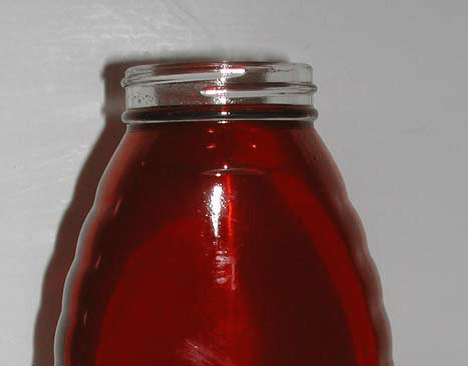
jar2

(Note that the jar on the right is not ready for judging as there are particles on the inside of the jar around the top. This should have been “cleaned up” prior to submitting it for judging.)

Tip: When doing your final adjustments use the bottom of a spoon to touch the top of the honey removing any floating particles. Also, use your spoon to clean the area around the inside and outside of the glass where the lid will be. The judges will note any debris inside or outside of the lid area.

End of section on Extracted Honey Entries

Let’s take a break before finishing up with the other entry categories. I’ll not give as much information on the following items for a couple reasons. First, the basics already covered are the same: cleanliness and adherence to the standard. The other reason is I have not competed in the cut comb or chunk honey categories. I have done some research though and will gladly share what I know. Additionally, I’ll be running this article by a couple people that have more experience than I for their approval before I distribute the article. And finally, I encourage you to do some research yourself. You’ll find that there is some variation between honey judging rules and guidelines although the basics are usually consistent.  Most of what you will find below is from the South Carolina State Fair guidelines.

Onward we go:


All Classes with Chunk Comb (light and dark – all entry weights)

Chunk Honey is cut comb placed inside of jars before filling the jar.
Neatness and uniformity of cut – Upgrade for parallel and 4-sided cuts; downgrade for ragged edges.
Absence of watery cappings, uncapped cells and pollen
Cleanliness of product – Down-grade for travel stains on comb, foreign matter, wax, foam or crystallization.
Uniformity of appearance in capping structure, color, and accuracy of fill.
One (1) piece of comb in jar.

Comb cut the right way up – it’s a fault to put it in sideways or inverted

(I’ve heard some people melt a bit of wax in the bottom of the jar to hold the chunk of comb down in the jar.)

Cut Comb Honey (light and dark)

Cut comb honey is comb cut from the frame. Foundation should be thin and without wire.

Entry is one pound cut comb.
Neatness and uniformity of cut, absence of liquid honey.
Absence of watery cappings, uncapped cells, and pollen.
Cleanliness of product, absence of travel stains, absence of crushed wax.
Uniformity of appearance.

Beeswax
Single piece, pure beeswax, minimum (at least) 1 pound (16 oz.) but not to exceed 17 oz. There is no standard for molds as long as the wax block meets the above weight guidelines.

The optimum color for pure beeswax is light canary to straw yellow. Wax should be clean, uniform in appearance, and have a pleasant aroma. Cracks, ripples, finger prints, or debris or shrinkage deduct from points. I’ve seen polished wax and unpolished. Last year’s winning entry was unpolished.

Preparation of beeswax for entry is challenging. It will most likely require multiple meltings and strainings for it to become completely free of debris. This can be accomplished using a double boiler or crock pot(s). Never place wax directly on a heat source as it will readily ignite and exposure to high heat can adversely affect the finished product.

I use a couple old crock pots I have acquired at thrift stores. In one crock pot I melt the wax and, using a ladle, I pour it through a coffee filter sitting on top of a metal kitchen strainer. As the melted wax filters through it drops into the second crock pot which is set on its lowest setting. Sometimes a couple filterings like this gets the wax clean but a lot depends on what condition the wax was in to start.

When pouring into the mold melt your wax using the least amount of heat possible. You want to avoid wide swings in temperature as the wax will shrink as it hardens and a wide temperature variation increases this effect. Also, try to let the wax harden slowly to minimize cracking and shrinkage. I pour my wax in my barn, which can easily reach over 100 degrees Fahrenheit so it takes a while to fully harden. I usually keep an eye on it and as it cools and shrinks I add just a bit more melted wax to fill any shrinkage on what will eventually be the bottom of the wax block. Also, make sure your mold is level so that your finished product sits nicely on the show table.

Be patient, it may take several attempts to get a satisfactory block that weighs at least 16 ounces but less than 17 ounces.

Elsewhere on the web is this excellent, very detailed description on how to prepare wax for showing. Wax for Show By F. PADMORE

Best Beekeeper Exhibit

I would direct the reader to speak with Danny Cannon (Fair Booth Coordinator) at South Carolina Beekeepers Association for information on this entry. It involves a physical exhibit related to beekeeping. A beekeeping theme is presented each year. The topic for this year’s beekeeper display is “Honey Bees’ Contribution to our World.” Also, there is a space limitation of 3 exhibits. The Booth Coordinator must have you registered in order to exhibit your entry.

In closing, hopefully I have answered some questions related to entering and preparing your honey and wax for judging at the South Carolina State Fair. As I mentioned earlier, I’m far from an expert on this topic but felt the need to get some information out there for those that might want to participate in yet another honey bee related activity. Below are some links that you may find helpful as you further investigate various methods and try to reach for that perfect entry for this year. Happy beekeeping and I’ll see you at the State Fair!

Reference Links:

South Carolina State Fair Entries: https://www.scstatefair.org/competitions

Honey Judging and Standards by Malcolm T Sanford: http://entnemdept.ufl.edu/media/entnemdeptifasufledu/honeybee/pdfs/AA24800-Honey-Judging-and-Standards.pdf

Judging Honey by Dewey Caron: http://extension.oregonstate.edu/mb/sites/default/files/docs/breecec/Judging%20Honey%20by%20Dewey%20Caron%202015.pdf

USDA Extracted Honey Grades and Standards: https://www.ams.usda.gov/grades-standards/extracted-honey-grades-and-standards

USDA Extracted Honey Inspection Instructions: https://www.ams.usda.gov/sites/default/files/media/Extracted_Honey_Inspection_Instructions%5B1%5D.pdf

Metro Atlanta Beekeepers Honey Contest General Rules: http://www.metroatlantabeekeepers.org/honeyContest.php

Eastern Apiculture Society – Honey Show Prep: http://www.easternapiculture.org/resources/honey-show-prep.html

Southcentral Alaska Beekeepers Association: http://sababeekeepers.com/DemoBooth.html

Showing Honey at Fairs by E.C. Martin: http://beesource.com/resources/usda/showing-honey-at-fairs/

North Bucks Beekeepers Honey Show Preparation: https://www.nbbka.org/honey/honeyShow/preparation.aspx

Feel free to share this on:
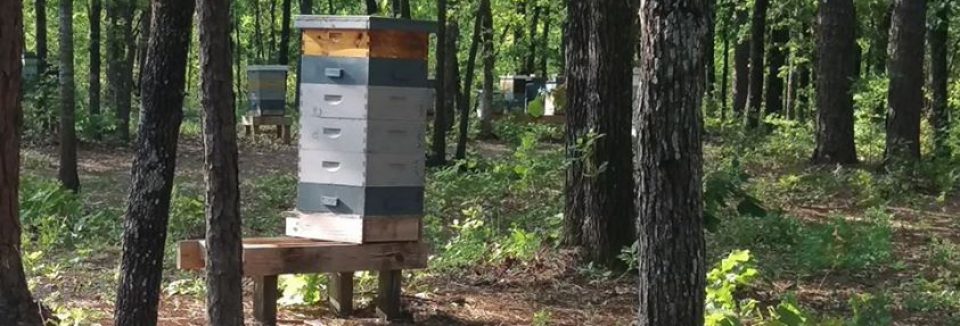
  • Share on Facebook (Opens in new window) Facebook
  • Share on X (Opens in new window) X
  • Share on Pinterest (Opens in new window) Pinterest
  • Email a link to a friend (Opens in new window) Email
  • Share on LinkedIn (Opens in new window) LinkedIn
  • Share on Reddit (Opens in new window) Reddit
  • Share on Tumblr (Opens in new window) Tumblr
  • Print (Opens in new window) Print
  • Share on Telegram (Opens in new window) Telegram
  • Share on WhatsApp (Opens in new window) WhatsApp
Like Loading...

Two Takeaways from the Eastern Apicultural Society’s Summer 2017 Conference

15 Tuesday Sep 2026

Posted by Beekeeping365 in beekeeper education, beekeeping, education

≈ 2 Comments

Tags

beekeeping, education

eas photo

Last month, upon returning from the Eastern Apicultural conference in Newark, Delaware, a friend of mine asked me what was the single most meaningful thing I learned. I sat there and a hundred things ran through my mind. I finally said, “Every day offered me new information and different ways to look at what I’m doing in the bee yard.” Now that I’ve had a couple weeks to process some of the material (I took about 75 pages of notes), I have two things that I’ll share here that I think are important for this time of year and going forward.

The first is the ever present focus on mites. Almost every lecture I attended, no matter what the title, mentioned the need to deal effectively with Varroa mites. It seemed like some of the speakers were somewhat apologetic regarding the historically cautious use of some methods used to kill mites. One speaker said the commercial beekeepers got it right by treating at select intervals between pollination contracts and honey flows to deliver 2 or 3 treatments a year to control Varroa levels. Hobbyists, instead, were told to monitor mites and treat accordingly. Add to that the sometimes cumbersome mite assessment methods and too many people simply did not treat at all leading to lost colonies and mite bombs for their other hives and their neighbor’s hives.

Another comment I heard more than once concerned mite assessment. Whereas in the past we assessed to determine the need to treat, now the focus is on assessment to determine if our treatments are effective. It’s now official, “You have mites.” The only thing in question is how many. Given that thresholds for treatment have been reduced over the past years, plus with unexpected mite bombs, it’s now prudent to periodically treat your bees for mites. The reason for doing mite counts now is to determine pre-treatment and post-treatment mite levels. And, you might ask, which is now considered the most important? The later, post-treatment mite level because if the treatment was not effective in lowering your mite level to an acceptable level then another treatment is in order. Without this post-treatment mite level you’re simply left scratching your head if your colony dies over winter. And if you’re pressed for time, as we sometimes are, and don’t have time for a pre-treatment mite count, treatment, and post-treatment count? Well, it’s not ideal and you won’t gather as much information, but the pre-treatment mite count is the first to omit if you must.

So, what did I hear mentioned regarding treatments? I was somewhat surprised at the number of speakers that said they were treating with Apivar (Amitraz), a hard chemical. Why were they using a hard chemical? The outstanding efficacy of 97 – 99% knockdown of mites along with no residual in wax seemed to be its primary selling points. It is a 42 day treatment and honey for human consumption should be removed. Additionally, speakers talked of rotating their use of treatments and not using the same treatment repeatedly. Oxalic acid is still a favorite and perhaps the cheapest if applied by drizzle during the broodless period. Randy Oliver and the University of Georgia are running trials on oxalic acid shop towels and if the results are favorable it is hoped EPA approval will follow. Other treatments are also considered and used based on the time of year, if honey supers are on or off, and dependent on temperature. Commercial operators also factor in the hive movements between crops, before or after spring splits, and other factors. It seems mite treatments are now a given and the only thing to consider is the time you can get one (or more) done between seasons, honey, broodlessness, the fall spike in mite populations, and pollination contracts. It’s a dance but a serious dance for those who make their living from bees and need to keep them alive and healthy.

The other thing I learned (remember I said I’d mention just two) is honey bee nutrition and its importance. When we think of feeding the bees we often think in terms of syrup and various concentrations of syrup. But pollen is where it’s at nutritionally. Poor quality pollen makes weak bees. Nutritious pollen from diverse sources makes lots of bees, healthy bees, and strong bees able to handle the many stressors bees face nowadays. Many years ago I sat in a nutrition class in college and my professor said in no uncertain terms that protein was the currency standard for nutrition. It seems that applies as well to bees.  Bees’ immune systems are compromised with poor nutrition. At the same time we see now, more than ever, they are faced with having to detox from man made and environmental chemicals. Only good nutrition provides them with the tools needed to keep themselves healthy, make strong future generations, and combat environmental stressors.  Of course, for the beekeeper, finding land with optimum forage is difficult but we must also do what we can to not overtax areas with too many hives while we seek out better environments for our bees or improve their current settings. While nutritional supplements were mentioned the jury is still out on some of these supplements. It seems good pollen is always a good choice. One solution is pollen harvesting during times of plentiful pollen. In response to the beekeeper trapping some pollen the bees will “assign” more pollen collectors to make up for the beekeeper’s trapping. The beekeeper can store the collected pollen for later use during those times when pollen is either of poor quality or during pollen dearth.  I’ll be placing pollen traps on some of my  hives this coming year. It should be interesting and if I have extra it will be yet another product of the hive for me to sell at market.

I really could go on for hours here. At EAS there are multiple workshops, lectures, and educational offerings going on simultaneously over the course of 5 full days and evenings. Often I would arrive at 7:00AM  for breakfast and not return to my dorm room until 8:00 or 9:00PM at night. It’s exhausting and exciting. I do recommend you attend one and here’s my surprise for those that have endured my article: EAS will be in Greenville, South Carolina in 2019! If you really want to experience a honey bee learning experience like never before make plans to be there. You won’t regret it.

For more information on EAS click here.

Feel free to share this on:
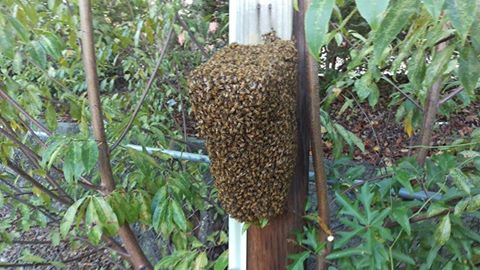
  • Share on Facebook (Opens in new window) Facebook
  • Share on X (Opens in new window) X
  • Share on Pinterest (Opens in new window) Pinterest
  • Email a link to a friend (Opens in new window) Email
  • Share on LinkedIn (Opens in new window) LinkedIn
  • Share on Reddit (Opens in new window) Reddit
  • Share on Tumblr (Opens in new window) Tumblr
  • Print (Opens in new window) Print
  • Share on Telegram (Opens in new window) Telegram
  • Share on WhatsApp (Opens in new window) WhatsApp
Like Loading...

Happy Birthday Alexander Butlerov

15 Tuesday Sep 2026

Posted by Beekeeping365 in beekeeping

≈ Leave a comment

Born 15 September 1828  ·  Died 17 August 1886

Image: Wikimedia Commons — Unknown author (Public domain)


Biography and Contributions to Beekeeping
One of the founders of structural chemistry, Butlerov was also Russia’s leading champion of rational beekeeping. He wrote the popular manual The Bee, Its Life and the Chief Rules of Sensible Beekeeping, founded the journal Russian Beekeeping Leaflet, and promoted frame hives among peasants. In 1877 he brought gentle Caucasian bees from the northern Caucasus to central Russia. Soviet writers called him the father of Russian rational beekeeping.

Feel free to share this on:

  • Share on Facebook (Opens in new window) Facebook
  • Share on X (Opens in new window) X
  • Share on Pinterest (Opens in new window) Pinterest
  • Email a link to a friend (Opens in new window) Email
  • Share on LinkedIn (Opens in new window) LinkedIn
  • Share on Reddit (Opens in new window) Reddit
  • Share on Tumblr (Opens in new window) Tumblr
  • Print (Opens in new window) Print
  • Share on Telegram (Opens in new window) Telegram
  • Share on WhatsApp (Opens in new window) WhatsApp
Like Loading...

On Beekeeping Presentations

13 Sunday Sep 2026

Posted by Beekeeping365 in beekeeping

≈ Leave a comment

Tags

beekeeping, education, management, mentoring

Excerpt from Journeyman to Master Beekeeper Guidebook – Revised 2026

Presentations

Preparing for the oral and field master exams takes more than mastering the knowledge base — it takes the ability to present that knowledge clearly, logically, and in a way others can actually follow. There’s an old truth behind this: if you really want to learn a subject, teach it. Explaining a concept to someone else forces you to organize it, test it against questions you hadn’t considered, and find the gaps in your own understanding long before an examiner does.

So put yourself in front of an audience whenever you can. Volunteer to teach at your local club, speak at monthly meetings, staff a table at a farmers market or festival, and say yes to civic groups and school visits. Every one of these is practice, not a detour from it.

Starting now, treat every talk as your oral exam — the impromptu explanation at a farmers market, the crowd that gathers while you’re removing a swarm, the five minutes in front of your club, the school assembly. Present with the same clarity, structure, and confidence you’d bring to the real thing. Afterward, critique yourself honestly: What landed well? What would you explain differently next time? Where did you lose the audience, or stumble over a concept you thought you knew cold? And when it goes well, say so — recognizing what worked is how you learn to repeat it.

Do this consistently, and the oral exam stops being a single high-pressure event. It becomes just another talk — one you’ve already given, in one form or another, dozens of times before.

Feel free to share this on:

  • Share on Facebook (Opens in new window) Facebook
  • Share on X (Opens in new window) X
  • Share on Pinterest (Opens in new window) Pinterest
  • Email a link to a friend (Opens in new window) Email
  • Share on LinkedIn (Opens in new window) LinkedIn
  • Share on Reddit (Opens in new window) Reddit
  • Share on Tumblr (Opens in new window) Tumblr
  • Print (Opens in new window) Print
  • Share on Telegram (Opens in new window) Telegram
  • Share on WhatsApp (Opens in new window) WhatsApp
Like Loading...

Happy Birthday William Longgood

12 Saturday Sep 2026

Posted by Beekeeping365 in beekeeping, beekeeping author, birthday, birthdays

≈ Leave a comment

Tags

beekeeping

william_longgood

William Frank Longgood (1917–2000)

Born: September 12, 1917 — St. Louis, Missouri Died: August 9, 2000 (aged 82) — Cape Cod, Massachusetts

William Frank Longgood was a Pulitzer Prize-winning journalist, author, and teacher. Born in St. Louis, he spent most of his working life in New York, and only came to beekeeping — and to the book he’s remembered for by beekeepers — late in that life.

Journalism career

Longgood graduated from the Missouri School of Journalism in 1940 and spent the next two years in Niagara Falls working as a radio salesman and writer. World War II interrupted the career he was building: he served in the U.S. Armed Forces from 1943 to 1946. Afterward he returned to reporting, first at the Newark Evening News (through 1948), then at the New York World-Telegram, where he stayed for seventeen years, from 1948 to 1965.

It was at the World-Telegram that Longgood did the work he’s best remembered for as a journalist. In 1954 he won the George Polk Memorial Award from Long Island University. Then, in 1963, he shared the Pulitzer Prize for Local Reporting, Edition Time, with fellow World-Telegram and New York Sun reporters Sylvan Fox and Anthony Shannon, for their coverage of the crash of American Airlines Flight 1 into Jamaica Bay on March 1, 1962, which killed 95 people.

After leaving daily journalism in 1965, Longgood spent three years as a text editor at Time-Life Books (1965–1968), then taught writing at the New School for Social Research in New York from 1966 to 1972.

Books

Longgood was the author of seven books over his career, ranging well beyond bees. His 1960 book Poisons in Your Food was an early and pointed critique of chemical additives and antibiotic use in the American food supply — the kind of consumer-advocacy journalism that prefigured much of what would come later in the environmental movement. His 1972 book The Darkening Land documented environmental pollution and was well received critically.

Beekeeping and The Queen Must Die

Longgood came to beekeeping relatively late, well after his newspaper career had wound down, and it was this hobby — not journalism — that produced the book beekeepers actually know him for: The Queen Must Die: And Other Affairs of Bees and Men (1985, W.W. Norton). It is not a biology text, and it doesn’t try to be. It is a beekeeper’s meditation — part natural history, part personal essay — using the hive as a lens for thinking about mortality, order, sacrifice, and the uneasy parallels between insect societies and human ones. Reviewers and beekeepers alike have praised it less for its technical content than for the quality of its prose: it reads like a career writer’s love letter to a hobby he found late, written with the same eye for narrative and detail that had won him a Pulitzer decades before.

Here’s a nice review found here on WordPress by Bees with ebb:

https://beeswitheeb.wordpress.com/2016/02/21/the-queen-must-die/

He relocated to Cape Cod, Massachusetts in 1973, and lived there until his death on August 9, 2000, at age 82.


Feel free to share this on:
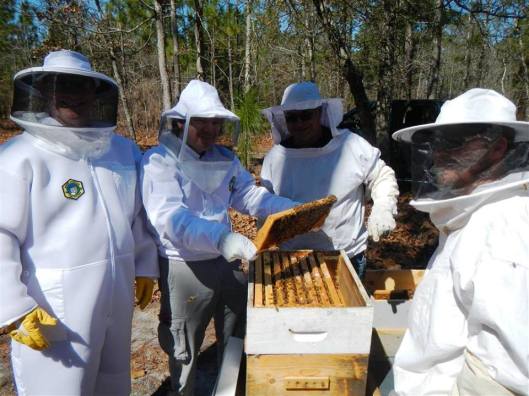
  • Share on Facebook (Opens in new window) Facebook
  • Share on X (Opens in new window) X
  • Share on Pinterest (Opens in new window) Pinterest
  • Email a link to a friend (Opens in new window) Email
  • Share on LinkedIn (Opens in new window) LinkedIn
  • Share on Reddit (Opens in new window) Reddit
  • Share on Tumblr (Opens in new window) Tumblr
  • Print (Opens in new window) Print
  • Share on Telegram (Opens in new window) Telegram
  • Share on WhatsApp (Opens in new window) WhatsApp
Like Loading...

The Mystery of the Missing Spiracles by Staci Siler

11 Friday Sep 2026

Posted by Beekeeping365 in beekeeping, honey bee anatomy

≈ Leave a comment

Tags

honey bee anatomy, Robert Evans Snodgrass, spiracles


The Mystery of the Missing Spiracles
by Staci Siler

It read like the gravest of murder mysteries.  There was a spiracle missing on the side of my honey bee.  The book I read said it was supposed to be there but it was conspicuously absent.  What was wrong??  Was I looking at a serious mutation in my bee?  Was it contagious?  What was going on!!!!!  Where was that spiracle?

It would be nice if the answer were easy…  Or rather, I should say the answer is easy…. but complicated.

Read one book and there are nine spiracles on each side of a honey bee.  Read another and there are ten.  Read a third book and there are two spiracles on the thorax and a fourth will claim three…  So who is right??? Who is wrong???  What is going on and where is that spiracle???!!!???

To get to the answer to the question of two or three spiracles on the thorax, we have to learn a little about honey bee biology.  A spiracle is, basically, a hole in the side of the honey bee through which the bee breathes.  When the bee is a young larvae, there are ten spiracles along the side of it’s body — two on the thoracic region and eight on the abdomen.   As the honey bee grows, a ‘waist’ develops which separates the thorax from the abdomen but it starts right below the first segment of the abdomen.  As such, anatomical pictures of the adult honey bee look like this:

On this picture, you can see that the Roman numerals, which number the segments of the abdomen, start at I on the thorax, where the third spiracle is at.  As such, it would be technically correct to say there are two spiracles on the thorax but….  it would also be accurate to claim three spiracles to the ‘thoracic area’ or claim three by acknowledging the way the first abdominal segment is positioned on the thorax.That did very little to solve the initial question though as we are still left with a missing spiracle.  So… if the larvae started out with ten spiracles, where did it go?

Here is a picture of the young larvae, with all ten spiracles marked as dots along the centerline of the larvae.

Note that the tenth spiracle is located on the Roman Numeral, VIII, the eighth segment of the larval abdomen.  But if we look back at the adult honey bee we saw above, there is no eighth segment… is there???Actually, there is.  When the honey bee goes through metamorphosis, the eighth segment which contains the tenth spiracle ends up tucking up inside the seventh segment.  It is not visible but it still exists.  That said, is the tenth spiracle, though functional as a larvae, still functional or even connected to the breathing sacs in the adult honey bee.  See below image:

 
Note: only spiracles one through nine are listed.

The latest addition of the Hive and the Honey Bee lists the tenth spiracle as located in the spiracular plate associated with the base of the sting and, given it states there is a way for the spiracle to stop the escape of air, it lends credibility to the thought that the tenth spiracle, though often forgotten, is functional.  There is no notation for it in the above picture but other texts list it as having the second largest opening of the ten spiracles which would imply it is anything but vestigial.

So… we have found the missing spiracle.  You won’t see it if you put a magnifying glass on the bee’s abdomen but the tenth spiracle does exist, it is just not readily visible unless you are willing to get up close to the honey bee’s sting — an area beekeepers generally try to avoid.

Which is the more accurate answer?  Two or three, nine or ten??

I guess, as long as you take into account every reason for the differences (nine visible, ten functional — three on the thorax if acknowledging the transfer of the abdominal segment, two on the actual thorax) you could say any one of those variations and be correct… Technically…..

 
Ref: R.E. Snodgrass, Honey Bee Anatomy
 
Staci Siler is a Master Beekeeper living in South Carolina. She teaches all levels of beekeeping classes and frequently speaks at beekeeping associations across the state. 

Feel free to share this on:
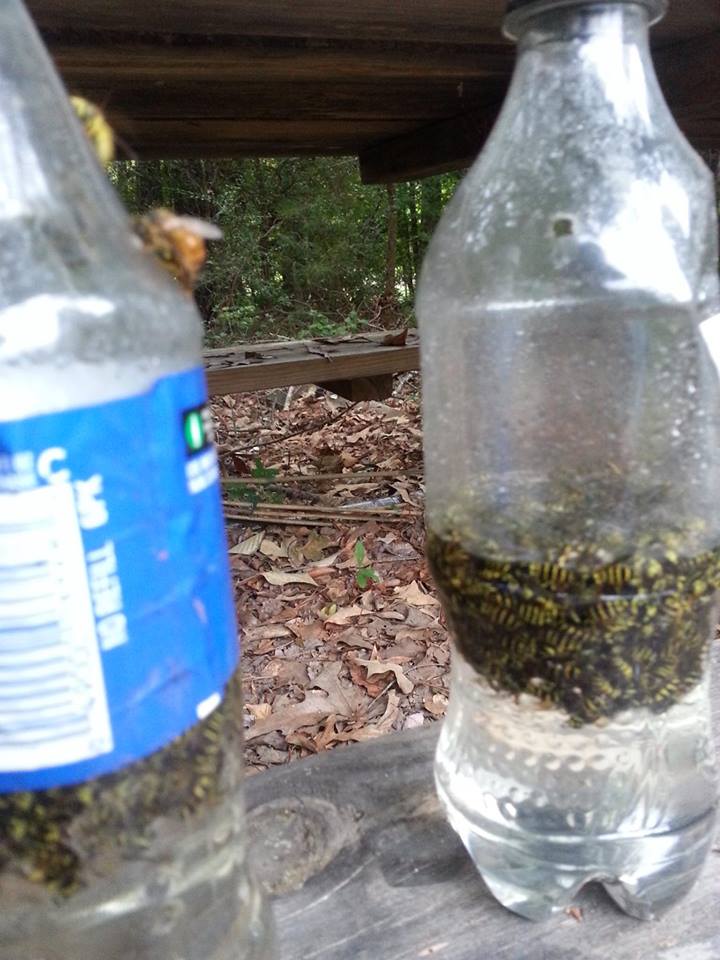
  • Share on Facebook (Opens in new window) Facebook
  • Share on X (Opens in new window) X
  • Share on Pinterest (Opens in new window) Pinterest
  • Email a link to a friend (Opens in new window) Email
  • Share on LinkedIn (Opens in new window) LinkedIn
  • Share on Reddit (Opens in new window) Reddit
  • Share on Tumblr (Opens in new window) Tumblr
  • Print (Opens in new window) Print
  • Share on Telegram (Opens in new window) Telegram
  • Share on WhatsApp (Opens in new window) WhatsApp
Like Loading...

The Great Reducer Rebellion — Or, How Not to Swap a Bottom Board

10 Thursday Sep 2026

Posted by Beekeeping365 in beekeeping

≈ 3 Comments

Tags

beekeeping

330px-Mårten_Eskil_Winge_-_Tor's_Fight_with_the_Giants_-_Google_Art_Project

Thor’s Fight with the Giants by Mårten Eskil Winge, 1872

Hehehe. I just came in from a walk through the bee yard, and I owe you an update — and possibly a search party for a hammer.

One of my hives lives off by itself, built up under a tree after I caught a swarm there this past spring. That hive grew so fast, so quickly, that moving it stopped being a simple weekend job and became a “someday” job instead. So it just… stayed. And grew some more.

The problem is what it’s sitting on. In a pinch, I’d set that swarm up on a bottom board I’d built for on-the-road captures — a thin sheet of lauan plywood screwed to a couple of spacers, with a 10-frame deep stacked on top. It was only ever meant to be temporary. It has now been the permanent foundation of a four-box hive for months, because I have known for a while that I needed to swap it out for a proper bottom board — some day.

Yeah. Some day never showed up.

But today, with a stretch of rain and general crappy weather finally behind us, I decided today was the day. Hehehe.

Now, the human mind is a curious, deeply persuasive thing, and mine knew better than to try dismantling a large, four-box hive on a damp day just to change a bottom board. So it did what minds do best: it negotiated. It swapped the real job for a smaller, more “reasonable” one — just slide an entrance reducer into place — and my mind convinced me this counted as real progress. The fact that it was still raining lightly somehow never came up in these negotiations.

Effort 1: I show up empty-handed except for the reducer. It’s too long. About five bees take immediate, personal offense and run me off.

Effort 2: I return properly dressed — suit and hive tool this time — and try again. The reducer jams sideways and won’t budge, even with the hive tool working it like a crowbar. Roughly twenty bees vote, unanimously, against reducers as a concept, and run me off a second time.

Effort 3: I come back in full gear — suit, gloves, hive tool, and now a hammer. Thirty-plus bees are waiting before I even get the reducer positioned. I set it and start tapping it home. Within seconds, fifty to seventy-five bees pour out to make their objection extremely clear. I set a new personal land-speed record finishing the install. Then, apparently under the impression this had become a biathlon, I set a second land-speed record sprinting back to the house.

Inside, I discover I’ve brought company: a dozen or so hardcore bees, still fully committed to the cause, riding along on my jeans, my suit, and my veil. I spend the next ten minutes evicting them, one at a time.

Final verdict: the reducer is in. The hive has been left to defend itself, as it clearly prefers. Lesson learned — they really didn’t need my help.

I do still wonder, though, where I dropped that hammer.

Feel free to share this on:
  • Share on Facebook (Opens in new window) Facebook
  • Share on X (Opens in new window) X
  • Share on Pinterest (Opens in new window) Pinterest
  • Email a link to a friend (Opens in new window) Email
  • Share on LinkedIn (Opens in new window) LinkedIn
  • Share on Reddit (Opens in new window) Reddit
  • Share on Tumblr (Opens in new window) Tumblr
  • Print (Opens in new window) Print
  • Share on Telegram (Opens in new window) Telegram
  • Share on WhatsApp (Opens in new window) WhatsApp
Like Loading...

The Smoke Between Us: What’s Really Happening When You Smoke the Colony

09 Wednesday Sep 2026

Posted by Beekeeping365 in beekeeping

≈ Leave a comment

Tags

bee smoker, smoking the hive

You crack the outer cover before you’ve even lit the smoker — just a peek, you tell yourself. Bad idea. A guard bee lifts off the top bars and bumps your veil, and you can already hear the pitch of the hive climbing half a step. You set the lid back down, take a breath, and get your smoker going properly this time. A few cool puffs at the entrance. A few more under the lid once it’s cracked again. Wait just a bit.


And just like that, the hive exhales. The hum drops. Bees that were staring you a minute ago are now walking calmly across the frame you’re holding, going about their business like you’re not even there. You pull the frame, look it over, and not a single bee so much as flinches toward you.

It feels a little bit like magic. It isn’t. It’s chemistry, instinct, and a survival response so old it predates you, me, and every beekeeper who ever lived — and it’s worth understanding exactly what you’re doing to that colony every time you squeeze the bellows.


The Alarm They Never Get to Sound
Here’s what almost happened before you grabbed the smoker. That guard bee in front of your veil was seconds from raising her abdomen and releasing a chemical signal from a gland near her sting shaft — a compound called isopentyl acetate, along with dozens of other volatile chemicals riding along with it. It smells like bananas to some people, which is exactly why old-timers will tell you not to eat one near the hive. To a bee, that smell means one thing: intruder, mobilize, attack here.


Under normal circumstances, that message travels fast. Nearby bees pick it up through their antennae, and within seconds you’ve got a small squad converging on the exact spot where the first bee raised the alarm. It’s an efficient, ruthless bit of biology — a single sting recruits reinforcements to the scene of the crime.


Smoke breaks that chain of communication. It doesn’t destroy the pheromone or somehow calm the bee down emotionally — it overwhelms her sense of smell. Researchers who measured this directly found that after smoke exposure, a bee’s antennae simply stop registering the alarm signal the way they normally would. She’s not less alarmed. She just can’t smell the message anymore, and neither can her sisters. That fog lifts on its own, too — bees typically regain full sensitivity within about ten to twenty minutes, which is exactly why a long inspection calls for more than one round with the smoker.


A Bellyful of Honey and a Fire That Isn’t Coming
While all that’s happening at the entrance, something else is going on deeper in the hive — and it might matter even more.


Smoke, to a bee, doesn’t read as “a person is bothering us.” It reads as fire. And a colony facing fire has exactly one move: pack up and go. So workers throughout the hive start doing something that looks almost frantic if you watch closely — they push their heads into open cells and drink down honey as fast as they can, filling their crops the way you’d grab you’d wallet and photos on the way out the door. It’s not panic for panic’s sake. Honey is expensive to make — it takes roughly eight pounds of nectar-turned-honey to produce a single pound of the wax they’d need to start over somewhere new. If the home is about to burn, that honey is coming with them.


Here’s the part that actually helps you: a bee with a full crop is a different animal. Distended and heavy, she has a much harder time curling her abdomen around to drive a stinger home. She gets sluggish — genuinely lethargic, in the same unglamorous way you get lethargic after a holiday dinner you didn’t need to finish. Multiply that across ten thousand bees and you get a hive that’s chemically confused about a fire, physically stuffed on its own honey, and — for a little while — remarkably easy to work.


This is also why a smart beekeeper doesn’t smoke and immediately rip the lid off. Give it a minute. That’s the time it takes for the “we might need to evacuate” instinct to actually kick in.


An Old, Old Trick
None of this is new information to bees, and it turns out it isn’t new information to us, either. Tomb paintings from ancient Egypt show beekeepers blowing smoke over clay hives thousands of years before anyone understood a single molecule of pheromone chemistry. Some Native American beekeepers burned puffball fungus to the same effect. Even today, honey hunters in remote parts of Nepal climb rope ladders up sheer cliff faces to reach wild colonies, carrying nothing more sophisticated than a smoldering torch to do exactly what your smoker does.


The tool in your hand only got its modern shape in 1873, when a New York beekeeper named Moses Quinby built the first bellows smoker — a tin firebox with a hand pump, not so different from the one hanging by your hive today. True to his Quaker upbringing, Quinby never patented it. He just gave it to every beekeeper who came after him, which is most of the reason it’s sitting in your hand right now instead of some more complicated, proprietary contraption.


Doing It Well, Not Just Doing It
Smoke is a tool you can absolutely overuse. The goal is a light reminder, not a siege — a few cool, gentle puffs at the entrance, a short wait, a few more under the cover before you lift it. Thick, hot, billowing smoke stresses a colony more than it calms one, and it can leave your equipment and honey smelling like a campfire for longer than you’d like. Light and patient beats heavy and rushed, every time.


Back at the Hive
So the next time the hum drops and the bees on your frame go about their business like you’re invisible, you’ll know what actually happened. You didn’t trick them, exactly — you borrowed an instinct that’s been wired into them since long before there were hive tools or bee suits, one that ancient Egyptians and Nepalese cliff-climbers and a Quaker beekeeper in the Mohawk Valley all discovered the same way you just did: light some smoke, and for a few quiet minutes, the bees will let you in.

Feel free to share this on:
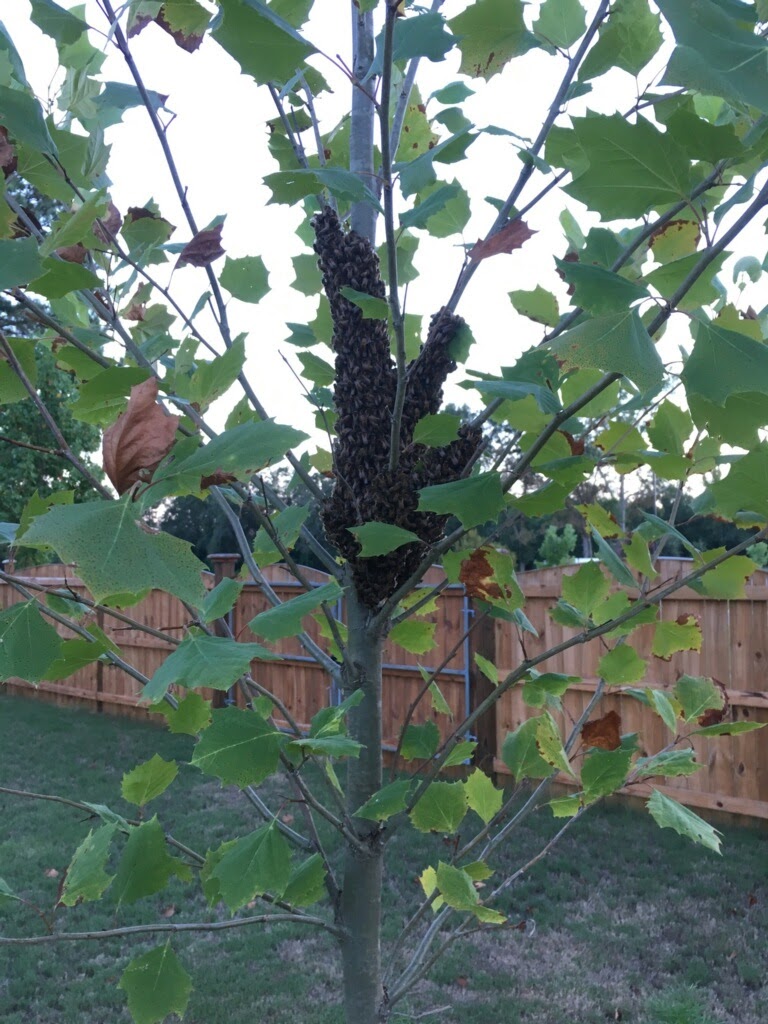
  • Share on Facebook (Opens in new window) Facebook
  • Share on X (Opens in new window) X
  • Share on Pinterest (Opens in new window) Pinterest
  • Email a link to a friend (Opens in new window) Email
  • Share on LinkedIn (Opens in new window) LinkedIn
  • Share on Reddit (Opens in new window) Reddit
  • Share on Tumblr (Opens in new window) Tumblr
  • Print (Opens in new window) Print
  • Share on Telegram (Opens in new window) Telegram
  • Share on WhatsApp (Opens in new window) WhatsApp
Like Loading...

Gray Squirrels and Pollen Feeders

08 Tuesday Sep 2026

Posted by Beekeeping365 in beekeeping, humor

≈ Leave a comment

Tags

beekeeping, humor

14264805_10208468165676520_6204375263559427595_n

(Above)

Pollen substitute isn’t picky about who eats it — it’s protein, and protein is protein whether you’re a nurse bee building up winter bees or a squirrel putting on fat before the cold sets in. Hang a feeder full of the stuff outside a wood shop, and you haven’t built a pollen feeder. You’ve built a squirrel buffet with a “bees welcome too” sign.

They’re clever about it, too. They’ll perch right on the rim, work the powder with both front paws like a kid with a granola bar, and barely look up when you walk by with a hive tool in hand. And honestly, it’s hard to be too mad at them. Fall’s a hungry, hoarding season for every creature in the yard, not just the ones in your hive boxes. The squirrels are doing their own version of what the bees are doing — packing away calories now so there’s something to draw on when the temperature drops and the pantry gets thin.

The only real downside is math: a feeder of pollen substitute disappears a lot faster with a squirrel or two treating it like a standing invitation. If you’re finding your feeder emptied out faster than the bees should manage on their own, that’s your answer — and it might be worth a squirrel baffle or moving the feeder somewhere less shop-adjacent, unless you don’t mind sharing.

(Below) And here are a few pictures of this year’s effort. No squirrels this year after placing the feeders on PVC pipe and greasing the pipe. A little plastic protrudes over the opening to protect the pollen from any rain.

pollen1
pollen2
pollen3


Feel free to share this on:
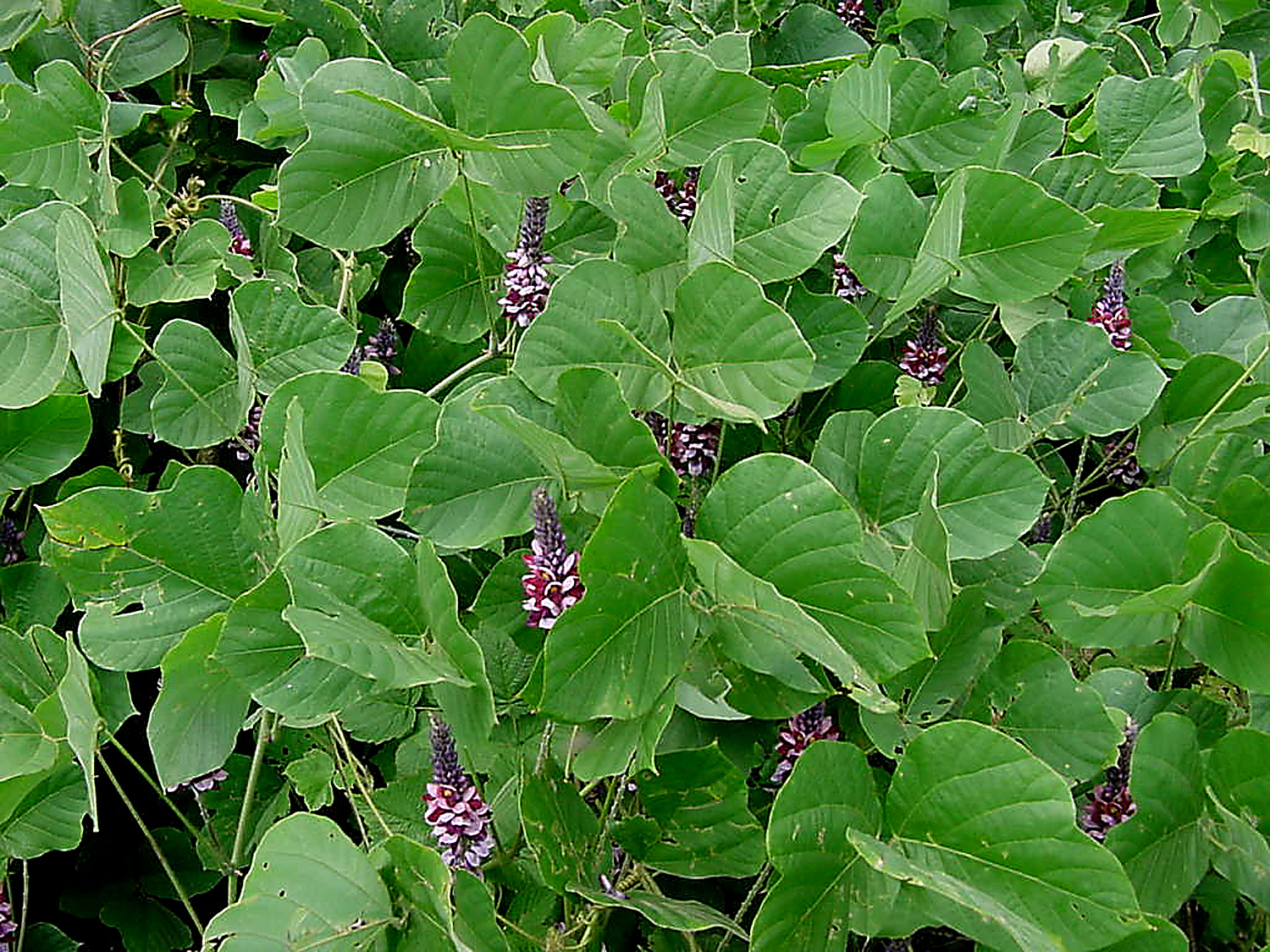
  • Share on Facebook (Opens in new window) Facebook
  • Share on X (Opens in new window) X
  • Share on Pinterest (Opens in new window) Pinterest
  • Email a link to a friend (Opens in new window) Email
  • Share on LinkedIn (Opens in new window) LinkedIn
  • Share on Reddit (Opens in new window) Reddit
  • Share on Tumblr (Opens in new window) Tumblr
  • Print (Opens in new window) Print
  • Share on Telegram (Opens in new window) Telegram
  • Share on WhatsApp (Opens in new window) WhatsApp
Like Loading...

Happy Birthday Lloyd Raymond Watson – Pioneer of Instrumental Insemination for Honey Bee Queens

07 Monday Sep 2026

Posted by Beekeeping365 in beekeeping, famous beekeepers

≈ Leave a comment

Tags

artificial insemination, Dr. Lloyd R Watson, famous beekeepers, instrumental insemination, queen honey bee

L.R.Watson

Dr. Lloyd Raymond Watson (1876–1948)

Birth: 7 September 1876 — Cuba, Allegany County, New York, USA Death: 24 February 1948 (aged 71) — North Hornell, Steuben County, New York, USA Burial: Alfred Rural Cemetery, Alfred, Allegany County, New York, USA

Dr. Lloyd Raymond Watson was the first person to demonstrate a workable method for instrumentally inseminating a queen honey bee — and the man who gave the procedure its name.


The problem he solved

For most of the history of beekeeping, the queen’s mating flight was a closed door. A virgin queen leaves her hive, mates in the air with a dozen or more drones from colonies miles away, and returns carrying a lifetime supply of semen. The beekeeper sees none of it and controls none of it. Every other domesticated animal — cattle, horses, poultry, dogs — had been improved by controlling who bred with whom. The honey bee alone resisted, because half of every pairing was invisible.

Francis Huber had described the essentials of queen mating in the 1790s. Johann Dzierzon worked out in 1845 that drones develop from unfertilized eggs. But knowing how bees mate did not mean anyone could direct it. Through the nineteenth century, beekeepers tried isolated mating yards, island apiaries, screened flight cages — and a handful, including Nelson W. McLain working for the U.S. Department of Agriculture in the 1880s, tried to inseminate queens by hand. The attempts failed or produced results too erratic to build on, and by the time Watson took up the question the earlier work had largely been forgotten.

The breakthrough

Watson attacked the problem as his doctoral research at Cornell University, completing the Ph.D. in 1926. His apparatus was, by modern standards, startlingly simple: a stereomicroscope, a light source, hand-held forceps to open and hold the queen’s sting chamber, and a capillary syringe charged with drone semen. There were no micromanipulators, no CO₂ narcosis protocol, no purpose-built queen holder — only steady hands, good optics, and an anatomist’s understanding of where the semen had to go.

His success rate was inconsistent, and he knew it. But inconsistent success is a categorically different thing from failure. Watson’s queens could be inseminated, could be returned to colonies, and could lay fertilized eggs that produced workers. He had demonstrated to a skeptical beekeeping community that the thing was possible at all — and once it was possible, it became an engineering problem rather than a mystery.

He also named it. Watson deliberately chose “instrumental insemination” over the more common “artificial insemination,” arguing that nothing about the process was artificial — the semen and the queen were entirely real, and what distinguished the technique was its dependence on instruments. The term stuck, and it remains, so far as the literature suggests, unique to honey bees.

He published the work for the wider scientific world as “Controlled Mating in Honeybees” in The Quarterly Review of Biology (Vol. 3, No. 3, September 1928, pp. 377–390), and wrote extensively for the beekeeping press in the American Bee Journal, the Journal of Economic Entomology, and Bee World.

Career

Watson was an Allegany County man for most of his life. He took his A.B. from Alfred College in 1905 and his A.M. there in 1914, and eventually returned as a professor at Alfred University. In between he worked as an instructor in chemistry, as an extension apiculturist, as an assistant apiculturist with the U.S. Bureau of Entomology, and as a state apiarist — a career that moved back and forth between the laboratory, the classroom, and the bee yard.

In 1936 the John Simon Guggenheim Memorial Foundation awarded him a fellowship “for research toward the development of new and improved types of honeybees,” with a tenure of six months beginning 1 April 1936 and a further six months beginning 1 April 1937. It was recognition that his technique was not an end in itself but a tool — the first tool that made deliberate honey bee breeding conceivable.

Legacy

Watson opened the door; others widened it. Over the following two decades, W. J. Nolan, Harry H. Laidlaw Jr., Otto Mackensen, and William Roberts refined the procedure into something reliable and teachable. Laidlaw’s careful anatomical work on the queen’s valve fold — published in 1944 — explained why so many early inseminations failed and how to place semen so that it reached the spermatheca. Purpose-built instruments, CO₂ treatment to induce egg laying, and standardized technique followed.

Today instrumental insemination is the foundation of serious honey bee stock improvement worldwide. Every closed-population breeding program, every Varroa-resistance selection line, every effort to conserve a regional subspecies rests on the ability to know exactly who a queen mated with. That ability begins in a laboratory in western New York, with a man, a microscope, a pair of forceps, and a great deal of patience.


Feel free to share this on:
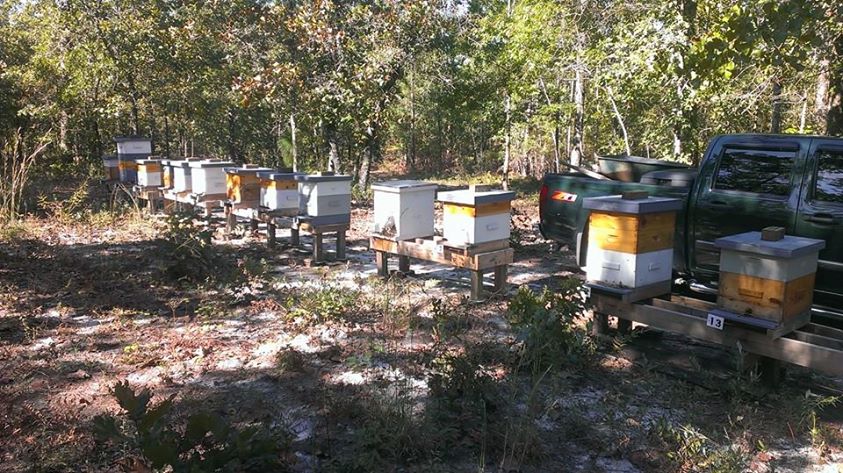
  • Share on Facebook (Opens in new window) Facebook
  • Share on X (Opens in new window) X
  • Share on Pinterest (Opens in new window) Pinterest
  • Email a link to a friend (Opens in new window) Email
  • Share on LinkedIn (Opens in new window) LinkedIn
  • Share on Reddit (Opens in new window) Reddit
  • Share on Tumblr (Opens in new window) Tumblr
  • Print (Opens in new window) Print
  • Share on Telegram (Opens in new window) Telegram
  • Share on WhatsApp (Opens in new window) WhatsApp
Like Loading...

Eastern Apicultural Society 2018 – How Fortunate I Am

06 Sunday Sep 2026

Posted by Beekeeping365 in beekeeper education, beekeeping, education, hive inspections

≈ 2 Comments

Tags

beekeeper testing, EAS, Eastern Apicultural Society, master beekeeper program

IMAG1739Recently I have taken some time off from blogging. In fact about three weeks now. Except for the occasional scheduled posts of famous beekeepers, I have taken a bit of time for a diversion – an experience that I want to share with you here.

eas photo

EAS 2017, Delaware

Last year I attended the Eastern Apicultural Society’s conference in Newark, Delaware. To say the least, I was taken by the scope and quality of the conference. At every turn I was impressed with the event. The lectures were outstanding, the speakers personable and approachable, and the venue perfect in many ways. I was literally up at 6:30am every morning, having breakfast with many of today’s notable beekeepers by 7:00am, and attending lectures and events until 8:30pm. But although I was trying my best to eke out every morsel of beekeeping goodness, I found it impossible to do it all. There was the microscopy track which was running concurrent with multiple lecture sessions, the honey show marched on in the background, the bee yard events, and the local excursions passing me by. I vowed to return this year to accomplish more.

hampton convention center

EAS 2018 Hampton VA

This year, in Hampton, Virginia, I would take a bigger bite and try my hand with one of the other tracks taking place at the conference. But before I spill the beans, let me tell you a bit of my history. You see, I’m a beginner at this avocation called beekeeping. A mere seven years although my wife and children will attest I have been diligent in my studies. During those seven years I have purposefully tried to explore as many niches in beekeeping as possible. Some things, like honey bee removals from structures, were one and done events. I’ve entered honey shows  and won blue ribbons and while somewhat rewarding I found it wasn’t my calling. I’ve kept some outyards on farms and gardens for the sole purpose of learning how to anticipate needs and scheduled visits. A couple of magazine articles were satisfying and added some financial assistance as I grew my apiary and purchased queen rearing equipment. Two years as the local association’s Secretary probably grew my knowledge base the most as I took part in responding to swarm calls, emails from beginning beekeepers, cold calling problem bee colonies, teaching classes, and surrounding myself with more knowledgeable beekeepers.

Along the path described above I checked off the boxes towards becoming a master beekeeper. And I found myself well on my way by the time I was at EAS 2017. But last year, at EAS, I saw what I wanted more than the microscopy classes or a honey show. I wanted the challenge of the EAS master beekeeping exam. Four tests – written, verbal, lab, and field. You get a pin and a certificate if you pass all four. The carrot on the stick for me was simply attempting and completing the challenge. I wanted to somehow put together my seven years of exploring and turn it into confirmation that I was well-rounded in the knowledge and skills of beekeeping. Not perfect, as my knowledge is far from complete; just a well rounded generalist.

So, this year I would give up many of the lectures and events to subject myself to mental exhaustion. Preparation started three years prior but in earnest after last year’s EAS conference. As this year’s testing approached I upped my study time and pressed my long since unpracticed study skills. Isn’t there some sort of saying about the difficulties in teaching old dogs? Well, I’m an old dog and things don’t stick as readily as they used to. Put another way, my mental hard drive has been filled for some time now with the events of life.

DSC_0032

Just before walking into the written exam.

The EAS Master Beekeeping testing started with a meet and greet on Monday afternoon. There were about twenty-seven beekeepers there, some younger and some older, who would be taking some or all of the tests. Some were returning from a previous unsuccessful attempt. There you learn that there is no shame in re-attempting the test – in fact it’s the norm. The remainder of the room was filled with current EAS Master Beekeepers both sitting and lining the walls. The  beekeepers testing were invited to tell their stories about what brought them there. The master beekeepers shared their stories as well and encouraged us to try our best, and to not be discouraged no matter the outcome. At some point the message comes through that this testing is not solely about spilling forth what we have learned but is also about the ability to persevere, to stand and deliver to our best ability, and to be open to learning during the testing. The meet and greet works to dispel the idea that one has to pass to be successful. What one should also be doing is learning from what is before them. Oh, I still wanted to pass the exams, but now I also had the goal to let this opportunity mentor me which took some of the pressure off.

The next two days and nights were filled with last-minute, self-imposed test preparation and rehearsing my one known oral test question (one verbal exam test question of four is known to the testee). At some point during this crunch time in the testing process it begins to become apparent that I am learning more about beekeeping and about myself.

L.R.WatsonThe written test was difficult. But too often I simply looked at the obvious yet still called it wrong. True/false, multiple choice, short answer all reasonable if only my brain would tell me whether it was White, Wilson, Watson, or Woodley. The essay questions were a delight. Time to sit down, apply structured writing, and explain what I know without rushing an answer. I walked out giving myself even odds.

The oral exam was my weakest exam performance. I had spent too much time preparing for the known question and none preparing for the unknown questions. Well, how exactly does one prepare for the unknown? Yeah, there are ways. Any response can be structured just as any good essay can be outlined. Or frame your reply as a story-teller or perhaps present your monologue along a timeline. Start rehearsing at the farmer’s market and state fair booth. I knew this and have spoken with hundreds at markets and fairs so why did I stumble and miss the mark? The testers were kind but I know I fell short.

DSC_0040

Dr. Caron overlooking the lab exam

Day two, on to the lab/practical testing. I had prepared for this by looking at pictures. I can read but thought a last-minute night of looking at pictures would be more beneficial and less stressful. Being a catalog nerd, I had the beekeeping merchandise down cold already – no need to study there. (Still I got stumped on one item that was used in candle making.) Onward… I had reviewed the diseases, especially the photos in the MAAREC book, Honey Bees and Their Maladies which proved beneficial. The microscopes proved to be easy enough except for my over thinking the specimens. Simma’ down now and relax. Afterwards, I gave myself less than stellar but better than even odds.

The last exam is the field test. Veils required; gloves shunned. No worries right? Let me say that although I am a beekeeper I do not enjoy being stung. But the thinking is a master beekeeper works his bees in a manner that minimizes stings. Hello? Does anyone here realize that it’s August? Dearth most likely? At home, 400 miles to the south, we are well into nectar dearth and the bees are cranky. Yeah, I do go gloveless sometimes, but usually I tend to rush things and know this about myself so I use white nitrile gloves – or leather if the bees are especially defensive. None for today though. So I wait for my time to go forth into the hive with an EAS Master Beekeeper. Then I see Landi Simone walk into to the bee yard and she and Paul are assigned to me.

Now, I really like Landi’s presentations. I’ve listened to her lecture titled, ‘Reading the Frames’ multiple times. I heard her lecture at EAS 2017 as well. In my mind she wrote the book on reading the frames. But now it’s time for her to role play the part of a newbee beekeeper and I’m to play the role of the experienced beekeeper. I’m going to read the frames to Landi Simone. Like they say at Disney, “On Stage!”

DSC_0138

We stand at the hive and I do my external assessment. Paul stands in front of the hive. Yeah, he’s testing to see what I’ll say. I tell him to move out of the path of the bees. He wants to know why. I mutter something about UPS planes on landing approach to an airport runway. Landi offers a comment to my comment which depending in whether she is in character or out of character could be good or not so good. We proceed with the exam and I open the hive after applying just the right amount of smoke. Casually I say, “In South Carolina we always inspect the underside of the inner cover to assess the presence of small hive beetles and to smash them.” I glance down and instead of SHB the queen is running across the inner cover. Really? Now, this has happened to me only twice before in seven years but there she is in all her glory. I manage to get her to run down between the frames while silently praising Priestess Melissae. I mutter again, this time something about extra credit for finding the queen on the inner cover.

DSC_0153We proceed in dismantling the hive and all the while Paul is simulating the chattering of an excited first timer in the hives. I am trying to be patient but he’s eating up valuable hive time and I’m thinking his every question needs a complete answer or I’ll lose credit. At some point I’m explaining varroa mites and a different voice from somewhere booms out, “Tell me what a varroa mite IS?” Am I hallucinating or is someone calling out from the building’s roof? I turn to my right and yet another master beekeeper in an orange suit has appeared out of nowhere. I’m now completely derailed from my monolog and before I can shift gears and gather my thoughts he says, “What classification?” I tell him it’s not an insect so I would venture it’s an arthropod but from there I don’t know the taxonomy. He answers his own question, “It’s a parasite!” I take up his lead and start in with Apis cerana adapting to varroa which has not happened with Apis mellifera. Everyone seems somewhat pleased and the orange suit disappears.

DSC_0161

Down, down, down we go into the bottom hive body, well past my typical time in a hive, and I still don’t have a definitive diagnosis for this troubled hive. Then a brief interruption from Paul who, continuing the role of the new beekeeper, is now complaining of a bee sting to his arm, I scrape out the stinger with my hive tool (he really does have a sting) and minimize the event although he wants more. Another question and I mutter something about too many questions – the bees are getting restless and have issued their warning and Landi is quick to ask, “Why are they making that noise?” I tell her, “They are telling us, it’s time to leave,” as I start to close up.  After closing, I finally repeat some of what I have been saying all along: spotty capped brood pattern, too few capped cells for the amount of open brood, queen has filled open cells with brood (appear well fed and healthy) as the spotty capped brood emerges which presents as mixed larval ages on the frame. Oh yeah, and backfilling. All of which is accurate but I’m only talking symptoms and have not given a diagnosis nor a prescription. Finally, I offer up a closing statement: “Possible mites causing the spotty brood due to hygienic behavior but I can not rule out inbred queen. Check the mite count immediately and treat if indicated. Re-inspect in two weeks to see if the copious open brood pattern turns into a good capped brood pattern in which case the colony has re-queened already. If not then re-queen. And cut back on the feeding before they swarm.” As we walk away I have no idea if I have satisfied their questions or correctly read the hive. I didn’t do myself any favors getting cranky towards the end. Crap shoot on this one.

As I’m walking back to my car to put everything away I realize I’m exhausted. But I have a good feeling that it’s done – all done. I survived the exams. Not that I thought there would be torture if I didn’t do well. I was simply happy to have put myself out there and given it a try.

I had to return home the next day to fulfill a family obligation. I wouldn’t be at EAS to see those in my testing class who passed receive their pins and certificates at the Friday night awards ceremony. I wish I could have. A connection is established between the test takers even though most of us had only just met two days prior – stories between us about how our families thought we were a bit off our rockers for constantly reading about bees – actually a lot about that. Also possible divorces if the books didn’t get put away, wanting to prove to the spouse we could pass, and worry that we’d have the books out for another year.

I explored my strengths and weaknesses on the drive home. I would be happy with passing two of the four exams. That would leave only two for next year. I felt like I did poorly on the orals although they were giving me praise on the way out the door. Nice guys but I knew better. By the time I passed through the middle of North Carolina I had developed a better presentation. Next year I’d make every oral presentation a story. “Let me tell you the story of almond pollination and the beekeepers that ‘got er’ done.” Yeah, that’s the model I’ll use next year.

And what was I thinking on the field exam? I jumped out of character several times. And worse of all I implied they were asking too many questions. Definitely not a good mentor tactic. I’d get dinged on that one. In fact, I thought, that’s probably an automatic fail. Next year I’ll start with coaching my mentees on how we have limited time and if they have non inspection related questions, or wanted to ask about their grandmother’s allergic reaction, we need to do that before or after the hive inspection. And next year, afterwards I’ll hold a debriefing and tell them they need to do their homework before our next session. No more sandbagging on the homework and asking questions already covered in their beginning beekeeper class. I’d suggest they review their book before we start our next hive inspection. By the time I arrived in the Midlands of South Carolina I had my game plan in order for next year.

But most importantly by the time I arrived home I realized what I had gained from the experience. I learned what a better beekeeper would have done and said, both in the oral and field exams. The tests were a time for me to both deliver my knowledge and to take some knowledge away. “Trust in the system,” I remembered one master beekeeper saying during the meet and greet session. He was right. I was satisfied with what the system taught me and recognizing my blunders. I could fix those next year.

Friday morning my phone rings and it’s my friend and mentor Dave. He’s still at EAS and the test results packets have been given out. He wants to know if I want him to pick up mine. I tell him, “sure” and after a brief verbal consent to a lady at the front desk, he opens up the packet and begins to read the results to me. When he comes to the last one his voice lights up, “Larry, you’re a master beekeeper!” Now I know Dave and he’s not a prankster, but we all make mistakes so I ask him to be sure. He re-reads the scores and says it again.

IMG_2672
                        Dave and me at EAS 2018, Hampton, VA

In retrospect, I ask myself if I indeed passed. I’m sure I did not perform at my best. As with many things, some days things just flow, and on other days Murphy’s Law is in full effect. But I came through it displaying the ability to persevere, to stand and deliver to the best of my ability, and to be open to learning during the testing. That’s what they wanted even if I didn’t hit the high notes. So, in the end, I’m not really sure how they knew I learned as well as ‘spilled forth,’ but I have to trust the system.

How fortunate I am. My results came as I was driving my son to school – his first year in a dorm room. How fortunate I was to have him see how study results in a positive outcome. And how fortunate I am to have a wife that supported my effort despite months of my preoccupation with bee books scattered about the house from the dining room to the nightstand. And how fortunate I am to have been tested by Dr. Delaney and Dr. Caron. Some years from now when I’m old and gray someone might ask me about the testing and I’ll be able to say I took the test under these distinguished entomologists. And how fortunate I am to have been able to read the frames to Landi Simone even if I didn’t do it as efficiently or accurately as she. And how fortunate I am to have (with)stood and delivered on the oral exams to three great guys, Larry, Jim, and Bill, cheering me on through a tough half hour. I am indeed a fortunate beekeeper.

MBPIN_thumb


Feel free to share this on:
  • Share on Facebook (Opens in new window) Facebook
  • Share on X (Opens in new window) X
  • Share on Pinterest (Opens in new window) Pinterest
  • Email a link to a friend (Opens in new window) Email
  • Share on LinkedIn (Opens in new window) LinkedIn
  • Share on Reddit (Opens in new window) Reddit
  • Share on Tumblr (Opens in new window) Tumblr
  • Print (Opens in new window) Print
  • Share on Telegram (Opens in new window) Telegram
  • Share on WhatsApp (Opens in new window) WhatsApp
Like Loading...

Beekeepers get ready for Spring in the Fall

05 Saturday Sep 2026

Posted by Beekeeping365 in beekeeping, beekeeping calendar, calendar, management, sustainable

≈ Leave a comment

Tags

beekeeping, management

14232030_10208459108490096_9121377691696327893_o.jpg

Get ready for Spring!

Lots of articles speak to the beekeeping year beginning in August or early Fall. Yikes, that’s now!

If you harvested back in June, you’ve probably spent the summer feeding your bees through the dearth. If you held off and harvested now instead, you likely pulled less honey, but you saved yourself the cost and hassle of feeding all summer. There’s no wrong answer here — just two different paths to the same destination. And that destination is this: now is the time to build the best bees you possibly can for winter.

Get Back In There

I know it’s still hot. Get back into your hives on the next reasonably nice day and take stock. You don’t need to pull every frame and rile them up — a calmer, more targeted look will tell you what you need to know. Check for:

  • Capped and uncapped brood — a sign the queen is still laying well and the colony is still building population.
  • Pollen stores — protein for raising those all-important winter bees.
  • Honey stores — their fuel for the cold months ahead.

And don’t just look — heft the hive. Pick up the back of it and get a feel for the weight, then compare that feeling to what you actually saw inside. Do this enough times and you’ll start to know, just from the lift, what “heavy” feels like and what “concerningly light” feels like. That instinct will save you a lot of frame-pulling in the months to come.

The Fall Flow Is Coming

We’re on the cusp of our brief fall flow, and soon your hives will start smelling like goldenrod — a smell some new beekeepers mistake for something gone wrong. It hasn’t. That smell should put a smile on your face. It means your bees are packing away stores and raising the fat, healthy winter bees that will carry the colony through to spring.

Every hive will look a little different right now. Some of you will have more honey than the bees need. Others will be staring at frames of empty comb. Read your hive for what it’s telling you, and then — like an artist choosing tools — decide what that particular colony needs to be ready for winter: a super pulled, a frame of stores shared over from a stronger hive, or simply patience while the flow does its work.

Now Is the Time to Deal With Varroa

Most beekeepers assess and treat for varroa right after they pull honey, whether that was back in June or is happening right now. Whenever your harvest happened, don’t put this off. The bees your colony raises over the next few generations are the bees that set the stage for a successful winter — and mite loads compound fast this time of year.

Sickly bees raise sickly bees. Strong, healthy bees raise strong, healthy bees. You want the beekeeping equivalent of Arnold Schwarzenegger heading into January — because when it’s twenty degrees outside and the pantry is running low, that’s exactly who you want on your side.

For the First-Year Beekeepers

If this was your first season, take heart: most first-year beekeepers hit the real pinnacle of the hobby next spring. That’s when the population explodes on this year’s drawn comb, and the “problem” flips entirely — instead of hoping your bees survive, you’re racing to stay ahead of them. It’s a genuinely fun problem to have. The bees will basically be saying, “Scotty, give me all you’ve got,” and you’ll be somewhere between thrilled and panicked, saying, “Captain, I don’t think she can take much more — she’s gonna swarm!” (pardon the paraphrase.)

Back to the Task at Hand

All of that is a preview of spring’s problems. Right now, the job is building better fall and winter bees, one more time, before the long dull stretch of winter sets in. Around here, in the Midlands of South Carolina, fall days are mild enough for bees to fly — they just won’t have much reason to, because there won’t be much blooming. You’ll be the one stuck inside, wishing for spring, watching for that first red maple bloom, or leaning your ear against the side of the hive to listen for that low hum as the cluster converts honey into heat.

So get out there now. Assess your bees, and point them toward a hive packed with strong winter bees and full stores for the season ahead.

Go for it. Build better bees.

Picture: Early Spring bees. Notice no leaves on the trees yet.

Feel free to share this on:
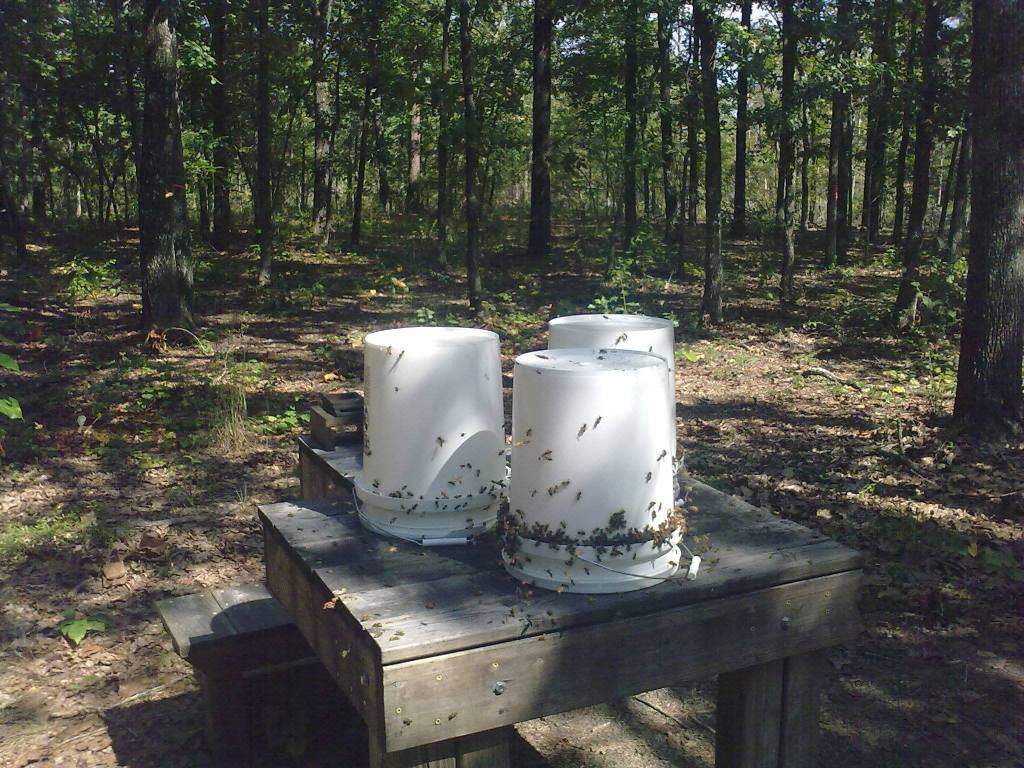
  • Share on Facebook (Opens in new window) Facebook
  • Share on X (Opens in new window) X
  • Share on Pinterest (Opens in new window) Pinterest
  • Email a link to a friend (Opens in new window) Email
  • Share on LinkedIn (Opens in new window) LinkedIn
  • Share on Reddit (Opens in new window) Reddit
  • Share on Tumblr (Opens in new window) Tumblr
  • Print (Opens in new window) Print
  • Share on Telegram (Opens in new window) Telegram
  • Share on WhatsApp (Opens in new window) WhatsApp
Like Loading...

What the Hive Remembers and What You Don’t

04 Friday Sep 2026

Posted by Beekeeping365 in beekeeping seasons, biography, outyards, South Carolina

≈ Leave a comment

Tags

beekeeping

No bee that swarmed in June is alive by the time you write up the year in October. A worker bee in summer lasts five or six weeks; even the queen, who can live for years, wasn’t there for the swarm herself in any way you could call witnessing — she was carried along inside the cluster, a follower rather than observer. By the time you’re telling the story of that swarm at your bee club, every single participant except you has died of old age. The parent colony that “remembers” the swarm, if anything does, is not made up of any bees who were there.

And yet the colony does, in its own way, keep a record. Walk up to an established colony and you can read its recent history off the comb itself: the ivory new wax they built out in a good flow, the darker brood comb worked over years, the clean, glassy cells where they laid up stores against a winter that already happened. A forager who dies today has already passed her waggle-dance directions to the next generation of foragers before she goes. None of it lives in any single bee’s memory, because no bee has a memory that outlasts the season — the memory lives in the structure, in wax and pheromone and behavior encoded so thoroughly into the colony’s habits that the colony can lose every bee that was present for an event and keep behaving as though it remembers. A superorganism doesn’t reminisce. It just keeps doing what worked, materially, in comb, whether or not anyone in it recalls why.

You, on the other hand, remember the way people do — which is to say, badly, and only with effort. Everything true of human memory in general is true of a beekeeper’s memory of the bee yard in particular. The swarm you caught off the fence post gets, with each retelling, a little larger, a little higher up, a little more dramatic in the catching — the same mechanism by which the fish gets bigger, and the mountain gets steeper in every story anyone tells twice. You’re not lying. You’re doing what memory does by default, which is treat every recollection as a working draft rather than a locked file, rewritten slightly each time it’s pulled back out. A memory of a hive inspection is really a memory of the last time you told someone about the hive inspection — a copy of a copy — and if you never tell it, never write it, never pull it back out at all, it doesn’t sit in a drawer waiting. It fades, the way whole chapters of a life fade once there’s no one left to tell them to.

This is, it turns out, exactly the problem beekeeping used to solve for itself without anyone framing it that way. Before extension offices and YouTube and the online forums, what a person knew about bees came from an old-timer down the road who’d learned it from someone before them, told and retold at the hive itself — swarm season stories, wintering stories, the year the mites took half the county’s hives, all reinforced by repetition the way any oral tradition is reinforced, right down to reviewing each day’s words and deeds morning and evening before committing to memory rather than to paper. A bee yard, if you let it, works like a memory palace in the most literal sense — walk a familiar place in a fixed order, hanging each thing you need to remember on a particular snapshot or landmark along the way, and that is uncannily close to what a beekeeper already does without training for it, walking from hive to hive down the row, each box calling up what happened there last time you stood in front of it. The mentor who walks the row with a newer beekeeper, telling the story of hive four’s failed requeening as they pass it, is making memory a social, repeated, walked-through act rather than a private, one-time filing.

That kind of transmission is exactly what’s gotten thinner as beekeeping, like most things, has scattered into people who don’t share a bee yard with anyone who knew them starting out. A hive journal on an app can hold the facts a person used to only get by standing at the boxes with someone older who’d tell it to them again next spring, and it can hold them accurately, in a way retelling does not. But a journal can’t do the other job the old method did almost by accident, which is keep the knowledge exercised. A fact that only exists in a file, never pulled back out and walked through, is not so different from a memory nobody tells anymore — technically preserved, functionally dissolving, waiting in a dusty corner for a query nobody’s likely to run.

Which leaves the harder question sitting underneath all the record-keeping: if you took away everything you remember — the swarm, the bad mite year, the queen you watched get balled and killed by her own bees for reasons you never fully worked out — would you still be the same beekeeper? The colony wouldn’t blink at losing its history this way; it isn’t carrying one in the sense you are, and it replaces every witness to its own past on a five-week cycle without missing a step. You don’t get that deal. Whatever you are as a beekeeper is bound up, more than you’d like to admit under examination, in a set of reconstructed, embellished, quietly fading recollections of boxes that are mostly gone now, repainted, requeened, or dead-out and cleaned up years ago. The hive keeps its continuity in wax, which doesn’t lie but also doesn’t care. You keep yours in story, which cares a great deal and gets it wrong more often than the confidence in your own telling would ever let you suspect.

Feel free to share this on:
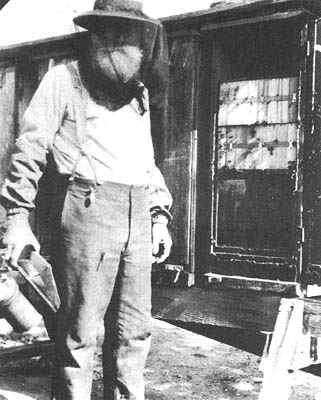
  • Share on Facebook (Opens in new window) Facebook
  • Share on X (Opens in new window) X
  • Share on Pinterest (Opens in new window) Pinterest
  • Email a link to a friend (Opens in new window) Email
  • Share on LinkedIn (Opens in new window) LinkedIn
  • Share on Reddit (Opens in new window) Reddit
  • Share on Tumblr (Opens in new window) Tumblr
  • Print (Opens in new window) Print
  • Share on Telegram (Opens in new window) Telegram
  • Share on WhatsApp (Opens in new window) WhatsApp
Like Loading...

Mentoring Cold Calls

03 Thursday Sep 2026

Posted by Beekeeping365 in beekeeping

≈ Leave a comment

Tags

beekeeping, education, management, mentoring

Excerpt from Journeyman to Master Beekeeper Guidebook – Revised 2026

Mentor as Much as Possible

In anticipation of, and readying yourself for progression within the Master Beekeeper Program, make yourself available to new beekeepers, especially when something has gone wrong in their hives. These “cold calls” are as valuable to you as they are to the beekeeper you’re helping. Each visit is a chance to sharpen your own hive inspection routine, sharpen your assessment and diagnostic instincts, and get real practice reading a colony under conditions you don’t control — the same unpredictability you’ll face in your own advanced field exams. There’s no better rehearsal for that exam than doing it for real, again and again, on hives you didn’t choose and problems you didn’t stage.

Treat every mentoring visit as if you were delivering your field exam. Walk the site, inspect the hive, and reach your diagnosis and recommendations exactly as you would under evaluation — no shortcuts because it’s “just a mentoring call.” Then, after each visit, debrief yourself: How was your presentation? Did you explain your reasoning in a way the new beekeeper could follow and learn from? How confident were you in your read of the colony’s condition, and did your plan of action hold up? Where did you hesitate, second-guess yourself, or miss something you caught only in hindsight?

Over time, this repetition is what turns a competent inspection into a practiced one. Use every mentoring visit to refine your full routine end to end — site selection, exterior assessment, frame-by-frame reading, and the summary, diagnosis, and recommendations you deliver at the end — until it becomes second nature. The more new beekeepers you mentor, the more field-ready you become yourself.

Feel free to share this on:
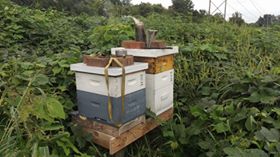
  • Share on Facebook (Opens in new window) Facebook
  • Share on X (Opens in new window) X
  • Share on Pinterest (Opens in new window) Pinterest
  • Email a link to a friend (Opens in new window) Email
  • Share on LinkedIn (Opens in new window) LinkedIn
  • Share on Reddit (Opens in new window) Reddit
  • Share on Tumblr (Opens in new window) Tumblr
  • Print (Opens in new window) Print
  • Share on Telegram (Opens in new window) Telegram
  • Share on WhatsApp (Opens in new window) WhatsApp
Like Loading...

SC Midlands Beekeeping Calendar for September

01 Tuesday Sep 2026

Posted by Beekeeping365 in beekeeping, beekeeping calendar, calendar, management, South Carolina

≈ Leave a comment

Tags

beekeeping, beekeeping calendar, management

astergoldenrod

Photo credit: https://chriscondello.wordpress.com

As always, All beekeeping is local. Here’s my offering for the beekeeping calendar for the South Carolina Midlands for the month of September: Plan on checks twice this month but do not work unless necessary to prevent triggering robbing.

September weather usually continues to be hot in the Midlands. Don’t expect extended cool weather until mid-October. In the meantime, slightly reduced temperatures may open up some alternative Varroa treatment options.

The main management issue this month is a continuation of last month’s focus on pest management. Pests are growing in numbers while bee populations are typically falling in response to a reduction in available nectar. Varroa, Small Hive Beetles, Yellow Jackets, and other pests can overwhelm a hive leading to decline. A weakened hive then becomes vulnerable to robbing and wax moths. The beekeeper must get ahead of the pests, as responding after a problem is observed may be too late.

1) Continue to monitor and control pests – Varroa, Small Hive Beetles, and Yellow Jackets. If you have not yet treated for Varroa now is the time to assess and act accordingly.

2) This year’s hive beetle population seems to be greater than last year’s. I suspect this is due to last year’s warm winter, increased rainfall this spring and summer, and overall supportive weather. Place traps or Swiffer pads in hives before you notice a problem. Check traps weekly and replenish or replace as needed.

3) Yellow Jacket traps with lure can be placed around the apiary. There are several low cost or no cost do-it-yourself trap plans online. If you see yellow jackets attempting to breach security at the hive entrance observe how your bees handle the situation. A strong hive will eject the intruder in short order. Keep hives strong by adjusting hive internal volume to bee population. Poor Man’s Yellow Jacket trap.

4) Depending on your location, some of these plants may have already bloomed. Rose of Sharon, Magnolia, Crepe myrtle, Sunflower, White Boneset, and Sweet Autumn Clematis. Cotton and Soybean is blooming east of the Midlands. Goldenrod and Asters begin to make their appearance this month. We sometimes get a short fall nectar flow. If we get a fall nectar flow you’ll notice a renewed vigor on the landing board and lots of pollen entering the hive. The smelly sock odor of goldenrod will be noted when you open the hive and sometimes when walking through the apiary.

5) Typically, no local Midlands queens are available in September. If you need a queen you’ll probably have to order one from out of state or buy one from a vendor that has ordered from out of state.

6) It’s crunch time to combine weak hives with strong hives. There is a saying, “Take your losses in the Fall.” Experienced beekeepers combine their weak hives with stronger hives knowing they can split next spring and nothing is lost. (Assess and make sure the weak hive is not weak due to disease before combining.) Better to strengthen a strong hive than allow the weak hive to perish. Use the newspaper method between boxes with slits to allow the bees to become accustomed to each other. Remove the weaker queen prior to combining. Note: Again, assess and make sure the weak hive is not weak due to disease before combining.

7) Use entrance reducers as appropriate. Many colonies have been bringing their populations down over the course of dearth period. Adjust their entrances accordingly. Addition of an upper entrance such as a notched inner cover is advisable prior to entering colder weather to allow for ventilation (cover with screen if robbing pressure is a concern).

8) Increase feeding this month to stimulate the brood rearing of nurse bees which will raise your winter bees. You may use a 1:1 mix during this time but nothing thinner. Coupled with autumn pollen flow this can give a boost to improving the quality of your winter bees. Some beekeepers begin the use of 2:1 this month. The decision is yours based on your assessment of your hives, their stores, and whether you think we’ll get cooler weather sooner rather than later.

9) Begin to tip colonies forward from the rear to assess their weight. Notice the number of frames of honey stores inside so that you can compare what you are feeling with what is actually inside. You will need this assessment skill during winter when you shouldn’t open the hives.

10) If not yet done, make efforts to bring all hives with extra supers down to overwintering configuration. For ten frame hives that usually means one deep and one medium OR three mediums. If you left an extra super on to feed during dearth, now is the time to remove it and any queen excluder used. If you have eight frame hives do the math to accomplish the same internal volume.

11) The occasional late swarm caught this time of year can be housed briefly in a box and fed. They will pull out some nice comb but anticipate combining them after a short while with an established colony.

12) Prepare your honey and wax entries for the South Carolina State Fair. Helpful hints can be found here.

13) Attend your local association’s monthly meeting. Volunteer to educate the public on the importance of honey bees by signing up to work a shift at the upcoming SC State Fair booth.

14) It’s September and time to start preparing for autumn! Enjoy the following resources as you prepare your colonies:
Fall Management by Rusty Burlew at Honey Bee Suite

Autumn Management In The Southeast U.S. by David MacFawn

Feel free to share this on:
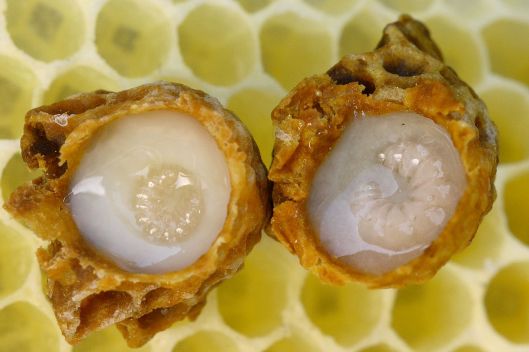
  • Share on Facebook (Opens in new window) Facebook
  • Share on X (Opens in new window) X
  • Share on Pinterest (Opens in new window) Pinterest
  • Email a link to a friend (Opens in new window) Email
  • Share on LinkedIn (Opens in new window) LinkedIn
  • Share on Reddit (Opens in new window) Reddit
  • Share on Tumblr (Opens in new window) Tumblr
  • Print (Opens in new window) Print
  • Share on Telegram (Opens in new window) Telegram
  • Share on WhatsApp (Opens in new window) WhatsApp
Like Loading...

Why Continuous Learning is Key in Beekeeping

31 Monday Aug 2026

Posted by Beekeeping365 in beekeeping

≈ 1 Comment

Walk into any bee club meeting and you’ll find people forty years into it still showing up on a Tuesday night to hear a talk on splits, still taking notes, still asking questions in the parking lot afterward. Nobody makes them go. They go because the bees don’t care how long you’ve kept them — a colony can still surprise you in your fortieth season the same as your first. The moment you decide you already know enough is the moment you stop being able to keep bees well.

1. Decide you’re in it for good

Some people keep bees for a summer and quit. Others keep the same three hives the same way for thirty years and never get any better at it — same mite treatment on the same schedule, same reaction every time something goes wrong, no real curiosity about why. The beekeepers worth learning from are the ones who never stopped approaching every season as a new thing to study: a new queen line, a new way of reading a frame, a new theory about why that one hive always builds up faster than the others. Nobody expects a first-year beekeeper to run a operation cleanly. What a good mentor actually wants to see is someone still trying to get better at it — not a finished beekeeper, just one who’s still growing.

2. It’s not the hours in the beeyard, it’s what you’re paying attention to

You can suit up every weekend for ten years and still not really know your bees, if all you’re doing is popping the lid, glancing at a couple of frames, and closing it back up. Time in the apiary isn’t the same as learning. The beekeepers who actually get good are the ones who inspect like they’re trying to be wrong about something — checking the colony that’s behaving strangely instead of just admiring the one that’s doing great, pulling the brood frame to actually count eggs instead of assuming the queen’s fine because bees are flying. A stack of inspection notes doesn’t make you experienced. Notes on what confused you and what you figured out do.

3. Don’t be afraid to lose a hive.

Every real beekeeping lesson costs a hive at some point — the one you let requeen itself, instead of buying a queen, because you wanted to see if it would work, the one you went into without gloves because you wanted to actually feel what was happening instead of just avoiding getting stung, the one you tried overwintering in a single deep against everyone’s advice because you wanted to know for yourself. Most beginners never run these experiments, because they’re afraid of opening a dead-out in spring and having the club’s old-timers say, “I told you so.” But the beekeepers who actually learn something are the ones willing to be wrong — to lose the hive, own it, and be able to explain exactly why it happened. A dead colony teaches you more than a dozen healthy ones that did exactly what the manual said they would.

Feel free to share this on:
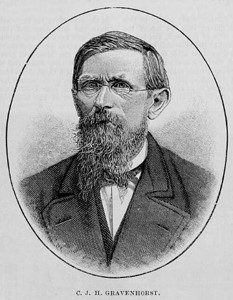
  • Share on Facebook (Opens in new window) Facebook
  • Share on X (Opens in new window) X
  • Share on Pinterest (Opens in new window) Pinterest
  • Email a link to a friend (Opens in new window) Email
  • Share on LinkedIn (Opens in new window) LinkedIn
  • Share on Reddit (Opens in new window) Reddit
  • Share on Tumblr (Opens in new window) Tumblr
  • Print (Opens in new window) Print
  • Share on Telegram (Opens in new window) Telegram
  • Share on WhatsApp (Opens in new window) WhatsApp
Like Loading...

Everything Starts with a Tasty Meal: The Science Behind a Beekeeper’s Best Pest-Management Insight

28 Friday Aug 2026

Posted by Beekeeping365 in beekeeping

≈ Leave a comment

This piece expands on “Everything Starts with a Tasty Meal” by sassafrasbeefarm (Beekeeping365, August 1, 2021). The original essay makes a simple, argument: hive pests like Small Hive Beetles, wax moths, and yellow jackets can’t reproduce until they eat, so a beekeeper’s best defense is cutting off their meal. What follows is that argument traced down into the actual biology, chemistry, and behavioral ecology that back it up — and a couple of places where the research complicates the picture in interesting ways.


The Original Insight

The essay’s logic runs like this: Abraham Maslow argued that humans secure basic needs — food and safety — before pursuing anything more sophisticated. Other animals, lacking our behavioral flexibility, run a cruder version of the same program: an instinctual sequence that starts with food and ends with reproduction. Small Hive Beetles, wax moths, and yellow jackets are, in this framing, simply hungry opportunists trying to eat and then breed. A beekeeper’s job is to jam the machinery between those two steps — deny the meal, and the pest never reaches the reproduction stage. The essay then sketches two tactics: starve the pests (entrance reducers, right-sized equipment, careful feeding practices) and trick them (bait traps that exploit hunger without luring in honey bees).
It’s a good insight. It also turns out to be a fairly accurate compression of several decades of chemical ecology and behavioral research — with a few added wrinkles that make it even more useful.

Fact-Checking the Starting Point: Maslow’s Hierarchy

Worth pausing on the source material itself. Maslow’s hierarchy comes from a single 1943 paper, “A Theory of Human Motivation,” published in Psychological Review — not a book, not a series of studies, a single theoretical article. Two details are commonly missed. First, Maslow never drew a pyramid; the triangular diagram everyone pictures was a later addition by management writers popularizing the idea, not something in the original text. Second, the strict “you must fully satisfy one level before the next kicks in” reading of the theory doesn’t hold up well empirically — later cross-cultural survey work (Tay & Diener, 2011) found people pursue safety, belonging, and growth needs in parallel, not in a rigid queue, and some psychologists have flagged the hierarchy as more of a compelling narrative than a well-tested model of human behavior.


None of that sinks the beekeeping essay’s use of it, though — if anything it sharpens the analogy. Maslow’s theory is at its weakest describing humans, who really do juggle multiple motivations simultaneously. It’s a much better fit for an insect, which has neither the neural hardware nor the behavioral repertoire to do anything but respond to its most pressing physiological state. A hungry beetle is not deciding whether to prioritize food or selfactualization. For a simple nervous system, “deficit needs dominate behavior until resolved” isn’t a debatable psychological theory — it’s close to a complete description of how the animal operates.


Instinct’s Own Logic: Proximate Drives, Ultimate Ends

Biology has its own, more precise version of the essay’s food-thenreproduction chain, developed decades before anyone tried to apply Maslow to bugs. The ethologist Niko Tinbergen (1963) proposed that any animal behavior can be explained on two separate levels: the proximate cause (what mechanism triggers the behavior right now — a hormone, a smell, a hunger signal) and the ultimate cause (why that mechanism was favored by evolution — because it improves reproductive success). A beetle following an odor plume toward a beehive isn’t proximately “trying to reproduce” — it’s proximately responding to an olfactory cue that smells like food. But the reason that response exists at all, baked into the beetle’s nervous system by natural selection, is that ancestors who found food reliably out-reproduced ones who didn’t. Food-seeking is the proximate mechanism; reproduction is the ultimate function it serves.


This matters for pest management because it tells you where the chain is interruptible. You can’t argue a beetle out of its hunger, but you can jam the proximate mechanism — block the smell, remove the food, or disrupt access — and the ultimate goal simply never gets reached. This is also why Small Hive Beetles, wax moths, and yellow jackets are such persistent, fastreproducing opportunists in the first place: all three are classic examples of what ecologists call an opportunistic, “r-selected” life history (MacArthur & Wilson, 1967) — organisms built to find a rich, short-lived resource patch and convert it into as many offspring as possible before the patch disappears or gets defended. A beehive bursting with pollen, honey, and brood is about as rich a patch as an opportunist could hope to find.


Case File 1: The Small Hive Beetle’s Hijacked Alarm Bell

The Small Hive Beetle (Aethina tumida) is the clearest illustration of the essay’s whole thesis, and the actual chemistry behind it is stranger than the essay lets on.


Beetles don’t find hives by luck. They home in on a specific odor blend, and the dominant component of that blend is isopentyl acetate — the honey bee’s own alarm pheromone (Torto et al., 2007, PNAS). Worse, the beetles carry a yeast, Kodamaea ohmeri, that colonizes fermenting pollen and hive debris and, as it grows, produces a volatile bouquet that mimics that same alarm pheromone (Benda et al., 2008, Journal of Apicultural Research). In chemical-ecology terms, this is a kairomone: a signal that evolved for one purpose (bees warning each other of danger) but that a second species has hijacked to its own advantage (beetles using it as a dinner bell). The result is a nasty feedback loop — a few beetles ferment some pollen, the yeast smell draws in more beetles, and a hive with “few beetles” can suddenly host hundreds.


This is precisely the mechanism the original essay gestures at when it asks whether a feeding program “announces food availability with fragrant oils.” Fermenting syrup, spilled feed, and exposed comb all produce the same class of volatile organic compounds that this whole detection system is built to find. You’re not just feeding bees; you’re broadcasting.


The essay’s “deny them food” strategy also holds up well at the mechanical level. Colonies with reduced or modified entrances host measurably fewer adult beetles than colonies with open entrances (Ellis et al., 2002a, cited in Neumann, Pettis & Schäfer, 2016) — entrance reducers aren’t just folklore, they’re a documented barrier to invasion. But the research adds a genuine complication to the simple “starve them out” model: strong, healthy, foodrich colonies actually attract more beetles than weak ones, precisely because they have more to offer (Neumann, Pettis & Schäfer, 2016, Apidologie). What determines the outcome isn’t food availability alone — it’s whether the colony has enough workers, relative to the amount of comb it’s trying to guard, to intercept the beetles once they arrive. Weak or queenless colonies with a low bee-to-comb ratio are dramatically more vulnerable to serious SHB damage than strong ones, even when the strong ones host more total beetles (Annand, 2011, and Mustafa et al., 2014, both cited in Neumann et al., 2016). This is the scientific basis for “hive rightsizing”: matching the number of boxes and frames to the actual size of the colony isn’t about tidiness, it’s about keeping the ratio of guards to guarded comb high enough that food denial can actually be enforced.
And when bees do catch a beetle, the “deny them food” strategy turns out to be under active evolutionary counterattack. Honey bees can’t easily kill a Small Hive Beetle outright — its shell deflects stings and bites — so instead they wall it into a small propolis cell and post guards, sometimes for months (Ellis, Pirk, Hepburn, Kastberger & Elzen, 2002, Naturwissenschaften). By the essay’s logic, an imprisoned, foodless beetle should starve. Most don’t. Researchers found that trapped beetles solicit food from their guards through the same begging behavior honey bee larvae use, and the guard bees respond by feeding them protein-rich glandular secretions via trophallaxis — mouth-to-mouth feeding (Ottati et al., 2021, Journal of Experimental Biology, titled, fittingly, “Prisoners receive food fit for a queen”). The beetle isn’t just hungry; it has evolved a way to trick the bees into feeding it inside its own prison cell. It’s a small but vivid example of the arms race underneath the essay’s tidy metaphor — every time bees close off one route to food, some pests evolve a workaround, and beekeeping pest management is really an ongoing skirmish, not a single move that ends the game.


Case File 2: The Wax Moth’s Cruel Paradox

Wax moths (Galleria mellonella, the greater wax moth, and its smaller relative Achroa grisella) run a similar food-to-reproduction script, but with a twist that refines the essay’s “deny them food” rule even further.


Female wax moths lay eggs in hive cracks and crevices, and the larvae tunnel through comb eating not the clean wax itself but the protein residues embedded in it — pollen, cocoon silk, and brood-cell debris left behind by developing bees. A moth can’t complete development on pure, never-used wax; it needs that protein signature of an active or recently active brood nest. Here’s the paradox: research indicates female wax moths often prefer to oviposit in strong, healthy colonies, because that’s where the richest concentration of brood-associated protein is. Yet it’s the weak colonies that suffer the worst wax moth damage — not because moths target them, but because a small, understaffed workforce can’t patrol enough comb surface to find and remove eggs and young larvae before they tunnel in and become unreachable. It’s the same lesson as the Small Hive Beetle case, arrived at independently: food availability draws the pest, but colony strength — not food denial per se — determines whether the pest actually gets to complete its life cycle.


On the “trick them” side of the essay’s strategy, researchers have made real progress identifying the wax moth’s sex pheromone components (compounds including nonanal, decanal, and undecanal show up across several studies, with the exact blend ratio varying somewhat by moth population), and male moths have been shown to fine-tune their own pheromone release in response to the wingbeat frequency of nearby females — an acoustic-chemical feedback loop layered on top of the basic scent signal. Pheromone-baited traps built on this research are useful for monitoring wax moth populations in stored equipment, though they’ve proven less reliable as a stand-alone in-hive control method — which is exactly why the standard beekeeping advice is still to keep colonies strong and to freeze or tightly store unused drawn comb, denying the moth’s larvae both the workforce-patrolled hive and any long-term undefended stash of protein-laced wax to grow in.


Case File 3: Yellow Jackets and the Calendar of Hunger

Yellow jackets (mostly Vespula species) make the essay’s dearth-season observation almost self-explanatory once you look at their annual colony cycle. A single mated queen founds a nest in spring and spends early summer as the sole forager, hunting insects and other protein to feed her first larvae. Those larvae, in turn, secrete a sugary substance that they exchange with adult workers for masticated protein — a mutual trophallaxis arrangement that fuels the colony’s rapid summer growth. Through midsummer, colony demand is protein-heavy, which is why wasps are aggressively hunting live prey and carrion in that window.


By late summer, the calculus flips. The colony begins producing new queens and males instead of more workers, larval production drops off, and with it the supply of larval sugar secretions that adult workers depend on. A colony full of adult wasps that suddenly has far less of its usual sugar source has to go looking elsewhere — right at the moment natural nectar sources are also drying up. That collision is precisely the “food dearth” window the original essay flags, and it explains why yellow jacket pressure at hive entrances and feeders spikes hardest in exactly the weeks beekeepers most need their colonies left alone.


The essay’s “trick them without tricking your bees” strategy also has a welldocumented chemical basis. Heptyl butyrate is a synthetic attractant that draws several common pestiferous Vespula species into traps with reasonable species-selectivity, while doing essentially nothing to attract honey bees (Reierson, Rust & Vetter and related field trials). Large-scale trapping studies have shown that heptyl-butyrate-baited or protein-baited traps can measurably suppress local yellow jacket forager numbers for weeks at a stretch, though researchers are consistently clear that trapping alone rarely eliminates a well-established population — it reduces pressure rather than solving the problem outright, which is a useful caveat to add to the essay’s otherwise tidy trapping advice.


The Common Thread: Three Links in One Chain

Laid side by side, the three case studies point to the same refinement of the essay’s core claim. “If they don’t eat, they don’t reproduce” is true, but a pest actually has to clear three separate hurdles to get there, and each one is a different point of intervention:


Locate the food. This step is chemical, not behavioral — beetles follow hijacked alarm pheromone, moths follow protein-scented comb, wasps follow protein and (in season) carbohydrate cues. Anything that adds fragrant, fermenting, or spilled food odor to an apiary — including well-meaning feeding practices — recruits pests at this stage before a beekeeper even knows they’re there.

Get access to it. This is where physical exclusion works: entrance reducers, robbing screens, screened bottom boards, and right-sized equipment don’t remove the food, they just narrow the number of doors a pest can use to reach it, concentrating the colony’s limited guard force where it can actually do its job.

Complete development undisturbed. This is the step the SHB and wax moth research keeps landing on: a hungry pest that finds food and gets inside still has to survive long enough, uninterrupted enough, to finish its life cycle — and that survival window is set almost entirely by whether the colony has enough workers, relative to the space it’s defending, to keep finding and evicting it.
The essay’s two tactics — starving pests and baiting them — map neatly onto hurdles one and two. The bee-to-comb ratio research reviewed above adds a third lever the essay doesn’t explicitly name but clearly gestures at with “hive right-sizing”: defense capacity, not food access alone, is often what decides the outcome.


Putting the Science to Work

None of this changes the essay’s practical recommendations so much as it explains why they work and adds one more:


 Cut off the scent trail. Avoid open or fragrant feeding, clean up spills promptly, and be mindful that essential-oil feed additives and fermenting syrup produce exactly the class of volatiles that draw in opportunists looking for a hijacked signal to follow.


 Narrow the doors. Entrance reducers, robbing screens, and screened bottom boards reduce the number of access points pests can exploit and concentrate a colony’s guard force where it matters — a strategy with direct research support in the SHB literature.


 Right-size the box to the bees. Keep the amount of comb a colony must defend proportional to its actual population. An over-supered, understrength hive isn’t just an SHB risk; it’s a wax moth risk for the same underlying reason — not enough guards per square inch of comb.


 Bait the hunger, not the hive. Species-specific attractants — mineraloil/vinegar SHB traps, pheromone lures for stored wax moth comb, heptyl-butyrate traps for yellow jackets — exploit the same detection systems pests use to find your hive, redirecting that hunger somewhere it can be safely dead-ended instead. This is a version of what integrated pest management researchers call a “push–pull” strategy: making the protected resource harder to find or reach (push) while offering a more attractive, disposable decoy nearby (pull).


 Expect an arms race, not a solved problem. The SHB’s trick of getting guard bees to feed it inside its own prison cell is a useful reminder that every defensive measure is answered, eventually, by some counteradaptation. Pest management in an apiary is maintenance, not a single fix.


Closing Thought

The original essay ends by suggesting that during a food dearth, it pays to think like a pest for a while. The research bears that out more literally than the essay probably intended: these pests aren’t reasoning about anything, they’re running fixed chemical and behavioral programs tuned by evolution to find food fast and convert it into offspring before the opportunity closes. That’s actually good news for a beekeeper. A fixed program is a predictable one. Learn the cue it responds to — a hijacked alarm pheromone, a proteinscented comb, a queen’s shifting nutritional demands — and you don’t have to outsmart the pest so much as quietly turn its own wiring against it.

Sources:
Review, 50(4), 370–396.
 Tay, L., & Diener, E. (2011). Needs and subjective well-being around the world. Journal of Personality and Social Psychology, 101(2), 354–365.
 Tinbergen, N. (1963). On aims and methods of ethology. Zeitschrift für Tierpsychologie, 20(4), 410–433.
 MacArthur, R. H., & Wilson, E. O. (1967). The Theory of Island Biogeography. Princeton University Press.
 Torto, B., Boucias, D. G., Arbogast, R. T., Tumlinson, J. H., & Teal, P. E. A. (2007). Multitrophic interaction facilitates parasite–host relationship between an invasive beetle and the honey bee. Proceedings of the National Academy of Sciences, 104(20), 8374–8378.
 Benda, N. D., Boucias, D., Torto, B., & Teal, P. (2008). Detection and characterization of Kodamaea ohmeri associated with small hive beetle
Aethina tumida infesting honey bee hives. Journal of Apicultural Research, 47(3), 194–201.
 Neumann, P., Pettis, J. S., & Schäfer, M. O. (2016). Quo vadis Aethina tumida? Biology and control of small hive beetles. Apidologie, 47(3), 427–466.
 Ellis, J. D., Pirk, C. W. W., Hepburn, H. R., Kastberger, G., & Elzen, P. J. (2002). Small hive beetles survive in honeybee prisons by behavioural mimicry. Naturwissenschaften, 89(7), 326–328.
 Ottati, S., et al. (2021). Prisoners receive food fit for a queen: honeybees feed small hive beetles protein-rich glandular secretions through trophallaxis. Journal of Experimental Biology, 224(2), jeb234807.
 Reierson, D. A., Rust, M. K., & Vetter, R. S. Traps and protein bait to suppress populations of yellowjackets (Hymenoptera: Vespidae).
International Conference on Urban Pests proceedings.
 Boyd-Wilson, K. et al., and related field studies on greater wax moth (Galleria mellonella) pheromone identification and biology (various regional studies).

Feel free to share this on:
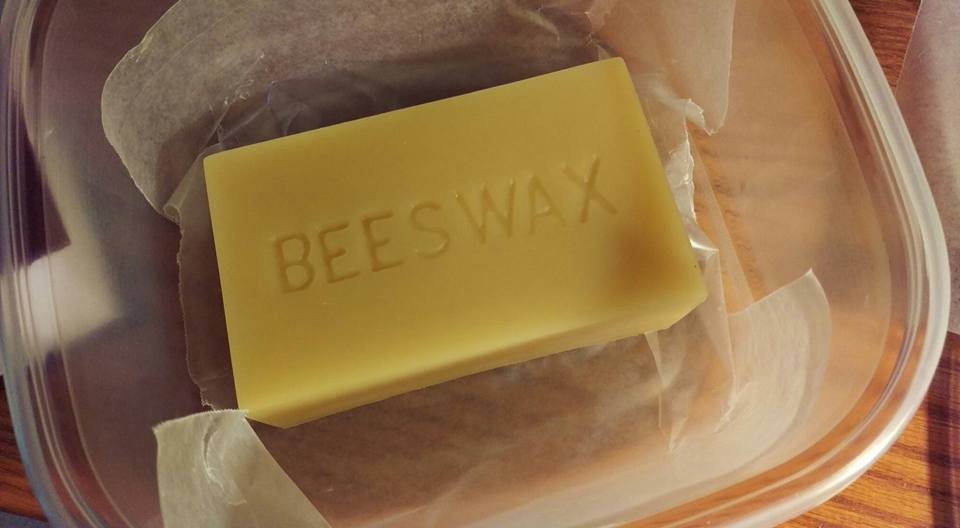
  • Share on Facebook (Opens in new window) Facebook
  • Share on X (Opens in new window) X
  • Share on Pinterest (Opens in new window) Pinterest
  • Email a link to a friend (Opens in new window) Email
  • Share on LinkedIn (Opens in new window) LinkedIn
  • Share on Reddit (Opens in new window) Reddit
  • Share on Tumblr (Opens in new window) Tumblr
  • Print (Opens in new window) Print
  • Share on Telegram (Opens in new window) Telegram
  • Share on WhatsApp (Opens in new window) WhatsApp
Like Loading...

The Skip in Their Step: Rethinking Oxalic Acid Use

21 Friday Aug 2026

Posted by Beekeeping365 in beekeeping

≈ Leave a comment

Tags

beekeeping, bees

The story starts years ago when I noticed that the bees flew with more enthusiasm and worked harder in the days following a varroa mite treatment (oxalic acid vaporization). I asked others if they too saw this behavior change. Some said they never took notice; others said it was obvious. Years later I measured the coming and going on the landing board using one of those click counters. It was true; the bees were energized after a treatment. But I didn’t have the answer as to why. Last summer I spoke to someone more knowledgeable than I in entomology and he used the analogy, “Have you ever noticed how good a dog feels the day after a flea dip?” A great reply that satisfied me for a while. But I thought, putting a dent in a 3% mite load — not even eliminating the mites — couldn’t increase the entire colony’s enthusiasm as evidenced by the increase in activity on the landing board. Could it? Or was something else going on? But I’m getting ahead of myself.


Oxalic Acid as a Disinfectant

Back in 2021, I started doing some research and learned that the EPA first approved oxalic acid (OA) in 1957 as a disinfectant in bathrooms, swimming pools, and sewage and drainage systems, among other uses.1 It’s still used today in cleaning solutions for industrial food-production machines, not to mention good old Bar Keeper’s Friend. If you’re not sure of the definition of disinfectant, look it up — it’s different from a sanitizer, cleaner, or antibacterial. The EPA’s own regulatory definition of “disinfectant” does include destroying or inactivating viruses, not just bacteria.2 But here’s a wrinkle I didn’t appreciate until I went back and checked: a product can’t legally claim virus-killing power just because it’s registered as a disinfectant in general. EPA requires specific test data before a virucidal claim goes on a label, and oxalic acid’s original 1957 registration only carries data for bacteria and general germs — not viruses.3 So the “disinfectant” label tells me OA belongs to the right broad category of chemical, but it doesn’t, by itself, prove OA is killing viruses in my hives. That’s still my hypothesis to prove, not a fact I get to borrow from the EPA paperwork. Was OA also acting as a chemical scrubbing of the internal surfaces of the hive and the bees themselves? Was I killing bacteria and viruses as well as mites? I didn’t know, but I wanted to try a few things.


Starting the Routine Schedule

Over two years ago, in January 2022, I started treating my bee hives routinely with OA vapor — “routine schedule” meaning a set date each month on my calendar, similar to taking a blood pressure medication on a routine schedule, or a medicine for a chronic condition like diabetes or reflux. I think of it as an IPM treatment for mites and their accompanying viruses.


This isn’t as far a stretch as it might sound. In nursing, we’re taught to administer medications only after verifying the five rights: right patient, right medication, right dose, right route, right time. Applying that framework to pesticide administration isn’t a stretch either — both involve delivering a chemical substance to a living organism in hopes of a beneficial outcome. Physicians sometimes order medications on schedules that fall outside the manufacturer’s standard recommendation, tailored to a particular patient’s situation, and as treatment has advanced, we’ve moved toward managing chronic illness before it becomes acute — we don’t wait for the stroke or the diabetic coma before we intervene, and then discharge without ongoing management. We manage the disease continuously. I think we currently let our bees stay sick much of the time, performing sub-par, and only step in when they’re approaching the acute, terminal stage. I fully support not overusing pesticides in the hive — the reasons economic thresholds exist are good ones, and an overused pesticide breeds tolerance and becomes useless. But I think there’s a version of “right schedule, right rotation” that lets us manage the chronic illness of our bees without letting them get sick first.


My goals were to 1) decrease the number of yearly OA treatments and 2) reduce the likelihood of resistance to OA developing. Really, all I was changing was one aspect of treatment — the dosing schedule — from one that targeted the mites’ reproductive cycle to one that disinfected the colony’s environment on a regular interval. Any varroa mites killed in the process would be a value-added outcome.


That year I had no colony losses during the spring, and I made more honey than usual. I did have some colony failures (~10%) after the nectar flow during our dearth period, as is typical — multiple stressors (small hive beetle, harvest, and climbing mite-to-bee ratios) take their toll during that window as mite load climbs and viral load along with it. I intervened with a single series of OA treatments and the losses stopped, which pointed me toward mite/viral load as the most critical stressor. After that series, I resumed my scheduled monthly treatments and had no winter losses.


In January 2023, I continued the routine schedule and again had no losses during the nectar flow. This year I made a change for the post-nectar-flow period: a treatment every two weeks (the 1st and 15th) from June through October, adding about five extra treatments for the year — pushing me toward the edge of my own goal to limit total treatments. In November I went back to the monthly schedule. The result: no colony losses in spring, summer, fall, or winter of 2023. Honey production ran about 65 lbs. per hive, roughly 50% above what’s typical in the SC Midlands. Keeping bees healthy through the nectar flow keeps them working harder, rather than the more common pattern of letting their health decline over the season until they collapse just ahead of a “salvation” treatment.


That brings me to 2024. No mite or virus-related losses so far. Coming out of winter I saw the occasional weak colony needing a new queen or help with small hive beetles, but buildup was fast in the pre-season. I did my tax accounting and used less sugar last year, having left more honey on the hive thanks to their productivity (and my reluctance to pay for sugar). They’re healthy and handling stressors well.

What Research Actually Says

I spent some time this year researching organic acids as disinfectants and antimicrobials, and there’s real science here — organic acids can be antivirals, and it’s dose- and pH-dependent to a degree. A 3% oxalic acid solution, the concentration most beekeepers mix, lands somewhere around pH 2, though the exact number moves with concentration — straight crystals run closer to pH 1.5, and a well-diluted solution can sit up near pH 4.4 There are some unidentified factors at play too. A 2024 study in the journal Tropical Medicine and Health tested acetic, oxalic, and citric acid head-to-head against influenza, SARS-CoV-2, and feline calicivirus at matched pH levels, and found that acetic acid could inactivate the flu virus at a milder pH than oxalic or citric acid needed to do the same job — meaning virucidal effect isn’t simply a function of how acidic the acid is.5 That’s a nice confirmation of something I’d suspected but couldn’t fully source: the reason organic acids kill viruses, and which ones do it best against which viruses, is still something of an open question in the literature.


Where I have to be honest with myself: that research is about organic acids and viruses in a petri dish, not specifically about oxalic acid and bee viruses in a hive. I went looking for a study that would confirm OA directly suppressing bee viruses the way I’m proposing, and I didn’t find one that backs it cleanly — one field trial I came across actually measured viral loads (Deformed Wing Virus and Acute Bee Paralysis Virus) rising after an oxalic acid trickle treatment, right alongside a rise in the untreated control group.6 So this part of my theory stays a hypothesis, not a demonstrated fact, and I want to be upfront about that rather than dress it up as settled science.


Why is this interesting anyway? First, because it shouldn’t be working — one would think my colonies would be mite-ridden and failing, since this schedule gives mites more time between treatments than a reactive approach would. But I haven’t seen a case of deformed wing in years, and skewering drone pupae shows the mites are under control. Second, because mite levels are now out of the treatment-decision loop, I’ve stopped watching my bees decline before they trip whatever this season’s action threshold happens to be. Third, I honestly wouldn’t mind if my mite counts were high — it would confirm something other than mite-killing is doing the work. Fourth, I’m exposing my bees to the same amount of OA, or less, than a standard reactive schedule would use. Fifth, more time between treatments means less chance of building resistance — and it’s worth saying plainly that as of now there are no confirmed reports of varroa developing resistance to oxalic acid anywhere, which is a genuinely good track record compared to the synthetic acaricides.7 That said, extension entomologists still recommend rotating treatments as a hedge rather than relying on any one product indefinitely, so I’m not treating “no resistance yet” as a guarantee it’ll stay that way.8 Sixth, it simplifies a process that overwhelms a lot of new beekeepers — mite assessment, seasonal thresholds, choosing the right miticide for the month and temperature. Seventh, my bees stay healthy and productive all year, without the yo-yo of cleaning them up only to let them slide back toward collapse before the next rescue series. That yo-yo isn’t healthy living. We don’t let diabetics go into a coma before treating them, or let HIV patients run high viral loads before we intervene — we manage the illness rather than wait for the crisis. Our colonies don’t die from the mites; they die from the high viral loads the mites bring with them.


How is this working? My supposition is that I’m killing viruses, or a subset of them, directly — bypassing the need to fight the mite as a vector. Another possibility is that I’m interrupting the mite-virus relationship to the mite’s detriment. I don’t know which, if either, is right. It could be something else entirely that I haven’t considered.


The Breakthrough Thought — and Where I’ve Had to Pull Back

One thing that’s plagued me is that noticeable change in demeanor within a day or two of treatment — more energy, more intent, more enthusiasm on the landing board. It never made sense that killing some fraction of a 3% mite load would produce a colony-wide mood shift. My working theory for a while was that removing even a few mites reduced viral load enough to matter, since bees pass food and pheromone constantly through trophallaxis — if one bee carries virus, the whole colony is soon exposed through contact, grooming, and shared food.


I’d been citing a 2015 source that described oxalic acid as an antibacterial compound and framed mite reduction as a side effect of that antibacterial action. Going back to properly source that for this rewrite, I couldn’t relocate or verify the site, so I’m setting that particular citation aside until I can pin down where it actually came from — I don’t want to build an argument on a quote I can’t stand behind.
Here’s where I land instead: it’s reasonable to think that a monthly dose of OA is doing some general sanitizing of the hive’s internal surfaces and the bees themselves, similar to how a household disinfectant works on a countertop — and, notably, cleaning products with proven antiviral action against human pathogens are common and unremarkable. What makes OA unusual is that it can be safely delivered directly onto a living colony, which most disinfectants can’t claim. If the bees were living in an environment thick with viruses and passed constantly through trophallaxis, they’d plausibly feel run-down most of the time, the way we do with a low-grade infection — and a monthly disinfecting dose might give them room to recover between exposures. That’s a coherent hypothesis. It just isn’t a proven one yet, and I want to say that plainly rather than lean on the “disinfectant equals antiviral equals proven” logic I was using before — that chain has a real gap in it once you look closely at what the label was actually tested for.


One more correction I owe myself: I’d been saying bees don’t really have an immune system the way we do, and that most of their defense runs through the propolis envelope and nutrition. That’s an overstatement. Bees do have an individual innate immune system — immune cells in the hemolymph, defense proteins like phenoloxidase — it’s just a scaled-down one compared to solitary insects, carrying roughly a third of the immune-related genes some other insects have.9 What they’ve evolved instead is social immunity: propolis, grooming, hygienic behavior, all working alongside the individual system rather than replacing it. So “the colony’s immune system leans hard on propolis and nutrition” is fair; “bees don’t have one” isn’t.


On the mite-killing side, we still don’t fully know the mechanism — the EPA’s own label for oxalic acid says as much, listing the mode of action as unknown.10 We do know mite knockdown peaks within the first two to three days post-treatment, tapering afterwards.11 One open question I keep turning over: could OA be disrupting a symbiotic relationship between the mite and some other microbe, say in its gut, causing a slower die-off over those first few days rather than a direct kill? I don’t have an answer.
Using OA once a month shouldn’t promote tolerance, given it breaks down in the hive faster than the synthetic acaricides and there’s no confirmed resistance on record. I suspect it could be used more frequently than monthly, but once a month is the more sustainable choice for most beekeepers. If I were pitching this to a pharmaceutical company’s R&D team, the next questions would be the obvious ones: best dosage, best frequency, best route. My best guess is that vaporization is the right route, since it coats the entire interior with OA crystals; the right dosage is still undetermined and could turn out to be higher or lower than current guidance. It’s also worth noting the guidance itself has kept moving in a direction that makes this easier: the EPA cleared OA for use with honey supers on the hive back in 2021, reversing the old restriction,12 and more recently raised the allowed vaporizer dose from 1 gram to 4 grams per brood chamber based on research showing the higher dose is effective without harming the bees.13 Both changes make a routine, honey-season-friendly schedule more practical than it would have been when I started this in 2022.


One more thing worth naming: this experiment might produce colonies with higher mite counts that never get sick, which means future mite counts alone may not be the right barometer of success. Who cares if my mite counts run higher, as long as the bees stay healthy and productive?


Takeaways: Oxalic acid is unusual among disinfectants in that it’s safe to administer directly within a living hive. The benefit I’m chasing isn’t a lower mite count — it’s year-round, consistent colony health and productivity, instead of the current default of cycling between “sick” and “well” periods.
This honey season is off to a great start. All supers are already deployed, and I’m wondering how I’m going to keep up with giving the bees enough space now that they’ve gone gangbusters. Cheers!


Brief update, 7/20/2025: I’m just back from my state beekeepers’ association’s summer conference. Talk of mites always triggers a little guilt that I haven’t updated this in a while, so the effort continues. I’ve tried to maintain the routine monthly schedule, with some disruption during a personal health event. The healthy-bees, minimal-losses pattern has held — a near-perfect survival rate in the middle of record national losses across the US is rewarding to see. I don’t make it to as many conferences as I used to, but among the people I’ve shared this with, there’s a shared read that I may simply be keeping the viral threshold below the point where illness develops. Randy Oliver has written about colonies hitting a tipping point at a certain mite count, beyond which they’re doomed to failure — a framing that lines up with the broader consensus that varroa itself rarely kills a colony outright; it’s the virus the mite carries that does. I think that’s a reasonable read of what I’m seeing too — that the viral threshold is being held in check, by a little or by a lot, I still can’t say for certain.

Notes
U.S. EPA, Pesticides — Fact Sheet for Oxalic Acid (PC-009601): oxalic acid was first registered as a pesticide in 1957 for bathroom disinfectant use, swimming pool water systems, drainage and sewage systems, and eating establishments. epa.gov (archived reregistration fact sheet, www3.epa.gov/pesticides/chem_search/reg_actions/reregistration/fs_PC-009601_1-Dec-92.pdf) ↩
U.S. EPA, “Selected EPA-Registered Disinfectants”: a disinfectant is defined as a substance that destroys or irreversibly inactivates bacteria, fungi, and viruses on hard surfaces. epa.gov/pesticide-registration/selected-epa-registered-disinfectants ↩


U.S. EPA, Interim Guidance for the Evaluation of Products for Claims Against Viruses (Oct. 2024): registered products may not carry pathogen-specific efficacy claims, including virucidal claims, unless EPA has reviewed supporting data and approved the label language. epa.gov/system/files/documents/2024-10/11108-02_interim_virucidal_claim_guidance_2024_10_10.pdf ↩


pH figures for oxalic acid at various concentrations, per whatistheph.com/substance/Oxalic_Acid and completeera.com’s oxalic acid pH overview — undiluted crystals run roughly pH 1.5–2, with pH rising as the solution is diluted. ↩


Ogura, T. et al., “pH-dependent virucidal effects of weak acids against pathogenic viruses,” Tropical Medicine and Health (2024). Acetic acid inactivated influenza virus at approximately pH 4, while citric and oxalic acid required a lower pH for the same effect. pmc.ncbi.nlm.nih.gov/articles/PMC10785384/ ↩


Field trial comparing oxalic acid trickle treatment to lithium citrate found Acute Bee Paralysis Virus and Deformed Wing Virus loads increased significantly in the oxalic-acid group post-treatment (loads also rose in the untreated control). PMC, ncbi.nlm.nih.gov/pmc/articles/PMC9510912/ ↩


Washington State University Extension, “Oxalic Acid Options for Controlling Varroa destructor“: no reports of miticide resistance to oxalic acid to date. pubs.extension.wsu.edu/product/oxalic-acid-options-for-controlling-varroa-destructor/ ↩


NC State Extension, “Oxalic Acid for the Control of Varroa Mites”: recommends rotating treatments rather than relying on oxalic acid alone, even though resistance hasn’t yet been documented. content.ces.ncsu.edu/oxalic-acid-for-the-control-of-varroa-mites ↩


Honey bees innate and social immunity: bees possess hemolymph immune cells and defense proteins such as phenoloxidase but carry comparatively fewer immune-related genes than many other insects, relying heavily on social immunity (propolis, grooming, hygienic behavior) to compensate. See overviews at imanagement.ch (apisavoir.ch, “Social Immunity in Honey Bees”) and the review in Revista Mexicana de Ciencias Pecuarias, scielo.org.mx/pdf/rmcp/v10n3/2448-6698-rmcp-10-03-705-en.pdf ↩


U.S. EPA oxalic acid product label (EPA Reg. No. 091266-00001): resistance management section states oxalic acid’s mechanism of action is unknown. www3.epa.gov/pesticides/chem_search/ppls/091266-00001-20210430.pdf ↩


Honey Bee Suite, “Using Oxalic Acid Vaporization When Brood Is Present”: peak mite drops typically occur within the first two to three days of treatment. honeybeesuite.com/using-oxalic-acid-vaporization-when-brood-is-present/ ↩


EPA label amendment, effective 4/30/21, permitting oxalic acid use with honey supers on the hive. Reported via OxaVap, oxavap.com/information/, and MiteCalculator.com’s coverage of the label change. ↩


University of Florida IFAS, “Using research to change regulation: Honey bee research impacts EPA labeling” (2025): EPA raised the allowed oxalic acid vaporizer dose from 1 gram to 4 grams per brood chamber following UF/IFAS research. blogs.ifas.ufl.edu/news/2025/09/17/using-research-to-change-regulation-honey-bee-research-impacts-epa-labeling/ ↩

Feel free to share this on:
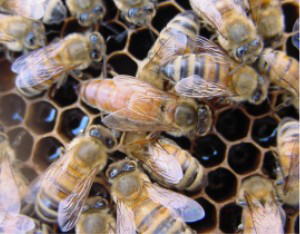
  • Share on Facebook (Opens in new window) Facebook
  • Share on X (Opens in new window) X
  • Share on Pinterest (Opens in new window) Pinterest
  • Email a link to a friend (Opens in new window) Email
  • Share on LinkedIn (Opens in new window) LinkedIn
  • Share on Reddit (Opens in new window) Reddit
  • Share on Tumblr (Opens in new window) Tumblr
  • Print (Opens in new window) Print
  • Share on Telegram (Opens in new window) Telegram
  • Share on WhatsApp (Opens in new window) WhatsApp
Like Loading...

Pest Control

19 Wednesday Aug 2026

Posted by Beekeeping365 in beekeeping

≈ Leave a comment

Here in the Midlands of South Carolina we are well into the pest control season for honey bee management.

It’s time to begin pest control. For wax moths, manage internal volume as we enter the period of declining population by removing space so bees can adequately cover the frames. For SHB, you have multiple methods such as oil traps, dry unscented Swiffer pads, hive tool whack-a-mole, vacuums, and/or interrupting their life cycle with soil drench, DE, or bait. Choose one or more. Pictured: Pool salt and GrubX.

Stress reduction for bees. Reduce pest pressure on your bees through pest management. Kill SHB at the source – as they seek to pupate in the ground.

Feel free to share this on:
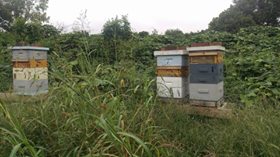
  • Share on Facebook (Opens in new window) Facebook
  • Share on X (Opens in new window) X
  • Share on Pinterest (Opens in new window) Pinterest
  • Email a link to a friend (Opens in new window) Email
  • Share on LinkedIn (Opens in new window) LinkedIn
  • Share on Reddit (Opens in new window) Reddit
  • Share on Tumblr (Opens in new window) Tumblr
  • Print (Opens in new window) Print
  • Share on Telegram (Opens in new window) Telegram
  • Share on WhatsApp (Opens in new window) WhatsApp
Like Loading...

State Fair Wax Preparation

11 Tuesday Aug 2026

Posted by Beekeeping365 in beekeeping

≈ Leave a comment

Register for the State Fair honey show this month! Photo: watching wax harden is like waiting for a pot to boil.

Feel free to share this on:
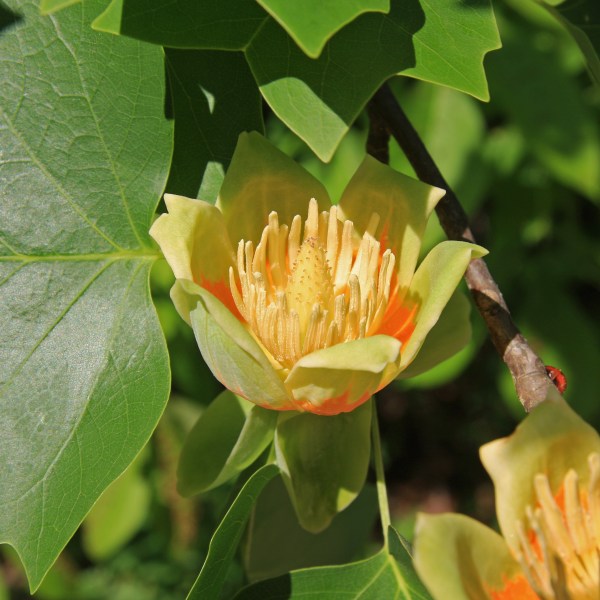
  • Share on Facebook (Opens in new window) Facebook
  • Share on X (Opens in new window) X
  • Share on Pinterest (Opens in new window) Pinterest
  • Email a link to a friend (Opens in new window) Email
  • Share on LinkedIn (Opens in new window) LinkedIn
  • Share on Reddit (Opens in new window) Reddit
  • Share on Tumblr (Opens in new window) Tumblr
  • Print (Opens in new window) Print
  • Share on Telegram (Opens in new window) Telegram
  • Share on WhatsApp (Opens in new window) WhatsApp
Like Loading...

Transforming a Vintage Beekeeping Machine for Better Performance

30 Saturday May 2026

Posted by Beekeeping365 in beekeeping

≈ Leave a comment

Tags

beekeeping, extracting honey, honey

She’s a brick—-house.

Scored this work in progress. Looks like an old hand crank model converted by some clever farmer to a motorized unit. Was under powered with 1/2 HP when I got her so I upgraded her to a 1 HP Ag use motor that I had sitting on a shelf. Now she spins like a champ. I can’t figure out how many frames she holds though. Looks like 4 deeps/8 mediums size but after I placed 8 mediums in the radial position, the basket still has room for me to place 4 more mediums in the tangential position. She’s functional now but still needs some rehab.

Feel free to share this on:
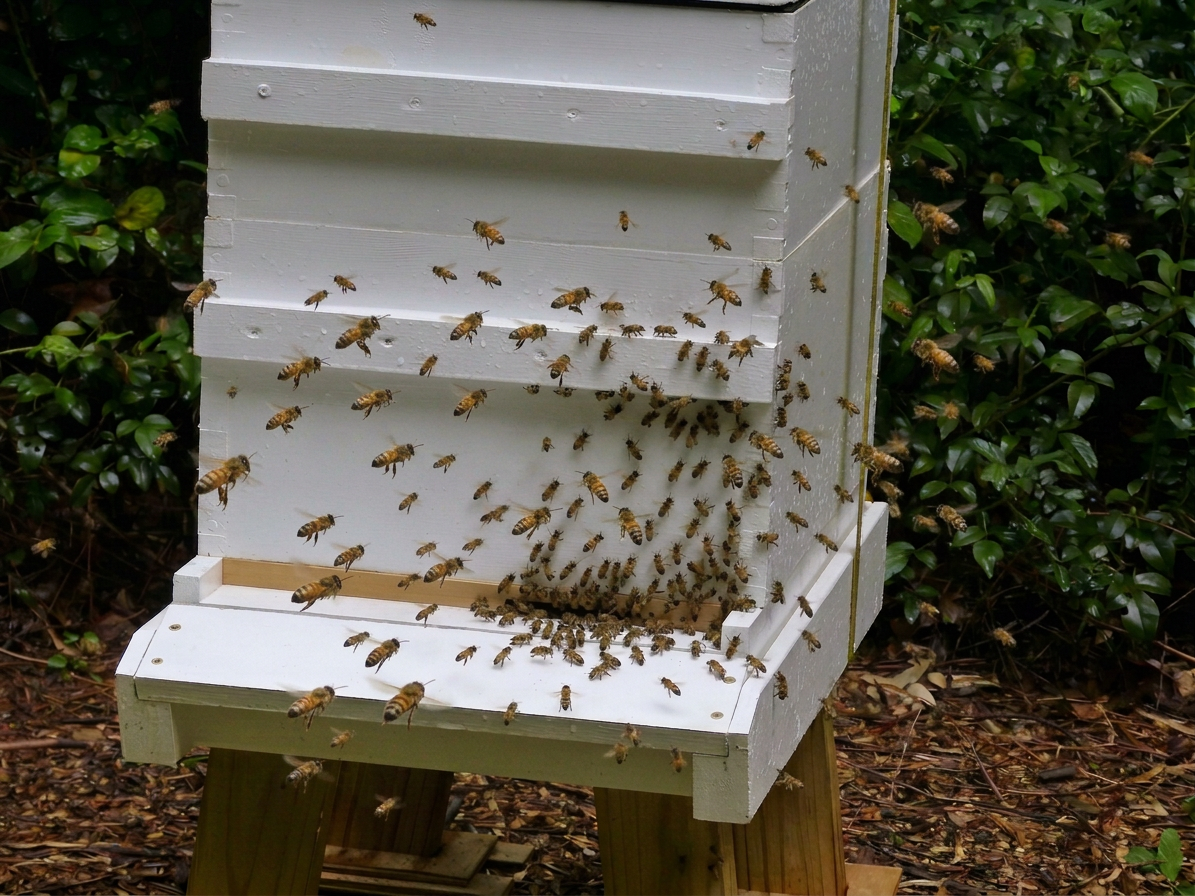
  • Share on Facebook (Opens in new window) Facebook
  • Share on X (Opens in new window) X
  • Share on Pinterest (Opens in new window) Pinterest
  • Email a link to a friend (Opens in new window) Email
  • Share on LinkedIn (Opens in new window) LinkedIn
  • Share on Reddit (Opens in new window) Reddit
  • Share on Tumblr (Opens in new window) Tumblr
  • Print (Opens in new window) Print
  • Share on Telegram (Opens in new window) Telegram
  • Share on WhatsApp (Opens in new window) WhatsApp
Like Loading...

Swarm Removal at Olive Garden: Quick and Efficient

29 Friday May 2026

Posted by Beekeeping365 in beekeeping

≈ Leave a comment

Received call today regarding a swarm in Crepe Myrtle tree outside Olive Garden. Have Nuc will travel… Danny and I had it hived and were gone in 15 minutes. Didn’t even suit up – just shorts and tee shirts for both of us. Of course they were Italians.—

feeling happy at Olive Garden Italian Restaurant.

Feel free to share this on:
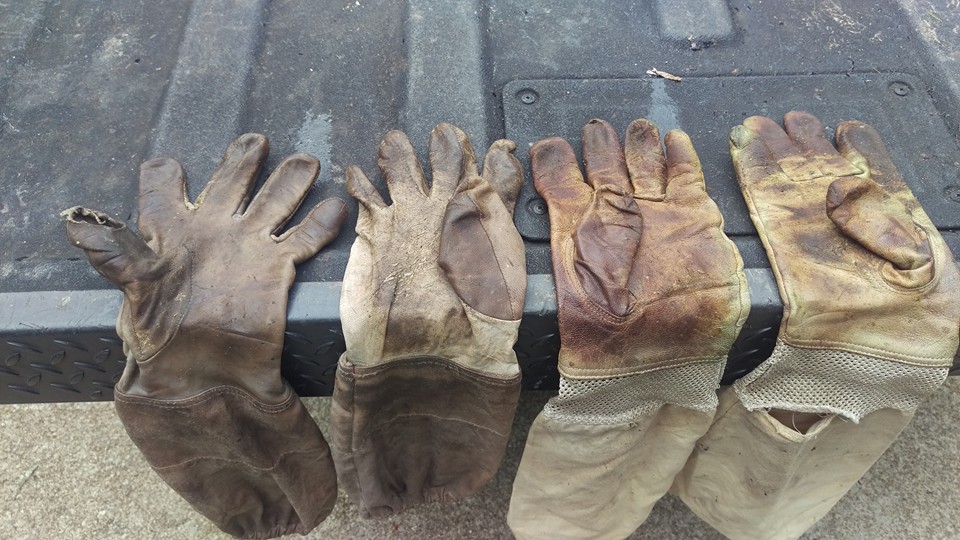
  • Share on Facebook (Opens in new window) Facebook
  • Share on X (Opens in new window) X
  • Share on Pinterest (Opens in new window) Pinterest
  • Email a link to a friend (Opens in new window) Email
  • Share on LinkedIn (Opens in new window) LinkedIn
  • Share on Reddit (Opens in new window) Reddit
  • Share on Tumblr (Opens in new window) Tumblr
  • Print (Opens in new window) Print
  • Share on Telegram (Opens in new window) Telegram
  • Share on WhatsApp (Opens in new window) WhatsApp
Like Loading...

Bait Hives Make Good Neighbors

13 Tuesday Jan 2026

Posted by Beekeeping365 in beekeeping

≈ Leave a comment

Tags

swarm bait hives

Bait Hives Make Good Neighbors

After several years of catching swarms, I think I have my preferred bait hive design down pat. Lightweight, easy to transfer frames to permanent hive, recycles frames, easy to transport, and irresistible to swarms.

Double 5 frame nuc boxes, with old propolised frames only in the upper box (one frame with old comb, and four with starter strips heavily coated with beeswax), bottom box is empty, bottom board with small screened drainage/ventilation hole is attached to bottom box, 1 1/4″ entrance hole with bird excluder (nail) and with closure disk for quickly closing the entrance for moving, main entrance blocked (screw used as handle if it needs to be removed), ratchet strap holds it all together. It’s not heavy and easy to transport. I’ll place this now and bait it with scent attractant in about a month. Placement of traps are 75 to 200 yards away from the main bee yard and along tree lines. Height is best at 12 – 15 ft. but I’m not keen on lugging ladders through the woods so I keep them at manageable heights I can reach sanding on the ground. Scout bees will give the bait hive a thorough inspection with points given for correct cavity size, correct entrance size, odor, dryness, height, and location. The more of these you satisfy the more points you earn and the greater the likelihood they will choose the bait hive.

Feel free to share this on:

  • Share on Facebook (Opens in new window) Facebook
  • Share on X (Opens in new window) X
  • Share on Pinterest (Opens in new window) Pinterest
  • Email a link to a friend (Opens in new window) Email
  • Share on LinkedIn (Opens in new window) LinkedIn
  • Share on Reddit (Opens in new window) Reddit
  • Share on Tumblr (Opens in new window) Tumblr
  • Print (Opens in new window) Print
  • Share on Telegram (Opens in new window) Telegram
  • Share on WhatsApp (Opens in new window) WhatsApp
Like Loading...

Image

Beekeeper Watching the Blooms

03 Saturday Jan 2026

The image shows the painting “Beekeeper” by the Russian artist Ivan Kramskoy. 

Artist: Ivan Kramskoy (1837-1887), a prominent figure in the Russian Realist movement. 
Date: Painted in 1872. 

Location: The original oil on canvas painting is housed in the Tretyakov Gallery in Moscow, Russia. 

Subject: It depicts an elderly beekeeper sitting on a log, resting amidst tall grass and several beehives in the background. 

Feel free to share this on:
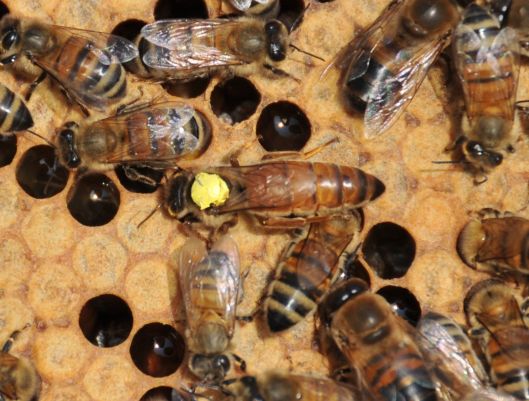
  • Share on Facebook (Opens in new window) Facebook
  • Share on X (Opens in new window) X
  • Share on Pinterest (Opens in new window) Pinterest
  • Email a link to a friend (Opens in new window) Email
  • Share on LinkedIn (Opens in new window) LinkedIn
  • Share on Reddit (Opens in new window) Reddit
  • Share on Tumblr (Opens in new window) Tumblr
  • Print (Opens in new window) Print
  • Share on Telegram (Opens in new window) Telegram
  • Share on WhatsApp (Opens in new window) WhatsApp
Like Loading...

Posted by Beekeeping365 | Filed under beekeeping

≈ Leave a comment

Varroosis: Acute, Chronic, or Somewhere in the Middle?

30 Wednesday Jul 2025

Posted by Beekeeping365 in beekeeping

≈ Leave a comment

Tags

chronic-illness, deformed wing virus, economic-indicator-level, honey bees, science, varroa mites, varroosis, viral-diseases

For Your Consideration,

Some years ago, I remember reading on Randy Oliver’s page his discovery of a threshold with regards to varroa. As I recall, it was at around 3,000 mites in a standard colony. When that threshold was reached the colony would enter an unrecoverable death spiral. At that mite load, and accompanying virus load, the colony simply could not recover from the viral illnesses. Even if the colony looks viable it’s doomed. It’s fatally ill.

I think it’s worth frequently repeating that it’s the viruses that deal the final blow. We focus on the vector so much that often our sole effort is directed at the mites. Kill the mites is our mantra. And there is a bit of truth to that. Certainly, if we could eliminate the mites our problems would disappear. But after about 30 years we’re still experiencing the same problems with managing acceptable mite levels in order to have acceptable, sublethal virus levels.

Some things that have always bothered me are the ever-changing acceptable and unacceptable levels of varroa. Especially, Economic Injury Levels (EIL). The Economic Injury Level (EIL) is a concept that defines the pest density at which economic damage occurs. It helps farmers make informed decisions regarding the need for pest control. The EIL is determined by the cost of damage relative to the cost of control, and it serves as a threshold for applying control measures to prevent further economic damage. I’m sorry but I can’t get behind this way of thinking. As humans do we consider the price of treatment for ourselves versus how ill we may become if not treated? I guess, unfortunately sometimes we must if we don’t have the financial resources. But with our honey bees we do have the resources. The choice to treat always favors treatment. After all, what’s the cost of a new colony vs saving an existing colony?

So, over the years we have jumped around on what constitutes a level of mites indicating treatment is warranted. When I started keeping bees about 15 years ago the rule of thumb was always monitor your mite load and treat when it’s over 5 mites per hundred. Of course, later that number came down. And consistently, I heard that, one should always treat in the fall – period, hard stop! I found that I couldn’t usually wait until fall and couldn’t wait until that magic mite:bee ratio was reached if I wanted to stop the mite bombs from exploding and decimating my bee yard.

I also saw something else. My bees were sick long before they died. Being workaholics, hoarders and industrious they always did the best they could, but they just didn’t perform the way the bees did in the old-school books I read. I decided to do a better job and monitor mites all year and treat before a crisis developed. By this time, it had become mainstream to monitor more frequently but that EIL remnant lingered. I had already formed a negative opinion of relying on the officially decided EIL level would be in any particular year. Instead, I would go rogue. I noted that colonies crashed with some consistency following harvest, through our hot late summer, and many never made it to fall. So, I treated when I felt it necessary both seasonally, at lower mite levels, and before reaching the latest prescriptive level.

What I learned along the way was my bees not only started surviving, they also started thriving. The first time I noted the difference between bees that thrive and bees that are sick was in the spring of one year. For a couple of years, I had been treating with oxalic acid in December during the brood break. That year, I decided to administer oxalic acid treatments in early December, January, and February. During that year’s early build up I witnessed an enthusiasm on the landing board, as well as the prettiest fuzzy bees I had yet to see earlier in my beekeeping. They had it all and made lots of honey that year as I broke through honey production expectations. I couldn’t help but wonder if individual bee life expectancy had increased as well as overall health. I suspect both longer lived and healthier bees was a result of those early season treatments that cleaned them up reducing their viral loads. They felt better and it showed.

In the years that followed I came to believe that varroosis (death by varroa, or perhaps more accurately, by the viruses they transmit) was not an acute occurrence. That while it appeared to occur suddenly and acutely, I believed the evidence indicated varroosis was a chronic disease ending with sudden death. The bees were sick all along as the virus levels steadily increased throughout the nectar producing season. Steadily getting sicker and sicker, living shorter and shorter lives, working less and less, until finally the viral load crossed a lethal threshold and then, it presented as a sudden death. But it wasn’t sudden. They were becoming sicker every day that followed that last pre-season treatment. Why was it an acceptable practice to let our bees reach death’s door before we intervened? Why did we only treat them for an acute illness rather than a chronic illness? Acutely vs chronic management differs and perhaps we were travelling the incorrect path.

With human healthcare we manage chronic health problems like diabetes, heart health, high blood pressure, HIV (virus levels), and the like. We also have a different management practice to manage acute health problems like colds, flu, infections, and trauma. So, which do you think our bees are displaying with regards to varroosis? Is the viral load a chronic problem or an acute problem? Should it be managed only when your bees are at death’s door and reach an arbitrary EIL level or should we manage them as one would with a chronic illness? One might say that use of typical mechanical and cultural IPM methods is treatment along the lines of chronic management. That is true to some extent, but I’ve never seen any IPM treatments successfully mitigate the need for more aggressive treatments. Maybe our typical IPM methods slow the villain, but he steadily drags them down over time and eventually kills the bees.

So, if you’ve read this far, tell me what you think. Are our problems with mites and viruses acute or chronic? If you think the scale tips towards chronic perhaps we need a change in our treatment plan. What solutions might we offer to change the way we help our bees not only survive but truly thrive throughout the year?

Feel free to share this on:
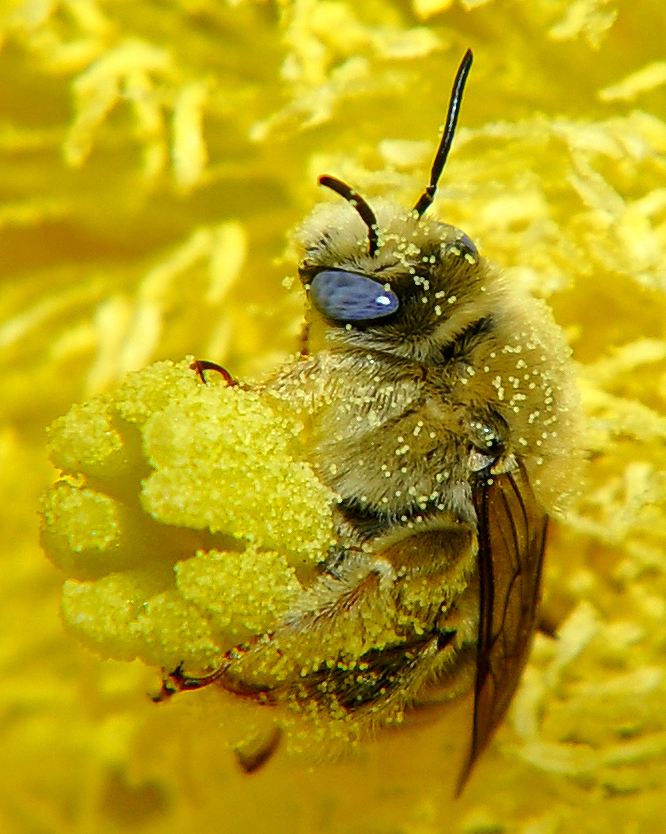
  • Share on Facebook (Opens in new window) Facebook
  • Share on X (Opens in new window) X
  • Share on Pinterest (Opens in new window) Pinterest
  • Email a link to a friend (Opens in new window) Email
  • Share on LinkedIn (Opens in new window) LinkedIn
  • Share on Reddit (Opens in new window) Reddit
  • Share on Tumblr (Opens in new window) Tumblr
  • Print (Opens in new window) Print
  • Share on Telegram (Opens in new window) Telegram
  • Share on WhatsApp (Opens in new window) WhatsApp
Like Loading...

I’ve stopped worrying about killing the vector and started killing the pathogen.

08 Monday Apr 2024

Posted by Beekeeping365 in beekeeping

≈ Leave a comment

Tags

antiviral, beekeeping, bees, deformed wing virus, oxalic acid, varroa, varroa destructor, virus

The story starts years ago when I noticed that the bees flew with more enthusiasm and worked harder in the days following a varroa mite treatment (oxalic acid vaporization). I asked others if they too saw this behavior change. Some said they never took notice; others said it was obvious. Years later I measured the coming and going on the landing board using one of those click counters. It was true; the bees were energized after a treatment. But I didn’t have the answer as to why. Last summer I spoke to someone more knowledgeable than I in entomology and he used the analogy, “Have you ever noticed how good a dog feels the day after a flea dip?” A great reply that satisfied me for awhile. But I thought, putting a dent in a 3% mite load (not even eliminating the mites) couldn’t increase the entire colony’s enthusiasm as evidenced with the increase in activity on the landing board. Could it? Or was something else going on? But I’m getting ahead of myself.

Back in 2021, I started doing some research and learned that the EPA first approved oxalic acid (OA) in 1957 as a disinfectant in bathrooms and septic systems among other uses. It’s still used today in cleaning solutions for industry food production machines, not to mention good old Bar Keeper’s Friend. If you’re not sure of the definition of disinfectant look it up. It’s different than sanitizer, cleaner, or antibacterial. So, is OA also acting in that manner in the hive? Is it giving the internal surfaces of the hive and the bees a chemical scrubbing? Am I killing bacteria and viruses as well as mites? I didn’t know but I wanted to try a few things.

Over two years ago (January 2022) I started treating my bee hives routinely with OA vapor. That’s “routine schedule” as meaning a set date each month to treat on my calendar. Similar to you taking an antibiotic on a routine schedule, or a medicine for a chronic condition like hypertension, diabetes, or reflux. Consider it an IPM treatment for treating mites and accompaning viruses. Also included in my goals were to 1) decrease the number of yearly OA treatments and 2) reduce the likelihood of resistance to OA. But simply put, all I was actually doing was going to be changing one aspect of treatment – the dosing schedule from one that targeted the mites’ reproductive schedule, to one that disinfected the colony’s environment regularly. Of course, any varroa mites killed would be a value-added outcome.

That year I did not suffer any colony losses during the spring, and I made more honey than usual. However, I did have some colony failures (~ 10%), as is typical, after the nectar flow during our dearth period. Multiple stressors (SHB, harvest, and climbing mite to bee ratios) take their toll during this period as the mite load climbs, increasing the viral load. I intervened with a single series of OA treatments and the losses stopped, leading me to believe the stressor most critical is mite/viral load. After completing the single series of treatments, I resumed my scheduled monthly treatments as before and had no winter losses. After the first year, I tried to make sense of that year’s interventions and outcomes and develop a plan for next year.

In January 2023, I continued my routine treatment schedule and, as experienced the previous year, I had no losses during the nectar flow. But this year I decided to make a change to the dosing schedule during the post nectar flow time period. I changed to a once every two-week treatment schedule (actually on the 1st and 15th) and continued this schedule until fall – so that would be twice monthly treatments June – October. This added about 5 additional treatments to the year which pushed me to the edge on my goal to limit the number of treatments per year. In November, I resumed the routine monthly schedule. This scheduling model resulted in no colony losses in the spring, fall, summer, or winter of 2023. My honey production was about 65 lbs. per hive which is about 50% higher than expected in the SC Midlands. Keeping bees healthy during the nectar flow keeps them working harder rather than our current method of allowing the bees’ health to decline over the season and often collapse just prior to treatment salvation.

All this brings me to this year (2024). So far, I have not sustained any mite/virus related losses. Coming out of winter I saw the occasional weak colony, needing a new queen, or help with SHBs. But my hives built up quickly in the pre-season. I just did my accounting for taxes and used less sugar last year having left more honey due to their productivity (and my reluctance to pay for sugar). My point is they are healthy and handling stressors.

Recently I spent some time researching organic acids as disinfectants, antimicrobials, etc. There are some studies on this with viruses. Yes, organic acids can be antivirals. It is dose and pH dependent to some extent. OA is around 2 on the pH scale so it’s potent. But there are some unidentified factors as well. For instance, acetic acid sometimes is more effective with certain viruses than acids with lower pH. So, the reason organic acids (and which) kill viruses still is somewhat a mystery.

Why is this interesting? First, because it shouldn’t be working. One would think my colonies would be mite ridden and failing. This OA dosing schedule should be allowing the mites too much freedom to reproduce. However, I haven’t seen a case of deformed wing in years and my skewering of drone pupae shows me the mites are under control. Second, because varroa mite levels are out of the treatment consideration loop, I no longer concern myself with watching my bees become increasingly ill before tipping this season’s / year’s suggested EIL level. Third, I could care less even if my mite levels were high. In fact, I would be happy to find they were as it would confirm what I’m doing is working by a mechanism other than killing mites. Fourth, I’m exposing my bees to the same or less OA than I would if I was using currently acceptable OA vapor treatment schedules. Fifth, I’m allowing more time between treatments which lessens the possibility of miticide or antiviral resistance. Sixth, after seeing many new beekeepers struggle with the myriads of options for mite assessment, the complexity of understanding mite counts during different seasons, and the best choice of miticide for each time of year and temperature, what a gift it would be to simplify this process. Seventh, my bees stay healthy and productive all year. Gone is the yo-yo of cleaning them up only to let them fall to approaching colony collapse before a lifesaving series of treatments. That yo-yo isn’t healthy living. We don’t allow diabetics to go into diabetic coma before treating them nor do we allow HIV patients to live with high viral loads. No, we manage these illnesses rather than wait for a crisis to develop. We should keep in mind that our colonies don’t die from the mites they die from high viral loads.

How is this working? My supposition is that I am killing viruses (or a subset of the many virus types) directly, thus bypassing the need for vector (mite) control. Another possibility is I am interrupting the relationship between the virus and the mite – to the mite’s detriment. But to be honest, I don’t know. It could be something entirely different that I haven’t considered. I’ll continue the effort and will start to compile the research and data I have collected.

This honey season is off to a great start. All supers are already deployed and I’m wondering how I’m going to deal with keeping the bees with enough space now that they’ve gone gangbusters. Cheers!

Brief Update 7/20/2025: I’m just back from my state beekeepers assocation’s summer conference. The talk of mites always triggers some guilt that I have not updated this blog entry in some time. So, the effort continues. I have tried to maintained routine monthly treatments although there was some disruption during a personal health event. The success of healthy bees continues with minimal losses. It is rewarding to have a near perfect survival rate in the midst of record national losses in the US. I don’t get to as many conferences as I used to but with those I have shared this effort with, the idea that there is a possibility that I am simply keeping the viral threshold below the point of illness development. Randy Oliver wrote some time back that at a certain mite count within a colony they enter tipping point after which they are doomed to colony failure. I think this is a valid explanation – that the viral threshold is possibly being held in check. By a little or a lot is unknown. If you have ideas let me know. larrycoble@bellsouth.net

Feel free to share this on:
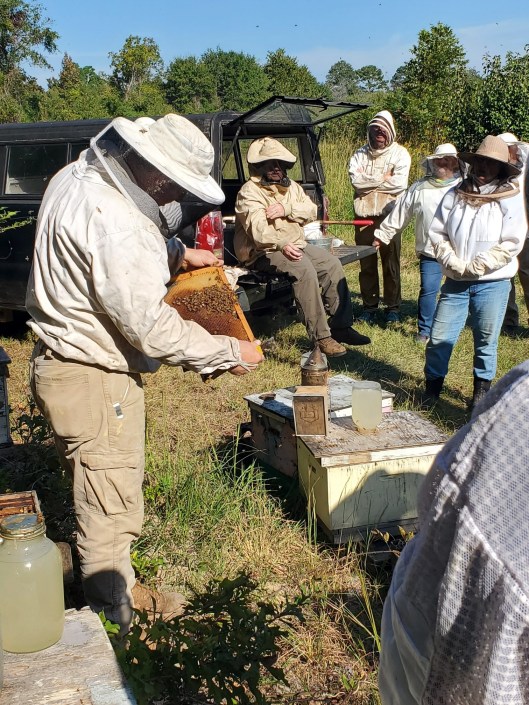
  • Share on Facebook (Opens in new window) Facebook
  • Share on X (Opens in new window) X
  • Share on Pinterest (Opens in new window) Pinterest
  • Email a link to a friend (Opens in new window) Email
  • Share on LinkedIn (Opens in new window) LinkedIn
  • Share on Reddit (Opens in new window) Reddit
  • Share on Tumblr (Opens in new window) Tumblr
  • Print (Opens in new window) Print
  • Share on Telegram (Opens in new window) Telegram
  • Share on WhatsApp (Opens in new window) WhatsApp
Like Loading...

Happy Birthday Petro Prokopovych

12 Tuesday Jul 2022

Posted by Beekeeping365 in beekeeping

≈ Leave a comment

Wikipedia: Petro Prokopovych (1775–1850, Ukrainian: Петро Прокопович) was a revolutionary Ukrainian[1][2][3][4] beekeeper, the founder of commercial beekeeping and the inventor of the first movable frame hive.[5] He introduced novelties in traditional beekeeping that allowed great progress in the practice. Among his most important inventions was a hive frame in a separate honey chamber of his beehive. He also invented a crude queen excluder between brood and honey chambers.[6][7] Petro Prokopovych was also the first to ever model a ‘bee beard’ after delineating and calculating ‘bee swarm behaviour”, inspiring students for generations.[8]

From http://beekeeping.com.ua: Petro Prokopovych was born in Ukraine, in the village of Mytchenky, near Baturyn, where he spent his childhood. The parents sent eleven-years-old Petro to Kiev-Mohyla Academy, where he studied for eight years. 


After the academy he wanted to be a teacher. However, the future genius of beekeeping was to go to a military career. Despite it was quite successful (the state awarded him, etc.), in 1798 he resigned.


At the brother’s small bee-garden the retired officer admired the life of mysterious small flying beings, which were kept in primitive hives, made from pieces of log. 


In 1799 Petro Prokopovych decided to devote himself to beekeeping and in 1808 he already had 580 bee-families. All these years he tried to understand the internal life of bee-family and to improve existing methods of beekeeping. One of directions of his research was looking for a way to take honey without wanton destruction of the family. 


In 1814 the tireless search resulted in the invention of the first in the world dismountable frame beehive, in which it was possible to control family and to actively influence the course of its development. In this beehive Prokopovych for the first time has considered a frame as a module of bee-hive – which used today by millions beekeepers all over the world. It was a landmark in the history of beekeeping, which has begun the epoch of rational beekeeping. 


One more his invention – the wooden partition with apertures, which were passable only for working bees. It made possible getting pure honey in the frames. 


Amos Root highly praised the inventions of Prokopovych: ” His frame has much in common with a modern section frame with openings for passage of bees, the walls of his beehive were joint in the lock. He applied methods, which far outstripped his time “. 


Prokopovych possessed not only the gift of researcher but also that of teacher. The school, founded by him, during 53 years of its existence prepared more than 700 qualified beekeepers with the most advanced experience of that time. The school apiary in 1855 had 2542 bee-families. 
Prokopovych published more than 60 articles in the newspapers and magazines. Many of his findings remain important now; for example, the drugless method of treatment foul brood by driving of bees to a new hive. 


Prokopovych considered beekeeping the most profitable branch of the agriculture and proved it, having become rather rich man. He had 6600 beehives of his own design only. 


Petro Prokopovych is buried  in a village Pal’chyky in the Chernigiv region, where his beekeepers’ school was located. The monument of Prokopovych is erected here,  the Ukrainian Institute of Beekeeping is named after him.

All this plus a great gravestone showing him with a removable frame!

Feel free to share this on:

  • Share on Facebook (Opens in new window) Facebook
  • Share on X (Opens in new window) X
  • Share on Pinterest (Opens in new window) Pinterest
  • Email a link to a friend (Opens in new window) Email
  • Share on LinkedIn (Opens in new window) LinkedIn
  • Share on Reddit (Opens in new window) Reddit
  • Share on Tumblr (Opens in new window) Tumblr
  • Print (Opens in new window) Print
  • Share on Telegram (Opens in new window) Telegram
  • Share on WhatsApp (Opens in new window) WhatsApp
Like Loading...

Why did my bees die?

31 Thursday Mar 2022

Posted by Beekeeping365 in beekeeping, beekeeping management, beekeeping pest management, management

≈ 5 Comments

Tags

beekeeping chores, beekeeping diagnostics, fall management, spring management, varroa mites, what killed my bees?

2016-05-08 15.37.47.jpg

Why did my bees die?

This is a question often asked and sometimes difficult to answer. The beekeeper looking at a dead colony is left with clues that can sometimes indicate the cause of death. More often though the beekeeper looks at the “crime scene” and makes an incorrect assumption. We’ve all heard it, “Wax moths killed my bees.” or “They got robbed.” or Small hive beetles killed them.” Most often though these are the results of problems that were missed or not addressed earlier.

I like murder mysteries. And, like in murder mysteries, what kills the bees isn’t always the most obvious suspects. It’s not the one the mystery writer wants you to initially think it is. After all what fun would that be? Instead the beekeeper must use some logic in backtracking the history of the colony to solve the mystery. Many times the downward spiral started some time back and we missed it before it lead up to wax moths, robbing, small hive beetles, or other maladies.

This past winter I had a 9% overwinter loss coming into the spring buildup. All in all, in today’s world of beekeeping that’s pretty good. Early in this season’s buildup, in February, I rotated boxes as a swarm prevention technique. I noted that a particular row of hives were not building up as fast as my other hives. As I rotated the hive bodies I inspected and found that they were all queen-right though so I just chalked the slow buildup up to “one of those unexplained things.”

That row of thirteen colonies coming into spring lost six colonies AFTER that first box rotation of spring. All of my other colonies continued to grow and expand.  Granted the ones lost were not the strongest but they had queens (I saw them). How were these different than the ones that were thriving? Time to put on my detective hat. They were unique in that they are all on same row, were not taken down in size last fall (I just ran out of energy), and had older queens. So what killed them? I don’t know but I suspect the stress of the box rotation on an already stressed colony. How were they already stressed? Why did they not build up like the other areas in my bee yard? Thinking about the differences: this group  had older queens, larger hives usually have/maintain higher mite counts,  and were in  an isolated  row in the bee yard.  I don’t know exactly which stressor was the largest but I suspect some or all of the above come into play.

Now my overall losses were at 27% instead of the 9% prior to this event and most likely because I failed to reduce size, monitor this row for Varroa better, and not re-queen in the fall. Which exactly? Beekeepers always want to know which one is the culprit. I don’t know. Maybe it was multiple stressors and not just one. But I do have some excellent suspects! Regardless of which stressor killed these colonies I failed to do that which a good steward should have done for these bees. Ultimately it’s on me.

…

So, after writing the above I was further pondering the possibilities while making up some sugar syrup, and I was thinking about the stressors and it came to me what killed those colonies. Distilling it down to a single element – laziness. I should have taken those hives down to 2 boxes post nectar flow last summer. I should have monitored Varroa better in that row instead of assuming it would be the same as the newer hives in other areas. And I should have re-queened as would have happened easily if I had made splits last year when I should have taken them down in size. My laziness killed those colonies. So there, I came up with a single cause, identified the culprit, and solved the mystery!

It won’t happen again. Maybe something else but not this.


Feel free to share this on:

  • Share on Facebook (Opens in new window) Facebook
  • Share on X (Opens in new window) X
  • Share on Pinterest (Opens in new window) Pinterest
  • Email a link to a friend (Opens in new window) Email
  • Share on LinkedIn (Opens in new window) LinkedIn
  • Share on Reddit (Opens in new window) Reddit
  • Share on Tumblr (Opens in new window) Tumblr
  • Print (Opens in new window) Print
  • Share on Telegram (Opens in new window) Telegram
  • Share on WhatsApp (Opens in new window) WhatsApp
Like Loading...

Happy Birthday Dr. Wladyslaw Zbikowski

29 Tuesday Mar 2022

Posted by Beekeeping365 in beekeeping, birthday, birthdays, famous beekeepers

≈ Leave a comment

Tags

beekeeper, beekeeper birthdays, Dr. Wladyslaw Zbikowski, famous beekeepers, inventor

RossRoundsFrame
comb_honey_platter
rr3

Birth: March 29, 1896

Death: November 1, 1977

Inventor of the Cobana round comb honey sections, later to become “Ross Rounds.”

The modern round plastic section appeared in 1954. It was called “Cobana” and seems to have been designed by a Pennsylvanian beekeeper named Dr. Wladyslaw Zbikowski, a retired physician.

From Badbeekeeping blog of 2010: The gentleman who receives the credit for the modern invention, a retired physician from (get ready) western Pennsylvania designed the round section device which he called Cobanas in 1954. Dr. Wladyslaw Zbikowski (1896-1977) was born in Beaver Falls, PA, but educated in Russia and Poland. He started keeping bees in 1953, after retiring from medicine. Dr Zbikowski made the modern plastic round section the very next year. http://www.badbeekeeping.com/beeblog2010.htm

More on rounds sections here: http://www.dave-cushman.net/bee/sectionsround.html

Feel free to share this on:

  • Share on Facebook (Opens in new window) Facebook
  • Share on X (Opens in new window) X
  • Share on Pinterest (Opens in new window) Pinterest
  • Email a link to a friend (Opens in new window) Email
  • Share on LinkedIn (Opens in new window) LinkedIn
  • Share on Reddit (Opens in new window) Reddit
  • Share on Tumblr (Opens in new window) Tumblr
  • Print (Opens in new window) Print
  • Share on Telegram (Opens in new window) Telegram
  • Share on WhatsApp (Opens in new window) WhatsApp
Like Loading...

Swarm Catcher Checklist and Tips

26 Saturday Mar 2022

Posted by Beekeeping365 in beekeeping

≈ Leave a comment

This time of year, in my truck, I keep a deep 10 frame Langstroth box with 10 frames installed, screened bottom board, inner cover, and either migratory or telescoping top. And a ratchet strap to hold it all together for transportation. The entrance reducer is either closed or I replace it with #8 hardware cloth folded in a “U” shape. I also have ready for quick loading a swarm bucket with attachable telescoping painters pole and a ladder.

Additional, sometimes useful, items I usually have on hand include: A queen clip, a spray bottle of imitation almond extract, small and large limb pruners, and a spray bottle of sugar water to spray them with before the shake.

Turn your telephone on with volume up this time of year. You need to ask how high. If they say “not too high” ask what that means. Head height? Taller than two men, etc. How large is the cluster – baseball? soccer ball? or basketball? Are they in a bush or tree? If they say they are flying around their front porch ask if they are clustered? (yes, people call because their ornamental holly is blooming and attracting bees). After you determine they indeed have a honey bee swarm and not miner bees, yellow jackets, or carpenter bees, get the address and get there soon.

When you return home with your swarm now in your equipment let them settle down for a couple hours before you open them and insert a frame of open brood from another hive. This will typically lock them to the hive (remember they didn’t choose your hive as their preferred cavity). One final item is to place a feeder on them. They will want to draw comb and it takes carbohydrate to do so. You can get some fantastic drawn comb in a short amount of time from a swarm. Then open the entrance to let them fly and orient to their new home.

Here’s another method used called the queen’s throne. It uses a frame of brood or brood comb to lure the bees into the bucket. In the video he is capturing bees at a school yard and wants to minimize flying bees.

Add any tricks you have below.

Feel free to share this on:

  • Share on Facebook (Opens in new window) Facebook
  • Share on X (Opens in new window) X
  • Share on Pinterest (Opens in new window) Pinterest
  • Email a link to a friend (Opens in new window) Email
  • Share on LinkedIn (Opens in new window) LinkedIn
  • Share on Reddit (Opens in new window) Reddit
  • Share on Tumblr (Opens in new window) Tumblr
  • Print (Opens in new window) Print
  • Share on Telegram (Opens in new window) Telegram
  • Share on WhatsApp (Opens in new window) WhatsApp
Like Loading...

Uses of propolis

25 Friday Mar 2022

Posted by Beekeeping365 in beekeeping, hive products, honey bee biology, propolis

≈ Leave a comment

Tags

beekeeping, honey bee biology, propolis

propolis

The varnishing of cells?

Where does this get a mention? It’s in the study notes..

https://books.google.co.uk/books?id=J59OdJG05mUC&pg=PA289&lpg=PA289&dq=propolis+varnish+cells&source=bl&ots=wWcZEVXjSE&sig=xA3wPwE9dEx1IeRKw_fWmAxrFKI&hl=en&sa=X&ved=0ahUKEwiahsn55p7RAhVhI8AKHS4_D3MQ6AEILDAD#v=onepage&q=propolis%20varnish%20cells&f=false

http://basicbeekeeping.blogspot.co.uk/2011/12/lesson-113-sticky-subject-of-propolis.html

They asked lots of people too.

In Ribbands, Chapter 27, Huber (1814) observed that new combs become more yellow, more pliable stronger and heavier and sometimes there were reddish threads on the inner walls. Chemical tests showed this was propolis.


Source: Uses of propolis

Feel free to share this on:

  • Share on Facebook (Opens in new window) Facebook
  • Share on X (Opens in new window) X
  • Share on Pinterest (Opens in new window) Pinterest
  • Email a link to a friend (Opens in new window) Email
  • Share on LinkedIn (Opens in new window) LinkedIn
  • Share on Reddit (Opens in new window) Reddit
  • Share on Tumblr (Opens in new window) Tumblr
  • Print (Opens in new window) Print
  • Share on Telegram (Opens in new window) Telegram
  • Share on WhatsApp (Opens in new window) WhatsApp
Like Loading...
← Older posts
Follow Beekeeping365 on WordPress.com

Enter your email address to follow this blog and receive notifications of new posts by email.

Calendar

October 2026
S M T W T F S
 123
45678910
11121314151617
18192021222324
25262728293031
« Sep    

Posts by Month:

  • October 2026 (15)
  • September 2026 (32)
  • August 2026 (6)
  • July 2026 (1)
  • May 2026 (2)
  • January 2026 (3)
  • July 2025 (1)
  • April 2024 (1)
  • July 2022 (1)
  • March 2022 (13)
  • February 2022 (17)
  • January 2022 (4)
  • December 2021 (4)
  • November 2021 (4)
  • August 2021 (11)
  • July 2021 (18)
  • June 2021 (5)
  • May 2021 (2)
  • April 2021 (9)
  • March 2021 (2)
  • February 2021 (5)
  • January 2021 (16)
  • December 2020 (15)
  • November 2020 (5)
  • October 2020 (2)
  • July 2020 (1)
  • February 2020 (1)
  • March 2019 (2)
  • February 2019 (4)
  • January 2019 (1)
  • December 2018 (10)
  • November 2018 (8)
  • October 2018 (13)
  • September 2018 (18)
  • August 2018 (3)
  • July 2018 (11)
  • June 2018 (27)
  • May 2018 (33)
  • April 2018 (20)
  • March 2018 (20)
  • February 2018 (12)
  • January 2018 (22)
  • December 2017 (18)
  • November 2017 (15)
  • October 2017 (19)
  • September 2017 (17)
  • August 2017 (21)
  • July 2017 (29)
  • June 2017 (28)
  • May 2017 (19)
  • April 2017 (17)
  • March 2017 (19)
  • February 2017 (12)
  • January 2017 (13)
  • December 2016 (5)

Posts by Categories:

  • absconding (1)
  • africanized honey bees (1)
  • apitherapy (1)
  • bee health (7)
  • bee law (2)
  • bee lining (2)
  • bee removals (2)
  • beekeeper (5)
  • beekeeper education (17)
  • beekeeping (604)
    • South Carolina (3)
  • beekeeping author (10)
  • beekeeping books (12)
  • beekeeping calendar (6)
  • beekeeping chores (9)
  • beekeeping equipment (23)
  • beekeeping history (48)
  • beekeeping management (35)
  • beekeeping pest management (8)
  • beekeeping seasons (26)
  • beekeeping vocabulary (15)
  • beeswax (11)
  • biography (5)
  • biology (12)
  • birthday (37)
  • birthdays (31)
  • book review (16)
  • breakfast (1)
  • calendar (6)
  • CCD (1)
  • chores (6)
  • comb (6)
  • comb honey (10)
  • commercial beekeeping (1)
  • cutouts (2)
  • dearth (4)
  • defensiveness (1)
  • diseases (9)
  • drawn comb (5)
  • ecology (4)
  • education (30)
  • equipment (21)
  • extracting (1)
  • fall nectar flow (1)
  • famous beekeepers (25)
  • feeding bees (8)
  • first blog entry (1)
  • folklore (1)
  • food (7)
  • forage (4)
  • hacks (3)
  • hive inspections (6)
  • hive placement (2)
  • hive products (6)
  • honey (85)
  • honey as food (22)
  • honey bee anatomy (3)
  • honey bee behavior (23)
  • honey bee biology (42)
  • honey bee genetics (4)
  • honey bee losses (1)
  • honey bee nutrition (1)
  • honey bee photos (6)
  • Honey Bee Research (1)
  • honey bee vocabulary (11)
  • honey bees (14)
  • honey judging (3)
  • honey recipe (65)
  • humor (13)
  • inspections (9)
  • journal (1)
  • log book (1)
  • making increase (3)
  • management (82)
  • mentoring (2)
  • mites (4)
  • national pollinator week (2)
  • nectar flow (6)
  • nomenclature (1)
  • opinion (5)
  • out yards (1)
  • outyards (2)
  • package bees (2)
  • pears (1)
  • pests (17)
  • plants for bees (3)
  • polish (1)
  • pollen (4)
  • pollination (11)
  • pollinators (7)
  • product review (1)
  • production (1)
  • products (3)
  • propolis (2)
  • queens (17)
  • raw honey (6)
  • recipe (88)
  • removals (1)
  • safety (3)
  • sales (2)
  • season (1)
  • seasons (21)
  • sideliner (1)
  • small hive beetles (1)
  • spring buildup (4)
  • state fair (2)
  • sustainable (8)
  • swarms (27)
  • ursurpation (1)
  • usurpation (1)
  • varroa (20)
  • varroa destructor (11)
  • varroa mites (23)
  • Winter (6)
  • winter solstice (2)
  • woodenware (3)
  • yellow jackets (2)

Sassafras Bee Farm on Facebook

Sassafras Bee Farm on Facebook

Sassafras Bee Farm

Sassafras Bee Farm

Recent Posts

  • It Always Starts with Assessment
  • Happy Birthday Jay J. Smith
  • Miracles by Walt Whitman
  • What Do You Know?
  • Fall Nectar Flow

Beekeeping365 on Facebook

Beekeeping365 on Facebook

Top Posts & Pages

  • Swarms
    Swarms
  • To the (bee) Veils! by sassafrasbeefarm
    To the (bee) Veils! by sassafrasbeefarm
  • The Russian Scion
    The Russian Scion

Blog Stats

  • 145,440 hits

Website Built with WordPress.com.

  • Subscribe Subscribed
    Beekeeping365
    Join 417 other subscribers

    Have a WordPress.com account? Log in now.

  • Beekeeping365
    View site in Reader
    Manage subscriptionsSign upLog in
    Report this content
    Collapse this bar
Loading Comments...
%d