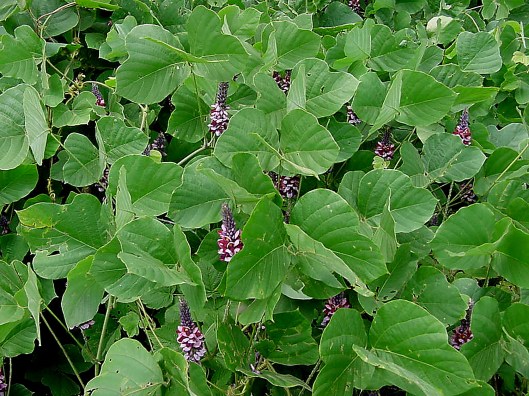
Kudzu blooms, Purdue Extension photo/Chris Parker
As always, All beekeeping is local. Here’s my offering for the beekeeping calendar for the South Carolina Midlands for the month of October:
Plan on checks once or twice this month but otherwise do not work unless necessary to prevent the triggering of robbing behavior. Try to not be too disruptive in order to allow them to get their house (brood box) in order for winter.
If you have not yet treated for varroa it’s important that this is done before your winter bees are exposed to the smorgasbord of viruses that varroa transmits when it feeds. Also, it’s not sufficient to just treat. You also need to have some idea that the treatment was effective in reducing the numbers of varroa in the colony.
Expect the break in the weather to occur during mid-October. Local legend has it that the State Fair brings autumn to the Midlands. Looking forward, our average date for first frost is the last week in October and the first freeze the first week of November. That said, the bees still have plenty of flying days ahead before winter.
Notice goldenrod and asters along the roadways. Kudzu will also provide forage if available in your area.
October:
1) Remove fall flow honey if appropriate. In my few years of beekeeping I have never had enough of a fall nectar flow to take honey. However, I have had colonies that were so large at the end of the spring flow that I was unable to reduce their cavity size to winter configuration until October. When this happens I am usually pleasantly surprised to be able to take some surplus frames from the bees, still leaving them enough for winter. Remember if you treated for Varroa using a product that affects the honey you will not be able to eat this honey but the bees will be happy to get it back in late winter / early spring.
2) October is your chance to make sure you “right size” your hives for the coming winter months. If you have not reduced your hives to winter configuration, early October is one of the last times which will still allow the bees time to propolize any cracks before winter and get their food stores properly situated. Typically, for the Midlands, a standard configured ten-frame Langstroth hive of bees will need 30- 35 lbs of honey to overwinter. This, along with living quarters, equates to at ten-frame deep (brood box) and a ten-frame shallow or medium above the brood box (sometimes called the feed chamber). To “right size” your hives remove hive bodies (supers) above the feed chamber. i.e. any empty, partial, or full supers. Extract and store these (protected from wax moths until temperatures drop and we have a hard freeze). Or, in the case of supers with stores, you may share these resources with colonies that do not have adequate stores (equalizing).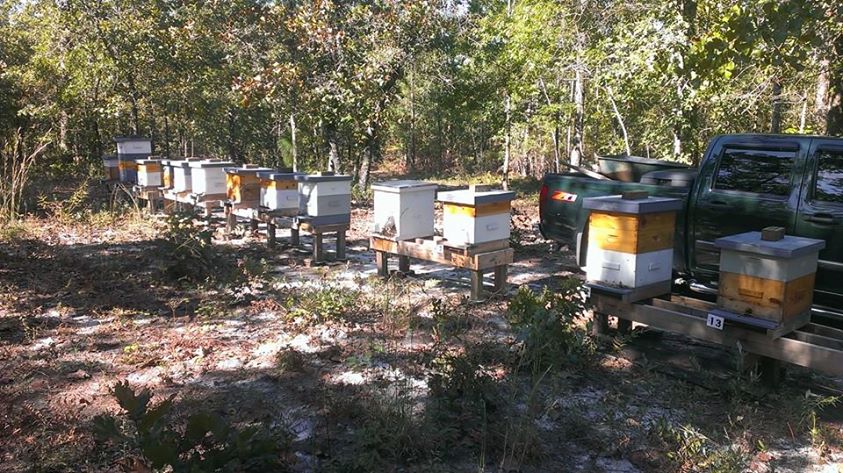
2) Process supers and store for winter. After any extracting your options for cleaning the sticky frames are to either place the supers back on the hive or place them out in the yard for clean-up. If placed out in the yard expect some comb tearing as the bees rob the supers of leftover honey. I am lucky that I do not have neighbors close and can separate the sticky supers from the bee yard by 100 yards or more. If you don’t have these options don’t leave sticky supers out where they can create a nuisance for your neighbors and cause a feeding frenzy spreading to your weaker hives. Instead consider simply placing them back on the hive and your bees will do the work of cleaning the supers and placing the leftover honey in the hive bodies below. Remove the cleaned supers in a few days returning your hives to winter configuration.
3) Protect your drawn comb. After it gets cold wax moths will no longer pose a threat. Until we get cold weather (end of November) you will need to protect any drawn comb you have removed from the hive. Methods vary from placing the frames in the freezer, placing outside open to light and air, using Paramoth (paradichlorbenzene) or use of BT (bacillus thuringiensis aizawai). BT is available from bee vendors. Clemson article on wax moth IPM.
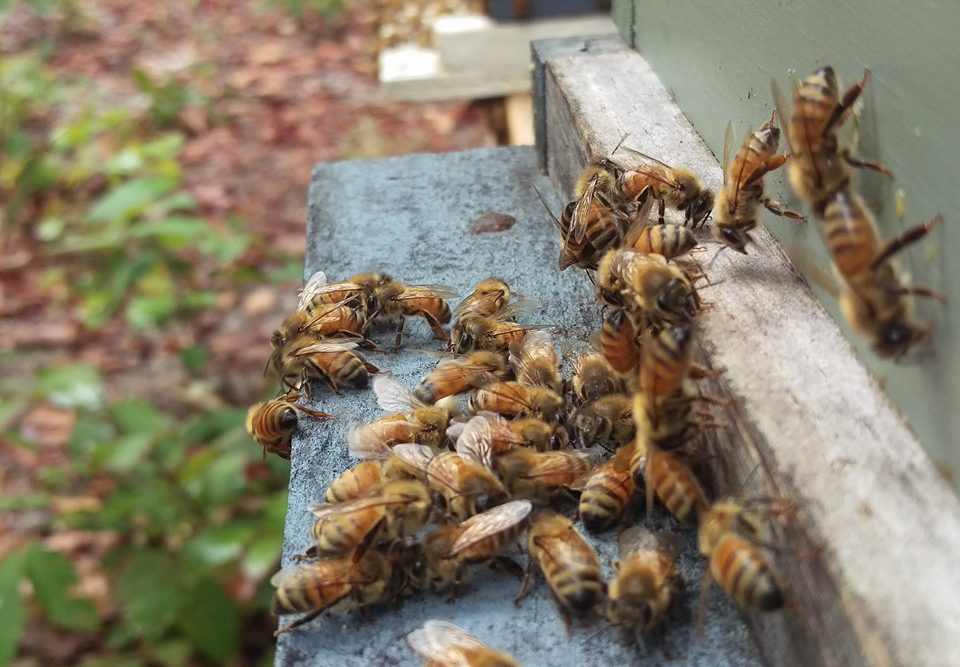
4) Reduce entrances if not yet done. The appropriate amount of reduction is what your bees can guard. I like to see 20-30 bees on my landing board guarding the entrance. If you have this or more, and your entrance is well defended, and you may not have to reduce the entrance from its current setting. A three to four inch entrance is typical for this time of year. Addition of an upper entrance such as a notched inner cover is advisable prior to entering colder weather to allow for ventilation and allow moisture to escape.
5) It’s time to change to 2:1 syrup feeding to add stores and weight. Feed bees as necessary. As you recall, we started stimulating brood production in late August with a full 1:1 sugar syrup mix. Your bees, by now, should have some weight on them and you should be seeing an increase in orientation flights. When you see foragers bringing in goldenrod and other fall pollens they are raising your winter bees. Your colonies should have some open nectar for brood rearing available from the feeding you have already provided. If they have plenty of open nectar but are still not heavy with stores it’s time to increase to 2:1 syrup to put some weight on the colony.
6) Any colonies that are lagging behind in weight should be fed aggressively at this time. Assuming you have reduced them down to overwintering configuration, now is the time to make sure they are increasing their stores in preparation for winter. Use 2:1 sugar syrup via your normal feeding method. Whenever they run out of syrup, refill. If using a jar feeder enlarge the feeder holes just a bit to allow them good access to the thicker syrup. The 2:1 syrup, fed rapidly, creates a situation where the bees cannot consume it as fast as they empty the feeder thereby creating a situation where they must store the thick syrup. Also remember, soon it will be more difficult for the bees to remove excess moisture (after the temperatures cool) so use 2:1 early to enable them to ripen the syrup and store. If you have colonies with more frames of stores than needed, consider sharing the bounty with less fortunate colonies.
7) Continue to tip colonies forward from the rear to assess their weight. Notice the number of frames of honey stores inside so that you can compare what you are feeling with what is actually inside. You will need this assessment skill during the cold of winter on days when you shouldn’t open the hives.
8) Pollen: Usually we get a nice pollen flow in the Midlands during the month of October. New beekeepers will notice, perhaps for the first time, the yellow and orange blooms along the roadways. That “smelly sock” odor you may notice in your hives this time of year is attributed to goldenrod. Kudzu blooms in late summer and will continue into early autumn producing a beautiful purple pollen. The bees will use autumn pollen to both raise winter bees and to stockpile for use during next year’s spring buildup.
9) Remove any queen excluders on hives. A queen excluder during the winter will prevent the queen from moving up with the winter cluster as the bees consume honey and move upward clustering and staying warm.
10) I’ve never had problems with mice in my bee yard but if you have a local mouse population consider placing a mouse guard on this month. An inexpensive method is to reduce the current opening’s size, top to bottom, to 3/8 inch.
11) Attend your local monthly meeting. Volunteer to educate the public on the importance of honey bees by signing up to work a shift at the upcoming South Carolina State Fair booth. There you can network with other local beekeepers, share stories, and have some fun finding the queen and educating the public about our favorite insect!
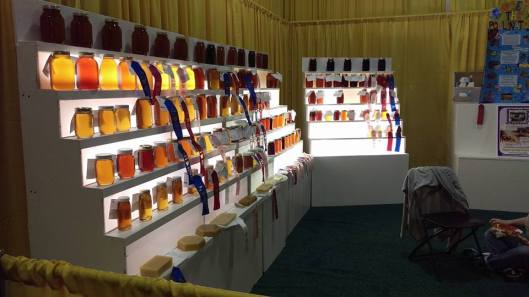
12) Attend the South Carolina State Fair. Visit the South Carolina Beekeepers Association’s booth. Marvel at the beautiful honey display! Point out your prize ribbon to friends and family.
The above are general guidelines for the average bee colony in the Midlands of South Carolina. We all have hives that may be outperforming the average. We also have colonies that underperform the average. Use your judgement in making changes suggested here. Beekeeping is an art as well as a science. Only you know the many, many particulars associated with your physical hives as well as the general health and population of your colonies.