Tags
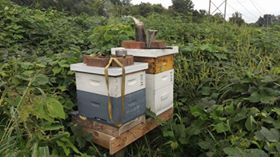
Bringing them home from the out yard. It will take a couple days of moving to get all the hives back home. The first step was simply lightening them up a bit by pulling a box of capped honey off each hive. It has been a good year
28 Monday Sep 2026
Posted in beekeeping, hive placement, out yards, outyards, sustainable
Tags
Bringing them home from the out yard. It will take a couple days of moving to get all the hives back home. The first step was simply lightening them up a bit by pulling a box of capped honey off each hive. It has been a good year
05 Saturday Sep 2026
Posted in beekeeping, beekeeping calendar, calendar, management, sustainable
Tags
Get ready for Spring!
Lots of articles speak to the beekeeping year beginning in August or early Fall. Yikes, that’s now!
If you harvested back in June, you’ve probably spent the summer feeding your bees through the dearth. If you held off and harvested now instead, you likely pulled less honey, but you saved yourself the cost and hassle of feeding all summer. There’s no wrong answer here — just two different paths to the same destination. And that destination is this: now is the time to build the best bees you possibly can for winter.
I know it’s still hot. Get back into your hives on the next reasonably nice day and take stock. You don’t need to pull every frame and rile them up — a calmer, more targeted look will tell you what you need to know. Check for:
And don’t just look — heft the hive. Pick up the back of it and get a feel for the weight, then compare that feeling to what you actually saw inside. Do this enough times and you’ll start to know, just from the lift, what “heavy” feels like and what “concerningly light” feels like. That instinct will save you a lot of frame-pulling in the months to come.
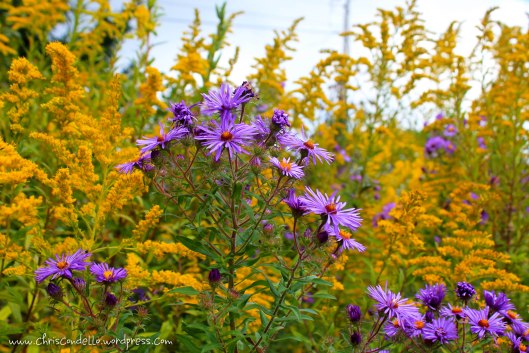
We’re on the cusp of our brief fall flow, and soon your hives will start smelling like goldenrod — a smell some new beekeepers mistake for something gone wrong. It hasn’t. That smell should put a smile on your face. It means your bees are packing away stores and raising the fat, healthy winter bees that will carry the colony through to spring.
Every hive will look a little different right now. Some of you will have more honey than the bees need. Others will be staring at frames of empty comb. Read your hive for what it’s telling you, and then — like an artist choosing tools — decide what that particular colony needs to be ready for winter: a super pulled, a frame of stores shared over from a stronger hive, or simply patience while the flow does its work.
Most beekeepers assess and treat for varroa right after they pull honey, whether that was back in June or is happening right now. Whenever your harvest happened, don’t put this off. The bees your colony raises over the next few generations are the bees that set the stage for a successful winter — and mite loads compound fast this time of year.
Sickly bees raise sickly bees. Strong, healthy bees raise strong, healthy bees. You want the beekeeping equivalent of Arnold Schwarzenegger heading into January — because when it’s twenty degrees outside and the pantry is running low, that’s exactly who you want on your side.
If this was your first season, take heart: most first-year beekeepers hit the real pinnacle of the hobby next spring. That’s when the population explodes on this year’s drawn comb, and the “problem” flips entirely — instead of hoping your bees survive, you’re racing to stay ahead of them. It’s a genuinely fun problem to have. The bees will basically be saying, “Scotty, give me all you’ve got,” and you’ll be somewhere between thrilled and panicked, saying, “Captain, I don’t think she can take much more — she’s gonna swarm!” (pardon the paraphrase.)
All of that is a preview of spring’s problems. Right now, the job is building better fall and winter bees, one more time, before the long dull stretch of winter sets in. Around here, in the Midlands of South Carolina, fall days are mild enough for bees to fly — they just won’t have much reason to, because there won’t be much blooming. You’ll be the one stuck inside, wishing for spring, watching for that first red maple bloom, or leaning your ear against the side of the hive to listen for that low hum as the cluster converts honey into heat.
So get out there now. Assess your bees, and point them toward a hive packed with strong winter bees and full stores for the season ahead.
Go for it. Build better bees.
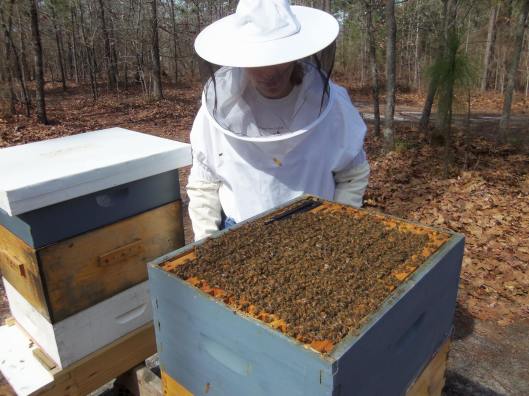
Picture: Early Spring bees. Notice no leaves on the trees yet.
02 Wednesday Sep 2026
Posted in bee health, honey bee losses, sustainable
Tags
Every beekeeper eventually develops the habit, whether or not they’d call it a philosophy. You walk out to the bee yard in October, look at the strongest hive you’ve got, heavy with stores and roaring with bees, and some part of you notes — almost without meaning to — that this might not be what you find in March. You don’t dwell on it. You just note it, the way you note weather, and keep working.
It’s tempting to think the point of noticing in advance is to make the loss hurt less when it arrives. Test that theory on an actual dead-out. Pry the lid off a hive in March that you’d half-braced yourself for since October, and see how much the bracing bought you. You’ll still crouch there running your hive tool along cold comb, still feel the specific disappointment of a colony that made it through the hard part of winter and then didn’t, in the last stretch, for no reason you can pin down. Bracing for it doesn’t appear to be an anesthetic. If it promised to numb you in advance, it’s a promise the bee yard won’t let it keep.
I think the habit is doing something else. Not dulling the grief, but correcting a claim you’d started making without noticing you were making it.
Here’s the claim: that the hive is yours. Not “yours” in the sense of the box you built, painted, and hauled into the field — that part is real enough. Yours in the deeper sense, the sense where you’d be owed an explanation if it failed. But you didn’t make the bees, and you don’t run the colony. You built them a structure to live in, learned to read what they were doing, fed them when the flow was thin, treated for mites, wrapped the boxes for winter — and then, mostly, got out of the way. A beekeeper is closer to a landlord than an owner, and not even a very powerful landlord. The colony can supersede its queen without asking you. It can abscond in June for reasons you’ll spend all summer failing to reconstruct. It can thrive under your care for three years and then, in one bad week of mites you caught too late, be gone. None of that was ever fully within your control, however carefully you kept the record cards.
Every beekeeper who’s kept bees long enough arrives at some version of the same sentence, even if they’ve never read a word of philosophy: I didn’t lose the hive. I had it for a while, and now I don’t. The distinction sounds like a word game until you’ve actually stood over the boxes both ways — once telling yourself something was taken from you, once telling yourself a tenancy simply ended — and noticed that the second version is the one you can actually do something with. You can clean the woodenware. You can figure out, honestly, what you’d change. You can requeen the neighboring hive that’s still alive and needs you now, this week, more than the dead one needs your grief. The first version mostly just generates blame — at the mites, the weather, your own late feeding — with nowhere useful to send it.
None of this is a claim that the loss shouldn’t hurt, or that it’s a failure of technique or temperament if it does. A good beekeeper who loses a strong colony feels it, the same as a good landlord feels it when a good tenant moves out unexpectedly. What changes isn’t the feeling. It’s whether you also carry the second injury underneath it — the sense that the world owed you a colony that would live, and reneged. Working bees for any length of time seems to eventually wear that second layer off a person, whether they wanted it to or not.
The hive in the yard right now, working the goldenrod as this gets written, is held on the same terms every hive before it was held on. That was true last October and it’ll be true again this one. Nothing about tending it well changes the terms of the lease. It just means you’ll have done right by the tenant while it was here.
08 Tuesday Mar 2022
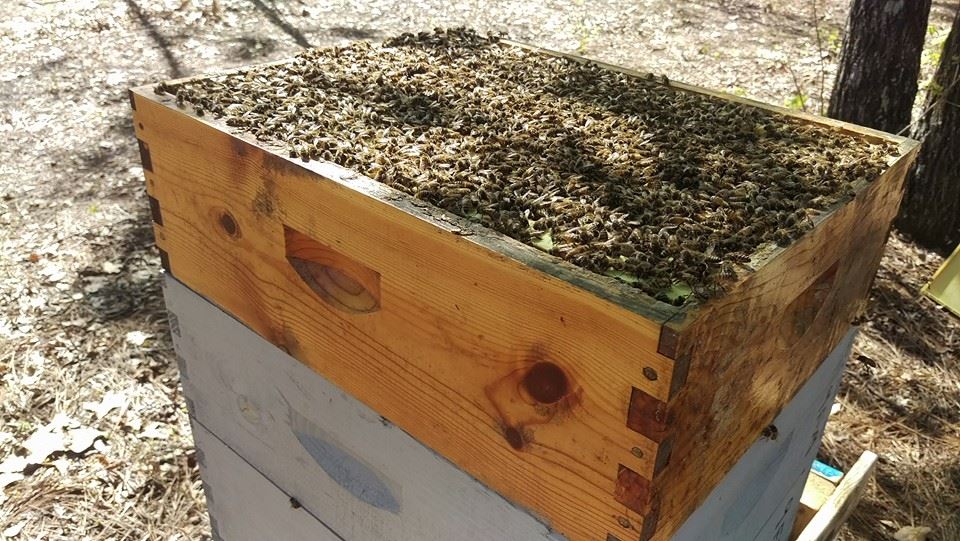
Bubbling over! These bees are overdue for some spring nectar!
Posted by Beekeeping365 | Filed under beekeeping, management, nectar flow, sustainable
13 Sunday Dec 2020
Posted in beekeeping, beekeeping equipment, beekeeping seasons, honey bees, management, seasons, sustainable
Tags
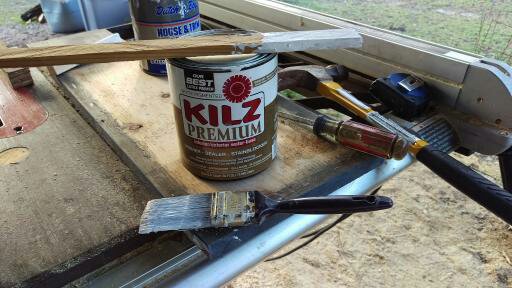
The cold weather is here, You’ve done what you can to tuck them in for the coming season. So, what are you going to do with all your time now?
1) Continue to lift the back of your hives to check for weight. Now is why you learned this method of assessing stores.
2) Perform maintainance on honey supers pulled off hives – painting or otherwise.
3) Assemble new equipment for next year – boxes, frames, stands, etc.
4) Order packages, nucs, or queens.
5) Plan for changes you’re going to impliment next season.
6) Call, visit, or write farmers or landowners where you’d like to place hives for out yards next spring.
7) Attend local and state beekeeper meetings.
8) Scout trees for placement and prepare swarms traps. Construct swarm capture bucket.
9) Build a nuc now to keep in your car or truck for community swarm captures next spring. Register with on-line swarm call lists.
10) Order or ask Santa for a copy of that beekeeping book you’ve been wanting to read. Read some every day.
16 Tuesday Oct 2018
Posted in beekeeping, plants for bees, sustainable
Tags
bee friendly gardens, gardening for bees, planting for bees, plants for pollinators, pollinator gardening, pollinator gardens, sustainability, sustainable apiary

It’s not rocket science it’s just awareness – simplicity itself – what would you rather Bee Dead or Bee Alive – personally l think l would prefer living bees to dead bees and the bees probably agree with me!
“Bees do have a smell, you know, and if they don’t they should, for their feet are dusted with spices from a million flowers.”
― Ray Bradbury, Dandelion Wine
How BEE friendly are you? With Spring just literally on our doorstep now, although even l have to concede at times that in the UK alone, it appears that Mother Nature has withdrawn it … our bees are back into their daily routines. The garden l have here, is not a gardeners’ delight, we have wild herbs growing next to wild flowers, and very soon we shall be planting out our seasons’ rotation for vegetable growing. I tend to like to see more ‘weeds’ and don’t see them as such but more as flowers in the wrong place, it sounds kinder that way.
Plant more BEE friendly flowers and flowering herbs in your garden – With the loss of nesting and foraging habitat due to intensive monocultural agricultural practices and the ever increasing and rising suburbanization driven society pressures demanding more housing – natural landscapes are fast disappearing. You can alter things by planting flowers into your garden. Plant bloom heavy as Bees love forage volume and plant for the seasons that the pollinators are most active – as in early spring to late summer. Plan your flowering crops effectively;
Read the full article with lots of wonderful photos here: How Can We Bee … Helpful? — A Guy Called Bloke and K9 Doodlepip!
23 Thursday Feb 2017
Posted in beekeeping, beekeeping equipment, equipment, management, sustainable, swarms
Tags
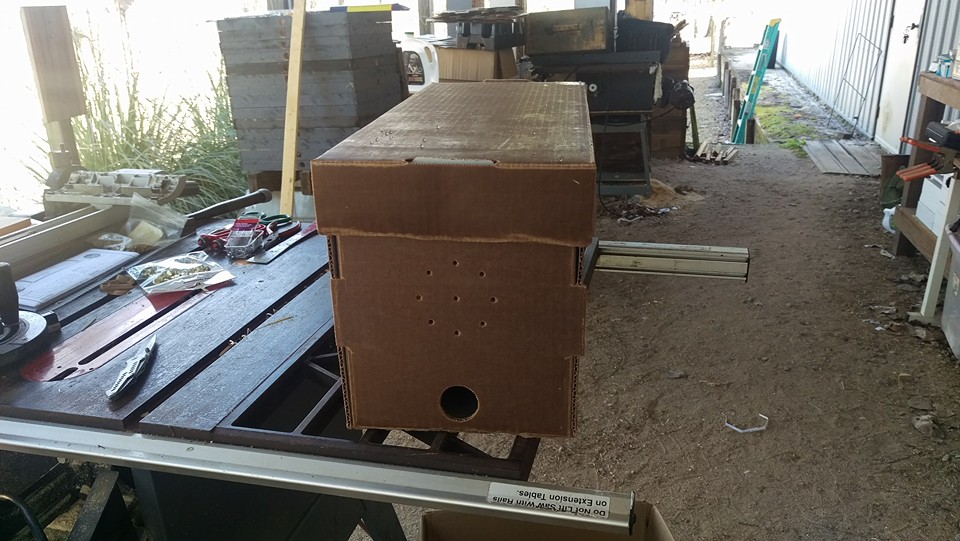
Using waxed nuc boxes this year for swarm traps.
01 Thursday Dec 2016
Posted in beekeeping, first blog entry, sustainable
Tags
I guess before we plunge into the content it might be best to say exactly what is planned.
The bees must make their own way in some form or the other. A paraphrase from a favorite movie of mine: “They have to pay something, don’t they?” Historically, not so very long ago, the bees paid their owner, if you can say you own bees. Honey bees as livestock could make the farmer a living at one time. Things have not gone well for the bees though and we are faced with difficult times. A sideliner beekeeper with a few dozen hives is faced with having too many expenses without enough income from the effort. And honey alone might be enough to pay the costs associated with maintaining and feeding the bees but is that the sum of the venture?
So the beekeeper, in my estimation, is faced with multiple challenges to both increase marketable products and reduce expenditures. Some ideas which come to mind are specialty products of raw, unfiltered honey, comb honey, wax, propolis, pollination services, queen sales, nucleus hive sales, and pollen. Cost cutting through sustainable methods by rearing queens in house, in house woodenware manufacturing, and making seasonable splits to maintain a steady supply of bees for use in multiple bee yards.
I hope to be able to speak to the many facets of sustainable beekeeping and the seasonal chores associated with maintaining healthy bees. I’d also like to be able to publish a seasonal calendar for use by others as a guide for their own beekeeping tasks.
And finally I’d like to somehow transmit to others the art of beekeeping as I have learned it thus far. It’s one thing to read the books and memorize the tasks, but learning to read and interpret the pulse of the colony by careful observation is more challenging. Utilizing all of the beekeeper’s senses to draw correct conclusions, assess, develop a plan, impliment, and evaluate the process based on observation and intuitive skills.
Lofty goals indeed.

