• Sassafras Bee Farm
  • About
  • Contact

Beekeeping365

~ The more I studied beekeeping, the less I knew, until, finally, I knew nothing. But, even though I knew nothing, I still had plenty to unlearn. Charles Martin Simon

Beekeeping365

Category Archives: South Carolina

What the Hive Remembers and What You Don’t

04 Friday Sep 2026

Posted by Beekeeping365 in beekeeping seasons, biography, outyards, South Carolina

≈ Leave a comment

Tags

beekeeping

No bee that swarmed in June is alive by the time you write up the year in October. A worker bee in summer lasts five or six weeks; even the queen, who can live for years, wasn’t there for the swarm herself in any way you could call witnessing — she was carried along inside the cluster, a follower rather than observer. By the time you’re telling the story of that swarm at your bee club, every single participant except you has died of old age. The parent colony that “remembers” the swarm, if anything does, is not made up of any bees who were there.

And yet the colony does, in its own way, keep a record. Walk up to an established colony and you can read its recent history off the comb itself: the ivory new wax they built out in a good flow, the darker brood comb worked over years, the clean, glassy cells where they laid up stores against a winter that already happened. A forager who dies today has already passed her waggle-dance directions to the next generation of foragers before she goes. None of it lives in any single bee’s memory, because no bee has a memory that outlasts the season — the memory lives in the structure, in wax and pheromone and behavior encoded so thoroughly into the colony’s habits that the colony can lose every bee that was present for an event and keep behaving as though it remembers. A superorganism doesn’t reminisce. It just keeps doing what worked, materially, in comb, whether or not anyone in it recalls why.

You, on the other hand, remember the way people do — which is to say, badly, and only with effort. Everything true of human memory in general is true of a beekeeper’s memory of the bee yard in particular. The swarm you caught off the fence post gets, with each retelling, a little larger, a little higher up, a little more dramatic in the catching — the same mechanism by which the fish gets bigger, and the mountain gets steeper in every story anyone tells twice. You’re not lying. You’re doing what memory does by default, which is treat every recollection as a working draft rather than a locked file, rewritten slightly each time it’s pulled back out. A memory of a hive inspection is really a memory of the last time you told someone about the hive inspection — a copy of a copy — and if you never tell it, never write it, never pull it back out at all, it doesn’t sit in a drawer waiting. It fades, the way whole chapters of a life fade once there’s no one left to tell them to.

This is, it turns out, exactly the problem beekeeping used to solve for itself without anyone framing it that way. Before extension offices and YouTube and the online forums, what a person knew about bees came from an old-timer down the road who’d learned it from someone before them, told and retold at the hive itself — swarm season stories, wintering stories, the year the mites took half the county’s hives, all reinforced by repetition the way any oral tradition is reinforced, right down to reviewing each day’s words and deeds morning and evening before committing to memory rather than to paper. A bee yard, if you let it, works like a memory palace in the most literal sense — walk a familiar place in a fixed order, hanging each thing you need to remember on a particular snapshot or landmark along the way, and that is uncannily close to what a beekeeper already does without training for it, walking from hive to hive down the row, each box calling up what happened there last time you stood in front of it. The mentor who walks the row with a newer beekeeper, telling the story of hive four’s failed requeening as they pass it, is making memory a social, repeated, walked-through act rather than a private, one-time filing.

That kind of transmission is exactly what’s gotten thinner as beekeeping, like most things, has scattered into people who don’t share a bee yard with anyone who knew them starting out. A hive journal on an app can hold the facts a person used to only get by standing at the boxes with someone older who’d tell it to them again next spring, and it can hold them accurately, in a way retelling does not. But a journal can’t do the other job the old method did almost by accident, which is keep the knowledge exercised. A fact that only exists in a file, never pulled back out and walked through, is not so different from a memory nobody tells anymore — technically preserved, functionally dissolving, waiting in a dusty corner for a query nobody’s likely to run.

Which leaves the harder question sitting underneath all the record-keeping: if you took away everything you remember — the swarm, the bad mite year, the queen you watched get balled and killed by her own bees for reasons you never fully worked out — would you still be the same beekeeper? The colony wouldn’t blink at losing its history this way; it isn’t carrying one in the sense you are, and it replaces every witness to its own past on a five-week cycle without missing a step. You don’t get that deal. Whatever you are as a beekeeper is bound up, more than you’d like to admit under examination, in a set of reconstructed, embellished, quietly fading recollections of boxes that are mostly gone now, repainted, requeened, or dead-out and cleaned up years ago. The hive keeps its continuity in wax, which doesn’t lie but also doesn’t care. You keep yours in story, which cares a great deal and gets it wrong more often than the confidence in your own telling would ever let you suspect.
Feel free to share this on:

  • Share on Facebook (Opens in new window) Facebook
  • Share on X (Opens in new window) X
  • Share on Pinterest (Opens in new window) Pinterest
  • Email a link to a friend (Opens in new window) Email
  • Share on LinkedIn (Opens in new window) LinkedIn
  • Share on Reddit (Opens in new window) Reddit
  • Share on Tumblr (Opens in new window) Tumblr
  • Print (Opens in new window) Print
  • Share on Telegram (Opens in new window) Telegram
  • Share on WhatsApp (Opens in new window) WhatsApp
Like Loading...

SC Midlands Beekeeping Calendar for September

01 Tuesday Sep 2026

Posted by Beekeeping365 in beekeeping, beekeeping calendar, calendar, management, South Carolina

≈ Leave a comment

Tags

beekeeping, beekeeping calendar, management

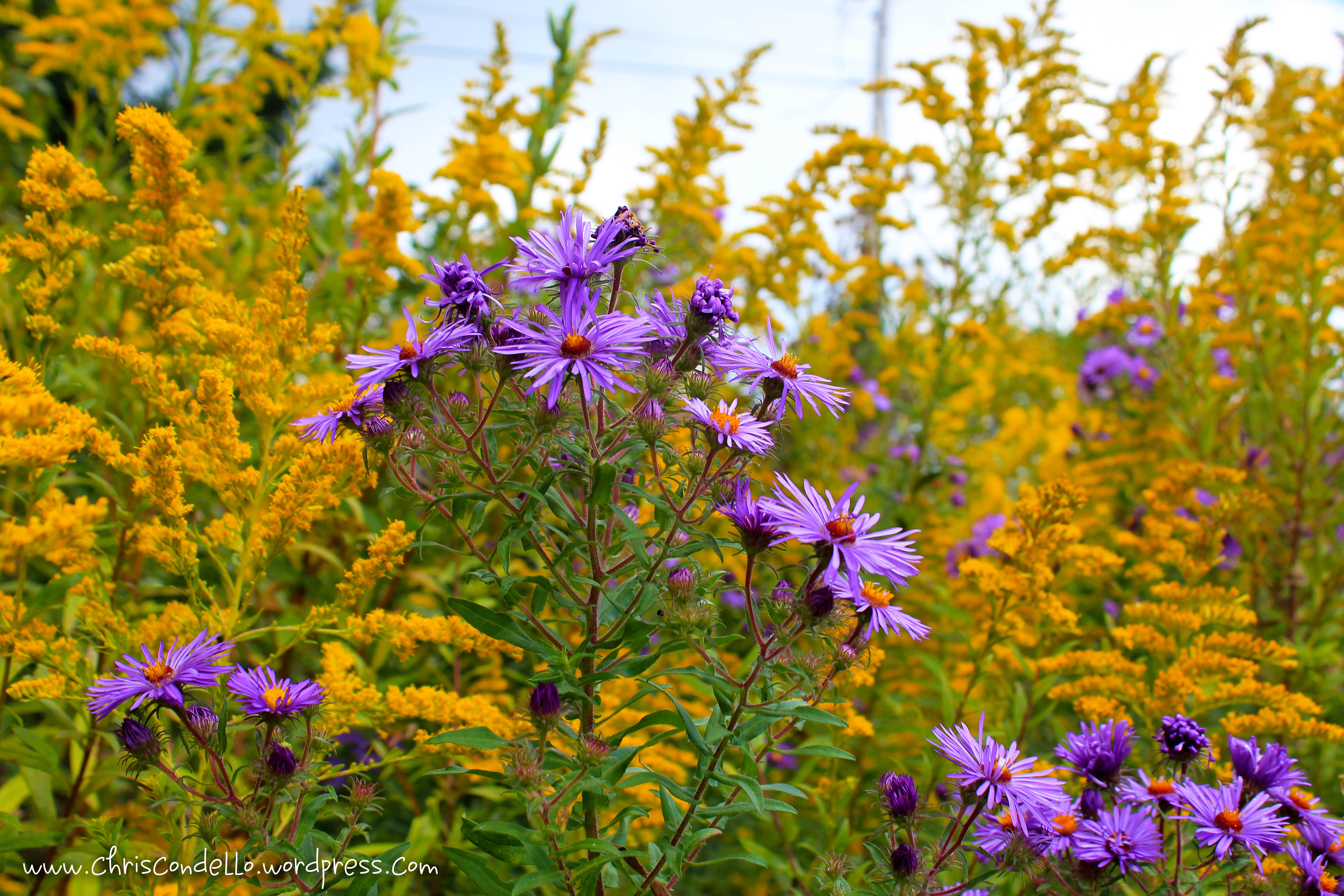
astergoldenrod

Photo credit: https://chriscondello.wordpress.com

As always, All beekeeping is local. Here’s my offering for the beekeeping calendar for the South Carolina Midlands for the month of September: Plan on checks twice this month but do not work unless necessary to prevent triggering robbing.

September weather usually continues to be hot in the Midlands. Don’t expect extended cool weather until mid-October. In the meantime, slightly reduced temperatures may open up some alternative Varroa treatment options.

The main management issue this month is a continuation of last month’s focus on pest management. Pests are growing in numbers while bee populations are typically falling in response to a reduction in available nectar. Varroa, Small Hive Beetles, Yellow Jackets, and other pests can overwhelm a hive leading to decline. A weakened hive then becomes vulnerable to robbing and wax moths. The beekeeper must get ahead of the pests, as responding after a problem is observed may be too late.

1) Continue to monitor and control pests – Varroa, Small Hive Beetles, and Yellow Jackets. If you have not yet treated for Varroa now is the time to assess and act accordingly.

2) This year’s hive beetle population seems to be greater than last year’s. I suspect this is due to last year’s warm winter, increased rainfall this spring and summer, and overall supportive weather. Place traps or Swiffer pads in hives before you notice a problem. Check traps weekly and replenish or replace as needed.

3) Yellow Jacket traps with lure can be placed around the apiary. There are several low cost or no cost do-it-yourself trap plans online. If you see yellow jackets attempting to breach security at the hive entrance observe how your bees handle the situation. A strong hive will eject the intruder in short order. Keep hives strong by adjusting hive internal volume to bee population. Poor Man’s Yellow Jacket trap.

4) Depending on your location, some of these plants may have already bloomed. Rose of Sharon, Magnolia, Crepe myrtle, Sunflower, White Boneset, and Sweet Autumn Clematis. Cotton and Soybean is blooming east of the Midlands. Goldenrod and Asters begin to make their appearance this month. We sometimes get a short fall nectar flow. If we get a fall nectar flow you’ll notice a renewed vigor on the landing board and lots of pollen entering the hive. The smelly sock odor of goldenrod will be noted when you open the hive and sometimes when walking through the apiary.

5) Typically, no local Midlands queens are available in September. If you need a queen you’ll probably have to order one from out of state or buy one from a vendor that has ordered from out of state.

6) It’s crunch time to combine weak hives with strong hives. There is a saying, “Take your losses in the Fall.” Experienced beekeepers combine their weak hives with stronger hives knowing they can split next spring and nothing is lost. (Assess and make sure the weak hive is not weak due to disease before combining.) Better to strengthen a strong hive than allow the weak hive to perish. Use the newspaper method between boxes with slits to allow the bees to become accustomed to each other. Remove the weaker queen prior to combining. Note: Again, assess and make sure the weak hive is not weak due to disease before combining.

7) Use entrance reducers as appropriate. Many colonies have been bringing their populations down over the course of dearth period. Adjust their entrances accordingly. Addition of an upper entrance such as a notched inner cover is advisable prior to entering colder weather to allow for ventilation (cover with screen if robbing pressure is a concern).

8) Increase feeding this month to stimulate the brood rearing of nurse bees which will raise your winter bees. You may use a 1:1 mix during this time but nothing thinner. Coupled with autumn pollen flow this can give a boost to improving the quality of your winter bees. Some beekeepers begin the use of 2:1 this month. The decision is yours based on your assessment of your hives, their stores, and whether you think we’ll get cooler weather sooner rather than later.

9) Begin to tip colonies forward from the rear to assess their weight. Notice the number of frames of honey stores inside so that you can compare what you are feeling with what is actually inside. You will need this assessment skill during winter when you shouldn’t open the hives.

10) If not yet done, make efforts to bring all hives with extra supers down to overwintering configuration. For ten frame hives that usually means one deep and one medium OR three mediums. If you left an extra super on to feed during dearth, now is the time to remove it and any queen excluder used. If you have eight frame hives do the math to accomplish the same internal volume.

11) The occasional late swarm caught this time of year can be housed briefly in a box and fed. They will pull out some nice comb but anticipate combining them after a short while with an established colony.

12) Prepare your honey and wax entries for the South Carolina State Fair. Helpful hints can be found here.

13) Attend your local association’s monthly meeting. Volunteer to educate the public on the importance of honey bees by signing up to work a shift at the upcoming SC State Fair booth.

14) It’s September and time to start preparing for autumn! Enjoy the following resources as you prepare your colonies:
Fall Management by Rusty Burlew at Honey Bee Suite

Autumn Management In The Southeast U.S. by David MacFawn

Feel free to share this on:

  • Share on Facebook (Opens in new window) Facebook
  • Share on X (Opens in new window) X
  • Share on Pinterest (Opens in new window) Pinterest
  • Email a link to a friend (Opens in new window) Email
  • Share on LinkedIn (Opens in new window) LinkedIn
  • Share on Reddit (Opens in new window) Reddit
  • Share on Tumblr (Opens in new window) Tumblr
  • Print (Opens in new window) Print
  • Share on Telegram (Opens in new window) Telegram
  • Share on WhatsApp (Opens in new window) WhatsApp
Like Loading...

Trapping Honey Bee Swarms

25 Monday Jan 2021

Posted by Beekeeping365 in beekeeping, beekeeping equipment, equipment, South Carolina, swarms

≈ 11 Comments

Tags

beekeeping, beekeeping equipment, honey bee swarms, swarm traps, swarms

A proven site.
A proven site.
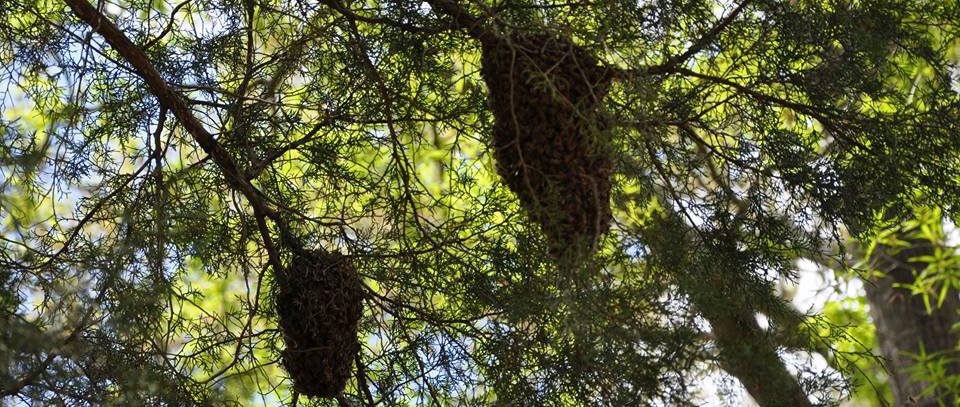
Swarm Trap in tree
Swarm Trap in tree

With a mild winter, swarms can come early to the South Carolina Midlands- around February 15th. That sounds like a long time from now but it will get here sooner than you think and swarms are unforgiving with beekeeper tardiness. Building and getting ready for swarm trapping is something that you should consider doing during these off months of winter. Remember, once swarm season starts you’ll probably be caught up in preparing your own hives for the primary nectar flow and have a limited amount of time to prepare traps. However, for those who are prepared there will be free bees. Here are a few sites I recommend:

http://letmbee.com/do-it-yo…/trapping-quick-reference-guide/

http://www.horizontalhive.com/h…/swarm-trap-free-plans.shtml

http://www.biobees.com/forum/viewtopic.php?t=17189

And multiple videos by outofabluesky:
https://youtu.be/06zYkH7faeA

I promote swarm traps as another part of good beekeeping. Swarm management starts within your own hives and can go a long way to reducing the number of swarms that issue from your apiary. Intensive management can come close to eliminating swarms. However, life happens and you will experience the occasional swarm. Some thoughts on the matter:

1) The swarms you catch in a trap will typically perform better than the ones you knock out of a tree.

2) You’ll lose a portion of the swarms that issue for various reasons like too high in a tree, etc. It’s really nice when that swarm you had to leave in the tree shows up in your trap the next day.

3) Coupled with good swarm management in the hive, and capture of those swarms easy to gather, adding traps is good stewardship. Dr. Lawrence Connor in his book, Increase Essentials, says only 1 in 6 swarms survive their first winter. By capturing them you’re increasing their chances of survival.

4) Swarm captures makes better neighbors. Some neighbors will be as fascinated as you are at the miracle of swarming; others won’t. Capturing your own swarms may prevent you some heartache.

And finally, here’s an excellent, free, eight page article on the biology on swarming and nest selection with excellent advice on swarm trapping: Bait Hives for Honey Bees by Thomas D. Seeley, Roger Morse, and Richard Nowogrodzki

Swarm trapping can be fun. For beekeepers it satisfies the same urge fishing does for fishermen. A lot of care goes into choosing and selecting the equipment and bait in hopes of finding the right combination which will most closely match the criteria the bees are looking for in a new home. Have some fun this year preparing your bait hives and catching a big swarm. You’ll not only get more bees, you’ll have a story to tell. And take a few pictures and send them in to us to share.

Feel free to share this on:

  • Share on Facebook (Opens in new window) Facebook
  • Share on X (Opens in new window) X
  • Share on Pinterest (Opens in new window) Pinterest
  • Email a link to a friend (Opens in new window) Email
  • Share on LinkedIn (Opens in new window) LinkedIn
  • Share on Reddit (Opens in new window) Reddit
  • Share on Tumblr (Opens in new window) Tumblr
  • Print (Opens in new window) Print
  • Share on Telegram (Opens in new window) Telegram
  • Share on WhatsApp (Opens in new window) WhatsApp
Like Loading...
Follow Beekeeping365 on WordPress.com

Enter your email address to follow this blog and receive notifications of new posts by email.

Calendar

October 2026
S M T W T F S
 123
45678910
11121314151617
18192021222324
25262728293031
« Sep    

Posts by Month:

  • October 2026 (15)
  • September 2026 (32)
  • August 2026 (6)
  • July 2026 (1)
  • May 2026 (2)
  • January 2026 (3)
  • July 2025 (1)
  • April 2024 (1)
  • July 2022 (1)
  • March 2022 (13)
  • February 2022 (17)
  • January 2022 (4)
  • December 2021 (4)
  • November 2021 (4)
  • August 2021 (11)
  • July 2021 (18)
  • June 2021 (5)
  • May 2021 (2)
  • April 2021 (9)
  • March 2021 (2)
  • February 2021 (5)
  • January 2021 (16)
  • December 2020 (15)
  • November 2020 (5)
  • October 2020 (2)
  • July 2020 (1)
  • February 2020 (1)
  • March 2019 (2)
  • February 2019 (4)
  • January 2019 (1)
  • December 2018 (10)
  • November 2018 (8)
  • October 2018 (13)
  • September 2018 (18)
  • August 2018 (3)
  • July 2018 (11)
  • June 2018 (27)
  • May 2018 (33)
  • April 2018 (20)
  • March 2018 (20)
  • February 2018 (12)
  • January 2018 (22)
  • December 2017 (18)
  • November 2017 (15)
  • October 2017 (19)
  • September 2017 (17)
  • August 2017 (21)
  • July 2017 (29)
  • June 2017 (28)
  • May 2017 (19)
  • April 2017 (17)
  • March 2017 (19)
  • February 2017 (12)
  • January 2017 (13)
  • December 2016 (5)

Posts by Categories:

  • absconding (1)
  • africanized honey bees (1)
  • apitherapy (1)
  • bee health (7)
  • bee law (2)
  • bee lining (2)
  • bee removals (2)
  • beekeeper (5)
  • beekeeper education (17)
  • beekeeping (604)
    • South Carolina (3)
  • beekeeping author (10)
  • beekeeping books (12)
  • beekeeping calendar (6)
  • beekeeping chores (9)
  • beekeeping equipment (23)
  • beekeeping history (48)
  • beekeeping management (35)
  • beekeeping pest management (8)
  • beekeeping seasons (26)
  • beekeeping vocabulary (15)
  • beeswax (11)
  • biography (5)
  • biology (12)
  • birthday (37)
  • birthdays (31)
  • book review (16)
  • breakfast (1)
  • calendar (6)
  • CCD (1)
  • chores (6)
  • comb (6)
  • comb honey (10)
  • commercial beekeeping (1)
  • cutouts (2)
  • dearth (4)
  • defensiveness (1)
  • diseases (9)
  • drawn comb (5)
  • ecology (4)
  • education (30)
  • equipment (21)
  • extracting (1)
  • fall nectar flow (1)
  • famous beekeepers (25)
  • feeding bees (8)
  • first blog entry (1)
  • folklore (1)
  • food (7)
  • forage (4)
  • hacks (3)
  • hive inspections (6)
  • hive placement (2)
  • hive products (6)
  • honey (85)
  • honey as food (22)
  • honey bee anatomy (3)
  • honey bee behavior (23)
  • honey bee biology (42)
  • honey bee genetics (4)
  • honey bee losses (1)
  • honey bee nutrition (1)
  • honey bee photos (6)
  • Honey Bee Research (1)
  • honey bee vocabulary (11)
  • honey bees (14)
  • honey judging (3)
  • honey recipe (65)
  • humor (13)
  • inspections (9)
  • journal (1)
  • log book (1)
  • making increase (3)
  • management (82)
  • mentoring (2)
  • mites (4)
  • national pollinator week (2)
  • nectar flow (6)
  • nomenclature (1)
  • opinion (5)
  • out yards (1)
  • outyards (2)
  • package bees (2)
  • pears (1)
  • pests (17)
  • plants for bees (3)
  • polish (1)
  • pollen (4)
  • pollination (11)
  • pollinators (7)
  • product review (1)
  • production (1)
  • products (3)
  • propolis (2)
  • queens (17)
  • raw honey (6)
  • recipe (88)
  • removals (1)
  • safety (3)
  • sales (2)
  • season (1)
  • seasons (21)
  • sideliner (1)
  • small hive beetles (1)
  • spring buildup (4)
  • state fair (2)
  • sustainable (8)
  • swarms (27)
  • ursurpation (1)
  • usurpation (1)
  • varroa (20)
  • varroa destructor (11)
  • varroa mites (23)
  • Winter (6)
  • winter solstice (2)
  • woodenware (3)
  • yellow jackets (2)

Sassafras Bee Farm on Facebook

Sassafras Bee Farm on Facebook

Sassafras Bee Farm

Sassafras Bee Farm

Recent Posts

  • It Always Starts with Assessment
  • Happy Birthday Jay J. Smith
  • Miracles by Walt Whitman
  • What Do You Know?
  • Fall Nectar Flow

Beekeeping365 on Facebook

Beekeeping365 on Facebook

Top Posts & Pages

  • Swarms
    Swarms
  • To the (bee) Veils! by sassafrasbeefarm
    To the (bee) Veils! by sassafrasbeefarm
  • The Russian Scion
    The Russian Scion

Blog Stats

  • 145,440 hits

Website Built with WordPress.com.

  • Subscribe Subscribed
    Beekeeping365
    Join 417 other subscribers

    Have a WordPress.com account? Log in now.

  • Beekeeping365
    View site in Reader
    Manage subscriptionsSign upLog in
    Report this content
    Collapse this bar
Loading Comments...
%d