• Sassafras Bee Farm
  • About
  • Contact

Beekeeping365

~ The more I studied beekeeping, the less I knew, until, finally, I knew nothing. But, even though I knew nothing, I still had plenty to unlearn. Charles Martin Simon

Beekeeping365

Category Archives: beekeeping pest management

The Queen Your Worst Winter Leaves You

18 Friday Sep 2026

Posted by Beekeeping365 in beekeeping, beekeeping management, beekeeping pest management, beekeeping seasons, mites, Winter

≈ Leave a comment

It’s September. The colony has never looked stronger, there is no visible danger anywhere in the yard, and this is exactly the point at which winter is either being prepared for or it isn’t.

By September the part of the year that actually decides winter survival has narrowed down to a couple of windows most beekeepers don’t notice closing in. The clearest is the mite treatment. The bees a colony rears in September and October aren’t built like the bees it reared in June — they’re the diutinus generation, fed differently as larvae, carrying the fat reserves and vitellogenin that let a bee live four or five months on cluster instead of the ordinary six weeks a summer forager gets. Whether that generation comes out of the cell healthy or compromised is decided while it’s still capped brood, which means a mite treatment timed to catch it in September works, and the same treatment applied in November is a beekeeper doing the right thing on the wrong date. There’s no makeup exam. The winter bee is reared soundly or she isn’t, and the difference won’t be visible from outside the box until one week in February when it’s far too late to matter.

The other window is stores, and the South Carolina Midlands version of this is a little different from the version in the beekeeping books written for colder places. The winters here are short and mild enough that colonies rarely starve for lack of total honey the way a colony in the upper Midwest can. What often kills a well-provisioned Midlands hive in January is isolation — a cold snap that locks the cluster in place for four or five days straight, on a frame it has already stripped, while two frames over sits capped honey the bees never got cold enough, for long enough, to be forced to cross to. Beekeepers here lose colonies with the pantry two inches from the corpse pile, both of them found under the same lid. The fix isn’t more honey. It’s how that honey gets arranged in the box in the fall, and whether it’s positioned before the first hard cold arrives or noticed after.

None of that is dramatic work. It’s a syringe of oxalic acid timed to a brood cycle, a frame moved six inches to the left, a hive vented with a small notch to allow moisture to escape. It happens in weather so mild you’d have to remind yourself there’s a reason to be out there at all. And then winter arrives and does the only thing winter was ever going to do, which is reveal, without negotiation, whatever got decided in September. There’s nothing left to diagnose or manage in the moment by February. The beekeeper who prepared is, in February, watching an undercover buildup of spring bees. The beekeeper who failed to prepare finds out what nature actually thought of their plan.

Some years that revelation can be devastating. You open six hives in the first mild week of March and five of them are dead — a fist of bees, heads down in empty cells, no visible disease, nothing wrong except that the September work wasn’t enough, or wasn’t done, or was done late for a mite load that had already gotten ahead of the treatment. That’s the shock the whole enterprise runs on, the possibility everyone who keeps bees for more than a couple of winters eventually meets: the apiary you built over three seasons reduced to one box by a cold snap in January.

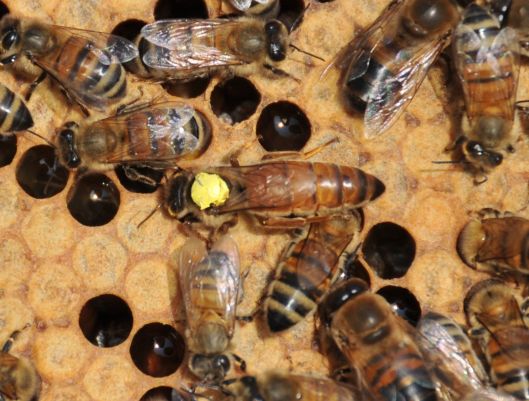
But look at what the sixth hive is. It isn’t luck exactly, though it can feel that way standing over the wreckage of the other five. That colony’s queen, in that exact yard, with that exact mite load and that exact arrangement of stores, is the one whose genetics and whose beekeeper’s fall work actually held. She’s not just a surviving queen. She’s a data point nobody else in the yard produced, and by May you can graft off her — raise two dozen queen cells from larvae she laid, distribute them into splits made from nothing but comb and bees, and rebuild the apiary from one box back up to six or eight, every one of them carrying the exact combination of thrift and resistance that got her through the winter that killed her neighbors. The catastrophe doesn’t just survive total failure. It gets used as the selection event, you’d otherwise have to pay a breeder to run for you. Whatever culled the rest of the yard is also what tells you, with more certainty than any book written on bees ever could, which queen was actually worth keeping.

Many of the actual variables were ever under your control. You don’t control whether the winter runs hard or mild, whether a neighboring beekeeper’s untreated colony gets robbed out in October and hands your yard a mite load you never generated yourself, whether a warm stretch in January fools a cluster into breaking early right before a real cold front arrives to punish it for trusting the weather. What you do control is the September work — the treatment applied before the winter bees are compromised, the honey moved into reach before the cluster is committed to a single frame, the small venting notch you made in the inner cover. And you control going forward after a hardship.  The decision to requeen from your own survivor colonies turning an unplanned event into an opportunity to improve your stock. 

Moving forward is making our best decision in the here and now. 
Feel free to share this on:

  • Share on Facebook (Opens in new window) Facebook
  • Share on X (Opens in new window) X
  • Share on Pinterest (Opens in new window) Pinterest
  • Email a link to a friend (Opens in new window) Email
  • Share on LinkedIn (Opens in new window) LinkedIn
  • Share on Reddit (Opens in new window) Reddit
  • Share on Tumblr (Opens in new window) Tumblr
  • Print (Opens in new window) Print
  • Share on Telegram (Opens in new window) Telegram
  • Share on WhatsApp (Opens in new window) WhatsApp
Like Loading...

Why did my bees die?

31 Thursday Mar 2022

Posted by Beekeeping365 in beekeeping, beekeeping management, beekeeping pest management, management

≈ 5 Comments

Tags

beekeeping chores, beekeeping diagnostics, fall management, spring management, varroa mites, what killed my bees?

2016-05-08 15.37.47.jpg

Why did my bees die?

This is a question often asked and sometimes difficult to answer. The beekeeper looking at a dead colony is left with clues that can sometimes indicate the cause of death. More often though the beekeeper looks at the “crime scene” and makes an incorrect assumption. We’ve all heard it, “Wax moths killed my bees.” or “They got robbed.” or Small hive beetles killed them.” Most often though these are the results of problems that were missed or not addressed earlier.

I like murder mysteries. And, like in murder mysteries, what kills the bees isn’t always the most obvious suspects. It’s not the one the mystery writer wants you to initially think it is. After all what fun would that be? Instead the beekeeper must use some logic in backtracking the history of the colony to solve the mystery. Many times the downward spiral started some time back and we missed it before it lead up to wax moths, robbing, small hive beetles, or other maladies.

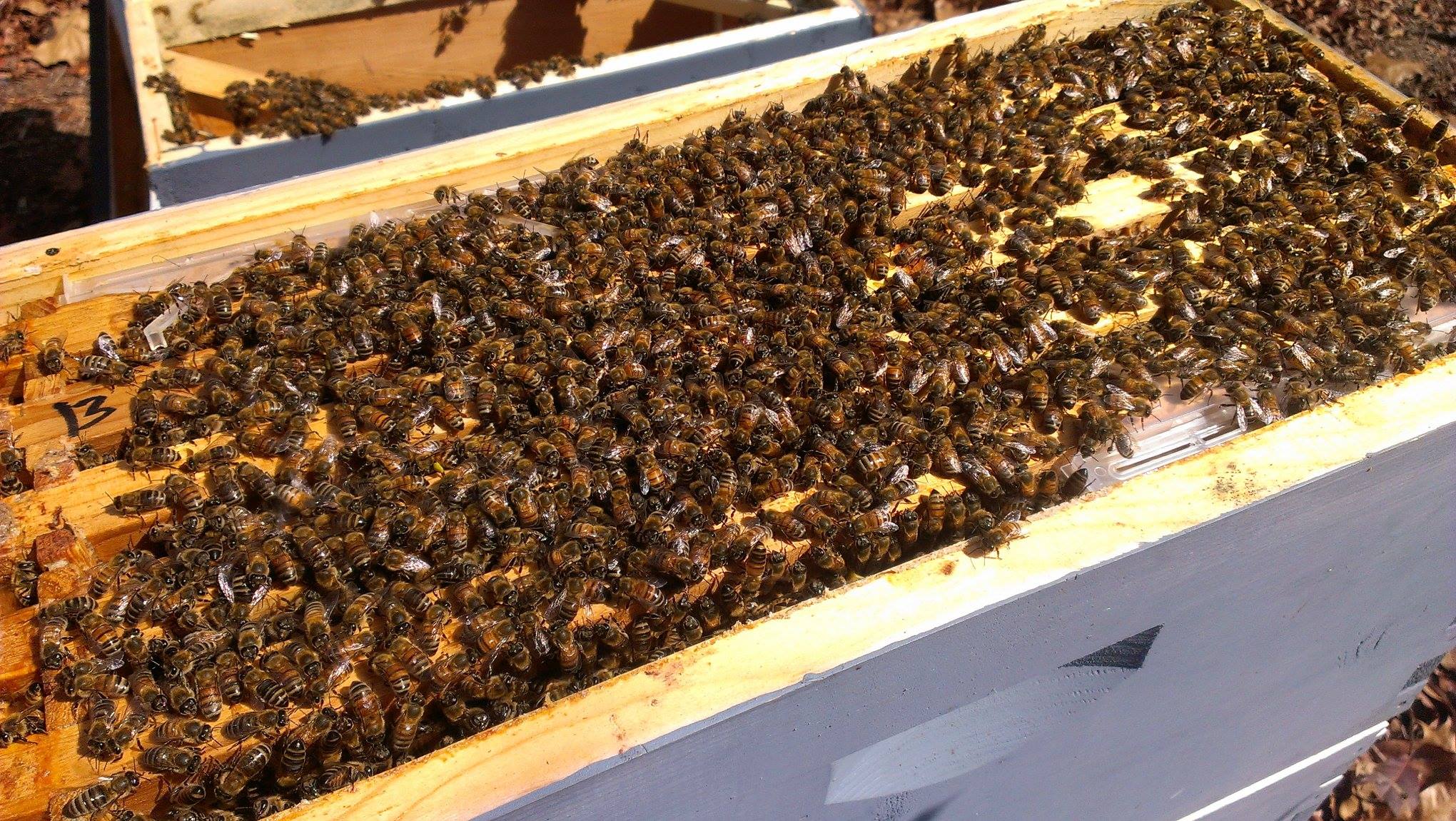
This past winter I had a 9% overwinter loss coming into the spring buildup. All in all, in today’s world of beekeeping that’s pretty good. Early in this season’s buildup, in February, I rotated boxes as a swarm prevention technique. I noted that a particular row of hives were not building up as fast as my other hives. As I rotated the hive bodies I inspected and found that they were all queen-right though so I just chalked the slow buildup up to “one of those unexplained things.”

That row of thirteen colonies coming into spring lost six colonies AFTER that first box rotation of spring. All of my other colonies continued to grow and expand.  Granted the ones lost were not the strongest but they had queens (I saw them). How were these different than the ones that were thriving? Time to put on my detective hat. They were unique in that they are all on same row, were not taken down in size last fall (I just ran out of energy), and had older queens. So what killed them? I don’t know but I suspect the stress of the box rotation on an already stressed colony. How were they already stressed? Why did they not build up like the other areas in my bee yard? Thinking about the differences: this group  had older queens, larger hives usually have/maintain higher mite counts,  and were in  an isolated  row in the bee yard.  I don’t know exactly which stressor was the largest but I suspect some or all of the above come into play.

Now my overall losses were at 27% instead of the 9% prior to this event and most likely because I failed to reduce size, monitor this row for Varroa better, and not re-queen in the fall. Which exactly? Beekeepers always want to know which one is the culprit. I don’t know. Maybe it was multiple stressors and not just one. But I do have some excellent suspects! Regardless of which stressor killed these colonies I failed to do that which a good steward should have done for these bees. Ultimately it’s on me.

…

So, after writing the above I was further pondering the possibilities while making up some sugar syrup, and I was thinking about the stressors and it came to me what killed those colonies. Distilling it down to a single element – laziness. I should have taken those hives down to 2 boxes post nectar flow last summer. I should have monitored Varroa better in that row instead of assuming it would be the same as the newer hives in other areas. And I should have re-queened as would have happened easily if I had made splits last year when I should have taken them down in size. My laziness killed those colonies. So there, I came up with a single cause, identified the culprit, and solved the mystery!

It won’t happen again. Maybe something else but not this.


Feel free to share this on:

  • Share on Facebook (Opens in new window) Facebook
  • Share on X (Opens in new window) X
  • Share on Pinterest (Opens in new window) Pinterest
  • Email a link to a friend (Opens in new window) Email
  • Share on LinkedIn (Opens in new window) LinkedIn
  • Share on Reddit (Opens in new window) Reddit
  • Share on Tumblr (Opens in new window) Tumblr
  • Print (Opens in new window) Print
  • Share on Telegram (Opens in new window) Telegram
  • Share on WhatsApp (Opens in new window) WhatsApp
Like Loading...

Drawn Comb, Wax Moths, and Fish Bait by sassafrasbeefarm

05 Thursday Aug 2021

Posted by Beekeeping365 in beekeeping, beekeeping pest management, comb, drawn comb, management, pests

≈ Leave a comment

Tags

beekeeping, drawn comb, management, pests, wax moths

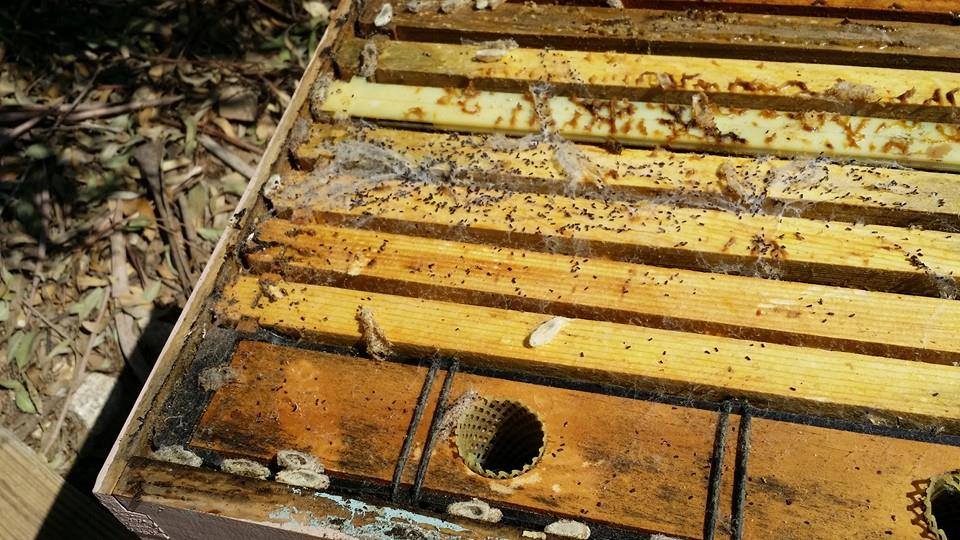
wax moth destruction

You can always buy more bees, catch a swarm, make a split, or otherwise replace bees. But drawn comb can not be purchased. Having drawn comb in early spring exponentially increases a colony’s productivity versus starting on foundation. A spring package placed on drawn comb typically makes surplus honey the same year.

After the nectar flow, beekeepers must protect their drawn comb from wax moths which will take every opportunity to destroy your bee’s legacy.  You may have to store drawn comb after pulling honey supers, extracting, removing dead outs or removing excess hive bodies as the bee colony population reduces. Always remember, drawn comb is beekeepers’ gold and should be saved and preserved until placed back into use the following spring.

Here are a few excerpts from emails discussing protecting drawn comb from wax moths during storage:

Wax moths are attracted to older brood comb. The residual proteins found in brood comb are their attractant. Typically they will not show any interest (or minimal) in the clean white wax found in honey supers. If any of the comb on a frame has been used at any time in the past for brood rearing it is subject to wax moth infestation.

Be thankful they are on plastic foundation. Otherwise you often have to replace the foundation. And if they are in wooden frames wax moths will actually bore holes in the wood as well. On plastic you can scrape it off and re-coat with wax for next year.

On placing frames in the freezer to kill the wax moth eggs: You can google wax moth, life cycle, etc and find some research. The success of killing the larvae and eggs is dependent on temperature and length of time of exposure. Two days may be sufficient IF your freezer is at 0 degrees F. If your freezer is kept at 20 degrees F it may take 6 days. And if at 32 degrees F it may take longer. (These are just guesses but perhaps you get the idea that an overnight in the freezer may not do the job.) Some people with a limited number of frames can store them in the freezer until outdoor temperatures are colder.

In the bee yard, there is a temperature range for wax moth reproduction. When the outdoor temperatures get cool enough (typically after first freeze) they are typically no longer a threat.

Every year we get posts on the Mid-State Beekeepers discussion board with pictures saying they froze the comb for X number of days then placed it in a Tupperware or other container and stored under the house or some similar dark place only to find the comb destroyed by spring. Last year in bee school a member of the class asked me about this specifically and said if he placed the frames in the freezer for X number of days and then immediately placed it in lawn trash bags and sealed them completely shouldn’t that work? I told him that “in theory” his plan would work but my experience is some eggs will hatch, a mouse will chew a hole, etc., and if conditions are right they will destroy his comb.

On Paramoth (paradichlorobenzene) crystals: The approved product for use with stored comb, and properly labeled, is Paramoth. Moth balls and crystals found in dollar stores, Walmart, and elsewhere may not be pure paradichlorobenzene or worse yet, may be another chemical, naphthalate a known carcinogenic.

Paramoth works well but it is not a one and done application. Use them according to the label and do not under-dose. The crystals “melt” as they release their gas into the supers. Periodically check them throughout the storage period (or until the weather turns cold) and replenish them as needed. I’ve seen some people tape the edges of the hive bodies to make a gas seal. Unfortunately this dark, sealed environment is also ideal for the moths when the para-moth dissolves and no longer provides protection. A period of airing out is necessary before placing the comb back into use.

Storing drawn comb using open air, light, and breeze: I did this one year with good success by placing the hive bodies on their sides under a covered overhang. The light, air, and breeze is an uninviting environment for the moths. This takes a bit of work to lay out the area such that all of the needed components are present AND the frames are protected from the elements. But if you only have a few hive bodies it’s possible. Also, be aware that anything placed outside is subject to squirrels, mice, and other hungry travelers who like the comb, pollen, and honey residuals.

Bacillus thuringiensis aizawa returns! BT (bacillus thuringiensis aizawa): BT is a gram-positive, soil-dwelling bacterium, commonly used as a biological pesticide. This works well and in past years was recommended by the Xerces Society as an approved organic control. Some years ago BT was on the market for use by beekeepers as a product to control wax moths in stored frames until its registration expired and was not renewed by the manufacturer. It has again been registered for use and should start showing up at your favorite beekeeping supply house soon. I have not yet seen it on websites nor in the catalogs. (Word in the bee yard says call Dadant by phone and they’ll hook you up.)  A June 2020 article titled: Valent BioSciences Partners with Vita Bee Health to Develop New Biological Wax Moth Control That Safeguards Health of Honeybees indicates it’s returning to the market. I have a friend that uses BT and sprays the comb as it is coming out of the extractor. Care must be taken to protect the BT sprayed comb from temperatures above 86F degrees  as the bacterium can not survive at higher temperatures. More information can be found in this January release by ABJ here.

Final notes on BT: 1) Bacillus thuringiensis kurstaki readily available in garden centers is not the same as bacillus thuringiensis aizawa. 2) There is a product called XenTari for use as non chemical, organic bio control method and approved for use on organic crops is also Bacillus thuringiensis, aizawai. However it is not approved for use as a control for wax moths on comb nor labeled as such. Remember, use of non approved chemicals without proper labelling places the beekeeper at risk should someone claim harm after eating honey from hives where pesticides were not used in accordance with the law.

In closing, for those who protect their drawn comb now, next spring will pay huge dividends in the way of easy splits and surplus honey. And for those who choose to not protect their drawn comb from wax moths don’t despair, I understand the larvae are great as fishing bait.

You can read more about the Greater Wax Moth here: https://en.wikipedia.org/wiki/Galleria_mellonella

And on the Lesser Wax Moth here: https://en.wikipedia.org/wiki/Lesser_wax_moth

Feel free to share this on:

  • Share on Facebook (Opens in new window) Facebook
  • Share on X (Opens in new window) X
  • Share on Pinterest (Opens in new window) Pinterest
  • Email a link to a friend (Opens in new window) Email
  • Share on LinkedIn (Opens in new window) LinkedIn
  • Share on Reddit (Opens in new window) Reddit
  • Share on Tumblr (Opens in new window) Tumblr
  • Print (Opens in new window) Print
  • Share on Telegram (Opens in new window) Telegram
  • Share on WhatsApp (Opens in new window) WhatsApp
Like Loading...

Everything Starts with a Tasty Meal by sassafrasbeefarm

01 Sunday Aug 2021

Posted by Beekeeping365 in beekeeping, beekeeping pest management, management, pests, small hive beetles, yellow jackets

≈ 2 Comments

Tags

beekeeping, management, pests

11024588_10204623271276563_1146745618_o

Quite literally, everything starts with a tasty meal.

In 1943 Abraham Maslow wrote a psychology article proposing a human heirarchy of needs. The short and sweet of the article is: humans start with meeting their basic needs such as food and shelter and, only as those needs are secure can we move to more advanced levels of operations.

So, what does this have to do with bees or insects? Well, we probably need to understand other life forms also have a hierarchy of needs even if limited or primitive. Instead of behaviorally based it’s totally instinctual and for most it starts with food and ends with reproduction. Small Hive Beetles, Wax Moths, Yellow Jackets, and other pests are simply trying to have a tasty meal and move on to reproduction.

Our job, as beekeepers, is to interrupt their ability to progress from food acquisition to reproduction. They want food; deny them access to food and they never progress to reproduction. Let this thought occupy our minds as we contemplate how to combat these pests (after all, we’re already fed so we can operate on higher Maslovian levels).

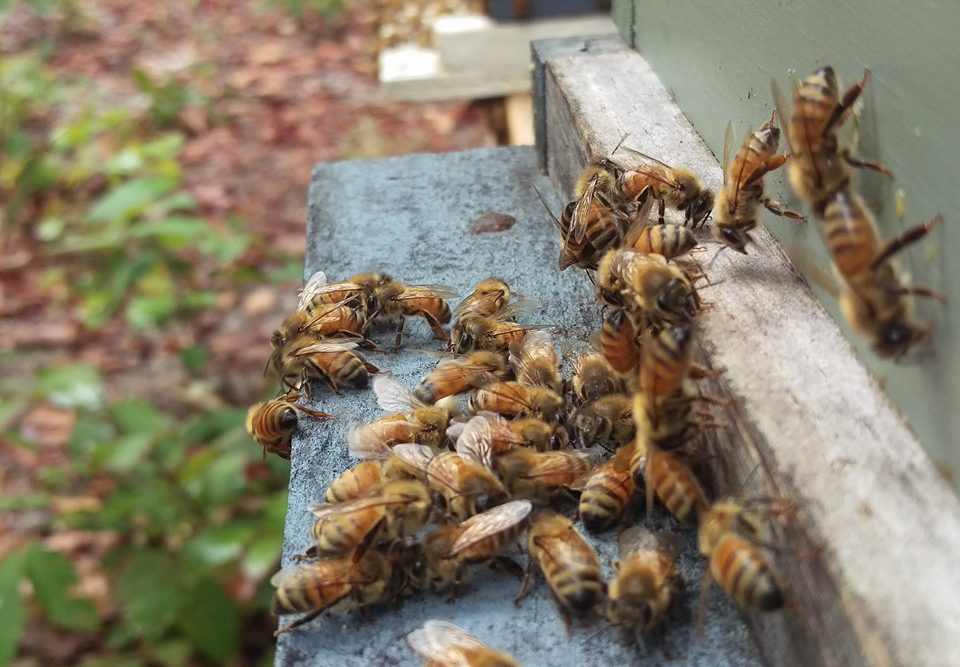
Denying food to pests: Does our bee feeding program build up the opposing armies as well as feed our bees? Do you see SHB or yellow jackets at your feeding station? Have we provided our hives with adequate defensive tools like entrance reducers, SHB traps, and “hive right-sizing” to guard and protect food stores? Are we inadvertently announcing food availability with fragrant oils to attract pests who are actively seeking out food sources?

Using their needs against them: Bait traps can turn the tables on the pests by tricking them into thinking a food source is available. Simple, cheap traps can be made to attract these pests while NOT attracting honey bees. Poor, poor pests; can’t we all just get a snack? If they are hungry they are more likely to try that bait trap. Be careful not to create an increase in pest pressure through careless feeding of the foes.

My point is simply, if they don’t eat they don’t reproduce.

I remember some time back being encouraged to think like a honey bee. During these times of food dearth, perhaps it also pays to start thinking like a pest.

Feel free to share this on:

  • Share on Facebook (Opens in new window) Facebook
  • Share on X (Opens in new window) X
  • Share on Pinterest (Opens in new window) Pinterest
  • Email a link to a friend (Opens in new window) Email
  • Share on LinkedIn (Opens in new window) LinkedIn
  • Share on Reddit (Opens in new window) Reddit
  • Share on Tumblr (Opens in new window) Tumblr
  • Print (Opens in new window) Print
  • Share on Telegram (Opens in new window) Telegram
  • Share on WhatsApp (Opens in new window) WhatsApp
Like Loading...

The Enemy of my Enemy is my Friend. by Berks County PA Honey Bee Removal

04 Thursday Oct 2018

Posted by Beekeeping365 in beekeeping, beekeeping pest management, pests

≈ Leave a comment

Tags

bald faced hornets, honey bee pests, hornets, management of honey bee disaeses and pests, yellow jackets

About this time of year, for the past several years, most of my honeybee colonies would be fending off hundreds of yellow jackets daily. They also would deal with the occasional baldfaced hornet, but to a much lesser extent. This year however (so far), I have witnessed a grand total of 2 yellow jackets, and 2 baldfaced hornets attempting to harass my bees.

So why the picture of my topbar hive full of European hornets? It was back in May that I noticed a single, huge mother hornet enter my empty topbar hive. I looked through the viewing window to see an adorable little paper cone about the size of a silver dollar hanging from a bar. I was preparing to go in and smoosh it, along with mamma when I thought to spend a minute researching these things. I decided to leave it be, and if it got out of hand, then I’d kill it. It never really did get out of hand in my opinion, and it has been as interesting to observe as any other social insect colony.

Read the full article and follow some links to videos here: The Enemy of my Enemy is my Friend. — Berks County PA Honey Bee Removal 19601

Feel free to share this on:

  • Share on Facebook (Opens in new window) Facebook
  • Share on X (Opens in new window) X
  • Share on Pinterest (Opens in new window) Pinterest
  • Email a link to a friend (Opens in new window) Email
  • Share on LinkedIn (Opens in new window) LinkedIn
  • Share on Reddit (Opens in new window) Reddit
  • Share on Tumblr (Opens in new window) Tumblr
  • Print (Opens in new window) Print
  • Share on Telegram (Opens in new window) Telegram
  • Share on WhatsApp (Opens in new window) WhatsApp
Like Loading...

Environmentalist Scare Stories – Never Mind! by peoples trust toronto

02 Tuesday Oct 2018

Posted by Beekeeping365 in bee health, bee law, beekeeping, beekeeping pest management

≈ 1 Comment

Tags

bee decline, gardening and pesticides, neonicotinoids

“Baby boomers” will remember Gilder Radner’s Saturday Night Live character from the ‘70s – Emily Litella, who would launch into hilarious rants against perceived problems, only to discover that she had completely misconstrued what she was fuming about.

“What’s all this fuss about endangered feces?” she asked in one. “How can you possibly run out of such a thing?” Then, after Jane Curtain interrupted to tell her “It’s endangered species,” she meekly responded with what became the iconic denouement of the era: “Ohhhh. Never mind.”

The Sierra Club and “invertebrate-protecting” Xerces Society recently had their own Emily Litella moment, over an issue they both have been hyperventilating about for years: endangered bees. For over half a decade, both organizations have been raising alarms about the imminent extinction of honeybees and, more recently, wild bees – allegedly due to the widespread use of neonicotinoid pesticides.

These are advanced-technology crop protection compounds, originally developed and registered as “reduced-risk” pesticides. Applied mostly as seed treatments, neonicotinoids get taken up into the tissue of crop plants, where they control pests that feed on and destroy the crops, while minimizing insecticide exposure to animals, humans and beneficial species like bees.

But not according to the Sierra Club! It campaigned incessantly for years on the claim that neonicotinoids would drive honeybees into extinction. For instance, in March 2015 the Sierra Club of Canada launched a nationwide “Protect the Pollinators Tour,” as part of its #SaveTheBees project.

“Ironically, the justification for this chemical madness is the same desire to produce enough food to feed everyone,” it said. “The chemical industry wants us to believe we have no choice; it’s their way or the highway. But the science tells us otherwise – that farmers don’t need these chemicals at all! The science also tells us we’re not just killing bees and pollinators, but other insects too. And we’re also killing birds and aquatic life. The scientists tell us we could be creating a Second Silent Spring. It’s madness.”

Read the entire article here:  Environmentalist Scare Stories – Never Mind! — peoples trust toronto

Feel free to share this on:

  • Share on Facebook (Opens in new window) Facebook
  • Share on X (Opens in new window) X
  • Share on Pinterest (Opens in new window) Pinterest
  • Email a link to a friend (Opens in new window) Email
  • Share on LinkedIn (Opens in new window) LinkedIn
  • Share on Reddit (Opens in new window) Reddit
  • Share on Tumblr (Opens in new window) Tumblr
  • Print (Opens in new window) Print
  • Share on Telegram (Opens in new window) Telegram
  • Share on WhatsApp (Opens in new window) WhatsApp
Like Loading...

Disease Management and Guidelines for the Honey Bee by NC State Extension

06 Wednesday Jun 2018

Posted by Beekeeping365 in beekeeping, beekeeping pest management, diseases, pests

≈ Leave a comment

Tags

disease management, diseases of honey bees, honey bee pests, management, management of honey bee disaeses and pests, pests

varroa_mite_2

“It is the goal of every beekeeper to maintain healthy, productive colonies. This can only be accomplished by reducing the frequency and prevalence of disease within beehives. The following is an outline of recommendations for detecting and treating colonies for economically important parasites and pathogens of honey bees so that beekeepers may achieve this goal, and do so in a sustainable way for the long-term health of their colonies.”


Overview
Disease/Pest Causative Agent Symptoms
Adult Parasites
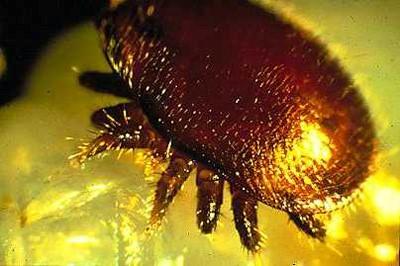
Varroa mites The parasitic mite Varroa destructor Presence of adult mites, deformed wings
Tracheal mites The parasitic mite Acarapis woodi K-wings, morbidity
Nosema The protozoan Nosema apis Diarrhea, distended abdomens
Brood Pathogens
American foulbrood (AFB) The bacterium Paenibacillus larvae Discolored larvae, foul smelling brood, ropy remains, scale
European foulbrood (EFB) The bacterium Melissococcus pluton and associated flora Discolored larvae, foul smelling brood, non-ropy remains, no scale
Chalkbrood The fungus Ascophaera apis White or black mummies in cells or on bottom board
Sacbrood A viral infection Brown larvae in the curled “canoe” shape
Hive Pests
Wax moths Larvae of Galaria mellonella Silk cocoons and/or tunnels
Small hive beetle (SHB) Larvae of Aethinda tumida Wet combs, maggot-like larvae

Read the full Extension Guide titled “Disease Management and Guidelines for the Honey Bee by NC State Extension here: https://content.ces.ncsu.edu/disease-management-and-guidelines-for-the-honey-bee

Feel free to share this on:

  • Share on Facebook (Opens in new window) Facebook
  • Share on X (Opens in new window) X
  • Share on Pinterest (Opens in new window) Pinterest
  • Email a link to a friend (Opens in new window) Email
  • Share on LinkedIn (Opens in new window) LinkedIn
  • Share on Reddit (Opens in new window) Reddit
  • Share on Tumblr (Opens in new window) Tumblr
  • Print (Opens in new window) Print
  • Share on Telegram (Opens in new window) Telegram
  • Share on WhatsApp (Opens in new window) WhatsApp
Like Loading...

Varroa mites—bees’ archenemies—have genetic holes in their armour by BEEKeeperTom’s Blog

22 Tuesday Aug 2017

Posted by Beekeeping365 in beekeeping, beekeeping pest management, honey bee biology, management, pests, varroa, varroa mites

≈ Leave a comment

Tags

beekeeping, honey bee biology, management, pests, varroa mites

Seemingly indestructible Varroa mites have decimated honeybee populations and are a primary cause of colony collapse disorder, or CCD. Michigan State University scientists have found genetic holes in Varroa mites’ armor that could potentially reduce or eliminate the marauding invaders. Credit: Zachary HuangMichigan State University scientists have found genetic holes in the pests’ armor that…

Read full article here:  Varroa mites—bees’ archenemies—have genetic holes in their armour — BEEKeeperTom’s Blog

Feel free to share this on:

  • Share on Facebook (Opens in new window) Facebook
  • Share on X (Opens in new window) X
  • Share on Pinterest (Opens in new window) Pinterest
  • Email a link to a friend (Opens in new window) Email
  • Share on LinkedIn (Opens in new window) LinkedIn
  • Share on Reddit (Opens in new window) Reddit
  • Share on Tumblr (Opens in new window) Tumblr
  • Print (Opens in new window) Print
  • Share on Telegram (Opens in new window) Telegram
  • Share on WhatsApp (Opens in new window) WhatsApp
Like Loading...
Follow Beekeeping365 on WordPress.com

Enter your email address to follow this blog and receive notifications of new posts by email.

Calendar

October 2026
S M T W T F S
 123
45678910
11121314151617
18192021222324
25262728293031
« Sep    

Posts by Month:

  • October 2026 (15)
  • September 2026 (32)
  • August 2026 (6)
  • July 2026 (1)
  • May 2026 (2)
  • January 2026 (3)
  • July 2025 (1)
  • April 2024 (1)
  • July 2022 (1)
  • March 2022 (13)
  • February 2022 (17)
  • January 2022 (4)
  • December 2021 (4)
  • November 2021 (4)
  • August 2021 (11)
  • July 2021 (18)
  • June 2021 (5)
  • May 2021 (2)
  • April 2021 (9)
  • March 2021 (2)
  • February 2021 (5)
  • January 2021 (16)
  • December 2020 (15)
  • November 2020 (5)
  • October 2020 (2)
  • July 2020 (1)
  • February 2020 (1)
  • March 2019 (2)
  • February 2019 (4)
  • January 2019 (1)
  • December 2018 (10)
  • November 2018 (8)
  • October 2018 (13)
  • September 2018 (18)
  • August 2018 (3)
  • July 2018 (11)
  • June 2018 (27)
  • May 2018 (33)
  • April 2018 (20)
  • March 2018 (20)
  • February 2018 (12)
  • January 2018 (22)
  • December 2017 (18)
  • November 2017 (15)
  • October 2017 (19)
  • September 2017 (17)
  • August 2017 (21)
  • July 2017 (29)
  • June 2017 (28)
  • May 2017 (19)
  • April 2017 (17)
  • March 2017 (19)
  • February 2017 (12)
  • January 2017 (13)
  • December 2016 (5)

Posts by Categories:

  • absconding (1)
  • africanized honey bees (1)
  • apitherapy (1)
  • bee health (7)
  • bee law (2)
  • bee lining (2)
  • bee removals (2)
  • beekeeper (5)
  • beekeeper education (17)
  • beekeeping (604)
    • South Carolina (3)
  • beekeeping author (10)
  • beekeeping books (12)
  • beekeeping calendar (6)
  • beekeeping chores (9)
  • beekeeping equipment (23)
  • beekeeping history (48)
  • beekeeping management (35)
  • beekeeping pest management (8)
  • beekeeping seasons (26)
  • beekeeping vocabulary (15)
  • beeswax (11)
  • biography (5)
  • biology (12)
  • birthday (37)
  • birthdays (31)
  • book review (16)
  • breakfast (1)
  • calendar (6)
  • CCD (1)
  • chores (6)
  • comb (6)
  • comb honey (10)
  • commercial beekeeping (1)
  • cutouts (2)
  • dearth (4)
  • defensiveness (1)
  • diseases (9)
  • drawn comb (5)
  • ecology (4)
  • education (30)
  • equipment (21)
  • extracting (1)
  • fall nectar flow (1)
  • famous beekeepers (25)
  • feeding bees (8)
  • first blog entry (1)
  • folklore (1)
  • food (7)
  • forage (4)
  • hacks (3)
  • hive inspections (6)
  • hive placement (2)
  • hive products (6)
  • honey (85)
  • honey as food (22)
  • honey bee anatomy (3)
  • honey bee behavior (23)
  • honey bee biology (42)
  • honey bee genetics (4)
  • honey bee losses (1)
  • honey bee nutrition (1)
  • honey bee photos (6)
  • Honey Bee Research (1)
  • honey bee vocabulary (11)
  • honey bees (14)
  • honey judging (3)
  • honey recipe (65)
  • humor (13)
  • inspections (9)
  • journal (1)
  • log book (1)
  • making increase (3)
  • management (82)
  • mentoring (2)
  • mites (4)
  • national pollinator week (2)
  • nectar flow (6)
  • nomenclature (1)
  • opinion (5)
  • out yards (1)
  • outyards (2)
  • package bees (2)
  • pears (1)
  • pests (17)
  • plants for bees (3)
  • polish (1)
  • pollen (4)
  • pollination (11)
  • pollinators (7)
  • product review (1)
  • production (1)
  • products (3)
  • propolis (2)
  • queens (17)
  • raw honey (6)
  • recipe (88)
  • removals (1)
  • safety (3)
  • sales (2)
  • season (1)
  • seasons (21)
  • sideliner (1)
  • small hive beetles (1)
  • spring buildup (4)
  • state fair (2)
  • sustainable (8)
  • swarms (27)
  • ursurpation (1)
  • usurpation (1)
  • varroa (20)
  • varroa destructor (11)
  • varroa mites (23)
  • Winter (6)
  • winter solstice (2)
  • woodenware (3)
  • yellow jackets (2)

Sassafras Bee Farm on Facebook

Sassafras Bee Farm on Facebook

Sassafras Bee Farm

Sassafras Bee Farm

Recent Posts

  • It Always Starts with Assessment
  • Happy Birthday Jay J. Smith
  • Miracles by Walt Whitman
  • What Do You Know?
  • Fall Nectar Flow

Beekeeping365 on Facebook

Beekeeping365 on Facebook

Top Posts & Pages

  • Swarms
    Swarms
  • To the (bee) Veils! by sassafrasbeefarm
    To the (bee) Veils! by sassafrasbeefarm
  • The Russian Scion
    The Russian Scion

Blog Stats

  • 145,440 hits

Website Built with WordPress.com.

  • Subscribe Subscribed
    Beekeeping365
    Join 417 other subscribers

    Have a WordPress.com account? Log in now.

  • Beekeeping365
    View site in Reader
    Manage subscriptionsSign upLog in
    Report this content
    Collapse this bar
Loading Comments...
%d