• Sassafras Bee Farm
  • About
  • Contact

Beekeeping365

~ The more I studied beekeeping, the less I knew, until, finally, I knew nothing. But, even though I knew nothing, I still had plenty to unlearn. Charles Martin Simon

Beekeeping365

Monthly Archives: September 2018

Ginger Honey Pear Butter by Fillmore Container

29 Saturday Sep 2018

Posted by Beekeeping365 in beekeeping, honey, honey as food, honey recipe, raw honey, recipe

≈ 1 Comment

Tags

ginger, honey, honey recipe, pears, raw honey, recipe

PearGingerHoneyFeaturedImageATemplate1100x430_1-copy-1024x400

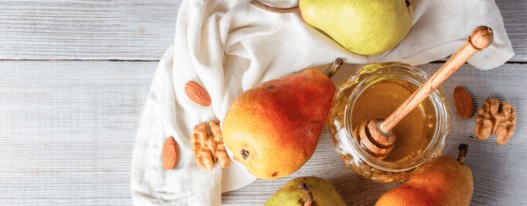
Ginger Honey Pear Butter

September is National Honey Month and it seemed fitting for us to celebrate. Not only because we have a pretty sweet line of honey jars, but also because we’ve been enjoying honey sweetened preserves and all the benefits of swapping honey for sugar in our jams, fruit butters and other preserves.

If you haven’t tried using honey in place of sugar in your preserves, this post about honey sweetened preserves offers some guidance on how to do that safely. We’ve also learned a lot about the addition of honey, and tried many trusted recipes from the books Naturally Sweet Food in Jars, and Preserving with Pomona’s Pectin.

GINGER HONEY PEAR BUTTER
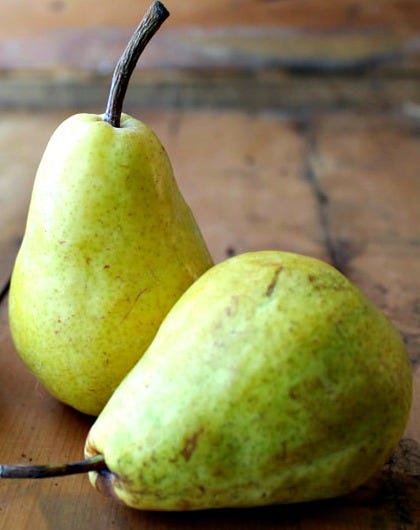
Pear ImageThis recipe is adapted from Marisa McClellan’s recipe for Gingery Fig Butter in her book Naturally Sweet Food in Jars.

Yield: 5 (half-pint/250 ml) jars

3 pounds/1.4 kg pears, chopped

1 cup/340 g honey

1/4 cup/60 ml bottled lemon juice

1 tablespoon freshly grated ginger

Prepare jars, lids and a boiling water bath canner and 5 half-pint/250 ml jars.

Note: You don’t need to peel these pears. The natural pectin in the skins helps thickening. And adds flavor and nutrition. When you puree the pears (with the skins), you’ll find the skins just disappear into the butter.

Combine the pears, honey, lemon juice, and ginger in a low, wide, non-reactive pot. Place over high heat and bring to a boil. Once the contents of the pot begin to bubble and roll, reduce the heat to medium-low. Using an immersion blender, puree the warm pears until smooth. Cook, stirring regularly until the pear puree is thick. You know it’s done because it begins to thickly coat the sides of the pan and offers more resistance when you stir. During cooking, the pear butter may have clumped up a bit. If this is the case, use your immersion blender to puree is smooth again.

Remove the pot from the heat and funnel the finished butter into the prepared jars, leaving 1/2 inch/12 mm of headspace. Wipe the rims, apply the lids and rings, and process in a boiling water bath canner for 15 minutes.

Ref.:

https://www.fillmorecontainer.com/blog/2018/09/20/ginger-honey-pear-butter/

Feel free to share this on:

  • Share on Facebook (Opens in new window) Facebook
  • Share on X (Opens in new window) X
  • Share on Pinterest (Opens in new window) Pinterest
  • Email a link to a friend (Opens in new window) Email
  • Share on LinkedIn (Opens in new window) LinkedIn
  • Share on Reddit (Opens in new window) Reddit
  • Share on Tumblr (Opens in new window) Tumblr
  • Print (Opens in new window) Print
  • Share on Telegram (Opens in new window) Telegram
  • Share on WhatsApp (Opens in new window) WhatsApp
Like Loading...

Can Robobees Solve the Pollination Crisis? by The Xerces Society

28 Friday Sep 2018

Posted by Beekeeping365 in beekeeping, pollination, pollinators

≈ Leave a comment

Tags

honey bees, native pollinators, pollination, robobees

Earlier this year, Walmart filed a patent application for drones that are designed to pollinate crops by carrying pollen from one plant to another, detecting flower locations with sensors and cameras. More recently, there has been a surge in news articles analyzing the concept of “robobees,” which is also being researched in labs around the world, from Harvard to Russia’s Tomsk Polytechnic University. Although several organizations are exploring this concept as a way to address the alarming decline in honey-bee populations, it seems highly unlikely that robotic pollinators could actually provide a solution.

First, in crop plants alone there are myriad varieties of flower shapes, sizes, and arrangements. For a sense of this diversity, just think of squash flowers, sunflowers, apple blossoms, and tomato flowers. Bees have coevolved with plants to collect and transport pollen efficiently. How many different types of drones would one farmer need? We are a very long way from having technology that will accomplish the task that bees already perform.

And the problem is more complex than just crops. At least 85 percent of all terrestrial plant species either require or strongly benefit from some form of animal pollination, and the idea of robotic pollinators ignores the many wild plants in meadows, prairies, hedgerows, and forests. Focusing solely on crop pollination and failing to take the pollination of native plants into account may well lead to a deterioration in the plant communities that make up the very fabric of our environment.

Read the full article here: Can Robobees Solve the Pollination Crisis? — The Xerces Society

Feel free to share this on:

  • Share on Facebook (Opens in new window) Facebook
  • Share on X (Opens in new window) X
  • Share on Pinterest (Opens in new window) Pinterest
  • Email a link to a friend (Opens in new window) Email
  • Share on LinkedIn (Opens in new window) LinkedIn
  • Share on Reddit (Opens in new window) Reddit
  • Share on Tumblr (Opens in new window) Tumblr
  • Print (Opens in new window) Print
  • Share on Telegram (Opens in new window) Telegram
  • Share on WhatsApp (Opens in new window) WhatsApp
Like Loading...

Queen Bee Chemistry by Sciences In the Mural Of Life

27 Thursday Sep 2018

Posted by Beekeeping365 in beekeeping, queens

≈ Leave a comment

Tags

honey bee queen, pheromones, queen bee chemistry, queens

It is so easy to jump to conclusions when observing and studying honeybees. To the uninitiated, the female workers seem to be the key to the hive. After all, they do so much. They start off early in their lives cleaning the nest. A few days later they are feeding larvae, then secreting wax to build the honeycomb. At about the age of 20 days, they act as guards to the entrance of the nest, and when their glands degenerate, they’re off collecting pollen and nectar for the rest of their lives. After a successful trip, they perform elaborate symbolic dances, revealing both the angular and scalar components of their displacement from flowers to hive. In contrast, the males and the queen bee don’t do any of the above.

But the female workers, as industrious as they may be, do not reproduce and do not exert the strongest influence in the hive. The failure of a single and other type of individual is consistently listed as a cause of honeybee colony mortality.  That individual is the queen bee. She is born in a cell built larger than the others to accommodate her bigger size. But what makes her develop into a queen? After observing that the queen bee larva and adult queen is only fed a so-called royal jelly, a white mixture of protein and sugar secreted from the heads of worker bees, it was long assumed that the mixture held the secret. But a few years ago it was revealed that the key was not necessarily contained in the royal jelly but in what the queen bee was not fed: pollen and nectar. The latter food- source for other larvae contains flavonoids, some of which include inhibitors. Investigators reared larvae in the lab on a royal jelly diet adulterated with para coumaric acid, and by the time they developed into adults, ovary development had been stunted.

Read the full article here: Queen Bee Chemistry — Sciences In the Mural Of Life

Feel free to share this on:

  • Share on Facebook (Opens in new window) Facebook
  • Share on X (Opens in new window) X
  • Share on Pinterest (Opens in new window) Pinterest
  • Email a link to a friend (Opens in new window) Email
  • Share on LinkedIn (Opens in new window) LinkedIn
  • Share on Reddit (Opens in new window) Reddit
  • Share on Tumblr (Opens in new window) Tumblr
  • Print (Opens in new window) Print
  • Share on Telegram (Opens in new window) Telegram
  • Share on WhatsApp (Opens in new window) WhatsApp
Like Loading...

Politics of the Hive – The Bee Blog by Rita Komendant

26 Wednesday Sep 2018

Posted by Beekeeping365 in beekeeping, honey bee behavior, honey bee biology

≈ Leave a comment

Tags

drone bees, honey bee behavior, politics of the hive

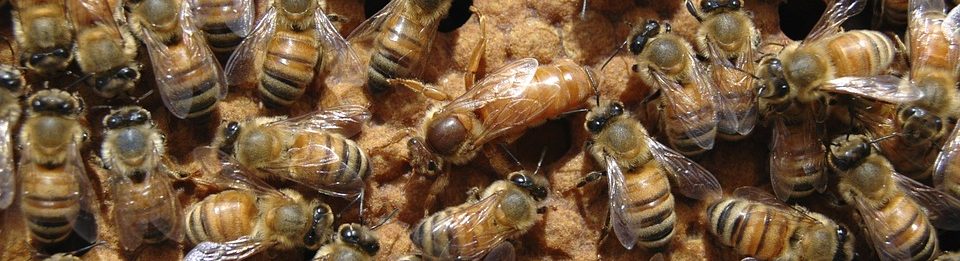
This is a Drone. He has very large eyes that I surmise cover a 270° radius  (just a guess, I’ll look it up) so he can see the Queen for the mating flight. All those drones taking up space in the hive and eating up all the goodies, the bee bread and honey stores. Bee bread is a combo of honey and pollen. Can you taste the polleny-breadiness? I have now read the colony allows them to hang out to ‘keep the brood warm’ but the entomologists don’t all agree on this.  They are larger than everyone else, kind of ‘chunky’.

‘First Lessons in Beekeeping’ published in 1918 by  Charles Dadant arrived recently from Amazon’s trove of ‘lost books’. This book is considered one of the ‘bibles’ of beekeeping.  We got it right back then and bees were and still are and always will be it seems, the most studied creature on the planet. The book begins immediately with the reproduction equipment (and that stinger) of this fascinating society of insects. Dadant could draw!(next time I’ll show you the etching-like diagrams)

Read the full article here: Politics of the Hive — The Bee Blog by Rita Komendant

Feel free to share this on:

  • Share on Facebook (Opens in new window) Facebook
  • Share on X (Opens in new window) X
  • Share on Pinterest (Opens in new window) Pinterest
  • Email a link to a friend (Opens in new window) Email
  • Share on LinkedIn (Opens in new window) LinkedIn
  • Share on Reddit (Opens in new window) Reddit
  • Share on Tumblr (Opens in new window) Tumblr
  • Print (Opens in new window) Print
  • Share on Telegram (Opens in new window) Telegram
  • Share on WhatsApp (Opens in new window) WhatsApp
Like Loading...

Grandpa’s Bees by TheHem4Life

25 Tuesday Sep 2018

Posted by Beekeeping365 in beekeeping, beekeeping history

≈ Leave a comment

Tags

beekeeping history, gum hives, history, Langstroth hives

Actual gum hive
Actual gum hive
Langstroth hive
Langstroth hive

The old-timers call them bee gums.  Bees commonly took up residence in an old gum tree.  These natural hollows could be used for keeping bee colonies.  L.L. Langstroth patented a new man-made structure for bees in 1852 with a careful mind to maintaining “bee space”.  This design, with minor modifications, remains the standard for modern beekeeping in the United States.  Some new designs are being developed.  But Grandpa had his white painted langstroths behind the house and above the garden for his bees.  He still called them bee gums.

I grew up in Colorado, so childhood visits to my grandparents were rare.  But I still remember sitting on the porch watching a massive swarm settling into the nearby tree while Grandpa fretted over how to get them back into a bee gum.  Hard to get honey from escapees.

Fresh honey truly is magical.  Nothing like what comes in the stores.  Even honey from a chemical free beekeeper is not the same – it has sat around a bit.  Grandpa would suit up and grab his smoker and return with frames and frames of the stuff.  My sister and I would chew up the comb extracting the honey directly onto our tongues.  Granny and Grandpa used their great big aluminum pans to drip out honey while cutting the comb.  Chunks of comb would go into waiting mason jars, the remaining honey poured over, and the jars sealed.  The honey went to family, friends, the bank house, and the farmer’s market.  There always seemed to be plenty though Grandpa kept four colonies at the most.

Read the full article here: grandpa’s bees — TheHem4Life

Feel free to share this on:

  • Share on Facebook (Opens in new window) Facebook
  • Share on X (Opens in new window) X
  • Share on Pinterest (Opens in new window) Pinterest
  • Email a link to a friend (Opens in new window) Email
  • Share on LinkedIn (Opens in new window) LinkedIn
  • Share on Reddit (Opens in new window) Reddit
  • Share on Tumblr (Opens in new window) Tumblr
  • Print (Opens in new window) Print
  • Share on Telegram (Opens in new window) Telegram
  • Share on WhatsApp (Opens in new window) WhatsApp
Like Loading...

Bee Keeping & Legitimately Fun Facts About Bees! by LEO

24 Monday Sep 2018

Posted by Beekeeping365 in beekeeping

≈ 1 Comment

Tags

beekeeping fun facts, honey bees, keeping bees

Ever since kindergarten, I have been beekeeping with my mother, but we aren’t the first in our family. Our beekeeping tradition goes back four generations to my great-grandmother Charlotte Ames, but I am the first male beekeeper in my family. My sister, on the other hand, does not want to involve herself with bugs in any way. She will go days without using her bathroom if there is a ladybug somewhere inside.

I  have loved bugs all my life. When I was three or four years old, I would find stinkbugs, because my old house had an abundance of them, and stuff them in my matchbox cars and drive them around town. Though I couldn’t get my hands on bees to put them in cars, I still loved them anyway.

Read full article here: Bee Keeping & Legitimately Fun Facts About Bees! — LEO

Feel free to share this on:

  • Share on Facebook (Opens in new window) Facebook
  • Share on X (Opens in new window) X
  • Share on Pinterest (Opens in new window) Pinterest
  • Email a link to a friend (Opens in new window) Email
  • Share on LinkedIn (Opens in new window) LinkedIn
  • Share on Reddit (Opens in new window) Reddit
  • Share on Tumblr (Opens in new window) Tumblr
  • Print (Opens in new window) Print
  • Share on Telegram (Opens in new window) Telegram
  • Share on WhatsApp (Opens in new window) WhatsApp
Like Loading...

Quote

Beek Reads: Nobody Wants to be the Queen by Q Gardens

23 Sunday Sep 2018

Posted by Beekeeping365 in beekeeping, biology, honey bee behavior, honey bee biology

≈ Leave a comment

Tags

honey bee behavior, honey bee queen, honey bee roles, political

“What role would you want in the hive?” we asked, the eight of us sitting in the circle of benches surrounded by Q Gardens’ newly green herbs and late spring blooms. The answers differed, but on one thing, we agreed: No one wants to be the queen.

The life of a drone sounds idyllic, if short-lived. Lay about the hive. Eat. Wait for a sunny day to fly out to the drone congregation area—how exactly the drones know the congregation’s location is a mystery—and find a young virgin queen to explosively impregnate. And die, gracelessly but with purpose.

The worker bee’s life isn’t so bad either. She has a number of roles, from nurse to scout, so it’s never boring, and workers have the highest “autonomy,” collectively making the hive’s “decisions.” A worker’s life is always busy, always productive.

Read the full article here: Beek Reads: Nobody Wants to be the Queen — Q Gardens

Feel free to share this on:

  • Share on Facebook (Opens in new window) Facebook
  • Share on X (Opens in new window) X
  • Share on Pinterest (Opens in new window) Pinterest
  • Email a link to a friend (Opens in new window) Email
  • Share on LinkedIn (Opens in new window) LinkedIn
  • Share on Reddit (Opens in new window) Reddit
  • Share on Tumblr (Opens in new window) Tumblr
  • Print (Opens in new window) Print
  • Share on Telegram (Opens in new window) Telegram
  • Share on WhatsApp (Opens in new window) WhatsApp
Like Loading...

Pork Tacos with Honey Mango Relish by From Prosecco to Peaches

22 Saturday Sep 2018

Posted by Beekeeping365 in beekeeping, honey recipe, recipe

≈ 1 Comment

Tags

honey, mango, recipe, relish, taco, taco recipe

I had been in the mood for tacos for a few days but could not decide what kind I wanted to make. Ground beef? Steak? Chicken? A trip to the butcher decided for me. We popped into the butcher and waiting for me was this pork shoulder (aka boston butt). Once I laid my eyes on it my taco destiny was decided.

Fruit salsas/relish don’t usually appeal to me. I like my savory dishes savory and my sweet dishes sweet, rarely do I enjoy combining the two (except for the classic salt+chocolate]. However, I had a few honey mangos hanging out on the counter, and figured I would give this whole fruit salsa thing a go. Speaking of honey mangos, where have you been all of my life? I have never seen them before this year and suddenly they are in every supermarket. I’m glad for it, they are way easier to prepare than the mangos I am used to eating.

Anyway, the next time you find yourself wanting some tacos, or need to feed a crowd, definitely give these a try. If you are a savory fruit skeptic, give the relish a go, it definitely made me a convert.

Get the recipe here: Pork Tacos with Honey Mango Relish — From Prosecco to Peaches

Feel free to share this on:

  • Share on Facebook (Opens in new window) Facebook
  • Share on X (Opens in new window) X
  • Share on Pinterest (Opens in new window) Pinterest
  • Email a link to a friend (Opens in new window) Email
  • Share on LinkedIn (Opens in new window) LinkedIn
  • Share on Reddit (Opens in new window) Reddit
  • Share on Tumblr (Opens in new window) Tumblr
  • Print (Opens in new window) Print
  • Share on Telegram (Opens in new window) Telegram
  • Share on WhatsApp (Opens in new window) WhatsApp
Like Loading...

The Background Hum – Drones by Why Do Bees

21 Friday Sep 2018

Posted by Beekeeping365 in beekeeping, biology, honey bee biology

≈ Leave a comment

Tags

biology, drones, honey bee biology

They’re freeloaders yet vital to the colony’s success. Most of the time they’re laid back bordering on lazy, yet they give it all to their mission when pheromones beckon, dying in the process. They’re allowed to play in the hive all season then bullied out in the fall. It’s all about colony survival. In a healthy hive, drones are the background hum, the harmony behind the melody, a small but important part of the symphony.

Read the full article at: The Background Hum — Why Do Bees

Feel free to share this on:

  • Share on Facebook (Opens in new window) Facebook
  • Share on X (Opens in new window) X
  • Share on Pinterest (Opens in new window) Pinterest
  • Email a link to a friend (Opens in new window) Email
  • Share on LinkedIn (Opens in new window) LinkedIn
  • Share on Reddit (Opens in new window) Reddit
  • Share on Tumblr (Opens in new window) Tumblr
  • Print (Opens in new window) Print
  • Share on Telegram (Opens in new window) Telegram
  • Share on WhatsApp (Opens in new window) WhatsApp
Like Loading...

Garden Plan For Pollinators by Keeping Backyard Bees

20 Thursday Sep 2018

Posted by Beekeeping365 in beekeeping, forage, pollination, pollinators

≈ Leave a comment

Tags

gardening for bees, plants for pollinators, pollinator gardening, pollinator gardens

Many pollinator species have suffered serious declines in recent years. Unfortunately, most of our landscapes offer little in the way of appropriate habitat, forage, and housing. Even the most beautiful gardens are not always healthy ecosystems. Design choices, plant selections, and maintenance practices can make a huge difference in creating your own healthy ecosystem, filled with life. As a garden designer, I use this landscape plan for many gardens to attract the greatest varieties of pollinators.

Read full article with lots of pictures and plans here: Garden Plan For Pollinators — Keeping Backyard Bees

Feel free to share this on:

  • Share on Facebook (Opens in new window) Facebook
  • Share on X (Opens in new window) X
  • Share on Pinterest (Opens in new window) Pinterest
  • Email a link to a friend (Opens in new window) Email
  • Share on LinkedIn (Opens in new window) LinkedIn
  • Share on Reddit (Opens in new window) Reddit
  • Share on Tumblr (Opens in new window) Tumblr
  • Print (Opens in new window) Print
  • Share on Telegram (Opens in new window) Telegram
  • Share on WhatsApp (Opens in new window) WhatsApp
Like Loading...

Quote

The Zen of Beekeeping by Wildflower Meadows

19 Wednesday Sep 2018

Posted by Beekeeping365 in beekeeping

≈ Leave a comment

Tags

first time in hive, new beekeepers, Zen of Beekeeping

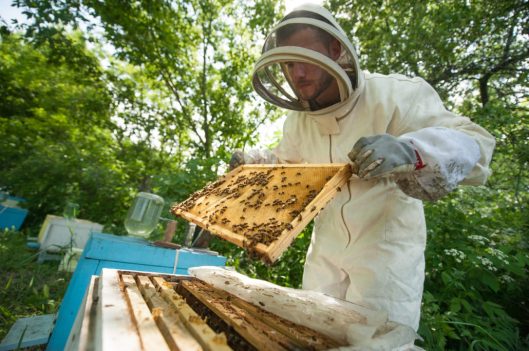
beekeeper holding a honeycomb full of bees

For a beginning beekeeper, opening a hive for the first few times can be somewhat overwhelming – and downright scary!  There are all those bees in there.  They have stingers.  What if they get angry???  Then there is all of the unfamiliar gear: a veil or suit, big gloves, and a new hive tool.  It can all be a bit overwhelming and cause a beginning beekeeper to feel quite anxious.

This nervousness almost certainly makes matters worse.  While it is hard to say for certain whether bees can intrinsically sense this unease, they most certainly do sense unsteady and jerky movements.  Bees do not like these kinds of rapid or rushed actions.  They especially do not like any kind of rough treatment.  For an experienced beekeeper, swatting at bees, darting about, dropping things, and banging things are all completely out of the question.

Beekeepers need to be relaxed and calm around their bees.  If you are nervous as a beginner, you need do your best to pretend that you are calm.  (“Fake it until you make it!”).  Bees are sensitive creatures.  If you move carefully and calmly, treating them with peace and respect, they will return the favor.  One of the joys of keeping bees is the opportunity to get in touch with and to give respect to the magnificent sense of peace and purpose that is in the heart of every beehive.

Read full article at: The Zen of Beekeeping — Wildflower Meadows

Feel free to share this on:

  • Share on Facebook (Opens in new window) Facebook
  • Share on X (Opens in new window) X
  • Share on Pinterest (Opens in new window) Pinterest
  • Email a link to a friend (Opens in new window) Email
  • Share on LinkedIn (Opens in new window) LinkedIn
  • Share on Reddit (Opens in new window) Reddit
  • Share on Tumblr (Opens in new window) Tumblr
  • Print (Opens in new window) Print
  • Share on Telegram (Opens in new window) Telegram
  • Share on WhatsApp (Opens in new window) WhatsApp
Like Loading...

Bees and Water by Braman’s Wanderings

18 Tuesday Sep 2018

Posted by Beekeeping365 in beekeeping, beekeeping seasons, honey bee photos, honey bees

≈ Leave a comment

Tags

honey bees, providing water, water

We often see pictures of bees collecting nectar from flowers and blossoms, but they also need to collect water. The bees use water to cool their hives, help feed their young and also to keep honey at the right hydration level.

Read full article with more photos at:  Bees and Water — Braman’s Wanderings

Feel free to share this on:

  • Share on Facebook (Opens in new window) Facebook
  • Share on X (Opens in new window) X
  • Share on Pinterest (Opens in new window) Pinterest
  • Email a link to a friend (Opens in new window) Email
  • Share on LinkedIn (Opens in new window) LinkedIn
  • Share on Reddit (Opens in new window) Reddit
  • Share on Tumblr (Opens in new window) Tumblr
  • Print (Opens in new window) Print
  • Share on Telegram (Opens in new window) Telegram
  • Share on WhatsApp (Opens in new window) WhatsApp
Like Loading...

Dr Warwick Kerr, the “Man Who Created Killer Bees”, has died by Bad Beekeeping Blog

16 Sunday Sep 2018

Posted by Beekeeping365 in africanized honey bees, beekeeping, famous beekeepers

≈ Leave a comment

Tags

AFB, africanized honey bees, Dr. Warwick Kerr, famous beekeepers

It is with regret that we report that the humanitarian, geneticist, and scientist, Professor Warwick Kerr, passed away this morning, September 15, 2018. He was six days past his 96th birthday.  Dr Kerr, a Brazilian bee scientist, had one of the most maligned lives of any research scientist. He will be remembered by some as the man who gave us ‘Killer Bees’ – the African-European bee known for its (sometimes) aggressive behaviour. The Africanized Honey Bee, a hybrid which Dr Kerr was largely responsible for creating, helped turn his impoverished homeland of Brazil from a backwater of agriculture and honey production into one of the most prolific honey and agriculture countries in the world.

Read full article at: Dr Warwick Kerr, the “Man Who Created Killer Bees”, has died — Bad Beekeeping Blog

Feel free to share this on:

  • Share on Facebook (Opens in new window) Facebook
  • Share on X (Opens in new window) X
  • Share on Pinterest (Opens in new window) Pinterest
  • Email a link to a friend (Opens in new window) Email
  • Share on LinkedIn (Opens in new window) LinkedIn
  • Share on Reddit (Opens in new window) Reddit
  • Share on Tumblr (Opens in new window) Tumblr
  • Print (Opens in new window) Print
  • Share on Telegram (Opens in new window) Telegram
  • Share on WhatsApp (Opens in new window) WhatsApp
Like Loading...

Quote

Dulcis Coccora Recipe by Savor the Southwest

15 Saturday Sep 2018

Posted by Beekeeping365 in beekeeping, honey, honey as food, honey recipe, recipe

≈ Leave a comment

Tags

art, dates, fruit recipe, honey, honey recipe

A bit of history to sweeten an excellent historical recipe. Have a visit and read the full recipe. – sassafrasbeefarm

Monica King here to kick off National Honey Month since I’m a beekeeper. This awareness month was initiated by the National Honey Board in 1989 to promote American beekeepers and honey.

One pharoah, Cleopatra, used honey in her beauty regime. One of Cleopatra’s secrets, and her most famous, was her ritual bathing in milk and honey. Both of these ingredients naturally soften the skin, exfoliate, and leave a fresh, sweet scent. You can do this yourself by adding two cups milk and half cup honey to your bath water.

Personally, it is Cleopatra’s sweet tooth that I can relate to. Cleopatra’s favorite treat was a sweet honey ball called “Dulcis Coccora” also known as “Tiger Nut Sweets.” A recipe was reported to have been found on a broken piece of Egyptian pottery dating from 1600 BCE.

“Dulcis Coccora”
1 pound pitted dates
water
2 Tablespoons ground cinnamon
1/2 Teaspoon fresh ground cardamon
4 tablespoons chopped walnuts
honey – to coat
ground almonds and/or pomegranate seeds

Read full recipe here: Bees: Tears of the Sun God Re — Savor the Southwest:

Feel free to share this on:

  • Share on Facebook (Opens in new window) Facebook
  • Share on X (Opens in new window) X
  • Share on Pinterest (Opens in new window) Pinterest
  • Email a link to a friend (Opens in new window) Email
  • Share on LinkedIn (Opens in new window) LinkedIn
  • Share on Reddit (Opens in new window) Reddit
  • Share on Tumblr (Opens in new window) Tumblr
  • Print (Opens in new window) Print
  • Share on Telegram (Opens in new window) Telegram
  • Share on WhatsApp (Opens in new window) WhatsApp
Like Loading...

Quote

Bees adjust to seasons with nutrients in flowers and ‘dirty water’ by Save The Bees Concert

14 Friday Sep 2018

Posted by Beekeeping365 in beekeeping, feeding bees, honey bee nutrition

≈ Leave a comment

Tags

feeding bees, honey bee nutrition, minerals, vitamins

More and more it’s pointing to nutrition to help us save our bees.
~ sassafrasbeefarm

Researchers have discovered that honey bees alter their diet of nutrients according to the season. A spike in calcium consumption in the fall, and high intake of potassium, help prepare the bees for colder months when they likely need those minerals to generate warmth. A careful inventory of the bees’ nutrient intake revealed shifting sources and how limitations in nutrient availability from these sources can have implications for the health of both managed and wild colonies.

Read full article here: Bees adjust to seasons with nutrients in flowers and ‘dirty water’ — Save The Bees Concert

Feel free to share this on:

  • Share on Facebook (Opens in new window) Facebook
  • Share on X (Opens in new window) X
  • Share on Pinterest (Opens in new window) Pinterest
  • Email a link to a friend (Opens in new window) Email
  • Share on LinkedIn (Opens in new window) LinkedIn
  • Share on Reddit (Opens in new window) Reddit
  • Share on Tumblr (Opens in new window) Tumblr
  • Print (Opens in new window) Print
  • Share on Telegram (Opens in new window) Telegram
  • Share on WhatsApp (Opens in new window) WhatsApp
Like Loading...

High Altitude Honey Bee by 67steffen

11 Tuesday Sep 2018

Posted by Beekeeping365 in beekeeping, honey bee photos

≈ 2 Comments

Tags

bee photos, photography

The honey bee in this shot, taken yesterday, is about 14 feet off the ground in the middle of ivy growing on a pergola.  Its wings are beating at 11,000 times per minute along with around 500 other bees in this ivy. The buzzing is very loud. I’m standing on a step stool with a 50mm SLR–bees are whizzing by me. This is nuts. But I take the photo regardless.  

Folllow more daily photos from the lens of: 67steffen

Feel free to share this on:

  • Share on Facebook (Opens in new window) Facebook
  • Share on X (Opens in new window) X
  • Share on Pinterest (Opens in new window) Pinterest
  • Email a link to a friend (Opens in new window) Email
  • Share on LinkedIn (Opens in new window) LinkedIn
  • Share on Reddit (Opens in new window) Reddit
  • Share on Tumblr (Opens in new window) Tumblr
  • Print (Opens in new window) Print
  • Share on Telegram (Opens in new window) Telegram
  • Share on WhatsApp (Opens in new window) WhatsApp
Like Loading...

Quote

Breakfast fruit bowl with honey by Sunsets Sunrise

08 Saturday Sep 2018

Posted by Beekeeping365 in beekeeping, honey, honey as food

≈ Leave a comment

Tags

breakfast recipe, honey, honey and fruit, recipe

Hi everyone! I thought I would post food for today. Back on the grind of eating healthier. Breakfast is known as the most important meal. This is breakfast. Strawberries, blueberries, mango, kiwi over yogurt and oats on the bottom drizzled with raw honey. My way of eating healthier. Although at times I go off course. […]

Read full blog post here: Breakfast fruit bowl. — Sunsets Sunrise

Feel free to share this on:

  • Share on Facebook (Opens in new window) Facebook
  • Share on X (Opens in new window) X
  • Share on Pinterest (Opens in new window) Pinterest
  • Email a link to a friend (Opens in new window) Email
  • Share on LinkedIn (Opens in new window) LinkedIn
  • Share on Reddit (Opens in new window) Reddit
  • Share on Tumblr (Opens in new window) Tumblr
  • Print (Opens in new window) Print
  • Share on Telegram (Opens in new window) Telegram
  • Share on WhatsApp (Opens in new window) WhatsApp
Like Loading...

Honeycomb Cheese Wheel by snapshotsincursive

02 Sunday Sep 2018

Posted by Beekeeping365 in beekeeping, comb honey, honey recipe, recipe

≈ 4 Comments

Tags

cheese and honey, comb honey, honey recipe, recipe

What’s Cooking in Gail’s Kitchen? Equal Measures: Honeycomb Cheese Wheel! Remember when you were a kid and for fun you puckered up with those candy red wax lips? Me and my girlfriends would put them on, batt our eyes, sashay our hips, and laugh hysterically. Most often we’d find ourselves chewing on the sugary insides before spitting them out into tiny red blobs on our way home from school. I’m sure that made quite an impression on the neighborhood boys. Well today’s honeycomb is a distant cousin, twice-removed, to those artificial candy lips. Even better, raw honeycomb is completely safe to eat and naturally sweet. A little goes a long way simply because it is seeping with honey. Dress it up with a wheel of Camembert or Brie cheese, seasoned with a clove of garlic and a couple of sprigs from the herb garden. Spread it across baguette slices for an open-air treat.

Get the full recipe here: Honeycomb Cheese Wheel — snapshotsincursive

Feel free to share this on:

  • Share on Facebook (Opens in new window) Facebook
  • Share on X (Opens in new window) X
  • Share on Pinterest (Opens in new window) Pinterest
  • Email a link to a friend (Opens in new window) Email
  • Share on LinkedIn (Opens in new window) LinkedIn
  • Share on Reddit (Opens in new window) Reddit
  • Share on Tumblr (Opens in new window) Tumblr
  • Print (Opens in new window) Print
  • Share on Telegram (Opens in new window) Telegram
  • Share on WhatsApp (Opens in new window) WhatsApp
Like Loading...
Follow Beekeeping365 on WordPress.com

Enter your email address to follow this blog and receive notifications of new posts by email.

Calendar

September 2018
S M T W T F S
 1
2345678
9101112131415
16171819202122
23242526272829
30  
« Aug   Oct »

Posts by Month:

  • October 2026 (15)
  • September 2026 (32)
  • August 2026 (6)
  • July 2026 (1)
  • May 2026 (2)
  • January 2026 (3)
  • July 2025 (1)
  • April 2024 (1)
  • July 2022 (1)
  • March 2022 (13)
  • February 2022 (17)
  • January 2022 (4)
  • December 2021 (4)
  • November 2021 (4)
  • August 2021 (11)
  • July 2021 (18)
  • June 2021 (5)
  • May 2021 (2)
  • April 2021 (9)
  • March 2021 (2)
  • February 2021 (5)
  • January 2021 (16)
  • December 2020 (15)
  • November 2020 (5)
  • October 2020 (2)
  • July 2020 (1)
  • February 2020 (1)
  • March 2019 (2)
  • February 2019 (4)
  • January 2019 (1)
  • December 2018 (10)
  • November 2018 (8)
  • October 2018 (13)
  • September 2018 (18)
  • August 2018 (3)
  • July 2018 (11)
  • June 2018 (27)
  • May 2018 (33)
  • April 2018 (20)
  • March 2018 (20)
  • February 2018 (12)
  • January 2018 (22)
  • December 2017 (18)
  • November 2017 (15)
  • October 2017 (19)
  • September 2017 (17)
  • August 2017 (21)
  • July 2017 (29)
  • June 2017 (28)
  • May 2017 (19)
  • April 2017 (17)
  • March 2017 (19)
  • February 2017 (12)
  • January 2017 (13)
  • December 2016 (5)

Posts by Categories:

  • absconding (1)
  • africanized honey bees (1)
  • apitherapy (1)
  • bee health (7)
  • bee law (2)
  • bee lining (2)
  • bee removals (2)
  • beekeeper (5)
  • beekeeper education (17)
  • beekeeping (604)
    • South Carolina (3)
  • beekeeping author (10)
  • beekeeping books (12)
  • beekeeping calendar (6)
  • beekeeping chores (9)
  • beekeeping equipment (23)
  • beekeeping history (48)
  • beekeeping management (35)
  • beekeeping pest management (8)
  • beekeeping seasons (26)
  • beekeeping vocabulary (15)
  • beeswax (11)
  • biography (5)
  • biology (12)
  • birthday (37)
  • birthdays (31)
  • book review (16)
  • breakfast (1)
  • calendar (6)
  • CCD (1)
  • chores (6)
  • comb (6)
  • comb honey (10)
  • commercial beekeeping (1)
  • cutouts (2)
  • dearth (4)
  • defensiveness (1)
  • diseases (9)
  • drawn comb (5)
  • ecology (4)
  • education (30)
  • equipment (21)
  • extracting (1)
  • fall nectar flow (1)
  • famous beekeepers (25)
  • feeding bees (8)
  • first blog entry (1)
  • folklore (1)
  • food (7)
  • forage (4)
  • hacks (3)
  • hive inspections (6)
  • hive placement (2)
  • hive products (6)
  • honey (85)
  • honey as food (22)
  • honey bee anatomy (3)
  • honey bee behavior (23)
  • honey bee biology (42)
  • honey bee genetics (4)
  • honey bee losses (1)
  • honey bee nutrition (1)
  • honey bee photos (6)
  • Honey Bee Research (1)
  • honey bee vocabulary (11)
  • honey bees (14)
  • honey judging (3)
  • honey recipe (65)
  • humor (13)
  • inspections (9)
  • journal (1)
  • log book (1)
  • making increase (3)
  • management (82)
  • mentoring (2)
  • mites (4)
  • national pollinator week (2)
  • nectar flow (6)
  • nomenclature (1)
  • opinion (5)
  • out yards (1)
  • outyards (2)
  • package bees (2)
  • pears (1)
  • pests (17)
  • plants for bees (3)
  • polish (1)
  • pollen (4)
  • pollination (11)
  • pollinators (7)
  • product review (1)
  • production (1)
  • products (3)
  • propolis (2)
  • queens (17)
  • raw honey (6)
  • recipe (88)
  • removals (1)
  • safety (3)
  • sales (2)
  • season (1)
  • seasons (21)
  • sideliner (1)
  • small hive beetles (1)
  • spring buildup (4)
  • state fair (2)
  • sustainable (8)
  • swarms (27)
  • ursurpation (1)
  • usurpation (1)
  • varroa (20)
  • varroa destructor (11)
  • varroa mites (23)
  • Winter (6)
  • winter solstice (2)
  • woodenware (3)
  • yellow jackets (2)

Sassafras Bee Farm on Facebook

Sassafras Bee Farm on Facebook

Sassafras Bee Farm

Sassafras Bee Farm

Recent Posts

  • It Always Starts with Assessment
  • Happy Birthday Jay J. Smith
  • Miracles by Walt Whitman
  • What Do You Know?
  • Fall Nectar Flow

Beekeeping365 on Facebook

Beekeeping365 on Facebook

Top Posts & Pages

  • Swarms
    Swarms
  • To the (bee) Veils! by sassafrasbeefarm
    To the (bee) Veils! by sassafrasbeefarm
  • The Russian Scion
    The Russian Scion

Blog Stats

  • 145,440 hits

Website Built with WordPress.com.

  • Subscribe Subscribed
    Beekeeping365
    Join 417 other subscribers

    Have a WordPress.com account? Log in now.

  • Beekeeping365
    View site in Reader
    Manage subscriptionsSign upLog in
    Report this content
    Collapse this bar
Loading Comments...
%d