~ The more I studied beekeeping, the less I knew, until, finally, I knew nothing. But, even though I knew nothing, I still had plenty to unlearn. Charles Martin Simon
Walk into any bee club meeting and you’ll find people forty years into it still showing up on a Tuesday night to hear a talk on splits, still taking notes, still asking questions in the parking lot afterward. Nobody makes them go. They go because the bees don’t care how long you’ve kept them — a colony can still surprise you in your fortieth season the same as your first. The moment you decide you already know enough is the moment you stop being able to keep bees well.
1. Decide you’re in it for good
Some people keep bees for a summer and quit. Others keep the same three hives the same way for thirty years and never get any better at it — same mite treatment on the same schedule, same reaction every time something goes wrong, no real curiosity about why. The beekeepers worth learning from are the ones who never stopped approaching every season as a new thing to study: a new queen line, a new way of reading a frame, a new theory about why that one hive always builds up faster than the others. Nobody expects a first-year beekeeper to run a operation cleanly. What a good mentor actually wants to see is someone still trying to get better at it — not a finished beekeeper, just one who’s still growing.
2. It’s not the hours in the beeyard, it’s what you’re paying attention to
You can suit up every weekend for ten years and still not really know your bees, if all you’re doing is popping the lid, glancing at a couple of frames, and closing it back up. Time in the apiary isn’t the same as learning. The beekeepers who actually get good are the ones who inspect like they’re trying to be wrong about something — checking the colony that’s behaving strangely instead of just admiring the one that’s doing great, pulling the brood frame to actually count eggs instead of assuming the queen’s fine because bees are flying. A stack of inspection notes doesn’t make you experienced. Notes on what confused you and what you figured out do.
3. Don’t be afraid to lose a hive.
Every real beekeeping lesson costs a hive at some point — the one you let requeen itself, instead of buying a queen, because you wanted to see if it would work, the one you went into without gloves because you wanted to actually feel what was happening instead of just avoiding getting stung, the one you tried overwintering in a single deep against everyone’s advice because you wanted to know for yourself. Most beginners never run these experiments, because they’re afraid of opening a dead-out in spring and having the club’s old-timers say, “I told you so.” But the beekeepers who actually learn something are the ones willing to be wrong — to lose the hive, own it, and be able to explain exactly why it happened. A dead colony teaches you more than a dozen healthy ones that did exactly what the manual said they would.
After a strong nectar flow, it’s tempting to pull one more frame than I should.
The hive has spent weeks working the flow — foragers flying dawn to dusk, house bees curing and capping wax over the good stuff. Watching all that capped comb, heavy and gold, it feels like a reward is owed. One more frame off the top feels earned.
There’s a story wrapped around the harvest. The bees worked hard, I worked hard hauling supers and running the extractor, so a full crop feels like the right ending.
Described plainly, it is removing stored carbohydrate from a colony before winter arrives.
It uses a large part of the reserves the colony has available for the cold months. Later, when the cluster needs food and there’s no flow left to replenish it, there isn’t enough room left in the hive’s budget to make it to spring. Then the colony starves out.
The plain description doesn’t make the honey taste worse. It’s still beautiful, still wanted. It just makes the trade visible.
The question isn’t whether I deserve the harvest. It’s whether that particular reward is worth the rest of the colony’s year.
This piece expands on“Everything Starts with a Tasty Meal”by sassafrasbeefarm (Beekeeping365, August 1, 2021). The original essay makes a simple, argument: hive pests like Small Hive Beetles, wax moths, and yellow jackets can’t reproduce until they eat, so a beekeeper’s best defense is cutting off their meal. What follows is that argument traced down into the actual biology, chemistry, and behavioral ecology that back it up — and a couple of places where the research complicates the picture in interesting ways.
The Original Insight The essay’s logic runs like this: Abraham Maslow argued that humans secure basic needs — food and safety — before pursuing anything more sophisticated. Other animals, lacking our behavioral flexibility, run a cruder version of the same program: an instinctual sequence that starts with food and ends with reproduction. Small Hive Beetles, wax moths, and yellow jackets are, in this framing, simply hungry opportunists trying to eat and then breed. A beekeeper’s job is to jam the machinery between those two steps — deny the meal, and the pest never reaches the reproduction stage. The essay then sketches two tactics: starve the pests (entrance reducers, right-sized equipment, careful feeding practices) and trick them (bait traps that exploit hunger without luring in honey bees). It’s a good insight. It also turns out to be a fairly accurate compression of several decades of chemical ecology and behavioral research — with a few added wrinkles that make it even more useful.
Fact-Checking the Starting Point: Maslow’s Hierarchy Worth pausing on the source material itself. Maslow’s hierarchy comes from a single 1943 paper, “A Theory of Human Motivation,” published in Psychological Review — not a book, not a series of studies, a single theoretical article. Two details are commonly missed. First, Maslow never drew a pyramid; the triangular diagram everyone pictures was a later addition by management writers popularizing the idea, not something in the original text. Second, the strict “you must fully satisfy one level before the next kicks in” reading of the theory doesn’t hold up well empirically — later cross-cultural survey work (Tay & Diener, 2011) found people pursue safety, belonging, and growth needs in parallel, not in a rigid queue, and some psychologists have flagged the hierarchy as more of a compelling narrative than a well-tested model of human behavior.
None of that sinks the beekeeping essay’s use of it, though — if anything it sharpens the analogy. Maslow’s theory is at its weakest describing humans, who really do juggle multiple motivations simultaneously. It’s a much better fit for an insect, which has neither the neural hardware nor the behavioral repertoire to do anything but respond to its most pressing physiological state. A hungry beetle is not deciding whether to prioritize food or selfactualization. For a simple nervous system, “deficit needs dominate behavior until resolved” isn’t a debatable psychological theory — it’s close to a complete description of how the animal operates.
Instinct’s Own Logic: Proximate Drives, Ultimate Ends Biology has its own, more precise version of the essay’s food-thenreproduction chain, developed decades before anyone tried to apply Maslow to bugs. The ethologist Niko Tinbergen (1963) proposed that any animal behavior can be explained on two separate levels: the proximate cause (what mechanism triggers the behavior right now — a hormone, a smell, a hunger signal) and the ultimate cause (why that mechanism was favored by evolution — because it improves reproductive success). A beetle following an odor plume toward a beehive isn’t proximately “trying to reproduce” — it’s proximately responding to an olfactory cue that smells like food. But the reason that response exists at all, baked into the beetle’s nervous system by natural selection, is that ancestors who found food reliably out-reproduced ones who didn’t. Food-seeking is the proximate mechanism; reproduction is the ultimate function it serves.
This matters for pest management because it tells you where the chain is interruptible. You can’t argue a beetle out of its hunger, but you can jam the proximate mechanism — block the smell, remove the food, or disrupt access — and the ultimate goal simply never gets reached. This is also why Small Hive Beetles, wax moths, and yellow jackets are such persistent, fastreproducing opportunists in the first place: all three are classic examples of what ecologists call an opportunistic, “r-selected” life history (MacArthur & Wilson, 1967) — organisms built to find a rich, short-lived resource patch and convert it into as many offspring as possible before the patch disappears or gets defended. A beehive bursting with pollen, honey, and brood is about as rich a patch as an opportunist could hope to find.
Case File 1: The Small Hive Beetle’s Hijacked Alarm Bell The Small Hive Beetle (Aethina tumida) is the clearest illustration of the essay’s whole thesis, and the actual chemistry behind it is stranger than the essay lets on.
Beetles don’t find hives by luck. They home in on a specific odor blend, and the dominant component of that blend is isopentyl acetate — the honey bee’s own alarm pheromone (Torto et al., 2007, PNAS). Worse, the beetles carry a yeast, Kodamaea ohmeri, that colonizes fermenting pollen and hive debris and, as it grows, produces a volatile bouquet that mimics that same alarm pheromone (Benda et al., 2008, Journal of Apicultural Research). In chemical-ecology terms, this is a kairomone: a signal that evolved for one purpose (bees warning each other of danger) but that a second species has hijacked to its own advantage (beetles using it as a dinner bell). The result is a nasty feedback loop — a few beetles ferment some pollen, the yeast smell draws in more beetles, and a hive with “few beetles” can suddenly host hundreds.
This is precisely the mechanism the original essay gestures at when it asks whether a feeding program “announces food availability with fragrant oils.” Fermenting syrup, spilled feed, and exposed comb all produce the same class of volatile organic compounds that this whole detection system is built to find. You’re not just feeding bees; you’re broadcasting.
The essay’s “deny them food” strategy also holds up well at the mechanical level. Colonies with reduced or modified entrances host measurably fewer adult beetles than colonies with open entrances (Ellis et al., 2002a, cited in Neumann, Pettis & Schäfer, 2016) — entrance reducers aren’t just folklore, they’re a documented barrier to invasion. But the research adds a genuine complication to the simple “starve them out” model: strong, healthy, foodrich colonies actually attract more beetles than weak ones, precisely because they have more to offer (Neumann, Pettis & Schäfer, 2016, Apidologie). What determines the outcome isn’t food availability alone — it’s whether the colony has enough workers, relative to the amount of comb it’s trying to guard, to intercept the beetles once they arrive. Weak or queenless colonies with a low bee-to-comb ratio are dramatically more vulnerable to serious SHB damage than strong ones, even when the strong ones host more total beetles (Annand, 2011, and Mustafa et al., 2014, both cited in Neumann et al., 2016). This is the scientific basis for “hive rightsizing”: matching the number of boxes and frames to the actual size of the colony isn’t about tidiness, it’s about keeping the ratio of guards to guarded comb high enough that food denial can actually be enforced. And when bees do catch a beetle, the “deny them food” strategy turns out to be under active evolutionary counterattack. Honey bees can’t easily kill a Small Hive Beetle outright — its shell deflects stings and bites — so instead they wall it into a small propolis cell and post guards, sometimes for months (Ellis, Pirk, Hepburn, Kastberger & Elzen, 2002, Naturwissenschaften). By the essay’s logic, an imprisoned, foodless beetle should starve. Most don’t. Researchers found that trapped beetles solicit food from their guards through the same begging behavior honey bee larvae use, and the guard bees respond by feeding them protein-rich glandular secretions via trophallaxis — mouth-to-mouth feeding (Ottati et al., 2021, Journal of Experimental Biology, titled, fittingly, “Prisoners receive food fit for a queen”). The beetle isn’t just hungry; it has evolved a way to trick the bees into feeding it inside its own prison cell. It’s a small but vivid example of the arms race underneath the essay’s tidy metaphor — every time bees close off one route to food, some pests evolve a workaround, and beekeeping pest management is really an ongoing skirmish, not a single move that ends the game.
Case File 2: The Wax Moth’s Cruel Paradox Wax moths (Galleria mellonella, the greater wax moth, and its smaller relative Achroa grisella) run a similar food-to-reproduction script, but with a twist that refines the essay’s “deny them food” rule even further.
Female wax moths lay eggs in hive cracks and crevices, and the larvae tunnel through comb eating not the clean wax itself but the protein residues embedded in it — pollen, cocoon silk, and brood-cell debris left behind by developing bees. A moth can’t complete development on pure, never-used wax; it needs that protein signature of an active or recently active brood nest. Here’s the paradox: research indicates female wax moths often prefer to oviposit in strong, healthy colonies, because that’s where the richest concentration of brood-associated protein is. Yet it’s the weak colonies that suffer the worst wax moth damage — not because moths target them, but because a small, understaffed workforce can’t patrol enough comb surface to find and remove eggs and young larvae before they tunnel in and become unreachable. It’s the same lesson as the Small Hive Beetle case, arrived at independently: food availability draws the pest, but colony strength — not food denial per se — determines whether the pest actually gets to complete its life cycle.
On the “trick them” side of the essay’s strategy, researchers have made real progress identifying the wax moth’s sex pheromone components (compounds including nonanal, decanal, and undecanal show up across several studies, with the exact blend ratio varying somewhat by moth population), and male moths have been shown to fine-tune their own pheromone release in response to the wingbeat frequency of nearby females — an acoustic-chemical feedback loop layered on top of the basic scent signal. Pheromone-baited traps built on this research are useful for monitoring wax moth populations in stored equipment, though they’ve proven less reliable as a stand-alone in-hive control method — which is exactly why the standard beekeeping advice is still to keep colonies strong and to freeze or tightly store unused drawn comb, denying the moth’s larvae both the workforce-patrolled hive and any long-term undefended stash of protein-laced wax to grow in.
Case File 3: Yellow Jackets and the Calendar of Hunger Yellow jackets (mostly Vespula species) make the essay’s dearth-season observation almost self-explanatory once you look at their annual colony cycle. A single mated queen founds a nest in spring and spends early summer as the sole forager, hunting insects and other protein to feed her first larvae. Those larvae, in turn, secrete a sugary substance that they exchange with adult workers for masticated protein — a mutual trophallaxis arrangement that fuels the colony’s rapid summer growth. Through midsummer, colony demand is protein-heavy, which is why wasps are aggressively hunting live prey and carrion in that window.
By late summer, the calculus flips. The colony begins producing new queens and males instead of more workers, larval production drops off, and with it the supply of larval sugar secretions that adult workers depend on. A colony full of adult wasps that suddenly has far less of its usual sugar source has to go looking elsewhere — right at the moment natural nectar sources are also drying up. That collision is precisely the “food dearth” window the original essay flags, and it explains why yellow jacket pressure at hive entrances and feeders spikes hardest in exactly the weeks beekeepers most need their colonies left alone.
The essay’s “trick them without tricking your bees” strategy also has a welldocumented chemical basis. Heptyl butyrate is a synthetic attractant that draws several common pestiferous Vespula species into traps with reasonable species-selectivity, while doing essentially nothing to attract honey bees (Reierson, Rust & Vetter and related field trials). Large-scale trapping studies have shown that heptyl-butyrate-baited or protein-baited traps can measurably suppress local yellow jacket forager numbers for weeks at a stretch, though researchers are consistently clear that trapping alone rarely eliminates a well-established population — it reduces pressure rather than solving the problem outright, which is a useful caveat to add to the essay’s otherwise tidy trapping advice.
The Common Thread: Three Links in One Chain Laid side by side, the three case studies point to the same refinement of the essay’s core claim. “If they don’t eat, they don’t reproduce” is true, but a pest actually has to clear three separate hurdles to get there, and each one is a different point of intervention:
Locate the food. This step is chemical, not behavioral — beetles follow hijacked alarm pheromone, moths follow protein-scented comb, wasps follow protein and (in season) carbohydrate cues. Anything that adds fragrant, fermenting, or spilled food odor to an apiary — including well-meaning feeding practices — recruits pests at this stage before a beekeeper even knows they’re there.
Get access to it. This is where physical exclusion works: entrance reducers, robbing screens, screened bottom boards, and right-sized equipment don’t remove the food, they just narrow the number of doors a pest can use to reach it, concentrating the colony’s limited guard force where it can actually do its job.
Complete development undisturbed. This is the step the SHB and wax moth research keeps landing on: a hungry pest that finds food and gets inside still has to survive long enough, uninterrupted enough, to finish its life cycle — and that survival window is set almost entirely by whether the colony has enough workers, relative to the space it’s defending, to keep finding and evicting it. The essay’s two tactics — starving pests and baiting them — map neatly onto hurdles one and two. The bee-to-comb ratio research reviewed above adds a third lever the essay doesn’t explicitly name but clearly gestures at with “hive right-sizing”: defense capacity, not food access alone, is often what decides the outcome.
Putting the Science to Work None of this changes the essay’s practical recommendations so much as it explains why they work and adds one more:
Cut off the scent trail. Avoid open or fragrant feeding, clean up spills promptly, and be mindful that essential-oil feed additives and fermenting syrup produce exactly the class of volatiles that draw in opportunists looking for a hijacked signal to follow.
Narrow the doors. Entrance reducers, robbing screens, and screened bottom boards reduce the number of access points pests can exploit and concentrate a colony’s guard force where it matters — a strategy with direct research support in the SHB literature.
Right-size the box to the bees. Keep the amount of comb a colony must defend proportional to its actual population. An over-supered, understrength hive isn’t just an SHB risk; it’s a wax moth risk for the same underlying reason — not enough guards per square inch of comb.
Bait the hunger, not the hive. Species-specific attractants — mineraloil/vinegar SHB traps, pheromone lures for stored wax moth comb, heptyl-butyrate traps for yellow jackets — exploit the same detection systems pests use to find your hive, redirecting that hunger somewhere it can be safely dead-ended instead. This is a version of what integrated pest management researchers call a “push–pull” strategy: making the protected resource harder to find or reach (push) while offering a more attractive, disposable decoy nearby (pull).
Expect an arms race, not a solved problem. The SHB’s trick of getting guard bees to feed it inside its own prison cell is a useful reminder that every defensive measure is answered, eventually, by some counteradaptation. Pest management in an apiary is maintenance, not a single fix.
Closing Thought The original essay ends by suggesting that during a food dearth, it pays to think like a pest for a while. The research bears that out more literally than the essay probably intended: these pests aren’t reasoning about anything, they’re running fixed chemical and behavioral programs tuned by evolution to find food fast and convert it into offspring before the opportunity closes. That’s actually good news for a beekeeper. A fixed program is a predictable one. Learn the cue it responds to — a hijacked alarm pheromone, a proteinscented comb, a queen’s shifting nutritional demands — and you don’t have to outsmart the pest so much as quietly turn its own wiring against it.
Sources: Review, 50(4), 370–396. Tay, L., & Diener, E. (2011). Needs and subjective well-being around the world. Journal of Personality and Social Psychology, 101(2), 354–365. Tinbergen, N. (1963). On aims and methods of ethology. Zeitschrift für Tierpsychologie, 20(4), 410–433. MacArthur, R. H., & Wilson, E. O. (1967). The Theory of Island Biogeography. Princeton University Press. Torto, B., Boucias, D. G., Arbogast, R. T., Tumlinson, J. H., & Teal, P. E. A. (2007). Multitrophic interaction facilitates parasite–host relationship between an invasive beetle and the honey bee. Proceedings of the National Academy of Sciences, 104(20), 8374–8378. Benda, N. D., Boucias, D., Torto, B., & Teal, P. (2008). Detection and characterization of Kodamaea ohmeri associated with small hive beetle Aethina tumida infesting honey bee hives. Journal of Apicultural Research, 47(3), 194–201. Neumann, P., Pettis, J. S., & Schäfer, M. O. (2016). Quo vadis Aethina tumida? Biology and control of small hive beetles. Apidologie, 47(3), 427–466. Ellis, J. D., Pirk, C. W. W., Hepburn, H. R., Kastberger, G., & Elzen, P. J. (2002). Small hive beetles survive in honeybee prisons by behavioural mimicry. Naturwissenschaften, 89(7), 326–328. Ottati, S., et al. (2021). Prisoners receive food fit for a queen: honeybees feed small hive beetles protein-rich glandular secretions through trophallaxis. Journal of Experimental Biology, 224(2), jeb234807. Reierson, D. A., Rust, M. K., & Vetter, R. S. Traps and protein bait to suppress populations of yellowjackets (Hymenoptera: Vespidae). International Conference on Urban Pests proceedings. Boyd-Wilson, K. et al., and related field studies on greater wax moth (Galleria mellonella) pheromone identification and biology (various regional studies).
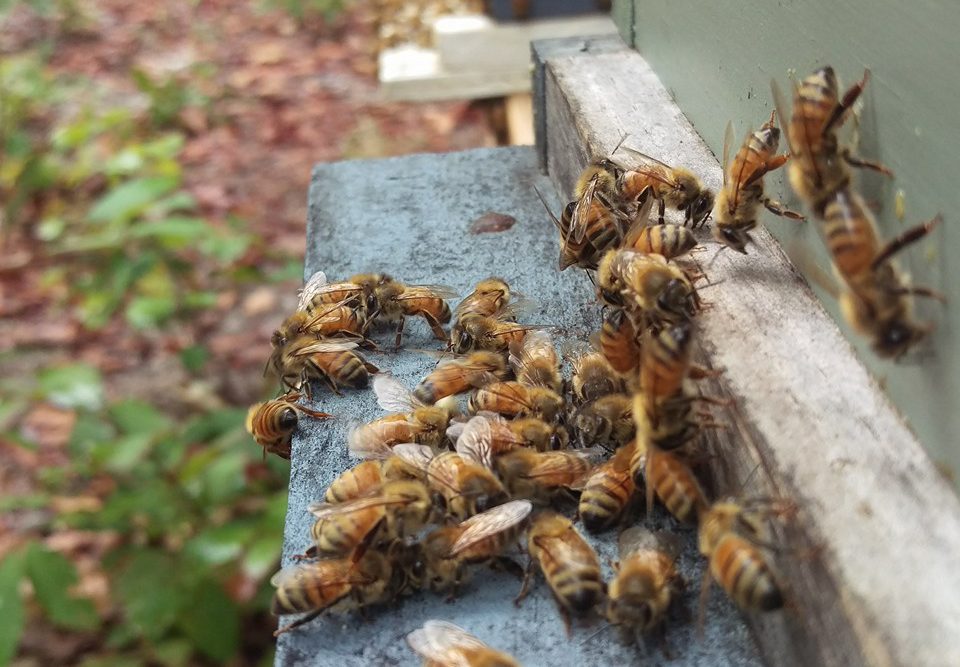
The story starts years ago when I noticed that the bees flew with more enthusiasm and worked harder in the days following a varroa mite treatment (oxalic acid vaporization). I asked others if they too saw this behavior change. Some said they never took notice; others said it was obvious. Years later I measured the coming and going on the landing board using one of those click counters. It was true; the bees were energized after a treatment. But I didn’t have the answer as to why. Last summer I spoke to someone more knowledgeable than I in entomology and he used the analogy, “Have you ever noticed how good a dog feels the day after a flea dip?” A great reply that satisfied me for a while. But I thought, putting a dent in a 3% mite load — not even eliminating the mites — couldn’t increase the entire colony’s enthusiasm as evidenced by the increase in activity on the landing board. Could it? Or was something else going on? But I’m getting ahead of myself.
Oxalic Acid as a Disinfectant
Back in 2021, I started doing some research and learned that the EPA first approved oxalic acid (OA) in 1957 as a disinfectant in bathrooms, swimming pools, and sewage and drainage systems, among other uses.1 It’s still used today in cleaning solutions for industrial food-production machines, not to mention good old Bar Keeper’s Friend. If you’re not sure of the definition of disinfectant, look it up — it’s different from a sanitizer, cleaner, or antibacterial. The EPA’s own regulatory definition of “disinfectant” does include destroying or inactivating viruses, not just bacteria.2 But here’s a wrinkle I didn’t appreciate until I went back and checked: a product can’t legally claim virus-killing power just because it’s registered as a disinfectant in general. EPA requires specific test data before a virucidal claim goes on a label, and oxalic acid’s original 1957 registration only carries data for bacteria and general germs — not viruses.3 So the “disinfectant” label tells me OA belongs to the right broad category of chemical, but it doesn’t, by itself, prove OA is killing viruses in my hives. That’s still my hypothesis to prove, not a fact I get to borrow from the EPA paperwork. Was OA also acting as a chemical scrubbing of the internal surfaces of the hive and the bees themselves? Was I killing bacteria and viruses as well as mites? I didn’t know, but I wanted to try a few things.
Starting the Routine Schedule
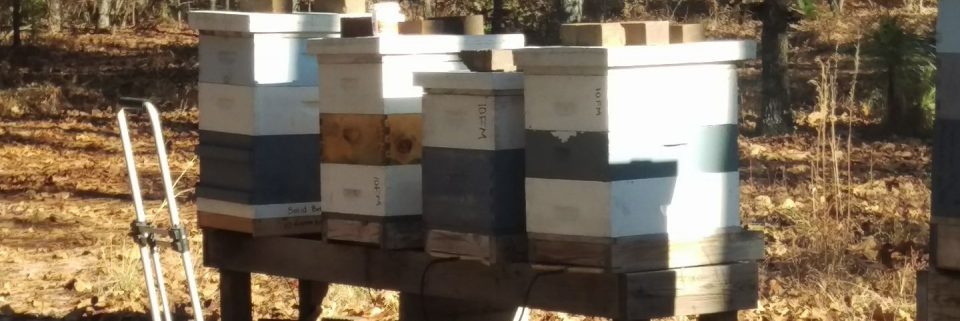
Over two years ago, in January 2022, I started treating my bee hives routinely with OA vapor — “routine schedule” meaning a set date each month on my calendar, similar to taking a blood pressure medication on a routine schedule, or a medicine for a chronic condition like diabetes or reflux. I think of it as an IPM treatment for mites and their accompanying viruses.
This isn’t as far a stretch as it might sound. In nursing, we’re taught to administer medications only after verifying the five rights: right patient, right medication, right dose, right route, right time. Applying that framework to pesticide administration isn’t a stretch either — both involve delivering a chemical substance to a living organism in hopes of a beneficial outcome. Physicians sometimes order medications on schedules that fall outside the manufacturer’s standard recommendation, tailored to a particular patient’s situation, and as treatment has advanced, we’ve moved toward managing chronic illness before it becomes acute — we don’t wait for the stroke or the diabetic coma before we intervene, and then discharge without ongoing management. We manage the disease continuously. I think we currently let our bees stay sick much of the time, performing sub-par, and only step in when they’re approaching the acute, terminal stage. I fully support not overusing pesticides in the hive — the reasons economic thresholds exist are good ones, and an overused pesticide breeds tolerance and becomes useless. But I think there’s a version of “right schedule, right rotation” that lets us manage the chronic illness of our bees without letting them get sick first.
My goals were to 1) decrease the number of yearly OA treatments and 2) reduce the likelihood of resistance to OA developing. Really, all I was changing was one aspect of treatment — the dosing schedule — from one that targeted the mites’ reproductive cycle to one that disinfected the colony’s environment on a regular interval. Any varroa mites killed in the process would be a value-added outcome.
That year I had no colony losses during the spring, and I made more honey than usual. I did have some colony failures (~10%) after the nectar flow during our dearth period, as is typical — multiple stressors (small hive beetle, harvest, and climbing mite-to-bee ratios) take their toll during that window as mite load climbs and viral load along with it. I intervened with a single series of OA treatments and the losses stopped, which pointed me toward mite/viral load as the most critical stressor. After that series, I resumed my scheduled monthly treatments and had no winter losses.
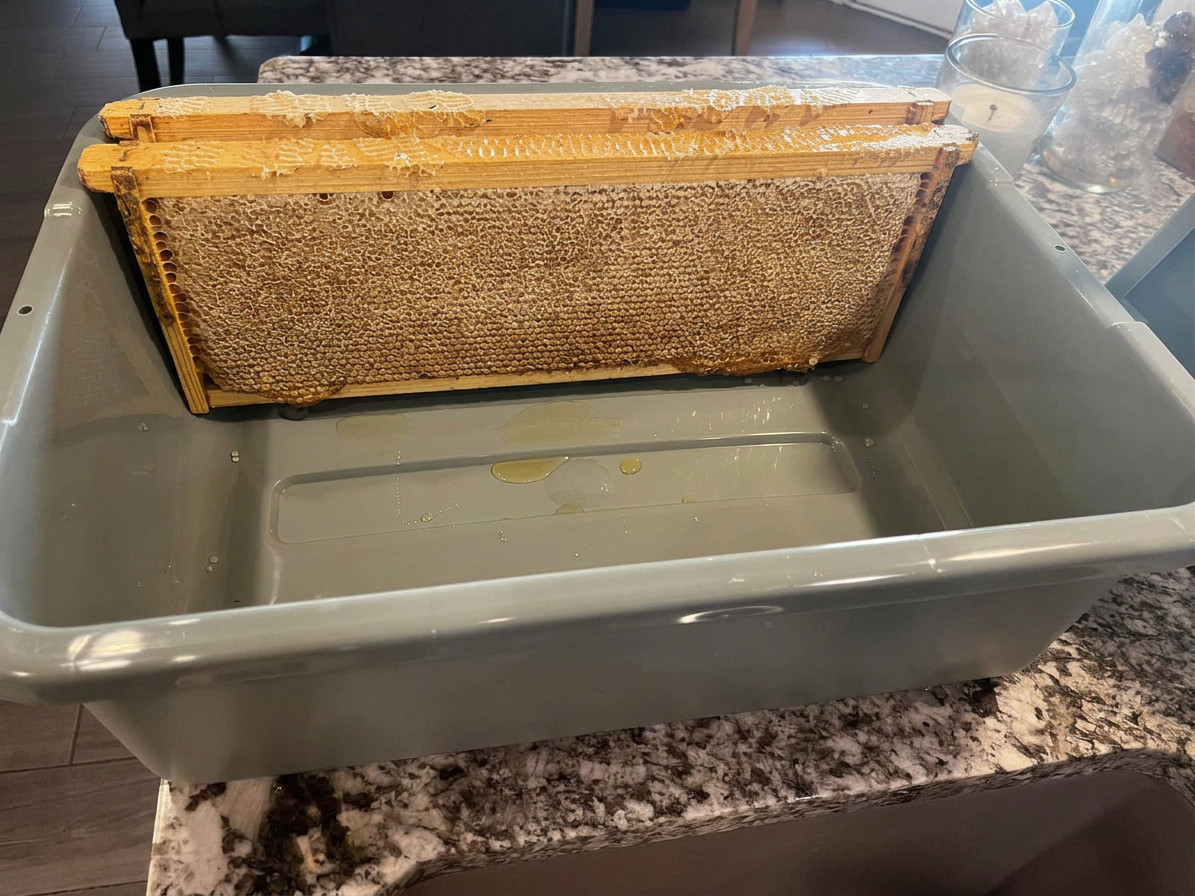
In January 2023, I continued the routine schedule and again had no losses during the nectar flow. This year I made a change for the post-nectar-flow period: a treatment every two weeks (the 1st and 15th) from June through October, adding about five extra treatments for the year — pushing me toward the edge of my own goal to limit total treatments. In November I went back to the monthly schedule. The result: no colony losses in spring, summer, fall, or winter of 2023. Honey production ran about 65 lbs. per hive, roughly 50% above what’s typical in the SC Midlands. Keeping bees healthy through the nectar flow keeps them working harder, rather than the more common pattern of letting their health decline over the season until they collapse just ahead of a “salvation” treatment.
That brings me to 2024. No mite or virus-related losses so far. Coming out of winter I saw the occasional weak colony needing a new queen or help with small hive beetles, but buildup was fast in the pre-season. I did my tax accounting and used less sugar last year, having left more honey on the hive thanks to their productivity (and my reluctance to pay for sugar). They’re healthy and handling stressors well.
What Research Actually Says
I spent some time this year researching organic acids as disinfectants and antimicrobials, and there’s real science here — organic acids can be antivirals, and it’s dose- and pH-dependent to a degree. A 3% oxalic acid solution, the concentration most beekeepers mix, lands somewhere around pH 2, though the exact number moves with concentration — straight crystals run closer to pH 1.5, and a well-diluted solution can sit up near pH 4.4 There are some unidentified factors at play too. A 2024 study in the journal Tropical Medicine and Health tested acetic, oxalic, and citric acid head-to-head against influenza, SARS-CoV-2, and feline calicivirus at matched pH levels, and found that acetic acid could inactivate the flu virus at a milder pH than oxalic or citric acid needed to do the same job — meaning virucidal effect isn’t simply a function of how acidic the acid is.5 That’s a nice confirmation of something I’d suspected but couldn’t fully source: the reason organic acids kill viruses, and which ones do it best against which viruses, is still something of an open question in the literature.
Where I have to be honest with myself: that research is about organic acids and viruses in a petri dish, not specifically about oxalic acid and bee viruses in a hive. I went looking for a study that would confirm OA directly suppressing bee viruses the way I’m proposing, and I didn’t find one that backs it cleanly — one field trial I came across actually measured viral loads (Deformed Wing Virus and Acute Bee Paralysis Virus) rising after an oxalic acid trickle treatment, right alongside a rise in the untreated control group.6 So this part of my theory stays a hypothesis, not a demonstrated fact, and I want to be upfront about that rather than dress it up as settled science.
Why is this interesting anyway? First, because it shouldn’t be working — one would think my colonies would be mite-ridden and failing, since this schedule gives mites more time between treatments than a reactive approach would. But I haven’t seen a case of deformed wing in years, and skewering drone pupae shows the mites are under control. Second, because mite levels are now out of the treatment-decision loop, I’ve stopped watching my bees decline before they trip whatever this season’s action threshold happens to be. Third, I honestly wouldn’t mind if my mite counts were high — it would confirm something other than mite-killing is doing the work. Fourth, I’m exposing my bees to the same amount of OA, or less, than a standard reactive schedule would use. Fifth, more time between treatments means less chance of building resistance — and it’s worth saying plainly that as of now there are no confirmed reports of varroa developing resistance to oxalic acid anywhere, which is a genuinely good track record compared to the synthetic acaricides.7 That said, extension entomologists still recommend rotating treatments as a hedge rather than relying on any one product indefinitely, so I’m not treating “no resistance yet” as a guarantee it’ll stay that way.8 Sixth, it simplifies a process that overwhelms a lot of new beekeepers — mite assessment, seasonal thresholds, choosing the right miticide for the month and temperature. Seventh, my bees stay healthy and productive all year, without the yo-yo of cleaning them up only to let them slide back toward collapse before the next rescue series. That yo-yo isn’t healthy living. We don’t let diabetics go into a coma before treating them, or let HIV patients run high viral loads before we intervene — we manage the illness rather than wait for the crisis. Our colonies don’t die from the mites; they die from the high viral loads the mites bring with them.
How is this working? My supposition is that I’m killing viruses, or a subset of them, directly — bypassing the need to fight the mite as a vector. Another possibility is that I’m interrupting the mite-virus relationship to the mite’s detriment. I don’t know which, if either, is right. It could be something else entirely that I haven’t considered.
The Breakthrough Thought — and Where I’ve Had to Pull Back
One thing that’s plagued me is that noticeable change in demeanor within a day or two of treatment — more energy, more intent, more enthusiasm on the landing board. It never made sense that killing some fraction of a 3% mite load would produce a colony-wide mood shift. My working theory for a while was that removing even a few mites reduced viral load enough to matter, since bees pass food and pheromone constantly through trophallaxis — if one bee carries virus, the whole colony is soon exposed through contact, grooming, and shared food.
I’d been citing a 2015 source that described oxalic acid as an antibacterial compound and framed mite reduction as a side effect of that antibacterial action. Going back to properly source that for this rewrite, I couldn’t relocate or verify the site, so I’m setting that particular citation aside until I can pin down where it actually came from — I don’t want to build an argument on a quote I can’t stand behind. Here’s where I land instead: it’s reasonable to think that a monthly dose of OA is doing some general sanitizing of the hive’s internal surfaces and the bees themselves, similar to how a household disinfectant works on a countertop — and, notably, cleaning products with proven antiviral action against human pathogens are common and unremarkable. What makes OA unusual is that it can be safely delivered directly onto a living colony, which most disinfectants can’t claim. If the bees were living in an environment thick with viruses and passed constantly through trophallaxis, they’d plausibly feel run-down most of the time, the way we do with a low-grade infection — and a monthly disinfecting dose might give them room to recover between exposures. That’s a coherent hypothesis. It just isn’t a proven one yet, and I want to say that plainly rather than lean on the “disinfectant equals antiviral equals proven” logic I was using before — that chain has a real gap in it once you look closely at what the label was actually tested for.
One more correction I owe myself: I’d been saying bees don’t really have an immune system the way we do, and that most of their defense runs through the propolis envelope and nutrition. That’s an overstatement. Bees do have an individual innate immune system — immune cells in the hemolymph, defense proteins like phenoloxidase — it’s just a scaled-down one compared to solitary insects, carrying roughly a third of the immune-related genes some other insects have.9 What they’ve evolved instead is social immunity: propolis, grooming, hygienic behavior, all working alongside the individual system rather than replacing it. So “the colony’s immune system leans hard on propolis and nutrition” is fair; “bees don’t have one” isn’t.
On the mite-killing side, we still don’t fully know the mechanism — the EPA’s own label for oxalic acid says as much, listing the mode of action as unknown.10 We do know mite knockdown peaks within the first two to three days post-treatment, tapering afterwards.11 One open question I keep turning over: could OA be disrupting a symbiotic relationship between the mite and some other microbe, say in its gut, causing a slower die-off over those first few days rather than a direct kill? I don’t have an answer. Using OA once a month shouldn’t promote tolerance, given it breaks down in the hive faster than the synthetic acaricides and there’s no confirmed resistance on record. I suspect it could be used more frequently than monthly, but once a month is the more sustainable choice for most beekeepers. If I were pitching this to a pharmaceutical company’s R&D team, the next questions would be the obvious ones: best dosage, best frequency, best route. My best guess is that vaporization is the right route, since it coats the entire interior with OA crystals; the right dosage is still undetermined and could turn out to be higher or lower than current guidance. It’s also worth noting the guidance itself has kept moving in a direction that makes this easier: the EPA cleared OA for use with honey supers on the hive back in 2021, reversing the old restriction,12 and more recently raised the allowed vaporizer dose from 1 gram to 4 grams per brood chamber based on research showing the higher dose is effective without harming the bees.13 Both changes make a routine, honey-season-friendly schedule more practical than it would have been when I started this in 2022.
One more thing worth naming: this experiment might produce colonies with higher mite counts that never get sick, which means future mite counts alone may not be the right barometer of success. Who cares if my mite counts run higher, as long as the bees stay healthy and productive?
Takeaways: Oxalic acid is unusual among disinfectants in that it’s safe to administer directly within a living hive. The benefit I’m chasing isn’t a lower mite count — it’s year-round, consistent colony health and productivity, instead of the current default of cycling between “sick” and “well” periods. This honey season is off to a great start. All supers are already deployed, and I’m wondering how I’m going to keep up with giving the bees enough space now that they’ve gone gangbusters. Cheers!
Brief update, 7/20/2025: I’m just back from my state beekeepers’ association’s summer conference. Talk of mites always triggers a little guilt that I haven’t updated this in a while, so the effort continues. I’ve tried to maintain the routine monthly schedule, with some disruption during a personal health event. The healthy-bees, minimal-losses pattern has held — a near-perfect survival rate in the middle of record national losses across the US is rewarding to see. I don’t make it to as many conferences as I used to, but among the people I’ve shared this with, there’s a shared read that I may simply be keeping the viral threshold below the point where illness develops. Randy Oliver has written about colonies hitting a tipping point at a certain mite count, beyond which they’re doomed to failure — a framing that lines up with the broader consensus that varroa itself rarely kills a colony outright; it’s the virus the mite carries that does. I think that’s a reasonable read of what I’m seeing too — that the viral threshold is being held in check, by a little or by a lot, I still can’t say for certain.
Notes U.S. EPA, Pesticides — Fact Sheet for Oxalic Acid (PC-009601): oxalic acid was first registered as a pesticide in 1957 for bathroom disinfectant use, swimming pool water systems, drainage and sewage systems, and eating establishments. epa.gov (archived reregistration fact sheet, www3.epa.gov/pesticides/chem_search/reg_actions/reregistration/fs_PC-009601_1-Dec-92.pdf) ↩ U.S. EPA, “Selected EPA-Registered Disinfectants”: a disinfectant is defined as a substance that destroys or irreversibly inactivates bacteria, fungi, and viruses on hard surfaces. epa.gov/pesticide-registration/selected-epa-registered-disinfectants ↩
U.S. EPA, Interim Guidance for the Evaluation of Products for Claims Against Viruses (Oct. 2024): registered products may not carry pathogen-specific efficacy claims, including virucidal claims, unless EPA has reviewed supporting data and approved the label language. epa.gov/system/files/documents/2024-10/11108-02_interim_virucidal_claim_guidance_2024_10_10.pdf ↩
pH figures for oxalic acid at various concentrations, per whatistheph.com/substance/Oxalic_Acid and completeera.com’s oxalic acid pH overview — undiluted crystals run roughly pH 1.5–2, with pH rising as the solution is diluted. ↩
Ogura, T. et al., “pH-dependent virucidal effects of weak acids against pathogenic viruses,” Tropical Medicine and Health (2024). Acetic acid inactivated influenza virus at approximately pH 4, while citric and oxalic acid required a lower pH for the same effect. pmc.ncbi.nlm.nih.gov/articles/PMC10785384/ ↩
Field trial comparing oxalic acid trickle treatment to lithium citrate found Acute Bee Paralysis Virus and Deformed Wing Virus loads increased significantly in the oxalic-acid group post-treatment (loads also rose in the untreated control). PMC, ncbi.nlm.nih.gov/pmc/articles/PMC9510912/ ↩
Washington State University Extension, “Oxalic Acid Options for Controlling Varroa destructor“: no reports of miticide resistance to oxalic acid to date. pubs.extension.wsu.edu/product/oxalic-acid-options-for-controlling-varroa-destructor/ ↩
NC State Extension, “Oxalic Acid for the Control of Varroa Mites”: recommends rotating treatments rather than relying on oxalic acid alone, even though resistance hasn’t yet been documented. content.ces.ncsu.edu/oxalic-acid-for-the-control-of-varroa-mites ↩
Honey bees innate and social immunity: bees possess hemolymph immune cells and defense proteins such as phenoloxidase but carry comparatively fewer immune-related genes than many other insects, relying heavily on social immunity (propolis, grooming, hygienic behavior) to compensate. See overviews at imanagement.ch (apisavoir.ch, “Social Immunity in Honey Bees”) and the review in Revista Mexicana de Ciencias Pecuarias, scielo.org.mx/pdf/rmcp/v10n3/2448-6698-rmcp-10-03-705-en.pdf ↩
U.S. EPA oxalic acid product label (EPA Reg. No. 091266-00001): resistance management section states oxalic acid’s mechanism of action is unknown. www3.epa.gov/pesticides/chem_search/ppls/091266-00001-20210430.pdf ↩
Honey Bee Suite, “Using Oxalic Acid Vaporization When Brood Is Present”: peak mite drops typically occur within the first two to three days of treatment. honeybeesuite.com/using-oxalic-acid-vaporization-when-brood-is-present/ ↩
EPA label amendment, effective 4/30/21, permitting oxalic acid use with honey supers on the hive. Reported via OxaVap, oxavap.com/information/, and MiteCalculator.com’s coverage of the label change. ↩
University of Florida IFAS, “Using research to change regulation: Honey bee research impacts EPA labeling” (2025): EPA raised the allowed oxalic acid vaporizer dose from 1 gram to 4 grams per brood chamber following UF/IFAS research. blogs.ifas.ufl.edu/news/2025/09/17/using-research-to-change-regulation-honey-bee-research-impacts-epa-labeling/ ↩
Here in the Midlands of South Carolina we are well into the pest control season for honey bee management.
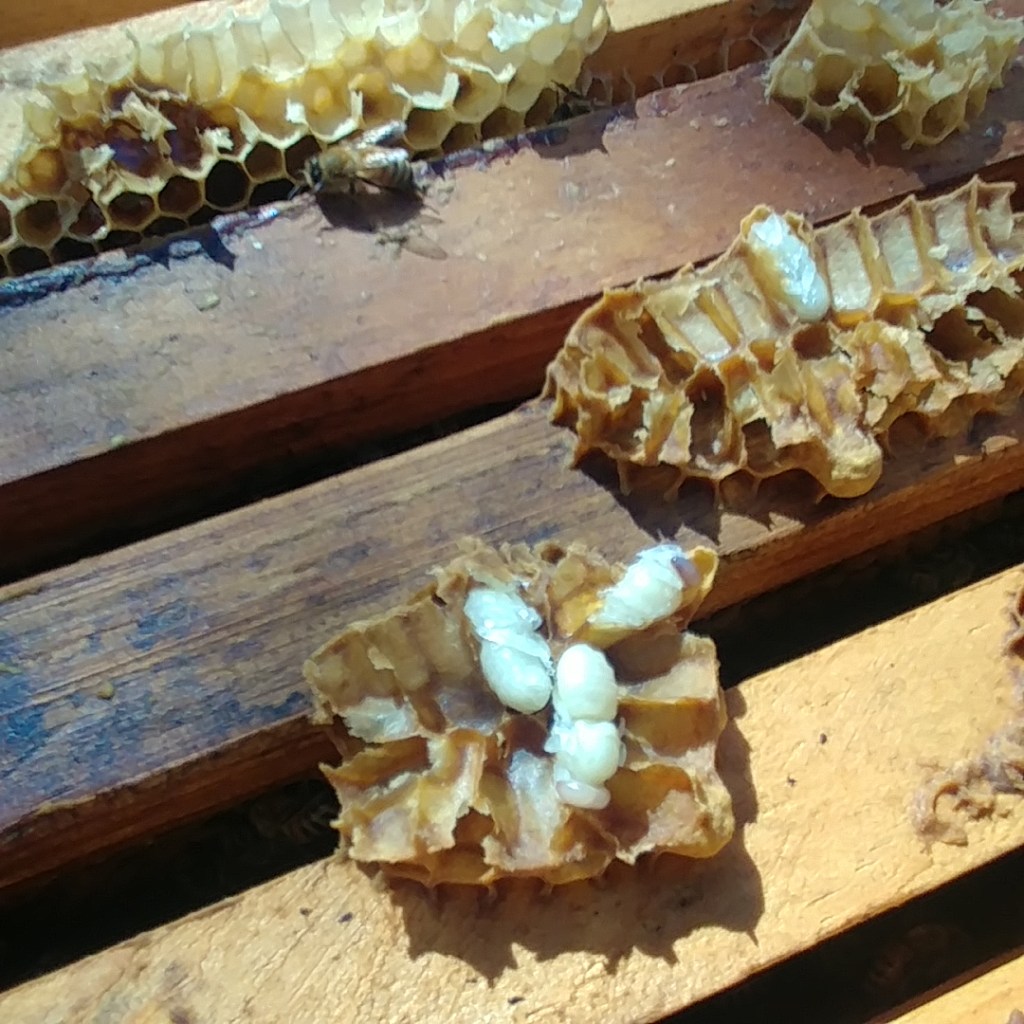
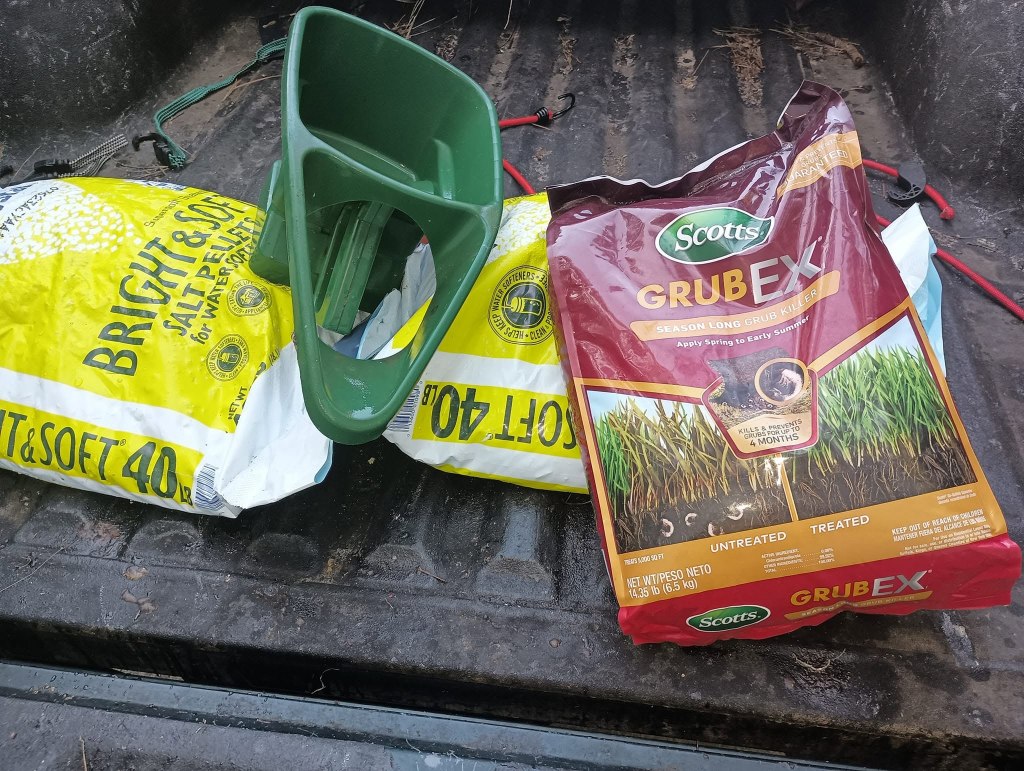
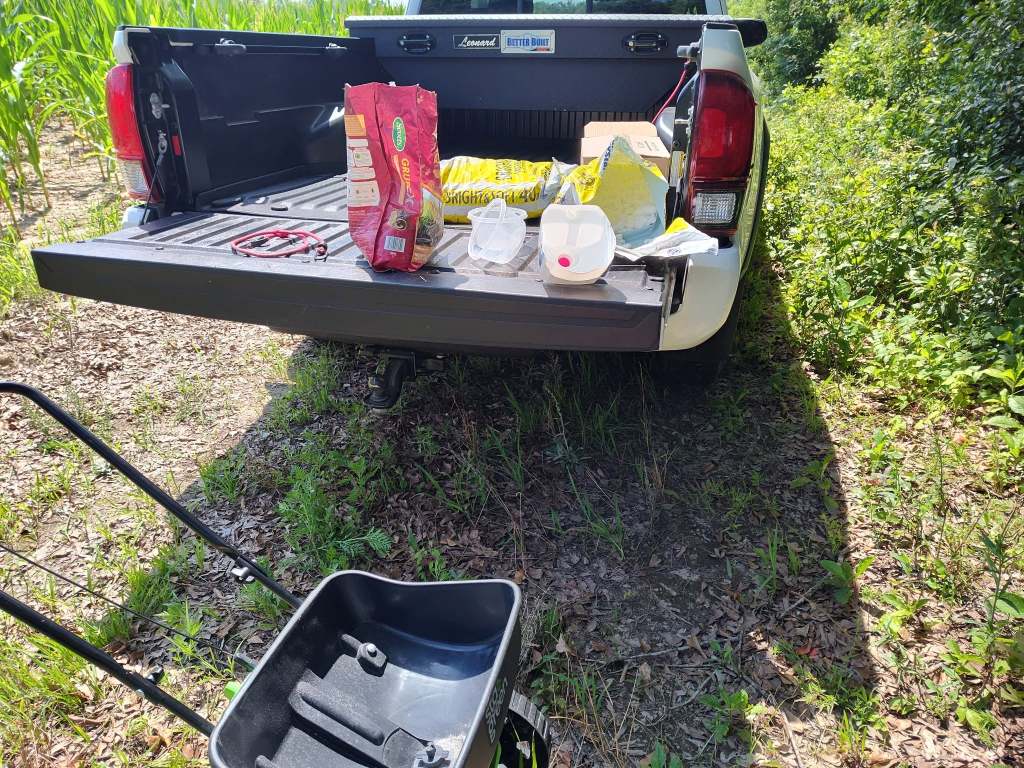
It’s time to begin pest control. For wax moths, manage internal volume as we enter the period of declining population by removing space so bees can adequately cover the frames. For SHB, you have multiple methods such as oil traps, dry unscented Swiffer pads, hive tool whack-a-mole, vacuums, and/or interrupting their life cycle with soil drench, DE, or bait. Choose one or more. Pictured: Pool salt and GrubX.
Stress reduction for bees. Reduce pest pressure on your bees through pest management. Kill SHB at the source – as they seek to pupate in the ground.


 Cut off the scent trail. Avoid open or fragrant feeding, clean up spills promptly, and be mindful that essential-oil feed additives and fermenting syrup produce exactly the class of volatiles that draw in opportunists looking for a hijacked signal to follow.
 Narrow the doors. Entrance reducers, robbing screens, and screened bottom boards reduce the number of access points pests can exploit and concentrate a colony’s guard force where it matters — a strategy with direct research support in the SHB literature.
 Right-size the box to the bees. Keep the amount of comb a colony must defend proportional to its actual population. An over-supered, understrength hive isn’t just an SHB risk; it’s a wax moth risk for the same underlying reason — not enough guards per square inch of comb.
 Bait the hunger, not the hive. Species-specific attractants — mineraloil/vinegar SHB traps, pheromone lures for stored wax moth comb, heptyl-butyrate traps for yellow jackets — exploit the same detection systems pests use to find your hive, redirecting that hunger somewhere it can be safely dead-ended instead. This is a version of what integrated pest management researchers call a “push–pull” strategy: making the protected resource harder to find or reach (push) while offering a more attractive, disposable decoy nearby (pull).
 Expect an arms race, not a solved problem. The SHB’s trick of getting guard bees to feed it inside its own prison cell is a useful reminder that every defensive measure is answered, eventually, by some counteradaptation. Pest management in an apiary is maintenance, not a single fix.
 Tinbergen, N. (1963). On aims and methods of ethology. Zeitschrift für Tierpsychologie, 20(4), 410–433.
 MacArthur, R. H., & Wilson, E. O. (1967). The Theory of Island Biogeography. Princeton University Press.
 Torto, B., Boucias, D. G., Arbogast, R. T., Tumlinson, J. H., & Teal, P. E. A. (2007). Multitrophic interaction facilitates parasite–host relationship between an invasive beetle and the honey bee. Proceedings of the National Academy of Sciences, 104(20), 8374–8378.
 Neumann, P., Pettis, J. S., & Schäfer, M. O. (2016). Quo vadis Aethina tumida? Biology and control of small hive beetles. Apidologie, 47(3), 427–466.
 Ellis, J. D., Pirk, C. W. W., Hepburn, H. R., Kastberger, G., & Elzen, P. J. (2002). Small hive beetles survive in honeybee prisons by behavioural mimicry. Naturwissenschaften, 89(7), 326–328.
 Ottati, S., et al. (2021). Prisoners receive food fit for a queen: honeybees feed small hive beetles protein-rich glandular secretions through trophallaxis. Journal of Experimental Biology, 224(2), jeb234807.
 Reierson, D. A., Rust, M. K., & Vetter, R. S. Traps and protein bait to suppress populations of yellowjackets (Hymenoptera: Vespidae).