• Sassafras Bee Farm
  • About
  • Contact

Beekeeping365

~ The more I studied beekeeping, the less I knew, until, finally, I knew nothing. But, even though I knew nothing, I still had plenty to unlearn. Charles Martin Simon

Beekeeping365

Daily Archives: February 9, 2018

Getting Started in Beekeeping by sassafrasbeefarm

09 Friday Feb 2018

Posted by Beekeeping365 in beekeeper education, beekeeping, mentoring

≈ 5 Comments

Tags

beekeeping, education, mentoring

fullsizedtastytomato07162016bymichaeldantzler-106

Accepting What Is

As the local beekeeping association Secretary I received lots of email and often it involved a request from non members wanting to get into beekeeping. They’d done their homework which, mostly, has consisted of surfing Facebook and Youtube. They’d also asked lots of people how to best get started in beekeeping. After polling the answers they’d start to see two particular suggestions rising to the top: 1) Join your local association and 2) get a mentor. From there they deduced that they can most likely accomplish both by sending an email to the local association asking for a mentor to help them get started.

I had a very nice, polite email I send back moving them in the right direction to accomplish both getting them in contact with experienced beekeepers and a course of action to increase their likelihood of success.

As beekeepers here know, it takes numbers to be successful. If you don’t believe me make a split with insufficient nurse bees or capped brood. Timing is essential as well, start a task at the proper time and all goes easily. Success with a swarm in early April is a piece of cake; success with a swarm in August is difficult. And so it is with folks not yet knowledgeable of the mechanics of beekeeping. They want bees and a mentor not knowing the amount of effort it will take nor the proper timing in order to increase the chance of success that first year.

You too will get inquiries from friends and people you come in contact with once they know you are a beekeeper. Be prepared to help them get off to a realistic start if you want them to be successful. And that’s what it’s really about isn’t it? One hundred new beekeepers joining the association is great but not so impressive if half fail their first season because they had unrealistic expectations.

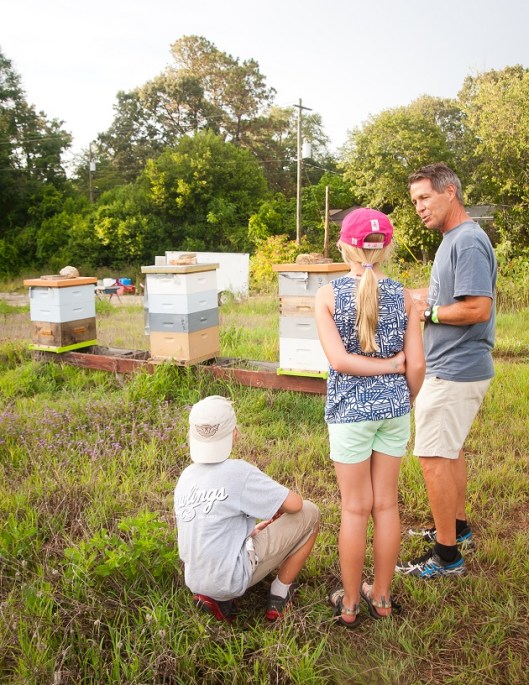
Let’s look at the “getting a mentor” concern. The old school model of getting a mentor went something like this: The mentee sought out a mentor and agreed to spend the first year helping the mentor in the mentor’s bee yard. The mentee would show up at an agreed on day and time and look over the shoulder of the mentor as he went through his hives, talking as he did so. Watch, listen, learn. Move boxes as needed and help the mentor as the tasks necessitated. This would go on for a season and the next Spring the mentor would make a split and give it to the mentee to take care of at the mentor’s yard. The mentee would work his new hive and the mentor would look over his shoulder to make sure he didn’t make any mistakes and was able to correctly comment on what he was seeing and the correct action to take. At the end of that season the mentee took his hive home and became a beekeeper.

Somewhere along the way we have deviated from this model. Now we take new comers into the hobby, put them through a 20 hour course and expect them to survive. It’s like making an early March split – risky. Nowadays the mentee wants the mentor to make visits to the mentee’s yard for instruction. And inasmuch as the clubs and associations have promoted getting the newcomers’ bees perhaps that seems reasonable to take some responsibility for assisting with issues that will naturally come up.

If we are going to move to a new model then perhaps we need to clarify and revise some terms. As it now stands we’re mixing and matching old school and new school. The new beekeeper wants a mentor, bees, and instruction. That’s reasonable. The problem is one of numbers though (remember that early Spring Splits analogy?). Most clubs can’t provide a 1:1 mentor for 100 new beekeepers every year nor should anyone expect mentors to volunteer to run around town visiting mentees weekly. So we must marry the expectations of the new beekeeper and the club acting as mentor. Each side gives and gets a bit and both walk away with more.

We do that by returning to the old school model whereby the mentee gets his/her education by visiting the mentor, but no longer at the mentor’s beeyard nor by a single mentor. The new model has the mentee visiting many mentors at events like 1) monthly meetings, 2) local educational events, 3) dinner before meetings, 4) online discussion groups 5) State Conferences, 6) connecting through fellowship with bee buddies, community outreach, etc. The list goes on… The mentee that wants to learn this art, like historically, has the resources offered and available and they go to learn – as before. The club or association organizes monthly meetings, presentations, events, newsletters, club library, allows for face to face fellowship time monthly, and online discussion groups. All things considered, the new beekeeper has more opportunity nowadays to gather knowledge than they used to with the old school model AND they get their bees their first year.

If you’ve suffered through my ruminations this far, I commend your endurance. I gave two similar presentations at this year’s state conference. I encourage the new beekeeper to take advantage of what is. There are multiple opportunities available to new beekeepers – more than enough to succeed. I also push the concept of bee buddies and fellowship for those that need a 1:1 relationship. Occasionally I hear someone complain about not having a 1:1 mentor for more personal, individual instruction as they had hoped. That’s unfortunate because they are cheating themselves out of the good of what is while wasting time wishing for the unlikelihood of what they envisioned. The fact of the matter is they have a room full of mentors at every meeting, at every gathering, at every conference. My mom used to say, “Go do the very best you can with what you’re offered. You do everything You can and You’ll succeed.” Mom was smart at marrying “what is” with success.

Feel free to share this on:

  • Share on Facebook (Opens in new window) Facebook
  • Share on X (Opens in new window) X
  • Share on Pinterest (Opens in new window) Pinterest
  • Email a link to a friend (Opens in new window) Email
  • Share on LinkedIn (Opens in new window) LinkedIn
  • Share on Reddit (Opens in new window) Reddit
  • Share on Tumblr (Opens in new window) Tumblr
  • Print (Opens in new window) Print
  • Share on Telegram (Opens in new window) Telegram
  • Share on WhatsApp (Opens in new window) WhatsApp
Like Loading...
Follow Beekeeping365 on WordPress.com

Enter your email address to follow this blog and receive notifications of new posts by email.

Calendar

February 2018
S M T W T F S
 123
45678910
11121314151617
18192021222324
25262728  
« Jan   Mar »

Posts by Month:

  • August 2026 (4)
  • July 2026 (1)
  • May 2026 (2)
  • January 2026 (3)
  • July 2025 (1)
  • April 2024 (1)
  • September 2022 (1)
  • July 2022 (1)
  • March 2022 (13)
  • February 2022 (17)
  • January 2022 (4)
  • December 2021 (4)
  • November 2021 (7)
  • October 2021 (1)
  • September 2021 (3)
  • August 2021 (11)
  • July 2021 (18)
  • June 2021 (5)
  • May 2021 (2)
  • April 2021 (9)
  • March 2021 (2)
  • February 2021 (5)
  • January 2021 (16)
  • December 2020 (15)
  • November 2020 (15)
  • October 2020 (11)
  • July 2020 (1)
  • February 2020 (1)
  • March 2019 (2)
  • February 2019 (4)
  • January 2019 (1)
  • December 2018 (10)
  • November 2018 (8)
  • October 2018 (15)
  • September 2018 (25)
  • August 2018 (3)
  • July 2018 (11)
  • June 2018 (27)
  • May 2018 (33)
  • April 2018 (20)
  • March 2018 (20)
  • February 2018 (12)
  • January 2018 (22)
  • December 2017 (18)
  • November 2017 (17)
  • October 2017 (25)
  • September 2017 (27)
  • August 2017 (21)
  • July 2017 (29)
  • June 2017 (28)
  • May 2017 (19)
  • April 2017 (17)
  • March 2017 (19)
  • February 2017 (12)
  • January 2017 (13)
  • December 2016 (5)

Posts by Categories:

  • absconding (1)
  • africanized honey bees (1)
  • apitherapy (1)
  • bee health (6)
  • bee law (2)
  • bee lining (2)
  • bee removals (2)
  • beekeeper (5)
  • beekeeper education (16)
  • beekeeping (612)
    • South Carolina (2)
  • beekeeping author (10)
  • beekeeping books (14)
  • beekeeping calendar (4)
  • beekeeping chores (8)
  • beekeeping equipment (26)
  • beekeeping history (49)
  • beekeeping management (37)
  • beekeeping pest management (8)
  • beekeeping seasons (23)
  • beekeeping vocabulary (16)
  • beeswax (13)
  • biography (4)
  • biology (14)
  • birthday (40)
  • birthdays (34)
  • book review (16)
  • breakfast (1)
  • calendar (4)
  • CCD (1)
  • chores (6)
  • comb (7)
  • comb honey (10)
  • commercial beekeeping (2)
  • cutouts (2)
  • dearth (3)
  • defensiveness (2)
  • diseases (9)
  • drawn comb (6)
  • ecology (4)
  • education (28)
  • equipment (25)
  • extracting (1)
  • fall nectar flow (1)
  • famous beekeepers (27)
  • feeding bees (7)
  • first blog entry (1)
  • folklore (1)
  • food (7)
  • forage (4)
  • hacks (3)
  • hive inspections (8)
  • hive placement (2)
  • hive products (6)
  • honey (90)
  • honey as food (22)
  • honey bee anatomy (3)
  • honey bee behavior (25)
  • honey bee biology (43)
  • honey bee genetics (4)
  • honey bee nutrition (1)
  • honey bee photos (6)
  • Honey Bee Research (1)
  • honey bee vocabulary (12)
  • honey bees (14)
  • honey judging (4)
  • honey recipe (65)
  • humor (13)
  • inspections (10)
  • journal (1)
  • log book (1)
  • making increase (3)
  • management (82)
  • mentoring (2)
  • mites (3)
  • national pollinator week (2)
  • nectar flow (6)
  • nomenclature (1)
  • opinion (8)
  • out yards (1)
  • outyards (1)
  • package bees (1)
  • pears (1)
  • pests (17)
  • plants for bees (3)
  • polish (1)
  • pollen (4)
  • pollination (11)
  • pollinators (7)
  • product review (1)
  • production (1)
  • products (3)
  • propolis (2)
  • queens (17)
  • raw honey (6)
  • recipe (88)
  • removals (1)
  • safety (3)
  • sales (2)
  • season (1)
  • seasons (21)
  • sideliner (1)
  • small hive beetles (1)
  • spring buildup (4)
  • state fair (2)
  • sustainable (7)
  • swarms (27)
  • ursurpation (1)
  • usurpation (1)
  • varroa (21)
  • varroa destructor (12)
  • varroa mites (24)
  • Winter (5)
  • winter solstice (2)
  • woodenware (3)
  • yellow jackets (2)

Sassafras Bee Farm on Facebook

Sassafras Bee Farm on Facebook

Sassafras Bee Farm

Sassafras Bee Farm

Recent Posts

  • Meeting Reality vs What Seems Deserved
  • Everything Starts with a Tasty Meal: The Science Behind a Beekeeper’s Best Pest-Management Insight
  • Pest Control
  • State Fair Wax Preparation
  • Sherlock Holmes and Beekeeping: A Unique Connection

Beekeeping365 on Facebook

Beekeeping365 on Facebook

Top Posts & Pages

  • Types of bees by Fat Daddy’s Apiary
    Types of bees by Fat Daddy’s Apiary
  • Meeting Reality vs What Seems Deserved
    Meeting Reality vs What Seems Deserved
  • Old-fashioned Honey Wafer Recipe by A Hundred Years Ago
    Old-fashioned Honey Wafer Recipe by A Hundred Years Ago

Blog Stats

  • 141,308 hits

Website Built with WordPress.com.

  • Subscribe Subscribed
    • Beekeeping365
    • Join 426 other subscribers
    • Already have a WordPress.com account? Log in now.
    • Beekeeping365
    • Subscribe Subscribed
    • Sign up
    • Log in
    • Report this content
    • View site in Reader
    • Manage subscriptions
    • Collapse this bar
Loading Comments...
%d