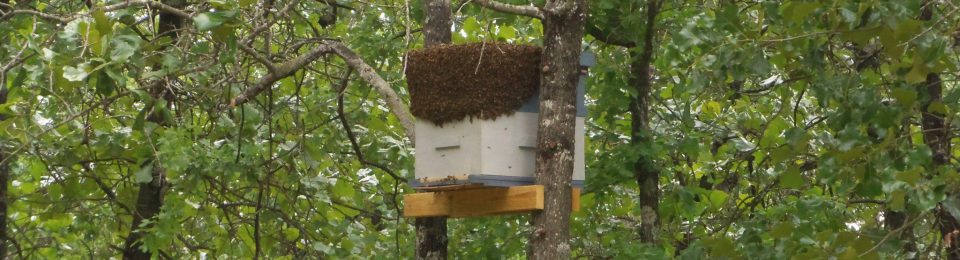
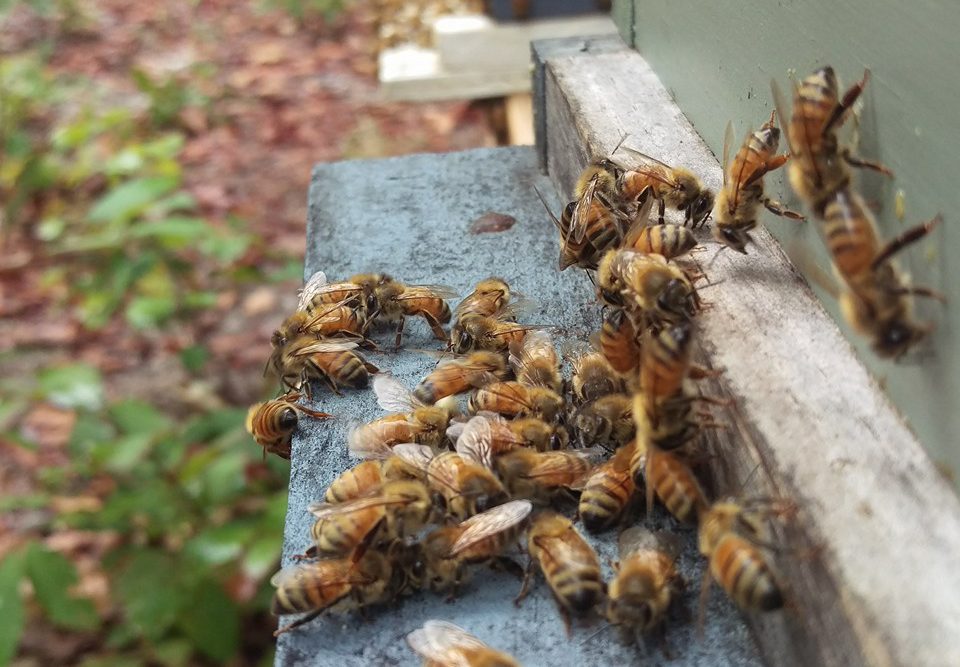
This piece expands on “Everything Starts with a Tasty Meal” by sassafrasbeefarm (Beekeeping365, August 1, 2021). The original essay makes a simple, argument: hive pests like Small Hive Beetles, wax moths, and yellow jackets can’t reproduce until they eat, so a beekeeper’s best defense is cutting off their meal. What follows is that argument traced down into the actual biology, chemistry, and behavioral ecology that back it up — and a couple of places where the research complicates the picture in interesting ways.
The Original Insight
The essay’s logic runs like this: Abraham Maslow argued that humans secure basic needs — food and safety — before pursuing anything more sophisticated. Other animals, lacking our behavioral flexibility, run a cruder version of the same program: an instinctual sequence that starts with food and ends with reproduction. Small Hive Beetles, wax moths, and yellow jackets are, in this framing, simply hungry opportunists trying to eat and then breed. A beekeeper’s job is to jam the machinery between those two steps — deny the meal, and the pest never reaches the reproduction stage. The essay then sketches two tactics: starve the pests (entrance reducers, right-sized equipment, careful feeding practices) and trick them (bait traps that exploit hunger without luring in honey bees).
It’s a good insight. It also turns out to be a fairly accurate compression of several decades of chemical ecology and behavioral research — with a few added wrinkles that make it even more useful.
Fact-Checking the Starting Point: Maslow’s Hierarchy
Worth pausing on the source material itself. Maslow’s hierarchy comes from a single 1943 paper, “A Theory of Human Motivation,” published in Psychological Review — not a book, not a series of studies, a single theoretical article. Two details are commonly missed. First, Maslow never drew a pyramid; the triangular diagram everyone pictures was a later addition by management writers popularizing the idea, not something in the original text. Second, the strict “you must fully satisfy one level before the next kicks in” reading of the theory doesn’t hold up well empirically — later cross-cultural survey work (Tay & Diener, 2011) found people pursue safety, belonging, and growth needs in parallel, not in a rigid queue, and some psychologists have flagged the hierarchy as more of a compelling narrative than a well-tested model of human behavior.
None of that sinks the beekeeping essay’s use of it, though — if anything it sharpens the analogy. Maslow’s theory is at its weakest describing humans, who really do juggle multiple motivations simultaneously. It’s a much better fit for an insect, which has neither the neural hardware nor the behavioral repertoire to do anything but respond to its most pressing physiological state. A hungry beetle is not deciding whether to prioritize food or selfactualization. For a simple nervous system, “deficit needs dominate behavior until resolved” isn’t a debatable psychological theory — it’s close to a complete description of how the animal operates.
Instinct’s Own Logic: Proximate Drives, Ultimate Ends
Biology has its own, more precise version of the essay’s food-thenreproduction chain, developed decades before anyone tried to apply Maslow to bugs. The ethologist Niko Tinbergen (1963) proposed that any animal behavior can be explained on two separate levels: the proximate cause (what mechanism triggers the behavior right now — a hormone, a smell, a hunger signal) and the ultimate cause (why that mechanism was favored by evolution — because it improves reproductive success). A beetle following an odor plume toward a beehive isn’t proximately “trying to reproduce” — it’s proximately responding to an olfactory cue that smells like food. But the reason that response exists at all, baked into the beetle’s nervous system by natural selection, is that ancestors who found food reliably out-reproduced ones who didn’t. Food-seeking is the proximate mechanism; reproduction is the ultimate function it serves.
This matters for pest management because it tells you where the chain is interruptible. You can’t argue a beetle out of its hunger, but you can jam the proximate mechanism — block the smell, remove the food, or disrupt access — and the ultimate goal simply never gets reached. This is also why Small Hive Beetles, wax moths, and yellow jackets are such persistent, fastreproducing opportunists in the first place: all three are classic examples of what ecologists call an opportunistic, “r-selected” life history (MacArthur & Wilson, 1967) — organisms built to find a rich, short-lived resource patch and convert it into as many offspring as possible before the patch disappears or gets defended. A beehive bursting with pollen, honey, and brood is about as rich a patch as an opportunist could hope to find.
Case File 1: The Small Hive Beetle’s Hijacked Alarm Bell
The Small Hive Beetle (Aethina tumida) is the clearest illustration of the essay’s whole thesis, and the actual chemistry behind it is stranger than the essay lets on.
Beetles don’t find hives by luck. They home in on a specific odor blend, and the dominant component of that blend is isopentyl acetate — the honey bee’s own alarm pheromone (Torto et al., 2007, PNAS). Worse, the beetles carry a yeast, Kodamaea ohmeri, that colonizes fermenting pollen and hive debris and, as it grows, produces a volatile bouquet that mimics that same alarm pheromone (Benda et al., 2008, Journal of Apicultural Research). In chemical-ecology terms, this is a kairomone: a signal that evolved for one purpose (bees warning each other of danger) but that a second species has hijacked to its own advantage (beetles using it as a dinner bell). The result is a nasty feedback loop — a few beetles ferment some pollen, the yeast smell draws in more beetles, and a hive with “few beetles” can suddenly host hundreds.
This is precisely the mechanism the original essay gestures at when it asks whether a feeding program “announces food availability with fragrant oils.” Fermenting syrup, spilled feed, and exposed comb all produce the same class of volatile organic compounds that this whole detection system is built to find. You’re not just feeding bees; you’re broadcasting.
The essay’s “deny them food” strategy also holds up well at the mechanical level. Colonies with reduced or modified entrances host measurably fewer adult beetles than colonies with open entrances (Ellis et al., 2002a, cited in Neumann, Pettis & Schäfer, 2016) — entrance reducers aren’t just folklore, they’re a documented barrier to invasion. But the research adds a genuine complication to the simple “starve them out” model: strong, healthy, foodrich colonies actually attract more beetles than weak ones, precisely because they have more to offer (Neumann, Pettis & Schäfer, 2016, Apidologie). What determines the outcome isn’t food availability alone — it’s whether the colony has enough workers, relative to the amount of comb it’s trying to guard, to intercept the beetles once they arrive. Weak or queenless colonies with a low bee-to-comb ratio are dramatically more vulnerable to serious SHB damage than strong ones, even when the strong ones host more total beetles (Annand, 2011, and Mustafa et al., 2014, both cited in Neumann et al., 2016). This is the scientific basis for “hive rightsizing”: matching the number of boxes and frames to the actual size of the colony isn’t about tidiness, it’s about keeping the ratio of guards to guarded comb high enough that food denial can actually be enforced.
And when bees do catch a beetle, the “deny them food” strategy turns out to be under active evolutionary counterattack. Honey bees can’t easily kill a Small Hive Beetle outright — its shell deflects stings and bites — so instead they wall it into a small propolis cell and post guards, sometimes for months (Ellis, Pirk, Hepburn, Kastberger & Elzen, 2002, Naturwissenschaften). By the essay’s logic, an imprisoned, foodless beetle should starve. Most don’t. Researchers found that trapped beetles solicit food from their guards through the same begging behavior honey bee larvae use, and the guard bees respond by feeding them protein-rich glandular secretions via trophallaxis — mouth-to-mouth feeding (Ottati et al., 2021, Journal of Experimental Biology, titled, fittingly, “Prisoners receive food fit for a queen”). The beetle isn’t just hungry; it has evolved a way to trick the bees into feeding it inside its own prison cell. It’s a small but vivid example of the arms race underneath the essay’s tidy metaphor — every time bees close off one route to food, some pests evolve a workaround, and beekeeping pest management is really an ongoing skirmish, not a single move that ends the game.
Case File 2: The Wax Moth’s Cruel Paradox
Wax moths (Galleria mellonella, the greater wax moth, and its smaller relative Achroa grisella) run a similar food-to-reproduction script, but with a twist that refines the essay’s “deny them food” rule even further.
Female wax moths lay eggs in hive cracks and crevices, and the larvae tunnel through comb eating not the clean wax itself but the protein residues embedded in it — pollen, cocoon silk, and brood-cell debris left behind by developing bees. A moth can’t complete development on pure, never-used wax; it needs that protein signature of an active or recently active brood nest. Here’s the paradox: research indicates female wax moths often prefer to oviposit in strong, healthy colonies, because that’s where the richest concentration of brood-associated protein is. Yet it’s the weak colonies that suffer the worst wax moth damage — not because moths target them, but because a small, understaffed workforce can’t patrol enough comb surface to find and remove eggs and young larvae before they tunnel in and become unreachable. It’s the same lesson as the Small Hive Beetle case, arrived at independently: food availability draws the pest, but colony strength — not food denial per se — determines whether the pest actually gets to complete its life cycle.
On the “trick them” side of the essay’s strategy, researchers have made real progress identifying the wax moth’s sex pheromone components (compounds including nonanal, decanal, and undecanal show up across several studies, with the exact blend ratio varying somewhat by moth population), and male moths have been shown to fine-tune their own pheromone release in response to the wingbeat frequency of nearby females — an acoustic-chemical feedback loop layered on top of the basic scent signal. Pheromone-baited traps built on this research are useful for monitoring wax moth populations in stored equipment, though they’ve proven less reliable as a stand-alone in-hive control method — which is exactly why the standard beekeeping advice is still to keep colonies strong and to freeze or tightly store unused drawn comb, denying the moth’s larvae both the workforce-patrolled hive and any long-term undefended stash of protein-laced wax to grow in.
Case File 3: Yellow Jackets and the Calendar of Hunger
Yellow jackets (mostly Vespula species) make the essay’s dearth-season observation almost self-explanatory once you look at their annual colony cycle. A single mated queen founds a nest in spring and spends early summer as the sole forager, hunting insects and other protein to feed her first larvae. Those larvae, in turn, secrete a sugary substance that they exchange with adult workers for masticated protein — a mutual trophallaxis arrangement that fuels the colony’s rapid summer growth. Through midsummer, colony demand is protein-heavy, which is why wasps are aggressively hunting live prey and carrion in that window.
By late summer, the calculus flips. The colony begins producing new queens and males instead of more workers, larval production drops off, and with it the supply of larval sugar secretions that adult workers depend on. A colony full of adult wasps that suddenly has far less of its usual sugar source has to go looking elsewhere — right at the moment natural nectar sources are also drying up. That collision is precisely the “food dearth” window the original essay flags, and it explains why yellow jacket pressure at hive entrances and feeders spikes hardest in exactly the weeks beekeepers most need their colonies left alone.
The essay’s “trick them without tricking your bees” strategy also has a welldocumented chemical basis. Heptyl butyrate is a synthetic attractant that draws several common pestiferous Vespula species into traps with reasonable species-selectivity, while doing essentially nothing to attract honey bees (Reierson, Rust & Vetter and related field trials). Large-scale trapping studies have shown that heptyl-butyrate-baited or protein-baited traps can measurably suppress local yellow jacket forager numbers for weeks at a stretch, though researchers are consistently clear that trapping alone rarely eliminates a well-established population — it reduces pressure rather than solving the problem outright, which is a useful caveat to add to the essay’s otherwise tidy trapping advice.
The Common Thread: Three Links in One Chain
Laid side by side, the three case studies point to the same refinement of the essay’s core claim. “If they don’t eat, they don’t reproduce” is true, but a pest actually has to clear three separate hurdles to get there, and each one is a different point of intervention:
Locate the food. This step is chemical, not behavioral — beetles follow hijacked alarm pheromone, moths follow protein-scented comb, wasps follow protein and (in season) carbohydrate cues. Anything that adds fragrant, fermenting, or spilled food odor to an apiary — including well-meaning feeding practices — recruits pests at this stage before a beekeeper even knows they’re there.
Get access to it. This is where physical exclusion works: entrance reducers, robbing screens, screened bottom boards, and right-sized equipment don’t remove the food, they just narrow the number of doors a pest can use to reach it, concentrating the colony’s limited guard force where it can actually do its job.
Complete development undisturbed. This is the step the SHB and wax moth research keeps landing on: a hungry pest that finds food and gets inside still has to survive long enough, uninterrupted enough, to finish its life cycle — and that survival window is set almost entirely by whether the colony has enough workers, relative to the space it’s defending, to keep finding and evicting it.
The essay’s two tactics — starving pests and baiting them — map neatly onto hurdles one and two. The bee-to-comb ratio research reviewed above adds a third lever the essay doesn’t explicitly name but clearly gestures at with “hive right-sizing”: defense capacity, not food access alone, is often what decides the outcome.
Putting the Science to Work
None of this changes the essay’s practical recommendations so much as it explains why they work and adds one more:
 Cut off the scent trail. Avoid open or fragrant feeding, clean up spills promptly, and be mindful that essential-oil feed additives and fermenting syrup produce exactly the class of volatiles that draw in opportunists looking for a hijacked signal to follow.
 Narrow the doors. Entrance reducers, robbing screens, and screened bottom boards reduce the number of access points pests can exploit and concentrate a colony’s guard force where it matters — a strategy with direct research support in the SHB literature.
 Right-size the box to the bees. Keep the amount of comb a colony must defend proportional to its actual population. An over-supered, understrength hive isn’t just an SHB risk; it’s a wax moth risk for the same underlying reason — not enough guards per square inch of comb.
 Bait the hunger, not the hive. Species-specific attractants — mineraloil/vinegar SHB traps, pheromone lures for stored wax moth comb, heptyl-butyrate traps for yellow jackets — exploit the same detection systems pests use to find your hive, redirecting that hunger somewhere it can be safely dead-ended instead. This is a version of what integrated pest management researchers call a “push–pull” strategy: making the protected resource harder to find or reach (push) while offering a more attractive, disposable decoy nearby (pull).
 Expect an arms race, not a solved problem. The SHB’s trick of getting guard bees to feed it inside its own prison cell is a useful reminder that every defensive measure is answered, eventually, by some counteradaptation. Pest management in an apiary is maintenance, not a single fix.
Closing Thought
The original essay ends by suggesting that during a food dearth, it pays to think like a pest for a while. The research bears that out more literally than the essay probably intended: these pests aren’t reasoning about anything, they’re running fixed chemical and behavioral programs tuned by evolution to find food fast and convert it into offspring before the opportunity closes. That’s actually good news for a beekeeper. A fixed program is a predictable one. Learn the cue it responds to — a hijacked alarm pheromone, a proteinscented comb, a queen’s shifting nutritional demands — and you don’t have to outsmart the pest so much as quietly turn its own wiring against it.
Sources:
Review, 50(4), 370–396. Tay, L., & Diener, E. (2011). Needs and subjective well-being around the world. Journal of Personality and Social Psychology, 101(2), 354–365. Tinbergen, N. (1963). On aims and methods of ethology. Zeitschrift für Tierpsychologie, 20(4), 410–433.
 MacArthur, R. H., & Wilson, E. O. (1967). The Theory of Island Biogeography. Princeton University Press.
 Torto, B., Boucias, D. G., Arbogast, R. T., Tumlinson, J. H., & Teal, P. E. A. (2007). Multitrophic interaction facilitates parasite–host relationship between an invasive beetle and the honey bee. Proceedings of the National Academy of Sciences, 104(20), 8374–8378. Benda, N. D., Boucias, D., Torto, B., & Teal, P. (2008). Detection and characterization of Kodamaea ohmeri associated with small hive beetle
Aethina tumida infesting honey bee hives. Journal of Apicultural Research, 47(3), 194–201. Neumann, P., Pettis, J. S., & Schäfer, M. O. (2016). Quo vadis Aethina tumida? Biology and control of small hive beetles. Apidologie, 47(3), 427–466.
 Ellis, J. D., Pirk, C. W. W., Hepburn, H. R., Kastberger, G., & Elzen, P. J. (2002). Small hive beetles survive in honeybee prisons by behavioural mimicry. Naturwissenschaften, 89(7), 326–328.
 Ottati, S., et al. (2021). Prisoners receive food fit for a queen: honeybees feed small hive beetles protein-rich glandular secretions through trophallaxis. Journal of Experimental Biology, 224(2), jeb234807.
 Reierson, D. A., Rust, M. K., & Vetter, R. S. Traps and protein bait to suppress populations of yellowjackets (Hymenoptera: Vespidae).
International Conference on Urban Pests proceedings. Boyd-Wilson, K. et al., and related field studies on greater wax moth (Galleria mellonella) pheromone identification and biology (various regional studies).

