Tags
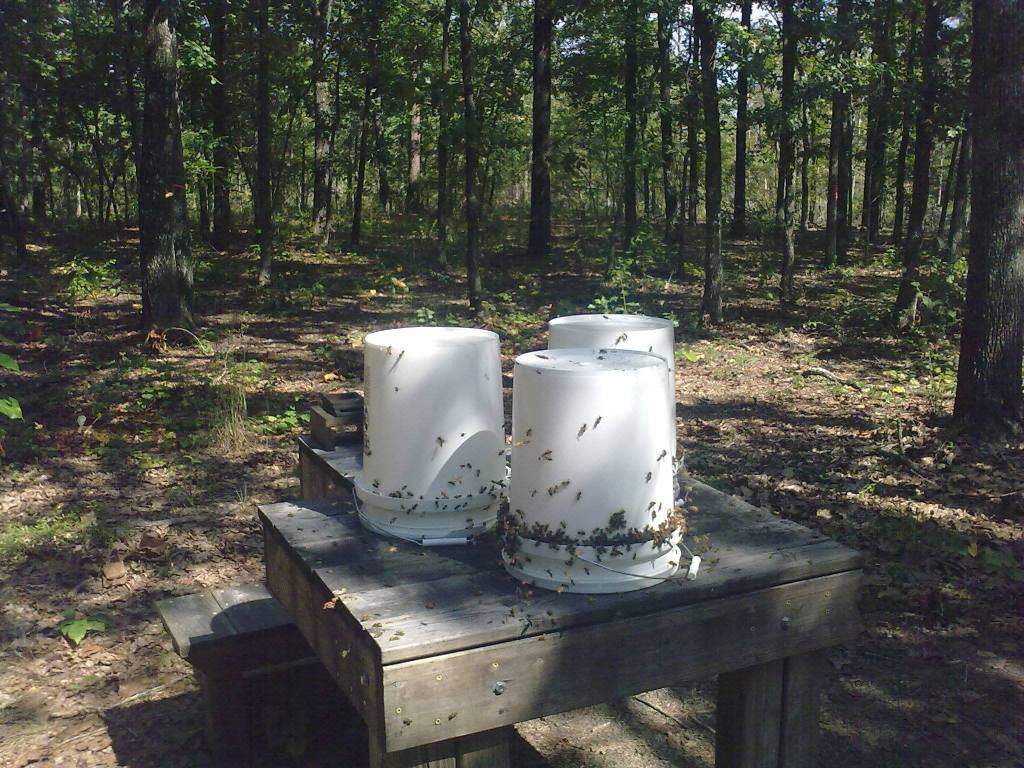
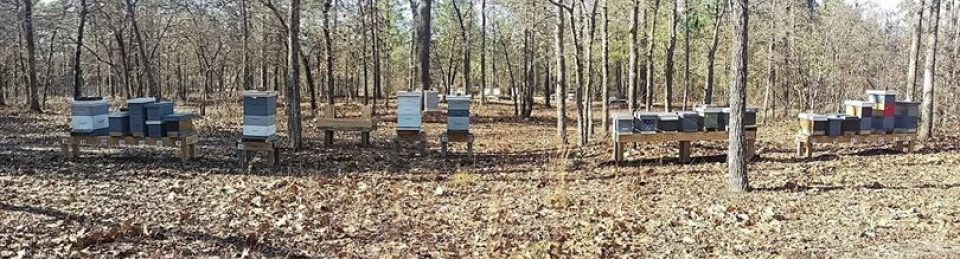
What a fun time and learning experience feeding the bees in preparation for fall and winter.
30 Wednesday Sep 2026
Posted in beekeeping, feeding bees
Tags
What a fun time and learning experience feeding the bees in preparation for fall and winter.
14 Friday Sep 2018
Posted in beekeeping, feeding bees, honey bee nutrition

More and more it’s pointing to nutrition to help us save our bees.
~ sassafrasbeefarm
Researchers have discovered that honey bees alter their diet of nutrients according to the season. A spike in calcium consumption in the fall, and high intake of potassium, help prepare the bees for colder months when they likely need those minerals to generate warmth. A careful inventory of the bees’ nutrient intake revealed shifting sources and how limitations in nutrient availability from these sources can have implications for the health of both managed and wild colonies.
Read full article here: Bees adjust to seasons with nutrients in flowers and ‘dirty water’ — Save The Bees Concert
31 Friday Aug 2018
Posted in bee health, beekeeping, beekeeping management, feeding bees, pollen

As with all living creatures, good nutrition is essential for a healthy bee colony. Many beekeepers focus mainly on the amount of liquid stores (honey/nectar reserves). However, pollen is just as important, yet it’s often overlooked.
A key part of beekeeping is learning to “read” what the colony is telling you.
During each inspection, make it a habit to look into a few cells containing freshly hatched larvae—about 4–5 days after egg laying. What you see can reveal whether the colony has enough nutrition coming in:
If this kind of observation were taught more widely, new beekeepers would learn faster and with more confidence.
Pollen quality varies depending on the plant source. In general, colonies do best when they receive a wide variety of pollen types, because diversity supports healthier nutrition.
When inspecting, take note of the color of the pollen:
Low nutrition doesn’t always mean the colony lacks pollen and nectar in the landscape. Sometimes the real issue is internal:
Colonies that don’t get adequate nutrition become more vulnerable to disease, including:
These problems are often more common in spring, when the colony may not have enough nurse bees available to properly feed larvae.
There’s plenty more available on the internet. The key is to:
20 Wednesday Jun 2018
Posted in beekeeping, beekeeping management, feeding bees, management
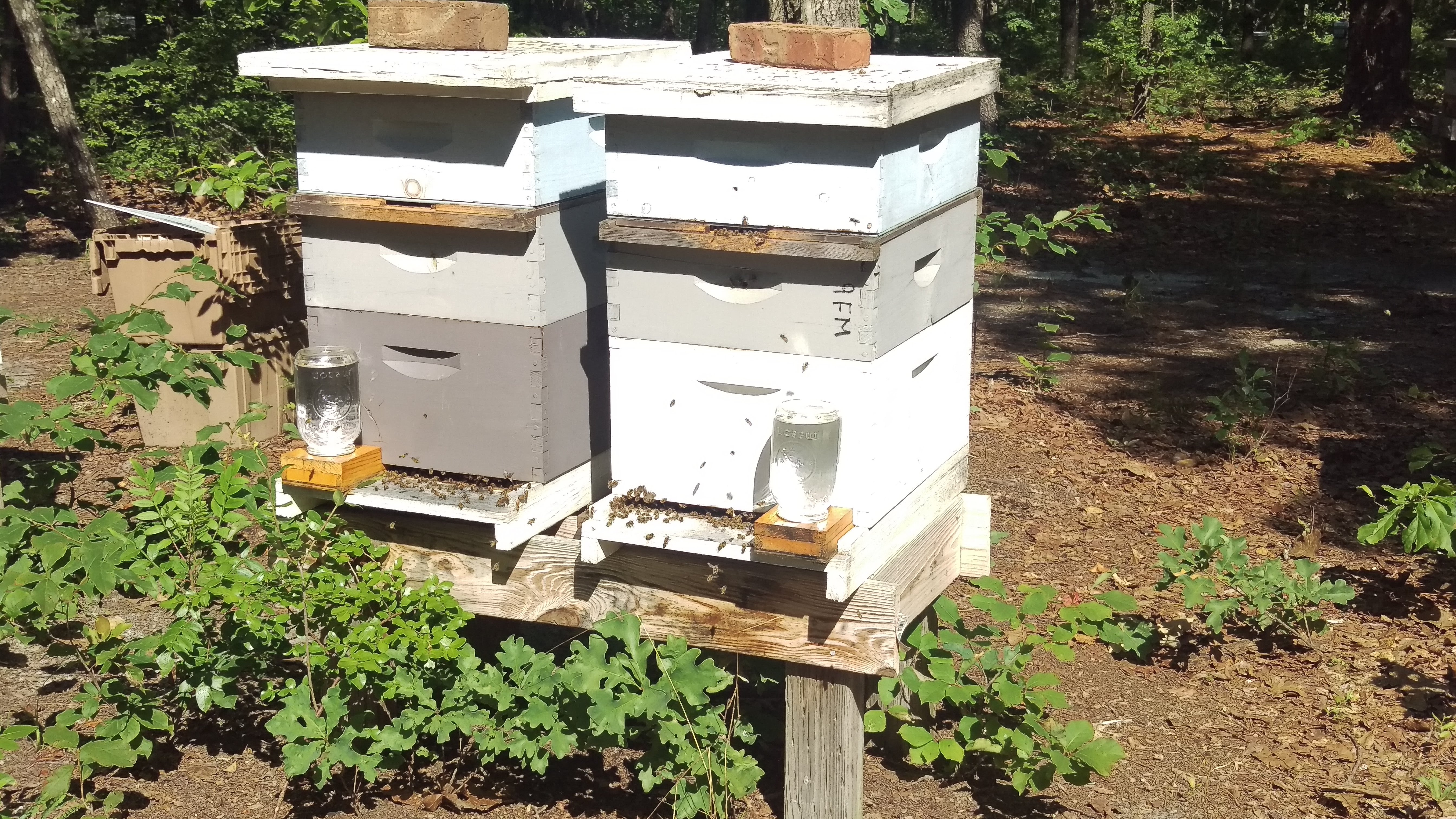
Water in Boardman feeders.
Based on my own experience, and in talking with others, honey removal places an additional stress on the colonies. And, if you think about it, it does so in several ways. Of course we just took away much of their stores. Often we have taken apart their entire structure and rearranged the order they had created. The scent of torn honey combs may have caused some robbers to investigate which necessitated defense of the colony. Simple removal of a hive body changes the thermodynamics and ventilation characteristics. And on top of it all we have done all this at the beginning of one of the most stressful times of the year – dearth and pest season.
I’ve lost colonies within a month of harvesting in prior years. It may have been because of mites or robbing and simply coincided with harvest but regardless, the stress of harvesting played into their inability to maintain the healthy state they were in prior to my disruption.
So, back to my original question, What have you done for me lately? Or more appropriately, What have you done for your bees lately?
Are you providing ventilation to allow them to cool the hive? Screen bottom boards? Small upper entrances to allow air flow? Popsicle sticks under the outer cover? We know they are working hard to cool the hive as evidenced by water gathering. Are you making it easy for them to gather water?
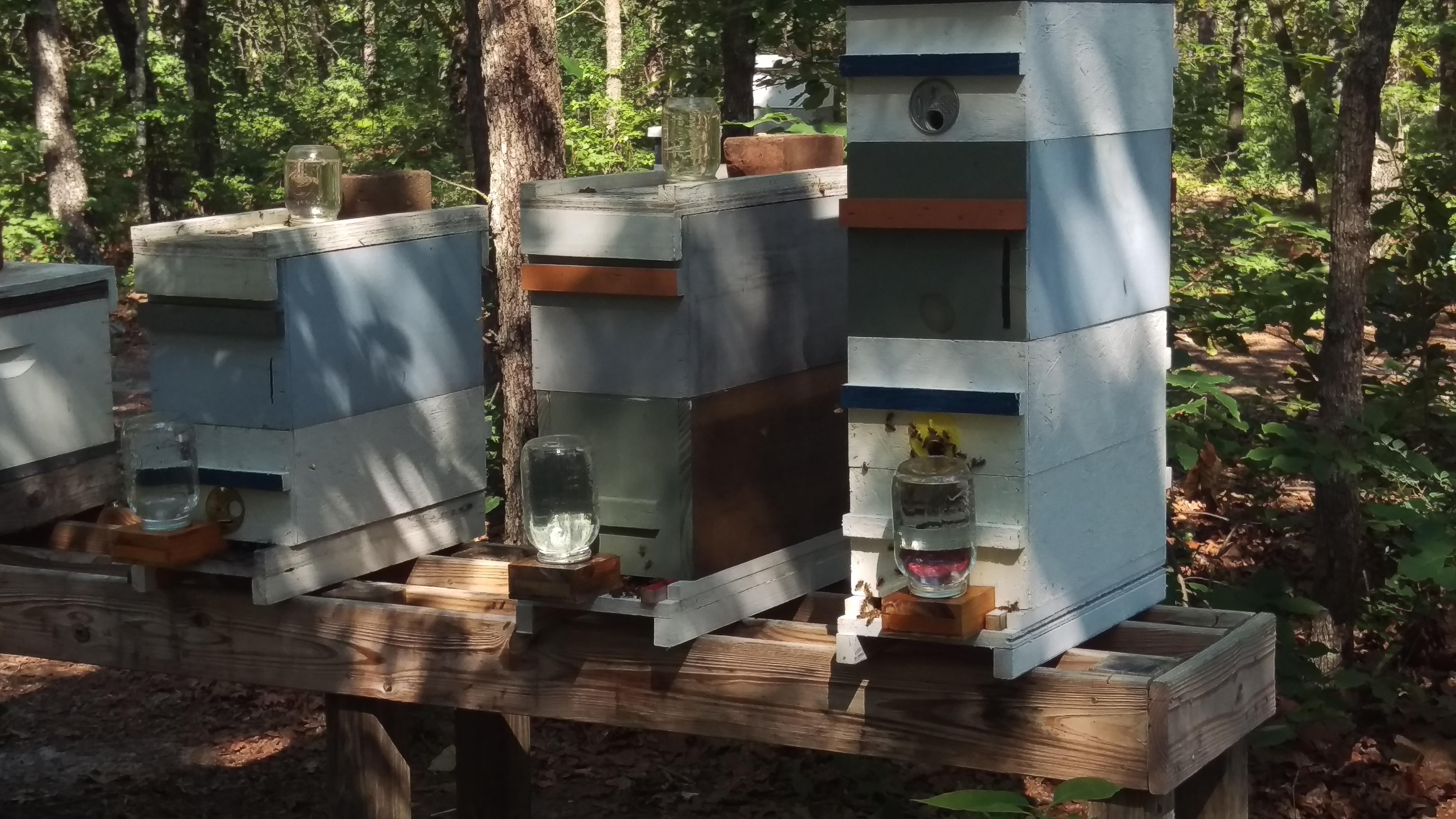
Syrup on top where it can be protected and not start robbing.
Are you giving them some syrup to replace some of the stores you took? You might say that you left adequate stores on the hive but would access to a little feeding of light syrup not be welcomed rather than having them gather water and reconstitute honey left on the hive? Remember honey harvest occurs at a peek in colony population and brood rearing and they are consuming lots of carbohydrate while unfortunately nectar flow has just dropped off so they must now take on the additional job of diluting honey and using it to feed the larvae along with all the other tasks.
Are you monitoring for hive beetles? I’ve already found a few in smaller nucs. Stronger hives seem to still have them well managed in my apiary. Soon it will be yet another job for them to guard and corral the SHBs.
Have you made adjustments in the size of your hive? You may need to add a hive body or remove one depending on the colony population.
Assess for mites. I checked my mites in early June to be ready for action after harvest. I’ve already completed my second OAV treatment and can see an increase in the enthusiasm of the bees already as the mite load begins to drop. This management of the mites means the bees can do more for themselves by lowering their stress levels so that they can perform the many other jobs they have to do.
It’s hot outside and it can be difficult to motivate yourself to get out and work your bees like you did in the spring. Regardless, your bees need you more than ever right now. Hopefully they are strong and will be able to handle the many challenges awaiting them through dearth, pest season, and ultimately winter. As beekeepers we know that last minute preparations rarely yield the results we want, so we must find a way to work with them now rather than later. Try getting out early in the morning while it’s still cool. I recommend you do as the bees do this time of year – get out and get your work done early and stay home and dance after it gets hot. I’ve found the bees gentle in the early hours recently. Most foragers are out early to gather the nectar produced overnight and the house bees are cordial enough. Limit your inspections to ensuring they have what they need and are well. Lower their stress levels with some ventilation, feed, water, mite and SHB control, and they will do the rest.
Pictures above show thin syrup on top (protected) and water in Boardman feeders.
05 Tuesday Jun 2018
Posted in beekeeping, feeding bees, management
Tags
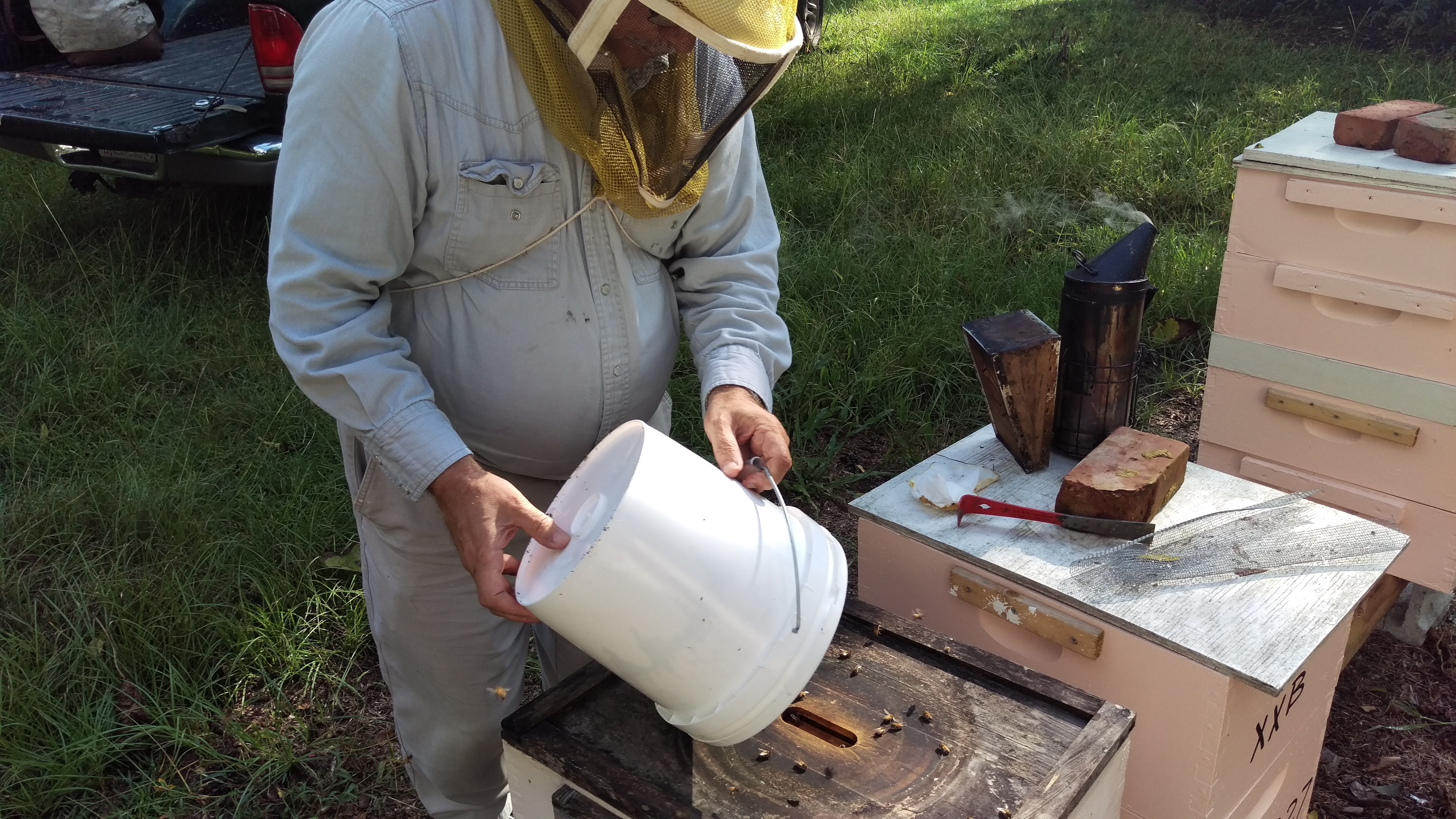
Picture courtesy David MacFawn
To feed or not to feed…
If they have enough honey you don’t have to feed. We tell new beekeepers to feed because they need to build comb and often their colonies have not stored enough to weather the dearth period, and ultimately the coming winter. Remember, your bees may eat up a lot of what they have stored during our long Midlands dearth period. Fall nectar flow is often minimal in the Midlands and not to be relied on. If your hive has already built out enough comb and filled it with stores then the decision is yours.
As with most things in beekeeping, try to look forward at least a couple months. If your bees have plenty right now then they won’t starve over dearth but keep a close eye on their stores as dearth progresses. You may find they have eaten up much of what they have stored by late summer. That’s fine and you’ll still have time to feed if necessary before cold weather. However, ignoring them and waiting until the winter is imminent will not give them time to ripen (reduce moisture) syrup given too late in the season so plan accordingly and always look forward a couple months.
Other factors: If you have a weak hive sitting in close proximity to strong hives they may be robbed by the stronger hives. The past few years I have used open feeding at a distance from the hives to give the bees something to gather. The stronger hives seem to dominate the open feeders and I get the impression I’m paying off the stronger hives to prevent them from robbing the weaker. Oh, well.
We had a commercial beekeeper speak at a meeting a few years ago that said he open feeds with buckets but severely limits the amount of feed available by limiting the number of holes on the bottom of the feeder to just a few. The bees know feed is there and work the feeder but it takes a while to drain the feeder. I’ve tried doing this but at some point the limited access creates rather brutal fighting for the syrup. It’s an unpleasant sight.
Fat Bee Man feeds on the hive but limits the number of holes in the lid. He uses a staple gun to punch two small holes in the lid. That, he says, provides them with enough feed to maintain the hive without causing excessive storage of feed or overstimulating brood rearing.
How much is enough? I’ve asked this question to some of our more experienced beekeepers in our association. The reply I have heard most frequently for hive maintainance and to sustain the hive is a quart a week. Of course, it also depends on your goals for the hive. If you made a split then you’ll have to offer them as much as they want. The quart a week is more of a maintainance amount for a typical hive to sustain them over summer dearth.
I spoke with a member at last night’s meeting that has hives at quite a drive from his home. He’s going to try open feeding with a bucket after having a recent small disaster feeding on the hive. I can’t remember the whole situation. I think he may have been using boardman feeders and essential oil mix in the feed. He mentioned he thought that the essential oil might be a mistake when he used it but did so anyway. Yes, it caused robbing. There is, perhaps, a time for feed stimulation but during dearth, when food is scarce is not a time to tempt strong hives to rob weaker hives.
If you want to start feeding do so when they stop bringing in nectar or if they need food based on your assessment of their stores. You can tell if they are bringing in nectar by the way they fly, coming and going at the entrance, and if they are storing nectar in the hive. You can also tell by activity at the hive entrance when the nectar has played out for the day by lack of flying as the day progresses. Yet another test can be made by placing a quart jar with syrup at some distance from the hives (far enough so as to not cause a feeding frenzy around your hives). If the bees show strong interest in the test jar then they are obviously hungry because nectar is far more attractive than sugar syrup. Also, some people with an acute eye for such things can see fat bees returning home with payloads of nectar. Make your best judgement as to whether you need to feed, and how to feed, based on your individual situation.
03 Tuesday Oct 2017
Posted in beekeeping, biology, honey bee biology
@AuburnAg‘s Bee Lab and biologists from @acadiauniversity recently published a paper in the journal Ecology & Evolution about the quality of food encountered by bees in agro-ecosystems.
Unsurprisingly, diet quality and pesticide exposure heavily depends on crop type!
Check out the full Open Access article here!
27 Tuesday Jun 2017
Posted in beekeeping, beekeeping seasons, feeding bees, management, seasons
Tags
Good information contained here no matter where in this world you are living.

The National Bee Unit has just issued a starvation alert for parts of the UK. Here in Oxfordshire, we’ve had a great start to the year, the bees have boomed, hives were heavy with stores early in the year and swarms began about a month early. There are many flowers visible to the eye. So why do we need to worry?
The short answer is lack of rainfall. For some weeks we’ve had relentless sun and heat, which is lovely up to a point, but plants need water to make nectar. Without rain, that blossom is empty. Conversely, in some years we have excessive rain extending throughout peak forage periods, which can hinder nectar production in key plants.
And even if a hive has honey stored, bees can’t eat pure honey. They need to dilute it to make it digestible, so they need a water source not just for cooling…
View original post 743 more words
15 Thursday Jun 2017
Posted in beekeeping, feeding bees, honey bee biology

Amino Acids are building blocks of proteins. All amino acids are comprised of 4 groups. The first three are common in all amino acids. They are: Alpha Carbon (C-H) Amine Group (N-H-H) Carboxyl Group (O-C-OH) The last is the R Group. The R Groups are what defines the individual amino acids. Some are polar […]
To read more visit: Amino Acids —
17 Tuesday Jan 2017
Posted in beekeeping, feeding bees, management
Tags
Note: All beekeeping is local. Here in South Carolina we are able to use syrups both longer and sooner than those in more northern climates. Adjust your use of according to your climate.
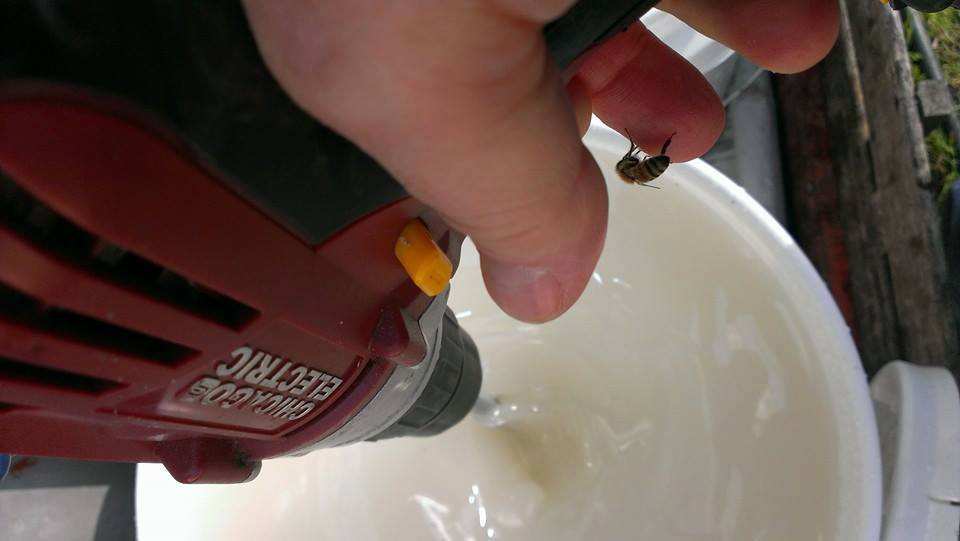
I had some help stirring some syrup today! This time of year you want to feed close to the cluster yet not introduce too much moisture into the hive. A 2:1 sugar to water mix is best.
To get it close to the colony you an feed above the cluster via a bucket placed overhead on top of the frames or a similar setup with a jar through the inner cover hole.

