• Sassafras Bee Farm
  • About
  • Contact

Beekeeping365

~ The more I studied beekeeping, the less I knew, until, finally, I knew nothing. But, even though I knew nothing, I still had plenty to unlearn. Charles Martin Simon

Beekeeping365

Daily Archives: October 2, 2026

What Bees Actually Smell When They Choose a Home

02 Friday Oct 2026

Posted by Beekeeping365 in beekeeping

≈ Leave a comment

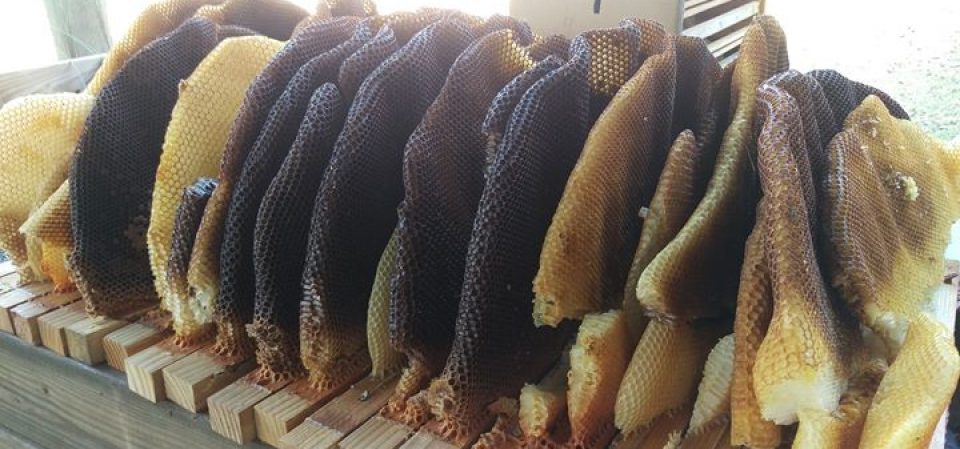
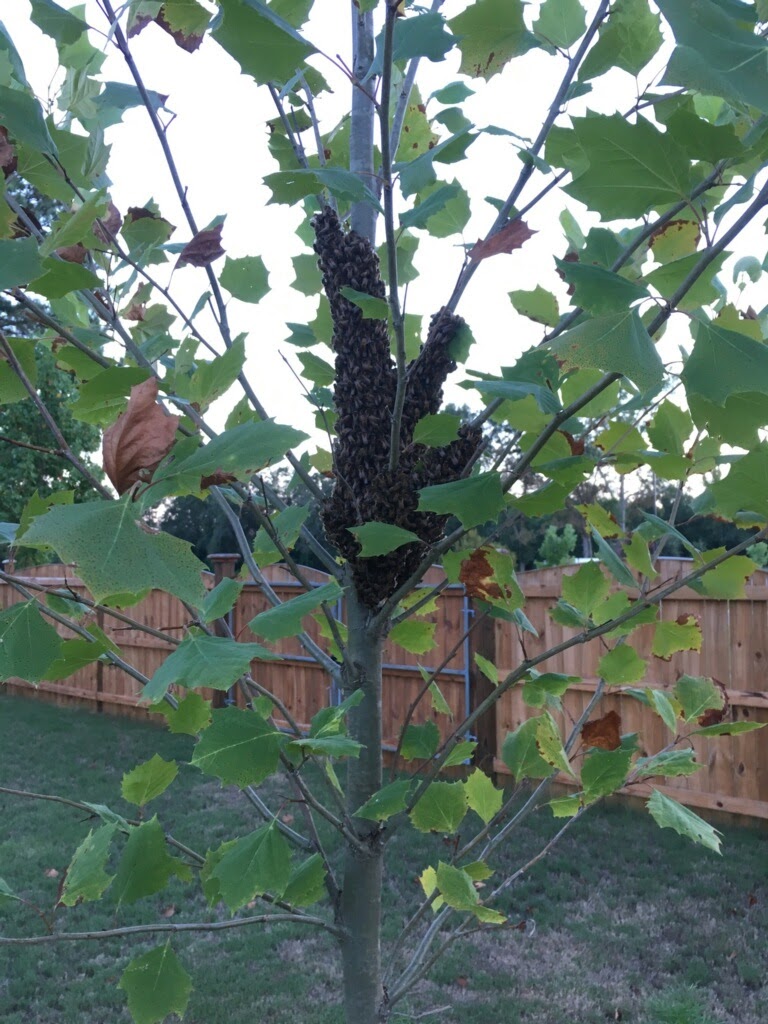
Every beekeeper eventually arrives at the same irritating discovery: the fanciest lure on the market gets outperformed by an old, unwashed hive body that you didn’t want to clean. It isn’t superstition. Scout bees house-hunting for swarm are running a chemical audit, and an old brood comb has already passed it. Years of larvae, cocoon silk, propolis, and beeswax leave behind a residue of fatty acids and aromatic compounds that read, to a bee’s antennae, as “colony here, safely, for a long time.” A fresh bait box with a dab of lemongrass oil is a hopeful advertisement. An old hive full of drawn comb is a track record. That your old, blowtorch-scheduled hive keeps getting occupied before you can sterilize it isn’t bad luck so much as the bees reading the listing correctly.

The chemistry underneath both the folk methods and the modern lures traces back to one gland: the Nasonov gland, tucked at the tip of a worker’s abdomen. When a forager finds something worth telling the colony about — a good forage patch, or a promising cavity for a swarm to move into — she fans this pheromone to draw her sisters in. Its main components are citral (a mix of geranial and neral), plus geraniol and small amounts of nerolic and geranic acid — a lemony, slightly rosy blend. That’s precisely why lemongrass oil, rich in citral and geraniol, works as well as it does: it’s not masking the bees’ own signal, it’s counterfeiting it convincingly enough that scouts treat the box as pre-vetted by one of their own. Lemongrass-based lures show up across the literature and the hobbyist world alike, from Peru to Europe, to the swarm-trapping forums, and it’s the active ingredient in most commercial lures.

The the Middle East, tradition has a longer paper trail than most. Melissa officinalis — lemon balm — carries a name that is itself a fossil of this practice: “melissophyllon,” bee-leaf, a term used by classical writers describing beekeepers rubbing the herb inside empty skeps to draw swarms in, a habit that persisted through Ottoman and Persian beekeeping into more recent village practice. Its citronellal and geraniol content puts it in the same chemical family as lemongrass, which is presumably why it works by the same mechanism. Firing the traps and letting the oils soak into porous clay or willow is a reasonable way to make a short-lived scent last through a whole scouting season, since the wood or clay becomes a slow-release reservoir rather than a one-time spritz.

In Japan, the orchid genus Cymbidium includes species Cymbidium floribundum that attracts the Japanese honey bee by producing 3-hydroxyoctanoic acid and 10-hydroxy-(E)-2-decenoic acid. That second compound, 10-HDA, is the single most abundant component of queen mandibular pheromone: it’s part of the chemical signature a colony uses to recognize “queen present, all is well.” The orchid isn’t quite mimicking a swarm-aggregation call so much as borrowing a fragment of the queen’s own scent to get workers to visit.

Every lure, from a $30 can of commercial swarm attractant, to a Peruvian handful of lemongrass, to your own home recipe, is trying to counterfeit the one thing you can’t fake — a cavity that has already proven itself. The bees are not swayed by marketing. They’re swayed by evidence, and your old comb has more of it than anything you can buy.

Feel free to share this on:

  • Share on Facebook (Opens in new window) Facebook
  • Share on X (Opens in new window) X
  • Share on Pinterest (Opens in new window) Pinterest
  • Email a link to a friend (Opens in new window) Email
  • Share on LinkedIn (Opens in new window) LinkedIn
  • Share on Reddit (Opens in new window) Reddit
  • Share on Tumblr (Opens in new window) Tumblr
  • Print (Opens in new window) Print
  • Share on Telegram (Opens in new window) Telegram
  • Share on WhatsApp (Opens in new window) WhatsApp
Like Loading...
Follow Beekeeping365 on WordPress.com

Enter your email address to follow this blog and receive notifications of new posts by email.

Calendar

October 2026
S M T W T F S
 123
45678910
11121314151617
18192021222324
25262728293031
« Sep    

Posts by Month:

  • October 2026 (4)
  • September 2026 (32)
  • August 2026 (6)
  • July 2026 (1)
  • May 2026 (2)
  • January 2026 (3)
  • July 2025 (1)
  • April 2024 (1)
  • July 2022 (1)
  • March 2022 (13)
  • February 2022 (17)
  • January 2022 (4)
  • December 2021 (4)
  • November 2021 (7)
  • October 2021 (1)
  • August 2021 (11)
  • July 2021 (18)
  • June 2021 (5)
  • May 2021 (2)
  • April 2021 (9)
  • March 2021 (2)
  • February 2021 (5)
  • January 2021 (16)
  • December 2020 (15)
  • November 2020 (15)
  • October 2020 (11)
  • July 2020 (1)
  • February 2020 (1)
  • March 2019 (2)
  • February 2019 (4)
  • January 2019 (1)
  • December 2018 (10)
  • November 2018 (8)
  • October 2018 (15)
  • September 2018 (18)
  • August 2018 (3)
  • July 2018 (11)
  • June 2018 (27)
  • May 2018 (33)
  • April 2018 (20)
  • March 2018 (20)
  • February 2018 (12)
  • January 2018 (22)
  • December 2017 (18)
  • November 2017 (17)
  • October 2017 (19)
  • September 2017 (17)
  • August 2017 (21)
  • July 2017 (29)
  • June 2017 (28)
  • May 2017 (19)
  • April 2017 (17)
  • March 2017 (19)
  • February 2017 (12)
  • January 2017 (13)
  • December 2016 (5)

Posts by Categories:

  • absconding (1)
  • africanized honey bees (1)
  • apitherapy (1)
  • bee health (7)
  • bee law (2)
  • bee lining (2)
  • bee removals (2)
  • beekeeper (5)
  • beekeeper education (17)
  • beekeeping (620)
    • South Carolina (4)
  • beekeeping author (10)
  • beekeeping books (14)
  • beekeeping calendar (6)
  • beekeeping chores (9)
  • beekeeping equipment (25)
  • beekeeping history (49)
  • beekeeping management (37)
  • beekeeping pest management (9)
  • beekeeping seasons (26)
  • beekeeping vocabulary (16)
  • beeswax (13)
  • biography (5)
  • biology (12)
  • birthday (39)
  • birthdays (33)
  • book review (16)
  • breakfast (1)
  • calendar (6)
  • CCD (1)
  • chores (6)
  • comb (7)
  • comb honey (10)
  • commercial beekeeping (2)
  • cutouts (2)
  • dearth (4)
  • defensiveness (1)
  • diseases (9)
  • drawn comb (6)
  • ecology (4)
  • education (29)
  • equipment (23)
  • extracting (1)
  • fall nectar flow (1)
  • famous beekeepers (27)
  • feeding bees (8)
  • first blog entry (1)
  • folklore (1)
  • food (7)
  • forage (4)
  • hacks (3)
  • hive inspections (7)
  • hive placement (2)
  • hive products (6)
  • honey (87)
  • honey as food (22)
  • honey bee anatomy (3)
  • honey bee behavior (24)
  • honey bee biology (42)
  • honey bee genetics (4)
  • honey bee losses (1)
  • honey bee nutrition (1)
  • honey bee photos (6)
  • Honey Bee Research (1)
  • honey bee vocabulary (12)
  • honey bees (14)
  • honey judging (4)
  • honey recipe (65)
  • humor (13)
  • inspections (10)
  • journal (1)
  • log book (1)
  • making increase (3)
  • management (84)
  • mentoring (2)
  • mites (4)
  • national pollinator week (2)
  • nectar flow (6)
  • nomenclature (1)
  • opinion (8)
  • out yards (1)
  • outyards (2)
  • package bees (2)
  • pears (1)
  • pests (16)
  • plants for bees (3)
  • polish (1)
  • pollen (4)
  • pollination (11)
  • pollinators (7)
  • product review (1)
  • production (1)
  • products (3)
  • propolis (2)
  • queens (17)
  • raw honey (6)
  • recipe (88)
  • removals (1)
  • safety (3)
  • sales (2)
  • season (1)
  • seasons (21)
  • sideliner (1)
  • small hive beetles (1)
  • spring buildup (4)
  • state fair (2)
  • sustainable (8)
  • swarms (27)
  • ursurpation (1)
  • usurpation (1)
  • varroa (21)
  • varroa destructor (12)
  • varroa mites (24)
  • Winter (6)
  • winter solstice (2)
  • woodenware (3)
  • yellow jackets (2)

Sassafras Bee Farm on Facebook

Sassafras Bee Farm on Facebook

Sassafras Bee Farm

Sassafras Bee Farm

Recent Posts

  • How to Succeed in Beekeeping
  • What Bees Actually Smell When They Choose a Home
  • Midlands Beekeeping Calendar for October
  • Seasonal Beekeeping Guidebook for the South Carolina Midlands
  • Feeding Bees for Winter

Beekeeping365 on Facebook

Beekeeping365 on Facebook

Top Posts & Pages

  • Waxing frame foundation - one of many winter tasks
    Waxing frame foundation - one of many winter tasks
  • Many Uses of Beeswax
    Many Uses of Beeswax
  • It's Bee Lining Time
    It's Bee Lining Time

Blog Stats

  • 144,577 hits

Website Built with WordPress.com.

  • Subscribe Subscribed
    Beekeeping365
    Join 417 other subscribers

    Have a WordPress.com account? Log in now.

  • Beekeeping365
    View site in Reader
    Manage subscriptionsSign upLog in
    Report this content
    Collapse this bar
Loading Comments...
%d