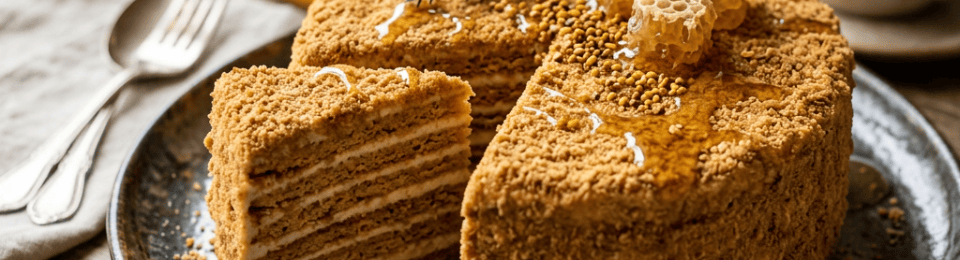
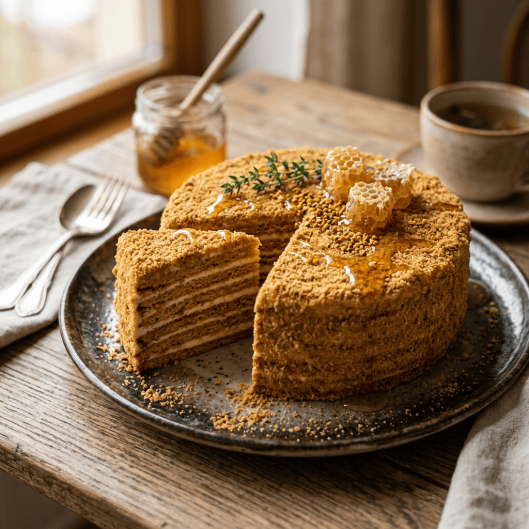
My son Danny called from Albuquerque the other day. We talked about the food of New Mexico, red and green chiles, and a dozen other things that didn’t need to go anywhere. Then he told me about a bakery.
It keeps short hours, eleven to three. There are tables, and a case full of pastries and breads, and people line up before the door opens. Here is the part that stayed with me: they bake one cake a day. One. Anyone can buy as much of it as they like. When it’s gone, it’s gone.
Danny got there at noon. I asked him if he got any cake. He said no. The case was empty.
I have thought about that empty case more than a cake probably deserves.
The Baker’s Discipline
Consider what the baker faces every morning. A line at the door is an argument, and a persuasive one. It says: you could sell more. Bake three. Bake ten. Nobody would call that greed. Most of us would do it and call it good business.
They don’t. The owner has decided what the work is, and will not let the length of the line redefine it. They aren’t in the business of meeting demand. They are in the business of making a cake. Those sound like the same thing until the line gets long enough to test the difference.
Marcus Aurelius reminded himself that if he wanted tranquility, he should do less: only what is necessary and do that properly. Most of what we say and do, he noticed, isn’t necessary at all, and cutting it away gives us both more ease and more time. I suspect the baker arrived at the same place by way of flour and butter. One cake means one set of hands paying full attention. The oven isn’t crowded. The batter isn’t rushed. The recipe isn’t quietly bent to survive a bigger batch. The cake is what it is because there is only one.
Seneca warned his friend Lucilius that a man who is everywhere is nowhere. He was talking about reading, about skipping from book to book and never digesting any of them, but it holds for making things too. A baker who tries to be everything to everyone ends up with a case full of cakes that are each a little less than they could have been. Refusal to bake more isn’t doing more. It is integrity.
The Empty Case
Now the other side of the counter, where Danny stood at noon.
Epictetus tells us to conduct ourselves in life as we would at a banquet. A dish comes around. If it reaches you, take a modest portion. If it passes you by, don’t reach after it. If it hasn’t come to you yet, don’t strain toward it with your appetite. Wait your turn. Treat everything this way, he says, and you will be a worthy guest of the gods.
That bakery is Epictetus’s banquet made literal. The dish came around once, sometime before noon, and Danny wasn’t at the table.
The bakery’s decision was never his to make. The hour he arrived was. His response to the empty case certainly was. He could take it as an injury, a failure of service, something done to him. Or he could see it for what it is: a condition announced in advance and applied to everyone alike. That is the line Epictetus drew through all of life, between what is up to us and what is not. Most of our unhappiness, he taught, comes from confusing the two.
There is a gift in the empty case as well. When a thing is always available, we stop seeing it. A cake in endless supply is just a cake. A cake that exists once a day, and can be missed, becomes something you notice, plan for, and are grateful for when you get it. The Stoics practiced imagining the loss of good things, not to make themselves gloomy, but so they would value those things properly while they had them. The bakery performs that exercise for its customers without anyone having to try. Everyone in that line knows the cake can run out. That knowledge is part of the flavor.
The Bee Yard
I have kept bees for sixteen years, and I recognized that bakery right away. My bees run on the same terms.
A colony gives what the season gives. Down at the Congaree yard, when the tupelo blooms on the floodplain, the bees work it hard, and for a few weeks there is more nectar coming in than they seem to know what to do with. Eight miles west, at the home yard in the Sandhills, among scrub oak and tall pines on poor sandy soil, it is a leaner living. And by early June here in the Midlands, the dearth sets in. The flowers are done. The case is empty.
No amount of wanting changes that. I can manage my hives well. I can keep them strong, give them room, watch for trouble. But I cannot talk a colony into more honey than the flowers offered. A beekeeper who pushes for yield at any cost, who takes too much and leaves the bees short going into winter, may have a bigger harvest this year. He usually has weaker bees the next. That is production at the expense of the very thing doing the producing. It is the tenth cake, rushed out of a crowded oven.
The good harvest is the one taken with respect for what the hive is. I take what the bees can spare and leave them what they need. Some years that is a generous share. Some years it is very little. Tupelo honey, like that one cake, comes once a season. When it’s gone, it’s gone, and there is no baking more of it until the trees bloom again.
The bees, for their part, don’t fret the dearth. When the flow stops, they tighten up. They guard the entrance, rob if they can, and live on what they have stored. They don’t rage at the empty fields. They accept the season they have been given and do the work in front of them. I have learned a good deal of Stoicism standing beside a hive, and much of it came from watching them do exactly that.
As their keeper I am a guest at the same banquet Epictetus described. The flow comes around. I take a modest portion. When it passes, I don’t grab after it. I wait for the next spring.
Tomorrow’s Cake
Danny didn’t get any cake. But he came away with something, and he passed it along to me, and now it has become a meditation. I expect that next time he will be in line at a quarter to eleven.
And if he is late again, there is always tomorrow’s cake, the way there is always next spring’s tupelo. One at a time, made well, and gone when it’s gone.

