• Sassafras Bee Farm
  • About
  • Contact

Beekeeping365

~ The more I studied beekeeping, the less I knew, until, finally, I knew nothing. But, even though I knew nothing, I still had plenty to unlearn. Charles Martin Simon

Beekeeping365

Daily Archives: January 26, 2017

To Bee Or Not To Bee?

26 Thursday Jan 2017

Posted by Beekeeping365 in beekeeping, beekeeping seasons, seasons

≈ Leave a comment

Tags

beekeeping, seasons

Source:  To Bee Or Not To Bee? — Big Dreams for a Tiny Garden

img_0602-2

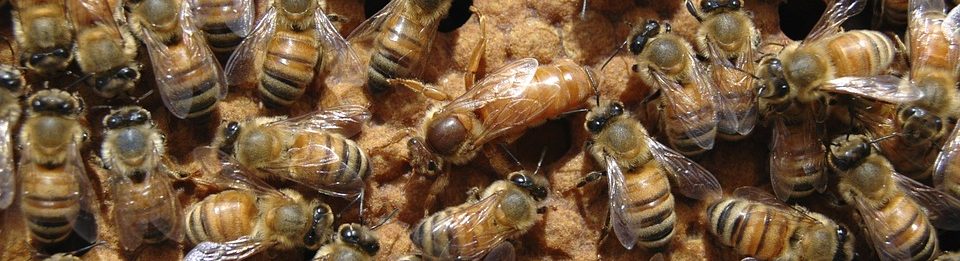
Alright, so the title is a little cheesy. But the question does remain. Where would we be without bees?

The gardens of my childhood were filled with bees. Hot summer afternoons in gardens buzzing with their industry. Lying on our backs in the clover, we marvelled at their meandering flight paths, little back legs bundled with yellow pollen. Our raids on the strawberry patch were more deliciously dangerous for the possibility of being stung. When the inevitable happened we endured the pain of having the sting carefully scraped from throbbing limb with a knife. A paste of bicarbonate of soda and water slathered on the wound followed, to soothe the sting. After which we suffered a parental lecture about the poor bee losing its life as a consequence of our carelessness, since they die shortly after delivering that venomous barb.

And honey sandwiches! Who could forget the real honey of our childhoods?

Ahh, those idyllic bee-ful days of my childhood!

A dear friend started me on this path down memory lane recently when she suggested I look at the important role bees play in plant fertilisation.

So, where are they now? What’s going on? Even Spring in my tiny garden doesn’t deliver on the childhood promise of swarms of bees, nor butterflies for that matter, but that’s for another post. Why does it matter?

Bees and fertilization 

It matters because bees are prolific pollinators, playing a huge role in the fertilisation of flowers, vegetables and other food crops.  I’m sure I’m not telling you something you don’t already know.

But did you know that European honey bees (Apis mellifera) [introduced to Australia around 1822] are incredibly productive? A single colony can easily contain 10,000-60,000 working bees. Each female worker lives for roughly a month and is so effective at pollination that she may forage more than 500 flowers in a round trip. A single bee may range as far as 10km in the search for pollen and nectar. No wonder they say ‘as busy as a bee!’

Furthermore, the familiar European honey bee is not the only kid on the fertilisation block. More recently, attention is being drawn to our native Australian bees. I discovered to my amazement that in Australia we have over 1,600 species of native bee with endearing names like the Teddy Bear and Blue Banded bee, some of which I’ve seen around our local park Callistemons or Bottlebrush (below). They’re an important pollinator for our unique flora.

IMG_0487 (1)

Increasingly our native bees, like the stingless varieties (genera Tetragonula – previously called Trigona – and Austroplebeia), are also proving to be valuable pollinators of crops such as macadamias, mangos, watermelons and lychees . Their impressive effectiveness as pollinators has even seen them employed by pollination services for commercial growers of these crops. Some native bees have the added advantage of being ‘buzz pollinators’ whereby the vibration of their wings facilitates fertilisation, a feat almost impossible for honey bees.

What’s the reason for the global bee decline?

It appears there’s not one single factor. Dr Les Davies, Chief Regulatory Scientist from APVMA, suggests ‘mutiple interacting pressures which may include habitat loss and disappearance of floral resources, honeybee nutrition, climate change, bee pests and pathogens [like Colony Collapse Disorder (CCD) which has wiped out millions of bees in North America], miticides and other chemicals intentionally used in hives and bee husbandry practices, as well as agricultural pesticides,’ are possible factors in the decline of bees. He makes a strong case for being informed about what we spray on our gardens [if this is a path we choose], advocating ‘a need to ensure that a range of regulatory, industry stewardship and educational measures are in place,’ to reduce the risks from pesticides.

My role as a gardener

We all have a stake in maintaining our bio system. When it comes to  ‘bee-ing’ a successful gardener, a bit of research has turned up  a number of ways I can contribute. It makes sense to plant any garden with bees in mind. A mix of flowers among the vegies will ensure bees are attracted to the garden and will do their bit to ensure bountiful fruit and vegetable crops.

I will be even more mindful of using chemicals in the garden after reading up on bees. While I’ve always preferred natural pest control, heeding Dr Davies’ advice of being more informed about the sprays, fungicides and other chemical products for garden use seems crucial. Especially given I consume the crops I grow, along with a variety of other insects and useful micro organisms who dine on my garden.

“If the bee disappeared off the face of the earth, man would only have four years left to live.”
― Maurice Maeterlinck, The Life of the Bee

References

Healthy Gardens
Read more at http://www.yates.com.au/healthy-gardens-need-healthy-bees/#r6Wma0Yg8TwPdexW.99

The travesty of imported honey  http://www.tastyhoney.com/blog/honey/australian-honey-imports-from-china-hit-new-record-high/

How to attract bees  http://www.yates.com.au/healthy-gardens-need-healthy-bees/#lwW0XsGMCMLsLbz9.97

Honeybee Research http://www.rirdc.gov.au/research-programs/animal-industries/honeybee

Medicinal Benefits of Honey  http://www.abc.net.au/science/articles/2013/02/14/3689565.htm

Bee Biology Research 

http://www.smithsonianmag.com/science-nature/the-secret-life-of-bees-99559587/?no-ist

via To Bee Or Not To Bee? — Big Dreams for a Tiny Garden

Feel free to share this on:

  • Share on Facebook (Opens in new window) Facebook
  • Share on X (Opens in new window) X
  • Share on Pinterest (Opens in new window) Pinterest
  • Email a link to a friend (Opens in new window) Email
  • Share on LinkedIn (Opens in new window) LinkedIn
  • Share on Reddit (Opens in new window) Reddit
  • Share on Tumblr (Opens in new window) Tumblr
  • Print (Opens in new window) Print
  • Share on Telegram (Opens in new window) Telegram
  • Share on WhatsApp (Opens in new window) WhatsApp
Like Loading...
Follow Beekeeping365 on WordPress.com

Enter your email address to follow this blog and receive notifications of new posts by email.

Calendar

January 2017
S M T W T F S
1234567
891011121314
15161718192021
22232425262728
293031  
« Dec   Feb »

Posts by Month:

  • August 2026 (4)
  • July 2026 (1)
  • May 2026 (2)
  • January 2026 (3)
  • July 2025 (1)
  • April 2024 (1)
  • September 2022 (1)
  • July 2022 (1)
  • March 2022 (13)
  • February 2022 (17)
  • January 2022 (4)
  • December 2021 (4)
  • November 2021 (7)
  • October 2021 (1)
  • September 2021 (3)
  • August 2021 (11)
  • July 2021 (18)
  • June 2021 (5)
  • May 2021 (2)
  • April 2021 (9)
  • March 2021 (2)
  • February 2021 (5)
  • January 2021 (16)
  • December 2020 (15)
  • November 2020 (15)
  • October 2020 (11)
  • July 2020 (1)
  • February 2020 (1)
  • March 2019 (2)
  • February 2019 (4)
  • January 2019 (1)
  • December 2018 (10)
  • November 2018 (8)
  • October 2018 (15)
  • September 2018 (25)
  • August 2018 (3)
  • July 2018 (11)
  • June 2018 (27)
  • May 2018 (33)
  • April 2018 (20)
  • March 2018 (20)
  • February 2018 (12)
  • January 2018 (22)
  • December 2017 (18)
  • November 2017 (17)
  • October 2017 (25)
  • September 2017 (27)
  • August 2017 (21)
  • July 2017 (29)
  • June 2017 (28)
  • May 2017 (19)
  • April 2017 (17)
  • March 2017 (19)
  • February 2017 (12)
  • January 2017 (13)
  • December 2016 (5)

Posts by Categories:

  • absconding (1)
  • africanized honey bees (1)
  • apitherapy (1)
  • bee health (6)
  • bee law (2)
  • bee lining (2)
  • bee removals (2)
  • beekeeper (5)
  • beekeeper education (16)
  • beekeeping (612)
    • South Carolina (2)
  • beekeeping author (10)
  • beekeeping books (14)
  • beekeeping calendar (4)
  • beekeeping chores (8)
  • beekeeping equipment (26)
  • beekeeping history (49)
  • beekeeping management (37)
  • beekeeping pest management (8)
  • beekeeping seasons (23)
  • beekeeping vocabulary (16)
  • beeswax (13)
  • biography (4)
  • biology (14)
  • birthday (40)
  • birthdays (34)
  • book review (16)
  • breakfast (1)
  • calendar (4)
  • CCD (1)
  • chores (6)
  • comb (7)
  • comb honey (10)
  • commercial beekeeping (2)
  • cutouts (2)
  • dearth (3)
  • defensiveness (2)
  • diseases (9)
  • drawn comb (6)
  • ecology (4)
  • education (28)
  • equipment (25)
  • extracting (1)
  • fall nectar flow (1)
  • famous beekeepers (27)
  • feeding bees (7)
  • first blog entry (1)
  • folklore (1)
  • food (7)
  • forage (4)
  • hacks (3)
  • hive inspections (8)
  • hive placement (2)
  • hive products (6)
  • honey (90)
  • honey as food (22)
  • honey bee anatomy (3)
  • honey bee behavior (25)
  • honey bee biology (43)
  • honey bee genetics (4)
  • honey bee nutrition (1)
  • honey bee photos (6)
  • Honey Bee Research (1)
  • honey bee vocabulary (12)
  • honey bees (14)
  • honey judging (4)
  • honey recipe (65)
  • humor (13)
  • inspections (10)
  • journal (1)
  • log book (1)
  • making increase (3)
  • management (82)
  • mentoring (2)
  • mites (3)
  • national pollinator week (2)
  • nectar flow (6)
  • nomenclature (1)
  • opinion (8)
  • out yards (1)
  • outyards (1)
  • package bees (1)
  • pears (1)
  • pests (17)
  • plants for bees (3)
  • polish (1)
  • pollen (4)
  • pollination (11)
  • pollinators (7)
  • product review (1)
  • production (1)
  • products (3)
  • propolis (2)
  • queens (17)
  • raw honey (6)
  • recipe (88)
  • removals (1)
  • safety (3)
  • sales (2)
  • season (1)
  • seasons (21)
  • sideliner (1)
  • small hive beetles (1)
  • spring buildup (4)
  • state fair (2)
  • sustainable (7)
  • swarms (27)
  • ursurpation (1)
  • usurpation (1)
  • varroa (21)
  • varroa destructor (12)
  • varroa mites (24)
  • Winter (5)
  • winter solstice (2)
  • woodenware (3)
  • yellow jackets (2)

Sassafras Bee Farm on Facebook

Sassafras Bee Farm on Facebook

Sassafras Bee Farm

Sassafras Bee Farm

Recent Posts

  • Meeting Reality vs What Seems Deserved
  • Everything Starts with a Tasty Meal: The Science Behind a Beekeeper’s Best Pest-Management Insight
  • Pest Control
  • State Fair Wax Preparation
  • Sherlock Holmes and Beekeeping: A Unique Connection

Beekeeping365 on Facebook

Beekeeping365 on Facebook

Top Posts & Pages

  • Types of bees by Fat Daddy’s Apiary
    Types of bees by Fat Daddy’s Apiary
  • Meeting Reality vs What Seems Deserved
    Meeting Reality vs What Seems Deserved
  • Old-fashioned Honey Wafer Recipe by A Hundred Years Ago
    Old-fashioned Honey Wafer Recipe by A Hundred Years Ago

Blog Stats

  • 141,312 hits

Website Built with WordPress.com.

  • Subscribe Subscribed
    • Beekeeping365
    • Join 426 other subscribers
    • Already have a WordPress.com account? Log in now.
    • Beekeeping365
    • Subscribe Subscribed
    • Sign up
    • Log in
    • Report this content
    • View site in Reader
    • Manage subscriptions
    • Collapse this bar
Loading Comments...
%d