Another article in our week long series of articles written by Charles Martin Simon.
The article below is edited for brevity. Read the full article at Beesource.com here: http://beesource.com/point-of-view/charles-martin-simon/more-beekeeping-backwards-i-owe-a-huge-debt-to-varroa/
My article Principles of Beekeeping Backwards, that appeared in Bee Culture, July 2001, received so much attention I felt like some kind of celebrity, which isn’t good. The article was eventually archived on the internet at BeeSource.com. Fortunately, not everybody who wrote likes me. Some insinuated that I might be crazy. Interesting, since I ended the article with “I am crazy, and proud of it.” Well, hopefully, this article will dispel any doubts and give them more reasons to like me even less. And that’ll be good.
<snip>
…the other day I did find husk. It was on a swarm-removal call. The bees were located on the ground, tangled up in ivy and boards, in a narrow space behind a garage, and a good four feet in from the opening. There was no way to get a box to them, and because they were so entwined in the vegetation and wood, there was no way to scoop them either. Plus, I couldn’t move anything without the risk of crushing bees and maybe the queen. So, certain it wasn’t going to work but needing to do something, I positioned the beehive on the ground up against the opening, meanwhile trying out in my mind the various excuses I might use for why I couldn’t get the job done.
To think I had responded to the call with such professional elan. “A swarm? On the ground behind the garage? Sure, no problem. We do it all the time.” It sounded like it couldn’t be easier over the phone, but it was going to be embarrassing.
Then something I didn’t expect happened. The bees closest to the box – remember, it was four feet away – perked up with recognition of the hive and started marching toward it, and crawled right in, with the rest of the swarm following. Nasanov maneuver on the landing board, and it wasn’t long before they were all in, well, the usual 99% anyway. I was about to screen it shut and call it good when some of them came running back out with confused looks on their faces. I lit up the smoker and chased them back in, but they wouldn’t stay. As soon as I stopped the smoke, back out they would come. I figured the queen must not be in there.
I squeezed into the space behind the garage as carefully as I could, looked around and spotted a few bees clustered partially obscured by some leaves. I smoked them but they wouldn’t move. I pushed them around with my index finger, and, just as I suspected, there she was: the queen. She hadn’t joined the march to the box because she was dead.
Meanwhile, back at the hive body, there was confusion on the landing board, with more and more bees leaving. I took the tiny carcass and flicked it into the entrance. Then the bees started nasanoving with renewed vigor and running into the hive and staying. Bees flying around the area relating to where the swarm had been, changed course and beelined it in. I screened it up, took it to one of my yards, and mixed it with a queen-right hive. So empty husks can be useful sometimes…
<snip>
The Great Blessing of Varroa
Yes, I mean it, although it took all these years and so much loss for me to begin to understand. Because of the Varroa, the other day I found the best bee frame in the world. As some of you may know, I’ve been in the bee frame business, invented and sold world-wide the Super Unfoundation Frame, and I take frames very seriously. So saying I found the best frame in the world is, for me, saying something big. This is a frame that is superior both technically and aesthetically. Why? For one thing, because it’s free. I found it in my rotten-equipment pile.
A free bee frame is a terrible thing to waste. But more important than its recycled aspect, it’s free because it has evolved by virtue of the process of deterioration beyond the rules and restrictions of conventional, non-free bee frames, even those of my own design and construction. Yes, with the recognition of this particular frame, I have even surpassed myself.
And, it is precisely to the Varroa that I owe the finding of this frame and the implications thereof. Ten or 12 years ago, when the dreaded parasite came into my yards – finally, after years of hearing it was coming – and started destroying my bees, I was distraught, naturally. Every Spring, I’d start with swarms that would build beautifully only to die off in the Winters. I would find myself working in dead bee yards, cleaning and organizing equipment that should have been abuzz with bee life but was silent. More than disheartening, it was painful. I wondered why I was even going on with it, when some of my most stalwart compadres, even the great Ormand Aebi (World Record holder in the Guiness Book of Records for over 10 years for the most honey produced by a single hive with a single queen in a single season – a record that was only broken with the use of multiple queens, a true single-queen record which is not likely to ever be even seriously challenged), the most stalwart of them all, had quit.
Every year I felt more foolish and became more despondent. And, of course, without the bees to keep it alive over the Winters, the equipment was rotting at a greatly accelerated rate.
I couldn’t bring myself to replace it. I calculated that if, under the circumstances, I would continue to replace equipment “as needed,” I could literally be destroyed by the very beekeeping that was such a great love in my life. And it kept getting worse. Now I know for sure that had I made the investments necessary to keep up acceptable appearances, I would not have made it to this point.
I, as did most beekeepers, cursed the Varroa. I jumped through all the hoops, conventional and unconventional, and nothing worked. Even when there wasn’t anything to do, I continued working in the yards, cleaning and organizing equipment that was more and more rotted-out and useless.
If you’re a bee person, there is nothing more pathetic than a dead bee yard. The moaning of the wind through vacant bee boxes is one of the most heart-wrenching sounds you’re ever going to hear. Beekeeping had turned into the opposite of everything I was in it for. I had to quit, I wanted to quit, but I didn’t know how. There were spaces and times in my life that were slotted for bee work. There was nothing else I could do. But the only thing that was alive and growing was my junk pile. I burned an incredible amount of equipment over the years and still had a mountain left.
Then, a few hives started surviving the winters. Then a few more. My removal business was growing, and I was getting more and more swarms in the springs. Meanwhile, my lifetime interest in health had turned into another business, and I shifted my focus from honey to pollen, and I started getting great harvests, even though most of the bees were still dying off in the Winters.
But I needed to take another step philosophically. I shifted concept from “my” bees to “the” bees, and “the” bees to “my” bees. It was a natural not an intellectually conceived move, since, after all, most of the bees I was dealing with were feral. I brought the principles of wild bees into my beekeeping.
My frames (SuperUnfoundation) had been a step in the right direction, but as such had been limited in that they had not completed all the steps. If they had, I’d have no doubt gotten “there” a long time ago. But as it went, I am only getting “there” which is “here” “now.” You don’t have to understand; it’s philosophy.
Now the bees that are not my bees are my bees. I have expanded to embrace them all. And since they’re all mine anyway, no loss is too great, no gain too small. It’s finally all working.
And as stated, I owe a huge debt of gratitude to the Varroa, without which none of this would have been possible.
By “this” I mean perfect beekeeping. Because that’s what it has become, perfect.
And one of the greatest contributions for which the dirty rotten little parasite is directly responsible is in taking out of the game those players who shouldn’t be in it any longer, and discouraging those who might otherwise have become beekeepers from entering in the first place – meaning specifically those who have not grasped how to go with Nature, those who solve problems by attacking them, those who attempt to beat Nature and make maximum profits. But don’t feel bad, it wasn’t that long ago that I too used to think it was about honey, and that honey was money. But let’s face it, if it was about honey, we’d be “honey-makers” not “beekeepers.” But we’re beekeepers, so it’s about keeping bees.
From a human supremacy (a delusion that is destined to prove untenable) standpoint, bees dying, at the agency of Varroa or whatever, is a bad thing, but the insect mind doesn’t work like that, doesn’t share human values. The more bees die, the more they live. I don’t expect you humans to understand that either, because you base all your science and philosophy upon your own desires. And when you die, you’re done. Too bad for you.
And the last attributes of the best bee frame in the world: ease of use, effectiveness, durability. This frame has it all. Actually it is only a partial frame, the bottom bar and part of a side bar having rotted completely away. So it’s not really a frame at all, but what is left is excellent indeed.
The Beauty of Bad Equipment
I went to college to study agriculture and dropped out because the agriculture they were teaching was not the agriculture I wanted to learn, and became part of an organic farm in the mid-Sixties. The land came with a nice yard of 25 perfectly-cosmeticized beehives organized in extremely straight rows and two dilapidated hives off to one side. Anyway, it wasn’t long before thieves came in the night with a big truck and stole all 25 of the “good” hives.
The partners called an emergency meeting, during which it was decided that I should take over the two beehives that were left; none of the others being interested in bees at all. And that’s how I got into it – with those two unstolen hives. With the help of one of the “partners” and somewhat more than a modicum of stinging, I managed to get them moved to my section and set about to learn about them.
Now, 35 years later, I have come full circle, from knowing nothing about apiculture, to knowing a lot, to knowing nothing, from bad equipment to the best equipment back to bad equipment.
The most obvious benefit of bad equipment, then, is that thieves are less likely to steal it. If it looks bad, they won’t want it. And if it falls apart when they go to lift it, so much the better. Note: In this regard, it’s a good idea to not staple the bottom boards to the hive bodies.
Thieves are slaves of illusions; that’s why they’re thieves. They have perverted values. Honey is money, for example. But what is money? And you still hear some old-timers talk about “robbing the bees,” and I suppose that’s correct in their cases because that’s what they’re doing.
But theft-proofing is far from the only benefit of bad equipment. For some strange reason, it seems bees prefer it. They have an affinity for rotten wood. Enough has been written about keeping newly hived swarms from absconding that it is apparently a common problem. There are many tips, such as placing the hive in the shade, not unscreening until almost or after dark, or leaving them in all night and unscreening the following morning.
The beekeepers who have this problem must be the guys with the new foundation and new and freshly-painted hives. I’ve never once had an abscond with old equipment, except when a swarm was queenless. Let me tell you, if after you hive a swarm, you hear the buzz of a queenright colony, there’s no way you could drive that swarm from that box.
Bees like holes in unapproved places.
They like surprises. I once watched several bees taking turns dancing on a nail sticking out of an old hive near the entrance. A bee would grab on to the nail with her forelegs and then spin around it for a while, while a group stood around and watched. Then she would let go and be replaced by another one. This went on for nearly an hour, our time. You might say they were trying to remove it. But why? Because it offended their sense of order? And why right then, after it had been there for years? I don’t think they were trying to remove it. I think they were having fun with it.
With bad equipment, You can’t beat the price, or, I should say, cost. Bad equipment saved me from going under.
Then there’s the issue of aesthetics. As I gleaned through my junk pile year after year, it became harder and harder to just burn it. The dead stuff was the only live stuff left. I’d look at a piece, rotted, crooked, mouse-eaten, wax moth larvae-eaten, and think, there’s a lot of life left in that still. Even beyond that, I’d think the piece had never been so alive. Id better keep it. And I’d throw it onto a second pile, which I was developing for potentially reusable bits and pieces.
Nevertheless, my mind was still clinging to the overbearing image of clean, painted hives and straight clean combs, even though I knew very well from long ago there is no objective standard of beauty. I once went out with a Playboy Bunny, and, believe me, she was not beautiful.
But the power of brainwash persists in overcoming reason and logic. Even though I knew better, I still wanted to see neat hives in neat rows containing only pristine frames and combs.
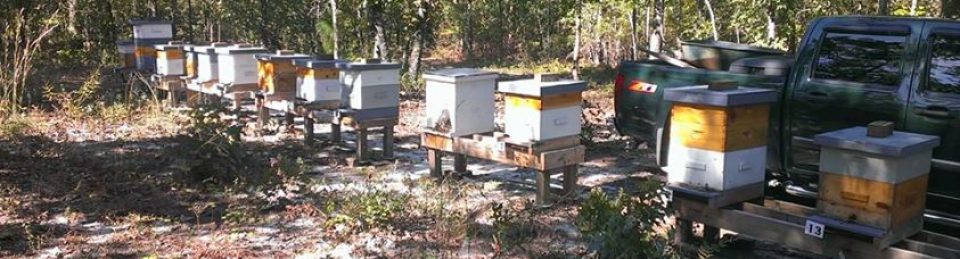
I know better than to keep bees in neatly ordered rows. In fact, one time I had a stand of bees on a rich piece of property, and one day the property manager descended upon me to tell me that the hives had to be lined up evenly. I looked him right in the eye and told him no. He couldn’t believe it. He said the padrone wanted everything neat and even. I said I don’t work for the padrone, or you. The hives stay crooked. He left in a snit. Later, after he had complained to the padrone, the padrone told me not to listen to him, and I never saw the man again even though I kept bees on that property for several more years. It’s curious what some perceptions rate as important.
Did you know some beekeepers get bent out of shape by the presence of propolis in their hives? Now don’t that beat all get out?
Anyway, my mind kept trying to see the rotten equipment as unsightly, something to be ashamed of, as though using it was putting me beneath the beekeepers with the good stuff, even though those with the good stuff were, for the most part, out of business, and my business was growing by leaps and bounds, between bouts of depression.
Beauty is a dangerous thing, because it’s entirely subjective and the world acts as though it were entirely objective. This big mistake is costly to beekeeping as well as pretty much everything else.
If you are familiar with Friedrich Huntervasser’s “Against Rationalism in Architecture,” then you know where this goes. But on the slim chance you aren’t, I’ll elaborate. When a man-made piece of architecture (in historical context always striving for increased levels of excellence) is new, whether it is a home for human habitation or a beehive, it is sterile. Huntervasser asserts that until a home has sagged and there are cobwebs in the corners and a patina of grime over the walls, it is unhealthy. He points to designs which round the corners of doorways as superior. Had he been a bee man he would have preferred skeps to Langstroth hives.
God does not create sterility. There are no straight lines in Nature. Mankind deludes itself with the concept of straight lines and man creates sterility. It is the end result of the human mind’s purification process, the unconscious compulsion to be ever striving for ever increased excellence. Man must always outdo him- or herself. He or she must always keep raising the bar. He or she sees Nature as a replication of the same process, as in the Theory of Evolution.
It has been said that God created Man in His or Her own image. It has also been said that Man created God in His or Her own image. So I guess it all boils down to personal opinion, who you are and where you’re coming from. In my opinion, Man is the culprit. In our efforts to make it better, we invariably make it worse. And nothing is a better example of that than beekeeping.
I am not trying to make a case for laziness and neglect; I am trying to make a case for inevitability. Except for those among us who happen to be virgins, we all know what it means to “break-in a virgin.” The virgin is emblematic of the highest level of purity, but yet we all pretty much understand the virgin to be improved by the very process of being sullied. Such paradoxes are a way of life with us. But at what point does the break-in turn into the break- down? Maybe when the object has no further possible use except for composting.
No longer threatened by Varroa or any other parasite, no longer threatened by disease, death or humiliation, instead enhanced by these factors, my beekeeping has arrived philosophically and practically. I’m comfortable with the bad equipment, finally. I see it is beautiful.
But I don’t mean to imply that my perfect beekeeping is perfect. My perfection is imperfect. My beekeeping is not without its problems. Why, just the other day, as I was prying the top off a beehive, it just disintegrated in my hands. See? I suffer too.
The article above is edited for brevity. Read the full article at Beesource.com here: http://beesource.com/point-of-view/charles-martin-simon/more-beekeeping-backwards-i-owe-a-huge-debt-to-varroa/
Sources:
Bee Culture Magazine, November, 2003

