• Sassafras Bee Farm
  • About
  • Contact

Beekeeping365

~ The more I studied beekeeping, the less I knew, until, finally, I knew nothing. But, even though I knew nothing, I still had plenty to unlearn. Charles Martin Simon

Beekeeping365

Daily Archives: June 25, 2018

Biology Dictates Behavior by sassafrasbeefarm

25 Monday Jun 2018

Posted by Beekeeping365 in beekeeping, honey bee biology, queens

≈ Leave a comment

Tags

beekeeping, honey bee biology, queens


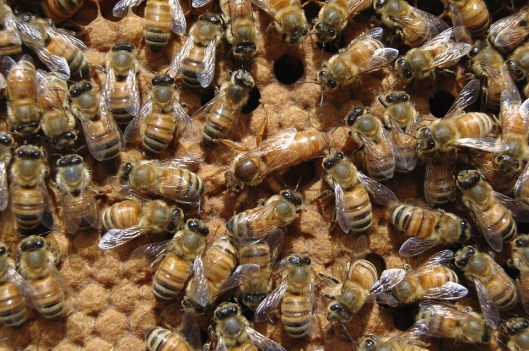
queen-bee-682941_960_720Watching reruns of the television series Elementary last night, Sherlock mentions twice the phrase, “Biology dictates behavior.”

In the beehive the genetics of the queen and the multiple drones she mated with is manifested in the behaviors of the workers. While honey bees progress through different work tasks according to their age, other behaviors are less defined and not seen as routine. That is to say, all bees begin as house bees and start by cleaning cells. They progress through various jobs as they age becoming nurse bees, feeding larvae, cleaning the hive of trash and dead bees, tending to the queen, wax excretion, moving nectar, and fanning the nectar or cooling the hive. However, most of these jobs are not compulsory nor do all bees perform all of these tasks as they age. There simply isn’t a need for all bees to progress through the task of feeding the queen nor is there a need for thousands of undertaker bees. The bees tend to have some degree of flexibility in shifting behaviors to meet the needs of the colony. But there is no macro view of the colony so how do they know what tasks need performing to be able to change behaviors. (Imagine an Amazon.com warehouse where all the workers seemingly just know what to do every day when they report to work.)

The same can be said of those bees that have graduated from house bee status and become foraging bees. Some specialize in pollen, other propolis, water, and still others nectar. The bees shift amongst these tasks depending on the needs of the colony but, again, their is no central command issuing “orders of the day” to direct these tasks. Yet, remarkably, the jobs get done.

So what determines bee behavior? We know that there is a biofeedback loop based on pheromones produced by the bees and that the queen has a major role in signaling, through pheromones, the colony needs and wellbeing. That’s one method of directing the day-to-day activities but it doesn’t fully account for the flexibility observed in an organization comprised of tens of thousands of bees operating on a day to day basis and responding to changes that take place in the environment and within the hive.

Let’s consider defensive behavior within a colony. Beekeepers may miss or overlook a lot of bee behavior but they seldom fail to observe a colony that is more defensive than others. Often referred to as “hot,” these colonies stand out to the beekeeper and rightly so as it’s not fun working a colony of bees intend on displaying defensive or aggressive behavior. Once again though, we typically find that even in colonies that display higher than normal defensive behavior we don’t usually see thousands of bees dedicating themselves to delivering their sting, and their life, to the cause. Most often there is one or several ready to act on the behalf of defending the colony. Additionally a measured response is noted with the bees ratcheting up the response as alarm pheromone is spread and triggering more and more bees to act. It’s biology in action.

But it begins with a genetic predisposition to act, either sooner or later, to a stimulus. Some bees tend to jump on the bandwagon early in delivering their venom payload to the unsuspecting beekeeper, seemingly before a genuine need exists to become defensive. If this behavior is excessive beekeepers blame the queen. Of course it may, in fact, be the genetics passed on from one or more of the multiple drones she mated with on her nuptial flight. But regardless, she gets the blame and is sought out for execution for this undesirable trait. The beekeeper replaces her with a queen of better disposition and through normal attrition of her progeny, and the more gentle temperament of the new queen’s offspring, the colony takes on a different personality.

And where in the above is anything other than the title of this article, “Biology dictates behavior.” There are no feelings involved. There is no sorrow for the old queen within the hive. There is nothing but the now of queen-rightness, the sensed reality of queen-lessness, and then the resumption of being queen-right. It’s stimulus response. Should a beekeeper kill the old queen without a replacement the bees simply initiate the replacement process. No rituals exist, no beliefs cloud the process, no judgement, and no processing of the loss. The bees carry on and make plans for the colony’s survival without missing a beat. The hive may fail but they will, through their genetics and biology go forward pushed by urges provided by pheromones (or lack thereof) and their genetic predispositions. Biology dictates behavior.

The beekeeper may wish to mourn the loss of a valued queen but that mourning is for the beekeeper alone. And the new beekeeper does mourn – at least the ones I have met. I too found it difficult to kill the queen early in my beekeeping. The mourning, whether for a queen or a colony, takes it’s emotional toll on some. I’ve met those that said they got out of beekeeping after losing a couple hives because, “It was too hard losing the bees.”

New beekeepers resist what is while the bees do not. Truly to understand the bees we need to learn from them. To force our understanding of them into our mental framework removes the beekeeper from a true understanding. Understanding them through our rose colored glasses discredits the bees and moves us further from what they offer us.

Feel free to share this on:

  • Share on Facebook (Opens in new window) Facebook
  • Share on X (Opens in new window) X
  • Share on Pinterest (Opens in new window) Pinterest
  • Email a link to a friend (Opens in new window) Email
  • Share on LinkedIn (Opens in new window) LinkedIn
  • Share on Reddit (Opens in new window) Reddit
  • Share on Tumblr (Opens in new window) Tumblr
  • Print (Opens in new window) Print
  • Share on Telegram (Opens in new window) Telegram
  • Share on WhatsApp (Opens in new window) WhatsApp
Like Loading...
Follow Beekeeping365 on WordPress.com

Enter your email address to follow this blog and receive notifications of new posts by email.

Calendar

June 2018
S M T W T F S
 12
3456789
10111213141516
17181920212223
24252627282930
« May   Jul »

Posts by Month:

  • August 2026 (4)
  • July 2026 (1)
  • May 2026 (2)
  • January 2026 (3)
  • July 2025 (1)
  • April 2024 (1)
  • September 2022 (1)
  • July 2022 (1)
  • March 2022 (13)
  • February 2022 (17)
  • January 2022 (4)
  • December 2021 (4)
  • November 2021 (7)
  • October 2021 (1)
  • September 2021 (3)
  • August 2021 (11)
  • July 2021 (18)
  • June 2021 (5)
  • May 2021 (2)
  • April 2021 (9)
  • March 2021 (2)
  • February 2021 (5)
  • January 2021 (16)
  • December 2020 (15)
  • November 2020 (15)
  • October 2020 (11)
  • July 2020 (1)
  • February 2020 (1)
  • March 2019 (2)
  • February 2019 (4)
  • January 2019 (1)
  • December 2018 (10)
  • November 2018 (8)
  • October 2018 (15)
  • September 2018 (25)
  • August 2018 (3)
  • July 2018 (11)
  • June 2018 (27)
  • May 2018 (33)
  • April 2018 (20)
  • March 2018 (20)
  • February 2018 (12)
  • January 2018 (22)
  • December 2017 (18)
  • November 2017 (17)
  • October 2017 (25)
  • September 2017 (27)
  • August 2017 (21)
  • July 2017 (29)
  • June 2017 (28)
  • May 2017 (19)
  • April 2017 (17)
  • March 2017 (19)
  • February 2017 (12)
  • January 2017 (13)
  • December 2016 (5)

Posts by Categories:

  • absconding (1)
  • africanized honey bees (1)
  • apitherapy (1)
  • bee health (6)
  • bee law (2)
  • bee lining (2)
  • bee removals (2)
  • beekeeper (5)
  • beekeeper education (16)
  • beekeeping (612)
    • South Carolina (2)
  • beekeeping author (10)
  • beekeeping books (14)
  • beekeeping calendar (4)
  • beekeeping chores (8)
  • beekeeping equipment (26)
  • beekeeping history (49)
  • beekeeping management (37)
  • beekeeping pest management (8)
  • beekeeping seasons (23)
  • beekeeping vocabulary (16)
  • beeswax (13)
  • biography (4)
  • biology (14)
  • birthday (40)
  • birthdays (34)
  • book review (16)
  • breakfast (1)
  • calendar (4)
  • CCD (1)
  • chores (6)
  • comb (7)
  • comb honey (10)
  • commercial beekeeping (2)
  • cutouts (2)
  • dearth (3)
  • defensiveness (2)
  • diseases (9)
  • drawn comb (6)
  • ecology (4)
  • education (28)
  • equipment (25)
  • extracting (1)
  • fall nectar flow (1)
  • famous beekeepers (27)
  • feeding bees (7)
  • first blog entry (1)
  • folklore (1)
  • food (7)
  • forage (4)
  • hacks (3)
  • hive inspections (8)
  • hive placement (2)
  • hive products (6)
  • honey (90)
  • honey as food (22)
  • honey bee anatomy (3)
  • honey bee behavior (25)
  • honey bee biology (43)
  • honey bee genetics (4)
  • honey bee nutrition (1)
  • honey bee photos (6)
  • Honey Bee Research (1)
  • honey bee vocabulary (12)
  • honey bees (14)
  • honey judging (4)
  • honey recipe (65)
  • humor (13)
  • inspections (10)
  • journal (1)
  • log book (1)
  • making increase (3)
  • management (82)
  • mentoring (2)
  • mites (3)
  • national pollinator week (2)
  • nectar flow (6)
  • nomenclature (1)
  • opinion (8)
  • out yards (1)
  • outyards (1)
  • package bees (1)
  • pears (1)
  • pests (17)
  • plants for bees (3)
  • polish (1)
  • pollen (4)
  • pollination (11)
  • pollinators (7)
  • product review (1)
  • production (1)
  • products (3)
  • propolis (2)
  • queens (17)
  • raw honey (6)
  • recipe (88)
  • removals (1)
  • safety (3)
  • sales (2)
  • season (1)
  • seasons (21)
  • sideliner (1)
  • small hive beetles (1)
  • spring buildup (4)
  • state fair (2)
  • sustainable (7)
  • swarms (27)
  • ursurpation (1)
  • usurpation (1)
  • varroa (21)
  • varroa destructor (12)
  • varroa mites (24)
  • Winter (5)
  • winter solstice (2)
  • woodenware (3)
  • yellow jackets (2)

Sassafras Bee Farm on Facebook

Sassafras Bee Farm on Facebook

Sassafras Bee Farm

Sassafras Bee Farm

Recent Posts

  • Meeting Reality vs What Seems Deserved
  • Everything Starts with a Tasty Meal: The Science Behind a Beekeeper’s Best Pest-Management Insight
  • Pest Control
  • State Fair Wax Preparation
  • Sherlock Holmes and Beekeeping: A Unique Connection

Beekeeping365 on Facebook

Beekeeping365 on Facebook

Top Posts & Pages

  • Types of bees by Fat Daddy’s Apiary
    Types of bees by Fat Daddy’s Apiary
  • Meeting Reality vs What Seems Deserved
    Meeting Reality vs What Seems Deserved
  • Old-fashioned Honey Wafer Recipe by A Hundred Years Ago
    Old-fashioned Honey Wafer Recipe by A Hundred Years Ago

Blog Stats

  • 141,312 hits

Website Built with WordPress.com.

  • Subscribe Subscribed
    • Beekeeping365
    • Join 426 other subscribers
    • Already have a WordPress.com account? Log in now.
    • Beekeeping365
    • Subscribe Subscribed
    • Sign up
    • Log in
    • Report this content
    • View site in Reader
    • Manage subscriptions
    • Collapse this bar
Loading Comments...
%d