Every theory about D. B. Cooper starts from the same assumption: that a man who could do this was a soldier, a paratrooper, a gambler. They study the skill of the jump. No one has studied the skill of the stillness.
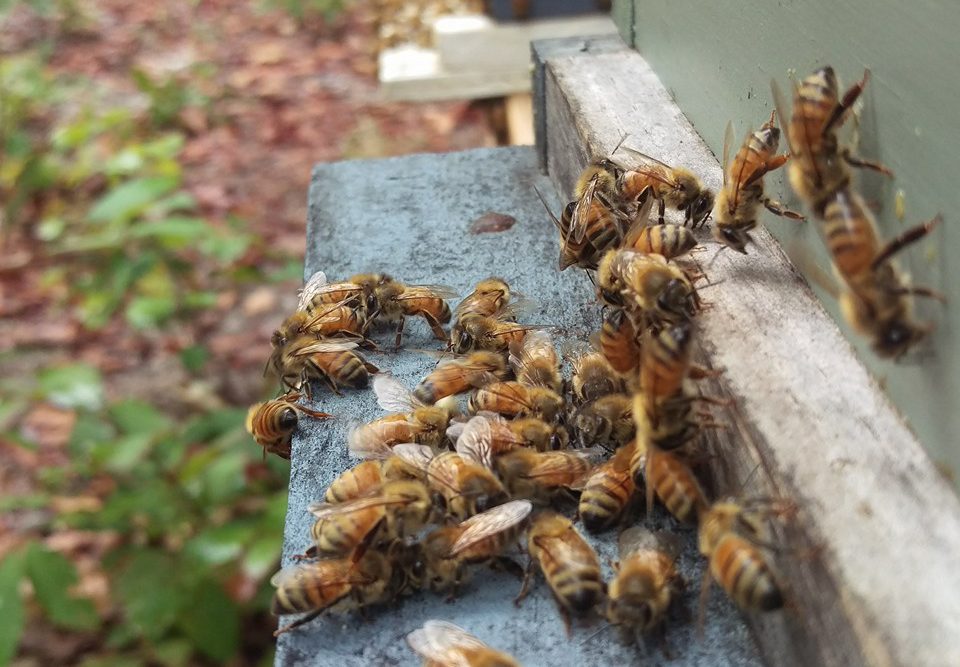
Consider the man in seat 18C on the day before Thanksgiving, 1971. He orders a bourbon and soda, pays for it, and tells the flight attendant to keep the change. He announces a bomb in a voice you would use on a nervous horse. Nobody on that plane was calmer than he was. I have known only one kind of person who can be that calm, the kind who opens a hive of forty thousand armed insects wearing nothing but a veil. A beekeeper learns early that the bees punish exactly one thing: panic. Everything else, they forgive.
Then there is the smoking. Eight filter-tipped cigarettes, found in the ashtray. He smoked the way a beekeeper smokes, not for pleasure but to keep the room quiet while he worked.
Then there is the suit. Dark, with a tie, and anyone who has kept bees will tell you what that means. Bees despise dark colors. They read them as a bear. No beekeeper would work a colony in a black suit, so the suit was a costume, and it was the one thing about him that wasn’t true. The tie came off before he jumped. It was clip-on, of course, because a man who spends his days around anything that can sting learns not to wear anything that can be grabbed.
His demands were practical. Four parachutes, a fuel truck, two hundred thousand dollars in twenties. There was no speech, no cause, nothing ornamental. He ordered like a man who knows what a season costs, who buys by the case and counts the frames. The money came to about twenty pounds. A beekeeper lifts forty-pound boxes all day and knows to the ounce what he can carry into the dark.
Above all there is the date. Late November, in the Pacific Northwest, is the one week of the year when a beekeeper is free. The hives are closed, wrapped, and fitted with mouse guards. The colony has drawn into its winter cluster, a living ball that shivers and turns and keeps its queen at the warm center.
There is nothing left to do but trust it. The beekeeper leaves the bees alone and goes out into the cold, and that’s exactly what the man did. He stepped off the back of a jet into the rain and the black air, trusting that the thing he had prepared would hold him.
We know the rest, which is to say we know nothing. A child found a few rotted bundles of twenties on a Columbia River bank in 1980. After that, silence.
I like to picture him afterward, in some small house in the wet green country with a few white boxes at the back of the lot. He never sold the honey. He gave it away in jars at Christmas and never spoke of the one day. Each spring he stood at an open hive with the smoke drifting and his hands slow, and the bees did what they always do. They never asked who he had been. They asked only whether he was calm.
The hijacker of Flight 305 was never identified. The beekeeping is invented.
(function () { var NS = ‘http://www.w3.org/2000/svg’; function rng(seed) { var s = seed | 0; return function () { s = (s + 0x6D2B79F5) | 0; var t = Math.imul(s ^ (s >>> 15), 1 | s); t = (t + Math.imul(t ^ (t >>> 7), 61 | t)) ^ t; return ((t ^ (t >>> 14)) >>> 0) / 4294967296; }; } function el(name, attrs, parent) { var e = document.createElementNS(NS, name); for (var k in attrs) e.setAttribute(k, attrs[k]); if (parent) parent.appendChild(e); return e; } // Plate III: the winter cluster, a wobbly ball of small bees around the queen var cluster = document.getElementById(‘p3-cluster’); if (cluster) { var r = rng(11), cx = 470, cy = 206, pts = [], N = 64, i, a, rad; for (i = 0; i < N; i++) { a = i / N * Math.PI * 2; rad = 84 + Math.sin(a * 3 + 1) * 4 + (r() – .5) * 4; pts.push((i ? ‘L’ : ‘M’) + (cx + Math.cos(a) * rad).toFixed(1) + ‘ ‘ + (cy + Math.sin(a) * rad).toFixed(1)); } el(‘path’, { ‘class’: ‘fp’, d: pts.join(”) + ‘Z’ }, cluster); [26, 37, 48, 59, 70, 79].forEach(function (ring) { var n = Math.round(2 * Math.PI * ring / 13), off = r() * 6.28, j, ang, x, y, rot; for (j = 0; j < n; j++) { ang = off + j / n * 6.28 + (r() – .5) * .15; x = cx + Math.cos(ang) * ring + (r() – .5) * 2.5; y = cy + Math.sin(ang) * ring + (r() – .5) * 2.5; rot = ang * 180 / Math.PI + 90 + (r() – .5) * 40; el(‘ellipse’, { ‘class’: ‘beeb’, cx: x.toFixed(1), cy: y.toFixed(1), rx: 5.2, ry: 2.8, transform: ‘rotate(‘ + rot.toFixed(0) + ‘ ‘ + x.toFixed(1) + ‘ ‘ + y.toFixed(1) + ‘)’ }, cluster); } }); } // Plate IV: rain and firs var rain = document.getElementById(‘p4-rain’); if (rain) { var q = rng(5), d = ”, k, x, y, l; for (k = 0; k < 95; k++) { x = q() * 660 – 10; y = q() * 380 + 10; l = 12 + q() * 14; d += ‘M’ + x.toFixed(0) + ‘ ‘ + y.toFixed(0) + ‘l’ + (-l * .28).toFixed(1) + ‘ ‘ + l.toFixed(1); } el(‘path’, { ‘class’: ‘d-soft’, d: d, style: ‘stroke-width:.9;opacity:.65’ }, rain); } var trees = document.getElementById(‘p4-trees’); if (trees) { var t = rng(9), tx = -4, h, w, b = 414; while (tx < 650) { h = 22 + t() * 20; w = 6 + h * .12; tx += 9 + t() * 9; el(‘path’, { ‘class’: ‘fp’, style: ‘stroke-width:.9’, d: ‘M’ + (tx – w) + ‘ ‘ + b + ‘L’ + (tx – w * .45) + ‘ ‘ + (b – h * .38) + ‘L’ + (tx – w * .7) + ‘ ‘ + (b – h * .38) + ‘L’ + (tx – w * .3) + ‘ ‘ + (b – h * .68) + ‘L’ + (tx – w * .5) + ‘ ‘ + (b – h * .68) + ‘L’ + tx + ‘ ‘ + (b – h) + ‘L’ + (tx + w * .5) + ‘ ‘ + (b – h * .68) + ‘L’ + (tx + w * .3) + ‘ ‘ + (b – h * .68) + ‘L’ + (tx + w * .7) + ‘ ‘ + (b – h * .38) + ‘L’ + (tx + w * .45) + ‘ ‘ + (b – h * .38) + ‘L’ + (tx + w) + ‘ ‘ + b + ‘Z’ }, trees); } } })();
