• Sassafras Bee Farm
  • About
  • Contact

Beekeeping365

~ The more I studied beekeeping, the less I knew, until, finally, I knew nothing. But, even though I knew nothing, I still had plenty to unlearn. Charles Martin Simon

Beekeeping365

Tag Archives: birthday

Happy Birthday William Z. Hutchinson

17 Thursday Feb 2022

Posted by Beekeeping365 in beekeeping, birthday, famous beekeepers

≈ Leave a comment

Tags

beekeeper birthdays, beekeeping, birthday, famous beekeepers

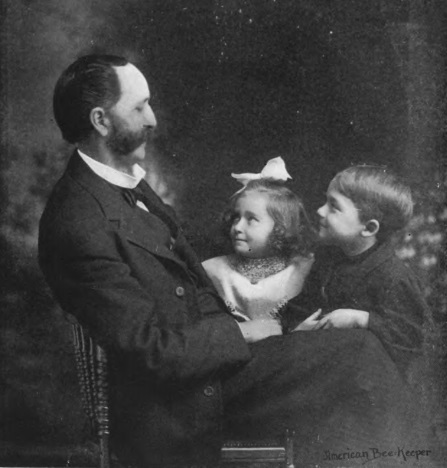
william_z__hutchinson_apiarist_with_grandchildren

Birth: Feb. 17, 1851
Death: May 30, 1911

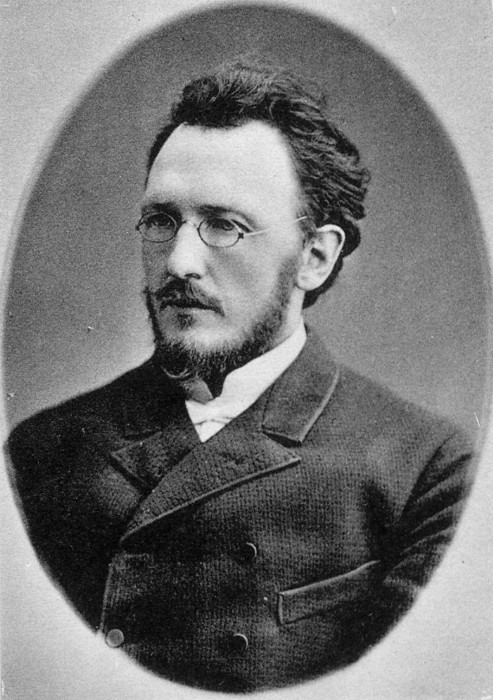
William Z. Hutchinson (1851-1911) was a 19th-century Michigan apiarist and author. He founded the Bee-keepers’ Review in 1888, and served as its editor over the remainder of his life. Hutchinson was an enthusiastic proponent of producing comb honey.

Bibliography

  • The Production of Comb Honey: As Practiced And Advised pp. 45. Flint, MI: Globe Print. House (1887).
  • Successful Bee Keeping pp. 16. Jamestown NY: W. T. Falconer Mfg. Co. (1897).
  • Advanced Bee-Culture: Its Methods and Management pp. 90. Bee-Keepers’ Review: Flint MI (1902).

Source: http://beekeeping.wikia.com/wiki/William_Z._Hutchinson

Feel free to share this on:

  • Share on Facebook (Opens in new window) Facebook
  • Share on X (Opens in new window) X
  • Share on Pinterest (Opens in new window) Pinterest
  • Email a link to a friend (Opens in new window) Email
  • Share on LinkedIn (Opens in new window) LinkedIn
  • Share on Reddit (Opens in new window) Reddit
  • Share on Tumblr (Opens in new window) Tumblr
  • Print (Opens in new window) Print
  • Share on Telegram (Opens in new window) Telegram
  • Share on WhatsApp (Opens in new window) WhatsApp
Like Loading...

Happy Birthday Nikolai Nasonov

14 Monday Feb 2022

Posted by Beekeeping365 in beekeeping history, birthday, famous beekeepers

≈ 1 Comment

Tags

beekeeper birthdays, beekeeping history, birthday, famous beekeepers

12729375_967213843333112_3719233867458130293_n
Nikolai Viktorovich Nasonov (Feb. 14 1855 ~ Feb. 11, 1939)


Nikolai Nasonov is best known among beekeepers for the Nasonov gland in honeybees which is named after Nasonov who was first to described it in 1883.…

“The scent organ of a worker honeybee lies on the dorsal surface of the abdomen, at the front edge of the last abdominal segment. It consists of several hundred gland cells. The Nasonov gland was named after the Russian scientist who first described it, in 1883. (Honeybee Democracy By Thomas D. Seeley 2010)

Nasonov pheromone are emitted by the worker bees and used for orientation. Known as the “come and join us” scent. Bees use the pheromone to find the entrance to their colony or hive, and they release them on flowers so other bees know which flowers have nectar. Nasonov pheromone in synthetic form should be 2:1 ratio of citral and geraniol. It consists of glandular cells which secrete pheromone through c. 600 ducts into a groove between the 6th and 7th tergite. Honeybees release this pheromone for attracting other bees to join the swarm, to mark the entrance to the hive, to mark a source of water while foraging.

fanning-bees

Nikolai Nasonov was a Soviet zoologist. Academician of the St. Petersburg Academy of Sciences (1906; corresponding member, 1897). He was born in Moscow, Feb. 14 1855. In 1879, Nasonov graduated from the University of Moscow. From 1889 to 1906 he was a professor at the University of Warsaw. From 1906 to 1921 he was director of the Zoological Museum, and from 1921 to 1931 he was director of the Laboratory of Experimental Zoology of the Academy of Sciences of the USSR. His principal works were on the morphology, taxonomy, faunistics, zoogeography, ecology, and embryology of insects, crustaceans, Turbellaria, and some vertebrates, such as mountain sheep and the ostrich. In 1911, Nasonov organized the publication of the comprehensive work Fauna of Russia and the Neighboring Countries, subsequently called Fauna of the USSR. Twenty-five books of this work were published under his editorship. In 1916 on Nasonov’s initiative, a commission was created in the Academy of Sciences of the USSR to study Lake Baikal and to organize the Baikal Biological Station (now the Institute of Limnology of the Siberian Division of the Academy of Sciences of the USSR). Nasonov was a prolific author producing works in four languages but was not a honeybee specialist nor did he have a knowledge about pheromones. Nikolai Nasonov died in Moscow Feb. 11, 1939

Source:

PORTRAIT Nikolai Victrovich Nasonov
Насонов Николай Викторович
http://isaran.ru/?q=ru%2Fperson&guid=0D918887-F320-DA69-70D1-98CEE1735EFA

Nasonov, Nikolai Viktorovich
http://encyclopedia2.thefreedictionary.com/Nasonov,+Nikolai+Viktorovich

Honeybee Democracy, by Thomas D. Seeley
circa. 2012 page 185

Pheromones of the Honeybee Colony
http://www.ncbi.nlm.nih.gov/books/NBK200983/

Nasonov, Nikolai Viktorovich (1855-1939)

http://www.antwiki.org/wiki/Nasonov,_Nikolai_Viktorovich_(1855-1939)

Miscellaneous References

Nasonov, N. V. 1889. Contribution to the natural history of the ants primarily of Russia. 1. Contribution to the ant fauna of Russia. Izv. Imp. Obshch. Lyubit. Estestvozn. Antropol. Etnogr. Imp. Mosk. Univ. 58: 1-78 PDF

http://www.antwiki.org/wiki/images/c/c6/Nasonov_N_1889.pdf

——————————————————–
N. E. McIndoo, PH.D. Proceedings of the Academy of Natural Sciences of Philadelphia Vol. 66 No. 2 (Apr. – Aug. 1914), pp. 542-555

“ It is reported that Nassonoff first described the morphology of the scent-producing organ of the honey bee. His original work in Russian cannot be had here , but according to Zoubareff (1883), nassonoff did not describe the structure of this organ as seen by the writer, and he suggested that the gland cells of the organ produce perspiration.
————————————————————-
Nasonov pheromone are emitted by the worker bees and used for orientation. Discovered by Nasonov, Nikolai Viktorovich (1883) from Russia. Known as the “come and join us” scent. Nasonov includes a number of different terpenoids including geraniol, nerolic acid, citral and geranic acid. Bees use these to find the entrance to their colony or hive, and they release them on flowers so other bees know which flowers have nectar.Nasonov pheromone in synthetic form should be 2:1 ratio of citral and geraniol (Born Feb. 14 (26), 1855, in Moscow; died there Feb. 11, 1939. Soviet zoologist. Academician of the St. Petersburg Academy of Sciences (1906; corresponding member, 1897). It consists of glandular cells which secrete pheromone through c. 600 ducts into a groove between the 6th and 7th tergite.Honeybees release this pheromone for attracting other bees to join the swarm,to mark the entrance to the hive, to mark a source of water while foraging.
—————————————————————
Nikolai Victrovich Nasonov ( N. V. Nassonov) 1855 – 1939

Dr. Nasonov studied taxonomy and distribution of various groups of invertebrates. He was a member of the Academy of Sciences of the URSS. He visited Japan (June-July, 1928) for the study of freshwater microturbellarians. For his scientific activities and the publication list, see the following paper.

Académie des Sciences de l’Union des Républiques Soviétiques Socialistes, 1937. À l’Académicien N. Nassonov pour le Quatrevingtième Anniversaire de sa Naissance et le Soixantième Anniversaire de Son Activité Scientifique. Cover page and prefatory portrait + pp.13-32. http://www.ras.ru/win/db/show_per.asp?P=jd-51438.In-en

Literature (a selection):

Nassonov, N. V., 1924. K faune Turbellaria Rhabdocoelida Kryma. Izves. Akad. Nauk, SSSR, 18: 35-46.

Nassonov, N. V., 1925. Die Turbellarienfauna des Leningrader Gouvernements. 1-2. Izves. Akad. Nauk, 20: 817-836, 869-883.

Nassonov, N. V., 1927. Über eine neue Familie Multipenatidae (Alloeocoela) aus dem Japanischen Meer mit einem aberranten Bau der Fortpflanzungsorgane. Izves. Akad. Nauk, 1927: 865-874.

Nassonov, N. V., 1929. Zur Fauna der Turbellaria Rhabdocoelida der japanischen Susswasserbecken. Doklady Akad. Nauk, SSSR, 1929: 423-428.

Nassonov, N. V., 1932. Zur Morphologie der Turbellaria Rhabdocoelida des Japanischen Meeres. Trudy Laborat. Exper. Zool. Morfol. Zhivotnykh. Akad. Nauk, II: 1-115 + Taf. I-VIII.


Source: Historical Honey Bee Articles – Beekeeping History

Feel free to share this on:

  • Share on Facebook (Opens in new window) Facebook
  • Share on X (Opens in new window) X
  • Share on Pinterest (Opens in new window) Pinterest
  • Email a link to a friend (Opens in new window) Email
  • Share on LinkedIn (Opens in new window) LinkedIn
  • Share on Reddit (Opens in new window) Reddit
  • Share on Tumblr (Opens in new window) Tumblr
  • Print (Opens in new window) Print
  • Share on Telegram (Opens in new window) Telegram
  • Share on WhatsApp (Opens in new window) WhatsApp
Like Loading...

Happy Birthday Charles Henry Turner by Ron Miksha

03 Thursday Feb 2022

Posted by Beekeeping365 in beekeeping, birthday, birthdays, famous beekeepers

≈ 1 Comment

Tags

bee biology, birthday, Charles Henry Turner, famous beekeepers, honey bee behavior

Charles Henry Turner (February 3, 1867 – February 14, 1923)

Here’s an excellent post by Ron Miksha of badbeekeeping blog recognizing a bee scientist who went unrecognized in his own time. Thanks Ron for bringing many of us up to speed.

You probably know that Karl von Frisch figured out how honey bees use their waggle-dance to communicate. He won the Nobel Prize for that and for other studies of bee behaviour. I think it was well-deserved and his experiments withstood criticism and independent confirmation. His discovery was intuitive and required hundreds of replicated experiments conducted over years of work in personally risky circumstances in Nazi Germany. But there is another scientist who came close to figuring out many of the things which brought von Frisch fame. The other scientist did his experiments in America, decades earlier. But he’s mostly unknown, largely forgotten.

Read entire article at: The Man Who Discovered that Bees Can Think — Bad Beekeeping Blog

Feel free to share this on:

  • Share on Facebook (Opens in new window) Facebook
  • Share on X (Opens in new window) X
  • Share on Pinterest (Opens in new window) Pinterest
  • Email a link to a friend (Opens in new window) Email
  • Share on LinkedIn (Opens in new window) LinkedIn
  • Share on Reddit (Opens in new window) Reddit
  • Share on Tumblr (Opens in new window) Tumblr
  • Print (Opens in new window) Print
  • Share on Telegram (Opens in new window) Telegram
  • Share on WhatsApp (Opens in new window) WhatsApp
Like Loading...

Lorenzo Langstroth’s Birthday

25 Saturday Dec 2021

Posted by Beekeeping365 in beekeeping, beekeeping equipment, beekeeping history, birthday

≈ 1 Comment

Tags

beekeeping, beekeeping books, beekeeping history, birthday, famous beekeepers, Langstroth, Lorenzo Langstroth's birthday, The Hive and the Honey Bee

toast to langstroth

A Toast to Langstroth

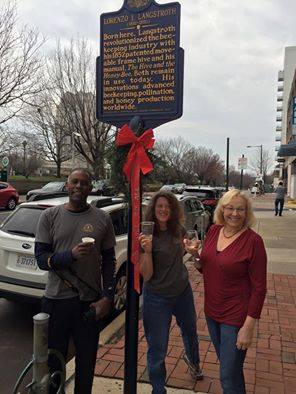
This year, beekeepers are celebrating the 213th year anniversary of “the Father of American Beekeeping.” Lorenzo Lorraine Langstroth was born Christmas Day, December 25, 1810 in Philadelphia, Pennsylvania. L. L. Langstroth developed the modern hive after exploring existing hives including the pre-cursor to the top bar hive. Francis Huber invented the Leaf Hive in 1789 in Switzerland. The leaf hive had movable solid frames that touched making the box like top bar hives. The leaf hive was examined like pages in a book.

(photo: In 2010 the Philadelphia Beekeepers Guild began a wonderful Christmas tradition. They gather each year at 106 South Front Street, Philadelphia; the birthplace of Lorenzo L. Langstroth on Christmas Day, which is also Langstroth’s birthday, for a Champagne / mead toast to Langstroth.) A Toast to Langstroth)

In the summer of 1851 Langstroth developed the hive that is still used today and the “bee space.” Langstroth patented the first movable frame hive on October 5, 1852. Henry Bourquin, a fellow beekeeper and Philadelphia cabinetmaker, made Langstroth’s first hives. Langstroth hives encourage rapid inspection without enraging the bees. Weak colonies can be strengthened. Strong colonies can increase space. Queens are quickly replaced. Diseases, pests and parasites can be quickly determined and remedied. Inspection by removable frames is now required in the United States. Langstroth also began using queen excluders to confine eggs to the lower boxes. Removable frames encouraged honey extraction without destroying the comb. Honey comb requires 7 to 14 pounds of honey for every pound of beeswax. Besides increased honey production, the beehive no longer had to be killed to remove the honey.

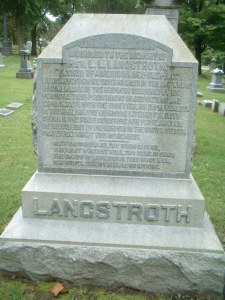
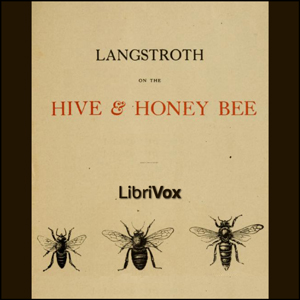
Langstroth published “The Hive and the Honey-Bee” in 1853 still in print today after 40 editions. Langstroth died October 6, 1895 while preaching a sermon on the love of God at the Wayne Avenue Presbyterian church in Dayton. L. L. Langstroth is buried at Woodland Cemetery, Dayton, Ohio. Langstroth’s epitaph reads —

Langstroth

INSCRIBED TO THE MEMORY OF REV. L.L. LANGSTROTH, “FATHER OF AMERICAN BEEKEEPING,” BY HIS AFFECTIONATE BENEFICIARIES WHO, IN THE REMEMBRANCE OF THE SERVICES RENDERED BY HIS PERSISTENT AND PAINSTAKING OBSERVATIONS AND EXPERIMENTS WITH THE HONEY BEE, HIS IMPROVEMENTS IN THE HIVE, AND THE LITERARY ABILITY SHOWN IN THE FIRST SCIENTIFIC AND POPULAR BOOK ON THE SUBJECT OF BEEKEEPING IN THE UNITED STATES, GRATEFULLY ERECT THIS MONUMENT.

Langstroth_Hive_Honey-Bee_1206

Ebook:  The Hive and the Honey Bee

Audio recording: The Hive and the Honey Bee

Feel free to share this on:

  • Share on Facebook (Opens in new window) Facebook
  • Share on X (Opens in new window) X
  • Share on Pinterest (Opens in new window) Pinterest
  • Email a link to a friend (Opens in new window) Email
  • Share on LinkedIn (Opens in new window) LinkedIn
  • Share on Reddit (Opens in new window) Reddit
  • Share on Tumblr (Opens in new window) Tumblr
  • Print (Opens in new window) Print
  • Share on Telegram (Opens in new window) Telegram
  • Share on WhatsApp (Opens in new window) WhatsApp
Like Loading...

Happy Birthday Emily Dickinson

10 Friday Dec 2021

Posted by Beekeeping365 in beekeeping history, birthday, birthdays

≈ Leave a comment

Tags

beekeeping history, birthday, Emily Dickinson, The Bee

Happy Birthday Emily Dickinson – Born Dec. 10, 1830

The Bee
By Emily Dickinson

Like trains of cars on tracks of plush
I hear the level bee:
A jar across the flowers goes,
Their velvet masonry
Withstands until the sweet assault
Their chivalry consumes,
While he, victorious, tilts away
To vanquish other blooms.
His feet are shod with gauze,
His helmet is of gold;
His breast, a single onyx
With chrysoprase, inlaid.
His labor is a chant,
His idleness a tune;
Oh, for a bee’s experience
Of clovers and of noon!
…
A team of archaeologists is rediscovering just how extensive Emily Dickinson’s garden was. Historical evidence shows Emily Dickinson’s Garden contained an abundance of blooming flowers. Archaeologists recently uncovered portions of a pathway leading to nineteenth-century flower and vegetable beds.Emily Dickinson – was an American poet born in Amherst, Massachusetts. (December 10, 1830 – May 15, 1886) ~ during her lifetime she “was known more widely as a gardener, perhaps, than as a poet”. Emily Dickinson’s niece, Martha Dickinson Bianchi, remembered “carpets of lily-of-the-valley and pansies, platoons of sweetpeas, hyacinths, enough in May to give all the bees of summer dyspepsia. There were ribbons of peony hedges and drifts of daffodils in season, marigolds to distraction—a butterfly utopia” Archaeology – Remnants of Emily Dickinson’s Gardens Sought

AMHERST, MASSACHUSETTS—Emily Dickinson is known today as one of the greatest poets of the nineteenth century, but in her lifetime she may have been more renowned for her gardening. At her family estate, she helped to tend an orchard, a greenhouse, and an expanse of flower and vegetable gardens. The size of these gardens was dramatically decreased in the decades after Dickinson died in 1886, but now a team of archaeologists is searching for their remnants. Last summer, they uncovered portions of a pathway leading to nineteenth-century flower and vegetable beds. “If we can follow out the historic path to its end, then theoretically we would find the location of past gardens,” Kerry Lynch of Archaeological Services at the University of Massachusetts, Amherst, told the New York Times. If they do locate these gardens, the archaeologists hope to find seeds or other botanical evidence dating back to when Dickinson was alive.

Source:
Archaeology – Remnants of Emily Dickinson’s Gardens Sought
http://www.archaeology.org/news/4458-160513-massachusetts-dickinson-gardens

Emily Dickinson
https://en.wikipedia.org/wiki/Emily_Dickinson


Feel free to share this on:

  • Share on Facebook (Opens in new window) Facebook
  • Share on X (Opens in new window) X
  • Share on Pinterest (Opens in new window) Pinterest
  • Email a link to a friend (Opens in new window) Email
  • Share on LinkedIn (Opens in new window) LinkedIn
  • Share on Reddit (Opens in new window) Reddit
  • Share on Tumblr (Opens in new window) Tumblr
  • Print (Opens in new window) Print
  • Share on Telegram (Opens in new window) Telegram
  • Share on WhatsApp (Opens in new window) WhatsApp
Like Loading...

Happy Birthday Karl von Frisch

20 Saturday Nov 2021

Posted by Beekeeping365 in beekeeping, birthday, birthdays, famous beekeepers, honey bee behavior

≈ Leave a comment

Tags

beekeeping, birthday, famous beekeepers, honey bee behavior, Karl von Frisch, waggle dance

Bee_waggle_dance

By (Figure design: J. Tautz and M. Kleinhenz, Beegroup Würzburg.) – Chittka L: Dances as Windows into Insect Perception. PLoS Biol 2/7/2004: e216. http://dx.doi.org/10.1371/journal.pbio.0020216, CC BY 2.5, https://commons.wikimedia.org/w/index.php?curid=1374858


FrischKarl Ritter von Frisch, (20 November 1886 – 12 June 1982) was an Austrian ethologist who received the Nobel Prize in Physiology or Medicine in 1973, along with Nikolaas Tinbergen and Konrad Lorenz.[2][3]

His work centered on investigations of the sensory perceptions of the honey bee and he was one of the first to translate the meaning of the waggle dance. His theory, described in his 1927 book Aus dem Leben der Bienen (translated into English as The Dancing Bees), was disputed by other scientists and greeted with skepticism at the time. Only much later was it shown to be an accurate theoretical analysis.[4]

2e32a-1a

The “waggle dance” is used to relay information about more distant food sources. In order to do this, the dancing bee moves forward a certain distance on the vertically hanging honeycomb in the hive, then traces a half circle to return to her starting point, whereupon the dance begins again. On the straight stretch, the bee “waggles” with her posterior. The direction of the straight stretch contains the information about the direction of the food source, the angle between the straight stretch and the vertical being precisely the angle which the direction of flight has to the position of the sun. The distance to the food source is relayed by the time taken to traverse the straight stretch, one second indicating a distance of approximately one kilometer (so the speed of the dance is inversely related to the actual distance). The other bees take in the information by keeping in close contact with the dancing bee and reconstructing its movements. They also receive information via their sense of smell about what is to be found at the food source (type of food, pollen, propolis, water) as well as its specific characteristics. The orientation functions so well that the bees can find a food source with the help of the waggle dance even if there are hindrances they must detour around like an intervening mountain.

As to a sense of hearing, Frisch could not identify this perceptive faculty, but it was assumed that vibrations could be sensed and used for communication during the waggle dance. Confirmation was later provided by Dr. Jürgen Tautz, a bee researcher at Würzburg University’s Biocenter.[11]

Source: Wikipedia

Online Book: The Dancing Bees by Karl von Frisch

Feel free to share this on:

  • Share on Facebook (Opens in new window) Facebook
  • Share on X (Opens in new window) X
  • Share on Pinterest (Opens in new window) Pinterest
  • Email a link to a friend (Opens in new window) Email
  • Share on LinkedIn (Opens in new window) LinkedIn
  • Share on Reddit (Opens in new window) Reddit
  • Share on Tumblr (Opens in new window) Tumblr
  • Print (Opens in new window) Print
  • Share on Telegram (Opens in new window) Telegram
  • Share on WhatsApp (Opens in new window) WhatsApp
Like Loading...

Happy Birthday Everett Franklin Phillips

14 Sunday Nov 2021

Posted by Beekeeping365 in beekeeping, birthday, birthdays

≈ Leave a comment

Tags

beekeeping, beekeeping books, beekeeping library, birthday, Everett Franklin Phillips

E.F. Phillips


Born November 14th, 1878

Died August 21st, 1951

From The Hive and the Honey Bee Book Collection at Cornell:

In 1925, a Cornell professor of apiculture named Everett Franklin Phillips set out to create a major repository of literature on bees and beekeeping. He envisioned this library as an “accessible storehouse of our knowledge of bees and beekeeping.” By 1926, Phillips had persuaded over 223 people from twenty-nine states and twenty-six foreign countries to donate thousands of books and pamphlets, and the E.F. Phillips Beekeeping Collection at Cornell was born.

Perhaps Phillips’ biggest coup was his ingenious plan for raising the money necessary for creating the library’s endowment: he convinced hundreds of New York state beekeepers to set aside one of their hives for the library. When a hive had raised $50 from honey sales, the beekeeper’s obligation was completed.

Seventy-five years after beekeepers helped Phillips create one of the world’s finest collections of books and journals in beekeeping, a new generation of apiculturalists is leading efforts to digitize major parts of that collection. The idea for The Hive and the Honeybee emerged following the 2002 conference of the Eastern Apiculture Society, which was held on the Cornell University campus in Ithaca . In the years since then, individual beekeepers and beekeeping organizations from around the country have contributed funding to make some of the greatest works from American authors on beekeeping available via the Internet. With this generous support, collaborating staff from the University of Delaware, Mississippi State University, Mary Washington College, the Finger Lakes Beekeeping Association, and Mann Library at Cornell University launched The Hive and the Honeybee site in the spring of 2004, offering to the public the full text of ten rare books from the Phillips Collection, chosen by a team of scholars for their historical importance and usefulness to beekeepers today.

Ongoing giving by American beekeepers has continued to expand the collection, and we are proud to announce that the Hive and the Honeybee today consists of the full text of over thirty books from the Phillips library as well as the first forty volumes of a landmark American publication, the American Bee Journal, an influential English language beekeeping journal read by scholars and practicing beekeepers and still being published today.

We hope that eventually The Hive and the Honeybee will contain every major pre-1925 beekeeping work in the English language. The texts in this digital collection are fully searchable, and will also become part of the Core Historical Literature of Agriculture (CHLA).

How fitting E.F. Phillips would find that beekeepers are again playing a central role in realizing a major new development for the Phillips collection. And how thrilled he and his original beekeeping collaborators would be to see the internet make a storehouse of beekeeping knowledge accessible to the world today.

Mann Library would like to extend special thanks to the Eastern Apiculture Society and Mike Griggs for providing the initial inspiration and funding to create The Hive and the Honeybee online library. We are equally grateful to the many generous beekeeping associations, extension agencies, and individuals across the United States –from Florida to Maine and New York to Washington State –who have provided funding for the continued development of this digital collection.

A downloadable bookmark showing the website address for The Hive and the Honeybee collection is available for desktop printing. To make a gift toward The Hive and the Honeybee please make your check payable to Cornell University and mail to Albert R. Mann Library, Cornell University , Ithaca , NY 14850 . To find out more about supporting this growing collection, please contact Eveline Ferretti, Albert R. Mann Library (tel.: (607) 254-4993; email: ef15@cornell.edu).

Digital Books Available at: http://bees.library.cornell.edu/b/bees/browse.html

E,. F. Phillips Obituary: https://academic.oup.com/jee/article-abstract/45/6/1124/2205462/Everett-Franklin-Phillips-1878-1951?redirectedFrom=PDF

Feel free to share this on:

  • Share on Facebook (Opens in new window) Facebook
  • Share on X (Opens in new window) X
  • Share on Pinterest (Opens in new window) Pinterest
  • Email a link to a friend (Opens in new window) Email
  • Share on LinkedIn (Opens in new window) LinkedIn
  • Share on Reddit (Opens in new window) Reddit
  • Share on Tumblr (Opens in new window) Tumblr
  • Print (Opens in new window) Print
  • Share on Telegram (Opens in new window) Telegram
  • Share on WhatsApp (Opens in new window) WhatsApp
Like Loading...

A Metaphysical Life by Bad Beekeeping Blog

05 Friday Nov 2021

Posted by Beekeeping365 in beekeeping, birthday, birthdays

≈ 1 Comment

Tags

beekeeping, birthday, Dr. Richard Taylor, famous beekeepers

Happy Birthday Richard Taylor.

Richard Taylor (November 5, 1919 – October 30, 2003), born in Charlotte, Michigan, was an American philosopher renowned for his dry wit and his contributions to metaphysics. He was also an internationally known beekeeper.

Today is the  anniversary of the birth of one of my beekeeper-heroes, Professor Richard Taylor. He was an early champion of the round comb honey system, a commercial beekeeper with just 300 hives, and he was a philosopher who wrote the book on metaphysics. Really, he wrote the book on metaphysics – for decades, his college text Metaphysics introduced first-year philosophy students to the most fundamental aspect of reality – the nature of cosmology and the existence of all things.

Although his sport of philosophy was speculative, unprovable, and abstract to the highest degree, Richard Taylor was as common and down-to-earth as it’s possible to become. I will write about his philosophy and how it shaped his politics, but first, let’s celebrate his beekeeping.

Read the complete article at: A Metaphysical Life — Bad Beekeeping Blog

Feel free to share this on:

  • Share on Facebook (Opens in new window) Facebook
  • Share on X (Opens in new window) X
  • Share on Pinterest (Opens in new window) Pinterest
  • Email a link to a friend (Opens in new window) Email
  • Share on LinkedIn (Opens in new window) LinkedIn
  • Share on Reddit (Opens in new window) Reddit
  • Share on Tumblr (Opens in new window) Tumblr
  • Print (Opens in new window) Print
  • Share on Telegram (Opens in new window) Telegram
  • Share on WhatsApp (Opens in new window) WhatsApp
Like Loading...

Happy Birthday John S. Harbison, early Californian Beekeeper, Inventor, Author

29 Wednesday Sep 2021

Posted by Beekeeping365 in beekeeping, birthday, birthdays

≈ Leave a comment

Tags

author, beekeeper, beekeeping, birthday, inventor, San Diego

John S. Harbison


Today is John S. Harbison’s Birthday.
September 29, 1826.

1857 – Made the first shipment of bees into California, Introducing commercial beekeeping into California, laying the foundation for the industry in that state.

1857 – Invented the section honey box.

1859 – Invented the Harbison, or California hive.

1860 – Authored the book; ‘An Improved System of Propagating the Honey Bee’

1861 – Authored the book; ‘The Beekeeper’s Directory’

1873 – The firm of Clark & Harbison shipped the first car load of honey across the continent from California.

John S. Harbison September 29, 1826

There is no product of San Diego County that has done more to spread abroad her fame, than her honey. It has acquired a reputation in the markets of the world of the highest character. It is well known to the agriculturist that a section capable of producing such honey must possess superior advantages of soil and climate, and, as a result, the attention of a class of people has been directed hither who might have been influenced by the ordinary reports of the wonderful fertility of the country. Certainly, the man who was the pioneer in making known the fact that San Diego County was an apiarian paradise, is entitled to be classed as a public benefactor. It is concerning him that this sketch is written.

John S. Harbison was born in Beaver County, Pennsylvania, September 29, 1826. He comes of a sterling American stock, and can trace his lineage back through several generations. His grandfather, John Harbison, and his grandmother, Massey Harbison, were among the first settlers of Western Pennsylvania, locating near the town of Freeport, twenty-eight miles above Pittsburgh, on the Alleghany River, where the first grist-mill in that region of country was built and operated by his grandfather. In those days that part of the country was subject to many Indian outbreaks, and the Harbisons experienced their full share of the trials and sufferings incident to a life on the frontier. His grandfather acquired fame as an Indian fighter, and participated in numerous engagements in repelling the frequent murderous raids made on the settlers by the treacherous tribes of Indians inhabiting the country from the Alleghany Mountains on the east, Lakes Erie and Michigan on the north and west, and the Ohio River on the south; arid as a volunteer soldier, took part in the several expeditions led by St. Clair and Wayne, which subsequently resulted in quelling all the Indian disturbances. Mr. Harbison’s grandfather on his mother’s side, William Curry, was a chief armorer in the Continental service, and was one of the memorable minute men of the Revolution, who were a picked body of men that could be relied upon under any circumstances and were detailed to execute the most hazardous and important undertakings. He fought in eight battles in that memorable struggle, and was with Washington when he crossed the Delaware on that stormy Christmas night and defeated the astonished Hessians encamped at Trenton.

The youth and early manhood of John S. Harbison were passed upon a farm, but in 1854, having an attack of the gold fever, he made up his mind to come to California. In October of that year he sailed from New York on the steamship Northern Light, via Nicaraugua, connecting on this side with the Sierra Nevada, which had taken the place of the Yankee Blade, the latter having been wrecked just after leaving San Francisco. He arrived in San Francisco November 20, and immediately started for the mining camp known as Campo Seco, in Amador County. Here he found that gold mining was not all his imagination had pictured, he worked hard and received very meager returns. Considerably discouraged he left the mines in a few weeks, and went down to Sacramento. Glad to turn his hand to anything, he secured work in the Sutterville saw-mill, where he stayed several months. In the meantime Harbison h id made up his mind he would give-up the avocations for which he had little taste, and devote himself to something with which he was acquainted. He sent home to Pennsylvania for a general assortment of seeds, and a small invoice of fruit trees. He received the first consignment in February, and secured ground in the town of Sutterville, near Sacramento City, where he started the first nursery of fruit and shade trees in the Sacramento Valley. During the fall and winter of 1855, and again in the fall of 1856, he made large importations of the choicest fruit trees from the most celebrated nurseries in the East. From these importations was started that great series of orchards which line the banks of the Sacramento River and adjacent country.

In May, 1857, he returned to his Eastern home, and began preparations for shipping a quantity of bees to California. He finally started from New York with sixty-seven colonies, and landed them safely Sacramento, after a journey of about four weeks. This venture was so popular that he went East again the next fill, and obtained a second supply of bees, which also were safely brought to this State. He continued the business of nurseryman and apiarist near Sacramento until February, 1874, when he removed with his family to San Diego, where he has resided ever since.

Mr. H. has had some trouble with fruit-raisers, and the result was a conflagration of a whole apiary. Apiaries are usually burned by saturating each hive with kerosene, and then applying the torch; but in the case above, the hives were placed together and burned.

In the fall of 1869, Mr. Harbison formed a partnership with Mr. R. G. Clark, for the purpose of introducing and keeping bees in San Diego County. They prepared a choice selection of one hundred and ten hives of bees from Mr. Harbison’s apiaries at Sacramento, and shipped them by the steamer Orizaba, which landed in San Diego on the morning of November 28, 1869. Mr. Clark remained in charge of the bees, making all the explorations for the most suitable ranges for the location of apiaries and production of honey. Other importations were made by the firm, and the partnership was continued for the period of four years, at the end of which time a division of the apiaries and effects was made. Mr. Clark soon after disposed of his apiaries, purchasing land in the El Cajon Valley, where he established the first raisin vineyard in the county.

The great success attending the enterprise of Messrs. Clark and Harbison, and the world-wide fame of their San Diego County honey, very soon attracted the notice of bee-keepers and farmers of all parts of the States, and as a result, many were induced to come here, who took up public lands, established homes, and commenced the business of beekeeping and tilling of the soil.

In December, 1857, Mr. Harbison invented the section honey box, an invention which has done more for the advancement of honey production than any other discovery in bee-keeping. For this he was granted a patent, January 4, 1859. At the California State Fair, held at Marysville, in September, 1858, Mr. Harbison exhibited the first section box honey.

In 1873 the firm of Clark & Harbison shipped the first car load of honey across the continent from California. Mr. Harbison was awarded a medal and diploma for his exhibit of San Diego County honey at the Centennial Exposition at Philadelphia, in 1876. Besides his labors as a practical horticulturist, a farmer and apiarist, Mr. Harbison has found time to contribute occasionally to current literature on those subjects with which he is familiar, and is the author of a book of four hundred and forty pages, entitled, “Bee Keepers’ Directory,” it treats of bee culture in all its departments and is a recognized authority on the subject of which it treats. Although it was published in 1861, it is still considered the most practical work of the kind ever issued.

Mr. Harbison was married to Mary J. White, of New Castle, Pennsylvania, in 1865. The result of the union is one son, who died in infancy, and two daughters, both 6f whom are living.

Source:
Image The City and County of San Diego: Illustrated and Containing Biographical Sketches of Prominent Men and Pioneers, Page 157, 1888
The ABC of Bee Culture, A. I. Root, 1903 page 415

Additional information here: http://www.sandiegohistory.org/journal/1969/october/harbisonimages/
Feel free to share this on:

  • Share on Facebook (Opens in new window) Facebook
  • Share on X (Opens in new window) X
  • Share on Pinterest (Opens in new window) Pinterest
  • Email a link to a friend (Opens in new window) Email
  • Share on LinkedIn (Opens in new window) LinkedIn
  • Share on Reddit (Opens in new window) Reddit
  • Share on Tumblr (Opens in new window) Tumblr
  • Print (Opens in new window) Print
  • Share on Telegram (Opens in new window) Telegram
  • Share on WhatsApp (Opens in new window) WhatsApp
Like Loading...

Happy Birthday Gilbert M. Doolittle (free e-books)

14 Wednesday Apr 2021

Posted by Beekeeping365 in beekeeping, birthday, birthdays, famous beekeepers

≈ 1 Comment

Tags

beekeeping, beekeeping authors, birthday, famous beekeepers, Gilbert M Doolittle

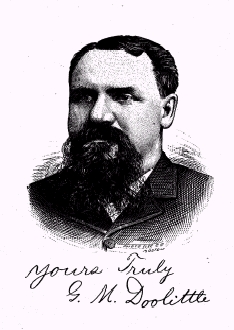
Doolittle_Gilbert

Birth: April 14th, 1846

Death: June 3rd, 1918

Gilbert M. Doolittle (1846-1918) was a 19th-century apiarist and author considered to be the father of commercial queen rearing. His book Scientific Queen-Rearing: As Practically Applied (Thomas G. Newman: Chicago, 1888) was reissued over several editions.

Doolittle also wrote ​​several brochures on beekeeping, and submitted regular articles to Gleanings in Bee Culture over many years. His involvement coincided with a great expansion of beekeeping knowledge in the United States.

Bibliography

  • Scientific Queen-Rearing: As Practically Applied pp. 169. Chicago: Newman & Son (1889).
  • Description of the Hive I Use, and My Management of Bees pp. 15. Chicago: Newman & Son (1900).
  • Management of Out-Apiaries pp. 36. (4th ed.) Medina, Ohio: A. I. Root (1913).

Source: http://beekeeping.wikia.com/wiki/Gilbert_M._Doolittle

From the Online Books Page: Online books by Gilbert M. Doolittle:

  • [X-Info] Doolittle, Gilbert M., 1846-1918: Management of out-apiaries… (Medina, Ohio, The A.I. Root co., 1913) (page images at HathiTrust)
  • [X-Info] Doolittle, Gilbert M., 1846-1918: Scientific queen-rearing as practically applied; being a method by which the best of queen-bees are reared in perfect accord with nature’s ways. (Chicago, G.W. York & Co., 1901) (page images at HathiTrust)
  • [X-Info] Doolittle, Gilbert M., 1846-1918: Scientific queen-rearing as practically applied; being a method by which the best of queen-bees are reared in perfect accord with nature’s ways. (Chicago, Thomas G. Newman & Son, 1889), also by Charles C. Miller Memorial Apicultural Library WU. (page images at HathiTrust)
  • [X-Info] Doolittle, Gilbert M., 1846-1918: Scientific queen-rearing as practically applied : being a method by which the best of queen-bees are reared in perfect accord with nature’s ways / (Chicago : George W. York, 1899), also by Charles C. Miller Memorial Apicultural Library WU. (page images at HathiTrust)
  • [X-Info] Doolittle, Gilbert M., 1846-1918: Scientific queen-rearing as practically applied; being a method by which the best of queen-bees are reared in perfect accord with nature’s ways. (Hamilton, Ill. : American Bee Jr. ;, 1915), also by Charles C. Miller Memorial Apicultural Library WU. (page images at HathiTrust)
  • [X-Info] Doolittle, Gilbert M., 1846-1918: Scientific queen-rearing, practically applied, being a method by which the best of queen-bees are reared in perfect accord with nature’s ways : for the amateur and veteran in bee-keeping / (Chicago : G. W. York, 1909) (page images at HathiTrust)
  • [X-Info] Doolittle, Gilbert M., 1846-1918: A year’s work in an out-apiary, or, An average of 114 1/2 pounds of honey per colony in a poor season, and how it was done / (Medina, Ohio : A.I. Root, 1908) (page images at HathiTrust; US access only)
  • [X-Info] Doolittle, Gilbert M., 1846-1918: A year’s work in an out-apiary, or, an average of 114 1/2 pounds of honey per colony, in a poor season, and how it was done / (Medina, Ohio : A.I. Root, 1908) (page images at HathiTrust)
  • [X-Info] Doolittle, Gilbert M., 1846-1918: A year’s work in an out-apiary, or an average of 114 1/2 pounds of honey per colony in a poor season, and how it was done. / (Medina, Ohio, A.I. Root, 1909), also by Charles C. Miller Memorial Apicultural Library WU. (page images at HathiTrust)

Feel free to share this on:

  • Share on Facebook (Opens in new window) Facebook
  • Share on X (Opens in new window) X
  • Share on Pinterest (Opens in new window) Pinterest
  • Email a link to a friend (Opens in new window) Email
  • Share on LinkedIn (Opens in new window) LinkedIn
  • Share on Reddit (Opens in new window) Reddit
  • Share on Tumblr (Opens in new window) Tumblr
  • Print (Opens in new window) Print
  • Share on Telegram (Opens in new window) Telegram
  • Share on WhatsApp (Opens in new window) WhatsApp
Like Loading...

Image

Happy Birthday Dr. Elton James Dyce

15 Wednesday Jul 2020

Tags

birthday, creamed honey, crystalization, Dr. Elton James Dyce, famous beekeepers, honey

elton james dyce

July 15, 1900 — February 23, 1976

Dyce was best known for his process for controlling the crystallization and fermentation of honey leading to the popular creamed honey. His process is used throughout the world in all major honey-producing countries.

Professor Emeritus E. J. Dyce served as assistant professor, associate professor, and professor of apiculture in the University’s Department of Entomology for twenty-three years. He had retired on December 31, 1965. A native of Ontario, Dyce served as demonstrator, lecturer, and professor of apiculture at the Ontario Agricultural College in Guelph, now Guelph University, from 1924 to 1940. He was the first manager of the Finger Lakes Honey Producers Cooperative in Groton, New York, between 1940 and 1942; in that position he worked to develop a wide market for New York State honey.

Dr. Dyce was born and raised in Meaford, Ontario. He obtained his B.S.A. from Ontario Agricultural College in 1923. He earned his M.S. degree at McGill University where he was a Macdonald scholar. He obtained his Ph.D. degree at Cornell under the direction of Professor E.F. Phillips.

The Dyce Process

Dr. E. J. Dyce, then professor of Apiculture at Guelph University and later Professor of Apiculture at Cornell University, developed the first practical process for making a granulated honey in 1928. Dyce later patented the process and in Canada gave the patent rights to the Province of Ontario. In the United States the rights were given to Cornell University. Much of the money earned in the United States was invested and the income is still used to support research on bees and honey at Cornell. The patent has now expired and anyone may manufacture and market the product.

Some Facts About Granulation And Fermentation

When Dyce began his studies there was little known about honey granulation and fermentation. He was aware that all natural honeys contain yeast. When the moisture content of the honey is somewhat above 19 percent, these yeast cells grow, producing carbon dioxide and alcohol. The yeasts found in honey are not the same as those used to make alcoholic beverages or bread but belong to the genus zygosaccharomyces. However, carbon dioxide may be produced in such quantity in fermenting honey as to burst the drums or containers in which the honey is packed. The foul odor produced by fermentation makes the honey unmarketable. If it is not damaged too badly it may be used as bee food.

When honey granulates a small amount of the water in honey is taken into the sugar crystals. However, the quantity of water so contained is not proportional to the amount of water in the honey. Thus one may have a jar, drum or container of partially crystallized honey in which the liquid fraction has a moisture content higher than that of the original honey. When this occurs the honey may ferment. Dyce recognized that if he was to control the granulation of honey he must first pasteurize the product. Any seed crystals he added must also be made from honey, which had been pasteurized.

Dyce found that the optimum temperature for honey granulation is 57’ F. There has been much conflict about this question in the literature. Many people were of the opinion that a fluctuating temperature speeded up granulation; Dyce showed this was not true. Most granulated honeys will have a firm texture six to 14 days after the introduction of seed crystals if held at the proper temperature. In commercial practice rooms used for holding honey the process of crystallizing are held within 10’F. of the optimum temperature.

Pasteurization of honey destroys the nuclei on which crystals might grow. Dyce found he could introduce previously granulated honey, that which had been ground and the crystals broken, into honey to be crystallized.

These crystals are called starters. When five percent of a ground, finely granulated honey was introduced into newly pasteurized honey there is a sufficient quantity of seed to produce a high quality, finely crystallized honey. In commercial practice most firms use eight to ten percent starter; under ideal conditions less may be used. An important factor is that the seed crystals must not be warmed too long and thereby caused to melt partially.

Dyce processed honey

Dark, strong flavored honeys have a lighter color and milder flavor when made into a finely granulated honey; this fact has led some packers to use less than desirable honey in making granulated honey. Honeys used to make granulated honey should be of table quality. The optimum moisture content is 17 ½ to 18 percent; in the northern states 18 percent in winter and 17 ½ percent in summer; in the southern states 17 ½ percent is used throughout the year. The moisture content of a crystallized honey has a great effect on its hardness and therefore its spreadability. Honeys which have a higher or lower moisture content will be too hard or too soft and will not spread properly when spread at room temperature. The first step then is the selection and blending of honeys of proper color and moisture contents.

Honeys to be processed by the Dyce process need not be filtered. In fact, filtering removes certain of the natural elements present in honey, especially pollen. The honey should be heated to about 125’F at which temperature it should be carefully strained. Dyce recommended the honey next be rapidly heated to 150’F and then cooled rapidly. This temperature is sufficiently high to kill the yeast present. Prof. G.F. Townsend of Guelph University showed that yeasts in honey were killed if it was held at 160’F for one minute or 140’F for 30 minutes or some equivalent combination of time and temperature between these two extremes. In commercial practice e there is time involved between heating and cooling the honey, which also has an effect on yeasts. If the honey in a bulk tank is heated to 150’F and then cooled, even under optimum conditions, it will have heated enough to kill any yeast cells present.

The Starter Crystals

For a starter one uses granulated honey, which has been previously made by the Dyce process. It is not satisfactory to take previously granulated honey from the grocer’s shelf to be used as seed since the high Temperature at which this honey is held in a store will have started to melt the crystal nuclei present. One method of obtaining a yeast-free, finely granulated honey to use as a starter is to grind with a mortar and pestle a small amount of coarsely crystallized honey that had been heated (pasteurized) previously. The honey must be ground very finely and preferably at a temperature in the vicinity of 57’F as the crystals may melt at higher temperatures. The honey into which the crystal nuclei are introduced must also be cooled before the starter is added. Most of the grinders used for starter for Dyce crystallized honey are homemade or modifications of meat or food grinders on the market.

Air and Crystallized Honey

Honey which is in the process of granulating and which is held at lower than room temperatures is viscous. Often a number of air bubbles are incorporated into it in the process of cooling and/or adding the seed. These small air bubbles may rise to the surface of the product and give it a white frothy appearance. This white froth may be avoided by allowing the honey to settle a few hours before it is packed, or packing and cooling the honey rapidly so the air bubbles are incorporated into the final product. The air has no objectionable effect on the flavor.

Granulated honey in glass may pull away from the glass. The honey may assume a white froth-like appearance between the honey and the inside of the glass. Customers usually do not realize what has happened and may think the honey has spoiled or become moldy. (Mold cannot grow on or in honey.) It is for this reason that granulated honey is usually packed in tubs or glass jars with labels that wrap completely around the container.

Stack Heat

The seed crystals are usually added to the cooling honey when the temperature has reached about 75’F. It is very difficult to force honey to flow at lower temperatures. This temperature is higher than desired but if it is not held too long little damage is done. However, when cases of newly packed, crystallized honey are placed on pallets or trucks the cases must be carefully spaced so that air can flow between and around the cases. If this is not done the stack of newly packed jars will retain heat. This heat could have an adverse effect on seed crystals and cause them to be less effective as crystal nuclei.

Shelf Life

Properly made granulated honey has a long shelf life, longer than most liquid honey. Honey packers have observed that they may make and hold granulated honey for long periods of time, much longer than they would have stored packed, liquid honey. Granulated honey made and held under controlled conditions retains its fine texture, color, appearance and taste. There is probably a wider market for honey in this form than is now being exploited.

Sources:

Crystallized Honey By Roger A. Morse

Cornell University Memorial Statement

Patent Application and Description of Creamed Honey Process

Books by Elton J Dyce:

Dyce, E. J.

  • Beekeeping. General Information
    Cornell Extension Bulletin: October, 1955 (Number 833, Revised Edition)
  • Beekeeping. General Information
    Cornell Extension Bulletin: May, 1970 (Number 833, Revised Edition)
  • Beekeeping. General Information
    Cornell Extension Bulletin: August, 1951 (Number 833)
  • Wintering Honey Bees in New York State
    Cornell Extension Bulletin: November, 1974 (Number 1054, Reprint Edition)
  • Wintering Honeybees in New York State
    Cornell Extension Bulletin: November, 1960 (Number 1054)

Dyce, Elton J.

  • Fermentation and Crystallization of Honey
    Cornell Agr. Experiment Station Bulletin: October, 1931 (Number 528)

Feel free to share this on:

  • Share on Facebook (Opens in new window) Facebook
  • Share on X (Opens in new window) X
  • Share on Pinterest (Opens in new window) Pinterest
  • Email a link to a friend (Opens in new window) Email
  • Share on LinkedIn (Opens in new window) LinkedIn
  • Share on Reddit (Opens in new window) Reddit
  • Share on Tumblr (Opens in new window) Tumblr
  • Print (Opens in new window) Print
  • Share on Telegram (Opens in new window) Telegram
  • Share on WhatsApp (Opens in new window) WhatsApp
Like Loading...

Posted by Beekeeping365 | Filed under beekeeper, beekeeping, birthday, birthdays, honey

≈ 1 Comment

Lorenzo Langstroth’s Birthday

25 Tuesday Dec 2018

Posted by Beekeeping365 in beekeeping, beekeeping equipment, beekeeping history, birthday, famous beekeepers

≈ 3 Comments

Tags

beekeeping, beekeeping books, beekeeping history, birthday, famous beekeepers, Langstroth, Lorenzo Langstroth's birthday, The Hive and the Honey Bee

toast to langstroth

A Toast to Langstroth

This year, beekeepers are celebrating the 208th year anniversary of “the Father of American Beekeeping.” Lorenzo Lorraine Langstroth was born Christmas Day, December 25, 1810 in Philadelphia, Pennsylvania. L. L. Langstroth developed the modern hive after exploring existing hives including the pre-cursor to the top bar hive. Francis Huber invented the Leaf Hive in 1789 in Switzerland. The leaf hive had movable solid frames that touched making the box like top bar hives. The leaf hive was examined like pages in a book.

(photo: In 2010 the Philadelphia Beekeepers Guild began a wonderful Christmas tradition. They gather each year at 106 South Front Street, Philadelphia; the birthplace of Lorenzo L. Langstroth on Christmas Day, which is also Langstroth’s birthday, for a Champagne / mead toast to Langstroth.) A Toast to Langstroth)

In the summer of 1851 Langstroth developed the hive that is still used today which included removable frames while respecting bee space. Langstroth patented the first movable frame hive on October 5, 1852. Henry Bourquin, a fellow beekeeper and Philadelphia cabinetmaker, made Langstroth’s first hives. Langstroth hives encourage rapid inspection without enraging the bees. Weak colonies can be strengthened. Strong colonies can increase space. Queens are quickly replaced. Diseases, pests and parasites can be quickly determined and remedied. Inspection by removable frames is now required in the United States. Langstroth also began using queen excluders to confine eggs to the lower boxes. Removable frames encouraged honey extraction without destroying the comb. Honey comb requires 7 to 14 pounds of honey for every pound of beeswax. Besides increased honey production, the beehive no longer had to be killed to remove the honey.

Langstroth published “The Hive and the Honey-Bee” in 1853 still in print today after 40 editions. Langstroth died October 6, 1895 while preaching a sermon on the love of God at the Wayne Avenue Presbyterian church in Dayton. L. L. Langstroth is buried at Woodland Cemetery, Dayton, Ohio. Langstroth’s epitaph reads —

Langstroth

INSCRIBED TO THE MEMORY OF REV. L.L. LANGSTROTH, “FATHER OF AMERICAN BEEKEEPING,” BY HIS AFFECTIONATE BENEFICIARIES WHO, IN THE REMEMBRANCE OF THE SERVICES RENDERED BY HIS PERSISTENT AND PAINSTAKING OBSERVATIONS AND EXPERIMENTS WITH THE HONEY BEE, HIS IMPROVEMENTS IN THE HIVE, AND THE LITERARY ABILITY SHOWN IN THE FIRST SCIENTIFIC AND POPULAR BOOK ON THE SUBJECT OF BEEKEEPING IN THE UNITED STATES, GRATEFULLY ERECT THIS MONUMENT.

Langstroth_Hive_Honey-Bee_1206

Ebook:  The Hive and the Honey Bee

Audio recording: The Hive and the Honey Bee

Feel free to share this on:

  • Share on Facebook (Opens in new window) Facebook
  • Share on X (Opens in new window) X
  • Share on Pinterest (Opens in new window) Pinterest
  • Email a link to a friend (Opens in new window) Email
  • Share on LinkedIn (Opens in new window) LinkedIn
  • Share on Reddit (Opens in new window) Reddit
  • Share on Tumblr (Opens in new window) Tumblr
  • Print (Opens in new window) Print
  • Share on Telegram (Opens in new window) Telegram
  • Share on WhatsApp (Opens in new window) WhatsApp
Like Loading...

Happy Birthday Emily Dickinson

10 Sunday Dec 2017

Posted by Beekeeping365 in beekeeping history, birthday, birthdays

≈ 1 Comment

Tags

beekeeping history, birthday, Emily Dickinson, The Bee

Happy Birthday Emily Dickinson – Born Dec. 10, 1830

The Bee
By Emily Dickinson

Like trains of cars on tracks of plush
I hear the level bee:
A jar across the flowers goes,
Their velvet masonry
Withstands until the sweet assault
Their chivalry consumes,
While he, victorious, tilts away
To vanquish other blooms.
His feet are shod with gauze,
His helmet is of gold;
His breast, a single onyx
With chrysoprase, inlaid.
His labor is a chant,
His idleness a tune;
Oh, for a bee’s experience
Of clovers and of noon!
…
A team of archaeologists is rediscovering just how extensive Emily Dickinson’s garden was. Historical evidence shows Emily Dickinson’s Garden contained an abundance of blooming flowers. Archaeologists recently uncovered portions of a pathway leading to nineteenth-century flower and vegetable beds.Emily Dickinson – was an American poet born in Amherst, Massachusetts. (December 10, 1830 – May 15, 1886) ~ during her lifetime she “was known more widely as a gardener, perhaps, than as a poet”. Emily Dickinson’s niece, Martha Dickinson Bianchi, remembered “carpets of lily-of-the-valley and pansies, platoons of sweetpeas, hyacinths, enough in May to give all the bees of summer dyspepsia. There were ribbons of peony hedges and drifts of daffodils in season, marigolds to distraction—a butterfly utopia” Archaeology – Remnants of Emily Dickinson’s Gardens Sought

AMHERST, MASSACHUSETTS—Emily Dickinson is known today as one of the greatest poets of the nineteenth century, but in her lifetime she may have been more renowned for her gardening. At her family estate, she helped to tend an orchard, a greenhouse, and an expanse of flower and vegetable gardens. The size of these gardens was dramatically decreased in the decades after Dickinson died in 1886, but now a team of archaeologists is searching for their remnants. Last summer, they uncovered portions of a pathway leading to nineteenth-century flower and vegetable beds. “If we can follow out the historic path to its end, then theoretically we would find the location of past gardens,” Kerry Lynch of Archaeological Services at the University of Massachusetts, Amherst, told the New York Times. If they do locate these gardens, the archaeologists hope to find seeds or other botanical evidence dating back to when Dickinson was alive.

Source:
Archaeology – Remnants of Emily Dickinson’s Gardens Sought
http://www.archaeology.org/news/4458-160513-massachusetts-dickinson-gardens

Emily Dickinson
https://en.wikipedia.org/wiki/Emily_Dickinson


Feel free to share this on:

  • Share on Facebook (Opens in new window) Facebook
  • Share on X (Opens in new window) X
  • Share on Pinterest (Opens in new window) Pinterest
  • Email a link to a friend (Opens in new window) Email
  • Share on LinkedIn (Opens in new window) LinkedIn
  • Share on Reddit (Opens in new window) Reddit
  • Share on Tumblr (Opens in new window) Tumblr
  • Print (Opens in new window) Print
  • Share on Telegram (Opens in new window) Telegram
  • Share on WhatsApp (Opens in new window) WhatsApp
Like Loading...
Follow Beekeeping365 on WordPress.com

Enter your email address to follow this blog and receive notifications of new posts by email.

Calendar

August 2026
S M T W T F S
 1
2345678
9101112131415
16171819202122
23242526272829
3031  
« Jul    

Posts by Month:

  • August 2026 (4)
  • July 2026 (1)
  • May 2026 (2)
  • January 2026 (3)
  • July 2025 (1)
  • April 2024 (1)
  • September 2022 (1)
  • July 2022 (1)
  • March 2022 (13)
  • February 2022 (17)
  • January 2022 (4)
  • December 2021 (4)
  • November 2021 (7)
  • October 2021 (1)
  • September 2021 (3)
  • August 2021 (11)
  • July 2021 (18)
  • June 2021 (5)
  • May 2021 (2)
  • April 2021 (9)
  • March 2021 (2)
  • February 2021 (5)
  • January 2021 (16)
  • December 2020 (15)
  • November 2020 (15)
  • October 2020 (11)
  • July 2020 (1)
  • February 2020 (1)
  • March 2019 (2)
  • February 2019 (4)
  • January 2019 (1)
  • December 2018 (10)
  • November 2018 (8)
  • October 2018 (15)
  • September 2018 (25)
  • August 2018 (3)
  • July 2018 (11)
  • June 2018 (27)
  • May 2018 (33)
  • April 2018 (20)
  • March 2018 (20)
  • February 2018 (12)
  • January 2018 (22)
  • December 2017 (18)
  • November 2017 (17)
  • October 2017 (25)
  • September 2017 (27)
  • August 2017 (21)
  • July 2017 (29)
  • June 2017 (28)
  • May 2017 (19)
  • April 2017 (17)
  • March 2017 (19)
  • February 2017 (12)
  • January 2017 (13)
  • December 2016 (5)

Posts by Categories:

  • absconding (1)
  • africanized honey bees (1)
  • apitherapy (1)
  • bee health (6)
  • bee law (2)
  • bee lining (2)
  • bee removals (2)
  • beekeeper (5)
  • beekeeper education (16)
  • beekeeping (612)
    • South Carolina (2)
  • beekeeping author (10)
  • beekeeping books (14)
  • beekeeping calendar (4)
  • beekeeping chores (8)
  • beekeeping equipment (26)
  • beekeeping history (49)
  • beekeeping management (37)
  • beekeeping pest management (8)
  • beekeeping seasons (23)
  • beekeeping vocabulary (16)
  • beeswax (13)
  • biography (4)
  • biology (14)
  • birthday (40)
  • birthdays (34)
  • book review (16)
  • breakfast (1)
  • calendar (4)
  • CCD (1)
  • chores (6)
  • comb (7)
  • comb honey (10)
  • commercial beekeeping (2)
  • cutouts (2)
  • dearth (3)
  • defensiveness (2)
  • diseases (9)
  • drawn comb (6)
  • ecology (4)
  • education (28)
  • equipment (25)
  • extracting (1)
  • fall nectar flow (1)
  • famous beekeepers (27)
  • feeding bees (7)
  • first blog entry (1)
  • folklore (1)
  • food (7)
  • forage (4)
  • hacks (3)
  • hive inspections (8)
  • hive placement (2)
  • hive products (6)
  • honey (90)
  • honey as food (22)
  • honey bee anatomy (3)
  • honey bee behavior (25)
  • honey bee biology (43)
  • honey bee genetics (4)
  • honey bee nutrition (1)
  • honey bee photos (6)
  • Honey Bee Research (1)
  • honey bee vocabulary (12)
  • honey bees (14)
  • honey judging (4)
  • honey recipe (65)
  • humor (13)
  • inspections (10)
  • journal (1)
  • log book (1)
  • making increase (3)
  • management (82)
  • mentoring (2)
  • mites (3)
  • national pollinator week (2)
  • nectar flow (6)
  • nomenclature (1)
  • opinion (8)
  • out yards (1)
  • outyards (1)
  • package bees (1)
  • pears (1)
  • pests (17)
  • plants for bees (3)
  • polish (1)
  • pollen (4)
  • pollination (11)
  • pollinators (7)
  • product review (1)
  • production (1)
  • products (3)
  • propolis (2)
  • queens (17)
  • raw honey (6)
  • recipe (88)
  • removals (1)
  • safety (3)
  • sales (2)
  • season (1)
  • seasons (21)
  • sideliner (1)
  • small hive beetles (1)
  • spring buildup (4)
  • state fair (2)
  • sustainable (7)
  • swarms (27)
  • ursurpation (1)
  • usurpation (1)
  • varroa (21)
  • varroa destructor (12)
  • varroa mites (24)
  • Winter (5)
  • winter solstice (2)
  • woodenware (3)
  • yellow jackets (2)

Sassafras Bee Farm on Facebook

Sassafras Bee Farm on Facebook

Sassafras Bee Farm

Sassafras Bee Farm

Recent Posts

  • Meeting Reality vs What Seems Deserved
  • Everything Starts with a Tasty Meal: The Science Behind a Beekeeper’s Best Pest-Management Insight
  • Pest Control
  • State Fair Wax Preparation
  • Sherlock Holmes and Beekeeping: A Unique Connection

Beekeeping365 on Facebook

Beekeeping365 on Facebook

Top Posts & Pages

  • Types of bees by Fat Daddy’s Apiary
    Types of bees by Fat Daddy’s Apiary
  • Meeting Reality vs What Seems Deserved
    Meeting Reality vs What Seems Deserved
  • Old-fashioned Honey Wafer Recipe by A Hundred Years Ago
    Old-fashioned Honey Wafer Recipe by A Hundred Years Ago

Blog Stats

  • 141,302 hits

Website Built with WordPress.com.

  • Subscribe Subscribed
    • Beekeeping365
    • Join 426 other subscribers
    • Already have a WordPress.com account? Log in now.
    • Beekeeping365
    • Subscribe Subscribed
    • Sign up
    • Log in
    • Report this content
    • View site in Reader
    • Manage subscriptions
    • Collapse this bar
Loading Comments...
%d