• Sassafras Bee Farm
  • About
  • Contact

Beekeeping365

~ The more I studied beekeeping, the less I knew, until, finally, I knew nothing. But, even though I knew nothing, I still had plenty to unlearn. Charles Martin Simon

Beekeeping365

Tag Archives: pollen substitute

Honey bee nutrition

31 Friday Aug 2018

Posted by Beekeeping365 in bee health, beekeeping, beekeeping management, feeding bees, pollen

≈ Leave a comment

Tags

feeding bees, honey bee nutrition, pollen, pollen substitute

Importance of Nutrition in a Bee Colony

As with all living creatures, good nutrition is essential for a healthy bee colony. Many beekeepers focus mainly on the amount of liquid stores (honey/nectar reserves). However, pollen is just as important, yet it’s often overlooked.

  • Low liquid stores can lead to starvation in both summer and winter.
  • Low pollen availability can have longer-lasting effects, because larvae need proper nutrition to develop well. Poorly nourished larvae can grow into weak, underperforming, or unhealthy adult bees—sometimes for weeks or months.

“Reading” a Colony” During Inspections

A key part of beekeeping is learning to “read” what the colony is telling you.

During each inspection, make it a habit to look into a few cells containing freshly hatched larvae—about 4–5 days after egg laying. What you see can reveal whether the colony has enough nutrition coming in:

  • If the colony has plenty of incoming food, larvae will be surrounded by a large puddle of brood food.
  • If incoming food is limited, the cell bottoms may appear almost dry.

If this kind of observation were taught more widely, new beekeepers would learn faster and with more confidence.


What Pollen Color Can Tell You

Pollen quality varies depending on the plant source. In general, colonies do best when they receive a wide variety of pollen types, because diversity supports healthier nutrition.

When inspecting, take note of the color of the pollen:

  • More variation in color = more variety of forage sources.
  • Sometimes, even within the same apiary on the same day:
    • some colonies may show mostly one pollen color (suggesting the bees are “locked on” to one source),
    • while others show a mix of colors (suggesting access to multiple sources).

Poor Nutrition Isn’t Always About Forage

Low nutrition doesn’t always mean the colony lacks pollen and nectar in the landscape. Sometimes the real issue is internal:

  • the ratio of nurse bees to larvae may be too low
    • for example, during spring buildup
  • a nucleus (nuc) formed with an imbalance of bees may struggle to produce enough brood food

What Happens When Nutrition Is Poor

Colonies that don’t get adequate nutrition become more vulnerable to disease, including:

  • chalk brood
  • European Foul Brood (EFB)

These problems are often more common in spring, when the colony may not have enough nurse bees available to properly feed larvae.


Recommended Resources

1) “Fat Bees Skinny Bees”

  • A downloadable publication and practical guide on bee nutrition
  • Written by Doug Somerville for Australia’s Rural Industries Research and Development Corporation (RIRDC)

2) “Honey Bee Nutrition and Supplementary Feeding”

  • A downloadable Australian leaflet
  • Written by Doug Somerville, published by the New South Wales Department of Agriculture
  • The introduction states it provides an overview of:
    • honey bee nutritional requirements
    • the role of different carbohydrate and protein supplements
  • For Australia (with the right context), it’s described as clear and very useful

There’s plenty more available on the internet. The key is to:

  • read broadly,
  • then apply the information to your local conditions.

Feel free to share this on:

  • Share on Facebook (Opens in new window) Facebook
  • Share on X (Opens in new window) X
  • Share on Pinterest (Opens in new window) Pinterest
  • Email a link to a friend (Opens in new window) Email
  • Share on LinkedIn (Opens in new window) LinkedIn
  • Share on Reddit (Opens in new window) Reddit
  • Share on Tumblr (Opens in new window) Tumblr
  • Print (Opens in new window) Print
  • Share on Telegram (Opens in new window) Telegram
  • Share on WhatsApp (Opens in new window) WhatsApp
Like Loading...

Quote

Pros and Cons of Feeding Dry Pollen Sub by Bee Informed Partnership

22 Friday Jun 2018

Posted by Beekeeping365 in beekeeping, beekeeping management, management, pollen

≈ Leave a comment

Tags

beekeeping management, pollen, pollen substitute

Most beekeepers have come to realize that due to lack of natural forage in our urban and agricultural landscapes, feeding pollen substitute has become necessary to keep bees healthy in most parts of the country. Last summer was an especially challenging season in the West due to extremely hot and dry conditions. Despite a wet spring in California and Oregon last year, the spigot was shut off abruptly early in the summer and what little forage was available quickly shriveled. Beekeepers who had not been providing supplemental feed saw their colonies dwindle as the summer went on. Although it’s still early, this year is looking like it could be similar.

Read the entire article here: Pros and Cons of Feeding Dry Pollen Sub — Bee Informed Partnership

Feel free to share this on:

  • Share on Facebook (Opens in new window) Facebook
  • Share on X (Opens in new window) X
  • Share on Pinterest (Opens in new window) Pinterest
  • Email a link to a friend (Opens in new window) Email
  • Share on LinkedIn (Opens in new window) LinkedIn
  • Share on Reddit (Opens in new window) Reddit
  • Share on Tumblr (Opens in new window) Tumblr
  • Print (Opens in new window) Print
  • Share on Telegram (Opens in new window) Telegram
  • Share on WhatsApp (Opens in new window) WhatsApp
Like Loading...

Popcorn Bees

18 Thursday Jan 2018

Posted by Beekeeping365 in beekeeping, Winter

≈ 2 Comments

Tags

humor, pollen substitute, popcorn bees

26230679_10212642139303252_1167337616488476259_n

Yesterday some of my colonies were flying – some seem more cold tolerant than others and fly when the temps get to the upper 40s. Anyway, there was a fair number of bees hitting the dry pollen substitute from about noon to 4pm. I went out to do some work just before dark and while out decided to replenish the pollen feeders. I found a couple dozen bees inside that had missed the last opportunity to return to their hives and were in a state of torpor inside the feeders. Wanting to refill the feeders I dumped them and the leftover pollen substitute onto a baking pan before refilling the feeders. My thinking was I’d place them somewhere protected until it warmed up today. Most of the bees looked like popcorn after I dumped them – covered with pollen sub.

So after I refilled the feeders and placed them back on their poles I went to retrieve the baking pans to separate the pollen sub from the bees. They were gone. Everything was gone.

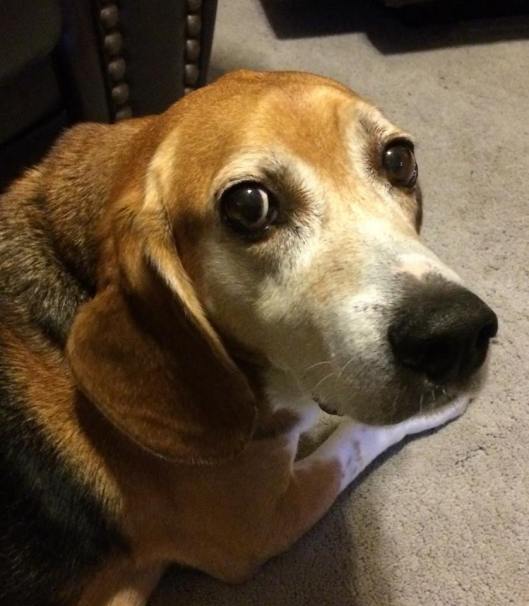
Then I spotted the culprit slinking off. My dog Buster had eaten the pollen sub and the bees. I wonder if he found them tasty? He’s still here his morning and seems no worse for it.

Feel free to share this on:

  • Share on Facebook (Opens in new window) Facebook
  • Share on X (Opens in new window) X
  • Share on Pinterest (Opens in new window) Pinterest
  • Email a link to a friend (Opens in new window) Email
  • Share on LinkedIn (Opens in new window) LinkedIn
  • Share on Reddit (Opens in new window) Reddit
  • Share on Tumblr (Opens in new window) Tumblr
  • Print (Opens in new window) Print
  • Share on Telegram (Opens in new window) Telegram
  • Share on WhatsApp (Opens in new window) WhatsApp
Like Loading...
Follow Beekeeping365 on WordPress.com

Enter your email address to follow this blog and receive notifications of new posts by email.

Calendar

August 2026
S M T W T F S
 1
2345678
9101112131415
16171819202122
23242526272829
3031  
« Jul    

Posts by Month:

  • August 2026 (4)
  • July 2026 (1)
  • May 2026 (2)
  • January 2026 (3)
  • July 2025 (1)
  • April 2024 (1)
  • September 2022 (1)
  • July 2022 (1)
  • March 2022 (13)
  • February 2022 (17)
  • January 2022 (4)
  • December 2021 (4)
  • November 2021 (7)
  • October 2021 (1)
  • September 2021 (3)
  • August 2021 (11)
  • July 2021 (18)
  • June 2021 (5)
  • May 2021 (2)
  • April 2021 (9)
  • March 2021 (2)
  • February 2021 (5)
  • January 2021 (16)
  • December 2020 (15)
  • November 2020 (15)
  • October 2020 (11)
  • July 2020 (1)
  • February 2020 (1)
  • March 2019 (2)
  • February 2019 (4)
  • January 2019 (1)
  • December 2018 (10)
  • November 2018 (8)
  • October 2018 (15)
  • September 2018 (25)
  • August 2018 (3)
  • July 2018 (11)
  • June 2018 (27)
  • May 2018 (33)
  • April 2018 (20)
  • March 2018 (20)
  • February 2018 (12)
  • January 2018 (22)
  • December 2017 (18)
  • November 2017 (17)
  • October 2017 (25)
  • September 2017 (27)
  • August 2017 (21)
  • July 2017 (29)
  • June 2017 (28)
  • May 2017 (19)
  • April 2017 (17)
  • March 2017 (19)
  • February 2017 (12)
  • January 2017 (13)
  • December 2016 (5)

Posts by Categories:

  • absconding (1)
  • africanized honey bees (1)
  • apitherapy (1)
  • bee health (6)
  • bee law (2)
  • bee lining (2)
  • bee removals (2)
  • beekeeper (5)
  • beekeeper education (16)
  • beekeeping (612)
    • South Carolina (2)
  • beekeeping author (10)
  • beekeeping books (14)
  • beekeeping calendar (4)
  • beekeeping chores (8)
  • beekeeping equipment (26)
  • beekeeping history (49)
  • beekeeping management (37)
  • beekeeping pest management (8)
  • beekeeping seasons (23)
  • beekeeping vocabulary (16)
  • beeswax (13)
  • biography (4)
  • biology (14)
  • birthday (40)
  • birthdays (34)
  • book review (16)
  • breakfast (1)
  • calendar (4)
  • CCD (1)
  • chores (6)
  • comb (7)
  • comb honey (10)
  • commercial beekeeping (2)
  • cutouts (2)
  • dearth (3)
  • defensiveness (2)
  • diseases (9)
  • drawn comb (6)
  • ecology (4)
  • education (28)
  • equipment (25)
  • extracting (1)
  • fall nectar flow (1)
  • famous beekeepers (27)
  • feeding bees (7)
  • first blog entry (1)
  • folklore (1)
  • food (7)
  • forage (4)
  • hacks (3)
  • hive inspections (8)
  • hive placement (2)
  • hive products (6)
  • honey (90)
  • honey as food (22)
  • honey bee anatomy (3)
  • honey bee behavior (25)
  • honey bee biology (43)
  • honey bee genetics (4)
  • honey bee nutrition (1)
  • honey bee photos (6)
  • Honey Bee Research (1)
  • honey bee vocabulary (12)
  • honey bees (14)
  • honey judging (4)
  • honey recipe (65)
  • humor (13)
  • inspections (10)
  • journal (1)
  • log book (1)
  • making increase (3)
  • management (82)
  • mentoring (2)
  • mites (3)
  • national pollinator week (2)
  • nectar flow (6)
  • nomenclature (1)
  • opinion (8)
  • out yards (1)
  • outyards (1)
  • package bees (1)
  • pears (1)
  • pests (17)
  • plants for bees (3)
  • polish (1)
  • pollen (4)
  • pollination (11)
  • pollinators (7)
  • product review (1)
  • production (1)
  • products (3)
  • propolis (2)
  • queens (17)
  • raw honey (6)
  • recipe (88)
  • removals (1)
  • safety (3)
  • sales (2)
  • season (1)
  • seasons (21)
  • sideliner (1)
  • small hive beetles (1)
  • spring buildup (4)
  • state fair (2)
  • sustainable (7)
  • swarms (27)
  • ursurpation (1)
  • usurpation (1)
  • varroa (21)
  • varroa destructor (12)
  • varroa mites (24)
  • Winter (5)
  • winter solstice (2)
  • woodenware (3)
  • yellow jackets (2)

Sassafras Bee Farm on Facebook

Sassafras Bee Farm on Facebook

Sassafras Bee Farm

Sassafras Bee Farm

Recent Posts

  • Meeting Reality vs What Seems Deserved
  • Everything Starts with a Tasty Meal: The Science Behind a Beekeeper’s Best Pest-Management Insight
  • Pest Control
  • State Fair Wax Preparation
  • Sherlock Holmes and Beekeeping: A Unique Connection

Beekeeping365 on Facebook

Beekeeping365 on Facebook

Top Posts & Pages

  • Types of bees by Fat Daddy’s Apiary
    Types of bees by Fat Daddy’s Apiary
  • Meeting Reality vs What Seems Deserved
    Meeting Reality vs What Seems Deserved
  • Old-fashioned Honey Wafer Recipe by A Hundred Years Ago
    Old-fashioned Honey Wafer Recipe by A Hundred Years Ago

Blog Stats

  • 141,308 hits

Website Built with WordPress.com.

  • Subscribe Subscribed
    • Beekeeping365
    • Join 426 other subscribers
    • Already have a WordPress.com account? Log in now.
    • Beekeeping365
    • Subscribe Subscribed
    • Sign up
    • Log in
    • Report this content
    • View site in Reader
    • Manage subscriptions
    • Collapse this bar
Loading Comments...
%d