• Beekeeping Educational Files
  • About
  • Contact
  • Beekeeping365 Blog

Beekeeping365

~ The more I studied beekeeping, the less I knew, until, finally, I knew nothing. But, even though I knew nothing, I still had plenty to unlearn. Charles Martin Simon

Beekeeping365

Monthly Archives: February 2026

Midlands Beekeeping Calendar for February

01 Sunday Feb 2026

Posted by Beekeeping365 in beekeeping, beekeeping calendar, calendar, chores, management

≈ 4 Comments

Tags

beekeeping, beekeeping calendar, bees, chores, honey, honeybees, management, nature
imag2669

These chores are for the Midlands of South Carolina or a similar climate where the bees are flying at least a few hours most days of the year. February begins a gradual warming in the Midlands but can often be all over the map with freezing temperatures as well as the occasional warm, even spring like, day.

Red Maple blooms in earnest at the beginning of this month and other early bloomers soon join in – look for them along the roadways. The queen goes full tilt with her egg laying and the colony makes plans for reproduction. A lot is happening but mostly it’s a covert operation within the hives for the bees during February. While we humans believe it’s winter, the bees have decided to go forward with spring plans and are building up their population in anticipation of colony reproduction (read what Randy Oliver has to say about Understanding Colony Buildup). For the beekeeper it’s crunch time to prepare themselves and equipment for the coming rush of spring. Bees can and sometimes begin swarming the later part of February in South Carolina.

1) During inspections this month we are looking to ensure the bees have enough food stores to support their current brood buildup. During February the bees will be intent on raising lots of brood regardless of their pantry stores. This population increase will require food for the nurse bees, larvae, and additional heat to be generated from the workers. For that reason, the use of colony food stores is dramatically increased. We are entering a risky time for colony starvation. Remember, the colony will keep everyone fed up until the last drop of honey is used then they will perish together, typically head down in the cells, if food is not available.

2) We get occasional warm, spring like, days in February.  You may do a pre-spring inspection, checking for the presence of a queen and assessing the colony and stores. In fact, it is strongly recommended you assess the colony on a nice day, warm enough that the bees are out flying. Explore into the hive as far down as the brood nest if the weather is warm and the bees are flying. Note strength, they should be gaining in population. Be purposeful and brief. Check honey supply and feed with a candy board, sugar bricks, fondant, or thick sugar syrup fed from above if below one-half super. Whatever you choose, the food must be placed close to the cluster or on top for them to access the food during cold weather. If you saved frames of honey you may add these (after thawing), placing them close to or above the cluster. When removing a top telescoping cover with the  inner cover exposed, if the bees are visible in the hole in the inner cover you likely need to feed. Typically once feeding is started it continues until the nectar flow begins to prevent starvation of the growing colony.

3) Depending on the Midlands climate, be ready for an early buildup. Some colonies, especially those that were fed through the winter, may be making swarm preparations. As brood rearing continues and populations increase, make note of increased population and congestion in the brood area. Swap (rotate) brood boxes based on your assessment of buildup. Rotating boxes provides the queen with empty drawn comb to lay in as well as disrupts the colony with regards to swarm preparations. Only rotate brood boxes when all of the nest is in the upper brood box (food chamber).  You do not want to split the cluster.  Rotating brood boxes is a swarm prevention measure, not simply to get the queen into the lower brood box.

4) When rotating boxes notice that the bees will often have built drone comb in the space between boxes (bottom bar to top bar). You will break this comb as you separate the boxes – don’t panic. Before scraping the top bars clean, visually assess for the presence of Varroa mites on the drone pupae. Also note whether the drone pupae are at the purple eyed stage which indicates queen rearing may start soon if swarm prevention efforts are not implemented.

5) Low stress swarm prevention measures that do not disrupt the brood nest, such as hive body rotation, adding drawn comb above, and nectar management can typically be safely done during early February. Later in the month, weather permitting (moderate temps), and depending on colony buildup and strength, you may want to perform more invasive swarm prevention methods such as the opening up the brood chamber with drawn comb or even empty frames if congested. (Next month we will talk about swarm control i.e. when they have ignored all your hard work and decided to swarm.)

6) If your goal is to build up for honey production, or to make increase (i.e. splits) you may want to begin to stimulate the colony with feed. This will stimulate a population growth that will accelerate rapidly. Eggs laid on Valentine’s Day, will reach foraging age by April 1st which often marks the beginning of the nectar flow in the Midlands. Be cautious, stimulating population growth will also stimulate swarm preparations. Your goal is to have lots of bees for nectar collection, but the bees have a different idea. Swarm prevention and control techniques should be constantly on your management agenda. Also, once you start feeding it is important that you continue until the nectar flow begins unless you are assured they have enough to feed larvae and heat the colony until forage is available.

7) Assess for Varroa levels early February and give a spring clean-up treatment if indicated. Your goal is very low levels now because it will be June before the nectar flow ends and supers are removed. Remember, once supers are in place your options for varroa treatment are greatly reduced. When choosing your treatment method make note of how soon it needs to be out of the hive prior to placing honey supers. Remove any medications in the hive if already in place before the nectar flow begins.

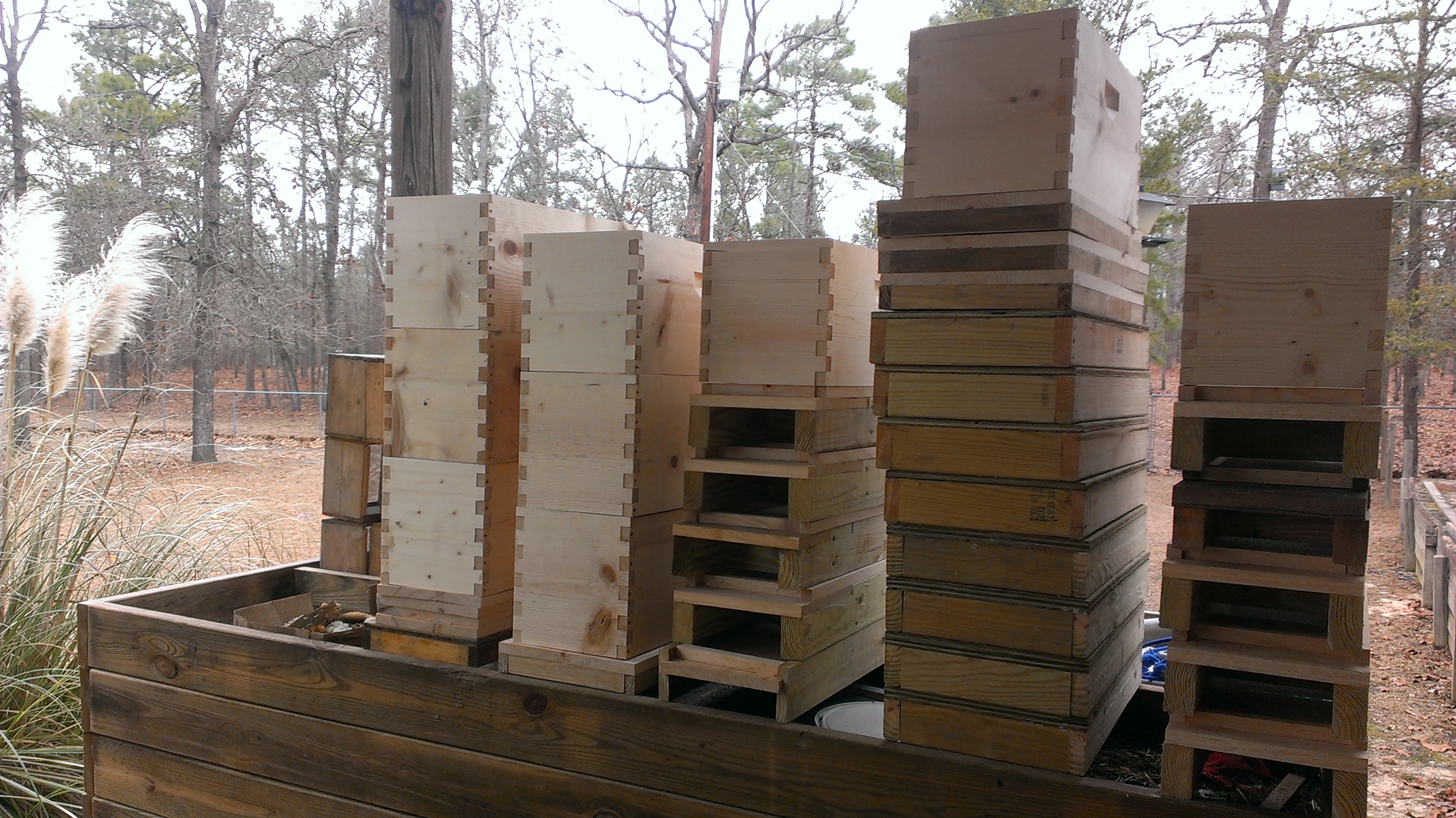
8) If not yet done, continue to assemble honey supers, frames, etc. Get them ready now because you will be busy once the season begins.

9) Notice Red Maple  starting along the roadways in the Midlands. Also Dandelions, Japanese Apricot, and Camellias.

10) Notice bees bringing in yellow pollen.

11) Place and bait swarm traps (bait hives) by mid month.

12) If you are going to chase swarms this year, prepare a well-ventilated traveling nucleus hive or a portable hive for transport. Sign up for swarm notifications with your local club, and pest control companies. In the Midlands, contact David Gobbel from the MSBA webpage if you want to be placed on the MSBA swarm call list.

13) Build and prepare woodenware and frames for upcoming spring splits.

14) If you stored your drawn comb using paradichlorobenzene for wax moth control, start the airing out process.

15) Order nucleus hives for delivery this spring or as early as possible for your area.

16) Renew your association membership.  Attend local meetings.

17) While you still have time, read a couple articles on swarm control here. Many more are available: Google search “Swarm Prevention and Control.”

18) Email your Association’s Secretary asking what you can do to help, or volunteer to lend a hand in your organization. Many hands make light work. If you’d like to see your organization grow as well as offer and maintain your current level of member services your help is needed.

The above are general guidelines for the average bee colony in the Midlands of South Carolina. We all have hives that may be outperforming the average. We also have colonies that underperform the average. Use your judgement in making changes suggested here. Beekeeping is an art as well as a science. Only you know the many, many particulars associated with your physical hives as well as the general health and population of your colonies.

Feel free to share this on:

  • Share on Facebook (Opens in new window) Facebook
  • Share on X (Opens in new window) X
  • Share on Pinterest (Opens in new window) Pinterest
  • Email a link to a friend (Opens in new window) Email
  • Share on LinkedIn (Opens in new window) LinkedIn
  • Share on Reddit (Opens in new window) Reddit
  • Share on Tumblr (Opens in new window) Tumblr
  • Print (Opens in new window) Print
  • Share on Telegram (Opens in new window) Telegram
  • Share on WhatsApp (Opens in new window) WhatsApp
Like Loading...

Midlands Beekeeping Calendar for February

01 Sunday Feb 2026

Posted by Beekeeping365 in beekeeping, beekeeping calendar, calendar, chores, management

≈ Leave a comment

Tags

beekeeping, beekeeping calendar, chores, management

imag2669

All beekeeping is local. These chores are for the Midlands of South Carolina or a similar climate where the bees are flying at least a few hours most days of the year. February begins a gradual warming in the Midlands but can often be all over the map with freezing temperatures as well as the occasional warm, even spring like, day.

Red Maple blooms in earnest at the beginning of this month and other early bloomers soon join in. The queen goes full tilt with her egg laying and the colony makes plans for reproduction. A lot is happening but mostly it’s a covert operation within the hives for the bees during February. While we humans believe it’s winter the bees have decided to go forward with spring plans and are building up their population in anticipation of colony reproduction (read what Randy Oliver has to say about Understanding Colony Buildup). For the beekeeper it’s crunch time to prepare themselves and equipment for the coming rush of spring. Bees will possibly swarm the later part of February in South Carolina.

1) During inspections this month we are looking to ensure the bees have enough food stores to support their current brood buildup. During February the bees will be intent on raising lots of brood regardless of their pantry stores. For that reason we are entering a risky time for colony starvation. It takes a lot of fuel to feed thousands of larvae. Even more to keep them warm. And add in an ever-increasing number of house bees and you can understand why the colony can quickly consume its entire pantry. Bees being bees, they will all stay fed until the day it’s gone, then disaster can occur.

2) We get occasional warm, spring like, days in February.  You may do a pre-spring inspection, checking for the presence of a queen and assessing the colony and stores. Look into the hive as far down as the brood nest if the weather is warm and the bees are flying. Be purposeful and brief. Check honey supply and feed with a candy board, sugar bricks, fondant, or thick sugar syrup if below one-half super. Whatever you choose, the food must be placed close to the cluster or on top for them to access the food during cold weather. If you saved frames of honey you may add these (after thawing), placing them close to the cluster. When removing a top telescoping cover with the  inner cover exposed, if the bees are visible in the hole in the inner cover you need to feed quickly.

3) Depending on the Midlands climate, be ready for an early buildup. As brood rearing continues and populations increase, make note of increased population and congestion in the brood area. Swap (rotate) brood boxes if temperatures allow based on your assessment of buildup. Rotating boxes provides the queen with empty drawn comb to lay in as well as disrupts the colony with regards to swarm preparations. Only rotate brood boxes when most of the nest is in the upper brood box (food chamber).  You do not want to split the cluster.  Rotating brood boxes is a swarm  prevention measure, not simply to get the queen into the lower brood  box.

4) When rotating boxes notice that the bees will often have built drone comb in the space between boxes (bottom bar to top bar). You will break this comb as you separate the boxes – don’t panic. Before scraping this clean, visually assess for the presence of Varroa mites on the drone pupae. Also note whether the drone pupae are at the purple eyed stage which indicates queen rearing may start soon if efforts are not implemented.

5) Assess for Varroa levels early February and give a spring clean up treatment if indicated. When choosing your treatment method make note of how soon it needs to be out of the hive prior to placing honey supers. Remove any medications in hive if already in place.

6) If not yet done, continue to assemble honey supers, frames, etc.

7) Notice Red Maple  starting along the roadways in the Midlands. Also Dandelions, Japanese Apricot, and Camellias.

8) Notice bees bringing in yellow pollen.

9) Place and bait swarm traps (bait hives) by mid month.

10) If you are going to chase swarms this year, prepare a well ventilated traveling nucleus hive or a portable hive for transport. Sign up for swarm calls with your local bee association.

11) Build and prepare woodenware and frames for upcoming spring splits.

12) If you stored your drawn comb using paradichlorobenzene for wax moth control, start the airing out process.

13) Order nucleus hives for delivery this spring or as early as possible for your area.
14) Renew your association membership.  Attend local and state meetings. Fellowship with your bee buddies.

15) While you still have time, read a couple articles on swarm control here and here. Many more are available: Google search “Swarm Prevention and Control.”

16) Email your Association’s Secretary asking what you can do to help, or volunteer to lend a hand in your organization. Many hands make light work. By volunteering you will learn while giving. If you’d like to see your organization grow as well as offer and maintain your current level of member services your help is needed.

The above are general guidelines for the average bee colony in the Midlands of South Carolina. We all have hives that may be outperforming the average. We also have colonies that underperform the average. Use your judgement in making changes suggested here. Beekeeping is an art as well as a science. Only you know the many, many particulars associated with your physical hives as well as the general health and population of your colonies.

Feel free to share this on:

  • Share on Facebook (Opens in new window) Facebook
  • Share on X (Opens in new window) X
  • Share on Pinterest (Opens in new window) Pinterest
  • Email a link to a friend (Opens in new window) Email
  • Share on LinkedIn (Opens in new window) LinkedIn
  • Share on Reddit (Opens in new window) Reddit
  • Share on Tumblr (Opens in new window) Tumblr
  • Print (Opens in new window) Print
  • Share on Telegram (Opens in new window) Telegram
  • Share on WhatsApp (Opens in new window) WhatsApp
Like Loading...
Follow Beekeeping365 on WordPress.com

Enter your email address to follow this blog and receive notifications of new posts by email.

Calendar

February 2026
S M T W T F S
1234567
891011121314
15161718192021
22232425262728
« Jan   Mar »

Posts by Month:

  • October 2026 (26)
  • September 2026 (32)
  • August 2026 (7)
  • July 2026 (2)
  • June 2026 (1)
  • May 2026 (2)
  • April 2026 (2)
  • March 2026 (1)
  • February 2026 (2)
  • January 2026 (4)
  • July 2025 (1)
  • July 2022 (1)
  • March 2022 (13)
  • February 2022 (17)
  • January 2022 (4)
  • December 2021 (4)
  • November 2021 (4)
  • August 2021 (11)
  • July 2021 (18)
  • June 2021 (5)
  • May 2021 (2)
  • April 2021 (9)
  • March 2021 (2)
  • February 2021 (5)
  • January 2021 (16)
  • December 2020 (15)
  • November 2020 (5)
  • October 2020 (2)
  • July 2020 (1)
  • February 2020 (1)
  • March 2019 (2)
  • February 2019 (4)
  • January 2019 (1)
  • December 2018 (10)
  • November 2018 (8)
  • October 2018 (13)
  • September 2018 (18)
  • August 2018 (3)
  • July 2018 (11)
  • June 2018 (27)
  • May 2018 (33)
  • April 2018 (20)
  • March 2018 (20)
  • February 2018 (12)
  • January 2018 (22)
  • December 2017 (18)
  • November 2017 (15)
  • October 2017 (19)
  • September 2017 (17)
  • August 2017 (21)
  • July 2017 (29)
  • June 2017 (28)
  • May 2017 (19)
  • April 2017 (17)
  • March 2017 (19)
  • February 2017 (12)
  • January 2017 (13)
  • December 2016 (5)

Posts by Categories:

  • absconding (1)
  • africanized honey bees (1)
  • apitherapy (1)
  • bee health (7)
  • bee law (2)
  • bee lining (2)
  • bee removals (2)
  • beekeeper (5)
  • beekeeper education (18)
  • beekeeping (621)
    • South Carolina (4)
  • beekeeping author (10)
  • beekeeping books (12)
  • beekeeping calendar (14)
  • beekeeping chores (10)
  • beekeeping equipment (23)
  • beekeeping history (48)
  • beekeeping management (38)
  • beekeeping pest management (10)
  • beekeeping seasons (27)
  • beekeeping vocabulary (15)
  • beeswax (11)
  • biography (5)
  • biology (13)
  • birthday (37)
  • birthdays (31)
  • book review (16)
  • breakfast (1)
  • calendar (13)
  • CCD (1)
  • chores (13)
  • comb (6)
  • comb honey (10)
  • commercial beekeeping (1)
  • cutouts (2)
  • dearth (4)
  • defensiveness (1)
  • diseases (9)
  • drawn comb (5)
  • ecology (4)
  • education (31)
  • equipment (21)
  • extracting (1)
  • fall nectar flow (1)
  • famous beekeepers (26)
  • feeding bees (8)
  • first blog entry (1)
  • folklore (1)
  • food (7)
  • forage (4)
  • hacks (3)
  • hive inspections (6)
  • hive placement (2)
  • hive products (6)
  • honey (86)
  • honey as food (22)
  • honey bee anatomy (3)
  • honey bee behavior (23)
  • honey bee biology (43)
  • honey bee genetics (4)
  • honey bee losses (1)
  • honey bee nutrition (1)
  • honey bee photos (6)
  • Honey Bee Research (1)
  • honey bee vocabulary (11)
  • honey bees (15)
  • honey judging (3)
  • honey recipe (65)
  • humor (13)
  • inspections (9)
  • journal (1)
  • log book (1)
  • making increase (3)
  • management (91)
  • mentoring (2)
  • mites (4)
  • national pollinator week (2)
  • nectar flow (6)
  • nomenclature (1)
  • opinion (6)
  • out yards (1)
  • outyards (2)
  • package bees (2)
  • pears (1)
  • pests (17)
  • plants for bees (3)
  • polish (1)
  • pollen (4)
  • pollination (11)
  • pollinators (7)
  • product review (1)
  • production (1)
  • products (3)
  • propolis (2)
  • queens (17)
  • raw honey (6)
  • recipe (88)
  • removals (1)
  • safety (3)
  • sales (2)
  • season (2)
  • seasons (23)
  • sideliner (1)
  • small hive beetles (1)
  • spring buildup (4)
  • state fair (2)
  • sustainable (8)
  • swarms (28)
  • ursurpation (1)
  • usurpation (1)
  • varroa (20)
  • varroa destructor (11)
  • varroa mites (23)
  • Winter (6)
  • winter solstice (2)
  • woodenware (3)
  • yellow jackets (2)

Sassafras Bee Farm on Facebook

Sassafras Bee Farm on Facebook

Sassafras Bee Farm

Sassafras Bee Farm

Recent Posts

  • Happy Birthday Julius Hoffman
  • A pint is a pound the world around…
  • The Man Who Never Hurried
  • Journeyman Beekeeper Study Guide and Sample Test
  • Happy Birthday Juraj Fándly

Beekeeping365 on Facebook

Beekeeping365 on Facebook

Top Posts & Pages

  • The Russian Scion
    The Russian Scion
  • Autumn Absconding and Other Odd Events
    Autumn Absconding and Other Odd Events
  • An open invitation to my visitors
    An open invitation to my visitors

Blog Stats

  • 146,319 hits

Website Built with WordPress.com.

  • Subscribe Subscribed
    Beekeeping365
    Join 417 other subscribers

    Have a WordPress.com account? Log in now.

  • Beekeeping365
    View site in Reader
    Manage subscriptionsSign upLog in
    Report this content
    Collapse this bar
Loading Comments...
%d