~ The more I studied beekeeping, the less I knew, until, finally, I knew nothing. But, even though I knew nothing, I still had plenty to unlearn. Charles Martin Simon
Having had great success with recipe Saturdays, I’ve decided to add Vocabulary Sundays. Short and sweet vocabulary building for beekeepers and those interested in learning more before taking the leap.
Today’s word(s) are: Apis mellifera – def. The western honey bee or European honey bee (Apismellifera) is a species of honey bee. The genus name Apis is Latin for bee, and mellifera means honey-bearing. Thus: honey-bearing bee.
There is a huge body of information on Apis mellifera. I’ve been told more has been written in the honey bee than any other animal. After becoming interested in honey bees, I spend my first year or so reading online books from the 1800s and early 1900s. Most of it was excellent even though science has added and corrected some earlier misconceptions. If you’re considering beekeeping or just want the quick notes version so you can hold your own over a dinner party here is the Wikipedia entry: Western Honey Bee.
Often neglected IPM Strategies against Varroa By Dr. Ewan Campbell The mantra of pest control in any livestock / cultivated crop or invasive species is integrated pest management (IPM). It is a holistic approach that draws on a range of different control methods to keep the numbers of a pest at a minimum. We, as […]
Caption: Secretary and Mrs. Perdue joined Second Lady Karen Pence to unveil a new beehive on the grounds of the Vice President’s residence.
WASHINGTON, June 6, 2017 – Second Lady Karen Pence and Agriculture Secretary Sonny Perdue today unveiled a newly-installed beehive on the grounds of the Vice President’s residence, drawing attention to the plight of pollinators whose numbers are in decline. Together, the two urged Americans to do their own part to help reverse the population trend among the creatures, which are essential to producing much of the nation’s food.
“All types of pollinators, such as bees, butterflies, birds and bats, are critical to providing our nation’s food, fiber, fuel and medicine,” Mrs. Pence said. “However, our beekeepers have been losing colonies for many years. This presents a serious challenge to our ability to produce many of the agricultural products that we enjoy today. The bees at the Vice President’s Residence will provide an added bonus to the vegetable and flower gardens by making them well pollinated and taste even better at harvest.”
Perdue released a proclamation he has signed declaring June 19-25, 2017 as “National Pollinator Week” (Proclamation can be viewed online at https://www.usda.gov/sites/default/files/documents/national-pollinator-week-secretary-proclamation.pdf (PDF, 97.5 KB)). Perdue noted that the U.S. Department of Agriculture (USDA) and the Environmental Protection Agency led efforts to create a National Pollinator Health Strategy. The two agencies are working with a number of other federal departments to implement that strategy, which includes significant USDA research.
“Most farmers and consumers have no better friends and few harder workers than the honey bee, as more than one-third of all U.S. crop production requires insect pollination,” Perdue said. “But our honeybee population has been losing ground at an alarming rate. The problem represents a diverse mix of challenges requiring a wide range of solutions. And at USDA we are leading the way in research to help out our pollinator friends.”
Honeybees are the nation’s primary pollinators, adding at least $15 billion a year in value to about 90 crops by increasing yields and helping to ensure superior-quality harvests. Those crops include nuts, fruits, berries and vegetables, which add color, taste and texture to our diet.
The number of honeybee hives in the U.S, has declined from 6 million during the 1940s to only about 2.5 million today. Those losses have been attributed to a number of factors, ranging from a syndrome known as “colony collapse disorder” to stress caused by factors such as parasites and pests, transportation of bees, sub-lethal exposure to pesticides, and poor nutrition.
Mrs. Pence and Secretary Perdue pointed out that a lack of supportive habitat near hives also contributes to the declines. Even if people don’t set up their own hives, they can help by planting bee-friendly flowers and flowering herbs in their yards and gardens. Honeybees particularly love wildflowers, lilacs, poppies and Black-eyed Susans, as well as herbs and vegetables like mint, sage, squash, tomatoes, oregano, and rosemary. In addition, bees get thirsty, and that placing birdbaths and small basins of water could help relieve their thirst.
Mrs. Pence installed a beehive in the Indiana governor’s residence in 2014, when Vice President Mike Pence served as the state’s governor. She said more than 80 percent of the land in Indiana is dedicated to agriculture, and its crops are very dependent upon pollinators.
The hive unveiled today is located on the grounds of the Vice President’s Residence. It is a triple-deep “Langstroth” beehive that holds traditional frames and was obtained from Eco Honeybees of Falls Church, VA. The hive contains almost 20,000 bees and continues to grow.
Excellent write up on the topic of raw honey. Many, if not most, of my customers ask for specifically “raw honey” for the health benefits. They often have many requirements such as non-filtered, non-heated, and local sourced. This article by The Apiarist explores the topic of raw honey.
Chambers 21st Century Dictionary defines ‘raw’ as meaning: 1. said of meat, vegetables, etc: not cooked. 2. not processed, purified or refined. … and then wanders off into definitions of ‘raw’ silk, weather and wounds, though no mention of raw honey. Clearly honey is both a foodstuff and ‘not cooked’, though if it’s heated excessively it has to be sold as ‘Bakers honey’.
However, is it processed, purified or refined? I operate my extractor with the gate open. I run the honey through a coarse filter (~2 mm) directly into 30 lb. buckets. This removes the worst of the lumps that really shouldn’t be in honey … big pellets of pollen, scraps of brace comb and bits of bees. I really don’t want any of these on my toast in the mornings, and I don’t want them floating on the – inevitable – scum when the jar is opened as I would really like to attract repeat customers. I store the 30 lb. buckets until I’m ready to jar the honey, re-filtering it through a fine mesh and removing the scum before bottling. The end product looks great and has a good shelf life.
Since ‘purified’ means to remove contaminants I suspect the pedantic would consider the honey is no longer raw.
Raw honey on labels
Honey labelled for sale must carry one of the following reserved words that describe the product … Honey, Blossom Honey, Nectar Honey, Honeydew Honey, Comb Honey, Chunk Honey, Cut Comb in Honey, Drained Honey, Extracted Honey, Pressed Honey, Filtered Honey and Baker’s Honey. If the predominant nectar source is known the reserved word can be prefixed with the source e.g. heather honey.
It’s notable that raw, organic, unfiltered or unheated aren’t reserved words and yet are regularly found on honey labels, sometimes immediately preceding the word ‘honey’.
The taste test
The jar at the top of the page is coarse filtered ‘raw’ honey run straight from the extractor into the bottle. It’s slightly cloudy and has bubbles and a sort of swirly, almost birefringent, appearance when you hold it against the light. It will almost certainly crystallise unevenly and unpredictably. It might have an antenna lurking in its murky depths.
It tastes absolutely delicious.
But then so is honey that’s been allowed to settle in the buckets, gently warmed in a honey warming cabinet†, filtered through a fine mesh filter, allowed to settle again, skimmed (to remove the bubbles that rise to the surface) and then carefully bottled in pre-warmed jars. This is still ‘raw’ – as in uncooked – honey but it’s also certainly a more refined product. It’s beautifully clear, it looks great on the shop shelves or the breakfast table, it sells well and it attracts a premium price. Like all pure honey that hasn’t been heated to very high temperatures or filtered excessively it will eventually crystallise, but it has a long shelf life and will remain attractive for the duration.
It might be interesting to conduct a blind taste test of a jar of ‘raw’ honey with one refined just enough – as described above – to look really good and sell well. It might also be interesting to auction an unlabelled jar of each and see which is more attractive to the customer … or see whether customers who find bee legs in the jar make repeat orders
† Going by the number of visitors who come to this site having searched for a ‘honey warming cabinet‘ I suspect that the ‘raw’ honey sold by most beekeepers is at least partially refined. As an aside that last link also takes you to details of the cabinet sold by Abelo’s, which looks lovely (a lot more aesthetically pleasing than my DIY effort), but costs an eye-watering £599 and doesn’t enable you to pre-warm supers before extraction. A missed opportunity.
Ron is the author of the excellent Bad Beekeeping blog, which has recently been selected by Beesker as “the world’s very best website on bees and beekeeping”. Bad Beekeeping by Ron Miksha – available on Amazon Bad Beekeeping is no ordinary beekeeping book. Instead it’s a memoir of Ron’s time as a commercial beekeeper, spending […]
One of my favorite foods in the world is yogurt! You can do so much with it and you can have it ANY TIME OF THE DAY!!! I dislike buying it pre-done in the store; in my opinion it is loaded with unnecessary sugar and tastes way to sweet. Plus, I want my little ones […]
This is my number one choice for breakfast but also a good snack throughout the day when I crave something sweet. At the moment I like kiwi fruits and pink lady but any fruit could be used. I used to add artificial sweetener to the plain yogurt but lately I prefer honey. 🙂 Ingredients: 4 […]
Today I’ll write a few words about finding and murdering the old queen. We’ll assume that you have decided the queen must die. Harsh as that sounds, sometimes it’s the only way to save a hive. Think of the colony as a living creature (superorganism) and the queen as the heart. Or more to the […]
Quite a few commercial beekeepers replace queens every second year. It’s a scheduled event, sort of like a birthday. Half the hives will get a new queen in 2017, the other half in 2018, then back to the first group again. But hobby beekeepers may be able to watch their bees more closely, allowing a […]
There will be a lot of grilling going on today. Here are two slightly different recipes for Jezebel Sauce from Southern Living Magazine. The first recipe uses honey.
This sweet-and-spicy sauce is delicious served with pork tenderloin and grilled chicken or as a dipping sauce for fried shrimp. It also makes a great savory spread for biscuits or roast beef and turkey sandwiches.
The complete recipes can be found HERE (with honey) and HERE (without honey).
As the nectar flow draws to a close, the girls diligently forage for the last of their key nectar and pollen sources, storing away the goodness to be turned into honey. Few tulip poplar and black locust blooms remain, and those that do, are vulnerable to wind and rain. Now that the danger of frost […]
Those that have been reading my blog for a while know that I cannot resist chicken wings. I wanted to try another Asian style chicken wing, so this is a cross between honey sriracha and orange chicken. I made these fairly mild because my son can’t handle the heat. But if these were just for […]
Honey bees (Apis mellifera) are all part of what is termed a superorganism. Superorganisms are defined as a social unit of Eusocial animals, specialized labor is divided up, and the individuals can not exist outside of the group on their own for any extended period of time.
During these late summer months in East Tennessee, we typically think there is not much available for the bees as far as sources of nectar and pollen.
That doesn’t have to be the case.
If you have any kind of a garden (or just an open area), buckwheat can provide great benefits for your bees and your soil. Buckwheat can be sown at any time during warm weather. Ideally, it takes three to four weeks to come up (sometimes longer, depending on the weather), and produces a small white flower that the bees love.
When the blooms die back after a couple of weeks, the buckwheat will re-seed itself and if there is enough warm weather and rain, it will come back. These cycles will continue until the first frost.
The bees make honey off of the nectar from the buckwheat flower. This is honey that you can harvest or that you can leave on the hive to reduce the necessity of winter feeding.
The best results for an initial stand of buckwheat are to clear the soil, sow the seed and then do a light till. If possible, do all this before a good rain.
Buckwheat has a morning nectar flow, and that’s when you will see bees working it. They don’t work it in the afternoon.
Besides being good for bees, buck-wheat is good for the soil. It prevents weeds, supports beneficial insects and returns a lot of nitrogen to the ground. So, if you have a patch of garden or land and want to do something for your bees, plant some buckwheat.
Key words: buckwheat, garden, bees and buckwheat, re-seeding buckwheat, growing buckwheat, source of nectar for bees, butterflies and buckwheat
I always knew bees pooped but have really only researchedphotos of unhealthy bee poop – you know, the stuff you keep your eyes out for during hive inspections. I also was very aware they tend to defecateoutside the hive on their “cleansing flights”, but it wasn’t until I left my bees in an observation hive for a full day and a half before letting them out that I realized how seriously they take this colony rule.
Let me start by disclosingthat the bees had plenty of air, food, and were covered up so they weren’t in the light – I’m not a monster.
I had packed up a recently split hive since they were small and I could fit almost all the bees into the small observation hive. When it was time to put them back in their nuc, I decided to sit down and slowly movethe bees and enjoy…
Beekeepers, like farmers, still look outside in the natural world to gauge how to manage their honey crop. Black Locust blooming is a beekeeper sign to super up their hive for excess honey to harvest.
As the managed honey bee industry continues to grapple with significant annual colony losses, the Varroa destructor mite is emerging as the leading culprit. And, it turns out, the very nature of modern beekeeping may be giving the parasite the exact conditions it needs to spread nearly beyond control. In an article published yesterday in […]
As I’ve been editing the third edition of The Body Rejuvenation Cleanse manual spring showed up here in north west New Jersey. I’ve been inspired by Traditional Chinese Medicine to honor spring as Liver/GallBladder time, which is ideal for detoxifying and strengthening the internal organ system. Doing The Body Rejuvenation Cleanse is a great way […]
I skipped town this weekend. There was a lot going on around the farm. We are smack in thimble of spring planting, the heavy spring nectar flow, house construction deadlines…. But I carelessly left town in pursuit of the elusive queen. Her royal highness of the hive, mama to all, queen big booty. Despite the 40,000-60,000 […]
Starting out, the first two or three years, it seems easier, safer, and more financially prudent to simply buy queens from the association prior to making spring splits. If you have 2 or 3 hives that need splitting it’s not too costly and ensures a greater degree of success to buy the queens and make splits installing the purchased queens. It almost always results in a good outcome.
Then, if your bee fever grows, you start to have more colonies and at some point the check for those queens adds up to serious cash. Cash better saved for other beekeeping toys. Additionally, aren’t we suppose to be selecting breeding stock and rearing queens that survive our climate and the mites? Plus, allow me to drop that cool word, it’s “sustainable.”
I’ve been resistant to rearing my own queens for the past couple years although I know I should have been. I’m not quite sure if I’m just lazy, busy with other bee projects, afraid, or just not interested in queen rearing. But, at last, it’s time.
I’m not sure if my eyes are good enough anymore for grafting. I thought about buying some of those jeweler’s or watchmaker’s glasses. But then I’d also be buying more dedicated queen rearing equipment as well. Cell punching helps and I’m waiting for a friend to offer a class (hint) which may convince me to adopt his preferred method. Anyway, pretty much all the grafting methods neccessitate multiple boxes, transfers, more bee stuff and can be a bit pricey. Simplier (non grafting) equipment like the Nicot or Jenter systems are still a bit pricey.
On the other extreme is the walkaway split, making sure the queenless split has larvae of appropriate age and allowing the bees to make an emergency queen. Additional methods of cell crushing can be added to improve the outcome but making multiple walkaway splits is a bit scary too. I’m a little OCD and looking for a little more control and perhaps even better outcome.
So, remembering the low tech methods of our forefathers, and with a mind to keeping costs at a minimum, I decided on using one of the throwbacks like the Miller or Hopkins methods. A mentor once suggested the Hopkins method to me and it sounds easy enough and promises to raise more queens than I’ll need. Basically it involves taking a frame of appropriately aged larvae and placing it horizontally over a densely populated queenless split. It’s low risk as well, if all goes poorly, such as a sudden change in the weather, the worst that can happen is I re-unite that split with their parent colony. So that’s what I’ve decided to attempt this year. Another adventure in beekeeping! Here’s a picture of the 2″ shim I’ll be using to place the frame over the colony. Also a link to click on if you’re interested in reading more about the Hopkins method of queen rearing. http://beesource.com/point-of-view/jerry-hayes/the-hopkins-method-of-queen-rearing
The Scottish philosopher wasn’t talking about beekeepers, but he might as well have been. The quotation goes on something like “Without tools he is nothing, with tools he is all”. Which pretty neatly sums up the beekeeper who has lost his hive tool in the long grass.
Conducting a full inspection without a hive tool is a a thankless task. You can’t crack the crownboard off (unless it’s a sheet of heavy-duty plastic), propolis acquires the adhesive properties of SuperGlue and your fingers become clumsy, fat, bee-squashing sausages as you try and prise the frames apart.
A Facebook friend’s post this week told how a large honeybee swarm had taken up residence in an empty hive on his property. All on its own! He’d left the hive out all winter, “seasoning it with lemon grass every month,” (rubbing lemon grass into the wood), and the day before saw a scout bee […]
ingredients: 50g quinoa, ca. 150ml alpro coconut drink (click here for details), apple, some honey and cinnamon directions: – rinse quinoa well with hot water in a fine-mesh strainer because the seeds are very tiny – bring quinoa and coconut drink to a boil and let it simmer for about 15 minutes – cut the […]
Hive inspection is not only fun, but necessary! Once you reach a certain number of hives, it is almost impossible to remember what hive was in what shape. I have seen people use colored tags on hives to indicate the need to add supers or to feed. I have seen people scribble in notepads. I […]
Wax moths have been one of my biggest challenges as a beekeeper, they’ve caught me out a fair few times. In my first season I listened to some advice that moths weren’t attracted to honey supers because they didn’t have the scent of broad in. That cost me stack of supers. Last year I…
I’ve written elsewhere expressing my opinion of the public school system’s move away from home made yeast rolls and real butter. Seems the newer system of healthier meals has had the unintended consequences of kids throwing away most of their school lunches. My opinion is simple – feed the kids. No fees, no hassles, just eat real food. And, in my school days of long ago that comes down to yeast rolls and butter.
We had a big group over for Easter yesterday, so of course I cooked a lot. I’m still getting the hang of coming up with my own bread recipes, and I didn’t want to risk an experiment with a big crowd. So, I used this recipe for honey yeast rolls from Southern Living. These rolls […]
The April 2017 issue of the world’s best bee magazine (American Bee Journal) published a piece written by your favourite bee-blogger (me). My article is called America’s Sweetest Honey. In it, I describe why honey from different flowers tastes different. Ultimately, I show that some honey is sweeter than other varieties. With that in mind, […]
We have had a few weeks of spring lately, with the air full of pollen and the bees going crazy. Rain and cool weather returned this weekend, so I am not able to work outside. I am instead sitting inside and writing this early spring update. A year will come when I feel that my […]
“The Swarm” was a 1978 movie with an all-star cast about a swarm of killer bees out to destroy humanity. This classic B-movie is the epitome of most peoples understanding of honey bee behavior and swarming. I have heard countless tales of people scared silly over a swarm of bees, when actually a swarm is […]
Spring is here! the beautiful flowers and trees blooming, the smells and aromas, the birds singing in the morning….And what I love the most about spring is the abundance of new market produce, when I think of this part of the year my mind goes straight to fresh peas, asparagus, broadbeans, small potatoes, strawberries, herbs, […]
Bees need water! It’s not so much of an issue now in the spring, but in the heat of summer you don’t want them visiting your neighbors’ swimming pools and bird baths. Not everyone is fond of them!
It’s instinctual for us to want to provide clean, fresh water for our pets and livestock, but bees don’t like it that way. For whatever reason, they seem to prefer stagnant water full of debris that has been sitting around for as long as possible. Perhaps that makes it easier to smell?
We do know why they appreciate debris, it’s so they can get a drink without drowning. A perfect solution to your thirsty bee problem is a bowl full of pebbles, moss and leaves, woodchips, or a combination of the above. It’s a good idea to get it in place now so the bees can learn where it is by the time they really need it. If you leave it in a place where rainwater can replenish it, all the better.
By Meredith Swett Walker Imagine a parasite about the size of a grapefruit, and it’s latched onto your back where you just can’t reach it. Now imagine that parasite is sucking your blood and that its cronies are reproducing rapidly in your home and attacking your family. This horrifying scenario is essentially what the mite […]
Haughton Honey @HaughtonHoney Mar 27 Honey Garlic Butter Salmon In Foil – ready in under 20 minutes and so simple to make! http://ow.ly/Tptl309D24A #honey #salmon
By Constance Lin Varroa mites, pathogens, or climate change? What exactly causes the honey bee Colony Collapse Disorder (CCD)? Honey bees (Apis mellifera) offer us critical pollination services. In the United Kingdom, for instance, data from the British Beekeepers Association estimates that approximately one-third of the nation’s food supply is dependent on pollination, and more […]
Here are a few more pictures with dimensions for building the upper entrances previously blogged here. Based on the George Imirie idea that an upper entrance would increase honey production, this is a slight improvement in design with a reduction of spacing between boxes to 3/8″. The bees take to them readily after a short period of discovery. Other benefits may include increased ventilation, less brood box congestion, less travel stain, and increased hive efficiency at removing nectar moisture. Enjoy!
Pliny the Elder was a Roman admiral, a historian, a naturalist and a lover of good food. While visiting in India, he learned a secret of beekeeping; one he believed would elevate him to live in history. In 78 AD, the vineyards across the land produced grapes that were to make the best wine in all of Rome.
He combined wine, his secret honey and precious herbs from a field where a thousand Spartans were slain. By doing this, he created a marinade so powerful, so delicious that the mere scent of it wetted a hunger of Herculean proportions to anyone who passed by. Now, all Pliny needed was a heat great enough to sear the meat, heat as powerful as the marinade itself. Believing that no common cooking fire was capable he set sail for Rome. The forges of the greatest army in history would serve his needs.
As soon as his skiff was moored he sacrificed a swine to Vulcan on the docks, and submerged it into his marinade. Covered in blood, he went to the nearest bath house to pass the time for twenty-four hours and prepare for the glorious feast.
Touched by Bacchus, Pliny woke in a puddle of olive oil. His head pounded and his feet puckered. Kind hearted Attilius the gladiator helped him to the forges.
Fabricius, the sword maker, was happy to help when he was told of Pliny’s desire, he was hungry too. He cracked his whip, driving his slaves into action and the bellows bloomed. When the hairs of Pliny’s chin curled from heat, he deemed the fire ready and motioned the slaves to cook. A pleasurable aroma rose as the honey and wine caramelized, but something wasn’t right.
Fabricius, sensing Pliny’s worry, whipped the slaves to work the fires hotter, and hotter. Pliny nodded, becoming at ease, and soon the swine was ready. He sliced deep into the flesh separating the tender and sank his teeth in. The slaves feasted proclaiming it as the best they had ever eaten, but it was not to his satisfaction.
When word came of smoke from the great mountain was on the horizon. Vulcan had answered his prayers. Pliny knew what to do. Sailing south to Pompeii the fire was sure to be hot enough.
Historians think of Pliny the Elder as the organizer of the evacuation of Pompeii, but in truth, he didn’t want anyone to know of his latest culinary discovery until he had tested his theory of heat. All naturalists are in tune with nature, and Pliny knew the best hot spot was to roast his pork in the depths of Vesuvius. Lava was the missing element from his culinary perfection.
During the eruption and the lava was covering Pompeii, Pliny had a chance to use the best coals around.
Marinade
2 cups honey
1 onion
1 bottle red wine- half for the cook and half for the loin.
1 bunch of fresh oregano
Trim the pork loin and set the aside. Smash the fresh oregano with the flat of your knife and combine the onion, wine, and honey with the oregano. Mix it well. Marinade the pork overnight. Cook on a hot fire to sear and partially char.
R.E.C.I.P.E.S
Pliny the Elder died August 79 AD during the eruption of Mt. Vesuvius while perfecting his recipe. His secret lost forever until now.
5 lbs. tenderloin.
If you enjoyed this story and recipe check out my cookbook. Because there are no other cookbooks like it. amzn.to/2lc4liC
Hanging Traps All but 6 traps have been baited and staged, out of the way. You might be wondering, “why so early?” Bees won’t be swarming yet in Indiana. To that I’d say you are right, but there are TWO good reasons to get traps baited and staged a little early. Much of what you read…
I found, during my first year of beekeeping, that simply observing the bees was the most pleasurable of all my interactions with them. I did the inspections and observed them inside the hive as well, but simply spending time watching their behavior from a chair placed a short distance away allowed me to connect the inside with the outside. It’s not a replacement for hive inspections but adds yet another assessment method to your toolbox.
Most everything I need to know about my bees, I learn by sitting in front of my hives. Armed with an old stethoscope and a magnifying glass, I can be found on most summer afternoons sitting at the hive entry boards, spell-bound. In fact, I have chairs or stools stationed all around my bee yard. Sometimes, I bring a large jug of ice-tea and a book or magazine to read while the bees buzz in soft amber clouds around me.
I don’t consider this idle time, although it may look like it to the casual observer. I have read that if you are not getting into your hives at least every two weeks to do inspections, you are a poor beekeeper, or worse: a bee “haver.” However, my hours of observation time are my primary method of hive inspection, and I find the most of the information I need without the need for suiting up, lighting smokers, or disrupting the hard work of the hive.
My bee mentor, Jacqueline Freeman (www.spiritbee.com) calls this “Putting in your thousand hours—” not a thousand hours inside the hive, but observing the hive from the outside as you sit beside your bees patiently, over many months. In the beginning of my beekeeping seasons, I was a patient observer mostly because I was keeping three Warre’ hives. There were no viewing windows on the hives, and once a Warre’ begins building up, removing single combs is major surgical event for the bees, so I had to restrict my inspections to whatever I could see on the landing board. It was an education that has served me and my bees well. With viewing windows on my hives now, I feel like I am in bee observation heaven.
So, what can you learn from sitting at the hive?
Do I Have a Queen?
This is something everyone who catches a swarm of bees will be wondering over their first month or two with the bees. I’ve seen queens entering a new hive often this year since I switched over to walking the bees into the hive rather than dumping them in. As my eyes adjust to the movement of thousands of humming, fanning bees marching up a covered plank into their new home, I’ve been blessed to see the tell-tale long abdomen of royalty, hurrying up the ramp with her escorts clustered around—and sometimes on top of—her.
If you are not lucky enough to see a queen on the ramp, looking for her inside the hive is a major disruption of the new colony, and can quickly convince them all to leave and find a home where foul-smelling giants with fat fingers do not go bumbling through the fragile new white combs. Bees do not welcome your inspections, which to them are invasions. Trust me on this. They will let you know with stings and head bumps when you have overextended your welcome. For some hives, just opening up the lid is overextending your welcome on some days.
So how can you know that you have a mated, working queen? With some practiced observation, you can see all you need to know at the hive entrance, or from your viewing window. This is what bees with healthy, mated queens do:
They bring in pollen as soon as they get a few wax combs built, usually within three to five days.
Wax building is strong and steady.
They move in a steady, purposeful way both from and to the hive.
There is busy activity on the landing board with bees guarding, cleaning, collecting nectar and pollen from returning bees, and carrying out hive detritus.
The sound of the hive is a smooth and steady hum. If you tap on the side, there will be a very short burst of louder humming that will immediately drop off to a normal hum state.
Hive numbers will drop, then slowly begin to rise.
Anywhere from a month to two months, you will begin seeing lovely clouds of bees spiraling slowly in front of the hive as new foragers set their inner GPS tracking chips in preparation for heading out into the field.
From the viewing window, you will learn to identify the look of new, sealed brood comb
In contrast, this is what you may see and hear if your hive is queenless:
Little pollen coming into the hive.
Bees milling about aimlessly on the entry board.
If you rap briefly on the hive, the bees will answer with a droning tone that slowly tapers off.
Not many bees come and go, and those that do don’t move with purpose. Purpose is something you identify only by watching hives over time.
This year, I started six new colonies from swarms. All but one were blessed with strong, successful queens. One was not. I merged that hive with another queen-right hive. All of these decisions I made were based only on what I could see from the entry boards and the viewing windows.
What’s Going On In There?
Are your bees building up well, or just hanging on? Are they attracting robbers? Are they weak in some way? Are they getting ready to swarm? Most of these answers are literally right in front of your nose. A strong hive shows increasing numbers of bees coming and going. Sometimes the landing boards in mid-summer look like a subway platform at rush hour.
Do you notice your hive bearding, that is, hanging in a dense clump from the front of the hive like a…well…beard? Your hive may be telling you that they are evaporating a lot of nectar in the hive and all superfluous bees need to hang outside for the time being. Or they might be preparing to swarm, depending on the time of the year. Sometimes in very hot weather, the bees will chill out on the landing board in a big beard.
If I see lots of fanning bees on the entry board, along with the bearders, I know honey is being processed. If I see rushing bees knocking hard into the bees in the beard, or jumping on their shoulders and shaking them, I know a swarm is about to take flight and soon!
Do you wonder if your bees have mites? If they are bearding, just look at them through a magnifying glass. It is simple to see mites that way. Actually, you don’teven need the magnifying glass. I can see mites on bees as they are coming or going from the hive. Sometimes, I’ll grab the mitey bee, pull the mite off, and let her go. It’s a small triumph, I agree, but it’s satisfying, nonetheless.
Do your bees “washboard,” moving forward and back in rows, using their feet to “wipe” the hive? No one knows what this really means, but I’ve also seen bees do this inside the hive from the viewing windows, and it is thought to be an indicator of a strong hive.
Do you have hygienic bees? This is all the rage right now: Bees who clean mites from themselves, each other, and remove mite-infested larvae. You may see your bees vigorously nibbling between the body creases of returning foragers, or see bees pulling out “purple eyed” pupae—immature bees that have white bodies and purple eyes—and tossing them off the landing board.
Do you see bees balling up and fighting on the landing board, or hear high-pitched, agitated buzzing with bees scurrying up the sides and face of your hive? This is a clear sign of robbing—stranger bees swooping in to steal honey from your bees.
Do you see many nasonov fanning bees on the landing board—bees with their tails hiked high in the air exposing the small, whitefish nasonov gland at the end of their abdomen? If you have a hive with a virgin queen, the bees will often send out a cadre of nasonov fanners to guide their young queen home from her mating flights.
If you are at the hive at the right moment, you may even get to see the ancient, yearly ritual of bees expelling their drones for the season—a melancholy time for me. It means my bee year is coming to a close. And it is hard to watch those fuzzy, clumsy drones get pushed out of the hive by the hundreds.
One of my favorite sights on the landing boards of my hives is the honey-kiss—two bees exchanging nectar, proboscises extending, antennae touching gently and excitedly.
So, do I ever go into my hives? Certainly, but not as often as you might think necessary. To be honest, I only enter my hives a few times a year. And I find that to be plenty. Each time you enter a hive, you run the risk of injuring the queen. You upset the temperature balance in the hive, a balance critical to the development of the young bees. In cracking open the hive, you also break the propolis seal—that sticky red/brown stuff that is the external immune system of the bees—and allow the entry of pathogens. I have read that it takes bees two to four days to put their hive back in order after an inspection. I don’t want to make my bees spend their short, precious summer days having to repair the damage I’ve done by poking around in their sacred space.
Thankfully, I rarely need to. Am I a beekeeper or a bee haver? I like to identify as both. There is something to be said for meddling less in the complex daily life of the bees. Through patient observation, I am coming to trust the bees’ innate good sense and ancient wisdom more as the years go by. I learn a lot from good beekeepers, but I learn most sitting at the feet of my good bees.
Swarm Season is approaching in the Northern Hemisphere, I can see that interest in the subject is growing from my Stats. In the coming weeks I will be talking about some podcasts I have been on about Bees. They will be posted in chronological order. If you have some time and want to hear about trapping and treatment-free beekeeping give them a listen.
In this podcast from 2013 I had been trapping for only a couple years. I can hear the lack of confidence in some of my responses, but others surprised me with how inspired I had already become with trapping and observing the resulting colonies grow and become productive. Several times, Jack questioned as to why I was doing different things. This was was particularly true when asking about placing traps near known bee trees. The reason I was doing it was because I didn’t know what would happen. The experiments I was working on at that time led me to the methods I am currently using.
Some of the practices I was using then have changed. Other more productive practices have been picked up through observation. Of specific note in this podcast: I currently recommend you literally place swarm traps, anywhere you can. You never know what’s going to happen. I have been capturing hardy stock at established yards repeatedly now for a couple years. At the time of this recording I had never observed this behavior. If you have a hive-stand and it’s not full of active colonies there should be a baited hive body setting there. If you find productive lines of bees that overwinter well and swarm back to the hive stand it is a great way to increase your number of colonies.
Jack tripped me up a little while discussing trapping in locations with Africanized honeybees. I still have no direct experience with AHB, but feel confident that honeybees can be safely captured where both are living. After trap occupation they should be evaluated for aggression. A larger trap volume is theorized to be preferred by European Honeybees. If you live in a location known to have AHB use traps of at least 31 LITERS and make sure they are bee tight. Standard Langstroth deeps are slightly larger than 40 liters and are a great resource as a starting material for swarm traps.
I have communicated with hundreds of people trapping bees in AHB areas over the years since this was recorded. I have received no reports of individuals catching bees in traps that were too aggressive to work. The bees are reported as “hotter” than those typically purchased as packages, but they DON’T DIE. Bees living a feral existence are not bred for docility. I will take bees that require a veil, gloves and smoke to dead bees, so I feel I can tolerate “some” expression of guard behavior.
If captured bees display an unacceptable level of aggression a couple avenues are available. Perhaps another beekeeper in your area would be willing to take them. If they have secluded bee yards perhaps they could be left alone to be productive. If they are too aggressive for you or give away they should be SELECTED AGAINST and destroyed. Luckily I’ve never felt the need to do this. I would recommend it be done in the trap using a method that did not use chemicals. When evaluating CATCHES, observe the level of aggression. If they do not meet your criteria they can at least be shut into the trap and disposed of. Then get to catching more bees.
Jack’s show, The Survival Podcast is a daily mix of practical knowledge about steps that can be taken to create a stable fulfilling life in today’s world. Many of these seemingly different topics have aided at different times in my beekeepin experience. Jack introduced me to the design science of Permaculture, which led me to Swarm Trapping. Visualizing a dead colony of bees as a resource instead of as a direct loss, and turning a “waste product” into more bees came from reading about Permaculture. I highly recommend the show and think listening to it will make you a better beekeeper. If you listen you will find that it will help your life in general.
Being self sufficient is at the heart of beekeeping, both for bees and beekeepers. Sourcing through trapping allows for you to obtain local bees by building a simple device. Many swarms can be captured in a single trap over many years with minimal maintenance. Breaking the bond between a colony of bees and a PRICE-TAG makes beekeeping much more fun and easy to justify as a use of your time. Trapping makes you more resilient. You can take the PUNCH of losing colonies and not be OUT of beekeeping. Take the opportunity listen to 1217 and other episodes of the The Survival Podcast.
Here is a link to the original posting about this episode from 9/30/2013.
Are you getting exciting as Spring approaches?
Are you ready?!?
If I told you some people did not grow up eating honey, would that surprise you? It sure shocked me, but not everyone grows up eating the same things. So it has been lots of fun talking with customers on how to use honey. It has been even more fun showing people how they can add honey to their diet so that they can fight allergies at the same time. I am excited to say that adding honey to the diet is super easy and super yummy. One of my favorite ways to use honey is in my yogurt; I can’t stand the yogurt loaded in sugar, it is way too much and ruins the flavor. With plain yogurt I am able to add different honeys to make a totally new yogurt every time. Then you have the many fruit combinations that can take yogurt to a whole new level. The best part is this is a recipe that adults and kids love!!
Homemade honey yogurt:
6- 8 ounces of plain yogurt
1 Tablespoon of your favorite honey
1/3 cup of your favorite fruit
*If you use frozen fruit, set out a couple of hours before use. Place 8 ounces of plain yogurt in a bowl and add the 1 Tablespoon of honey; mix well and add the ¼ cup of fruit. The fruit can be mixed in or just used as a topping. Enjoy!
Homemade honey yogurt dip:
6 ounces of plain yogurt
1 Tablespoon of honey
¼ – ½ cup of 5 different fruits; banana’s, strawberries, raspberries, blueberries, blackberries, etc.
Place the 6 ounces of yogurt and the 1 Tablespoon of honey and mix together thoroughly. Place bowl in the center of a plate and place cut and/ or washed fruit around the bowl. Dip the fruit into the yogurt dip and Enjoy!!
Tips: Use the yogurt or dip within 2-3 days for maximum freshness. Sliced bananas and apples should lightly be squirted with lemon or orange juice to keep them from browning; they should be used right away when possible.
It’s the beginning of bee season in the south and many people are getting their packages and nucs. We are having a discussion at the Atlanta Beekeeping Meetup tomorrow night about rookie mistakes. That made me want to write about them here.
Some rookie mistakes that come to mind:
1.Not knowing what to do about the bees that stay in the nuc box you just installed or the package you just shook into a hive.
My first installation (and others after that) stopped the instructions with shaking the remaining bees into the hive. No matter how much you shake, bees remain in the nuc box or the package that still smells like home to them. So when you are finished with your work of installing, there will still be a large number of bees clinging to the old box or remaining on the package’s screen wire. When I installed my first nucs, I called five beekeepers before I found someone who told me to stand the “empty” nuc box on end in front of the entrance and all of the bees would eventually find their way home to Mama.
2. Failing to light the smoker
I often only use the smoker once to puff at the front door to announce my presence to the bees. Then I set it in front of the hive and rarely use it. I get away with it because I use hive drapes. The very day that you, the beginner, go out to the hive without the smoker is the day that the hive is roaring mad and you really get stung. Never open the hive without having lit the smoker.
3. Not having enough equipment ready to use
Beekeeping is not a cheap hobby. But that being said, the worst thing that can happen is to run out of equipment. The bees don’t understand that the equipment that they need to be happy (a new box, more frames) is on a UPS truck. They need you to have it when they run out of space. Always be several boxes ahead of your bees.
4. Feeding when the bees don’t need it
You’ll have to feed a package and you might want to feed a swarm. A nuc comes with its food already being stored in the hive. If a nectar flow is on, the bees don’t want/need your sugar syrup. If you keep feed on the hive when there is a nectar flow, the bees may back fill all of the brood cells as well as their honey cells, leaving no room for the queen to lay. Also I am convinced that much of the honey in the US is partially sugar syrup because new beekeepers are so eager to feed their bees.
5. Leaving frames out of a box (not respecting bee space)
When you put a hive box together, you need to fill it with the requisite number of frames. If you don’t the bees will make a mess. They only need bee space, and the area left open by the lack of a frame is an invitation for them to fill the space with unsupported comb. Once I fed new hives by putting baggie feeders on top of the hive bars instead of on top of the inner cover. I returned to find that the bees (all eight hives of them) had built beautiful comb from the bottom side of the inner cover. What a mess.
6. Cutting queen cells when you see them
Often nucs are so crowded in their nuc box before they are picked up, that they are eager to swarm and make more room. When they do, they leave queen cells behind. The rookie beekeeper may see these cells and cut them. But guess what? The hive swarmed when you weren’t around and by cutting the queen cells, you render your new hive queenless. Besides as you work harder at bee-ing, you’ll discover that the best way to deter a swarm is to use checkerboarding and that those queen cells can be used to make splits!
7. Opening hive too frequently
Great way to kill your hive. PN Williams in Atlanta always said to start with two hives: one to kill by over inspecting it and one to survive! Always have a reason for your hive inspection (just to look is not a reason – checking to see if the queen is laying is a reason). That might keep you from opening more than about once a week at most.
8. Going out to hive with no protection, wearing black, having drunk a coke, and at 4:30 in the afternoon.
Many beekeepers cut down on the amount of protective gear they wear as their beekeeping experience expands. However, at first, we are typically awkward and may drop frames, smash bees, or have a hard time handling the bees that fly into your face/veil. Wear your gear. Also bees don’t like black (makes them think you are a bear), don’t like caffeine (don’t drink coffee right before an inspection) and are a little frantic at orientation time (around 3:30 – 4:30 in the afternoon. Avoid all of the above when you are inspecting.
Yes, there is a story here – I was singing in a choir in my early beekeeping years and was so enamored of my bees. We had an all day choir workshop and I had on black, had drunk a coke and we got a break at 4:00 before an evening get together at 6. So I went home and sat down between my hives at about 4:30. I was just peacefully sitting there, but the bees were orienting, I had on black and had drunk caffeine. So one of them zapped me on the side of my face. I was teaching at Emory at the time and had to go to work with one side of my face totally swollen and red. I don’t get those large local reactions anymore, but at the time, I was a sight to behold!
9. Dropping a frame. My second to the worst sting occurred when I dropped a deep foundationless frame of brood in my second year. I forgot that I couldn’t hold the frame at a slant to look at it (you can’t with foundationless because they are often not attached at the bottom of the frame). The honeycomb and brood dropped off and all the angry nurse bees came after me, crawling up the legs of my pants and getting me everywhere they could find purchase for their stingers.
10. Harvesting too much honey in first year. The idea is for your first year bees to survive the following winter and be alive for a second year. In Atlanta, I always leave at least a box and a half of honey on each of my hives. Find out what your bees need in your area and leave at least that amount for your bees. If you just really want to taste your honey (and of course, you do), then take one frame out of your heaviest box and crush and strain it so you can have something to show for your labors. Leave the rest for the bees and your reward will be great the next year.
Beekeeping is a constant learning activity. I learn new things with each talk I hear, each website I visit, and each book or article that I read. The more you learn, the less likely you are to make rookie mistakes.
I went bottomless in the bee yard last season. And I liked it. But first, here’s why. I kept noticing that my foundationless frames were being drawn out nicely on the top (of course), and the sides, but a space was always being left straight across the bottom without attaching to the bottom bar. This didn’t really bother me for any other reason than that it just seemed like a waste of space. The bottom bar just kind of “existed” there serving no real purpose (at least for me). So I decided to leave the bottom bar off of about a dozen frames to see what would happen.
Kelley F-style bottomless frame (before) Sorry about the finger.
The few people I mentioned my “experiment” to warned me of the impending doom to come in the form of attachments to lower frames, and in one case, possible loss of vision and death. But I soldiered on. This was the result:
Bottomless frame (after)
I only took a picture of one frame because they all looked virtually identical. Not one attachment to a frame below. I’m not saying they will never attach it, but so far they have not. So here are a few reasons I’ll be going bottomless for the most part from here on out:
On each frame, the bees now have about an extra inch of space to build comb downward. Multiply that by ten frames, and its like an extra frame in every box for brood or honey.
With each bottomless frame, there are now four fewer surfaces for beetles, mites, moths, or yellow jackets to walk around on and for the bees to protect. Again, multiply that by frames in your box.
It takes half the time to put together bottomless frames.
I can’t think of any downsides for the bees, only the beekeeper (if any). Topbar hive beekeepers have been doing it forever. If you’ve already done this in a Langstroth, or can think of any downsides to bottomless frames, please comment below.
It’s bee season again! As your going through your hives, you may notice they are putting on queen cells. There are three types of cells you will see: Swarm Cells, Superscedure Cells, or Emergency Cells.
The swarm cell is typically the one you will see. This type cell is an indicator that your hive is preparing to swarm. The beehive is a super organism, and bees are eusocial. This means that each individual bee can not survive on its own for very long. Superorganisms reproduce in different ways. Honey Bees do this by swarming. They will raise a new queen, and after that queen hatches, the old queen and a number of the worker bees will leave the current hive in search of a new home. Swarm cells are typically located on the bottom of frames or around the edges. There can be several in a hive at one time.
Supersedure cells are different. These are made to replace an existing queen. Sometimes the hive views the queen as inferior. There are many reasons for this. I have had hives do it when I put in marked or clipped queens. Sometimes they do it when the think she is not laying enough brood, or is not mated properly. These cells can be anywhere on the face of the frame. Typically there are 1-3 at a time. There has been some debate over whether the workers put the eggs in, or if the current queen lays in the cell cup.
Emergency cells are easy to spot. They are made in the absence of a queen. The worker bees realize there is no queen within an hour. They respond by selecting a couple of eggs that are the correct age. The reform the wax around that egg into a queen cell. These cells can be anywhere on the frame, and are usually somewhat recessed into the frame. There is some debate over the quality of these queens. However, I have had some good success with emergency queens. I raise some of my own queens, and when the season is over I purchase them. However, sometimes a quality queen from a reputable source is not available. So I let thousands of years of evolution do what it has learned to do.
Recognizing what type of queen cells are in your hive can help you to make decisions about your hive. Sometimes it can mean the difference in whether or not you loose the hive. If you are new to beekeeping, and are unsure, ask your mentor, or take a picture and send it to another beekeeper to find out what’s going on.
Remember, swarm cells are a great time to make increase. If you have a good supply of brood, honey, pollen, and bees you can make at least one split with a swarm cell.
One of characteristics that distinguishes inexperienced and experienced beekeepers is the time taken finding the queen. Generally an experienced beekeeper will be much, much faster. Not every time – anyone can have a good day or a bad day – but on average.
An inexperienced beekeeper will carefully scrutinise every frame, turning it end over end with the half-way rotation they were taught during the midwinter beekeeping beginners course they attended. They’ll examine the end bars and the bottom bar. They’ll look again at either side of the frame and will then slowly return it to the box.
The experienced beekeeper will gently open the hive and lift out the dummy board and the adjacent frame. They’ll look across the remaining seams of bees before splitting them somewhere in the middle. They’ll lift out the frame on the nearside of the split and expect to find the queen on it or on the frame on the far side of the split.
And they usually do.
Magic?
No, experience. And not necessarily in actually spotting the queen. Mostly this experience is in better handling of the colony in a way that maximises the chances of seeing the queen.
In the couple of paragraphs above I hinted at these differences. The beginner goes through the entire brood box thoroughly. The experienced beekeeper ‘cuts to the chase’ and splits the box at or near the middle of the brood nest.
The beginner takes time over the scrutiny of every frame. The time taken by the beginner – probably coupled with additional smoking of the hive – disturbs the colony. Disturbance results in the bees becoming agitated, which causes the beginner to give them a couple more puffs of smoke … all of which unsettles the colony (and the queen) further. Ad infinitum.
In contrast, the experienced beekeeper only bothers with the frames on which the queen is most likely to be present. The experienced beekeepers is quick, as gentle as possible and causes as little disturbance as possible … and probably uses only a small amount of smoke.
Focus where needed, skip the rest
With minimal disturbance the queen will be in or around the brood nest. She’ll almost certainly be on a frame with eggs, young larvae and ‘polished’ cells. Polished cells are those that have been prepared by the workers ready for the queen to lay in. They usually have a distinctive shiny appearance to the inner walls; this is particularly easy to see if the comb is old and dark.
There’s little chance the (undisturbed) queen will be on sealed brood and even less chance she’ll be wandering around on frames of stores. All that time taken by the beginner examining a frame of sealed stores contributes to the disturbance of the colony and reduces the likelihood of the queen being where she should be.
The experienced beekeeper splits the box at or near where s/he expects to find eggs and very young brood. There’s probably only a couple of frames in the box that are at the right stage and it’s experience – of the concentration of bees in the seams and the behaviour of those bees – that allows most of the other frames to be safely ignored.
Reassuring but unnecessary
The reality is that, during routine inspections, finding the queen is not necessary. The only times you have to find her is when you’re going to manipulate the hive or colony in a way that necessitates knowing where the queen is e.g. an artificial swarm or vertical split.
The rest of the time it’s sufficient to just look for the evidence that the queen is present. The first of these is the general temperament of the colony. Queenless colonies are usually less well tempered. However, this isn’t alone a dependable sign as lots of other things can change the temper of the colony for the worse e.g. the weather or a strong nectar flow stopping.
The key thing to look for is the presence of eggs in the colony. If they are seen the queen must have been present within the last 3 days. In addition, the orientation of the eggs – standing near vertically or lying more horizontally – can provide more accurate timing. Eggs start vertical and end horizontal over the three days before they hatch. This is usually sufficient evidence that the queen is present.
Of course, just finding eggs isn’t sufficient evidence that the colony isn’t thinking of swarming. To determine that there are other things to check for e.g. the rate at which eggs are being laid and the presence or absence of queen cells, but I’ll deal with these in more detail some other time.
Stop looking
If you still feel the need to see the queen on every inspection my advice is to stop looking for her … at least consciously. Instead, concentrate on what really matters. Look for the evidence that the colony is queenright, by comparison with your notes work out whether the queen is laying more or less than at the last inspection, observe the laying pattern and look for signs of brood diseases.
By doing this you’ll predominantly be concentrating on the frames the queen is most likely to be on anyway. By doing this with minimal disruption to the colony the queen should remain undisturbed. Instead of running around frantically she’ll be calmly seeking out polished cells to lay eggs in. Therefore your chances of finding the queen are increased.
Observe the behaviour of bees to other bees on the frame – not by staring at every bee, but by quickly scanning for normal and unusual behaviour. Get used to the rate they walk about on the frames, their pattern of movement and how closely they approach each other.
When undisturbed, the queen is the one that looks out of place. She’s bigger of course, she walks about with more purpose and often more slowly than other bees. The workers make way for her, often parting as she approaches and closing up again as she passes. She may stop regularly to inspect cells or to lay eggs. Bees may be more attentive to her than to other bees. She’s the odd one out.
If you’re intent on finding the queen, stop searching and start seeing.
It’s been a while since I made a stir-fry. I kept telling myself I didn’t have time to make one… if you have ever made a stir-fry you will know how absolutely ridiculous that statement is. There is generally a lot of chopping involved in a stir-fry, but the cooking takes mere minutes. This recipe doesn’t even involve much chopping, so it’s super-quick.
The paprika, ginger and honey do a sexy little dance on your tastebuds, it’s a bit like sweet ‘n’ sour but not quite – however you care to define it, it is absolutely delicious. It works all by itself with some flatbread as a starter, or you can cook up some Basmati rice and it makes a great evening meal. I made this with Basmati rice with butter and lemon, I cannot begin to tell you how well they go together.
RECIPE – serves 4 as a starter or 2 as a main course
50g butter
4 tbsp olive oil
3 banana shallots, finely chopped
1 long green chilli, de-seeded and finely chopped
3 fat cloves of garlic, finely sliced
a big thumb of ginger, finely chopped
1 tsp paprika
250g peeled raw tiger prawns
250g large tiger prawns, shell on
the juice of half a lemon
2 tbsp runny honey
the zest of half a lemon
a small bunch of flat-leaf parsley, chopped
lemon wedges, to serve
METHOD
First, prepare all your ingredients, this cooks quickly so you need to have everything to hand.
In a large pan or wok, melt the butter with the oil and when it is hot fry the shallots for a couple of minutes until translucent.
Add the chilli, garlic and ginger and cook for a further couple of minutes, then add the paprika, stir thoroughly then add all the prawns. Stir-fry over a medium heat – adding the lemon juice part-way through – for a few minutes until the prawns are just pink, they will cook on so take them off the heat sooner rather than later.
Once you have taken the wok off the heat, add the honey to glaze the prawns, stir well then add the lemon zest and parsley, then adjust the seasoning and take it to the table.
In prehistoric times there was no sugar. Sweetness was only to be found in fruits and berries–with one gleaming exception. Pre-agricultural humans were obsessed with hunting honey (in fact there are rock paintings from 15,000 years ago showing humans robbing honey from wild bees). The golden food made by bees from pollen and nectar of flowers was not merely delectable: honey is antiseptic and was used as a medicine or preservative. The wax was also valued for numerous artistic, magical, medicinal, sealing, and manufacturing purposes.
But wild bees were hard to find and capable of protecting themselves with their fearsome stinging abilities. One of the most useful early forms of agriculture was therefore beekeeping. The first records we have of domesticated bees come from ancient Egypt. An illustration on the walls of the sun temple of Nyuserre Ini (from the 5th Dynasty, circa 2422 BC) shows…
Well, I’d never seen one of these before. There it was outside the walled garden at Attingham Park, one of Shropshire’s grandest historic houses. Closer inspection and the spotting of an information panel inside one of the half-moon ‘windows’ yielded the knowledge that it was in fact the bees knees in accommodation – a grand house commissioned specially for the Second Duke of Berwick’s bees.
The house was originally sited in the Duke’s extensive orchards to encourage the pollination of the fruit trees. Behind each opening there would have been a traditional hive or skep – an upturned, domed basket made from coils of straw. This apian ‘des res’ apparently dates from the early 1800s and is only one of two known Regency examples in the country. The great landscape designer Humphry Repton and architect John Nash were both employed at Attingham around this time, and so either one could be responsible for the design.
The hall and park are in the care of the National Trust, and it is currently one of their most visited properties – over 400,000 visitors last year and growing. Millions have been spent on the house, and the next huge project is the recreation of Lord Berwick’s pleasure grounds. Nor have the bees been forgotten. There are a quarter of a million honey bees in the Park, and the Trust has recently established a large, new apiary in the Deer Park. There is also a National Observation Hive in the orchard where you can watch the bees coming and going. Attingham honey may be going on sale soon. So a big cheer to the National Trust for championing the bee cause, this in the face of determined eradication of the species by the Big Unfriendly Pesticide Giants. We’ll all be very sorry if bees become ‘a thing of the past’.
The walled garden in winter: a restoration project in progress. You can just glimpse the orchard beyond the far wall.
I’m such a huge fan of seasonal cooking, and never more so than in Autumn. Figs are in season for such a short time, but I think they may be the most beautiful fruit in existence – slicing through the dusky, purple-velvet exterior to reveal the vibrant reds and pinks inside genuinely excites me. Perhaps I need to get out more, but I challenge anyone to tell me they aren’t something special.
This recipe is a simple one, and makes for a great pudding or an indulgent breakfast. You can adapt it to whatever you fancy – for a dessert, you could switch the yoghurt for a rich vanilla ice cream, and add a nut brittle if you’re feeling adventurous.
1. Preheat the oven to 200°C. Wash and dry the figs, then use a sharp knife to cut crosses in the top of them and place into a small oven-proof dish.
2. Dot the butter over the figs, then sprinkle over the ginger and nestle the cinnamon stick between them. Drizzle over the honey, then bake for 15-20 minutes, depending on the ripeness of your figs.
3. Serve warm with the Greek yoghurt. For an extra burst of flavour, you could also grate over some nutmeg or orange zest.
It’s the middle of the night, you’ve driven miles outside of town. You’re a nomad, traveling around the country, staying out of the public eye. Out of sight, out of mind. This is how Dan Wyns (a faculty research assistant and ex-commercial beekeeper) describes the reality of beekeeping: a merging of agriculture and science. “Part farmer, part carpenter, part biologist, part machine operator.” He explains. This image sparks the imagination, but this is not what many people think of when they think beekeeper. This idea is not what has caused an undeniable spike in hobbyist beekeepers in recent years.
Within the last decade, media has latched onto bees, creating a story about the extinction of bees. One fascination is Colony Collapse Disorder, or CCD, which was spotted around 2006, and quickly made the news. These sudden reports put bees in the spotlight, and this spotlight inspired average people; there’s nothing like a sob story to get people to take interest in an issue, and this interest soon became a trend. Bill Catherall is just one example of someone who was captivated by the news, which was one of the motivations for him to begin beekeeping in 2012. Catherall is now the president of the Portland Urban Beekeepers, an organization that aims to support both honeybees and native bees in the Portland, Oregon area. Catherall is only one of many that can confirm the sudden spike in beekeepers, “Portland beekeeping is exploding, our club almost doubles in size every year. A lot more people are in it to save the bee.” This is where many beekeepers begin: by joining local clubs, and caring for a single hive, of up to 80,000 bees [7].
Small- Scale Beekeepers await to learn beekeeping tricks from a Master Beekeeper at Oregon State University.
There are three types of beekeeper: the hobbyist beekeeper, the semi-commercial beekeeper and the commercial beekeeper. Beekeepers are sorted by size and agenda, not skill level. In fact, there is a wide range of skill levels across all types of beekeeping. Commercial beekeepers keep bees as a job, this is how they make their living. According to Wyns, commercial beekeepers are also the smallest group there are only 2,000 commercial beekeepers, but, they keep thousands of hives and are responsible for about one-third of food production. The hobbyist beekeeper, or the small-scale beekeeper, keep bees as pets in their backyard. They have a small number of hives for personal enjoyment, and nothing else. This is the most common group, and the group that was inspired by the media to take up beekeeping. Semi-commercial or sideliners, fall into the middle and keep several hundred hives. At this level beekeeping is more than just a hobby, often semi-commercial beekeepers do make some money off of their bees, but they do not depend on it.
So, news teams caught wind of the struggles that were being faced primarily by commercial beekeeping [7], the public read these stories and became worried. This prompted individuals to begin keeping bees, and the pendulum swung upwards. But the media may have deceived us all. Dr. Michael Burgett, professor emeritus and published entomologist disagrees with the media’s claims, pointing out that “The death of large numbers of bees in an area didn’t start in 2006, there have been lots of instances in the past where large numbers of bees have died.” Dr. Burgett also pointed out that Aristotle wrote about the subject of bee die-outs and diseases 2,000 years ago, bringing to light that this is neither a new, nor surprising phenomenon, in his opinion. Bees have always bee important enough to pay attention to, and now is no different.
Dan Wyns removes a frame to examine the health of the beehive.
The Basics
Overtime beekeeping has become an essential part of human life, even if you do not keep bees yourself, the pollination industry is a $15 billion industry (in 2000) in America alone [7] it is responsible for 35% of the food that we consume daily [2]. According to Burgett, it’s not a beekeeping industry, its industries: the pollination industry, and the hobbyist industry. Because of the importance, and size of the pollination industry, this is where the news is focusing, but the media does not understand how this industry works. Pollination is done on a contract basis. Farmers hire hives from commercial beekeepers all around the country. Each hive cost about $50, and stays in the crop from 3 weeks to 2 months, depending on the need of the crop. Every year the bees begin their journey in the almonds in California. In late January, about 2 million beehives are shipped from all over America to California for almond pollination. All commercial hives are fed syrup and protein pellets to give them the energy that they need to begin pollination after the winter. After the almonds, bees are driven around the country on palettes to pollinate tree fruits, then blueberries, then vegetable crops, and so on until September, when there is nothing else to pollinate. At this point, the bees are fed more syrup and protein pellets, the hives are inspected, and treated if needed. This is to prepare to the bees for winter, the hives will sit until they are needed for pollination again, and the bees will stay inside the hive to keep warm, and eat reserves.
The standard removable-frame bee box that birthed modern beekeeping.
Because of the reality of commercial pollinators trucking their bees around the country, feeding them syrup, and keeping them from sickness with the use of chemicals, it is easy to see how one could blame the pollination industry for the sudden decline in bees. But this is not the case. While commercial beekeepers are losing more hives by sheer numbers, hobbyist beekeepers lose more hives by percentage. Burgett emphasized how the success of a beekeeper depends on their experience. “Commercial beekeepers cannot afford to lose hives, so they have a higher learning curve.” He says, “I have no worry whatsoever about the extinction of honeybees. I have no worry whatsoever about the extinction of commercial beekeeping. Simply because the need is so great.”
There is a misconception that you can stick a beehive in your backyard, and have honey “on tap.” This is what Catherall first thought when he had the initial idea to begin beekeeping. Then he began doing research, during this time he was fascinated by bee biology, saying, “The honeybee biology is really exciting and interesting, because they are such a weird insect, they behave in ways that we don’t find normal, or natural.” Honey bees are eusocial, meaning that they have a complex social structure. Only a handful of animals share this type of complex hierarchy in their daily lives.
Smokers are used in beekeeping to calm the hive prior to opening the bee boxes.
The honey bee hive is run entirely by female bees, which are sorted into subcategories: the queen, and the workers. Each worker has their own role, some collect pollen, some care for the brood (the larval stage in the bee life cycle), some make honey, and so on. Every worker in the hive is controlled by the queen, who emits pheromones which allows the hive to work as a single unit. Her pheromones control the workers mood, and makes the workers unable to reproduce. The queen has one other job: to lay eggs. Without a queen, the hive will slowly die off because the workers have a lifecycle of 2 to 8 weeks, while a queen can live for years. Every bee in the colony is a daughter of the queen bee, and every bee is related to her. Genetic diversity in the hive, and in bees is entirely related to queen bees.
Genetic Diversity
In 1621 the European honey bee was brought to the colonies in Virginia by settlers to aid with food production. In Europe the honey bee was already an important part of the economy [5]. This was the beginning of the genetic diversity bottleneck. Because the European honey bee is not native, and the only means of getting honey bees to the New World was by boat, not many hives were brought over. By 1856 bees were in every part of the United States [6]. Soon after, the importation of honey bees into America was banned. The millions of beehives that are in America today are products of the hives initially brought over from Europe.
When a queen bee is created she must go and breed with male bees or drones in order to birth workers. The queen leaves the hive once in her life, and mates with many drones as she can store the sperm for later use [7]. After, she returns to the hive and begins to lay eggs. Unfortunately, most queen bees are only at their prime for the first year or two, then they begin to lay less eggs; for this reason, many commercial beekeepers will “re-queen” the hive yearly. To do this, they buy a new, already mated queen from a supplier, and squish the old queen. This may sound harsh, but a hive cannot have two queens, because the bees are loyal to their queen, they will kill any new queen that enters. Next, the new queen is added to the hive in a cage, and the bees get used to her scent, and will accept her. They will only accept her if the old queen is gone, the new queen is then released into the hive to live her life for the next year.
Dan Wyns shows a new beekeeper what to look for in a hive.
Commercial beekeepers rarely breed queens, this is often done by an outside company. There are several problems with queen breeding that is leading to a problem in genetic diversity. Firstly, in the wild, a queen bee will lay 2 to 3 eggs that will become queens, but a breeder will create up to 5,000 queens from one mother bee. Catherall puts the largest problem best, “The genetics that are found in the breeders are very tight, there are about four or five different mothers, and that’s all. But in the wild, feral populations, there is a lot more diversity, in fact the genetics in the wild populations are different than the ones in the commercial population; showing that they are not interbreeding.” Because all of the genetics in bees are so close, commercial beekeepers could easily run into problems. Should a disease come to your hive, your bees genetics are so similar, that one thing could easily wipe out your business.Genetic diversity is the key to the survival of the species, and more genetics lead to stronger, healthier hives now and in the future [5]. Genetically diverse colonies are stronger foragers, thus creating more food storage for the winter, and the ability to grow their populations, and swarm faster and more easily [4]. Genetic diversity also leads to a boost in fitness, and thus higher survival rates for over-wintering. The more people keep bees, the more opportunity there is for genetic diversity, luckily, bees can be kept in almost every space imaginable.
Small- Scale Beekeeper Seth Hatfield shows off a swarm. Photo by: Anna Petraitis- Hatfield, and used with her permission.
Urban Beekeeping
In 2014, about 1,500 people kept bees in the city of London. Camilla Goddard was one of the first, she began beekeeping in the city around 2005. The beginning was rocky, as she struggled to find place where her bees would not be disturbed. But when beekeeping became fashionable, the city of London was just one city that embraced the trend, and began keeping bees within it’s walls [1]. Wyns says, “It is definitely possible, in a lot of ways urban bees potentially can do a lot better than bees in agriculture. Because of the diversity, everybody has their flowers and vegetables, even in real true urban areas, inevitably there are flowers and trees in city parks, and people have their verandas with a couple plants on it.” Because bees can fly several miles away from the hive, they will find the flowers. Not only are there many of diverse forage opportunities, but there are also less pesticides used in urban areas due to the close proximity to humans, and the lack of a monoculture.
“It’s in that vein of self-sustainability, grow your own food. It all fits together.” Says Wyns, who believes that monocultures, and big agricultural farming is a big cause of the current struggles that honey bees are facing. The pollination of urban areas is the opposite of monoculture.
Beekeepers agree that the current public interest in bees is a good thing. The more people who keep bees, the greater the opportunity that bees will outlive these problems [2]. Hobbyists become very attached and protective of their bees, which is one way that this will help the bee population [2]. Even if you’re not a beekeeper yourself, education and awareness is the key. People who begin beekeeping pay attention to the bees by planting more bee friendly flowers, and avoiding pesticides in their own gardens. There is no argument that European honey bees are facing more challenges than ever, but with the spotlight on bees, “the future looks rosy to tell the truth” says Burgett. There is more research, more interest, and more information about bees than ever before.
Wyns paints a picture of the future, saying, “It’s pretty cool to be standing on the rooftop of some giant building in the middle of a metropolitan area looking at the skyline playing with bees. I think that there’s potential there.”
Sources:
1. ”Honey monsters; Urban beekeeping.” The Economist 12 Apr. 2014: 27(US). Academic OneFile. Web. 21 May 2016.
2. Chadwick, Kristi. “McFarland, Rob & Chelsea McFarland. Save the Bees with Natural Backyard Hives: The Easy and Treatment-Free Way To Attract and Keep Healthy Bees.” Library Journal 1 Jan. 2016: 123. Academic OneFile. Web. 2 May 2016.
3. Genersch, Elke. “Honey Bee Pathology: Current Threats to Honey Bees and Beekeeping.” Applied Microbiology and Biotechnology 87 (2010): 87-97. Web.
4. Mattila, Heather R., and Thomas D. Seeley. “Genetic Diversity in Honey Bee Colonies Enhances Productivity and Fitness.” Science 317.3836 (2007): 362-64.
5. Sammataro, Diana, and Jay Yoder. Honey Bee Colony Health: Challenges and Sustainable Solutions. Boca Raton, FL: CRC, 2012. Print.
6. Shimanuki, H. “Beekeeping.” Dictionary of American History. Ed. Stanley I. Kutler. 3rd ed. Vol. 1. New York: Charles Scribner’s Sons, 2003. 436. Gale Virtual Reference Library. Web. 1 May 2016.
7. Wilson-Rich, Noah, Kelly Allin, Andrea Quigley, and Norman L. Carreck. The Bee: A Natural History. Lewes: Ivy, 2014. Print.
Interviews
Catherall, Bill. Interview. 14 May. 2016.
Burgett, Dr. Michael. Phone Interview. 18 May. 2016.
Behold the fowls of the air: for they sow not, neither do they reap, nor gather into barns; yet your heavenly Father feedeth them. Are ye not much better than they? (Matthew 6:26)
Imagine the mathematics of a nectarivorous hummingbirds’ metabolism, as it busily accumulates food energy form flower nectar, as it visits one flower after another. The flowers are benefiting the high-energy hummingbird – yet the hummingbird itself, by pollinating one flower from another, is also benefiting the flowers, helping them to successfully reproduce. There is a balance in all of this.
“The rate at which such a flower supplies its nectar has to be carefully controlled [i.e., fine-tuned by God]. If the plant is miserly and produces very little [nectar], a bird [such as a hummingbird] will not find it worthwhile calling. If it is too generous, then the bird might be so satisfied after its visit that it will not hurry to seek more nectar elsewhere and so fail to deliver the pollen swiftly. Many [flowering] plants have arrived [i.e., have been made by God to arrive] at such a perfect compromise [i.e., mutualistic equilibrium] between these two extremes that the hummingbirds pollinating them are compelled to keep continuously active, rushing from one flower to another, getting just enough each time to fuel their high-energy flying equipment with just sufficient calories left over to make the trip [metabolically] profitable. At night, when they cannot see to fly and the flowers have closed, the birds have no alternative but to shut down all their systems [“torpor”], lower their body temperature and, in effect, hibernate until dawn.” [Quoting David Attenborough, THE PRIVATE LIFE OF PLANTS (Princeton University Press1995), page 119.]
In a recent article of the CHESAPEAKE BAY JOURNAL, wildlife biologist Kathy Reshetiloff stresses the importance of animals that pollinate plants: “Pollinators are nearly as important as sunlight, soil and water to the reproductive success of more than 75 percent of the world’s flowering plants. They are crucial to the production of most fruits, nuts and berries that people and wildlife depend on. More than 150 food crops in the United States depend on pollinators, including blueberries, apples, oranges, squash, tomatoes and almonds. Worldwide, there are more than 100,000 different animal species that pollinate plants. Insects [like bees] are the most common pollinators, but as many as 1,500 species of vertebrates [like bats] also help pollinate plants.”(1)
And truly, the role of pollinators is critically valuable for flowering plants to successfully produce the next generation.
Yet not all pollinators serve the same flowering plants, so pollination is another one of the countless examples of God’s variety. “Different types and colors of flowers attract specific pollinators. Hummingbirds are attracted to scarlet, orange, red or white tubular-shaped flowers with no distinct odors. Bats are attracted to dull white, green or purple flowers that emit strong, musty odors at night. Bees are attracted to bright white, yellow or blue flowers[,] and flowers with contrasting ultraviolet patterns that have fresh, mild or pleasant odors. Flies are attracted to green, white or cream flowers with little odor[,] or dark brown or purple flowers that have putrid odors. Butterflies are attracted to bright red and purple flowers with a faint but fresh odor. … Beetles are attracted to white or green flowers with odors ranging from none to strongly fruity or foul.” [Quoting biologist Kathy Reshetiloff.(1)] In other words, the “courier service” of pollination may be provided by bugs, bats, birds, or other beasts.(1),(2)
But what is “pollination” and how does it facilitate reproduction of flowering plants? “Pollination occurs when pollen grains [male gamete-bearing particles] from a flower’s male parts (anther) are moved to the female part (stigma) of the same species. Once on the stigma the pollen grain grows [i.e., extends] a tube that runs down the style of the [plant’s] ovary, where fertilization [i.e., joining of male and female gametes] occurs, producing [fertilized] seeds. Most plants depend on pollinators to move the pollen from one flower to the next, while others [i.e., other types of plants] rely on wind or water to move pollen.” [Quoting biologist Kathy Reshetiloff.(1),(3)]
All of this is wonderful information, but the obvious question remains – how does that fascinating process – that occurs daily around the world – fit the journal article’s title, “If You Like Plants, Bee Grateful for Pollinators This Month”? The information surely proves that we should appreciate the genius of the pollination process, as well as the variety of details that accompany it in its multitudinous applications, — but word “thankful” presumes that someone is due our gratitude, i.e., that we should express our appreciation for pollination to that someone who deserves to be thanked for arranging pollination to work, worldwide, as it does.
Yet Kathy Reshetiloff’s CHESAPEAKE BAY JOURNAL article never mentions who should receive our thanksgiving, for the many magnificent and beneficial services that these pollinators provide. But are we really expected to “thank” the pollinators themselves – the hummingbirds, bats, bees, and beetles? (Doing that would be like ancient polytheism, although the pagan animism mythology of today’s anti-creationists usually goes by the Darwinist mantra “natural selection”.)
Obviously, we should be thankful for pollinators – especially if we like to eat on a regular basis! But the One Who is rightly due our gratitude should be rightly identified. Accordingly, there is “something wrong” with the “picture” portrayed in the above-quoted CHESAPEAKE BAY JOURNAL article, because something most important is missing – in fact, it is the Someone Who is not mentioned, but Who should be: God, the author and sustainer of all pollination arrangements.
It is God Who feeds the birds (Matthew 6:26) — sometimes using the pollination process to do so, — and it is that same God Who feeds us, both physically and spiritually (Acts 14:17; Matthew 4:4).
><> JJSJ
References
Kathy Reshetiloff, “If You Like Plants, Bee Grateful for Pollinators This Month”, Chesapeake Bay Journal, 26(4):40 (June 2016).
“Most insects have a highly developed sense of smell, so they can be attracted by perfume. Many also have excellent vision. Their eyes, however, are very different from ours, being made up of a mosaic of several hundred tiny elements. Each of these receives a narrow beam of light and registers no more of it than its intensity, but all together they produce a complete if somewhat granular picture. And there is a further difference – in the perception of colour. At the red end of the spectrum, the insect eye is not as sensitive as ours. Most insects are unable to distinguish between red and black as we can. At the other end [of the spectrum], the blue end, they are very much more sensitive than we are and can detect ultra-violet colours that are totally invisible to us.” [Quoting David Attenborough, THE PRIVATE LIFE OF PLANTS (Princeton University Press, 1995), page 98.] Besides bugs, other pollinators include mammals, especially bats, — yet pollination is performed even by pygmy possums, lemurs, rock mice, and shrews [Attenborough, pages 121-124], and birds, such as hummingbirds, sunbirds, and honey-eaters [Attenborough, pages 114-121], and even reptiles, such as gecko lizards [Attenborough, pages 112-113].
“Wind is a very efficient transporter. It can take the tiny dray grains as high as 19,000 feet and carry them for three thousand miles or so away from their [plant] parents.” [Quoting David Attenborough, THE PRIVATE LIFE OF PLANTS (Princeton University Press, 1995), page 98.]
I remember my first bee order. I was excited and watched and read everything I could about installing bees into my hive. The one thing that I never even thought about was if the bees I would pick up were healthy. It wasn’t until I was on my way to pick them up that I started to wonder about what a healthy package should look like. I wasn’t really sure if I would be able to tell.
As I walked into the room with hundreds of boxes stacked on top of each other, the only thing I could think of, was that I wanted one with lots of bees and one with the screen secure and not leaking bees.
Here are the two packages that I chose:
Each package consisted of a screened wooden box, 1 can of sugar syrup, 1 queen cage with a mated queen, 3# of bees and a wooden lid. The amount of honey bees is dependent on what is ordered, typically it’s 2 or 3 pounds of bees.
There’s a few things you should look for, when you get your package, before you pay. Once you pay, they are yours, even if they die within the week. It is assumed that once they leave the beekeepers property it is in your hands to keep them alive and healthy:
Bees should be in a cluster, as seen in the picture above.
A few dead bees on the bottom is ok – you don’t want the package if there is a thick layer of dead bees on the bottom.
There should be more workers (female bees) than drones (male bees) – drones are just a drain on resources. Drones do no work within the hive and they feed on stored honey or get the nurse bees to feed them.
The screen on the box should be secure on all sides – bees flying around in your car is not always appreciated by your passengers.
Bees should not appear swollen – swollen bees can be an indication that you have sick bees.
Once you have picked up your bees you should immediately install your bees into their new hive. If you can’t:
Store them in a cool place
If weather is hot you can use a fan to lightly blow air through and around the cage – a sign of them being too hot is that they will no longer be in a cluster.
If too hot, you can mist with water or a weak sugar solution on the screen to help cool them off.
I hope this helps you to choose the right package.
~May all your wandering take you to many wonderful places.
I’ve noticed an increased interest in blog posts containing honey recipes. I share that interest. So, going forward I’ll make Saturday mornings, Honey Recipe Day! If you’re like many people the weekend gives you the opportunity to shop the market and experiment with recipes. Let’s see how this works. If you really enjoy honey recipes I also host a FaceBook Group dedicated to honey recipes titled, Raw Local Honey Recipes. Come visit!
Total Time 5 min
Prep 2 min, Cook 3 min
Yield 1 cup (120 calories)
Try this warming beverage for a mid-morning or mid-afternoon snack, or as a pre-bedtime drink. The mix of spices—turmeric, cardamom, cinnamon, ginger, and cloves—gives the drink a sweet flavor and the drinker a gentle, relaxing sensation. Honey and vanilla help sweeten this drink just a touch, so you can feel like you are drinking a latte.
Research on specific spices and their role in cancer prevention is still ongoing. Many studies find significant results when the spices are consumed in large amounts or doses. This can be hard to do in everyday life, and potentially dangerous, as large doses of spices may interact with certain medications.
Turmeric is one spice which has been extensively studied, with more than thousands of lab studies published over the past few decades. Clinical trials are currently examining the role that turmeric may have in cancer prevention. In general, use small amounts of spices in your cooking to enhance the flavor of your food (and drink) and provide some potential cancer preventing properties in the long run.
Ingredients
1/4 teaspoon ground turmeric
1/4 teaspoon ground cardamom
1/4 teaspoon ground cinnamon
1/8 teaspoon ground ginger
1/16 teaspoon ground cloves
1 cup low-fat milk
1/2 teaspoon honey
1/8 teaspoon vanilla extract
Preparation
Mix together the spices in a small bowl and set aside.
Warm the milk on the stove top over medium heat.
Stir in the honey and vanilla and cook another 30 seconds. Add the spices, stir, and warm for another 30 seconds.
Pour into a mug and serve.
Ingredient Variations and Substitutions
Want even more heat to this spiced beverage? Add a few grinds of black pepper to the mixture for a subtle yet delicious extra spice.
To turn this warming beverage into a meal, stir in half a cup of rolled oats and simmer for 5 minutes. You will have a delicious spiced oatmeal breakfast full of soluble fiber, protein, and whole grain goodness.
Cooking and Serving Tips
To keep your spices fresh, purchase them in small sizes (this is especially important for spices that you do not use frequently) and label them with the date that you first open them. Toss any spices that have been sitting in your cabinet for more than one to two years. After a while, spices tend to lose their flavor or go rancid due to their high oil content. Store spices in a cool, dark area of the kitchen.
FIVE DIFFERENT PRODUCTS I MAKE FROM BEE HIVE CLEAN UP
As you can see above, there are five different products I make when I clean up my hive frames.
First, the ice cube tray is the collection of the dirty wax that are now formed up for firestarters we sell wrapped in cute ways for people who have wood stoves and want an easy storable firestarter. Remember, wax burns!! Second, is rendered wax we use and sell. This pile to the left will be melted down into blocks. Third, are the paper towels that were used in the oven to render the wax. This now becomes another form of firestarter that we also sell for survivalists who go into the back woods to camp. It stores very small in a pouch. Fourth, is honey that was extracted when I separated the wax. I did not show that step but inside my wax clean up jug was this honey and the wax around it was what I rendered out. Amazing right? Honey does not spoil if stored in a dry place. And, this honey has been incased in the wax from this falls harvest and thus is as pure as it can get. And, of course, the fifth product here is the calendula salve made from our own organic calendula, organic olive oil and our own organic bees wax.
How is that for a productive value added SET of products.
This is the wonder of nature and being resourceful.
For a beekeeper, queen cells can symbolize success and failure simultaneously. Personally, it’s one of my favorite things to find during a hive inspection. Something about opening up the hive and seeing multiple, healthy queen cells reminds me that our bees will, more often than not, do just fine without us.
There are three different “types” of queen cells –
Supercedure Cells – When the colony chooses to replace the existing queen. This usually indicates a problem with the previous queen – poor brood pattern, health problems, etc.
Swarm Cells – built when a colony is preparing to swarm. These queen cells are left behind when the colony leaves with the old queen.
Emergency Cells – These are made from existing eggs / larvae when something happens to the queen. This is how a hive naturally recovers from queen death.
Using Queen Cells to start a new colony can be a great way to utilize your apiary’s natural resources. You can carefully remove select queen cells and place them in the hive that needs a queen. This is best done on day 14 or 15.
One of the best resources for queen rearing that we’ve found online came from Glenn Apiaries – he’s got the best and most simplistic diagram so we’ve included that and the explanation he has along with it below:
Day 1 – Give breeder hive an empty dark brood comb to lay eggs in.
Day 4 – Transfer (graft) larva into artificial queen cell cups, from the breeder comb. Place the frame into a strong colony (cell builder) made queenless the day before.
Day 14 – Remove completed cells from cell builder. Leave one cell behind to replace the queen. Keep queen cells warm (80-94 F) until they are placed in queenless hives (mating nucs).
Day 22 – Virgin queens are ready to mate. They require nice weather (69 F), and an abundance of drones to mate with. A few colonies within a mile are adequate for providing drones for mating.
Day 27 – If queens mate without weather delay, they should now be laying eggs.
Weather delays in mating will add days to the process, after 3 weeks delay, virgin queens may start to lay unfertilized eggs.
Time your activities so that warm temperatures and drones are available when the queens are ready to mate.
Baby it is COLD outside and what better way to celebrate the cold then with a cup of hot chocolate. Here at The Honey Cottage we are not big fans of sugary hot chocolate! So here is my favorite recipe for honey hot chocolate!
-Four ounces of baker’s chocolate unsweetened
-about a 1/4 cup of honey
-5-6 cups of milk.
Take the baker’s chocolate and heat on low until it is melted; then add honey and mix until smooth. Slowly stir in a cup of milk at a time; this will keep the chocolate mixture from becoming chunky. I don’t let the mixture get to hot, just warm to keep the honey from cooking too much. I like 5 cups to this ratio, but you can add a cup more or less; depends on how chocolatey you want the hot chocolate to be. The best part is adding honey marshmallows or homemade honey whip cream on top. We like to pop some popcorn and watch movies. ENJOY AND STAY WARM!!!
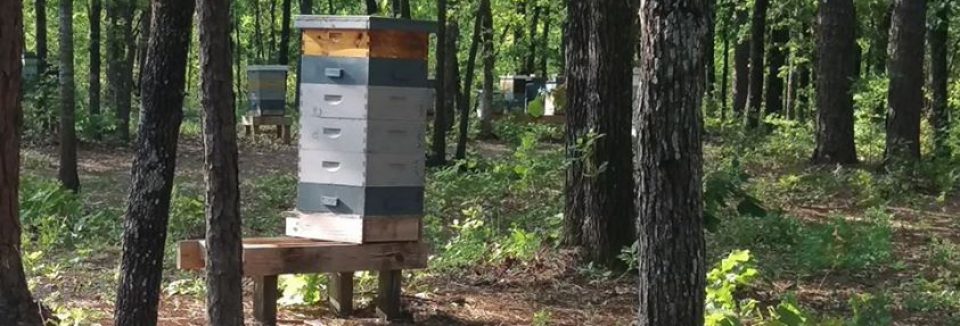
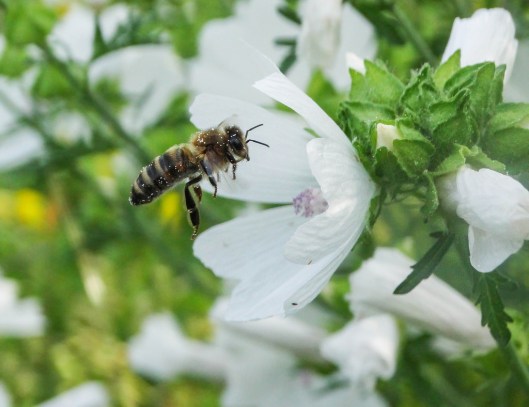


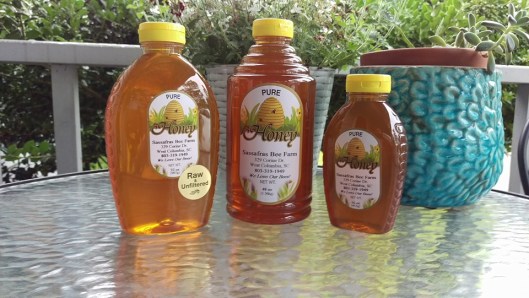


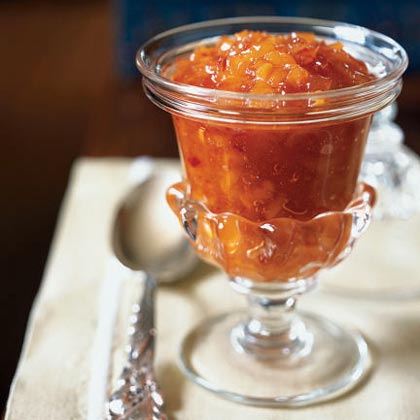


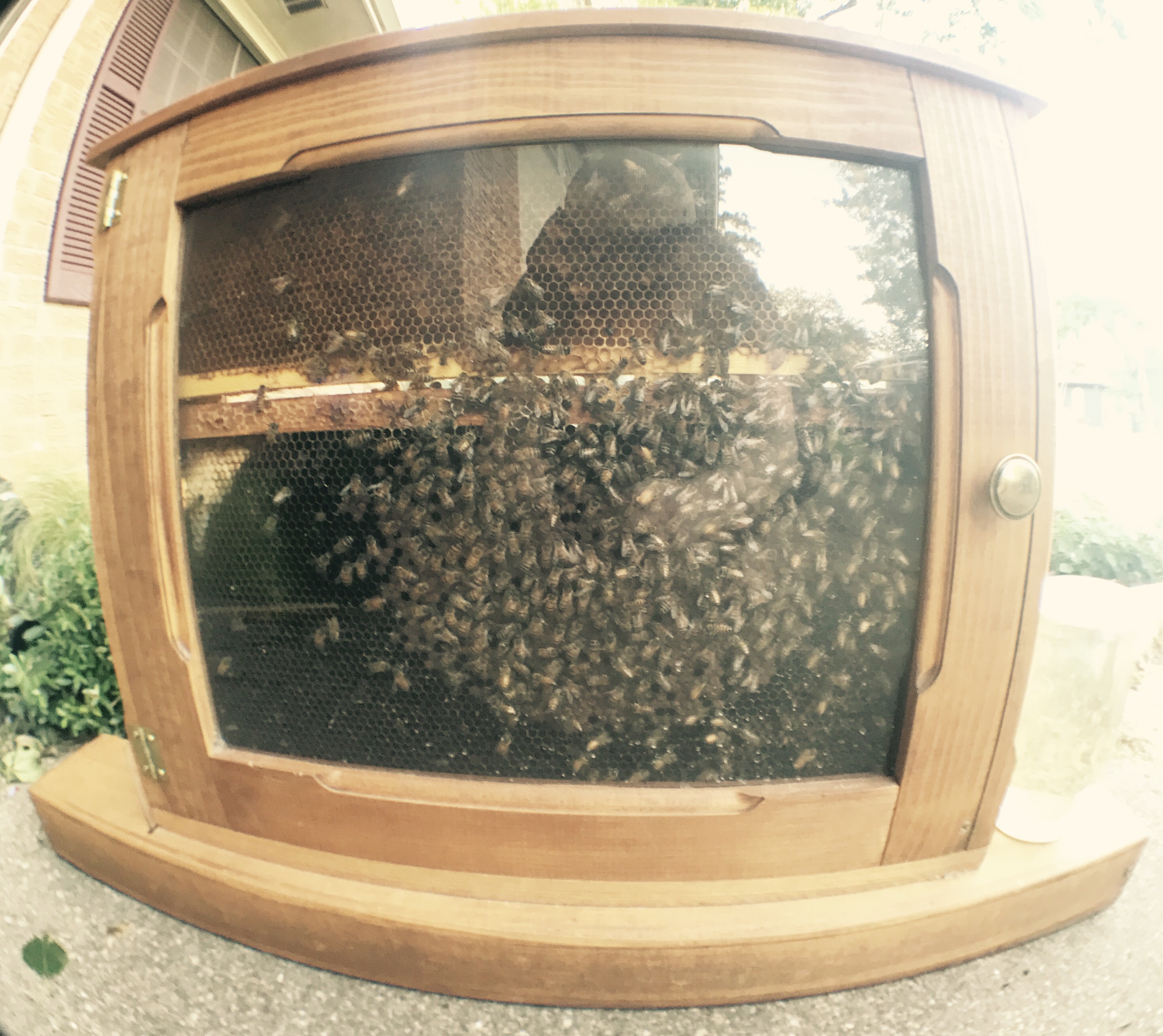





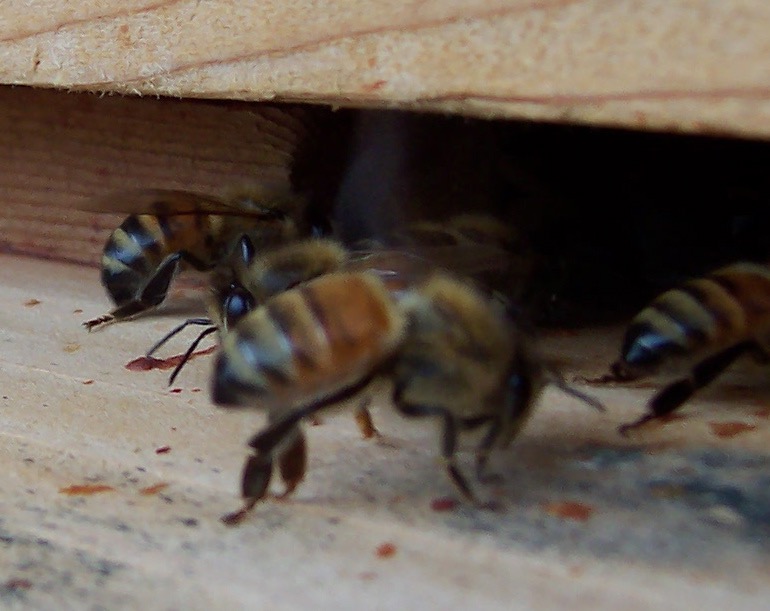
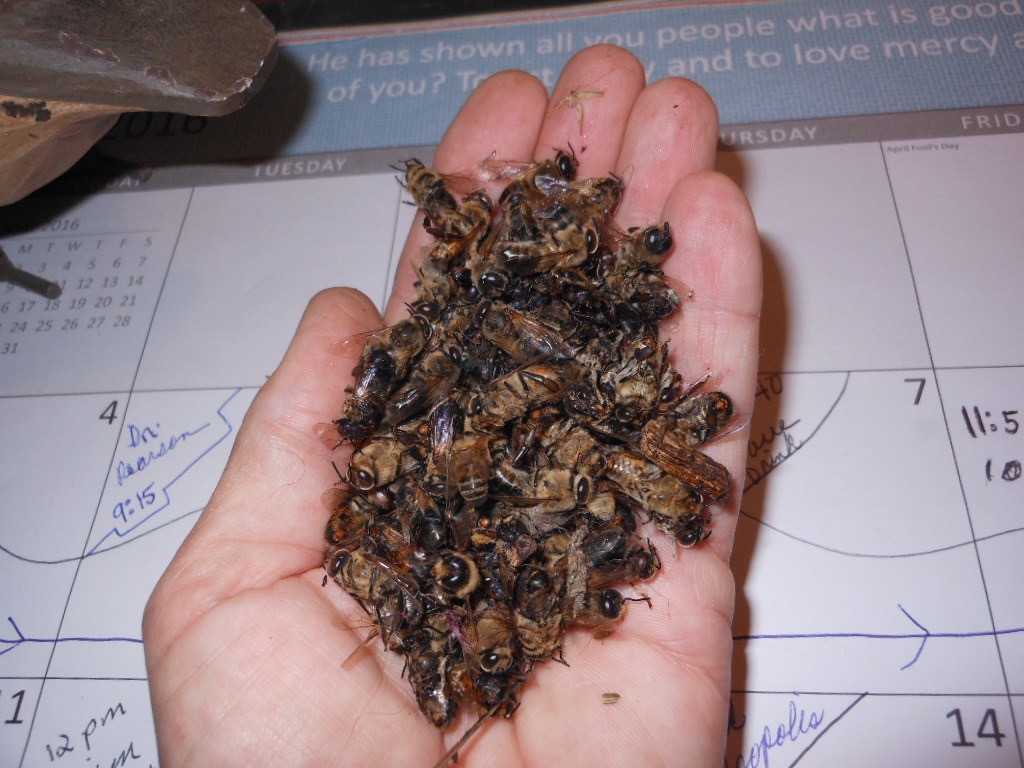
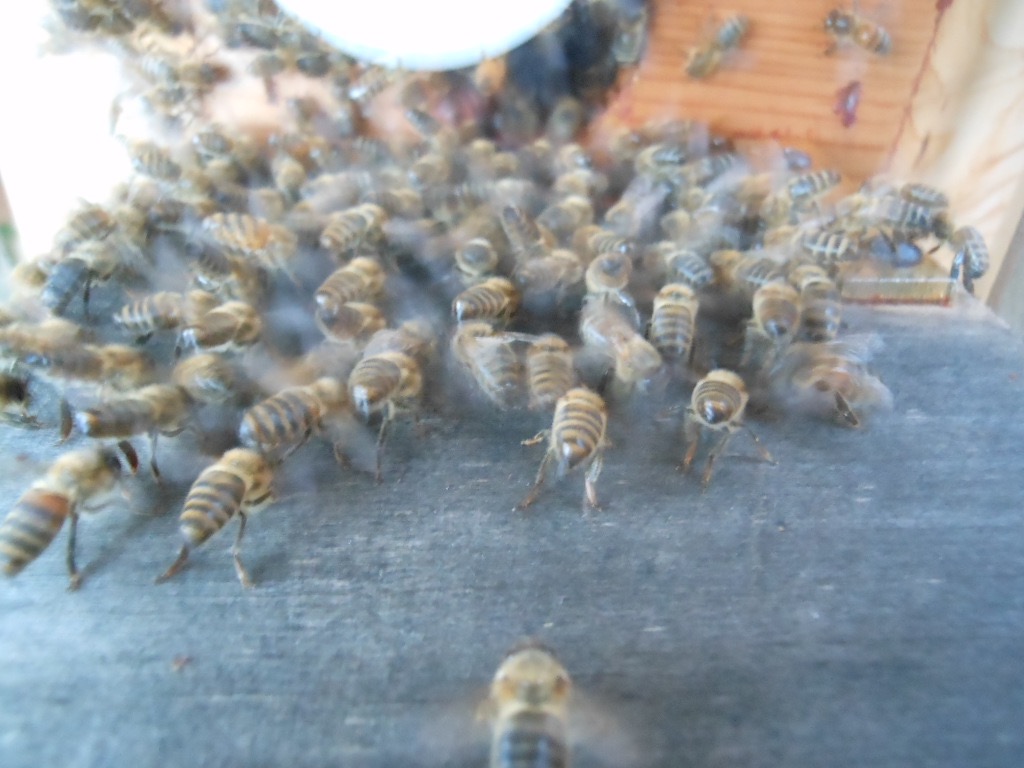
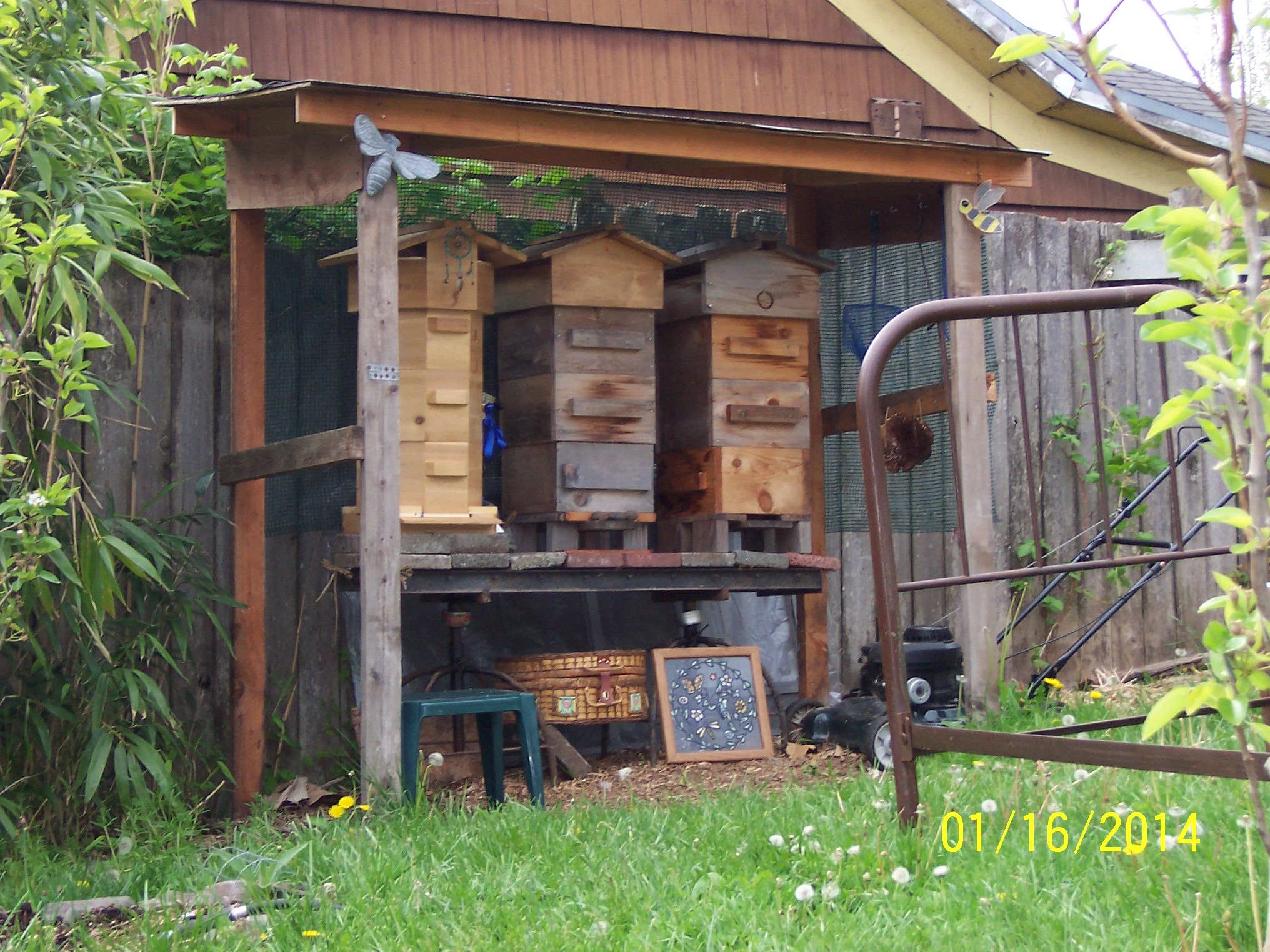
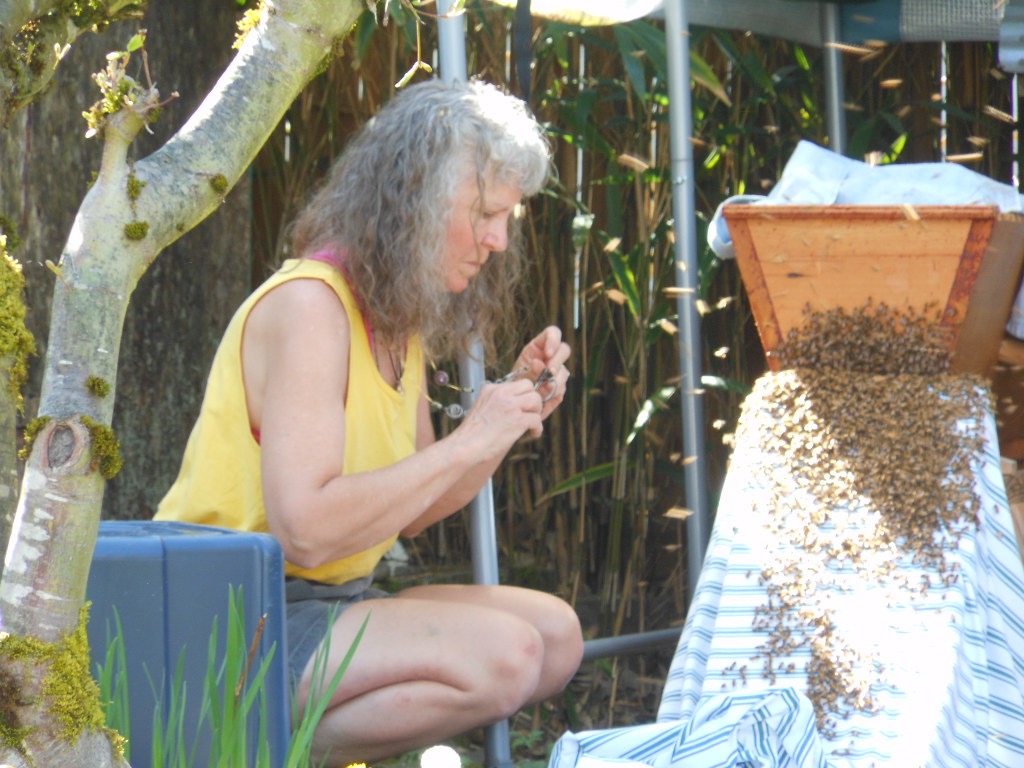



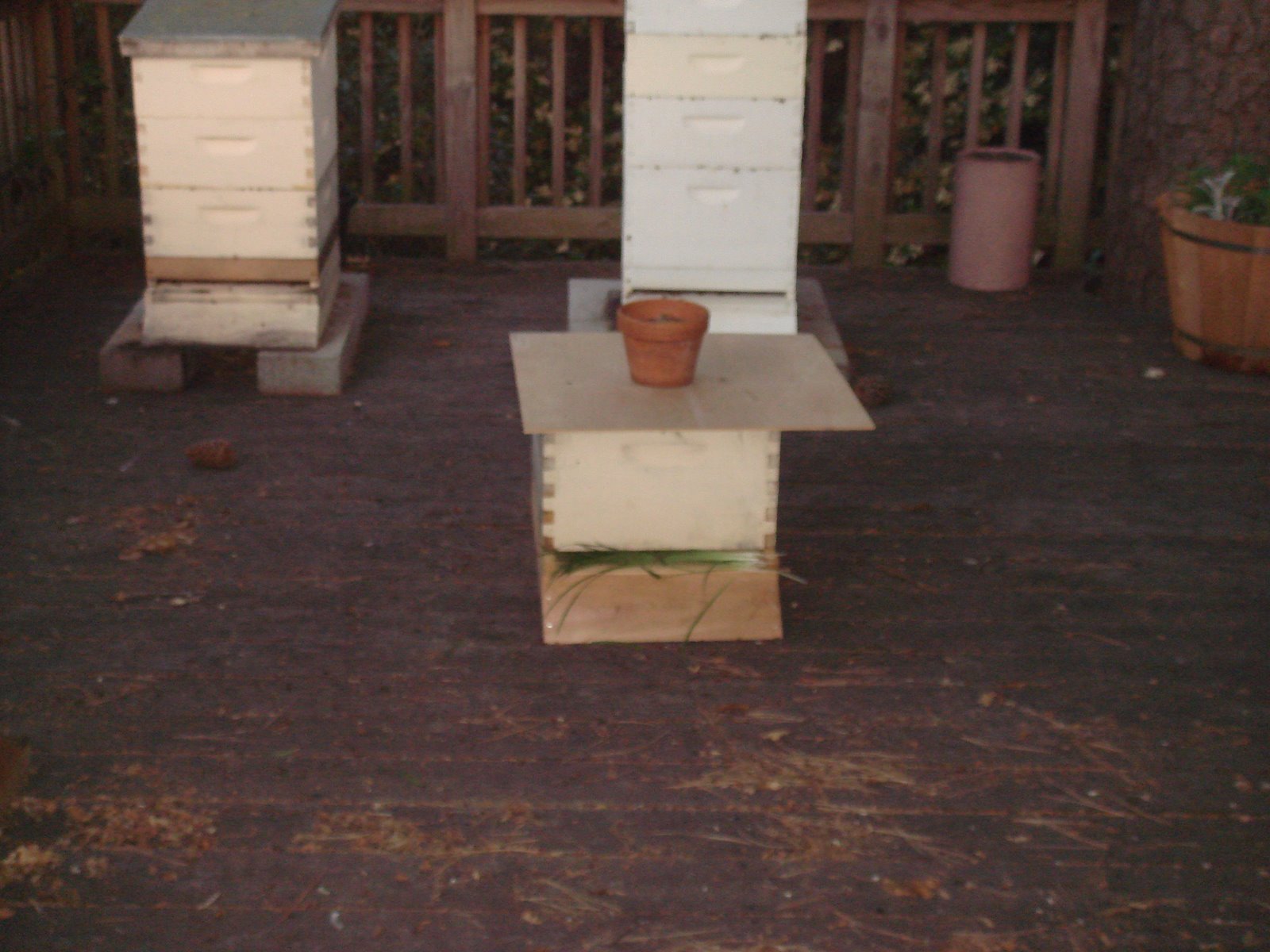
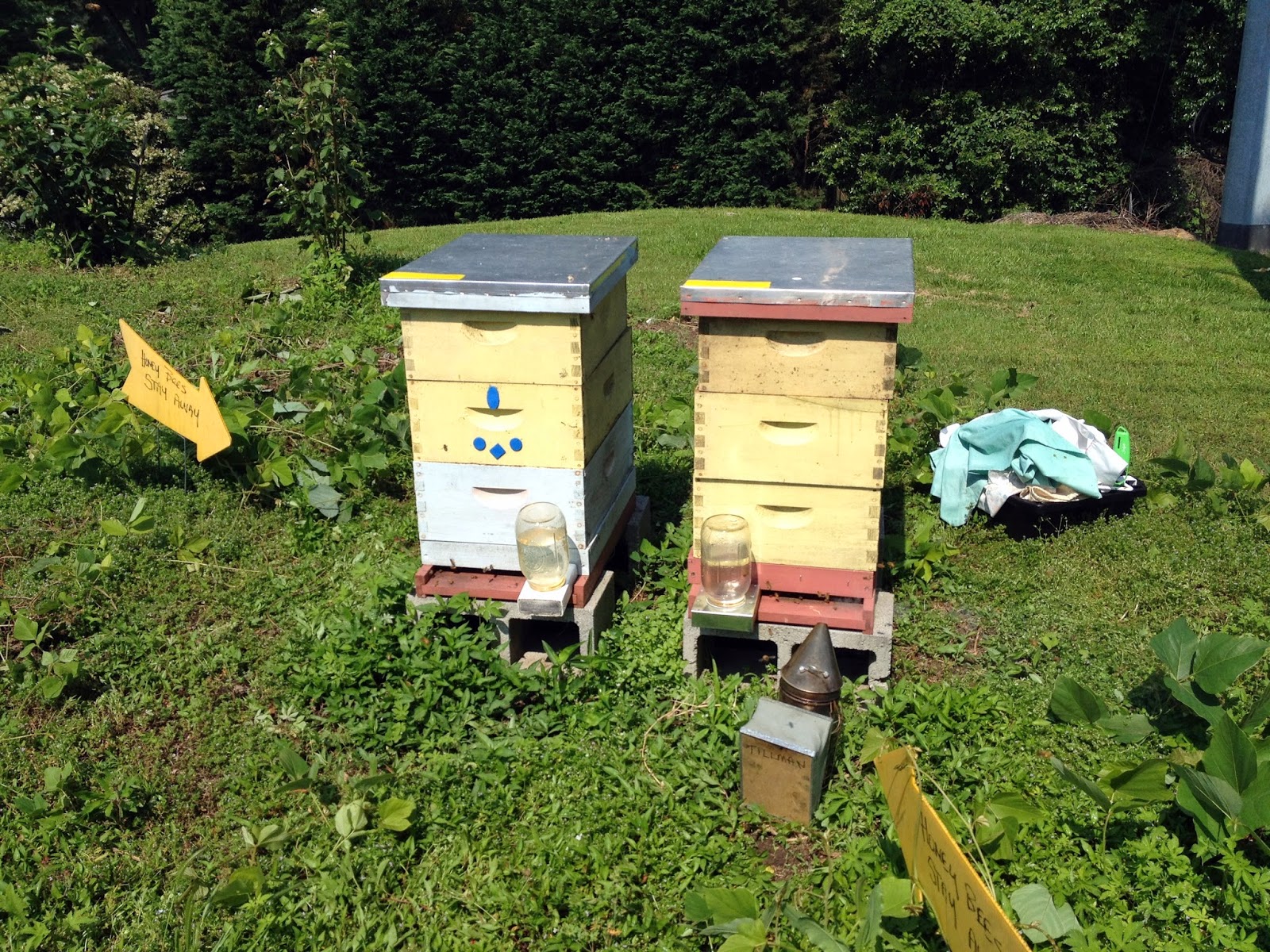
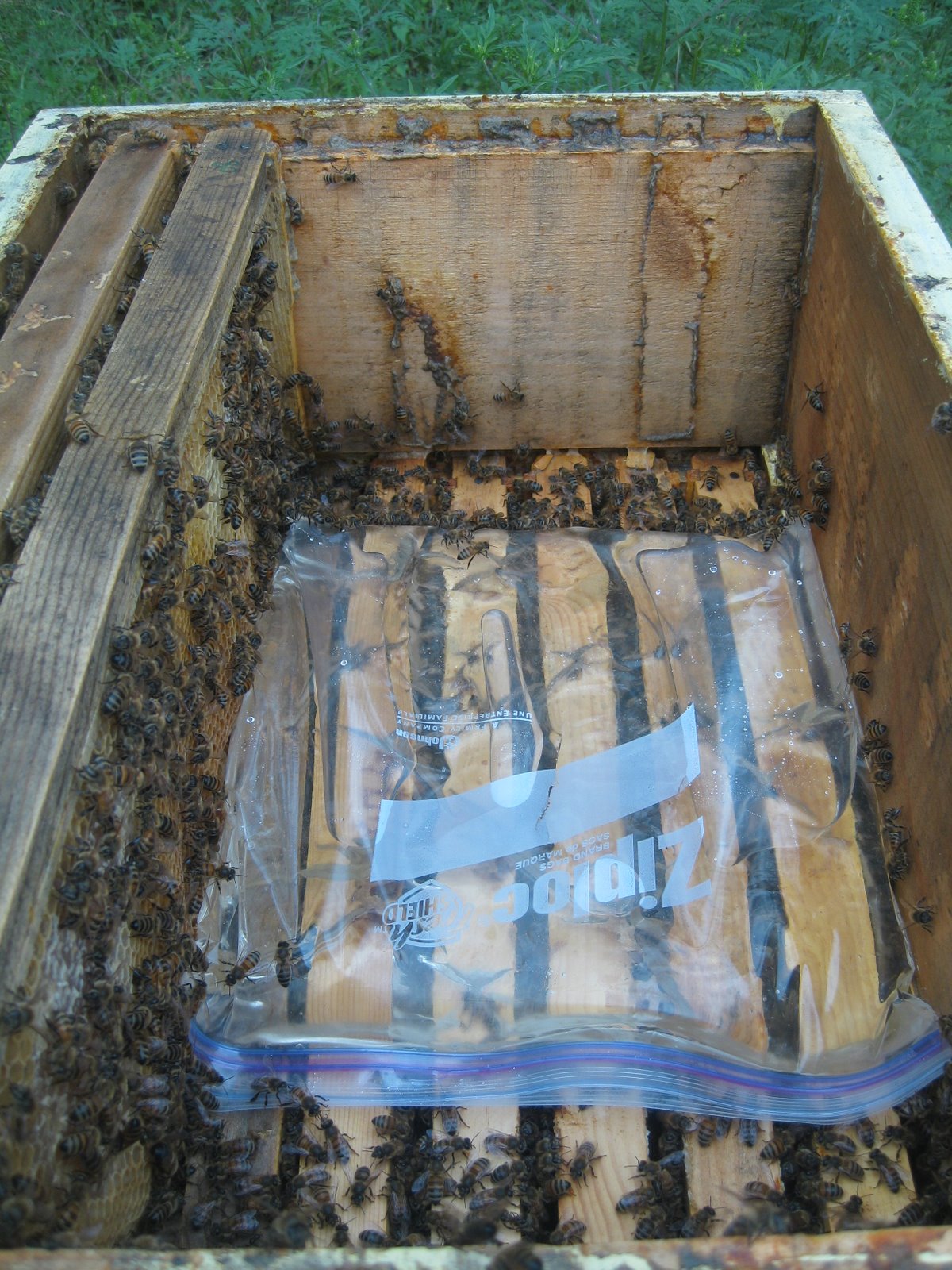
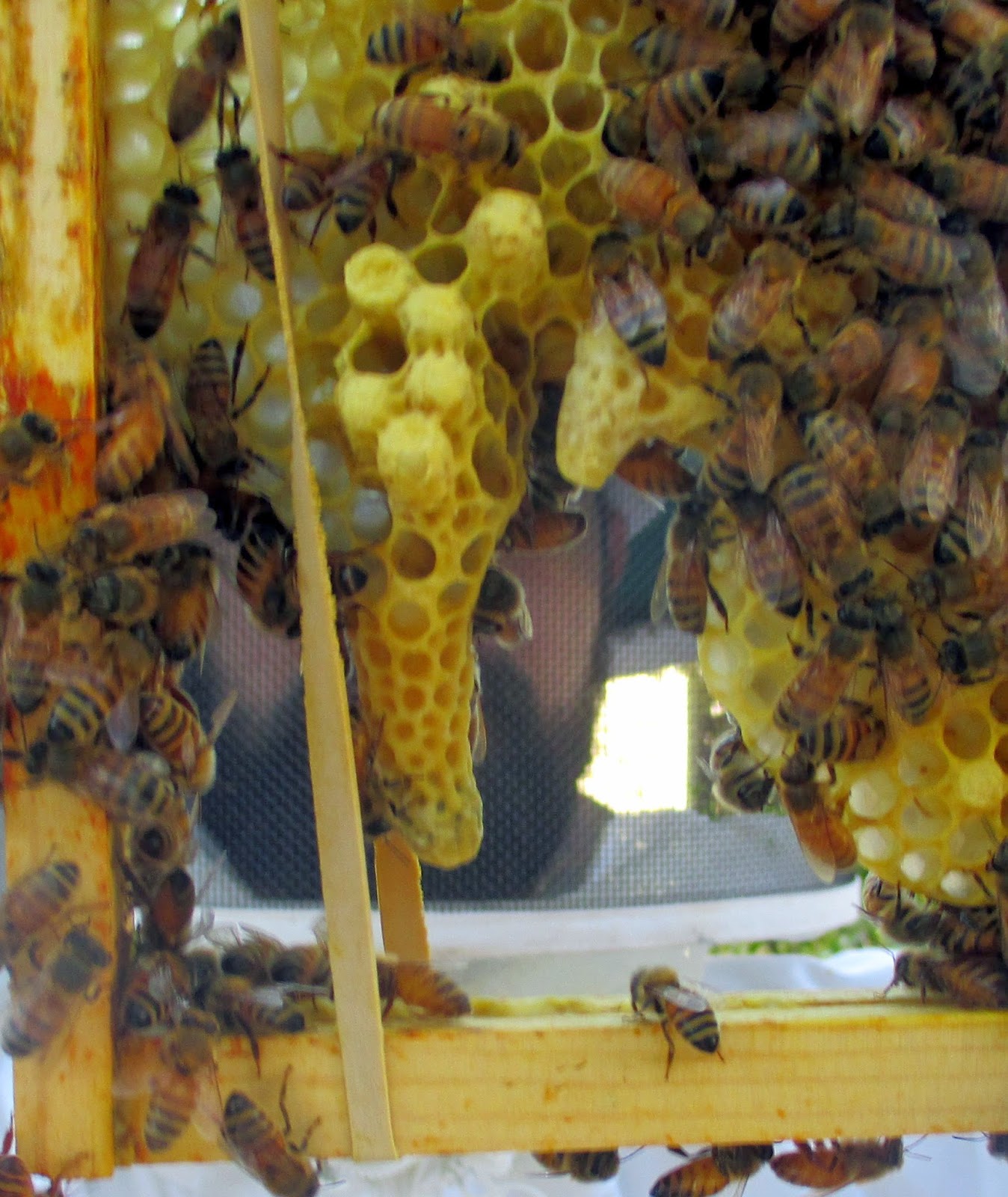
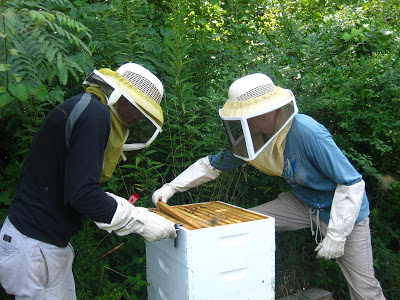
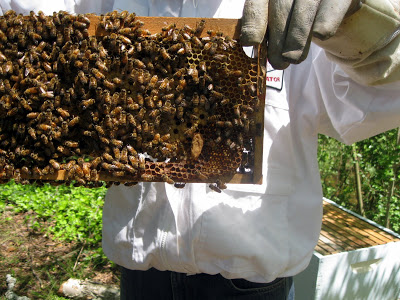
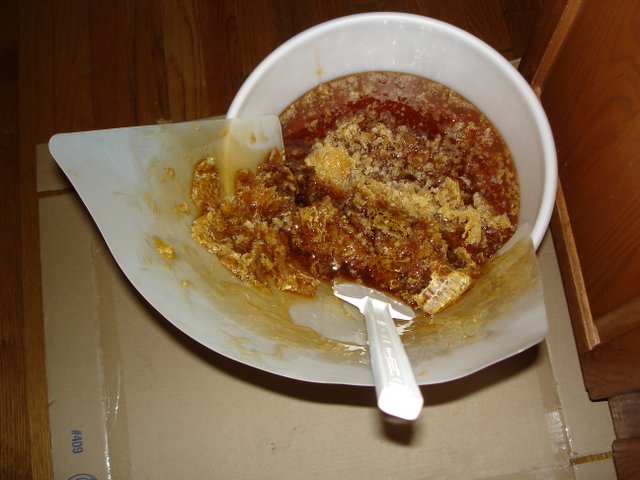
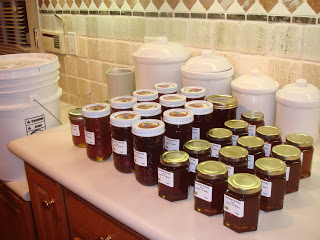
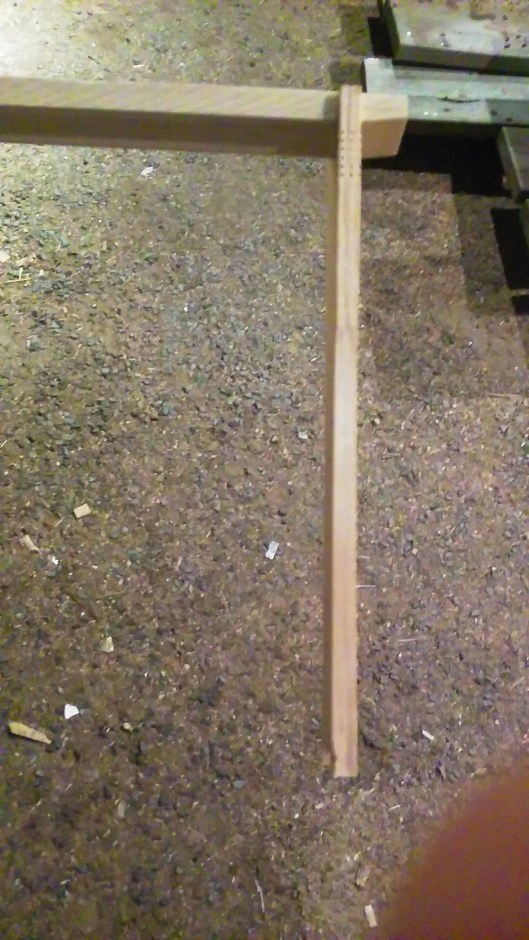
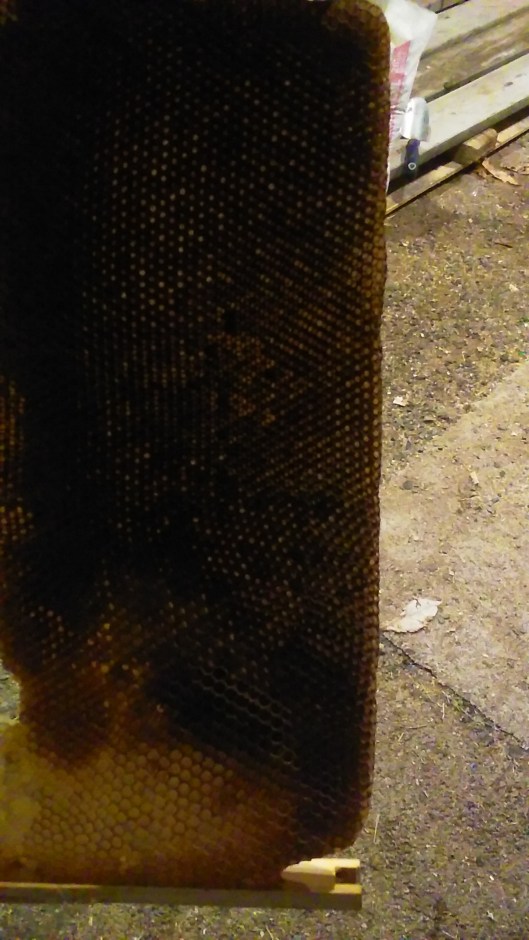






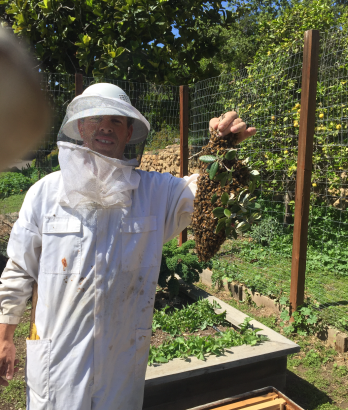




 Beekeeping365