• Sassafras Bee Farm
  • About
  • Contact

Beekeeping365

~ The more I studied beekeeping, the less I knew, until, finally, I knew nothing. But, even though I knew nothing, I still had plenty to unlearn. Charles Martin Simon

Beekeeping365

Tag Archives: beekeeping

What Colors Do Bees See (and painting bee hives)

06 Monday Mar 2017

Posted by Beekeeping365 in beekeeping, beekeeping equipment, equipment, honey bee biology, management

≈ Leave a comment

Tags

beekeeping, honey bee biology, management

What Colors Do Bees See (and painting bee hives)

Posted on July 21, 2012 by brookfieldfarmhoney

Yellow bee boxes being painted at Brookfield Farm Bees And Honey, Maple Falls, WA

Good weather broke out, finally, in July.  This is news at Brookfield Farm Bees And Honey here in Maple Falls Washington.  The month of June gave us 5 days of sun, 5 days of overcast, and all the rest was rain.  So when the sun started shining on July 4 (after 2 inches of rain on July 3) it was actually a cause for celebration – and the sign that I could return to painting bee boxes, tops, and bottom screens.

But that’s a bit dull to read about. Some musings, and studies, on what colors bee see would be a bit more interesting.


Honeybees Do Not See The Same Colors We Do

Bees get to see in the ultraviolet world.  We can use photographic techniques to mimic that world, but all resulting colors are approximations of what a bee MIGHT see.  (More photos by scientist-cameraman Bjorn Roslett can be found at his web site NaturFotograf.com  (click on Infrared in the left side menu)

We can never see colors the way bees see them.

  • Bees see “primary colors” as blue, green and ultraviolet
  • They can distinguish yellow, orange, blue-green, violet, purple, as combinations of their three primary colors.
  • Humans see “primary colors” as red, blue, and green
  • We can distinguish about 60 other colors as combinations of our three primary colors.

Bear in mind that not all the studies agree on the exact colors or preferences bees see, but they all agree red is black

Some studies propose that honeybees see orange, yellow, and green as one color (green in that group surprised me).   Blue, violet and purple are seen as a second color.

Ultraviolet being their third color.

Honeybees Do Not See Red

It’s not that they don’t get angry (as in “to see red”), but honeybees see the color red as black.

Honeybees Versus Humans : A Breakdown

(Courtesy of West Mountain Apiary, where a very good write-up about color can be found)

Humans Honeybees
Red Black
Yellow Yellow-Green
Orange Yellow – Green (darker perhaps than yellow)
Green Green
Blue Blue plus Ultraviolet blue
Violet Blue plus Ultraviolet
Purple Blue
White Blue-Green
Black Black

Their Favorite Colors?

Their favorites are said by some to be: purple, then violet, then blue (which all look different to them).   I could not find the study that came to this conclusion, but I like it, as my favorite colors are purple, violet, and then blue.

How Do We Know All This?

We don’t know it all; studies vary.  However:

Bee’s color sense was partially demonstrated by Karl von Frisch.  In 1915, he showed that bees could discern green, yellow, orange, blue, violet, and purple.  He did this by using colored cards and bee feed.  He imprinted the bees with the idea that feed could be found on a blue card, but not the other colors.  When he removed the feed, the bees still went to the blue card.  He then tried this with green, yellow, orange, violet, purple and red.  The only color it did NOT work with was red.

In 1927, Professor A. Kuhn took the study of honeybees’ color sense further.  He tested bees using the visible spectrum for humans, but also used longer and shorter wavelengths : the ultraviolet and infrared.  The infrared was black to the bees, but ultraviolet was a color.

You CAN Try This At Home

A very nice PowerPoint presentation at this Link from the University of Nebraska, will walk you though an experiment on which colors in our visible spectrum honeybees can see.  Sorry, there’s no test for ultraviolet.

Back To Painting Bee Gear

Beekeeper Bean talks to other beekeepers in her bee yard. Photo by Lisa Phillips, Round Tuit Farms

As you can see over time I have used purple (ok blue to them, but I like purple), yellow, orange, blue and green.  It turns out this is helpful to the bees as it distinguishes their hive from the others in the yard.  I did it because I thought the bee yards looked prettier with all the colors and red has never been a particular favorite of mine.

Orange and Green bee hive tops drying at Brookfield Farm Bees And Honey, Maple Falls, WA

My most current bee hive top color choices of mariposa lily orange and forest green (the husband says it’s British Racing Green) came from long, diligent thought (kind of). The green was in the hayloft, left over painting trim on my house.  The orange was last year’s color, and I had a bit left.  That paint ran out before I was done with the tops and the Stockton’s Paints, my favorite paint store is an hours drive away (one way).

That’s my one tip on painting: if you are going to take the time to paint your bee gear, use good quality paint.  Primer and two coats of color, just like a house.  I’ve bee gear that I painted over a decade ago and it is still just fine, even in our 8 month rains.

That’s the news from Brookfield Farm Bees And Honey in Maple Falls, Washington.  It’s still bright and sunny, so I’m back to painting bee boxes…

What colors have you chosen for your hives?  Why did you make those choices?  I think the colors in a bee yard are one of the fun parts of beekeeping.

Source: What Colors Do Bees See (and painting bee hives)

Feel free to share this on:

  • Share on Facebook (Opens in new window) Facebook
  • Share on X (Opens in new window) X
  • Share on Pinterest (Opens in new window) Pinterest
  • Email a link to a friend (Opens in new window) Email
  • Share on LinkedIn (Opens in new window) LinkedIn
  • Share on Reddit (Opens in new window) Reddit
  • Share on Tumblr (Opens in new window) Tumblr
  • Print (Opens in new window) Print
  • Share on Telegram (Opens in new window) Telegram
  • Share on WhatsApp (Opens in new window) WhatsApp
Like Loading...

Honey bee or honeybee; bumblebee or bumble bee?

05 Sunday Mar 2017

Posted by Beekeeping365 in beekeeping, beekeeping vocabulary, education

≈ Leave a comment

Tags

beekeeping, beekeeping vocabulary, education

Honey bee or honeybee; bumblebee or bumble bee?

screen-shot-2017-02-28-at-10-18-20

Language is fascinating, particularly the way in which it changes over time to incorporate new words, or old words used differently.  In science this has important implications for understanding: semantics matter.  With this in mind I’ve been curious about the alternative ways in which authors write the informal names of species.  Scientific names (Genus species)  should be fairly stable in their spelling and presentation (though not always, especially in the older literature); but “common” names of species vary widely geographically and temporally.

Here’s an example using Google’s Ngram Viewer which is a useful tool for tracking changes in word use over time.  Different authors currently use the terms “honey bee” and “honeybee”, sometimes in the same publication.  But as the image above shows. historical analysis suggests that “honey bee” is the more traditional term, and that “honeybee” only came into common usage from the start of the 20th century, and by the late 1920s had taken over “honey bee”.

Likewise “bumblebee” and “bumble bee”; despite “bumble bee” having a much earlier usage, “bumblebee” has dominated since the late 19th century:

screen-shot-2017-02-28-at-10-16-51

It’s interesting to speculate about what might have caused these shifts in use, and it’s possible that in these examples it was the publication of especially influential books that used one term over another and influenced subsequent writers.  Could make a good project for a student studying how use of language varies in different time periods.

For my own part I tend to prefer “honey bee” and “bumblebee”, but I can’t precisely articulate why; perhaps it’s because in Europe we talk about “the honey bee” as a single species (Apis mellifera) but not “the bumblebee” because there is usually more than one co-occurring Bombus species in a particular area.  Do others have a particular preference?


Source: Honey bee or honeybee; bumblebee or bumble bee?

Feel free to share this on:

  • Share on Facebook (Opens in new window) Facebook
  • Share on X (Opens in new window) X
  • Share on Pinterest (Opens in new window) Pinterest
  • Email a link to a friend (Opens in new window) Email
  • Share on LinkedIn (Opens in new window) LinkedIn
  • Share on Reddit (Opens in new window) Reddit
  • Share on Tumblr (Opens in new window) Tumblr
  • Print (Opens in new window) Print
  • Share on Telegram (Opens in new window) Telegram
  • Share on WhatsApp (Opens in new window) WhatsApp
Like Loading...

Salty Honey Pie

04 Saturday Mar 2017

Posted by Beekeeping365 in beekeeping, honey, recipe

≈ Leave a comment

Tags

beekeeping, honey, recipe

Source: Salty Honey Pie

img_1084

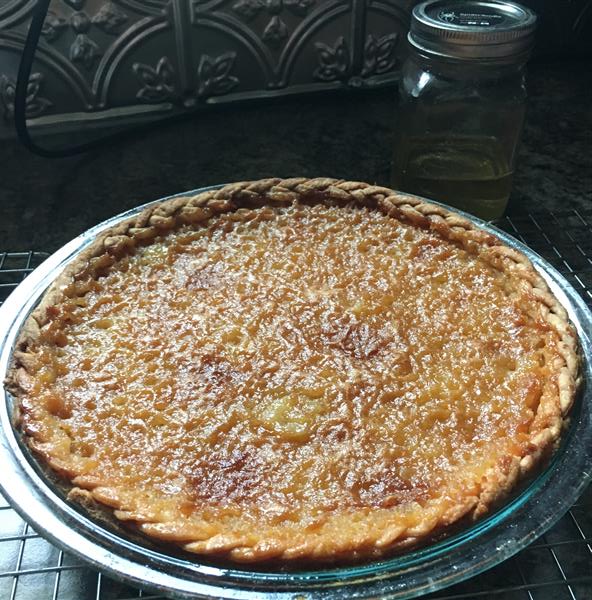
When a friend of mine took up beekeeping this spring, I started keeping track of recipes that prominently feature honey. Given that my friend’s a bit of a pie guy, when Katya pointed out this recipe, I knew I had to try it. I received my first jar of Spiderdoodle Honey from Doug about a month ago, and while I’ve been enjoying it in my weekend coffee (and in honey-lemon-ginger teas while recovering from a cold), I hadn’t baked with it just yet. This weekend we went out for dinner to celebrate his birthday, so I figured it was the perfect occasion to bake him a pie.


I got a tiny bit creative with the crust, since the rest of the recipe was pretty straightforward. I keep seeing gorgeous pie crust designs various places on the web, and I’ve never tried anything fancier than a lattice. Since this didn’t have a top crust, the only place to play was the border, so I braided it.

img_1079
Braiding the crust

It was easier than I thought, but you have to be really gentle with the strips of dough. Fortunately, the cream cheese pie dough from Rose is super forgiving – and I use nothing else for pastry, any more.

img_1080
Looks pretty good before baking

I haven’t quite hit perfect timing on partially pre-baked crusts, yet. You want it baked enough that it won’t get soggy when a wet filling is added, but not so baked that it burns during the second baking cycle.

img_1081
Just a touch too dark

Despite my careful watch, it got just a bit too dark in the first round. As a result, I actually partially cooked the filling in a pot on the stove, before putting it in the shell & back in the oven. I didn’t want it coming out with a burnt crust and under-done filling.

img_1082
Vanilla bean paste + local honey. Winning combination!

This is what it looked like straight out of the oven. At this point, it was still super jiggly, but given that it was still bubbling furiously, I figured the filling would still be cooking for a few minutes even after removal from the oven.

img_1083
Bubbly honey pie

After it cooled, I sprinkled it with coarse sea salt. The recipe called for flake salt, which I couldn’t find, and I thought the crunch of the coarse salt would make a nice contrasting texture, which it did. The recipe also called for 1-2 tbsp of salt, but I just couldn’t bring myself to sprinkle on more than a few (large) pinches. The tasters said it was just the right amount of salt. 🙂

I’m not sure if I’d change anything if I were to make this again. Maybe throw in some raisins, like a giant butter tart. This is basically sugar pie (tarte au sucre), but with honey.

I ended up exchanging the pie for another jar of honey. 🙂 Fair trade, I think! I want to try honey caramels, next!


Source: Salty Honey Pie

Feel free to share this on:

  • Share on Facebook (Opens in new window) Facebook
  • Share on X (Opens in new window) X
  • Share on Pinterest (Opens in new window) Pinterest
  • Email a link to a friend (Opens in new window) Email
  • Share on LinkedIn (Opens in new window) LinkedIn
  • Share on Reddit (Opens in new window) Reddit
  • Share on Tumblr (Opens in new window) Tumblr
  • Print (Opens in new window) Print
  • Share on Telegram (Opens in new window) Telegram
  • Share on WhatsApp (Opens in new window) WhatsApp
Like Loading...

Artificial pollinators are cool, but not the solution

28 Tuesday Feb 2017

Posted by Beekeeping365 in beekeeping

≈ Leave a comment

Tags

beekeeping

Manu Saunders's avatarEcology is not a dirty word

Agreed, bees and other insect pollinators are under threat globally from multiple human pressures. If pollinators disappear completely from an ecosystem, their loss will affect the structure of those ecosystems and the natural foods and fibres we use from the ecosystem. So, finding solutions to the problem of pollinator decline are imperative.

This is why the robo bees story sounds like such a seductive idea. Imagine creating tiny drones with hairs on them that can be programmed to do a bee’s job? Wow! We are off the hook.

View original post 847 more words

Feel free to share this on:

  • Share on Facebook (Opens in new window) Facebook
  • Share on X (Opens in new window) X
  • Share on Pinterest (Opens in new window) Pinterest
  • Email a link to a friend (Opens in new window) Email
  • Share on LinkedIn (Opens in new window) LinkedIn
  • Share on Reddit (Opens in new window) Reddit
  • Share on Tumblr (Opens in new window) Tumblr
  • Print (Opens in new window) Print
  • Share on Telegram (Opens in new window) Telegram
  • Share on WhatsApp (Opens in new window) WhatsApp
Like Loading...

HiveTool.net – Online Hive Monitoring

27 Monday Feb 2017

Posted by Beekeeping365 in beekeeping

≈ 4 Comments

Tags

beekeeping

hive_graph3wdownload

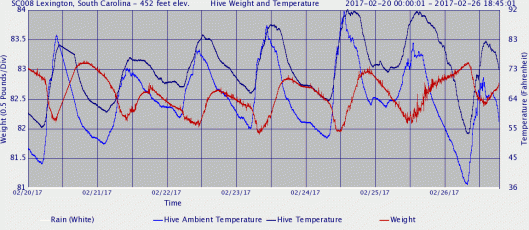
I thought I’d share a resource which I have used the past three years. Hivetool.net monitors hives located throughout the world. The software is open source and they have all the information regarding how to install the monitoring equipment on their webpages. Additionally they try to make the equipment easy on the pocketbook so more people can participate. In my area of South Carolina one of my club members volunteered to install the software and sensors on her hive a few years ago. I can even claim a small part of the effort by building the waterproof housing and stand. The benefits I have gained have been well worth the effort. From local seasoned beekeepers  I have learned the approximate dates for local nectar flows and dearth periods. But with the monitoring of her hive I can now see the actually change of entering the nectar flow by watching the trending weight gain of the hive. More information such as temperature changes indicating swarm preparation, humidity, rainfall, bee counts, can all be monitored depending on the sensors attached. All from the comfort of your PC. Have a look at some of the active hives on the website. Here’s ours in the Midlands of South Carolina. SC008

Source: HiveTool.net

Hivetool™  is an open source project comprised of beekeepers who work with technology as technicians, engineers, programmers and database and system administrators. Our goal is to produce software and hardware tools to monitor, manage and research bees and honey production. See hivetool.org for software, hardware recommendations, instructions, plans and user manuals. Hivetool.net provides real time access to the network of hives. Hive data for research is warehoused at The Data Center for Honeybee Research.

The software is Linux based, although it should run on Windows. Readily available, commercial, off the shelf, consumer grade (low cost) hardware is used. The software supports as many different brands of hardware as possible, to avoid being locked into one vendor, technology or computing platform as technology advances so rapidly.
A database is being populated with every variable we can measure, both in the hive (e.g. weight, temperature, humidity, bee counts, audio, video), ambient conditions (solar radiation, barometric pressure, rain, wind, dew point), and hive parameters (location, elevation, orientation, hive design, foundation material, etc.) The data is both for our own research and management and for any other beekeeper, researcher or student for data mining.

There are currently over 20 hives on-line in California, Georgia, Iowa, North Carolina, and South Carolina. By the end of the summer, more hives in Colorado, Florida, Michigan, and Oregon should be on-line. Other facets of the project in the works are a smart phone app that will interface to the scale, temperature probes, etc for remote yards and a video camera bee counter.

All the data is available for download by anyone at anytime. We welcome engineers, programmers, scientists, researchers, bee keepers, and citizen scientists from anywhere around the world and invite you to join our effort.

Open Source/Open Notebook

Hivetool™ is an open source project. Wikipedia defines open source as a) universal access via free license to a product’s design or blueprint, and b) universal redistribution of that design or blueprint, including subsequent improvements to it by anyone.

Originally, open source just applied to software, then hardware. Hivetool™ also open sources the data and research results (open notebook).

Again from Wikipedia: Open notebook is the practice of making the entire primary record of a research project publicly available online as it is recorded. There is no ‘insider information’. It is the logical extreme of transparent approaches to research and explicitly includes the making available of failed, less significant, and otherwise unpublished experiments.

We want peer review to start at the beginning of the experimental process to make the research as quick and efficient as possible. Why wait until the experiment ends with poor results to point out the flaws in the experimental techniques?

Goals

1. Hive Management: Help the beekeeper determine when to feed, split, super and provide data to validate or invalidate beekeeping lore, practices, equipment, techniques, treatments.

2. Climate and Land Use Research: Provide data to NASA for analysis. Eventually do our own research as the hive database is built up over time.

3. Education and Bee Science: Attract students to education and science.

Source: HiveTool.net

Feel free to share this on:

  • Share on Facebook (Opens in new window) Facebook
  • Share on X (Opens in new window) X
  • Share on Pinterest (Opens in new window) Pinterest
  • Email a link to a friend (Opens in new window) Email
  • Share on LinkedIn (Opens in new window) LinkedIn
  • Share on Reddit (Opens in new window) Reddit
  • Share on Tumblr (Opens in new window) Tumblr
  • Print (Opens in new window) Print
  • Share on Telegram (Opens in new window) Telegram
  • Share on WhatsApp (Opens in new window) WhatsApp
Like Loading...

ProVap110 Oxalic Acid Sublimator by sassafrasbeefarm

26 Sunday Feb 2017

Posted by Beekeeping365 in beekeeping, chores, management, mites, pests, product review, varroa, varroa destructor, varroa mites

≈ 3 Comments

Tags

beekeeping, chores, management, oxalic acid, pests, product review, Provap110, varroa, varroa destructor, varroa mites

16997790_10209967870728209_327708057160565896_n
16806644_10209967870848212_8263635730939023079_n
16939424_10209967871128219_2057989961879590053_n
16865185_10209967870688208_463612476718285049_n

Product Review:

For Varroa mite control, I sprung for a ProVap110 this year. I put it through the paces this week and thought I’d report on it here.

View Video Here:

Disclaimer first: Yes, Larry of OxaVap is a friend of mine. We met at a South Carolina Beekeepers Association conference several years ago and hit it off talking bees non stop for the duration of the conference. This was all before oxalic acid was approved for use in the United States. Larry told me then it would be the next big deal in Varroa mite control and apparently he was right as it was approved a couple years later. (Larry also told me where U.S. beekeepers were already ordering vaporizers from across the border in Canada.) Anyway, Larry and I always look forward to conferences and hanging out, telling bee stories when we can.

Before getting the ProVap110 I was using two Varrox, pan type ,vaporizers. Using two really sped up my mite treatments. Duh, twice as fast, right? No, don’t ask me how but everything moved faster and down time between hives was less so I really think I was doing the job in less than half the time than with one.

Recently, Larry suggested I needed to try the ProVap110 but I was resistant due to the issue of needing AC current. He said that most inexpensive car/truck inverters would do the job as it only used 250 watts and 2.2 amps. I checked and Harbor Freight had an inexpensive inverter. But I really wanted to be able to treat without having to drive my truck into sometimes muddy out yards. Larry assured me that a long extension cord run would not be a problem but I resisted and bought a small WEN 1800watt generator. I do plan on buying that inverter as well but the WEN1800w is under 50 pounds and, so far, I really like it and don’t have to worry about getting my truck stuck in a muddy out yard field while vaporizing mites.

One morning this week I oxalic acid vaporized 32 hives in about an hour and 15 minutes. As with the old Varrox, you still have the setup time of placing IPM boards under screened bottom boards to help seal the hive as well as a damp dishcloth across the entrance. I left the WEN1800w generator in the back of my truck and used a 50 ft extension cord. The extension cord had no noticeable effect on the operation as the ProVap performed exactly as the enclosed paperwork stated it would. I will use a 100 ft extension next time to see if that has any effect. The ProVap110 took about 2 to 3 minutes to reach its operating temperature of 230C. The unit adjusts to maintain that temperature throughout its use. I’ll place a link to a video in this post for those who have not seen how it operates. Basically, after it reaches its operating temperature a measured amount of OA is placed in a cup and attached to the ProVap110 while inverted. The nozzle is inserted into a 1/4″ predrilled hole in the hive body and the unit is spun around to its upright position causing the OA to drop into the 230C pan. The temperature readout dropped to approximately 208C when the OA came in contact with the heating unit and immediately began its rise back to 230C. Within about 20 seconds the temperature had returned to 230C and I removed the unit from the hive. An additional “cup” is provided so the user can prepare the dose for the next hive during the 20 second wait. And so it goes hopscotching down the row of hives.

Some things I learned are: 1) Hole placement is more critical than I first expected. I had used a homemade template based on the instruction sheet and some of the holes were drilled into handholds which caused me to have to hold the unit in place instead of leaving it to prep the next dose. The instructions say drill the hole 3 to 4 inches up from the bottom . I will drill future holes below the handholds in the lower box – if you use cleats drill well below. You want the vapors to circulate readily once inside the hive so make the hole in that area where the frames are narrow (lower half) to allow for the bees to move around the frame. 2) The tube that sends the vapor into the hive is copper and about 3/4″ in length. That makes sense since it is going into a hive body with a thickness of 3/4″. Longer and it could bottom out on a frame inside. Unrelated to the tube length but I’d like the tube to be made of a harder metal than copper if possible – I am uncomfortable with the possibility of bending the copper tubing. 3) You will need an acid/vapor PPE mask as you will be in close proximity of the OA vapor. There is no getting around this. I currently use a 3M 7502 mask with organic vapor/ acid gas filters – $13.99 on Ebay, and non vented safety goggles – $7.99 Ebay. The mask worked great and I never even got a whiff while standing behind the hive administering the OA vapor. (more on this later)

Some of the nice things about the unit are: 1) Its speed. I usually just stood there behind the hive for 20 seconds and let it do its thing. 2) The plume of vapor into the hive is thick and sudden. The bees don’t have the “warning time” they did with pan type vaporizers to start fanning. Bang, it’s in there and done. Most of the hives didn’t object any more than they did with the pan vaporizer but a couple did. All hives settled down soon afterwards. 3) The almost constant 230C temperature ensures the OA is properly sublimated. I always suspected the gradual warming of the OA with the pan vaporizers may have wasted some of the OA as it was evaporated, boiled off, or was otherwise consumed instead of sublimated thus diminishing the dose. The ProVap110 ensures the OA always hits the pan at exactly 230C. 4) I often lose my biggest and strongest hives over the winter. I’ve always suspected it might be related to inadequate OA treatment reaching the upper boxes. Now I can treat the hive via a 1/4″ hole placed anywhere, in any box, instead of just underneath the hive. And don’t worry about drilling 1/4″ holes in your woodenware, the bees will propolize it soon enough or you can use a golf tee or dowel rod to plug. 5) It would be nice to have a half dozen of the “caps.” to prepare in advance. It’s not essential; that’s just my OCD speaking.

General comments: Most efficient use would necessitate a planned layout of the hives in the bee yard. If you scatter your hives around here and there you’ll waste time in transit. I have basically three different zones in my home yard. This meant driving the truck to three different positions and repositioning the drop cord each time. I think keeping your hives within a 100 foot radius and using a 100 foot drop cord might be ideal. Having plenty of IPM boards available is also a great time saver as transferring them hive to hive is a time waster. Luckily I have plenty to use in case of a severe winter but others may not. The hives with solid bottom boards were easiest to treat.

Now, here’s an interesting thing: The visible escaping particulate using the ProVap110 was noticeably less than when using pan type vaporizers. I can’t really account for why this is other than the bees don’t have the 2 – 4 minutes to start fanning before the deed is done. I actually used the ProVap110 in the first two hives and thought, “Did it work?” So I loaded the ProVap110, held it downwind, and flipped it to see if it was sublimating the OA. Yes, it was working and it’s done in about 20 seconds. If you look at the video, at the end the guy does exactly this and you can see how thick the plume is and how fast it comes out. Anyway, my point is, there appears to be less particulate escaping the hive than with pan vaporizers – and that’s a good thing!

Cleanup is a breeze. A little water to wash out the areas where the OA comes in contact was quick and easy. The unit itself cools off quickly when unplugged which is good and bad. Good for safety once you are done but moving into different bee yard zones meant having to wait the 2 – 3 minutes for the unit to return to operating temperature. I’m convinced I can shave 30 minutes off my first effort implementing some of the changes mentioned above.

I am satisfied with the unit over the pan type vaporizers for a few reasons: time efficiency, proper sublimation, flexibility in selecting placement of the area the OA is administered, and ease of use. I’d recommend it to anyone that starts to feel that pan-type vaporizing is taking too much of their bee management time that could be better spent more productively.

Addendum August 31st, 2017: After having used the ProVap100 for multiple yard treatments I thought I’d comment on a couple items I hedged on in my first review (above). First, use of multiple extension cords makes no noticeable difference in either warm up time or time to sublimate the oxalic acid. I am now using two fifty foot extensions cords and I get the same excellent performance as with one. Second, After having a problem with my gas powered generator I purchased an inexpensive 400 watt inverter at my local Harbor Freight store for ~ $23.00 USD. Using this as my power source the ProVap100 performed again without any degrading of performance. At $23.00 versus what I paid for the gas powered generator I’d opt for the inverter first unless there was an issue with access to the bee yard. Third, Thus far this year I have not lost my biggest hives post nectar flow and during the Varroa buildup as I have in previous years. I am unable to say that positive outcome is a result of the ProVap100 but I suspect it is a contributing factor. I remain very happy with the unit and from emails and messages I have received from people that have also purchased one they are likewise happy with the efficiency and ease of use of this unit.


Feel free to share this on:

  • Share on Facebook (Opens in new window) Facebook
  • Share on X (Opens in new window) X
  • Share on Pinterest (Opens in new window) Pinterest
  • Email a link to a friend (Opens in new window) Email
  • Share on LinkedIn (Opens in new window) LinkedIn
  • Share on Reddit (Opens in new window) Reddit
  • Share on Tumblr (Opens in new window) Tumblr
  • Print (Opens in new window) Print
  • Share on Telegram (Opens in new window) Telegram
  • Share on WhatsApp (Opens in new window) WhatsApp
Like Loading...

Time for Midlands Swarm Traps

23 Thursday Feb 2017

Posted by Beekeeping365 in beekeeping, beekeeping equipment, equipment, management, sustainable, swarms

≈ Leave a comment

Tags

beekeeping, management, swarms

12799320_10206977673895157_2647948389995923255_n

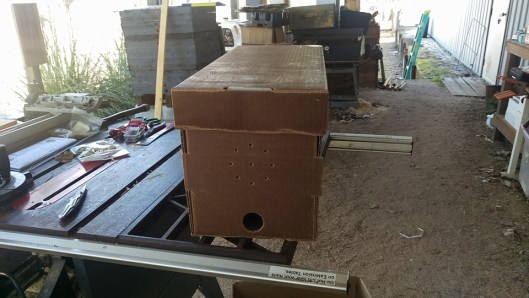
Using waxed nuc boxes this year for swarm traps.

Feel free to share this on:

  • Share on Facebook (Opens in new window) Facebook
  • Share on X (Opens in new window) X
  • Share on Pinterest (Opens in new window) Pinterest
  • Email a link to a friend (Opens in new window) Email
  • Share on LinkedIn (Opens in new window) LinkedIn
  • Share on Reddit (Opens in new window) Reddit
  • Share on Tumblr (Opens in new window) Tumblr
  • Print (Opens in new window) Print
  • Share on Telegram (Opens in new window) Telegram
  • Share on WhatsApp (Opens in new window) WhatsApp
Like Loading...

Tending bees is a lesson in looking forward.

22 Wednesday Feb 2017

Posted by Beekeeping365 in beekeeping, management

≈ Leave a comment

Tags

beekeeping, management

20130725honeybeecolony

Let’s say you were going to open a new business and wanted to hit the market with a bang on day one of shopping season – say black Friday or whatever. You’d have to start preparing for that day ahead of time. How far ahead of time? You really don’t want to hire employees too soon and not have anything for them to do for months. Instead you want to hire them just enough ahead of time to get them oriented to their new jobs, well trained, and ready to service mobs of customers exactly on your Grand Opening date.

The same applies to your honey bees. Grand Opening date is the day the nectar flow begins in earnest. We can never know exactly when that date is as nature deals us a slightly different set of circumstances each year. But seasoned beekeepers in your area can give you a good estimate of the date nectar flow begins and ends in your area. Your job, as the beekeeper, is to have a full staff of employees ready and trained to gather that nectar starting on day one of the season. You’ll also have to worry about employee retention and expansion over the course of the nectar season. Finally, you’ll have to curb hiring as the season diminishes so that you’re not squandering resources on employees that will never gather nectar.

Here in the Midlands of South Carolina most seasoned beekeepers recognize the beginning of the spring nectar flow as April 1st. This year it appears to be running ahead of schedule. For the purpose of this article we’ll say April 1st and you can adjust for your location and observations. A 3 week old foraging bee available to work on April 1st has already graduated through the various stages of nurse bee, house bee, wax producer, etc. Prior to that she spent 21 days as an egg, larva, and pupae. So exactly when did you need your queen to lay that egg to produce that foraging bee available for work on April 1st? Bee math tells us she needed to lay that egg on approximately February 14. This is easy to remember as it is Nicolai Nasonov’s birthday. But wait, if the queen lays 1,200 eggs per day and does so on February 14 that results in 1,200 foraging bees on April 1st – but we want more than 1,200 bees don’t we? No worries, she didn’t go from 0 to 1,200 in one day. Instead, she’s been increasing her output since the winter solstice. But my point is February is critical for the beekeeper to stimulate production if he or she wants to have a full staff of foraging bees to get the job done in a manner that produces excess honey.

The same math can be used to determine when to start curtailing hiring new employees (bees) during the nectar flow. Our Midlands nectar flow ends approximately June 1st – a brief 2 months from its start date. An egg laid on April 19th will become a foraging bee on June 1st. That’s simply too late to contribute to nectar gathering. But that same bee will eat as much as any other bee in the hive and required the same amount of nutrition and work to create. Now here’s the dilemma, that colony is going to be in full tilt workaholic mode during the course of the nectar flow. It’s all hands on deck and as long as nectar is coming through the front door the queen will continue to lay eggs. The colony will continue to build and build bees because they have all the resources to do so. And the summer solstice isn’t until June 21st so that’s of no help. If you’re still hiring bees after April 19th you’re setting yourself up for having to feed those non-productive bees during the remainder of the nectar flow as well as the coming summer dearth. That means less excess honey for you.

What’s a beekeeper to do? A couple ideas might be to use that nectar flow time after April 19th to create a brood break by caging the queen. This would benefit the colony by reducing mite count via a brood break. A second option might be re-queening your hive allowing for a brood break. Moving your queen across the yard and allowing them to requeen would provide an almost perfect 25 or so days with out new brood. (Your queen across the yard is your failsafe.) Another option might be to “steal” frames of brood and get an early start on summer splits. The number of cells in a deep frame is around 7,000 although there is honey and pollen taking up some of the cells. Nevertheless, taking a frame of open brood, a frame of closed brood, and a frame of honey will hardly set an expanding colony back much and should result in an increase in your honey yield due to fewer mouths to feed. Plus you’ll get another colony, a new queen, a break in mite production, and a backup colony should anything go wrong in the fall. And with the nectar flow still in progress everything goes easier – wait until dearth comes and the same tasks will be much more difficult.

I’ll end here. Tending bees is a lesson in looking forward.

Feel free to share this on:

  • Share on Facebook (Opens in new window) Facebook
  • Share on X (Opens in new window) X
  • Share on Pinterest (Opens in new window) Pinterest
  • Email a link to a friend (Opens in new window) Email
  • Share on LinkedIn (Opens in new window) LinkedIn
  • Share on Reddit (Opens in new window) Reddit
  • Share on Tumblr (Opens in new window) Tumblr
  • Print (Opens in new window) Print
  • Share on Telegram (Opens in new window) Telegram
  • Share on WhatsApp (Opens in new window) WhatsApp
Like Loading...

Buzzkill: Will America’s Bees Survive? | DiscoverMagazine.com

21 Tuesday Feb 2017

Posted by Beekeeping365 in beekeeping, honey bee biology, pests

≈ Leave a comment

Tags

beekeeping, honey bee biology, pests

The science and politics of saving America’s bees gets messy. And the bees continue to die.

Source: Buzzkill: Will America’s Bees Survive? | DiscoverMagazine.com

Feel free to share this on:

  • Share on Facebook (Opens in new window) Facebook
  • Share on X (Opens in new window) X
  • Share on Pinterest (Opens in new window) Pinterest
  • Email a link to a friend (Opens in new window) Email
  • Share on LinkedIn (Opens in new window) LinkedIn
  • Share on Reddit (Opens in new window) Reddit
  • Share on Tumblr (Opens in new window) Tumblr
  • Print (Opens in new window) Print
  • Share on Telegram (Opens in new window) Telegram
  • Share on WhatsApp (Opens in new window) WhatsApp
Like Loading...

Darwin’s difficulty with the evolution of Honeybees

18 Saturday Feb 2017

Posted by Beekeeping365 in beekeeping

≈ Leave a comment

Tags

beekeeping

Source: The Mountain

In beekeeping there are some colony behaviours that we learn about and adapt to, but what is it that makes bees behave in certain ways, some things can be explained others are still a puzzle even to Darwin!

As a beekeeper the evolution of the honeybee can help to explain certain behaviour within the colony. The following attempts to discuss the latest situation.

‘In the Origin of Species, Darwin discussed several challenges that worker insects presented to his theory of natural selection. Complex instincts such as building of combs of hexagonal cells were one problem and were explained by showing plausible intermediate stages. A more serious challenge was posed by the multiple worker castes seen in many ants. How could sterile individuals continue to evolve?  Some modern commentaries on Darwin and insect workers seem to be cases of present interests interfering with the interpretation of the past. From a modern perspective, the evolution of a worker caste, and its corollary altruism, are evolutionary puzzles inasmuch as natural selection normally favors greater, not lesser, individual reproduction.’ Darwin’s special difficulty: the evolution of “neuter insects” and current theory. Ratnieks et al

………………………………………………………………………………………………………………………………..

The following is taken mostly from The Buzz about Bees by Jurgen Tautz and explains the kinships of worker bee sisters and half sisters and the drones. It helps to get a feeling about how the bees might behave in certain situations.

William D Hamilton explains how worker bees are more closely related to their sisters than to their own sons which would explain why they are happy to raise their sisters….until we consider the fact that the queen mates with about 13 drones when it becomes apparent that workers are less related to their half sisters than they are to their own sons…Hamilton’s detail is below with my summary at the end.

The unusual situation of kinship in the honeybee colony may be better understood in terms of a concept that has become popular through the work of the English biologist, William D. Hamilton (1936–2000).

The essence of Hamilton’s idea is as follows: particular genes localized at the same place in particular organisms, and which influence the same character, are called alleles. Alleles can occur in different forms, and are the basis for variability in the gene. The alleles are not only passed directly onto the offspring, but copies of these exist also in their siblings and their children, cousins, aunts, uncles, and entire families.

The likelihood of finding the same allele in individuals decreases the more remote the kinship of an individual is to the source. The carrier in which the allele resides is of little consequence for the success a single allele has in spreading as a competing allele in a population.

A behavior in relatives that contributes to rearing the young, for example, can be of advantage to both the supporters and their alleles, even if the carriers have no offspring of their own. Such a sacrifice is then not a disadvantage, if the alleles occur sufficiently frequently in the family.

Kinship selection, a theory developed by John Maynard Smith (1920–2004) and William D. Hamilton, based on the distribution of alleles in groups of related organisms, has clear consequences for the appearance of cooperative, or in extreme cases, “altruistic” behavior in animals.

This theory offers an explanation for single organisms that, like honeybees, have crossed the threshold from “loners” to social beings in the course of their evolution. (Or does it?)

Alleles that are most successful in the branching family network exist “selfishly” at the expense of other alleles. The vision that alleles behave selfishly, and aim only to set as many copies of themselves as possible in the world, has been convincingly explained by Richard Dawkins (1941–), in his book “The selfish gene”.

To an observer, alleles appear as selfishly behaving single elements, exhibiting what could almost be termed a “propagative drive” in honeybees.

Honeybees have, like all other Hymenoptera, and many other insect species that do not form colonies, an unusual mechanism for determining the gender of the adults.

Bees from unfertilized eggs have a single set of chromosomes, the haploid chromosome state.

Bees from fertilized eggs have two sets of chromosomes, the diploid state.

Honeybees possess a single gene for the determination of gender, which can appear in different alleles. An individual that is homozygous for this gene (the alleles are identical), which has to be the case for all haploid individuals (they possess only a single allele), will develop into a male.

An individual that is heterozygous for this gene (all the alleles are different) develops into a female.

A diploid individual homozygous for the sex gene, which very seldom occurs, is a diploid drone, and is usually killed by the workers in the larval stage.

This method of determining the sexes through the number of chromosome sets, or haplo-diploidy, has unusual consequences:

• Males have no fathers, because they come from unfertilized eggs.

It follows that males have no sons, at the most, grandsons.

• Should a male and a female produce daughters, these daughters will share more common alleles than they would with their own children.

Approaching the concept in small steps allows a better understanding of these curious circumstances:

• In 1969, the French bio-mathematician Gustav Malecot (1911–1998) defined genetic kinships as “r”, which is the average probability that a particular allele selected from an individual will also be found in a particular individual to which it is related.

• The value “r” is of biological significance from the point of view of the gene “spender”, because this defines the direction of the gene flow.

• All the alleles of the haploid father will certainly be passed onto each daughter. The probability of occurrence of the father’s alleles in the daughters is 100%, or, expressed differently, r=1.0.

The father will therefore find every one of his alleles again in every daughter.

• The statistical probability that the same alleles of the diploid mother will be found in her daughters lies at 50%, or r=0.5, because a mother contributes exactly half of her alleles to each of her egg cells.

A mother will therefore find, on average, half of her alleles again in a particular daughter.

• The probability that the same alleles will be found in a comparison between full sisters is given by a summary of factors relating to the father and the mother: half of the genome of a female bee comes from the father, and is identical in all full sisters.

Mathematically expressed, this means that 100% of 50% of the sisters’ genes are identical.

The other half of the genome comes from the mother, and has only a 50% probability of being identical in the sisters, because for each gene the mother has one of two possibly different alleles to offer.

In terms of the entire genome, this means 50% of 50%, or 25% are identical.

If one now adds up the values that come from the alleles of the father and the mother, and compares the sisters to one another, one gets 50%+25%=75%, or r=0.75 genetic kinship.

Honeybee sisters therefore share a statistical average of three quarters of their alleles.

In reality, this value swings between 50% of common alleles (only the alleles from the fathers are inherited), and 100% (alleles from both the father and the mother are the same).

Cloned animals are 100% genetically identical; their degree of genetic kinship is r=1.0.

Human children are 50% identical to their parents; here, the degree of genetic kinship amounts to r=0.5.

Honeybees, with their r=0.75, lie between cloned animals and humans.

From this perspective, the best thing that a female bee can do to propagate her genes is to renounce having her own children, and instead help her mother to bring as many sisters into the world as possible.

In order to propagate their alleles, the sterile workers should cooperatively support each other. This is exactly what happens in bee colonies, although the situation is a little more complex.

A queen on her nuptial flight usually pairs with about 13 drones, and their sperm fertilizes the eggs that will later develop into females. The workers in a bee colony all have the same mother, because they all stem from the same queen, but are from many fathers.

multiple-mating-of-the-queen

Graph by Glyn Davies of Newton Abbott BKA

Workers that are produced from the sperm of the same drone are full sisters. They are half sisters to those that have different fathers.

Full sisters share more common alleles than do half sisters, so they should support the half sisters less than they do other full sisters.

A complex game of cooperation between the full sisters, and conflict between the full sister groups would be expected if bees supported their closest kin, although an interaction of this kind would depend on them being able to distinguish between full and half sisters.

Bees can determine a great deal about their conspecifics through their sense of smell. The decision of whether or not a bee that wishes to enter the hive belongs to the colony has fundamental importance. This check is undertaken by guard bees at the entrance to the hive, which can smell a newcomer from a distance, and touch her with their antennae when she lands.

Chemo-sensitive sensilla in their antennae enable them to establish whether she belongs to the nest, or is a stranger.

If the odor signals “stranger”, the newcomer will be aggressively chased off. She does, though, have the possibility of being granted entrance if she bribes the guard bees with a drop of nectar.

Conditioning experiments have shown that bees are able to distinguish full sisters from half sisters by the odor of their cuticle, the thin wax layer that covers all insects and protects them from dehydration. Do they use this ability, and if so, when would it be significant in terms of kin selection?

For kin selection, odor identification would be important when new reproductive animals are being reared, because the queens and the drones have a propagative future.

The rearing of a new queen will set the genomic direction for the new colony, and here there is a high potential for conflict between the different groups of full sisters in the nest.

We know virtually nothing about how a colony decides who the new queen will be.

Do subtle conflicts and contests take place between the half sisters that we have not recognized? Do the still generally unknown, but often reported behavior patterns of workers, young queens, and drones on nuptial flights play a role?

Much of this is still a complete puzzle.

An additional area of potential conflict occurs when the workers themselves begin laying eggs.

In European bees, this happens at a rate of 1 in 1,000. Such eggs are unfertilized, and result in haploid drones. In such a colony, therefore, drones can arise that stem from the queen, and have a degree of kinship with her of r=0.5.

Drones that stem from workers have a degree of kinship of r=0.5 with their worker mothers. The degree of kinship between a worker and her brother is r=0.25, and this value is independent of the number of queen pairings, because the mother passes her own genes onto her sons in the unfertilized eggs.

Things get really complicated when one calculates the degree of kinship between a worker and her nephew, the son of one of her sisters. The values that one obtains here are dependent on the number of pairings of the queen on her nuptial flight. If only one pairing took place, the worker would have a kinship of r=0.375 with the sons of her sisters (and in this case, all the workers would be full sisters).

With two possible fathers, the degree of kinship to the nephews sinks to r=0.1875, which is below the kinship of r=0.25 shared with brothers.

If the queen had mated ten times, a kinship of r=0.15 between workers and their nephews results.

worker-bee-relatedness

Graph by Glyn Davies of Newton Abbott BKA

Purely theoretically then, and considering the usually typical multiple mating of the queen, it would be of genetic advantage to the workers to kill the sons of their sisters, but not their brothers, and on no account their sons, with a kinship of r=0.5.

Workers should therefore suppress nephews that are genetically remote from them, and workers eat the eggs of other workers. They should protect their own eggs, and those of their full sisters, while destroying those of their half sisters, but it is still not clear whether bees can distinguish between the eggs of their full and half sisters.

Workers could also “make sure”, and simply eat up all the eggs that have not come from the queen.

The quantitative determination of the genetic kinship between the members of a bee colony provides the basis for an ambitious theory.

The degree of kinship “r” that is calculated is a statistical average that lies between widely separated extremes.

When a honeybee meets another bee, pupa, larva, or a different egg, she is not confronted with a statistical mean for “r”, but with a concrete single “r”. Can a honeybee determine this value when meeting another individual?

The destruction of haploid drone eggs by the workers shows that they can distinguish between the eggs of the queen and their sisters. The chance distribution of the alleles will, however, lead to situations in which a worker could come across a haploid egg from the queen with which she has nothing genetically in common, or an egg of one of her sisters with which she shares the maximum possible number of alleles.

For the theory to hold, it is not the origin of the egg that determines the action a worker should take, but the nature of the genome.

Just how well honeybees are in reality able to recognize, and use the degrees of kinship still needs to be demonstrated.

In the case of the destruction of worker eggs by workers, there is a simpler explanation: the consumption of eggs could be a purely hygienic precaution.

Very few of the larvae from worker bees molt, and embryonic development either does not start, or the embryo dies. In contrast to determining the degree of genetic similarity, worker bees are faced with the far simpler task of distinguishing dead from living eggs. It is also highly likely that eggs from the queen can be recognized by a protective odor provided by the queen when she lays these. Many questions remain unanswered.

The determination of sex in the form of haplo-diploidy in the Hymenoptera brought about the evolution of superorganisms, and provides an explanation for the change from living as an individual, through living in associations, to sociality and eusociality.

The reality of the presently living superorganisms does not support the theory that kinship alone is the explanation of bee biology. The difficulty of the enormous range of the r-value around the statistical mean has already been mentioned. This becomes even more complicated if the multiple pairing of the queen is taken into consideration when calculating the degrees of kinship.

Hamilton’s quantitative ideas would be valid only if all bees in a colony are from one mother and one father, but because many fathers leave their traces in a bee colony, this does not apply to the bee colonies that we find today.

The workers of a colony are less genetically similar amongst themselves than they would be to their own daughters.

Perhaps we have, in the application of the theory of kinship selection to honeybees, a situation deserving T.H. Huxley’s (1825–1895) remark that “The great tragedy of science is the slaying of a beautiful hypothesis by an ugly fact”. The situation here, though, is not quite as severe. During the passage of evolution, kin selection and haplo-diploidy were needed for the bees, and other hymenopterans, to find their way to their superorganisms.

Hence, when establishing nests, sisters would help one another in raising the young, just as we find today in wasps. But what keeps honeybees still at this level today, if kinship selection is no longer a significant basis?

……………………………………………………………………………………………………………………………………………

A bit more about haploid and diploid:

This diagram is from a lecture given by Gudran Koeniger at the National Honey Show 2014 entitled “Mating Biology of Honeybees. DCA’s – A Natural Strategy To Avoid In-breeding”

diploid-drones

In this lecture Gudran also shows results of findings at Drone Congregation Areas, DCA in Austria where drones from 230 colonies were found with over a third of these being the only drone from a particular hive. This demonstrates that the best way to avoid brother and sister mating is to mate outside the hive and at a DCA with drones from many different colonies.

Gudran also mentions the sperm distribution as can be seen in the graph below such that when a queen mates she keeps more sperm from the first drone than the second and so on, hence creating a colony that has an imbalance of groups full sisters. Maybe this imbalance is what influences the choice of new queen or indeed if the colony ever becomes queenless and workers start to lay and raise their own drones.

patrilines-of-the-drone

Some related research notes:

  1. There is some evidence that bees will selectively confine half-sister queens over super-sister queens, one of the best examples yet of potential genetic control of the final queen. Bee Culture June 2011.
  2. “Honeybee queens are not reared at random but are preferentially reared from “royal” subfamilies, which have extremely low frequencies in the colony’s worker force but a high frequency in the queens reared.” DNA Analysis of Bees in a Mature Colony (BUT NOW BLUE BLOODED FAMILIES!:- by Robin Moritz, Peter Neumann et al 2005.)

…………………………………………………………………………………………………………………………..

In summary, honeybees still pose a problem for the theory of evolution inasmuch as natural selection normally favors greater, not lesser, individual reproduction. We also see that kinship shows us that sister workers are 75% related which means that they are more related to each other than to their own sons and hence more inclined to raise sisters. However, the queen mates with on average 13 drones and this means that half sisters are less related to another half sister than to their own sons. For honeybees at least then there is still a social harmony puzzle.

Incidentally for bumblebees and wasps kinship can explain nicely how harmony exists as their queen only mates once. But even with bumblebees we see intra colony trouble when the queen switches to drone laying as the workers then prefer to raise their own sons than their brothers. (Goulson)

It is unclear how a queen is selected or indeed the egg or larvae that will become the queen. The logic is that sisters will prefer a queen from their own sister over that of a half sister. Maybe this is the reason that many queens are produced. But the research by Robin Moritz, Peter Neumann et al 2005 would suggest otherwise (see above).

It would be interesting to note how long after the introduction of an unrelated queen to a nuc that the laying of drones ( by the new queen) starts. The obvious logic would be that this would only occur once the majority of the bees in the colony are daughters of the new queen. Yet we see a colony with an unrelated queen that has not mated successfully and hence a drone laying queen has her offspring, her sons reared. Kinship can only be a part of the story of social harmony.

In the scenario above kinship plays no part in the acceptance of a new queen and her sons.

Is it then that the queen pheromone plays a significant part in this harmony?

What we observe is that when a virgin queen emerges she is still immature and the worker bees may recognise her as not being a worker, but they don’t recognise her as a ‘queen’. Over several days the virgin queen starts to mature and becomes ready to mate. She then mates and spends a further few days completing her maturity before starting to lay eggs.

When the workers recognise her as their queen is still unclear, however, it is probably shortly after she has emerged from the pupal cell and become the only queen in the colony. What is also apparent is that her brother drones within the hive treat her as a worker, they don’t try to mate with her. This might be because she doesn’t emit a mating pheromone at this stage. It is highly likely that drones will only mate on the wing and when they detect the queen mating signal (pheromones) as it is known that a brother can and does mate with his sister queen hence the diploid male eggs that the workers reject.

Further study of the drone laying worker scenario might give us a further lead into what it is that bonds the workers of the colony.

It remains that honeybees as individuals don’t follow Darwin’s theory of evolution…

Darwin found a solution that solved these challenging difficulties. The problem depicted would be significantly reduced if one accepted that selection could act not only on the individual, but also on the entire colony. Seen in this light, entire colonies would compete for the largest number of daughter colonies that were reproduced, not of individual bees. Modern evolutionary biology now includes the concept of colony evolution in the term group selection. Just why it is that the individual workers of honeybees, and their relatives, bumblebees, wasps, and ants, do not compete against each other within the colony remains unsettled. Nevertheless, it is precisely this renunciation by the workers of producing their own offspring that the honeybees have used as successful strategy to propagate their own genome.

Observation and experience shows that there are colonies that swarm hardly ever, some that supersede their queen hence never swarming and those that seem to swarm several times a season.

Is it really these latter colonies that are the secret to the evolution of the honeybee?

Beekeepers recognise that swarming is how the colony propagates, but we work with it. To get an excess of honey we need an excess of bees and to this end queen breeders will often look to keep ‘swarminess’ to a minimum. It follows that if all colonies behave in a way to only supersede their queen when she gets old, honeybees would die out.

Where does altruism begin and where does it end?

Source: The Mountain
Chris Cardew's avatarThe Mountain

In beekeeping there are some colony behaviours that we learn about and adapt to, but what is it that makes bees behave in certain ways, some things can be explained others are still a puzzle even to Darwin!

As a beekeeper the evolution of the honeybee can help to explain certain behaviour within the colony. The following attempts to discuss the latest situation.

‘In the Origin of Species, Darwin discussed several challenges that worker insects presented to his theory of natural selection. Complex instincts such as building of combs of hexagonal cells were one problem and were explained by showing plausible intermediate stages. A more serious challenge was posed by the multiple worker castes seen in many ants. How could sterile individuals continue to evolve?  Some modern commentaries on Darwin and insect workers seem to be cases of present interests interfering with the interpretation of the past. From a modern…

View original post 3,610 more words

Feel free to share this on:

  • Share on Facebook (Opens in new window) Facebook
  • Share on X (Opens in new window) X
  • Share on Pinterest (Opens in new window) Pinterest
  • Email a link to a friend (Opens in new window) Email
  • Share on LinkedIn (Opens in new window) LinkedIn
  • Share on Reddit (Opens in new window) Reddit
  • Share on Tumblr (Opens in new window) Tumblr
  • Print (Opens in new window) Print
  • Share on Telegram (Opens in new window) Telegram
  • Share on WhatsApp (Opens in new window) WhatsApp
Like Loading...

Lemon Honey Ginger Tea

16 Thursday Feb 2017

Posted by Beekeeping365 in beekeeping, honey, recipe

≈ Leave a comment

Tags

beekeeping, honey, recipe

Source: Honey Lemon Ginger Tea

Woowee! Grad school has been kicking my booty lately (that kind of rhymes and I’m into it). I have definitely been feeling the stress of writing papers, assignments, and the black death that it is organic chemistry. I am a faithful coffee drinker, we’ve been going steady for about 7 years now and I don’t see us breaking up anytime soon, however, when I’m feeling stressed my nerves can’t quite take the added caffeine in my system. So I’ve been drinking this lemon honey ginger tea A LOT. Now I know you can go to the store and buy lemon honey ginger tea, but it honestly just tastes like a dried bag of nastiness and no one has time for that. Plus this way you get the added benefits of fresh ginger and lemon, and you can make sure there aren’t any other sneaky ingredients being added.

This is also a great drink to make if you’re feeling under the weather… hello flu season! If you can, buy raw local honey. Buying local honey may actually be able to help ward off allergies. Some think that when you ingest the honey you are also ingesting small amounts of pollen, and over time this can help to make you less sensitive to pollen. Ginger has a long history of being used medicinally to help with digestion and immunity. Lemon contains vitamin C, vitamin B-6 and flavonoids, among other immunity boosting nutrients.

Ingredients

  • 1 teaspoon grated ginger (no need to peel it)
  • 2 teaspoons fresh lemon juice
  • 1 teaspoon raw local honey (you can skip the honey if you are avoiding sugar)

Add all the ingredients to a pot with a mugs worth of water. Let the ingredients simmer on low for 5-7 minutes. Strain the water into your favorite cup and enjoy! You may need to play around with the measurements until you reach your ideal tea.

Source: Lemon Honey Ginger Tea

Feel free to share this on:

  • Share on Facebook (Opens in new window) Facebook
  • Share on X (Opens in new window) X
  • Share on Pinterest (Opens in new window) Pinterest
  • Email a link to a friend (Opens in new window) Email
  • Share on LinkedIn (Opens in new window) LinkedIn
  • Share on Reddit (Opens in new window) Reddit
  • Share on Tumblr (Opens in new window) Tumblr
  • Print (Opens in new window) Print
  • Share on Telegram (Opens in new window) Telegram
  • Share on WhatsApp (Opens in new window) WhatsApp
Like Loading...

Worker laying workers — The Apiarist

11 Saturday Feb 2017

Posted by Beekeeping365 in beekeeping, honey bee biology

≈ Leave a comment

Tags

beekeeping, honey bee biology

Source: via Worker laying workers — The Apiarist

A few months ago I wrote about problems encountered with laying workers, and ways to overcome those problems. Laying workers occur when a colony lacks sufficient open brood pheromone to suppress egg laying by the workers. One solution, though not one I favour, is to repeatedly add frames of open brood to suppress egg laying and then either add a queen, or allow the colony to raise their own.

The article was titled ‘drone laying workers’ and, in the comments, Tim Foden correctly pointed out that the prefix ‘drone’ was probably superfluous. Since the workers were unmated they would only be able to lay haploid eggs which would inevitably develop into drones.

Without intervention a laying worker colony is doomed. However, drones from a laying worker colony are fertile. Therefore, from an evolutionary perspective you could consider the rearing of drones is a last-gasp effort to pass on some of the genes to successive generations.

But … there’s always a but

The Cape honey bee (Apis mellifera capensis) is a subspecies usually restricted to the Western Cape region of South Africa. Laying workers of Cape honey bees can lay eggs that develop into workers (or queens). Since these ‘mother’ workers are unmated and their resulting progeny workers are diploid, this takes some genetic trickery. This mechanism is snappily titled thelytokous parthenogenesis.

Cape honey bees

Parthenogenesis is most simply defined as reproduction without fertilisation. Thelytoky is derived from the Greek thelos, meaning ‘female’, and tokos, meaning ‘birth’. The next time you’re asked to define thelytokous parthenogenesis in the pub quiz your team will have the edge – it means giving birth to females without reproduction. The female progeny capensis workers produce can be reared as workers – essentially clones of their mothers – or, with a change in diet for the early larvae, queens.

The genetic trickery involves the haploid pronucleus of the egg fusing with one of the polar bodies that are generated during oogenesis (egg production). Polar bodies are small haploid cells that bud off during ovum development. Fusion of the two haploid cells creates a diploid, which can go on to become a female bee.

No laying worker problems then … ?

Quite the opposite. You’d think that by encouraging this type of activity in Cape honey bees your laying worker problems would be a thing of the past. In fact, your problems become a thing of the future. Laying workers of capensis are socially parasitic. They invade – through drifting for example – unrelated neighbouring colonies, such as those of Apis mellifera scutellata (another subspecies, the African honey bee). Once there, the eggs they lay are reared by the new colony, but the resulting workers do not contribute to foraging or other hive activities. Instead they also become laying workers (worker laying workers that is 😉 ), eventually leading to the collapse of the host colony.

Capensis has been spread widely from its original range through migratory beekeeping, leading to large-scale colony losses and significant economic impact to the beekeeping industry in regions of South Africa distant from the Western Cape. Capensis also hybridises with scutellata in areas where their ranges overlap.

Divide and conquer

Honey bees are social insects. Cape honey bees, for all their unsociable parasitic activities are also social. However, their unsociable activities aren’t restricted to parasitism. They also exhibit a trait called worker policing. A Cape honey bee colony might contain several laying workers. The workers they rear are able to discriminate between eggs laid by their ‘mother’ and those laid by her half-sisters – effectively their aunts – in the same hive. Once they detect a foreign egg, they either eject it or eat it.

This worker policing can lead to sub-division of the hive, with territories being established in separate parts of the hive, each containing genetically clonal populations of laying workers. However, unless the colony rears a new queen its long-term prospects are very limited. The prodigious egg-laying ability of a queen far outstrips that of even multiple laying workers, meaning the colony – and all its sub-divisions – will eventually dwindle and be lost.

Worker policing is an interesting phenomenon and has some relevance to queen rearing and larval selection which I’ll address later in the season.

Pedantically speaking … and wind

Laying workers colonies in the UK characteristically rear large numbers of drones. This is why Tim Foden correctly commented that the prefix ‘drone’ is superfluous. However, to be absolutely pedantic it is needed. This is because, irrespective of the strain of bee, up to 1% of eggs laid by laying workers are diploid. All bees exhibit thelytokous parthenogenesis but it’s only in capensis the trait is common.

Why is it only in capensis that this trait is common? It’s been suggested the selection for thelytokous parthenogenesis is due to the strong winds that occur in the southern region of South Africa in which capensis is the native honey bee. As a consequence of this, queens are often lost on mating flights, rendering the colony queenless. Without “worker laying workers”  – or, more correctly, diploid laying workers from which new queens can be raised – colonies would be doomed.

Western Cape Fynbos region of South Africa

Capensis queen mating flights have been documented at wind speeds in excess of 30 mph … another adaptation to the climate of the region. In contrast, scutellata queens, from more northerly regions in South Africa won’t go on mating flights if the wind speed exceeds ~12 mph.

Cape honey bees are wonderfully well adapted to the Western Cape Fynbos region of South Africa. They are the strain beekeepers choose to use for honey production and pollination in an area with huge biodiversity and ~6000 endemic plant species. In trials using alfalfa, capensis-pollinated plants set twice as much seed as those pollinated by scutellata. This suggests they are particularly thorough plant ‘visitors’, a conclusion supported by their ability to collect pollen which was also twice that of scutellata. They have additional unique characteristics. In a publication pre-dating the introduction of Varroa to South Africa, Hepburn and Guillarmod (PDF) describe how readily capensis absconds in summer and migrates in winter, both characteristics the reflect adaptation to the climate and the regular wildfires in the region, and not seen in other strains of bees.

Finally, in much the same way that moving capensis colonies elsewhere has caused problems, the introduction of American foulbrood to the region in 2008 (again through beekeeper activity) has resulted in the loss of 40% of Cape honey bees.

via Worker laying workers — The Apiarist

Feel free to share this on:

  • Share on Facebook (Opens in new window) Facebook
  • Share on X (Opens in new window) X
  • Share on Pinterest (Opens in new window) Pinterest
  • Email a link to a friend (Opens in new window) Email
  • Share on LinkedIn (Opens in new window) LinkedIn
  • Share on Reddit (Opens in new window) Reddit
  • Share on Tumblr (Opens in new window) Tumblr
  • Print (Opens in new window) Print
  • Share on Telegram (Opens in new window) Telegram
  • Share on WhatsApp (Opens in new window) WhatsApp
Like Loading...

This Cat Don’t Eat Honey

09 Thursday Feb 2017

Posted by Beekeeping365 in beekeeping, honey

≈ Leave a comment

Tags

beekeeping, honey

Humans can taste one drop of sucrose (table sugar) diluted in 150 parts water. A honey bee outranks our sugar sensitivity six-times over: about one part in a thousand and the bee is on it. What about Puff, the cat? Puff doesn’t jump on command nor does she care much for honey. Why do cats […]

via This Cat Don’t Eat Honey — Bad Beekeeping Blog

Feel free to share this on:

  • Share on Facebook (Opens in new window) Facebook
  • Share on X (Opens in new window) X
  • Share on Pinterest (Opens in new window) Pinterest
  • Email a link to a friend (Opens in new window) Email
  • Share on LinkedIn (Opens in new window) LinkedIn
  • Share on Reddit (Opens in new window) Reddit
  • Share on Tumblr (Opens in new window) Tumblr
  • Print (Opens in new window) Print
  • Share on Telegram (Opens in new window) Telegram
  • Share on WhatsApp (Opens in new window) WhatsApp
Like Loading...

Life can’t always be honey

08 Wednesday Feb 2017

Posted by Beekeeping365 in beekeeping

≈ Leave a comment

Tags

beekeeping

Emma Maund's avatarMrs Apis Mellifera

IMG_1880

Pepper’s colony had eaten their first block of winter fondant. The hive had lost weight and it was possible to heft the boxes slightly off the stand. I stared down the hole of the crownboard into the dark abyss of empty honeycomb. There was no sign of activity. Then a single worker crawled up a wall and stopped a few inches beneath the crownboard. She stared back as I slowly lowered a new block of fondant over the hole.

The neighbouring hive belonging to Pepper’s daughter, Peppermint, had become heavier over winter. The workers seemed to have made good use of the milder days to find forage for stores. I lifted the insulation to discovera small crowd of beeshad found their way under the roof. They looked like young bees judging from their soft fuzzy thoraxes and perfectly shiny folded wings. They were too busy exploring the new space to…

View original post 381 more words

Feel free to share this on:

  • Share on Facebook (Opens in new window) Facebook
  • Share on X (Opens in new window) X
  • Share on Pinterest (Opens in new window) Pinterest
  • Email a link to a friend (Opens in new window) Email
  • Share on LinkedIn (Opens in new window) LinkedIn
  • Share on Reddit (Opens in new window) Reddit
  • Share on Tumblr (Opens in new window) Tumblr
  • Print (Opens in new window) Print
  • Share on Telegram (Opens in new window) Telegram
  • Share on WhatsApp (Opens in new window) WhatsApp
Like Loading...

Our Hives They Are a-Changin’

06 Monday Feb 2017

Posted by Beekeeping365 in beekeeping, honey bee biology, management, pests, varroa, varroa mites

≈ Leave a comment

Tags

beekeeping, honey bee biology, management, pests, varroa mites

Source: Our Hives They Are a-Changin’ by Bees with eeb

Aside from a single white morning this winter, we have had very little snow in Virginia. The weather is unusually warm and the bees seem to get a flying day once a week or so. I suspect the insect population will be robust this year, from small hive beetles to other assorted insects, due to our lack of cold weather. Soon the bees will start ramping up for spring, and I have been keeping an eye on the mite populations in Mars and Jupiter.

170202-graph

Mite Counts

I have screened bottom boards on Mars and Jupiter and count the mites every few days to determine the average daily mite drop. It is nice to track this number through the winter and have a sense of overall hive infestation. As you can see, the mites were high in Mars and had starting creeping up in Jupiter in mid-November. I did an oxalic acid dribble (OAD) on Nov 28 to knock them back. Oxalic acid is an organic compound found in rhubarb, spinach, and a number of other plants. Varroa mites react poorly to it, while the bees have a natural tolerance. I treated every hive in the apiary, which is recommended since the bees (and mites) will drift from hive to hive.

Right now the mite counts are low, around 1 to 2 mites per day. Soon, as the hives start to raise new workers, the mites will increase. Last year the uptick started in mid-February, so we’ll see when it starts changing this year.

The Varroa Problem

Speaking of our most dreaded pest, it appears that nationwide mites are starting to show some resistance to the most common synthetic pesticide, amitraz. I wouldn’t touch the stuff, but many commercial beekeepers use it. This could create some serious trouble for these outfits as well as crops such as almonds that heavily depend on bee pollination. The situation prompted Randy Oliver at Scientific Beekeeping to create a series of articles calling for a new focus on developing mite-resistant honey bees. Visit his articles by publication date page to see the series so far: part 1 through part 4 as of this posting.

The articles provide an in-depth look at why varroa mites are a problem and what we should do about it. Varroa is a vehicle for deformed wing virus (DMV) and other viruses, and as the mite population increases it spreads DMV and other ills among the bees. Colonies will typically collapse from these viruses before the mites become a serious threat.

The most interesting section for me is part 3, where Randy discusses why varroa mites and DMV are getting progressively more virulent. Since commercial beekeepers tend to use bees bred mainly for growth and honey production, the resistance to varroa and DMV in these bees is rather low. This coupled with the fact that hives are kept close to each other encourages more dangerous forms of the virus to develop. If a hive collapses quickly, other bees will rob it out and bring the mites and viruses back to their hives.

If beekeepers insisted on more mite-resistant stock, the virus would spread less quickly. Hive collapses would be more likely to occur during winter, rather than before it. Virus and mite transmission would then more frequently occur in swarms and splits, which would favor less virulent strains of the virus.

Randy does a better job explaining the science (which I may not have completely correct), the point is that the majority of beekeepers would need to insist on mite-resistant stock. In fact, according to Randy, that is exactly what happened in South Africa. The beekeepers there did not have the resources to purchase miticides when varroa arrived. After devastating losses for a few years, the bees recovered and now beekeepers in South Africa do not generally worry about varroa mites. We are unlikely to eliminate the mites, we need to evolve into a more stable relationship between honey bees and mites.

It is a great series, and I look forward to future installments. Check it out.

The Times They are a-Changin’

This 1964 song by Bob Dylan was the title track on the album of the same name. Dylan wrote the song to capture the feeling of change in the 60’s, and numerous bands have performed the song as a cover since then. In 1984, Steve Jobs recited the second verse of the song during the Apple shareholders meeting, where he famously unveiled the Macintosh computer.

For this post, the times are changing for me in a number of ways. Aside from the seasonal change of the bees as we move from winter to spring, I just left my prior job this past week after over five years with the company. My new position starts on Monday, February 6, so cross your fingers for me.

We can also hope that the sense of change will take hold in the beekeeping world. It is difficult for any one beekeeper, especially a hobby beekeeper, to make an impact on the genetics of North American honey bees. We need the major queen breeders to start selecting for mite resistance, something they tend not to do today. So keep your eyes open and don’t speak too soon, cause the times they are a-changing.

May you prosper and find honey.

Source: Our Hives They Are a-Changin’ by Bees with eeb

Feel free to share this on:

  • Share on Facebook (Opens in new window) Facebook
  • Share on X (Opens in new window) X
  • Share on Pinterest (Opens in new window) Pinterest
  • Email a link to a friend (Opens in new window) Email
  • Share on LinkedIn (Opens in new window) LinkedIn
  • Share on Reddit (Opens in new window) Reddit
  • Share on Tumblr (Opens in new window) Tumblr
  • Print (Opens in new window) Print
  • Share on Telegram (Opens in new window) Telegram
  • Share on WhatsApp (Opens in new window) WhatsApp
Like Loading...

To Bee Or Not To Bee?

26 Thursday Jan 2017

Posted by Beekeeping365 in beekeeping, beekeeping seasons, seasons

≈ Leave a comment

Tags

beekeeping, seasons

Source:  To Bee Or Not To Bee? — Big Dreams for a Tiny Garden

img_0602-2

Alright, so the title is a little cheesy. But the question does remain. Where would we be without bees?

The gardens of my childhood were filled with bees. Hot summer afternoons in gardens buzzing with their industry. Lying on our backs in the clover, we marvelled at their meandering flight paths, little back legs bundled with yellow pollen. Our raids on the strawberry patch were more deliciously dangerous for the possibility of being stung. When the inevitable happened we endured the pain of having the sting carefully scraped from throbbing limb with a knife. A paste of bicarbonate of soda and water slathered on the wound followed, to soothe the sting. After which we suffered a parental lecture about the poor bee losing its life as a consequence of our carelessness, since they die shortly after delivering that venomous barb.

And honey sandwiches! Who could forget the real honey of our childhoods?

Ahh, those idyllic bee-ful days of my childhood!

A dear friend started me on this path down memory lane recently when she suggested I look at the important role bees play in plant fertilisation.

So, where are they now? What’s going on? Even Spring in my tiny garden doesn’t deliver on the childhood promise of swarms of bees, nor butterflies for that matter, but that’s for another post. Why does it matter?

Bees and fertilization 

It matters because bees are prolific pollinators, playing a huge role in the fertilisation of flowers, vegetables and other food crops.  I’m sure I’m not telling you something you don’t already know.

But did you know that European honey bees (Apis mellifera) [introduced to Australia around 1822] are incredibly productive? A single colony can easily contain 10,000-60,000 working bees. Each female worker lives for roughly a month and is so effective at pollination that she may forage more than 500 flowers in a round trip. A single bee may range as far as 10km in the search for pollen and nectar. No wonder they say ‘as busy as a bee!’

Furthermore, the familiar European honey bee is not the only kid on the fertilisation block. More recently, attention is being drawn to our native Australian bees. I discovered to my amazement that in Australia we have over 1,600 species of native bee with endearing names like the Teddy Bear and Blue Banded bee, some of which I’ve seen around our local park Callistemons or Bottlebrush (below). They’re an important pollinator for our unique flora.

IMG_0487 (1)

Increasingly our native bees, like the stingless varieties (genera Tetragonula – previously called Trigona – and Austroplebeia), are also proving to be valuable pollinators of crops such as macadamias, mangos, watermelons and lychees . Their impressive effectiveness as pollinators has even seen them employed by pollination services for commercial growers of these crops. Some native bees have the added advantage of being ‘buzz pollinators’ whereby the vibration of their wings facilitates fertilisation, a feat almost impossible for honey bees.

What’s the reason for the global bee decline?

It appears there’s not one single factor. Dr Les Davies, Chief Regulatory Scientist from APVMA, suggests ‘mutiple interacting pressures which may include habitat loss and disappearance of floral resources, honeybee nutrition, climate change, bee pests and pathogens [like Colony Collapse Disorder (CCD) which has wiped out millions of bees in North America], miticides and other chemicals intentionally used in hives and bee husbandry practices, as well as agricultural pesticides,’ are possible factors in the decline of bees. He makes a strong case for being informed about what we spray on our gardens [if this is a path we choose], advocating ‘a need to ensure that a range of regulatory, industry stewardship and educational measures are in place,’ to reduce the risks from pesticides.

My role as a gardener

We all have a stake in maintaining our bio system. When it comes to  ‘bee-ing’ a successful gardener, a bit of research has turned up  a number of ways I can contribute. It makes sense to plant any garden with bees in mind. A mix of flowers among the vegies will ensure bees are attracted to the garden and will do their bit to ensure bountiful fruit and vegetable crops.

I will be even more mindful of using chemicals in the garden after reading up on bees. While I’ve always preferred natural pest control, heeding Dr Davies’ advice of being more informed about the sprays, fungicides and other chemical products for garden use seems crucial. Especially given I consume the crops I grow, along with a variety of other insects and useful micro organisms who dine on my garden.

“If the bee disappeared off the face of the earth, man would only have four years left to live.”
― Maurice Maeterlinck, The Life of the Bee

References

Healthy Gardens
Read more at http://www.yates.com.au/healthy-gardens-need-healthy-bees/#r6Wma0Yg8TwPdexW.99

The travesty of imported honey  http://www.tastyhoney.com/blog/honey/australian-honey-imports-from-china-hit-new-record-high/

How to attract bees  http://www.yates.com.au/healthy-gardens-need-healthy-bees/#lwW0XsGMCMLsLbz9.97

Honeybee Research http://www.rirdc.gov.au/research-programs/animal-industries/honeybee

Medicinal Benefits of Honey  http://www.abc.net.au/science/articles/2013/02/14/3689565.htm

Bee Biology Research 

http://www.smithsonianmag.com/science-nature/the-secret-life-of-bees-99559587/?no-ist

via To Bee Or Not To Bee? — Big Dreams for a Tiny Garden

Feel free to share this on:

  • Share on Facebook (Opens in new window) Facebook
  • Share on X (Opens in new window) X
  • Share on Pinterest (Opens in new window) Pinterest
  • Email a link to a friend (Opens in new window) Email
  • Share on LinkedIn (Opens in new window) LinkedIn
  • Share on Reddit (Opens in new window) Reddit
  • Share on Tumblr (Opens in new window) Tumblr
  • Print (Opens in new window) Print
  • Share on Telegram (Opens in new window) Telegram
  • Share on WhatsApp (Opens in new window) WhatsApp
Like Loading...

Does Royal Jelly Make Royal Queens?

25 Wednesday Jan 2017

Posted by Beekeeping365 in beekeeping, honey bee biology, queens

≈ Leave a comment

Tags

beekeeping, honey bee biology, queens

Ron Miksha's avatarBad Beekeeping Blog

School kids need a new lesson about royal jelly.School kids need a new lesson about royal jelly.
The kids in the Grade 5 classroom knew all about royal jelly.

“The bees feed it to their babies and they turn into queens.”

And so it is. We think. Royal jelly – countless journal articles (and Wikipedia) tell us – stimulates the latent she-ness in a female larva. It removes her from a future life of weary drudgery as a worker destined to live six short weeks, then die wedged between some dusty stigma and anther. Royal jelly gives the lucky larva a future life as a queen employed in monotonous drudgery as an egg-laying machine destined to deposit progeny for three years in a crowded dark den, then die in a palace coup.  There’s not much of an advantage in the queen’s life. But it’s longer. And there must be a crown or something that comes with the job.

View original post 608 more words

Feel free to share this on:

  • Share on Facebook (Opens in new window) Facebook
  • Share on X (Opens in new window) X
  • Share on Pinterest (Opens in new window) Pinterest
  • Email a link to a friend (Opens in new window) Email
  • Share on LinkedIn (Opens in new window) LinkedIn
  • Share on Reddit (Opens in new window) Reddit
  • Share on Tumblr (Opens in new window) Tumblr
  • Print (Opens in new window) Print
  • Share on Telegram (Opens in new window) Telegram
  • Share on WhatsApp (Opens in new window) WhatsApp
Like Loading...

Royal Jelly and Queen Bees

21 Saturday Jan 2017

Posted by Beekeeping365 in beekeeping, honey bee biology

≈ Leave a comment

Tags

beekeeping, honey bee biology

1200px-weiselzellen_68a

For decades, scientists thought an excess of something special, a substance called royal jelly, elevated a regular honey bee larva to a queen. New research suggests we had it backward: It’s what future queens aren’t fed that matters.

Royal jelly, which also is called “bee milk,” looks like white snot. More than half of it is water, the rest is a combination of proteins and sugars. Special glands in the heads of worker bees secrete the stuff, which gets fed to babies.

A developing queen bee is fed royal jelly exclusively—not pollen and honey like her proletarian sisters. Some describe withholding royal jelly from worker bees as nutritional castration. These bees don’t get the special Food of the Gods. Or, perhaps, food of genetic monarchies. And so, we thought, their ovaries shrivel, and they don’t become a queen. Read more here.

Source: Gwen Pearson at www.wired.com

Feel free to share this on:

  • Share on Facebook (Opens in new window) Facebook
  • Share on X (Opens in new window) X
  • Share on Pinterest (Opens in new window) Pinterest
  • Email a link to a friend (Opens in new window) Email
  • Share on LinkedIn (Opens in new window) LinkedIn
  • Share on Reddit (Opens in new window) Reddit
  • Share on Tumblr (Opens in new window) Tumblr
  • Print (Opens in new window) Print
  • Share on Telegram (Opens in new window) Telegram
  • Share on WhatsApp (Opens in new window) WhatsApp
Like Loading...

Yummy Honey Popcorn Balls!!!

19 Thursday Jan 2017

Posted by Beekeeping365 in beekeeping, recipe

≈ Leave a comment

Tags

beekeeping, recipe

Yes, it really is National Popcorn Day!

Rachel Falco's avatarHow to Provide

Honey Popcorn Balls Honey Popcorn Balls [image source: fischfood-com] All Hallows Eve is upon us. Time to make popcorn balls!

5 cups Popped Popcorn
1/2 cup Honey
1/4 cup Sugar
1/2 tsp Sea Salt
1 tbsp Butter
(plus more butter for your hands)

Directions
  1. Place popped popcorn in a large bowl and set aside.
  2. In a large sauce pan, combine honey, sugar, salt and butter. Over medium heat, stirring frequently, bring the honey mixture to 275oF.
  3. Pour honey mixture evenly over popcorn and stir to coat with a wooden spoon or rubber spatula then set aside to cool enough to handle but still be pliable.
  4. Butter your hands and shape popcorn into 6 balls.  Let them completely cool then eat.  Eat lots and lots of them!

Makes 6 popcorn balls.

View original post

Feel free to share this on:

  • Share on Facebook (Opens in new window) Facebook
  • Share on X (Opens in new window) X
  • Share on Pinterest (Opens in new window) Pinterest
  • Email a link to a friend (Opens in new window) Email
  • Share on LinkedIn (Opens in new window) LinkedIn
  • Share on Reddit (Opens in new window) Reddit
  • Share on Tumblr (Opens in new window) Tumblr
  • Print (Opens in new window) Print
  • Share on Telegram (Opens in new window) Telegram
  • Share on WhatsApp (Opens in new window) WhatsApp
Like Loading...

Sugar Syrup

17 Tuesday Jan 2017

Posted by Beekeeping365 in beekeeping, feeding bees, management

≈ Leave a comment

Tags

beekeeping, feeding bees, management

15513_10204333790879734_6736618901031806456_n

Note: All beekeeping is local. Here in South Carolina we are able to use syrups both longer and sooner than those in more northern climates. Adjust your use of according to your climate.

I had some help stirring some syrup today! This time of year you want to feed close to the cluster yet not introduce too much moisture into the hive. A 2:1 sugar to water mix is best.

To get it close to the colony you an feed above the cluster via a bucket placed overhead on top of the frames or a similar setup with a jar through the inner cover hole.

Feel free to share this on:

  • Share on Facebook (Opens in new window) Facebook
  • Share on X (Opens in new window) X
  • Share on Pinterest (Opens in new window) Pinterest
  • Email a link to a friend (Opens in new window) Email
  • Share on LinkedIn (Opens in new window) LinkedIn
  • Share on Reddit (Opens in new window) Reddit
  • Share on Tumblr (Opens in new window) Tumblr
  • Print (Opens in new window) Print
  • Share on Telegram (Opens in new window) Telegram
  • Share on WhatsApp (Opens in new window) WhatsApp
Like Loading...

Two Wonderful Podcasts

15 Sunday Jan 2017

Posted by Beekeeping365 in beekeeping

≈ Leave a comment

Tags

beekeeping

Source: Two Wonderful Podcasts

Winter is a quiet season for beekeepers, so what better time to make yourself a steaming mug of cocoa and settle down to two great podcasts about bees!

The first podcast is a public discussion held at LSE by the Forum for European Philosophy, titled Hive Minds: Collective Intelligence in Humans and Other Animals. The panelists are Christian List (philosopher, LSE), Elli Leadbeater (social insect biologist, Royal Holloway), and Larissa Conradt (evolutionary theorist, Max Planck Institute for Human Development).

swarm
A swarm of bees (Image credit: Nilfanion, CC BY-SA 3.0 via Wikimedia Commons)

Leadbeater opens the discussion brilliantly, asking us to picture a swarm of honey bees who have just left a hive. So now they are clustering on a tree branch, with about three days to find a new home before they run out of food. Scout bees fly off in all directions looking for nesting sites with certain desirable features – large but not too large, protected from the elements, free of ants, and so on. These bees fly back and report their findings through the famous waggle dance, and other scouts fly off to verify their findings. Gradually a consensus emerges. In this way, thousands of bees with no central decision-making authority prove to be surprisingly effective in choosing an optimal nest.

This paves the way to discuss broader questions, such as, is there collective intelligence in bees and other social insects? If so, what is the evidence for it, and what form does it take? Do we also find forms of collective intelligence in humans? And what can humans learn from bees about the best ways to make collective decisions? The discussion encompasses philosophical questions (the nature of intelligence), historical anecdotes (Galton’s ox) and current developments (Brexit, Donald Trump).

Source: Two Wonderful Podcasts

Feel free to share this on:

  • Share on Facebook (Opens in new window) Facebook
  • Share on X (Opens in new window) X
  • Share on Pinterest (Opens in new window) Pinterest
  • Email a link to a friend (Opens in new window) Email
  • Share on LinkedIn (Opens in new window) LinkedIn
  • Share on Reddit (Opens in new window) Reddit
  • Share on Tumblr (Opens in new window) Tumblr
  • Print (Opens in new window) Print
  • Share on Telegram (Opens in new window) Telegram
  • Share on WhatsApp (Opens in new window) WhatsApp
Like Loading...

Patience

14 Saturday Jan 2017

Posted by Beekeeping365 in beekeeping

≈ Leave a comment

Tags

beekeeping

Source: Patience

Posted on July 31, 2016 by Emma Maund

IMG_4686

The queen cells had been torn down. A worker crawled out of a gaping hole in the side of a cell as I wondered who had given the order – a new queen or rebel workers? The old queen, Melissa, had disappeared in early June. Her last public appearance (to my mother) had been just before the May bank holiday. A week later she was mysteriously gone and a single, small queen cell on the middle of the frame – most likely an emergency cell or supersedure – had been left in her place.

It wouldn’t have been a surprise if the workers had decided to supersede the queen. She was going into her third year and had been struggling to build up the colony after winter. This may have been because the spring was wet and cold, although I had constantly fed and kept the hive clean and warm, or it may have been due to nosema, because both hives had some spotting on the entrance coming out of winter. However, both hives had been treated accordingly with good husbandry and any sign of disease had been very brief and long since passed.

All that being said, the fate of mine and Emily’s longest-standing colony had rested in a single, rather stunted, queen cell. It was like living on a knife edge for the next three weeks as I visited the apiary daily to feed the hives during a month of unsettled weather and patiently waited for the new queen to emerge and mate.

IMG_4662

The June gap was very poor this year, in our area at least, and the feeders were drained dry of syrup each day with desperate tongues poking out below the rim at the bottom. On the last Monday in June the weather was fair for an inspection. Peppermint’s colony had been growing steadily stronger and the queen had been spotted and laying well. As all seemed fine in our larger hive, I decided to check the nuc colony first and find out whether Melissa’s heir had emerged.

The bees were content inside the nuc. They were purring. Kitten bees. I went forwards and backwards through the nuc to inspect each frame twice. The queen cell was gone, but there was no sign of a new queen or brood. Every frame was packed full of honey on both sides. If a new queen was present and if she had mated successfully, she had nowhere to lay. Frame by frame, I carefully moved the nuc colony into a full-sized hive then closed up and fed syrup to help the bees draw out fresh comb on the rest of the frames.

IMG_4942

Peppermint’s colony was starting work on a super and I was proud of their progress after a slow start in spring. Going through the frames forwards and backwards, I couldn’t find the queen. The bees were as good as gold and shiny eggs at the bottom of cells suggested the presence of a queen at least three days ago. However, I did find four queen cells across two frames and one was still unsealed. A rainy Saturday had delayed an inspection till Monday – had I just missed Peppermint flying off in a swarm by a couple of days? I went forwards and backwards again through the frames in the hope of finding her and making an artificial swarm in the nuc that was now conveniently empty. The queen was nowhere to be found, although I could see the nest had doubled in size since my last visit a week ago. Perhaps it was supersedure despite Peppermint being a young queen in her second year? She too had been quite slow to build up the nest in spring.

Swarm or supersedure: there was little point in worrying about it as it wouldn’t change anything. I decided to take out a frame with two of the queen cells and put it into my other hive. This might help prevent further swarming, if this was the case, in Peppermint’s colony and it might possibly help Melissa’s colony, if queenless, to requeen.

The next day I went back to the apiary to see whether Melissa’s workers had accepted the queen cells. If Emily and I were to lose our longest line of queens then I wanted to know for sure. The cells had been torn down suggesting that Melissa had left an heir or that the workers hadn’t been queenless for long enough to accept the new queens. It can sometimes take a new queen almost a month or more to get into her stride. This had certainly been the case with Melissa after she emerged in summer of 2014. I had been patient with both hives since March and with the colonies only now getting on their feet, I could be patient a little longer.

IMG_4962

It was a happy day in early July when I finally saw Melissa’s heir. A healthy patch of brood and eggs heralded her appearance when I saw her climbing across the comb. A long dark abdomen sprinkled in light gingery stars, she was very pretty. I couldn’t get a picture while holding the frame and so I put her carefully back inside the hive and closed up. After discussing with Emily, we decided to break the tradition of names inspired by essential oils and call the queen Patience because the bees had needed a lot of patience this year. And it seemed they would need to be patient a while longer.

The following Saturday my mum, Ronnie, came to help with the inspection and to take a picture of the new queen. I went slowly through the small hive – it wasn’t difficult as the nest was still only five to six frames strong – and couldn’t find the queen, which was disappointing with my mum poised to take a photo. We smoked and cleared the bees from each frame looking through the hive again, and still no Patience although I did see eggs, larvae and sealed brood. I closed up the hive.

Seven days later, yesterday in fact, I opened the hive again and this time found a cluster of queen cells in the middle of the frame. I was disappointed. The cells looked like emergency cells made and sealed very quickly, because they had certainly not been on the frames the week before. What had happened to Patience? How had she disappeared, or why had she failed, barely a month after she had emerged? I felt disappointed for my bees too. They had persevered to recover after spring and I had felt so pleased for them when I had seen Patience on the comb and the brood nest start to grow. But worrying would again change nothing. I let Thomas remove one of the queen cells at John Chapple’s request for a beginner’s hive which had gone queenless. I was glad at least to give one of our lovely line of queens to another hive.

IMG_5137

Inside Peppermint’s hive all was well. This week I had a small gathering around the hive of familiar and new beekeepers. Peppermint’s heir was spotted climbing over a frame and I quickly caged her to do some manipulations to the hive, which included taking a frame of brood and a frame of honey to donate to Patience’s former colony. I hoped this would help to sustain the queenless colony while waiting for a new queen to emerge.

I could have marked the new queen, but I had just recovered from a small operation and was starting to feel like I had done enough beekeeping for the day. As I closed the hive, I decided to pass on Patience’s name to Peppermint’s daughter. It is too good a name to waste and it seems both myself and the bees will need a little more patience before the hives can be ready for winter.

Inbetween hive inspections there has on occasion been time for cake for both beekeepers…

IMG_4964

… and bees.

IMG_4963

I’ve enjoyed every moment spent with my bees in spite of the challenges this season, though I’ve spent less time blogging about the bees in favour of spending time in the garden. That’s a story for another post.


Source: Patience

Feel free to share this on:

  • Share on Facebook (Opens in new window) Facebook
  • Share on X (Opens in new window) X
  • Share on Pinterest (Opens in new window) Pinterest
  • Email a link to a friend (Opens in new window) Email
  • Share on LinkedIn (Opens in new window) LinkedIn
  • Share on Reddit (Opens in new window) Reddit
  • Share on Tumblr (Opens in new window) Tumblr
  • Print (Opens in new window) Print
  • Share on Telegram (Opens in new window) Telegram
  • Share on WhatsApp (Opens in new window) WhatsApp
Like Loading...

Honey, I’m Home

13 Friday Jan 2017

Posted by Beekeeping365 in beekeeping

≈ Leave a comment

Tags

beekeeping

Source: Honey, I’m Home

It’s no mystery that, at the age of 49, Sherlock Holmes retired to the Sussex Downs, gave up being a detective, and devoted himself to beekeeping. What we don’t know is what he did with all that honey?

The enigmatic Mr. Holmes is unlikely to ever divulge the answer, though he did let slip some of it went in little pots to the house of Dr. Watson, as Christmas presents for the doctor and his wife. Sherlock himself was surprised to learn that honey can be used as a form of expression. Dorian Gray told Holmes about the artist Blake Little and his most unusual photographs, taken between the years 2012 and 2014. Mr. Little, a portrait photographer, used over 4,000 pounds of honey, drenching his subjects–including a dog–with the golden elixir then capturing their images forever.  All of these delicious photographs, which have been compared to primordial beings trapped in amber, can be seen in Little’s book Preservation.

Sherlock is a bit dumbfounded by the waste of it all. In his day one ate honey on scones, and was grateful for it.  Ought the product of the industrious bee wind up exploited in such a decadent manner? Is this art or mere frivolity? And exactly how long does it take to wash all that honey out of one’s hair?


Source: Honey, I’m Home

Feel free to share this on:

  • Share on Facebook (Opens in new window) Facebook
  • Share on X (Opens in new window) X
  • Share on Pinterest (Opens in new window) Pinterest
  • Email a link to a friend (Opens in new window) Email
  • Share on LinkedIn (Opens in new window) LinkedIn
  • Share on Reddit (Opens in new window) Reddit
  • Share on Tumblr (Opens in new window) Tumblr
  • Print (Opens in new window) Print
  • Share on Telegram (Opens in new window) Telegram
  • Share on WhatsApp (Opens in new window) WhatsApp
Like Loading...

How One Artist Makes Saving Bees a ‘Big’ Deal

11 Wednesday Jan 2017

Posted by Beekeeping365 in beekeeping, education

≈ Leave a comment

Tags

beekeeping, education

Source: How One Artist Makes Saving Bees a ‘Big’ Deal

When it comes to the current bee crisis, artist Matthew Willey sees the writing on the wall – and has chosen to paint over it. “I want to put bees in the front of everyone’s mind” the North Carolina-based artist says. He has committed to personally paint 50,000 honeybees – the number necessary for a healthy hive – on the walls of communities across America.

“As an artist I figured I could take these small, misunderstood creatures and paint them really big so people will notice them,” says Willey.

His initiative, called The Good of the Hive, uses art to highlight amazing honey bee behaviors and their connection with humans, all while raising awareness about the current honey bee struggle.”We need them, it’s not a maybe.” Willey says.

download
Willey’s first mural at Harold P. Curtis Honey Co. in LaBelle, FL. (Photo: The Good of the Hive.)

The artist was inspired by a honey bee that had flown into his NY apartment last fall. “It was moving really slowly, like it was sick,” says Willey. When the honey bee died a few hours later, he turned to google for answers.

Bees live in highly organized colonies, each with an important task. When feel they cannot perform said tasks, due to age or health, they exit the hive and do not return. “I think this behavior is amazing” Willey says, “When they feel sick, they’ll remove themselves for the good of the hive.”

This explains the phenomena of colony collapse, the mass disappearance of bees from their hives. Where typically a handful of bees would regularly leave a hive in this fashion, now thousands are, and the entire colony is left defunct. With no signs of slowing down, it’s raising red flags for the beekeeping industry and the global economy it supports.

12440767_1703103529906795_4535561328817428703_o
A young passerby stops to take a photo with Willey and his mural in Durham, NC. (Photo: Facebook)

Willey paints with the same dedication the honey bee brings to it’s hive. He understands the power an individual holds. His murals generate buzz, which ultimately lead to conversation and education about an issue that affects everyone. “We’re all connected” he says.

Willey has been shown overwhelming support for his efforts from coast to coast. His nationwide-hive “flies” along on the walls of an apartment building in Washington, elementary school in North Carolina, and on the brick facade of the Burt’s Bees headquarters. His most recent bees are painted on the blank canvas of a truck cargo trailer – you might even see it on the road. “Bees are in every community,” Willey says, “so that is where I am going to paint them.”

Stay up to date with Matthew Willey and The Good of the Hive community on Facebook and Instagram. Followers can expect to see day to day progress on his current projects, and be the first to know where he’ll swarm off to next.

Source: How One Artist Makes Saving Bees a ‘Big’ Deal

Feel free to share this on:

  • Share on Facebook (Opens in new window) Facebook
  • Share on X (Opens in new window) X
  • Share on Pinterest (Opens in new window) Pinterest
  • Email a link to a friend (Opens in new window) Email
  • Share on LinkedIn (Opens in new window) LinkedIn
  • Share on Reddit (Opens in new window) Reddit
  • Share on Tumblr (Opens in new window) Tumblr
  • Print (Opens in new window) Print
  • Share on Telegram (Opens in new window) Telegram
  • Share on WhatsApp (Opens in new window) WhatsApp
Like Loading...

Is Beekeeping an Art or Science?

10 Tuesday Jan 2017

Posted by Beekeeping365 in beekeeping, education, opinion

≈ 2 Comments

Tags

beekeeping, education, opinion

Departing from the nuts and bolts of beekeeping, today’s post asks the reader to insert his or her own thoughts on the matter of beekeeping as an art, science, or both.

I came across this article while brainstorming some approaches to teaching newcomers to the world or beekeeping. I’ll leave my thoughts out of the matter for now and simply say the student may need to be cognizant to the approach taken in their instruction.

https://www.scotthyoung.com/blog/2016/04/19/art-v-science/

Feel free to share this on:

  • Share on Facebook (Opens in new window) Facebook
  • Share on X (Opens in new window) X
  • Share on Pinterest (Opens in new window) Pinterest
  • Email a link to a friend (Opens in new window) Email
  • Share on LinkedIn (Opens in new window) LinkedIn
  • Share on Reddit (Opens in new window) Reddit
  • Share on Tumblr (Opens in new window) Tumblr
  • Print (Opens in new window) Print
  • Share on Telegram (Opens in new window) Telegram
  • Share on WhatsApp (Opens in new window) WhatsApp
Like Loading...

Beekeeping comes but once a year

07 Saturday Jan 2017

Posted by Beekeeping365 in beekeeping

≈ Leave a comment

Tags

beekeeping

Erik's avatarBees with eeb

It is time for the much-anticipated annual post on my plans for the coming year. I did one for 2016, so this will be my second such post.

There is a difference between knowing something and experiencing something, perhaps theory versus practice. Agriculture, including livestock, is seasonal. There is a time for planting, a time to feed the cows hay, a time to keep the horses in the barn overnight, and a time for all the other activities that happen around a farm. We know this.

View original post 604 more words

Feel free to share this on:

  • Share on Facebook (Opens in new window) Facebook
  • Share on X (Opens in new window) X
  • Share on Pinterest (Opens in new window) Pinterest
  • Email a link to a friend (Opens in new window) Email
  • Share on LinkedIn (Opens in new window) LinkedIn
  • Share on Reddit (Opens in new window) Reddit
  • Share on Tumblr (Opens in new window) Tumblr
  • Print (Opens in new window) Print
  • Share on Telegram (Opens in new window) Telegram
  • Share on WhatsApp (Opens in new window) WhatsApp
Like Loading...

Honey Storage Tips

05 Thursday Jan 2017

Posted by Beekeeping365 in beekeeping

≈ Leave a comment

Tags

beekeeping

crystalized-honey

Picture above credit to: Bee Somebody blog.

Beekeepers are frequently asked about honey crystalizing, what it means, if it affects the quality, and what can be done to prevent it, and can it be reversed. The short answers are: It simply means the sugars in the honey have come out of the liquid state and formed crystals. Honey is a product of the nectar of flowers which vary in their ratios of types of sugars. Nectars with high glucose to fructose ratios tend to crystalize quickly. Here in South Carolina cotton honey is often sought after however it crystalizes quickly, sometimes in just a couple months. Tupelo, on the other hand, may last years. Regarding quality, crystallization is not a reflection on quality one way or the other. In some countries crystalized honey is sought after and used as a spread.  Crystallization is simply a process that occurs based on the ratio of sugars in the honey. To prevent or delay crystallization keep honey at room temperature or in a cupboard. Never keep honey in the refrigerator which is close to the ideal temperature to promote crystallization. Finally, to reverse crystallization, simply place your jar of crystalized honey in a pan of warm water. The warming process should be a gentle and patient warming. I tell people to do this at night just prior to going to bed and they will wake up to a jar of liquid honey ready for use at their breakfast table. Never rush the process or attempt microwaving the honey or enzymes and other healthy properties are destroyed, or worse, plastic bottles can melt and contaminate your precious honey.

More information can be from found on the web page Benefits of Honey.

Feel free to share this on:

  • Share on Facebook (Opens in new window) Facebook
  • Share on X (Opens in new window) X
  • Share on Pinterest (Opens in new window) Pinterest
  • Email a link to a friend (Opens in new window) Email
  • Share on LinkedIn (Opens in new window) LinkedIn
  • Share on Reddit (Opens in new window) Reddit
  • Share on Tumblr (Opens in new window) Tumblr
  • Print (Opens in new window) Print
  • Share on Telegram (Opens in new window) Telegram
  • Share on WhatsApp (Opens in new window) WhatsApp
Like Loading...

The Clumsy Beekeeper

04 Wednesday Jan 2017

Posted by Beekeeping365 in beekeeping

≈ Leave a comment

Tags

beekeeping

Ron Miksha's avatarBad Beekeeping Blog

house-and-oak-tree

When I was much younger, my brother and I visited a world-renowned bee breeder who produced thousands of queens every spring. I don’t remember much about that trip to the north-Florida panhandle where every town had some elegant white clapboard homes shaded by mossy live oaks. The place was steamy and humid. Bee season was almost over for the year. I don’t remember the five-hour drive to see the beekeeper or the way he greeted us. But there is one thing that stood out on the visit.

humpty-2Even Humpty had his moments.

The north-Florida queen breeder reached for a basket that held a half-dozen caged queens, knocked over a smoker, and dropped the queens. The reason that this stood out for me is easy to explain. Queen rearing is a very fine craft, requires great dexterity, and insists upon smooth gentle motions. It’s a very precise job, demanding keen observation…

View original post 291 more words

Feel free to share this on:

  • Share on Facebook (Opens in new window) Facebook
  • Share on X (Opens in new window) X
  • Share on Pinterest (Opens in new window) Pinterest
  • Email a link to a friend (Opens in new window) Email
  • Share on LinkedIn (Opens in new window) LinkedIn
  • Share on Reddit (Opens in new window) Reddit
  • Share on Tumblr (Opens in new window) Tumblr
  • Print (Opens in new window) Print
  • Share on Telegram (Opens in new window) Telegram
  • Share on WhatsApp (Opens in new window) WhatsApp
Like Loading...

Langstroth, the Christmas Gift

25 Sunday Dec 2016

Posted by Beekeeping365 in beekeeping

≈ Leave a comment

Tags

beekeeping

Excellent read!

Ron Miksha's avatarBad Beekeeping Blog

I’m repeating a blog which I posted on Christmas Day last year. It’s about the inventor of modern beekeeping, L.L. Langstroth. Enjoy!

LangstrothLangstroth, 1810-1895

He invented modern beekeeping, making it easier, more productive, and less stressful for bees. However, Lorenzo Lorraine Langstroth earned nothing from his invention and suffered severely from self-doubt, melancholy, and clinical depression. Yet, he changed beekeeping to its core and on his birthday anniversary (Christmas Day!) we give homage to the most important beekeeper America ever produced.

Langstroth was born December 25, 1810. That was some Christmas gift to the world, wasn’t it? His childhood seems to have been typical for a kid who spent a lot of time on his hands and knees on the streets of Philadelphia, trapping bugs and ants with table scraps. “I was once whipped because I had worn holes in my pants by too much kneeling on the gravel walkways…

View original post 1,505 more words

Feel free to share this on:

  • Share on Facebook (Opens in new window) Facebook
  • Share on X (Opens in new window) X
  • Share on Pinterest (Opens in new window) Pinterest
  • Email a link to a friend (Opens in new window) Email
  • Share on LinkedIn (Opens in new window) LinkedIn
  • Share on Reddit (Opens in new window) Reddit
  • Share on Tumblr (Opens in new window) Tumblr
  • Print (Opens in new window) Print
  • Share on Telegram (Opens in new window) Telegram
  • Share on WhatsApp (Opens in new window) WhatsApp
Like Loading...

Gallery

Royal Jelly – a story by Roald Dahl

19 Monday Dec 2016

Posted by Beekeeping365 in beekeeping, honey bee biology

≈ Leave a comment

Tags

beekeeping, honey bee biology

This gallery contains 3 photos.

Originally posted on Adventuresinbeeland's Blog:
If you’ve ever read Roald Dahl’s short stories for adults, you’ll know they’re very different in tone…

“Imkers and Angels” – musings on a 1917 beekeeping documentary

11 Sunday Dec 2016

Posted by Beekeeping365 in beekeeping

≈ Leave a comment

Tags

beekeeping

pritchard237's avatarOxfordshire Natural Beekeeping Group

It is winter. I have recently found a silent-film about beekeeping, a documentary entitled Het Leven der Bijen or The Life of Bees. You can watch it here.

lubert-hivesThe film follows a simple and repetitive structure. First a juddering title-card describes some action, and then we see the scene. “The beekeeper guides us around the hives” is followed by a slow shot showing Jan Luberti walking through a garden lined with upright hives. Another title-card appears. Then we see his springtime inspection. The film follows the keeper and his bees though the events of a year, and finishes with a grinning toddler eating bread and honey, with the wholesome intertitle: “honey on the bread, makes the cheeks red”.
View original post 1,349 more words

Feel free to share this on:

  • Share on Facebook (Opens in new window) Facebook
  • Share on X (Opens in new window) X
  • Share on Pinterest (Opens in new window) Pinterest
  • Email a link to a friend (Opens in new window) Email
  • Share on LinkedIn (Opens in new window) LinkedIn
  • Share on Reddit (Opens in new window) Reddit
  • Share on Tumblr (Opens in new window) Tumblr
  • Print (Opens in new window) Print
  • Share on Telegram (Opens in new window) Telegram
  • Share on WhatsApp (Opens in new window) WhatsApp
Like Loading...

Hurricane Coming!

02 Friday Dec 2016

Posted by Beekeeping365 in beekeeping

≈ Leave a comment

Tags

beekeeping

If you got ’em, use ’em! They don’t do any good sitting on the sidelines.14563485_10208656234738129_2823862236596903987_n

Feel free to share this on:

  • Share on Facebook (Opens in new window) Facebook
  • Share on X (Opens in new window) X
  • Share on Pinterest (Opens in new window) Pinterest
  • Email a link to a friend (Opens in new window) Email
  • Share on LinkedIn (Opens in new window) LinkedIn
  • Share on Reddit (Opens in new window) Reddit
  • Share on Tumblr (Opens in new window) Tumblr
  • Print (Opens in new window) Print
  • Share on Telegram (Opens in new window) Telegram
  • Share on WhatsApp (Opens in new window) WhatsApp
Like Loading...

Aside

Before we start…

01 Thursday Dec 2016

Posted by Beekeeping365 in beekeeping, first blog entry, sustainable

≈ Leave a comment

Tags

beekeeping

I guess before we plunge into the content it might be best to say exactly what is planned.

The bees must make their own way in some form or the other. A paraphrase from a favorite movie of mine: “They have to pay something, don’t they?” Historically, not so very long ago, the bees paid their owner, if you can say you own bees. Honey bees as livestock could make the farmer a living at one time. Things have not gone well for the bees though and we are faced with difficult times. A sideliner beekeeper with a few dozen hives is faced with having too many expenses without enough income from the effort. And honey alone might be enough to pay the costs associated with maintaining and feeding the bees but is that the sum of the venture?

So the beekeeper, in my estimation, is faced with multiple challenges to both increase marketable products and reduce expenditures. Some ideas which come to mind are specialty products of raw, unfiltered honey, comb honey, wax, propolis, pollination services, queen sales, nucleus hive sales, and pollen. Cost cutting through sustainable methods by rearing queens in house, in house woodenware manufacturing, and making seasonable splits to maintain a steady supply of bees for use in multiple bee yards.

I hope to be able to speak to the many facets of sustainable beekeeping and the seasonal chores associated with maintaining healthy bees. I’d also like to be able to publish a seasonal calendar for use by others as a guide for their own beekeeping tasks.

And finally I’d like to somehow transmit to others the art of beekeeping as I have learned it thus far. It’s one thing to read the books and memorize the tasks, but learning to read and interpret the pulse of the colony by careful observation is more challenging. Utilizing all of the beekeeper’s senses to draw correct conclusions, assess, develop a plan, impliment, and evaluate the process based on observation and intuitive skills.

Lofty goals indeed.

Like Loading...
Newer posts →
Follow Beekeeping365 on WordPress.com

Enter your email address to follow this blog and receive notifications of new posts by email.

Calendar

August 2026
S M T W T F S
 1
2345678
9101112131415
16171819202122
23242526272829
3031  
« Jul    

Posts by Month:

  • August 2026 (5)
  • July 2026 (1)
  • May 2026 (2)
  • January 2026 (3)
  • July 2025 (1)
  • April 2024 (1)
  • September 2022 (1)
  • July 2022 (1)
  • March 2022 (13)
  • February 2022 (17)
  • January 2022 (4)
  • December 2021 (4)
  • November 2021 (7)
  • October 2021 (1)
  • September 2021 (3)
  • August 2021 (11)
  • July 2021 (18)
  • June 2021 (5)
  • May 2021 (2)
  • April 2021 (9)
  • March 2021 (2)
  • February 2021 (5)
  • January 2021 (16)
  • December 2020 (15)
  • November 2020 (15)
  • October 2020 (11)
  • July 2020 (1)
  • February 2020 (1)
  • March 2019 (2)
  • February 2019 (4)
  • January 2019 (1)
  • December 2018 (10)
  • November 2018 (8)
  • October 2018 (15)
  • September 2018 (25)
  • August 2018 (3)
  • July 2018 (11)
  • June 2018 (27)
  • May 2018 (33)
  • April 2018 (20)
  • March 2018 (20)
  • February 2018 (12)
  • January 2018 (22)
  • December 2017 (18)
  • November 2017 (17)
  • October 2017 (25)
  • September 2017 (27)
  • August 2017 (21)
  • July 2017 (29)
  • June 2017 (28)
  • May 2017 (19)
  • April 2017 (17)
  • March 2017 (19)
  • February 2017 (12)
  • January 2017 (13)
  • December 2016 (5)

Posts by Categories:

  • absconding (1)
  • africanized honey bees (1)
  • apitherapy (1)
  • bee health (6)
  • bee law (2)
  • bee lining (2)
  • bee removals (2)
  • beekeeper (5)
  • beekeeper education (16)
  • beekeeping (613)
    • South Carolina (2)
  • beekeeping author (10)
  • beekeeping books (14)
  • beekeeping calendar (4)
  • beekeeping chores (8)
  • beekeeping equipment (26)
  • beekeeping history (49)
  • beekeeping management (37)
  • beekeeping pest management (8)
  • beekeeping seasons (23)
  • beekeeping vocabulary (16)
  • beeswax (13)
  • biography (4)
  • biology (14)
  • birthday (40)
  • birthdays (34)
  • book review (16)
  • breakfast (1)
  • calendar (4)
  • CCD (1)
  • chores (6)
  • comb (7)
  • comb honey (10)
  • commercial beekeeping (2)
  • cutouts (2)
  • dearth (3)
  • defensiveness (2)
  • diseases (9)
  • drawn comb (6)
  • ecology (4)
  • education (28)
  • equipment (25)
  • extracting (1)
  • fall nectar flow (1)
  • famous beekeepers (27)
  • feeding bees (7)
  • first blog entry (1)
  • folklore (1)
  • food (7)
  • forage (4)
  • hacks (3)
  • hive inspections (8)
  • hive placement (2)
  • hive products (6)
  • honey (90)
  • honey as food (22)
  • honey bee anatomy (3)
  • honey bee behavior (25)
  • honey bee biology (43)
  • honey bee genetics (4)
  • honey bee nutrition (1)
  • honey bee photos (6)
  • Honey Bee Research (1)
  • honey bee vocabulary (12)
  • honey bees (14)
  • honey judging (4)
  • honey recipe (65)
  • humor (13)
  • inspections (10)
  • journal (1)
  • log book (1)
  • making increase (3)
  • management (82)
  • mentoring (2)
  • mites (3)
  • national pollinator week (2)
  • nectar flow (6)
  • nomenclature (1)
  • opinion (8)
  • out yards (1)
  • outyards (1)
  • package bees (1)
  • pears (1)
  • pests (17)
  • plants for bees (3)
  • polish (1)
  • pollen (4)
  • pollination (11)
  • pollinators (7)
  • product review (1)
  • production (1)
  • products (3)
  • propolis (2)
  • queens (17)
  • raw honey (6)
  • recipe (88)
  • removals (1)
  • safety (3)
  • sales (2)
  • season (1)
  • seasons (21)
  • sideliner (1)
  • small hive beetles (1)
  • spring buildup (4)
  • state fair (2)
  • sustainable (7)
  • swarms (27)
  • ursurpation (1)
  • usurpation (1)
  • varroa (21)
  • varroa destructor (12)
  • varroa mites (24)
  • Winter (5)
  • winter solstice (2)
  • woodenware (3)
  • yellow jackets (2)

Sassafras Bee Farm on Facebook

Sassafras Bee Farm on Facebook

Sassafras Bee Farm

Sassafras Bee Farm

Recent Posts

  • Meeting Reality vs What Seems Deserved
  • Everything Starts with a Tasty Meal: The Science Behind a Beekeeper’s Best Pest-Management Insight
  • The Skip in Their Step: Rethinking Oxalic Acid Use
  • Pest Control
  • State Fair Wax Preparation

Beekeeping365 on Facebook

Beekeeping365 on Facebook

Top Posts & Pages

  • The Skip in Their Step: Rethinking Oxalic Acid Use
    The Skip in Their Step: Rethinking Oxalic Acid Use
  • Types of bees by Fat Daddy’s Apiary
    Types of bees by Fat Daddy’s Apiary
  • Meeting Reality vs What Seems Deserved
    Meeting Reality vs What Seems Deserved

Blog Stats

  • 141,410 hits

Website Built with WordPress.com.

  • Subscribe Subscribed
    • Beekeeping365
    • Join 426 other subscribers
    • Already have a WordPress.com account? Log in now.
    • Beekeeping365
    • Subscribe Subscribed
    • Sign up
    • Log in
    • Report this content
    • View site in Reader
    • Manage subscriptions
    • Collapse this bar
Loading Comments...
%d