Tags
Get ready for Spring!
Lots of articles speak to the beekeeping year beginning in August or early Fall. Yikes, that’s now!
If you harvested back in June, you’ve probably spent the summer feeding your bees through the dearth. If you held off and harvested now instead, you likely pulled less honey, but you saved yourself the cost and hassle of feeding all summer. There’s no wrong answer here — just two different paths to the same destination. And that destination is this: now is the time to build the best bees you possibly can for winter.
Get Back In There
I know it’s still hot. Get back into your hives on the next reasonably nice day and take stock. You don’t need to pull every frame and rile them up — a calmer, more targeted look will tell you what you need to know. Check for:
- Capped and uncapped brood — a sign the queen is still laying well and the colony is still building population.
- Pollen stores — protein for raising those all-important winter bees.
- Honey stores — their fuel for the cold months ahead.
And don’t just look — heft the hive. Pick up the back of it and get a feel for the weight, then compare that feeling to what you actually saw inside. Do this enough times and you’ll start to know, just from the lift, what “heavy” feels like and what “concerningly light” feels like. That instinct will save you a lot of frame-pulling in the months to come.
The Fall Flow Is Coming
We’re on the cusp of our brief fall flow, and soon your hives will start smelling like goldenrod — a smell some new beekeepers mistake for something gone wrong. It hasn’t. That smell should put a smile on your face. It means your bees are packing away stores and raising the fat, healthy winter bees that will carry the colony through to spring.
Every hive will look a little different right now. Some of you will have more honey than the bees need. Others will be staring at frames of empty comb. Read your hive for what it’s telling you, and then — like an artist choosing tools — decide what that particular colony needs to be ready for winter: a super pulled, a frame of stores shared over from a stronger hive, or simply patience while the flow does its work.
Now Is the Time to Deal With Varroa
Most beekeepers assess and treat for varroa right after they pull honey, whether that was back in June or is happening right now. Whenever your harvest happened, don’t put this off. The bees your colony raises over the next few generations are the bees that set the stage for a successful winter — and mite loads compound fast this time of year.
Sickly bees raise sickly bees. Strong, healthy bees raise strong, healthy bees. You want the beekeeping equivalent of Arnold Schwarzenegger heading into January — because when it’s twenty degrees outside and the pantry is running low, that’s exactly who you want on your side.
For the First-Year Beekeepers
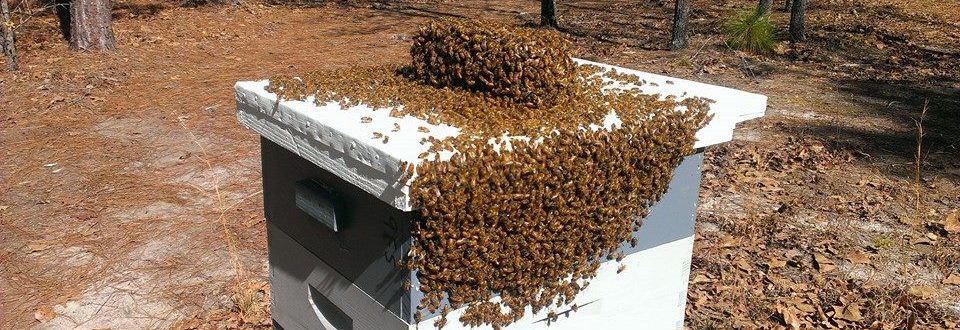
If this was your first season, take heart: most first-year beekeepers hit the real pinnacle of the hobby next spring. That’s when the population explodes on this year’s drawn comb, and the “problem” flips entirely — instead of hoping your bees survive, you’re racing to stay ahead of them. It’s a genuinely fun problem to have. The bees will basically be saying, “Scotty, give me all you’ve got,” and you’ll be somewhere between thrilled and panicked, saying, “Captain, I don’t think she can take much more — she’s gonna swarm!” (pardon the paraphrase.)
Back to the Task at Hand
All of that is a preview of spring’s problems. Right now, the job is building better fall and winter bees, one more time, before the long dull stretch of winter sets in. Around here, in the Midlands of South Carolina, fall days are mild enough for bees to fly — they just won’t have much reason to, because there won’t be much blooming. You’ll be the one stuck inside, wishing for spring, watching for that first red maple bloom, or leaning your ear against the side of the hive to listen for that low hum as the cluster converts honey into heat.
So get out there now. Assess your bees, and point them toward a hive packed with strong winter bees and full stores for the season ahead.
Go for it. Build better bees.
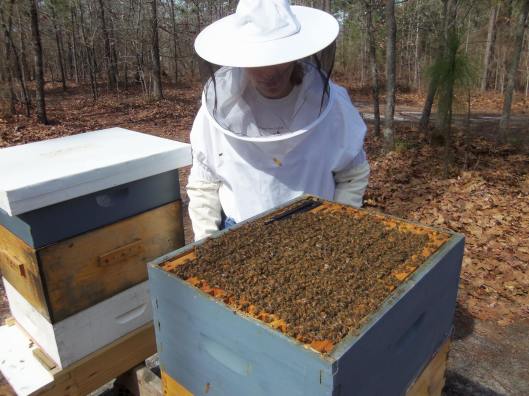
Picture: Early Spring bees. Notice no leaves on the trees yet.

