• Sassafras Bee Farm
  • About
  • Contact

Beekeeping365

~ The more I studied beekeeping, the less I knew, until, finally, I knew nothing. But, even though I knew nothing, I still had plenty to unlearn. Charles Martin Simon

Beekeeping365

Category Archives: beekeeping

Sugar Syrup

17 Tuesday Jan 2017

Posted by Beekeeping365 in beekeeping, feeding bees, management

≈ Leave a comment

Tags

beekeeping, feeding bees, management

15513_10204333790879734_6736618901031806456_n

Note: All beekeeping is local. Here in South Carolina we are able to use syrups both longer and sooner than those in more northern climates. Adjust your use of according to your climate.

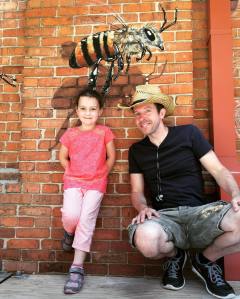
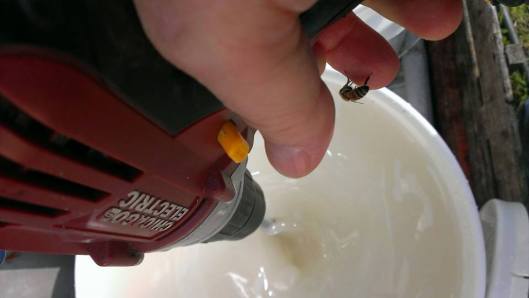
I had some help stirring some syrup today! This time of year you want to feed close to the cluster yet not introduce too much moisture into the hive. A 2:1 sugar to water mix is best.

To get it close to the colony you an feed above the cluster via a bucket placed overhead on top of the frames or a similar setup with a jar through the inner cover hole.

Feel free to share this on:

  • Share on Facebook (Opens in new window) Facebook
  • Share on X (Opens in new window) X
  • Share on Pinterest (Opens in new window) Pinterest
  • Email a link to a friend (Opens in new window) Email
  • Share on LinkedIn (Opens in new window) LinkedIn
  • Share on Reddit (Opens in new window) Reddit
  • Share on Tumblr (Opens in new window) Tumblr
  • Print (Opens in new window) Print
  • Share on Telegram (Opens in new window) Telegram
  • Share on WhatsApp (Opens in new window) WhatsApp
Like Loading...

Two Wonderful Podcasts

15 Sunday Jan 2017

Posted by Beekeeping365 in beekeeping

≈ Leave a comment

Tags

beekeeping

Source: Two Wonderful Podcasts

Winter is a quiet season for beekeepers, so what better time to make yourself a steaming mug of cocoa and settle down to two great podcasts about bees!

The first podcast is a public discussion held at LSE by the Forum for European Philosophy, titled Hive Minds: Collective Intelligence in Humans and Other Animals. The panelists are Christian List (philosopher, LSE), Elli Leadbeater (social insect biologist, Royal Holloway), and Larissa Conradt (evolutionary theorist, Max Planck Institute for Human Development).

swarm
A swarm of bees (Image credit: Nilfanion, CC BY-SA 3.0 via Wikimedia Commons)

Leadbeater opens the discussion brilliantly, asking us to picture a swarm of honey bees who have just left a hive. So now they are clustering on a tree branch, with about three days to find a new home before they run out of food. Scout bees fly off in all directions looking for nesting sites with certain desirable features – large but not too large, protected from the elements, free of ants, and so on. These bees fly back and report their findings through the famous waggle dance, and other scouts fly off to verify their findings. Gradually a consensus emerges. In this way, thousands of bees with no central decision-making authority prove to be surprisingly effective in choosing an optimal nest.

This paves the way to discuss broader questions, such as, is there collective intelligence in bees and other social insects? If so, what is the evidence for it, and what form does it take? Do we also find forms of collective intelligence in humans? And what can humans learn from bees about the best ways to make collective decisions? The discussion encompasses philosophical questions (the nature of intelligence), historical anecdotes (Galton’s ox) and current developments (Brexit, Donald Trump).

Source: Two Wonderful Podcasts

Feel free to share this on:

  • Share on Facebook (Opens in new window) Facebook
  • Share on X (Opens in new window) X
  • Share on Pinterest (Opens in new window) Pinterest
  • Email a link to a friend (Opens in new window) Email
  • Share on LinkedIn (Opens in new window) LinkedIn
  • Share on Reddit (Opens in new window) Reddit
  • Share on Tumblr (Opens in new window) Tumblr
  • Print (Opens in new window) Print
  • Share on Telegram (Opens in new window) Telegram
  • Share on WhatsApp (Opens in new window) WhatsApp
Like Loading...

Patience

14 Saturday Jan 2017

Posted by Beekeeping365 in beekeeping

≈ Leave a comment

Tags

beekeeping

Source: Patience

Posted on July 31, 2016 by Emma Maund

IMG_4686

The queen cells had been torn down. A worker crawled out of a gaping hole in the side of a cell as I wondered who had given the order – a new queen or rebel workers? The old queen, Melissa, had disappeared in early June. Her last public appearance (to my mother) had been just before the May bank holiday. A week later she was mysteriously gone and a single, small queen cell on the middle of the frame – most likely an emergency cell or supersedure – had been left in her place.

It wouldn’t have been a surprise if the workers had decided to supersede the queen. She was going into her third year and had been struggling to build up the colony after winter. This may have been because the spring was wet and cold, although I had constantly fed and kept the hive clean and warm, or it may have been due to nosema, because both hives had some spotting on the entrance coming out of winter. However, both hives had been treated accordingly with good husbandry and any sign of disease had been very brief and long since passed.

All that being said, the fate of mine and Emily’s longest-standing colony had rested in a single, rather stunted, queen cell. It was like living on a knife edge for the next three weeks as I visited the apiary daily to feed the hives during a month of unsettled weather and patiently waited for the new queen to emerge and mate.

IMG_4662

The June gap was very poor this year, in our area at least, and the feeders were drained dry of syrup each day with desperate tongues poking out below the rim at the bottom. On the last Monday in June the weather was fair for an inspection. Peppermint’s colony had been growing steadily stronger and the queen had been spotted and laying well. As all seemed fine in our larger hive, I decided to check the nuc colony first and find out whether Melissa’s heir had emerged.

The bees were content inside the nuc. They were purring. Kitten bees. I went forwards and backwards through the nuc to inspect each frame twice. The queen cell was gone, but there was no sign of a new queen or brood. Every frame was packed full of honey on both sides. If a new queen was present and if she had mated successfully, she had nowhere to lay. Frame by frame, I carefully moved the nuc colony into a full-sized hive then closed up and fed syrup to help the bees draw out fresh comb on the rest of the frames.

IMG_4942

Peppermint’s colony was starting work on a super and I was proud of their progress after a slow start in spring. Going through the frames forwards and backwards, I couldn’t find the queen. The bees were as good as gold and shiny eggs at the bottom of cells suggested the presence of a queen at least three days ago. However, I did find four queen cells across two frames and one was still unsealed. A rainy Saturday had delayed an inspection till Monday – had I just missed Peppermint flying off in a swarm by a couple of days? I went forwards and backwards again through the frames in the hope of finding her and making an artificial swarm in the nuc that was now conveniently empty. The queen was nowhere to be found, although I could see the nest had doubled in size since my last visit a week ago. Perhaps it was supersedure despite Peppermint being a young queen in her second year? She too had been quite slow to build up the nest in spring.

Swarm or supersedure: there was little point in worrying about it as it wouldn’t change anything. I decided to take out a frame with two of the queen cells and put it into my other hive. This might help prevent further swarming, if this was the case, in Peppermint’s colony and it might possibly help Melissa’s colony, if queenless, to requeen.

The next day I went back to the apiary to see whether Melissa’s workers had accepted the queen cells. If Emily and I were to lose our longest line of queens then I wanted to know for sure. The cells had been torn down suggesting that Melissa had left an heir or that the workers hadn’t been queenless for long enough to accept the new queens. It can sometimes take a new queen almost a month or more to get into her stride. This had certainly been the case with Melissa after she emerged in summer of 2014. I had been patient with both hives since March and with the colonies only now getting on their feet, I could be patient a little longer.

IMG_4962

It was a happy day in early July when I finally saw Melissa’s heir. A healthy patch of brood and eggs heralded her appearance when I saw her climbing across the comb. A long dark abdomen sprinkled in light gingery stars, she was very pretty. I couldn’t get a picture while holding the frame and so I put her carefully back inside the hive and closed up. After discussing with Emily, we decided to break the tradition of names inspired by essential oils and call the queen Patience because the bees had needed a lot of patience this year. And it seemed they would need to be patient a while longer.

The following Saturday my mum, Ronnie, came to help with the inspection and to take a picture of the new queen. I went slowly through the small hive – it wasn’t difficult as the nest was still only five to six frames strong – and couldn’t find the queen, which was disappointing with my mum poised to take a photo. We smoked and cleared the bees from each frame looking through the hive again, and still no Patience although I did see eggs, larvae and sealed brood. I closed up the hive.

Seven days later, yesterday in fact, I opened the hive again and this time found a cluster of queen cells in the middle of the frame. I was disappointed. The cells looked like emergency cells made and sealed very quickly, because they had certainly not been on the frames the week before. What had happened to Patience? How had she disappeared, or why had she failed, barely a month after she had emerged? I felt disappointed for my bees too. They had persevered to recover after spring and I had felt so pleased for them when I had seen Patience on the comb and the brood nest start to grow. But worrying would again change nothing. I let Thomas remove one of the queen cells at John Chapple’s request for a beginner’s hive which had gone queenless. I was glad at least to give one of our lovely line of queens to another hive.

IMG_5137

Inside Peppermint’s hive all was well. This week I had a small gathering around the hive of familiar and new beekeepers. Peppermint’s heir was spotted climbing over a frame and I quickly caged her to do some manipulations to the hive, which included taking a frame of brood and a frame of honey to donate to Patience’s former colony. I hoped this would help to sustain the queenless colony while waiting for a new queen to emerge.

I could have marked the new queen, but I had just recovered from a small operation and was starting to feel like I had done enough beekeeping for the day. As I closed the hive, I decided to pass on Patience’s name to Peppermint’s daughter. It is too good a name to waste and it seems both myself and the bees will need a little more patience before the hives can be ready for winter.

Inbetween hive inspections there has on occasion been time for cake for both beekeepers…

IMG_4964

… and bees.

IMG_4963

I’ve enjoyed every moment spent with my bees in spite of the challenges this season, though I’ve spent less time blogging about the bees in favour of spending time in the garden. That’s a story for another post.
 

Source: Patience

Feel free to share this on:

  • Share on Facebook (Opens in new window) Facebook
  • Share on X (Opens in new window) X
  • Share on Pinterest (Opens in new window) Pinterest
  • Email a link to a friend (Opens in new window) Email
  • Share on LinkedIn (Opens in new window) LinkedIn
  • Share on Reddit (Opens in new window) Reddit
  • Share on Tumblr (Opens in new window) Tumblr
  • Print (Opens in new window) Print
  • Share on Telegram (Opens in new window) Telegram
  • Share on WhatsApp (Opens in new window) WhatsApp
Like Loading...

Honey, I’m Home

13 Friday Jan 2017

Posted by Beekeeping365 in beekeeping

≈ Leave a comment

Tags

beekeeping

Source: Honey, I’m Home

It’s no mystery that, at the age of 49, Sherlock Holmes retired to the Sussex Downs, gave up being a detective, and devoted himself to beekeeping. What we don’t know is what he did with all that honey?

The enigmatic Mr. Holmes is unlikely to ever divulge the answer, though he did let slip some of it went in little pots to the house of Dr. Watson, as Christmas presents for the doctor and his wife. Sherlock himself was surprised to learn that honey can be used as a form of expression. Dorian Gray told Holmes about the artist Blake Little and his most unusual photographs, taken between the years 2012 and 2014. Mr. Little, a portrait photographer, used over 4,000 pounds of honey, drenching his subjects–including a dog–with the golden elixir then capturing their images forever.  All of these delicious photographs, which have been compared to primordial beings trapped in amber, can be seen in Little’s book Preservation.

Sherlock is a bit dumbfounded by the waste of it all. In his day one ate honey on scones, and was grateful for it.  Ought the product of the industrious bee wind up exploited in such a decadent manner? Is this art or mere frivolity? And exactly how long does it take to wash all that honey out of one’s hair?


Source: Honey, I’m Home

Feel free to share this on:

  • Share on Facebook (Opens in new window) Facebook
  • Share on X (Opens in new window) X
  • Share on Pinterest (Opens in new window) Pinterest
  • Email a link to a friend (Opens in new window) Email
  • Share on LinkedIn (Opens in new window) LinkedIn
  • Share on Reddit (Opens in new window) Reddit
  • Share on Tumblr (Opens in new window) Tumblr
  • Print (Opens in new window) Print
  • Share on Telegram (Opens in new window) Telegram
  • Share on WhatsApp (Opens in new window) WhatsApp
Like Loading...

How One Artist Makes Saving Bees a ‘Big’ Deal

11 Wednesday Jan 2017

Posted by Beekeeping365 in beekeeping, education

≈ Leave a comment

Tags

beekeeping, education

Source: How One Artist Makes Saving Bees a ‘Big’ Deal

When it comes to the current bee crisis, artist Matthew Willey sees the writing on the wall – and has chosen to paint over it. “I want to put bees in the front of everyone’s mind” the North Carolina-based artist says. He has committed to personally paint 50,000 honeybees – the number necessary for a healthy hive – on the walls of communities across America.

“As an artist I figured I could take these small, misunderstood creatures and paint them really big so people will notice them,” says Willey.

His initiative, called The Good of the Hive, uses art to highlight amazing honey bee behaviors and their connection with humans, all while raising awareness about the current honey bee struggle.”We need them, it’s not a maybe.” Willey says.

download
Willey’s first mural at Harold P. Curtis Honey Co. in LaBelle, FL. (Photo: The Good of the Hive.)

The artist was inspired by a honey bee that had flown into his NY apartment last fall. “It was moving really slowly, like it was sick,” says Willey. When the honey bee died a few hours later, he turned to google for answers.

Bees live in highly organized colonies, each with an important task. When feel they cannot perform said tasks, due to age or health, they exit the hive and do not return. “I think this behavior is amazing” Willey says, “When they feel sick, they’ll remove themselves for the good of the hive.”

This explains the phenomena of colony collapse, the mass disappearance of bees from their hives. Where typically a handful of bees would regularly leave a hive in this fashion, now thousands are, and the entire colony is left defunct. With no signs of slowing down, it’s raising red flags for the beekeeping industry and the global economy it supports.

12440767_1703103529906795_4535561328817428703_o
A young passerby stops to take a photo with Willey and his mural in Durham, NC. (Photo: Facebook)

Willey paints with the same dedication the honey bee brings to it’s hive. He understands the power an individual holds. His murals generate buzz, which ultimately lead to conversation and education about an issue that affects everyone. “We’re all connected” he says.

Willey has been shown overwhelming support for his efforts from coast to coast. His nationwide-hive “flies” along on the walls of an apartment building in Washington, elementary school in North Carolina, and on the brick facade of the Burt’s Bees headquarters. His most recent bees are painted on the blank canvas of a truck cargo trailer – you might even see it on the road. “Bees are in every community,” Willey says, “so that is where I am going to paint them.”

Stay up to date with Matthew Willey and The Good of the Hive community on Facebook and Instagram. Followers can expect to see day to day progress on his current projects, and be the first to know where he’ll swarm off to next.

Source: How One Artist Makes Saving Bees a ‘Big’ Deal

Feel free to share this on:

  • Share on Facebook (Opens in new window) Facebook
  • Share on X (Opens in new window) X
  • Share on Pinterest (Opens in new window) Pinterest
  • Email a link to a friend (Opens in new window) Email
  • Share on LinkedIn (Opens in new window) LinkedIn
  • Share on Reddit (Opens in new window) Reddit
  • Share on Tumblr (Opens in new window) Tumblr
  • Print (Opens in new window) Print
  • Share on Telegram (Opens in new window) Telegram
  • Share on WhatsApp (Opens in new window) WhatsApp
Like Loading...

Is Beekeeping an Art or Science?

10 Tuesday Jan 2017

Posted by Beekeeping365 in beekeeping, education, opinion

≈ 2 Comments

Tags

beekeeping, education, opinion

Departing from the nuts and bolts of beekeeping, today’s post asks the reader to insert his or her own thoughts on the matter of beekeeping as an art, science, or both.

I came across this article while brainstorming some approaches to teaching newcomers to the world or beekeeping. I’ll leave my thoughts out of the matter for now and simply say the student may need to be cognizant to the approach taken in their instruction.

https://www.scotthyoung.com/blog/2016/04/19/art-v-science/

Feel free to share this on:

  • Share on Facebook (Opens in new window) Facebook
  • Share on X (Opens in new window) X
  • Share on Pinterest (Opens in new window) Pinterest
  • Email a link to a friend (Opens in new window) Email
  • Share on LinkedIn (Opens in new window) LinkedIn
  • Share on Reddit (Opens in new window) Reddit
  • Share on Tumblr (Opens in new window) Tumblr
  • Print (Opens in new window) Print
  • Share on Telegram (Opens in new window) Telegram
  • Share on WhatsApp (Opens in new window) WhatsApp
Like Loading...

Beekeeping comes but once a year

07 Saturday Jan 2017

Posted by Beekeeping365 in beekeeping

≈ Leave a comment

Tags

beekeeping

Erik's avatarBees with eeb

It is time for the much-anticipated annual post on my plans for the coming year. I did one for 2016, so this will be my second such post.

There is a difference between knowing something and experiencing something, perhaps theory versus practice. Agriculture, including livestock, is seasonal. There is a time for planting, a time to feed the cows hay, a time to keep the horses in the barn overnight, and a time for all the other activities that happen around a farm. We know this.

View original post 604 more words

Feel free to share this on:

  • Share on Facebook (Opens in new window) Facebook
  • Share on X (Opens in new window) X
  • Share on Pinterest (Opens in new window) Pinterest
  • Email a link to a friend (Opens in new window) Email
  • Share on LinkedIn (Opens in new window) LinkedIn
  • Share on Reddit (Opens in new window) Reddit
  • Share on Tumblr (Opens in new window) Tumblr
  • Print (Opens in new window) Print
  • Share on Telegram (Opens in new window) Telegram
  • Share on WhatsApp (Opens in new window) WhatsApp
Like Loading...

Honey Storage Tips

05 Thursday Jan 2017

Posted by Beekeeping365 in beekeeping

≈ Leave a comment

Tags

beekeeping

crystalized-honey

Picture above credit to: Bee Somebody blog.

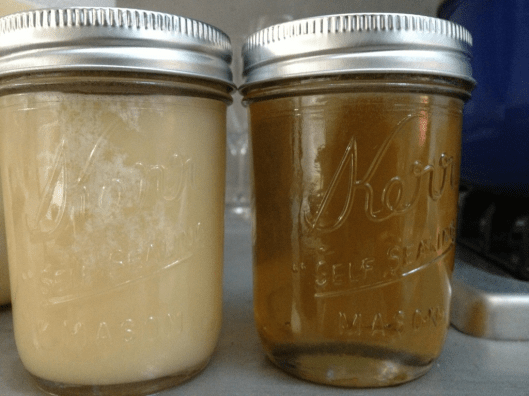
Beekeepers are frequently asked about honey crystalizing, what it means, if it affects the quality, and what can be done to prevent it, and can it be reversed. The short answers are: It simply means the sugars in the honey have come out of the liquid state and formed crystals. Honey is a product of the nectar of flowers which vary in their ratios of types of sugars. Nectars with high glucose to fructose ratios tend to crystalize quickly. Here in South Carolina cotton honey is often sought after however it crystalizes quickly, sometimes in just a couple months. Tupelo, on the other hand, may last years. Regarding quality, crystallization is not a reflection on quality one way or the other. In some countries crystalized honey is sought after and used as a spread.  Crystallization is simply a process that occurs based on the ratio of sugars in the honey. To prevent or delay crystallization keep honey at room temperature or in a cupboard. Never keep honey in the refrigerator which is close to the ideal temperature to promote crystallization. Finally, to reverse crystallization, simply place your jar of crystalized honey in a pan of warm water. The warming process should be a gentle and patient warming. I tell people to do this at night just prior to going to bed and they will wake up to a jar of liquid honey ready for use at their breakfast table. Never rush the process or attempt microwaving the honey or enzymes and other healthy properties are destroyed, or worse, plastic bottles can melt and contaminate your precious honey.

More information can be from found on the web page Benefits of Honey.

Feel free to share this on:

  • Share on Facebook (Opens in new window) Facebook
  • Share on X (Opens in new window) X
  • Share on Pinterest (Opens in new window) Pinterest
  • Email a link to a friend (Opens in new window) Email
  • Share on LinkedIn (Opens in new window) LinkedIn
  • Share on Reddit (Opens in new window) Reddit
  • Share on Tumblr (Opens in new window) Tumblr
  • Print (Opens in new window) Print
  • Share on Telegram (Opens in new window) Telegram
  • Share on WhatsApp (Opens in new window) WhatsApp
Like Loading...

The Clumsy Beekeeper

04 Wednesday Jan 2017

Posted by Beekeeping365 in beekeeping

≈ Leave a comment

Tags

beekeeping

Ron Miksha's avatarBad Beekeeping Blog

house-and-oak-tree

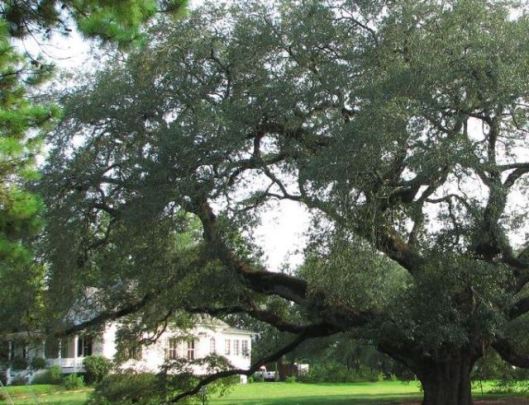
When I was much younger, my brother and I visited a world-renowned bee breeder who produced thousands of queens every spring. I don’t remember much about that trip to the north-Florida panhandle where every town had some elegant white clapboard homes shaded by mossy live oaks. The place was steamy and humid. Bee season was almost over for the year. I don’t remember the five-hour drive to see the beekeeper or the way he greeted us. But there is one thing that stood out on the visit.

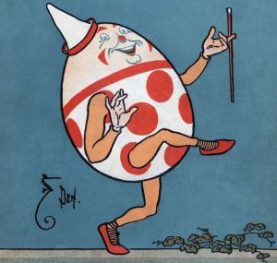
humpty-2Even Humpty had his moments.

The north-Florida queen breeder reached for a basket that held a half-dozen caged queens, knocked over a smoker, and dropped the queens. The reason that this stood out for me is easy to explain. Queen rearing is a very fine craft, requires great dexterity, and insists upon smooth gentle motions. It’s a very precise job, demanding keen observation…

View original post 291 more words

Feel free to share this on:

  • Share on Facebook (Opens in new window) Facebook
  • Share on X (Opens in new window) X
  • Share on Pinterest (Opens in new window) Pinterest
  • Email a link to a friend (Opens in new window) Email
  • Share on LinkedIn (Opens in new window) LinkedIn
  • Share on Reddit (Opens in new window) Reddit
  • Share on Tumblr (Opens in new window) Tumblr
  • Print (Opens in new window) Print
  • Share on Telegram (Opens in new window) Telegram
  • Share on WhatsApp (Opens in new window) WhatsApp
Like Loading...

Langstroth, the Christmas Gift

25 Sunday Dec 2016

Posted by Beekeeping365 in beekeeping

≈ Leave a comment

Tags

beekeeping

Excellent read!

Ron Miksha's avatarBad Beekeeping Blog

I’m repeating a blog which I posted on Christmas Day last year. It’s about the inventor of modern beekeeping, L.L. Langstroth. Enjoy!

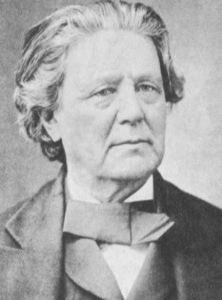
LangstrothLangstroth, 1810-1895

He invented modern beekeeping, making it easier, more productive, and less stressful for bees. However, Lorenzo Lorraine Langstroth earned nothing from his invention and suffered severely from self-doubt, melancholy, and clinical depression. Yet, he changed beekeeping to its core and on his birthday anniversary (Christmas Day!) we give homage to the most important beekeeper America ever produced.

Langstroth was born December 25, 1810. That was some Christmas gift to the world, wasn’t it? His childhood seems to have been typical for a kid who spent a lot of time on his hands and knees on the streets of Philadelphia, trapping bugs and ants with table scraps. “I was once whipped because I had worn holes in my pants by too much kneeling on the gravel walkways…

View original post 1,505 more words

Feel free to share this on:

  • Share on Facebook (Opens in new window) Facebook
  • Share on X (Opens in new window) X
  • Share on Pinterest (Opens in new window) Pinterest
  • Email a link to a friend (Opens in new window) Email
  • Share on LinkedIn (Opens in new window) LinkedIn
  • Share on Reddit (Opens in new window) Reddit
  • Share on Tumblr (Opens in new window) Tumblr
  • Print (Opens in new window) Print
  • Share on Telegram (Opens in new window) Telegram
  • Share on WhatsApp (Opens in new window) WhatsApp
Like Loading...

Gallery

Royal Jelly – a story by Roald Dahl

19 Monday Dec 2016

Posted by Beekeeping365 in beekeeping, honey bee biology

≈ Leave a comment

Tags

beekeeping, honey bee biology

This gallery contains 3 photos.

Originally posted on Adventuresinbeeland's Blog:
If you’ve ever read Roald Dahl’s short stories for adults, you’ll know they’re very different in tone…

“Imkers and Angels” – musings on a 1917 beekeeping documentary

11 Sunday Dec 2016

Posted by Beekeeping365 in beekeeping

≈ Leave a comment

Tags

beekeeping

pritchard237's avatarOxfordshire Natural Beekeeping Group

It is winter. I have recently found a silent-film about beekeeping, a documentary entitled Het Leven der Bijen or The Life of Bees. You can watch it here.

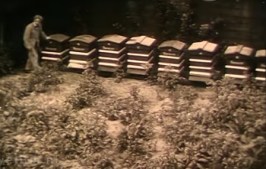
lubert-hivesThe film follows a simple and repetitive structure. First a juddering title-card describes some action, and then we see the scene. “The beekeeper guides us around the hives” is followed by a slow shot showing Jan Luberti walking through a garden lined with upright hives. Another title-card appears. Then we see his springtime inspection. The film follows the keeper and his bees though the events of a year, and finishes with a grinning toddler eating bread and honey, with the wholesome intertitle: “honey on the bread, makes the cheeks red”.
View original post 1,349 more words

Feel free to share this on:

  • Share on Facebook (Opens in new window) Facebook
  • Share on X (Opens in new window) X
  • Share on Pinterest (Opens in new window) Pinterest
  • Email a link to a friend (Opens in new window) Email
  • Share on LinkedIn (Opens in new window) LinkedIn
  • Share on Reddit (Opens in new window) Reddit
  • Share on Tumblr (Opens in new window) Tumblr
  • Print (Opens in new window) Print
  • Share on Telegram (Opens in new window) Telegram
  • Share on WhatsApp (Opens in new window) WhatsApp
Like Loading...

Hurricane Coming!

02 Friday Dec 2016

Posted by Beekeeping365 in beekeeping

≈ Leave a comment

Tags

beekeeping

If you got ’em, use ’em! They don’t do any good sitting on the sidelines.14563485_10208656234738129_2823862236596903987_n

Feel free to share this on:

  • Share on Facebook (Opens in new window) Facebook
  • Share on X (Opens in new window) X
  • Share on Pinterest (Opens in new window) Pinterest
  • Email a link to a friend (Opens in new window) Email
  • Share on LinkedIn (Opens in new window) LinkedIn
  • Share on Reddit (Opens in new window) Reddit
  • Share on Tumblr (Opens in new window) Tumblr
  • Print (Opens in new window) Print
  • Share on Telegram (Opens in new window) Telegram
  • Share on WhatsApp (Opens in new window) WhatsApp
Like Loading...

Aside

Before we start…

01 Thursday Dec 2016

Posted by Beekeeping365 in beekeeping, first blog entry, sustainable

≈ Leave a comment

Tags

beekeeping

I guess before we plunge into the content it might be best to say exactly what is planned.

The bees must make their own way in some form or the other. A paraphrase from a favorite movie of mine: “They have to pay something, don’t they?” Historically, not so very long ago, the bees paid their owner, if you can say you own bees. Honey bees as livestock could make the farmer a living at one time. Things have not gone well for the bees though and we are faced with difficult times. A sideliner beekeeper with a few dozen hives is faced with having too many expenses without enough income from the effort. And honey alone might be enough to pay the costs associated with maintaining and feeding the bees but is that the sum of the venture?

So the beekeeper, in my estimation, is faced with multiple challenges to both increase marketable products and reduce expenditures. Some ideas which come to mind are specialty products of raw, unfiltered honey, comb honey, wax, propolis, pollination services, queen sales, nucleus hive sales, and pollen. Cost cutting through sustainable methods by rearing queens in house, in house woodenware manufacturing, and making seasonable splits to maintain a steady supply of bees for use in multiple bee yards.

I hope to be able to speak to the many facets of sustainable beekeeping and the seasonal chores associated with maintaining healthy bees. I’d also like to be able to publish a seasonal calendar for use by others as a guide for their own beekeeping tasks.

And finally I’d like to somehow transmit to others the art of beekeeping as I have learned it thus far. It’s one thing to read the books and memorize the tasks, but learning to read and interpret the pulse of the colony by careful observation is more challenging. Utilizing all of the beekeeper’s senses to draw correct conclusions, assess, develop a plan, impliment, and evaluate the process based on observation and intuitive skills.

Lofty goals indeed.

Like Loading...
Newer posts →
Follow Beekeeping365 on WordPress.com

Enter your email address to follow this blog and receive notifications of new posts by email.

Calendar

August 2026
S M T W T F S
 1
2345678
9101112131415
16171819202122
23242526272829
3031  
« Jul    

Posts by Month:

  • August 2026 (6)
  • July 2026 (1)
  • May 2026 (2)
  • January 2026 (3)
  • July 2025 (1)
  • April 2024 (1)
  • September 2022 (1)
  • July 2022 (1)
  • March 2022 (13)
  • February 2022 (17)
  • January 2022 (4)
  • December 2021 (4)
  • November 2021 (7)
  • October 2021 (1)
  • September 2021 (3)
  • August 2021 (11)
  • July 2021 (18)
  • June 2021 (5)
  • May 2021 (2)
  • April 2021 (9)
  • March 2021 (2)
  • February 2021 (5)
  • January 2021 (16)
  • December 2020 (15)
  • November 2020 (15)
  • October 2020 (11)
  • July 2020 (1)
  • February 2020 (1)
  • March 2019 (2)
  • February 2019 (4)
  • January 2019 (1)
  • December 2018 (10)
  • November 2018 (8)
  • October 2018 (15)
  • September 2018 (25)
  • August 2018 (3)
  • July 2018 (11)
  • June 2018 (27)
  • May 2018 (33)
  • April 2018 (20)
  • March 2018 (20)
  • February 2018 (12)
  • January 2018 (22)
  • December 2017 (18)
  • November 2017 (17)
  • October 2017 (25)
  • September 2017 (27)
  • August 2017 (21)
  • July 2017 (29)
  • June 2017 (28)
  • May 2017 (19)
  • April 2017 (17)
  • March 2017 (19)
  • February 2017 (12)
  • January 2017 (13)
  • December 2016 (5)

Posts by Categories:

  • absconding (1)
  • africanized honey bees (1)
  • apitherapy (1)
  • bee health (6)
  • bee law (2)
  • bee lining (2)
  • bee removals (2)
  • beekeeper (5)
  • beekeeper education (16)
  • beekeeping (614)
    • South Carolina (2)
  • beekeeping author (10)
  • beekeeping books (14)
  • beekeeping calendar (4)
  • beekeeping chores (8)
  • beekeeping equipment (26)
  • beekeeping history (49)
  • beekeeping management (37)
  • beekeeping pest management (8)
  • beekeeping seasons (23)
  • beekeeping vocabulary (16)
  • beeswax (13)
  • biography (4)
  • biology (14)
  • birthday (40)
  • birthdays (34)
  • book review (16)
  • breakfast (1)
  • calendar (4)
  • CCD (1)
  • chores (6)
  • comb (7)
  • comb honey (10)
  • commercial beekeeping (2)
  • cutouts (2)
  • dearth (3)
  • defensiveness (2)
  • diseases (9)
  • drawn comb (6)
  • ecology (4)
  • education (28)
  • equipment (25)
  • extracting (1)
  • fall nectar flow (1)
  • famous beekeepers (27)
  • feeding bees (7)
  • first blog entry (1)
  • folklore (1)
  • food (7)
  • forage (4)
  • hacks (3)
  • hive inspections (8)
  • hive placement (2)
  • hive products (6)
  • honey (90)
  • honey as food (22)
  • honey bee anatomy (3)
  • honey bee behavior (25)
  • honey bee biology (43)
  • honey bee genetics (4)
  • honey bee nutrition (1)
  • honey bee photos (6)
  • Honey Bee Research (1)
  • honey bee vocabulary (12)
  • honey bees (14)
  • honey judging (4)
  • honey recipe (65)
  • humor (13)
  • inspections (10)
  • journal (1)
  • log book (1)
  • making increase (3)
  • management (82)
  • mentoring (2)
  • mites (3)
  • national pollinator week (2)
  • nectar flow (6)
  • nomenclature (1)
  • opinion (8)
  • out yards (1)
  • outyards (1)
  • package bees (1)
  • pears (1)
  • pests (17)
  • plants for bees (3)
  • polish (1)
  • pollen (4)
  • pollination (11)
  • pollinators (7)
  • product review (1)
  • production (1)
  • products (3)
  • propolis (2)
  • queens (17)
  • raw honey (6)
  • recipe (88)
  • removals (1)
  • safety (3)
  • sales (2)
  • season (1)
  • seasons (21)
  • sideliner (1)
  • small hive beetles (1)
  • spring buildup (4)
  • state fair (2)
  • sustainable (7)
  • swarms (27)
  • ursurpation (1)
  • usurpation (1)
  • varroa (21)
  • varroa destructor (12)
  • varroa mites (24)
  • Winter (5)
  • winter solstice (2)
  • woodenware (3)
  • yellow jackets (2)

Sassafras Bee Farm on Facebook

Sassafras Bee Farm on Facebook

Sassafras Bee Farm

Sassafras Bee Farm

Recent Posts

  • Why Continuous Learning is Key in Beekeeping
  • Meeting Reality vs What Seems Deserved
  • Everything Starts with a Tasty Meal: The Science Behind a Beekeeper’s Best Pest-Management Insight
  • The Skip in Their Step: Rethinking Oxalic Acid Use
  • Pest Control

Beekeeping365 on Facebook

Beekeeping365 on Facebook

Top Posts & Pages

  • The Skip in Their Step: Rethinking Oxalic Acid Use
    The Skip in Their Step: Rethinking Oxalic Acid Use
  • Types of bees by Fat Daddy’s Apiary
    Types of bees by Fat Daddy’s Apiary
  • Why Continuous Learning is Key in Beekeeping
    Why Continuous Learning is Key in Beekeeping

Blog Stats

  • 141,448 hits

Website Built with WordPress.com.

  • Subscribe Subscribed
    • Beekeeping365
    • Join 423 other subscribers
    • Already have a WordPress.com account? Log in now.
    • Beekeeping365
    • Subscribe Subscribed
    • Sign up
    • Log in
    • Report this content
    • View site in Reader
    • Manage subscriptions
    • Collapse this bar
Loading Comments...
%d