• Sassafras Bee Farm
  • About
  • Contact

Beekeeping365

~ The more I studied beekeeping, the less I knew, until, finally, I knew nothing. But, even though I knew nothing, I still had plenty to unlearn. Charles Martin Simon

Beekeeping365

Author Archives: Beekeeping365

Happy Birthday John S. Harbison, early Californian Beekeeper, Inventor, Author

29 Wednesday Sep 2021

Posted by Beekeeping365 in beekeeping, birthday, birthdays

≈ Leave a comment

Tags

author, beekeeper, beekeeping, birthday, inventor, San Diego

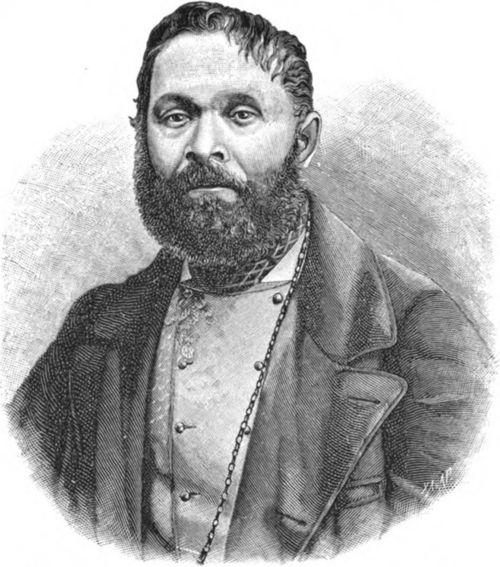
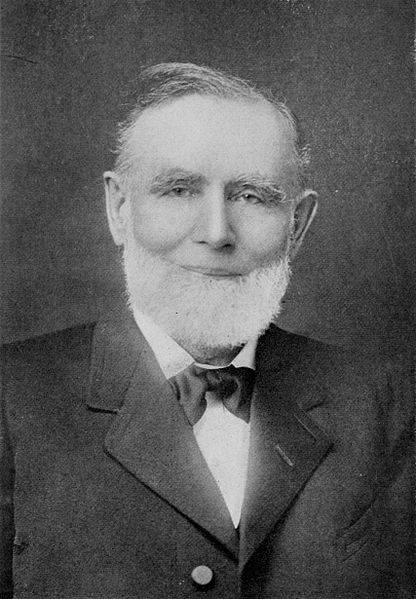
John S. Harbison


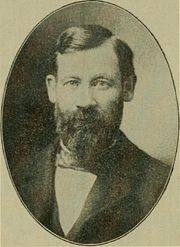
Today is John S. Harbison’s Birthday.
September 29, 1826.

1857 – Made the first shipment of bees into California, Introducing commercial beekeeping into California, laying the foundation for the industry in that state.

1857 – Invented the section honey box.

1859 – Invented the Harbison, or California hive.

1860 – Authored the book; ‘An Improved System of Propagating the Honey Bee’

1861 – Authored the book; ‘The Beekeeper’s Directory’

1873 – The firm of Clark & Harbison shipped the first car load of honey across the continent from California.

John S. Harbison September 29, 1826

There is no product of San Diego County that has done more to spread abroad her fame, than her honey. It has acquired a reputation in the markets of the world of the highest character. It is well known to the agriculturist that a section capable of producing such honey must possess superior advantages of soil and climate, and, as a result, the attention of a class of people has been directed hither who might have been influenced by the ordinary reports of the wonderful fertility of the country. Certainly, the man who was the pioneer in making known the fact that San Diego County was an apiarian paradise, is entitled to be classed as a public benefactor. It is concerning him that this sketch is written.

John S. Harbison was born in Beaver County, Pennsylvania, September 29, 1826. He comes of a sterling American stock, and can trace his lineage back through several generations. His grandfather, John Harbison, and his grandmother, Massey Harbison, were among the first settlers of Western Pennsylvania, locating near the town of Freeport, twenty-eight miles above Pittsburgh, on the Alleghany River, where the first grist-mill in that region of country was built and operated by his grandfather. In those days that part of the country was subject to many Indian outbreaks, and the Harbisons experienced their full share of the trials and sufferings incident to a life on the frontier. His grandfather acquired fame as an Indian fighter, and participated in numerous engagements in repelling the frequent murderous raids made on the settlers by the treacherous tribes of Indians inhabiting the country from the Alleghany Mountains on the east, Lakes Erie and Michigan on the north and west, and the Ohio River on the south; arid as a volunteer soldier, took part in the several expeditions led by St. Clair and Wayne, which subsequently resulted in quelling all the Indian disturbances. Mr. Harbison’s grandfather on his mother’s side, William Curry, was a chief armorer in the Continental service, and was one of the memorable minute men of the Revolution, who were a picked body of men that could be relied upon under any circumstances and were detailed to execute the most hazardous and important undertakings. He fought in eight battles in that memorable struggle, and was with Washington when he crossed the Delaware on that stormy Christmas night and defeated the astonished Hessians encamped at Trenton.

The youth and early manhood of John S. Harbison were passed upon a farm, but in 1854, having an attack of the gold fever, he made up his mind to come to California. In October of that year he sailed from New York on the steamship Northern Light, via Nicaraugua, connecting on this side with the Sierra Nevada, which had taken the place of the Yankee Blade, the latter having been wrecked just after leaving San Francisco. He arrived in San Francisco November 20, and immediately started for the mining camp known as Campo Seco, in Amador County. Here he found that gold mining was not all his imagination had pictured, he worked hard and received very meager returns. Considerably discouraged he left the mines in a few weeks, and went down to Sacramento. Glad to turn his hand to anything, he secured work in the Sutterville saw-mill, where he stayed several months. In the meantime Harbison h id made up his mind he would give-up the avocations for which he had little taste, and devote himself to something with which he was acquainted. He sent home to Pennsylvania for a general assortment of seeds, and a small invoice of fruit trees. He received the first consignment in February, and secured ground in the town of Sutterville, near Sacramento City, where he started the first nursery of fruit and shade trees in the Sacramento Valley. During the fall and winter of 1855, and again in the fall of 1856, he made large importations of the choicest fruit trees from the most celebrated nurseries in the East. From these importations was started that great series of orchards which line the banks of the Sacramento River and adjacent country.

In May, 1857, he returned to his Eastern home, and began preparations for shipping a quantity of bees to California. He finally started from New York with sixty-seven colonies, and landed them safely Sacramento, after a journey of about four weeks. This venture was so popular that he went East again the next fill, and obtained a second supply of bees, which also were safely brought to this State. He continued the business of nurseryman and apiarist near Sacramento until February, 1874, when he removed with his family to San Diego, where he has resided ever since.

Mr. H. has had some trouble with fruit-raisers, and the result was a conflagration of a whole apiary. Apiaries are usually burned by saturating each hive with kerosene, and then applying the torch; but in the case above, the hives were placed together and burned.

In the fall of 1869, Mr. Harbison formed a partnership with Mr. R. G. Clark, for the purpose of introducing and keeping bees in San Diego County. They prepared a choice selection of one hundred and ten hives of bees from Mr. Harbison’s apiaries at Sacramento, and shipped them by the steamer Orizaba, which landed in San Diego on the morning of November 28, 1869. Mr. Clark remained in charge of the bees, making all the explorations for the most suitable ranges for the location of apiaries and production of honey. Other importations were made by the firm, and the partnership was continued for the period of four years, at the end of which time a division of the apiaries and effects was made. Mr. Clark soon after disposed of his apiaries, purchasing land in the El Cajon Valley, where he established the first raisin vineyard in the county.

The great success attending the enterprise of Messrs. Clark and Harbison, and the world-wide fame of their San Diego County honey, very soon attracted the notice of bee-keepers and farmers of all parts of the States, and as a result, many were induced to come here, who took up public lands, established homes, and commenced the business of beekeeping and tilling of the soil.

In December, 1857, Mr. Harbison invented the section honey box, an invention which has done more for the advancement of honey production than any other discovery in bee-keeping. For this he was granted a patent, January 4, 1859. At the California State Fair, held at Marysville, in September, 1858, Mr. Harbison exhibited the first section box honey.

In 1873 the firm of Clark & Harbison shipped the first car load of honey across the continent from California. Mr. Harbison was awarded a medal and diploma for his exhibit of San Diego County honey at the Centennial Exposition at Philadelphia, in 1876. Besides his labors as a practical horticulturist, a farmer and apiarist, Mr. Harbison has found time to contribute occasionally to current literature on those subjects with which he is familiar, and is the author of a book of four hundred and forty pages, entitled, “Bee Keepers’ Directory,” it treats of bee culture in all its departments and is a recognized authority on the subject of which it treats. Although it was published in 1861, it is still considered the most practical work of the kind ever issued.

Mr. Harbison was married to Mary J. White, of New Castle, Pennsylvania, in 1865. The result of the union is one son, who died in infancy, and two daughters, both 6f whom are living.

Source:
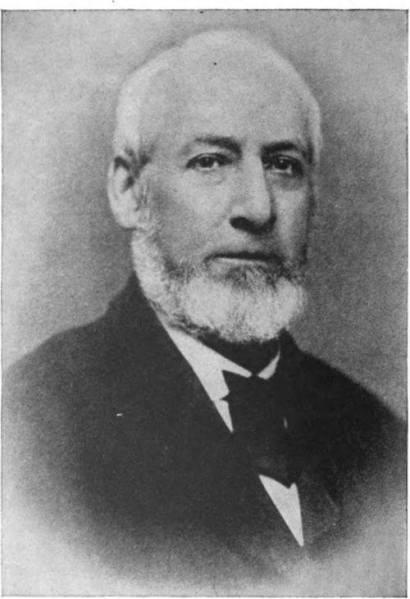
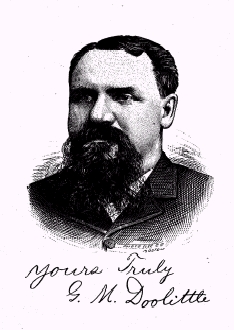
Image The City and County of San Diego: Illustrated and Containing Biographical Sketches of Prominent Men and Pioneers, Page 157, 1888
The ABC of Bee Culture, A. I. Root, 1903 page 415

Additional information here: http://www.sandiegohistory.org/journal/1969/october/harbisonimages/

Feel free to share this on:

  • Share on Facebook (Opens in new window) Facebook
  • Share on X (Opens in new window) X
  • Share on Pinterest (Opens in new window) Pinterest
  • Email a link to a friend (Opens in new window) Email
  • Share on LinkedIn (Opens in new window) LinkedIn
  • Share on Reddit (Opens in new window) Reddit
  • Share on Tumblr (Opens in new window) Tumblr
  • Print (Opens in new window) Print
  • Share on Telegram (Opens in new window) Telegram
  • Share on WhatsApp (Opens in new window) WhatsApp
Like Loading...

Happy Birthday William Longgood

12 Sunday Sep 2021

Posted by Beekeeping365 in beekeeping, beekeeping author, birthday, birthdays

≈ Leave a comment

Tags

beekeeping

william_longgood

Born September 12, 1917. William Frank Longgood was a Pulitzer Prize winning author, reporter, and teacher. Born in St. Louis, he lived much of his life in New York. More here

He came relatively late to beekeeping but shared a nicely written book titled, The Queen Must Die, and other affairs of bee and men. Not quite bee biology but a wonderful presentation of bee behavior and philosophical thoughts on same.

Here’s a nice review found here on WordPress by Bees with ebb:

https://beeswitheeb.wordpress.com/2016/02/21/the-queen-must-die/


Feel free to share this on:

  • Share on Facebook (Opens in new window) Facebook
  • Share on X (Opens in new window) X
  • Share on Pinterest (Opens in new window) Pinterest
  • Email a link to a friend (Opens in new window) Email
  • Share on LinkedIn (Opens in new window) LinkedIn
  • Share on Reddit (Opens in new window) Reddit
  • Share on Tumblr (Opens in new window) Tumblr
  • Print (Opens in new window) Print
  • Share on Telegram (Opens in new window) Telegram
  • Share on WhatsApp (Opens in new window) WhatsApp
Like Loading...

Happy Birthday Lloyd Raymond Watson

07 Tuesday Sep 2021

Posted by Beekeeping365 in beekeeping, famous beekeepers

≈ Leave a comment

Tags

artificial insemination, Dr. Lloyd R Watson, famous beekeepers, instrumental insemination, queen honey bee

L.R.Watson

Birth 7 Sep 1881

Cuba, Allegany County, New York, USA
Death 24 Feb 1948 (aged 66)

North Hornell, Steuben County, New York, USA
Burial
Alfred Rural Cemetery

Alfred, Allegany County, New York, USA

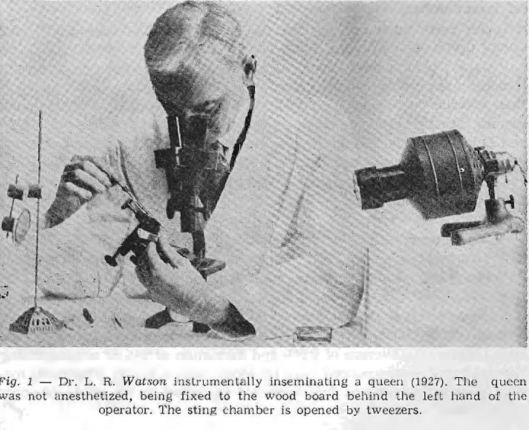
Dr. Lloyd Raymond Watson was the first to demonstrate a method to instrumentally inseminate a queen honey bee.

It wasn’t until the 1920’s that Lloyd Watson was able to demonstrate to the beekeeping community that instrumental insemination was possible. Watson used a stereomicroscope, a light source, and hand-held forceps to open a queen’s sting chamber. He was then able to inseminate her with capillary syringe filled with drone semen. Although not always reliable, his refined technique had some success, which was a vast improvement over previous attempts.

(PDF) HISTORY OF ARTIFICIAL INSEMINATION. Available from: https://www.researchgate.net/publication/257297540_HISTORY_OF_ARTIFICIAL_INSEMINATION [accessed Jul 25 2018].

Extension Article by Sue Cobey:  Instrumental Insemination of Honey Bee Queens

Feel free to share this on:

  • Share on Facebook (Opens in new window) Facebook
  • Share on X (Opens in new window) X
  • Share on Pinterest (Opens in new window) Pinterest
  • Email a link to a friend (Opens in new window) Email
  • Share on LinkedIn (Opens in new window) LinkedIn
  • Share on Reddit (Opens in new window) Reddit
  • Share on Tumblr (Opens in new window) Tumblr
  • Print (Opens in new window) Print
  • Share on Telegram (Opens in new window) Telegram
  • Share on WhatsApp (Opens in new window) WhatsApp
Like Loading...

Happy Birthday Albert J. Cook

30 Monday Aug 2021

Posted by Beekeeping365 in beekeeper, beekeeper education, beekeeping, beekeeping history, birthday, birthdays

≈ Leave a comment

Tags

beekeeping, beekeeping history

albert_j__cook_educator

Birth: Aug. 30, 1842
Michigan, USA
Death: Sep. 29, 1916
Shiawassee County
Michigan, USA

Albert J. Cook (1842-1916) was a 19th century educator and writer who influenced an entire generation of American beekeepers. He served as an instructor at Michigan Agricultural College (Michigan Agricultural University) in 1866 (Michigan State University later) where he offered one of the first collegiate courses in beekeeping culture.

Cook published the first textbook on American beekeeping, The Manual of the Apiary, in 1876 based upon his lecture series. The book was an instant success. Beginning as a mere brochure, this textbook expanded through ten editions in less than a decade, growing with each edition.

Albert J. Cook, professor of zoology and entomology, established the insect collection at Michigan Agricultural College (Agricultural University of Michigan) in 1867. By 1878, the collection consisted of nearly 1,200 local specimens collected primarily used for demonstration classrooms, for comparison, and to aid in species identification for farmers Michigan.

External links

  • Works by or about Albert John Cook at Internet Archive

Bibliography

  • Manual of the apiary. Chicago: Newman & Son (1880).
  • Wintering bees. Lansing: Agricultural College of Michigan (1885).
  • Report of apicultural experiments in 1891. (1892).
  • The Bee-Keeper’s Guide; or Manual of the Apiary pp. 543. (17th ed.) Chicago: Newman & Son (1902).

Source: http://beekeeping.wikia.com/wiki/Albert_J._Cook

Feel free to share this on:

  • Share on Facebook (Opens in new window) Facebook
  • Share on X (Opens in new window) X
  • Share on Pinterest (Opens in new window) Pinterest
  • Email a link to a friend (Opens in new window) Email
  • Share on LinkedIn (Opens in new window) LinkedIn
  • Share on Reddit (Opens in new window) Reddit
  • Share on Tumblr (Opens in new window) Tumblr
  • Print (Opens in new window) Print
  • Share on Telegram (Opens in new window) Telegram
  • Share on WhatsApp (Opens in new window) WhatsApp
Like Loading...

Happy Birthday Maurice Maeterlinck

29 Sunday Aug 2021

Posted by Beekeeping365 in beekeeper, beekeeper education, beekeeping, beekeeping history, biography, birthday

≈ Leave a comment

Tags

beekeeping, beekeeping history, biography

Maurice_de_Maeterlinck

Tucker Collection – New York Public Library Archives

From Wikipedia:

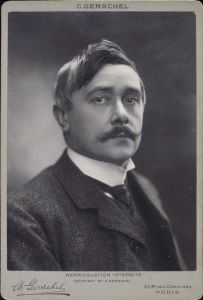
Maurice Polydore Marie Bernard Maeterlinck[1] (also called Comte (Count) Maeterlinck from 1932;[2] [mo.ʁis ma.tɛʁ.lɛ̃ːk] in Belgium, [mɛ.teʁ.lɛ̃ːk] in France;[3] 29 August 1862 – 6 May 1949) was a Belgian playwright, poet, and essayist who was a Fleming, but wrote in French. He was awarded the Nobel Prize in Literature in 1911 “in appreciation of his many-sided literary activities, and especially of his dramatic works, which are distinguished by a wealth of imagination and by a poetic fancy, which reveals, sometimes in the guise of a fairy tale, a deep inspiration, while in a mysterious way they appeal to the readers’ own feelings and stimulate their imaginations”. The main themes in his work are death and the meaning of life. His plays form an important part of the Symbolist movement.

maeterlink

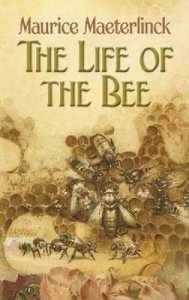
From Amazon.com on his book titled, The Life of the Bee.

In an exuberantly poetic work that is less about bees and more about life, Maurice Maeterlinck expresses his philosophy of the human condition. The renowned Belgian poet and dramatist offers brilliant proof in this, his most popular work, that “no living creature, not even man, has achieved in the center of his sphere, what the bee has achieved.” From their amazingly intricate feats of architecture to their intrinsic sense of self-sacrifice, Maeterlinck takes a “bee’s-eye view” of the most orderly society on Earth.
An enthusiastic and expert beekeeper, Maeterlinck did not intend to write a scientific treatise, even though he details such topics as the mathematically accurate construction of the hive, the division of labor among community members, the life of the young queen and her miraculous nuptial flight, and the movement and meaning of the swarm.
An enchanting classic by one of the most important figures of world literature in the twentieth century and winner of the 1911 Nobel Prize in Literature, this fascinating study is a magnificent tribute to one of the most orderly communities in the world. It is also filled with humble lessons for the human race.


Feel free to share this on:

  • Share on Facebook (Opens in new window) Facebook
  • Share on X (Opens in new window) X
  • Share on Pinterest (Opens in new window) Pinterest
  • Email a link to a friend (Opens in new window) Email
  • Share on LinkedIn (Opens in new window) LinkedIn
  • Share on Reddit (Opens in new window) Reddit
  • Share on Tumblr (Opens in new window) Tumblr
  • Print (Opens in new window) Print
  • Share on Telegram (Opens in new window) Telegram
  • Share on WhatsApp (Opens in new window) WhatsApp
Like Loading...

The Rule of 72 and Mite Control

27 Friday Aug 2021

Posted by Beekeeping365 in beekeeping, varroa, varroa destructor, varroa mites

≈ 2 Comments

Tags

beekeeping, rule of 72, varroa, varroa destructor, varroa mites

exponentialgrowth

The rule of 72 and mite control.

The rule of 72 is a financial rule of thumb that says that 72 divided by an interest rate will tell you how long it takes for any given amount of money to double.

There are a lot of factors involved but this is also true with many other things in life. For example, we could determine a similar calculation for mites in honey bee colonies.

How is this relevant? The relevance is in the doubling effect. A financial planner will tell you to start saving early for this reason. No matter how much, or little, it matters to start early. Why? To get more doublings.

Your first year’s savings may take 7 years to double. That may be doubling from $1000 to $2000. Not much in the big picture of retirement, huh? But remember there’s another $1000 for each year you saved after your first year. And so it goes. Compounding takes effect and the total grows.

In ten years lets say you have$15,000. That $15,000 doubles in another 7 years plus any additional you have added. By the second doubling you’ll start to see the effects of compound interest.

So, here’s the kicker. By the time you are ready to retire, let’s  say you have $500,000. That’s great but what if you had started 7 years earlier? Think about this. The answer is you’d have another doubling in the equation. That’s right, $1,000,000. The big One Million. Or an additional $500,000 in just seven years. Crazy huh?

And to the point of this post. A mite population has a rule of 72 which can be calculated by it reproductive rate. What does that mean when it comes to mites? It means, just like the rule of 72 and money, it isn’t the first doubling that kills the colony, it’s the last doubling. Now doesn’t this explain some things that sometimes seem unexplainable? Like sudden colony crashes and what appears to be abscondings? That last doubling is simply overwhelming. The viral load transmitted by the mites becomes unsurvivable by the bees. Of course, with bees, the rule of 72 with mites in beehives has a limiting factor – the survivability of the bees.

Feel free to share this on:

  • Share on Facebook (Opens in new window) Facebook
  • Share on X (Opens in new window) X
  • Share on Pinterest (Opens in new window) Pinterest
  • Email a link to a friend (Opens in new window) Email
  • Share on LinkedIn (Opens in new window) LinkedIn
  • Share on Reddit (Opens in new window) Reddit
  • Share on Tumblr (Opens in new window) Tumblr
  • Print (Opens in new window) Print
  • Share on Telegram (Opens in new window) Telegram
  • Share on WhatsApp (Opens in new window) WhatsApp
Like Loading...

Happy Birthday George W. Imirie, Jr.

27 Friday Aug 2021

Posted by Beekeeping365 in beekeeper, beekeeper education, beekeeping, birthday, birthdays, management

≈ Leave a comment

Tags

beekeeping, management

Birth: Aug. 27, 1923
Death: Aug. 6, 2007

​imirie1By Patricia Sullivan

Washington Post Staff Writer
Saturday, October 6, 2007

George Wady Imirie Jr., 84, a master beekeeper who tirelessly promoted the value of bees and beehives, died of congestive heart failure Sept. 6 at the Casey House in Rockville.

As a beekeeper since 1933, Mr. Imirie knew enough about the stinging insects to brave the swarms at his Rockville home without the usual head-to-toe beekeeping garb.

“Bees don’t like socks, especially woolly ones,” he told a reporter in 1997. “A hat is a good idea, because if a bee gets tangled up in your hair, it’ll sting you. I don’t wear a shirt, because that way, if a bee is on me, I can feel it and brush it away.”

Far more than stings, Mr. Imirie worried about the decline in bee colonies over the past several decades, infestation of the wild bee population by mites, and the level of knowledge and skill of those who keep apiaries.

“He definitely was someone who didn’t feel it necessary to tolerate any ignorance around him,” said Marc Hoffman, a member of the Montgomery County Beekeepers Association, which Mr. Imirie founded. “He would interrupt someone to ask, ‘How many hours is it before the larva emerges from the egg?’ and you’d better know the answer.”

But he also shared his knowledge, writing an opinionated and blunt newsletter called the “Pink Pages,” which addressed how to prevent swarming, how to prepare in fall so bees would overwinter well and how to deal with pests. The newsletter was read by beekeepers around the world. He coined a phrase now popular in bee circles, “Be a bee-keeper, not a bee-haver.”

In addition, Mr. Imirie and his sons thrilled Montgomery County Fair visitors and schoolchildren with demonstrations with a live hive of honeybees.

A Bethesda native born to a family that has been in the area for 298 years, Mr. Imirie started tending hives at age 9, following in the footsteps of his father and grandfather. He dropped the hobby when he went to the University of Michigan for his undergraduate degree.

He was studying for a graduate degree in atomic engineering when World War II broke out. He was briefly in the Army, then joined the Manhattan Project in Oak Ridge, Tenn., and Los Alamos, N.M., working on the atomic bombs that were dropped on Hiroshima and Nagasaki.

After the war, he studied engineering at Washington University in St. Louis and American University, one of his sons said. Mr. Imirie returned to Bethesda and helped run the family auto parts business for most of his working life until it was sold 18 years ago.

Mr. Imirie resumed beekeeping on his six-acre property in Rockville. He set up the hives in a square around a gnarly old apple tree. A hedge trimmed to a height just taller than Mr. Imirie surrounded the yard so that when bees emerged from the hives in search of nectar they would fly high enough to clear the bushes and avoid bystanders.

He founded the beekeepers association in the 1980s and for many years ran it almost single-handedly. After five strokes in 1990, Mr. Imirie began using a scooter. Throat cancer further slowed him in the late 1990s.

When Maryland agreed to produce auto license plates with a beekeeping insignia, Mr. Imirie was given the prototype, BEE 001, which he affixed to his scooter.

The association named its annual award for education after him.

Source: http://www.washingtonpost.com/wp-dyn/content/article/2007/10/05/AR2007100502370.html

Birth: Aug. 27, 1923
Death: Aug. 6, 2007

Feel free to share this on:

  • Share on Facebook (Opens in new window) Facebook
  • Share on X (Opens in new window) X
  • Share on Pinterest (Opens in new window) Pinterest
  • Email a link to a friend (Opens in new window) Email
  • Share on LinkedIn (Opens in new window) LinkedIn
  • Share on Reddit (Opens in new window) Reddit
  • Share on Tumblr (Opens in new window) Tumblr
  • Print (Opens in new window) Print
  • Share on Telegram (Opens in new window) Telegram
  • Share on WhatsApp (Opens in new window) WhatsApp
Like Loading...

Happy Birthday Walt Wright

24 Tuesday Aug 2021

Posted by Beekeeping365 in beekeeper, beekeeping, beekeeping history, birthday, birthdays, education, famous beekeepers, swarms

≈ Leave a comment

Tags

beekeeping, beekeeping history, education, famous beekeepers, honey bee swarms, swarm prevention, swarms, Walt Wright

walt-wrightWalt Wright was born and raised in Burtonsville, MD, then a barefoot country boy area, and now suburbia of a sprawling Washington, DC. He enlisted in the Air Force to get electronics training, and served as a radar repairman. After service time he joined General Electric in maintaining overseas sites of the Security Service (spell that SPY).

Still with GE, in 1960 he relocated to Huntsville, Ala./Redstone Arsenal to make his contribution on the nation’s quest to put a man on the moon. Development of the propulsive stages of the Saturn V moon rocket was accomplished by NASA on Redstone Arsenal. His responsibility on that program was electronic compatibility of subsystems within stages and compatibility between propulsive stages and the electronics of the instrument ring. No interaction (interference/noise) was permitted between systems on the man-rated launch vehicle.

For the Shuttle program, an added responsibility was systems engineer for on-board Range Safety components. The Air Force has autonomous authority to destroy any launch from the Cape area that poses a threat to populated areas of eastern Florida. Astronauts on board is no exception. If the launch strays from the predicted trajectory, the Air Force can destroy the vehicle by radio command. On-board equipment to implement destruct includes the command receiving and processing electronics and pyrotechnics to disperse propellants.

Walt is aware that the above work history provides very weak credentials to be considered as a honey bee “expert.” He took up beekeeping in his late fifties to supplement retirement income. Confident in his trouble shooting skills, he accepted the challenge “very early” to get to the bottom of the swarming problem. He credits observation skills, sharpened by years of electronics trouble-shooting, for solving the riddle. He was surprised that it was as easy as it was. When his hypothesis was in place in three years, he thought at first it must be in error. Surely, thousands of beekeepers, looking into millions of hives, could not possibly have missed the obvious. His conclusion: beekeepers see, but do not observe, or ask themselves why the bees do what they do.

Honey bees are motivated by survival of the colony. Survival of the existing colony is priority one. In the spring, priority two is the generation of the reproductive swarm. Not even that much is described in the popular literature. Walt concentrated his investigation of swarming in terms of colony activities that support those survival objectives. His findings are a radical departure from literature conventional wisdom. As an example, he claims that all the elements of “congestion”, such as bee crowding and nectar in the brood nest, are deliberate steps to implementing the reproductive swarm process, and not the other way around. The literature has congestion as the “cause” and that’s backwards.

Getting his observations published has been slow moving. Editors of the magazines have an obligation to their subscribers to weed out the chaff from crackpots. Natural skepticism creates mostly rejections of submitted articles. For the year 06 he resorted to writing articles on general beekeeping techniques to build a base of credibility.

He looks forward to presenting his observations through Beesource. It should not be necessary via this medium to appease editors or their advisors. As a start in telling it like it is, he announces point blank: The mystery of reproductive swarming has been solved.

*******************
Walter William Wright
August 24, 1932 – February 6, 2016
*******************

Reference:

http://beesource.com/point-of-view/walt-wright/

Title Publication Date
*Spring Reversal Not Good Management for All Areas? American Bee Journal Jan-96
*Spring Management is Mandatory With Tracheal Mites American Bee Journal Feb-96
*A Different Twist on Swarm Prevention, Part 1 American Bee Journal Mar-96
*A Different Twist on Swarm Prevention, Part 2 American Bee Journal Apr-96
*Checkerboarding – A Preliminary Update on My Swarm Control Method American Bee Journal Jun-96
*Checkerboarding Works American Bee Journal Jul-96
*Swarm Prevention Alternative – Checkerboarding Results and Conclusions American Bee Journal Nov-96
*Tennessee Early Spring Management Bee Culture Dec-96
*Playing It Safe Bee Culture Feb-97
*Swarm Prevention in Tennessee Bee Culture Mar-97
*Apply Survival Traits of Honey Bees for Swarm Prevention and Increased Honey Production, Part 1 American Bee Journal Feb-02
*Apply Survival Traits of Honey Bees for Swarm Prevention and Increased Honey Production, Part 2 American Bee Journal Mar-02
*Nectar Management 101 Bee Culture Feb-02
*Is It Congestion? Bee Culture Feb-03
*Survival Traits of the European Honey Bee Bee Culture Mar-03
*Seasonal Colony Survival Traits Bee Culture Apr-03
*Swarm Preperation Bee Culture May-03
*Colony Spring Operation Bee Culture Jun-03
*Colony Decision Making – And a Look at Observation Hive *Behavior Bee Culture Oct-03
*Evils of the Double Deep Bee Culture Nov-03
*Survival Traits #6 – Operational Effects on Nectar Accumulation Bee Culture Apr-04
Pollen Box Overwintering Bee Culture Sep-04
Do You Get Black Locust in the Supers? Bee Culture Jan-05
Are They Supersedure or Swarm Cells? Bee Culture Jul-05
Fall Feeding Bee Culture Nov-05
Nine Frame Brood Chamber? Never! Bee Culture Jan-06
Drone Management Bee Culture Mar-06
Deficiencies in Design of the Queen Excluder Bee Culture Apr-06
Advantages/Disadvantages of Swarm Prevention By Checkerboarding/Nectar Management Bee Culture May-06
The Reasons Why the Queen Excluder Limits Honey Production Bee Culture Jun-06
“Attic” Ventilation Bee Culture Jul-06
Yarn # 1 – Little Momma Bee Culture Aug-06
*Backfilling – What’s That? Bee Culture Sep-06
Freebees Bee Culture Oct-06
Nest Scouts and the Dance Language Bee Culture Nov-06
Boardman Feeder/Stimulative Feeding Bee Culture Feb-07
Splits Are a Sound Investment Bee Culture Mar-07
*The Capped Honey Reserve Bee Culture Apr-07
Art of Beekeeping Bee Culture Sep-07
CCD – Another Opinion Bee Culture Sep-08
How Many Eggs CAN a Queen Lay? Bee Culture Nov-08
More on the Pollen Reserve BeeSource POV Mar-09
Adverse Effects of the “Patty” Bee Culture Apr-09
Propolis – Another 5 Percenter Bee Culture May-09
Objections To The Double Deep Bee Culture Dec-09
Colony Age Effects Bee Culture Feb-10
Small Hive Beetle – My Perspective Bee Culture Jul-10
*Prevent Swarming – Before The Bees Even Think About It Bee Culture Feb-11
*Increased Honey Production of Checkerboarded Colonies Bee Culture Apr-11
*CB Saves Work, Time, And Expenses Bee Culture Jun-11
*Nectar Storage Before The Main Flow BeeSource POV
Nectar Management Works! – by Rob Koss BeeSource POV
Management For Honey Production BeeSource POV
Supplement To Management For Honey Production Handout BeeSource POV
Note: Title with an asterisk (*) in front are pertinent to Nectar Management.

Feel free to share this on:

  • Share on Facebook (Opens in new window) Facebook
  • Share on X (Opens in new window) X
  • Share on Pinterest (Opens in new window) Pinterest
  • Email a link to a friend (Opens in new window) Email
  • Share on LinkedIn (Opens in new window) LinkedIn
  • Share on Reddit (Opens in new window) Reddit
  • Share on Tumblr (Opens in new window) Tumblr
  • Print (Opens in new window) Print
  • Share on Telegram (Opens in new window) Telegram
  • Share on WhatsApp (Opens in new window) WhatsApp
Like Loading...

A Defensive Colony

20 Friday Aug 2021

Posted by Beekeeping365 in beekeeping

≈ 2 Comments

Anyone would have gotten a kick out of my encounter this morning.

The same colony that gave me a “warm greeting” a couple weeks ago during a feeding jar exchange lit me up today.

I’ve been moving some of the 5-frame nuc hives over to 10-frame equipment lately. This particular hive is just gangbusters and had outgrown its stack of three 5-frame deep nuc hive bodies. I was going to move them over to ten frame equipment 2 weeks ago but EAS pushed me into a compromise position – I ended up adding one more 5-frame deep hive body.

So, today I approached the stack of four 5-frame hive bodies with the goal of transferring them to two 10-frame hive bodies. Knowing their previous attitude, I made up my mind I’d treat them with textbook preciseness and tick off all of the finesse points I’ve learned in my eleven years of beekeeping. Surely this would be a good test  of my expertise.

Proper smoking front entrance and through a crack created as I eased open the migratory cover. Allow to settle, and eased open the cover. Surprisingly there were a lot of bees and they had been busy filling those frames I had just placed two weeks ago. I transferred the frames into the awaiting deep positioned alongside the nuc hive. I remove the now empty nuc hive body and set aside without brushing so as to not stir up any bees needlessly.

The bees were much thicker in the next hive body. I smoked myself well and across the top bars before entering. Frame after frame of capped honey surprised me as I was hoping I’d be moving some brood into that waiting first 10-frame deep. After a few pauses to smoke myself, my gloves, and the top bars I was beginning to wonder if maybe this wasn’t going to go well. After all I had 2 more nuc hive bodies to go and they were already beginning to roar.

I decided it was just as well moving forward since returning the ten frames already moved would probably be just as disturbing.

Given the first ten frames were all honey or nectar, I moved that hive body off the new bottom board and away from the action. I then placed an empty ten frame hive body on the new bottom board to receive what I knew would likely be the brood nest.

This is when things got interesting. All beekeepers know there is a certain speed at which things must be done within a hive. Too fast and the bees object, too slow and they get restless. Both too fast and too slow create unhappy bees and an unhappy beekeeper. As I started into that third nuc hive body, after a gentle smoking, they started serious objections. After each frame removal I had to step away and smoke myself, gloves, and jacket. Once again I removed the empty nuc hive body without shaking the remaining bees or brushing so as to not stir or create more discontented flying bees. But they were on my hood at this point and my smoking now extended to my pants legs all the way down to my ankles. The new beekeeping pants I was so thrilled about because they were light and airy were now a handicap and I had already taken a few stings to the legs. My jacket was holding them off but they were velcroed to my arms and veil. Walk away and smoke.

At this point I had to reload the smoker as I had unloaded most of it on myself since starting this hive. One box to go I told myself as I re-smoked those pants again.

The last five frames met with more and more objection and while my PPE was taking a beating it was performing well except when my skin would touch the fabric and the embedded stingers would then come in contact with my skin and burn. More walkaways and self smoke. At last all frames had been moved. I slid the new 10-frame hive over into the spot of the old nuc hive and moved the last nuc hive body along with bottom board and a couple pounds of bees to the other end of the 10 foot hive stand. The bees covered the upper edges and top of the new 10 frame equipment and refused to move down after a bit of smoke. I decided I needed to complete my effort and retrieved the 10 frame hive body that contained all the nectar and honey and placed it on top making some attempt not to crush bees by sliding it into place. Probably a fail but an attempt nevertheless.

Now  to shake the bees from that last nuc hive body and bottom board. I had already decided the bees in the other nuc hives bodied would be allowed to return on their own. The air filled with indignant bees on returning the bees from that last nuc hive body with a shake. I figure half went into the new hive and half went on me. Ouch, ouch, ouch. Damn thin pants! With every movement I was brushing against embedded stingers in my gloves and jacket.

I placed the inner cover and telescoping cover on them and, unlike other colonies I have transferred, these bees did not get their reward of a jar of sugar syrup. Sorry, no time for niceties.

Jumped into my truck and I hightailed it out of there. One hundred yards away I stopped to secure the contents in the truck bed, remove my PPE, and any clinging bees. I’m soaked with sweat so I drive up the local fast food place to claim my 99 cent iced coffee as a treat and head home to put my gear away.

As I remove equipment out of the truck bed I am attacked by more bees – apparently my tee shirt, along with sweat is heavy with alarm pheromone.

After battling a few bees I am finally able to go inside and count my stings. Looks like about 20 but it’s hard to tell as some look like stings on top of each other.

I think I’ll leave that colony alone for a week or two.

Next time I’ll move the aggressive colony down to the end of the hive stand first and place the receiving hive in the place of old colony. Lesson learned.

Bees 1; Larry 0

Feel free to share this on:

  • Share on Facebook (Opens in new window) Facebook
  • Share on X (Opens in new window) X
  • Share on Pinterest (Opens in new window) Pinterest
  • Email a link to a friend (Opens in new window) Email
  • Share on LinkedIn (Opens in new window) LinkedIn
  • Share on Reddit (Opens in new window) Reddit
  • Share on Tumblr (Opens in new window) Tumblr
  • Print (Opens in new window) Print
  • Share on Telegram (Opens in new window) Telegram
  • Share on WhatsApp (Opens in new window) WhatsApp
Like Loading...

Yellow Jackets by sassafrasbeefarm

09 Monday Aug 2021

Posted by Beekeeping365 in pests, swarms, yellow jackets

≈ Leave a comment

Tags

pests, swarms, wasps, yellow jackets

10498706_10203228788015353_7054095228314893808_o

Yellow jackets. Not that you can see any in the picture, this was a call for a honey bee removal. I’ll give the caller credit for thinking they couldn’t be yellow jackets because they weren’t in the ground and they were in a hollow (sort of) cavity. Sometimes those pesky yellow jackets do things differently.

From Wikipedia:

Yellowjacket or Yellow jacket is the common name in North America for predatory social wasps of the genera Vespula and Dolichovespula. Members of these genera are known simply as “wasps” in other English-speaking countries. Most of these are black and yellow like the eastern yellowjacket Vespula maculifrons and the aerial yellowjacket Dolichovespula arenaria; some are black and white like the bald-faced hornet, Dolichovespula maculata. Others may have the abdomen background color red instead of black. They can be identified by their distinctive markings, their occurrence only in colonies, and a characteristic, rapid, side-to-side flight pattern prior to landing. All females are capable of stinging. Yellowjackets are important predators of pest insects.[1]

Yellowjackets are sometimes mistakenly called “bees” (as in “meat bees”), given that they are similar in size and sting, but yellowjackets are actually wasps. They may be confused with other wasps, such as hornets and paper wasps. Polistes dominula, a species of paper wasp, is very frequently misidentified as a yellowjacket. A typical yellowjacket worker is about 12 mm (0.5 in) long, with alternating bands on the abdomen; the queen is larger, about 19 mm (0.75 in) long (the different patterns on their abdomens help separate various species). Workers are sometimes confused with honey bees, especially when flying in and out of their nests. Yellowjackets, in contrast to honey bees, have yellow or white markings, are not covered with tan-brown dense hair on their bodies, do not carry pollen, and do not have the flattened hairy hind legs used to carry it.

These species have lance-like stingers with small barbs, and typically sting repeatedly,[1] though occasionally a stinger becomes lodged and pulls free of the wasp’s body; the venom, like most bee and wasp venoms, is primarily only dangerous to humans who are allergic or are stung many times. All species have yellow or white on their faces. Their mouthparts are well-developed with strong mandibles for capturing and chewing insects, with probosces for sucking nectar, fruit, and other juices. Yellowjackets build nests in trees, shrubs, or in protected places such as inside man-made structures, or in soil cavities, tree stumps, mouse burrows, etc. They build them from wood fiber they chew into a paper-like pulp. Many other insects exhibit protective mimicry of aggressive, stinging yellowjackets; in addition to numerous bees and wasps (Müllerian mimicry), the list includes some flies, moths, and beetles (Batesian mimicry).

Yellowjackets’ closest relatives, the hornets, closely resemble them, but have larger heads, seen especially in the large distance from the eyes to the back of the head.[1]

Read more here: Wikipedia

Feel free to share this on:

  • Share on Facebook (Opens in new window) Facebook
  • Share on X (Opens in new window) X
  • Share on Pinterest (Opens in new window) Pinterest
  • Email a link to a friend (Opens in new window) Email
  • Share on LinkedIn (Opens in new window) LinkedIn
  • Share on Reddit (Opens in new window) Reddit
  • Share on Tumblr (Opens in new window) Tumblr
  • Print (Opens in new window) Print
  • Share on Telegram (Opens in new window) Telegram
  • Share on WhatsApp (Opens in new window) WhatsApp
Like Loading...

It’s Time We Talked About Feeding

08 Sunday Aug 2021

Posted by Beekeeping365 in beekeeping

≈ Leave a comment

IMAG1302 - Copy

Master Craftsman Beekeeper David MacFawn feeding his bees using a bucket feeder.

It’s time we had a heart to heart talk about feeding.

It can be a touchy topic and there are lots of opinions on feeding bees but the bottom line for many first year beekeepers is that there may be no other option.

Lately I have been getting lots of email and telephone calls from people regarding bees on their property, at hummingbird feeders, fig trees, or trash cans causing some concern. And then there is the snow cone business owner with bees harassing his customers and covering his garbage bins. And the call from Krispy Kreme Donuts describing large numbers of bees around their dumpsters and trying to enter the building. All of this is symptomatic of the problem in the bee yard – hungry, irritable bees!

My concern at this time is not so much ensuring the bees have enough stores for winter because there is still time enough for that (if they have built enough comb to store winter stores). Instead I am worried that the little scamps may not have enough NOW. Even with honey stores honey bees prefer nectar to carry out day to day operations and without incoming nectar (or syrup) they will become increasingly irritable and will mob otherwise unlikely sugar sources.

So why am I worried about day to day operations? Soon the bees that will be overwintering will be produced. These bees will have to be “fat bees” to get through the winter. Sooner than that though will be the bees that raise and feed the “fat bees” using the secretions from their glands to produce the jelly the larvae will eat. Those bees will, likewise, have to be strong and healthy. So, we have to raise healthy bees now to ensure our winter bees will get the best possible care and nutrition before they undertake the task of surviving winter.

My first real summer of beekeeping I had a series of events that took me away from the house (and bee yard) for a few weeks. It was around this time of year and basically I had been gone for about three weeks (off and on). When, after three weeks, I returned my bees were looking bad and I couldn’t put my finger on it. They had some honey stored and I was feeding as much as I thought they might need. Some anyway. When I was home. Well…

One of our own MSBA Master beekeepers came by (name withheld to protect the innocent) and helped me as I went through a few hives. Diplomatically I was told the larvae looked dry. Not enough jelly in the cells. Probably not enough feed. I got serious and a started feeding in earnest (and stayed home the rest of the summer). It turned them around and within a month things were ticking along just fine again.

I know, it’s expensive. But it’s probably cheaper than feeding the dog and when has the dog made honey for you anyway? Plus, it’s paying it forward – get this hive through winter and a simple split will double your hives for cheap next spring.

A final comment on bees harassing non-beekeepers: If you think it is their problem, certainly not yours, you’re not looking far enough ahead. In reality, that neighbor or business owner has every right to take action to eliminate a pest that is threating his/her business or the enjoyment of their property. And even if local ordinances allow beekeeping, nuisance laws still exist. And bees making a pest of themselves may get sprayed by others. Occasionally I get calls to come help but there isn’t much that can be done if bees have identified a food source. I suspect most people and business owners simply eliminate the problem and don’t tell. Do the right thing and keep your bees satisfied and busy at home.

Feel free to share this on:

  • Share on Facebook (Opens in new window) Facebook
  • Share on X (Opens in new window) X
  • Share on Pinterest (Opens in new window) Pinterest
  • Email a link to a friend (Opens in new window) Email
  • Share on LinkedIn (Opens in new window) LinkedIn
  • Share on Reddit (Opens in new window) Reddit
  • Share on Tumblr (Opens in new window) Tumblr
  • Print (Opens in new window) Print
  • Share on Telegram (Opens in new window) Telegram
  • Share on WhatsApp (Opens in new window) WhatsApp
Like Loading...

Drawn Comb, Wax Moths, and Fish Bait by sassafrasbeefarm

05 Thursday Aug 2021

Posted by Beekeeping365 in beekeeping, beekeeping pest management, comb, drawn comb, management, pests

≈ Leave a comment

Tags

beekeeping, drawn comb, management, pests, wax moths

wax moth destruction

You can always buy more bees, catch a swarm, make a split, or otherwise replace bees. But drawn comb can not be purchased. Having drawn comb in early spring exponentially increases a colony’s productivity versus starting on foundation. A spring package placed on drawn comb typically makes surplus honey the same year.

After the nectar flow, beekeepers must protect their drawn comb from wax moths which will take every opportunity to destroy your bee’s legacy.  You may have to store drawn comb after pulling honey supers, extracting, removing dead outs or removing excess hive bodies as the bee colony population reduces. Always remember, drawn comb is beekeepers’ gold and should be saved and preserved until placed back into use the following spring.

Here are a few excerpts from emails discussing protecting drawn comb from wax moths during storage:

Wax moths are attracted to older brood comb. The residual proteins found in brood comb are their attractant. Typically they will not show any interest (or minimal) in the clean white wax found in honey supers. If any of the comb on a frame has been used at any time in the past for brood rearing it is subject to wax moth infestation.

Be thankful they are on plastic foundation. Otherwise you often have to replace the foundation. And if they are in wooden frames wax moths will actually bore holes in the wood as well. On plastic you can scrape it off and re-coat with wax for next year.

On placing frames in the freezer to kill the wax moth eggs: You can google wax moth, life cycle, etc and find some research. The success of killing the larvae and eggs is dependent on temperature and length of time of exposure. Two days may be sufficient IF your freezer is at 0 degrees F. If your freezer is kept at 20 degrees F it may take 6 days. And if at 32 degrees F it may take longer. (These are just guesses but perhaps you get the idea that an overnight in the freezer may not do the job.) Some people with a limited number of frames can store them in the freezer until outdoor temperatures are colder.

In the bee yard, there is a temperature range for wax moth reproduction. When the outdoor temperatures get cool enough (typically after first freeze) they are typically no longer a threat.

Every year we get posts on the Mid-State Beekeepers discussion board with pictures saying they froze the comb for X number of days then placed it in a Tupperware or other container and stored under the house or some similar dark place only to find the comb destroyed by spring. Last year in bee school a member of the class asked me about this specifically and said if he placed the frames in the freezer for X number of days and then immediately placed it in lawn trash bags and sealed them completely shouldn’t that work? I told him that “in theory” his plan would work but my experience is some eggs will hatch, a mouse will chew a hole, etc., and if conditions are right they will destroy his comb.

On Paramoth (paradichlorobenzene) crystals: The approved product for use with stored comb, and properly labeled, is Paramoth. Moth balls and crystals found in dollar stores, Walmart, and elsewhere may not be pure paradichlorobenzene or worse yet, may be another chemical, naphthalate a known carcinogenic.

Paramoth works well but it is not a one and done application. Use them according to the label and do not under-dose. The crystals “melt” as they release their gas into the supers. Periodically check them throughout the storage period (or until the weather turns cold) and replenish them as needed. I’ve seen some people tape the edges of the hive bodies to make a gas seal. Unfortunately this dark, sealed environment is also ideal for the moths when the para-moth dissolves and no longer provides protection. A period of airing out is necessary before placing the comb back into use.

Storing drawn comb using open air, light, and breeze: I did this one year with good success by placing the hive bodies on their sides under a covered overhang. The light, air, and breeze is an uninviting environment for the moths. This takes a bit of work to lay out the area such that all of the needed components are present AND the frames are protected from the elements. But if you only have a few hive bodies it’s possible. Also, be aware that anything placed outside is subject to squirrels, mice, and other hungry travelers who like the comb, pollen, and honey residuals.

Bacillus thuringiensis aizawa returns! BT (bacillus thuringiensis aizawa): BT is a gram-positive, soil-dwelling bacterium, commonly used as a biological pesticide. This works well and in past years was recommended by the Xerces Society as an approved organic control. Some years ago BT was on the market for use by beekeepers as a product to control wax moths in stored frames until its registration expired and was not renewed by the manufacturer. It has again been registered for use and should start showing up at your favorite beekeeping supply house soon. I have not yet seen it on websites nor in the catalogs. (Word in the bee yard says call Dadant by phone and they’ll hook you up.)  A June 2020 article titled: Valent BioSciences Partners with Vita Bee Health to Develop New Biological Wax Moth Control That Safeguards Health of Honeybees indicates it’s returning to the market. I have a friend that uses BT and sprays the comb as it is coming out of the extractor. Care must be taken to protect the BT sprayed comb from temperatures above 86F degrees  as the bacterium can not survive at higher temperatures. More information can be found in this January release by ABJ here.

Final notes on BT: 1) Bacillus thuringiensis kurstaki readily available in garden centers is not the same as bacillus thuringiensis aizawa. 2) There is a product called XenTari for use as non chemical, organic bio control method and approved for use on organic crops is also Bacillus thuringiensis, aizawai. However it is not approved for use as a control for wax moths on comb nor labeled as such. Remember, use of non approved chemicals without proper labelling places the beekeeper at risk should someone claim harm after eating honey from hives where pesticides were not used in accordance with the law.

In closing, for those who protect their drawn comb now, next spring will pay huge dividends in the way of easy splits and surplus honey. And for those who choose to not protect their drawn comb from wax moths don’t despair, I understand the larvae are great as fishing bait.

You can read more about the Greater Wax Moth here: https://en.wikipedia.org/wiki/Galleria_mellonella

And on the Lesser Wax Moth here: https://en.wikipedia.org/wiki/Lesser_wax_moth

Feel free to share this on:

  • Share on Facebook (Opens in new window) Facebook
  • Share on X (Opens in new window) X
  • Share on Pinterest (Opens in new window) Pinterest
  • Email a link to a friend (Opens in new window) Email
  • Share on LinkedIn (Opens in new window) LinkedIn
  • Share on Reddit (Opens in new window) Reddit
  • Share on Tumblr (Opens in new window) Tumblr
  • Print (Opens in new window) Print
  • Share on Telegram (Opens in new window) Telegram
  • Share on WhatsApp (Opens in new window) WhatsApp
Like Loading...

Happy Birthday Brother Adam

03 Tuesday Aug 2021

Posted by Beekeeping365 in beekeeping, birthday, famous beekeepers

≈ Leave a comment

Tags

beekeeper birthdays, beekeeping equipment, famous beekeepers

800px-Bruder_Adam_ScAD0009

From Wikipedia:

Karl Kehrle OBE (3 August 1898, Mittelbiberach, Germany – 1 September 1996, Buckfast, Devonshire, England, UK), known as Brother Adam, was a Benedictine monk, beekeeper, and an authority on bee breeding, developer of the Buckfast bee.

“He was unsurpassed as a breeder of bees. He talked to them, he stroked them. He brought to the hives a calmness that, according to those who saw him at work, the sensitive bees responded to.” – The Economist, 14 September 1996

Biography

Due to health problems Kehrle was sent by his mother at age 11 from Germany to Buckfast Abbey, where he joined the order (becoming Brother Adam) and in 1915 started his beekeeping activity. Two years before, a parasite, Acarapis woodi that originated on the Isle of Wight had started to extend over the country, devastating all the native bees, and in 1916 it reached the abbey, killing 30 of the 46 bee colonies. Only the Apis mellifera carnica and Apis mellifera ligustica colonies survived.

He travelled to Turkey to find substitutes for the native bees. In 1917 he created the first Buckfast strain, a very productive bee resistant to the parasite. On 1 September 1919 Adam was put in charge of the abbey’s apiary, after the retirement of Brother Columban. In 1925 and after some studies on the disposition of the beehives he installed his famous breeding station in Dartmoor, an isolated model to obtain selected crossings, which still works today. From 1950 and for more than a decade Adam continued his gradual improvement of the Buckfast bee by analysing and crossing bees from places all over Europe, the Near East and North Africa.

In 1964 he was elected member of the Board of the Bee Research Association, which later became the International Bee Research Association. He continued his studies of the Buckfast bee and his travels during the 1970s and received several awards, including appointment as an Officer of the Order of the British Empire (1973)] and the German Bundesverdienstkreuz (1974).

On 2 October 1987 he was appointed Honorary doctor by the Faculty of Agriculture of the Swedish University of Agricultural Sciences  while in search of a bee on the Kilimanjaro mountains in Tanzania and Kenya, which deeply moved him and he saw as the official recognition of the scientific nature of his research. Two years later he was appointed Honorary doctor by the Exeter University in England.

On 2 February 1992, aged 93, he resigned his post as beekeeper at the Abbey and was permitted to spend some months in his home town Mittelbiberach with his niece, Maria Kehrle. From 1993 onwards, he lived a retired life back at Buckfast Abbey, and became the oldest monk of the English Benedictine Congregation. In 1995, at age 97, he moved to a nearby nursing home where he died on 1 September 1996.

Video series on Brother Adam: The Monk and the Honey Bee Parts 1 – 5


Feel free to share this on:

  • Share on Facebook (Opens in new window) Facebook
  • Share on X (Opens in new window) X
  • Share on Pinterest (Opens in new window) Pinterest
  • Email a link to a friend (Opens in new window) Email
  • Share on LinkedIn (Opens in new window) LinkedIn
  • Share on Reddit (Opens in new window) Reddit
  • Share on Tumblr (Opens in new window) Tumblr
  • Print (Opens in new window) Print
  • Share on Telegram (Opens in new window) Telegram
  • Share on WhatsApp (Opens in new window) WhatsApp
Like Loading...

Everything Starts with a Tasty Meal by sassafrasbeefarm

01 Sunday Aug 2021

Posted by Beekeeping365 in beekeeping, beekeeping pest management, management, pests, small hive beetles, yellow jackets

≈ 2 Comments

Tags

beekeeping, management, pests

11024588_10204623271276563_1146745618_o

Quite literally, everything starts with a tasty meal.

In 1943 Abraham Maslow wrote a psychology article proposing a human heirarchy of needs. The short and sweet of the article is: humans start with meeting their basic needs such as food and shelter and, only as those needs are secure can we move to more advanced levels of operations.

So, what does this have to do with bees or insects? Well, we probably need to understand other life forms also have a hierarchy of needs even if limited or primitive. Instead of behaviorally based it’s totally instinctual and for most it starts with food and ends with reproduction. Small Hive Beetles, Wax Moths, Yellow Jackets, and other pests are simply trying to have a tasty meal and move on to reproduction.

Our job, as beekeepers, is to interrupt their ability to progress from food acquisition to reproduction. They want food; deny them access to food and they never progress to reproduction. Let this thought occupy our minds as we contemplate how to combat these pests (after all, we’re already fed so we can operate on higher Maslovian levels).

Denying food to pests: Does our bee feeding program build up the opposing armies as well as feed our bees? Do you see SHB or yellow jackets at your feeding station? Have we provided our hives with adequate defensive tools like entrance reducers, SHB traps, and “hive right-sizing” to guard and protect food stores? Are we inadvertently announcing food availability with fragrant oils to attract pests who are actively seeking out food sources?

Using their needs against them: Bait traps can turn the tables on the pests by tricking them into thinking a food source is available. Simple, cheap traps can be made to attract these pests while NOT attracting honey bees. Poor, poor pests; can’t we all just get a snack? If they are hungry they are more likely to try that bait trap. Be careful not to create an increase in pest pressure through careless feeding of the foes.

My point is simply, if they don’t eat they don’t reproduce.

I remember some time back being encouraged to think like a honey bee. During these times of food dearth, perhaps it also pays to start thinking like a pest.

Feel free to share this on:

  • Share on Facebook (Opens in new window) Facebook
  • Share on X (Opens in new window) X
  • Share on Pinterest (Opens in new window) Pinterest
  • Email a link to a friend (Opens in new window) Email
  • Share on LinkedIn (Opens in new window) LinkedIn
  • Share on Reddit (Opens in new window) Reddit
  • Share on Tumblr (Opens in new window) Tumblr
  • Print (Opens in new window) Print
  • Share on Telegram (Opens in new window) Telegram
  • Share on WhatsApp (Opens in new window) WhatsApp
Like Loading...

Bee Stings and Nectar Dearth by sassafrasbeefarm

30 Friday Jul 2021

Posted by Beekeeping365 in beekeeping, dearth, honey bee behavior

≈ Leave a comment

Tags

beekeeping, dearth, honey bee behavior

IMAG2014

One of our own took a few stings to the face last night. It seems instinctual for bees to go for the face.

If you’ve just started keeping bees you’re going to be asked by your friends and family, “Do you get stung?” I typically am cordial and say, “Yes, sometimes.” Then in an effort to be a good bee ambassador I go on to minimize the sting and tell them stings to the hands and arms are not so troubling. I also have a tendency to lift up the honey bee by maligning the yellow jacket. If any yellow jackets are reading this I apologize.

The true fact of the matter is, I just don’t like being stung! So, just a reminder for everyone to suit up or get yourself a veil for quick chores. Especially new beekeepers may fall victim to the bees’ gentleness during the nectar flow. Yes, they are most typically gentle during the nectar flow but even then things like queenlessness, an overcast, drizzly day, or entry early or late in the day may draw unwelcome attention from guards or foragers in the hive. Yes, you may get away with opening them up for changing a feed jar 20 times before one day when you pull that cover and wham!

And then the dearth comes. New beekeepers out there need to know that our Midlands area nectar flow will take a sharp turn downward very close to the beginning of June. It doesn’t turn off, but nectar in excess of colony needs will. This happens at a time when colony population is booming as a result of spring growth and times of plenty. What happens is those numerous foragers now become unemployed. Often they will head out in the morning and “clean up” what nectar is available early in the day, then hang out at home afterwards. It’s hot, nectar is becoming scarce, they’re crowded, and ready to guard their honey stores from other colonies also out looking for food. Also, yellow jackets and other pests may be on the increase which makes them more defensive than normal. My point being, that docile, gentle nature you have become used to during the current nectar flow will become more defensive after the nectar flow so let’s get in the habit now of suiting up or wearing a simple veil. Don’t be the test case for when dearth starts in the Midlands.

Feel free to share this on:

  • Share on Facebook (Opens in new window) Facebook
  • Share on X (Opens in new window) X
  • Share on Pinterest (Opens in new window) Pinterest
  • Email a link to a friend (Opens in new window) Email
  • Share on LinkedIn (Opens in new window) LinkedIn
  • Share on Reddit (Opens in new window) Reddit
  • Share on Tumblr (Opens in new window) Tumblr
  • Print (Opens in new window) Print
  • Share on Telegram (Opens in new window) Telegram
  • Share on WhatsApp (Opens in new window) WhatsApp
Like Loading...

Safety in the Bee Yard by sassafrasbeefarm

27 Tuesday Jul 2021

Posted by Beekeeping365 in beekeeping, management, safety

≈ 1 Comment

Tags

beekeeping, management, safety

10410972_711490312269413_6165094502378904276_n

Safety is always important but summer heat, dearth behavior, harvesting, and other factors make it especially important to talk about it now that dearth has started and the summer heat is upon us.

Your suit/jacket/veil: Make sure your jacket and especially your veil is “bee tight.” Holes in your veil, which you may have been ignoring. will be found by the bees this time of year. If you need a new jacket this year, consider one of the newer light weight ventilated jackets to help with the heat. And just a reminder to double check your zippers before opening the hives.

Gloves: You may have tried going gloveless during the nectar flow and had success. You may still have success. Don’t throw your old gloves away though. You may find having them handy a good idea for times the bees object to your presence.

First aid kit: I keep an old small metal Band-Aid box in my yard bucket. In it I have:

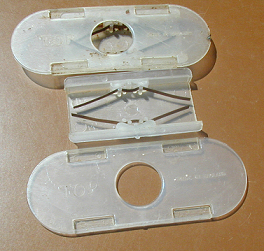
1) an old expired plastic card similar to a credit card for scraping stings out. I usually use my fingernail but having a card may come in handy and is actually probably more efficient in removing stingers with minimal injection of venom.

2) Benedryl, StingEze, Aspirin, Tylenol

3) Bandaids, tweezers, alcohol wipes.

I also have a chemical ice pack in my yard bucket and always a spare bottle of water.

You can quickly overheat in the summer while working your bees while wearing multiple layers of clothing and headgear. Last year, when out in the heat of the day, I started wearing one of those bandanas that absorb water (gel). For Christmas my kids found some fancy ones that hold a bit more water. I have not tried the new ones yet but the old ones worked well. A fellow beekeeper showed me a handy trick once when she poured a bottle of water into a cloth diaper and wrapped it around her neck before putting on her jacket.

Drinking Water: It’s not enough to have a backup bottle of water. Have multiple bottles of water close by when working your bees on hot days. Take frequent breaks. Hydrate!

EpiPen: A company has started selling generic Epipens for $10 through our local box store CVS pharmacy. I am not allergic but at my next doctor’s visit I’ll be asking for a prescription and will keep one with me on bee yard visits.

Cell Phone: A few years ago I stumbled when my foot hit a root stob while I was turning with a heavy box. I dislocated my knee and went down. I managed to reduce the dislocation and get back to the house but it made me think, “what if…?” Make sure you take a cell phone with you. It may be the most valuable safety equipment you pack. Also,  there’s no harm in telling someone where you’re going before you go out either.

Summer in the “famously hot” Midlands of South Carolina can be especially difficult on the beekeeper as well as the bees. Take extra precautions to ensure your safety in the bee yard.

Feel free to share this on:

  • Share on Facebook (Opens in new window) Facebook
  • Share on X (Opens in new window) X
  • Share on Pinterest (Opens in new window) Pinterest
  • Email a link to a friend (Opens in new window) Email
  • Share on LinkedIn (Opens in new window) LinkedIn
  • Share on Reddit (Opens in new window) Reddit
  • Share on Tumblr (Opens in new window) Tumblr
  • Print (Opens in new window) Print
  • Share on Telegram (Opens in new window) Telegram
  • Share on WhatsApp (Opens in new window) WhatsApp
Like Loading...

Happy Birthday Charles Mraz

26 Monday Jul 2021

Posted by Beekeeping365 in beekeeping, birthday, birthdays, famous beekeepers

≈ 1 Comment

Tags

famous beekeeper birthdays

Charles Mraz, Advocate of Therapeutic Bee Sting Therapy

Obituary as published in the New York Times By Karen Freeman September 19, 1999

cmrazCharles Mraz, an inventive beekeeper who since the 1930’s had been the country’s leading evangelist for the therapeutic use of bee stings, a still unproven treatment, died on Monday at his home in Middlebury, Vt. He was 94.
Mr. Mraz was widely known among beekeepers for developing a hardy strain of bees well suited to survive in the chilly Champlain Valley in Vermont and for figuring out how to get cranky bees safely out of the way so honey could be harvested more easily.

But many thousands of people with chronic diseases knew him for his campaign to have bee venom and other bee products accepted as medical therapies in the United States — a quest that began when he deliberately bared his own arthritic knees for bee stings. His proselytizing prompted people from all over the world to seek his advice on treatment.

”Letters mailed to The Bee Man, Middlebury, Vt., would make it to his house,” said Mitchell Kurker, his son-in-law.

A federally supervised clinical trial of the safety of such treatments is only now being undertaken.

For decades, many sick people made pilgrimages to Middlebury for bee sting therapy, for which Mr. Mraz never charged. He would pluck bee after bee from a jar, holding each one with forceps as it sank its stinger into the visitor’s skin, then crushing the mortally wounded bee.

Charles-Mraz-preparing-dry-venomMr. Mraz was convinced that the venom in bee stings could relieve the symptoms of autoimmune diseases like multiple sclerosis and rheumatoid arthritis by, among other things, triggering an anti-inflammatory response. Though that idea is not accepted by a vast majority of doctors, many people with such diseases heard his message and came to believe that it offered them hope.
Now the treatment could be moving closer to respectability. In a few weeks, the first clinical study of bee venom injections under the supervision of the Food and Drug Administration will begin at Georgetown University. The research is sponsored by the Multiple Sclerosis Association of America, based in Cherry Hill, N.J. The yearlong study will examine safety; if the treatment clears that hurdle, the next step will be to find out whether it works.

Mr. Mraz tried to encourage research during the decades he promoted bee sting therapy. He was a founding member and a director of the American Apitherapy Society, which was set up in 1998 to promote research and education. And he helped any researcher who asked.

”He used a technique developed at Cornell in the 1960’s to collect sterile venom,” said Roger Morse, a retired professor of apiculture at Cornell who was a friend of Mr. Mraz for 50 years but disagreed with him about whether bee venom has medicinal properties. ”He would collect and supply venom free of charge to anyone who was doing research with it, no matter what kind of research was being done. He was a very unusual man who wanted to help society — both preacher and practitioner.”

Mr. Mraz was enthralled by bees at an early age. He was born on July 26, 1905, in Queens and set up his first beehives at age 14, while he still lived in the city. After working for other beekeepers in the Finger Lakes region of New York, he moved to Middlebury in 1928 and started Champlain Valley Apiaries in 1931.

His beekeeping business became one of the largest in New England. At one point, he had a thousand bee colonies, each with a population of 30,000 to 60,000. He ran the business for more than 60 years, until he turned it over to his son William.

He discovered that the fumes of carbolic acid would prompt the bees to take cover in the bottom of the hive, leaving their honey unprotected. ”That was a very significant advance,” said Kirk Webster, owner of Champlain Valley Bees and Queens in Middlebury. ”It enabled one person to harvest much more honey than possible before.”

That technique is now widely used, and it brought Mr. Mraz an award from the American Beekeeping Federation in 1992.

The strain of bees developed by Mr. Mraz were disease-resistant and adapted to the local climate. ”That’s become almost the native bee of the Champlain Valley,” Mr. Webster said. ”They produce a very light clover honey, the standard for very light honeys in the United States.”

He also designed new kinds of equipment for processing honey, Dr. Morse said.

His passion for what came to be called apitherapy came when painful arthritis threatened his ability to do the heavy work around an apiary.

Mr. Mraz described the episode in his book, ”Health and the Honeybee,” which was published in 1995 by Honeybee Health Products, owned by his daughter Michelle Mraz and her husband, Mr. Kurker.

He had heard about bee sting therapy as a folk remedy in many cultures but initially considered that ”an old wives’ tale,” Mr. Kurker said. But the pain drove him to try bee stings on both knees.

” ‘I wonder if there is anything to that damned nonsense about bee stings for arthritis,’ ” Mr. Mraz thought, according to his book.

The next day, he wrote, the pain was gone. ”I couldn’t believe it,” he said. ”There wasn’t a trace of pain or stiffness in my knees.”

His second patient was not long in coming. A neighbor had arthritic hands that were bringing tears to his eyes during the twice-a-day milking on his dairy farm, and Mr. Mraz offered to help, he wrote. After a regimen of bee stings over several weeks, the dairy farmer’s hands opened and closed easily and were no longer swollen, Mr. Mraz said.

He said he had become more confident about the bee sting technique when he found out that a doctor in midtown Manhattan, Dr. Bodog F. Beck, was using the same therapy. Mr. Mraz visited Dr. Beck’s office, which had a beehive on the windowsill. The bees flew to Central Park for pollen, Mr. Mraz said, and Dr. Beck used them to sting patients.

As an expert on beekeeping techniques, Mr. Mraz lectured and consulted all over the world, especially in Mexico, and he frequently published in industry journals. At the same time, he spread the word about bee venom therapy, undeterred by the resistance he encountered.

”Most people would look at me as if I was some kind of nut,” he wrote. Mr. Mraz also promoted what he contended were the medicinal effects of honey, pollen, royal jelly and a bee resin called propolis.

He considered stings from living bees superior to injections of purified bee venom, although he would provide the venom to researchers if they wished. Some multiple sclerosis patients treat themselves with dozens of stings a day.

”Michelle remembers growing up with a jar of bees always on the table ready to go,” Mr. Kurker said. ”He’d treat people and send them away with a jar of bees so they could treat themselves.”

Besides Michelle Mraz, of Burlington, Vt., Mr. Mraz is survived by his wife, Pamela. His first wife, Letitia, died in 1948, and his second wife, Margaret, died in 1992. Other survivors include his daughters, Marna Ehreck of Shelburne, Vt., and Laurie Zwaan of Exeter, N.H.; his sons, William, of Middlebury, and Charles, of Destin, Fla.; 13 grandchildren, and 7 great-grandchildren.

While Mr. Mraz started cutting down on his work at his apiary in the 1980’s, he remained an active proponent and practitioner of apitherapy for the rest of his life.

”People were still coming to see him for treatment,” Mr. Kurker said. ”Somebody came to the house on the morning he died for bee stings.”

Link to the American Apitherapy Society


Feel free to share this on:

  • Share on Facebook (Opens in new window) Facebook
  • Share on X (Opens in new window) X
  • Share on Pinterest (Opens in new window) Pinterest
  • Email a link to a friend (Opens in new window) Email
  • Share on LinkedIn (Opens in new window) LinkedIn
  • Share on Reddit (Opens in new window) Reddit
  • Share on Tumblr (Opens in new window) Tumblr
  • Print (Opens in new window) Print
  • Share on Telegram (Opens in new window) Telegram
  • Share on WhatsApp (Opens in new window) WhatsApp
Like Loading...

Beekeeper’s Journal by sassafrasbeefarm

23 Friday Jul 2021

Posted by Beekeeping365 in beekeeping, inspections, journal, log book, management

≈ 5 Comments

Tags

beekeeping, management

Journal

I’d encourage all new beekeepers to maintain a journal. There are commercial beekeeping journals available with hive inspection sheets and other features but any old notebook will do. You will appreciate your journal next year when you’re trying to remember when the nectar flow started, when you first saw white wax, swarm dates, when various plants started blooming, when dearth began, and much more. These events have a direct bearing on your hive management such as making splits, adding boxes, removing reducers, treating for mites and hive beetles, etc. Keeping a journal will make you a better beekeeper, more observant, and increase your enjoyment and knowledge of what’s happening with your bees.

Feel free to share this on:

  • Share on Facebook (Opens in new window) Facebook
  • Share on X (Opens in new window) X
  • Share on Pinterest (Opens in new window) Pinterest
  • Email a link to a friend (Opens in new window) Email
  • Share on LinkedIn (Opens in new window) LinkedIn
  • Share on Reddit (Opens in new window) Reddit
  • Share on Tumblr (Opens in new window) Tumblr
  • Print (Opens in new window) Print
  • Share on Telegram (Opens in new window) Telegram
  • Share on WhatsApp (Opens in new window) WhatsApp
Like Loading...

Protecting your Drawn Comb by sassafrasbeefarm

20 Tuesday Jul 2021

Posted by Beekeeping365 in beekeeping, chores, comb, drawn comb, management

≈ 1 Comment

Tags

bacillus thuringiensis aizawa, beekeeping, chores, drawn comb, management, Para-moth, paradichlorobenzene, wax moth

wax moth destruction

First and second year beekeepers! You may be pulling honey supers, extracting, and have empty drawn comb. Or maybe a hive failed leaving you with drawn comb. Drawn comb is gold! You can always buy more bees, catch a swarm, make a split, or otherwise replace bees. But drawn comb can not be purchased. Having drawn comb exponentially increases a colony’s productivity versus starting on foundation. A spring package on drawn comb typically makes honey the same year.

Beekeepers must protect their drawn comb from wax moths which will take every opportunity to destroy your bee’s legacy.

Here are a few excerpts from an email I sent discussing protecting drawn comb:

<begin>

Be thankful they are on plastic foundation. Otherwise you often have to replace the foundation. And if they are in wooden frames wax moths will actually bore holes in the wood as well. On plastic you can scrape it off and re-coat with wax for next year.

As for the freezer: You can Google wax moth, life cycle, etc and find some research. It’s like anything else, dependent on temperature and length of time of exposure. Two days may be sufficient IF your freezer is at 0 degrees F. If your freezer is kept at 10 degrees F it may take 6 days. And if at 20 degrees F it may take 14 days. (These are guesses but you get the idea.)

There is a temperature range for wax moth reproduction. When the temperatures get cool enough outside they are no longer a threat. I guess there are some people with a limited number of frames who can store them in the freezer until the weather cools enough.

Every year we get posts on the local discussion board with pictures saying they froze the comb for X number of days and then placed in in a Tupperware or other container and under the house or some similar dark place only to find the comb destroyed by spring. Last year in bee school a member of the class asked me about this specifically and said if he placed them in the freezer for days and then immediately placed it in lawn trash bags and sealed them completely and absolutely shouldn’t that work? I told him that “in theory” his plan would work but my experience is some eggs will hatch and if conditions are right they will destroy his comb.

On Para-moth (paradichlorobenzene) crystals: They do work but it is not a one and done application. Use them generously. Periodically check them through the storage period and replenish them as needed. They do “melt” as they release their gas into the supers. I’ve seen some people tape the edges of the supers to make a gas seal. Unfortunately this dark, sealed environment is also ideal for the moths when the para-moth dissolves and no longer provides protection.

Using open air and light: I did this one year with good success. I simply have too many supers now. Also, anything I place outside now is subject to squirrels who seem to like the comb, pollen, honey residuals.

BT (bacillus thuringiensis aizawa): Reports are, this works well. As you know it used to be a recognized method of wax moth control in bee hives but the company decided to not renew it’s license for use as such. Data used to be on the Clemson site. BT for use on crops is recognized as non chemical, organic bio control method and approved for use on organic crops. While an approved organic pest control method, it is no longer legal for use in bee hives.

I have a friend that uses BT and sprays the comb coming out of the extractor.

If you do not protect your comb from wax moths don’t despair, I understand the larvae are great as fishing bait.

Feel free to share this on:

  • Share on Facebook (Opens in new window) Facebook
  • Share on X (Opens in new window) X
  • Share on Pinterest (Opens in new window) Pinterest
  • Email a link to a friend (Opens in new window) Email
  • Share on LinkedIn (Opens in new window) LinkedIn
  • Share on Reddit (Opens in new window) Reddit
  • Share on Tumblr (Opens in new window) Tumblr
  • Print (Opens in new window) Print
  • Share on Telegram (Opens in new window) Telegram
  • Share on WhatsApp (Opens in new window) WhatsApp
Like Loading...

Always Something New in the Beeyard by sassafrasbeefarm

18 Sunday Jul 2021

Posted by Beekeeping365 in beekeeping

≈ Leave a comment

Tags

beekeeping

Manage SHB.
Manage SHB.
internal feeder

The thing about beekeeping is there’s always something to do and something to learn.

In the Spring the chores and responding to situations can get overwhelming but with our eyes on the approaching end of the nectar flow, we try to maximize the time we have remaining with nature’s help.

Now we enter dearth period. For most this is definitely not as appealing as Spring when nature offered up its bounty of nectar to support our efforts. One thing that beekeeping has taught me well is to stay ahead of the needs of the hive. Knowing what comes next is what makes us beekeepers rather than beehavers. The bees themselves are on schedule and living in the now. We must pave the way to make their now a success.

So, keywords for summer are: pest control, and food management.

Pest Control is all about staying ahead of the problem. Primarily we have varroa, small hive beetles, and wax moths.

Varroa is undoubtedly the most deadly and difficult management problem. Deadly because the mites are vectors for deadly viri which will decimate your colony. Difficult largely because 1) they aren’t very visible and 2) you don’t get much of any warning before collapse occurs. I’ve used the analogy of a flu virus going rampant through a college dormitory when talking to others and that seems to be mostly accurate – one day someone has a cough and fever; the next day everyone in the dorm is bedridden with symptoms. Your method of dealing with varroa is a decision you’ll have to make. At a minimum you might simply want to start with a mite count using the sticky board method, sugar shake, alcohol wash, or ether roll and go from there. I know a number of beekeepers who pull their honey off and then proceed to treat using one of the many treatment options. Timing can be key with many treatments as some treatments have temperature restrictions. For South Carolina that may mean waiting too long takes some of the treatment options off the table.

Small hive beetles are another summer pest that you will want to get ahead of. These little pests will multiple inside your hive and destroy the food stores of the colony. I have seen them run a colony out of a hive (abscond) due to pest pressure. And I’ve seen colonies fail to progress due to beetles taxing the resources of the colony. I’ve also seen a colony recover and thrive once the beetles are under control. But don’t wait for a situation to develop before getting them under control. Now is the time to use one or more methods to keep them in check: place oil traps, barriers, and / or dry microfiber pads before the situation develops. Get ahead of the problem and there will not be a problem.

Wax moths are a management problem. They are opportunists looking for a weakened hive in which to run amuck. The solution is simply to keep your hive strong. Easier said than done you might say. But “strong” doesn’t mean maintaining a six box high hive full of bees. It means managing your hive such that they are strong with the boxes they have. I look at my hives daily and if I see a hive declining in population (maybe no bees at the entrance) I look inside with the idea a box needs to come off. Push your bees into a smaller space such that there are always a few bees standing around the entrance. This is what is meant by keeping a hive “strong enough” to defend itself.

Food management: The other big management goal during summer is food management.

In class we covered the ideal hive configuration size going into winter as approximately the size of 2 ten frame deeps OR a single ten frame deep + a medium. I have a friend that configures for winter with a ten frame deep and a shallow and he does just fine in our South Carolina winters.

Depending on when you acquired your bees this year you may have already satisfied this goal. Some will have more than they need already and they can relax a bit and let the bees consume some of their stores. Others may still need to feed their bees to get to this goal or to encourage more comb building. You’ll have to figure out where you are with your goals and manage accordingly by feeding if needed or pulling some off now for use later in the fall or winter, or otherwise managing the hive so that you begin working through your management techniques, towards the ideal size I mention above.

In closing, the above is my opinion based on what I have been taught by my mentors, read, experienced, failed at, and found success with while managing my bees. Your opinions and results may vary from mine. That’s okay.

Feel free to share this on:

  • Share on Facebook (Opens in new window) Facebook
  • Share on X (Opens in new window) X
  • Share on Pinterest (Opens in new window) Pinterest
  • Email a link to a friend (Opens in new window) Email
  • Share on LinkedIn (Opens in new window) LinkedIn
  • Share on Reddit (Opens in new window) Reddit
  • Share on Tumblr (Opens in new window) Tumblr
  • Print (Opens in new window) Print
  • Share on Telegram (Opens in new window) Telegram
  • Share on WhatsApp (Opens in new window) WhatsApp
Like Loading...

To the (bee) Veils! by sassafrasbeefarm

16 Friday Jul 2021

Posted by Beekeeping365 in beekeeping, beekeeping management, safety

≈ 6 Comments

Tags

best practices, management, safety

beeveilstop

By now all the new beekeepers have watched a bunch of YouTube videos showing people without any personal protective equipment handling swarms, doing hive inspections, and maybe even wearing bee beards. Even while visiting mentor and bee buddy bee yards they have seen gloveless inspections and shorts being worn by more experienced beekeepers while handling their bees. A walk through the bee yard or a quick trip out to deliver a jar of syrup is usually done without formal wear. These sorts of super-human feats of coolness are typically performed during nectar flows.

Introducing dearth, a seasonal period when the available nectar is less than colony day-to-day needs. Hungry, irritable bees. Foraging bees with nowhere to ply their trade, jobless and loafing in and around the hive. And I don’t know about you but, like the Snickers commercial, I too am just a bit grumpy when I’m hungry.

Act One, Scene One: Older bees with their fully developed venom sacs hanging out at home, irritable and ready to defend their precious stores of honey goodness.

For the beekeeper dearth means you too must make changes in the manner in which you conduct yourself around the bees.

1) Wear your protective equipment. Once the nectar flow ends I begin wearing my veil even if just walking though the bee yard or exchanging a jar feeder. You may have 1,000,000 honey bees out there but it only takes one bee having a bad day. A sting between the eyes can turn your pleasant evening stroll into a evening on the couch with an ice pack coupled with periodic and annoying questions from family members.

2) Work your bees during mid-day when the foragers are out of the hive. Depending on the size of the hive, the number of ill tempered foragers not in your way makes a big difference. A hive filled with mild mannered nurse bees is a pleasure compared to cranky guards and foragers. Also, avoid working on days that keep the bees from flying like rainy or windy days. I have noticed that if we get a mid-day rain shower the foragers will return and, during dearth, many will stay home even if the sun comes back out – learned that the hard way.

3) When going into the hive suit up, use smoke, move slowly, and get out when they tell you – when you hear them increasing their “roar.” Your time inside may be limited so work efficiently. Don’t feel you “must” look at everything regardless of them being annoyed. If you’re showing a friend your bees and yammering away then go briefly into a few hives rather than keep one open too long.

4) Start to look at how your body mechanics affect the bees while working them. Are you frequently moving your hands across the top of the frames as you break apart the frames. Instead, use your right hand to break the entire line of bars along the right side then do the left side (with your left hand preferably). Pull the frames closest to you first so you don’t reach across any more than needed. Don’t stand in front of the hive. If possible, try working from the side of the hive instead of the back and you won’t be reaching across them as much. If you have multiple boxes and you “must” inspect to the bottom take the tower of boxes off first and inspect from the bottom, adding one box back at a time rather that stirring them up in each box as you work downward. And finally, if you have to shake bees off the inner cover, out of a box, or elsewhere, save that until last – no need to stir them up while you still have work remaining.

5) When all else fails walk away. You may even have to walk away, wait a few minutes and return to close them up. And if you do get stung, after you take care of yourself, take a picture. We’d like to welcome you to the club!

Feel free to share this on:

  • Share on Facebook (Opens in new window) Facebook
  • Share on X (Opens in new window) X
  • Share on Pinterest (Opens in new window) Pinterest
  • Email a link to a friend (Opens in new window) Email
  • Share on LinkedIn (Opens in new window) LinkedIn
  • Share on Reddit (Opens in new window) Reddit
  • Share on Tumblr (Opens in new window) Tumblr
  • Print (Opens in new window) Print
  • Share on Telegram (Opens in new window) Telegram
  • Share on WhatsApp (Opens in new window) WhatsApp
Like Loading...

Scapegoats and Witch Hunts by sassafrasbeefarm

13 Tuesday Jul 2021

Posted by Beekeeping365 in beekeeping, forage, plants for bees

≈ 4 Comments

Tags

Apis mellifera, forage, honey bee forage, native bees


TheWitch-no3

“The Witch, No. 3” circa 1892 Feb. 29. by Baker, Joseph E., ca. 1837-1914, artist.

I’m calling journalistic foul on the spate of recent articles I have seen placing the honey bees at odds with native bees.

So, who’s today’s scapegoat in the blame game on bee decline. Today’s top scape goat is apis mellifera. Seems like the latest press release being picked up by several publications is a report that honey bees are severely impacting native bee species. The researchers imply that honey bees, in the numbers kept by beekeepers, are so thoroughly diminishing the nectar and food sources that the native bees are having a hard time surviving. They admit that as a society we need and demand foods requiring pollination but add that the honey bee is to blame for the troubles of native bees. One article I read says the solution may be to eliminate feral honey bees. (After all we don’t want to step too hard on the toes of those ensuring we have our almond milk.)

I had to laugh as, for the most part, feral honey bees have already been decimated due to the Varroa mite. If reducing feral honey bees was a solution then it should have been offered as a solution 30 or 40 years ago when we actually had populations of ferals. I’m involved in a local study of feral honey bees and I can tell you that, even in the countryside of the largely undeveloped rural areas we are studying, even finding feral honeybees is a challenge. I believe the truth of the matter is these authors aren’t looking for a solution but rather 1) a step towards a general acceptance that non-native honey bees are to blame and perhaps 2) an angle to obtain research funding using the honey bee as “a problem” to be studied. Or perhaps it’s just a quick fix and human nature to point the finger at  someone or something for every issue nowadays. I say Hogwash.

Do I think we can overpopulate areas with honey bees? Well, yes in some instances honeybees are overwintered and at other times placed in stock yards awaiting pollination contracts. But I can also offer an instance not considered by the native bee enthusiasts. An instance probably a thousand fold more frequently encountered. I have lived on poor, sandy land for the past 16 years. When I moved here the foliage was scant. So scant in fact that even insects and wildlife were equally scant. After introducing honey bees I have visibly seen an increase in both quantity of nectar producing plants as well as an increase in native bees. How? Keeping honey bees has greatly increased the pollination of the local nectar producing plants which in turn has increased their seed production and reproduction. Now, the area foraged on my the bees has become much more attractive and productive to all species of bees. It is not uncommon for me to now see dozens of flowering plant species in the nearby fields that were not present or minimally present even 5 years ago. And nowadays there are many more native bees on flowers during the day when the honey bees are home bearding on the hive or working a brief nectar flow on a flowering tree.

My take on this is that as humans we simply find it of some psychological benefit to  play the blame game in this matter – someone or something must be at fault. And Apis Mellifera, that newcomer, non-native must be at fault. Yes, forage is at a premium these days and yes, all bees need forage. But I’m not buying the implication that the decline of native bees is largely to be blamed on honey bees. Apis mellifera mellifera was introduced to North America in 1622 – that’s 396 years ago. Since 1622, many changes to our environmental landscape have occurred, largely due to man. But now, apparently ignoring history but with an overabundance of historical shortsightedness, some journalists are misreading the scientific studies and placing the blame of a lack of forage on honey bees? There is a lengthy list of reasons we have gotten us to our current state of affairs with regard to habitat and lack of forage. Journalists need to look a little more to the obvious if the intent is to truly find solutions to native bee declines.

Feel free to share this on:

  • Share on Facebook (Opens in new window) Facebook
  • Share on X (Opens in new window) X
  • Share on Pinterest (Opens in new window) Pinterest
  • Email a link to a friend (Opens in new window) Email
  • Share on LinkedIn (Opens in new window) LinkedIn
  • Share on Reddit (Opens in new window) Reddit
  • Share on Tumblr (Opens in new window) Tumblr
  • Print (Opens in new window) Print
  • Share on Telegram (Opens in new window) Telegram
  • Share on WhatsApp (Opens in new window) WhatsApp
Like Loading...

Winnie-the-Pooh by A.A. Milne

12 Monday Jul 2021

Posted by Beekeeping365 in beekeeping, humor

≈ 3 Comments

Tags

beekeeping humor, Winnie the Pooh

winnie the pooh

“Well,” said Pooh, “what I like best,” and then he had to stop and think.  Because although eating honey was a very good thing to do, there was a moment just before you began to eat it which was better than when you were, but he didn’t know what it was called.”             -A.A. Milne, Winnie-the-Pooh

Feel free to share this on:

  • Share on Facebook (Opens in new window) Facebook
  • Share on X (Opens in new window) X
  • Share on Pinterest (Opens in new window) Pinterest
  • Email a link to a friend (Opens in new window) Email
  • Share on LinkedIn (Opens in new window) LinkedIn
  • Share on Reddit (Opens in new window) Reddit
  • Share on Tumblr (Opens in new window) Tumblr
  • Print (Opens in new window) Print
  • Share on Telegram (Opens in new window) Telegram
  • Share on WhatsApp (Opens in new window) WhatsApp
Like Loading...

Flexibility in Beekeeping by sassafrasbeefarm

09 Friday Jul 2021

Posted by Beekeeping365 in beekeeping, beekeeping management, management, opinion

≈ 2 Comments

Tags

beekeeping, beekeeping management, flexibility in beekeeping, opinion, summer management

10377454_10203062170410017_333057800093327913_n

Our local club past President, Danny Cannon, delivered one of the best lectures I’ve ever sat through at a MSBA meeting several years ago. It was titled Flexibility in Beekeeping, Being Flexible in Beekeeping, or some such similar title. It literally changed my beekeeping.

That lecture keeps ringing through my brain lately and for good reason. One of the ideas in the lecture was the understanding that we must move backwards and side to side as easily as we move forward in our management. For instance, recently I’ve been playing musical chairs with supers, frames, and bees. Let me explain.

In the Spring it’s all about adding, expanding, and growth. Things seem to get bigger. A lot of “addition” taking place – boxes, hive stands, and new hives. The thinking is, If I can stay ahead of them with “more” they won’t swarm. Add, add, add. Grow, grow, grow. Feed, feed, feed. Gotta add more boxes! Look and act – usually with more, more, more. Find a swarm and be prepared and flexible enough to have an extra stand, bottom board, and box – capture, and add to the apiary. And that’s how most of the management goes in the Spring.

And then comes the post flow Summer, Fall, and early Winter management. But can I break my addiction to adding? Can I be flexible enough to read the bees and act according to the situation? The queen will slow her production down as nectar wanes and more so when the days start getting shorter. Can I tap the brakes, slow down, make changes? I sense that I’m reluctant to pull that super off that I worked so hard to build them up to needing. Or maybe they’ve swarmed and the hive is half empty now, yet I want to leave those boxes on in hopes they will build back up – and they very well might if I’m flexible in my management!

Maybe a queen starts to fail and it becomes noticeable at the hive entrance that activity has slowed. But it’s hot and I’d rather not suit up and look inside; say it isn’t so because I’d really rather not have to track down a replacement queen.

Or I have two hives that are in steep decline, should I combine them with stronger hives? After all, I have a vision of how many hives I need to complete the mental picture I have of my hives sitting on their designated hive stands in my well designed apiary. I want X number of hives not X – 1 hives.

And so, I return to the topic of flexibility. Can I be flexible enough to respond appropriately during these months post nectar flow? Oh, it’s difficult. But if I don’t employ the discipline of flexibility in removing sparsely or unpopulated boxes, combining weak hives, or replacing a failing queen what penalty is paid? Unlike the threat of swarms in the spring, the lack of my flexibility now is paid for with increased pests, hive failures, and loss of valued comb. Hives no longer able to cover comb with bees allow Small Hive Beetles to go unchecked and run amuck in nectar. Worse still is the bane of Wax Moths that move in on weakened or poorly populated hives and destroy your most precious resource – your hard earned comb. Weak and declining hives, if disease free, may need to be combined with strong hives and I have to accept that empty spot on the hive stand and tell myself that maybe a split may be possible later in the year or at least next spring.

It’s all flexibility. I’ll read the bees as best I can, make adjustments, go with the flow every time I visit the apiary or open a hive. I must accept that it’s a roller coaster with ups and downs, round and rounds, bright lights and dark tunnels. When I get off the ride I don’t want to say I enjoyed the ups but not the downs or the round and rounds. No, really I enjoyed the ride itself. Be flexible.

Feel free to share this on:

  • Share on Facebook (Opens in new window) Facebook
  • Share on X (Opens in new window) X
  • Share on Pinterest (Opens in new window) Pinterest
  • Email a link to a friend (Opens in new window) Email
  • Share on LinkedIn (Opens in new window) LinkedIn
  • Share on Reddit (Opens in new window) Reddit
  • Share on Tumblr (Opens in new window) Tumblr
  • Print (Opens in new window) Print
  • Share on Telegram (Opens in new window) Telegram
  • Share on WhatsApp (Opens in new window) WhatsApp
Like Loading...

Happy Birthday Charles Martin Simon

08 Thursday Jul 2021

Posted by Beekeeping365 in beekeeping, beekeeping history, birthday, birthdays

≈ 2 Comments

Tags

beekeeping, beekeeping history

charles-martin-simon

Charles Martin Simon was born on July 8, 1941, at 6 A.M., in Newark, N.J. He graduated from Montclair Academy, a private, pseudo-military high school famous for it’s state-of-the-art dress code and discipline, in 1959, and went on to Rutgers, the State University of New Jersey, where he majored in Agriculture and English Literature.

He was always a writer, having started his first novel in 1948, at the age of seven, and always a nature boy, therefore the split major. But after two years at Rutgers, he realized the agriculture he was being taught was not the agriculture he wanted to learn, and it was only going to get worse. He’d had enough of castrating sheep, calculating chemical fertilizer specifications, and murdering chickens. His English literature studies weren’t much more promising. The high point came when the editor-in-chief of the College Literary Magazine, who, although never having learned to write himself, went on to become the has-been of an illustrious career as the Clinton Administration’s Poet Laureate, recognized Simon’s writing and asked him to take over the magazine, which offer Simon graciously declined.

Simon dropped out and drifted for a few years and then went to California and became part of the organic farming movement, as a partner in a 21-acre piece. Believing strongly in non-mechanized farming, he worked the farm completely by hand from 1967 until 1977. And that was where his involvement with bees began in earnest in 1967.

The 21 acres cost $5,000 originally, but when the partners were offered $350,000.00, they just couldn’t resist. Simon voted against the sale, arguing that the ten years put into the land was worth more than any amount of money. He was outvoted, the land was not divisible, and he lost the farm.

But he did not lose the bees. He was able to keep them on various pieces of property and continue with bee culture, since it is not dependent on stable locations as are horses, chickens, goats, gardens, and orchards.

In 1990, he invented and began marketing world-wide the SuperUnfoundation bee frame. This was well-received and selling well when the price of wood doubled and then tripled. It suddenly cost more for the raw materials than he could get selling the finished frames, and he was out of business. Never one to accept things “as they are” and being much more interested in the health of the bees than in their produce, he is developing an apiculture system to allow the bees to actualize their true potential vitality and really solve the varroa and many other bee problems.

Simon had no hobbies, having followed Henry David Thoreau’s advice to make one’s vocation and avocation one. He operated a one-man bee and wasp removal service and cared for bees in several locations. He also helped people overcome disease and get healthy and stay healthy.

And he wrote, with twelve books in print. He self-published, executed every part of the book process himself: conceived, wrote, edit, designed, formatted, printed, cut, bound each volume by hand. His books are in stock in a few bookstores and available from all bookstores via the ISBN system, but he sold mostly direct to the public at CharlesMartinSimon.com.

Reference: http://beesource.com/point-of-view/charles-martin-simon/

Feel free to share this on:

  • Share on Facebook (Opens in new window) Facebook
  • Share on X (Opens in new window) X
  • Share on Pinterest (Opens in new window) Pinterest
  • Email a link to a friend (Opens in new window) Email
  • Share on LinkedIn (Opens in new window) LinkedIn
  • Share on Reddit (Opens in new window) Reddit
  • Share on Tumblr (Opens in new window) Tumblr
  • Print (Opens in new window) Print
  • Share on Telegram (Opens in new window) Telegram
  • Share on WhatsApp (Opens in new window) WhatsApp
Like Loading...

Happy Birthday Edward Bevan

08 Thursday Jul 2021

Posted by Beekeeping365 in beekeeping author, beekeeping history, birthday, birthdays, famous beekeepers

≈ Leave a comment

Tags

beekeeping authors, beekeeping history, famous beekeepers

1959572_635797769808056_168187655_n

Gentle Bee! bright example to mankind of industry, economy, concord, and obedience! What triumphs, what wonders, dost thou not achieve! It shall be our delightful task to talk of thee, to write of thee; and if we talk not, and write not, pleasantly, then, indeed, the fault is in-ourselves, and not in thee. Sweet is the sound of thy mourning hum, attuned to music, when thou revellest on some gay bank of purple heather, visiting bell after bell in quest of their ambrosial essence, heaven-distilled! Sweet is the air around thee, air impregnated with the breath of flowers! Sweet is the joyous concert of feathered choristers above and about thee! Sweet is the memory of those few happy days when we have drunk freely of scenes like these, and basked in the early sunshine on some fragrant bed of thyme, “ dazzled and drunk with beauty ”-—the beauty of nature. ~The entomological magazine, 1835, Volume 2, Page 270. By Bevan, Edward, M.D.

The Biography of Edward Bevan.

Edward Bevan M.D. (July 8, 1770 – January 31, 1860)

The Honey Bee: its Natural History, Physiology, and Management. By Edward Bevan, M.D. was first published in London, 1827. The critics in 1827 write of Bevans book; “The latter part of the last century and the commencement of the present, have given birth to a considerable number of valuable tracts, elucidating the Natural History and Physiology of the Honey Bee, as well as several regular treatises on its management; but the work before us, by Dr. Bevan, is the first possessing any claim to the character of scientific.”

Bevan, Edward, M.D. (1770-1860), physician and an eminent apiarian, was born, in London on 8 July 1770. Being left fatherless in early infancy, he was received into the house of his maternal grandfather, Mr. Powle, of Hereford, and at the age of eight was placed at the grammar school, Woottonunder- Edge, where he remained for four years. He was afterwards removed to the college school at Hereford, and it having been determined that he should adopt medicine as a profession, he was apprenticed to a surgeon in that town. He then proceeded to London, was entered as a student at St. Bartholomew’ s Hospital, and during three sessions of attendance on the lectures of his instructors Abernethy, Latham, and Austin, he acquired the honourable appellation of ‘the indefatigable.’ His degree of M.D. was obtained from the university of St. Andrew’s in 1818. He commenced practice at Mort-lake as assistant to Dr. John Clarke. After five years so spent he settled on his own account first at Stoke-upon-Trent, and then at Congleton. There he married the second daughter of Mr. Cartwright, an apothecary, one of the last of the ‘ bishops ‘ of a sect called the primitive Christian church. After twelve years’ residence in Cheshire, his health not bearing the fatigue of a country business, Bevan again returned to Mortlake, and practised there for two years, but with a like result. He thereupon retired to a small estate at Bridstow, near Ross, in Herefordshire, where he devoted himself to the development of an apiary which he found already established on his newly acquired property. Previous to this he had, in 1822, assisted his friend Mr. Samuel Parkes in the preparation of the third and revised edition of the latter’s ‘ Rudiments of Chemistry.’ The first edition of his book on bees was issued in 1827, with the title, `The Honey- Bee : its Natural History, Physiology, and Management.’ This treatise at once established the author’s reputation as a scientific apiarian, and was read wherever the bee is regarded as an object of interest. The second edition, published in 1838, is dedicated to her Majesty. In it the author has included much new and valuable matter. A third edition, by W. A. Munn, appeared in 1870. Bevan also wrote a paper on the ‘ Honey-Bee Communities ‘ in the first volume of the ‘ Magazine of Zoology and Botany,’ and published a few copies of ‘ Hints on the History and Management of the Honey-Bee,’ which had formed the substance of two lectures read before the Hereford Literary Institution in the winter of 1850-51. He had from 1849 fixed his residence at Hereford, where he died on 31 Jan. 1860, when within a few months of completing his ninetieth year As a public man Bevan was shy and retiring, but was much beloved in the circle of his private acquaintances. It is recorded as a proof of the esteem in which he was held, that on the occasion of a great flood in the Wye, in February 1802, washing away all the doctor’s beehives, a public subscription was raised, and a new apiary presented to him, of which, as a very pleasing substitute for what he had playfully called his ‘ Virgilian Temple,’ the venerable apiarian was justly proud. Bevan was one of the founders of the Entomological Society in 1833.


Source:

Portrait from: The Zoologist: A Monthly Journal of Natural History, 1839, Page 142
http://books.google.com/books?id=vfsWAAAAYAAJ&pg=PA114-IA2#v=onepage&q&f=false

Dictionary of National Biography
by George Smith – 1885
Page 444
http://books.google.com/books?id=KwMJAAAAQAAJ&pg=PA444


Feel free to share this on:

  • Share on Facebook (Opens in new window) Facebook
  • Share on X (Opens in new window) X
  • Share on Pinterest (Opens in new window) Pinterest
  • Email a link to a friend (Opens in new window) Email
  • Share on LinkedIn (Opens in new window) LinkedIn
  • Share on Reddit (Opens in new window) Reddit
  • Share on Tumblr (Opens in new window) Tumblr
  • Print (Opens in new window) Print
  • Share on Telegram (Opens in new window) Telegram
  • Share on WhatsApp (Opens in new window) WhatsApp
Like Loading...

On my Varroa Soapbox, Understanding Varroa Risk by sassafrasbeefarm

06 Tuesday Jul 2021

Posted by Beekeeping365 in beekeeping, varroa, varroa destructor, varroa mites

≈ 2 Comments

Tags

beekeeping, varroa, varroa destructor, Varroa management, Varroa mite assessment, varroa mites

IMAG2488

It’s no mystery that Varroa mites are the single most problem facing honey bees and leading to large percentages of colony deaths a year.

Understanding Varroa Risk. We either understand the enemy or he defeats us. The good news is, once understood I can understand the mite’s weaknesses and vulnerabilities. Conquering the mites means I can enjoy my bees much like generations of beekeepers before me enjoyed their bees. In addition, my bees perform better, make more honey, make more bees, and I don’t have the number of odd, random incidents occur in the apiary. All this results when we perform one management task – Varroa assessment, management, and control.

View the video below by Meghan Milbrath at Michigan State University for an excellent review of understanding the Varroa risks and assessing Varroa in your colonies.

Feel free to share this on:

  • Share on Facebook (Opens in new window) Facebook
  • Share on X (Opens in new window) X
  • Share on Pinterest (Opens in new window) Pinterest
  • Email a link to a friend (Opens in new window) Email
  • Share on LinkedIn (Opens in new window) LinkedIn
  • Share on Reddit (Opens in new window) Reddit
  • Share on Tumblr (Opens in new window) Tumblr
  • Print (Opens in new window) Print
  • Share on Telegram (Opens in new window) Telegram
  • Share on WhatsApp (Opens in new window) WhatsApp
Like Loading...

Happy Birthday Robert Evans Snodgrass

05 Monday Jul 2021

Posted by Beekeeping365 in beekeeping

≈ 1 Comment

Robert_Evans_Snodgrass

Source: Wikipedia

Robert Evans Snodgrass (R.E. Snodgrass) (July 5, 1875 – September 4, 1962) was an American entomologist and artist who made important contributions to the fields of arthropod morphology, anatomy, evolution, and metamorphosis.[1]

He was the author of 76 scientific articles and six books,[2][3] including Insects, Their Ways and Means of Living (1930) and the book considered to be his crowning achievement,[4] the Principles of Insect Morphology (1935). (ed note: Also The Anatomy of the Honey Bee)

R.E. Snodgrass was born in St. Louis, Missouri on July 5, 1875, to James Cathcart Snodgrass and Annie Elizabeth Evans Snodgrass, where he lived until he was eight years old.[1] He was the oldest of three children. His admitted first ambition in life was to be a railway engineer or a Pullman conductor, though frequent visits to the St. Louis Zoo aroused his early interests in zoology.[1] His first recollections of entomology were recorded by E.B. Thurman:[1]

The first entomological observation which Dr. Snodgrass recalls is seeing that the legs of grasshoppers, cut off by his father’s lawnmower, could still kick while lying on the pavement. This apparently mysterious fact made a strong impression on him, and he decided that sometime he would look into the matter.

In 1883, he and the his family moved to Wetmore, Kansas, where his father worked in a local bank, and young Snodgrass began work as a self-taught taxidermist.[1] He had a particular interest in birds, even expressing a desire to become an ornithologist, though his family only allowed limited shooting of birds for his mounted collections. At age 15, the family again moved, this time to Ontario, California, where they settled on a 20-acre (81,000 m2) ranch and grew oranges, prunes, and grapes.[1] It was here that Snodgrass entered a Methodist preparatory school at the high school level, then known as Chaffey College.[1] He studied Latin, Greek, French, German, physics, chemistry, and drawing, but notably no biology because the curriculum forbade involving the teaching of evolution.[1] Snodgrass bypassed this problem by reading Darwin, Huxley, and Spencer in his free time.[1] His openly professed belief in evolution caused him problems in his relationships at home, and eventually resulted in being expelled from church activities in his community.[1]

Cross-section-worker-lg

In 1895, at the age of 20, Snodgrass entered Stanford University and majored in zoology, taking classes such as general zoology, embryology, entomology with Dr. Vernon Lyman Kellogg, ichthyology with then Stanford president Dr. David Starr Jordan, and comparative vertebrate anatomy. His first opportunity to conduct research came from Dr. Kellogg, who set him to work on the biting lice (Mallophaga). The excitement of research, and the prospect for publishing original work led to his giving up the desire to become an ornithologist,[1] and the publication of his first two science articles (works 1, 2). During this time, Snodgrass also participated in his first two field expeditions, the first to the Pribilof Islands led by Dr. Jordan, and the second to the Galapagos Islands, led by Edmund Heller.[1] Snodgrass eventually published seven papers with Heller regarding organisms collected during the Galapagos expedition[1] (works 3, 5, 6, 7, 12, 16, 19). Snodgrass graduated from Stanford University with his A.B. degree in Zoology in 1901.

He was awarded the 1961 Leidy Award from the Academy of Natural Sciences of Philadelphia.

Illustrations from Anatomy of the Honey Bee by R.E. Snodgrass

[5Photo Source: https://hpsrepository.asu.edu/handle/10776/185

Source: Wikipedia


Feel free to share this on:

  • Share on Facebook (Opens in new window) Facebook
  • Share on X (Opens in new window) X
  • Share on Pinterest (Opens in new window) Pinterest
  • Email a link to a friend (Opens in new window) Email
  • Share on LinkedIn (Opens in new window) LinkedIn
  • Share on Reddit (Opens in new window) Reddit
  • Share on Tumblr (Opens in new window) Tumblr
  • Print (Opens in new window) Print
  • Share on Telegram (Opens in new window) Telegram
  • Share on WhatsApp (Opens in new window) WhatsApp
Like Loading...

Happy Birthday Frank Benton

05 Monday Jul 2021

Posted by Beekeeping365 in beekeeping history, birthday, birthdays

≈ Leave a comment

Tags

beekeeping history

1511652_695255597195606_238998393290147706_nThe Biography of Frank Benton

(July 5, 1852 – February 28, 1919)
…
Frank Benton – born July 5, 1852, in Coldwater, Mich. His education was obtained in the public school of that city and in the Michigan Agricultural College. He taught for a few years in rural schools and in the University of East Tennessee. but soon abandoned this work for beekeeping.

For many years Frank Benton was prominently identified with the beekeeping industry of America. He spent 12 years abroad, living in Cypress, Beirut, Syria, Germany, and Austria, investigating the different races of bees in those foreign countries, and exported thousands of queens from numerous subspecies shipping them to all parts of the world. He was the inventor of the Benton cage for shipping queen bees. The cage is used almost exclusively in the modern queen shipping industry, allowing for convenient transport of bees over long distances.


OLYMPUS DIGITAL CAMERA

Benton Bee Cage


In 1890, he took a position in the United States Department Agriculture, as the first Apiculture Specialist. During his administration of the Department of Apiculture at Washington he occupied very much of his time in the investigation of the various kinds of bees, and traveled much abroad in this work. He was especially interested in the big bee of India, the Apis dorsata, and tried to acclimate them in this country. His administration of the department was a stormy one, but today no one questions the right purpose of his great enthusiasm, and his devotion to the cause and advancement of beekeeping.

His contributions to the beekeeping industry in America are many, if relatively unknown. Besides being the inventor of the Benton queen shipping cage, he exported thousands of queens from numerous subspecies, adding to the genetic diversity of A. Mellifera in the New World. Ironically, many of the bees he imported were not popular with beekeepers, who stopped managing them in favor of gentler races. In 1899, while with the Department of Agriculture, Benton wrote The Honey Bee: A manual For Apicultural Instruction, a 118 page guide for new beekeepers.

He wrote many articles on bees for different publications and was the inventor of the mailing cage known as the “Benton cage.” He was a linguist, speaking fluently several languages. Searching for the big bees of India for Apis Dorsata, be contracted jungle fever. which was the beginning of years of ill-health for him and caused his retirement from active labor, but not from continued interest in apiculture. He sought some betterment of his condition in the warm climate of Florida. Death occurred at Fort Myers, February 28. Benton remains one of the lesser known figures in beekeeping, largely because he lived during a time when critical labor-saving and profit-making making devices, such as the moveable frame hive and the centrifugal honey extractor, were invented, and the Italian honey bee rose to prominence in American beekeeping; by comparison, his contributions seem modest Upon his death in February 1919, the American Bee Journal published an obituary and a short travelogue about Benton (Anonymous 1919); but, apart from a mention of his importations in Pellett’s History of American Beekeeping, little else was written of his work.

Benton’s Travels

American Bee Journal – 1919 – Volume 59 – Page 307

Early in 1880, Frank Benton. went abroad, where eleven eventful years were spent in travel and study, and in investigating the honeybees of Europe, Asia and Africa. Apiaries were established on the Island of Cyprus and in the Holy Lands at Beirut. Syria. In the winter of 1880-81 Ceylon, India. Farther India and Java were visited and extensive collections and studies were made of the native bees of those regions. It was on this expedition that the “jungle fever” was contracted, which ultimately claimed its own. but only after many years of active service had intervened. The winter of 1882-3 found Dr. Benton a student at the University of Athens, and the years 1884-86 were spent at the University of Munich, where he all but completed his work for the doctorate. He was granted the Master of Science degree by the Michigan Agricultural College in 1885 in view of his studies abroad; and some years later the degree of Se. D. was conferred upon him by the Oriental University of America for similar studies. During the years spent in Munich several trips were made to Cyprus and Syria, and on one occasion Tunis and the African coast were visited and the bees of these regions studied. Italy was visited by the way as was also the little province of Carniola, in southern Austria, with the result that the four years from 1886-90 were spent in the fastnesses of the Carnic Alps in investigating, breeding and giving to the world the docile bees native to these mountains.

In 1890 Dr. Benton was commissioned by Dr. C. V. Riley, the United States Entomologist at Washington, to proceed to the Orient for the purpose of carrying on further investigations of the giant bees of India, and to study and import the Blastophaga wasp from Smyrna in the interest of establishing the Smyrna fig industry in California. Unfortunately, this commission passed Dr. Benton on the high seas, as he had already sailed from Hamburg for New York in December of 1890, after an absence from his native land of eleven years.

On ‘his arrival in America Dr. Benton was offered a chair in modern languages at Cornell University, and at the same time came an offer from the United States Government to go into scientific work at Washington. It was not an easy matter to decide, especially for one so rarely gifted in both fields of endeavor. But at the parting of the ways Dr. Benton, at the age of 39 years elected to go into scientific work, thereafter ‘becoming only indirectly identified with academic life as an occasional lecturer. He proceeded to Washington in July, 1891, ‘the proposed trip of exploration abroad being held in abeyance for the time being. and fourteen years intervened before this second journey was finally undertaken.

It was not until June, 1905, that Dr. Benton finally undertook his second tour of apicultural and botanical exploration which became a world embracing expedition, and everywhere he was welcomed and given the highest attention and every consideration by both scientific workers and members of apicultural societies and of the apicultural press. One leading periodical in summarizing his work closed with the statement, “Happy America that can speed such a man on such a journey!”—an index of his appreciative reception abroad. The overland route through the Balkans to Constantinople was followed and from thence the Caucasus was visited, where, in spite of the Russian revolution of that year, much data of value was collected, and representatives of the Caucasian races of bees imported. During the height of the revolution the Bishop of Armenia extended to Dr. Benton the hospitality of his monastery at Erivan, where Dr. Benton took refuge for several weeks until able to proceed to Baku on the Caspian Sea, from which point the long journey inland through Asia was started. Turkestan and Bokhara were visited, from where was imported the Turkestan melon, now becoming extensively grown in this country as a table delicacy. Turning southward, Dr. Benton organized a caravan, traveling a thousand miles through Persia, reaching Teheran early in January, 1906, and India the fore part of March. During the next seven months every part of India was visited, from Quetta in the northwest to the jungles of Assam, front the plains of Jubbulpore to the Himalayas of Simla and Darjeeling. and extensive studies made of the native honeybees which were captured and kept under observation in experimental hives. The guest of His Highness, the Maharaja of Kashmir, Dr. Benton had placed at his disposal a herd of elephants and retainers which greatly facilitated the work of exploration that he was engaged in. Finally, in September, the Philippines were reached and several months were spent in a long tour of this thousand-mile archipelago. At Zamboango, in Mindanao, Dr. Benton was very ill with fever contracted in the jungles of Assam, but despite these difficulties, he was able to rally and continue his work of investigation. The homeward journey was made by way of the Chinese coast. and some time was spent in Japan, Dr. Benton reaching America early in 1907, after an absence of nearly two years, with his long-planned journey an accomplished fact.

Source:

American Bee Journal, 1919 – Volume 59 – Page 197

Frank Benton and His 1881 Search for Apis Dorsata, by James P. Strange

Gleanings in Bee Culture, 1919 – Volume 47 – Page 244

American Entomologist, 2001 – Volume 47 – Page 116

Queen Rearing – 1962 – Page 11 -By Harry Hyde Laidlaw, John Edward Eckert

Image: The American Bee-keeper – February 1906 – Page 35


Feel free to share this on:

  • Share on Facebook (Opens in new window) Facebook
  • Share on X (Opens in new window) X
  • Share on Pinterest (Opens in new window) Pinterest
  • Email a link to a friend (Opens in new window) Email
  • Share on LinkedIn (Opens in new window) LinkedIn
  • Share on Reddit (Opens in new window) Reddit
  • Share on Tumblr (Opens in new window) Tumblr
  • Print (Opens in new window) Print
  • Share on Telegram (Opens in new window) Telegram
  • Share on WhatsApp (Opens in new window) WhatsApp
Like Loading...

Happy Birthday Roger A. Morse

05 Monday Jul 2021

Posted by Beekeeping365 in beekeeping, beekeeping history, biography, birthday, birthdays

≈ Leave a comment

Tags

beekeeping, beekeeping history, biography

roger_a__morse_ph_d__july_5_1927_-_may_12_2000

Roger Alfred Morse was born July 5, 1927.

Roger A. Morse, who turned a childhood interest in beekeeping into an encyclopedic knowledge that made him one of the best-known apiculturists in the world, died May 12, 2000 at his home in Ithaca, N.Y. He was 72.

Dr. Morse, an entomology professor at Cornell University for more than 40 years, was a quiet man of fluid motion — traits that served him well in a field that often put him in intimate proximity with thousands of bees.

That is not to say that he did not get his share of stings. Four days before his death, he visited his laboratory and returned home with what proved to be a final trophy. ”He died with a little bee sting on his eye,” said his daughter Susan.

A prolific author, Dr. Morse straddled the worlds of professional beekeepers and amateur ones, whose numbers in the United States are put around 200,000. Although much of his renown came from such popular books as ”The Complete Guide to Beekeeping” (E. P. Dutton), which for many beekeepers is almost as much a necessity as the hives themselves, Dr. Morse’s knowledge was widely sought by commercial beekeepers around the world.

These beekeepers not only produce honey but play a vital role in pollinating vast swaths of cultivated land: in the United States alone, about $10 billion worth of crops each year are pollinated entirely or partly by bees.

Dr. Morse traveled the world, often for the United States Department of Agriculture, teaching local beekeepers from Africa to South America how to improve their craft.

”There wasn’t any subject that you could bring up in the area of bees and beekeeping that he couldn’t discuss with you,” said Philip A. Mason, a corporate lawyer in Boston who worked as Dr. Morse’s last graduate student while he was on a sabbatical from the business world.

Roger Alfred Morse was born July 5, 1927, in Saugerties, N.Y. His father, Grant, a superintendent of schools, kept bees as a hobby and instilled the interest in his son. Roger Morse began tending his own hives when he was about 10, his family said.

After serving in the Army in Europe from 1944 to 1947, he enrolled at Cornell, where he earned a bachelor’s degree and, in 1955, his doctorate. He joined the faculty about two years later, and from 1986 was chairman of the entomology department. Over the years, he also taught in Helsinki, Brazil and the Philippines.


When he was not thinking about how to improve the general practice of beekeeping, he was looking at the intricate network of bee societies. Scientists have long been fascinated by the complexity of the hives and their elaborate division of labor, in which roles are assigned ranging from queen to, in essence, undertaker.

”If you want to understand sociology in this world, there is nothing like the honeybees,” Dr. Morse said in a 1991 interview.


He spent much time studying the incursion of the Africanized bee, a cross-breed known popularly, if fancifully, as the killer bee, which escaped from a laboratory in Brazil in the 1950’s. The bees’ reputation for aggressiveness made for many scare stories as they made their way north, eventually arriving in this country in the early 1990’s.

Dr. Morse, though, was more sanguine than many. He suggested once that after the bees began mating with local species, they might end up strengthening the domestic bee population. ”I’m not saying these bees are kittens, but they can be worked with,” he said in an interview in Popular Science magazine.

He was more worried about two forms of mite — tracheal and varroa — that in recent years have been ravaging wild bee populations, forcing commercial beekeepers to monitor their hives vigilantly. Dr. Morse estimated that in the mid-1990’s, as many as 45 billion bees from 750,000 hives had been killed by the mites.


In addition to his daughter Susan, of Ithaca, Dr. Morse is survived by his wife, the former Mary Louise Smith, whom he married in 1951; another daughter, Mary Ann, of New York; a son, Joseph, an entomologist at the University of California at Riverside; a sister, Jean Kallop of Voorheesville, N.Y.; and a brother, Stanley, of Millbrook, N.Y.


At Cornell, in addition to his other teaching duties, Dr. Morse taught the introductory beekeeping course and, as recently as last fall, a laboratory course on practical beekeeping. In the early 1960’s, an article described how he had figured out a way to lure swarms of bees to follow him wherever he walked. The trick was to carry filter paper saturated with the ground-up queen bee mandible glands.


Dr. Morse also maintained his own hives at home, and he did so using the same sort of utilitarian approach he urged on his readers.

In ”A Year in the Beeyard” (Charles Scribner’s Sons), he wrote: ”My apiaries are not picturesque; my combs are not uniformly free of drone comb; and not all of my equipment is well painted.


”Still, I manage to harvest a reasonable amount of honey every year. More importantly, in the occasional year when conditions are perfect, I can make sure that my hives are filled with honey. At these times beekeeping is the most fun.”

He often gave the honey away to acquaintances, which endeared him to them. But not so much, perhaps, as when he was a graduate student at Cornell and writing his thesis on mead, the wine made from honey. His fellow students often benefited from the fruits of his research.

”I was very popular at school,” Mr. Mason recalled Dr. Morse saying.

Source: http://www.nytimes.com/2000/05/21/nyregion/roger-a-morse-expert-on-bees-sweet-science-dies-at-72.html

Feel free to share this on:

  • Share on Facebook (Opens in new window) Facebook
  • Share on X (Opens in new window) X
  • Share on Pinterest (Opens in new window) Pinterest
  • Email a link to a friend (Opens in new window) Email
  • Share on LinkedIn (Opens in new window) LinkedIn
  • Share on Reddit (Opens in new window) Reddit
  • Share on Tumblr (Opens in new window) Tumblr
  • Print (Opens in new window) Print
  • Share on Telegram (Opens in new window) Telegram
  • Share on WhatsApp (Opens in new window) WhatsApp
Like Loading...

A swarm of bees in July is not worth a fly.

04 Sunday Jul 2021

Posted by Beekeeping365 in beekeeping, beekeeping seasons, seasons, swarms

≈ 3 Comments

Tags

beekeeping, seasons, swarms

giphy

A swarm of bees in May is worth a load of hay;
A swarm of bees in June is worth a silver spoon;
A swarm of bees in July is not worth a fly.

Proverbial bee-keepers’ saying, mid 17th century; meaning that the later in the year it is, the less time there will be for bees to collect nectar and pollen from flowers in bloom in preparation for winter..

From:  swarm in May is worth a load of hay; a swarm in June is worth a silver spoon; but a swarm in July is not worth a fly, a  in  The Oxford Dictionary of Phrase and Fable

Feel free to share this on:

  • Share on Facebook (Opens in new window) Facebook
  • Share on X (Opens in new window) X
  • Share on Pinterest (Opens in new window) Pinterest
  • Email a link to a friend (Opens in new window) Email
  • Share on LinkedIn (Opens in new window) LinkedIn
  • Share on Reddit (Opens in new window) Reddit
  • Share on Tumblr (Opens in new window) Tumblr
  • Print (Opens in new window) Print
  • Share on Telegram (Opens in new window) Telegram
  • Share on WhatsApp (Opens in new window) WhatsApp
Like Loading...

Happy Birthday Francois Huber

02 Friday Jul 2021

Posted by Beekeeping365 in beekeeping

≈ Leave a comment

Tags

beekeeping

Francis Huber Hive

Prior to the middle of the 1800’s, most bee hives in North America and Europe were simple shelters for the bees. Skeps, log gums and box hives were common types of hives in this period.

Bees attached their wax combs to the hive’s roof and walls, just like they do in wild hives. Today we refer to these types of hives as fixed-comb hives.

Skeps were made from grass straw, and often had sticks inside to provide support for the honey combs. Beekeepers inspected skep hives from the bottom.

Box hives were simple shelters to house a swarm of bees.

Francois Huber

François Huber (July 2, 1750 – December 22, 1831) was a Swiss naturalist, born at Geneva, of a family which had already made its mark in the literary and scientific world: his great-aunt, Marie Huber, was known as a voluminous writer on religious and theological subjects, and as the translator and epitomizer of The Spectator (Amsterdam, 3 vols., 1753); and his father Jean Huber (1721–1786), who had served for many years as a soldier, was a prominent member of the coterie at Ferney, distinguishing himself by his Observations sur le vol des oiseaux (Geneva, 1784).

François Huber was only fifteen years old when he began to suffer from a disease which gradually resulted in total blindness; but, with the aid of his wife, Marie Aimée Lullin, and of his servant, François Burnens, he was able to carry out investigations that laid the foundations of a scientific knowledge of the life history of the honey bee. His Nouvelles Observations sur les Abeilles was published at Geneva in 1792 (Eng. trans., 1806). A second volume of work published along with the first came out in 1814 which covered many more subjects including the construction of comb and experiments on the respiration of bees. Huber’s New Observations Upon Bees The Complete Volumes I & II has been replublished in English by Michael Bush – Visit Amazon to Purchase

Francis Huber Hive Open

Movable comb hives allow beekeepers to start new colonies easily by dividing a hive. They also allow beekeepers to inspect the health of colonies, find the queen, and even cut honey comb without destroying the brood nest. Bees in movable comb colonies were disturbed less than bees in fixed-comb hives, so beekeepers received fewer stings!

Many movable comb hive inventions used “frames” for the bees to build their combs inside.

Huber’s leaf hive. The Leaf Hive, invented in Switzerland in 1789 by Francis Huber, was a fully movable frame hive. The combs in this hive were examined like pages in a book. A.I. Root and E.R. Root credit Huber with inventing the first movable frame hive.

Huber’s contribution was also acknowledged by Lorenzo Langstroth, inventor of the hive style that is most commonly used today:

“The use of the Huber hive had satisfied me, that with proper precautions the combs might be removed without enraging the bees, and that these insects were capable of being tamed to a surprising degree. Without knowledge of these facts, I should have regarded a hive permitting the removal of the combs, as quite too dangerous for practical use.”
– L.L. Langstroth in Langstroth on the Honey-Bee, 1860.

The leaf or book hive consists of twelve vertical frames or boxes, parallel to each other, and joined together. The cross spars, nine or ten. The thickness of these spars an inch (2.5 cm), and their breadth fifteen lines (1 line=1/12th in. 15 lines=1 1/4 in.=32mm). It is necessary that this last measure should be accurate; a piece of comb which guides the bees in their work; d. a movable slider supporting the lower part; b b. pegs to keep the comb properly in the frame or box; four are in the opposite side; e e. pegs in the sides under the movable slider to support it.

A book hive, consisting of twelve frames. Between 6 and 7 are two cases with lids, that divide the hive into two equal parts, and should only be used to separate the bees for forming an artificial swarm; a, two frames which shut up the two sides of the hive, have sliders.

The entrance appears at the bottom of each frame. All should be close but 1 and 12. However it is necessary that they should open at pleasure.

Source: bg-bees.com June 17, 2016 by Charlievheuvel

Feel free to share this on:

  • Share on Facebook (Opens in new window) Facebook
  • Share on X (Opens in new window) X
  • Share on Pinterest (Opens in new window) Pinterest
  • Email a link to a friend (Opens in new window) Email
  • Share on LinkedIn (Opens in new window) LinkedIn
  • Share on Reddit (Opens in new window) Reddit
  • Share on Tumblr (Opens in new window) Tumblr
  • Print (Opens in new window) Print
  • Share on Telegram (Opens in new window) Telegram
  • Share on WhatsApp (Opens in new window) WhatsApp
Like Loading...

Happy Birthday August von Berlepsch

28 Monday Jun 2021

Posted by Beekeeping365 in beekeeping

≈ 1 Comment

Tags

beekeeping

hp-bie1

Born June 28, 1815

Baron August von Berlepsch a dedicated apiarist dedicated himself to study and built upon the works of other prominent beekeepers of his time. Probably most importantly Johann Dzierzon’s discovery of the exact space which we now refer to as bee space. “In 1848 Dzierzon introduced grooves into the hive’s side walls, replacing the strips of wood for moving top bars. The grooves were 8 × 8 mm—the exact average between ¼ and ⅜ inch, which is the range called the ‘bee space.’ On the basis of the aforementioned measurements, August Adolph von Berlepsch (de) (May 1852) in Thuringia and L.L. Langstroth (October 1852) in the United States designed their frame-movable hives.” (Wikipedia)

Thus Berlepsch edged out Langstroth by 5 months on the invention of a removable frame hive utilizing bee space to the benefit of the beekeeper.

The following text is an extract – introduction from his work published  (3rd edition 1873). The technical part would go beyond the scope of a homepage. The book may be borrowed from well-assorted public libraries.  

The Honey Bee and its Breeding in Movable Honeycombs in Regions without Late Summer Yield.  

http://www.v.berlepsch.de/_private/bienen-august-engl.htm

My Life as an Apiarist  

  1. The beginning of my passion for bees dates back to the early days of childhood, and the only thing I still remember is that when I was a very little boy, I liked nothing better than running away from my nurse to the bees of our neighbour Gottlob Richter. When the lovely maiden came to take me back, I was standing right amidst the buzzing bees, crying mockingly: “try and get me, try and get me!” On 28 June 1822 , my 7th birthday, my father bought me first beehive from the most renowned beekeeper of my native region, the peasant Jacob Schulze, who was living in the neighbouring town of Langensalza . From then on, that man gave me training, and when I was 10 and my education was committed to the learned parson Wenck in the nearby village of Heroldshausen, I already owned 4 hives. 2 accompanied me to Heroldshausen, 2 were left at my father’s manor Seebach (Note: expropriated by the Russians in 1945, and once more expropriated by the Federal Republic of Germany in 1997) so that I would not miss the bees on Sundays, which I used to spend at home. At Easter 1828, I was transferred to the flourishing Gotha grammar school with the famous Latinist and Horaz interpreter Döring.  
  2. My grandfather who was still alive at that time, Baron Gottlob von Berlepsch, was a grammar school and university fellow student of Döring and insisted on presenting me to his former pal. It happened that Döring was as enthusiastic beekeeper as a philologist, and when grandfather told him that “bees meant everything to his little grandson and that he was very skilled in handling them,” the amiable 72 year old man insisted on my bees being moved to Gotha and on being accommodated in his beehouses also. So 6 hives immigrated to Gotha and I became Döring’s “bee catcher”, as the kind man used to call me even at school because I climbed up the highest trees to collect the swarms for him. I spent many wonderful hour with good old Mr. Döring in his apiary, and it was in place where he explained to me the complete 4th book of Virgil’s Georgica sermone latino, although better under linguistic than under apiarian aspects.  
  3. As a student of philology and law at the universities of Halle, Bonn and Leipzig, I always had several beehives standing in front of my windows, and in Greifswald, the professor of botany, Hornschuh, put me in charge of his small beehouse which he maintained in the botanic garden. And it was here where I saw a queen bee on her return flight, bearing the copulation mark; certainly, neither I nor Hornschuh to whom I talked about my discovery, knew what it was. We both believed that the queen had been injured through an adversary event, and were worrying about the hive, which naturally continued to enjoy excellent health.  
  4. From 1836 to 1838 I worked as a post-graduate judicial service trainee at the regional and local court of Mühlhausen in Thuringia while I owned a small beehouse in said place and a larger one at my father’s estate nearby.Soon I became absolutely fed up with juridical practice because of its dull formalism; I quitted and went to the ‘German Athens’, the splendid city of Munich. Living at Theresienstrasse, I let the bees fly out from the bedroom windows. But when despite all my attentiveness, a hive was swarming in June 1840 and the swarm moved to Ludwigstrasse landing on a         hackney cab, the police ordered me under penalty of punishment to remove my hives at once.
    (Note: After leaving judicial service, he studied catholic theology in Munich, took the simple vow and published then the esteemed work Anthropologiae Christianae Dogmata in 1842, in which he is dealing about Maria not being incriminated with the original sin. Furthermore he was a recognized and valued Pomologe and owned a very efficient and versatile large fruitplants-nursery in Seebach.)  
  5. My father died on 5 September 1841 , and already at the end of October, 100 straw hives were standing at Seebach manor. I had already read every book about bees which I could get hold of and learnt a great many things in particular from Spitzner, Baron von Ehrenfels and Klopffleisch-Kürschner,         but I yet owe most of my knowledge to the above-mentioned Jakob Schulze, a very intelligent man who definitely knew a lot more than I learnt from the books which I had read already. From then until his death on 12 December 1854 , I had very close and frequent contacts with this man. In the 13 years between 1841 and 1854, nearly no week passed without “Bienenschulze” coming to Seebach or the “Bee Baron” (which I am generally nicknamed in my native region) going to Langensalza.
    Being 26 years old (1841) and owner of 100 hives, I practised beekeeping on a large scale, anything devisable was undertaken and tried out without sparing cost and effort. Journeys, also far away and to all four points of the compass, were undertaken for the benefit of apiculture.  
  6. So the year 1845 began when Dzierzon made his first appearance in public and the bee journal (i.e. (Nördlinger) Eichstädter Bienen-Zeitung, which is the first substantial beekeepers’ journal in the world edited from 1845 to 1899) was founded by Barth and Schmid.   This simultaneously occurring double event meant a turning point in beekeeping. Old times had ended, a new time had begun. Dzierzon and Schmid (Barth had always only been lending his name as editor) are the two men to whom we owe the tremendous progress which the knowledge about bees and their keeping has experienced during the past 23 years.     Dzierzon invented the hive with movable honeycombs and supported by an extremely rare talent for observation and combination, was in a position to unveil the sexual relationships and other circumstances of the life and behaviour of bees, which had been covered by darkness during thousands of years. Schmid opened a free platform in his journal where intellect and scholarship could romp about.  
  7. In 1845, when Dzierzon appeared and the bee journal was published for the first time, I probably was the one who had made the most experiments among all living beekeepers, but I had neither come to know the hive with movable honeycombs and I am lacking Dzierzon’s immense astuteness and amazing talent for observation. Motivated by this new incentive, I doubled the efforts which I spent on observations and tests, mainly to verify Dzierzon’s theorems in all directions. But regrettably enough, I was so unfortunate as to own such miserable hives with movable honeycombs that my work was often delayed, hindered or totally frustrated, but yet so fortunate to recruit a 15 year old boy, Wilhelm Günther, the youngest son of my gardener, in 1848 as my assistant who was in no way inferior to Huber’s famous assistant Burnens in terms of inquisitiveness, perseverance, talent for observation, and astuteness. He has been by my side with great loyalty in all matters, and I feel obliged to express my thanks to him in public, as I did in the 1st edition, now also in the 2nd edition.         Without him, a good many things in that work would certainly not be as they are.  
  8. Finally, after seven years of silent studiousness, I came before the public in the bee journal in the issues of the years 1853 and 1854 with my Apiarian Letters which should become so famous and in which I, now standing on firm ground, presented Dzierzon’s fundamental theses in systematic sequence and in astute and clear form, furnishing experimental evidence on all points. As if on military command, a triumph was achieved for Dzierzon’s new theory. Many agreed openly, others at least kept quiet, whereas Dzierzon himself had in vain been struggling for recognition of his theory since 1845 in numerous articles in the bee journal and in special publications.  
  9. The first to swear the oath of allegiance with Dzierzon was Kleine. In the 1854 bee journal, page 4, he wrote: “Von Berlepsch has published a series of apiarian letters in the bee journal which must be welcomed as an event of greatest importance by all those of its readers who take a higher interest also in the scientific aspect of beekeeping. A new system which poured an unexpected light over the secret obscurity of apian life was established and struggled for recognition. Although it may have found such recognition in many places, this yet happened in the quiet. No one supported it openly and frankly. So many prejudices had to be overcome, the choruses of apiarian scientists rose up against it so uncompromisingly, and the deeper insight into natural science among beekeepers was such a pia vis (lit. pious force) that it needed the firm confidence of conviction, the skilled tactics and the resolute courage of Dzierzon to fight his case in a seven years’ struggle, however, with successful result. Nevertheless, the truth of what he claimed was still only based on his own testimony credence to which was not given from all sides, and his scientifically founded principles were granted only the significance of hypotheses. At that moment, von Berlepsch, with his unsuspicious testimony, sided with the single-handed fighter. As a second Oedipus, he resolutely went into action against fatal Sphinx, solved its most intricate riddles with admirable astuteness, taking from us the ultimate doubt which we might have had against the new teachings.”
    But Kleine was not only the first after me to acknowledge the new teachings, he also was particularly helpful by examining it as physiologist from the viewpoint of exact natural sciences and contributing excellent further evidence. He was the one who first raised apiculture above the level of mere empirics. For at that time, Dzierzon knew little about physiology, I myself nothing, and the same absolute physiological darkness was prevailing among all other beekeepers.  
  10.         Already before my presentation in the bee journal, the famous Carl Theodor Ernst von Siebold, Professor         for zoology and comparative anatomy in Breslau (Wroclaw), at that time stationed in Munich, had contacted Dzierzon in 1851, “partly” as he wrote to me later, “to get instructed himself about the life of bees by the greatest authority on bees nowadays, partly to come to the beekeeper’s assistance with his microscope and exact science.” Also, von Siebold had condescended to take the chair of vice-president at the 3rd migratory meeting of German Beekeepers in Brieg in 1855. This encouraged me to send quite a lengthy letter to von Siebold in which I proved the only still hypothetic point in Dzierzon’s theory, the reproduction of the male bee through parthenogenesis, by empirical arguments, while loudly calling for the help of von Siebold and all natural scientists. My voice should no longer be crying in the wilderness. For already in May 1855, the no less famous Professor Leuckart from Gießen came with his big microscope to visit me in Seebach and so did Siebold in August the same year. And the latter was successful in supplying the scientific-microscopic evidence proving the correctness of Dzierzon’s hypothesis in my garden salon and thus shaking the foundations of the whole theory of procreation. More details are contained in Chapter VIII of the book.  
  11. In the years 1852 and 1853, I had considerably perfected the movable hive with movable honeycombs by the appropriate construction of the bee pavilions and by inventing the frames, thus having prepared a beehouse of more than 100 beehives with movable honeycombs of the type that may probably have been seen in larger size, but definitely not better populated and with better internal structures. In this context, I will only quote what von Siebold has written in the Parthenogenesis, p. 110: “I was really astonished at the bee material which was presented to me in Seebach; the mass of bee colonies as well as the utterly suitable equipment which was most appropriate for observations of any kind, surpassed all my expectations. I found 104 Dzierzon hives intended for hibernating and packed with honey and bees, distributed in different forms over a spacious orchard in 8 places, from which the pavilion with its 28 colonies, which had often been discussed in the bee journal, was a particular surprise to me.” Crowds of beekeepers from all over Europe, even Russia, France, Sweden and Denmark, went on a pilgrimage to Seebach. Several persons stayed for months in order to learn apiculture thoroughly, among them e.g. the present bee master of Rhineland-Westphalia Teckaus.  
  12. Theory and practice were developed in the bee journal with more and more thoroughness, and a continually growing number of excellent men bought the journal, let me only mention Dönhoff, Vogel and Count Stosch in that period.  
  13. Despite all my involvement with bees and science, especially with national economy and the other social doctrines that are governing the world of today, I got so sick of living in a small village deprived of any scientific communication, that I left my large bee establishment to Günther and moved to Gotha in 1858. In cooperation with my old friend Kalb, I built up a new beehouse which almost reached up to the one in Seebach, continued my research work untiringly and became aware that eventually the time had come to collect all the material published in the bee journal and otherwise existing in bits and pieces, and combine it to a comprehensive didactic book.

August Baron von Berlepsch married on 8 Januar 1867 the renowned widowed author Karoline (Lina) Künstle, nèe Welebil, and died 17.9.1877 in Munich.

Source: http://www.v.berlepsch.de/_private/bienen-august-engl.htm

Died: September 17, 1877


Feel free to share this on:

  • Share on Facebook (Opens in new window) Facebook
  • Share on X (Opens in new window) X
  • Share on Pinterest (Opens in new window) Pinterest
  • Email a link to a friend (Opens in new window) Email
  • Share on LinkedIn (Opens in new window) LinkedIn
  • Share on Reddit (Opens in new window) Reddit
  • Share on Tumblr (Opens in new window) Tumblr
  • Print (Opens in new window) Print
  • Share on Telegram (Opens in new window) Telegram
  • Share on WhatsApp (Opens in new window) WhatsApp
Like Loading...

Happy Birthday Johannes Mehring

24 Thursday Jun 2021

Posted by Beekeeping365 in beekeeping, beekeeping history, birthday, birthdays

≈ Leave a comment

Tags

beekeeping, beekeeping history

Johannes-Mehring-first-made-comb-foundation-in-1857

Johannes Mehring (* 24. Juni 1816 in Kleinniedesheim; † 24. November 1878 in Frankenthal)

Johannes Mehring first made comb foundation in 1857.

Straight combs were assured when Johannes Mehring, a carpenter from Germany designed wax foundation with octagonal indentations (5 per inch) for use in Langstroth’s frames.


Below Source: Chest of Books

When Langstroth invented the loose-hanging frame and the top-opening hive, he paved the way for a substantial industry in the production of honey, but two other important inventions were necessary before rapid progress was possible. Until the invention of the extractor and comb foundation, beekeeping was far from easy.

Prior to the invention of foundation, the beekeeper found great difficulty in obtaining straight combs and in controlling the building of drone cells. In his personal recollections which appeared in Gleanings in 1893, Langstroth mentioned the difficulty of inducing the bees to confine each comb to a separate frame. He recounted the experience of Della Rocca a hundred years previous in supporting small pieces of worker comb on the bars which he used with his hives. Huber made some improvement of this arrangement, but fell short of “Golding’s simple plan of dipping the upper part of his guides in melted wax. “

Because of the difficulties mentioned above, Langstroth spent much time in the development of a comb guide which would insure straight combs. The result was a triangular guide at top of frames to take the place of the guide combs. This sharp edge below the top bar provided an attractive place for the bees to start the combs and proved of some help. Langstroth applied for a patent, feeling that it was essential to the success of his hives. Much delay ensued and similar applications from others finally resulted in the refusal of the commissioner to issue a patent to anyone.

Charles Dadant later told the story in the bee magazines of the effort which he made to secure worker comb during the early years of his experience, before foundation came into use. He sent his son about the country in early spring to buy the combs from all colonies which had died during the winter. Every piece was carefully saved and many small bits pieced together to the best advantage.

Johannes Mehring first made comb foundation in 1857.

Later when Langstroth discovered that the triangular guide had been anticipated by John Hunter in 1793, and long before that by Della Rocca, he expressed great satisfaction because no patent had been issued to him. He had incurred many vexations, loss of time, and much expense, but he regarded these as trifling in comparison to the pain which comes to an honest inventor “when apparent success gives way to bitter mortification of finding the patent absolutely worthless. ” Hunter had written that, by the use of a salient angle, bees could be induced to build their combs in any direction desired and Della Rocca had described the triangular device for the same purpose.

Later a patent was issued to another claimant and Langstroth was sued for infringement. By this time, having the necessary information at hand, it was easy to defend the suit, but not without some annoyance and expense.

To get a hive filled with good, straight combs required close attention on the part of the beekeeper. It was a common practice to place an empty frame between two well-built combs. In this way, the bees would find it quite natural to build the new one in the desired manner.

Root developed his first foundation mill in 1876, and announced it as a complete success.

Root developed his first foundation mill in 1876, and announced it as “a complete success. “

The invention of foundation must be credited to a German, Johannes Mehring, who first succeeded in producing a crude product in 1857. He invented a press to impress wax wafers with the indentations common to the bottoms of the cells. There were no projections for ceil walls, and the bees consequently were less inclined to build only worker comb. Much drone comb was built on such foundation but it did provide a means of securing straight combs. A Swiss apiarist.

Peter Jacob, improved the Mehring press, and some of his foundation was imported to America in 1865.

Samuel Wagner appears to have made some attempts to manufacture foundation, adding shallow sidewalls and, in 1861, secured a patent on the manufacture of artificial honey comb foundation by whatever process made. He was not successful and later dropped the matter. In the meantime his patent probably kept others from experimenting and probably delayed the perfection of the process.

In 1876 Gleanings published directions by F. Cheshire for making a plaster of Paris mould on which foundation could be made. In the same issue, the editor comments at length on this and on the foundation made in this country by a man named Long and by F. Weiss, a German.

A. I. Root, with his characteristic enthusiasm, took up the improvement of the manufacture of foundation, which in its crude form had demonstrated its value to the beekeeper. He employed a man named A. Washburn to develop metal rollers with the proper impressions. Although Washburn actually did the work, he was working under Root’s direction, at Root’s expense, and it was Root who took the risk of failure. In the March, 1876, issue of Gleanings, the announcement is made under date of February 26, “we are happy to state that the metal rollers are a complete success. ” The impressions were cut out by hand with metal punches.

This idea of the metal rollers solved at once the problem of making foundation. Apparently, other workers had thought only of making it on a flat surface in some kind of press. In a letter from Wagner, published in Gleanings in 1876, he indicates that he was using a hexagonal type from which he made stereotype or electrotype plates on which the foundation was impressed.

Wagner found his cast foundation very fragile and experimented with paper as a base with the idea that, with a wax covering, it would serve the purpose more successfully. Never has the idea that a paper center foundation would be ideal been permitted to die. Even yet, at frequent intervals, the thing is revived by someone who thinks he has made a new discovery. Wagner reported in the American Bee Journal, in 1867, that light and beautiful foundation could be made of gutta percha but that it soon became so friable that the material could not be used.

Read more: http://chestofbooks.com/animals/bees/History/Chapter-VII-Wax-Foundation-And-Reinforced-Combs.html#ixzz4cGQCLlTQ

Feel free to share this on:

  • Share on Facebook (Opens in new window) Facebook
  • Share on X (Opens in new window) X
  • Share on Pinterest (Opens in new window) Pinterest
  • Email a link to a friend (Opens in new window) Email
  • Share on LinkedIn (Opens in new window) LinkedIn
  • Share on Reddit (Opens in new window) Reddit
  • Share on Tumblr (Opens in new window) Tumblr
  • Print (Opens in new window) Print
  • Share on Telegram (Opens in new window) Telegram
  • Share on WhatsApp (Opens in new window) WhatsApp
Like Loading...

Happy Birthday Eva Crane

12 Saturday Jun 2021

Posted by Beekeeping365 in beekeeping, beekeeping author, famous beekeepers

≈ Leave a comment

Tags

beekeeping, beekeeping authors, eva crane, famous beekeepers

eva2Happy Birthday Eva Crane! -June 12, 1912
The “Grand Dame of Honey Bee Researchers.”

Eva Crane was an authority on the history of beekeeping and honey-hunting who traveled the world in pursuit of bees. She was known throughout the world as the “Grand Dame of Honey Bee Researchers.”

Biography of Eva Crane (June 12, 1912 – September 6, 2007)

Ethel Eva Widdowson, beekeeper, physicist and writer: born London 12 June 1912; Lecturer in Physics, Sheffield University 1941-43; Director, Bee Research Association (later the International Bee Research association) 1949-84; OBE 1986; married 1942 James Crane (died 1978); died Slough, Berkshire 6 September 2007.

The name of Eva Crane is synonymous the world over with bees and beekeeping. She was at once author, editor, archivist, research scientist and historian, and possibly the most traveled person in pursuit of bees that has ever lived. She was a noted authority on the history of beekeeping and honey-hunting, including archaeology and rock art in her studies. She founded one of the leading institutions of the beekeeping world, the International Bee Research Association (IBRA), and ran it herself until her 72nd year. And yet her academic background was not in apiculture or biology, but in nuclear physics.

She possessed “an intellect that took no prisoners”, said Richard Jones, her successor as director of the IBRA. Always precise, her maxim was “observe, check the facts, and always get your research right”. Yet she was a modest person with a piercing curiosity. She insisted that she wasn’t at all interesting; that it was the places she went to, and the people she met, that were. For that reason, though a clear, intelligent and most prolific writer, she never wrote a memoir. The nearest she came was a book of travel writings, eva3

Crane has been compared with Dame Freya Stark in her willingness to travel to remote places, often alone and at an advanced age. Her aim was to share her beekeeping knowledge with farmers, voluntary bodies and governments, but, typically, she claimed to have learned far more than she taught.

Between 1949 and 2000 she visited at least 60 countries by means as varied as dog-sled, dugout canoe and light aircraft. In a remote corner of Pakistan, she discovered that beekeeping was still practiced using the horizontal hives she had seen only in excavations of Ancient Greece. Another place that intrigued her was the Zagros mountains on the borders of Turkey, Iraq and Iran, where rich local traditions and an unusual variety of hives suggest that it was here that the age-old association of man and bees first began.

She was born Eva Widdowson in 1912, the younger daughter of Thomas and Rose Widdowson. Her elder sister was Elsie Widdowson, who became a world-famous nutritionist. Eva was educated at Sydenham Secondary School in Kent, and won a scholarship to read mathematics at King’s College London. A brilliant student, and one of only two women then reading mathematics at London University, she completed her degree in two years. An MSc in quantum mechanics soon followed, and she received her PhD in nuclear physics in 1938.

An academic career at the cutting edge of quantum science seemed to beckon. Eva Widdowson took up the post of Lecturer in Physics at Sheffield University in 1941. The next year she married James Crane, a stockbroker then serving in the Royal Navy Volunteer Reserve.

Among their wedding presents was a working beehive. The idea had been for the couple to use the honey to eke out their wartime sugar ration, but Eva quickly became fascinated with bees and their ways. It led to a radically different and unexpected turning in her life, from the arcane study of particles and energy to the lively, buzzing world of the hive.

She took out a subscription to Bee World and became an active member of the local beekeepers’ association. Later she became secretary of the research committee of the British Beekeepers’ Association (BBKA). However, convinced of the vast potential of beekeeping in the tropics, her outlook was international. In 1949 she founded the Bee Research Association, dedicated to “working to increase awareness of the vital role of bees in the environment”. The charity was renamed the International Bee Research Association (IBRA) in 1976.

The rest of Eva Crane’s life was devoted to building the IBRA into a world centre of expertise on beekeeping. Based in her front room at Chalfont St Giles in Buckinghamshire until 1966, the association eventually found an office in the village and since 1985 has been based in Cardiff.

eva1

Her work as an editor and archivist was prodigious. From its outset in 1962 until 1982 Crane edited the association’s Journal of Apicultural Research. She also edited Bee World from 1949 until her retirement in 1984 (the two journals were united in 2006). Another major activity was compiling and publishing regular research abstracts, Apicultural Abstracts, which she also edited from 1950 to 1984. It is now one of the world’s major databases on bee science.

She assiduously collected and filed scientific papers, which eventually resulted in an archive of 60,000 works on apiculture. It includes a unique collection of 130 bee journals from around the world, including perhaps the only complete runs of some of them. The archive is now so large (and in need of professional management) that it is housed at the National Library of Wales at Aberystwyth.

In support of the IBRA and its work, Crane also established the Eva Crane Trust. Its aim is to advance the science of apiology, and in particular the publication of books on the subject, and the promotion of apicultural libraries and museums of historical beekeeping artifacts throughout the world.

Eva Crane was a prolific writer, with over 180 papers, articles and books to her name. Her broad-ranging and extremely learned books were mostly written in her seventies and eighties after her retirement in 1984 from the day-to-day running of the Association. A Book of Honey (1980) and The Archaeology of Beekeeping (1983) reflected her strong interests in nutrition and the ancient past of beekeeping. Her writing culminated in two mighty, encyclopaedic tomes, Bees and Beekeeping: science, practice and world resources (1990; at 614 pages) and The World History of Beekeeping and Honey Hunting (1999; 682 pages). These distilled a lifetime’s knowledge and experience and are regarded as seminal textbooks throughout the beekeeping world.

Source:
The Independent, Sept 14, 2007 (British newspaper)
Eva Crane (obituary)

f4b7f9557759e2ea18bb50e9f9559d7b6b4a28c0


Read some of Eva Crane’s written works here at The Eva Crane Trust.

Feel free to share this on:

  • Share on Facebook (Opens in new window) Facebook
  • Share on X (Opens in new window) X
  • Share on Pinterest (Opens in new window) Pinterest
  • Email a link to a friend (Opens in new window) Email
  • Share on LinkedIn (Opens in new window) LinkedIn
  • Share on Reddit (Opens in new window) Reddit
  • Share on Tumblr (Opens in new window) Tumblr
  • Print (Opens in new window) Print
  • Share on Telegram (Opens in new window) Telegram
  • Share on WhatsApp (Opens in new window) WhatsApp
Like Loading...

Happy Birthday C. C. Miller – free E-Book

10 Thursday Jun 2021

Posted by Beekeeping365 in beekeeping history, birthday, birthdays

≈ 3 Comments

Tags

beekeeping history

10371421_680751858645980_8802011402192691138_n
Born June 10, 1831
“America’s Best Known Beekeeper” (Quote: C. P. Dadant 1916)
…
The Biography of Charles. C. Miller (1831 – 1920)

One among the very few who make bee-keeping their sole business is Dr. C. C. Miller. of Marengo. Ill. He was born June 10, 1831. at Ligonier. Pa. With a spirit of independence. and a good deal of self-denial sometimes bordering upon hardship. young Miller worked his way through school. graduating at Union College. Schenectady. N. Y.. at the age of 22. Unlike many boys who go through college self-supported. running into debt at the end of their course, our young friend graduated with a surplus of some seventy odd dollars. over and above his current expenses at school; but. as we shall presently see. it. was at the expense of an otherwise strong constitution. He did not know then, as he does now. the importance of observing the laws of health. Inst cad of taking rest he immediately took a course in medicine. graduating from the University of Michigan at the age of 25. After settling down to practice, poor health. he says, coupled with a nervous anxiety as to his fitness for the position. drove him from the field in a year. He then clerked, traveled , and taught. He had a natural talent for music, which by hard study he so developed that he is now one of the finest musicians in the country. If you will refer to the preface to Root’s Curriculum for the Piano (a work. by the way. which is possessed or known in almost every household where music is appreciated), you will see that this same Dr. Miller rendered “much and important aid ” to the author in his work. In this he wrote much of the lingering; and before the Curriculum was given to the printers for the last time. Mr. Root submitted the revised proofs to the doctor for final correction.

His musical compositions are simple and delightful. and you would be surprised to learn that one or two of the songs which are somewhat known were composed by Dr. Miller. Speaking of two songs composed by friend M . especially to be sung at a beekeepers convention. Dr. Geo. F. Root. than whom no one now living is better able to Judge. said. “They are characteristic and good.” Dr. Miller also spent about a year as music agent, helping to get up the first Cincinnati Musical Festival in 1873, under Theodore Thomas. Dr. M. is a fine singer. and delights all who hear him. Upon hearing and knowing of his almost exceptional talents for music. we are unavoidably led to wonder why he should now devote his attention solely to bee-keeping; and this wonder is increased when we learn that he has had salaries offered by music-publishing houses which would dazzle the eyes of most of us. But he says he prefers God‘s pure air. good health. and a good appetite. accompanied with a smaller income among the bees. to a larger salary indoors with attendant poor health.

As has been the case with a good many others. the doctor’s first acquaintance with bees was through his wife, who. in 1861, secured a runaway swarm in a sugar-barrel. A natural hobbyist, he at once became interested in bees. As he studied and worked with them he gradually grew into a bee-keeper, against the advice and wishes of his friends. In 1878 he made beekeeping his sole business. He now keeps from 200 to 400 colonies. in four out-apiaries. All the colonies are run for comb honey, and his annual products run up into the tons. He is intensely practical. and an enthusiast on all that pertains to his chosen pursuit.

As a writer he is conversational. terse. and right to the point. Not infrequently his style betrays here and there glimmerings of fun, which he seems, in consequence of his Jolly good nature, unable to suppress. His “Year Among the Bees”, his large correspondence for the bee-journals, and his biographical sketches preceding this, as also his writings elsewhere in this work. are all characteristic of his style.

Of him as a man, a personal friend, and a Christian brother, affords me great pleasure to speak. Physically he is rather under the medium height, thickset, and of an exceptionally pleasant face. To know him intimately, and to feel his intense friendship, is to know a near kinsman indeed. There are few more devoted Christians than Dr. C. C. Miller. He has always been active in Christian Work, especially in all lines of Sunday-school work. E. R. Root

Source:
The ABC of Bee Culture: 1905
By Amos Ives Root

1166048055


Free Online – Celebrate C.C. Miller’s birthday today by reading some of his book, Fifty Years Among the Bees ~sassafrasbeefarm

Feel free to share this on:

  • Share on Facebook (Opens in new window) Facebook
  • Share on X (Opens in new window) X
  • Share on Pinterest (Opens in new window) Pinterest
  • Email a link to a friend (Opens in new window) Email
  • Share on LinkedIn (Opens in new window) LinkedIn
  • Share on Reddit (Opens in new window) Reddit
  • Share on Tumblr (Opens in new window) Tumblr
  • Print (Opens in new window) Print
  • Share on Telegram (Opens in new window) Telegram
  • Share on WhatsApp (Opens in new window) WhatsApp
Like Loading...

Happy Birthday E.C. Porter

10 Thursday Jun 2021

Posted by Beekeeping365 in beekeeping, famous beekeepers

≈ Leave a comment

Tags

beekeeper birthdays, famous beekeepers, Porter Bee Escape

edmund c porter

Edmund C. Porter – Improver of the bee escape?

portbeescapeweb

Exploded view of Porter Bee escape

The Porter bee escape was first used in the 1890s and was a single ended metal device that would allow bees to go only in one direction. The escape was placed in an oblong hole and had a hole that was approximately 7/8” in diameter on top. The bees would go through the hole and then through a pair of metal springs and find themselves in the super below.

In the text below a friend wrote some last words in his honor in which he states that Edmund was not the original inventor of the bee escape but rather his father. Edmund, supposedly improved upon the design and marketed the escape.

Birth 1857
Death 1911 (aged 53–54)
Burial
Oak Hill Cemetery

Lewistown, Fulton County, Illinois, USA

Plot Section D

MEMORIAM OF Edmund C. PORTER. The Maker of the Porter Bee-escape; Bee-keeper and Tile-maker. BY A FRIEND. [As there had been no picture taken of Mr. Porterexcept when he was a very young man, his friends did not send any. The following sketch of his life was prepared by a neighbor and friend.—Ed.

“Edmond C. Porter was born June 10,1857,and died August 6, 1911. He was the only child of Rufus and Mary E. Porter. He was a man of excellent character and Stirlingworth. He was honorable, reticent, studious, and industrious, taking the utmost pains to perfect any thing he undertook along any line of work. He possessed a vast fund of knowledge on various topics—very unusual in this day of rush and hustle. Nothing but the best satisfied him.

Any question came up, he did not rest until he had answered it and was sure he was right. He was an ardent lover of nature, and it was his pride to cultivate choice vari-eties of fruit and plants. His father, Rufus Porter, was a raiser of bees, and from his earliest childhood Edmond, too, loved and worked with them. While Mr. Rufus Porter was the original inventor of the Porter bee-escape, the son improved upon it, and it was he who manufactured them and placed them on the market. Just before his death he had been granted a patent on the improvement. He had many bees of his own, and made a specialty of extracted honey. He was a fine financier, and, in addition to the bee industry, he had a large farm, and took charge of the tile-factory which had belonged to his father. He was unmarried, and had always been at home with his mother, to whom he was devoted, especially since the father’s death seven years ago. He has given her the most tender love and care.”

(Above edited for clarity – Ed)

Test above from American Bee Journal and from: Gleanings in Bee Culture 

Feel free to share this on:

  • Share on Facebook (Opens in new window) Facebook
  • Share on X (Opens in new window) X
  • Share on Pinterest (Opens in new window) Pinterest
  • Email a link to a friend (Opens in new window) Email
  • Share on LinkedIn (Opens in new window) LinkedIn
  • Share on Reddit (Opens in new window) Reddit
  • Share on Tumblr (Opens in new window) Tumblr
  • Print (Opens in new window) Print
  • Share on Telegram (Opens in new window) Telegram
  • Share on WhatsApp (Opens in new window) WhatsApp
Like Loading...

Happy Birthday Charles Dadant

22 Saturday May 2021

Posted by Beekeeping365 in beekeeping history, birthday, birthdays, famous beekeepers

≈ Leave a comment

Tags

beekeeping authors, beekeeping history, famous beekeepers

10320494_675197675868065_9048284071600579477_nHappy Birthday Charles Dadant ! -Born May 22, 1817

Share Birthday Wishes for Charles Dadant !

Biography of Charles Dadant (1817-1902) …

Mr. Charles Dadant was born May 22, 1817, at Vaux-Sous-Aubigny, in the golden hills of Burgundy, France. After his education in the College of Langres, he went into the mercantile business in that city, but ill-success induced him to remove to America. He settled in Hamilton, Illinois, in 1863, and found a profitable occupation in bee-culture, which in his hands yielded marvelous results. He soon became noted as one of the leading apiarists of the world.

After a few years of trial he made a trip to Italy, in 1873, to import the bees of that country to America. Though at first unsuccessful, he persisted in his efforts and finally achieved great success. He was the first to lay down rules for the safe transportation of queen bees across the sea, which is now a matter of daily occurrence.

Later on, in partnership with his son C. P. Dadant, he undertook the manufacture of comb foundation which has been continued by the firm, together with the management of several large apiaries, run almost exclusively for the production of extracted honey.

Although well versed in the English language which he had mastered at the age of forty-six, with the help of a pocket dictionary, Mr. Dadant was never able to speak it fluently and many of the readers of his numerous writings were astonished when meeting him to find that he could converse with difficulty. His writings were not confined to American publications, for in 1870 he began writing for European bee-journals and continued to do so until his methods were adopted, especially in Switzerland, France and Italy, where the hive which he recommended is now known under his name. For twenty years he was a regular contributor to the Revue Internationale D’Api-culture, and the result has been that there is probably not another bee-writer whose name is so thoroughly known, the world over. Mr. Dadant has been made an honorary member of more than twenty bee-keepers associations throughout the world and his death which occurred July 16, 1902, was lamented by every bee publication on both continents.

Mr. Dadant was a congenial man, and a philosopher. He retained his cheerfulness of spirit to his last day.

In addition to his supervision of the revision of this book, he was the author of a small treatise of bees, “Petit Cours d’ Apiculture Pratique.” He also published in connection with his son a pamphlet on “Extracted honey,” Revised into the French Language was also undertaken by their united effort. This book has since been translated into the Russian language.

Source: (1905) Langstroth on the Hive and Honey Bee
Author: Lorenzo Lorraine Langstroth, Charles Dadant, Camille Pierre Dadant

Source: Langstroth on the Hive and the Honey Bee, Eighth Ed., Edited, Enlarged and Completed by Chas. Dadant and Son, 1905.


Feel free to share this on:

  • Share on Facebook (Opens in new window) Facebook
  • Share on X (Opens in new window) X
  • Share on Pinterest (Opens in new window) Pinterest
  • Email a link to a friend (Opens in new window) Email
  • Share on LinkedIn (Opens in new window) LinkedIn
  • Share on Reddit (Opens in new window) Reddit
  • Share on Tumblr (Opens in new window) Tumblr
  • Print (Opens in new window) Print
  • Share on Telegram (Opens in new window) Telegram
  • Share on WhatsApp (Opens in new window) WhatsApp
Like Loading...

You Really Can Take It All with You

02 Sunday May 2021

Posted by Beekeeping365 in beekeeping

≈ 2 Comments

Tags

beekeeping

16426156_10209815928569750_3969163547358109587_nThe (BEE) Bucket Tool Jockey – about $5 at most home hardware stores.
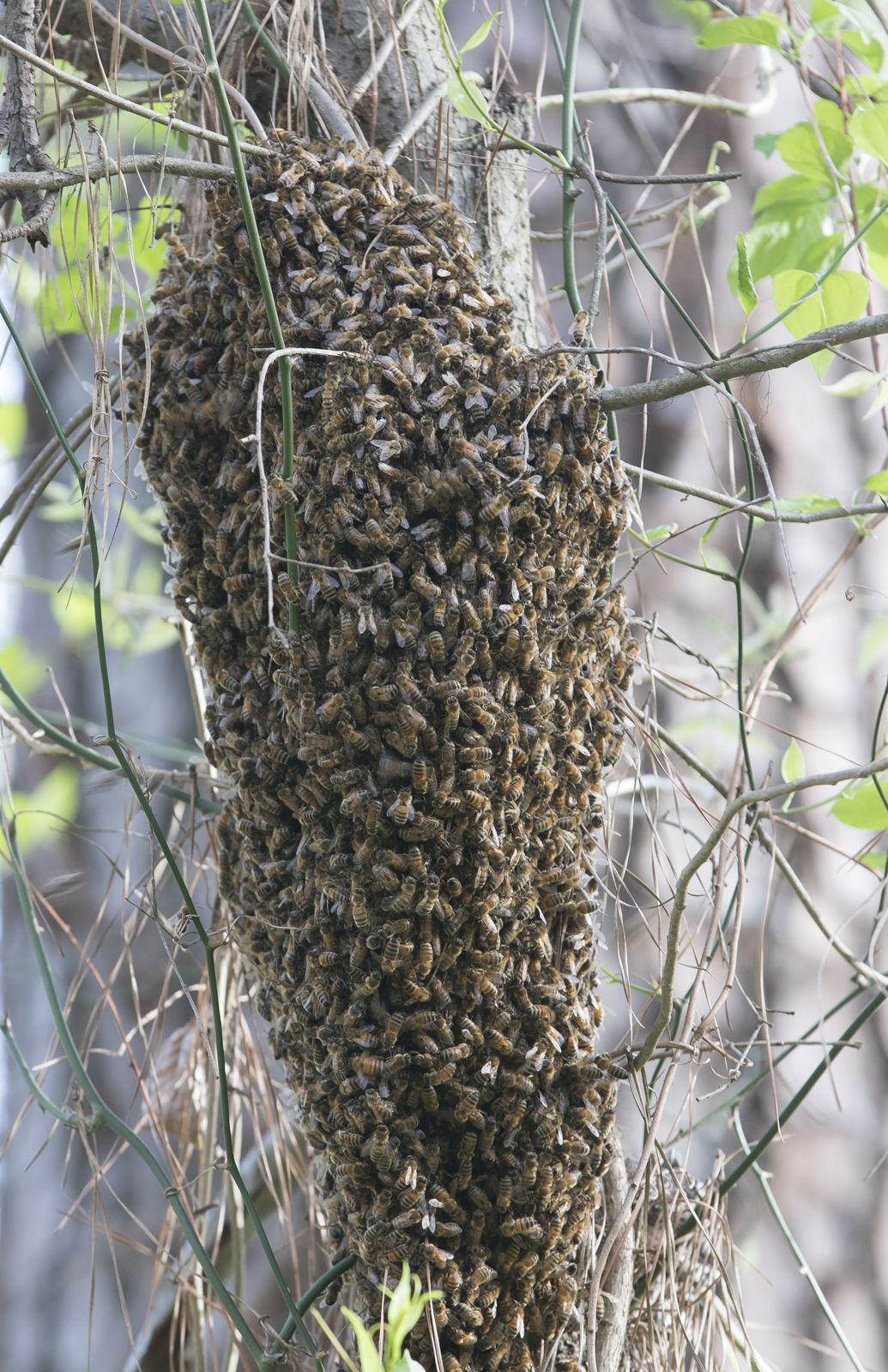
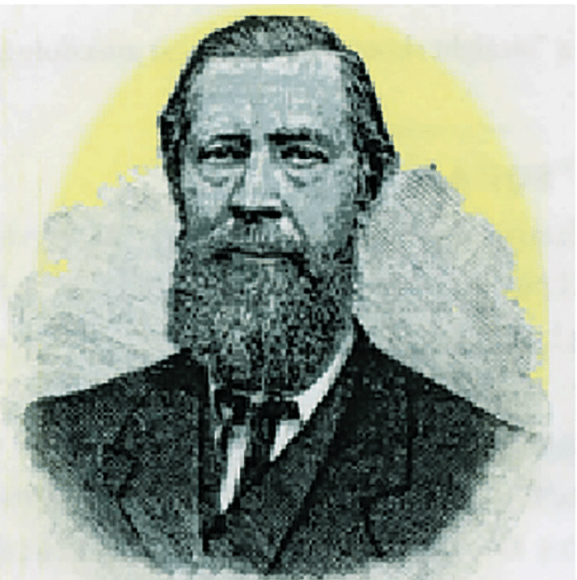
 
Everyone has a different preferred methods and tools to get ‘er done. That’s fine. What are some items you would recommend every new beekeeper place in their tool buckets, boxes, bags, etc.?
 
I’d say, besides the obvious such as your hive tool, a sugar water sprayer, and a bottle of water here are a few more things to add to your bucket:
 
large rubber bands
shims and level to level hives
extra matches
queen catcher
queen marking pen
queen cage
bread knife
honey bee gone
benadryl
bee brush
lots more!


Feel free to share this on:

  • Share on Facebook (Opens in new window) Facebook
  • Share on X (Opens in new window) X
  • Share on Pinterest (Opens in new window) Pinterest
  • Email a link to a friend (Opens in new window) Email
  • Share on LinkedIn (Opens in new window) LinkedIn
  • Share on Reddit (Opens in new window) Reddit
  • Share on Tumblr (Opens in new window) Tumblr
  • Print (Opens in new window) Print
  • Share on Telegram (Opens in new window) Telegram
  • Share on WhatsApp (Opens in new window) WhatsApp
Like Loading...

Errant Swarm Calls

29 Thursday Apr 2021

Posted by Beekeeping365 in beekeeping, management

≈ 1 Comment

Tags

beekeeping, management

honeybee-swarm

You may be called to come out and get the bees from someone’s water source. I get a few calls now and then. In the Spring they want beekeepers to come get them off the bushes. In the Summer it’s bird baths and swimming pools. Here’s a typical response I offered a gentleman who reported 20 or so bees coming to his garden pond. He was able to track them towards a wooded area close by:

“Yes sir, we have a member over that way. I doubt they are his bees as usually the bees will find the closest water source and use it exclusively. I see between the two of you there are lots of water ponds the bees would have to fly over to get the mile or so to you.

There really is no way to round up bees coming to a floral source or water. A colony of bees this time of year might have about 30,000 or more bees so 20 is just a few. Also, the queen has to be captured in order for a colony to survive. Otherwise it’s certain death for the workers captured. They have no way to reproduce without the queen and the lifespan of a worker is about 6 weeks.

Take comfort in the fact that only 1 in 6 colonies in the wild survive the winter. That means they will most likely be gone next Spring. In the meantime, also know that honey bees only sting in defense of their hive unless harassed. My mother in law lives with me and sits on our front porch where we too have a garden pond. She has come to enjoy the hum of the bees coming and going to the water source. By Fall they will stop coming and start settling down for the winter. In the Spring they have all the fluids they want in the way of nectar. So this is the only time of year they come to water sources.”

Feel free to share this on:

  • Share on Facebook (Opens in new window) Facebook
  • Share on X (Opens in new window) X
  • Share on Pinterest (Opens in new window) Pinterest
  • Email a link to a friend (Opens in new window) Email
  • Share on LinkedIn (Opens in new window) LinkedIn
  • Share on Reddit (Opens in new window) Reddit
  • Share on Tumblr (Opens in new window) Tumblr
  • Print (Opens in new window) Print
  • Share on Telegram (Opens in new window) Telegram
  • Share on WhatsApp (Opens in new window) WhatsApp
Like Loading...

Happy Birthday Charles F. Muth

23 Friday Apr 2021

Posted by Beekeeping365 in beekeeping

≈ Leave a comment

Charles F. Muth

Charles Frederich Muth was born in Germany, April 23, 1834 to Charles F. and Carolina (Schmith) Muth.  He had a brother August and a sister Carolina. August passed away in 1890 and by 1894 Carolina had married Ernest Oberheu of the Eagle Insurance Company in Cincinnati.

Charles was educated in Germany and at the age of nineteen (1853) he arrived in Cincinnati. There he clerked for three years in the grocery of S.H. Frank at the corner of Vine and Canal streets. He spent a few years in Minnesota and Kansas, engaged principally in land speculation.  Upon his return to Cincinnati (1860), he established a grocery until 1883. The grocery store changed and carried the name Charles F. Muth & Sons, dealers in seeds, honey, beeswax and apiarian supplies.

Muth Jars

Muth Honey Jars – Since square jars were listed in the Root catalog in 1879 and the name of the grocery store changed in 1883, the earliest muth jars were made between 1879 to 1883. There were only a few glass companies at this time that made the square “pickle and horseradish” jars. They were Illinois Glass of Alton, Illinois, K.G.B. in Steubenville, Ohio, Whitall Tatum & Co. of Millville, N.J., and a couple of unlisted manufacturers such as” Z” and “C.C.S.”

Charles Muth died May 16th 1898 and is buried in Spring Grove Cemetery in Cincinnati, OH

Source and for full article including other Muth inventions: Bee Culture Magazine, July 2017

Another interesting article by Emma Craib’s on her blog can be read Here.

Feel free to share this on:

  • Share on Facebook (Opens in new window) Facebook
  • Share on X (Opens in new window) X
  • Share on Pinterest (Opens in new window) Pinterest
  • Email a link to a friend (Opens in new window) Email
  • Share on LinkedIn (Opens in new window) LinkedIn
  • Share on Reddit (Opens in new window) Reddit
  • Share on Tumblr (Opens in new window) Tumblr
  • Print (Opens in new window) Print
  • Share on Telegram (Opens in new window) Telegram
  • Share on WhatsApp (Opens in new window) WhatsApp
Like Loading...

Tending bees is a lesson in looking forward

23 Friday Apr 2021

Posted by Beekeeping365 in beekeeping, management

≈ 3 Comments

Tags

beekeeping, management

Bee stuff

Let’s say you were going to open a new business and wanted to hit the market with a bang on day one of shopping season – say black Friday or whatever. You’d have to start preparing for that day ahead of time. How far ahead of time? You really don’t want to hire employees too soon and not have anything for them to do for months. Instead you want to hire them just enough ahead of time to get them oriented to their new jobs, well trained, and ready to service mobs of customers exactly on your Grand Opening date.

The same applies to your honey bees. Grand Opening date is the day the nectar flow begins in earnest. We can never know exactly when that date is as nature deals us a slightly different set of circumstances each year. But seasoned beekeepers in your area can give you a good estimate of the date nectar flow begins and ends in your area. Your job, as the beekeeper, is to have a full staff of employees ready and trained to gather that nectar starting on day one of the season. You’ll also have to worry about employee retention and expansion over the course of the nectar season. Finally, you’ll have to curb hiring as the season diminishes so that you’re not squandering resources on employees that will never gather nectar.

Here in the Midlands of South Carolina most seasoned beekeepers recognize the beginning of the spring nectar flow as April 1st. For the purpose of this article we’ll say April 1st and you can adjust for your location and observations. A 3-week-old foraging bee available to work on April 1st has already graduated through the various stages of nurse bee, house bee, wax producer, etc. Prior to that she spent 21 days as an egg, larva, and pupae. So exactly when did you need your queen to lay that egg to produce that foraging bee available for work on April 1st? Bee math tells us she needed to lay that egg on approximately February 14. This is easy to remember as it is Nicolai Nasonov’s birthday. But wait, if the queen lays 1,200 eggs per day and does so on February 14 that results in 1,200 foraging bees on April 1st – but we want more than 1,200 bees don’t we? No worries, she didn’t go from 0 to 1,200 in one day. Instead, she’s been increasing her output since the winter solstice. But my point is February is critical for the beekeeper to stimulate production if he or she wants to have a full staff of foraging bees to get the job done in a manner that produces excess honey.

The same math can be used to determine when to start curtailing hiring new employees (bees) during the nectar flow. Our Midlands nectar flow ends approximately June 1st – a brief 2 months from its start date. An egg laid on April 19th will become a foraging bee on June 1st. That’s simply too late to contribute to nectar gathering. But that same bee will eat as much as any other bee in the hive and required the same amount of nutrition and work to create. Now here’s the dilemma, that colony is going to be in full tilt workaholic mode during the course of the nectar flow. It’s all hands on deck and as long as nectar is coming through the front door the queen will continue to lay eggs. The colony will continue to build and build bees because they have all the resources to do so. And the summer solstice isn’t until June 21st so that’s of no help. If you’re still hiring bees after April 19th you’re setting yourself up for having to feed those non-productive bees during the remainder of the nectar flow as well as the coming summer dearth. That means less excess honey for you.

What’s a beekeeper to do? A couple ideas might be to use that nectar flow time after April 19th to create a brood break by caging the queen. This would benefit the colony by reducing mite count via a brood break. A second option might be re-queening your hive allowing for a brood break. Moving your queen across the yard and allowing them to requeen would provide an almost perfect 25 or so days with out new brood. (Your queen across the yard is your failsafe.) Another option might be to “steal” frames of brood and get an early start on summer splits. The number of cells in a deep frame is around 7,000 although there is honey and pollen taking up some of the cells. Nevertheless, taking a frame of open brood, a frame of closed brood, and a frame of honey will hardly set an expanding colony back much and should result in an increase in your honey yield due to fewer mouths to feed. Plus you’ll get another colony, a new queen, a break in mite production, and a backup colony should anything go wrong in the fall. And with the nectar flow still in progress everything goes easier – wait until dearth comes and the same tasks will be much more difficult.

I’ll end here. Tending bees is a lesson in looking forward.

Feel free to share this on:

  • Share on Facebook (Opens in new window) Facebook
  • Share on X (Opens in new window) X
  • Share on Pinterest (Opens in new window) Pinterest
  • Email a link to a friend (Opens in new window) Email
  • Share on LinkedIn (Opens in new window) LinkedIn
  • Share on Reddit (Opens in new window) Reddit
  • Share on Tumblr (Opens in new window) Tumblr
  • Print (Opens in new window) Print
  • Share on Telegram (Opens in new window) Telegram
  • Share on WhatsApp (Opens in new window) WhatsApp
Like Loading...

Happy Birthday Stephen Taber III

17 Saturday Apr 2021

Posted by Beekeeping365 in beekeeping, birthday, birthdays, famous beekeepers

≈ 1 Comment

Tags

beekeeper birthdays, beekeeping, famous beekeepers, South Carolina beekeeper, Stephen Taber III

steven taber III

Source:  Wikipedia

Stephen Taber III. (17 April 1924 – 22 May 2008) was an American apiologist, noted authority and author in the field of artificial insemination of queen bees for the purpose of developing disease resistant and gentle bee colonies.

Mr. Stephen Taber III, was a world-recognized honey bee researcher. He was born on April 17, 1924, to Dr. Stephen Taber II and Bessie Ray Taber of Columbia, S.C. His father was the South Carolina State Geologist from 1912 to 1947 and the head of the Department of Geology at the University of South Carolina, where he was involved in the engineering of the Santee Cooper Dam among many other projects.

Steve became interested in bees at an early age, using the banks of the Broad River in Columbia as his research yard. Steve’s first commercial beekeeping experience was in 1941 in upstate New York where he worked one summer making $30 a month. He continued working in NY and later Wisconsin where he claimed to have learned much of the basics of beekeeping.

He graduated from University High School in Columbia, SC in 1942 and enlisted in the U.S. Navy as an Aviation Cadet in October that same year. While serving in the Navy, he taught beekeeping as a sideline job at several local universities. Steve was later honorably discharged from the Navy in September 1945 after the end of World War II. After the Navy, Steve attended the University of Wisconsin. In 1950, he graduated from the University of WI in Madison, with a Bachelor of Science, specializing in Bee Research under the tutelage of Professor C.L. Farrar.

His first position was with the Entomology Research Division of USDA as an assistant to Dr. O. Mackenson in Baton Rouge, La. This is where he met his longtime friend Murray S. Blum. It was during this time that Steve pioneered the use of instrumental (artificial) insemination, undertaking some of the first seminal and biochemical investigations carried out with invertebrate spermatozoa.

After 15 years in Baton Rouge, he was transferred to the USDA Bee Research Center in Tucson, Arizona, where, in his words, “I was my own instructor.” Steve traveled extensively teaching, lecturing, and researching.[1][2]

Some of his students are leaders in the world of beekeeping research today. His book, Breeding Super Bees,[3] will attest to some of his research and his studies around the world. His articles and research publications are still being referenced by honey bee researchers worldwide. Articles written by Steve, and his collaborative efforts with others, appeared in numerous publications for more than 50 years. They include American Bee Journal, Gleanings in Bee Culture, Journal of Economic Entomology, Journal of Apicultural Research and Beekeepers Quarterly.

From his obituary:

“The life and legacy of Steve Taber is one that will remain in the hearts of those who knew him. His knowledge and mannerisms have molded the lives of all those he touched. He will never be forgotten.

One of his students writes: “Taber was the most brilliant and wonderfully eccentric bee researcher, ever. He also was the best teacher; he made us question everything we knew or took for granted, and then transformed those questions into creative and constructive research problems – all while teasing and yelling and laughing wildly and free.”

References

  1. Taber, Steve; Howard G. Spangler (1970). “Defensive Behavior of Honey Bees Towards Ants”. Psyche. 77 (2): 184–189. doi:10.1155/1970/49131. 
  2. Taber III, Stephen (1980). “Bee Behavior“. Beekeeping in the United States Agriculture Handbook. 335. 
  3. Taber, Steve (1987). Breeding Super Bees. Ohio: A.I.Root Co.

Feel free to share this on:

  • Share on Facebook (Opens in new window) Facebook
  • Share on X (Opens in new window) X
  • Share on Pinterest (Opens in new window) Pinterest
  • Email a link to a friend (Opens in new window) Email
  • Share on LinkedIn (Opens in new window) LinkedIn
  • Share on Reddit (Opens in new window) Reddit
  • Share on Tumblr (Opens in new window) Tumblr
  • Print (Opens in new window) Print
  • Share on Telegram (Opens in new window) Telegram
  • Share on WhatsApp (Opens in new window) WhatsApp
Like Loading...

Happy Birthday Moses Quinby

16 Friday Apr 2021

Posted by Beekeeping365 in beekeeping history, birthday, birthdays, famous beekeepers

≈ Leave a comment

Tags

beekeeper birthdays, beekeeping authors, beekeeping history, E-book, famous beekeepers, Moses Quinby, Mysteries of Beekeeping Explained

Source: Historical Honeybee Articles – Beekeeping History

11149263_828301807224317_7693900500957983078_n

Happy Birthday ~ Moses Quinby, April 16, 1810

Moses Quinby is known as the “Father of Commercial Beekeeping in the United States,” Among his innovations in beekeeping, he is credited with the invention of the modern bee smoker with bellows. He is also the author of the book Mysteries of Bee-Keeping Explained (1853). At his peak, he kept over 1200 hives of bees.

Moses Quinby was born April 16, 1810, in Westchester Co.,N. Y. While a boy he went to Greene Co., and in 1853 from thence to St. Johnsville, Montgomery Co., N. Y., where he remained till the time of his death, May 27, 1875.

Mr. Quinby was reared among Quakers, and from his earliest years was ever the same cordial, straightforward, and earnest person. He had no special advantages in the way of obtaining an education, but he was an original thinker, and of that investigating turn of mind which is always sure to educate itself, even without books or schools. When about twenty years old he secured for the first time, as his own individual possession, sufficient capital to invest In a stock of bees, and no doubt felt enthusiastic in looking forward hopefully to a good run of “luck” in the way of swarms, so that he could soon “take up” some by the aid of the brimstone-pit. But “killing the goose that laid the golden egg” did not commend itself to his better judgment, and he was not slow to adopt the better way of placing boxes on the top of the hive, with holes for the ascent of the bees, and these boxes be improved by substituting glass for wood in the sides, thus making a long stride in the matter of the appearance of the marketable product. With little outside help, but with plenty of unexplored territory, his investigating mind had plenty of scope for operation, and he made a diligent study of bees and their habits. All the books he could obtain were earnestly studied, and everything taught therein carefully tested. The many crudities and inaccuracies contained in them were sifted out as chaff, and after 17 years’ practical experience in handling and studying the bees themselves as well as the books, he was not merely a bee-keeper but a bee-master; and with that philanthropic character which made him always willing to impart to others, he decided to give them, at the expense of a few hours’ reading, what had cost him years to obtain, and in 1853 the first edition of Mysteries of Beekeeping Explained made its appearance. Thoroughly practical in character and vigorous in style, it at once won its way to popularity. From the year 1853, excepting the interest he took in his fruits and his trout-pond, his attention was wholly given to bees, and he was owner or half-owner of from 600 to 1200 colonies, raising large crops of honey. On the advent of the movable frame and Italian bees, they were at once adopted by him, and in 1862 he reduced the number of his colonies, and turned his attention more particularly to rearing and selling his Italian bees and queens. In 1865 he published a revised edition of his book, giving therein the added experience of 12 years. He wrote much for agricultural and other papers, his writings being always of the same sensible and practical character. The Northeastern Bee-keepers’ Association, a body whose deliberations have always been of importance, owed its origin to Mr. Quinby, who was for years its honored president—perhaps it is better to say its honoring president, for it was no little honor, even to so important a society, to have such a man as president. In 1871 Mr. Quinby was president of the N. A. B. K. A.

It Is not at all impossible that the fact that so many intelligent beekeepers are found in New York is largely due to there being such a man as Mr.Quinby in their midst. The high reverence in which he was always held by the bee-keepers, particularly those who knew him best, says much, not only for the bee-master, but for the man.

On the occasion of the first meeting of the Northeastern Society, after the death of Mr. Quinby, Capt. J. E. Hetherington said in his address, in a well-merited eulogium on Mr. Quinby: “Of the great amount of gratuitous labor performed by him, to advance the science of bee culture, the fraternity as a whole will never know, nor can they realize the information imparted to the numbers who flocked to see him personally, especially in the busy season…

“His life has been in every sense a life of usefulness and not wholly devoted to the interests of bee culture, for he took it living interest in any movement he thought would benefit society : and as an advocate and helper in the temperance work he did no mean service. He possessed true kindness of heart, and regarded it as a religious duty to make all better and happier with whom he came in contact, and regarded that life a failure that did not leave the world the better for having lived.


Via: Historical Honeybee Articles – Beekeeping History

Feel free to share this on:

  • Share on Facebook (Opens in new window) Facebook
  • Share on X (Opens in new window) X
  • Share on Pinterest (Opens in new window) Pinterest
  • Email a link to a friend (Opens in new window) Email
  • Share on LinkedIn (Opens in new window) LinkedIn
  • Share on Reddit (Opens in new window) Reddit
  • Share on Tumblr (Opens in new window) Tumblr
  • Print (Opens in new window) Print
  • Share on Telegram (Opens in new window) Telegram
  • Share on WhatsApp (Opens in new window) WhatsApp
Like Loading...

Happy Birthday Gilbert M. Doolittle (free e-books)

14 Wednesday Apr 2021

Posted by Beekeeping365 in beekeeping, birthday, birthdays, famous beekeepers

≈ 1 Comment

Tags

beekeeping, beekeeping authors, birthday, famous beekeepers, Gilbert M Doolittle

Doolittle_Gilbert

Birth: April 14th, 1846

Death: June 3rd, 1918

Gilbert M. Doolittle (1846-1918) was a 19th-century apiarist and author considered to be the father of commercial queen rearing. His book Scientific Queen-Rearing: As Practically Applied (Thomas G. Newman: Chicago, 1888) was reissued over several editions.

Doolittle also wrote ​​several brochures on beekeeping, and submitted regular articles to Gleanings in Bee Culture over many years. His involvement coincided with a great expansion of beekeeping knowledge in the United States.

Bibliography

  • Scientific Queen-Rearing: As Practically Applied pp. 169. Chicago: Newman & Son (1889).
  • Description of the Hive I Use, and My Management of Bees pp. 15. Chicago: Newman & Son (1900).
  • Management of Out-Apiaries pp. 36. (4th ed.) Medina, Ohio: A. I. Root (1913).

Source: http://beekeeping.wikia.com/wiki/Gilbert_M._Doolittle

From the Online Books Page: Online books by Gilbert M. Doolittle:

  • [X-Info] Doolittle, Gilbert M., 1846-1918: Management of out-apiaries… (Medina, Ohio, The A.I. Root co., 1913) (page images at HathiTrust)
  • [X-Info] Doolittle, Gilbert M., 1846-1918: Scientific queen-rearing as practically applied; being a method by which the best of queen-bees are reared in perfect accord with nature’s ways. (Chicago, G.W. York & Co., 1901) (page images at HathiTrust)
  • [X-Info] Doolittle, Gilbert M., 1846-1918: Scientific queen-rearing as practically applied; being a method by which the best of queen-bees are reared in perfect accord with nature’s ways. (Chicago, Thomas G. Newman & Son, 1889), also by Charles C. Miller Memorial Apicultural Library WU. (page images at HathiTrust)
  • [X-Info] Doolittle, Gilbert M., 1846-1918: Scientific queen-rearing as practically applied : being a method by which the best of queen-bees are reared in perfect accord with nature’s ways / (Chicago : George W. York, 1899), also by Charles C. Miller Memorial Apicultural Library WU. (page images at HathiTrust)
  • [X-Info] Doolittle, Gilbert M., 1846-1918: Scientific queen-rearing as practically applied; being a method by which the best of queen-bees are reared in perfect accord with nature’s ways. (Hamilton, Ill. : American Bee Jr. ;, 1915), also by Charles C. Miller Memorial Apicultural Library WU. (page images at HathiTrust)
  • [X-Info] Doolittle, Gilbert M., 1846-1918: Scientific queen-rearing, practically applied, being a method by which the best of queen-bees are reared in perfect accord with nature’s ways : for the amateur and veteran in bee-keeping / (Chicago : G. W. York, 1909) (page images at HathiTrust)
  • [X-Info] Doolittle, Gilbert M., 1846-1918: A year’s work in an out-apiary, or, An average of 114 1/2 pounds of honey per colony in a poor season, and how it was done / (Medina, Ohio : A.I. Root, 1908) (page images at HathiTrust; US access only)
  • [X-Info] Doolittle, Gilbert M., 1846-1918: A year’s work in an out-apiary, or, an average of 114 1/2 pounds of honey per colony, in a poor season, and how it was done / (Medina, Ohio : A.I. Root, 1908) (page images at HathiTrust)
  • [X-Info] Doolittle, Gilbert M., 1846-1918: A year’s work in an out-apiary, or an average of 114 1/2 pounds of honey per colony in a poor season, and how it was done. / (Medina, Ohio, A.I. Root, 1909), also by Charles C. Miller Memorial Apicultural Library WU. (page images at HathiTrust)

Feel free to share this on:

  • Share on Facebook (Opens in new window) Facebook
  • Share on X (Opens in new window) X
  • Share on Pinterest (Opens in new window) Pinterest
  • Email a link to a friend (Opens in new window) Email
  • Share on LinkedIn (Opens in new window) LinkedIn
  • Share on Reddit (Opens in new window) Reddit
  • Share on Tumblr (Opens in new window) Tumblr
  • Print (Opens in new window) Print
  • Share on Telegram (Opens in new window) Telegram
  • Share on WhatsApp (Opens in new window) WhatsApp
Like Loading...

Happy Birthday Harry H. Laidlaw, Jr.

12 Monday Apr 2021

Posted by Beekeeping365 in beekeeping, birthday, birthdays, famous beekeepers, honey bee biology, queens

≈ 4 Comments

Tags

beekeeping, famous beekeepers, Harry H. Laidlaw, honey bee biology, queens

harrylaidlawwithbees

Harry Hyde Laidlaw Jr. (April 12, 1907-2003)
Father of Honey Bee Genetics

Bee biologist Harry Hyde Laidlaw Jr. (1907-2003), known as “the father of honey bee genetics,” served on the UC Davis Department of Entomology faculty from 1947 until his retirement in 1974. Long after his retirement, however, the professor continued his research and outreach programs, publishing his last scientific paper at age 87 and his last book at 90. He died at age 96 at his home in Davis.

Childhood and Career Development
Born April 12, 1907 in Houston, Harry spent his boyhood and teen years in the Southeast: Virginia, Florida and Louisiana. In his childhood, he developed a keen interest in bee breeding and worked with his grandfather, Charles Quinn. They experimented with mating queen bees and control breeding and developed what became known as the Quinn-Laidlaw hand-mating method.

Harry H. Laidlaw Jr.In 1929, while working in Baton Rouge, Laidlaw was encouraged by his boss to attend Louisiana State University. He completed his master’s degree in entomology in 1934 from Louisiana State University and received his doctorate in genetics and entomology form the University of Wisconsin in 1939. Two years later he was inducted into the U.S. Army, commissioned. and served as the Army entomologist for the First Service Command in Boston. There he met Ruth Collins, whom he married in 1946. They lived in New York City where he worked as a civilian entomologist for the Army. His career with the UC Davis Department of Entomology began in 1947.

Harry H. Laidlaw Jr.Laidlaw is best known for developing artificial insemination technology for honey bees. His contributions enabled selective breeding of honey bees and pioneered the fundamental study of insect genetics. He authored numerous scientific publications and four books on honey bee genetics and breeding.
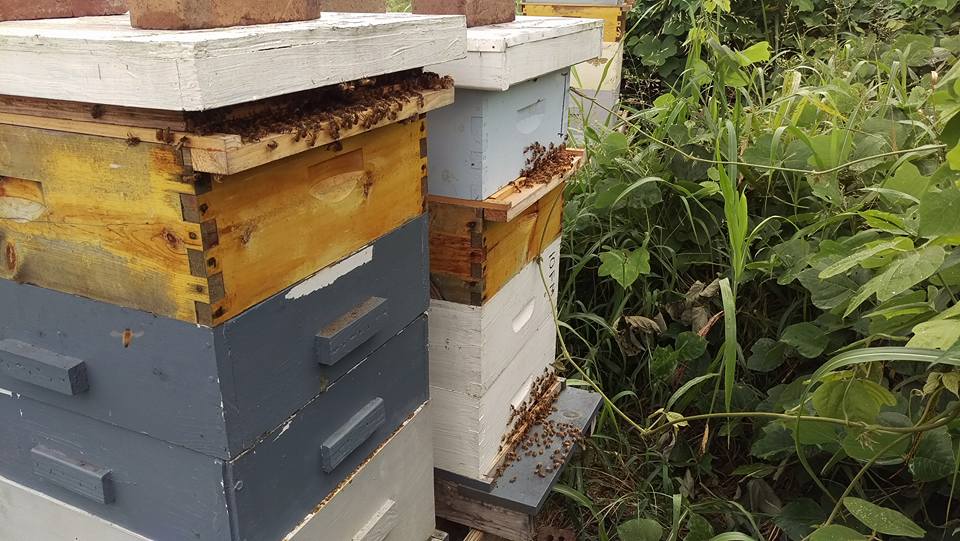
Laidlaw studied pests and diseases and conducted research on the breeding of queen bees and on re-queening bee colonies. His research on artificial insemination of bees inspired poet E.B. White to write a poem, “Song of the Queen Bee,” published in the New Yorker magazine in 1945. It included the lines “What boots it to improve a bee, if it means an end to ecstasy.”

International Awards
Laidlaw received national and international awards for his research and service to the university, agriculture and the beekeeping industry. He was elected a fellow of the American Association for the Advancement of Science in 1955, and the Entomological Society of America (ESA) in 1991. At UC Davis, he was the first associate dean for research (1969) in the College of Agricultural and Environmental  Sciences. The College of Ag selected him for its Award of Distinction in 1997.

Laidlaw was awarded the Western Apiculture Society’s “Outstanding Service to Beekeeping” award in 1980, being cited as “one of the great scientists in American agriculture.” In 1981 he won the C.W. Woodworth Award of the Pacific Branch of the ESA.

Laidlaw published his classic text Queen Rearing in 1950, in collaboration with J. E. Eckert. He published his last book, Queen Rearing and Bee Breeding, written in collaboration with Robert Page, former chair of the UC Davis Department of Entomology, in 1997

Although retired, in 1980-85, he established a honey bee breeding program for the Egyptian Ministry of Agriculture as part of a joint UC-Egypt agricultural development program.

Naming of Laidlaw Facility
In 2001, the Bee Biology Laboratory at UC Davis was renamed the Harry H. Laidlaw Jr. Honey Bee Research Facility. Local artist and sculptor Donna Billick and entomologist-artist Diane Ullman designed the sign at the facility.

Source: Harry H. Laidlaw Papers from the UC Davis Special Collections
Biographical materials, correspondence, writings, research materials, course materials, printed materials, memorabilia, photographs.

Source: Robert E. Page Jr.; Harry Laidlaw’s daughter Barbara Murphy; and the UC Davis Special Collections

Feel free to share this on:

  • Share on Facebook (Opens in new window) Facebook
  • Share on X (Opens in new window) X
  • Share on Pinterest (Opens in new window) Pinterest
  • Email a link to a friend (Opens in new window) Email
  • Share on LinkedIn (Opens in new window) LinkedIn
  • Share on Reddit (Opens in new window) Reddit
  • Share on Tumblr (Opens in new window) Tumblr
  • Print (Opens in new window) Print
  • Share on Telegram (Opens in new window) Telegram
  • Share on WhatsApp (Opens in new window) WhatsApp
Like Loading...

Upper Entrances in Beehives

08 Thursday Apr 2021

Posted by Beekeeping365 in beekeeping, beekeeping equipment, equipment, hacks, management

≈ 6 Comments

Tags

bee hive, beekeeping, beekeeping diy, hacks, management, upper entrances

17499541_10210265424166859_8800823872076473751_n

Upper entrances. Increasing efficiency of nectar delivery to the hive means more honey stored. George Imirie developed a shim to add entrances between boxes. This is an upgraded version and the idea came to me from a friend. An advantage over Imirie’s design is the space between boxes is reduced to 3/8″ thereby reducing burr comb. I modified the measurements and added reducers.

Additional benefits include:

-They allow upper access and reduce travel across the brood nest possibly decreasing brood nest congestion and swarming.                                                                                      -They add ventilation.
-They cut down traffic across the brood to the honey supers allowing better access thus some think an increase in honey stores.
-If doing comb honey they cut down staining
– And if using an excluder it may help encourage storing in the supers.

Cost is less than a buck each.

Read more about my upper entrances here: Goals in Beekeeping and Upper Entrance

17458085_10210263468757975_9078542243212581731_n
17626382_10210263469597996_154388946525573733_n
17629767_10210263471598046_4373555415412464320_n
17626109_10210263470198011_769635262191779770_n
17458069_10210263470838027_5211419856588459311_n
17630037_10210263470518019_7472918445709897056_n

Feel free to share this on:

  • Share on Facebook (Opens in new window) Facebook
  • Share on X (Opens in new window) X
  • Share on Pinterest (Opens in new window) Pinterest
  • Email a link to a friend (Opens in new window) Email
  • Share on LinkedIn (Opens in new window) LinkedIn
  • Share on Reddit (Opens in new window) Reddit
  • Share on Tumblr (Opens in new window) Tumblr
  • Print (Opens in new window) Print
  • Share on Telegram (Opens in new window) Telegram
  • Share on WhatsApp (Opens in new window) WhatsApp
Like Loading...

Congestion in the Brood Nest

07 Wednesday Apr 2021

Posted by Beekeeping365 in beekeeping, management, spring buildup

≈ 2 Comments

Tags

beekeeping, congestion in the brood nest, management, nurse bees, spring management, swarm prevention

17972343_10210427138129607_4961063145897402465_oCongestion, which leads to swarm behavior. And a misunderstood occurrence by new beekeepers leading to failed attempts to control swarm behavior.

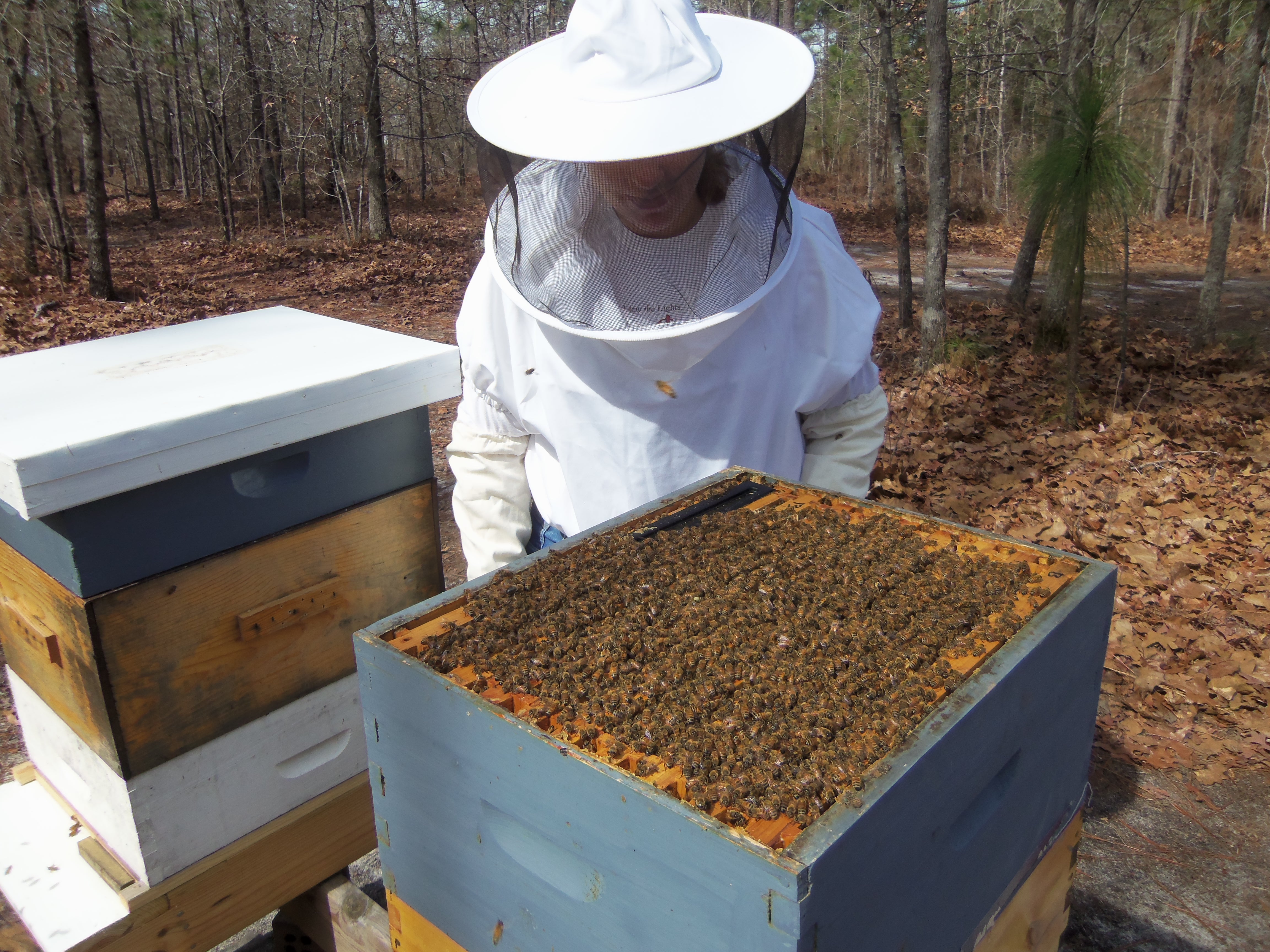
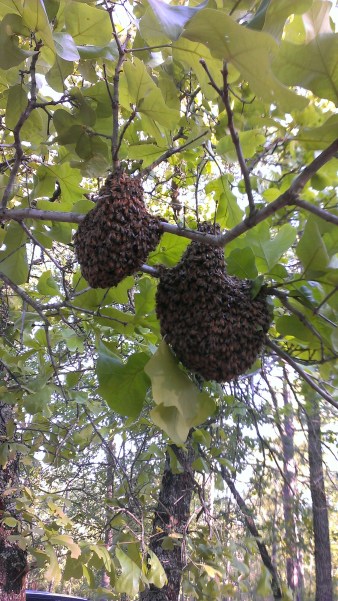
I used to think congestion was not enough room within the hive to comfortably house all of the bees. Kinda like when your cousin comes to town with his 6 kids and stays for a week. Apparently, this is in error. Adding an empty box with foundation may help a little because the wax producing aged bees may go up and draw some wax but that’s not it, really. I mean your cousin’s kids are still holed-up in your bathroom even if you make them sleep on the back porch. With my cousin’s kids it’s not congestion in the house, it’s congestion in my bathroom. With the bees it’s not congestion in the hive, it’s congestion in the brood nest.

So, I’ve read about opening up the brood nest with an empty frame. I tried this a few years ago (2015) only I couldn’t bear to place an empty frame in there so I placed a frame with foundation. Mistake again. Placing a frame of foundation only split the brood nest up with a wall of wax causing more problems rather than helping.

So a couple years ago (2016) I thought maybe it’s time for me to switch to nine frames since I have drawn comb now. That has to be more “open” right? Turns out I got it wrong again. What this would do is reduce the number of frames for bees to hang out making them more likely to be crowded on each frame.

Okay, so what I understand now, I think, is (how can I really know anything when it comes to bees?) that it is nurse bee congestion in the brood area, not overall bee congestion. And it is not simply too many nurse bees. I mean it IS too many nurse bees, but more importantly it is unemployed nurse bees in the brood nest. The nurse bees are getting in each other’s way. There is an overabundance of out-of-work nurse bees for the amount of work available. It’s like ladies night at the local bar and there are only four single guys in the bar.

So, what does a colony do when it has too many nurse bees, which also happen to be coming into wax creating age? Swarm, that’s what.

So how do we reduce their unemployment and keep them in the hive? Give them work. 1) Add drawn comb in the brood area for the queen to lay in, producing more work space and more employment opportunities for nurse bees as well as spreading them out (reducing congestion). 2) Also add drawn comb above the brood nest for the bees to store nectar in thereby reducing the tendency to backfill the brood nest with nectar.

All this adding of drawn comb into critical areas promotes more work space, egg laying, and work opportunities. It also creates disruption in the hive, something I consider beneficial during the period when bees are contemplating swarming. It may also allow for Queen pheromone to be more equally distributed amongst the workers which satisfies another swarm theory. If this sounds similar to what performing a Demaree provides then you’d be correct. 

Try adding workable space in the brood nest for your bees with drawn comb. If you don’t have drawn comb available, try placing a frame with a starter strip in the brood nest. But never use foundation which results in walling off the queen’s travel and thereby increasing congestion. Keep them working!

Good luck with your bees!

Feel free to share this on:

  • Share on Facebook (Opens in new window) Facebook
  • Share on X (Opens in new window) X
  • Share on Pinterest (Opens in new window) Pinterest
  • Email a link to a friend (Opens in new window) Email
  • Share on LinkedIn (Opens in new window) LinkedIn
  • Share on Reddit (Opens in new window) Reddit
  • Share on Tumblr (Opens in new window) Tumblr
  • Print (Opens in new window) Print
  • Share on Telegram (Opens in new window) Telegram
  • Share on WhatsApp (Opens in new window) WhatsApp
Like Loading...

Free E-Book: Swarm Control by George Demuth

06 Saturday Mar 2021

Posted by Beekeeping365 in beekeeping

≈ 2 Comments

Swarm Control by George Demuth

George Demuth’s birthday was on Tuesday of this week and no doubt many of you spent the day re-reading his book titled, Swarm Control. At 36 pages it’s a quick read. Although it was published in 1921, the bees are unchanged and exhibit the same behaviors as they did then. An excerpt:

“A colony of bees that is normal and prosperous increases Its brood in the spring as its adult population increases, either until all the space available for brood rearing is occupied or until the queen reaches the maximum of her capacity In egg laying. At first only worker brood is reared but as the colony increases in strength the rearing of drone brood is begun, thus providing for male bees in anticipation of swarming. Finally, when the brood nest becomes crowded with emerging and recently emerged young bees and the combs are well filled with brood, if nectar in sufficient quantity is available, several queen cells are started and eggs are placed in them, this being the first definite preparation for swarming. About nine days from the time the eggs are laid the queen larvae have developed to the point at which the queen cells are sealed, and this is about the time the swarm usually is-sues. The exact time of the issuing of the swarm depends to some extent upon the weather, issuing sometimes being postponed by inclement weather and sometimes, especially in the case of Italian bees, being hastened by extremely hot weather. In nature there is a marked slowing down in work of the colony after the queen cells have been started preparatory to swarming, especially during the last few days previous to the issuing of the swarm, when the field workers in increasing numbers remain in the hive instead of working in the fields.

In some cases in nature the instinct to gather nectar is almost entirely subordinated for several days at this time, the swarming instinct apparently becoming dominant. In well-managed colonies this is not universally true. When the swarm issues, a varying proportion of the adult bees, together with the old queen, fly from the hive, leaving in the original hive a greatly reduced number of adult worker bees, a large number of un-emerged young bees, and several un-emerged young queens. Some of the drones accompany the swarm, but many of them remain in the hive.

After circling in the air the swarming bees form a dense cluster on some convenient support, and after an interval they break the cluster and fly to a chosen abode for the inauguration of a new colony. After establishing themselves in a new home the bees begin almost immediately to build comb, the queen begins to lay eggs, and three weeks later young bees be- gin to emerge from the cells.” Read the book here:

https://archive.org/details/cu31924062872969/mode/2up

Feel free to share this on:

  • Share on Facebook (Opens in new window) Facebook
  • Share on X (Opens in new window) X
  • Share on Pinterest (Opens in new window) Pinterest
  • Email a link to a friend (Opens in new window) Email
  • Share on LinkedIn (Opens in new window) LinkedIn
  • Share on Reddit (Opens in new window) Reddit
  • Share on Tumblr (Opens in new window) Tumblr
  • Print (Opens in new window) Print
  • Share on Telegram (Opens in new window) Telegram
  • Share on WhatsApp (Opens in new window) WhatsApp
Like Loading...

Sustainable Beekeeping thru Nucleus Colonies

01 Monday Mar 2021

Posted by Beekeeping365 in beekeeping, beekeeping management, beekeeping seasons, education, management, seasons

≈ Leave a comment

Tags

beekeeping, education, nucleus hives, seasons, spring management

Something for the second-year beekeeper or anyone who has overwintered hives. If you are still relatively new to beekeeping, perhaps having successfully overwintered a colony or colonies, the concept of two and a half hives is a good next step. Having and managing a nucleus hive is a great learning opportunity as well as a valuable resource should one of your production colonies develops problems. And it’s just fun. Nucleus hives are a pleasure to work and help you develop your assessment and inspection techniques. And finally, it’s your next step to never buying bees again!
 
Some time ago I listened to a local beekeeper give a lecture about flexibility in beekeeping. One of the points of his lecture was going with the natural rhythm of the bees and nature. Experienced beekeepers, having kept bees over many seasons, know these things. Spring is the time of increase, a time of plenty, growth, and expansion. It is a time of natural increase. Summer follows here in the South Carolina Midlands with dearth and a time for the bees to tighten the belt on resources. Fall and Winter are times when the bees depend on stored resources. This is also when the stress on the hive is greatest due to the climate, pest pressures, viruses, and lack of food stores all of which sometimes leads to colony failure.
 
Going with the flux described above means making increase when the bees want to make increase. The beekeeper goes with the flow and capitalizes on the ease with which nature and the bees expand during times of plenty. The idea being to capitalize during times of plenty so you too, the beekeeper, have resources during the harder times of seasons ahead.
 
Dr. Dewey Caron of Oregon State, “Two and a Half Hives”
 
Dr. Larry Connor, “Two and a Half Hives”
 
Joe Lewis on “Sustainable Beekeeping thru Nucleus Colonies”
 

Feel free to share this on:

  • Share on Facebook (Opens in new window) Facebook
  • Share on X (Opens in new window) X
  • Share on Pinterest (Opens in new window) Pinterest
  • Email a link to a friend (Opens in new window) Email
  • Share on LinkedIn (Opens in new window) LinkedIn
  • Share on Reddit (Opens in new window) Reddit
  • Share on Tumblr (Opens in new window) Tumblr
  • Print (Opens in new window) Print
  • Share on Telegram (Opens in new window) Telegram
  • Share on WhatsApp (Opens in new window) WhatsApp
Like Loading...

Working With the Bees’ Natural Tendencies

25 Thursday Feb 2021

Posted by Beekeeping365 in beekeeping, honey bees, management

≈ Leave a comment

Tags

beekeeping, honey bees, management

100_1386

(All beekeeping is local. The dates given below are guidelines for the Midlands of South Carolina. Adjust to your local area as needed.)

This time of year both beekeepers and the honey bees are working towards the same short term goals but for different reasons.

Let’s start with some bee math. We can expect a bee born this time of year to have a life expectancy of approximately 5 or 6 weeks. Of those 6 weeks only approximately 3 weeks will be spent as a forager.

We also know, based on information provided to us by our seasoned mentors, that here in the Midlands we can expect our nectar flow to begin, in earnest, around late March / early April and to last approximately until the first week of June.

To gather the greatest amount of nectar (ultimately honey) and to get the most comb drawn during that 2 month window of strong nectar flow we must have all hands on deck on day one of the nectar flow. Meaning a colony at its peak of nectar gathering abilities, fully staffed to handle the challenge of millions of blooms occuring in a short period of time. (Think of it as having enough wait staff in a restaurant just prior to dinner hour. Too few staff and things just don’t get done.)

The bees want the same thing we do at the same time. They want a full staff on day one of the nectar flow. Missing the mark and showing up with a full staff at the end of the nectar flow is useless and, in fact, a burden on the colony’s ability to feed lots of bees after the nectar is gone.

So, it seems we have a mutual goal between beekeeper and honey bee – lots of bees on day one of what amounts to their work shift.

Let’s make a best guess as to when Day One occurs based on history as given to us by our mentors and say it’s April 1st here in the Midlands. Should I run an ad in Free Times advertising for Help Wanted to help with this year’s nectar flow?

“Seasonal Help Wanted: Honey Bees to help gather nectar during this year’s nectar flow. Must be willing to travel and be in foraging phase of life.”

No, probably won’t work. But using bee math and the bees own instincts for this time of year we can determine how to get those bees. I need a three week old bee available on April 1st. Given it takes 21 days from egg to birth and then allowing for the three week age requirement for the job, I can determine that a new foraging bee on April 1st was an egg exactly 6 weeks before the nectar flow began. Also, since the queen can only lay a set amount of eggs a day – perhaps 1,200 or maybe a bit more, I had better start even before that 6 weeks if I want a FULL staff on day one of the nectar flow.

Still with me? Great because the good, and bad, parts are coming soon.

What this means for you that Feb. 20th, is that date when an egg layed will get her work permit as a 3 week old forager on the first week of April. That’s good! Another thing that’s good is the bees have already been ramping up and your queen should be a laying machine right now. What you want to do is encourage that queen and that colony to continue this egg laying, brood rearing mania, tirelessly for the next 60 days. Important: Do you know how to do this?

Now for the bad news. Your reasons for the buildup are not the same as the bees. You both want a buildup and on that point you support each other’s efforts. However, because you have different end goals you have to understand each other’s motivations if you are going to be successful partners.

I’ll try to be gentle but, you see, they (the bees) want to move out. Not all of them; just about 60% and the queen. They’re preparing now for their move. You may have thought they were building up for the nectar flow and you’re right, they are, but they see the start of the nectar flow as providing the means for a successful move. We call it a swarm; they call it reproduction. By moving out at the start of the nectar flow it gives them the best chance of building a new home and surviving.

For the beekeeper this is like half of your employees leaving just as your grand opening day presents itself. And the amount of work to be done is so great that you’ll not get it done if you lose more than half those employees (well, you’ll probably get enough for them but not you).

So, the dilemma is to convince the bees they’d actually like to stay around in their current home for just a while longer. Very Important: Do you know how to do this? It’s done through Swarm prevention techniques.

Heck, convince them that if they stay, in June you’ll actually help them move (i.e. make split).

Feel free to share this on:

  • Share on Facebook (Opens in new window) Facebook
  • Share on X (Opens in new window) X
  • Share on Pinterest (Opens in new window) Pinterest
  • Email a link to a friend (Opens in new window) Email
  • Share on LinkedIn (Opens in new window) LinkedIn
  • Share on Reddit (Opens in new window) Reddit
  • Share on Tumblr (Opens in new window) Tumblr
  • Print (Opens in new window) Print
  • Share on Telegram (Opens in new window) Telegram
  • Share on WhatsApp (Opens in new window) WhatsApp
Like Loading...

Early Spring? Or not…

23 Tuesday Feb 2021

Posted by Beekeeping365 in beekeeping, chores, honey bee behavior, honey bee biology, honey bees, inspections, management

≈ 2 Comments

Tags

beekeeping, chores, honey bee behavior, honey bee biology, honey bees, management

imag2838

Early Swarms 2016

I’m not at all convinced the warm climate we are seeing this winter is here to stay. But I’m not sure the bees agree with my weather predictions either. Watching the landing boards with foragers in full pollen collection mode and brief inspections tell me that some colonies are already in full tilt brood production.

What does this mean for the beekeeper?

Well, it means lots of excitement watching them grow at a rate that is phenomenal. By this time next month either you will have made room for the extra bees and managed them for swarming or you may be looking up in the trees for half of your work force.

Or it could be more dire. Winter food stores up until this point have been steadily declining at a gradual but predictable rate. What happens now when the queen is at full egg laying (brood producing) coupled with a growing workforce? Well, between increased consumption of ever more house bees and foragers, plus trying to feed thousands of larvae, the food stores decline can no longer be graphed as a straight line. Now it is a sharp spike upward!

Beginning now is when the beekeeper needs to remember to lift the backs of their hives. And on those pretty days when you get into them to ooh-ahh at their numbers and beauty, look and assess their nectar stores. December and January saw a full pantry with slow, steady declines, but brood rearing brings on food demands that dwarf the demands of fall and early winter.

And a final scare for you. It’s quite a curiosity that starved bees don’t slowly decline due to lack of food. No, for them, it’s the Three Musketeers: “All for one and one for all,” meaning they’ll go down together if they run out of food. One day they are all fed, the next, well…not.

Feel free to share this on:

  • Share on Facebook (Opens in new window) Facebook
  • Share on X (Opens in new window) X
  • Share on Pinterest (Opens in new window) Pinterest
  • Email a link to a friend (Opens in new window) Email
  • Share on LinkedIn (Opens in new window) LinkedIn
  • Share on Reddit (Opens in new window) Reddit
  • Share on Tumblr (Opens in new window) Tumblr
  • Print (Opens in new window) Print
  • Share on Telegram (Opens in new window) Telegram
  • Share on WhatsApp (Opens in new window) WhatsApp
Like Loading...

First Lessons in Beekeeping – C.P. Dadant, Published 1917

16 Tuesday Feb 2021

Posted by Beekeeping365 in beekeeping, beekeeping books, book review

≈ Leave a comment

Tags

beekeeping books, book review, C.P. Dadant

A review of First Lessons in Beekeeping by C.P. Dadant. The current edition is written by Keith Delaplane and is widely available in hardcopy. The original is available via download here: First Lessons in Beekeeping by C.P Dadant

“Camille Pierre Dadant (1851–1938) was the son of Charles Dadant, one of the fathers of modern beekeeping techniques, inventor of the Dadant beehive, and founder of one of the first beekeeping equipment manufacturers. The business is still extant and run by the family, as is their publication, American Bee Journal” – publisher review. I’ve chosen this […]

The full article can be read here: First Lessons in Beekeeping – C.P. Dadant, Published 1917 — Gastronomy Monk

Feel free to share this on:

  • Share on Facebook (Opens in new window) Facebook
  • Share on X (Opens in new window) X
  • Share on Pinterest (Opens in new window) Pinterest
  • Email a link to a friend (Opens in new window) Email
  • Share on LinkedIn (Opens in new window) LinkedIn
  • Share on Reddit (Opens in new window) Reddit
  • Share on Tumblr (Opens in new window) Tumblr
  • Print (Opens in new window) Print
  • Share on Telegram (Opens in new window) Telegram
  • Share on WhatsApp (Opens in new window) WhatsApp
Like Loading...

Will your bees be Olympians this year?

13 Saturday Feb 2021

Posted by Beekeeping365 in beekeeping, spring buildup

≈ 2 Comments

Tags

beekeeping, beekeeping chores, spring buildup, spring management

olympians

It takes preparation to get to the Olympics. Are your bees going to the Olympics this year?

Time is short. Will you be ready? Have you coached them up and prepared them for the adventure of the spring nectar flow? Are they building strength in population? Are they healthy? Is their mite count 1% or less? Is your equipment ready?

It takes approximately 6 weeks to prepare a bee population of sufficient size to fully capitalize on the nectar flow. The time to stimulate that increase is now. It is time to do everything you possibly can to get your bees healthy and increase their populations. The saying is, “build your bees before the flow, not on the flow.”

One either prepares before the nectar flow begins or one stays behind the entire spring. Nature does not wait for the procrastinator.

Feel free to share this on:

  • Share on Facebook (Opens in new window) Facebook
  • Share on X (Opens in new window) X
  • Share on Pinterest (Opens in new window) Pinterest
  • Email a link to a friend (Opens in new window) Email
  • Share on LinkedIn (Opens in new window) LinkedIn
  • Share on Reddit (Opens in new window) Reddit
  • Share on Tumblr (Opens in new window) Tumblr
  • Print (Opens in new window) Print
  • Share on Telegram (Opens in new window) Telegram
  • Share on WhatsApp (Opens in new window) WhatsApp
Like Loading...

Swarm Control by Bill’s Russian Bee Blog

06 Saturday Feb 2021

Posted by Beekeeping365 in beekeeping, swarms

≈ Leave a comment

Tags

beekeeping, checkerboarding, Dr. Jim Tew, spring management, Swarm control, swarm prevention, Walt Wright

Here are two articles on a topic we should brush up on now that swarm season is almost here. The first article is on Checkerboarding, a swarm prevention technique invented by Walt Wright. The second article is titled, Swarm Control and Management by Dr. James Tew. (The second article is a little misaligned but you should be able to find it elsewhere.)

IMAG0193

Checkerboarding is a relatively new approach to swarm prevention. Although it has only been published for about 15 years, it defies the old adage that “swarming is inevitable.” This submittal is intended to substantiate or quantify the advertised reliability.

Implementation of the checkerboarding (CB) manipulation is disgustingly simple. The manipulation consists of removing alternate frames of honey from the top box and replacing those frames with empty comb suitable for rearing brood. Since there is no brood nest disturbance, it can be done in late winter before the brood nest expands into the top box of capped honey. After the initial manipulation, to sustain swarm prevention reliability, maintain empty comb at the top for the colony to grow into with brood nest expansion. If that sounds too simple to be effective, you are in good company. Almost nobody believes it would get the reliability that is inherent in the approach.

(cont.)

Read the full article here: Swarm Control — Bill’s Russian Bee Blog

Feel free to share this on:

  • Share on Facebook (Opens in new window) Facebook
  • Share on X (Opens in new window) X
  • Share on Pinterest (Opens in new window) Pinterest
  • Email a link to a friend (Opens in new window) Email
  • Share on LinkedIn (Opens in new window) LinkedIn
  • Share on Reddit (Opens in new window) Reddit
  • Share on Tumblr (Opens in new window) Tumblr
  • Print (Opens in new window) Print
  • Share on Telegram (Opens in new window) Telegram
  • Share on WhatsApp (Opens in new window) WhatsApp
Like Loading...

Notes and Beehives

27 Wednesday Jan 2021

Posted by Beekeeping365 in beekeeping, beekeeping equipment, equipment, hacks

≈ 2 Comments

Tags

beekeeping, beekeeping records, hacks, hive notes, inspection notes

solid-stick-main

Sitting inside thinking about the recent rains beating down on the hives, it occurs to me that I’ve not written about my experience using markers for writing on and identifying hives.

This may appear as an advertisement of some sort but I assure you it’s simply a suggestion for those that are tired of marking and numbering hives only to realize weeks or months later that your notes or numbers have long since faded away. I tried everything to simply number my hives so I could match up my notes with the hives. I tried permanent markers, sign markers, and every marker I tried let me down. It seems the sun and the weather is a lot more brutal and persistent that I realized.

At first I tried to use permanent Sharpies for labeling hives. They make a clear and nice looking mark for stencils and labels but they faded in sunlight lasting only a couple months in daily direct sunlight, rain, etc. I moved on to their marker designed for Signs (also designated permanent) with disappointing, similar results. Then my friend showed me a really permanent marker he uses to label his hunting equipment and other outdoor property. The trick to finding a really permanent outdoor marking pen is in the name. If it says SOLID marker then you are getting real paint and not ink. I can’t remember the name of the one my friend originally showed me but since that first Solid Marker Pen I have started using Deco Color ID: Solid Stick. The ID Solid Stick is the perfect paint marker for most surfaces and is thermal resistant to extreme temperatures from -10°C to 200°C. This paint stick is opaque, water proof, fade resistant, dries in 5-7 minutes, and can be used indoors or outdoors. Use it outside on glass, tires, concrete, garbage cans, street address identifiers, PVC Pipes and plastic tubing/sheeting and much more! Indoor uses include sporting gear, toys, bicycles, boots, pots and pans, ect.  Available in 5 colors:  Red, Yellow, Blue, Black and White. They are available at Hobby Lobby for under $5 which is a little more expensive than I’ve found online but worth the price. They are truly permanent it seems. I started using them two years ago numbering hives. Last year I started using the hive tops as my notebook making notes, writing dates, hive status, etc. and so far the numbering and writing looks the same as the day I first wrote on the hive covers. In fact, the paint pen is so permanent the only way to remove the marking is to paint over older notes. Truly a product that works.

Feel free to share this on:

  • Share on Facebook (Opens in new window) Facebook
  • Share on X (Opens in new window) X
  • Share on Pinterest (Opens in new window) Pinterest
  • Email a link to a friend (Opens in new window) Email
  • Share on LinkedIn (Opens in new window) LinkedIn
  • Share on Reddit (Opens in new window) Reddit
  • Share on Tumblr (Opens in new window) Tumblr
  • Print (Opens in new window) Print
  • Share on Telegram (Opens in new window) Telegram
  • Share on WhatsApp (Opens in new window) WhatsApp
Like Loading...

How to Catch A Swarm-N-A-Bucket!

26 Tuesday Jan 2021

Posted by Beekeeping365 in beekeeping, swarms

≈ 10 Comments

Tags

beekeeping, catching swarms, honey bee swarms, swarm bucket, swarms

Source: Little Creek Bee Ranch

When you see a swarm of bees like this, over 12 feet in a tree, what to do? I’ve lost several very large swarms of Honey Bees, only because they where so high up in a tree (15 to 22 feet), that I had no chance of getting them back. It’s heart breaking to just stand there and look at them, knowing you aren’t going to be able to catch them. They might stay there for a day or two, but that’s about it. Therefore, I came up with a serious plan for being able to catch them back. If you’ll pay close attention to how we go about this, I’m certain you’ll benefit from these tips.

Get your gear together, and setup. The pole and bucket that you see, is PRICELESS! The pole is a paint pole, that extends. The bucket us called a Hipps Swarm Bucket. Yes, you can figure out how to make your own if you’d like.

You might need a helping hand in order to get this job done. Bees that have swarmed, are heavy with honey. Once the main swarm of bees hits the bottom of the bucket, you can’t just TIP the pole over and dump it into the hive….the aluminum pole will just snap. After the bees hit the bottom of the bucket, one person holds the pole upright, while the other person screws the black handle lose, and let the pole slide down into itself, and THEN you can dump them into a hive.

Get the bucket positioned under the swarm and give a solid push. Make certain that the swarm itself is even inside the bucket, before you thump them off the limb. You’ll feel the weight hit the bottom of the bucket, and then it’s up to you and your helper to get the pole upright, and keep it that way. Once the swarm hits the bottom of the bucket, pull the chord hard and close the lid on top of the bucket. Before I put the bucket up in the tree, I spritz inside with some sugar water.

Once the pole is under control, losen the handle and let the bucket come down to a managable level. Then you can walk over and dump them into a hive body. Be sure to take out several frames in order for the bees to have plenty of room to make it into the box.

You may even have to go back up with the bucket in order to get another shot at the remainder of the bees. You may do this several times, at least. The point here is; once the initial swarm has been in the bucket, that BEE SMELL from the Queen becomes your “bee lure”. Use it to your advantage. The bees will come down into the bucket in order to find the Queen. You should have gotten the Queen in the first grab.

You might even leave the pole and bucket up against the tree for a few minutes, in order to the bees to settle in the bucket. You might even put in a few old, black brood frames if you have some extra. Bees love these black frames!

Have your helper take off the hive lid, and dump in more bees. This is repeated about 4 times, or more.

Notice on the hive above, the porch entrance is blocked with a towel. I have placed sugar water on them. I left the hole in the box OPEN. Once the bees get oriented inside this box, they’ll start coming out for a look.

You can go back up for more bees.

Dump them in the box. Each time, you must COLLAPSE the pole.

Leave the pole against the tree for a few minutes. Bees that are flying around, will settle down, and find their way into the bucket to have a look around. You can close the lid again, and bring them down. They’re a bit confused and lost. Help them find their new home!

Letting them settle into their new home.

Let the bucket lure in more bees.

Be patient. Let the smell in the bucket do it’s magic. The bees will look for their Queen BY SMELL. They’ll smell her in the bucket and go down to investigate.

Collapse the pole, bring down more bees.

Dump into hive body. Put the lid back on top of the hive body, but upside down…which makes it easier to remove and put back on. We want this lid to stay on while we work the bucket. I want the bees to come back out of the hole, and begin to fan. They’ll “pooch and fan”, telling their sisters to “Come home! Come home! The food is here, and the Queen is here! Come home!” This is what you’re looking for, so watch the bees closely.

Once most all of the bees are in the box, put the lid back on properly.

Give the hole a squirt of sugar water. Let them get oriented to the front of this box.

When you bring your bucket back down, with more bees in it, just set the bucket facing the front of the hive, or tap the bucket off upside down in front of the hive. They’ll quickly figure out where their new home is located.

All of these bees got up and made their way into their new home. After about an hour, these bees where all settled down in their new home. We left the hive in this wagon over night, giving the Scout bees a chance to make it back into their new home also. Later that night, well after sundown, I came out and plugged the hole with Cotton. Early the next morning, I gently moved this wagon to where I wanted to place them on my property. Sadly, within a week, we had a bad cold snap, and temps got well below freezing and we lost all of these bees. I was heart broken, after having done all that work. We fed them properly, but to no avail. They don’t always grab food that is close by. On the flip side, this was our first big catch with our Pole & Bucket system. We learned a lot, and felt much more confident about our abilities to catch HIGH SWARMS. If there are swarms that are over 22 feet up in a tree, we’ll just let them go. By doing so, I populate the surrounding area with “wild bees”, in hopes of a KICK BACK swarm in the next few years.

Get you a pole at Atwoods and a make you up a bucket or buy one from Brushy Mountain. You’re sure to need one, if you’re going to keep bees!! Otherwise, you’ll be standing there just like I did for 2 years, wondering what to do.

Source: Little Creek Bee Ranch

Feel free to share this on:

  • Share on Facebook (Opens in new window) Facebook
  • Share on X (Opens in new window) X
  • Share on Pinterest (Opens in new window) Pinterest
  • Email a link to a friend (Opens in new window) Email
  • Share on LinkedIn (Opens in new window) LinkedIn
  • Share on Reddit (Opens in new window) Reddit
  • Share on Tumblr (Opens in new window) Tumblr
  • Print (Opens in new window) Print
  • Share on Telegram (Opens in new window) Telegram
  • Share on WhatsApp (Opens in new window) WhatsApp
Like Loading...

Catching Honey Bee Swarms

25 Monday Jan 2021

Posted by Beekeeping365 in beekeeping, swarms

≈ Leave a comment

Tags

beekeeping, honey bee swarms, swarm bucket, swarms


15940941_10209535221712254_1775764866246958395_n

My bee buddy Dave.

One of the first things that will present itself to us in the spring (actually late, late winter) is swarms. And they are great fun too (unless they are your bees). There are many ways to capture swarms such as trapping and climbing ladders. But one device I have learned to appreciate more than any other for getting me up where I need to be is the extendable pole bucket swarm catcher. I made my bucket after seeing someone else’s. They aren’t difficult to build using an old bucket and a painter’s pole. Oh, the reason I’m posting this today is because this is a great winter project and one you don’t want to be wishing you had built when you see that swarm hanging in a tree.

Feel free to share this on:

  • Share on Facebook (Opens in new window) Facebook
  • Share on X (Opens in new window) X
  • Share on Pinterest (Opens in new window) Pinterest
  • Email a link to a friend (Opens in new window) Email
  • Share on LinkedIn (Opens in new window) LinkedIn
  • Share on Reddit (Opens in new window) Reddit
  • Share on Tumblr (Opens in new window) Tumblr
  • Print (Opens in new window) Print
  • Share on Telegram (Opens in new window) Telegram
  • Share on WhatsApp (Opens in new window) WhatsApp
Like Loading...

Trapping Honey Bee Swarms

25 Monday Jan 2021

Posted by Beekeeping365 in beekeeping, beekeeping equipment, equipment, South Carolina, swarms

≈ 11 Comments

Tags

beekeeping, beekeeping equipment, honey bee swarms, swarm traps, swarms

A proven site.
A proven site.
Swarm Trap in tree
Swarm Trap in tree

With a mild winter, swarms can come early to the South Carolina Midlands- around February 15th. That sounds like a long time from now but it will get here sooner than you think and swarms are unforgiving with beekeeper tardiness. Building and getting ready for swarm trapping is something that you should consider doing during these off months of winter. Remember, once swarm season starts you’ll probably be caught up in preparing your own hives for the primary nectar flow and have a limited amount of time to prepare traps. However, for those who are prepared there will be free bees. Here are a few sites I recommend:

http://letmbee.com/do-it-yo…/trapping-quick-reference-guide/

http://www.horizontalhive.com/h…/swarm-trap-free-plans.shtml

http://www.biobees.com/forum/viewtopic.php?t=17189

And multiple videos by outofabluesky:
https://youtu.be/06zYkH7faeA

I promote swarm traps as another part of good beekeeping. Swarm management starts within your own hives and can go a long way to reducing the number of swarms that issue from your apiary. Intensive management can come close to eliminating swarms. However, life happens and you will experience the occasional swarm. Some thoughts on the matter:

1) The swarms you catch in a trap will typically perform better than the ones you knock out of a tree.

2) You’ll lose a portion of the swarms that issue for various reasons like too high in a tree, etc. It’s really nice when that swarm you had to leave in the tree shows up in your trap the next day.

3) Coupled with good swarm management in the hive, and capture of those swarms easy to gather, adding traps is good stewardship. Dr. Lawrence Connor in his book, Increase Essentials, says only 1 in 6 swarms survive their first winter. By capturing them you’re increasing their chances of survival.

4) Swarm captures makes better neighbors. Some neighbors will be as fascinated as you are at the miracle of swarming; others won’t. Capturing your own swarms may prevent you some heartache.

And finally, here’s an excellent, free, eight page article on the biology on swarming and nest selection with excellent advice on swarm trapping: Bait Hives for Honey Bees by Thomas D. Seeley, Roger Morse, and Richard Nowogrodzki

Swarm trapping can be fun. For beekeepers it satisfies the same urge fishing does for fishermen. A lot of care goes into choosing and selecting the equipment and bait in hopes of finding the right combination which will most closely match the criteria the bees are looking for in a new home. Have some fun this year preparing your bait hives and catching a big swarm. You’ll not only get more bees, you’ll have a story to tell. And take a few pictures and send them in to us to share.

Feel free to share this on:

  • Share on Facebook (Opens in new window) Facebook
  • Share on X (Opens in new window) X
  • Share on Pinterest (Opens in new window) Pinterest
  • Email a link to a friend (Opens in new window) Email
  • Share on LinkedIn (Opens in new window) LinkedIn
  • Share on Reddit (Opens in new window) Reddit
  • Share on Tumblr (Opens in new window) Tumblr
  • Print (Opens in new window) Print
  • Share on Telegram (Opens in new window) Telegram
  • Share on WhatsApp (Opens in new window) WhatsApp
Like Loading...

Woodenware Assembly

24 Sunday Jan 2021

Posted by Beekeeping365 in beekeeping, beekeeping equipment, beeswax, equipment, woodenware

≈ 4 Comments

Tags

beekeeping, beeswax, box nail, hive body, nails, woodenware


10882221_10204198482657113_6881251129098830973_n

Before there were nail guns, powered screw drivers, exterior screws, star and hex bits, and more, there were specialized nails developed for a wide variety of applications.

Long ago, and remember when we talk about Langstroth hives we are talking mid 1800’s, there were multiple options in the ranks of the simple nail. Common nails and spikes, crate nails, cigar box nails, cooler nails, egg case nails, box nails, and more – all fine tuned for the job by shank and head size for a particular job.

Box nails, which we use for hive bodies, are slimmer than common nails of the same penny size and have a slightly blunted point which helps avoid splitting. Along the way, a 7d box nail was deemed ideal for the material and dimensions of bee boxes. It may even have been sold as a bee-box nail. It’s probably still the best nail for the job, but newer fasteners and power-nailers have lessened the demand, making it harder to find.

If you order your hive bodies from one of the major bee supply companies they typically will not come with nails. However, you may be able to order them as a separate item along with your boxes. What you’ll get is the traditional 7d box nail used for ages before the advent of modern fasteners found in big-box hardware stores.

However, what I most typically use is a substitute for tradition. Pictured are 6d, 2 inch, galvanized nails. The galvanization brings the shank size up a bit and provides a little protection from the elements. And they are easy to find in any hardware store. To pay homage to the 7d of yesterday, I usually take a few minutes to look for it on the shelves but I’m always disappointed.

Sometimes a board visually speaks to you and announces it is going to reject your attempts to apply a nail to it. I used to use soap on the nail to ease the boards objections, and the inevitable, but I now have a new helper – beeswax! Often we don’t know if our efforts help or not, but when a nail completes its task without incident we can assume credit with having eased the board’s objections to becoming a box.

I’ve noticed some prebuild boxes are now being assembled with staples. Perhaps in response to inquiries, we’re told the staples (or nails for that matter) are for holding things together until the glue dries. This may be true and I’ve started stapling the lighter, 5-frame nuc boxes but I’ll not risk my well being to a heavy, deep, 10-frame box joint coming undone sometime in the future while 30,000 bees are inside. So while I use a generous dab of waterproof Tightbond III on the hive body joints, I also appreciate the security and tradition of a nailed joint.

Ref: beesource.com

Feel free to share this on:

  • Share on Facebook (Opens in new window) Facebook
  • Share on X (Opens in new window) X
  • Share on Pinterest (Opens in new window) Pinterest
  • Email a link to a friend (Opens in new window) Email
  • Share on LinkedIn (Opens in new window) LinkedIn
  • Share on Reddit (Opens in new window) Reddit
  • Share on Tumblr (Opens in new window) Tumblr
  • Print (Opens in new window) Print
  • Share on Telegram (Opens in new window) Telegram
  • Share on WhatsApp (Opens in new window) WhatsApp
Like Loading...
← Older posts
Newer posts →
Follow Beekeeping365 on WordPress.com

Enter your email address to follow this blog and receive notifications of new posts by email.

Calendar

August 2026
S M T W T F S
 1
2345678
9101112131415
16171819202122
23242526272829
3031  
« Jul    

Posts by Month:

  • August 2026 (4)
  • July 2026 (1)
  • May 2026 (2)
  • January 2026 (3)
  • July 2025 (1)
  • April 2024 (1)
  • September 2022 (1)
  • July 2022 (1)
  • March 2022 (13)
  • February 2022 (17)
  • January 2022 (4)
  • December 2021 (4)
  • November 2021 (7)
  • October 2021 (1)
  • September 2021 (3)
  • August 2021 (11)
  • July 2021 (18)
  • June 2021 (5)
  • May 2021 (2)
  • April 2021 (9)
  • March 2021 (2)
  • February 2021 (5)
  • January 2021 (16)
  • December 2020 (15)
  • November 2020 (15)
  • October 2020 (11)
  • July 2020 (1)
  • February 2020 (1)
  • March 2019 (2)
  • February 2019 (4)
  • January 2019 (1)
  • December 2018 (10)
  • November 2018 (8)
  • October 2018 (15)
  • September 2018 (25)
  • August 2018 (3)
  • July 2018 (11)
  • June 2018 (27)
  • May 2018 (33)
  • April 2018 (20)
  • March 2018 (20)
  • February 2018 (12)
  • January 2018 (22)
  • December 2017 (18)
  • November 2017 (17)
  • October 2017 (25)
  • September 2017 (27)
  • August 2017 (21)
  • July 2017 (29)
  • June 2017 (28)
  • May 2017 (19)
  • April 2017 (17)
  • March 2017 (19)
  • February 2017 (12)
  • January 2017 (13)
  • December 2016 (5)

Posts by Categories:

  • absconding (1)
  • africanized honey bees (1)
  • apitherapy (1)
  • bee health (6)
  • bee law (2)
  • bee lining (2)
  • bee removals (2)
  • beekeeper (5)
  • beekeeper education (16)
  • beekeeping (612)
    • South Carolina (2)
  • beekeeping author (10)
  • beekeeping books (14)
  • beekeeping calendar (4)
  • beekeeping chores (8)
  • beekeeping equipment (26)
  • beekeeping history (49)
  • beekeeping management (37)
  • beekeeping pest management (8)
  • beekeeping seasons (23)
  • beekeeping vocabulary (16)
  • beeswax (13)
  • biography (4)
  • biology (14)
  • birthday (40)
  • birthdays (34)
  • book review (16)
  • breakfast (1)
  • calendar (4)
  • CCD (1)
  • chores (6)
  • comb (7)
  • comb honey (10)
  • commercial beekeeping (2)
  • cutouts (2)
  • dearth (3)
  • defensiveness (2)
  • diseases (9)
  • drawn comb (6)
  • ecology (4)
  • education (28)
  • equipment (25)
  • extracting (1)
  • fall nectar flow (1)
  • famous beekeepers (27)
  • feeding bees (7)
  • first blog entry (1)
  • folklore (1)
  • food (7)
  • forage (4)
  • hacks (3)
  • hive inspections (8)
  • hive placement (2)
  • hive products (6)
  • honey (90)
  • honey as food (22)
  • honey bee anatomy (3)
  • honey bee behavior (25)
  • honey bee biology (43)
  • honey bee genetics (4)
  • honey bee nutrition (1)
  • honey bee photos (6)
  • Honey Bee Research (1)
  • honey bee vocabulary (12)
  • honey bees (14)
  • honey judging (4)
  • honey recipe (65)
  • humor (13)
  • inspections (10)
  • journal (1)
  • log book (1)
  • making increase (3)
  • management (82)
  • mentoring (2)
  • mites (3)
  • national pollinator week (2)
  • nectar flow (6)
  • nomenclature (1)
  • opinion (8)
  • out yards (1)
  • outyards (1)
  • package bees (1)
  • pears (1)
  • pests (17)
  • plants for bees (3)
  • polish (1)
  • pollen (4)
  • pollination (11)
  • pollinators (7)
  • product review (1)
  • production (1)
  • products (3)
  • propolis (2)
  • queens (17)
  • raw honey (6)
  • recipe (88)
  • removals (1)
  • safety (3)
  • sales (2)
  • season (1)
  • seasons (21)
  • sideliner (1)
  • small hive beetles (1)
  • spring buildup (4)
  • state fair (2)
  • sustainable (7)
  • swarms (27)
  • ursurpation (1)
  • usurpation (1)
  • varroa (21)
  • varroa destructor (12)
  • varroa mites (24)
  • Winter (5)
  • winter solstice (2)
  • woodenware (3)
  • yellow jackets (2)

Sassafras Bee Farm on Facebook

Sassafras Bee Farm on Facebook

Sassafras Bee Farm

Sassafras Bee Farm

Recent Posts

  • Meeting Reality vs What Seems Deserved
  • Everything Starts with a Tasty Meal: The Science Behind a Beekeeper’s Best Pest-Management Insight
  • Pest Control
  • State Fair Wax Preparation
  • Sherlock Holmes and Beekeeping: A Unique Connection

Beekeeping365 on Facebook

Beekeeping365 on Facebook

Top Posts & Pages

  • Types of bees by Fat Daddy’s Apiary
    Types of bees by Fat Daddy’s Apiary
  • Meeting Reality vs What Seems Deserved
    Meeting Reality vs What Seems Deserved
  • Early Spring? Or not...
    Early Spring? Or not...

Blog Stats

  • 141,317 hits

Website Built with WordPress.com.

  • Subscribe Subscribed
    • Beekeeping365
    • Join 426 other subscribers
    • Already have a WordPress.com account? Log in now.
    • Beekeeping365
    • Subscribe Subscribed
    • Sign up
    • Log in
    • Report this content
    • View site in Reader
    • Manage subscriptions
    • Collapse this bar
Loading Comments...
%d