• Sassafras Bee Farm
  • About
  • Contact

Beekeeping365

~ The more I studied beekeeping, the less I knew, until, finally, I knew nothing. But, even though I knew nothing, I still had plenty to unlearn. Charles Martin Simon

Beekeeping365

Tag Archives: beekeeping

Goals in Beekeeping and Upper Entrances

24 Thursday May 2018

Posted by Beekeeping365 in beekeeping, honey, management, production

≈ 1 Comment

Tags

beekeeping, honey, management

18446738_10210702931984281_3261585738066375875_n
18555977_10210702931144260_2485117625782744598_n
18556256_10210755300653465_1954342376760984123_n
18664384_10210790952184731_2160976509204384940_n
18670979_10210790938504389_1302005344426908410_n

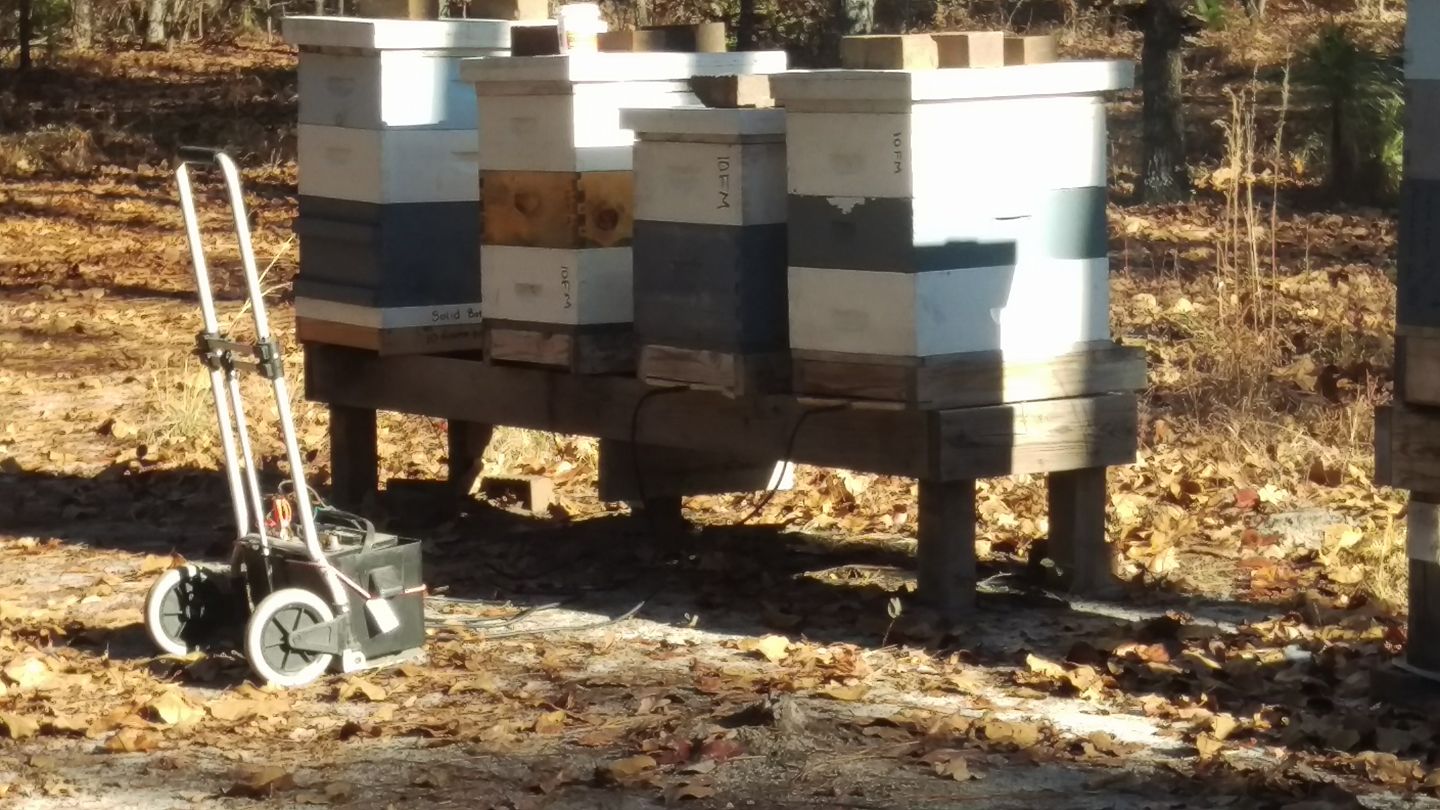
As with all beekeeping we have to ask ourselves what our goals are. Do we want to keep bees just to have bees? Do we want to keep them in as “natural” a way as possible? Do we want to make bees for sale as nucleus hives? Or do we want to manage our bees for honey production?

If one wants to manage their bees in as natural a manner as possible then do so by following their lead. Thomas Seeley and others have determined that honey bees will choose a dry cavity approximately 40 liters in size with an entrance of approximately 2 square inches. The bees select that size because it gives them what they need to meet their ultimate goals – reproduction and survival. They build up fast, fill it, and swarm which has definite advantages for them from pest, disease, and reproduction standpoints. If we want to keep bees more naturally we simply need a gum log or empty 40 liter box with a hole bored in the side – no frames, no foundation, nor fancy hive accessories.

But most of us don’t keep bees naturally. The moment we step away from that gum, skep, or single 40 liter box we are managing them in a manner to accomplish our goals not their goals. I’m not interested in raising bees in cavities like they select. I’m interested in managing bees in cavities I select based on the goals I wish to attain. But that’s not so bad. My bees benefit from disease management, protection from starvation, and pest control which they would not have if left on their own.

For me that’s different management and different box configuration for making queens, a different box configuration for overwintering, and lots of boxes for honey production. And it’s also lots of management every step of the way. Adding ventilation, boxes, making early splits, treatments, IPM, regular assessments, and interventions just so I can support them while they focus their efforts on plundering the local nectar resources.

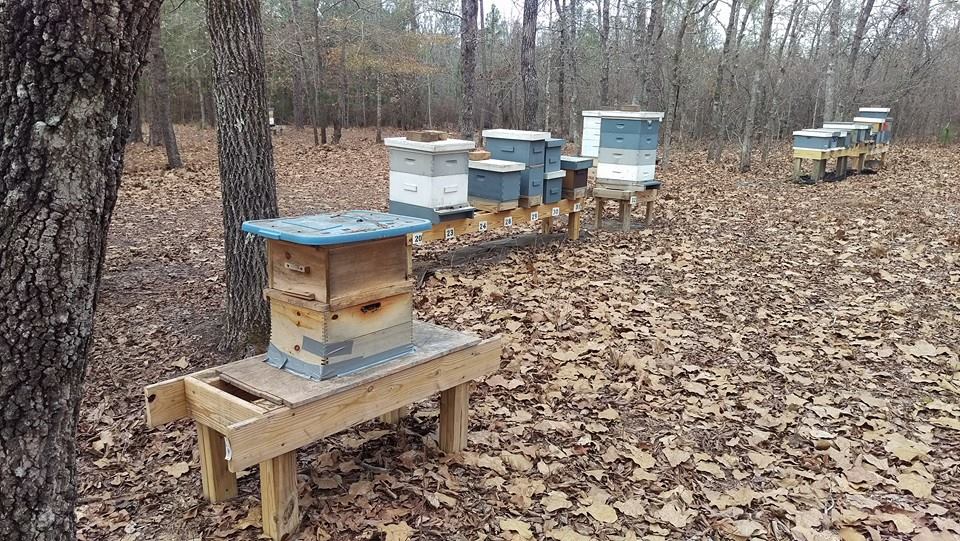
Regarding upper entrances, they are added when needed for ventilation, reduce brood nest congestion, and increase traffic efficiency. They also create a disruption in the swarming process. They allow nectar to be cured quicker with less effort increasing the bees’ efficiency, decreasing their caloric expenditure, and saving precious wing wear and tear for their future as foragers. But managing upper entrances also means getting them back off when they are no longer needed which is after the nectar flow and prior to the major pest onslaught such as hive beetles and yellow jackets. For the most part it is a two month a year manipulation. It is work for me which increases the efficiency of the hive such that they can grow far beyond what nature intended. But it requires management.

Beekeeping is science based management. It is not for the lazy nor for procrastinators. Most people want their beekeeping to be something in between a gum standing in the backyard and what I strive for. Most probably don’t want large hives – they want a little honey and a well pollinated garden. That’s great. For them they can choose any number of hive types such as Langstroth, TBH, Warre, Long Lang, etc. and have good outcomes while enjoying their bees. It’s all good if you know your goals and follow your ideals and science.
Feel free to share this on:

  • Share on Facebook (Opens in new window) Facebook
  • Share on X (Opens in new window) X
  • Share on Pinterest (Opens in new window) Pinterest
  • Email a link to a friend (Opens in new window) Email
  • Share on LinkedIn (Opens in new window) LinkedIn
  • Share on Reddit (Opens in new window) Reddit
  • Share on Tumblr (Opens in new window) Tumblr
  • Print (Opens in new window) Print
  • Share on Telegram (Opens in new window) Telegram
  • Share on WhatsApp (Opens in new window) WhatsApp
Like Loading...

Usurpation in the Bee Yard

23 Wednesday May 2018

Posted by Beekeeping365 in beekeeping, hive inspections, honey bee behavior, honey bees, inspections, management, usurpation

≈ Leave a comment

Tags

beekeeping, honey bee behavior, honey bees, management

Interesting event in the bee yard. A couple weeks ago I performed a cut out on a top bar hive that had gone burr comb crazy. I cut and rubber banded brood into deep Langstroth frames and brought it home. After letting them settle down I inspected the hive and was pleasantly surprised to find the queen unharmed. She was nice and big and had a dark color. Happy with myself, I closed them up. I did note that they seemed less than industrious and after over a week they took littl…e sugar syrup and other than attaching the old brood comb to the frames they were not building new comb. There were plenty of loafers around the front while seemingly there was plenty of work to be done!

Then, they were gone! Not like a swarm or a new package sometimes absconds in a few days. It had been well over a week; maybe ten days. It could be they were thinning down the queen for flight. I though to check if that fat, heavy queen had been left behind but she was gone. It also seemed they might have waited until almost all of the brood hatched out before they left.

I checked all the trees because I look at all my hives daily and they had been there the day before. Nothing. Then I checked the swarm traps. Nothing. Not even scouts.

I resigned myself to losing them. Then I noticed a hive I had split the week earlier. It was three doors down from the absconded colony. The split had a queen cell but I didn’t think a laying queen yet. And the split had been a weak split of just a few frames of bees. But wait. Now the split was bubbling over with bees. By now you’ve guessed it. A usurpation had occurred. Wyatt Mangum writes about this happening especially during summer when a normal swarm would have almost no chance of otherwise surviving because of dearth. Wow.

10201286238412827

Honey Bee Usurpation


Feel free to share this on:

  • Share on Facebook (Opens in new window) Facebook
  • Share on X (Opens in new window) X
  • Share on Pinterest (Opens in new window) Pinterest
  • Email a link to a friend (Opens in new window) Email
  • Share on LinkedIn (Opens in new window) LinkedIn
  • Share on Reddit (Opens in new window) Reddit
  • Share on Tumblr (Opens in new window) Tumblr
  • Print (Opens in new window) Print
  • Share on Telegram (Opens in new window) Telegram
  • Share on WhatsApp (Opens in new window) WhatsApp
Like Loading...

A quick-start guide to honey bee antennae by Honey Bee Suite

21 Monday May 2018

Posted by Beekeeping365 in beekeeping, biology, honey bee biology

≈ Leave a comment

Tags

antennae, bee biology, beekeeping, Honey bee

Every few weeks a photo of a fly lands in my inbox, always accompanied by the same question: “What kind of bee is this?” The answer is simple. If your insect has short, stubby, barely visible antennae, it is not a bee.

On the contrary, a bee antenna is long, graceful, mobile, and insanely cute. But beyond that, the antennae are a bee’s major data collection tools, containing receptors for touch, taste, and smell. Antennae can also detect temperature, humidity, and carbon dioxide, along with gravity and wind speed.1 Much of what a bee “knows” arrives through those two slender filaments.

The word antenna is derived from the Latin antemna. On Roman sailing ships, an antemna was a type of horizontal mast-mounted spar designed to spread square-rigged sails. With a little imagination, perhaps you too can envision your bees with rigging. Sail ho!

Read full article here: A quick-start guide to honey bee antennae — Honey Bee Suite

Feel free to share this on:

  • Share on Facebook (Opens in new window) Facebook
  • Share on X (Opens in new window) X
  • Share on Pinterest (Opens in new window) Pinterest
  • Email a link to a friend (Opens in new window) Email
  • Share on LinkedIn (Opens in new window) LinkedIn
  • Share on Reddit (Opens in new window) Reddit
  • Share on Tumblr (Opens in new window) Tumblr
  • Print (Opens in new window) Print
  • Share on Telegram (Opens in new window) Telegram
  • Share on WhatsApp (Opens in new window) WhatsApp
Like Loading...

Happy Birthday Anton Janša (1734-1773), the first teacher of modern beekeeping by Ron Miksha

20 Sunday May 2018

Posted by Beekeeping365 in beekeeping, beekeeping history, birthday, birthdays

≈ 3 Comments

Tags

beekeeping, beekeeping history

World Bee Day was initiated in Slovenia, Europe, and has been quickly catching around the world. For example, German Chancellor Angela Merkel concluded a major speech Wednesday with a rousing endorsement of World Bee Day, telling members of the Bundestag to do something good for the bees:

“I want to finish with something that some may consider insignificant but is actually very important: on May 20 is the first World Bee Day. On this day we should really think about biodiversity and do something good for the bees.”

World Bee Day became World Bee Day after a successful campaign by the country of Slovenia (Anton Janša’s birthplace) to promulgate the message. Their petition to the United Nations was accepted in December 2017, so this year marks the first official World Bee Day.  I’ve been following (and promoting World Bee Day) ever since I heard the effort was underway a couple of years ago, so below you’ll see some of my earlier posts.

Read more here: May 20: World Bee Day — Bad Beekeeping Blog

Feel free to share this on:

  • Share on Facebook (Opens in new window) Facebook
  • Share on X (Opens in new window) X
  • Share on Pinterest (Opens in new window) Pinterest
  • Email a link to a friend (Opens in new window) Email
  • Share on LinkedIn (Opens in new window) LinkedIn
  • Share on Reddit (Opens in new window) Reddit
  • Share on Tumblr (Opens in new window) Tumblr
  • Print (Opens in new window) Print
  • Share on Telegram (Opens in new window) Telegram
  • Share on WhatsApp (Opens in new window) WhatsApp
Like Loading...

The Father of European Beekeeping – The Apiculture of Anton Janša — An Illustrated History of Slavic Misery

20 Sunday May 2018

Posted by Beekeeping365 in beekeeping

≈ Leave a comment

Tags

beekeeping

In this modern world of everyone being expected to have hyper-exaggerated opinions on anything and everything, not a day goes by without the fate of the bee (and with it the fate of ALL LIFE ON EARTH AS WE KNOW IT) being dramatically lamented. I’m certainly not going to argue the importance of the bee […]

via The Father of European Beekeeping – The Apiculture of Anton Janša — An Illustrated History of Slavic Misery

Feel free to share this on:

  • Share on Facebook (Opens in new window) Facebook
  • Share on X (Opens in new window) X
  • Share on Pinterest (Opens in new window) Pinterest
  • Email a link to a friend (Opens in new window) Email
  • Share on LinkedIn (Opens in new window) LinkedIn
  • Share on Reddit (Opens in new window) Reddit
  • Share on Tumblr (Opens in new window) Tumblr
  • Print (Opens in new window) Print
  • Share on Telegram (Opens in new window) Telegram
  • Share on WhatsApp (Opens in new window) WhatsApp
Like Loading...

Finding the Queen by East Riding Honey

17 Thursday May 2018

Posted by Beekeeping365 in beekeeping, beekeeping management, queens

≈ Leave a comment

Tags

beekeeping, finding the queen, queens

Though I say it myself I am usually pretty good at finding queens. Obviously this is in a beekeeping context,  I don’t roam the streets looking out for flamboyant blokes with a touch of the Quentin Crisp! In my beekeeping career I must have found thousands of queens during hive inspections, searching nucs and mini nucs and also in swarms. Sometimes it can be like looking for a moving needle in a moving haystack but there are things you can do to help yourself.

Read full article here: Finding the Queen — East Riding Honey’s Blog

Feel free to share this on:

  • Share on Facebook (Opens in new window) Facebook
  • Share on X (Opens in new window) X
  • Share on Pinterest (Opens in new window) Pinterest
  • Email a link to a friend (Opens in new window) Email
  • Share on LinkedIn (Opens in new window) LinkedIn
  • Share on Reddit (Opens in new window) Reddit
  • Share on Tumblr (Opens in new window) Tumblr
  • Print (Opens in new window) Print
  • Share on Telegram (Opens in new window) Telegram
  • Share on WhatsApp (Opens in new window) WhatsApp
Like Loading...

Ross Rounds – Comb Honey

16 Wednesday May 2018

Posted by Beekeeping365 in beekeeping, comb honey, management

≈ 2 Comments

Tags

beekeeping, comb honey, management

rr1
rr2
rr3
rr4

Looks like I get to cross another one off my beekeeping bucket list. Comb honey! When I started beekeeping I read Richard Taylor’s book, The Joys of Beekeeping and have had the idea of making comb honey ever since. I crowded this hive after the first month of the flow by removing a super when they actually needed one, and replaced it with a super of Ross Rounds. Now, about three weeks later, all 32 rounds are beautifully capped. I realized after pulling it today that I had no space in the freezer so I put it back on top after inserting a medium. They deserve the space for all their hard work! Currently when foragers return at the end of the day it looks like a package of bees hanging from each entrance.

Feel free to share this on:

  • Share on Facebook (Opens in new window) Facebook
  • Share on X (Opens in new window) X
  • Share on Pinterest (Opens in new window) Pinterest
  • Email a link to a friend (Opens in new window) Email
  • Share on LinkedIn (Opens in new window) LinkedIn
  • Share on Reddit (Opens in new window) Reddit
  • Share on Tumblr (Opens in new window) Tumblr
  • Print (Opens in new window) Print
  • Share on Telegram (Opens in new window) Telegram
  • Share on WhatsApp (Opens in new window) WhatsApp
Like Loading...

What Exactly is The PER? by The Bee’s Knees.Org

15 Tuesday May 2018

Posted by Beekeeping365 in beekeeping, honey bee anatomy

≈ Leave a comment

Tags

apis mellifere, beekeeping, honey bee anatomy, proboscis

In Apis Mellifera or honeybees, the Proboscis Extension Reflex, PER, is part of the honeybee’s feeding behavior.   The PER is a natural behavioral reflex in which the honey bee extends its proboscis in response to antennal stimulation with a sugar solution, during normal foraging behavior, PER occurs when the honey bee finds nectar in a flower. For example, If a honeybee went out of the hive to find nectar in flowers, and then found nectar, it would stick its Proboscis out to sense and smell it. After the Proboscis senses it, the bee will collect the nectar and then bring it back to the hive. If this bee was impaired form the toxic Neonicotinoid, Imidacloprid, it wouldn’t be able to sense the nectar, collect it, nor bring it back to the hive. That is how Imidacloprid can affect a whole hive, just by infecting one honeybee and impairing its Proboscis Extension. The PER can be seen as one of the honeybees most vital tools. This is because, without it, the bee wouldn’t able to test if the substance it is retrieving is nectar, or another, poisonous, substance. Therefore the PER is vital to the honeybees survival and could mean life or death if it becomes impaired under the influence of the toxic neonicotinoid Imidacloprid. The PER happens as one swift motion in a honey bee, it is absolutely amazing to watch!

Read the full article here: What Exactly is The PER? — The Bee’s Knees.Org

Feel free to share this on:

  • Share on Facebook (Opens in new window) Facebook
  • Share on X (Opens in new window) X
  • Share on Pinterest (Opens in new window) Pinterest
  • Email a link to a friend (Opens in new window) Email
  • Share on LinkedIn (Opens in new window) LinkedIn
  • Share on Reddit (Opens in new window) Reddit
  • Share on Tumblr (Opens in new window) Tumblr
  • Print (Opens in new window) Print
  • Share on Telegram (Opens in new window) Telegram
  • Share on WhatsApp (Opens in new window) WhatsApp
Like Loading...

Famously Hot South Carolina Midlands

14 Monday May 2018

Posted by Beekeeping365 in beekeeping, honey bee behavior

≈ 1 Comment

Tags

beekeeping, fanning, honey bee behavior, honey bees

It’s 97 degrees in South Carolina and today’s date is May 13th. I’ll bet that most of you reading this have already flipped that switch on your central air unit from Heat to AC. Well, the bees do the same thing – almost. They switch from keeping the brood warm to keeping it cool. And the way they do it is fascinating! And you can participate too!

Summer Bee Hive Temperature Regulation and Hive Ventilation

Honey bees have a knack for maintaining the internal temperature of the hive at around 93 to 95 degrees Farenheit. They do this primarily because this is the ideal temperature for their brood. How they do it is remarkable. Watch them on the landing board fanning. Some hang upside down on the lip of the brood box, others stand on the landing board. Sometimes you may even notice that bees on one side of the landing board are facing towards the box and on the other side of the landing board they are facing away – just to create a flow of air through the hive. Inside they are also busy fanning creating currents of air to keep the temperature correct and also to evaporate the nectar into honey. Standing outside your hive you can hear them inside buzzing like a motor or fan running.

In the heat of the summer it gets to be a big job for them to maintain the correct temperature inside. The lack of watery nectar further reduces the effects of evaporative cooling so the bees gather water and return to the hive placing droplets of water inside thus reducing the temperatures via its evaporation. This also helps maintain the correct humidity for the brood.

Yet another method they employ is to gather outside to reduce the internal heat. We call this bearding. While cold blooded, the heat generated by the muscle activity of tens of thousands of bees heats up the interior of the hive. It makes good sense to reduce the number of bees inside.

When the temperatures in the Midlands get into the nineties outside you will see the bees doing all of the above in an effort to keep the internal temperature 93-95F

What can you do to help them maintain the correct temperature of the hive? Depending on the configuration of your equipment you may be able to help. One of the simpliest methods is to simply place a popsicle stick under the corners of the outer cover allowing the heat to escape. I have a few migratory covers this year and will be slipping popsicle sticks between them and the upper most box. The thin popsicle stick, or two, is not large enough to allow robbers to invade but will allow the rising hot air to exit the hive.

Screened bottom boards should be open during the hot summer. The bees inside will circulate the air inside the hive such that cooler air is pulled in and around the interior and exhausted to the outside.

If your inner cover has an upper entrance keep it open to allow heat to escape. If the colony is weak a little screening across the upper entrance may be needed.

With dearth many beekeepers will reinsert their entrance reducers to prevent robbing. If you have a screened bottom board this reducing of the entrance will probably be fine. If you are using a solid bottom board I recommend you leave the entrance reducer out, replacing it with #8 hardware cloth bent into a U shape and pushed into the opening (remember to leave them an entrance to come and go). The screen will allow airflow which would have otherwise been blocked.

Other ideas:

Go traditional and paint your outer cover reflective white. Why not, it’s after Easter.

Place a slightly longer piece of cardboard over the hive making an awning over the front porch (assuming it’s facing south).

Clean up any debris under the hive to allow air to circulate.

Make a 1 1/2″ shim to go between the inner cover and outer cover and drill 1 inch ventilation holes on the sides (cover holes with hardware cloth to keep out robbers).

Got more ideas? Add them below.

Feel free to share this on:

  • Share on Facebook (Opens in new window) Facebook
  • Share on X (Opens in new window) X
  • Share on Pinterest (Opens in new window) Pinterest
  • Email a link to a friend (Opens in new window) Email
  • Share on LinkedIn (Opens in new window) LinkedIn
  • Share on Reddit (Opens in new window) Reddit
  • Share on Tumblr (Opens in new window) Tumblr
  • Print (Opens in new window) Print
  • Share on Telegram (Opens in new window) Telegram
  • Share on WhatsApp (Opens in new window) WhatsApp
Like Loading...

The End of the Nectar Flow Approaches

13 Sunday May 2018

Posted by Beekeeping365 in beekeeping

≈ Leave a comment

Tags

beekeeping, dearth, honey bees, nectar flow

Nectar flow is slowing. The dry spell we have had is not helping. In the Midlands, with some exceptions, sometime around the first part of June the bees will have a hard time finding enough nectar to meet day to day expenditures. New beekeepers will probably have to feed syrup. Established hives may have enough honey. Regardless, their behavior will change, robbing can become an issue, and your management will change as well.

The purist in me wants to feed the bees nothing but their own honey if it is available. And I do leave them a good bit at all times. However, if you are just starting you very well may not have any options other than to feed sugar syrup to newly established hives during the dearth. Comb building will become increasingly difficult to stimulate, sometimes the bees will chew up your wax foundation rather than build, and you’ll wonder why. I’m just not sure what it is in nectar that makes the bees so happy and eager to build. But once the nectar lessens you may find yourself mixing sugar syrup. A 1:1 (by weight) solution is the preferred mix during the summer dearth. The bees won’t complain if you make it a little thinner (sugar content of nectar varies quite a bit in nature) but I keep it around 1:1.

Be prepared to keep a close eye on your hives, especially if you have more than one hive, for the possibility of robbing. Entrance reducers may be needed on weaker hives to reduce the area the guard bees patrol so as to allow a defense against would be invaders. If you go into hives for inspections be mindful to not leave a honey super uncovered or unattended which could trigger a robbing frenzy. Continue to make hive inspections taking note of the hive’s development as well as pests and honey/nectar stores.

Also during this time become accustomed to lifting your hive slightly from the rear to get a feel for its weight. Do this often and start comparing what you see inside to how heavy the hive feels. Eventually you will be able to feel a light hive and know when to feed. This skill will pay dividends during the winter when you won’t be opening the hives to determine adequate stores.

During dearth, forager bees have less work to do. Some of the older beekeeping books speak to the bees gathering all the local nectar early in the day and then, with nothing to do, staying in, or on, the hive. The combination of older, forager bees in the hive and scarcity of available food makes for a combination that displays itself as increased defensiveness around your beehives. You will definitely start to notice that the bees seem more edgy and quicker to protect their hive. I wear my veil even when just feeding during dearth.

You’ll also start to see more and more bees hanging out on the front of the hive. They display a curious dance-like behavior called washboarding. Sometimes so many bees will be on the front of your hive and landing board it may cause concern. Most of the time these behaviors are associated with increased heat in the hive or not enough space. You should know if they have enough space by your inspections. As for the heat, the bees create quite a bit of heat in the process of fanning within the hive to dry out the nectar and create honey. All that muscle activity coupled with increased outside temperatures causes the inside temperature to increase. The bees know what to do though. They gather at the entrance, line up, and start a circulatory air current to remove the heat and humidity. Clever bees! And as for those bees hanging out on the front, they are outside because it’s too hot inside and more bees inside would just make matters worse. If they look like they are hot you can help them with ventilation by placing a Popsicle stick or two between the outer cover and the inner cover. The crack will not be large enough for robbers to get in but will allow some heat to escape.

Another issue, not strictly related to the dearth, will be an increase in pests. Other insects want to eat too and times are hard all over! Be on the lookout for an increase in hive beetles and later, yellow jackets. There are various means of dealing with hive beetles (SHB Handbook Here) so I won’t go into those. As for the yellow jackets that will arrive later in the summer, a strong colony will eject the occasional robber. Hive watching entertainment gets slow as the summer progresses but you’ll get some entertainment watching three or four bees drag a “wanna-be robber” yellow jacket out of the hive and toss him over the edge of the landing board! If you’d just like to trap them there are many DYI yellow jacket traps on the Internet. Make sure you use the vinegar in the recipe – I believe this may deter interest by honey bees.

Feel free to share this on:

  • Share on Facebook (Opens in new window) Facebook
  • Share on X (Opens in new window) X
  • Share on Pinterest (Opens in new window) Pinterest
  • Email a link to a friend (Opens in new window) Email
  • Share on LinkedIn (Opens in new window) LinkedIn
  • Share on Reddit (Opens in new window) Reddit
  • Share on Tumblr (Opens in new window) Tumblr
  • Print (Opens in new window) Print
  • Share on Telegram (Opens in new window) Telegram
  • Share on WhatsApp (Opens in new window) WhatsApp
Like Loading...

Tupelo Honey

12 Saturday May 2018

Posted by Beekeeping365 in beekeeping

≈ 1 Comment

Tags

beekeeping

Enjoy some honey today in your tea or on a waffle. Just enjoy!

More relaxing music for a Saturday.

via Tupelo Honey  — Inner Ramblings Boulevard:

Feel free to share this on:

  • Share on Facebook (Opens in new window) Facebook
  • Share on X (Opens in new window) X
  • Share on Pinterest (Opens in new window) Pinterest
  • Email a link to a friend (Opens in new window) Email
  • Share on LinkedIn (Opens in new window) LinkedIn
  • Share on Reddit (Opens in new window) Reddit
  • Share on Tumblr (Opens in new window) Tumblr
  • Print (Opens in new window) Print
  • Share on Telegram (Opens in new window) Telegram
  • Share on WhatsApp (Opens in new window) WhatsApp
Like Loading...

Approaching the end of the nectar flow

11 Friday May 2018

Posted by Beekeeping365 in beekeeping

≈ 1 Comment

Tags

beekeeping

Capture

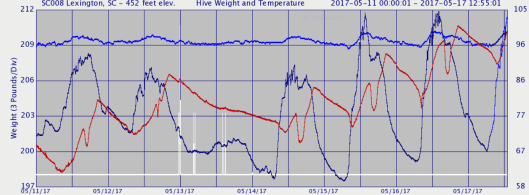
Indications are, we are approaching the end of the nectar flow. First it’s not really the end of the nectar flow. Rather it is a sharp decrease in nectar availability IN EXCESS of colony day to day needs.

Our local www.hivetool.net monitored hive shows recent changes in the weights during the daytime nectar gathering hours. What appears now is 1) sharp decrease when foragers leave the hive 2) sharp increase in weight as they return with nectar during the first half of the da…y 3) followed by afternoon decrease when nectar becomes scarce yet evaporation of in hive nectar continues, followed by 4) sharp increase in weight at end of the day when foragers return. Finally, 5) decrease in hive weight over night as nectar is steadily evaporated into honey.

Other indicators: Increase in bee irritability especially in the hot afternoon hours. Some foragers are staying inside without the strong scout signals of nectar sources. Foragers are older bees with and a bit more defensiveness as a rule. Expect a steady increase in more defensiveness as nectar flow continues to slow, especially in the afternoons. Depending on the size of your colony you may have 30,000 foragers willing to bounce you out of their hive. Besides you look like the Stay Puft Marshmallow Man anyway.

Bees leave the hive each morning looking for the biggest nectar bang for their buck as indicated by the findings of the scouts. After they clean that up they will scout and find lesser sources. I have noticed honey bees in late afternoon on sparkleberry and magnolia which typically are not attractive to them in the morning hours when something better is available. The fact that they are foraging 2nd class venues is indicative of preferred nectar plants drying up early in the day. A nice evening or nigh time rain may help this.

That’s my report on the Midlands as we approach the end of the flow. We really need to start prepping first year beekeepers with regard to changes in their beekeeping post nectar flow. i.e. feeding, water sources, protective equipment, mite treatment. There’s always something to do!

Feel free to share this on:

  • Share on Facebook (Opens in new window) Facebook
  • Share on X (Opens in new window) X
  • Share on Pinterest (Opens in new window) Pinterest
  • Email a link to a friend (Opens in new window) Email
  • Share on LinkedIn (Opens in new window) LinkedIn
  • Share on Reddit (Opens in new window) Reddit
  • Share on Tumblr (Opens in new window) Tumblr
  • Print (Opens in new window) Print
  • Share on Telegram (Opens in new window) Telegram
  • Share on WhatsApp (Opens in new window) WhatsApp
Like Loading...

Flexibility in Beekeeping

10 Thursday May 2018

Posted by Beekeeping365 in beekeeping

≈ Leave a comment

Tags

beekeeping

flex·i·bil·i·ty  fleksəˈbilədē/ noun: flexibility

– the quality of bending easily without breaking.

synonyms: pliability, suppleness, pliancy, plasticity;More: elasticity, stretchiness, springiness, spring, resilience, bounce; adaptability, adjustability, variability, versatility, open-endedness, freedom, latitude,  cooperation, amenability, accommodations, tolerance, willingness to compromise, willingness to change

Danny Cannon, our current local club President, delivered one of the best lectures I’ve ever sat through at a meeting about two years ago. It was titled “Flexibility in Beekeeping,” “Being Flexible in Beekeeping,” or some such similar title.

That lecture keeps ringing through my brain lately and for good reason. While the lecture had many layers of information, one of the threads in the lecture was the idea of moving backwards, sideways, (and other dance moves) as easily as we move forwards in our management. For instance, recently I’ve been playing musical chairs with supers, frames, and bees. Let me explain.

In the Spring it’s all about adding, expanding, and growth around here. Things seem to get bigger. A lot of addition taking place – boxes, hive stands, and new hives. The thinking is, If I can stay ahead of them with “more” they won’t swarm. Add, add, add. Grow, grow, grow. Feed, feed, feed. Gotta add more boxes and frames! Look and act – usually with more, more, more. Find a swarm and be flexible enough to have an extra stand, bottom board, and box available – capture, and add to the apiary. And that’s how most of the management goes in the Spring.

And then comes the post nectar flow Summer, Fall, and Winter management. But can I break my addiction to adding? Can I be flexible enough to read the bees and the situation? The queen will slow her production down as nectar wanes and more so when the days start getting shorter. Can I tap the brakes, slow down, make changes? Or will I be too reluctant to pull off that super that I worked so hard to build them up to needing. Or maybe they’ve swarmed and the hive is half empty now, yet I want to leave those boxes on in hopes they will build back up – and they very well might if I’m flexible in my management!

Maybe a queen fails and it becomes noticeable at the hive entrance that activity has slowed. But it’s hot and I’d rather not look inside; say it isn’t so because I’d really rather not track down a new queen. Or I have two hives that are in steep decline, should I combine them with stronger hives? I’m torn. After all, I have a plan as to how many hives I need to complete the mental picture I have of my hives sitting on their designated hive stands in my well designed apiary. I want “x” number of hives not “x-1” hives.

And so, I return to the topic of flexibility. Can I be flexible enough to respond appropriately during these post nectar flow months? Oh, it’s difficult. But if I don’t employ the same discipline of flexibility in removing unpopulated boxes, combining weak hives, or replacing a failing queen what penalty is paid? Unlike the threat of swarms in the spring, the lack of flexibility now is paid for with increased pests, hive failures, and loss of valued comb. Hives no longer able to cover comb with bees allow Small Hive Beetles to go unchecked and run amuck in nectar. Worse still is the bane of Wax Moths that move in on weakened hives and steal your most precious resource – your hard earned comb. Weak and declining hives need to be combined with strong hives. But can I be mentally flexible enough to do what needs to be done and then look at that empty spot on the hive stand? Flexibility is responding appropriately now and telling myself that a split may be possible later in the year or at least next Spring.

It’s all flexibility. I’ll read the bees as best I can, make adjustments, and go with the flow each and every time I visit the apiary or open a hive. Some days it’s like a gentle dance, other days it’s a roller coaster with ups and downs, round and rounds, bright lights and dark tunnels. When I pause afterwards I don’t say I enjoyed the ups but not the downs or the round and rounds.  No, I say, “I enjoyed the ride.” Be flexible and enjoy the ride.

Feel free to share this on:

  • Share on Facebook (Opens in new window) Facebook
  • Share on X (Opens in new window) X
  • Share on Pinterest (Opens in new window) Pinterest
  • Email a link to a friend (Opens in new window) Email
  • Share on LinkedIn (Opens in new window) LinkedIn
  • Share on Reddit (Opens in new window) Reddit
  • Share on Tumblr (Opens in new window) Tumblr
  • Print (Opens in new window) Print
  • Share on Telegram (Opens in new window) Telegram
  • Share on WhatsApp (Opens in new window) WhatsApp
Like Loading...

Some Surprising Bee Pollen Benefits by Types Of Bees

08 Tuesday May 2018

Posted by Beekeeping365 in beekeeping, pollen

≈ 1 Comment

Tags

beekeeping, pollen

What’s the buzz on bee pollen benefits? Studies have shown bee pollen can help ease inflammation or discomfort, particularly related to the prostate gland, it can alleviate symptoms of allergies or hay fever, it can improve fertility, and it has even been shown to protect against some of the harmful effects of x-ray radiation. The most commonly held belief is that consuming bee pollen by eating locally produced honey, which includes traces of pollen, will help with allergies. Although there is little scientific evidence to support this claim, there is some anecdotal research that suggests a beneficial connection. Plus, honey is delicious on everything and it’s always good to support local farms! So no matter what, it’s a good idea!

Read full article here: Some Surprising Bee Pollen Benefits — Types Of Bees

Feel free to share this on:

  • Share on Facebook (Opens in new window) Facebook
  • Share on X (Opens in new window) X
  • Share on Pinterest (Opens in new window) Pinterest
  • Email a link to a friend (Opens in new window) Email
  • Share on LinkedIn (Opens in new window) LinkedIn
  • Share on Reddit (Opens in new window) Reddit
  • Share on Tumblr (Opens in new window) Tumblr
  • Print (Opens in new window) Print
  • Share on Telegram (Opens in new window) Telegram
  • Share on WhatsApp (Opens in new window) WhatsApp
Like Loading...

What to Look For In a Beehive Inspection by Wildflower Meadows

04 Friday May 2018

Posted by Beekeeping365 in beekeeping, hive inspections

≈ Leave a comment

Tags

beekeeping, inspection notes, management

inspection-1030x687

A good article on being thoughtful on making inspections. -Sassafrassbeefarm

A successful beehive inspection begins even before a beekeeper opens the colony.  Sometimes, if the weather is too cold or otherwise unpleasant, an outside inspection may be all that a conscientious beekeeper will want to do for the day.  Not every day is ideal for opening a beehive.

No matter what the conditions, however, an astute beekeeper can learn much about a colony’s health simply by carefully observing the bees outside of the colony and considering . . .

  • Given the conditions of weather and bloom, is the level of activity taking place on the entrance greater or lower than what would be expected?
  • Are the bees bringing in pollen?
  • Are there signs of robbing or defensive behavior?
  • Are the bees fighting off invading insects such as wasps or ants?
  • Are there dead bees lying in front of the entrance?

Read the full article here: What to Look For In a Beehive Inspection — Wildflower Meadows

Feel free to share this on:

  • Share on Facebook (Opens in new window) Facebook
  • Share on X (Opens in new window) X
  • Share on Pinterest (Opens in new window) Pinterest
  • Email a link to a friend (Opens in new window) Email
  • Share on LinkedIn (Opens in new window) LinkedIn
  • Share on Reddit (Opens in new window) Reddit
  • Share on Tumblr (Opens in new window) Tumblr
  • Print (Opens in new window) Print
  • Share on Telegram (Opens in new window) Telegram
  • Share on WhatsApp (Opens in new window) WhatsApp
Like Loading...

Beekeeping Calendar and Seasons – Springtime

26 Thursday Apr 2018

Posted by Beekeeping365 in beekeeping, beekeeping calendar, beekeeping seasons, calendar, seasons

≈ Leave a comment

Tags

beekeeping, seasons

What to do through the spring season in beekeeping – check out our list of simple, spring beekeeper activities.

via Beekeeping Calendar and Seasons – Springtime — Prime Bees – College Station Bee & Honey Farm

Feel free to share this on:

  • Share on Facebook (Opens in new window) Facebook
  • Share on X (Opens in new window) X
  • Share on Pinterest (Opens in new window) Pinterest
  • Email a link to a friend (Opens in new window) Email
  • Share on LinkedIn (Opens in new window) LinkedIn
  • Share on Reddit (Opens in new window) Reddit
  • Share on Tumblr (Opens in new window) Tumblr
  • Print (Opens in new window) Print
  • Share on Telegram (Opens in new window) Telegram
  • Share on WhatsApp (Opens in new window) WhatsApp
Like Loading...

Honeybee Nutrition and Behavior

25 Wednesday Apr 2018

Posted by Beekeeping365 in beekeeping

≈ Leave a comment

Tags

beekeeping

iow-shadesofpollen

Source: Honeybee Nutrition and Behavior

A) Pollen quantity and quality: plant responses to stress  

Recent honeybee declines may be influenced by pollen/nectar quality that compromise a bees’ ability to cope with environmental challenges, including disease and stress. Plants facing drought compromise floral trait expression which in turn can affect bee health. We are studying how drought stress in canola (Brassica napus) affects the floral reward quantity and quality. We are also monitoring the quality of bee hive pollen when foraging on crops under abiotic stress.

B) Floral chemicals

Plant-pollinator mutualism go beyond floral traits and pollinator behavior. Pollinators have evolved to take advantage of diverse floral chemicals. Increasing our knowledge of the chemical relationships between bees and plants is an important step towards understanding the intricacies of hive function and honeybee colony management. Ongoing studies aim to understand the role of key phytochemicals in promoting honeybee health.

Click here for more.

Source: Honeybee Nutrition and Behavior

Feel free to share this on:

  • Share on Facebook (Opens in new window) Facebook
  • Share on X (Opens in new window) X
  • Share on Pinterest (Opens in new window) Pinterest
  • Email a link to a friend (Opens in new window) Email
  • Share on LinkedIn (Opens in new window) LinkedIn
  • Share on Reddit (Opens in new window) Reddit
  • Share on Tumblr (Opens in new window) Tumblr
  • Print (Opens in new window) Print
  • Share on Telegram (Opens in new window) Telegram
  • Share on WhatsApp (Opens in new window) WhatsApp
Like Loading...

The Status of the Honey Bee in the Law

24 Tuesday Apr 2018

Posted by Beekeeping365 in bee law, beekeeping, education

≈ 2 Comments

Tags

bee law, beekeeping, education

The_ABC_of_bee_culture-_a_cyclopaedia_of_every_thing_pertaining_to_the_care_of_the_honey-bee;_bees,_honey,_hives,_implements,_honey-plants,_etc_,_facts_gleaned_from_the_experienc

Photo: The ABC of Bee Culture: a cyclopaedia of every thing pertaining to the care of the honey-bee; bees, honey, hives, implements, honey-plants, etc., facts gleaned from the experience of thousands of bee keepers all over our land, and afterward verified by practical work in our own apiary.


The Status of the Honey Bee in the Law:

The law divides the entire animal kingdom into two classes: (Blackstone Commentaries, Book II, p. 390)

First, those which are domesticated (ferae domitia) and, second, those which are wild (ferae naturae). The rights and liabilities of persons with reference to the animal kingdom then are likewise divisible. Bees belong with the latter class and, in considering the law with reference to these cases, rules pertaining or applicable to the former class would not have any significance. Wild animals are also divisible into two classes:

Those which are free to roam at will, and those which have been subjected to man’s dominion. Rights and liabilities depend upon the class into which the animal falls at the particular time. If it be in a State of Nature, free to roam at will, it is the property of no one, not even of the one on whose land it may be at the particular time, and may become the property of the first taker, even though he be a trespasser and liable for the trespass.

One who enters another’s premises without the invitation or permission of the owner is a trespasser, but this gives the owner of the premises no title to the wild things thereon, it merely gives him the right to protect others from coming thereon and taking them. If, however, some person against his will enters the premises and takes a wild animal or a swarm of wild bees, such a person becomes the owner of what he takes, but he has to answer to the owner of the premises for the trespass. If, however, the animals have been brought within the dominion of the owner of the premises as deer in a park, rabbits in a warren, or bees in a hive, such an entry and taking would be a crime as the law recognizes the property of him who has dominion over them and the taker would gain no title by the taking, for the owner might regain them by legal proceedings. (Blackstone Commentaries, Book II, p. 392)

So we may understand that the animal kingdom to which the bees belong is subject to a certain qualified proprietary interest. That is, they belong to no one, not even the owner of the soil on which their nest may be unless they have been subjected to his dominion, and when so reduced to possession, they are his property. This principle, however, is subject to an important modification: they remain the property of the possessor only so long as his dominion continues, and if such animals regain their freedom, as bees by swarming out and occupying some natural hive, as a hollow in a tree, the property right is lost and they again revert to their natural state and become the property of the first taker.

These same notions also control the matter of liability for injuries done by the bees, and such liability depends on proprietorship. So it would seem that if the bees have escaped from their owner, or have swarmed out of his hive, unless he can be shown negligent in having permitted this, there can be no liability for injuries done by them.

— excerpt from ‘Bees and the Law’, pages 11-12, written by Murray Loring, published by Dadant, 1981

Feel free to share this on:

  • Share on Facebook (Opens in new window) Facebook
  • Share on X (Opens in new window) X
  • Share on Pinterest (Opens in new window) Pinterest
  • Email a link to a friend (Opens in new window) Email
  • Share on LinkedIn (Opens in new window) LinkedIn
  • Share on Reddit (Opens in new window) Reddit
  • Share on Tumblr (Opens in new window) Tumblr
  • Print (Opens in new window) Print
  • Share on Telegram (Opens in new window) Telegram
  • Share on WhatsApp (Opens in new window) WhatsApp
Like Loading...

Plant Profile: White Clover {Trifolium repens} by Crooked Bear Creek Organic Herbs

22 Sunday Apr 2018

Posted by Beekeeping365 in beekeeping, forage

≈ 1 Comment

Tags

beekeeping, clover, ecology, honey bee forage, White Clover

Here’s some good information regarding white clover – a honey bee favorite! – sassafrasbeefarm

Article by: Crooked Bear Creek Organic Herbs

White clover (botanical name Trifolium repens) is a clover species that is indigenous to Europe, West Asia and Northern regions of Africa. Extensively introduced across the globe, this species is cultivated in the form of a pasture crop and is currently even common in the grassland regions of North America as well as New Zealand. White clover is also known as Dutch clover, as this species was cultivated in Holland for the first time.

White clover is a herbaceous (herb-like) perennially growing small plant. It grows close to the ground and produces small whitish flower heads, which usually have a pink or creamy tinge, which may occur as the plant matures. Usually, the flower heads measure anything between 1.5 cm and 2.0 cm (0.6 inches and 0.8 inches) wide and appear at the end of the flower stalks or peduncles measuring about 7 cm or 2.8 inches.

Read the excellent and lengthy full blog post here:  Plant Profile: White Clover {Trifolium repens} by Crooked Bear Creek Organic Herbs

Feel free to share this on:

  • Share on Facebook (Opens in new window) Facebook
  • Share on X (Opens in new window) X
  • Share on Pinterest (Opens in new window) Pinterest
  • Email a link to a friend (Opens in new window) Email
  • Share on LinkedIn (Opens in new window) LinkedIn
  • Share on Reddit (Opens in new window) Reddit
  • Share on Tumblr (Opens in new window) Tumblr
  • Print (Opens in new window) Print
  • Share on Telegram (Opens in new window) Telegram
  • Share on WhatsApp (Opens in new window) WhatsApp
Like Loading...

Robo bees are back, but will they last? by Ecology is not a dirty word

19 Thursday Apr 2018

Posted by Beekeeping365 in beekeeping

≈ Leave a comment

Tags

beekeeping, pollinator drones, robo bees, robot bee

No doubt I am getting older. But regardless of my being stuck in the past and the way things are/were, I can fathom this concept. Like the author it seems to be too many hurdles are in the way to accomplish. Heck, I can’t even fathom why. – sassafrasbeefarm

The robot bee story is back in the news. I covered some of the new research and associated media hype last year. The latest: a patent has been filed for building ‘pollinator drones’ and the media (both newsy and social) are in despair, as the end is clearly nigh.

But don’t worry. Here are a few challenges the pollinator drones will need to overcome before they can take over agriculture:

Read the full blog post here: Robo bees are back, but will they last? by Ecology is not a dirty word

Feel free to share this on:

  • Share on Facebook (Opens in new window) Facebook
  • Share on X (Opens in new window) X
  • Share on Pinterest (Opens in new window) Pinterest
  • Email a link to a friend (Opens in new window) Email
  • Share on LinkedIn (Opens in new window) LinkedIn
  • Share on Reddit (Opens in new window) Reddit
  • Share on Tumblr (Opens in new window) Tumblr
  • Print (Opens in new window) Print
  • Share on Telegram (Opens in new window) Telegram
  • Share on WhatsApp (Opens in new window) WhatsApp
Like Loading...

Pollen: Tales Beyond the Sneeze by thebeeswaggle

15 Sunday Apr 2018

Posted by Beekeeping365 in beekeeping, pollen

≈ Leave a comment

Tags

beekeeping, honey bees, pollen

Many of us can relate to that moment when you accept spring’s invitation to step out and saunter in the warm sun to hear all the vibrant sounds as nature awakes from the slumber of winter, to smell all the fragrances floating on the breeze, and then it hits you, a series of powerful, uncontrollable sneezing fits! Upon recovery, your eyes are filled with tears, and your nose is running in an effort to clear that tiny nuisance, pollen.  Profits are made in efforts to assist our terrible reactions to pollen, and many of us would rather it not exist, so what is it; why does it exist; and who really needs it?

Read fully blog article here: Pollen: Tales Beyond the Sneeze by thebeeswaggle

Feel free to share this on:

  • Share on Facebook (Opens in new window) Facebook
  • Share on X (Opens in new window) X
  • Share on Pinterest (Opens in new window) Pinterest
  • Email a link to a friend (Opens in new window) Email
  • Share on LinkedIn (Opens in new window) LinkedIn
  • Share on Reddit (Opens in new window) Reddit
  • Share on Tumblr (Opens in new window) Tumblr
  • Print (Opens in new window) Print
  • Share on Telegram (Opens in new window) Telegram
  • Share on WhatsApp (Opens in new window) WhatsApp
Like Loading...

Bee Stings May Be Miracle Cure

11 Wednesday Apr 2018

Posted by Beekeeping365 in apitherapy, beekeeping

≈ 3 Comments

Tags

apitherapy, bee stings, beekeeping

Intro.:

Last year I received a telephone call from a man wanting bees. I assumed he meant a package or nucleus hive. His broken English made communication a challenge but eventually I understood he wanted the bees for apitherapy use.

I told him I had never provided bees for apitherapy. I had read about it and understood the reasons why people utilize stinging but had no personal experience. We decided to meet and discuss the matter as he wanted some honey as well. Seeing this man and talking to him convinced me to help him. He appeared to have a rheumatoid arthritis such that even walking was difficult. In conversation he told me he was currently unable to work. He also related that he had used the bees in his home country successfully and that the improvement was very real.

I decided to give him the bees needed. There was some prep time in constructing an appropriate bee box for his use. After a single “round” of treatments he was driving to meet me, instead of his wife, and soon had his work equipment loaded in his small truck.

I haven’t heard from him yet this year, but am eagerly looking forward to setting him up with a small hive of his own this year as we planned.

Update: I have heard from my apitherapy friend via phone call. He tells me he is in some sort of remission and doing well. He thanked me for helping him during his hour of need and promises to stay in touch.

Sassafras Bee Farm

For more information on Apitherapy:

By Ibrahim Alkhayal Alternative medicine often comes up with new and creative healing processes. A method being tried in Palestine uses the bee sting, called apitherapy. Rateb Samour, known as Abo Ibrahim, is a Palestinian beekeeper and agriculture engineer in the Gaza Strip town of Rafah. For about 13 years, he has devoted all his […]

via Bee Stings May Be Miracle Cure — Sutradhar’s Market

Feel free to share this on:

  • Share on Facebook (Opens in new window) Facebook
  • Share on X (Opens in new window) X
  • Share on Pinterest (Opens in new window) Pinterest
  • Email a link to a friend (Opens in new window) Email
  • Share on LinkedIn (Opens in new window) LinkedIn
  • Share on Reddit (Opens in new window) Reddit
  • Share on Tumblr (Opens in new window) Tumblr
  • Print (Opens in new window) Print
  • Share on Telegram (Opens in new window) Telegram
  • Share on WhatsApp (Opens in new window) WhatsApp
Like Loading...

Book Review: The Incomparable Honeybee by Dr. Reese Halter

08 Sunday Apr 2018

Posted by Beekeeping365 in beekeeping, beekeeping books, book review

≈ 3 Comments

Tags

beekeeping, beekeeping books, book review, Honey bee

9781926855646

Article by: GeoKs

This title interested me for a few reasons. I remember being shocked when I saw documentary a few years ago about a region in China where pesticides and other toxins have wiped out the local honeybees and labourers have to pollinate pear blossoms by hand! Over the past year or two, it’s been almost impossible to miss the relatively regular media reports about Colony Collapse Disorder and the fact that researchers really haven’t figured out why more than 30% of our bee population is dying out every year. So when we had to re-plant our yard after last year’s whole home renovation project, I kept thinking I wanted to plant flowers and other plants that were friendly to bees, butterflies and birds. After reading The Incomparable Honeybee this morning, I realize I need to tweak a few things.

But I’m getting ahead of myself… First, here are a few especially fascinating facts from the book:

Continued here: Book Review: The Incomparable Honeybee by Dr. Reese Halter

Feel free to share this on:

  • Share on Facebook (Opens in new window) Facebook
  • Share on X (Opens in new window) X
  • Share on Pinterest (Opens in new window) Pinterest
  • Email a link to a friend (Opens in new window) Email
  • Share on LinkedIn (Opens in new window) LinkedIn
  • Share on Reddit (Opens in new window) Reddit
  • Share on Tumblr (Opens in new window) Tumblr
  • Print (Opens in new window) Print
  • Share on Telegram (Opens in new window) Telegram
  • Share on WhatsApp (Opens in new window) WhatsApp
Like Loading...

Swarm Trap Time by BruceLovesBees

06 Friday Apr 2018

Posted by Beekeeping365 in beekeeping, swarms

≈ 1 Comment

Tags

bait hives, beekeeping, swarm traps, swarms

img_20180402_1745551479328412

We conclude Swarm Week here at Beekeeping365 with an encouragement to set some bait hives in your area. Follow the well published guidelines regarding cavity volume, height, entrance size, and add the odors of drawn comb and another attractant such as lemongrass oil. It’s fun – like fishing – except for honey bees!

Bruce isn’t playing around this year. He’s upped his game and is going to catch some big swarms! This is what it takes to capture swarms – a dedication to constructing bait hives along the lines of what is known the bees will accept and occupy. Questions? Click on over to Bruce’s blog and post some questions or comments. sassafrasbeefarm

By Bruce Loves Bees:

I’m not playing around this year. Last year, I was so busy chasing swarm calls, and working, that I got way behind on putting my swarm traps up. I managed to get about 20 traps up, but I got them up late, and only caught 6 swarms in my traps. I also used alot of single 5-frame nuc boxes as traps. All of my swarm calls were for swarms over 5 lbs, so none of these would have went into a nuc. A few of them were over 10 lbs and didn’t even fit into a single 10-frame deep. This year, my swarm traps are a minimum of one nuc and one medium.

cont.

Read full blog post here: Swarm Trap Time by Bruce Loves Bees

Feel free to share this on:

  • Share on Facebook (Opens in new window) Facebook
  • Share on X (Opens in new window) X
  • Share on Pinterest (Opens in new window) Pinterest
  • Email a link to a friend (Opens in new window) Email
  • Share on LinkedIn (Opens in new window) LinkedIn
  • Share on Reddit (Opens in new window) Reddit
  • Share on Tumblr (Opens in new window) Tumblr
  • Print (Opens in new window) Print
  • Share on Telegram (Opens in new window) Telegram
  • Share on WhatsApp (Opens in new window) WhatsApp
Like Loading...

How to Catch and Install a Swarm

04 Wednesday Apr 2018

Posted by Beekeeping365 in beekeeping, education, equipment, honey bee behavior, management, swarms

≈ Leave a comment

Tags

beekeeping, education, honey bee behavior, honey bee swarms, management, swarms

Feel free to share this on:

  • Share on Facebook (Opens in new window) Facebook
  • Share on X (Opens in new window) X
  • Share on Pinterest (Opens in new window) Pinterest
  • Email a link to a friend (Opens in new window) Email
  • Share on LinkedIn (Opens in new window) LinkedIn
  • Share on Reddit (Opens in new window) Reddit
  • Share on Tumblr (Opens in new window) Tumblr
  • Print (Opens in new window) Print
  • Share on Telegram (Opens in new window) Telegram
  • Share on WhatsApp (Opens in new window) WhatsApp
Like Loading...

Swarms versus Bee Removals

03 Tuesday Apr 2018

Posted by Beekeeping365 in beekeeping, opinion, swarms

≈ Leave a comment

Tags

beekeeping, cutouts, honey bee removals, honey bee swarms, honey bees, opinion, swarms

10577106_10203179222616249_5872484860184597112_n

This week will most likely herald in the beginning of the spring nectar flow here in the Midlands of South Carolina. A few beekeepers will be caught off guard during the coming weeks, needing equipment, adding hive bodies, and tending to other management issues. Along with these urgent matters there will also be the unexpected swarm issue from hives. So far this year we have focused on preventing swarms and preparations which can be made prior to the swarm season to give the beekeeper the upper hand. We’ll now dedicate a week on how best to deal with swarms once they issue.

Occasionally, bees or wasps will make their home in the  walls  or a tree on your property. While getting them out may be tricky, it is worth finding out if it is possible.  Read more about why you should have them removed instead of exterminating them below.

Typically beekeepers do not do removals  from structures  or trees, but some do. Removals from homes are most often a fee for service situation.  Removals necessitate a specific skill set not taught in beekeeping.

Last year, while responding to honey bee swarm calls, on more than one occasion I arrived only to find that the owner had already sprayed insecticide on the bees. This is almost always a bad idea for several reasons.

17192_1627874757430601_1392422056088297712_nFirst, if it’s a swarm, local beekeepers will typically gladly lend a hand to help you remove the bees and often at little or no charge. You get the bees removed, save yourself and your family exposure to insecticide, and get to feel good about saving one of our environment’s most valued pollinators. If the bees have established a colony within your home things get more complex. Always consult the advice of a bee removal service before spraying insecticides.
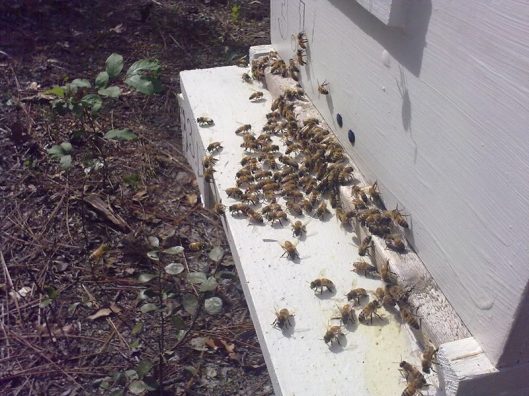
Last year, I responded to a swarm call that turned out to be an established colony in a home. The lady of the house was standing outside the home spraying the colony entrance with insecticide. She had already depleted one can and was working on her second. While it may have been as easy as removing a small piece of soffet to extract the bees, I no longer was going to risk bringing back chemically laden bees to my home bee yard. But there is more to it that that. Aside from all her children standing around getting a good dose of the overspray from the can, she was killing the flying bees which feed and support the hive. This meant that thousands of larvae would die shortly thereafter and leave her with a rotting odor inside her home in the days that followed.

Another call I received in late summer had me arrive to find an inpatient landlord spraying inside an attic. He told me that he determined that the bees clustered on the outside were actually entering the house and had established a hive in the attic. He thanked me for coming, but said he didn’t have time to wait as he hoped to have the house rented later that day. Before leaving I told him that unless he wanted a damaged ceiling, drywall and furnishings, he should consider having the hive removed because without the bees fanning the wax comb, the comb would melt releasing perhaps gallons of honey, and he’d be receiving complains from his new tenants. (not to mention the smell of decaying bees and larva and attracting ants, roaches, and other pests for months to come).

In closing, consider that spraying the bees is a poor effort to quickly eliminate a complex problem, and will often lead to more expensive problems in the days that follow. The time spent consulting a local beekeeper or bee removal service first is time well invested.

We hope this external  link assists you in your search to find someone locally in the USA:
http://www.bees-on-the-net.com

For more information on bees in structures visit Clemson Extension’s webpage: Honey Bee Colony Removal From Structures.

Feel free to share this on:

  • Share on Facebook (Opens in new window) Facebook
  • Share on X (Opens in new window) X
  • Share on Pinterest (Opens in new window) Pinterest
  • Email a link to a friend (Opens in new window) Email
  • Share on LinkedIn (Opens in new window) LinkedIn
  • Share on Reddit (Opens in new window) Reddit
  • Share on Tumblr (Opens in new window) Tumblr
  • Print (Opens in new window) Print
  • Share on Telegram (Opens in new window) Telegram
  • Share on WhatsApp (Opens in new window) WhatsApp
Like Loading...

Vegetable Gardening for Honey Bees by settling for bees

30 Friday Mar 2018

Posted by Beekeeping365 in beekeeping, honey bee photos, plants for bees

≈ 1 Comment

Tags

bee photos, beekeeping, honey bees, photography, planting for bees

These cold winter days don’t allow for much gardening time.   Like many of you, I’ve been considering the possibilities that spring planting offers lately, particularly as seed catalogs pile up and lure me into their pages with colorful spreads of summer’s bounty.

Last week, it was warm enough for bees to fly.  I went out back without the restrictions of a heavy coat, feeling as light and carefree as my honey bees navigating and searching for any available food sources.  I let the chickens out, watched my honey bees flying for a while and considered garden options for the spring.  I even brought a nice cup of hot tea outside, sweetened with my girls’ honey, of course.

For more excellent honey bee photos and suggestions for vegetable gardening plantings for the bees visit: Vegetable Gardening for Honey Bees — settling for bees

Feel free to share this on:

  • Share on Facebook (Opens in new window) Facebook
  • Share on X (Opens in new window) X
  • Share on Pinterest (Opens in new window) Pinterest
  • Email a link to a friend (Opens in new window) Email
  • Share on LinkedIn (Opens in new window) LinkedIn
  • Share on Reddit (Opens in new window) Reddit
  • Share on Tumblr (Opens in new window) Tumblr
  • Print (Opens in new window) Print
  • Share on Telegram (Opens in new window) Telegram
  • Share on WhatsApp (Opens in new window) WhatsApp
Like Loading...

Bees in Lithuania by West Kootenay Beekeepers

27 Tuesday Mar 2018

Posted by Beekeeping365 in beekeeping, beekeeping history

≈ 2 Comments

Tags

bee culture, beekeeping, honey bees, Lithuanian

Interesting article about bees in a different culture. SBF

Are Lithuanians obsessed with bees? – BBC Travel

Will Mawhood writes about bees in ancient Lithuanian culture and the enduring effect our favourite creatures have today. Photo: Rambynas/Getty Images

“Lithuanians don’t speak about bees grouping together in a colony like English-speakers do. Instead, the word for a human family (šeimas) is used. In the Lithuanian language, there are separate words for death depending on whether you’re talking about people or animals, but for bees – and only for bees – the former is used. And if you want to show a new-found Lithuanian pal what a good friend they are, you might please them by calling them bičiulis, a word roughly equivalent to ‘mate’, which has its root in bitė – bee. In Lithuania, it seems, a bee is like a good friend and a good friend is like a bee.”

Read the BBC Travel article here: http://www.bbc.com/travel/story/20180319-are-lithuanians-obsessed-with-bees

Above introduction via Bees in Lithuania — West Kootenay Beekeepers

Feel free to share this on:

  • Share on Facebook (Opens in new window) Facebook
  • Share on X (Opens in new window) X
  • Share on Pinterest (Opens in new window) Pinterest
  • Email a link to a friend (Opens in new window) Email
  • Share on LinkedIn (Opens in new window) LinkedIn
  • Share on Reddit (Opens in new window) Reddit
  • Share on Tumblr (Opens in new window) Tumblr
  • Print (Opens in new window) Print
  • Share on Telegram (Opens in new window) Telegram
  • Share on WhatsApp (Opens in new window) WhatsApp
Like Loading...

The bees tell their story by The Obee Reardon

22 Thursday Mar 2018

Posted by Beekeeping365 in beekeeping, beekeeping management

≈ 3 Comments

Tags

beekeeping, colony assessment, hive assessment, management, reading the frames

Having been engaged in beekeeping for several years now, I find that many beekeepers look for a recipe timeline for much of their beekeeping. Instead it would often be wise to begin looking at the hive itself and understanding what the bees are telling us. Below is an excellent article by The Obee Reardon on reading the frames and observing what the bees are saying, what they are doing, and what they need. Enjoy!

There’s a well known saying: “A picture tells a thousand words.” Beekeepers also have a saying along the lines of going through a hive is like reading a book, the bees are telling you what’s going on on each frame. So what does this picture of a frame tell me? And is it a thousand words?

Read entire article here: The bees tell their story — The Obee Reardon

Feel free to share this on:

  • Share on Facebook (Opens in new window) Facebook
  • Share on X (Opens in new window) X
  • Share on Pinterest (Opens in new window) Pinterest
  • Email a link to a friend (Opens in new window) Email
  • Share on LinkedIn (Opens in new window) LinkedIn
  • Share on Reddit (Opens in new window) Reddit
  • Share on Tumblr (Opens in new window) Tumblr
  • Print (Opens in new window) Print
  • Share on Telegram (Opens in new window) Telegram
  • Share on WhatsApp (Opens in new window) WhatsApp
Like Loading...

Smoking The Bees

21 Wednesday Mar 2018

Posted by Beekeeping365 in beekeeping, beekeeping management

≈ Leave a comment

Tags

bee smoker, beekeeping, beekeeping equipment

Source: World of Beekeeping – Smoking the Bees

April 6, 2012

When I first started beekeeping I never smoked my hives.  Somehow, somewhere I had learned that it was terribly difficult to smoke your hives correctly without burning the bees or some other weird idea.  I had some strange fear that it would be a little like operating a hand held dragon.  I’m not sure how that got into my head but it caused a ton of issues for me and thankfully I eventually started smoking my hives when doing inspections.

While you certainly can operate without smoking your hives it means putting new boxes, lids and other items onto the hives very slowly, pushing each little bee out of the way.  If you don’t you’ll squish a lot of bees and while unlikely, one of those could be the queen.

Eventually I fired up the smoker and realized that it really isn’t difficult to use.  The trick?  Let the fire die down before you start pumping the bellows.  You don’t want burning dragon fire coming from your smoker but it’s easy enough to avoid.

That’s really all there is to it.  If you’re at all paranoid you can simply blow the smoke over your bare hand… if it only feels mildly warm to you it’ll be just fine.

But why do we smoke our bees?

There are several thoughts as to what a smoker causes bees to do.  First many think that bees respond to smoke as they would a forest fire, gorging themselves on honey so they can fly off to a new home should they need to flee the hive.  Second the smoke is said to mask the warning pheromones given off by guard bees, keeping the troops from hearing the battle cry.

So how do you best use the smoke in your hives?

Well first you can use smoke to push bees where you want them to go.  When I first used the smoker this was really helpful when it came to adding new boxes to the tops of my hives… pushing them away from the top of the box meant very few if any were squished when I put on the new box.  The same idea holds true when it comes time to put on the inner cover.

But don’t smoke them too much!

Pushing them around a bit is fine but if you use too much smoke it won’t work for you.  Why?  Because if they are surrounded by smoke they won’t be able to “move away” from the smoke but will instead simply walk around disoriented.  Not what you were hoping for when you lit up the smoker!  So use smoke sparingly and both you and the bees will be happy.

Final thought.  If your beehives aren’t at your home (or even if they are) you have a burning thing you need to transport and/or store.  Make sure the fire is out before you put it anywhere and as an extra added precaution get a metal box with a lid if you need to put your smoker in your car.  We don’t want to see you on the news with a smoking car!

Source: World of Beekeeping – Smoking the Bees

Feel free to share this on:

  • Share on Facebook (Opens in new window) Facebook
  • Share on X (Opens in new window) X
  • Share on Pinterest (Opens in new window) Pinterest
  • Email a link to a friend (Opens in new window) Email
  • Share on LinkedIn (Opens in new window) LinkedIn
  • Share on Reddit (Opens in new window) Reddit
  • Share on Tumblr (Opens in new window) Tumblr
  • Print (Opens in new window) Print
  • Share on Telegram (Opens in new window) Telegram
  • Share on WhatsApp (Opens in new window) WhatsApp
Like Loading...

Resource – MAAREC Fact Sheets

08 Thursday Mar 2018

Posted by Beekeeping365 in beekeeping, education

≈ Leave a comment

Tags

beekeeping, education

pollen3-sm.jpg

Honey bees coming to pollen feeder

Source: Resource – MAAREC Fact Sheets Posted in useful references 

http://agdev.anr.udel.edu/maarec/educational-resources/maarec-fact-sheets/

Basic Biology and Management of the Japanese Hornfaced Bee

Pollination Contracts – 5.4

Moving Bees – 5.3

Pollination – 5.2

Bees and Bears – 4.10

Bee Diseases and their Control – 4.9

IPM for Beekeepers – 4.8

Varroa Mites – 4.7

Small Hive Beetle – 4.6

Wax Moth – 4.5

Stinging Insect Control – 4.4

Pests of Honey Bees – 4.3

Tracheal Mites – 4.2

Chemicals and Drugs – 4.1

Beeswax – 3.9

Honey – 3.8

Bait Hives – 3.7

Removing Bees – 3.6

Transferring Bees – 3.5

Swarming Control – 3.4

Dividing Honey Bee Colonies – 3.3

Fall Management – 3.2

Early Spring Management – 3.1

Keeping Bees in Populated Areas – 2.7

Sources of Information and Assistance for Beekeepers – 2.4

Queen, Nuc and Package Bee Suppliers – 2.3

Beekeeping Equipment and Supplies – 2.2

Tips on How to Handle Bees – 2.1

Honey bee nutrition – 1.4

What is the Africanized Honey Bee? – 1.3

Information for Bee-ginners – 1.2

Bees are Beneficial – 1.1

Source: Resource – MAAREC Fact Sheets

Feel free to share this on:

  • Share on Facebook (Opens in new window) Facebook
  • Share on X (Opens in new window) X
  • Share on Pinterest (Opens in new window) Pinterest
  • Email a link to a friend (Opens in new window) Email
  • Share on LinkedIn (Opens in new window) LinkedIn
  • Share on Reddit (Opens in new window) Reddit
  • Share on Tumblr (Opens in new window) Tumblr
  • Print (Opens in new window) Print
  • Share on Telegram (Opens in new window) Telegram
  • Share on WhatsApp (Opens in new window) WhatsApp
Like Loading...

The Importance of Swarm Control

07 Wednesday Mar 2018

Posted by Beekeeping365 in beekeeping, management, swarms

≈ Leave a comment

Tags

beekeeping, management, swarms

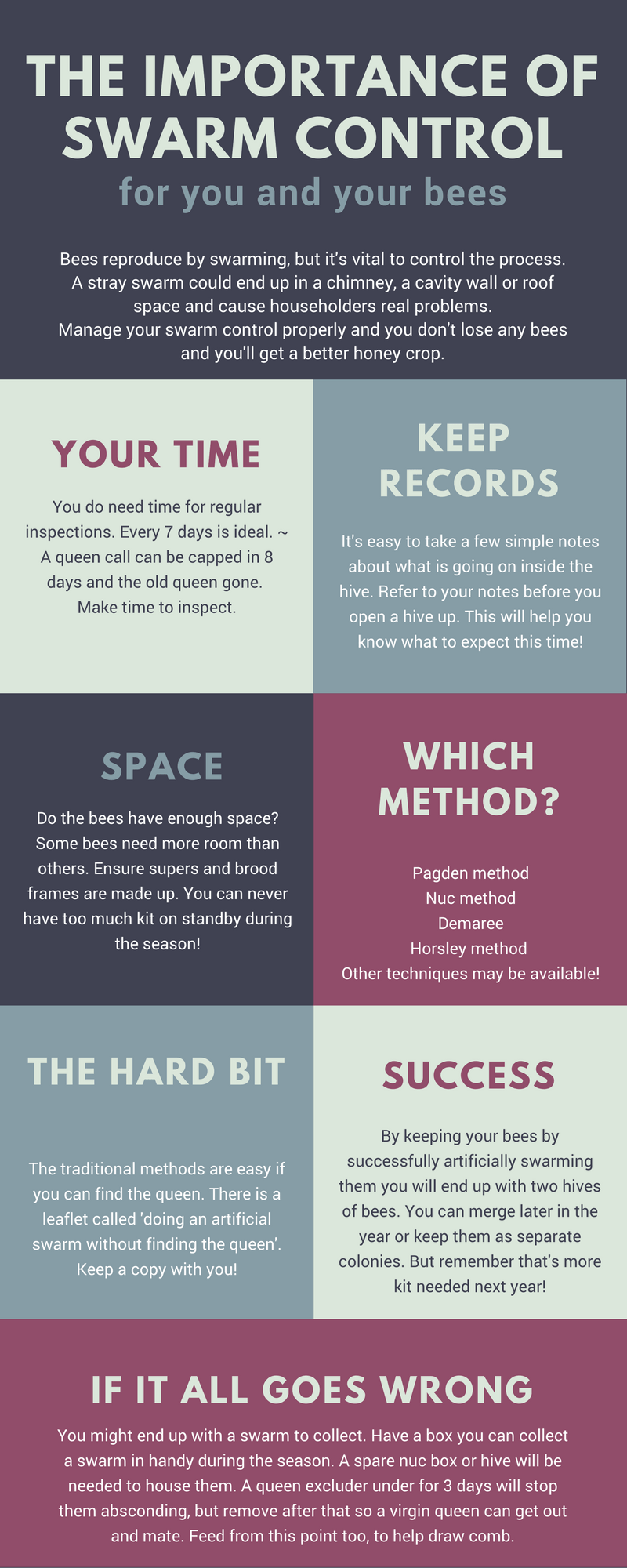
This was done online at canva – I was full of ideas until I started playing with it, it’s not the final one .. but was interesting to have a play with. It needs making more even. The templates are there to play with so I might have another go and see what I can […]

via Playing at infographics… — bbkamodules

Feel free to share this on:

  • Share on Facebook (Opens in new window) Facebook
  • Share on X (Opens in new window) X
  • Share on Pinterest (Opens in new window) Pinterest
  • Email a link to a friend (Opens in new window) Email
  • Share on LinkedIn (Opens in new window) LinkedIn
  • Share on Reddit (Opens in new window) Reddit
  • Share on Tumblr (Opens in new window) Tumblr
  • Print (Opens in new window) Print
  • Share on Telegram (Opens in new window) Telegram
  • Share on WhatsApp (Opens in new window) WhatsApp
Like Loading...

The Eternal Question – How to prevent swarming? by The Walrus and the Honeybee

06 Tuesday Mar 2018

Posted by Beekeeping365 in beekeeping, swarms

≈ Leave a comment

Tags

beekeeping, honey bees, Swarm control, swarm prevention, swarms

How to prevent swarming?

I previously wrote about some potential factors involved in the swarming of honey bees and why swarm prevention and control are so important for the beekeeper. The idea that we can prevent swarms is probably misguided; it is after all what bees are programmed to do, it is how they reproduce, but we must nevertheless educate ourselves and do what little we can in this regard.

The people who are most qualified to advise on swarming, or any other honey bee management topic, are the commercial honey farmers who manage thousands of colonies and rely upon their efforts to earn their living from it. This is why I will be quoting from such people extensively here – they have lived and breathed a life with bees and I would rather take heed of their words than those of a keen hobbyist or a well read scholar.

“If I were to meet a man perfect in the entire science and art of bee-keeping, and were allowed from him an answer to just one question, I would ask for the best and easiest way to prevent swarming.” C.C.Miller, Fifty Years Among the Bees

more…

Read full article here: The Eternal Question — The Walrus and the Honeybee

Feel free to share this on:

  • Share on Facebook (Opens in new window) Facebook
  • Share on X (Opens in new window) X
  • Share on Pinterest (Opens in new window) Pinterest
  • Email a link to a friend (Opens in new window) Email
  • Share on LinkedIn (Opens in new window) LinkedIn
  • Share on Reddit (Opens in new window) Reddit
  • Share on Tumblr (Opens in new window) Tumblr
  • Print (Opens in new window) Print
  • Share on Telegram (Opens in new window) Telegram
  • Share on WhatsApp (Opens in new window) WhatsApp
Like Loading...

Bee Behavior – Festooning

04 Sunday Mar 2018

Posted by Beekeeping365 in beekeeping, honey bee behavior, honey bee biology

≈ Leave a comment

Tags

beekeeping, honey bee behavior, honey bee biology

Source: Bee Behavior – Festooning

Bee behavior is my favorite part of beekeeping. It’s such a neat experience to watch and learn from the bees. It’s also interesting to have scientists explain (or in this case fail to explain) what is going on inside the mind of the bees.

Festoon is defined as “adorn (a place) with ribbons, garlands, or other decorations.”

In this case, that decor is the bees themselves, dangling like chain inside the hive. The video below shows a short clip of this activity.

At one point or was hypothesized that this pose promoted the production of wax from the wax glands – that has since  been debunked.

It’s purpose is deemed unknown to scientists and although there are speculations. Bees tend to do this when building new comb in their hive – some people think it’s a type of acrobatic scaffolding, that they’re measuring to build the comb the proper size, or that they’re just beat friends clustered together. Either way, it’s pretty neat bee-havior.

Source: Bee Behavior – Festooning

Feel free to share this on:

  • Share on Facebook (Opens in new window) Facebook
  • Share on X (Opens in new window) X
  • Share on Pinterest (Opens in new window) Pinterest
  • Email a link to a friend (Opens in new window) Email
  • Share on LinkedIn (Opens in new window) LinkedIn
  • Share on Reddit (Opens in new window) Reddit
  • Share on Tumblr (Opens in new window) Tumblr
  • Print (Opens in new window) Print
  • Share on Telegram (Opens in new window) Telegram
  • Share on WhatsApp (Opens in new window) WhatsApp
Like Loading...

It’s Bee Lining Time

25 Sunday Feb 2018

Posted by Beekeeping365 in bee lining, beekeeping, honey bee behavior

≈ Leave a comment

Tags

bee lining, beekeeping, honey bee behavior

15995032_1890370674529072_47262662713623245_o15895188_1890370677862405_7575084632469200262_n

Source: Tom Seeley’s Following the Wild Bees

Here is a super cool beebox for bee hunting, made of two Altoids tins. Ingenious, and fun! The inventor, Frank Linton, also provided instructions for construction.

See Plans here: http://bit.ly/2igLUfx

Source: Tom Seeley’s Following the Wild Bees

Feel free to share this on:

  • Share on Facebook (Opens in new window) Facebook
  • Share on X (Opens in new window) X
  • Share on Pinterest (Opens in new window) Pinterest
  • Email a link to a friend (Opens in new window) Email
  • Share on LinkedIn (Opens in new window) LinkedIn
  • Share on Reddit (Opens in new window) Reddit
  • Share on Tumblr (Opens in new window) Tumblr
  • Print (Opens in new window) Print
  • Share on Telegram (Opens in new window) Telegram
  • Share on WhatsApp (Opens in new window) WhatsApp
Like Loading...

Landi Simone – Reading the Frames

20 Tuesday Feb 2018

Posted by Beekeeping365 in beekeeping, beekeeping management

≈ 3 Comments

Tags

beekeeping, comb management, fall management, management, spring management, winter management

Landi Simone – Reading the Frames

I found this interesting. She says many things that I say to new beekeepers – listen to and watch your bees. They’ll tell you when they’re not happy! The frame pictures are excellent and well worth a look at from a healthy honey bee perspective.

It’s quite long at 44 minutes, but worth a watch!

Source: Landi Simone – Reading the Frames

Feel free to share this on:

  • Share on Facebook (Opens in new window) Facebook
  • Share on X (Opens in new window) X
  • Share on Pinterest (Opens in new window) Pinterest
  • Email a link to a friend (Opens in new window) Email
  • Share on LinkedIn (Opens in new window) LinkedIn
  • Share on Reddit (Opens in new window) Reddit
  • Share on Tumblr (Opens in new window) Tumblr
  • Print (Opens in new window) Print
  • Share on Telegram (Opens in new window) Telegram
  • Share on WhatsApp (Opens in new window) WhatsApp
Like Loading...

Deafening Silence by Misty Meadows Homestead

12 Monday Feb 2018

Posted by Beekeeping365 in beekeeping, Winter

≈ Leave a comment

Tags

assessment, beekeeping, colony assessment, colony loss, deadouts, hive assessment, winter bee losses

So your bees died over winter. This blog post by Misty Meadows Homestead shows how we can grow as beekeepers using our deductive skills to learn and improve. Thanks for sharing your loss with us so that we too learn.

When you love someone, you are never really prepared to lose them. When my beekeeping, gardener Grandfather passed, he had end-stage renal failure and we had 5 years to prepare – it wasn’t enough. Last winter, when my 14-year old cat passed, she had been telling us for weeks that her time was coming to an end – it wasn’t enough.

No matter how prepared we ‘think’ we are, when it happens, we realize we didn’t have enough time to prepare ourselves.

Wednesday we had a little bit of warm weather – about 55º and decided it was a good time to inspect our 4 hives.  We stood in the bee yard, observing the colonies for quite some time.

continued via link below:

Read the entire blog post at: Homestead Buzz – Deafening Silence — Misty Meadows Homestead & more!

Feel free to share this on:

  • Share on Facebook (Opens in new window) Facebook
  • Share on X (Opens in new window) X
  • Share on Pinterest (Opens in new window) Pinterest
  • Email a link to a friend (Opens in new window) Email
  • Share on LinkedIn (Opens in new window) LinkedIn
  • Share on Reddit (Opens in new window) Reddit
  • Share on Tumblr (Opens in new window) Tumblr
  • Print (Opens in new window) Print
  • Share on Telegram (Opens in new window) Telegram
  • Share on WhatsApp (Opens in new window) WhatsApp
Like Loading...

Getting Started in Beekeeping by sassafrasbeefarm

09 Friday Feb 2018

Posted by Beekeeping365 in beekeeper education, beekeeping, mentoring

≈ 5 Comments

Tags

beekeeping, education, mentoring

fullsizedtastytomato07162016bymichaeldantzler-106

Accepting What Is

As the local beekeeping association Secretary I received lots of email and often it involved a request from non members wanting to get into beekeeping. They’d done their homework which, mostly, has consisted of surfing Facebook and Youtube. They’d also asked lots of people how to best get started in beekeeping. After polling the answers they’d start to see two particular suggestions rising to the top: 1) Join your local association and 2) get a mentor. From there they deduced that they can most likely accomplish both by sending an email to the local association asking for a mentor to help them get started.

I had a very nice, polite email I send back moving them in the right direction to accomplish both getting them in contact with experienced beekeepers and a course of action to increase their likelihood of success.

As beekeepers here know, it takes numbers to be successful. If you don’t believe me make a split with insufficient nurse bees or capped brood. Timing is essential as well, start a task at the proper time and all goes easily. Success with a swarm in early April is a piece of cake; success with a swarm in August is difficult. And so it is with folks not yet knowledgeable of the mechanics of beekeeping. They want bees and a mentor not knowing the amount of effort it will take nor the proper timing in order to increase the chance of success that first year.

You too will get inquiries from friends and people you come in contact with once they know you are a beekeeper. Be prepared to help them get off to a realistic start if you want them to be successful. And that’s what it’s really about isn’t it? One hundred new beekeepers joining the association is great but not so impressive if half fail their first season because they had unrealistic expectations.

Let’s look at the “getting a mentor” concern. The old school model of getting a mentor went something like this: The mentee sought out a mentor and agreed to spend the first year helping the mentor in the mentor’s bee yard. The mentee would show up at an agreed on day and time and look over the shoulder of the mentor as he went through his hives, talking as he did so. Watch, listen, learn. Move boxes as needed and help the mentor as the tasks necessitated. This would go on for a season and the next Spring the mentor would make a split and give it to the mentee to take care of at the mentor’s yard. The mentee would work his new hive and the mentor would look over his shoulder to make sure he didn’t make any mistakes and was able to correctly comment on what he was seeing and the correct action to take. At the end of that season the mentee took his hive home and became a beekeeper.

Somewhere along the way we have deviated from this model. Now we take new comers into the hobby, put them through a 20 hour course and expect them to survive. It’s like making an early March split – risky. Nowadays the mentee wants the mentor to make visits to the mentee’s yard for instruction. And inasmuch as the clubs and associations have promoted getting the newcomers’ bees perhaps that seems reasonable to take some responsibility for assisting with issues that will naturally come up.

If we are going to move to a new model then perhaps we need to clarify and revise some terms. As it now stands we’re mixing and matching old school and new school. The new beekeeper wants a mentor, bees, and instruction. That’s reasonable. The problem is one of numbers though (remember that early Spring Splits analogy?). Most clubs can’t provide a 1:1 mentor for 100 new beekeepers every year nor should anyone expect mentors to volunteer to run around town visiting mentees weekly. So we must marry the expectations of the new beekeeper and the club acting as mentor. Each side gives and gets a bit and both walk away with more.

We do that by returning to the old school model whereby the mentee gets his/her education by visiting the mentor, but no longer at the mentor’s beeyard nor by a single mentor. The new model has the mentee visiting many mentors at events like 1) monthly meetings, 2) local educational events, 3) dinner before meetings, 4) online discussion groups 5) State Conferences, 6) connecting through fellowship with bee buddies, community outreach, etc. The list goes on… The mentee that wants to learn this art, like historically, has the resources offered and available and they go to learn – as before. The club or association organizes monthly meetings, presentations, events, newsletters, club library, allows for face to face fellowship time monthly, and online discussion groups. All things considered, the new beekeeper has more opportunity nowadays to gather knowledge than they used to with the old school model AND they get their bees their first year.

If you’ve suffered through my ruminations this far, I commend your endurance. I gave two similar presentations at this year’s state conference. I encourage the new beekeeper to take advantage of what is. There are multiple opportunities available to new beekeepers – more than enough to succeed. I also push the concept of bee buddies and fellowship for those that need a 1:1 relationship. Occasionally I hear someone complain about not having a 1:1 mentor for more personal, individual instruction as they had hoped. That’s unfortunate because they are cheating themselves out of the good of what is while wasting time wishing for the unlikelihood of what they envisioned. The fact of the matter is they have a room full of mentors at every meeting, at every gathering, at every conference. My mom used to say, “Go do the very best you can with what you’re offered. You do everything You can and You’ll succeed.” Mom was smart at marrying “what is” with success.

Feel free to share this on:

  • Share on Facebook (Opens in new window) Facebook
  • Share on X (Opens in new window) X
  • Share on Pinterest (Opens in new window) Pinterest
  • Email a link to a friend (Opens in new window) Email
  • Share on LinkedIn (Opens in new window) LinkedIn
  • Share on Reddit (Opens in new window) Reddit
  • Share on Tumblr (Opens in new window) Tumblr
  • Print (Opens in new window) Print
  • Share on Telegram (Opens in new window) Telegram
  • Share on WhatsApp (Opens in new window) WhatsApp
Like Loading...

Beekeeping will change you for the worse by Honey Bee Suite

08 Thursday Feb 2018

Posted by Beekeeping365 in beekeeping, humor

≈ 4 Comments

Tags

beekeeping, humor

A bit of humor here from Rusty. Well, I think she’s being humorous. Let’s hope so!

Many of my web visitors are soon-to-be beekeepers preparing for their first delivery of honey bees. They have read, attended classes, and talked to other beekeepers. Some write to me with a few last-minute questions. But what they envision and what I foresee are completely different.

I was reminded of this beekeeping reality while watching a beginner video on YouTube. While sappy music played in the background, a lilting voice explained that once you become a beekeeper you will embrace nature for the first time! You will become attuned to weather and blooms! You will blossom as a person!

Wow. I imagine a barefoot flower child romping through a verdant meadow, a ring of daisies in her hair and a bouquet of dandelions clutched in her fist. Beekeeping is your entry into a world of peace and love and grass stains. Kumbaya in a box.

Read the full article here: Beekeeping will change you for the worse — Honey Bee Suite

Feel free to share this on:

  • Share on Facebook (Opens in new window) Facebook
  • Share on X (Opens in new window) X
  • Share on Pinterest (Opens in new window) Pinterest
  • Email a link to a friend (Opens in new window) Email
  • Share on LinkedIn (Opens in new window) LinkedIn
  • Share on Reddit (Opens in new window) Reddit
  • Share on Tumblr (Opens in new window) Tumblr
  • Print (Opens in new window) Print
  • Share on Telegram (Opens in new window) Telegram
  • Share on WhatsApp (Opens in new window) WhatsApp
Like Loading...

Big Bear’s Beekeeping Advice For New Beekeepers by Big Bear

06 Tuesday Feb 2018

Posted by Beekeeping365 in beekeeping, education

≈ Leave a comment

Tags

beekeeping, beekeeping advice, beginning beekeeping, education

Don’t listen to me. That’s my advice, right there. I don’t advise new beekeepers. There’s no point in my adding to the confusion and overwhelm of someone just beginning beekeeping. I teach beekeeping classes, do presentations and offer hands-on apprenticeship opportunities for people interested in apiculture. Could be beginners, could be long timers. Who knows.…

via Big Bear’s Beekeeping Advice For New Beekeepers — Bee Smart beekeeping project

Feel free to share this on:

  • Share on Facebook (Opens in new window) Facebook
  • Share on X (Opens in new window) X
  • Share on Pinterest (Opens in new window) Pinterest
  • Email a link to a friend (Opens in new window) Email
  • Share on LinkedIn (Opens in new window) LinkedIn
  • Share on Reddit (Opens in new window) Reddit
  • Share on Tumblr (Opens in new window) Tumblr
  • Print (Opens in new window) Print
  • Share on Telegram (Opens in new window) Telegram
  • Share on WhatsApp (Opens in new window) WhatsApp
Like Loading...

I didn’t know what I didn’t know by Altamont Farms

05 Monday Feb 2018

Posted by Beekeeping365 in beekeeping

≈ Leave a comment

Tags

beekeeping, biology, education, learning curve, management

An excellent assessment of the beekeeping learning curve with some good advice.

In 2016 I developed an urge to add bees to our thriving urban farm here in Emerald Hills. The gardens were producing year round, our chickens were productive, and I was exploring a lot of interesting technology for monitoring and irrigation. I needed a new project, honey bees.

I bought a hive from a guy on Craigslist who discovered one of his children was allergic to bee stings and decided to sell off his hives. Easy, everything was already functioning. I put the hive in my garden in what I would later learn is a bad location (afternoon sun only and positioned in a manner that wind would blow into the opening) and didn’t really know what I was looking at when I inspected the hive.

Lesson learned: I didn’t know what I didn’t know. 

(continued at link below)

Read the entire article here: My two year beekeeping journey — Altamont Farms

Feel free to share this on:

  • Share on Facebook (Opens in new window) Facebook
  • Share on X (Opens in new window) X
  • Share on Pinterest (Opens in new window) Pinterest
  • Email a link to a friend (Opens in new window) Email
  • Share on LinkedIn (Opens in new window) LinkedIn
  • Share on Reddit (Opens in new window) Reddit
  • Share on Tumblr (Opens in new window) Tumblr
  • Print (Opens in new window) Print
  • Share on Telegram (Opens in new window) Telegram
  • Share on WhatsApp (Opens in new window) WhatsApp
Like Loading...

Image

Winter in the Nuc Yard

31 Wednesday Jan 2018

Tags

beekeeping, seasons

12592690_10206761945022070_2944841313752569793_n

Saying goodbye to January.


Feel free to share this on:

  • Share on Facebook (Opens in new window) Facebook
  • Share on X (Opens in new window) X
  • Share on Pinterest (Opens in new window) Pinterest
  • Email a link to a friend (Opens in new window) Email
  • Share on LinkedIn (Opens in new window) LinkedIn
  • Share on Reddit (Opens in new window) Reddit
  • Share on Tumblr (Opens in new window) Tumblr
  • Print (Opens in new window) Print
  • Share on Telegram (Opens in new window) Telegram
  • Share on WhatsApp (Opens in new window) WhatsApp
Like Loading...

Posted by Beekeeping365 | Filed under beekeeping, beekeeping calendar, beekeeping seasons, calendar, seasons

≈ 5 Comments

Rainy day beekeeper rambings

29 Monday Jan 2018

Posted by Beekeeping365 in beekeeping, varroa, varroa destructor, varroa mites

≈ 1 Comment

Tags

beekeeping, varroa, varroa destructor, varroa mites

12465943_10206651774307871_3902834830033799078_o

I posted this last year and, with the start of our season coming soon, I can’t help but repost. I few years ago I assessed my colonies preseason and found they needed a mite cleaning. The difference in their appearance and performance was notable. They were the prettiest bees that spring – vigorous and prolific. Since then I make a point of getting my bees off to a good start early in the spring buildup. Enjoy.

To a carpenter with a hammer everything is a nail. And so it is with me. Registered Nurse with close to 30 years of inpatient hospital unit management, a few graduate level Public Health courses, and 60 years of observation. And so everything looks like a health care management problem (well not everything). Anyway, I thought I’d preface the following comments with a warning that this is just my perspective.

There is a beekeeping saying, “Take your losses in the Fall.” That doesn’t necessarily mean let them die. It typically means combine hives as needed. The economist in us tries to take the least hit possible and combine all of the weaker hives thus at least salvaging one hive out of the mess. My limited experience has been that combining 2 or even 3 weak colonies in the fall still results in a loss. Better to add each of them to a strong hive and take the hive numbers hit right then in the fall. But from a public health or infectious disease standpoint how can we do this safely? If the queen is simply weak that’s one thing, but if an infectious agent or Varroa is the issue you may be causing yourself more anguish by combining an infected hive with a good strong colony. For example, if you were in a hospital room how would you like it if the person in the next bed was being admitted because he/she was weak with a highly infectious disease? Hey, anyone want to share a room with a TB patient? Back to beekeeping… My beekeeping answer is to treat first, pinch the queen, then combine them and even then only if I suspected they were not sick. If they appeared to have succumbed to an infection and are in steep decline then I wouldn’t add those sick bees to another hive, period.

I got to the point of cringing with every Varroa lecture at conferences. But somewhere along the way after looking at the evidence left in my own combs, hives, and other symptoms, I became convinced of a few things. Varroa explains most of the unexplainable. I think successful beekeepers treat early and often. Nowadays, if a hive crashes, I suspect Varroa first. Yeah, maybe they absconded but it was probably secondary to Varroa infestation. Maybe they were robbed but it was probably after they became weak and crashed due to Varroa. I believe Varroa to be the primary cause in most cases. The other events are secondary but that’s what we can see so that’s what we believe happened. We humans are visually oriented to a fault.

But how does it happen so fast you may ask? Ever worked on a hospital ward or lived in a dormitory type housing situation where a flu outbreak occurred? How many sick individuals did you see prior to the epidemic putting everyone in the bed with symptoms? Probably just a few. That’s how it happens. A few sick individuals carrying a potent virus and BAM! Overnight everyone is vomiting with fever and diarrhea. The viri take over and, in the case of bees, a seemingly healthy colony crashes suddenly and we find ourselves perplexed. But why are we perplexed, have we not seen the flu virus in humans close schools? Or cruise ships turn around to return to port after a sudden virus puts all of the occupants in their cabins too sick to continue. Have we been too long without a world plague to have forgotten the infectious disease process?

If you’ve ever read a death certificate it states cause of death. It also allows the physician to state medical factors affecting death. So, cause of death may say “esophageal hemorrhage” but the medical factors might state, “chronic alcoholism.” And so it is with Varroa. Cause of death is “robbing” or “abscond” while the chronic illness would be listed as “Parasitic Mite Syndrome with high virus loading.”

Moving on, so when a colony crashes and robbers come in to clean up the honey guess who takes home something they didn’t ask for? Your other colonies, that’s who. Once the robbing starts the Varroa get distributed among the other hives.

First, in my opinion, you may not want to get into beekeeping if you’re not willing to treat for Varroa and use IPM methods – it’s just too difficult. But then, that’s me. I also take my kids to the doctor when they are sick and don’t let my dogs walk around with ticks in the hope they build a resistance. If you want to be treatment free at least give the bees a chance and buy property 5 miles away from the next closest beekeeper, get clean survivor bees to start, aggressively utilize IPM methods such as screen bottom boards, splits, queen caging, small cell, sugar shakes, and artificial swarms. You’ll be extremely  busy but I do believe it can work for some people. For others it becomes an exercise in frustration and disappointment.

Me? I’m going to treat them early and often after a preseason mite level assessment to establish a baseline. I also monitor mite counts post treatment to ensure the treatment was effective. As a primary offense to prevent outbreaks, I treat every spring before honey supers go on the hives. Then, typically, I do a series of 3 weekly OA treatments in June after pulling supers. During the long hot summer, if a colony starts to weaken I treat that single hive after assessment. If a hive collapses and gets robbed everyone gets a treatment. During December broodlessness everyone gets a single vaporization or dribble. I primarily use OA but I may replace one of the seasonal treatments above with a different method. That’s the two pronged plan of 1) Primary preventative treatment and 2) Aggressive Secondary post infection treatments. That’s what you do when you visit your health care provider – expect preventative measures first, and predictable, effective treatment when you get sick.

Hey, look at your hands right now. How many bacteria and viri do you see? Count them. You can’t but if you get sick you may have wished you had washed your hands a little more frequently. Prevention first, but if you get sick take your medicine!

It’s viri spread by Varroa killing our bees. You don’t see the viri, rarely see the mites that spread the viri, and frequently don’t see the symptoms until it’s too late. Good luck managing your bees’ health.

Feel free to share this on:

  • Share on Facebook (Opens in new window) Facebook
  • Share on X (Opens in new window) X
  • Share on Pinterest (Opens in new window) Pinterest
  • Email a link to a friend (Opens in new window) Email
  • Share on LinkedIn (Opens in new window) LinkedIn
  • Share on Reddit (Opens in new window) Reddit
  • Share on Tumblr (Opens in new window) Tumblr
  • Print (Opens in new window) Print
  • Share on Telegram (Opens in new window) Telegram
  • Share on WhatsApp (Opens in new window) WhatsApp
Like Loading...

Beeswax

25 Thursday Jan 2018

Posted by Beekeeping365 in beekeeping, beeswax, humor

≈ Leave a comment

Tags

beekeeping, beeswax, humor

10906401_10204221730478294_307854216647535126_n

Finished waxing some frames today. Now I just have to return the crock pot to the kitchen without my wife noticing I borrowed it.

Feel free to share this on:

  • Share on Facebook (Opens in new window) Facebook
  • Share on X (Opens in new window) X
  • Share on Pinterest (Opens in new window) Pinterest
  • Email a link to a friend (Opens in new window) Email
  • Share on LinkedIn (Opens in new window) LinkedIn
  • Share on Reddit (Opens in new window) Reddit
  • Share on Tumblr (Opens in new window) Tumblr
  • Print (Opens in new window) Print
  • Share on Telegram (Opens in new window) Telegram
  • Share on WhatsApp (Opens in new window) WhatsApp
Like Loading...

The Life of The Bee by Maurice Maeterlinck

21 Sunday Jan 2018

Posted by Beekeeping365 in beekeeping, beekeeping books, beekeeping history, book review, education

≈ Leave a comment

Tags

art, beekeeping, beekeeping books, beekeeping history, book review, education, Maurice Maeterlinck, print art, The Life of the Bee

Below is a nice enticement to appreciating the art in The Life of the Bee by Maurice Maeterlink and illustrated by E.J. Detmold. The text can be read online here: The Life of the Bee by Maurice Maeterlink. And more on the illustrator at: Edward Julius Detmold

via Art Book of the Month, July 2016 — Books & the City:

The Life of The Bee by Maurice Maeterlinck, 1911. Front cover

The Life of The Bee by Maurice Maeterlinck
(Translated by Alfred Sutro)
Illustrated by E J Detmold
George Allen & Co Ltd

Illustrated edition 1911


The Life of The Bee by Maurice Maeterlinck is a wonderfully eccentric book written in a variety of genres. It is informed by the author’s years of experience studying the complex behaviour of bees. Yet this intricate factual account is suffused with epic drama and wildly poetic philosophical digressions.

Maeterlinck, in telling the story of the bee, explores the subjects of life, death, truth, nature, humanity, and everything in between.

The story of the bee becomes almost a mystic parable to describe all human experience. It has the added charm of being one of the most beautifully illustrated books in our collection. Edward Detmold’s paintings perfectly reflect the sentiment and beauty of the writing.

The Life of The Bee by Maurice Maeterlinck, 1911. 'Founding The City', p72

Below I have gathered together some of Detmold’s illustrations and selected a few memorable passages from the chapter entitled, ‘ The Nuptial Flight’ which presents the tragic sex life of the heroic male bee. I hope you enjoy them.

‘Most creatures have a vague belief that a very precarious hazard, a kind of transparent membrane, divides death from love and that the profound idea of Nature demands that the giver of life should die at the point of giving. Here this idea, whose memory lingers still over the kisses of man, is realised in its primal simplicity. No sooner has the union been accomplished than the male’s abdomen opens, the organ detaches itself, dragging with it the mass of the entrail, the wings relax, and, as though struck by lightning , the emptied body turns on itself and sinks into the abyss.’
(Part V THE NUPTIAL FLIGHT 87 –page 166)

The Life of The Bee by Maurice Maeterlinck, 1911. 'The Duel of the Queens', p126The Life of The Bee by Maurice Maeterlinck, 1911. 'The Combs', p198

‘Nor does the new bride , indeed, show more concern than her people, (for the poor male Bee ) there being no room for many emotions in her narrow, barbarous, practical brain. She has but one thought, which is to rid herself of as quickly as possible of the embarrassing souveniers her consort has left her,…She seats herself on the threshold, and carefully strips off the useless organs…’
(Part V THE NUPTIAL FLIGHT 89 –page 173)

The Life of The Bee by Maurice Maeterlinck, 1911. 'Sphinx Atropos', p188 The Life of The Bee by Maurice Maeterlinck, 1911. 'The Queen', p20

‘Prodigious nuptials these, the most fairy-like that can be conceived, azure and tragic , raised high above life by the impetus of desire; imperishable and terrible, unique and bewildering, solitary and infinite. An admirable ecstasy, wherein death, supervening in all that our sphere has of most limpid and loveliest, in virginal, limitless space, stamps the instant of happiness on the sublime transparence of the great sky;…’
(Part V THE NUPTIAL FLIGHT 90 –page 174)

The Life of The Bee by Maurice Maeterlinck, 1911. Title Page

Source:  Art Book of the Month, July 2016 — Books & the City

Feel free to share this on:

  • Share on Facebook (Opens in new window) Facebook
  • Share on X (Opens in new window) X
  • Share on Pinterest (Opens in new window) Pinterest
  • Email a link to a friend (Opens in new window) Email
  • Share on LinkedIn (Opens in new window) LinkedIn
  • Share on Reddit (Opens in new window) Reddit
  • Share on Tumblr (Opens in new window) Tumblr
  • Print (Opens in new window) Print
  • Share on Telegram (Opens in new window) Telegram
  • Share on WhatsApp (Opens in new window) WhatsApp
Like Loading...

Honey, Cooking, and The Science Behind The Sweet by A.V. Walters

20 Saturday Jan 2018

Posted by Beekeeping365 in beekeeping, honey

≈ Leave a comment

Tags

beekeeping, honey

An interesting article which helps explain the science of honey and cooking with honey. Enjoy this article by A.V. Walters at tworockchronicles blog.

Honey is a foodstuff of almost mythical proportions. It is one of a handful of foods that, left in its original form, never spoils. Honey has been known to last literally thousands of years—and still be edible and sweet. Honey will crystalize—a condition that may put off the uninformed consumer—but crystalized honey is still good. If it offends, you can simply warm it gently and it will resume its liquid amber loveliness.

Read more of this interesting article here: Honey, Cooking, and The Science Behind The Sweet — tworockchronicles

Feel free to share this on:

  • Share on Facebook (Opens in new window) Facebook
  • Share on X (Opens in new window) X
  • Share on Pinterest (Opens in new window) Pinterest
  • Email a link to a friend (Opens in new window) Email
  • Share on LinkedIn (Opens in new window) LinkedIn
  • Share on Reddit (Opens in new window) Reddit
  • Share on Tumblr (Opens in new window) Tumblr
  • Print (Opens in new window) Print
  • Share on Telegram (Opens in new window) Telegram
  • Share on WhatsApp (Opens in new window) WhatsApp
Like Loading...

Clustering, Torpor, and Trehalose

19 Friday Jan 2018

Posted by Beekeeping365 in beekeeping, Winter

≈ Leave a comment

Tags

beekeeping, torpor, winter in the bee yard

There is no good reason to open your hive during periods of extreme cold. None. Even if you suspect they have died, for whatever reason, opening the hive can typically wait.

Honey bees will form a protective spherical cluster and shiver, the outermost bees rotating with the inner bees, to warm themselves. The bees shiver to generate heat and the outer bees form an insulative layer. Being cold blooded, all bees exhibit some degree of slowing down when they are unable to warm themselves sufficiently. As the temperature continues to drop a protective physiological mechanism called torpor begins: a semi-hibernation, reaction to the cold, that reduces their metabolism and allows them to conserve energy and survive by significantly slowing down their physiological processes. Dependent on cluster size this may affect a larger percentage of the bees surrounding the core of the cluster. The role of the beekeeper is to allow the colony to conserve what heat is available by not opening the hive. In a case where it is known the colony is running out of food wait until the hive and bees have warmed enough to move about and only then briefly open the hive enough to insert frames of honey or other food. During extended periods of cold weather it may take a few days for the bees to warm up and begin to move about freely.

Honey bees’ ability to survive winter temperatures is related to both the formation of a winter cluster as well as physiological mechanisms. Another physiological mechanism involves a sugar within honey bee hemolymph called trehalose. Monosaccharides in honey bee diets are fructose and glucose but the most common circulating sugar in hemolymph is trehalose which is a disaccharide consisting of two glucose molecules. Trehalose acts as a protection to cells by preventing the crystallization of cell membranes and enables the bees to come very close to freezing yet recover without ill effects after warming.

Feel free to share this on:

  • Share on Facebook (Opens in new window) Facebook
  • Share on X (Opens in new window) X
  • Share on Pinterest (Opens in new window) Pinterest
  • Email a link to a friend (Opens in new window) Email
  • Share on LinkedIn (Opens in new window) LinkedIn
  • Share on Reddit (Opens in new window) Reddit
  • Share on Tumblr (Opens in new window) Tumblr
  • Print (Opens in new window) Print
  • Share on Telegram (Opens in new window) Telegram
  • Share on WhatsApp (Opens in new window) WhatsApp
Like Loading...

Corn Fritters with Honey-Bacon Drizzle by christinanifong

13 Saturday Jan 2018

Posted by Beekeeping365 in beekeeping, honey, raw honey, recipe

≈ 1 Comment

Tags

beekeeping, honey, honey recipe, raw honey, recipe

img_6344

This summer, I became immersed in the world of honey. It began with my reporting on a magazine story about backyard beekeepers, which then led to lessons in how honey is made and why it’s been a treasured food for millennia. Did you know there are more than 300 documented varieties of honey in the US alone? Or that the University of California, Davis developed a tasting wheel to categorize the hundreds of flavors that can be detected in these many hues of honey? All this research, of course, ended up with me back in my kitchen, testing recipe after recipe. I write today to share this, my favorite new honey recipe. Think of these fritters as tasty, hearty hush puppies, good enough to make into a meal. The honey flavor is subtle, yet a perfect complement to the corn and pork.

Read entire article with recipe here: Corn Fritters with Honey-Bacon Drizzle —

Feel free to share this on:

  • Share on Facebook (Opens in new window) Facebook
  • Share on X (Opens in new window) X
  • Share on Pinterest (Opens in new window) Pinterest
  • Email a link to a friend (Opens in new window) Email
  • Share on LinkedIn (Opens in new window) LinkedIn
  • Share on Reddit (Opens in new window) Reddit
  • Share on Tumblr (Opens in new window) Tumblr
  • Print (Opens in new window) Print
  • Share on Telegram (Opens in new window) Telegram
  • Share on WhatsApp (Opens in new window) WhatsApp
Like Loading...

“Bee… or bee not, there is no try.” by Bees with eeb

11 Thursday Jan 2018

Posted by Beekeeping365 in beekeeping, beekeeping chores

≈ Leave a comment

Tags

beekeeping, beekeeping chores, goals, success

My WordPress friend Erik recently posted the blog post below, which I believe fully explains and illustrates much of what beekeeping entails. Set goals, make plans, assess your progress, and above all, “Bee… or bee not, there is no try.”

If one is to take up the avocation of beekeeping one should devote the effort required to succeed, and by doing so, expect success. There are a few shortcuts which may make you more efficient but many which will cause failure. Above all, do all of what needs doing and in a manner which leads you to expect success.

It has been bitterly cold the last two weeks (at least by Virginia standards), often below 10 F (-12 C) overnight, and that is without the wind. As a young beekeeper, I worry that my hives will not handle the cold well. One or two may already have died out, for all I know. Unfortunately it is still January so we must wait. Nothing to do but publish my beekeeping goals for 2018.

Setting goals can be tricky, especially short term ones. You want something achievable, yet interesting. New, but building on past success. Perhaps a stretch goal as well to challenge yourself.

Read the full article by visiting Bees with eeb here:  Bee… or bee not, there is no try — Bees with eeb

Feel free to share this on:

  • Share on Facebook (Opens in new window) Facebook
  • Share on X (Opens in new window) X
  • Share on Pinterest (Opens in new window) Pinterest
  • Email a link to a friend (Opens in new window) Email
  • Share on LinkedIn (Opens in new window) LinkedIn
  • Share on Reddit (Opens in new window) Reddit
  • Share on Tumblr (Opens in new window) Tumblr
  • Print (Opens in new window) Print
  • Share on Telegram (Opens in new window) Telegram
  • Share on WhatsApp (Opens in new window) WhatsApp
Like Loading...

Beekeepers and Moonshiners

09 Tuesday Jan 2018

Posted by Beekeeping365 in beekeeping

≈ 1 Comment

Tags

beekeeping

1012766_596696777051489_1100200586_n

‘Bees During Prohibition’ 1920 to 1933.
Celebrating the Anniversary of the Repeal of Prohibition – Dec. 5th. 1933

1931- ‘Bootleggers Destroy Apiary’
…
Image: Beekeepers across America frequently found themselves keeping bees in the same remote locations where moonshine stills were hidden. This still is located in Southern Georgia where beekeepers set up apiaries to collect Tupelo Honey.

Moonshiners needed to place their stills in remote areas near a reliable source of water. Beekeepers also needed to situate apiaries near water and in remote areas where forage was abundant. This occasionally placed beekeepers in direct conflict with moonshiners. In 1931, revenue officers destroyed three whiskey making outfits in the swamp behind an apiary of 85 colonies owned by Mr. Scott of North Carolina. Although Mr. Scott did not know the stills were there, the bootleggers piled up thirty- seven of his colonies and burned them and turned most of the other hives over on their sides. All this was done because the bootleggers suspicions that Mr. Scott had given information as to the location of the stills. -Raleigh, North Carolina -Bee Culture Magazine, 1931.

From Historical Honey Bee Articles – Beekeeping History

Feel free to share this on:

  • Share on Facebook (Opens in new window) Facebook
  • Share on X (Opens in new window) X
  • Share on Pinterest (Opens in new window) Pinterest
  • Email a link to a friend (Opens in new window) Email
  • Share on LinkedIn (Opens in new window) LinkedIn
  • Share on Reddit (Opens in new window) Reddit
  • Share on Tumblr (Opens in new window) Tumblr
  • Print (Opens in new window) Print
  • Share on Telegram (Opens in new window) Telegram
  • Share on WhatsApp (Opens in new window) WhatsApp
Like Loading...

Macro Monday #24 — the earth laughs in flowers

08 Monday Jan 2018

Posted by Beekeeping365 in beekeeping, beekeeping history, pollination

≈ Leave a comment

Tags

beekeeping, beekeeping history, pollination

(click to enlarge to full size) The British Black Bee (Apis mellifera mellifera), or European Dark Honeybee, was common until the beginning of the 20th Century. Fully adapted for the cooler climate she was responsible for the pollination of the wild flowers you see in the British Isles today. Sadly a virus practically wiped the […]

via Macro Monday #24 — the earth laughs in flowers

Feel free to share this on:

  • Share on Facebook (Opens in new window) Facebook
  • Share on X (Opens in new window) X
  • Share on Pinterest (Opens in new window) Pinterest
  • Email a link to a friend (Opens in new window) Email
  • Share on LinkedIn (Opens in new window) LinkedIn
  • Share on Reddit (Opens in new window) Reddit
  • Share on Tumblr (Opens in new window) Tumblr
  • Print (Opens in new window) Print
  • Share on Telegram (Opens in new window) Telegram
  • Share on WhatsApp (Opens in new window) WhatsApp
Like Loading...

Equipment Requirements for the First-Time Beekeeper

27 Wednesday Dec 2017

Posted by Beekeeping365 in beekeeping, beekeeping equipment, equipment

≈ Leave a comment

Tags

beekeeping

It really is not that complicated -James E. Tew

A beehive is not very complicated. Handy craftsmen frequently build their own in their home shop. Essentially, the common hive requires an outer cover – or simply a roof. Directly beneath that rooftop is an inner cover that is primarily used to prevent bees from soundly gluing the roof to the top edges of the hive box immediately beneath it.  An inner cover is not absolutely necessary, but it is a very useful piece of equipment. Beneath the inner cover is an assemblage of supers and hive bodies that is determined by the annual season.  Some beekeepers use a queen excluding device to restrict the queen to the brood chamber(s). During the spring season, something like two supers and two hive bodies would be common in a typical hive.  Beneath all the various boxes that are being used, a bottom board provides the landing platform for bees and gives a bottom for the hive. Generally a hive stand supports the entire beehive infrastructure. (Hive Diagram from Skinner, Parkman, Studer, and Williams. 20041)

via Equipment Requirements for the First-Time Beekeeper — BEEKeeping: Your First Three Years

Feel free to share this on:

  • Share on Facebook (Opens in new window) Facebook
  • Share on X (Opens in new window) X
  • Share on Pinterest (Opens in new window) Pinterest
  • Email a link to a friend (Opens in new window) Email
  • Share on LinkedIn (Opens in new window) LinkedIn
  • Share on Reddit (Opens in new window) Reddit
  • Share on Tumblr (Opens in new window) Tumblr
  • Print (Opens in new window) Print
  • Share on Telegram (Opens in new window) Telegram
  • Share on WhatsApp (Opens in new window) WhatsApp
Like Loading...

You’re a Bee. This Is What It Feels Like. by Joanna Klein

26 Tuesday Dec 2017

Posted by Beekeeping365 in beekeeping

≈ Leave a comment

Tags

beekeeping

Set your meetings, phone calls and emails aside, at least for the next several minutes. That’s because today you’re a bee.
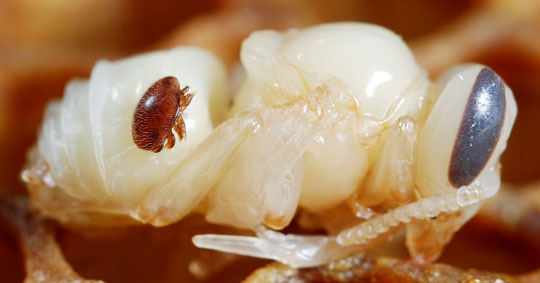
It’s time to leave your hive, or your underground burrow, and forage for pollen. Pollen is the stuff that flowers use to reproduce. But it’s also essential grub for you, other bees in your hive and your larvae. Once you’ve gathered pollen to take home, you or another bee will mix it with water and flower nectar that other bees have gathered and stored in the hive. But how do you decide which flowers to approach? What draws you in?

In a review published last week in The Journal of Functional Ecology, researchers asked: What is a flower like from a bee’s perspective, and what does the pollinator experience as it gathers pollen? And that’s why we’re talking to you in the second person: to help you understand how bees like you, while hunting for pollen, use all of your senses — taste, touch, smell and more — to decide what to pick up and bring home.

Maybe you’re ready to go find some pollen. But do you even know where to look?

Read full article here: You’re a Bee. This Is What It Feels Like. by By JOANNA KLEIN 

Feel free to share this on:

  • Share on Facebook (Opens in new window) Facebook
  • Share on X (Opens in new window) X
  • Share on Pinterest (Opens in new window) Pinterest
  • Email a link to a friend (Opens in new window) Email
  • Share on LinkedIn (Opens in new window) LinkedIn
  • Share on Reddit (Opens in new window) Reddit
  • Share on Tumblr (Opens in new window) Tumblr
  • Print (Opens in new window) Print
  • Share on Telegram (Opens in new window) Telegram
  • Share on WhatsApp (Opens in new window) WhatsApp
Like Loading...

Winter Solstice and Honey Bees by settlingforbees

21 Thursday Dec 2017

Posted by Beekeeping365 in beekeeping, beekeeping seasons, honey bee behavior, management, seasons, winter solstice

≈ 1 Comment

Tags

beekeeping, honey bee behavior, management, seasons, solstice

The winter solstice signals more than the first official day of winter.  In the natural world, animals use the changes in available daylight to signal their actions.   Eventually, longer daylight hours will signal song birds to sing more to attract mates and begin laying eggs and dormant plants to emerge and begin anew.  Remarkably, the winter solstice signals honey bees to begin spring preparations now.

Read the full article here: Winter Solstice and Honey Bees — settlingforbees

Feel free to share this on:

  • Share on Facebook (Opens in new window) Facebook
  • Share on X (Opens in new window) X
  • Share on Pinterest (Opens in new window) Pinterest
  • Email a link to a friend (Opens in new window) Email
  • Share on LinkedIn (Opens in new window) LinkedIn
  • Share on Reddit (Opens in new window) Reddit
  • Share on Tumblr (Opens in new window) Tumblr
  • Print (Opens in new window) Print
  • Share on Telegram (Opens in new window) Telegram
  • Share on WhatsApp (Opens in new window) WhatsApp
Like Loading...

Spelling Bees with Uncommon Names by Bad Beekeeping Blog

19 Tuesday Dec 2017

Posted by Beekeeping365 in beekeeping, nomenclature

≈ Leave a comment

Tags

beekeeping, nomenclature

I’m not a grammarian, I don’t have the most hugest vocabulary, and I have been known to produce some pretty bad spells of whetther – but even I appreciate the right word, used and spelt correctly. Without rules, confusion reigns (and rains and rains).  I’m glad when someone points out errors I’ve made – it gives me a chance to learn.

I’m coming back to something I’ve written about before and then I’m moving on to something I’ve never written about.  Honey bee – it really should be two words, not one. I think the single word honeybee is just plain wrong. But I notice that some dictionaries disagree with me. Webster’s, for example.  Webster’s has also allowed yellow jacket instead of yellowjacket, which is just plain ridiculous. But then, Wikipedia also has an entry for ‘yellow jacket’ instead of yellowjacket, so maybe the whole world is coming to a spectacular illiterate end.

(cont.)

Read fully article here: Spelling Bees with Uncommon Names — Bad Beekeeping Blog

Feel free to share this on:

  • Share on Facebook (Opens in new window) Facebook
  • Share on X (Opens in new window) X
  • Share on Pinterest (Opens in new window) Pinterest
  • Email a link to a friend (Opens in new window) Email
  • Share on LinkedIn (Opens in new window) LinkedIn
  • Share on Reddit (Opens in new window) Reddit
  • Share on Tumblr (Opens in new window) Tumblr
  • Print (Opens in new window) Print
  • Share on Telegram (Opens in new window) Telegram
  • Share on WhatsApp (Opens in new window) WhatsApp
Like Loading...

You Know You’re a Beekeeper when…

17 Sunday Dec 2017

Posted by Beekeeping365 in beekeeping, humor

≈ 6 Comments

Tags

beekeeping, humor

IMAG1739.jpg

You know you’re a beekeeper when… By John Caldeira, with contributions from many others.

The windshield of your vehicle has at least two yellow dots on it.

You have answers ready for questions about Africanized bees and the value of local honey in preventing allergies.

You eagerly await the phone call from the post office asking you to please come pick up your bees.

You check out all the honey labels and prices at the supermarket.

You’ve gone through the supermarket checkout line buying nothing more than a big load of sugar, and maybe some Crisco.

You’ve estimated just how much money you spent to control mites.

You pick up matches at restaurants, even though you don’t smoke.

Your friends and neighbors think you are the answer to every swarm and bees-in-the-wall problem.

You are keenly aware of the first and last freezes of each winter.

There is propolis on the steering wheel of your vehicle and the bottom of your boots.

There is a bucket of something in your garage that can only be good for smoker fuel.

You are called “the Bee Man,” or “the Bee Lady” by a lot of people who don’t know your name.

You know the bloom period of more local flowers than the state horticulturist.

You welcome a rainy weekend if it will stimulate nectar production.

You don’t mind driving home with a few honey bees inside your vehicle.

Your family and friends know exactly what they’re going to get for Christmas.

You don’t mow the lawn because the bees are working the weeds.

You drive down a road and find yourself evaluating the roadside flowers for their honey-producing potential.

You pull over and check the bees on the wildflowers just to see if they are YOUR bees, AND — you can tell the difference.

You come home smelling like a camp fire, and you haven’t been camping.

You saw Ulee’s Gold and didn’t think there were enough shots of the bees.

You overhear your 9 year old daughter explaining to her friends how to tie a trucker’s hitch.

The school principal calls to ask that you never again let your child take a drone tied with a thread to school for show and tell.

You never stop marveling at these wonderful creatures.

Excerpts from the above list were published in American Bee Journal (December, 1998), which prompted the following responses from readers:

You know you’re married to a beekeeper when…

You spend at least one day a week on your hands and knees with a sharp knife scraping wax and propolis off your kitchen floor.

You’ve ever used bee boxes as furniture in your house, for coffee tables, chairs, night stands, and storage boxes.

You mow around mountains of bee equipment that never seems to make it to the barn.

You plan weddings, child birth, surgery and funerals around honey extracting time.

When buying a new truck, your spouse checks weight loads and measures the bed to see how many hives he can fit in it.

You get stung by the bee that was clinging to your husband’s bee suit when you picked it up to wash it.

and from our local discussion group:

You know you’re a beekeeper when the seat of your car or truck has a hole where the hive tool punched through.

If the smell of bananas at your local farm stand sends you into a momentary panic…

You might be a beekeeper if, while cleaning out the garage, you get excited when you find a couple misplaced SHB traps.

You might be a beekeeper if you visit the SC Surplus Salesroom and the only things that interest you are table saws (for cutting boxes), kettles (for melting wax), deep freezers (for freezing frames), and hot water heaters (for that distant honey house).

You watch Ulee’s Gold just to see the shots of the honey bees.

You might be a beekeeper if you go into a manic state of excitement when your spouse reminds you that you left a 50# bag of cane sugar in her car trunk 2 months ago and she’d like it removed.

You look through beekeeping catalogs for beekeeping equipment you think you can make.

When you have more pictures of your bees than of your kids — and justify it by claiming bees only live six weeks, there are different bees in each picture.

When, after being asked how the bees stay warm overwinter for the eighth time, you’ve joked about knitting them sweaters — and someone believed you.

When you finally said, ‘no, they don’t sting me’ because it was faster to say that than spend the time explaining things to non-beekeepers.

The inside of your clothes dryer has propolis spots.

You have to buy a new freezer for your food because the other is full of frames.

When you buy a second dishwasher to put in the garage to clean plastic frames prior to re-waxing because it’s easier than the pressure washer.

Someone gets in the car with you and ask if you had been smoking!

You might be a beekeeper if you consider using Swarm Commander as an aftershave.

You might be a beekeeper if you use a tractor front loader and deer stands to retrieve swarms.

Feel free to share this on:

  • Share on Facebook (Opens in new window) Facebook
  • Share on X (Opens in new window) X
  • Share on Pinterest (Opens in new window) Pinterest
  • Email a link to a friend (Opens in new window) Email
  • Share on LinkedIn (Opens in new window) LinkedIn
  • Share on Reddit (Opens in new window) Reddit
  • Share on Tumblr (Opens in new window) Tumblr
  • Print (Opens in new window) Print
  • Share on Telegram (Opens in new window) Telegram
  • Share on WhatsApp (Opens in new window) WhatsApp
Like Loading...

Napoleon and the Honeybee by Bees on the Roof

15 Friday Dec 2017

Posted by Beekeeping365 in beekeeping, beekeeping history

≈ Leave a comment

Tags

beekeeping, beekeeping history, Coat of Arms, honey bees, Napoleon Bonaparte

Next time you have a reason to check out Napoleon Bonaparte’s coat of arms, look closely at the left hand side. You will see a grouping of honeybees — Napoleon’s choice to represent his imperial rule.

The bee apparently sent several different messages to Napoleon’s constituents. It referred back to earlier French kings who chose the bee as a symbol of immortality and resurrection. The bee is also a nod to French industry where it was incorporated into clothing, curtains, carpets and furniture.

Read the entire blog post here: Napoleon and the Honeybee — Bees on the Roof

Featured image of embroidered bee source: The Honey Bee Conservancy

Feel free to share this on:

  • Share on Facebook (Opens in new window) Facebook
  • Share on X (Opens in new window) X
  • Share on Pinterest (Opens in new window) Pinterest
  • Email a link to a friend (Opens in new window) Email
  • Share on LinkedIn (Opens in new window) LinkedIn
  • Share on Reddit (Opens in new window) Reddit
  • Share on Tumblr (Opens in new window) Tumblr
  • Print (Opens in new window) Print
  • Share on Telegram (Opens in new window) Telegram
  • Share on WhatsApp (Opens in new window) WhatsApp
Like Loading...

Selecting Honey Bee Stock by deltavalleyapiary

14 Thursday Dec 2017

Posted by Beekeeping365 in beekeeping, honey bee biology, honey bee genetics, management

≈ Leave a comment

Tags

African Bee, Apis mellifera, beekeeping, Buckfast bee, Cardovan bee, Carniolan, Caucasian Bee, choosing honey bee stock, German Black Bee, honey bee biology, Italian Bees, management, Minnesota Hygienic Bee, Russian bee, Survivor Stock Bees, Varroa sensitive hygienic (VSH) Bee

In my experience, selecting bee stock is the most important decision when starting in Bees. If you choose the wrong type, you can wind up with an aggressive bee or a disease ridden colony. Here is a quick-start guide to help aid you in your search for the perfect strain for you.

Apis Mellifera is the main scientific classification for European Honey Bees. There are several sub-species and hybrid species available.  We will start our journey with the German Bee.

Read more of this at: Lesson 1: Selecting Honey Bee Stock by  deltavalleyapiary  

Feel free to share this on:

  • Share on Facebook (Opens in new window) Facebook
  • Share on X (Opens in new window) X
  • Share on Pinterest (Opens in new window) Pinterest
  • Email a link to a friend (Opens in new window) Email
  • Share on LinkedIn (Opens in new window) LinkedIn
  • Share on Reddit (Opens in new window) Reddit
  • Share on Tumblr (Opens in new window) Tumblr
  • Print (Opens in new window) Print
  • Share on Telegram (Opens in new window) Telegram
  • Share on WhatsApp (Opens in new window) WhatsApp
Like Loading...

Advice for New-Bees by Newbees

08 Friday Dec 2017

Posted by Beekeeping365 in beekeeper education, beekeeping

≈ Leave a comment

Tags

beekeeping, new beekeepers, opinion

westernwilson's avatarNewBees: Beginning Beekeeping

ere varroa_mites Varroa: your new nightmare…

I have been keeping bees now for seven years. In spite of taking courses, reading every book I could, keeping my eyes and ears open, and earning my Master Beekeeper designation, I have made every mistake I could.

Sometimes twice.

And I know more are out there waiting for me to make. Such is beekeeping!

We all have to do things in our own way and in our own time, but for what it is worth, here is what I wish I had known in my first year…

  1. It is easy to keep bees, but difficult to keep them well. For the first year or two, you will open that hive, probably with pounding heart and sweaty palms…and not have a clue what you are seeing. That is normal! Just ask a more experienced beekeeper to come look at your hive(s) with you and…

View original post 311 more words

Feel free to share this on:

  • Share on Facebook (Opens in new window) Facebook
  • Share on X (Opens in new window) X
  • Share on Pinterest (Opens in new window) Pinterest
  • Email a link to a friend (Opens in new window) Email
  • Share on LinkedIn (Opens in new window) LinkedIn
  • Share on Reddit (Opens in new window) Reddit
  • Share on Tumblr (Opens in new window) Tumblr
  • Print (Opens in new window) Print
  • Share on Telegram (Opens in new window) Telegram
  • Share on WhatsApp (Opens in new window) WhatsApp
Like Loading...

Varroa Mite Treatments

05 Tuesday Dec 2017

Posted by Beekeeping365 in beekeeping, varroa mites

≈ Leave a comment

Tags

beekeeping, oxalic acid, varroa destructor, varroa mites

15252690_10209188022712496_4776387091035430116_o


I’m out in the bee yard vaporizing oxalic within the hives to kill Varroa mites today. Oxalic Acid is harsh on humans and I think it probably isn’t exactly kind to honey bees either although they seem to live on the acid side of the ph scale. I’m reminded though, as I vaporize the oxalic acid within each hive, of a time my son Danny had a nasty wart on his foot. We had tried everything, night after night, to remove it. Finally Danny agreed to go to a podiatrist . He thought it was going to be cut off and he was good with that. Instead the doctor applied a strong acid for a couple hours. Over the course of the next week or so it was basically blistered and burned in appearance. We felt badly for Danny but he was okay with it. He wanted it off. Anyway, applying oxalic acid to the bees kind of reminds me of the same. I hope they appreciate the mite removal.

Feel free to share this on:

  • Share on Facebook (Opens in new window) Facebook
  • Share on X (Opens in new window) X
  • Share on Pinterest (Opens in new window) Pinterest
  • Email a link to a friend (Opens in new window) Email
  • Share on LinkedIn (Opens in new window) LinkedIn
  • Share on Reddit (Opens in new window) Reddit
  • Share on Tumblr (Opens in new window) Tumblr
  • Print (Opens in new window) Print
  • Share on Telegram (Opens in new window) Telegram
  • Share on WhatsApp (Opens in new window) WhatsApp
Like Loading...
← Older posts
Newer posts →
Follow Beekeeping365 on WordPress.com

Enter your email address to follow this blog and receive notifications of new posts by email.

Calendar

August 2026
S M T W T F S
 1
2345678
9101112131415
16171819202122
23242526272829
3031  
« Jul    

Posts by Month:

  • August 2026 (4)
  • July 2026 (1)
  • May 2026 (2)
  • January 2026 (3)
  • July 2025 (1)
  • April 2024 (1)
  • September 2022 (1)
  • July 2022 (1)
  • March 2022 (13)
  • February 2022 (17)
  • January 2022 (4)
  • December 2021 (4)
  • November 2021 (7)
  • October 2021 (1)
  • September 2021 (3)
  • August 2021 (11)
  • July 2021 (18)
  • June 2021 (5)
  • May 2021 (2)
  • April 2021 (9)
  • March 2021 (2)
  • February 2021 (5)
  • January 2021 (16)
  • December 2020 (15)
  • November 2020 (15)
  • October 2020 (11)
  • July 2020 (1)
  • February 2020 (1)
  • March 2019 (2)
  • February 2019 (4)
  • January 2019 (1)
  • December 2018 (10)
  • November 2018 (8)
  • October 2018 (15)
  • September 2018 (25)
  • August 2018 (3)
  • July 2018 (11)
  • June 2018 (27)
  • May 2018 (33)
  • April 2018 (20)
  • March 2018 (20)
  • February 2018 (12)
  • January 2018 (22)
  • December 2017 (18)
  • November 2017 (17)
  • October 2017 (25)
  • September 2017 (27)
  • August 2017 (21)
  • July 2017 (29)
  • June 2017 (28)
  • May 2017 (19)
  • April 2017 (17)
  • March 2017 (19)
  • February 2017 (12)
  • January 2017 (13)
  • December 2016 (5)

Posts by Categories:

  • absconding (1)
  • africanized honey bees (1)
  • apitherapy (1)
  • bee health (6)
  • bee law (2)
  • bee lining (2)
  • bee removals (2)
  • beekeeper (5)
  • beekeeper education (16)
  • beekeeping (612)
    • South Carolina (2)
  • beekeeping author (10)
  • beekeeping books (14)
  • beekeeping calendar (4)
  • beekeeping chores (8)
  • beekeeping equipment (26)
  • beekeeping history (49)
  • beekeeping management (37)
  • beekeeping pest management (8)
  • beekeeping seasons (23)
  • beekeeping vocabulary (16)
  • beeswax (13)
  • biography (4)
  • biology (14)
  • birthday (40)
  • birthdays (34)
  • book review (16)
  • breakfast (1)
  • calendar (4)
  • CCD (1)
  • chores (6)
  • comb (7)
  • comb honey (10)
  • commercial beekeeping (2)
  • cutouts (2)
  • dearth (3)
  • defensiveness (2)
  • diseases (9)
  • drawn comb (6)
  • ecology (4)
  • education (28)
  • equipment (25)
  • extracting (1)
  • fall nectar flow (1)
  • famous beekeepers (27)
  • feeding bees (7)
  • first blog entry (1)
  • folklore (1)
  • food (7)
  • forage (4)
  • hacks (3)
  • hive inspections (8)
  • hive placement (2)
  • hive products (6)
  • honey (90)
  • honey as food (22)
  • honey bee anatomy (3)
  • honey bee behavior (25)
  • honey bee biology (43)
  • honey bee genetics (4)
  • honey bee nutrition (1)
  • honey bee photos (6)
  • Honey Bee Research (1)
  • honey bee vocabulary (12)
  • honey bees (14)
  • honey judging (4)
  • honey recipe (65)
  • humor (13)
  • inspections (10)
  • journal (1)
  • log book (1)
  • making increase (3)
  • management (82)
  • mentoring (2)
  • mites (3)
  • national pollinator week (2)
  • nectar flow (6)
  • nomenclature (1)
  • opinion (8)
  • out yards (1)
  • outyards (1)
  • package bees (1)
  • pears (1)
  • pests (17)
  • plants for bees (3)
  • polish (1)
  • pollen (4)
  • pollination (11)
  • pollinators (7)
  • product review (1)
  • production (1)
  • products (3)
  • propolis (2)
  • queens (17)
  • raw honey (6)
  • recipe (88)
  • removals (1)
  • safety (3)
  • sales (2)
  • season (1)
  • seasons (21)
  • sideliner (1)
  • small hive beetles (1)
  • spring buildup (4)
  • state fair (2)
  • sustainable (7)
  • swarms (27)
  • ursurpation (1)
  • usurpation (1)
  • varroa (21)
  • varroa destructor (12)
  • varroa mites (24)
  • Winter (5)
  • winter solstice (2)
  • woodenware (3)
  • yellow jackets (2)

Sassafras Bee Farm on Facebook

Sassafras Bee Farm on Facebook

Sassafras Bee Farm

Sassafras Bee Farm

Recent Posts

  • Meeting Reality vs What Seems Deserved
  • Everything Starts with a Tasty Meal: The Science Behind a Beekeeper’s Best Pest-Management Insight
  • Pest Control
  • State Fair Wax Preparation
  • Sherlock Holmes and Beekeeping: A Unique Connection

Beekeeping365 on Facebook

Beekeeping365 on Facebook

Top Posts & Pages

  • Types of bees by Fat Daddy’s Apiary
    Types of bees by Fat Daddy’s Apiary
  • Meeting Reality vs What Seems Deserved
    Meeting Reality vs What Seems Deserved
  • "At the Hive Entrance" free ebook
    "At the Hive Entrance" free ebook

Blog Stats

  • 141,320 hits

Website Built with WordPress.com.

  • Subscribe Subscribed
    • Beekeeping365
    • Join 426 other subscribers
    • Already have a WordPress.com account? Log in now.
    • Beekeeping365
    • Subscribe Subscribed
    • Sign up
    • Log in
    • Report this content
    • View site in Reader
    • Manage subscriptions
    • Collapse this bar
Loading Comments...
%d