~ The more I studied beekeeping, the less I knew, until, finally, I knew nothing. But, even though I knew nothing, I still had plenty to unlearn. Charles Martin Simon
An article by the Northeast New Jersey Beekeepers Association
Bees overwinter best when they are held at a temperature that keeps the cluster quiet and eating very little honey. That’s why sometimes we say we are putting the bees to bed for the winter. Though bees do not hibernate like bears, they cluster, produce heat, eat and wait for warmer days. There is an ideal temperature between 30-40 degrees F that keeps the bees quiet and eating the least amount of food. The warmer the weather the more the bees eat. AND oddly enough, the colder the weather (below 30 degrees F) the more the bees eat to generate heat. Does an unseasonably warm winter mean trouble for bees? (Click here to continue article)
I made this yesterday to serve with a smoked pork butt. My son kept adding more to his pulled pork sandwich which is a sign of approval. It uses 1/2 cup of honey so it’s sweet but the vinegar tartness comes through as well, followed by a mustard bite. The accompanying article taught me something I didn’t know, that the origins of the mustard based sauce comes from the German immigrant influences in the Carolinas. I thought this cool as I am from that ethnic origin. In closing, Carolina mustard based lovers, never let them tell you it’s wrong! Full recipe here: Carolina Mustard BBQ Sauce Recipe – Chili Pepper Madness
Sooner or later, if one stays in beekeeping, it becomes apparent that success is directly related to being proactive in one’s management of the bees rather than reactive. After all, this is exactly what the bees are doing. The bees never wait until the last minute to put up stores for winter. Nor do the bees wait until the day before the spring nectar flow to gather a full house of foraging bees to harvest nature’s bounty. Rather, the bees work months ahead to make sure they have everything needed to succeed. You too should follow their lead in preparing now for spring beekeeping if you want to have the best chance of success.
For short term goals I would direct you to the beekeeper’s calendar for your area which will guide you as to the tasks at hand for the immediate future. This article will discuss longer term goals.
Let’s consider some likely beekeeping for colonies here in the Midlands which you can work on during the coming months:
– Establish your goals for 2026
– Inventory your current assets
– Assess your needs (equipment mostly but may include outyards, personnel,etc.
– What knowledge will you need to be successful?
– Lay out your time management plan.
Assessment:
What can you do now to ensure your spring will be the best spring ever? Let’s start with considering your goals. Often, I have heard questions asked at monthly meetings that get the response, “Well, it depends.” Answering the question usually goes into what the beekeeper’s goals are. Are they making bees or honey? Do they want to grow their apiary or just manage a few hives for pollination? Are they hoping to produce enough honey to sell or do they want to make queens or nucleus hives for sale? What our management practices are depends directly on our goals. If you are planning a trip to California for almond pollination, you’ll start feeding pollen substitute in early January, but if you do that with colonies you are leaving here in the Midlands you may end up with your bees in trees before it’s warm enough to manage splits. So, before we begin, take some time to decide now what your beekeeping goals will be for 2026 – everything else hinges on this decision.
This time of year, with the reduction in time spent managing your colonies, is ideal to inventory your assets. Get out and inspect your supers, scrape frames, and make sure you have enough equipment to handle your spring goals. Write down your current inventory on paper or start a planning notebook. Later, as you begin to see the plan come into place, you be able to compare your list of current assets against your list of needed assets to accomplish your goal.
Planning:
After you inventory your assets, write down your shopping list of equipment for ordering later. In addition to woodenware you may need lumber for hive stands, or other less obvious equipment like a new tire for your trailer. Making a list now will help you stay within budget. What’s important now is to develop the plan and determine what is needed. Wait until the plan firms up before ordering equipment as plans may change based on current assets, or other unexpected events which can come up during this planning stage.
Also included in the planning stage is thoroughly thinking through your plan. If it involves establishing out yards, have you located and secured permission for land use? If not then you may want to use any of several methods including the ‘stop and knock’ method, Google maps, or an ad in the local or state Market Bulletin.
Education may also be needed in the planning stage. If your goal is making increase you may want to order books or attend a local course on making splits and nucleus hives. Queen rearing may become something that you’ll have to consider. And if you are not ready for queen rearing, then making plans for purchasing queens to place in those splits if you hope to have them ready in time for spring sales. Purchasing queens would then become an item on your budget which may cause some changes to the original plans. Be flexible.
The idea here is considering all the implications of your plan. Hammer out the timeline now so that you can adjust early in the process. Once spring comes, you’ll be busy managing your bees, so time spent planning during these cold days is time well spent.
Implementation:
Once you’ve completed the assessment and planning portion of your spring preparations it’s time for implementation. Time to finally start the project. By now you have purchased the needed equipment, read up on aspects of your goals, and laid out a timeline for your tasks which includes consideration of the bees’ and nature’s timeline. Let’s get started!
Over winter, it’s time for equipment maintenance and to build boxes, frames, and other woodenware if needed. Also, you may need to visit potential out yards to determine suitability. If you are planning on renting colonies for pollination a pollination contract with dates and other particulars needs to be written and established with the farmer. Will you need more bees or queens? If so, make sure you get your orders in on time to reserve your bees. Also, make it a point to attend as many educational bee meetings as possible. You never known when someone will offer up that nugget of knowledge you’ve needed to hear that will save you a mistake in the future. The final part of implementation will be the actual harvest of the product, the sales of the honey or bees, or the pollination of the crops. Or perhaps the establishment of an out yard which will serve you in the future. As you work through implementation enjoy the process. It’s great fun to see a project come together step by step.
In closing, now is the time to make those plans for success next spring. Start daydreaming now, develop a viable plan, and implement your plan to ensure success next year no matter what your goals may be.
I have never made French Toast with Honey Custard before and it was delicious! This recipe will feed 6 people or you could freeze any leftovers. I could eat this Honey Custard French Toast for any meal, not just breakfast.
Ingredients
6 eggs
1/2 cup honey
1 cup milk
1-1/2 tsp cinnamon
1/8 tsp salt
1 loaf French bread, sliced into 12 pieces 3/4” thick
I love autumn, the season when the leaves turn red and the farmer’s market close to me is abundant in winter squashes.
Butternut squash is available to buy for most of the year (in supermarkets), however some of the more unusual varieties of squash only appear at this time of the year. It is worth looking out for them in farmer’s markets and of course they taste fabulous roasted with honey (as are honey roasted carrots).
Honey roasted squash is a simple and easy to make side dish and below is a quick recipe.
The cooking is mostly hands-off, and the prep is easy!
Have you noticed; when you make a switch to something your taste buds just won’t let you go back?
I used to love store bought cookies and when other people made cookies. Until, I tried this recipe. Now no matter what I try to eat, it just tastes way too sweet for me. I really love this recipe because you can add little things to make it taste different. I also like that I can freeze them so if I am not in the mood to make them, I have some ready! However, they never last long enough in our house. I really have a bad habit of eating them for breakfast too!
Once a year an opportunity comes along for the beekeeper to treat all of his or her hives for varroa for less than ten dollars and about five minutes per hive. That’s ten bucks to treat all of your hives. But this opportunity only comes once a year and is only available for a short period of time. In South Carolina, that time is now, or very soon, during the period of the least brood, using the oxalic acid dribble method.
I’m reading more and more about hive losses or what appears to be late season absconding. It’s interesting that most posts relating these events place the blame on yellow jackets, or robbing pressure. I suggest these are the second-string teams coming in after the true villain has struck a weakening or fatal blow. From reports, one week the bees are there, the next week gone. The jury is out on how this sudden change in colony status happens. We do know that in a colony overrun with varroa the bees start to lose the ability to find their way back to their hive and frequently drift into neighboring hives. I also have a hunch that perhaps they simply grow tired of the pest infestation and abscond. Either way, the bees are gone leaving an empty hive that soon gets robbed out.
Varroa levels increase in the fall and with a smaller colony bee population, the mite:bee ratio in the hive increases. While we know that the true culprit are the viruses, there is also a negative, synergistic relationship with the presence of high mite levels and the viruses. This increase may be what tips the scales and causes the bees to suddenly disappear.
Why treat now? Simply, with minimal capped brood this time of year the mites are the most vulnerable to oxalic acid. The mites have nowhere to hide. A single treatment now will have a high rate of effectiveness if done during this time of minimal brood. And, of course, oxalic acid is the least expensive recognized mite treatment available.
We have some nice days coming up later this week. Consider doing an oxalic acid dribble treatment on your colonies.
I know this but after an evening answering questions at a local famer’s market I decided I needed as refresher on Raw Honey myself – just in case I was omitting some points. I found the following on a blog called Honey Traveler.
Raw honey is honey that is unheated and minimally processed. It is pure honey where nothing has been added or removed. To be raw, honey should not be heated above temperatures one would normal find in a hive (approximately 95 degrees F). Additionally it should not be ultra-finely filtered to the point of removing pollen and organic materials that are an intrinsic constituent of honey.
Unheated, “raw” honey contains all the vital ingredients that give it its healthful properties and wonderful aroma. Most commercial honey you see in supermarkets is not raw honey. This mass produced honey is often heated to temperatures far above the normal temperatures of the bee hive. Heating past the maximum hive temperature of 95 degrees Fahrenheit changes honey’s essential composition and degrades its quality. It partially destroys honey’s beneficial enzymes and ‘boils off’ volatile compounds that account for the unique, delicate floral aroma of the honey. This is done to make it easier to extract from the honey comb, to filter it, to package it, to ‘pasteurize’ it to kill benign yeast and prevent fermentation and to delay crystallization.
Micro-filtering also degrades the healthful properties of honey by removing beneficial pollen residue. Much commercial honey is micro-filtered, often using a diatomaceous earth (DE) process to eliminate even micron-sized particles. Why go to these lengths when a relatively coarse strain would result in a clear, visually beautiful product and not remove healthful pollen? The reason is to slow down the naturally occurring crystallization of honey. Tiny particles act as ‘seeds’ for the crystallization process, by removing them with micro-filtering, crystallization is delayed.
But crystallization is not a problem to be solved. Almost all honeys crystallize after time. It is actually a good sign the honey is raw. To re-liquify, simply heat the honey jar in warm water (104 F, 40 C) until it returns to the liquid state, stir occasionally to transfer heat, and replace the hot water if needed. Note some honeys will not crystallize easily because of low glucose levels and in these cases, this is not a sign of heating or micro-filtering (ex. honeydews, black locust-acacia, tupelo, sourwood, sunflower, sage).
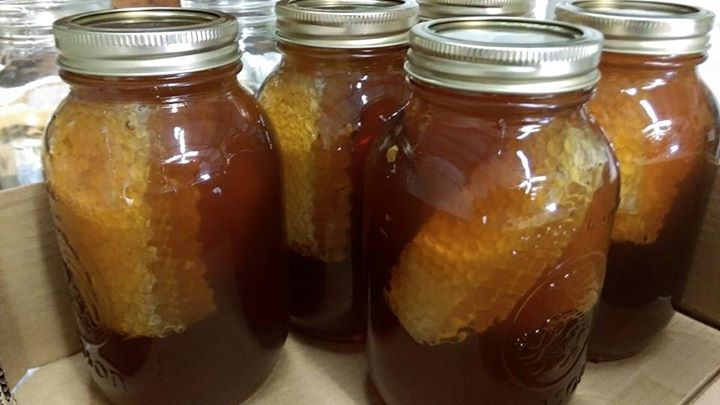
A good trick to ensure you are getting raw, unprocessed honey is to purchase it in the comb.
Health Benefits of Honey Negatively Affected by Heating
Many of the healthful organic compounds and substances in honey are destroyed or inhibited by heat.
Antibacterial, Antimicrobial Properties from Enzymes in Raw Honey:
The main enzymes in honey are invertase (saccharase) diastase (amylase) which break down sugars and help digestion. The enzyme glucose oxidase produces the antibacterial, antimicrobial hydrogen peroxide, a well-known disinfectant.
Antioxidant Properties in Raw Honey:
Dependent upon enzymes and a wide range of compounds in honey, antioxidants are substances that can retard or inhibit oxidation and/or neutralize the effects of damaging “free radicals”. Increasing the body’s antioxidant content may help protect against cellular damage and the development of chronic diseases.
From the Journal of Agricultural and Food Chemistry 2002, Vol. 50, No. 21, pp.5870-5877:
“…Antioxidant analysis of the different honey fractions suggested that the water-soluble fraction contained most of the antioxidant components, including protein; gluconic acid; ascorbic acid; hydroxymethylfuraldehyde; and the combined activities of the enzymes glucose oxidase, catalase and peroxidase. Of these components, a significant correlation could be established only between protein content and oxygen radical absorbance capacity ORAC activity (R(2) = 0.674, p = 0.024). These results suggest that the antioxidant capacity of honey is a product of the combined activity of a wide range of compounds including phenolics, peptides, organic acids, enzymes, Maillard reaction products, and possibly other minor components…”
Other antioxidants include polyphenols, flanonoids and phenolic acid in Raw Honey. Polyphenols in foods are thought to play important roles in human health such as cancer preventative, and anti-inflammatory, radical scavenging and antioxidative activities. The most important classes of antioxidant polyphenols are the flavonoids and phenolic acids. It is these substances in honey, wine, fruits and vegetables that are most responsible for the antioxidant characteristics, and thus the healthy image of these foods.
Darker honeys like Buckwheat honey are stronger antioxidants compared to lighter honeys.
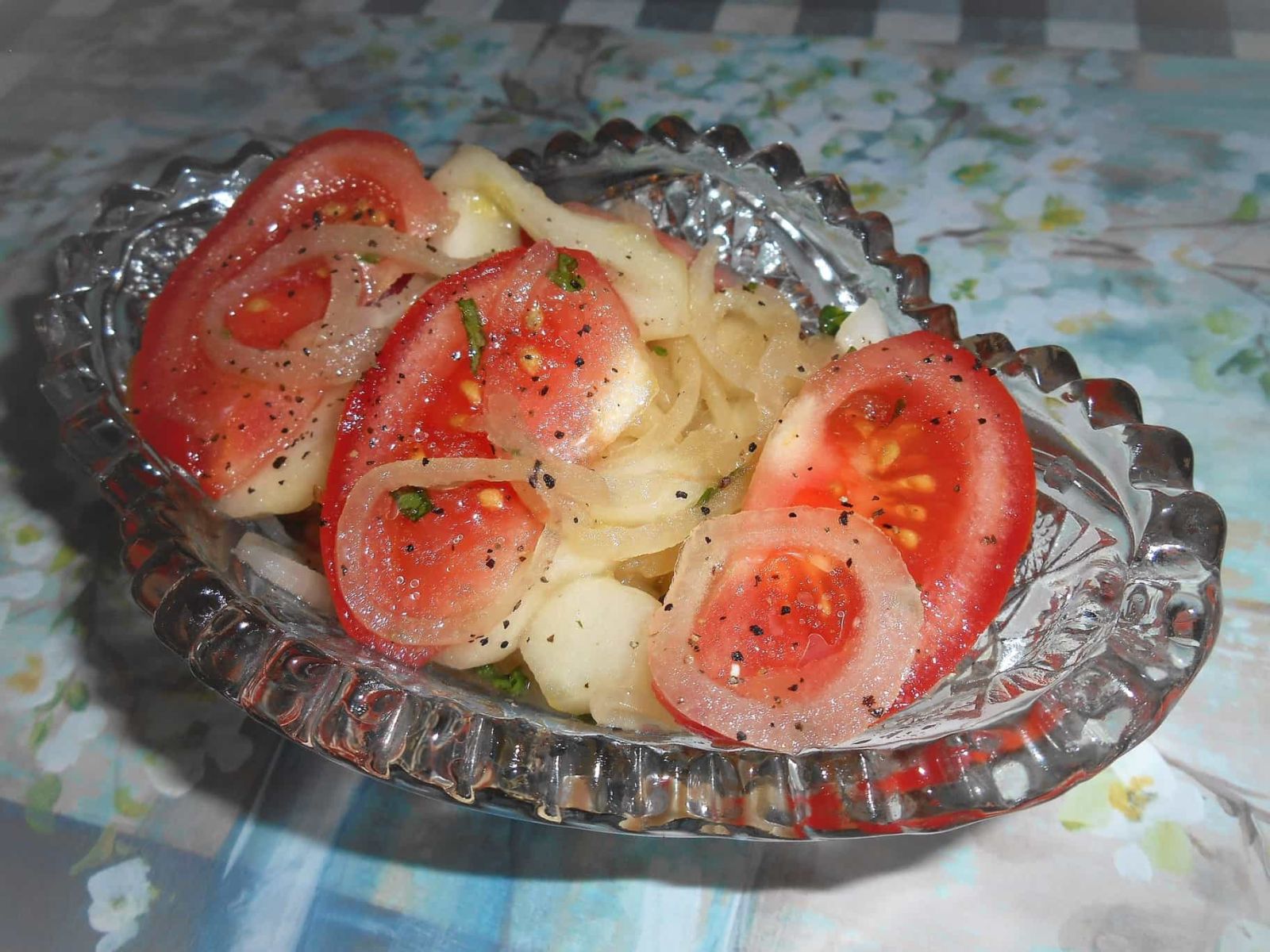
Just a refreshing anytime salad that is quick and easy to make. The secret to it is rice vinegar. The cucumbers I used was end of the season large and full of seeds. I seeded them and peeled them. You can slice them the way you want. Add tomatoes cut in wedges and thinly sliced sweet onion. I like to make the dressing and put my sliced onions in first and let them marinate for an hour. Add cucumbers, tomatoes and parsley when ready to serve.
Picture from Coweta Sustainable Beekeeping article.
I have raised 5 frame nucleus hives since 2016 from Spring splits and allowed them to grow out to double boxes (ten frames). Last year, and this coming, I’ll graft queens and be using the Coweta mindset and method (below) to make increase or to sustainably maintain a hive after the sale of a nucleus hive or queen. I always retain 5 frames with at least one frame of young larvae and notch the cells to raise a new queen as detailed in the following article.
Most beekeepers are not sustainable; they purchase nucs or packages each spring to replace winter losses. This is expensive and prevents the creation of local, sustainable honey bee genetics. The true cost of a package or nuc can escalate when some die during the winter before producing any honey. If only half of these young colonies survive until next spring the cost per a nuc or package doubles.
A beekeeper with only a few hives may experience the disheartening loss of all their colonies. No honey will be harvested for a year and they must start over purchasing nucs or packages if they can find them.
The current or traditional methods that the beekeeping books teach do not account for the difficulties we experience. A book may teach Varroa mite control but not how to thrive in spite of Varroa. Most are teaching beekeeping from a time before the combined effects of:
· Varroa Mites
· Numerous diseases
· Colony Collapse Disorder (CCD)
· Small hive beetle
· Short lived queens
· High pesticide use
There has to be a better way.
If you have bees you can make more bees or more accurately, colonies can be used to make more colonies. All beekeepers have the resources in their colonies to become sustainable.
In the south, winter losses average one-third. During the summer make enough splits to begin winter with one and a half times the number of colonies required for honey production in the spring. If six colonies are required for spring honey production, begin winter with ten. For example, begin the winter with six production hives and four nucs. After losing two production hives and two nucs during the winter, a 40 percent loss, the two remaining nucs are used to replace the dead colonies restoring production hives to six. There is no need to buy colonies because of winter losses. In May, splits can be started to replace the nucs bringing the total number of colonies up to ten again.
Overwinter Nucs
“Almost every emergency of management can be met by putting something into or taking something out of a nucleus, while nuclei themselves seldom present emergencies.” E. B. Wedmore, A Manual of Beekeeping
I live on a sand hill. No joke, a sand hill with minimal nutrition for plants. It’s mostly pine and scrub oaks. Some hardwoods have found a way to survive and provide some forage for the bees. Drought resistant wildflowers come up along the roadways and power lines. The chain of nutrients from soil to plant to bloom doesn’t improve along the journey.
Although it can be said I live in the pollen belt, the pollen here is of poor quality. I have resigned myself to providing supplemental food for the bees during the times of pollen and nectar dearth. They won’t take it if nature provides something better.
I had a professor in college once that said protein was the currency standard in food and nutrition. More and more we are learning that with our honey bees it plays a vital role in their immune systems as well. A well fed bee is a healthier bee.
Some northern beekeepers have success overwintering nuclei-sized colonies. This may be based on a particular stock or genetic trait, and should be tested carefully. More beekeepers are able to overwinter a single, deep hive body by packing the hive out with honey or sugar syrup in the Fall. In addition to food reserves, make sure such colonies are protected from the harsh winds of Winter.
These are a great crispy and flavorful potato recipe that keeps you from slaving over a stove or oven to make. It may be fall where I live, but the weather is more like summer, so I have been trying to avoid using my oven as much as possible. These are made on the grill so they would also make for a great side dish to any cookout meal.
My friends know I love Egg Nog. I look forward to seeing it being offered in the stores each year. Enjoy this recipe by epicurious.com on making homemade Honey Egg Nog.
Eggnog is a wonderful rich festive drink, something of a dessert in a cup and much more indulgent than mulled wine. It doesn’t have to be made with spirits, so you can make a non-alcoholic batch for the kids and the designated drivers. But it’s better with the rum and brandy! I recommend using one of the heather honeys as they work well with spice.
INGREDIENTS
1 cup honey
1 cup warm water
1 cup light rum
1 cup brandy
12 free range egg yolks
1 1/2 cups milk
1 1/2 cups cream
Garnish: grated allspice, ginger or nutmeg
Note: 1 cup is 240ml
PREPARATION
In the bowl of an electric mixer, dissolve the honey in the water. Stir in the light rum and brandy thoroughly. Beat the mixture, gradually beating in the egg yolks, the milk, and the cream. Beat the eggnog until it is foamy and serve it in individual glasses with a dusting of grated allspice, nutmeg or ginger.
As the recipe contains raw egg it is unadvisable for those whose immune system is less strong. We don’t recommend giving it to small children, the elderly, pregnant women and those with a low immune system.
This time of year can be as busy for the beekeeper as the spring nectar flow period. But now it’s all about preparation. My experience, since beginning this beekeeping journey, is that there is never enough time during the nectar flow. In fact, time becomes precious even before the nectar flow with the need to rotate hive bodies or employ other swarm reducing measures, placement of swarm traps, movement of hives to out yards, making splits, and lots of last minute surprises.
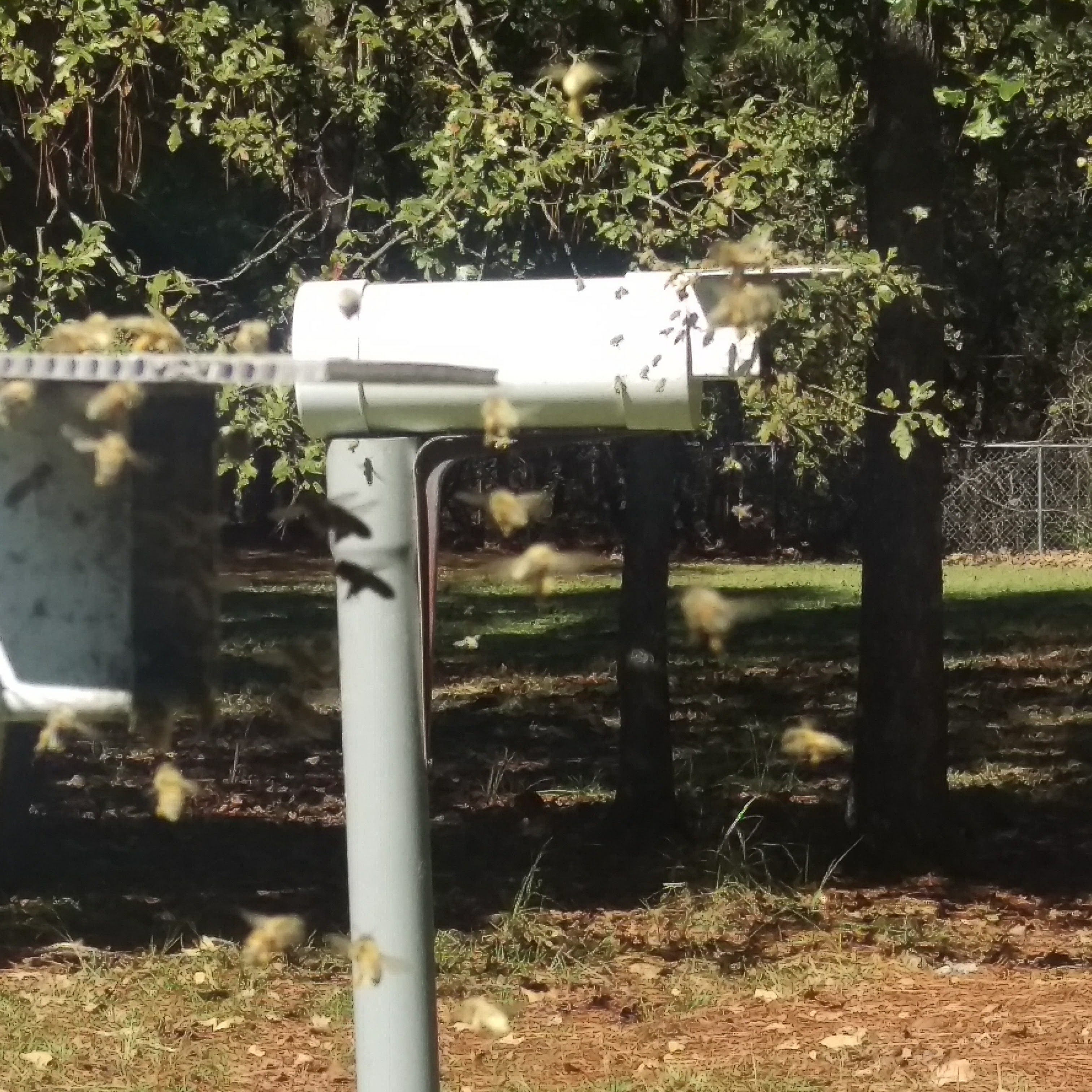
So, here are few pictures of what I occupy myself with during this so called off season:
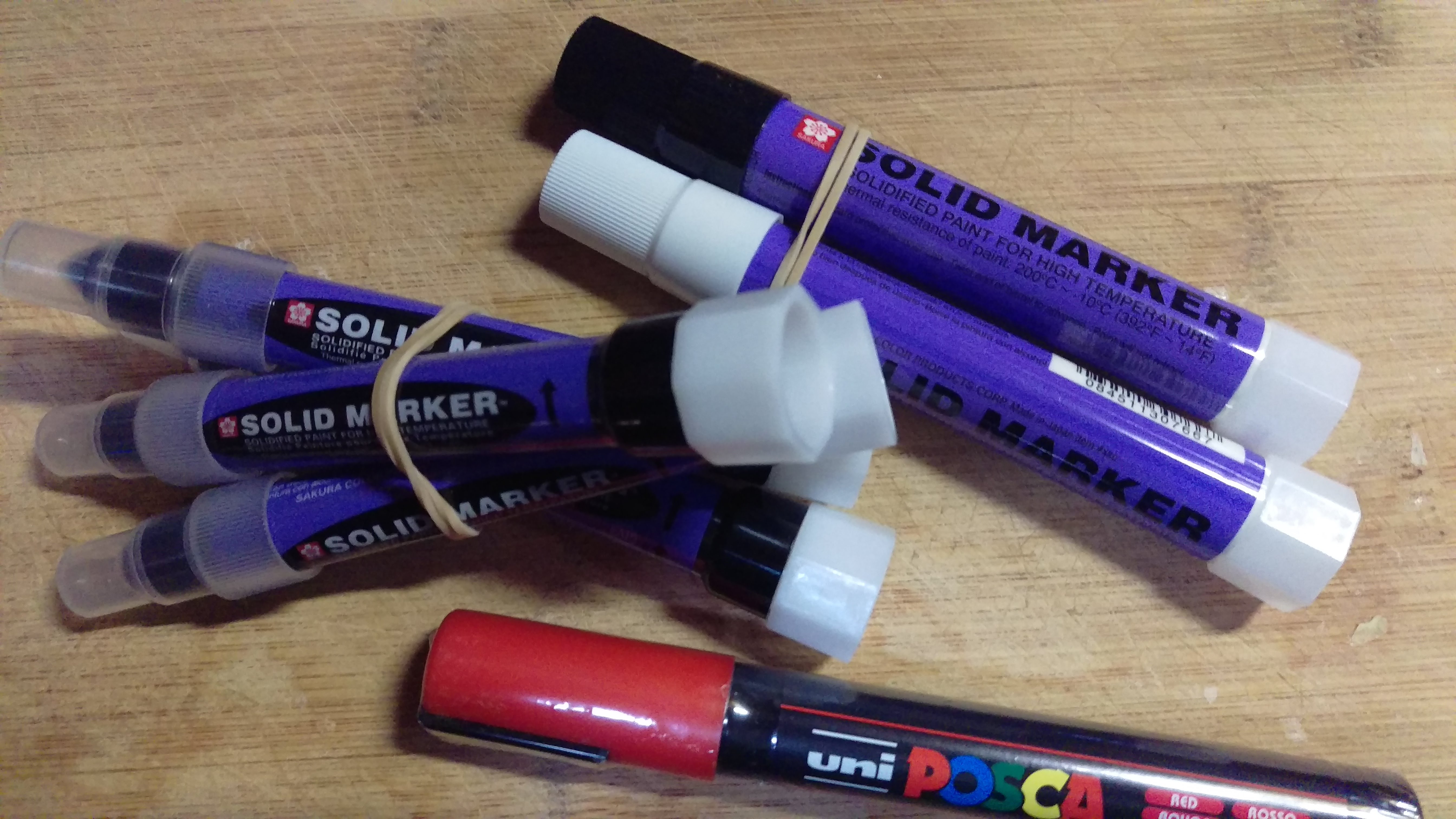
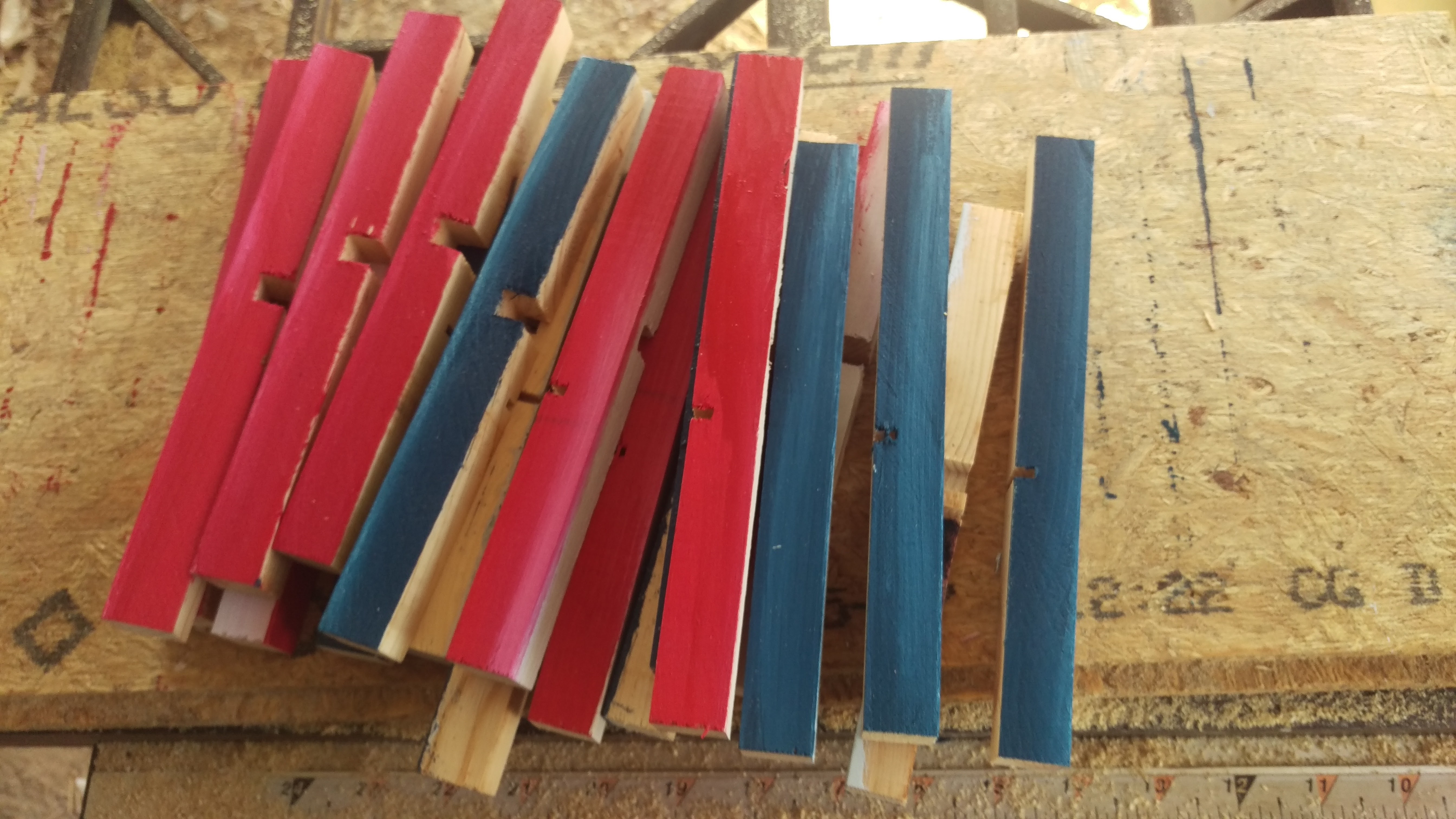
Order queen pen and my favorite markers to write on the hives.
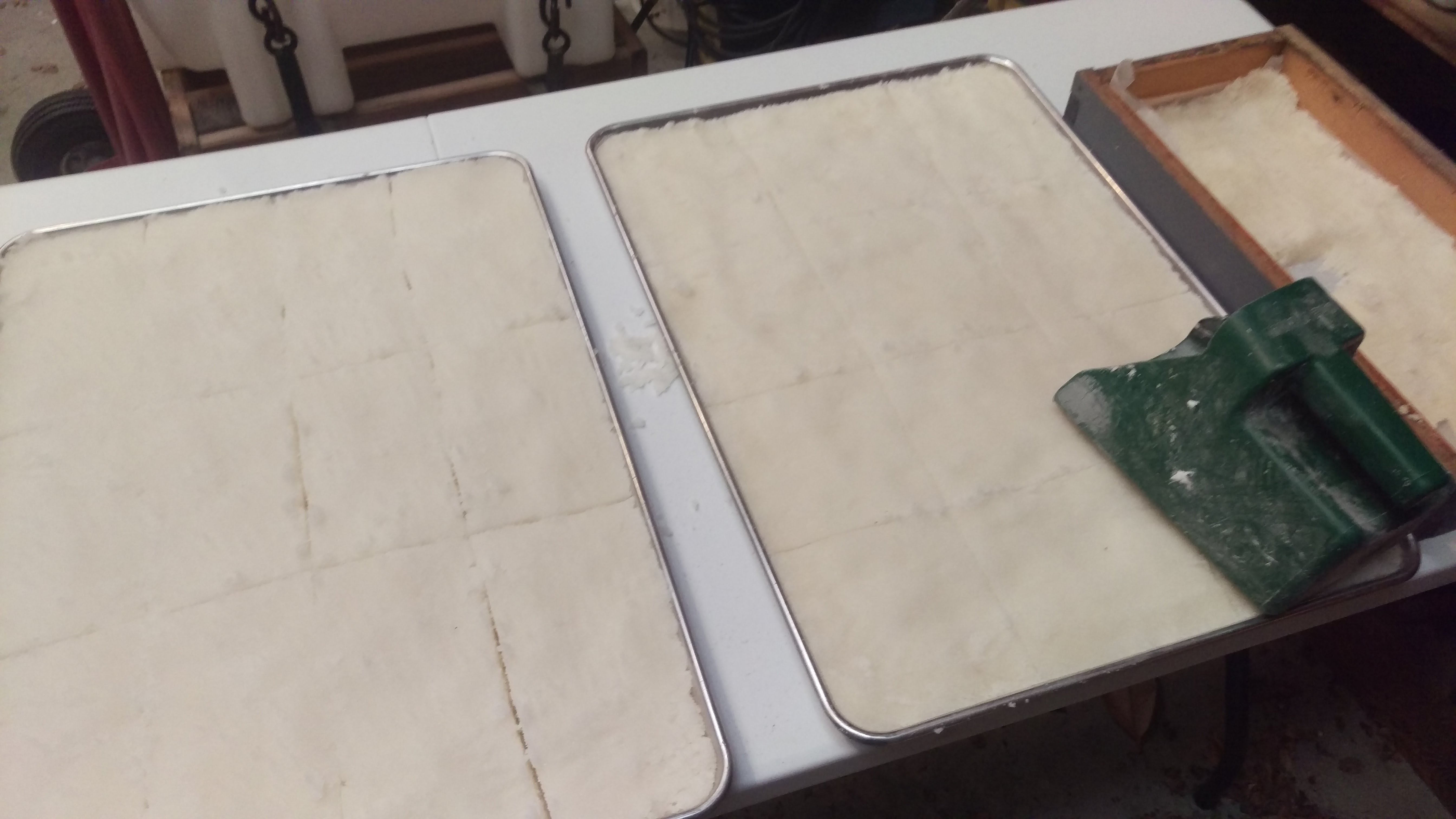
Making sugar cakes for the tops of the hives.
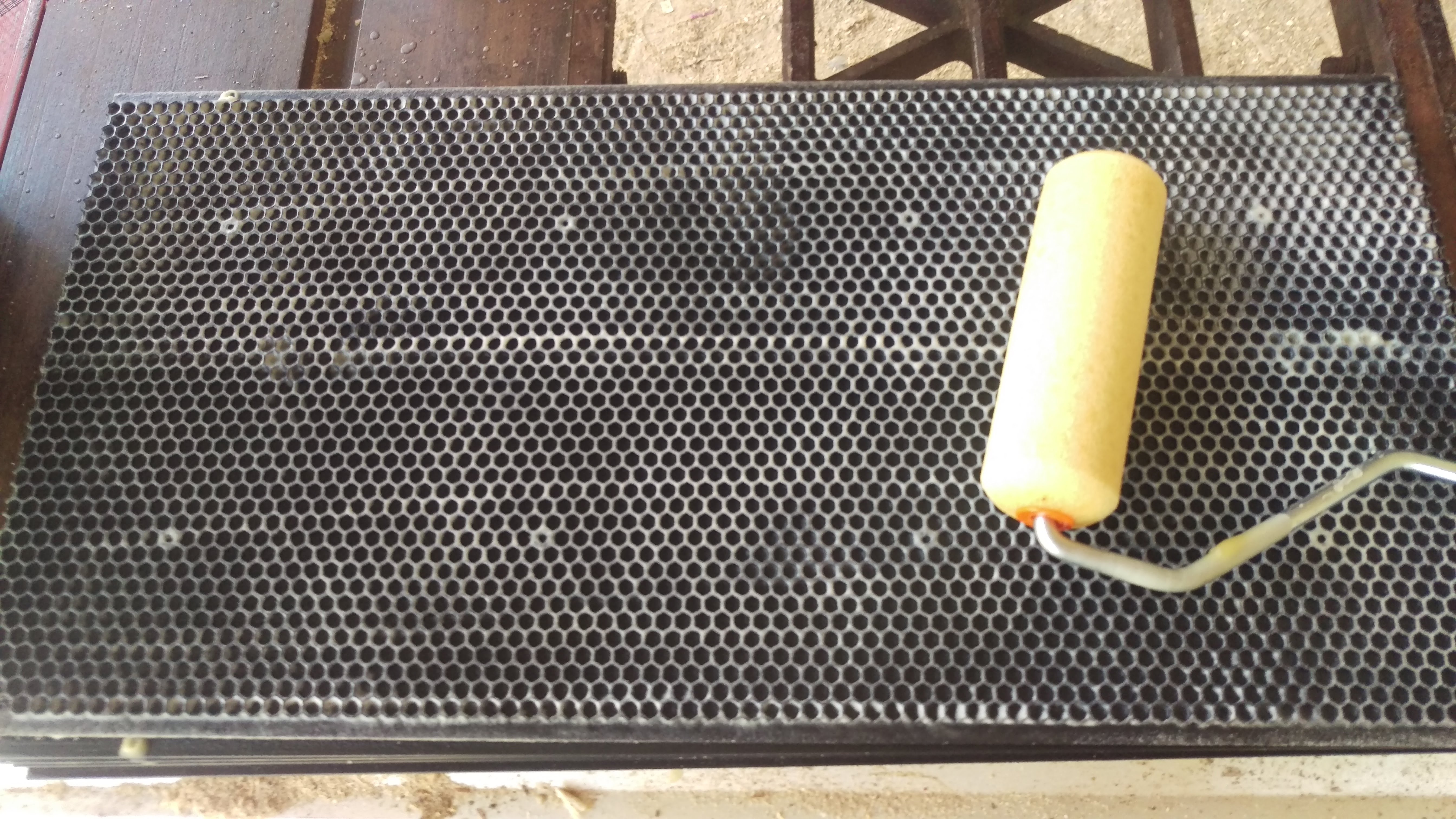
Adding extra wax to plastic frames.
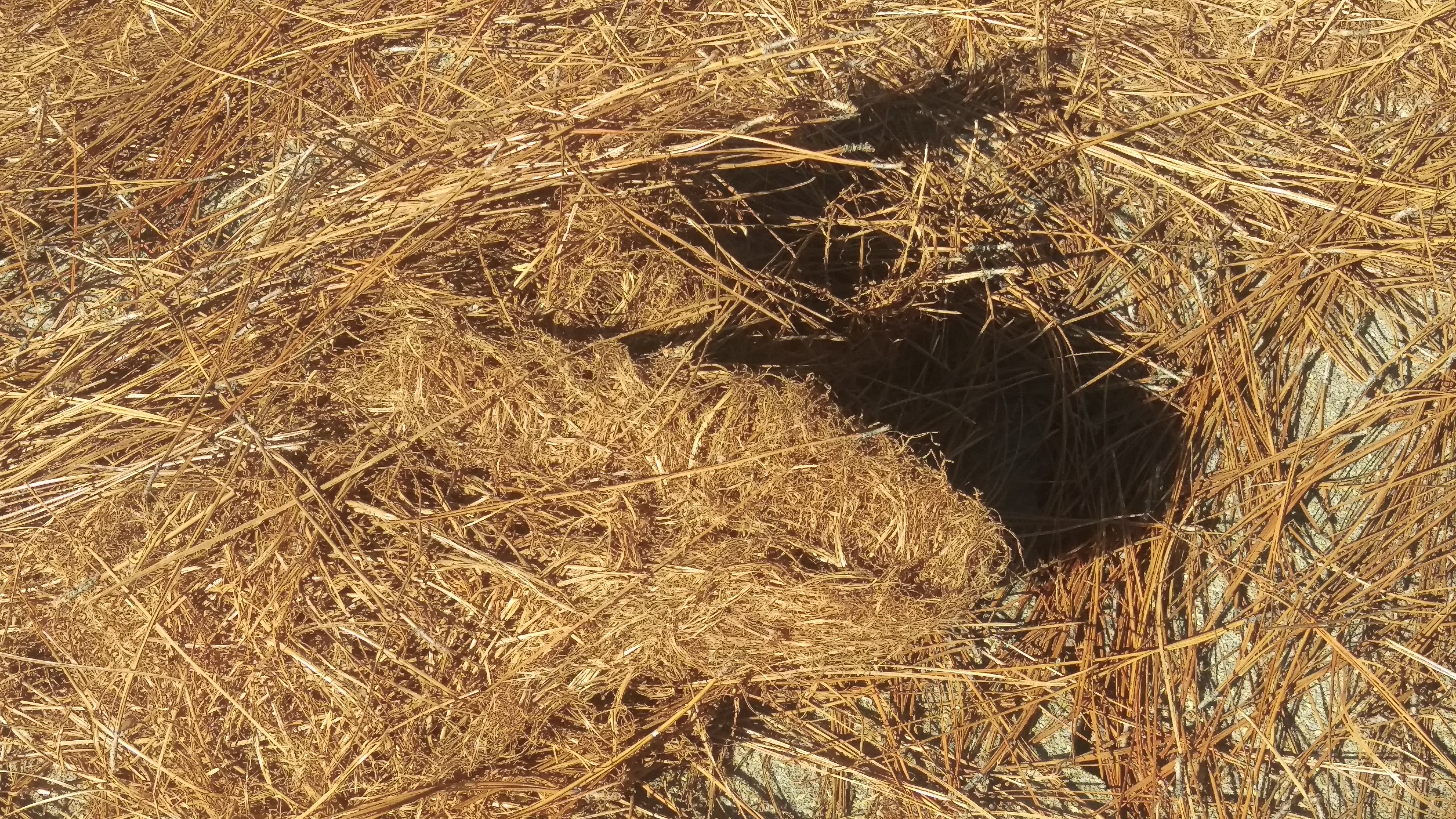
Collecting and bagging pine straw for my smoker.
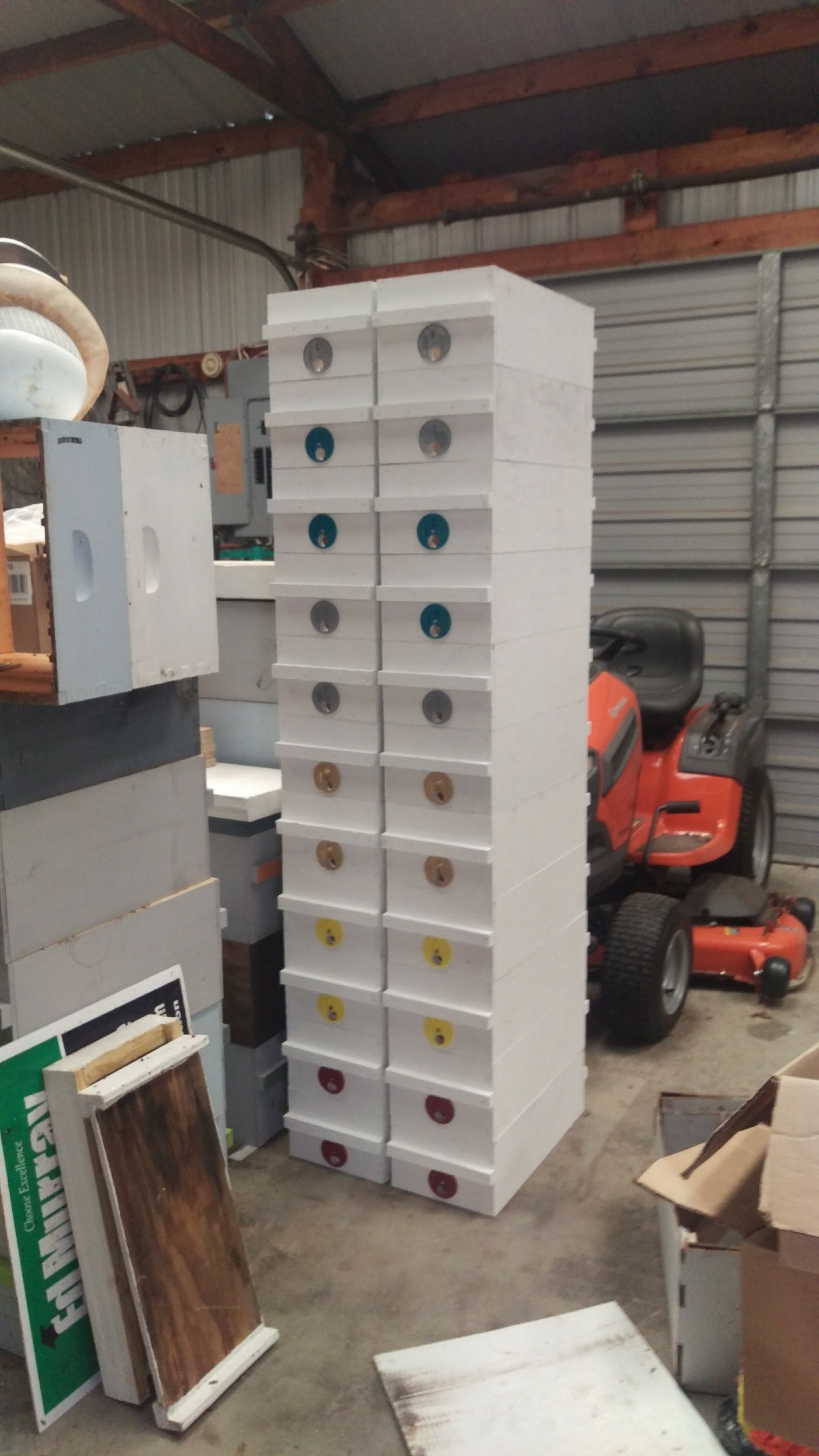
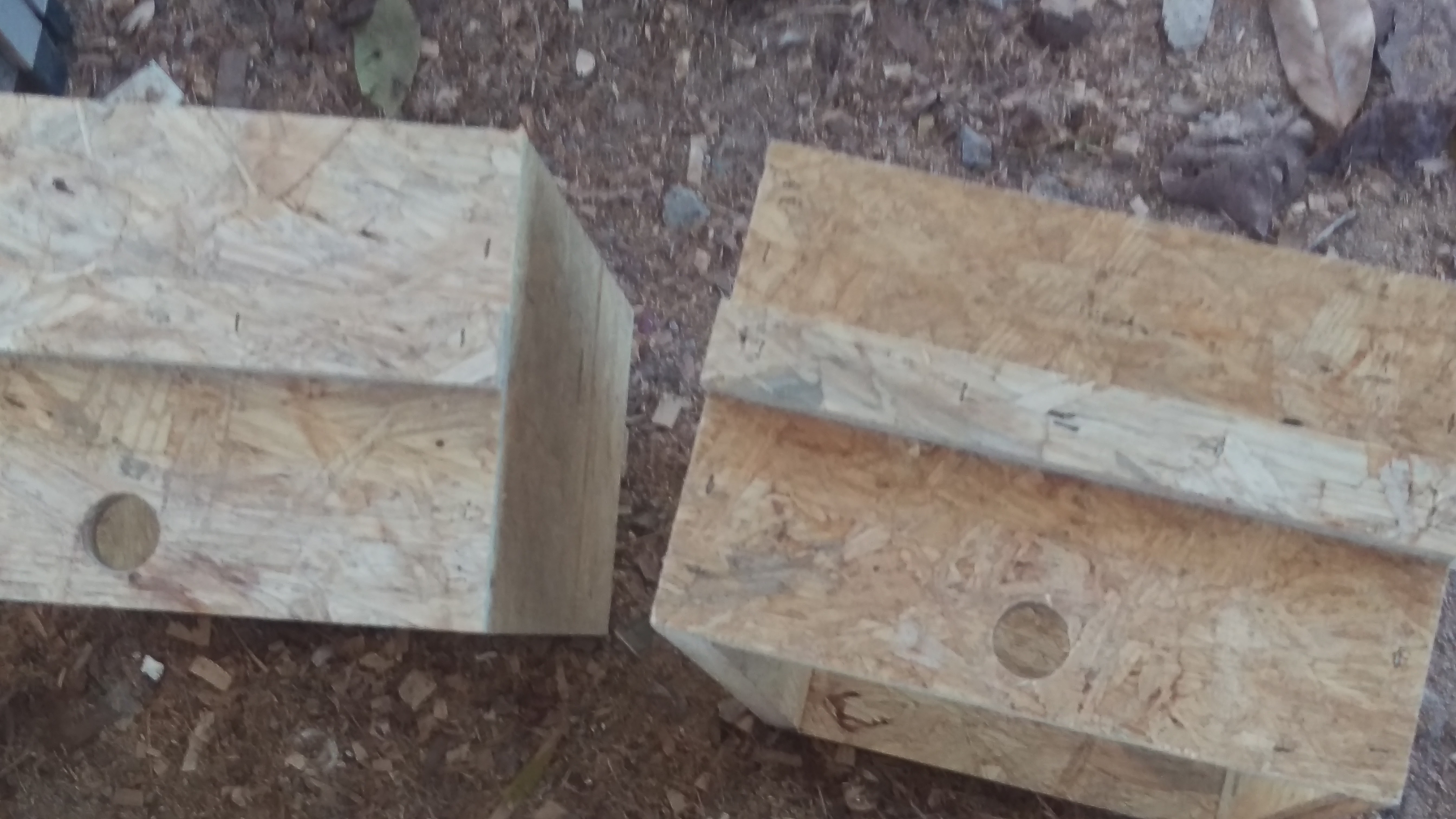
Building boxes, bottom boards, and tops.
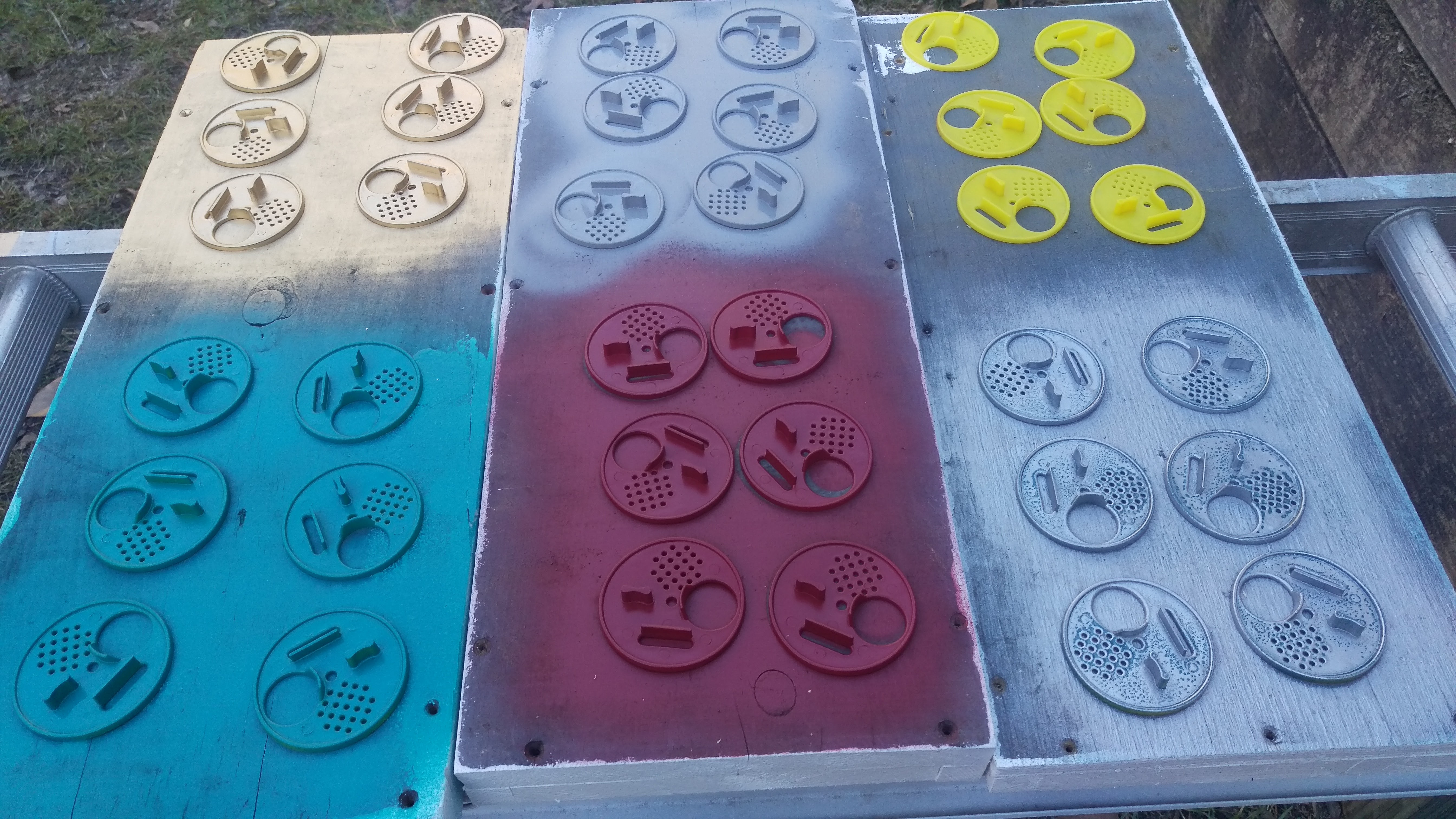
Adding some color to the entrance reducers.
Painting entrances to the queen mating nucs
This is Advantech – a new material that resists weathering.
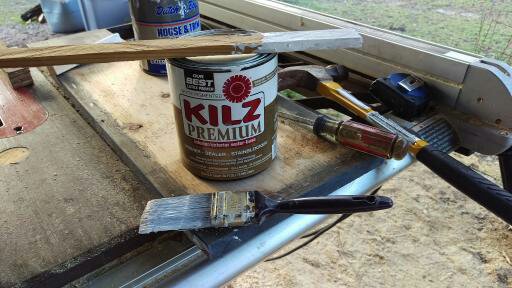
Painting everything. Three coats!
Joy! I found three 50 pound sacks of sugar I had forgotten!
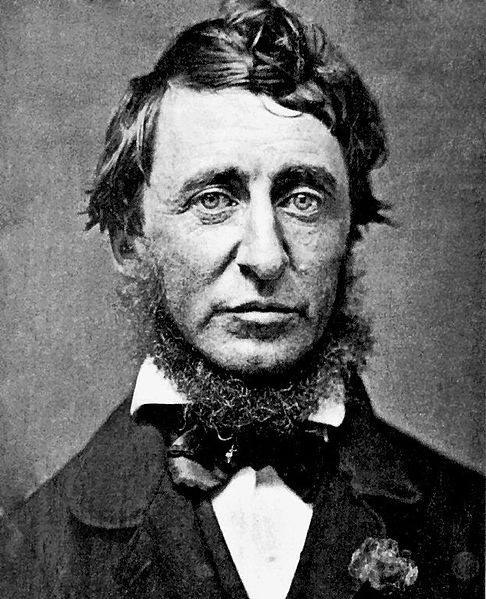
Sept. 30, 1852, was a fine clear day, and Henry David Thoreau decided to go bee hunting. He ended up feeling richer for the experience, and not just because of the honey.
He was 35 years old, living in Concord, Mass., as the town’s principled eccentric. Two years earlier he had published A Week on the Concord and Merrimack Rivers, but it wasn’t a success. He had finished his sojourn in the woods, though he had yet to publish his masterpiece, Walden.
He had already spent a night in jail for refusing to pay his poll tax as a protest against slavery and the Mexican War. He was hiding escaped slaves in his family’s home and taking long walks in the surrounding woods and fields.
He recorded in great detail his observations of nature in his journal. On the day he went bee hunting, he described how he went with three friends in a wagon to Fair Haven Pond. They brought with them their bee-hunting apparatus: a small round tin box and a small wooden box.
At first they had no luck, as they couldn’t find flowers. The goldenrods were dried up and the asters were scarce. They tried the pond, a brook and a tree where Thoreau had found a bees’ nest that summer. No luck. And then,
This easy Chipotle Honey Lime Chicken is a smash hit every time. Whether grilled or sautéed in a pan, the citrus marinade with warm spices, fresh herbs and honey is packed with flavor. Perfect as a main course, sliced over salads, in tacos or in a sandwich, this recipe is so versatile! Well this past…
This recipe first published at: Let’s Taco Bout It Blog. Visit the link below to read entire article. get the recipe, and see some amazing pictures.
“He stepped down, trying not to look long at her, as if she were the sun, yet he saw her, like the sun, even without looking.”
― Leo Tolstoy , Anna Karenina
The Princess Oblonsky, also know as Anna Arkádyevna Karénina or even more familiarly Anna, looked curiously for and back the immense banquet table. Being nobility afforded many luxuries for her and her inquisitive and thoughtful mind enjoyed these luxuries to the fullest. She adored the ability to sit and enjoy a meal with her family and friends, however this grand hall full of people she barely knew was a bit much. The fakery, the frippery of it all insulted her sensibilities to their very core. The grandiose hall was modeled after the glorious summer palace in Versailles, the very height of couture and society. Twinkling tapers softly lit the entire guilted corridor with candelabras, tapestries and chandeliers glittering. All at once it was to much to behold, yet Anna drank it in like champagne.
Even more than the grand room was the grand foods! Each aristocrat had multiple gourmet courses served and each was whisked away by the Tatar attendants in coattails down to the backs of their knees once the dish had been finished. In between, Anna and the other guests had time to discourse on the favorite topics of the evening the food, the military, and their fellow aristocrats. While the nobles around her were distracted by the gossip, she wandered off to examine the sideboards full of stylish desserts. There were all of the nouveau delicacies from Paris, but as Anna continued until she found her absolute favorite, baklava. This decadent, delicate pastry was layered with honey and nuts and to add a bit of the french flair that the Russians adored so much, the whole sweet was studded with bits of melted chocolate.
As Anna finished browsing, she returned to her seat thinking only of how her son would have loved the baklava. Abruptly, she realized she had been staring down and across the table, with a young man smiling back at her. Anna shook her head to clear her thoughts and joined in the conversation with the man to her left but every time she looked up, there was the rakish grin. It’s was as hard to resist smiling back as it was to not have a piece of the baklava!
Note: Contrary to the text found in the article below, Berlepsch may have beaten Lorenzo Langstroth to the recognition of bee space as a consideration to be utilized in the construction of bee hives – by as little as 5 months. Berlepsch was working with Dzierzon on a movable frame hive and is now noted for his perfecting of other’s efforts.
Given that information and publishing was very slow in the mid nineteenth century, it is quite possible that the two men refined the use of bee space as a valuable addition to beekeeping independently and at approximately the same time.
Berlepsch was also, during the same period, working with Dzierzon on a moveable frame hive. However it was the American Langstroth that got it right combining the two features of bee space and removable frame hive which proved to be simple, flexible, and would later go on to dominate managed beekeeping in the United States. <end of note>
In 1851, Reverend Lorenzo Lorraine Langstroth invented a better beehive and changed beekeeping forever. The Langstroth Hive didn’t spring fully formed from one man’s imagination, but was built on a foundation of methods and designs developed over millenia.
Beekeeping dates back at least to ancient Egypt, when early apiarists built their hives from straw and clay (if you happen to find a honeypot in a tomb, feel free to stick your hand in it, you rascal, because honey lasts longer than a mummy). In the intervening centuries, various types of artificial hives developed, from straw baskets to wood boxes but they all shared one thing: “fixed combs” that must be physically cut from the hive. These early fixed comb hives made it difficult for beekeepers to inspect their brood for diseases or other problems.
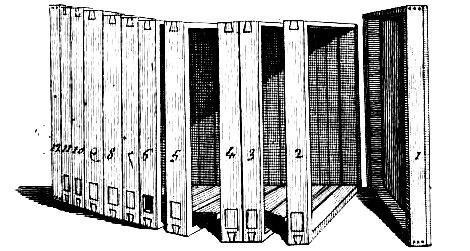
In the 18th century, noted Swiss naturalist François Huber developed a “movable comb” or “movable frame” hive that featured wooded leaves filled with honeycombs that could be flipped like the pages of a book. Despite this innovation, Huber’s hive was not widely adopted and simple box hives remained the popular choice for beekeepers until the 1850s. Enter Lorenzo Langstroth.
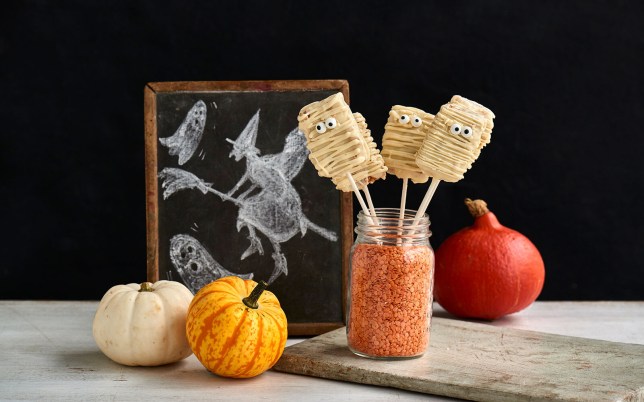
This recipe from Rowse Honey is perfect. It doesn’t involve any actual baking, just lots of mixing and hands on fun for the kids.
You’ll need to get your hands on some lollipop sticks to attach them to but you can easily find them online.
The recipe uses white candy melts but white chocolate is a good alternative if you can’t find those.
They take a little work but will keep your children occupied for hours.
Ingredients:
150g honey
150g smooth peanut butter
200g puffed rice cereal
2 bags white candy melts
1 box of candy eyes
Method: Pre-line a 9×9 silicone square baking tray with cling film. Warm the honey in a pan until it thins and begins to bubble. Remove from heat. Stir in peanut butter until thoroughly mixed together. Add the puffed rice cereal and make sure every bit is coated in the mixture. Tumble the mixture out onto the pre-lined baking tray. Wet your hands and press the mixture down really hard to ensure there are no air gaps. This is really important. Allow to set for up to 2 hours in the freezer. Once set remove from freezer and allow to thaw slightly before cutting into 16 equal rectangles, place back in the freezer for a further 30 minutes. Warm the candy melts in the microwave in a mug, one bag at a time. You’ll need to do this in 30-second bursts, stir then repeat until it’s ready to be used. Pre-line a 32cmx22cmx5cm baking tray with baking parchment. Dip the bottom of the lollipop in melted chocolate then insert into the shortest length of the puffed rice cereal, then cover the base with chocolate, repeat this step with all the treats then place in the fridge to set for 10minutes. After the sticks have adhered to the treats, you need to immerse the entire rice krispie treat into the mug of melted candy melt to cover the entire treat, repeat this step with all the treats then place back into the fridge to set. Now with the remaining melted chocolate place this into a piping bag (or you can use a sandwich bag if you don’t have one to hand) and snip the end. Remove the treats from fridge then using the piping bag place 2 dots in the middle in order to stick on the eyes. Then going left to right go back and forth with the piping bag to get the mummy effect on the body of the treats so you end up with layers to represent the mummies bandages. Place back in the fridge to set for a further 10 minutes. Once set, remove from the fridge and place centre stage on your Halloween table for everyone to enjoy!
Buckwheat Honey is our central ingredient for this recipe. While some may question our choice of honey on this recipe, we picked it because Buckwheat Honey is known for its depth of flavor. You can use Buckwheat Honey for all sorts of savory recipes and we think this is a great fit! Enjoy!
Dyce was best known for his process for controlling the crystallization and fermentation of honey leading to the popular creamed honey. His process is used throughout the world in all major honey-producing countries.
Professor Emeritus E. J. Dyce served as assistant professor, associate professor, and professor of apiculture in the University’s Department of Entomology for twenty-three years. He had retired on December 31, 1965. A native of Ontario, Dyce served as demonstrator, lecturer, and professor of apiculture at the Ontario Agricultural College in Guelph, now Guelph University, from 1924 to 1940. He was the first manager of the Finger Lakes Honey Producers Cooperative in Groton, New York, between 1940 and 1942; in that position he worked to develop a wide market for New York State honey.
Dr. Dyce was born and raised in Meaford, Ontario. He obtained his B.S.A. from Ontario Agricultural College in 1923. He earned his M.S. degree at McGill University where he was a Macdonald scholar. He obtained his Ph.D. degree at Cornell under the direction of Professor E.F. Phillips.
The Dyce Process
Dr. E. J. Dyce, then professor of Apiculture at Guelph University and later Professor of Apiculture at Cornell University, developed the first practical process for making a granulated honey in 1928. Dyce later patented the process and in Canada gave the patent rights to the Province of Ontario. In the United States the rights were given to Cornell University. Much of the money earned in the United States was invested and the income is still used to support research on bees and honey at Cornell. The patent has now expired and anyone may manufacture and market the product.
Some Facts About Granulation And Fermentation
When Dyce began his studies there was little known about honey granulation and fermentation. He was aware that all natural honeys contain yeast. When the moisture content of the honey is somewhat above 19 percent, these yeast cells grow, producing carbon dioxide and alcohol. The yeasts found in honey are not the same as those used to make alcoholic beverages or bread but belong to the genus zygosaccharomyces. However, carbon dioxide may be produced in such quantity in fermenting honey as to burst the drums or containers in which the honey is packed. The foul odor produced by fermentation makes the honey unmarketable. If it is not damaged too badly it may be used as bee food.
When honey granulates a small amount of the water in honey is taken into the sugar crystals. However, the quantity of water so contained is not proportional to the amount of water in the honey. Thus one may have a jar, drum or container of partially crystallized honey in which the liquid fraction has a moisture content higher than that of the original honey. When this occurs the honey may ferment. Dyce recognized that if he was to control the granulation of honey he must first pasteurize the product. Any seed crystals he added must also be made from honey, which had been pasteurized.
Dyce found that the optimum temperature for honey granulation is 57’ F. There has been much conflict about this question in the literature. Many people were of the opinion that a fluctuating temperature speeded up granulation; Dyce showed this was not true. Most granulated honeys will have a firm texture six to 14 days after the introduction of seed crystals if held at the proper temperature. In commercial practice rooms used for holding honey the process of crystallizing are held within 10’F. of the optimum temperature.
Pasteurization of honey destroys the nuclei on which crystals might grow. Dyce found he could introduce previously granulated honey, that which had been ground and the crystals broken, into honey to be crystallized.
These crystals are called starters. When five percent of a ground, finely granulated honey was introduced into newly pasteurized honey there is a sufficient quantity of seed to produce a high quality, finely crystallized honey. In commercial practice most firms use eight to ten percent starter; under ideal conditions less may be used. An important factor is that the seed crystals must not be warmed too long and thereby caused to melt partially.
Dyce processed honey
Dark, strong flavored honeys have a lighter color and milder flavor when made into a finely granulated honey; this fact has led some packers to use less than desirable honey in making granulated honey. Honeys used to make granulated honey should be of table quality. The optimum moisture content is 17 ½ to 18 percent; in the northern states 18 percent in winter and 17 ½ percent in summer; in the southern states 17 ½ percent is used throughout the year. The moisture content of a crystallized honey has a great effect on its hardness and therefore its spreadability. Honeys which have a higher or lower moisture content will be too hard or too soft and will not spread properly when spread at room temperature. The first step then is the selection and blending of honeys of proper color and moisture contents.
Honeys to be processed by the Dyce process need not be filtered. In fact, filtering removes certain of the natural elements present in honey, especially pollen. The honey should be heated to about 125’F at which temperature it should be carefully strained. Dyce recommended the honey next be rapidly heated to 150’F and then cooled rapidly. This temperature is sufficiently high to kill the yeast present. Prof. G.F. Townsend of Guelph University showed that yeasts in honey were killed if it was held at 160’F for one minute or 140’F for 30 minutes or some equivalent combination of time and temperature between these two extremes. In commercial practice e there is time involved between heating and cooling the honey, which also has an effect on yeasts. If the honey in a bulk tank is heated to 150’F and then cooled, even under optimum conditions, it will have heated enough to kill any yeast cells present.
The Starter Crystals
For a starter one uses granulated honey, which has been previously made by the Dyce process. It is not satisfactory to take previously granulated honey from the grocer’s shelf to be used as seed since the high Temperature at which this honey is held in a store will have started to melt the crystal nuclei present. One method of obtaining a yeast-free, finely granulated honey to use as a starter is to grind with a mortar and pestle a small amount of coarsely crystallized honey that had been heated (pasteurized) previously. The honey must be ground very finely and preferably at a temperature in the vicinity of 57’F as the crystals may melt at higher temperatures. The honey into which the crystal nuclei are introduced must also be cooled before the starter is added. Most of the grinders used for starter for Dyce crystallized honey are homemade or modifications of meat or food grinders on the market.
Air and Crystallized Honey
Honey which is in the process of granulating and which is held at lower than room temperatures is viscous. Often a number of air bubbles are incorporated into it in the process of cooling and/or adding the seed. These small air bubbles may rise to the surface of the product and give it a white frothy appearance. This white froth may be avoided by allowing the honey to settle a few hours before it is packed, or packing and cooling the honey rapidly so the air bubbles are incorporated into the final product. The air has no objectionable effect on the flavor.
Granulated honey in glass may pull away from the glass. The honey may assume a white froth-like appearance between the honey and the inside of the glass. Customers usually do not realize what has happened and may think the honey has spoiled or become moldy. (Mold cannot grow on or in honey.) It is for this reason that granulated honey is usually packed in tubs or glass jars with labels that wrap completely around the container.
Stack Heat
The seed crystals are usually added to the cooling honey when the temperature has reached about 75’F. It is very difficult to force honey to flow at lower temperatures. This temperature is higher than desired but if it is not held too long little damage is done. However, when cases of newly packed, crystallized honey are placed on pallets or trucks the cases must be carefully spaced so that air can flow between and around the cases. If this is not done the stack of newly packed jars will retain heat. This heat could have an adverse effect on seed crystals and cause them to be less effective as crystal nuclei.
Shelf Life
Properly made granulated honey has a long shelf life, longer than most liquid honey. Honey packers have observed that they may make and hold granulated honey for long periods of time, much longer than they would have stored packed, liquid honey. Granulated honey made and held under controlled conditions retains its fine texture, color, appearance and taste. There is probably a wider market for honey in this form than is now being exploited.
Beekeepers are racists. Not about humans I hope; but about bees they keep. If you ask a beekeeper in Finland what kind of bees they have, the answer comes right away.
“I have Italian bees!”
“I have Carnica bees!”
“I have Nordic black bees!” etc
The answer comes with no hesitation even if the bees have been free mated ever since they were bought, sometimes many decades earlier.
In the world of any other domestic animal you would be listed as a lunatic in no time if you insisted your animals to be of any particular race after several free matings […]
This Honey Mustard Chicken tasted amazing! I usually don’t like white meat but this was so moist and the flavor….wow! I would eat this again anytime. I had a gigantic chicken breast and cut it up for my husband and myself. If you make this for more than two people just double it, triple it or what ever amount you need. I used my homemade Honey Mustard Sauce (https://indianeskitchen.com/2018/02/07/honey-mustard-sauce) with this, however, you can use any Honey Mustard Sauce you would like.
Click on the link below to view the step by step directions with pictures and a printable recipe card.
We’ve got short instructions on installing your Package Bees or Nucleus Colony below – feel free to reach out with questions or clarification!
Package bees are just boxes specially built to carry bees securely and safely. They are sold according to the weight of the bees with maybe 4000 to 5000 per pound. They mostly have the queen bee not unless the buyer has instructed otherwise. They are relatively cheaper compared to nucleus colony.
To install the package bees, you will need to remove the center frames of the colony you’re moving the bees into. Remove the cage containing the queen bee first, then place the container on its side over the place you have removed the frames. Put the queen’s cage on top of a frame and gently turn the package inside out to assist the bees to fall into the hive.Prepare two frames where you shall place the queen cage and use pressure to hold it in place if you have existing comb – otherwise you can tie the cage with string or tape to secure her – you don’t want her to fall to the bottom of the hive. Once all the bees are out of the package, you can remove the package and set it in front of the hive (or on top).
The meat was practically falling off the bone, it was so tender ! You take a bite and you can taste a sweet and spicy flavor but you’ll get some smokiness at the end of the bite. A great recipe when you’re hankering some ribs but don’t feel like cooking outdoors.
Ingredients
3 pounds bone-in country-style pork ribs
1 (6-ounce) can tomato paste
½ cup apple cider vinegar
1/3 cup firmly packed light brown sugar
3 tablespoons stone-ground mustard
2 tablespoons honey
2 tablespoons fresh lemon juice
2 tablespoons soy sauce (we used reduced-sodium soy sauce)
1 tablespoon chili powder
1 tablespoon liquid smoke (we used hickory smoke)
1 teaspoons ground black pepper (we used freshly ground black pepper)
1 teaspoon kosher salt
¾ teaspoon ground red pepper
2 cloves garlic, minced
Directions
Take a 6-quart slow cooker out and spray the inside of it with cooking spray. Place the ribs down on the bottom of the slow cooker.
Take a medium-sized mixing bowl out and add to it the remaining ingredients (tomato paste – minced garlic), stirring to combine. Pour the tomato mixture over the ribs, turning the ribs so they get thoroughly coated in the mixture.
Place a layer of paper towels over the slow cooker, putting the lid on afterwards. Cook on LOW for 5 to 5 ½ hours or until the meat’s tender. Serve the ribs with the sauce and enjoy !
Many diseases and pathogens infect honey bee colonies, but chalkbrood is likely the most common among beekeepers. Ascosphaera apis causes chalkbrood, which is a fungal brood disease. Beekeepers commonly detect chalkbrood in the spring because chalkbrood is considered a stress-related disease. However, chalkbrood is observed throughout the year. Many times, chalkbrood becomes established in colonies because of many interacting factors, such as environmental stressors, genetic makeup of colonies and beekeeping practices. Chalkbrood contaminates larvae when nurse bees admix chalkbrood spores with brood food. The fungal spores out-compete larvae for food and eventually, turn larvae into “chalk-like” mummies. Beekeepers can observe chalkbrood in many colors, ranging from white to grey to black. As larvae turn black, the chalkbrood begins producing fruiting bodies, which are highly infectious. Beekeepers can find these mummies at the entrance or bottom boards, especially if chalkbrood is widespread. At this point these mummies can spread spores to other colonies in the area. Chalkbrood often infects 3-4 day larvae, and can be found as uncapped or capped larvae. If the colony shakes a frame with capped chalkbrood, the frame will rattle when shaken.
It’s DEFINITELY soup season. We were in Paris over the weekend and I had some French onion soup while we were there and wanted to make some soup for lunches this week when we got back. I was going to stick to my usual tomato and basil as it’s my favourite, but thought I should spread my wings a little! Plus, Tesco’s didn’t have any fresh basil when I went so I improvised!
I thought I would go for butternut squash as there’s something about the vibrancy that brings warmth to the dish before you’ve even eaten it. I always make soup on the hob so I thought I would roast the veg for this one then add the stock and blitz it up after. Anyone can make soup and it’s a great way to get your daily veg intake without even realising!
Prep time – 15 minutes.
Cooking time – 1 hour 15 minutes.
Ingredients:
1 large butternut squash – remove seeds and skin, cut into large chunks.
Winter really is the only break for beekeepers. Even then, there is preparation for the coming spring. But now and then the beekeeper gets a chance to sit down and read a little. The books described below are readily available at many public libraries. Hopefully you can find one to hunker down with during cold days while the bees are snug in their hives.
The Beekeeper’s Lament: How One Man and Half a Billion Honey Bees Help Feed America by Hannah Nordhaus (638.13097 NORDHAUS) – Recounts the experiences of John Miller, one of the foremost migratory beekeepers, who, despite mysterious epidemics that threaten American honey populations–and the nation’s agribusiness–forges on and moves ahead in a new natural world.
Robbing the Bees: A Biography of Honey, the Sweet Liquid Gold That Seduced the World by Holley Bishop (638.16 BISHOP) – A comprehensive exploration of the life of bees and the process by which they make honey follows the daily life of a Florida panhandle beekeeper, traces each step of a bee’s honey-making process and offers insight into the product’s key role in business, food and culture.
Letters From the Hive: An Intimate History of Bees, Honey, and Humankind by Stephen Buchmann with Banning Repplier (638.1 BUCHMANN) – A glimpse inside the world of the honeybee records the traditional practices of beekeeping around the world, the contribution of bees to the pollination of plants and the culinary and medicinal uses of honey.
Fruitless Fall: The Collapse of the Honey Bee and the Coming Agricultural Crisis by Rowan Jacobsen (638.15 JACOBSEN) – Traces the significant 2007 and 2008 reductions in honeybee populations, identifying the causes of Colony Collapse Disorder to explain the link between bee pollination and industrial agriculture and predict dangerous reductions in food output.
A Book of Bees…and How to Keep Them by Sue Hubbell (638.1 HUBBELL) – Chronicles a year in the lives of beekeeper and bees, describing and explaining the activities of both and the rewards of having bees of one’s own.
Honeybee Democracy by Thomas D. Seeley (595.79915 SEELEY) – Honeybees make decisions collectively—and democratically. Every year, faced with the life-or-death problem of choosing and traveling to a new home, honeybees stake everything on a process that includes collective fact-finding, vigorous debate and consensus building. These incredible insects have much to teach us when it comes to collective wisdom and effective decision making.
Bees in America: How the Honey Bee Shaped a Nation by Tammy Horn (638.10973 HORN) – Explores the connection between the honeybee and the cultural, national and economic development of the United States. “During every major period in the country’s history, bees and beekeepers have represented order and stability in a country without a national religion, political party or language.” (GoodReads)
Sweetness & Light: The Mysterious History of the Honeybee by Hattie Ellis (595.799 ELLIS) – Integrating popular science and social history, an intriguing global history of honeybees examines the hive society of the bee, as well as the influence of bees and honey on diverse cultures around the world and throughout history. The story of bees and honey from the Stone Age to the contemporary cutting edge; from Napalese honey hunters to urban hives on the rooftops of New York City.
The Queen Must Die and Other Affairs of Bees and Men by William Longgood (638.1 Longgood) – “Longgood’s quiet little thirty-year-old book…is a kind of meditation on beeness: an exploration of the motivations, desires and attitudes of the simple honeybee as she goes about her business.” – Stephen on GoodReads
This year, beekeepers are celebrating the 208th year anniversary of “the Father of American Beekeeping.” Lorenzo Lorraine Langstroth was born Christmas Day, December 25, 1810 in Philadelphia, Pennsylvania. L. L. Langstroth developed the modern hive after exploring existing hives including the pre-cursor to the top bar hive. Francis Huber invented the Leaf Hive in 1789 in Switzerland. The leaf hive had movable solid frames that touched making the box like top bar hives. The leaf hive was examined like pages in a book.
(photo: In 2010 the Philadelphia Beekeepers Guild began a wonderful Christmas tradition. They gather each year at 106 South Front Street, Philadelphia; the birthplace of Lorenzo L. Langstroth on Christmas Day, which is also Langstroth’s birthday, for a Champagne / mead toast to Langstroth.) A Toast to Langstroth)
In the summer of 1851 Langstroth developed the hive that is still used today which included removable frames while respecting bee space. Langstroth patented the first movable frame hive on October 5, 1852. Henry Bourquin, a fellow beekeeper and Philadelphia cabinetmaker, made Langstroth’s first hives. Langstroth hives encourage rapid inspection without enraging the bees. Weak colonies can be strengthened. Strong colonies can increase space. Queens are quickly replaced. Diseases, pests and parasites can be quickly determined and remedied. Inspection by removable frames is now required in the United States. Langstroth also began using queen excluders to confine eggs to the lower boxes. Removable frames encouraged honey extraction without destroying the comb. Honey comb requires 7 to 14 pounds of honey for every pound of beeswax. Besides increased honey production, the beehive no longer had to be killed to remove the honey.
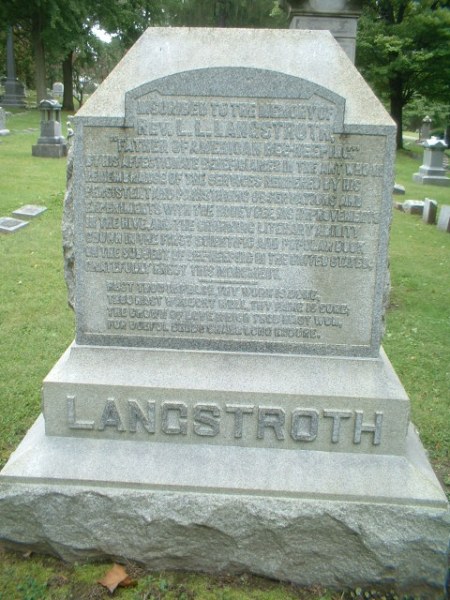
Langstroth published “The Hive and the Honey-Bee” in 1853 still in print today after 40 editions. Langstroth died October 6, 1895 while preaching a sermon on the love of God at the Wayne Avenue Presbyterian church in Dayton. L. L. Langstroth is buried at Woodland Cemetery, Dayton, Ohio. Langstroth’s epitaph reads —
INSCRIBED TO THE MEMORY OF REV. L.L. LANGSTROTH, “FATHER OF AMERICAN BEEKEEPING,” BY HIS AFFECTIONATE BENEFICIARIES WHO, IN THE REMEMBRANCE OF THE SERVICES RENDERED BY HIS PERSISTENT AND PAINSTAKING OBSERVATIONS AND EXPERIMENTS WITH THE HONEY BEE, HIS IMPROVEMENTS IN THE HIVE, AND THE LITERARY ABILITY SHOWN IN THE FIRST SCIENTIFIC AND POPULAR BOOK ON THE SUBJECT OF BEEKEEPING IN THE UNITED STATES, GRATEFULLY ERECT THIS MONUMENT.
At The Honey Cottage we believe the benefits of raw honey should bee in every meal. There is no better way to boost your immune system then with soup and raw honey.
Oh man, I am a soup manic during the winter. I don’t know about you, but there is nothing better than having something warm in your belly on a cold day. This was actually a soup that I had made by accident! I was trying to figure out what to do with left overs one day and surprisingly came up with this tasty soup that my family loved. This is one of my favorite recipes because it is a very easy to make and is a very hearty meal. Plus, I like not having to extra things just to make one recipe; these are ingredients that are normally in our house.
In the Northern Hemisphere today is the longest and darkest of the year. In the Southern Hemisphere it is high summer.
Winter Solstice – A Day for Beekeeper Celebration. Tomorrow we enter the season of growth!
Late dawn. Early sunset. Short day. Long night. In the Northern Hemisphere, the Winter Solstice marks the longest night and shortest day of the year. (On the same date the Southern Hemisphere has its longest day and shortest night.) But tomorrow the days will begin lengthening.
Winter Solstice means something different to beekeepers. It’s typically associated with the beginning of winter for humans. But for the bees it’s the beginning of spring. For beekeepers in the Northern Hemisphere today marks the beginning of growth. ~sassafrasbeefarm
The annual cycle for a honey bee colony is much easier to understand when you look at bees from the standpoint of their over-riding goal: survival of the species.
Throughout the year, honey bees respond to external cues provided by nature – they don’t keep a wall calendar inside their hive – and once you understand how honey bees reproduce, their two-season life cycle begins to make sense.
A year for a honey bee colony can be divided into two halves. One half is characterized by expansion, and the other by contraction. The half that is characterized by expansion begins soon after the winter solstice. Some research seems to indicate that honey bees respond directly to changes in the amount of daylight, while other research says that they don’t. But regardless of how it works, we know that brood rearing increases soon after the winter solstice, and decreases soon after the summer solstice.
Shortly after the winter solstice, many things happen inside the colony to increase brood production. For example, the workers begin to raise the temperature of the brood nest. These warmer temperatures stimulate the queen to lay eggs—just a few at first, but more and more as time goes on. Of course, keeping the colony warmer requires more honey stores just when those stores begin to be depleted. So the colony has to manage a very delicate balance of population-to-stores.
Why the expansion? Why now? The answer is simple: reproduction. The colony is preparing to capitalize on the window of opportunity to reproduce that will come in the early spring. How does a colony reproduce? By casting a swarm.
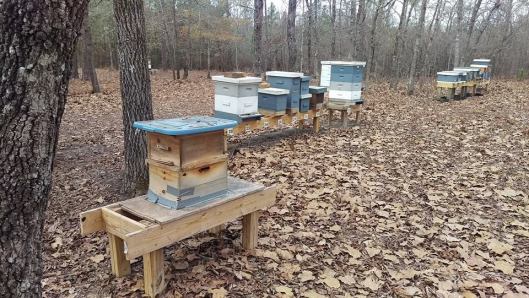
This time of year beekeepers perform maintenance and build more toys. Here’s a link detailing how to build a nice, portable, sturdy hive stand for under ten dollars: Bee Hive Stand for Cheap!
These easy Honey-Pecan Green Beans are a welcome addition to any meal…
Honey-Pecan Green Beans
1 lb. fresh green beans, trimmed
½ c. toasted pecans
1 T. butter
2 T. honey
Salt & pepper
In large sauté pan, bring green beans and ½ c. water to boil. Lower heat and simmer until beans are tender-crisp. Drain. To sauté pan, add butter, pecans and drained green beans; cook over medium heat for a few minutes more, adding honey and seasoning and cook until green beans are tender. Serve hot.
An interesting article on the history and evolution of beehive covers. ~ sassafrasbeefarm
I have found it interesting to look at the types of different beehive covers or tops that have been used over the years. I began my search with the first beehive that was patented in the United States but had a problem because the patent office burned in 1836 and many of the early written patents were destroyed. My records show that there were 1,131 beehives patented up to 2009. Some of these hives were the same hive with improvements to keep the patent in effect. The very first beehive patented was developed by J. Sweet, April 11, 1810, in Bethlehem, MA, but that record was destroyed in the fire. I found patent X 5,872 was granted to Ebenezer Beard in 1830 and most of the written part was recovered from the fire and had a flat attached cover. Sixty eight patented beehives later, in 1853, Lorenzo L. Langstroth was granted a patent for a hive. Reverend Langstroth had actually developed five different models of beehives and most of his hives had flat tops.However his fifth hive was a glass hive within a hive and the outer top could be tipped forward. So it might be classified as a telescoping cover because it covered an inside hive. During the 23 years in between the Ebenezer Beard hive and the Lorenzo L. Langstroth hive there were 44 flat topped hives that had covers that were hinged, attached or simply rested on the beehive. There were four beehives that had covers sloping in one direction and two telescoping covers. Eleven hives had unusual shaped covers with projections and seven hives had pitched or gable tops. When you stop and think about it, it isn’t really that unusual, as the trend in the early times was to convert a piece of furniture into a beehive and have drawers or a side panel that could be opened.The lumber in the 1850s was available in wider widths so you could get a single piece that would cover the entire hive. However you would encounter the problem of warping or cupping, allowing the top to have gaps between the bottom side of the cover and the super below. The gaps could be viewed as being good or bad. The gap would provide upper ventilation and an upper entrance to the hive.However, if you wanted to move the hive there was just another place for the bees to escape from the hive. Thus to eliminate the warping, the boards could be cut in narrower strips, the grain reversed and cross pieces used to hold the boards together. This style of cover is very much like the today’s migratory cover. A problem arose, what do you do with a flat top once it is removed? You can’t just lay it on the ground in the same orientation as it would smash bees.Your best choice would be to prop it up against something else. Once a bee is smashed, the alarm pheromone is released and the other bees are now on alert. If you reverse the top and lay it on the ground, you can’t use it to stack equipment on it because it may violate bee space and squash bees.
Amos Ives Root – Born December 9, 1839 (1839–1923)
Biography of A. I. Root
Written by E. R. Root
A. I. Root was born in a log house, December 9, 1830, about two miles north of the present manufacturing plant of The A. I. Root Co. He was a frail child, and his parents had little hopes of raising him to manhood, although some of the neighbors said his devoted mother would not let him die. As he grew older his taste for gardening and mechanics became apparent. Among his early hobbies were windmills, clocks, poultry, electricity, and chemistry —anything and everything in the mechanical line that would interest a boy who intensely loved machinery. Later on we find him experimenting in electricity and chemistry; and at 18 he is out on a lecturing-tour with a fully equipped apparatus of his own construction.
We next find Mr. Root learning the jeweler’s trade, and it was not long before he decided to go into business for himself. He accordingly went to an old gentleman who loaned money, and asked him if he would let him have a certain amount of money for a limited time. This friend agreed to lend him the amount, but he urgently advised him to wait a little and earn the money by working for wages. This practical piece of advice, coming as it did at the very beginning of his career, was indeed a God-send, and. unlike most boys, he decided to accept it. Imbued with a love for his work, and having indomitable push, he soon earned enough to make a start in business, without borrowing a dollar. The business prospered till A. I. Root & Co. were the largest manufacturers of real coin-silver jewelry in the country. From $200 to $300 worth of coin was made weekly into rings and chains, and the firm employed something like 15 or 20 men and women.
It was about this time, or in 1865, that a swarm of bees passed over his shop; but as this incident is given so fully in the introduction I omit it here. Not long after he became an A B C scholar himself in bees, he began to write for the American Bee Journal under the nom de plume of “Novice.” In these papers he recounted a few of his successes and many of his failures with bees. His frank confession of his mistakes, his style of writing, so simple, clear, and clean-cut, brought him into prominence at once. So many inquiries came in that he was finally induced to start a journal, entitled Gleanings in Bee Culture of this, now his business grew to such a size that the manufacturing plant alone covered five acres, and employed from 100 to 200 men —all this and more is told in the Introduction by the writer.
As an inventor Mr. Root has occupied quite a unique field. He was the first to introduce the one pound-section honey-box, of which something like 50,000,000 are now made annually. He made the first practical ail-metal honey-extractor. This he very modestly styled the “Novice,” a machine of which thousands have been made and are still made. Among his other inventions may be named the Simplicity hive, the Novice honey-knife, several reversible frames, and the metal-cornered frame. The last named was the only invention he ever patented, and this he subsequently gave to the world long before the patent expired.
In the line of horticultural tools he invented a number of useful little devices which he freely gave to the public. But the two inventions which he considers of the most value is one for storing up heat, like storing electricity in a storage battery, and another for disposing of sewage in rural districts. The first named is a system of storing up the heat from exhaust steam in Mother Earth in such a way that greenhouses and dwelling-houses can be heated, even after the engine has stopped at night, and for several days after. The other invention relates to a method of disposing of the sewage from indoor water-closets so that “Mother Earth,” as he calls it, will take it automatically and convert it into plant life, without the least danger to health or life, and that, too, for a period of years without attention from any one.
Some of the secrets of his success in business may be briefly summed, up by saying that it was always his constant aim to send goods by return train, and to answer letters by return mail, although, of course, as the business continued to grow this became less and less practicable. He believed most emphatically in mixing business and religion—in conducting business on Christian principles; or to adopt a modern phrase, doing business “as Jesus would do it.” As might be expected, such a policy drew an immense clientage, for people far and wide believed in him. But how few, comparatively, in this busy world, go beyond the practice that honesty is the best policy! While A. 1. Root believed in this good rule he did not think it went far enough, and, accordingly, tried to adopt and live the Golden Rule.
The severe strain of long hours of work, together with constantly failing health, compelled Mr. Root to throw some of the responsibilities of the increasing business on his sons and sons-in-law. This was between 1886 and 1890. At no definite time could it be said that there was a formal transfer of the management of the supply business and the management of the bee department of Gleanings to his children; but as time went on they gradually assumed the control, leaving him free to engage in gardening and other rural pursuits, and for the last ten years he has given almost no attention to bees, devoting nearly all his time to travel and to lighter rural Industries. He has written much on horticultural and agricultural subjects; indeed, it is probable that he has done more writing on these subjects than he ever did on bees.
Note: He did not invent a section box for holding honey, but only a box just the right size to put 8 into a Langstroth frame.
For the last twenty-five years he has been writing a series of lay sermons, touching particularly on the subject of mixing business and religion, work and wages, and, in general, the great problem of capital and labor. As an employer of labor he had here a large field for observation, and well has he made use of it. Perhaps no series of articles he ever wrote has elicited a more sympathetic response from his friends all over this wide world than these same talks; and through these he has been the means of bringing many a one into the fold of Christ.
It has been a rather difficult matter to get a picture that was in any way satisfactory to the members of his family. Finally the writer, one day, with a Kodak, took a “time view” of him in his favorite place of resort, the greenhouse, among his “posies,” where he spends hours of his happiest moments. This view shows him just as he appears around home in his everyday work clothes. Ill health, or a sort of malaria that has been hanging about him for years, has forced him. during winter, to wear a fur cap and to keep his overcoat constantly on, indoors and outdoors, with the collar turned up.
Mr. Root, ever since his conversion, in 1875 has been a most active working Christian. No matter what the condition of his health, he is a regular attendant at church and prayer-meeting. He takes great interest in all lines of missionary work, and especially in the subject of temperance. He annually gives considerable sums of money to support the cause of missions, and to the Ohio Antisaloon League; and now that the heavier responsibilities of the business have been lifted from his shoulders he is giving more and more of his time and attention to sociological problems.—E. R. Root.Source:
The ABC of Bee Culture, page 438, 1903
There are very few sweets as satisfying as a piece of baklava with a steaming cup of coffee. Many groups claim Baklava as their own. It is widely believed that it is of Assyrian origin. Around approximately the 8th century B.C., Assyrians baked thin layers of dough with nuts, poured honey over it, and enjoyed this sumptuous treat. The history of Baklava changed with the history of the land. The Near and Middle East saw many civilizations come and go. Baklava and the recipe had spread to the Near East, Armenia, and Turkey. With the advent of the Grecian Empire, it spread westward to Greece. (Source)
That is why Baklava has many varieties, the traditional baklava is made with walnuts and in the southern with pecan and in the western with almonds. The Turks are known to famously make it with pistachios. I prefer pistachios and almonds in my Baklava.Today I’m sharing with you all, the easiest and yummiest homemade baklava recipe. The basic ingredients for baklava are nuts, phyllo pastry and syrup or honey. I bought the phyllo pastry from the supermarket. You can find it in the frozen foods aisle. I’ve used a mixture of almonds and pistachios for nuts and made a beautiful rose flavored honey syrup. This is one of those recipes that you cannot fail with and even if you try hard to do, the outcome no matter what is going to be absolutely delicious.
One Beekeeper, Two Wright Brothers
Posted on September 14, 2016
Leave it to a beekeeper to make aviation history. An Ohio entrepreneur/beekeeper named Amos Root was, according to reports, the only person to actually witness the Wright brothers’ airplane flights in 1904 and 1905. And not just witness them, but write about them in a publication he founded called “Gleanings in Bee Culture.”
Root makes an appearance in David McCullough’s “The Wright Brothers” and also in an article on PBS’s Nova site. As the Nova site says, “almost as astonishing as the fact that a pair of bicycle shop owners invented the airplane” is that the first “accurate reporting on their earliest flights appeared” not in The New York Times or Scientific American, but in “an obscure journal for beekeepers.”
Root, a beekeeping hobbyist from his early twenties on, started a company in Medina, Ohio, that made beehives and beekeeping equipment. One of his best inventions was (improving ed.) removable frames so that a beekeeper could harvest honey without destroying the hive.
Root also started a candle-making company called Root Candles that is still in existence today. According to an article in The Cleveland Plain Dealer, the company, which sits next to Amos Root’s old homestead in Medina, makes 20 million home décor candles every year. The company’s president is a great-great grandson of Amos.
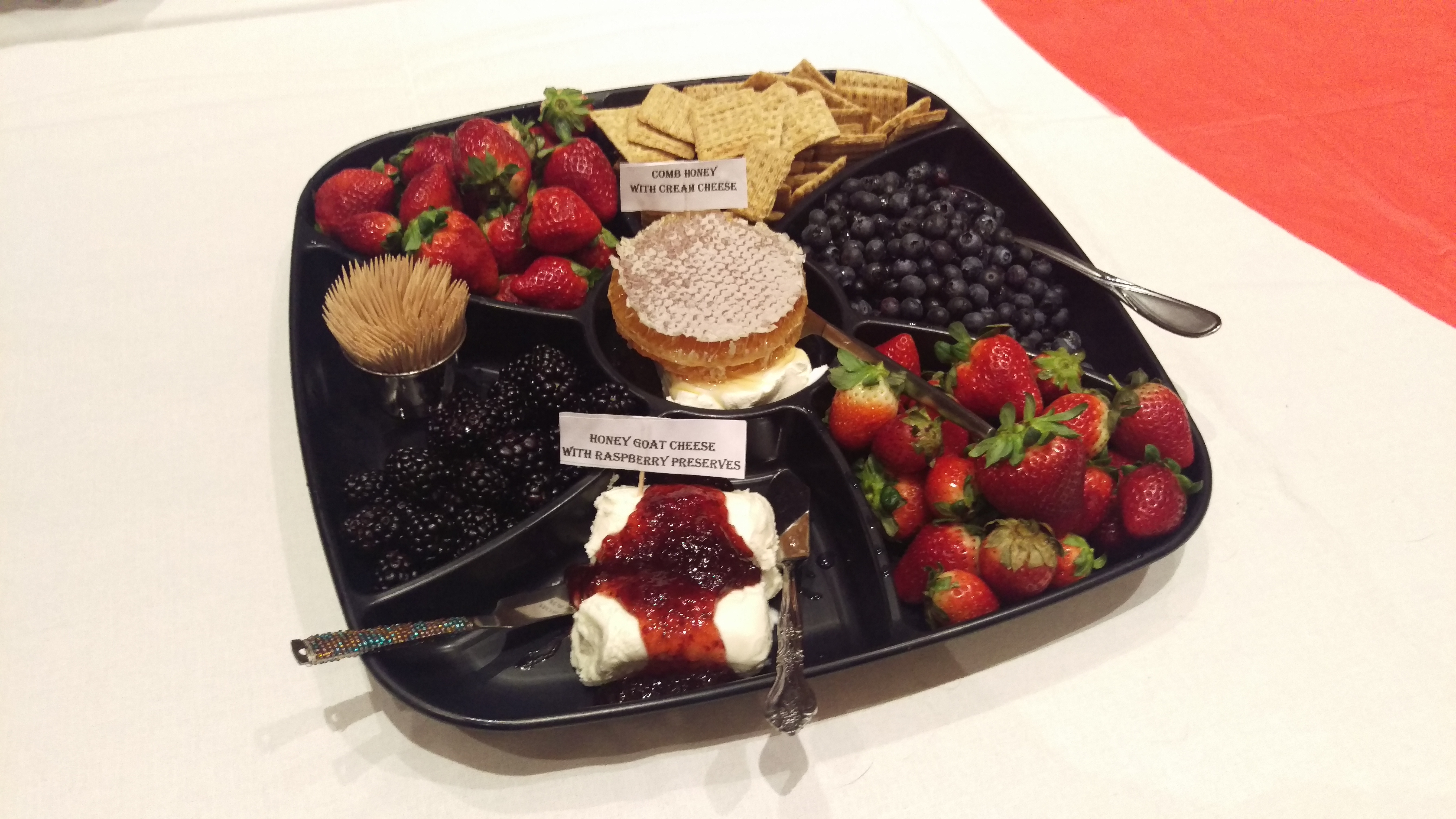
Last night was our annual Bee Association’s Holiday Potluck dinner. I continued last year’s effort of a bee themed platter. This year I replaced the grapes with strawberries to provide more bee pollinated items on the platter. If you consider the cheese as dependent on bees for the cow’s forage then it was almost a home run.
Ask a non-beekeeper what bees collect when they forage and you will probably hear of nectar and pollen. But few will mention propolis. Yet propolis is an essential material bees use to maintain and protect the hive.
To be factually accurate, bees don’t collect propolis. Instead, they create it inside the hive from other substances they have foraged.
These cupcakes might look plain, but they’re far from that! Cut up bits of walnut give a warm, earthy flavor and together with the cinnamon, nutmeg and cloves it makes a great, wholesomely warm fall/winter dessert. These cupcakes retain a moist texture thanks to these walnuts and lend themselves well to being decorated creatively.
Begin by mixing all dry ingredients in a large bowl. Add the butter, when the butter is well mixed in, add the eggs and honey. Scoop them in muffin forms and bake at 180°C for 20 minutes. Mine are way too big for this recipe as you can see in the pictures, I used old-fashioned sized ones that weren’t suited to the muffin tin. Decorate as you wish. I mixed almond essence with honey and almonds. You can also decorate with whole walnuts.
Millions of Americans are about to celebrate Thanksgiving, and the grocery stores are bracing themselves for the onslaught of customers. The fact that hundreds of millions of people in the US can eat a meal that consists of roughly the same menu on the same day is a miracle of modern agriculture as well as a testament to good supply chain management at that nations’ grocery stores. Have you ever considered how your Thanksgiving meal is impacted by bees? Many of your Thanksgiving favorites would not make it to the table without the pollination services provide by bees.
Let’s consider a typical Thanksgiving meal that consists of the following: turkey, stuffing, yeast rolls, green bean casserole, cranberry relish, pumpkin pie and coffee. How would the menu be impacted if there were no bees?
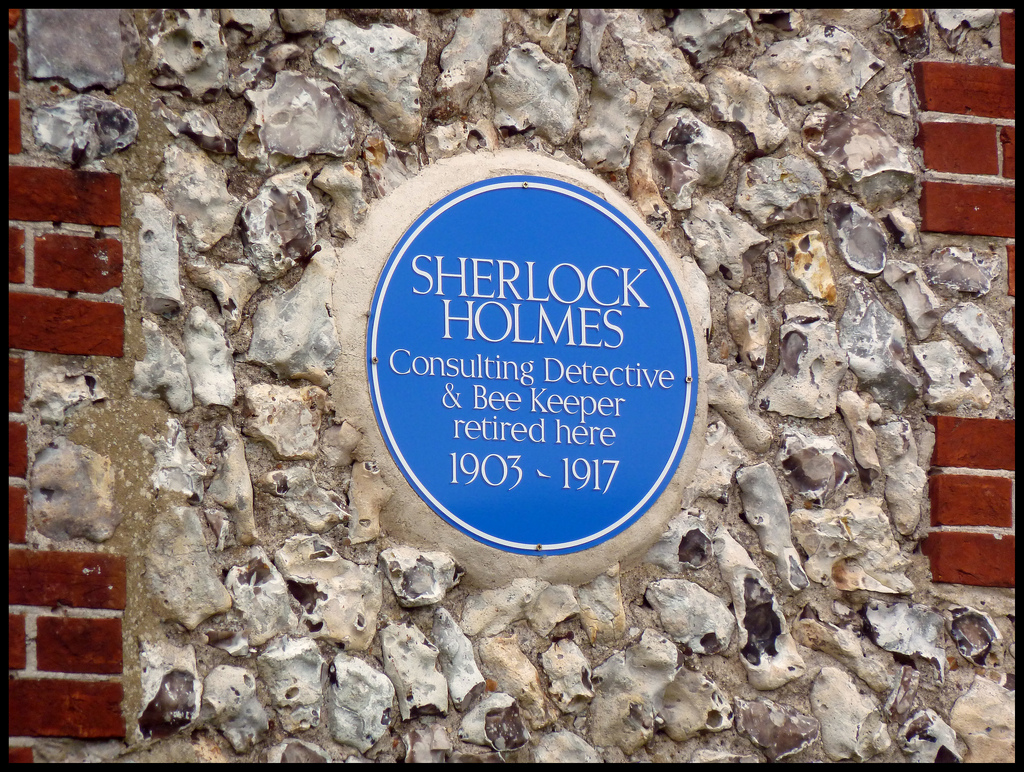
You may have heard that Arthur Conan Doyle’s famous consulting detective, Sherlock Holmes became a beekeeper when he retired. But how do we know he took up beekeeping, and why did Sherlock become a beekeeper? Below, you’ll find a quote from the book, and possible reasons why Sherlock Holmes decided to take up beekeeping as a hobby.
We are not given the specific reasons why Sherlock Holmes took up beekeeping and what lead him to this hobby, however, beekeeping seems a fitting hobby for the master sleuth! Here are my suggestions:
Most of us have heard of the importance of genes, how a mother and father each contribute their important element and so on. We accept, without question, that the mother contributes chromosomes from her egg and the father from his sperm. Much of the animal kingdom operates with these principles.
This cake is one of my favorites in school and college days, Most people in my friends circle used to love chocolate flavor, I was the one, who always wanted this flavor. I was that addicted to this so much. Sadly, nowadays when I go to the cake shop, I don’t find this cake, they have 100’s of other flavors, but not this. Fortunately, some small bakery shops still have this cake to save me. 🙂
That’s how, I really wanted to make this myself at home and treat me with strawberry and honey flavor, whenever I get the cravings. This one is very easy, just like other cakes, with simple extra two steps. Check below for detailed explanation with step by step pictures.
This was such a simple dinner to make that it made me very happy. The kids happily ate it and we all sat around the table and talked. It was wonderful! I added buttered egg noodles with garlic and some brown beans to complete the meal. This is a recipe that is going back in our rotation.
People love to ask questions when they find out that we started keeping bees. One of the most common questions is, “When will you start selling honey?” That question is usually followed by the comment, “Local honey is really expensive. You can make a lot of money.” In our part of the Midwest, local honey sells for anywhere between $8 and $12 for a 1 pound bottle, and those prices are typically set by hobby beekeepers who sell mostly at places like farmers markets. If you read my previous blog post, you will know that hobby beekeepers aren’t getting rich on their honey. The question that people should be asking is, “Why is the grocery store honey so cheap?” The answer to that question will probably shock you.
Wait until you taste these all natural Pan Fried Honey Bananas! They are unbelievably easy to make and are sweetened naturally with honey then sprinkled with cinnamon. You could eat this for breakfast but for me it is more of a dessert or great snack.
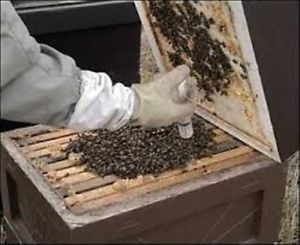
This is the video number one of a series of videos about the honey bee diagnostic laboratory at USDA Beltsville Maryland. This video series will cover the main diagnostic procedures applied to bees sent to the lab for diagnosis.
In this video, Dr. Humberto Boncristiani and Sam Abban discuss the best procedure to send samples of Adult honey bees to the lab. It is very important to send the sample the right way to improve the quality of the service.
If you want to know more about this service provided by the laboratory check the link below.
One of our favorite things about fall is; FOOTBALL!!! There is nothing more thrilling then hanging out and watching the game with friends and family! One of our favorite dips to eat when we are watching the game is Honey Jalapeno dip. This is perfect to serve with crackers, chips, and vegetable trays. We even like spreading on our sub sandwiches. Hope you enjoy it this dip as much as we do!
‘The Sting of the Wild‘ is about stinging insects. In the first part of the book which runs into five chapters, Schmidt gives us an introduction to stinging insects and talks about how their stinging capability might have evolved from an evolutionary perspective. In the second part of the book, Schmidt focuses on individual insects, talks about their life histories and their lifestyles, their relationships with humans and other animals from the animal kingdom, how they use their sting and how sharp and painful their sting can be. He creates a four-level sting-pain scale and tries to rate each insect’s sting using this scale. Some of the insects which are featured in the second part of the book are sweat bees, ants of different types including fireants, harvester ants and bullet ants, wasps of different types including yellow jackets, tarantula hawks, mud daubers and velvet ants, and of course everyone’s favourite, the honey bee.
It’s not rocket science it’s just awareness – simplicity itself – what would you rather Bee Dead or Bee Alive – personally l think l would prefer living bees to dead bees and the bees probably agree with me!
“Bees do have a smell, you know, and if they don’t they should, for their feet are dusted with spices from a million flowers.” ― Ray Bradbury, Dandelion Wine
How BEE friendly are you? With Spring just literally on our doorstep now, although even l have to concede at times that in the UK alone, it appears that Mother Nature has withdrawn it … our bees are back into their daily routines. The garden l have here, is not a gardeners’ delight, we have wild herbs growing next to wild flowers, and very soon we shall be planting out our seasons’ rotation for vegetable growing. I tend to like to see more ‘weeds’ and don’t see them as such but more as flowers in the wrong place, it sounds kinder that way.
Plant more BEE friendly flowers and flowering herbs in your garden – With the loss of nesting and foraging habitat due to intensive monocultural agricultural practices and the ever increasing and rising suburbanization driven society pressures demanding more housing – natural landscapes are fast disappearing. You can alter things by planting flowers into your garden. Plant bloom heavy as Bees love forage volume and plant for the seasons that the pollinators are most active – as in early spring to late summer. Plan your flowering crops effectively;
I found a recipe for Honey Bread and Butter Pickles in Canning for a New Generation and decided to give it a try. I’m reluctant to continue to call these pickles bread and butter pickles since they’re missing one of the key components I generally associate with bread and butter pickles – the sweetness factor. I actually doubled the amount of honey called for in the recipe. They were still not what I would consider sweet, and I tend to have a fairly low tolerance for sweet. The recipe still turned out a wonderful pickle, it’s slightly different from a traditional dill, and has the additional bonus of not containing any cane sugar. I also didn’t bother with canning these pickles, although, this recipe is perfect for canning if you want to put in the extra work. I simply decided to save some time and store then in the refrigerator for up to a month, and gift a few jars.
How much intervention in the hive is enough? Some beekeepers do lots of management, entering their hives at least weekly, if not more. Others are minimalists with little or no inspections. Every beekeeper has their own unique situation that dictates their management.
In their zealousness, some new beekeepers always want to get into their hives to see what is happening. They are overly enthusiastic with this new endeavor and want to do inspections a couple times a week. And then there are other beekeepers who do minimalist management, letting the bees do what they know how to do with infrequent intervention. And sometimes it becomes very infrequent or even nonexistent.
So, is more management better? Is less acceptable? My guess is many beekeepers will say there’s a point when the beekeeper will overdo their inspections. But this debate could also be about whether the beekeeper does not do enough inspections.
I consider myself a minimalist when it comes to the management of my top bar hives. Often, I put little effort into checking them and managing them. It sometimes reaches the point where a person can consider me more of a bee-haver instead of beekeeper. I don’t even touch some of hives except to harvest them.
For example, one of my apiaries is in the mountains of Honduras on a coffee farm. I don’t get up there very frequently. The last hives in the line get the least attention. Time runs out and the truck is ready to take the workers back down to town. This is a Saturday and they work only until noon. I must go with it (or take a couple hours and walk down the mountain which is not likely after spending all morning in the hives). These are the hives that I only enter to harvest.
But minimal management works for me in my situation. I want honey from them but I don’t do beekeeping as my primary income source. I’m an elementary school teacher and bees have become a secondary income (unfortunately). They give me what they want for effort I put into their management. I accept that and I’m grateful for it.
Good article and yes, my bees pay their way here too. The author makes an important point in closing that one must have a love for the bee primarily and any financial gain an added bonus. ~sassafrasbeefarm
Recently I met a friend for lunch, and over sandwiches she inquired about our honey bees. I love talking about our bees, and she is a good friend who indulges me. After I provided a status update she asked, “Are you making money yet?” Her direct question caught me off guard. Most people ask us when we will have honey available, and I think my friend was curious to know if our colonies had reached a point where we could harvest honey for sale. Doug and I are first year beekeepers, so we are letting the bees have all the honey this year to get them through the winter. Nevertheless, my friend’s question made me wonder if hobby beekeepers could make a profit from their bees.
Doug and I became beekeepers because we find bees fascinating. We like learning about bees and talking about bees and taking care of them. I also wanted to increase the output in my vegetable garden. Neither one of us eat that much honey, and we never considered keeping bees for the purpose of generating income. First year beekeepers spend money but don’t make money. However, subsequent years may bring opportunities to actually earn some revenue. Therefore, I decided to make a very rough estimate to see if it is possible for a hobby beekeeper to be profitable. As the saying goes, this is a back of the envelope calculation.