Tags

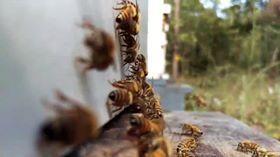
What to do through the spring season in beekeeping – check out our list of simple, spring beekeeper activities.
via Beekeeping Calendar and Seasons – Springtime — Prime Bees – College Station Bee & Honey Farm
26 Thursday Apr 2018
Posted in beekeeping, beekeeping calendar, beekeeping seasons, calendar, seasons
Tags
What to do through the spring season in beekeeping – check out our list of simple, spring beekeeper activities.
via Beekeeping Calendar and Seasons – Springtime — Prime Bees – College Station Bee & Honey Farm
25 Wednesday Apr 2018
Posted in beekeeping
Tags
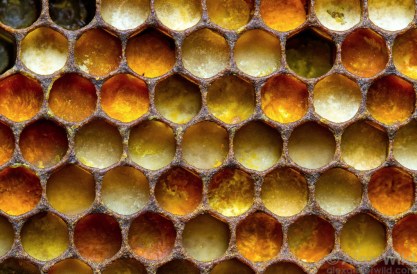
Source: Honeybee Nutrition and Behavior
A) Pollen quantity and quality: plant responses to stress
Recent honeybee declines may be influenced by pollen/nectar quality that compromise a bees’ ability to cope with environmental challenges, including disease and stress. Plants facing drought compromise floral trait expression which in turn can affect bee health. We are studying how drought stress in canola (Brassica napus) affects the floral reward quantity and quality. We are also monitoring the quality of bee hive pollen when foraging on crops under abiotic stress.
B) Floral chemicals
Plant-pollinator mutualism go beyond floral traits and pollinator behavior. Pollinators have evolved to take advantage of diverse floral chemicals. Increasing our knowledge of the chemical relationships between bees and plants is an important step towards understanding the intricacies of hive function and honeybee colony management. Ongoing studies aim to understand the role of key phytochemicals in promoting honeybee health.
Source: Honeybee Nutrition and Behavior
24 Tuesday Apr 2018
Posted in bee law, beekeeping, education
Tags

Photo: The ABC of Bee Culture: a cyclopaedia of every thing pertaining to the care of the honey-bee; bees, honey, hives, implements, honey-plants, etc., facts gleaned from the experience of thousands of bee keepers all over our land, and afterward verified by practical work in our own apiary.
The Status of the Honey Bee in the Law:
The law divides the entire animal kingdom into two classes: (Blackstone Commentaries, Book II, p. 390)
First, those which are domesticated (ferae domitia) and, second, those which are wild (ferae naturae). The rights and liabilities of persons with reference to the animal kingdom then are likewise divisible. Bees belong with the latter class and, in considering the law with reference to these cases, rules pertaining or applicable to the former class would not have any significance. Wild animals are also divisible into two classes:
Those which are free to roam at will, and those which have been subjected to man’s dominion. Rights and liabilities depend upon the class into which the animal falls at the particular time. If it be in a State of Nature, free to roam at will, it is the property of no one, not even of the one on whose land it may be at the particular time, and may become the property of the first taker, even though he be a trespasser and liable for the trespass.
One who enters another’s premises without the invitation or permission of the owner is a trespasser, but this gives the owner of the premises no title to the wild things thereon, it merely gives him the right to protect others from coming thereon and taking them. If, however, some person against his will enters the premises and takes a wild animal or a swarm of wild bees, such a person becomes the owner of what he takes, but he has to answer to the owner of the premises for the trespass. If, however, the animals have been brought within the dominion of the owner of the premises as deer in a park, rabbits in a warren, or bees in a hive, such an entry and taking would be a crime as the law recognizes the property of him who has dominion over them and the taker would gain no title by the taking, for the owner might regain them by legal proceedings. (Blackstone Commentaries, Book II, p. 392)
So we may understand that the animal kingdom to which the bees belong is subject to a certain qualified proprietary interest. That is, they belong to no one, not even the owner of the soil on which their nest may be unless they have been subjected to his dominion, and when so reduced to possession, they are his property. This principle, however, is subject to an important modification: they remain the property of the possessor only so long as his dominion continues, and if such animals regain their freedom, as bees by swarming out and occupying some natural hive, as a hollow in a tree, the property right is lost and they again revert to their natural state and become the property of the first taker.
These same notions also control the matter of liability for injuries done by the bees, and such liability depends on proprietorship. So it would seem that if the bees have escaped from their owner, or have swarmed out of his hive, unless he can be shown negligent in having permitted this, there can be no liability for injuries done by them.
— excerpt from ‘Bees and the Law’, pages 11-12, written by Murray Loring, published by Dadant, 1981
23 Monday Apr 2018
Posted in beekeeping

By: Dewey Caron
Beekeeping is one of the oldest forms of food production dating as far back as 13,000 BC.
Human cultures were initially hunters/gathers, which included hunting of wild nests for honey and beeswax. Some human cultures continue such traditions today, such as the harvesting of Apis dorsata nests in the mountains of Nepal and the native honey hunters of the Sundarban mangroves of India/Bangeldesh (both highly dangerous – sheer cliffs of Nepal and man-eating Tigers that rule the Sundarbans). Mike Burgett, in an interview by M.E.A. McNeil, Dec. 2014 Bee Culture describes the dangers to the Sundarban honey hunters. http://www.beeculture.com/mike-burgett-interview/
Two interesting YouTube videos show
- Irulas honey hunters of south central India “Honey of the Untouchables” with supurb Bee photographer, Eric Tourneret, http://youtu.be/6gYbLek5jz8 and
- Kulung culture (Nepal) Honey Hunters from National Geographic https://www.nationalgeographic.com/magazine/2017/07/honey-hunters-bees-climbing-nepal/
The history of humans bringing bees closer to their residences is not well documented. Most farmers kept other livestock and grew crops and keeping bees was only part of their husbandry/agriculture. Generally the beginning of “domestication” of honey bees by middle eastern cultures is cited as around from 10,000 to 4400 years ago.
With Reverend Langstroth’s development of the movable comb hive (1851), German Johannes Mehring’s refinement of comb foundation (1857), plus the honey extractor (von Hruschka 1864/1865 – see article by Wyatt Mangum in Sept 2016 ABJ), it became easier to keep honey bees at the convenience of the beekeeper. Prior to this, bees were often “kept” where they were found, in their selected cavities and individuals obtained their honey and beeswax via destruct harvest.
Read full article here: BEES IN TREES — Bee Culture
22 Sunday Apr 2018
Posted in beekeeping, forage

Here’s some good information regarding white clover – a honey bee favorite! – sassafrasbeefarm
Article by: Crooked Bear Creek Organic Herbs
White clover (botanical name Trifolium repens) is a clover species that is indigenous to Europe, West Asia and Northern regions of Africa. Extensively introduced across the globe, this species is cultivated in the form of a pasture crop and is currently even common in the grassland regions of North America as well as New Zealand. White clover is also known as Dutch clover, as this species was cultivated in Holland for the first time.
White clover is a herbaceous (herb-like) perennially growing small plant. It grows close to the ground and produces small whitish flower heads, which usually have a pink or creamy tinge, which may occur as the plant matures. Usually, the flower heads measure anything between 1.5 cm and 2.0 cm (0.6 inches and 0.8 inches) wide and appear at the end of the flower stalks or peduncles measuring about 7 cm or 2.8 inches.
Read the excellent and lengthy full blog post here: Plant Profile: White Clover {Trifolium repens} by Crooked Bear Creek Organic Herbs
21 Saturday Apr 2018
Posted in beekeeping, honey, honey as food, honey recipe, recipe

My husband and I went out to eat at Texas Roadhouse and thoroughly enjoyed their warm rolls with the Cinnamon Honey Butter so I thought I would make my own. I love cinnamon and this butter is excellent on things like French toast, pancakes, toast, sweet rolls, dinner rolls…. well you get the idea. This can be made up in a matter of minutes and then placed in the refrigerator for a few hours and it’s ready to go!
Read full yummy recipe here: Cinnamon Honey Butter — In Dianes Kitchen
20 Friday Apr 2018
Posted in beekeeping
Tags

Ted is an organization that posts talks online, their YouTube channel is full of great short talks about many unique topics.
TED is a media organization which posts talks online for free distribution, under the slogan “ideas worth spreading”. TED was founded in February 1984 as a conference, which has been held annually since 1990.
We sat down on rainy afternoon in the Waitakere ranges, and watched loads of Ted Talks about bees here are our top twelve.
Do you love learning about Bees? Here is our top twelve favorite Ted Talks about bees. Grab a coffee, Sit down and watch these quick talks. The post 12 Must See Ted Talks for Beekeepers appeared first on kiwimana.
Read full blog post with introductions to these videos here: 12 Must See Ted Talks for Beekeepers — kiwimana
19 Thursday Apr 2018
Posted in beekeeping

No doubt I am getting older. But regardless of my being stuck in the past and the way things are/were, I can fathom this concept. Like the author it seems to be too many hurdles are in the way to accomplish. Heck, I can’t even fathom why. – sassafrasbeefarm
The robot bee story is back in the news. I covered some of the new research and associated media hype last year. The latest: a patent has been filed for building ‘pollinator drones’ and the media (both newsy and social) are in despair, as the end is clearly nigh.
But don’t worry. Here are a few challenges the pollinator drones will need to overcome before they can take over agriculture:
Read the full blog post here: Robo bees are back, but will they last? by Ecology is not a dirty word
18 Wednesday Apr 2018
Posted in beekeeping, queens

Queen rearing doesn’t have to be difficult. Here is an excellent article by Sustainable Bees on raising “easy” queens. – sassafrasbeefarm
Article by: Sustainable Bees
Many beekeepers believe queen rearing is a very technical and difficult process. Actually it is easier than you think. There are a lot of good ways to do it. Harvesting swarm cells in the springtime is one way, but to be in control of the process and get queens when you want them, the beek has to intervene & get the bees to do it on command. Moving the queen out of a strong colony by forming a nuc and keeping her in it is one way to get the bees to go into emergency queen rearing mode. (cont.)
Read full blog article here: Easy Queen Rearing by Sustainable Bees
15 Sunday Apr 2018
Posted in beekeeping, pollen
Tags

Many of us can relate to that moment when you accept spring’s invitation to step out and saunter in the warm sun to hear all the vibrant sounds as nature awakes from the slumber of winter, to smell all the fragrances floating on the breeze, and then it hits you, a series of powerful, uncontrollable sneezing fits! Upon recovery, your eyes are filled with tears, and your nose is running in an effort to clear that tiny nuisance, pollen. Profits are made in efforts to assist our terrible reactions to pollen, and many of us would rather it not exist, so what is it; why does it exist; and who really needs it?
Read fully blog article here: Pollen: Tales Beyond the Sneeze by thebeeswaggle
13 Friday Apr 2018
Posted in beekeeping, beekeeping management, humor

Manuel Juraci Vieira needed a way to transport the honey he would collect from his beehives on his farm back to his home. His solution? His donkey, Boneco. Outfitted in his very own homemade beekeeping suit, Boneco tags alongside Vieira, helping him carry the honey they gather during their hauls. Working together, the unlikely colleagues and friends are able to harvest more of the sweet stuff than possible with Vieira working alone.
11 Wednesday Apr 2018
Posted in apitherapy, beekeeping
Tags

Intro.:
Last year I received a telephone call from a man wanting bees. I assumed he meant a package or nucleus hive. His broken English made communication a challenge but eventually I understood he wanted the bees for apitherapy use.
I told him I had never provided bees for apitherapy. I had read about it and understood the reasons why people utilize stinging but had no personal experience. We decided to meet and discuss the matter as he wanted some honey as well. Seeing this man and talking to him convinced me to help him. He appeared to have a rheumatoid arthritis such that even walking was difficult. In conversation he told me he was currently unable to work. He also related that he had used the bees in his home country successfully and that the improvement was very real.
I decided to give him the bees needed. There was some prep time in constructing an appropriate bee box for his use. After a single “round” of treatments he was driving to meet me, instead of his wife, and soon had his work equipment loaded in his small truck.
I haven’t heard from him yet this year, but am eagerly looking forward to setting him up with a small hive of his own this year as we planned.
Update: I have heard from my apitherapy friend via phone call. He tells me he is in some sort of remission and doing well. He thanked me for helping him during his hour of need and promises to stay in touch.
Sassafras Bee Farm
For more information on Apitherapy:
By Ibrahim Alkhayal Alternative medicine often comes up with new and creative healing processes. A method being tried in Palestine uses the bee sting, called apitherapy. Rateb Samour, known as Abo Ibrahim, is a Palestinian beekeeper and agriculture engineer in the Gaza Strip town of Rafah. For about 13 years, he has devoted all his […]
08 Sunday Apr 2018
Posted in beekeeping, beekeeping books, book review
Article by: GeoKs
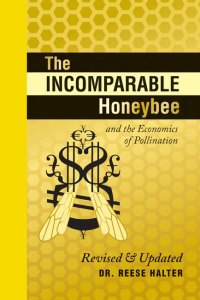
This title interested me for a few reasons. I remember being shocked when I saw documentary a few years ago about a region in China where pesticides and other toxins have wiped out the local honeybees and labourers have to pollinate pear blossoms by hand! Over the past year or two, it’s been almost impossible to miss the relatively regular media reports about Colony Collapse Disorder and the fact that researchers really haven’t figured out why more than 30% of our bee population is dying out every year. So when we had to re-plant our yard after last year’s whole home renovation project, I kept thinking I wanted to plant flowers and other plants that were friendly to bees, butterflies and birds. After reading The Incomparable Honeybee this morning, I realize I need to tweak a few things.
But I’m getting ahead of myself… First, here are a few especially fascinating facts from the book:
Continued here: Book Review: The Incomparable Honeybee by Dr. Reese Halter
07 Saturday Apr 2018
Posted in beekeeping, honey, honey as food, honey recipe, recipe

Once more, dietary changes are forcing cooking and baking changes. Some results are rather dreadful. Others have proven to be quite good! So it was with this cheesecake. No sugar, no gluten. The biggest problem was finding the dry curd cottage cheese. also known as hoop cheese or farmer’s cheese. I found the cheese at the local Whole Foods, and neither my husband nor I had ever tasted it – but we did, and liked it. It is a rather dry cheese, not sweet or salty, with a bit of a curd, but very fine, like ricotta. The original recipe is from this blog, but I changed it so that I made one 8″ cheesecake, instead of 4 individual ones. The only thing beside pan size that I changed was the baking time.
Read full yummy recipe here: Honey-Sweetened Cheesecake Recipe — Ink, Yarn & Beer
06 Friday Apr 2018
Posted in beekeeping, swarms
Tags
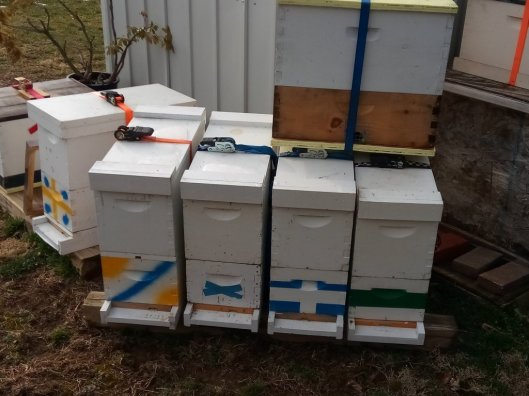
We conclude Swarm Week here at Beekeeping365 with an encouragement to set some bait hives in your area. Follow the well published guidelines regarding cavity volume, height, entrance size, and add the odors of drawn comb and another attractant such as lemongrass oil. It’s fun – like fishing – except for honey bees!
Bruce isn’t playing around this year. He’s upped his game and is going to catch some big swarms! This is what it takes to capture swarms – a dedication to constructing bait hives along the lines of what is known the bees will accept and occupy. Questions? Click on over to Bruce’s blog and post some questions or comments. sassafrasbeefarm
By Bruce Loves Bees:
I’m not playing around this year. Last year, I was so busy chasing swarm calls, and working, that I got way behind on putting my swarm traps up. I managed to get about 20 traps up, but I got them up late, and only caught 6 swarms in my traps. I also used alot of single 5-frame nuc boxes as traps. All of my swarm calls were for swarms over 5 lbs, so none of these would have went into a nuc. A few of them were over 10 lbs and didn’t even fit into a single 10-frame deep. This year, my swarm traps are a minimum of one nuc and one medium.
cont.
Read full blog post here: Swarm Trap Time by Bruce Loves Bees
05 Thursday Apr 2018
Posted in beekeeping, swarms
Tags
Every year many people send me pictures or videos of their bees with the question, “Are my bees swarming.” Most of the time they are simply bearding due to heat and/or congestion. This post by a-single-serving.com has an excellent video of a swarm issuing from a hive. Warning: It’s quite exciting! 🙂
Yesterday (28 March) it was finally warm enough for me to do a hive inspection at the same time that I could take off work. So I inspected Hive A (affectionately knows as Dave’s Bees). The population was very heavy, there was brood in the deep, and in two medium supers. I didn’t see much nectar in the hive, but there was pollen. Unfortunately, the girls got really PO’d part way through and I had to let them calm down. I think that was partly nectar dearth and the fact that it was cloudy and fairly windy. So that inspection was not one where I pulled every single frame. But I didn’t see swarm or superscedure cells, but I did add another medium super to give them some more room.
continued…
Read entire blog post here: Hive report: Swarm! — a-single-serving.com
04 Wednesday Apr 2018
Posted in beekeeping, education, equipment, honey bee behavior, management, swarms
03 Tuesday Apr 2018
Posted in beekeeping, opinion, swarms
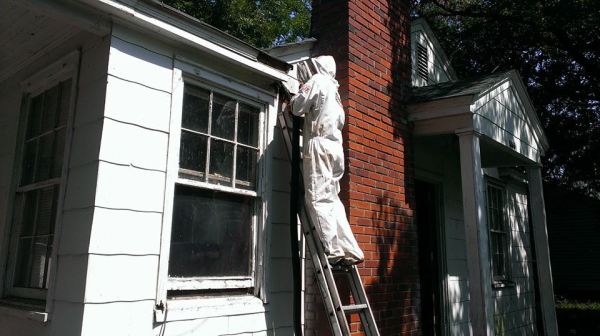
This week will most likely herald in the beginning of the spring nectar flow here in the Midlands of South Carolina. A few beekeepers will be caught off guard during the coming weeks, needing equipment, adding hive bodies, and tending to other management issues. Along with these urgent matters there will also be the unexpected swarm issue from hives. So far this year we have focused on preventing swarms and preparations which can be made prior to the swarm season to give the beekeeper the upper hand. We’ll now dedicate a week on how best to deal with swarms once they issue.
Occasionally, bees or wasps will make their home in the walls or a tree on your property. While getting them out may be tricky, it is worth finding out if it is possible. Read more about why you should have them removed instead of exterminating them below.
Typically beekeepers do not do removals from structures or trees, but some do. Removals from homes are most often a fee for service situation. Removals necessitate a specific skill set not taught in beekeeping.
Last year, while responding to honey bee swarm calls, on more than one occasion I arrived only to find that the owner had already sprayed insecticide on the bees. This is almost always a bad idea for several reasons.
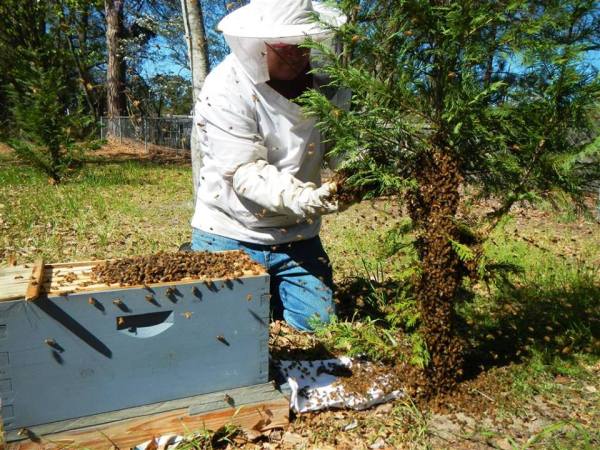 First, if it’s a swarm, local beekeepers will typically gladly lend a hand to help you remove the bees and often at little or no charge. You get the bees removed, save yourself and your family exposure to insecticide, and get to feel good about saving one of our environment’s most valued pollinators. If the bees have established a colony within your home things get more complex. Always consult the advice of a bee removal service before spraying insecticides.
Last year, I responded to a swarm call that turned out to be an established colony in a home. The lady of the house was standing outside the home spraying the colony entrance with insecticide. She had already depleted one can and was working on her second. While it may have been as easy as removing a small piece of soffet to extract the bees, I no longer was going to risk bringing back chemically laden bees to my home bee yard. But there is more to it that that. Aside from all her children standing around getting a good dose of the overspray from the can, she was killing the flying bees which feed and support the hive. This meant that thousands of larvae would die shortly thereafter and leave her with a rotting odor inside her home in the days that followed.
Another call I received in late summer had me arrive to find an inpatient landlord spraying inside an attic. He told me that he determined that the bees clustered on the outside were actually entering the house and had established a hive in the attic. He thanked me for coming, but said he didn’t have time to wait as he hoped to have the house rented later that day. Before leaving I told him that unless he wanted a damaged ceiling, drywall and furnishings, he should consider having the hive removed because without the bees fanning the wax comb, the comb would melt releasing perhaps gallons of honey, and he’d be receiving complains from his new tenants. (not to mention the smell of decaying bees and larva and attracting ants, roaches, and other pests for months to come).
In closing, consider that spraying the bees is a poor effort to quickly eliminate a complex problem, and will often lead to more expensive problems in the days that follow. The time spent consulting a local beekeeper or bee removal service first is time well invested.
We hope this external link assists you in your search to find someone locally in the USA:
http://www.bees-on-the-net.com
31 Saturday Mar 2018
Posted in beekeeping, honey, honey as food, honey recipe, recipe
Tags

You just can’t beat fresh honey! It’s great for so many purposes but we especially love it in recipes! These baked chicken tenders turned out great. Full of flavor and just delicious!
YIELD: Makes 4 servings
INGREDIENTS
2 lbs. skinless, boneless chicken tenders
1/2 cup BBQ sauce
1/4 cup honey
2/3 cup whole wheat flour
1/3 cup milk
2 eggs,beaten
2 1/2 cups whole wheat Panko breadcrumbs
1/2 tsp. salt
1/2 tsp. pepper
non-stick cooking spray
Honey BBQ Dipping Sauce:
1/4 cup BBQ sauce
2 T honey
DIRECTIONS
Preheat oven to 400 degrees.
Cover baking sheet with parchment paper.
In large bowl, mix flour and panko together with salt and pepper.
In another large bowl whip together BBQ sauce, milk, eggs and honey.
Dip tenders in BBQ/milk (wet) mixture and generously roll the chicken tenders in the Panko mix. Place the chicken strips on the baking sheet. Bake for 10 minutes. Flip tenders over and allow it to bake until cooked through and outside is crisp, about 10 minutes. Cook chicken tenders longer if you want more brown.
Serve with the Honey BBQ Dipping Sauce (below).
To make the Honey BBQ Dipping Sauce, combine the BBQ sauce and honey, stirring together until fully mixed.
Tip: Spray tenders with non-stick cooking spray to help them crisp up better.
Full article here: Honey BBQ baked chicken tenders by National Honey Board
30 Friday Mar 2018
Posted in beekeeping, honey bee photos, plants for bees
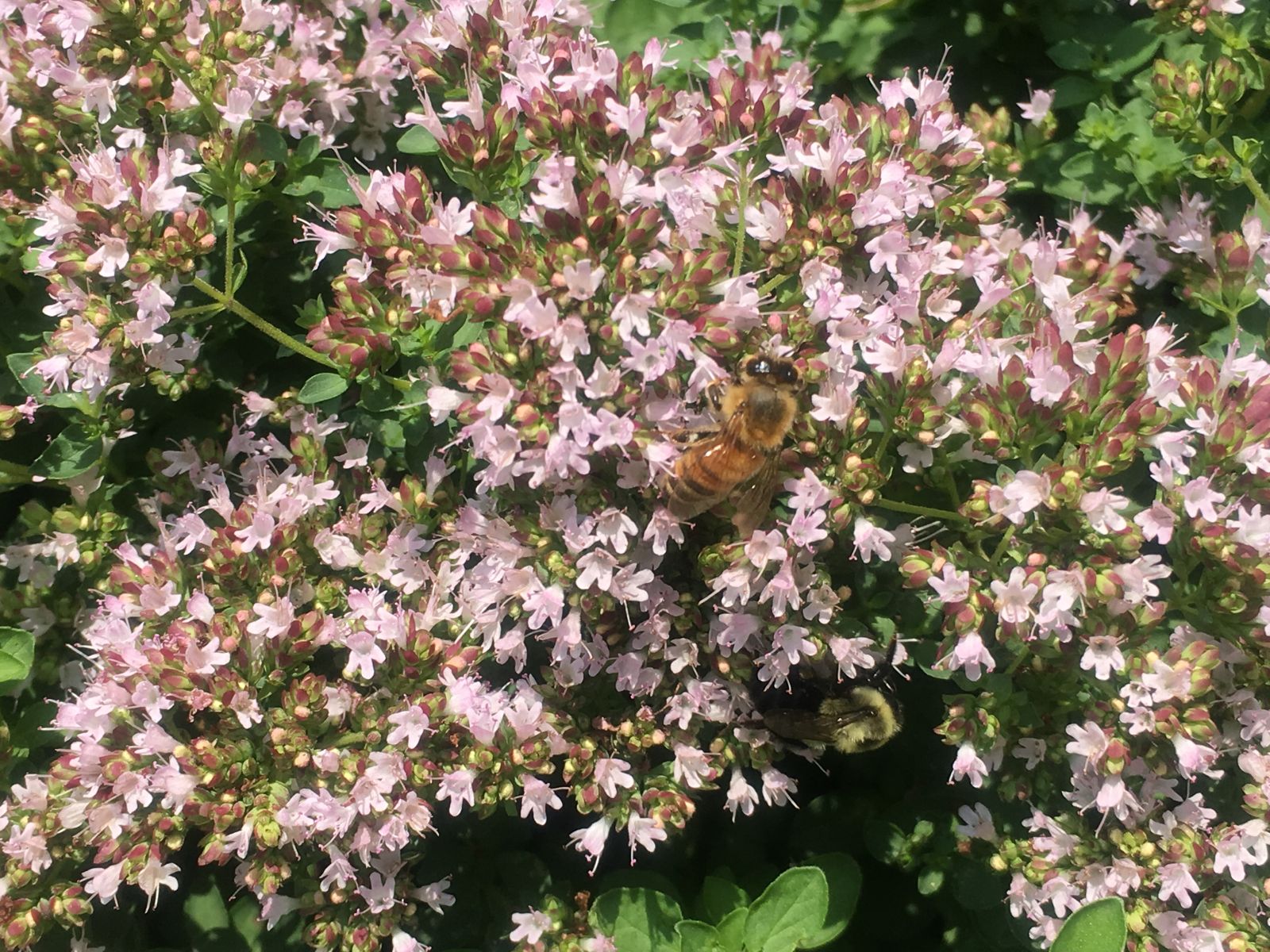
These cold winter days don’t allow for much gardening time. Like many of you, I’ve been considering the possibilities that spring planting offers lately, particularly as seed catalogs pile up and lure me into their pages with colorful spreads of summer’s bounty.
Last week, it was warm enough for bees to fly. I went out back without the restrictions of a heavy coat, feeling as light and carefree as my honey bees navigating and searching for any available food sources. I let the chickens out, watched my honey bees flying for a while and considered garden options for the spring. I even brought a nice cup of hot tea outside, sweetened with my girls’ honey, of course.
For more excellent honey bee photos and suggestions for vegetable gardening plantings for the bees visit: Vegetable Gardening for Honey Bees — settling for bees
28 Wednesday Mar 2018
Posted in beekeeping, honey bee photos
Tags

The bird’s water bowl and the top two tiers of my fibreglass pond dried up while we were away, even though the weather was predicted to be coolish.
Wandering around with the Nikon D3000 today, I spotted bees visiting the refilled ponds. I was surprised to see the unfurling of a red proboscis (tongue), not having photographed one before.
For more great honey bee pictures please visit: Honey Bee’s Proboscis — Christine R
27 Tuesday Mar 2018
Posted in beekeeping, beekeeping history

Interesting article about bees in a different culture. SBF
Are Lithuanians obsessed with bees? – BBC Travel
Will Mawhood writes about bees in ancient Lithuanian culture and the enduring effect our favourite creatures have today. Photo: Rambynas/Getty Images
“Lithuanians don’t speak about bees grouping together in a colony like English-speakers do. Instead, the word for a human family (šeimas) is used. In the Lithuanian language, there are separate words for death depending on whether you’re talking about people or animals, but for bees – and only for bees – the former is used. And if you want to show a new-found Lithuanian pal what a good friend they are, you might please them by calling them bičiulis, a word roughly equivalent to ‘mate’, which has its root in bitė – bee. In Lithuania, it seems, a bee is like a good friend and a good friend is like a bee.”
Read the BBC Travel article here: http://www.bbc.com/travel/story/20180319-are-lithuanians-obsessed-with-bees
Above introduction via Bees in Lithuania — West Kootenay Beekeepers
24 Saturday Mar 2018
Posted in beekeeping, honey recipe, recipe
Tags
art, banana honey sandwich, honey, opinion, recipe, snack recipe

A great tasting, super easy, healthy after school snack!
This Banana Sandwich was and still is a favorite!
* banana sliced lengthwise
* reid’s gourmet peanut butter
* cinnamon
* raw cacao nibs or grated chocolate
spread nut butter on 1 banana slice and drizzle with honey
sprinkle cinnamon
sprinkle chocolateplace other half of banana on top, wrap in plastic wrap and freeze
Read the full article here: Banana Sandwich — Peanut Butter * Raw Honey * Apothecary
22 Thursday Mar 2018
Posted in beekeeping, beekeeping management

Having been engaged in beekeeping for several years now, I find that many beekeepers look for a recipe timeline for much of their beekeeping. Instead it would often be wise to begin looking at the hive itself and understanding what the bees are telling us. Below is an excellent article by The Obee Reardon on reading the frames and observing what the bees are saying, what they are doing, and what they need. Enjoy!
There’s a well known saying: “A picture tells a thousand words.” Beekeepers also have a saying along the lines of going through a hive is like reading a book, the bees are telling you what’s going on on each frame. So what does this picture of a frame tell me? And is it a thousand words?
Read entire article here: The bees tell their story — The Obee Reardon
21 Wednesday Mar 2018
Posted in beekeeping, beekeeping management
 Source: World of Beekeeping – Smoking the Bees
When I first started beekeeping I never smoked my hives. Somehow, somewhere I had learned that it was terribly difficult to smoke your hives correctly without burning the bees or some other weird idea. I had some strange fear that it would be a little like operating a hand held dragon. I’m not sure how that got into my head but it caused a ton of issues for me and thankfully I eventually started smoking my hives when doing inspections.
While you certainly can operate without smoking your hives it means putting new boxes, lids and other items onto the hives very slowly, pushing each little bee out of the way. If you don’t you’ll squish a lot of bees and while unlikely, one of those could be the queen.
Eventually I fired up the smoker and realized that it really isn’t difficult to use. The trick? Let the fire die down before you start pumping the bellows. You don’t want burning dragon fire coming from your smoker but it’s easy enough to avoid.
That’s really all there is to it. If you’re at all paranoid you can simply blow the smoke over your bare hand… if it only feels mildly warm to you it’ll be just fine.
But why do we smoke our bees?
There are several thoughts as to what a smoker causes bees to do. First many think that bees respond to smoke as they would a forest fire, gorging themselves on honey so they can fly off to a new home should they need to flee the hive. Second the smoke is said to mask the warning pheromones given off by guard bees, keeping the troops from hearing the battle cry.
So how do you best use the smoke in your hives?
Well first you can use smoke to push bees where you want them to go. When I first used the smoker this was really helpful when it came to adding new boxes to the tops of my hives… pushing them away from the top of the box meant very few if any were squished when I put on the new box. The same idea holds true when it comes time to put on the inner cover.
But don’t smoke them too much!
Pushing them around a bit is fine but if you use too much smoke it won’t work for you. Why? Because if they are surrounded by smoke they won’t be able to “move away” from the smoke but will instead simply walk around disoriented. Not what you were hoping for when you lit up the smoker! So use smoke sparingly and both you and the bees will be happy.
Final thought. If your beehives aren’t at your home (or even if they are) you have a burning thing you need to transport and/or store. Make sure the fire is out before you put it anywhere and as an extra added precaution get a metal box with a lid if you need to put your smoker in your car. We don’t want to see you on the news with a smoking car!
20 Tuesday Mar 2018
Posted in beekeeping, biology, honey bee biology

Planning a Garden With Bees in Mind –
The sweeping vista of flower filled meadows is a sight to behold yet aesthetics are a side effect to the flowers true intent. Flowers are not seeking human admiration but seeking the attention of pollinators. Through visual cues, the flowers are shouting… “Pick me! Pick me!” A closer look reveals that over evolutionary time flowers have gone to extreme lengths to get the attention of their preferred pollinators: whether insect, bird, bat or wind. Many factors come into play in regards to attracting any pollinator including colorful (or not colorful) petals and sepals, nectar guides, good or bad smells (or lack of) and overall shape and size. These features are often characterized as pollinator syndromes and understanding them can clue you in as to who might be most likely to visit a particular flower. If you are planning a garden that caters to our native bees it important to understand the type of flowers that they are most attracted to. Here are a few pointers to understanding the bees-eye view of the world.
Read full article at: A Bee’s Eye View of the Garden — Native Beeology
19 Monday Mar 2018
Posted in beekeeping, beekeeping history, honey bee biology

The European Honey Bee (Apis mellifera) arrived in the Americas aboard European ships around 1622. In a way this was a homecoming, America had regained her long lost honey bees. It has always been assumed that honey bees are not native to North America until a recent discovery found a single fossil of a native North American honey bee in the Stewart Valley basin in west-central Nevada. The 14 million year old fossil was a female worker of the extinct honey bee (Apis nearctica) that lived in North America during the middle Miocene epoch and was found in a paper shale deposit along with other insects of the period. The fossil record proved honey bees lived in North America but for how long? And when did they go extinct? These questions remain unanswered.
Read full article here: Native North American Honey Bees? — Native Beeology
16 Friday Mar 2018
Posted in beekeeping, honey bees
Tags

I’m jealous of bees. Everyday they wake-up driven by a sense of purpose and really important work to do. They belong to a network that supports every move they make. I am 58…still wondering.
#1 They make honey.
#2 In their quest for nectar they pollinate and inadvertently save the world.
Read full story here: Bee Here Now — RUMBLEBEE ROAD
13 Tuesday Mar 2018
Posted in beekeeping
Found this over on Twitter. Thought is was fun.
Couldn’t bring myself to wreck it’s nest! pic.twitter.com/tbzOl5oexF
— Chris Manton (@ElmTreeBees) March 11, 2018
Enjoy!
12 Monday Mar 2018
Posted in beekeeping
Tags
 It’s a very funny thought that, if Bears were Bees,
They’d build their nests at the bottom of trees.
And that being so (if the Bees were Bears),
We shouldn’t have to climb up all these stairs.
Whether laziness or cleverness, Pooh considers the shortest distance to accomplishing his goals.
10 Saturday Mar 2018
Posted in beekeeping, honey, honey recipe, recipe
Tags

The bread recipe of the week are these lovely buttermilk dinner rolls. They are light, solidly formed, and subtly flavored by honey and lemon zest. I added some sprouted wheat flour to the mix for some additional protein, but, if you do not have any on hand, feel free to use regular flour, or substitute in another whole grain flour. Keep in mind that the density of the flour will effect the lightness of the rolls.
cont.
Full article and recipe at: Dinner Rolls — The Ephemeral Bee
08 Thursday Mar 2018
Posted in beekeeping, education
Tags
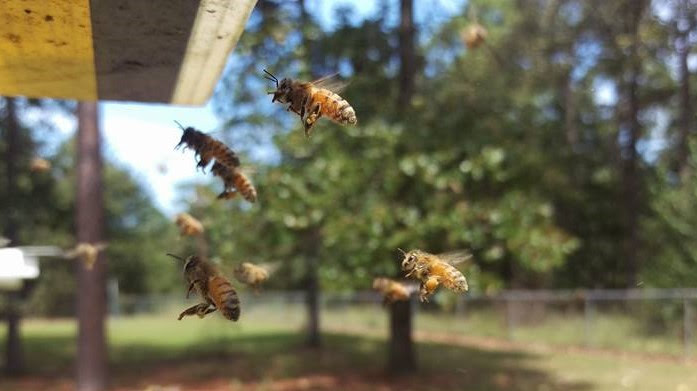
Honey bees coming to pollen feeder
http://agdev.anr.udel.edu/maarec/educational-resources/maarec-fact-sheets/
Basic Biology and Management of the Japanese Hornfaced Bee
Bee Diseases and their Control – 4.9
Dividing Honey Bee Colonies – 3.3
Keeping Bees in Populated Areas – 2.7
Sources of Information and Assistance for Beekeepers – 2.4
Queen, Nuc and Package Bee Suppliers – 2.3
Beekeeping Equipment and Supplies – 2.2
Tips on How to Handle Bees – 2.1
What is the Africanized Honey Bee? – 1.3
Source: Resource – MAAREC Fact Sheets
07 Wednesday Mar 2018
Posted in beekeeping, management, swarms
Tags
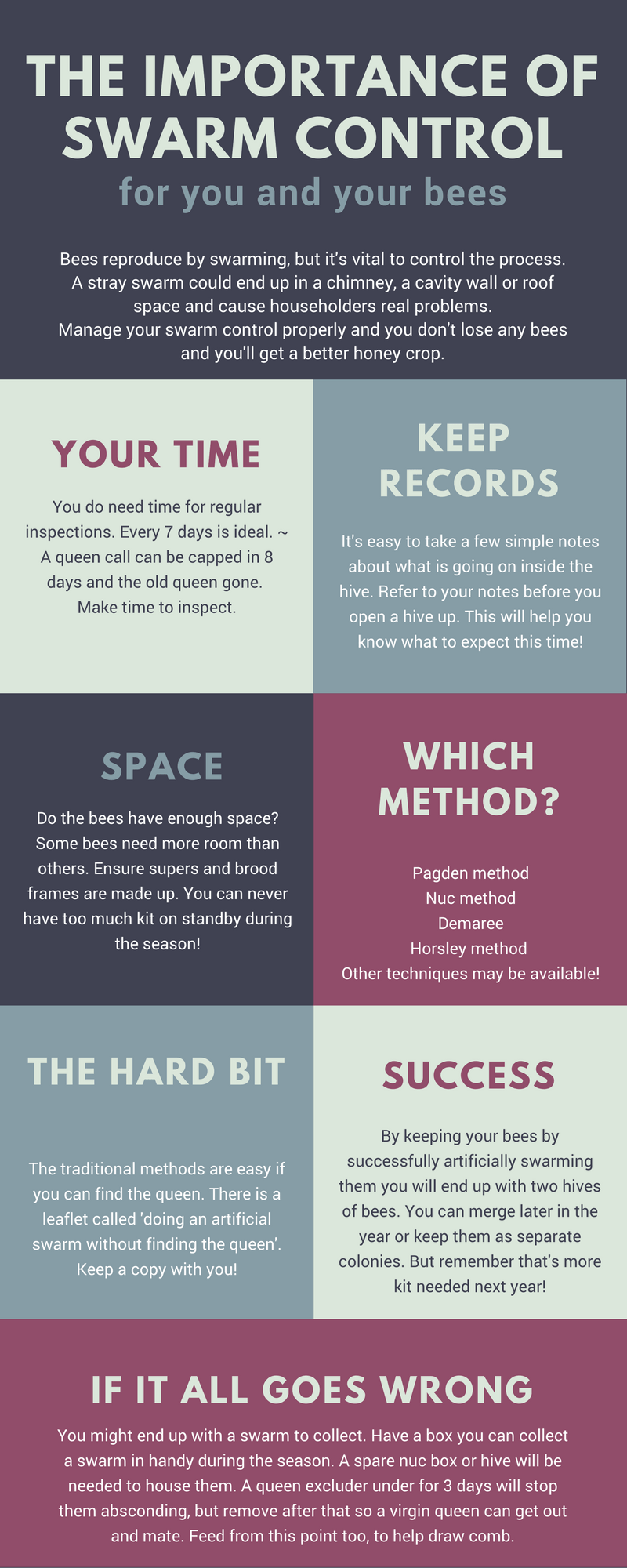
This was done online at canva – I was full of ideas until I started playing with it, it’s not the final one .. but was interesting to have a play with. It needs making more even. The templates are there to play with so I might have another go and see what I can […]
06 Tuesday Mar 2018
Posted in beekeeping, swarms

How to prevent swarming?
I previously wrote about some potential factors involved in the swarming of honey bees and why swarm prevention and control are so important for the beekeeper. The idea that we can prevent swarms is probably misguided; it is after all what bees are programmed to do, it is how they reproduce, but we must nevertheless educate ourselves and do what little we can in this regard.
The people who are most qualified to advise on swarming, or any other honey bee management topic, are the commercial honey farmers who manage thousands of colonies and rely upon their efforts to earn their living from it. This is why I will be quoting from such people extensively here – they have lived and breathed a life with bees and I would rather take heed of their words than those of a keen hobbyist or a well read scholar.
“If I were to meet a man perfect in the entire science and art of bee-keeping, and were allowed from him an answer to just one question, I would ask for the best and easiest way to prevent swarming.” C.C.Miller, Fifty Years Among the Bees
more…
Read full article here: The Eternal Question — The Walrus and the Honeybee
05 Monday Mar 2018
Posted in beekeeping, beekeeping chores, beekeeping management

There are many reasons we find ourselves “having to” or “wanting to” move bees. The “have to’s” might occur when a neighbor complains they are bothering the children or the hive is not in the right location. The “want to’s” might be moving bees to fulfill pollination contracts or to take advantage of different nectar flows. Whatever the reason, moving bees, whether a few feet in the backyard or across several thousand miles, is no easy task. Not only is it hard work (hives are heavy), it’s also a bit intimidating to think about picking up a box with hundreds, no thousands of insects that when disturbed or agitated, will become stinging agents of pain. Since this can be a tricky job, let’s talk about how we can move hives without harming the bees or more importantly, ourselves. But Wait!! Stop the Presses!!!! Placing hives in the right spot, the first time, will save a lot of headaches, backaches and work down the road. So, before we ever move in the first hive of bees, let’s consider the following things.
Read full article here: Moving Bees — BEEKeeping: Your First Three Years
04 Sunday Mar 2018
Posted in beekeeping, honey bee behavior, honey bee biology
Source: Bee Behavior – Festooning

Bee behavior is my favorite part of beekeeping. It’s such a neat experience to watch and learn from the bees. It’s also interesting to have scientists explain (or in this case fail to explain) what is going on inside the mind of the bees.
Festoon is defined as “adorn (a place) with ribbons, garlands, or other decorations.”
In this case, that decor is the bees themselves, dangling like chain inside the hive. The video below shows a short clip of this activity.
At one point or was hypothesized that this pose promoted the production of wax from the wax glands – that has since been debunked.
It’s purpose is deemed unknown to scientists and although there are speculations. Bees tend to do this when building new comb in their hive – some people think it’s a type of acrobatic scaffolding, that they’re measuring to build the comb the proper size, or that they’re just beat friends clustered together. Either way, it’s pretty neat bee-havior.
Source: Bee Behavior – Festooning
03 Saturday Mar 2018
Posted in beekeeping, honey recipe, recipe
Tags

I’ve made this dish twice, once for my husband and once for my best friend. Both times I was met with amazing feedback, and I have to admit, it’s one of my best yet. I’m a huge fan of Asian flavours and this really has it all going on. It’s fresh, zingy and sweet. There are no carbs and the veggies are served raw so it’s super healthy. Using medium chillies in raw form adds a nice heat, not too much, but enough to let you know it’s an Asian dish. There is something fun about food you can eat with your hands, just load up the Romaine lettuce cups with crunchy Asian slaw and top with some sticky fragrant chicken. Roll it up and get stuck in.
This recipe is great for when you’re entertaining because everything can be prepared in advance. The slaw can be prepped and stored in a container in the fridge (undressed), the slaw dressing can be made and popped in a jar with a lid (no need to refrigerate). Prepare the chicken by slicing and covering with the marinade in a glass bowl, wrap with cling and store in the fridge until needed. When you’re ready you can have everything ready and on the table within minutes.
Don’t be put off by the long list of ingredients, because some of it is store cupboard stuff and the rest is mostly just veggies. I’ll be entirely honest, the preparation takes a little longer than most dishes I cook, but it’s just a case of finely slicing the veggies. Why not stick the radio on and practice your knife skills one afternoon? You’ll be glad you spent the time when you taste how delicious this dish is. It’s like a party in your mouth, seriously!
cont.
Read fully recipe here: Fragrant chicken with vibrant Asian slaw in lettuce wraps — Nicole’s Kitchen Diary
02 Friday Mar 2018
Posted in beekeeping, swarms
Tags

The happiness of the bee and the dolphin is to exist. For man it is to know that and to wonder at it.
~Jacques Yves Cousteau
Just at closing one day this week, a coworker at the Garden sent an email alerting everyone to a swarm of honeybees just outside the back gate. I was getting ready for programs the next day so wasn’t able to get down there for an hour or so, but finally grabbed the camera and went out to see if I could find it. I asked a couple of people that were standing there talking if they knew the location of the swarm, but they had not seen it. About then, I saw some flying insects, and quickly found a ball of bees about 12 feet up on a small tree trunk.
Read more here: Swarming Season — Roads End Naturalist
25 Sunday Feb 2018
Posted in bee lining, beekeeping, honey bee behavior
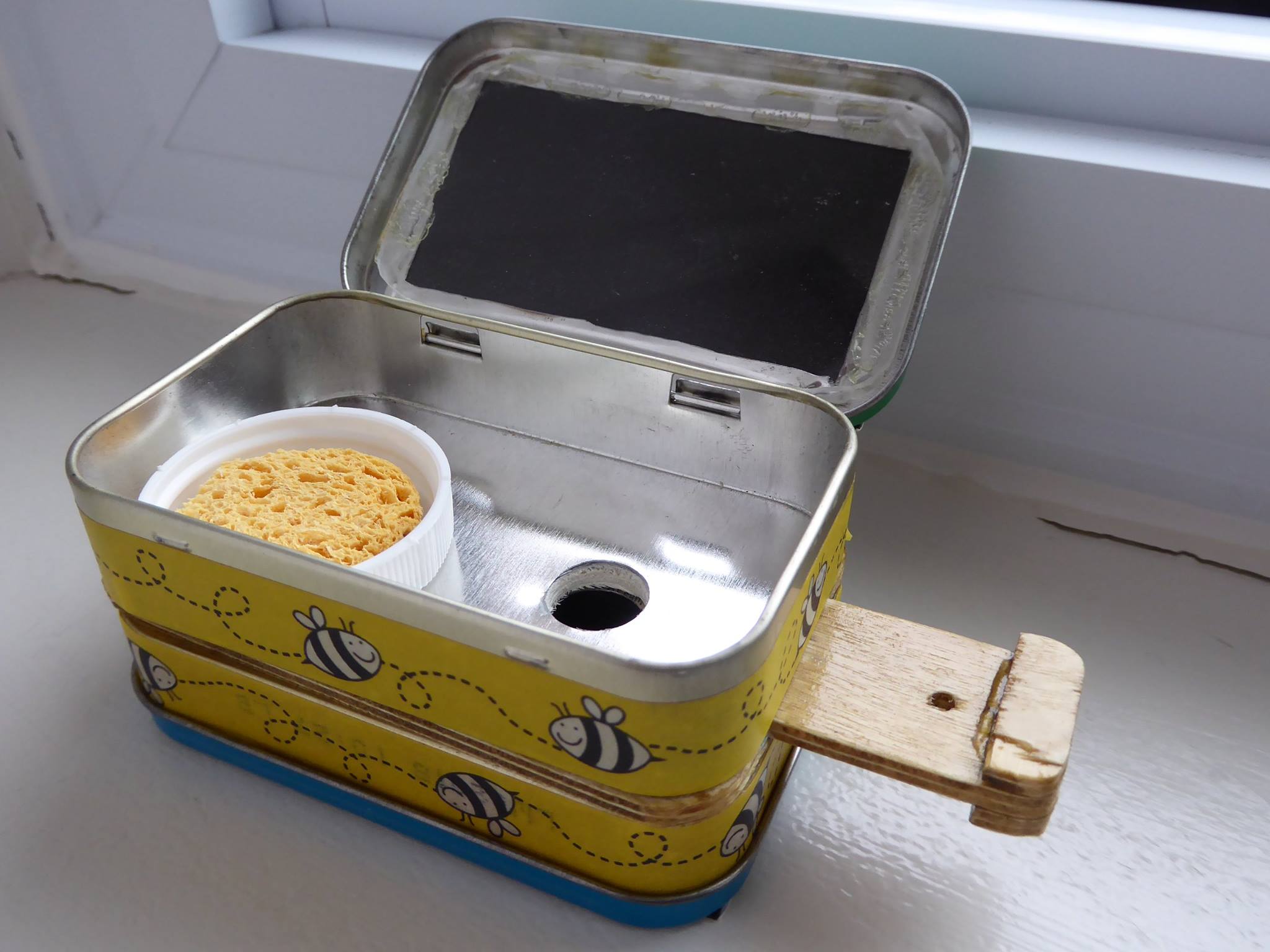
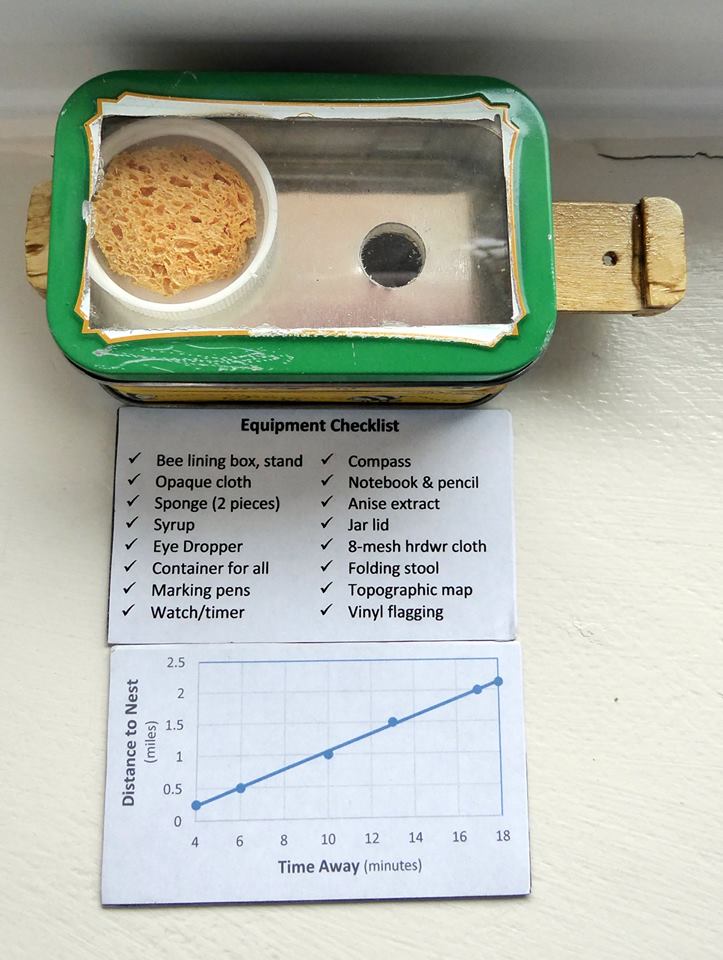
Source: Tom Seeley’s Following the Wild Bees
Here is a super cool beebox for bee hunting, made of two Altoids tins. Ingenious, and fun! The inventor, Frank Linton, also provided instructions for construction.
See Plans here: http://bit.ly/2igLUfx
24 Saturday Feb 2018
Posted in beekeeping, honey, honey as food

The advantages of honey go beyond its unique taste. It’s really a wonderful natural source of carbohydrates which supply strength and energy to human bodies, honey is known for its efficacy in quickly boosting the performance, endurance and reduces muscle fatigue of athletes. Its natural sugars play a significant role in preventing fatigue while exercise. Human body absorbs the glucose in honey very quickly and supplies an immediate energy boost, while the fructose is absorbed more gradually providing sustained energy. It is widely known that honey has also been found to keep levels maintained of blood sugar compared to other types of sugar.
Read entire article here: Surprising health benefits of Honey — Andaman Plantations and Development Corporation Pvt. Ltd.
20 Tuesday Feb 2018
Posted in beekeeping, beekeeping management
I found this interesting. She says many things that I say to new beekeepers – listen to and watch your bees. They’ll tell you when they’re not happy! The frame pictures are excellent and well worth a look at from a healthy honey bee perspective.
It’s quite long at 44 minutes, but worth a watch!
18 Sunday Feb 2018
Posted in beekeeping, beekeeping books, book review

Letters to a Beekeeper is a delightful book for anyone interested in beekeeping, bees, gardening or indeed letters.
The book follows the journey of two people over the course of a year and the sharing of their passions.
Alys learns how to keep bees and Steve learns how to plant a pollinator-friendly garden. Steve Benbow is the founder of the London Honey Company and Alys Fowler is the Guardian gardening writer.
Read the entire review at: Letters to a Beekeeper — Honey Hunter
17 Saturday Feb 2018
Posted in beekeeping, honey recipe, recipe
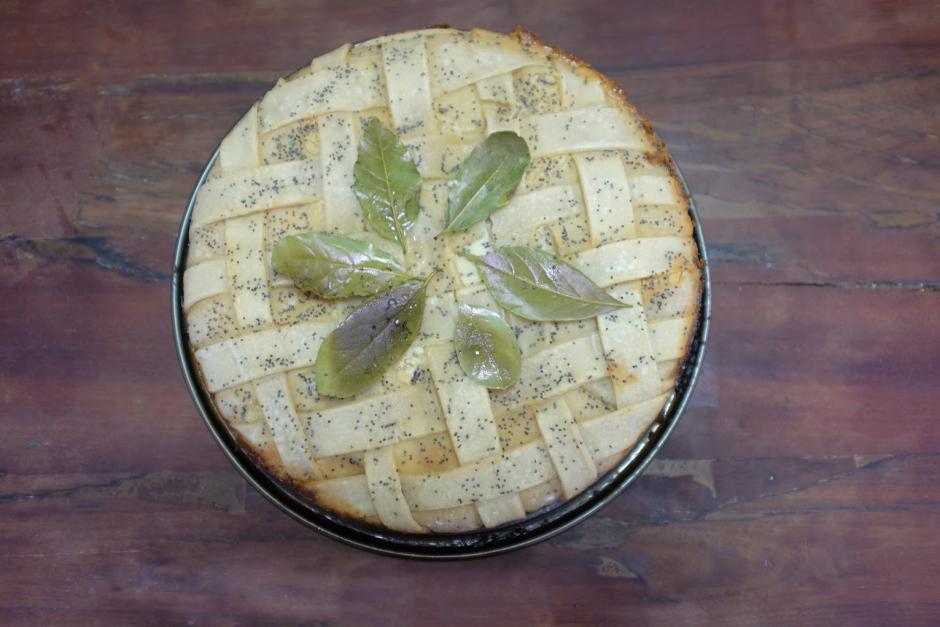
Some may say that cheesecake is food of the gods—those people include the ancient Greek Olympians, who feasted on a flour cake filled with cheese and honey after their pentathlon competitions. The ancient Greeks were already aware of the connections between physical aptitude and lifestyle choices—and the athletes engaged in a variety of restrictive diets believed to enhance their performances, such as xerophagia, a diet consisting of dry foods. Like the modern-day cheesecake, the ancient Greek version was an indulgence, something you pair with your wine at the end of a languid feast.
In 250 BC, the Greek poet Archestratus wrote a gastronomic travel guide called Life of Luxury that is only preserved in fragments. In one piece that has survived, he makes mention of the dessert: “Yet accept a cheese-cake made in Athens; or, failing that, if you can get one from somewhere else, go out and demand some Attic honey, since that will make your cheesecake superb.” But, alas, he did not include any recipes.
As with the classical sculptures we now find in museums, we can thank the Romans for preserving the Greek cheesecake into posterity. De Agri Cultura, Cato the Elder’s 160 BC farming manual, is not only the earliest example of surviving Latin prose, but a glorified food blog—it includes not one but several recipes for cheesecakes.
“Cato is a proud Roman, writing in Latin,” Cathy Kaufman, food history and author of Cooking in Ancient Civilizations, explained over email. “Nonetheless, there seems to be an overlap between Archestratus’s gastronomic descriptions and Cato’s recipes.” The only possible difference between an ancient Greek cheesecake and an ancient Roman cheesecake, classicist and food blogger Andrew Coletti added, is that the early Greeks didn’t use chicken eggs.
Cato’s cheesecake recipes include a sweet version called savillum and a savory cheesecake called libum, the latter being related to our modern-day word, libations. “They were often made as religious offerings,” Coletti explained. These were simple baked mixtures of baked cheese and flour that could be eaten with a spoon. Another more complex version from Cato, the placenta cake, involves layering cheese, honey, and dough together and flavored with bay leaves. According to Coletti, black poppyseeds were also used as cheesecake toppings. Think of them as ancient sprinkles.
This was Cato’s original recipe for placenta cake:
Read fully article and get recipe here:
Ancient Olympians ate this honey cheesecake as a post-workout snack, and we have the recipe
12 Monday Feb 2018
Posted in beekeeping, Winter
Tags
assessment, beekeeping, colony assessment, colony loss, deadouts, hive assessment, winter bee losses

So your bees died over winter. This blog post by Misty Meadows Homestead shows how we can grow as beekeepers using our deductive skills to learn and improve. Thanks for sharing your loss with us so that we too learn.
When you love someone, you are never really prepared to lose them. When my beekeeping, gardener Grandfather passed, he had end-stage renal failure and we had 5 years to prepare – it wasn’t enough. Last winter, when my 14-year old cat passed, she had been telling us for weeks that her time was coming to an end – it wasn’t enough.
No matter how prepared we ‘think’ we are, when it happens, we realize we didn’t have enough time to prepare ourselves.
Wednesday we had a little bit of warm weather – about 55º and decided it was a good time to inspect our 4 hives. We stood in the bee yard, observing the colonies for quite some time.
continued via link below:
Read the entire blog post at: Homestead Buzz – Deafening Silence — Misty Meadows Homestead & more!
10 Saturday Feb 2018
Posted in beekeeping, honey recipe, recipe
Tags

I love everything in this recipe. Fruit, cream, honey, roasted nuts. What’s not to like?
Tropical and seasonal fruits, dry fruits are used. Dressing is done with fresh cream and honey. Here I present fresh and juicy fruit salad with honey n cream dressing to relish during festive days or anytime. Njoy Cooking, Serving n Savoring!
Continued…
Read full recipe with pictures here: Fruit Salad With Honey N Cream Dressing — akshayakumbham
09 Friday Feb 2018
Posted in beekeeper education, beekeeping, mentoring
Tags
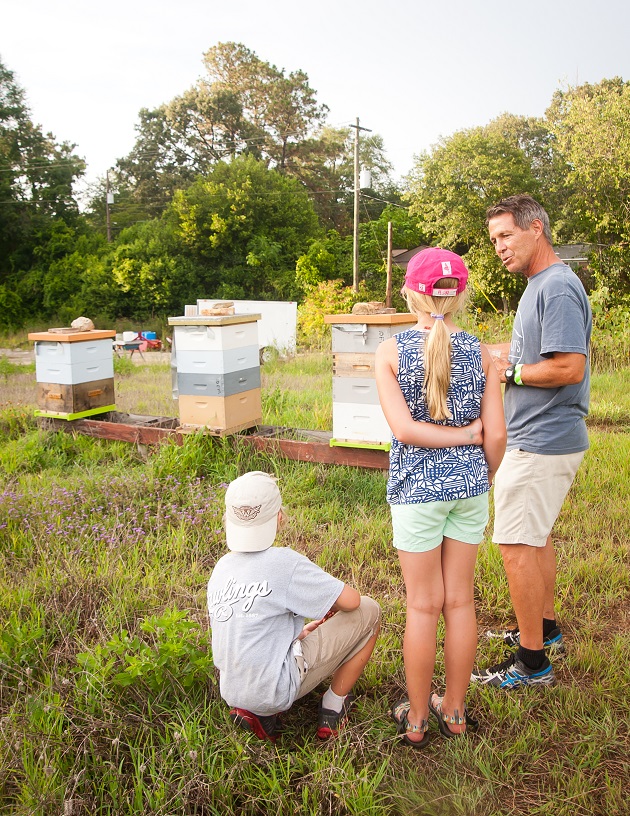
Accepting What Is
As the local beekeeping association Secretary I received lots of email and often it involved a request from non members wanting to get into beekeeping. They’d done their homework which, mostly, has consisted of surfing Facebook and Youtube. They’d also asked lots of people how to best get started in beekeeping. After polling the answers they’d start to see two particular suggestions rising to the top: 1) Join your local association and 2) get a mentor. From there they deduced that they can most likely accomplish both by sending an email to the local association asking for a mentor to help them get started.
I had a very nice, polite email I send back moving them in the right direction to accomplish both getting them in contact with experienced beekeepers and a course of action to increase their likelihood of success.
As beekeepers here know, it takes numbers to be successful. If you don’t believe me make a split with insufficient nurse bees or capped brood. Timing is essential as well, start a task at the proper time and all goes easily. Success with a swarm in early April is a piece of cake; success with a swarm in August is difficult. And so it is with folks not yet knowledgeable of the mechanics of beekeeping. They want bees and a mentor not knowing the amount of effort it will take nor the proper timing in order to increase the chance of success that first year.
You too will get inquiries from friends and people you come in contact with once they know you are a beekeeper. Be prepared to help them get off to a realistic start if you want them to be successful. And that’s what it’s really about isn’t it? One hundred new beekeepers joining the association is great but not so impressive if half fail their first season because they had unrealistic expectations.
Let’s look at the “getting a mentor” concern. The old school model of getting a mentor went something like this: The mentee sought out a mentor and agreed to spend the first year helping the mentor in the mentor’s bee yard. The mentee would show up at an agreed on day and time and look over the shoulder of the mentor as he went through his hives, talking as he did so. Watch, listen, learn. Move boxes as needed and help the mentor as the tasks necessitated. This would go on for a season and the next Spring the mentor would make a split and give it to the mentee to take care of at the mentor’s yard. The mentee would work his new hive and the mentor would look over his shoulder to make sure he didn’t make any mistakes and was able to correctly comment on what he was seeing and the correct action to take. At the end of that season the mentee took his hive home and became a beekeeper.
Somewhere along the way we have deviated from this model. Now we take new comers into the hobby, put them through a 20 hour course and expect them to survive. It’s like making an early March split – risky. Nowadays the mentee wants the mentor to make visits to the mentee’s yard for instruction. And inasmuch as the clubs and associations have promoted getting the newcomers’ bees perhaps that seems reasonable to take some responsibility for assisting with issues that will naturally come up.
If we are going to move to a new model then perhaps we need to clarify and revise some terms. As it now stands we’re mixing and matching old school and new school. The new beekeeper wants a mentor, bees, and instruction. That’s reasonable. The problem is one of numbers though (remember that early Spring Splits analogy?). Most clubs can’t provide a 1:1 mentor for 100 new beekeepers every year nor should anyone expect mentors to volunteer to run around town visiting mentees weekly. So we must marry the expectations of the new beekeeper and the club acting as mentor. Each side gives and gets a bit and both walk away with more.
We do that by returning to the old school model whereby the mentee gets his/her education by visiting the mentor, but no longer at the mentor’s beeyard nor by a single mentor. The new model has the mentee visiting many mentors at events like 1) monthly meetings, 2) local educational events, 3) dinner before meetings, 4) online discussion groups 5) State Conferences, 6) connecting through fellowship with bee buddies, community outreach, etc. The list goes on… The mentee that wants to learn this art, like historically, has the resources offered and available and they go to learn – as before. The club or association organizes monthly meetings, presentations, events, newsletters, club library, allows for face to face fellowship time monthly, and online discussion groups. All things considered, the new beekeeper has more opportunity nowadays to gather knowledge than they used to with the old school model AND they get their bees their first year.
If you’ve suffered through my ruminations this far, I commend your endurance. I gave two similar presentations at this year’s state conference. I encourage the new beekeeper to take advantage of what is. There are multiple opportunities available to new beekeepers – more than enough to succeed. I also push the concept of bee buddies and fellowship for those that need a 1:1 relationship. Occasionally I hear someone complain about not having a 1:1 mentor for more personal, individual instruction as they had hoped. That’s unfortunate because they are cheating themselves out of the good of what is while wasting time wishing for the unlikelihood of what they envisioned. The fact of the matter is they have a room full of mentors at every meeting, at every gathering, at every conference. My mom used to say, “Go do the very best you can with what you’re offered. You do everything You can and You’ll succeed.” Mom was smart at marrying “what is” with success.
08 Thursday Feb 2018
Posted in beekeeping, humor
Tags

A bit of humor here from Rusty. Well, I think she’s being humorous. Let’s hope so!
Many of my web visitors are soon-to-be beekeepers preparing for their first delivery of honey bees. They have read, attended classes, and talked to other beekeepers. Some write to me with a few last-minute questions. But what they envision and what I foresee are completely different.
I was reminded of this beekeeping reality while watching a beginner video on YouTube. While sappy music played in the background, a lilting voice explained that once you become a beekeeper you will embrace nature for the first time! You will become attuned to weather and blooms! You will blossom as a person!
Wow. I imagine a barefoot flower child romping through a verdant meadow, a ring of daisies in her hair and a bouquet of dandelions clutched in her fist. Beekeeping is your entry into a world of peace and love and grass stains. Kumbaya in a box.
Read the full article here: Beekeeping will change you for the worse — Honey Bee Suite
07 Wednesday Feb 2018
Posted in beekeeping, diseases, honey bees

Mr Woodley and Restocking
Let’s first look at Mr Woodley’s experiences, he writes in 1917:-
“I, as a scourged member of the craft, am not chastened by being wiped out [by the “Isle of Wight” Disease], or nearly so, twice…I set about repairing the damage at the outset with some success; in fact, by using formalin and Lysol in equal proportions spread on strips of thin board and pushed in at the entrances twice weekly of many of my hives, the first spring of the outbreak of “Isle of Wight” disease I preserved every stock so treated, and I quite thought I had got a remedy, and had a good take of honey from these hives, but the following winter and spring I lost most of them. Then I bought new swarms, both English and Dutch. Both strains were hived in disinfected hives, boiled frames, new foundations. Again using most of the advertised remedies, I had a fair take of honey.”1
Read the fully article here: Restocking Honeybees — Beehive Yourself
06 Tuesday Feb 2018
Posted in beekeeping, education
Don’t listen to me. That’s my advice, right there. I don’t advise new beekeepers. There’s no point in my adding to the confusion and overwhelm of someone just beginning beekeeping. I teach beekeeping classes, do presentations and offer hands-on apprenticeship opportunities for people interested in apiculture. Could be beginners, could be long timers. Who knows.…
via Big Bear’s Beekeeping Advice For New Beekeepers — Bee Smart beekeeping project
05 Monday Feb 2018
Posted in beekeeping

An excellent assessment of the beekeeping learning curve with some good advice.
In 2016 I developed an urge to add bees to our thriving urban farm here in Emerald Hills. The gardens were producing year round, our chickens were productive, and I was exploring a lot of interesting technology for monitoring and irrigation. I needed a new project, honey bees.
I bought a hive from a guy on Craigslist who discovered one of his children was allergic to bee stings and decided to sell off his hives. Easy, everything was already functioning. I put the hive in my garden in what I would later learn is a bad location (afternoon sun only and positioned in a manner that wind would blow into the opening) and didn’t really know what I was looking at when I inspected the hive.
Lesson learned: I didn’t know what I didn’t know.
(continued at link below)
Read the entire article here: My two year beekeeping journey — Altamont Farms
31 Wednesday Jan 2018
Tags
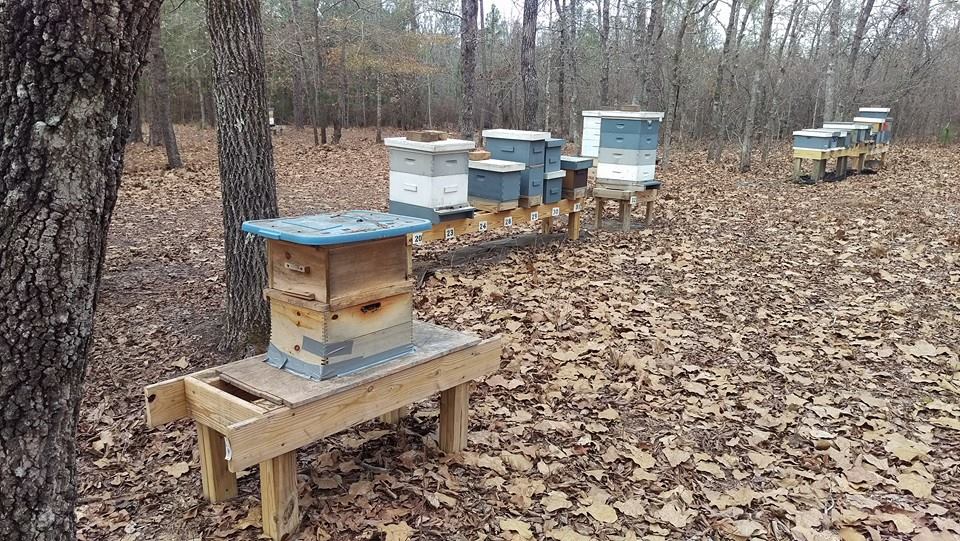
Saying goodbye to January.
Posted by Beekeeping365 | Filed under beekeeping, beekeeping calendar, beekeeping seasons, calendar, seasons
29 Monday Jan 2018
Posted in beekeeping, varroa, varroa destructor, varroa mites
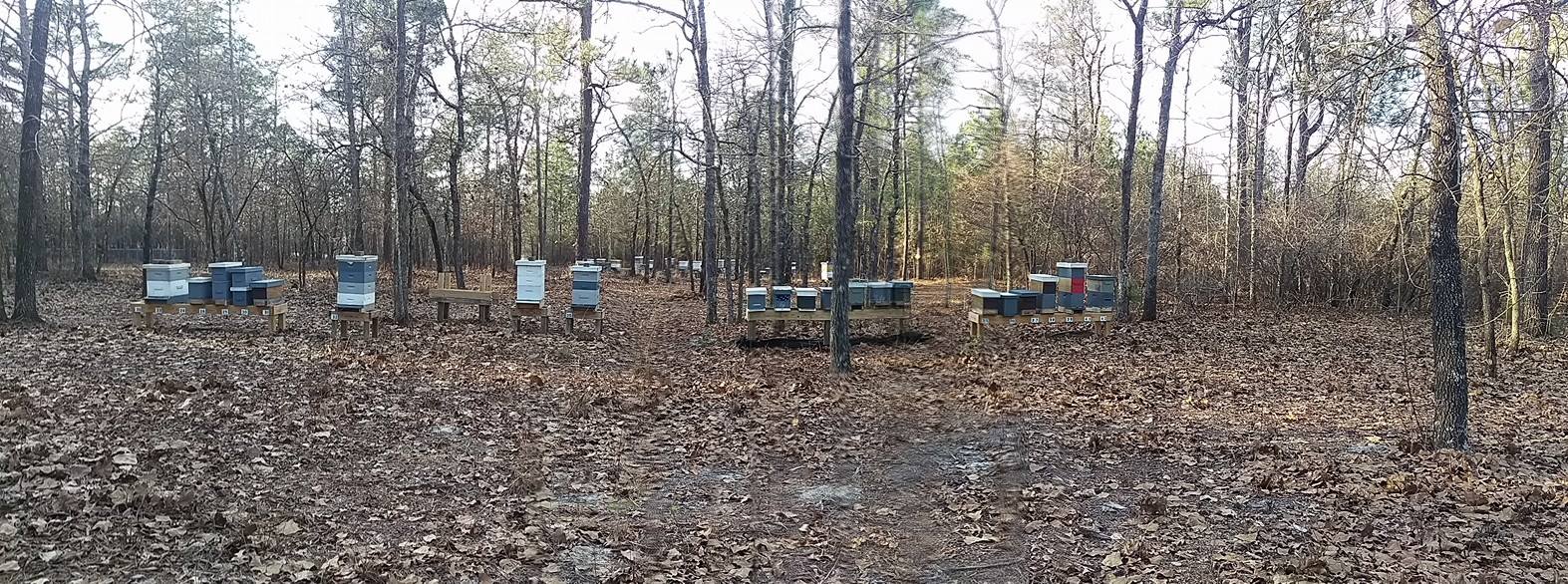
I posted this last year and, with the start of our season coming soon, I can’t help but repost. I few years ago I assessed my colonies preseason and found they needed a mite cleaning. The difference in their appearance and performance was notable. They were the prettiest bees that spring – vigorous and prolific. Since then I make a point of getting my bees off to a good start early in the spring buildup. Enjoy.
To a carpenter with a hammer everything is a nail. And so it is with me. Registered Nurse with close to 30 years of inpatient hospital unit management, a few graduate level Public Health courses, and 60 years of observation. And so everything looks like a health care management problem (well not everything). Anyway, I thought I’d preface the following comments with a warning that this is just my perspective.
There is a beekeeping saying, “Take your losses in the Fall.” That doesn’t necessarily mean let them die. It typically means combine hives as needed. The economist in us tries to take the least hit possible and combine all of the weaker hives thus at least salvaging one hive out of the mess. My limited experience has been that combining 2 or even 3 weak colonies in the fall still results in a loss. Better to add each of them to a strong hive and take the hive numbers hit right then in the fall. But from a public health or infectious disease standpoint how can we do this safely? If the queen is simply weak that’s one thing, but if an infectious agent or Varroa is the issue you may be causing yourself more anguish by combining an infected hive with a good strong colony. For example, if you were in a hospital room how would you like it if the person in the next bed was being admitted because he/she was weak with a highly infectious disease? Hey, anyone want to share a room with a TB patient? Back to beekeeping… My beekeeping answer is to treat first, pinch the queen, then combine them and even then only if I suspected they were not sick. If they appeared to have succumbed to an infection and are in steep decline then I wouldn’t add those sick bees to another hive, period.
I got to the point of cringing with every Varroa lecture at conferences. But somewhere along the way after looking at the evidence left in my own combs, hives, and other symptoms, I became convinced of a few things. Varroa explains most of the unexplainable. I think successful beekeepers treat early and often. Nowadays, if a hive crashes, I suspect Varroa first. Yeah, maybe they absconded but it was probably secondary to Varroa infestation. Maybe they were robbed but it was probably after they became weak and crashed due to Varroa. I believe Varroa to be the primary cause in most cases. The other events are secondary but that’s what we can see so that’s what we believe happened. We humans are visually oriented to a fault.
But how does it happen so fast you may ask? Ever worked on a hospital ward or lived in a dormitory type housing situation where a flu outbreak occurred? How many sick individuals did you see prior to the epidemic putting everyone in the bed with symptoms? Probably just a few. That’s how it happens. A few sick individuals carrying a potent virus and BAM! Overnight everyone is vomiting with fever and diarrhea. The viri take over and, in the case of bees, a seemingly healthy colony crashes suddenly and we find ourselves perplexed. But why are we perplexed, have we not seen the flu virus in humans close schools? Or cruise ships turn around to return to port after a sudden virus puts all of the occupants in their cabins too sick to continue. Have we been too long without a world plague to have forgotten the infectious disease process?
If you’ve ever read a death certificate it states cause of death. It also allows the physician to state medical factors affecting death. So, cause of death may say “esophageal hemorrhage” but the medical factors might state, “chronic alcoholism.” And so it is with Varroa. Cause of death is “robbing” or “abscond” while the chronic illness would be listed as “Parasitic Mite Syndrome with high virus loading.”
Moving on, so when a colony crashes and robbers come in to clean up the honey guess who takes home something they didn’t ask for? Your other colonies, that’s who. Once the robbing starts the Varroa get distributed among the other hives.
First, in my opinion, you may not want to get into beekeeping if you’re not willing to treat for Varroa and use IPM methods – it’s just too difficult. But then, that’s me. I also take my kids to the doctor when they are sick and don’t let my dogs walk around with ticks in the hope they build a resistance. If you want to be treatment free at least give the bees a chance and buy property 5 miles away from the next closest beekeeper, get clean survivor bees to start, aggressively utilize IPM methods such as screen bottom boards, splits, queen caging, small cell, sugar shakes, and artificial swarms. You’ll be extremely busy but I do believe it can work for some people. For others it becomes an exercise in frustration and disappointment.
Me? I’m going to treat them early and often after a preseason mite level assessment to establish a baseline. I also monitor mite counts post treatment to ensure the treatment was effective. As a primary offense to prevent outbreaks, I treat every spring before honey supers go on the hives. Then, typically, I do a series of 3 weekly OA treatments in June after pulling supers. During the long hot summer, if a colony starts to weaken I treat that single hive after assessment. If a hive collapses and gets robbed everyone gets a treatment. During December broodlessness everyone gets a single vaporization or dribble. I primarily use OA but I may replace one of the seasonal treatments above with a different method. That’s the two pronged plan of 1) Primary preventative treatment and 2) Aggressive Secondary post infection treatments. That’s what you do when you visit your health care provider – expect preventative measures first, and predictable, effective treatment when you get sick.
Hey, look at your hands right now. How many bacteria and viri do you see? Count them. You can’t but if you get sick you may have wished you had washed your hands a little more frequently. Prevention first, but if you get sick take your medicine!
It’s viri spread by Varroa killing our bees. You don’t see the viri, rarely see the mites that spread the viri, and frequently don’t see the symptoms until it’s too late. Good luck managing your bees’ health.
28 Sunday Jan 2018
Posted in beekeeping, beekeeping author, beekeeping history

Trained as a nuclear physicist, world renowned bee expert Eva Crane is easily one of the most intriguing and accomplished figures who have found their way onto the Land Library’s shelves. Her sudden shift from quantums to bees came on the occasion of her wedding in 1942. Among the wedding presents that day was a […]
via On the Honey Trail with Eva Crane — Rocky Mountain Land Library
25 Thursday Jan 2018
Posted in beekeeping, beeswax, humor
Tags
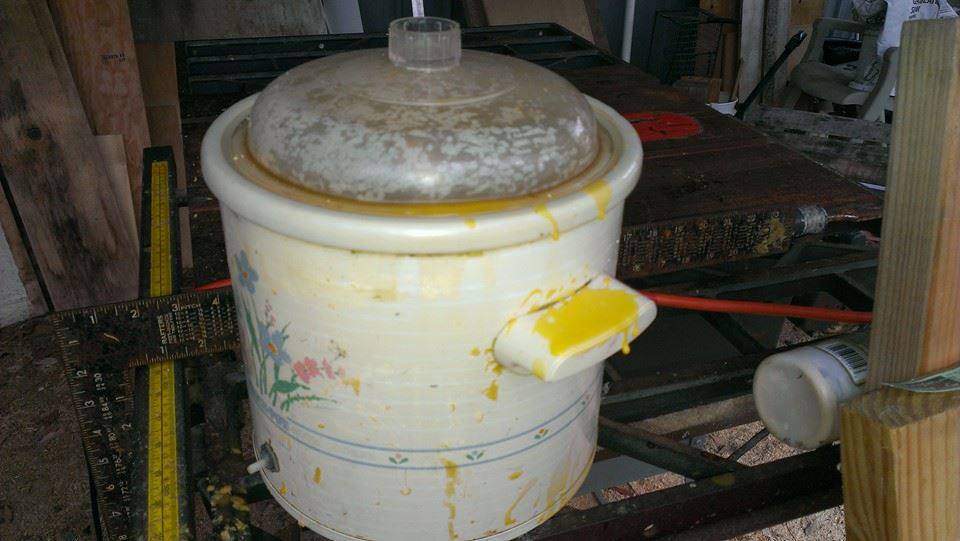
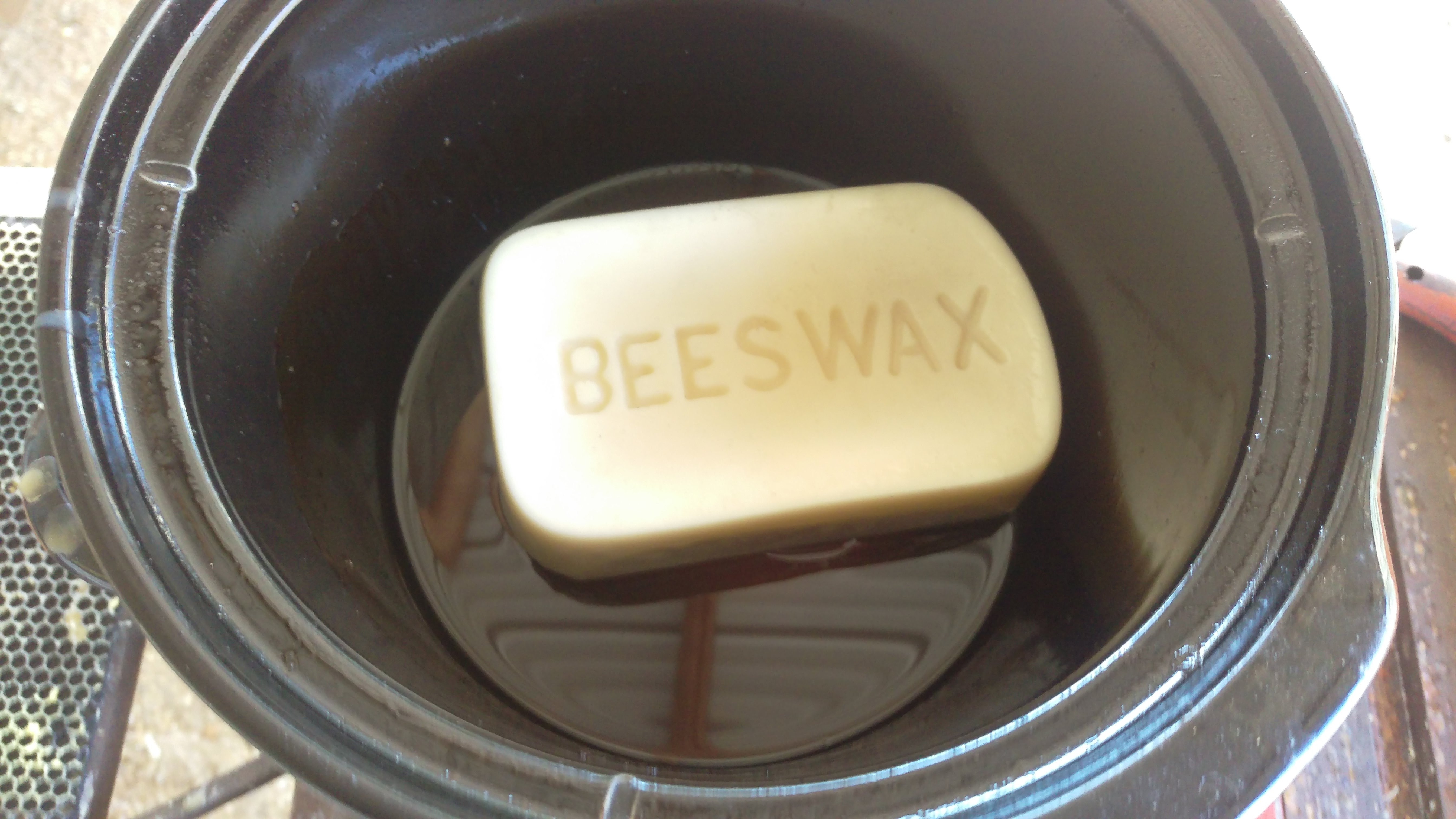
Finished waxing some frames today. Now I just have to return the crock pot to the kitchen without my wife noticing I borrowed it.
21 Sunday Jan 2018
Posted in beekeeping, beekeeping books, beekeeping history, book review, education
Tags
art, beekeeping, beekeeping books, beekeeping history, book review, education, Maurice Maeterlinck, print art, The Life of the Bee
Below is a nice enticement to appreciating the art in The Life of the Bee by Maurice Maeterlink and illustrated by E.J. Detmold. The text can be read online here: The Life of the Bee by Maurice Maeterlink. And more on the illustrator at: Edward Julius Detmold
via Art Book of the Month, July 2016 — Books & the City:

The Life of The Bee by Maurice Maeterlinck
(Translated by Alfred Sutro)
Illustrated by E J Detmold
George Allen & Co Ltd
Illustrated edition 1911
The Life of The Bee by Maurice Maeterlinck is a wonderfully eccentric book written in a variety of genres. It is informed by the author’s years of experience studying the complex behaviour of bees. Yet this intricate factual account is suffused with epic drama and wildly poetic philosophical digressions.
Maeterlinck, in telling the story of the bee, explores the subjects of life, death, truth, nature, humanity, and everything in between.
The story of the bee becomes almost a mystic parable to describe all human experience. It has the added charm of being one of the most beautifully illustrated books in our collection. Edward Detmold’s paintings perfectly reflect the sentiment and beauty of the writing.

Below I have gathered together some of Detmold’s illustrations and selected a few memorable passages from the chapter entitled, ‘ The Nuptial Flight’ which presents the tragic sex life of the heroic male bee. I hope you enjoy them.
‘Most creatures have a vague belief that a very precarious hazard, a kind of transparent membrane, divides death from love and that the profound idea of Nature demands that the giver of life should die at the point of giving. Here this idea, whose memory lingers still over the kisses of man, is realised in its primal simplicity. No sooner has the union been accomplished than the male’s abdomen opens, the organ detaches itself, dragging with it the mass of the entrail, the wings relax, and, as though struck by lightning , the emptied body turns on itself and sinks into the abyss.’
(Part V THE NUPTIAL FLIGHT 87 –page 166)


‘Nor does the new bride , indeed, show more concern than her people, (for the poor male Bee ) there being no room for many emotions in her narrow, barbarous, practical brain. She has but one thought, which is to rid herself of as quickly as possible of the embarrassing souveniers her consort has left her,…She seats herself on the threshold, and carefully strips off the useless organs…’
(Part V THE NUPTIAL FLIGHT 89 –page 173)


‘Prodigious nuptials these, the most fairy-like that can be conceived, azure and tragic , raised high above life by the impetus of desire; imperishable and terrible, unique and bewildering, solitary and infinite. An admirable ecstasy, wherein death, supervening in all that our sphere has of most limpid and loveliest, in virginal, limitless space, stamps the instant of happiness on the sublime transparence of the great sky;…’
(Part V THE NUPTIAL FLIGHT 90 –page 174)

20 Saturday Jan 2018
Posted in beekeeping, honey
Tags
An interesting article which helps explain the science of honey and cooking with honey. Enjoy this article by A.V. Walters at tworockchronicles blog.

Honey is a foodstuff of almost mythical proportions. It is one of a handful of foods that, left in its original form, never spoils. Honey has been known to last literally thousands of years—and still be edible and sweet. Honey will crystalize—a condition that may put off the uninformed consumer—but crystalized honey is still good. If it offends, you can simply warm it gently and it will resume its liquid amber loveliness.
Read more of this interesting article here: Honey, Cooking, and The Science Behind The Sweet — tworockchronicles
19 Friday Jan 2018
Posted in beekeeping
Both my son and daughter have inherited my sense of re-purposing and conservation. My son continues to get a kick out of the fact that nothing in the bee operation goes unused – it all gets recycled in some way at some time.
Pictured is a melting block of beeswax. From nectar or sugar the bees create wax which is used to build comb. The comb is used to rear brood or store honey. Wax cappings are removed and saved when honey is harvested. Even the brood frames are eventually removed, scraped, and the wax melted down. The block in the picture made the above trip from bee to comb to wax cappings and eventually into a block of wax, to the SC State Fair and back to the barn. Now, it’s being melted down for application to foundation for use by the bees this coming spring. The cycle is complete.
19 Friday Jan 2018
Posted in beekeeping, Winter
There is no good reason to open your hive during periods of extreme cold. None. Even if you suspect they have died, for whatever reason, opening the hive can typically wait.
Honey bees will form a protective spherical cluster and shiver, the outermost bees rotating with the inner bees, to warm themselves. The bees shiver to generate heat and the outer bees form an insulative layer. Being cold blooded, all bees exhibit some degree of slowing down when they are unable to warm themselves sufficiently. As the temperature continues to drop a protective physiological mechanism called torpor begins: a semi-hibernation, reaction to the cold, that reduces their metabolism and allows them to conserve energy and survive by significantly slowing down their physiological processes. Dependent on cluster size this may affect a larger percentage of the bees surrounding the core of the cluster. The role of the beekeeper is to allow the colony to conserve what heat is available by not opening the hive. In a case where it is known the colony is running out of food wait until the hive and bees have warmed enough to move about and only then briefly open the hive enough to insert frames of honey or other food. During extended periods of cold weather it may take a few days for the bees to warm up and begin to move about freely.
Honey bees’ ability to survive winter temperatures is related to both the formation of a winter cluster as well as physiological mechanisms. Another physiological mechanism involves a sugar within honey bee hemolymph called trehalose. Monosaccharides in honey bee diets are fructose and glucose but the most common circulating sugar in hemolymph is trehalose which is a disaccharide consisting of two glucose molecules. Trehalose acts as a protection to cells by preventing the crystallization of cell membranes and enables the bees to come very close to freezing yet recover without ill effects after warming.
18 Thursday Jan 2018
Posted in beekeeping, Winter
Yesterday some of my colonies were flying – some seem more cold tolerant than others and fly when the temps get to the upper 40s. Anyway, there was a fair number of bees hitting the dry pollen substitute from about noon to 4pm. I went out to do some work just before dark and while out decided to replenish the pollen feeders. I found a couple dozen bees inside that had missed the last opportunity to return to their hives and were in a state of torpor inside the feeders. Wanting to refill the feeders I dumped them and the leftover pollen substitute onto a baking pan before refilling the feeders. My thinking was I’d place them somewhere protected until it warmed up today. Most of the bees looked like popcorn after I dumped them – covered with pollen sub.
So after I refilled the feeders and placed them back on their poles I went to retrieve the baking pans to separate the pollen sub from the bees. They were gone. Everything was gone.
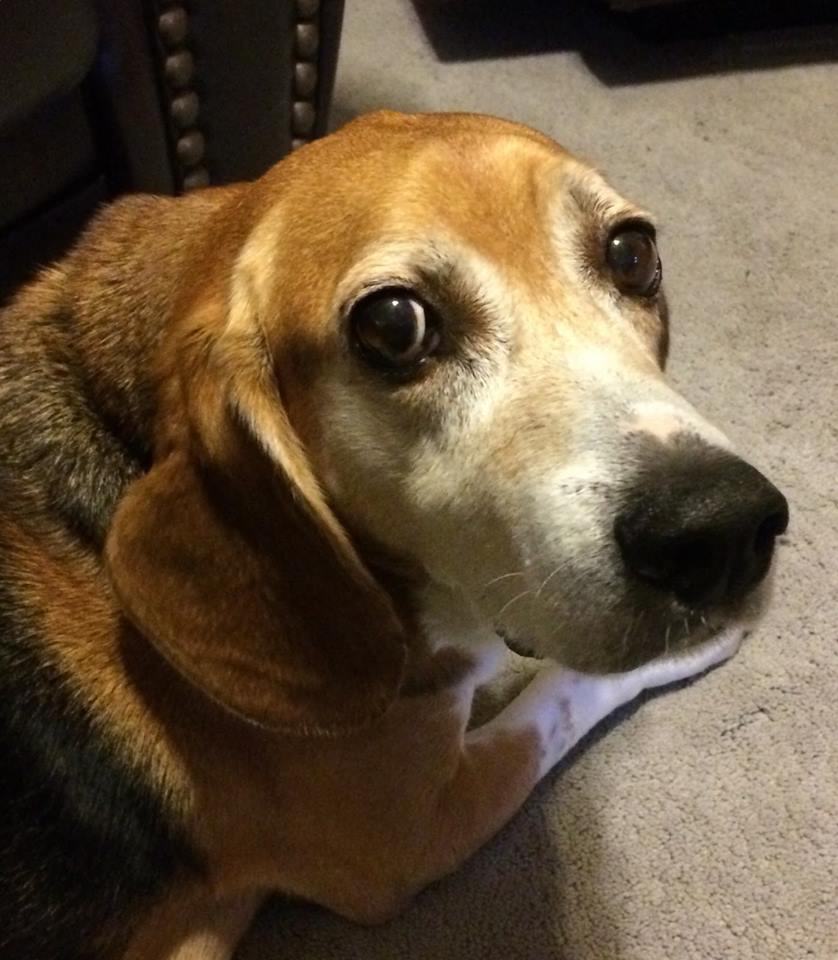
Then I spotted the culprit slinking off. My dog Buster had eaten the pollen sub and the bees. I wonder if he found them tasty? He’s still here his morning and seems no worse for it.
15 Monday Jan 2018
Posted in beekeeping

Have you ever wondered what solitary bees do if they emerge from overwintering into an environment without flowers? We often worry about how flowering plants would fare without local bees to pollinate them, but what about the other way around? – = ? Here’s another question you might not have considered: […]
via What do bees do when flowers are few? — Six Legs, One Corolla: Meditations on Pollination


 Beekeeping365