• Sassafras Bee Farm
  • About
  • Contact

Beekeeping365

~ The more I studied beekeeping, the less I knew, until, finally, I knew nothing. But, even though I knew nothing, I still had plenty to unlearn. Charles Martin Simon

Beekeeping365

Category Archives: beekeeping

The Book is Out! Bee Time by Mark L. Winston

14 Sunday Jan 2018

Posted by Beekeeping365 in beekeeping, beekeeping author, beekeeping books, book review

≈ Leave a comment

Tags

author, Bee Time, beekeeping authors, beekeeping books, book review, Mark L. Winston

Bee Time: Lessons From the Hive is more or less officially out. Hard copies have arrived in most bookstores and can be found for sale on the usual websites; the e-book will be available 6 October from Amazon and Harvard Press.

Read full article here: The Book is Out! — Mark L. Winston

Feel free to share this on:

  • Share on Facebook (Opens in new window) Facebook
  • Share on X (Opens in new window) X
  • Share on Pinterest (Opens in new window) Pinterest
  • Email a link to a friend (Opens in new window) Email
  • Share on LinkedIn (Opens in new window) LinkedIn
  • Share on Reddit (Opens in new window) Reddit
  • Share on Tumblr (Opens in new window) Tumblr
  • Print (Opens in new window) Print
  • Share on Telegram (Opens in new window) Telegram
  • Share on WhatsApp (Opens in new window) WhatsApp
Like Loading...

Corn Fritters with Honey-Bacon Drizzle by christinanifong

13 Saturday Jan 2018

Posted by Beekeeping365 in beekeeping, honey, raw honey, recipe

≈ 1 Comment

Tags

beekeeping, honey, honey recipe, raw honey, recipe

img_6344

This summer, I became immersed in the world of honey. It began with my reporting on a magazine story about backyard beekeepers, which then led to lessons in how honey is made and why it’s been a treasured food for millennia. Did you know there are more than 300 documented varieties of honey in the US alone? Or that the University of California, Davis developed a tasting wheel to categorize the hundreds of flavors that can be detected in these many hues of honey? All this research, of course, ended up with me back in my kitchen, testing recipe after recipe. I write today to share this, my favorite new honey recipe. Think of these fritters as tasty, hearty hush puppies, good enough to make into a meal. The honey flavor is subtle, yet a perfect complement to the corn and pork.

Read entire article with recipe here: Corn Fritters with Honey-Bacon Drizzle —

Feel free to share this on:

  • Share on Facebook (Opens in new window) Facebook
  • Share on X (Opens in new window) X
  • Share on Pinterest (Opens in new window) Pinterest
  • Email a link to a friend (Opens in new window) Email
  • Share on LinkedIn (Opens in new window) LinkedIn
  • Share on Reddit (Opens in new window) Reddit
  • Share on Tumblr (Opens in new window) Tumblr
  • Print (Opens in new window) Print
  • Share on Telegram (Opens in new window) Telegram
  • Share on WhatsApp (Opens in new window) WhatsApp
Like Loading...

“Bee… or bee not, there is no try.” by Bees with eeb

11 Thursday Jan 2018

Posted by Beekeeping365 in beekeeping, beekeeping chores

≈ Leave a comment

Tags

beekeeping, beekeeping chores, goals, success

My WordPress friend Erik recently posted the blog post below, which I believe fully explains and illustrates much of what beekeeping entails. Set goals, make plans, assess your progress, and above all, “Bee… or bee not, there is no try.”

If one is to take up the avocation of beekeeping one should devote the effort required to succeed, and by doing so, expect success. There are a few shortcuts which may make you more efficient but many which will cause failure. Above all, do all of what needs doing and in a manner which leads you to expect success.

It has been bitterly cold the last two weeks (at least by Virginia standards), often below 10 F (-12 C) overnight, and that is without the wind. As a young beekeeper, I worry that my hives will not handle the cold well. One or two may already have died out, for all I know. Unfortunately it is still January so we must wait. Nothing to do but publish my beekeeping goals for 2018.

Setting goals can be tricky, especially short term ones. You want something achievable, yet interesting. New, but building on past success. Perhaps a stretch goal as well to challenge yourself.

Read the full article by visiting Bees with eeb here:  Bee… or bee not, there is no try — Bees with eeb

Feel free to share this on:

  • Share on Facebook (Opens in new window) Facebook
  • Share on X (Opens in new window) X
  • Share on Pinterest (Opens in new window) Pinterest
  • Email a link to a friend (Opens in new window) Email
  • Share on LinkedIn (Opens in new window) LinkedIn
  • Share on Reddit (Opens in new window) Reddit
  • Share on Tumblr (Opens in new window) Tumblr
  • Print (Opens in new window) Print
  • Share on Telegram (Opens in new window) Telegram
  • Share on WhatsApp (Opens in new window) WhatsApp
Like Loading...

Echoes of Honey — soulgifts – Telling Tales

10 Wednesday Jan 2018

Posted by Beekeeping365 in beekeeping

≈ Leave a comment

It was The Bee’s Knees yesterday. Today, it’s honey. To get you into the mood, have a listen to this racy little number

Now, let’s reach for the honey.

Honey just never goes bad. That’s because when those busy little bees are flapping their wings to turn the nectar into honey, excess moisture is drawn out. That, and a bee enzyme, creates a substance in which bacteria and other bugs don’t grow. Which is why they found edible honey in some of the ancient Egyptian tombs.

Read full article at:  Echoes of Honey — soulgifts – Telling Tales

Feel free to share this on:

  • Share on Facebook (Opens in new window) Facebook
  • Share on X (Opens in new window) X
  • Share on Pinterest (Opens in new window) Pinterest
  • Email a link to a friend (Opens in new window) Email
  • Share on LinkedIn (Opens in new window) LinkedIn
  • Share on Reddit (Opens in new window) Reddit
  • Share on Tumblr (Opens in new window) Tumblr
  • Print (Opens in new window) Print
  • Share on Telegram (Opens in new window) Telegram
  • Share on WhatsApp (Opens in new window) WhatsApp
Like Loading...

Beekeepers and Moonshiners

09 Tuesday Jan 2018

Posted by Beekeeping365 in beekeeping

≈ 1 Comment

Tags

beekeeping

1012766_596696777051489_1100200586_n

‘Bees During Prohibition’ 1920 to 1933.
Celebrating the Anniversary of the Repeal of Prohibition – Dec. 5th. 1933

1931- ‘Bootleggers Destroy Apiary’
…
Image: Beekeepers across America frequently found themselves keeping bees in the same remote locations where moonshine stills were hidden. This still is located in Southern Georgia where beekeepers set up apiaries to collect Tupelo Honey.

Moonshiners needed to place their stills in remote areas near a reliable source of water. Beekeepers also needed to situate apiaries near water and in remote areas where forage was abundant. This occasionally placed beekeepers in direct conflict with moonshiners. In 1931, revenue officers destroyed three whiskey making outfits in the swamp behind an apiary of 85 colonies owned by Mr. Scott of North Carolina. Although Mr. Scott did not know the stills were there, the bootleggers piled up thirty- seven of his colonies and burned them and turned most of the other hives over on their sides. All this was done because the bootleggers suspicions that Mr. Scott had given information as to the location of the stills. -Raleigh, North Carolina -Bee Culture Magazine, 1931.

From Historical Honey Bee Articles – Beekeeping History

Feel free to share this on:

  • Share on Facebook (Opens in new window) Facebook
  • Share on X (Opens in new window) X
  • Share on Pinterest (Opens in new window) Pinterest
  • Email a link to a friend (Opens in new window) Email
  • Share on LinkedIn (Opens in new window) LinkedIn
  • Share on Reddit (Opens in new window) Reddit
  • Share on Tumblr (Opens in new window) Tumblr
  • Print (Opens in new window) Print
  • Share on Telegram (Opens in new window) Telegram
  • Share on WhatsApp (Opens in new window) WhatsApp
Like Loading...

Macro Monday #24 — the earth laughs in flowers

08 Monday Jan 2018

Posted by Beekeeping365 in beekeeping, beekeeping history, pollination

≈ Leave a comment

Tags

beekeeping, beekeeping history, pollination

(click to enlarge to full size) The British Black Bee (Apis mellifera mellifera), or European Dark Honeybee, was common until the beginning of the 20th Century. Fully adapted for the cooler climate she was responsible for the pollination of the wild flowers you see in the British Isles today. Sadly a virus practically wiped the […]

via Macro Monday #24 — the earth laughs in flowers

Feel free to share this on:

  • Share on Facebook (Opens in new window) Facebook
  • Share on X (Opens in new window) X
  • Share on Pinterest (Opens in new window) Pinterest
  • Email a link to a friend (Opens in new window) Email
  • Share on LinkedIn (Opens in new window) LinkedIn
  • Share on Reddit (Opens in new window) Reddit
  • Share on Tumblr (Opens in new window) Tumblr
  • Print (Opens in new window) Print
  • Share on Telegram (Opens in new window) Telegram
  • Share on WhatsApp (Opens in new window) WhatsApp
Like Loading...

Book Review: Rambunctious Garden by awkwardbotany

07 Sunday Jan 2018

Posted by Beekeeping365 in beekeeping

≈ Leave a comment

Sassafrasbeefarm:  Listening to a Randy Oliver lecture he mentions the book, The Rambunctious Garden. It speaks to our ever changing environment and one way of looking at it as we become more and more global. I did end up purchasing the book for my daughter for Christmas. I can’t wait until she’s finish and I can borrow it. 🙂 Enjoy the review.

…

Last month in a post entitled Making the Case for Saving Species, I reviewed an article written by Emma Marris about doing all we can to prevent species from going extinct, even when the approach is not a popular one – like introducing rust resistant genes into native whitebark pine populations. Intrigued by Marris’ words, I decided to finally read her book, Rambunctious Garden: Saving Nature in a Post-Wild Word, which had been sitting on my bookshelf for several months and had been on my list of books to read for at least a couple of years before that. At only 171 pages, Marris’ book is a quick read and comes across as an introduction to some sort of revolution. Its brevity demands future volumes, which are hopefully on their way.

rambunctious garden

Read entire review at awkwardbotany: Book Review: Rambunctious Garden

Feel free to share this on:

  • Share on Facebook (Opens in new window) Facebook
  • Share on X (Opens in new window) X
  • Share on Pinterest (Opens in new window) Pinterest
  • Email a link to a friend (Opens in new window) Email
  • Share on LinkedIn (Opens in new window) LinkedIn
  • Share on Reddit (Opens in new window) Reddit
  • Share on Tumblr (Opens in new window) Tumblr
  • Print (Opens in new window) Print
  • Share on Telegram (Opens in new window) Telegram
  • Share on WhatsApp (Opens in new window) WhatsApp
Like Loading...

Bees teach investors handy lessons

04 Thursday Jan 2018

Posted by Beekeeping365 in beekeeping

≈ Leave a comment

IS there a connection between how a honey bee collects its nectar on a summer’s day, and the performance of your investment portfolio?

Bees make investment decisions every day, expending much time and effort searching for returns, which in their case is nectar from flowers. The link between investment and bees was explored by ecologist Leslie Real of Indiana University back in 1991 in a study that monitored honey bees’ behaviour to better understand attitudes to risk. This study will be unknown to most investors but offers some valuable insights.

During the experiment bees were given their own investment choice to make: Either feed from blue flowers which always contained 2ml of nectar without fail, or gorge on yellow flowers, which were randomly mixed so that one in three contained a triple payoff with 6ml nectar.

(cont.)

Read full article here: Bees teach investors handy lessons

Feel free to share this on:

  • Share on Facebook (Opens in new window) Facebook
  • Share on X (Opens in new window) X
  • Share on Pinterest (Opens in new window) Pinterest
  • Email a link to a friend (Opens in new window) Email
  • Share on LinkedIn (Opens in new window) LinkedIn
  • Share on Reddit (Opens in new window) Reddit
  • Share on Tumblr (Opens in new window) Tumblr
  • Print (Opens in new window) Print
  • Share on Telegram (Opens in new window) Telegram
  • Share on WhatsApp (Opens in new window) WhatsApp
Like Loading...

Hibernate like the Bees — Six Legs, One Corolla: Meditations on Pollination

03 Wednesday Jan 2018

Posted by Beekeeping365 in beekeeping

≈ Leave a comment

The turkey’s been stuffed. The first snow has hit the pavement. Ambitious merry folk in white-trimmed red-felt hats are already weighing down conifers in their living rooms with glass globes and tinsel. Yes, ’tis the season when one naturally begins to wonder, “Hey, where do all the bees go in winter?” Good question! After all, […]

via Hibernate like the Bees — Six Legs, One Corolla: Meditations on Pollination

Feel free to share this on:

  • Share on Facebook (Opens in new window) Facebook
  • Share on X (Opens in new window) X
  • Share on Pinterest (Opens in new window) Pinterest
  • Email a link to a friend (Opens in new window) Email
  • Share on LinkedIn (Opens in new window) LinkedIn
  • Share on Reddit (Opens in new window) Reddit
  • Share on Tumblr (Opens in new window) Tumblr
  • Print (Opens in new window) Print
  • Share on Telegram (Opens in new window) Telegram
  • Share on WhatsApp (Opens in new window) WhatsApp
Like Loading...

Using a stethoscope to “hear” if your bee hive is alive — mistress beek

02 Tuesday Jan 2018

Posted by Beekeeping365 in beekeeping

≈ Leave a comment

If you’re itchy for signs of life over the winter, lord knows you can’t open the hive! But given the right “ear”, you might be able to hear the crunching sounds of life within those four wooden walls. This week, during Albuquerque’s wicked cold snap, I borrowed a “mechanic’s” stethoscope from a local computer hardware […]

via Using a stethoscope to “hear” if your bee hive is alive — mistress beek

Feel free to share this on:

  • Share on Facebook (Opens in new window) Facebook
  • Share on X (Opens in new window) X
  • Share on Pinterest (Opens in new window) Pinterest
  • Email a link to a friend (Opens in new window) Email
  • Share on LinkedIn (Opens in new window) LinkedIn
  • Share on Reddit (Opens in new window) Reddit
  • Share on Tumblr (Opens in new window) Tumblr
  • Print (Opens in new window) Print
  • Share on Telegram (Opens in new window) Telegram
  • Share on WhatsApp (Opens in new window) WhatsApp
Like Loading...

Chicken Wings With Honey Yogurt Sauce by chrisinanifong

30 Saturday Dec 2017

Posted by Beekeeping365 in beekeeping, honey recipe, recipe

≈ 1 Comment

Tags

chicken wings, food, gameday, honey, honey recipe, recipe

wings

Just in time for game day!

Wings are fun, festive, quick to make and delicious. Perfect as apps before your holiday party or as a simple dinner paired with mashed potatoes and salad. When my family last bought a batch of local chicken, we picked up six fresh whole chickens and cut them into parts before we froze them — ziplock baggies of breasts, thighs, wings, legs and leftover bones/parts — each destined for different dinners. It was a fun shakeup from the whole chickens we typically make. And it gave us enough wings to pull off this dish. Whether you’re getting your wings locally or no, the honey, spice and yogurt combo make these hard to resist. Feel free to double the recipe for twice as much goodness.

Read fully recipe here: Chicken Wings With Honey Yogurt Sauce — christinanifong.com

Feel free to share this on:

  • Share on Facebook (Opens in new window) Facebook
  • Share on X (Opens in new window) X
  • Share on Pinterest (Opens in new window) Pinterest
  • Email a link to a friend (Opens in new window) Email
  • Share on LinkedIn (Opens in new window) LinkedIn
  • Share on Reddit (Opens in new window) Reddit
  • Share on Tumblr (Opens in new window) Tumblr
  • Print (Opens in new window) Print
  • Share on Telegram (Opens in new window) Telegram
  • Share on WhatsApp (Opens in new window) WhatsApp
Like Loading...

Bee Queen’s Honey Tomato Sauce by The Honey Cottage

30 Saturday Dec 2017

Posted by Beekeeping365 in beekeeping, honey recipe, recipe

≈ Leave a comment

Tags

food, honey recipe, recipe, sauces, spagetti sauce, tomatoe

Mmmmm…there is nothing more amazing then the smell of good food. Going through school one of my favorite classes was soups, sauces, and consumes. I could really put my personality, passion, and love into anything I made. It was like signing my signature through food and showing people what I was really made of. This special honey spaghetti sauce has been one that I have been trying to make versatile for many years. I think I have accomplished that because I like to use it as spaghetti sauce, on meatball subs, for chili, on pizza, and for Frito pies. I hope you enjoy this sauce as much as we do at The Honey Cottage.

Read full article and get the recipe at: Bee Queen’s Honey Tomato Sauce — The Honey Cottage

Feel free to share this on:

  • Share on Facebook (Opens in new window) Facebook
  • Share on X (Opens in new window) X
  • Share on Pinterest (Opens in new window) Pinterest
  • Email a link to a friend (Opens in new window) Email
  • Share on LinkedIn (Opens in new window) LinkedIn
  • Share on Reddit (Opens in new window) Reddit
  • Share on Tumblr (Opens in new window) Tumblr
  • Print (Opens in new window) Print
  • Share on Telegram (Opens in new window) Telegram
  • Share on WhatsApp (Opens in new window) WhatsApp
Like Loading...

Swarm Preparations – Fitness by Jack Lalanne

29 Friday Dec 2017

Posted by Beekeeping365 in beekeeping, swarms

≈ 6 Comments

Tags

honey bee swarms, Jack Lalanne, swarms

I know, you really just want another piece of fruitcake and another glass of egg nog. But you also need to start getting ready for swarm season. So while you’re chillin’ inside on this cold day, here’s Jack Lalanne to help you prepare physically for this coming swarm season. If you’re like me, in just a couple months, you’ll be looking in the trees every time you visit the bee yard. I’m not going to get a sore neck this swarm season by walking around looking for swarms everywhere and thinking I hear one anytime I’m outside. What am I going to do? I’m going to get started with Jack Lalanne now! Fast forward to the 40 second mark for swarm fitness!


Feel free to share this on:

  • Share on Facebook (Opens in new window) Facebook
  • Share on X (Opens in new window) X
  • Share on Pinterest (Opens in new window) Pinterest
  • Email a link to a friend (Opens in new window) Email
  • Share on LinkedIn (Opens in new window) LinkedIn
  • Share on Reddit (Opens in new window) Reddit
  • Share on Tumblr (Opens in new window) Tumblr
  • Print (Opens in new window) Print
  • Share on Telegram (Opens in new window) Telegram
  • Share on WhatsApp (Opens in new window) WhatsApp
Like Loading...

Equipment Requirements for the First-Time Beekeeper

27 Wednesday Dec 2017

Posted by Beekeeping365 in beekeeping, beekeeping equipment, equipment

≈ Leave a comment

Tags

beekeeping

It really is not that complicated -James E. Tew

A beehive is not very complicated. Handy craftsmen frequently build their own in their home shop. Essentially, the common hive requires an outer cover – or simply a roof. Directly beneath that rooftop is an inner cover that is primarily used to prevent bees from soundly gluing the roof to the top edges of the hive box immediately beneath it.  An inner cover is not absolutely necessary, but it is a very useful piece of equipment. Beneath the inner cover is an assemblage of supers and hive bodies that is determined by the annual season.  Some beekeepers use a queen excluding device to restrict the queen to the brood chamber(s). During the spring season, something like two supers and two hive bodies would be common in a typical hive.  Beneath all the various boxes that are being used, a bottom board provides the landing platform for bees and gives a bottom for the hive. Generally a hive stand supports the entire beehive infrastructure. (Hive Diagram from Skinner, Parkman, Studer, and Williams. 20041)

via Equipment Requirements for the First-Time Beekeeper — BEEKeeping: Your First Three Years

Feel free to share this on:

  • Share on Facebook (Opens in new window) Facebook
  • Share on X (Opens in new window) X
  • Share on Pinterest (Opens in new window) Pinterest
  • Email a link to a friend (Opens in new window) Email
  • Share on LinkedIn (Opens in new window) LinkedIn
  • Share on Reddit (Opens in new window) Reddit
  • Share on Tumblr (Opens in new window) Tumblr
  • Print (Opens in new window) Print
  • Share on Telegram (Opens in new window) Telegram
  • Share on WhatsApp (Opens in new window) WhatsApp
Like Loading...

You’re a Bee. This Is What It Feels Like. by Joanna Klein

26 Tuesday Dec 2017

Posted by Beekeeping365 in beekeeping

≈ Leave a comment

Tags

beekeeping

Set your meetings, phone calls and emails aside, at least for the next several minutes. That’s because today you’re a bee.

It’s time to leave your hive, or your underground burrow, and forage for pollen. Pollen is the stuff that flowers use to reproduce. But it’s also essential grub for you, other bees in your hive and your larvae. Once you’ve gathered pollen to take home, you or another bee will mix it with water and flower nectar that other bees have gathered and stored in the hive. But how do you decide which flowers to approach? What draws you in?

In a review published last week in The Journal of Functional Ecology, researchers asked: What is a flower like from a bee’s perspective, and what does the pollinator experience as it gathers pollen? And that’s why we’re talking to you in the second person: to help you understand how bees like you, while hunting for pollen, use all of your senses — taste, touch, smell and more — to decide what to pick up and bring home.

Maybe you’re ready to go find some pollen. But do you even know where to look?

Read full article here: You’re a Bee. This Is What It Feels Like. by By JOANNA KLEIN 

Feel free to share this on:

  • Share on Facebook (Opens in new window) Facebook
  • Share on X (Opens in new window) X
  • Share on Pinterest (Opens in new window) Pinterest
  • Email a link to a friend (Opens in new window) Email
  • Share on LinkedIn (Opens in new window) LinkedIn
  • Share on Reddit (Opens in new window) Reddit
  • Share on Tumblr (Opens in new window) Tumblr
  • Print (Opens in new window) Print
  • Share on Telegram (Opens in new window) Telegram
  • Share on WhatsApp (Opens in new window) WhatsApp
Like Loading...

The Secrets of Royal Jelly – Roald Dahl’s version by wiggledanceforme

24 Sunday Dec 2017

Posted by Beekeeping365 in beekeeping

≈ Leave a comment

Tags

biology, book review, fiction

I have always thought this story is an unsettling mix between fact and fiction. Is the crazy beekeeper Albert Taylor for real? Is he serious about feeding his malnourished daughter tons and tons of royal jelly to make her nice and plump?

Eccentric character Albert Tayler refers to beekeeping magazines and scientific research discussing the great benefits of the magical royal substance. He tries to convince his wife with the “scientific facts”. For a long time I have wondered whether these scientific articles were real, or whether the amazing imagination of Roald Dahl had exceeded to the next level. Today, I want to find out.

Read the full article at: The Secrets of Royal Jelly – Roald Dahl’s version. — wiggledanceforme

And if this bit of fiction spurs an interest in science:

Secret of royal jelly’s super-sizing effect on queen bees appears to be special protein royalactin. 27 April 2011, by Bob Yirka. (PhysOrg.com) — In a paper published in Nature,. Japanese researcher Masaki Kamakura describes a process he used to determine that the protein royalactin, is at least one of the components. of fiction spurs an interest in science: [PDF] Secret of royal jelly’s super-sizing effect on queen bees … – Phys.org 

and

in royal jelly that enables the larvae to develop into queens, but rather the optimally balanced composition of the diet – and the fact that the nurse bees feed the queen bee larvae up to 10 times more frequently. The secret of the caste system in honeybee colonies evidently lies in specific genetic programming of the larva … [PDF]Jelly Fit for a Queen – Max-Planck-Gesellschaft

Feel free to share this on:

  • Share on Facebook (Opens in new window) Facebook
  • Share on X (Opens in new window) X
  • Share on Pinterest (Opens in new window) Pinterest
  • Email a link to a friend (Opens in new window) Email
  • Share on LinkedIn (Opens in new window) LinkedIn
  • Share on Reddit (Opens in new window) Reddit
  • Share on Tumblr (Opens in new window) Tumblr
  • Print (Opens in new window) Print
  • Share on Telegram (Opens in new window) Telegram
  • Share on WhatsApp (Opens in new window) WhatsApp
Like Loading...

Comb Honey Appetizer Dish

23 Saturday Dec 2017

Posted by Beekeeping365 in beekeeping, honey, honey as food, honey recipe

≈ Leave a comment

Tags

appetizer, honey, honey recipe, honeycomb, recipe

comb_honey_platter

Appetizer platter made for the Mid-State Beekeepers annual holiday potluck.


This year my contribution to the local beekeeping holiday dinner was an appetizer platter featuring this year’s comb honey. The honey was from my yard here and made using the Ross Rounds system. It seemed well received and was cleaned up by the end of dinner.

As pictured, Comb honey sitting atop cream cheese, green seedless grapes, blackberries, blueberries, Townhouse Focaccia Tuscan cheese crackers, Triscuit Fig and Honey crackers.

Feel free to share this on:

  • Share on Facebook (Opens in new window) Facebook
  • Share on X (Opens in new window) X
  • Share on Pinterest (Opens in new window) Pinterest
  • Email a link to a friend (Opens in new window) Email
  • Share on LinkedIn (Opens in new window) LinkedIn
  • Share on Reddit (Opens in new window) Reddit
  • Share on Tumblr (Opens in new window) Tumblr
  • Print (Opens in new window) Print
  • Share on Telegram (Opens in new window) Telegram
  • Share on WhatsApp (Opens in new window) WhatsApp
Like Loading...

Winter Solstice and Honey Bees by settlingforbees

21 Thursday Dec 2017

Posted by Beekeeping365 in beekeeping, beekeeping seasons, honey bee behavior, management, seasons, winter solstice

≈ 1 Comment

Tags

beekeeping, honey bee behavior, management, seasons, solstice

The winter solstice signals more than the first official day of winter.  In the natural world, animals use the changes in available daylight to signal their actions.   Eventually, longer daylight hours will signal song birds to sing more to attract mates and begin laying eggs and dormant plants to emerge and begin anew.  Remarkably, the winter solstice signals honey bees to begin spring preparations now.

Read the full article here: Winter Solstice and Honey Bees — settlingforbees

Feel free to share this on:

  • Share on Facebook (Opens in new window) Facebook
  • Share on X (Opens in new window) X
  • Share on Pinterest (Opens in new window) Pinterest
  • Email a link to a friend (Opens in new window) Email
  • Share on LinkedIn (Opens in new window) LinkedIn
  • Share on Reddit (Opens in new window) Reddit
  • Share on Tumblr (Opens in new window) Tumblr
  • Print (Opens in new window) Print
  • Share on Telegram (Opens in new window) Telegram
  • Share on WhatsApp (Opens in new window) WhatsApp
Like Loading...

Spelling Bees with Uncommon Names by Bad Beekeeping Blog

19 Tuesday Dec 2017

Posted by Beekeeping365 in beekeeping, nomenclature

≈ Leave a comment

Tags

beekeeping, nomenclature

I’m not a grammarian, I don’t have the most hugest vocabulary, and I have been known to produce some pretty bad spells of whetther – but even I appreciate the right word, used and spelt correctly. Without rules, confusion reigns (and rains and rains).  I’m glad when someone points out errors I’ve made – it gives me a chance to learn.

I’m coming back to something I’ve written about before and then I’m moving on to something I’ve never written about.  Honey bee – it really should be two words, not one. I think the single word honeybee is just plain wrong. But I notice that some dictionaries disagree with me. Webster’s, for example.  Webster’s has also allowed yellow jacket instead of yellowjacket, which is just plain ridiculous. But then, Wikipedia also has an entry for ‘yellow jacket’ instead of yellowjacket, so maybe the whole world is coming to a spectacular illiterate end.

(cont.)

Read fully article here: Spelling Bees with Uncommon Names — Bad Beekeeping Blog

Feel free to share this on:

  • Share on Facebook (Opens in new window) Facebook
  • Share on X (Opens in new window) X
  • Share on Pinterest (Opens in new window) Pinterest
  • Email a link to a friend (Opens in new window) Email
  • Share on LinkedIn (Opens in new window) LinkedIn
  • Share on Reddit (Opens in new window) Reddit
  • Share on Tumblr (Opens in new window) Tumblr
  • Print (Opens in new window) Print
  • Share on Telegram (Opens in new window) Telegram
  • Share on WhatsApp (Opens in new window) WhatsApp
Like Loading...

You Know You’re a Beekeeper when…

17 Sunday Dec 2017

Posted by Beekeeping365 in beekeeping, humor

≈ 6 Comments

Tags

beekeeping, humor

IMAG1739.jpg

You know you’re a beekeeper when… By John Caldeira, with contributions from many others.

The windshield of your vehicle has at least two yellow dots on it.

You have answers ready for questions about Africanized bees and the value of local honey in preventing allergies.

You eagerly await the phone call from the post office asking you to please come pick up your bees.

You check out all the honey labels and prices at the supermarket.

You’ve gone through the supermarket checkout line buying nothing more than a big load of sugar, and maybe some Crisco.

You’ve estimated just how much money you spent to control mites.

You pick up matches at restaurants, even though you don’t smoke.

Your friends and neighbors think you are the answer to every swarm and bees-in-the-wall problem.

You are keenly aware of the first and last freezes of each winter.

There is propolis on the steering wheel of your vehicle and the bottom of your boots.

There is a bucket of something in your garage that can only be good for smoker fuel.

You are called “the Bee Man,” or “the Bee Lady” by a lot of people who don’t know your name.

You know the bloom period of more local flowers than the state horticulturist.

You welcome a rainy weekend if it will stimulate nectar production.

You don’t mind driving home with a few honey bees inside your vehicle.

Your family and friends know exactly what they’re going to get for Christmas.

You don’t mow the lawn because the bees are working the weeds.

You drive down a road and find yourself evaluating the roadside flowers for their honey-producing potential.

You pull over and check the bees on the wildflowers just to see if they are YOUR bees, AND — you can tell the difference.

You come home smelling like a camp fire, and you haven’t been camping.

You saw Ulee’s Gold and didn’t think there were enough shots of the bees.

You overhear your 9 year old daughter explaining to her friends how to tie a trucker’s hitch.

The school principal calls to ask that you never again let your child take a drone tied with a thread to school for show and tell.

You never stop marveling at these wonderful creatures.

Excerpts from the above list were published in American Bee Journal (December, 1998), which prompted the following responses from readers:

You know you’re married to a beekeeper when…

You spend at least one day a week on your hands and knees with a sharp knife scraping wax and propolis off your kitchen floor.

You’ve ever used bee boxes as furniture in your house, for coffee tables, chairs, night stands, and storage boxes.

You mow around mountains of bee equipment that never seems to make it to the barn.

You plan weddings, child birth, surgery and funerals around honey extracting time.

When buying a new truck, your spouse checks weight loads and measures the bed to see how many hives he can fit in it.

You get stung by the bee that was clinging to your husband’s bee suit when you picked it up to wash it.

and from our local discussion group:

You know you’re a beekeeper when the seat of your car or truck has a hole where the hive tool punched through.

If the smell of bananas at your local farm stand sends you into a momentary panic…

You might be a beekeeper if, while cleaning out the garage, you get excited when you find a couple misplaced SHB traps.

You might be a beekeeper if you visit the SC Surplus Salesroom and the only things that interest you are table saws (for cutting boxes), kettles (for melting wax), deep freezers (for freezing frames), and hot water heaters (for that distant honey house).

You watch Ulee’s Gold just to see the shots of the honey bees.

You might be a beekeeper if you go into a manic state of excitement when your spouse reminds you that you left a 50# bag of cane sugar in her car trunk 2 months ago and she’d like it removed.

You look through beekeeping catalogs for beekeeping equipment you think you can make.

When you have more pictures of your bees than of your kids — and justify it by claiming bees only live six weeks, there are different bees in each picture.

When, after being asked how the bees stay warm overwinter for the eighth time, you’ve joked about knitting them sweaters — and someone believed you.

When you finally said, ‘no, they don’t sting me’ because it was faster to say that than spend the time explaining things to non-beekeepers.

The inside of your clothes dryer has propolis spots.

You have to buy a new freezer for your food because the other is full of frames.

When you buy a second dishwasher to put in the garage to clean plastic frames prior to re-waxing because it’s easier than the pressure washer.

Someone gets in the car with you and ask if you had been smoking!

You might be a beekeeper if you consider using Swarm Commander as an aftershave.

You might be a beekeeper if you use a tractor front loader and deer stands to retrieve swarms.

Feel free to share this on:
  • Share on Facebook (Opens in new window) Facebook
  • Share on X (Opens in new window) X
  • Share on Pinterest (Opens in new window) Pinterest
  • Email a link to a friend (Opens in new window) Email
  • Share on LinkedIn (Opens in new window) LinkedIn
  • Share on Reddit (Opens in new window) Reddit
  • Share on Tumblr (Opens in new window) Tumblr
  • Print (Opens in new window) Print
  • Share on Telegram (Opens in new window) Telegram
  • Share on WhatsApp (Opens in new window) WhatsApp
Like Loading...

Napoleon and the Honeybee by Bees on the Roof

15 Friday Dec 2017

Posted by Beekeeping365 in beekeeping, beekeeping history

≈ Leave a comment

Tags

beekeeping, beekeeping history, Coat of Arms, honey bees, Napoleon Bonaparte

Next time you have a reason to check out Napoleon Bonaparte’s coat of arms, look closely at the left hand side. You will see a grouping of honeybees — Napoleon’s choice to represent his imperial rule.

The bee apparently sent several different messages to Napoleon’s constituents. It referred back to earlier French kings who chose the bee as a symbol of immortality and resurrection. The bee is also a nod to French industry where it was incorporated into clothing, curtains, carpets and furniture.

Read the entire blog post here: Napoleon and the Honeybee — Bees on the Roof

Featured image of embroidered bee source: The Honey Bee Conservancy

Feel free to share this on:

  • Share on Facebook (Opens in new window) Facebook
  • Share on X (Opens in new window) X
  • Share on Pinterest (Opens in new window) Pinterest
  • Email a link to a friend (Opens in new window) Email
  • Share on LinkedIn (Opens in new window) LinkedIn
  • Share on Reddit (Opens in new window) Reddit
  • Share on Tumblr (Opens in new window) Tumblr
  • Print (Opens in new window) Print
  • Share on Telegram (Opens in new window) Telegram
  • Share on WhatsApp (Opens in new window) WhatsApp
Like Loading...

Selecting Honey Bee Stock by deltavalleyapiary

14 Thursday Dec 2017

Posted by Beekeeping365 in beekeeping, honey bee biology, honey bee genetics, management

≈ Leave a comment

Tags

African Bee, Apis mellifera, beekeeping, Buckfast bee, Cardovan bee, Carniolan, Caucasian Bee, choosing honey bee stock, German Black Bee, honey bee biology, Italian Bees, management, Minnesota Hygienic Bee, Russian bee, Survivor Stock Bees, Varroa sensitive hygienic (VSH) Bee

In my experience, selecting bee stock is the most important decision when starting in Bees. If you choose the wrong type, you can wind up with an aggressive bee or a disease ridden colony. Here is a quick-start guide to help aid you in your search for the perfect strain for you.

Apis Mellifera is the main scientific classification for European Honey Bees. There are several sub-species and hybrid species available.  We will start our journey with the German Bee.

Read more of this at: Lesson 1: Selecting Honey Bee Stock by  deltavalleyapiary  

Feel free to share this on:

  • Share on Facebook (Opens in new window) Facebook
  • Share on X (Opens in new window) X
  • Share on Pinterest (Opens in new window) Pinterest
  • Email a link to a friend (Opens in new window) Email
  • Share on LinkedIn (Opens in new window) LinkedIn
  • Share on Reddit (Opens in new window) Reddit
  • Share on Tumblr (Opens in new window) Tumblr
  • Print (Opens in new window) Print
  • Share on Telegram (Opens in new window) Telegram
  • Share on WhatsApp (Opens in new window) WhatsApp
Like Loading...

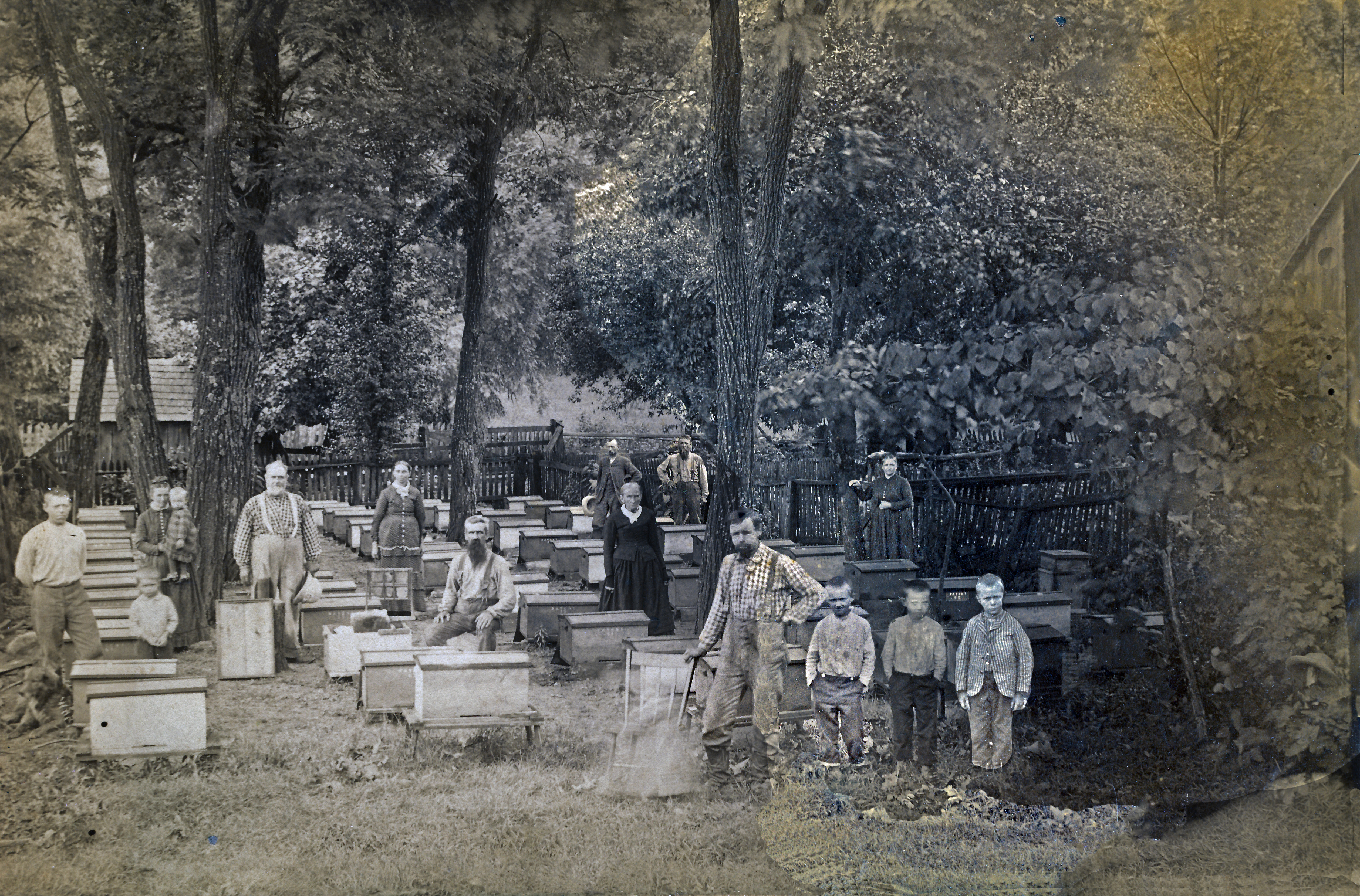
The Gentle Beekeeper of Rushcreek Twp., Bremen, Ohio

08 Friday Dec 2017

Posted by Beekeeping365 in beekeeping

≈ Leave a comment

An interesting article on beekeeping in an earlier era. Especially a Mr. Abraham Graffis II, beekeeper of Rushcreek Twp.

historicwalker's avatar Diary of a Rural Ohio Nomad

beekeeper_image-1
If a picture is truly worth a thousand words, this sepia portrait could easily provide enough material to compose a thesis on the craft of beekeeping circa 1880.  Represented within this tangible reminder of the not so distant past, are perhaps three generations of a rural family, standing as if at attention, beneath a canopy of shaded woods, awaiting the flash of an antiquated camera. It’s subjects lack the formal conventions of the Victorian Era.as they chose to be depicted in practical attire in lieu of their Sunday best, they appear natural and not stiffly posed before an elaborate backdrop or within a tastefully decorated parlor, but in a natural setting. This historical photo not only has the ability to transport us into a nineteenth century apiary, but it reflects the value that the family placed on beekeeping and their farm. Given the price of a photographer, we can surmise…

View original post 1,323 more words

Feel free to share this on:

  • Share on Facebook (Opens in new window) Facebook
  • Share on X (Opens in new window) X
  • Share on Pinterest (Opens in new window) Pinterest
  • Email a link to a friend (Opens in new window) Email
  • Share on LinkedIn (Opens in new window) LinkedIn
  • Share on Reddit (Opens in new window) Reddit
  • Share on Tumblr (Opens in new window) Tumblr
  • Print (Opens in new window) Print
  • Share on Telegram (Opens in new window) Telegram
  • Share on WhatsApp (Opens in new window) WhatsApp
Like Loading...

Advice for New-Bees by Newbees

08 Friday Dec 2017

Posted by Beekeeping365 in beekeeper education, beekeeping

≈ Leave a comment

Tags

beekeeping, new beekeepers, opinion

westernwilson's avatarNewBees: Beginning Beekeeping

ere varroa_mites Varroa: your new nightmare…

I have been keeping bees now for seven years. In spite of taking courses, reading every book I could, keeping my eyes and ears open, and earning my Master Beekeeper designation, I have made every mistake I could.

Sometimes twice.

And I know more are out there waiting for me to make. Such is beekeeping!

We all have to do things in our own way and in our own time, but for what it is worth, here is what I wish I had known in my first year…

  1. It is easy to keep bees, but difficult to keep them well. For the first year or two, you will open that hive, probably with pounding heart and sweaty palms…and not have a clue what you are seeing. That is normal! Just ask a more experienced beekeeper to come look at your hive(s) with you and…

View original post 311 more words

Feel free to share this on:

  • Share on Facebook (Opens in new window) Facebook
  • Share on X (Opens in new window) X
  • Share on Pinterest (Opens in new window) Pinterest
  • Email a link to a friend (Opens in new window) Email
  • Share on LinkedIn (Opens in new window) LinkedIn
  • Share on Reddit (Opens in new window) Reddit
  • Share on Tumblr (Opens in new window) Tumblr
  • Print (Opens in new window) Print
  • Share on Telegram (Opens in new window) Telegram
  • Share on WhatsApp (Opens in new window) WhatsApp
Like Loading...

Varroa Mite Treatments

05 Tuesday Dec 2017

Posted by Beekeeping365 in beekeeping, varroa mites

≈ Leave a comment

Tags

beekeeping, oxalic acid, varroa destructor, varroa mites

15252690_10209188022712496_4776387091035430116_o


I’m out in the bee yard vaporizing oxalic within the hives to kill Varroa mites today. Oxalic Acid is harsh on humans and I think it probably isn’t exactly kind to honey bees either although they seem to live on the acid side of the ph scale. I’m reminded though, as I vaporize the oxalic acid within each hive, of a time my son Danny had a nasty wart on his foot. We had tried everything, night after night, to remove it. Finally Danny agreed to go to a podiatrist . He thought it was going to be cut off and he was good with that. Instead the doctor applied a strong acid for a couple hours. Over the course of the next week or so it was basically blistered and burned in appearance. We felt badly for Danny but he was okay with it. He wanted it off. Anyway, applying oxalic acid to the bees kind of reminds me of the same. I hope they appreciate the mite removal.

Feel free to share this on:

  • Share on Facebook (Opens in new window) Facebook
  • Share on X (Opens in new window) X
  • Share on Pinterest (Opens in new window) Pinterest
  • Email a link to a friend (Opens in new window) Email
  • Share on LinkedIn (Opens in new window) LinkedIn
  • Share on Reddit (Opens in new window) Reddit
  • Share on Tumblr (Opens in new window) Tumblr
  • Print (Opens in new window) Print
  • Share on Telegram (Opens in new window) Telegram
  • Share on WhatsApp (Opens in new window) WhatsApp
Like Loading...

Bee Book Season by Ron Miksha

04 Monday Dec 2017

Posted by Beekeeping365 in beekeeping, beekeeping author, beekeeping books

≈ Leave a comment

Tags

beekeeping, beekeeping authors, beekeeping books, beekeeping winter activities, famous beekeepers

It’s holiday season. And if you’re normal, you’re thinking about beekeeping books for everyone you know. Even the non-beekeeps. I spent a few minutes today scanning the Amazon.com site to see what was bee hot. Not that the best sellers are always the best books. (My own book fell from the best seller ranks back in 2008, but I think Bad Beekeeping is still an OK gift for your friends.)  But there are some good ideas to get you started.

Read entire article here with booklist for winter reading: Bee Book Season — Bad Beekeeping Blog

Feel free to share this on:

  • Share on Facebook (Opens in new window) Facebook
  • Share on X (Opens in new window) X
  • Share on Pinterest (Opens in new window) Pinterest
  • Email a link to a friend (Opens in new window) Email
  • Share on LinkedIn (Opens in new window) LinkedIn
  • Share on Reddit (Opens in new window) Reddit
  • Share on Tumblr (Opens in new window) Tumblr
  • Print (Opens in new window) Print
  • Share on Telegram (Opens in new window) Telegram
  • Share on WhatsApp (Opens in new window) WhatsApp
Like Loading...

Kick ’em when they’re down by The Apiarist

30 Thursday Nov 2017

Posted by Beekeeping365 in beekeeping, varroa, varroa destructor, varroa mites

≈ 4 Comments

Tags

beekeeping, fall management, management, varroa, varroa destructor, varroa mites

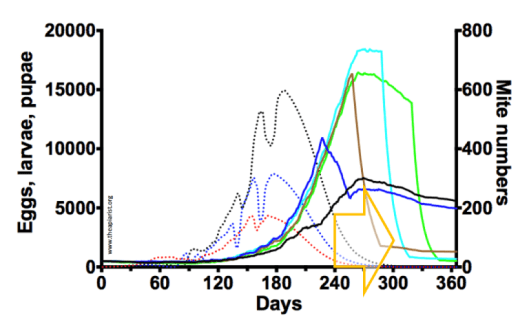
Presentation1-2-768x478

Below is an excellent article by David the Apiarist on understanding the varroa mite population cycle as relates to management of Varroa mites. Understanding the pest is key to maximizing the impact of the treatement. I’ve chosen to crosspost it on this date to benefit my readers in the Midlands of South Carolina as we enter the period of time when the presence of brood is at it’s yearly low. References to the Eagles and Don Henley are entertaining as well.

Why bother treating colonies in midwinter to reduce Varroa infestation? After all, you probably treated them with Apiguard or Apivar (or possibly even Apistan) in late summer or early autumn.

Is there any need to treat again in midwinter?

Yes. To cut a long story short, there are basically two reasons why a midwinter mite treatment almost always makes sense:

  1. Mites will be present. In addition, they’ll be present at a level higher than the minimum level achievable, particularly if you last treated your colonies in late summer, rather than early autumn.
  2. The majority of mites will be phoretic, rather than hiding away in sealed brood. They’re therefore easy to target.

I’ll deal with these in reverse order …

Read the full article at: Kick ’em when they’re down — The Apiarist

Feel free to share this on:

  • Share on Facebook (Opens in new window) Facebook
  • Share on X (Opens in new window) X
  • Share on Pinterest (Opens in new window) Pinterest
  • Email a link to a friend (Opens in new window) Email
  • Share on LinkedIn (Opens in new window) LinkedIn
  • Share on Reddit (Opens in new window) Reddit
  • Share on Tumblr (Opens in new window) Tumblr
  • Print (Opens in new window) Print
  • Share on Telegram (Opens in new window) Telegram
  • Share on WhatsApp (Opens in new window) WhatsApp
Like Loading...

Today we celebrate

30 Thursday Nov 2017

Posted by Beekeeping365 in beekeeping

≈ 4 Comments

Tags

beekeeping, beekeeping calendar

IMAG0207The other day I received an automated congratulations from WordPress.  It was the anniversary of this blog.  A little over a year ago this blog was created with the goal of capturing one complete year of beekeeping – trying to follow the seasons with corresponding articles, pictures, and posts – some original and many shared. My thanks to all of the contributors who allowed me to re-blog their articles along the way.

Where are we going from here? I’ll add more original blog posts and refine some of the current posts to be more informative to visitors. I’d like to add more very short snapshots of my daily interactions and beekeeping preparations. I’ll add more links within the posts for visitors to link to more information. I also hope to add more introductory comments to posts contributed by others. Posts from the past twelve months will be recycled into the current year to continue to provide an ongoing calendar-like diary of the beekeeping year with the improvements mentioned above.

Also in the plans I will be replacing Beekeeping Vocabulary on Sunday’s with Book of the Week. Our Saturday morning recipe post(s) will continue as it has become a favorite of many people and receives a good number of hits each week. Beekeeping Birthdays will also continue as I add more famous beekeepers. Those that wrote non-copyrighted books, pamphlets, and other written works will list links as I am able to find.

I hope you have enjoyed the ride this past year. I have, and in the process learned a great deal from you as well. Thanks!

Feel free to share this on:

  • Share on Facebook (Opens in new window) Facebook
  • Share on X (Opens in new window) X
  • Share on Pinterest (Opens in new window) Pinterest
  • Email a link to a friend (Opens in new window) Email
  • Share on LinkedIn (Opens in new window) LinkedIn
  • Share on Reddit (Opens in new window) Reddit
  • Share on Tumblr (Opens in new window) Tumblr
  • Print (Opens in new window) Print
  • Share on Telegram (Opens in new window) Telegram
  • Share on WhatsApp (Opens in new window) WhatsApp
Like Loading...

Called Hive Inspection

28 Tuesday Nov 2017

Posted by Beekeeping365 in beekeeping, hive inspections, inspections

≈ 6 Comments

Tags

beekeeping

IMAG2301

Hive Assessment

Assessment: Called to look at a hive that had experienced a sudden (less than one week) drop in population and an increase in dead bees accompanied by “sawdust” like material.

Location: Swansea, SC Weather: Mid 60’s overcast. Light wind.

Hive is a 10 frame Langstroth, three hive bodies tall (two deeps, one medium).

By history, this is a new hive installed this season from a package (H&R). Hive has been doing well until a couple days ago. Owner inspected hive last week and reports “full boxes of bees”. Became concerned this weekend with increase in dead bees on ground in front of hive and “sawdust” like material in front.

On arrival I noticed an open feeder located a couple feet to the side of the hive. Noticing more bees coming and going at the feeder than the front entrance of the hive I watched and saw bees coming to the feeder and on departing going elsewhere . Owner reports neighbor has multiple bee hives.

The hive had little activity at the entrance reducer which was set on about a two bee width setting. No fighting.

Owner showed me “sawdust” like material. Appeared to be animal scat largely composed of bee parts.

Hive opened and no bees noted on opening. Top medium all frames filled with capped honey.

Middle box deep had a cluster of bees approximately 200. No queen observed. Three emergency queen cells observed but these were away from cluster but on same frames. Appeared queenless. Approximately 20 capped brood cells. No open brood noted.

Bottom deep partially filled with open nectar. Apparently cured as passed the “shake” test.

Screened bottom board had about 20-30 dead bees.

Sticky board was under the SBB. Had been in place for unknown period of time. Had notable number of mites, a few SHB, minimal wax particles.

While I generally discourage viewing individual bees as an assessment of Varroa load, I did observe the bees on the top of the small cluster. Approximately 25 bees were on the top bars of the middle box gathered together at top of cluster. I counted 4 or 5 mites on the top surface of the bees’ thoraxes and abdomens.

Removal of pupae from capped brood. No mites observed. Pupae had been dead several days and starting to dehydrate and decompose.


Analysis of Assessment:

Upon seeing bees other than the bees from the owner’s hive I initially suspected an abscond due to robbing pressure. However I ruled this out after seeing 1) no fighting or increased activity at the front entrance of the hive; 2) No torn cappings or wax on SBB; 3) hive stores intact.

The scat like droppings containing bee parts led me to suspect harassment from a raccoon or other small animal. However, it is my understanding that raccoons will scratch on the hive box or entrance at night to get bees to come out so they may eat them. However, I saw no scratches on the box or landing board. Additionally, I understand that raising the hive off the ground is a method of discouraging raccoons because it causes them to expose their undersides which the bees sting. This hive was raised further discounting the raccoon harassment leading to an abscond. The scat remains a mystery however, it is possible the scat was from another animal, perhaps a snake regularly eating dead or dying bees off the ground in front of the hive. I have lizards at my home yard that eat the dying bees on the ground and are a benefit to yard hygiene.

Owner reports increased yellow jacket activity. Not noted on inspection. We have had a couple recent freezes so that may account for lack of activity today. It is, however, noted as another pest pressure on this hive.

Varroa on bees. Counting 5 per 20 bees is a 25% Varroa load and well beyond economic threshold for treatment. It is generally considered that a functioning hive cannot withstand a mite population greater than 3000 total and is considered doomed. I suspect this hive had a mite load sufficient to cause death / absconding.

Plan:

Reconfigure hive

Remove capped honey

Safely store comb for next season

Provide educational tips

Implementation:

Box with small cluster placed on hive stand. Owner advised that they are hopelessly queenless and doomed. However, as the owner had no other hive to work with and she did not wish to shake them out on the ground. Owner advised to recover and save comb after the bees die.

The hive bodies containing capped honey were removed for processing.

Combs with extracted honey will be placed outside for neighbor’s bees to clean up for 24 hours prior to being stored. Owner instructed in proper comb storage options.

Restart hive(s) in spring with packages placed on drawn comb.

Tips:

Do not open feed in close proximity to hive. Feeding close introduces your hive to the neighbor’s hive and during times of dearth weaker hives are identified. I do not think this was an issue in this instance however it can lead to a “stressor” on the hive to defend its stores. Additionally, open feeding promotes viral disease transmission via contact with other, possibly infected, colonies.

Treat for Varroa earlier in the year. Given that we now know there are multiple hives located in close proximity to the owner’s bee yard, I recommend treatments at the close of the nectar flow, and again in early fall. An assessment of Varroa counts in the spring as well would be advised.

Perform the final “deep” inspection a bit earlier in the fall. Do final total inspection in early fall to ensure the queen is where you want her (lower boxes) and to assess stores prior to any fall feeding. After early fall inspection let them get their house in order. Remember, while we are trying to help the bees, we are not perceived by them as helping. To them, we are another pest in their hive.

Feel free to share this on:

  • Share on Facebook (Opens in new window) Facebook
  • Share on X (Opens in new window) X
  • Share on Pinterest (Opens in new window) Pinterest
  • Email a link to a friend (Opens in new window) Email
  • Share on LinkedIn (Opens in new window) LinkedIn
  • Share on Reddit (Opens in new window) Reddit
  • Share on Tumblr (Opens in new window) Tumblr
  • Print (Opens in new window) Print
  • Share on Telegram (Opens in new window) Telegram
  • Share on WhatsApp (Opens in new window) WhatsApp
Like Loading...

A Beekeeper’s Book Review of More Than Honey: The Survival of Bees and the Future of Our World by casula mellita

27 Monday Nov 2017

Posted by Beekeeping365 in beekeeping, book review

≈ Leave a comment

Tags

apiculture, beekeeping, book review

Markus Imhoof outlines many of the problems facing beekeepers today in his book More Than Honey: The Survival of Bees and the Future of Our World, which Imhoof had originally produced as a documentary. His slant is strongly pro-bees and anti-pesticides and, in conjunction, anti-commercial agriculture. In particular, I found his interviews with a large almond farmer and with a migratory beekeeper fascinating both for their own awareness about the problems that their businesses engendered while still maintaining their capitalistic outlook.

Imhoof includes information that is of an introductory nature to a backyard beekeeper, e.g., the breakdown of the various responsibilities by which bees in the hive, before discussing in detail some of the research that is being conducted in laboratories on how bees behave. This chapter was filled with engaging experiments and tidbits. For example, I learned that a particular bee, dubbed Red-23, had observed another’s waggle dance for a food source but had decided to return to its own previous food source, which the researchers had removed. Rather than return to the hive or search for another nearby food source as had been expected, Red-23 flew off to the location described by the other bee in its waggle dance, which Red-23 had observed at the hive. Not only did the bee preserve the memory of the directions in the waggle dance, but Red-23 had sufficient locational memory to fly from its location to the described location without returning to the hive first. Wow!

Read full article here: A Beekeeper’s Book Review of More Than Honey: The Survival of Bees and the Future of Our World — casula mellita

Feel free to share this on:

  • Share on Facebook (Opens in new window) Facebook
  • Share on X (Opens in new window) X
  • Share on Pinterest (Opens in new window) Pinterest
  • Email a link to a friend (Opens in new window) Email
  • Share on LinkedIn (Opens in new window) LinkedIn
  • Share on Reddit (Opens in new window) Reddit
  • Share on Tumblr (Opens in new window) Tumblr
  • Print (Opens in new window) Print
  • Share on Telegram (Opens in new window) Telegram
  • Share on WhatsApp (Opens in new window) WhatsApp
Like Loading...

Werewolves Not Vampires by The Prospect of Bees

26 Sunday Nov 2017

Posted by Beekeeping365 in beekeeping, varroa, varroa destructor, varroa mites

≈ Leave a comment

Tags

entomology, varroa, varroa destructor, varroa mites

Oh, had we but seen this video a few days earlier, in time for Halloween! A three-minute thesis competition is a contest for PhD students in which they condense their thesis into a three minute presentation comprehensible to an intelligent audience lacking any background in the research area. Doctoral candidate Samuel Ramsey was the winner […]

Read the complete article at: Werewolves Not Vampires — The Prospect of Bees

Feel free to share this on:

  • Share on Facebook (Opens in new window) Facebook
  • Share on X (Opens in new window) X
  • Share on Pinterest (Opens in new window) Pinterest
  • Email a link to a friend (Opens in new window) Email
  • Share on LinkedIn (Opens in new window) LinkedIn
  • Share on Reddit (Opens in new window) Reddit
  • Share on Tumblr (Opens in new window) Tumblr
  • Print (Opens in new window) Print
  • Share on Telegram (Opens in new window) Telegram
  • Share on WhatsApp (Opens in new window) WhatsApp
Like Loading...

Honey and ginger remedy by Honey Hunter

25 Saturday Nov 2017

Posted by Beekeeping365 in beekeeping, honey recipe, recipe

≈ 1 Comment

Tags

cough, flu, ginger, home remedy, honey, honey recipe, opinion, recipe

If you are feeling under the weather then look no further than honey and ginger. This combo is an autumnal flu fighter and life enhancer. Other ingredients that I take in abundance this time of the year are garlic and turmeric. However, my love of honey remains enduring. Honey is a favourite, winter, spring, summer or…

Read full article here: Honey and ginger remedy — Honey Hunter

Feel free to share this on:

  • Share on Facebook (Opens in new window) Facebook
  • Share on X (Opens in new window) X
  • Share on Pinterest (Opens in new window) Pinterest
  • Email a link to a friend (Opens in new window) Email
  • Share on LinkedIn (Opens in new window) LinkedIn
  • Share on Reddit (Opens in new window) Reddit
  • Share on Tumblr (Opens in new window) Tumblr
  • Print (Opens in new window) Print
  • Share on Telegram (Opens in new window) Telegram
  • Share on WhatsApp (Opens in new window) WhatsApp
Like Loading...

Baked Honey Bacon Benedict, a Buzzworthy Delight during National Honey Month by From Behind the Pen

25 Saturday Nov 2017

Posted by Beekeeping365 in beekeeping, honey recipe, recipe

≈ Leave a comment

Tags

bacon, benedict, breakfast recipe, honey, honey recipe, recipe

September is National Honey Month and a perfect time to celebrate HONEY! What a fabulous time to promote honey as a natural and beneficial sweetener, bee culture, as well as the beekeeping industry.

Read full article and recipe here: Baked Honey Bacon Benedict, a Buzzworthy Delight during National Honey Month — From Behind the Pen

Feel free to share this on:

  • Share on Facebook (Opens in new window) Facebook
  • Share on X (Opens in new window) X
  • Share on Pinterest (Opens in new window) Pinterest
  • Email a link to a friend (Opens in new window) Email
  • Share on LinkedIn (Opens in new window) LinkedIn
  • Share on Reddit (Opens in new window) Reddit
  • Share on Tumblr (Opens in new window) Tumblr
  • Print (Opens in new window) Print
  • Share on Telegram (Opens in new window) Telegram
  • Share on WhatsApp (Opens in new window) WhatsApp
Like Loading...

Comb Management Part 2: Comb size by Bee Informed Partnership

24 Friday Nov 2017

Posted by Beekeeping365 in beekeeping, comb, comb honey, drawn comb

≈ Leave a comment

Tags

apiculture, beekeeping, drawn comb, management

Artificial foundation was developed shortly after the invention of the removable frames. The first foundation frame was invented by Johannes Mehring in Germany (Graham, 1992). But as more people began producing artificial foundation for Langstroth hives, beekeepers began experimenting with different sized cells.  Fast forward to today; we see both small cell and standard comb, but why is that? Well, that is the topic of part 2 of this 4-part blog series.

  1. History of comb management- https://beeinformed.org/2017/09/14/comb-management-part-1/
  2. Cell size: why so much variation between producers?
  3. Management strategies of foundation
  4. Benefits of replacing old comb

In part 1, I wrote about the history of comb management. In part 2, I decided to write about cell size. Cell size is a highly heated and debated topic that I, as a former commercial beekeeper, did not know of until recently. As a commercial beekeeper, we would buy foundation in bulk, which had a “standard” cell size (5.2mm to 5.4mm). I had zero concept of small versus standard cell size, and I became curious about why beekeepers would use small cell instead of standard cell. So I did what any eager millennial would do- I googled it. I found Michael Bush’s (http://www.bushfarms.com/beesnaturalcell.htm)  and Randy Oliver’s post (http://scientificbeekeeping.com/trial-of-honeysupercell-small-cell-combs/) about small cell size (and I went down a few other rabbit holes), and I instantly became fascinated about small cell size. I hope you enjoy reading this blog as much as I enjoyed writing it.

In 1857, Johannes Mehring produced the first comb foundation (Graham, 1992). His goal was to provide bees with a template, which would encourage bees to build worker comb in the frames. From that day forward, artificial foundation became a part of beekeeping. However, beekeepers began to experiment with different cell sizes. In 1927, Baudoux hypothesized that larger cell sizes would produce larger bees, and based upon anecdotal evidence from his own colonies, he claimed larger bees produced higher yields of honey. Without scientific evidence, manufacturers in Belgium and France began to produce foundation with larger cells. These manufacturers asserted that bees raised in larger cells produced more honey and this concept took off (Grout, 1935). Those fallacies faded into history as cell size become standardized at 5.2mm-5.4mm.

Read full article with more detailed pictures here: Comb Management Part 2: Comb size — Bee Informed Partnership

Feel free to share this on:

  • Share on Facebook (Opens in new window) Facebook
  • Share on X (Opens in new window) X
  • Share on Pinterest (Opens in new window) Pinterest
  • Email a link to a friend (Opens in new window) Email
  • Share on LinkedIn (Opens in new window) LinkedIn
  • Share on Reddit (Opens in new window) Reddit
  • Share on Tumblr (Opens in new window) Tumblr
  • Print (Opens in new window) Print
  • Share on Telegram (Opens in new window) Telegram
  • Share on WhatsApp (Opens in new window) WhatsApp
Like Loading...

Comb Management: Part 1 by Bee Informed Partnership

23 Thursday Nov 2017

Posted by Beekeeping365 in beekeeping, comb, comb honey, drawn comb

≈ Leave a comment

Tags

beekeeping, comb management, drawn comb, honeycomb, management

Comb management is an important aspect of beekeeping, but comb management has not always been a management strategy of beekeepers. Rather, comb management is a fairly new concept. Beekeepers started managing comb with the invention of the Langstroth hive in the 1850’s. Today, comb management is a common practice for beekeepers, and an aspect of beekeeping beekeepers must be cognizant of. Because of the importance of comb management, I am writing 4-part blog-series on the subject. The blog-series is split into 4 parts:

  1. History of comb management
  2. Management strategies of foundation
  3. Cell size: why so much variation between producers?
  4. Benefits of replacing old comb

(cont.)

Read full article with more detailed pictures here:  Comb Management: Part 1 — Bee Informed Partnership

Part Two will be posted tomorrow.

Feel free to share this on:

  • Share on Facebook (Opens in new window) Facebook
  • Share on X (Opens in new window) X
  • Share on Pinterest (Opens in new window) Pinterest
  • Email a link to a friend (Opens in new window) Email
  • Share on LinkedIn (Opens in new window) LinkedIn
  • Share on Reddit (Opens in new window) Reddit
  • Share on Tumblr (Opens in new window) Tumblr
  • Print (Opens in new window) Print
  • Share on Telegram (Opens in new window) Telegram
  • Share on WhatsApp (Opens in new window) WhatsApp
Like Loading...

Honey and Keeping Bees in Slovenia by Tali Landsman

16 Thursday Nov 2017

Posted by Beekeeping365 in beekeeping, beekeeping history

≈ Leave a comment

Tags

bee art, beekeeping, beekeeping history, painted bee hives, Slovenia

SassafrasBeeFarm: Beautiful pictures accompany this blog post titled: “Honey and Keeping Bees in Slovenia.” Take a few minutes out of your day to appreciate the painted beehives and craftsmanship found here by following the link below.

Honey and Keeping Bees in SloveniaWhen I first saw the traditional beehives that beekeepers in Slovenia use to house their bees, I was in awe.

In most places around the world, beehives are kept in wooden boxes, which open from the top.

In some places they paint the wooden boxes in bright colors, to attract the bees.

In Slovenia, a traditional beehive is built like a beautiful cabinet, with many drawers and with a roof, to keep it dry.

The bees create their colonies inside those cabinet drawers, and the fronts of the drawers are elaborately painted with either religious scenes, or scenes from daily life.

The beautiful naive paintings were usually done by professional or semi professional artists, but some also served as church painters, while others were entirely self-taught.

The paintings were done to identify the owners of the beehives, and to bless the production of honey.

View much more of this beautiful artwork here:  Honey and Keeping Bees in Slovenia — Tali Landsman

Feel free to share this on:

  • Share on Facebook (Opens in new window) Facebook
  • Share on X (Opens in new window) X
  • Share on Pinterest (Opens in new window) Pinterest
  • Email a link to a friend (Opens in new window) Email
  • Share on LinkedIn (Opens in new window) LinkedIn
  • Share on Reddit (Opens in new window) Reddit
  • Share on Tumblr (Opens in new window) Tumblr
  • Print (Opens in new window) Print
  • Share on Telegram (Opens in new window) Telegram
  • Share on WhatsApp (Opens in new window) WhatsApp
Like Loading...

Beeswax Candles by the honeybeequeenblog

15 Wednesday Nov 2017

Posted by Beekeeping365 in beekeeping, beeswax

≈ Leave a comment

Tags

beekeeping, beeswax, candle making, products of the hive

This time of year beekeepers have a little more time available for things unrelated to tending the hives. One thing we do is render the excess wax obtained by scraping the various hive parts and the wax associated with extracting honey. Much of this has been saved over the past season, placed in buckets or otherwise stored until we have time to render it for our own use or for sale to others. The article below rings true to the efforts that are made to process this product of the hive and the work involved by both the bees and the beekeeper. Thanks to honeybeequeenblog for the pictures and article.

It’s been a long time since we’ve made any candles. I guess between the farm work, house work and school fun the fun stuff that I love has been pushed to the side. That plus the fact that we really needed a solar wax melter to render some more beeswax. He did get the […]

Read the entire article with lots of pictures here:  Beeswax Candles —

Feel free to share this on:

  • Share on Facebook (Opens in new window) Facebook
  • Share on X (Opens in new window) X
  • Share on Pinterest (Opens in new window) Pinterest
  • Email a link to a friend (Opens in new window) Email
  • Share on LinkedIn (Opens in new window) LinkedIn
  • Share on Reddit (Opens in new window) Reddit
  • Share on Tumblr (Opens in new window) Tumblr
  • Print (Opens in new window) Print
  • Share on Telegram (Opens in new window) Telegram
  • Share on WhatsApp (Opens in new window) WhatsApp
Like Loading...

Getting Bees Ready for Winter by Chautauqua Apiary

13 Monday Nov 2017

Posted by Beekeeping365 in beekeeping, beekeeping management

≈ Leave a comment

Tags

apiculture, beekeeping, fall management, management

The bees are looking good going into winter, been feeding right along as I’m raising bees and growing my apiary. So I still have a lot of brood and the drones are just getting pushed out. So I still have a late oxalic acid vaporizing treatment for mite control to get done on a good day. I have my mice guards on(I like 4″openings), inner covers flipped(hole taped), rigid insulation over the inner covers(outer cover on top), and providing wind breaks at my windy yards. I don’t do any wrapping but I might try bubble insulation on some of my single deeps and nucs to see if it makes a difference.

Read full article here: Getting Bees Ready for Winter — Chautauqua Apiary

Feel free to share this on:

  • Share on Facebook (Opens in new window) Facebook
  • Share on X (Opens in new window) X
  • Share on Pinterest (Opens in new window) Pinterest
  • Email a link to a friend (Opens in new window) Email
  • Share on LinkedIn (Opens in new window) LinkedIn
  • Share on Reddit (Opens in new window) Reddit
  • Share on Tumblr (Opens in new window) Tumblr
  • Print (Opens in new window) Print
  • Share on Telegram (Opens in new window) Telegram
  • Share on WhatsApp (Opens in new window) WhatsApp
Like Loading...

Beekeeping Vocabulary – “V” is for…

12 Sunday Nov 2017

Posted by Beekeeping365 in beekeeping, varroa, varroa destructor, varroa mites

≈ Leave a comment

Tags

beekeeping, beekeeping vocabulary, honey bee vocabulary, honey bees, varroa, varroa destructor, varroa mites


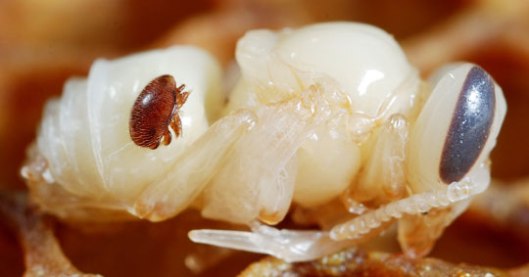
Varroa_Mite

Image of Varroa Mite supplied by Kika De La Garza Subtropical Agricultural Research Center Weslaco, Texas, USA {{PD-USGov-USDA-ARS}


Today’s beekeeping vocabulary word is, “Varroa.”

From Wikipedia:

Varroa is a genus of parasitic mites associated with honey bees, placed in its own family, Varroidae.[4] The genus was named for Marcus Terentius Varro, a Roman scholar and beekeeper. The condition of a honeybee colony being infested with Varroa mites is called varroosis (also, incorrectly, varroatosis).

Varroa mites are recognised as the biggest pest to honeybees worldwide due to their ability to transmit diseases such as deformed wing virus to larval or pupating bees, resulting in death or severe deformity of the pupae.

Varroa mites feed off the bodily fluids of adult, pupal, and larval honey bees, and may carry viruses that are particularly damaging to the bees (e.g., deformed wings, and IAPV), and accordingly they have been implicated in colony collapse disorder. Research has indicated that alone, neither Varroa mites nor deformed wing virus are particularly deadly, yet together they can pose an incredible risk to colonies.[5][6]

Varroa mites were first discovered in Java about 1904,[7] but are now present in all honey bee populations except Australia, Isle of Man and northern parts of Norway. They were discovered in the United States in 1987, in New Zealand in 2000,[8] and in the United Kingdom in 1992 (Devon).

Bee-breeding efforts to develop resistance against Varroa are ongoing. The USDA has developed a line of bees which uses Varroa-sensitive hygiene to remove reproductive mites. This line is now being distributed to beekeepers to be used as part of their integrated pest management programs.

Source and to read more: Wikipedia

Feel free to share this on:

  • Share on Facebook (Opens in new window) Facebook
  • Share on X (Opens in new window) X
  • Share on Pinterest (Opens in new window) Pinterest
  • Email a link to a friend (Opens in new window) Email
  • Share on LinkedIn (Opens in new window) LinkedIn
  • Share on Reddit (Opens in new window) Reddit
  • Share on Tumblr (Opens in new window) Tumblr
  • Print (Opens in new window) Print
  • Share on Telegram (Opens in new window) Telegram
  • Share on WhatsApp (Opens in new window) WhatsApp
Like Loading...

Chicken with tomatoes and honey by My Mediterranean Recipes

11 Saturday Nov 2017

Posted by Beekeeping365 in beekeeping, honey recipe, recipe

≈ Leave a comment

Tags

almonds, ginger cinnamon, honey, honey recipe, recipe, tomatoes

Put all the ingredients except the honey, almonds and sesame seeds in a large pan. Cook gently, covered turning the chicken gently until the flesh is tender – actually I browned the chicken thighs first.

Remove the chicken and reduce the sauce until very thick but take care not to burn. Stir in the honey, return the chicken and heat through. Serve covered with sauce and sprinkled with sesame seeds and almonds.

For full recipe with ingredients: Chicken with tomatoes and honey — My Mediterranean Recipes

Feel free to share this on:

  • Share on Facebook (Opens in new window) Facebook
  • Share on X (Opens in new window) X
  • Share on Pinterest (Opens in new window) Pinterest
  • Email a link to a friend (Opens in new window) Email
  • Share on LinkedIn (Opens in new window) LinkedIn
  • Share on Reddit (Opens in new window) Reddit
  • Share on Tumblr (Opens in new window) Tumblr
  • Print (Opens in new window) Print
  • Share on Telegram (Opens in new window) Telegram
  • Share on WhatsApp (Opens in new window) WhatsApp
Like Loading...

How should we train the newbees? by Rusty

10 Friday Nov 2017

Posted by Beekeeping365 in beekeeper education, beekeeping, beekeeping equipment, book review, equipment

≈ Leave a comment

Tags

beekeepers, book review, equipment, varroa mites

Tis the season. My inbox is flush with “amazing” deals. Unfortunately, many of the hard-sell marketers are heading straight for the wallet of the soon-to-be new beekeeper. I’ve watched wannabees, still unable to tell a honey bee from a cockroach, buying specialty hives, extractors, and vaporizers so they will be ready when their bees arrive.

The marketers are slick, many offering “free” courses with anywhere from a dozen to 150 lessons to help get you started. Of course, this is nothing new. I first complained about the “lesson plan” back in 2010 when I saw poorly structured tutorials, each designed to sell you one more thing.

How much stuff do you really need?

Okay, I’m not a minimalist. I find that tinkering with hive design, equipment, gadgets, and technology is enormously fun and educational. On the other hand, you can be a first-rate beekeeper without breaking the bank. No one should be guilted into buying something he can’t afford or doesn’t need. Your need for equipment will evolve as your hobby expands, but purchasing should not be rushed or haphazard.

And all those lessons? How discouraging! A hundred lessons on any subject would make me run. Instead, I recommend that beginners read two good books: one that covers basic beekeeping practices and one dedicated to honey bee biology. My recommendation for the basics is either Simple, Smart Beekeeping by Kirsten and Michael Traynor or The Beekeeper’s Handbook by Diana Sammataro and Alphonse Avitabile. If you are a visual learner, the full-color photos in the Traynor book could not be better. For honey bee biology, nothing comes close to Honey-Maker by Rosanna Mattingly. I refer to it constantly.

Read full article here: How should we train the newbees? — Honey Bee Suite

Feel free to share this on:

  • Share on Facebook (Opens in new window) Facebook
  • Share on X (Opens in new window) X
  • Share on Pinterest (Opens in new window) Pinterest
  • Email a link to a friend (Opens in new window) Email
  • Share on LinkedIn (Opens in new window) LinkedIn
  • Share on Reddit (Opens in new window) Reddit
  • Share on Tumblr (Opens in new window) Tumblr
  • Print (Opens in new window) Print
  • Share on Telegram (Opens in new window) Telegram
  • Share on WhatsApp (Opens in new window) WhatsApp
Like Loading...

A Potential New Tool in the Battle Against a Bee-Killing Bacteria by Meredith Swett Walker

09 Thursday Nov 2017

Posted by Beekeeping365 in beekeeping, diseases

≈ Leave a comment

Tags

AFB, American Foulbrood, Apis mellifera, beekeeping, diseases, honey bee diseases

American foulbrood is a bacterial disease afflicting honey bee (Apis mellifera) colonies. The Paenibacillus larvae bacterium germinates in the gut of a honey bee larva; dead larvae often decompose into a brown, gooey substance. New research suggests certain analogs to a molecule called indole may be useful in blocking the bacteria’s germination. (Photo credit: Wikimedia Commons/Tanarus, CC BY-SA 3.0)


It’s a beekeeper’s nightmare: She lifts the lid on her carefully tended hive and is greeted with a whiff of rotting flesh. Further inspection finds that the young bees of the colony, who should be plump, pearly-white larvae, have melted into a puddle of brownish goo at the bottom of their cells. This colony is infected with American foulbrood disease—most likely a death sentence.

Meredith Swett Walker

If she’s very lucky, she may be able to save the colony with a course of antibiotics, but the drugs don’t always work, and the disease is highly contagious. To save nearby colonies from infection, the beekeeper may be required burn the entire hive, bees and all.

American foulbrood disease, or AFB, is caused by the Paenibacillus larvae bacterium, a difficult-to-control and highly destructive pathogen found worldwide. In a study published last week in the open-access Journal of Insect Science, Israel Alvarado, Ph.D., and colleagues at the University of Nevada, Las Vegas (UNLV), explore whether blocking the germination of P. larvae spores is an effective way to treat this infection.

Read full article at: A Potential New Tool in the Battle Against a Bee-Killing Bacteria — Entomology Today

Feel free to share this on:

  • Share on Facebook (Opens in new window) Facebook
  • Share on X (Opens in new window) X
  • Share on Pinterest (Opens in new window) Pinterest
  • Email a link to a friend (Opens in new window) Email
  • Share on LinkedIn (Opens in new window) LinkedIn
  • Share on Reddit (Opens in new window) Reddit
  • Share on Tumblr (Opens in new window) Tumblr
  • Print (Opens in new window) Print
  • Share on Telegram (Opens in new window) Telegram
  • Share on WhatsApp (Opens in new window) WhatsApp
Like Loading...

Winter for the beekeeper: It’s time to think about spring, summer by Blount County Beekeepers Association

02 Thursday Nov 2017

Posted by Beekeeping365 in beekeeping, beekeeping seasons, management, products, seasons

≈ Leave a comment

Tags

beekeeping, management, seasons

From Blount County Beekeepers Association:

With winter approaching (in some places it’s already here), the beekeeper has two jobs:

  • Make sure the bees in your hives have plenty of food.Spring is the season the beekeeper should be planning for now.
  • Think about about what’s going to happen in your apiary in the spring and summer.

Neither of these jobs involves a lot of work at this point, but they shouldn’t be neglected. The main characteristic of good beekeepers is that they think ahead — one or two seasons ahead.

Now is the time think about your bees, the equipment you have and the general environment that will confront the bees when they start flying in the spring.

Will you need to order packages of bees or nucs to rebuild your apiary in the spring? That, of course, depends on how many of your hives make it through the winter. We don’t know what will happen in that regard at the moment, unless you have already experienced losses.

What we do know is that in Tennessee the winter losses for beekeepers have been about 30 percent during the past few winters. The smart thing then is to plan for that kind of loss and hope it doesn’t happen. Now is the time to get in touch with the folks who supply you with bees and see what their availability will be. Most of those people are starting a list now, and your name should be on it.

We’ll have more to say later about equipment and environment.

Right now, you should plan for some losses and think about how you will replenish your apiary.

Source: Winter for the beekeeper: It’s time to think about spring, summer

Feel free to share this on:

  • Share on Facebook (Opens in new window) Facebook
  • Share on X (Opens in new window) X
  • Share on Pinterest (Opens in new window) Pinterest
  • Email a link to a friend (Opens in new window) Email
  • Share on LinkedIn (Opens in new window) LinkedIn
  • Share on Reddit (Opens in new window) Reddit
  • Share on Tumblr (Opens in new window) Tumblr
  • Print (Opens in new window) Print
  • Share on Telegram (Opens in new window) Telegram
  • Share on WhatsApp (Opens in new window) WhatsApp
Like Loading...

Telling the Bees by Deborah Diggs

31 Tuesday Oct 2017

Posted by Beekeeping365 in beekeeping, folklore

≈ Leave a comment

Tags

beekeeping, death, folklore, telling the bees

12038100_10153746778124736_6936598331526167183_n

It fell to me to tell the bees,
though I had wanted another duty—
to be the scribbler at his death,
there chart the third day’s quickening.
But fate said no, it falls to you
to tell the bees, the middle daughter.
So it was written at your birth.

(cont.)

Read full poem here:  “Telling the Bees” by Deborah Digges — Words for the Year

From Trapeze by Deborah Digges.

Feel free to share this on:

  • Share on Facebook (Opens in new window) Facebook
  • Share on X (Opens in new window) X
  • Share on Pinterest (Opens in new window) Pinterest
  • Email a link to a friend (Opens in new window) Email
  • Share on LinkedIn (Opens in new window) LinkedIn
  • Share on Reddit (Opens in new window) Reddit
  • Share on Tumblr (Opens in new window) Tumblr
  • Print (Opens in new window) Print
  • Share on Telegram (Opens in new window) Telegram
  • Share on WhatsApp (Opens in new window) WhatsApp
Like Loading...

Telling the Bees

31 Tuesday Oct 2017

Posted by Beekeeping365 in beekeeping, beekeeping history

≈ Leave a comment

Tags

beekeeping, beekeeping customs, beekeeping history, beekeeping lore, Halloween, telling the bees


Charles_Napier_Hemy-Telling_the_Bees

Charles Napier Hemy (1841-1917) – Telling the Bees

Telling the Bees

The telling of the bees is a traditional English custom, in which bees would be told of important events in their keeper’s lives, such as births, marriages, or departures and returns in the household. The bees were most commonly told of deaths in their master’s family.

To inform the bees of a death their hive might be hung with a black cloth, while a “doleful tune” is sung. Another method of “telling the bees” would be for their master to approach the hive and knock gently upon it. The house key might also be used to knock on the hive. When the master of the house had the attention of the bees they would tell the bees the name of the person that had died.

Food and drink from a beekeeper’s funeral would also be left by the hive for the bees, including the funeral biscuits and wine. The hive would also be lifted a few inches and put down again at the same time as the coffin. The hive might also be rotated to face the funeral procession, and draped with mourning cloth.

A section from John Greenleaf Whittier‘s poem “Home Ballads” describes the practice:

Before them, under the garden wall,
Forward and back
Went, drearily singing, the chore-girl small,
Draping each hive with a shred of black.

Trembling, I listened; the summer sun
Had the chill of snow;
For I knew she was telling the bees of one
Gone on the journey we all must go!

“Stay at home, pretty bees, fly not hence!
Mistress Mary is dead and gone!”

Source and to read more: http://en.m.wikipedia.org/wiki/Telling_the_bees

Video animation of John Greenleaf Whittier via YouTube posted by poetryreincarnations

Video of Holland beekeeper telling the bees via Youtube posted by Historical Honeybee Articles


Feel free to share this on:

  • Share on Facebook (Opens in new window) Facebook
  • Share on X (Opens in new window) X
  • Share on Pinterest (Opens in new window) Pinterest
  • Email a link to a friend (Opens in new window) Email
  • Share on LinkedIn (Opens in new window) LinkedIn
  • Share on Reddit (Opens in new window) Reddit
  • Share on Tumblr (Opens in new window) Tumblr
  • Print (Opens in new window) Print
  • Share on Telegram (Opens in new window) Telegram
  • Share on WhatsApp (Opens in new window) WhatsApp
Like Loading...

The Etruscans Were Expert Beekeepers, Ancient Honeycombs Suggest by Rossella Lorenzi

30 Monday Oct 2017

Posted by Beekeeping365 in beekeeping, beekeeping history

≈ Leave a comment

Tags

beekeeping, beekeeping history, food

The charred remains of 2,500-year-old honeycombs, as well as other beekeeping artifacts, have been discovered in an Etruscan workshop in northern Italy.

The findings included the remains of a unique grapevine honey produced by traveling beekeepers along rivers, according to a new study.

“The importance of beekeeping in the ancient world is well known through an abundance of iconographic, literary, archaeometric and ethnographic [or cultural] sources,” Lorenzo Castellano, a graduate student at the Institute for the Study of the Ancient World at New York University and first author of the new study, told Live Science. (In archaeometry, scientists use physical, chemical and mathematical analyses to study archaeological sites.)

Even so, since honeycombs are perishable, direct fossil evidence of them is “extremely rare,” he added.

Read full article here: The Etruscans Were Expert Beekeepers, Ancient Honeycombs Suggest by Rossella Lorenzi

Feel free to share this on:

  • Share on Facebook (Opens in new window) Facebook
  • Share on X (Opens in new window) X
  • Share on Pinterest (Opens in new window) Pinterest
  • Email a link to a friend (Opens in new window) Email
  • Share on LinkedIn (Opens in new window) LinkedIn
  • Share on Reddit (Opens in new window) Reddit
  • Share on Tumblr (Opens in new window) Tumblr
  • Print (Opens in new window) Print
  • Share on Telegram (Opens in new window) Telegram
  • Share on WhatsApp (Opens in new window) WhatsApp
Like Loading...

Beekeeping Vocabulary – “U” is for…

29 Sunday Oct 2017

Posted by Beekeeping365 in beekeeping, honey

≈ Leave a comment

Tags

beekeeping, honey bees, Tupelo, tupelo honey, Van Morrison

Uncapping Knife

Above: Uncapping with an electric hot knife on an uncapping tub by Ben pcc

Today’s beekeeping vocabulary word is, “Uncapping Knife.”

From Wikipedia:

The first step in the extraction process is to break or remove all of the cappings. This may be accomplished using an automated uncapper machine or with a manually-operated uncapping knife. Usually, these tools are used together, along with a pronged cappings fork. To facilitate cutting off these wax cappings, the knife is often heated. The removed bits of wax, called cappings, are rich in honey which can be slowly drained off with the help of some heating. This ‘cappings wax’ is very valuable and often used to make candles or other products. Automated uncapping machines normally work by abrading the surface of the wax with moving chains or bristles or hot knives. This, while messy, makes the process easier than doing this task manually.

Source and to read more: Wikipedia

Feel free to share this on:

  • Share on Facebook (Opens in new window) Facebook
  • Share on X (Opens in new window) X
  • Share on Pinterest (Opens in new window) Pinterest
  • Email a link to a friend (Opens in new window) Email
  • Share on LinkedIn (Opens in new window) LinkedIn
  • Share on Reddit (Opens in new window) Reddit
  • Share on Tumblr (Opens in new window) Tumblr
  • Print (Opens in new window) Print
  • Share on Telegram (Opens in new window) Telegram
  • Share on WhatsApp (Opens in new window) WhatsApp
Like Loading...

Roasted Sweet Potatoes with Honey and Cinnamon

28 Saturday Oct 2017

Posted by Beekeeping365 in beekeeping, honey, honey recipe, recipe

≈ Leave a comment

Tags

beekeeping, honey, recipe

Photo credit: Abigail Wallace

This time of year we have an abundance of sweet potatoes at our local farmer’s market. We love them; our dogs love them. It’s quite simple to place a sweet potatoes in water and boil, or the microwave, or oven. I like mine slightly undercooked. Upon removal the skin should slide off. Dice the potato and toss with some honey and cinnamon. I recommend sitting on your porch with a cup of coffee to compliment the experience. Enjoy!


Honey Cinnamon Roasted Sweet Potatoes

via:  Honey Cinnamon Roasted Sweet Potatoes — Abigail Wallace

Feel free to share this on:

  • Share on Facebook (Opens in new window) Facebook
  • Share on X (Opens in new window) X
  • Share on Pinterest (Opens in new window) Pinterest
  • Email a link to a friend (Opens in new window) Email
  • Share on LinkedIn (Opens in new window) LinkedIn
  • Share on Reddit (Opens in new window) Reddit
  • Share on Tumblr (Opens in new window) Tumblr
  • Print (Opens in new window) Print
  • Share on Telegram (Opens in new window) Telegram
  • Share on WhatsApp (Opens in new window) WhatsApp
Like Loading...

Michael Palmer and The Sustainable Apiary by Here We Bee

27 Friday Oct 2017

Posted by Beekeeping365 in beekeeping, beekeeping management, management

≈ Leave a comment

Tags

beekeeping, management, Michael Palmer, sustainability, sustainable apiary

Palmer has a direct, no-nonsense speaking style that gets right to the point and stays there. In the course of his decades long career in beekeeping he has listened, tested and learned…and fortunately for the rest of us is generous in passing along his field-tested findings.

It would not be possible to set down his points in detail: Palmer simply presented too much that was useful, often ground-breaking and always interesting. Hence the links, below, to his full lectures. But I will try to summarize his famous “Sustainable Apiary” approach and touch on any topic that as a beekeeper I found particularly valuable.

Read the full article here: Michael Palmer and The Sustainable Apiary — Here We Bee

Feel free to share this on:

  • Share on Facebook (Opens in new window) Facebook
  • Share on X (Opens in new window) X
  • Share on Pinterest (Opens in new window) Pinterest
  • Email a link to a friend (Opens in new window) Email
  • Share on LinkedIn (Opens in new window) LinkedIn
  • Share on Reddit (Opens in new window) Reddit
  • Share on Tumblr (Opens in new window) Tumblr
  • Print (Opens in new window) Print
  • Share on Telegram (Opens in new window) Telegram
  • Share on WhatsApp (Opens in new window) WhatsApp
Like Loading...

Preparing for Winter by Lazer Creek Apiary

26 Thursday Oct 2017

Posted by Beekeeping365 in beekeeping, beekeeping management, beekeeping seasons, management

≈ Leave a comment

Tags

beekeeping, fall management, management, seasons, winter management

It’s only 62 degrees this morning, but bees in the English hive are already out foraging.  It’s no wonder that these bees are well set up for the cold weather that is just around the corner;  of all our hives, they have the most honey stored.    This is our go-to hive for requeening because the colony has always been friendly, the queens have always been great producers, the bees are hygienic,  and the bees are the first out the door to forage.

At the other end of the spectrum, we have a hive that has no stored resources despite all the goldenrod that surrounds the apiary.   Our records show that they haven’t stored any resources since we brought them back from the sunflower patch — and they had nothing then.    If I’d been able to find the queen yesterday, I’d have combined them with another weak but productive hive.  Those guys have increased their numbers by a full frame of bees and they have nectar and bee bread stored.   I can’t risk combining them without eliminating the lazy-genetics queen, so they have two weeks to pick up their game!   We put a candy board on the hive yesterday (and reduced the entrance down to a single bee width), so maybe that will help them.   Maybe it will make them more dependent on us.

Read full article here: Preparing for Winter — Lazer Creek Apiary Blog

Feel free to share this on:

  • Share on Facebook (Opens in new window) Facebook
  • Share on X (Opens in new window) X
  • Share on Pinterest (Opens in new window) Pinterest
  • Email a link to a friend (Opens in new window) Email
  • Share on LinkedIn (Opens in new window) LinkedIn
  • Share on Reddit (Opens in new window) Reddit
  • Share on Tumblr (Opens in new window) Tumblr
  • Print (Opens in new window) Print
  • Share on Telegram (Opens in new window) Telegram
  • Share on WhatsApp (Opens in new window) WhatsApp
Like Loading...

A pint is a pound the world around…

24 Tuesday Oct 2017

Posted by Beekeeping365 in beekeeping, honey

≈ 6 Comments

Tags

a pint is a pound, honey

13315810_10207724270199598_6537172250494228114_n

How many of us learned in grade school the phrase: “A pint is a pound the world around.”

This, unfortunately, is simply not true.

Note that a pint is 16 ounces of volume, while a pound is 16 ounces of weight.

If you’re measuring water the number of ounces in volume is similar to the number of ounces in weight. This may be where the phrase comes from. But it isn’t true for most other substances. Ex. a pint of gold would not be one pound.

In beekeeping a pint of honey is not a pound. Depending on the density (thickness) of the honey, a pint (volume) of honey actually will weigh approximately 22oz. (One pound, 6 ounces).

Exactly why is this important? Because, at least here in the US honey is typically sold by weight rather than volume. So, if you purchase a pint jar filled with honey it will say 1lb.6oz.  If you purchase a 1 pound jar the jar will read 16 ounces but by volume you will be purchasing approximately 12 ounces.

Feel free to share this on:
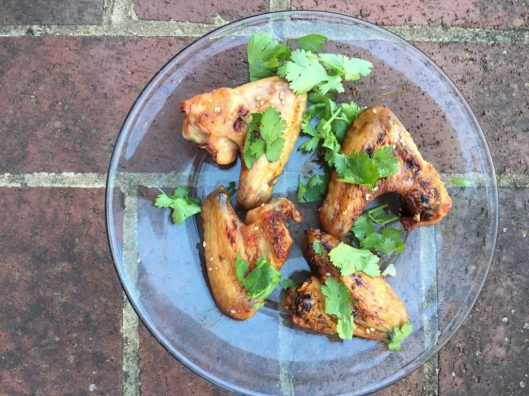
  • Share on Facebook (Opens in new window) Facebook
  • Share on X (Opens in new window) X
  • Share on Pinterest (Opens in new window) Pinterest
  • Email a link to a friend (Opens in new window) Email
  • Share on LinkedIn (Opens in new window) LinkedIn
  • Share on Reddit (Opens in new window) Reddit
  • Share on Tumblr (Opens in new window) Tumblr
  • Print (Opens in new window) Print
  • Share on Telegram (Opens in new window) Telegram
  • Share on WhatsApp (Opens in new window) WhatsApp
Like Loading...

Multiply by a thousand? by 67steffen

23 Monday Oct 2017

Posted by Beekeeping365 in beekeeping

≈ 2 Comments

Tags

beekeeping, ivy, photography

Nice picture from my beekeeping friend and photographer 67steffen:

Our backyard ivy remains abuzz with honeybees. I’d say multiply this shot by a thousand to get a sense of how many bees are at work. Their hive is only a few feet away, so this may explain the high activity.

via Multiply by a thousand? — 67steffen

Feel free to share this on:

  • Share on Facebook (Opens in new window) Facebook
  • Share on X (Opens in new window) X
  • Share on Pinterest (Opens in new window) Pinterest
  • Email a link to a friend (Opens in new window) Email
  • Share on LinkedIn (Opens in new window) LinkedIn
  • Share on Reddit (Opens in new window) Reddit
  • Share on Tumblr (Opens in new window) Tumblr
  • Print (Opens in new window) Print
  • Share on Telegram (Opens in new window) Telegram
  • Share on WhatsApp (Opens in new window) WhatsApp
Like Loading...

Beekeeping Vocabulary – “T” is for…

22 Sunday Oct 2017

Posted by Beekeeping365 in beekeeping, honey

≈ Leave a comment

Tags

beekeeping, honey bees, Tupelo, tupelo honey, Van Morrison

Above: For your entertainment, Van Morrison singing Tupelo Honey

Today’s beekeeping vocabulary word is, “Tupelo.”

Tupelo Honey is the gold standard by which all other honey varieties are measured. For two weeks every spring, White (Ogeche) Tupelo Trees in the Southeastern swamps bloom with fine sunburst-shaped flowers that glisten with nectar.

From Wikipedia:

Tupelo /ˈtuːpɪloʊ/, genus Nyssa /ˈnɪsə/,[3] is a small genus of deciduous trees with alternate, simple leaves.[1][4] It is sometimes included in the subfamily Nyssoideae of the dogwood family, Cornaceae, but is placed by other authorities in the family Nyssaceae.[5] In the APG IV system, it is placed in Nyssaceae.[6]

Most Nyssa species are highly tolerant of wet soils and flooding, and some need such environments as habitat.[7] Some of the species are native to eastern North America from southeastern Canada through the Eastern United States to Mexico and Central America.[1] Other species are found in eastern and southeastern Asia from China south through Indochina to Java and southwest to the Himalayas.[2][4]

Honey

Tupelos of the species Nyssa ogeche are valued as honey plants in the southeastern United States, particularly in the Gulf Coast region.[17] They produce a very light, mild-tasting honey. In Florida, beekeepers keep beehives along the river swamps on platforms or floats during tupelo bloom to produce certified tupelo honey, which commands a high price on the market because of its flavor.[17] Monofloral honey made from the nectar of Nyssa ogeche has such a high ratio of fructose to glucose that it does not crystallize.[18]

The Apalachicola River in the Florida Panhandle is the center for tupelo honey. The honey is produced wherever tupelo trees (three species) bloom in southeastern USA, but the purest and most expensive version (which is certified by pollen analysis) is produced in this valley. In a good harvest year, the tupelo honey crop produced by a group of specialized Florida beekeepers has a value approaching $1,000,000.[19]

Nyssa_sylvatica2
800px-Nyssa_sylvatica_range_map
800px-NyssaSylvaticaTrunk

Source and to read more: Wikipedia

Tupelo Honey is also the fifth studio album by Northern Irish singer-songwriter Van Morrison. It was released in October 1971 by Warner Bros. Records. Morrison had written all of the songs on the album in Woodstock, New York, before his move to Marin County, California, except for “You’re My Woman”, which he wrote during the recording sessions. Recording began at the beginning of the second quarter of 1971 at the Wally Heider Studios, San Francisco. Morrison moved to the Columbia Studios in May 1971 to complete the album.

Feel free to share this on:

  • Share on Facebook (Opens in new window) Facebook
  • Share on X (Opens in new window) X
  • Share on Pinterest (Opens in new window) Pinterest
  • Email a link to a friend (Opens in new window) Email
  • Share on LinkedIn (Opens in new window) LinkedIn
  • Share on Reddit (Opens in new window) Reddit
  • Share on Tumblr (Opens in new window) Tumblr
  • Print (Opens in new window) Print
  • Share on Telegram (Opens in new window) Telegram
  • Share on WhatsApp (Opens in new window) WhatsApp
Like Loading...

Pumpkin Biscuits with Honey Butter by Arl’s World

21 Saturday Oct 2017

Posted by Beekeeping365 in beekeeping, honey, honey recipe, recipe

≈ Leave a comment

Tags

beekeeping, honey, recipe

pumpkin

Love the color of these biscuits and how easy they are to make.  Not only are they a hit for breakfast …but they are also perfect by themselves.  The pumpkin in the biscuits and the honey butter are a great combination to stand alone for a mid morning snack or with afternoon tea.

via Pumpkin Biscuits with Honey Butter — Arl’s World

Feel free to share this on:

  • Share on Facebook (Opens in new window) Facebook
  • Share on X (Opens in new window) X
  • Share on Pinterest (Opens in new window) Pinterest
  • Email a link to a friend (Opens in new window) Email
  • Share on LinkedIn (Opens in new window) LinkedIn
  • Share on Reddit (Opens in new window) Reddit
  • Share on Tumblr (Opens in new window) Tumblr
  • Print (Opens in new window) Print
  • Share on Telegram (Opens in new window) Telegram
  • Share on WhatsApp (Opens in new window) WhatsApp
Like Loading...

Sex between species: what happens when invasive honey bees meet the locals? by Ros Gloag

19 Thursday Oct 2017

Posted by Beekeeping365 in beekeeping, biology, honey bee biology

≈ Leave a comment

Tags

apis cerana, apis melifera, biology, honey bee biology, honey bee genetics

Some social insects have proved to be adept invaders. Assisted by the international trade of the modern world, these species have spread far beyond the ocean and mountain barriers that once determined their distributions. In some cases, these range expansions have brought previously isolated sister species back into contact. What happens when such species try to mate?

We were interested in this question of interspecific mating in the case of two honey bees: the Western honey bee Apis mellifera and the Eastern honey (or hive) bee, Apis cerana. These species diverged from a common ancestor at least 6 million years ago, with A. mellifera native to Europe and Africa and A. cerana native to Asia and India. Western honey bees have of course since been transported, in association with agriculture, to every human-inhabited continent on earth. Eastern honey bees meanwhile, have been quietly expanding their range too in recent decades, invading both Papua New Guinea and Australia. Thus what were allopatric (or separate) ranges for millions of years have suddenly become partially sympatric.

Read entire article at:  Sex between species: what happens when invasive honey bees meet the locals? — insectessociaux

Feel free to share this on:

  • Share on Facebook (Opens in new window) Facebook
  • Share on X (Opens in new window) X
  • Share on Pinterest (Opens in new window) Pinterest
  • Email a link to a friend (Opens in new window) Email
  • Share on LinkedIn (Opens in new window) LinkedIn
  • Share on Reddit (Opens in new window) Reddit
  • Share on Tumblr (Opens in new window) Tumblr
  • Print (Opens in new window) Print
  • Share on Telegram (Opens in new window) Telegram
  • Share on WhatsApp (Opens in new window) WhatsApp
Like Loading...

Bees and Bee Boles at the Lost Gardens of Heligan by Adventuresinbeeland’s Blog

18 Wednesday Oct 2017

Posted by Beekeeping365 in beekeeping, beekeeping history

≈ 2 Comments

Tags

beekeeping history

I just can’t resist sharing this wonderful post by Adventures in Beeland. Facinating stuff!

Today we visited the Lost Gardens of Heligan and saw the old ‘bee boles’. These are recesses in a wall big enough to hold straw skeps. The wall would have provided shelter and typically would have been south or east facing. At Heligan most of the boles have removable wooden doors in place. I would be interested to know how the wooden doors would have been used. I’m guessing they may have been in place over winter to provide extra protection from the wind and rain and then removed come spring?

Read the entire article at:  Bees and Bee Boles at the Lost Gardens of Heligan — Adventuresinbeeland’s Blog

Feel free to share this on:
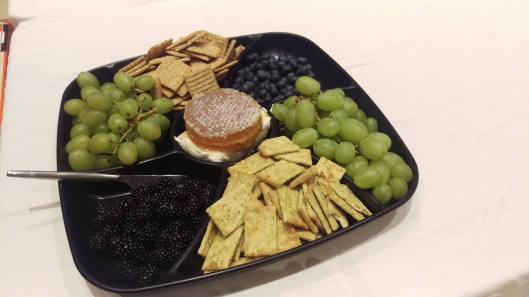
  • Share on Facebook (Opens in new window) Facebook
  • Share on X (Opens in new window) X
  • Share on Pinterest (Opens in new window) Pinterest
  • Email a link to a friend (Opens in new window) Email
  • Share on LinkedIn (Opens in new window) LinkedIn
  • Share on Reddit (Opens in new window) Reddit
  • Share on Tumblr (Opens in new window) Tumblr
  • Print (Opens in new window) Print
  • Share on Telegram (Opens in new window) Telegram
  • Share on WhatsApp (Opens in new window) WhatsApp
Like Loading...

The Science Behind Honey’s Eternal Shelf Life by BEEKeeperTom’s Blog

17 Tuesday Oct 2017

Posted by Beekeeping365 in beekeeping, honey, honey as food

≈ Leave a comment

Tags

beekeeping history, food, honey

Having delivered many talks to non/new beekeepers on honeybees and their importance, the Egyptian tomb honey question is asked more often than not.

Now Georgia (in the Caucasus region of Eurasia, not the US.) appears to trump Egypt by more than 2000 years!

Georgians have long laid claim to being the first winemakers in the world, but could they also be pioneer beekeepers? After a thorough examination of some five-millennia-plus-old jars unearthed in Georgia, archeologists have declared that the artifacts contain the world’s oldest honey.

The honey stains found in the ceramic vessels, found 170 kilometers west of Tbilisi, are believed to be made by bees that buzzed around in Georgia 5,500 years ago — some 2,000 years older than the honey found in Egyptian Pharaoh Tutankhamen’s tomb, which had been considered the oldest before, Rustavi2 proudly pointed out.

As in ancient Egypt, in ancient Georgia, honey was apparently packed for people’s journeys into the afterlife. And more than one type, too — along for the trip were linden, berry, and a meadow-flower variety.

Read the entire article at: The Science Behind Honey’s Eternal Shelf Life — BEEKeeperTom’s Blog

Feel free to share this on:

  • Share on Facebook (Opens in new window) Facebook
  • Share on X (Opens in new window) X
  • Share on Pinterest (Opens in new window) Pinterest
  • Email a link to a friend (Opens in new window) Email
  • Share on LinkedIn (Opens in new window) LinkedIn
  • Share on Reddit (Opens in new window) Reddit
  • Share on Tumblr (Opens in new window) Tumblr
  • Print (Opens in new window) Print
  • Share on Telegram (Opens in new window) Telegram
  • Share on WhatsApp (Opens in new window) WhatsApp
Like Loading...

Beekeeping Vocabulary – “S” is for…

15 Sunday Oct 2017

Posted by Beekeeping365 in beekeeping, equipment

≈ Leave a comment

Tags

bee smoker, beekeeping, equipment, honey bees

Beekeeping_smoker

Photo by Robert Engelhardt, CC BY-SA 3.0

Today’s beekeeping vocabulary word is, “Smoker.”

From Wikipedia:

A bee smoker (usually called simply a smoker) is a device used in beekeeping to calm honey bees. It is designed to generate smoke from the smouldering of various fuels, hence the name.

The fact that smoke calms bees has been known since ancient times; however, the scientific explanation was unknown until the 20th century and is still not fully understood. Smoke masks alarm pheromones[1] which include various chemicals, e.g., isopentyl acetate[2] that are released by guard bees or bees that are injured during a beekeeper’s inspection. The smoke creates an opportunity for the beekeeper to open the beehive and work while the colony’s defensive response is interrupted. In addition, smoke initiates a feeding response in anticipation of possible hive abandonment due to fire.[3][4][5] When a bee consumes honey the bee’s abdomen distends, making it difficult to make the necessary flexes to sting.[citation needed] (The latter has always been the primary explanation of the smoker’s effect, since this behavior of bees is easily observable.)

Smoke is of limited use with a swarm, partly because swarms have no honey stores to feed on. It is usually not needed, either, since swarms tend to be less defensive as they have no home to defend, and a fresh swarm will have fed well at the hive it left behind.

Source and to read more: Wikipedia

Feel free to share this on:

  • Share on Facebook (Opens in new window) Facebook
  • Share on X (Opens in new window) X
  • Share on Pinterest (Opens in new window) Pinterest
  • Email a link to a friend (Opens in new window) Email
  • Share on LinkedIn (Opens in new window) LinkedIn
  • Share on Reddit (Opens in new window) Reddit
  • Share on Tumblr (Opens in new window) Tumblr
  • Print (Opens in new window) Print
  • Share on Telegram (Opens in new window) Telegram
  • Share on WhatsApp (Opens in new window) WhatsApp
Like Loading...

Cinnamon, Honey and Hot Chocolate Recipe by Honey Hunter

14 Saturday Oct 2017

Posted by Beekeeping365 in beekeeping, honey, honey recipe, humor, recipe

≈ Leave a comment

Tags

beekeeping, chocolate, cinnamon, honey, honey recipe, recipe

Every struggled to fall asleep at night? Yep, us too. Here is a soothing cinnamon honey and hot chocolate recipe to relax your body and mind before getting under the covers. 1 tsp cocoa powder ½ tsp cinnamon powder A cup of milk (soy, almond or oat alternatives work just as well) 1 tbsp raw…

Read full recipe here: Cinnamon, Honey and Hot Chocolate Recipe — Honey Hunter

Feel free to share this on:

  • Share on Facebook (Opens in new window) Facebook
  • Share on X (Opens in new window) X
  • Share on Pinterest (Opens in new window) Pinterest
  • Email a link to a friend (Opens in new window) Email
  • Share on LinkedIn (Opens in new window) LinkedIn
  • Share on Reddit (Opens in new window) Reddit
  • Share on Tumblr (Opens in new window) Tumblr
  • Print (Opens in new window) Print
  • Share on Telegram (Opens in new window) Telegram
  • Share on WhatsApp (Opens in new window) WhatsApp
Like Loading...

Former Coal Miners In Southern West Virginia Spent Their Summer Learning How To Keep Bees Thanks To UD’s Debbie Delaney by Bee Culture Magazine

13 Friday Oct 2017

Posted by Beekeeping365 in beekeeping, ecology

≈ Leave a comment

Tags

ecology, entomology, environmental ecology, sustainability, West Virginia

Debbie Delaney


Ed. Note: What’s amazing, at least to me, isn’t so much the shift from coal mining to beekeeping. Rather it’s the reversal of the destruction that had resulted from mining. The return of bees to these areas actually changes the land. The bees support the flora which, in turn, supports various species of animals and other pollinators. A transformation begins to take place with the assistance of the honey bees.

Former coal miners or citizens whose lives have been shaped by the coal mining industry in southern West Virginia spent their summer learning how to establish and operate bee colonies thanks to help from the University of Delaware’s Debbie Delaney.

Delaney, associate professor of entomology in UD’s College of Agriculture and Natural Resources, spent her summer in Summers County working as a consultant through Appalachian Headwaters which is a non-profit organization that formed the Appalachian Beekeeping Collective. Delaney said that the goal was to help get the socioeconomic growth program up and running for displaced miners in 14 counties in southern West Virginia.

“We got about 500 nucleus colonies or nucs, which are small colonies of bees, and a queen and all summer we’ve been erecting bear fences and creating bee yards so we can grow the colonies over the season and get them through the winter,” said Delaney.

Beginning next year, local partners will come on board and get hives which will be a way for them to generate income.

Delaney said that how much income will vary depending on what kind of forage is available during that time of year—and that since the initial installation began after foraging season, they have had to feed the bees a lot to get them up to weight to make it through winter.

Read the full article here: CATCH THE BUZZ – Former Coal Miners In Southern West Virginia Spent Their Summer Learning How To Keep Bees Thanks To UD’s Debbie Delaney — Bee Culture

Feel free to share this on:

  • Share on Facebook (Opens in new window) Facebook
  • Share on X (Opens in new window) X
  • Share on Pinterest (Opens in new window) Pinterest
  • Email a link to a friend (Opens in new window) Email
  • Share on LinkedIn (Opens in new window) LinkedIn
  • Share on Reddit (Opens in new window) Reddit
  • Share on Tumblr (Opens in new window) Tumblr
  • Print (Opens in new window) Print
  • Share on Telegram (Opens in new window) Telegram
  • Share on WhatsApp (Opens in new window) WhatsApp
Like Loading...
← Older posts
Newer posts →
Follow Beekeeping365 on WordPress.com

Enter your email address to follow this blog and receive notifications of new posts by email.

Calendar

August 2026
S M T W T F S
 1
2345678
9101112131415
16171819202122
23242526272829
3031  
« Jul    

Posts by Month:

  • August 2026 (5)
  • July 2026 (1)
  • May 2026 (2)
  • January 2026 (3)
  • July 2025 (1)
  • April 2024 (1)
  • September 2022 (1)
  • July 2022 (1)
  • March 2022 (13)
  • February 2022 (17)
  • January 2022 (4)
  • December 2021 (4)
  • November 2021 (7)
  • October 2021 (1)
  • September 2021 (3)
  • August 2021 (11)
  • July 2021 (18)
  • June 2021 (5)
  • May 2021 (2)
  • April 2021 (9)
  • March 2021 (2)
  • February 2021 (5)
  • January 2021 (16)
  • December 2020 (15)
  • November 2020 (15)
  • October 2020 (11)
  • July 2020 (1)
  • February 2020 (1)
  • March 2019 (2)
  • February 2019 (4)
  • January 2019 (1)
  • December 2018 (10)
  • November 2018 (8)
  • October 2018 (15)
  • September 2018 (25)
  • August 2018 (3)
  • July 2018 (11)
  • June 2018 (27)
  • May 2018 (33)
  • April 2018 (20)
  • March 2018 (20)
  • February 2018 (12)
  • January 2018 (22)
  • December 2017 (18)
  • November 2017 (17)
  • October 2017 (25)
  • September 2017 (27)
  • August 2017 (21)
  • July 2017 (29)
  • June 2017 (28)
  • May 2017 (19)
  • April 2017 (17)
  • March 2017 (19)
  • February 2017 (12)
  • January 2017 (13)
  • December 2016 (5)

Posts by Categories:

  • absconding (1)
  • africanized honey bees (1)
  • apitherapy (1)
  • bee health (6)
  • bee law (2)
  • bee lining (2)
  • bee removals (2)
  • beekeeper (5)
  • beekeeper education (16)
  • beekeeping (613)
    • South Carolina (2)
  • beekeeping author (10)
  • beekeeping books (14)
  • beekeeping calendar (4)
  • beekeeping chores (8)
  • beekeeping equipment (26)
  • beekeeping history (49)
  • beekeeping management (37)
  • beekeeping pest management (8)
  • beekeeping seasons (23)
  • beekeeping vocabulary (16)
  • beeswax (13)
  • biography (4)
  • biology (14)
  • birthday (40)
  • birthdays (34)
  • book review (16)
  • breakfast (1)
  • calendar (4)
  • CCD (1)
  • chores (6)
  • comb (7)
  • comb honey (10)
  • commercial beekeeping (2)
  • cutouts (2)
  • dearth (3)
  • defensiveness (2)
  • diseases (9)
  • drawn comb (6)
  • ecology (4)
  • education (28)
  • equipment (25)
  • extracting (1)
  • fall nectar flow (1)
  • famous beekeepers (27)
  • feeding bees (7)
  • first blog entry (1)
  • folklore (1)
  • food (7)
  • forage (4)
  • hacks (3)
  • hive inspections (8)
  • hive placement (2)
  • hive products (6)
  • honey (90)
  • honey as food (22)
  • honey bee anatomy (3)
  • honey bee behavior (25)
  • honey bee biology (43)
  • honey bee genetics (4)
  • honey bee nutrition (1)
  • honey bee photos (6)
  • Honey Bee Research (1)
  • honey bee vocabulary (12)
  • honey bees (14)
  • honey judging (4)
  • honey recipe (65)
  • humor (13)
  • inspections (10)
  • journal (1)
  • log book (1)
  • making increase (3)
  • management (82)
  • mentoring (2)
  • mites (3)
  • national pollinator week (2)
  • nectar flow (6)
  • nomenclature (1)
  • opinion (8)
  • out yards (1)
  • outyards (1)
  • package bees (1)
  • pears (1)
  • pests (17)
  • plants for bees (3)
  • polish (1)
  • pollen (4)
  • pollination (11)
  • pollinators (7)
  • product review (1)
  • production (1)
  • products (3)
  • propolis (2)
  • queens (17)
  • raw honey (6)
  • recipe (88)
  • removals (1)
  • safety (3)
  • sales (2)
  • season (1)
  • seasons (21)
  • sideliner (1)
  • small hive beetles (1)
  • spring buildup (4)
  • state fair (2)
  • sustainable (7)
  • swarms (27)
  • ursurpation (1)
  • usurpation (1)
  • varroa (21)
  • varroa destructor (12)
  • varroa mites (24)
  • Winter (5)
  • winter solstice (2)
  • woodenware (3)
  • yellow jackets (2)

Sassafras Bee Farm on Facebook

Sassafras Bee Farm on Facebook

Sassafras Bee Farm

Sassafras Bee Farm

Recent Posts

  • Meeting Reality vs What Seems Deserved
  • Everything Starts with a Tasty Meal: The Science Behind a Beekeeper’s Best Pest-Management Insight
  • The Skip in Their Step: Rethinking Oxalic Acid Use
  • Pest Control
  • State Fair Wax Preparation

Beekeeping365 on Facebook

Beekeeping365 on Facebook

Top Posts & Pages

  • The Skip in Their Step: Rethinking Oxalic Acid Use
    The Skip in Their Step: Rethinking Oxalic Acid Use
  • Types of bees by Fat Daddy’s Apiary
    Types of bees by Fat Daddy’s Apiary
  • Meeting Reality vs What Seems Deserved
    Meeting Reality vs What Seems Deserved

Blog Stats

  • 141,410 hits

Website Built with WordPress.com.

  • Subscribe Subscribed
    • Beekeeping365
    • Join 426 other subscribers
    • Already have a WordPress.com account? Log in now.
    • Beekeeping365
    • Subscribe Subscribed
    • Sign up
    • Log in
    • Report this content
    • View site in Reader
    • Manage subscriptions
    • Collapse this bar
Loading Comments...
%d