• Beekeeping Educational Files
  • About
  • Contact
  • Beekeeping365 Blog

Beekeeping365

~ The more I studied beekeeping, the less I knew, until, finally, I knew nothing. But, even though I knew nothing, I still had plenty to unlearn. Charles Martin Simon

Beekeeping365

Author Archives: Beekeeping365

Bee Queen’s Honey Tomato Sauce by The Honey Cottage

30 Saturday Dec 2017

Posted by Beekeeping365 in beekeeping, honey recipe, recipe

≈ Leave a comment

Tags

food, honey recipe, recipe, sauces, spagetti sauce, tomatoe

Mmmmm…there is nothing more amazing then the smell of good food. Going through school one of my favorite classes was soups, sauces, and consumes. I could really put my personality, passion, and love into anything I made. It was like signing my signature through food and showing people what I was really made of. This special honey spaghetti sauce has been one that I have been trying to make versatile for many years. I think I have accomplished that because I like to use it as spaghetti sauce, on meatball subs, for chili, on pizza, and for Frito pies. I hope you enjoy this sauce as much as we do at The Honey Cottage.

Read full article and get the recipe at: Bee Queen’s Honey Tomato Sauce — The Honey Cottage

Feel free to share this on:

  • Share on Facebook (Opens in new window) Facebook
  • Share on X (Opens in new window) X
  • Share on Pinterest (Opens in new window) Pinterest
  • Email a link to a friend (Opens in new window) Email
  • Share on LinkedIn (Opens in new window) LinkedIn
  • Share on Reddit (Opens in new window) Reddit
  • Share on Tumblr (Opens in new window) Tumblr
  • Print (Opens in new window) Print
  • Share on Telegram (Opens in new window) Telegram
  • Share on WhatsApp (Opens in new window) WhatsApp
Like Loading...

Swarm Preparations – Fitness by Jack Lalanne

29 Friday Dec 2017

Posted by Beekeeping365 in beekeeping, swarms

≈ 6 Comments

Tags

honey bee swarms, Jack Lalanne, swarms

I know, you really just want another piece of fruitcake and another glass of egg nog. But you also need to start getting ready for swarm season. So while you’re chillin’ inside on this cold day, here’s Jack Lalanne to help you prepare physically for this coming swarm season. If you’re like me, in just a couple months, you’ll be looking in the trees every time you visit the bee yard. I’m not going to get a sore neck this swarm season by walking around looking for swarms everywhere and thinking I hear one anytime I’m outside. What am I going to do? I’m going to get started with Jack Lalanne now! Fast forward to the 40 second mark for swarm fitness!


Feel free to share this on:

  • Share on Facebook (Opens in new window) Facebook
  • Share on X (Opens in new window) X
  • Share on Pinterest (Opens in new window) Pinterest
  • Email a link to a friend (Opens in new window) Email
  • Share on LinkedIn (Opens in new window) LinkedIn
  • Share on Reddit (Opens in new window) Reddit
  • Share on Tumblr (Opens in new window) Tumblr
  • Print (Opens in new window) Print
  • Share on Telegram (Opens in new window) Telegram
  • Share on WhatsApp (Opens in new window) WhatsApp
Like Loading...

Equipment Requirements for the First-Time Beekeeper

27 Wednesday Dec 2017

Posted by Beekeeping365 in beekeeping, beekeeping equipment, equipment

≈ Leave a comment

Tags

beekeeping

It really is not that complicated -James E. Tew

A beehive is not very complicated. Handy craftsmen frequently build their own in their home shop. Essentially, the common hive requires an outer cover – or simply a roof. Directly beneath that rooftop is an inner cover that is primarily used to prevent bees from soundly gluing the roof to the top edges of the hive box immediately beneath it.  An inner cover is not absolutely necessary, but it is a very useful piece of equipment. Beneath the inner cover is an assemblage of supers and hive bodies that is determined by the annual season.  Some beekeepers use a queen excluding device to restrict the queen to the brood chamber(s). During the spring season, something like two supers and two hive bodies would be common in a typical hive.  Beneath all the various boxes that are being used, a bottom board provides the landing platform for bees and gives a bottom for the hive. Generally a hive stand supports the entire beehive infrastructure. (Hive Diagram from Skinner, Parkman, Studer, and Williams. 20041)

via Equipment Requirements for the First-Time Beekeeper — BEEKeeping: Your First Three Years

Feel free to share this on:

  • Share on Facebook (Opens in new window) Facebook
  • Share on X (Opens in new window) X
  • Share on Pinterest (Opens in new window) Pinterest
  • Email a link to a friend (Opens in new window) Email
  • Share on LinkedIn (Opens in new window) LinkedIn
  • Share on Reddit (Opens in new window) Reddit
  • Share on Tumblr (Opens in new window) Tumblr
  • Print (Opens in new window) Print
  • Share on Telegram (Opens in new window) Telegram
  • Share on WhatsApp (Opens in new window) WhatsApp
Like Loading...

You’re a Bee. This Is What It Feels Like. by Joanna Klein

26 Tuesday Dec 2017

Posted by Beekeeping365 in beekeeping

≈ Leave a comment

Tags

beekeeping

Set your meetings, phone calls and emails aside, at least for the next several minutes. That’s because today you’re a bee.

It’s time to leave your hive, or your underground burrow, and forage for pollen. Pollen is the stuff that flowers use to reproduce. But it’s also essential grub for you, other bees in your hive and your larvae. Once you’ve gathered pollen to take home, you or another bee will mix it with water and flower nectar that other bees have gathered and stored in the hive. But how do you decide which flowers to approach? What draws you in?

In a review published last week in The Journal of Functional Ecology, researchers asked: What is a flower like from a bee’s perspective, and what does the pollinator experience as it gathers pollen? And that’s why we’re talking to you in the second person: to help you understand how bees like you, while hunting for pollen, use all of your senses — taste, touch, smell and more — to decide what to pick up and bring home.

Maybe you’re ready to go find some pollen. But do you even know where to look?

Read full article here: You’re a Bee. This Is What It Feels Like. by By JOANNA KLEIN 

Feel free to share this on:

  • Share on Facebook (Opens in new window) Facebook
  • Share on X (Opens in new window) X
  • Share on Pinterest (Opens in new window) Pinterest
  • Email a link to a friend (Opens in new window) Email
  • Share on LinkedIn (Opens in new window) LinkedIn
  • Share on Reddit (Opens in new window) Reddit
  • Share on Tumblr (Opens in new window) Tumblr
  • Print (Opens in new window) Print
  • Share on Telegram (Opens in new window) Telegram
  • Share on WhatsApp (Opens in new window) WhatsApp
Like Loading...

The Secrets of Royal Jelly – Roald Dahl’s version by wiggledanceforme

24 Sunday Dec 2017

Posted by Beekeeping365 in beekeeping

≈ Leave a comment

Tags

biology, book review, fiction

I have always thought this story is an unsettling mix between fact and fiction. Is the crazy beekeeper Albert Taylor for real? Is he serious about feeding his malnourished daughter tons and tons of royal jelly to make her nice and plump?

Eccentric character Albert Tayler refers to beekeeping magazines and scientific research discussing the great benefits of the magical royal substance. He tries to convince his wife with the “scientific facts”. For a long time I have wondered whether these scientific articles were real, or whether the amazing imagination of Roald Dahl had exceeded to the next level. Today, I want to find out.

Read the full article at: The Secrets of Royal Jelly – Roald Dahl’s version. — wiggledanceforme

And if this bit of fiction spurs an interest in science:

Secret of royal jelly’s super-sizing effect on queen bees appears to be special protein royalactin. 27 April 2011, by Bob Yirka. (PhysOrg.com) — In a paper published in Nature,. Japanese researcher Masaki Kamakura describes a process he used to determine that the protein royalactin, is at least one of the components. of fiction spurs an interest in science: [PDF] Secret of royal jelly’s super-sizing effect on queen bees … – Phys.org 

and

in royal jelly that enables the larvae to develop into queens, but rather the optimally balanced composition of the diet – and the fact that the nurse bees feed the queen bee larvae up to 10 times more frequently. The secret of the caste system in honeybee colonies evidently lies in specific genetic programming of the larva … [PDF]Jelly Fit for a Queen – Max-Planck-Gesellschaft

Feel free to share this on:

  • Share on Facebook (Opens in new window) Facebook
  • Share on X (Opens in new window) X
  • Share on Pinterest (Opens in new window) Pinterest
  • Email a link to a friend (Opens in new window) Email
  • Share on LinkedIn (Opens in new window) LinkedIn
  • Share on Reddit (Opens in new window) Reddit
  • Share on Tumblr (Opens in new window) Tumblr
  • Print (Opens in new window) Print
  • Share on Telegram (Opens in new window) Telegram
  • Share on WhatsApp (Opens in new window) WhatsApp
Like Loading...

Comb Honey Appetizer Dish

23 Saturday Dec 2017

Posted by Beekeeping365 in beekeeping, honey, honey as food, honey recipe

≈ Leave a comment

Tags

appetizer, honey, honey recipe, honeycomb, recipe

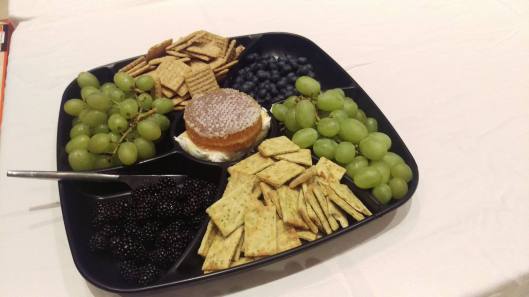
comb_honey_platter

Appetizer platter made for the Mid-State Beekeepers annual holiday potluck.


This year my contribution to the local beekeeping holiday dinner was an appetizer platter featuring this year’s comb honey. The honey was from my yard here and made using the Ross Rounds system. It seemed well received and was cleaned up by the end of dinner.

As pictured, Comb honey sitting atop cream cheese, green seedless grapes, blackberries, blueberries, Townhouse Focaccia Tuscan cheese crackers, Triscuit Fig and Honey crackers.

Feel free to share this on:

  • Share on Facebook (Opens in new window) Facebook
  • Share on X (Opens in new window) X
  • Share on Pinterest (Opens in new window) Pinterest
  • Email a link to a friend (Opens in new window) Email
  • Share on LinkedIn (Opens in new window) LinkedIn
  • Share on Reddit (Opens in new window) Reddit
  • Share on Tumblr (Opens in new window) Tumblr
  • Print (Opens in new window) Print
  • Share on Telegram (Opens in new window) Telegram
  • Share on WhatsApp (Opens in new window) WhatsApp
Like Loading...

Winter Solstice and Honey Bees by settlingforbees

21 Thursday Dec 2017

Posted by Beekeeping365 in beekeeping, beekeeping seasons, honey bee behavior, management, seasons, winter solstice

≈ 1 Comment

Tags

beekeeping, honey bee behavior, management, seasons, solstice

The winter solstice signals more than the first official day of winter.  In the natural world, animals use the changes in available daylight to signal their actions.   Eventually, longer daylight hours will signal song birds to sing more to attract mates and begin laying eggs and dormant plants to emerge and begin anew.  Remarkably, the winter solstice signals honey bees to begin spring preparations now.

Read the full article here: Winter Solstice and Honey Bees — settlingforbees

Feel free to share this on:

  • Share on Facebook (Opens in new window) Facebook
  • Share on X (Opens in new window) X
  • Share on Pinterest (Opens in new window) Pinterest
  • Email a link to a friend (Opens in new window) Email
  • Share on LinkedIn (Opens in new window) LinkedIn
  • Share on Reddit (Opens in new window) Reddit
  • Share on Tumblr (Opens in new window) Tumblr
  • Print (Opens in new window) Print
  • Share on Telegram (Opens in new window) Telegram
  • Share on WhatsApp (Opens in new window) WhatsApp
Like Loading...

Spelling Bees with Uncommon Names by Bad Beekeeping Blog

19 Tuesday Dec 2017

Posted by Beekeeping365 in beekeeping, nomenclature

≈ Leave a comment

Tags

beekeeping, nomenclature

I’m not a grammarian, I don’t have the most hugest vocabulary, and I have been known to produce some pretty bad spells of whetther – but even I appreciate the right word, used and spelt correctly. Without rules, confusion reigns (and rains and rains).  I’m glad when someone points out errors I’ve made – it gives me a chance to learn.

I’m coming back to something I’ve written about before and then I’m moving on to something I’ve never written about.  Honey bee – it really should be two words, not one. I think the single word honeybee is just plain wrong. But I notice that some dictionaries disagree with me. Webster’s, for example.  Webster’s has also allowed yellow jacket instead of yellowjacket, which is just plain ridiculous. But then, Wikipedia also has an entry for ‘yellow jacket’ instead of yellowjacket, so maybe the whole world is coming to a spectacular illiterate end.

(cont.)

Read fully article here: Spelling Bees with Uncommon Names — Bad Beekeeping Blog

Feel free to share this on:

  • Share on Facebook (Opens in new window) Facebook
  • Share on X (Opens in new window) X
  • Share on Pinterest (Opens in new window) Pinterest
  • Email a link to a friend (Opens in new window) Email
  • Share on LinkedIn (Opens in new window) LinkedIn
  • Share on Reddit (Opens in new window) Reddit
  • Share on Tumblr (Opens in new window) Tumblr
  • Print (Opens in new window) Print
  • Share on Telegram (Opens in new window) Telegram
  • Share on WhatsApp (Opens in new window) WhatsApp
Like Loading...

You Know You’re a Beekeeper when…

17 Sunday Dec 2017

Posted by Beekeeping365 in beekeeping, humor

≈ 6 Comments

Tags

beekeeping, humor

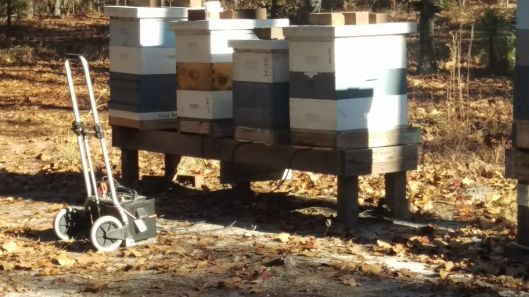
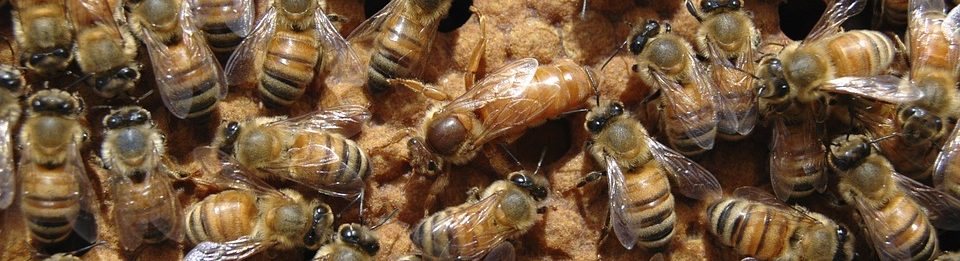
IMAG1739.jpg

You know you’re a beekeeper when… By John Caldeira, with contributions from many others.

The windshield of your vehicle has at least two yellow dots on it.

You have answers ready for questions about Africanized bees and the value of local honey in preventing allergies.

You eagerly await the phone call from the post office asking you to please come pick up your bees.

You check out all the honey labels and prices at the supermarket.

You’ve gone through the supermarket checkout line buying nothing more than a big load of sugar, and maybe some Crisco.

You’ve estimated just how much money you spent to control mites.

You pick up matches at restaurants, even though you don’t smoke.

Your friends and neighbors think you are the answer to every swarm and bees-in-the-wall problem.

You are keenly aware of the first and last freezes of each winter.

There is propolis on the steering wheel of your vehicle and the bottom of your boots.

There is a bucket of something in your garage that can only be good for smoker fuel.

You are called “the Bee Man,” or “the Bee Lady” by a lot of people who don’t know your name.

You know the bloom period of more local flowers than the state horticulturist.

You welcome a rainy weekend if it will stimulate nectar production.

You don’t mind driving home with a few honey bees inside your vehicle.

Your family and friends know exactly what they’re going to get for Christmas.

You don’t mow the lawn because the bees are working the weeds.

You drive down a road and find yourself evaluating the roadside flowers for their honey-producing potential.

You pull over and check the bees on the wildflowers just to see if they are YOUR bees, AND — you can tell the difference.

You come home smelling like a camp fire, and you haven’t been camping.

You saw Ulee’s Gold and didn’t think there were enough shots of the bees.

You overhear your 9 year old daughter explaining to her friends how to tie a trucker’s hitch.

The school principal calls to ask that you never again let your child take a drone tied with a thread to school for show and tell.

You never stop marveling at these wonderful creatures.

Excerpts from the above list were published in American Bee Journal (December, 1998), which prompted the following responses from readers:

You know you’re married to a beekeeper when…

You spend at least one day a week on your hands and knees with a sharp knife scraping wax and propolis off your kitchen floor.

You’ve ever used bee boxes as furniture in your house, for coffee tables, chairs, night stands, and storage boxes.

You mow around mountains of bee equipment that never seems to make it to the barn.

You plan weddings, child birth, surgery and funerals around honey extracting time.

When buying a new truck, your spouse checks weight loads and measures the bed to see how many hives he can fit in it.

You get stung by the bee that was clinging to your husband’s bee suit when you picked it up to wash it.

and from our local discussion group:

You know you’re a beekeeper when the seat of your car or truck has a hole where the hive tool punched through.

If the smell of bananas at your local farm stand sends you into a momentary panic…

You might be a beekeeper if, while cleaning out the garage, you get excited when you find a couple misplaced SHB traps.

You might be a beekeeper if you visit the SC Surplus Salesroom and the only things that interest you are table saws (for cutting boxes), kettles (for melting wax), deep freezers (for freezing frames), and hot water heaters (for that distant honey house).

You watch Ulee’s Gold just to see the shots of the honey bees.

You might be a beekeeper if you go into a manic state of excitement when your spouse reminds you that you left a 50# bag of cane sugar in her car trunk 2 months ago and she’d like it removed.

You look through beekeeping catalogs for beekeeping equipment you think you can make.

When you have more pictures of your bees than of your kids — and justify it by claiming bees only live six weeks, there are different bees in each picture.

When, after being asked how the bees stay warm overwinter for the eighth time, you’ve joked about knitting them sweaters — and someone believed you.

When you finally said, ‘no, they don’t sting me’ because it was faster to say that than spend the time explaining things to non-beekeepers.

The inside of your clothes dryer has propolis spots.

You have to buy a new freezer for your food because the other is full of frames.

When you buy a second dishwasher to put in the garage to clean plastic frames prior to re-waxing because it’s easier than the pressure washer.

Someone gets in the car with you and ask if you had been smoking!

You might be a beekeeper if you consider using Swarm Commander as an aftershave.

You might be a beekeeper if you use a tractor front loader and deer stands to retrieve swarms.

Feel free to share this on:
  • Share on Facebook (Opens in new window) Facebook
  • Share on X (Opens in new window) X
  • Share on Pinterest (Opens in new window) Pinterest
  • Email a link to a friend (Opens in new window) Email
  • Share on LinkedIn (Opens in new window) LinkedIn
  • Share on Reddit (Opens in new window) Reddit
  • Share on Tumblr (Opens in new window) Tumblr
  • Print (Opens in new window) Print
  • Share on Telegram (Opens in new window) Telegram
  • Share on WhatsApp (Opens in new window) WhatsApp
Like Loading...

Napoleon and the Honeybee by Bees on the Roof

15 Friday Dec 2017

Posted by Beekeeping365 in beekeeping, beekeeping history

≈ Leave a comment

Tags

beekeeping, beekeeping history, Coat of Arms, honey bees, Napoleon Bonaparte

Next time you have a reason to check out Napoleon Bonaparte’s coat of arms, look closely at the left hand side. You will see a grouping of honeybees — Napoleon’s choice to represent his imperial rule.

The bee apparently sent several different messages to Napoleon’s constituents. It referred back to earlier French kings who chose the bee as a symbol of immortality and resurrection. The bee is also a nod to French industry where it was incorporated into clothing, curtains, carpets and furniture.

Read the entire blog post here: Napoleon and the Honeybee — Bees on the Roof

Featured image of embroidered bee source: The Honey Bee Conservancy

Feel free to share this on:

  • Share on Facebook (Opens in new window) Facebook
  • Share on X (Opens in new window) X
  • Share on Pinterest (Opens in new window) Pinterest
  • Email a link to a friend (Opens in new window) Email
  • Share on LinkedIn (Opens in new window) LinkedIn
  • Share on Reddit (Opens in new window) Reddit
  • Share on Tumblr (Opens in new window) Tumblr
  • Print (Opens in new window) Print
  • Share on Telegram (Opens in new window) Telegram
  • Share on WhatsApp (Opens in new window) WhatsApp
Like Loading...

Selecting Honey Bee Stock by deltavalleyapiary

14 Thursday Dec 2017

Posted by Beekeeping365 in beekeeping, honey bee biology, honey bee genetics, management

≈ Leave a comment

Tags

African Bee, Apis mellifera, beekeeping, Buckfast bee, Cardovan bee, Carniolan, Caucasian Bee, choosing honey bee stock, German Black Bee, honey bee biology, Italian Bees, management, Minnesota Hygienic Bee, Russian bee, Survivor Stock Bees, Varroa sensitive hygienic (VSH) Bee

In my experience, selecting bee stock is the most important decision when starting in Bees. If you choose the wrong type, you can wind up with an aggressive bee or a disease ridden colony. Here is a quick-start guide to help aid you in your search for the perfect strain for you.

Apis Mellifera is the main scientific classification for European Honey Bees. There are several sub-species and hybrid species available.  We will start our journey with the German Bee.

Read more of this at: Lesson 1: Selecting Honey Bee Stock by  deltavalleyapiary  

Feel free to share this on:

  • Share on Facebook (Opens in new window) Facebook
  • Share on X (Opens in new window) X
  • Share on Pinterest (Opens in new window) Pinterest
  • Email a link to a friend (Opens in new window) Email
  • Share on LinkedIn (Opens in new window) LinkedIn
  • Share on Reddit (Opens in new window) Reddit
  • Share on Tumblr (Opens in new window) Tumblr
  • Print (Opens in new window) Print
  • Share on Telegram (Opens in new window) Telegram
  • Share on WhatsApp (Opens in new window) WhatsApp
Like Loading...

Happy Birthday Emily Dickinson

10 Sunday Dec 2017

Posted by Beekeeping365 in beekeeping history, birthday, birthdays

≈ 1 Comment

Tags

beekeeping history, birthday, Emily Dickinson, The Bee

Happy Birthday Emily Dickinson – Born Dec. 10, 1830

The Bee
By Emily Dickinson

Like trains of cars on tracks of plush
I hear the level bee:
A jar across the flowers goes,
Their velvet masonry
Withstands until the sweet assault
Their chivalry consumes,
While he, victorious, tilts away
To vanquish other blooms.
His feet are shod with gauze,
His helmet is of gold;
His breast, a single onyx
With chrysoprase, inlaid.
His labor is a chant,
His idleness a tune;
Oh, for a bee’s experience
Of clovers and of noon!
…
A team of archaeologists is rediscovering just how extensive Emily Dickinson’s garden was. Historical evidence shows Emily Dickinson’s Garden contained an abundance of blooming flowers. Archaeologists recently uncovered portions of a pathway leading to nineteenth-century flower and vegetable beds.Emily Dickinson – was an American poet born in Amherst, Massachusetts. (December 10, 1830 – May 15, 1886) ~ during her lifetime she “was known more widely as a gardener, perhaps, than as a poet”. Emily Dickinson’s niece, Martha Dickinson Bianchi, remembered “carpets of lily-of-the-valley and pansies, platoons of sweetpeas, hyacinths, enough in May to give all the bees of summer dyspepsia. There were ribbons of peony hedges and drifts of daffodils in season, marigolds to distraction—a butterfly utopia” Archaeology – Remnants of Emily Dickinson’s Gardens Sought

AMHERST, MASSACHUSETTS—Emily Dickinson is known today as one of the greatest poets of the nineteenth century, but in her lifetime she may have been more renowned for her gardening. At her family estate, she helped to tend an orchard, a greenhouse, and an expanse of flower and vegetable gardens. The size of these gardens was dramatically decreased in the decades after Dickinson died in 1886, but now a team of archaeologists is searching for their remnants. Last summer, they uncovered portions of a pathway leading to nineteenth-century flower and vegetable beds. “If we can follow out the historic path to its end, then theoretically we would find the location of past gardens,” Kerry Lynch of Archaeological Services at the University of Massachusetts, Amherst, told the New York Times. If they do locate these gardens, the archaeologists hope to find seeds or other botanical evidence dating back to when Dickinson was alive.

Source:
Archaeology – Remnants of Emily Dickinson’s Gardens Sought
http://www.archaeology.org/news/4458-160513-massachusetts-dickinson-gardens

Emily Dickinson
https://en.wikipedia.org/wiki/Emily_Dickinson


Feel free to share this on:

  • Share on Facebook (Opens in new window) Facebook
  • Share on X (Opens in new window) X
  • Share on Pinterest (Opens in new window) Pinterest
  • Email a link to a friend (Opens in new window) Email
  • Share on LinkedIn (Opens in new window) LinkedIn
  • Share on Reddit (Opens in new window) Reddit
  • Share on Tumblr (Opens in new window) Tumblr
  • Print (Opens in new window) Print
  • Share on Telegram (Opens in new window) Telegram
  • Share on WhatsApp (Opens in new window) WhatsApp
Like Loading...

The Gentle Beekeeper of Rushcreek Twp., Bremen, Ohio

08 Friday Dec 2017

Posted by Beekeeping365 in beekeeping

≈ Leave a comment

An interesting article on beekeeping in an earlier era. Especially a Mr. Abraham Graffis II, beekeeper of Rushcreek Twp.

historicwalker's avatar Diary of a Rural Ohio Nomad

beekeeper_image-1
If a picture is truly worth a thousand words, this sepia portrait could easily provide enough material to compose a thesis on the craft of beekeeping circa 1880.  Represented within this tangible reminder of the not so distant past, are perhaps three generations of a rural family, standing as if at attention, beneath a canopy of shaded woods, awaiting the flash of an antiquated camera. It’s subjects lack the formal conventions of the Victorian Era.as they chose to be depicted in practical attire in lieu of their Sunday best, they appear natural and not stiffly posed before an elaborate backdrop or within a tastefully decorated parlor, but in a natural setting. This historical photo not only has the ability to transport us into a nineteenth century apiary, but it reflects the value that the family placed on beekeeping and their farm. Given the price of a photographer, we can surmise…

View original post 1,323 more words

Feel free to share this on:

  • Share on Facebook (Opens in new window) Facebook
  • Share on X (Opens in new window) X
  • Share on Pinterest (Opens in new window) Pinterest
  • Email a link to a friend (Opens in new window) Email
  • Share on LinkedIn (Opens in new window) LinkedIn
  • Share on Reddit (Opens in new window) Reddit
  • Share on Tumblr (Opens in new window) Tumblr
  • Print (Opens in new window) Print
  • Share on Telegram (Opens in new window) Telegram
  • Share on WhatsApp (Opens in new window) WhatsApp
Like Loading...

Advice for New-Bees by Newbees

08 Friday Dec 2017

Posted by Beekeeping365 in beekeeper education, beekeeping

≈ Leave a comment

Tags

beekeeping, new beekeepers, opinion

westernwilson's avatarNewBees: Beginning Beekeeping

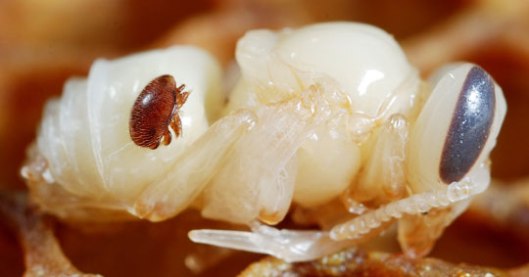
ere varroa_mites Varroa: your new nightmare…

I have been keeping bees now for seven years. In spite of taking courses, reading every book I could, keeping my eyes and ears open, and earning my Master Beekeeper designation, I have made every mistake I could.

Sometimes twice.

And I know more are out there waiting for me to make. Such is beekeeping!

We all have to do things in our own way and in our own time, but for what it is worth, here is what I wish I had known in my first year…

  1. It is easy to keep bees, but difficult to keep them well. For the first year or two, you will open that hive, probably with pounding heart and sweaty palms…and not have a clue what you are seeing. That is normal! Just ask a more experienced beekeeper to come look at your hive(s) with you and…

View original post 311 more words

Feel free to share this on:

  • Share on Facebook (Opens in new window) Facebook
  • Share on X (Opens in new window) X
  • Share on Pinterest (Opens in new window) Pinterest
  • Email a link to a friend (Opens in new window) Email
  • Share on LinkedIn (Opens in new window) LinkedIn
  • Share on Reddit (Opens in new window) Reddit
  • Share on Tumblr (Opens in new window) Tumblr
  • Print (Opens in new window) Print
  • Share on Telegram (Opens in new window) Telegram
  • Share on WhatsApp (Opens in new window) WhatsApp
Like Loading...

Varroa Mite Treatments

05 Tuesday Dec 2017

Posted by Beekeeping365 in beekeeping, varroa mites

≈ Leave a comment

Tags

beekeeping, oxalic acid, varroa destructor, varroa mites

15252690_10209188022712496_4776387091035430116_o


I’m out in the bee yard vaporizing oxalic within the hives to kill Varroa mites today. Oxalic Acid is harsh on humans and I think it probably isn’t exactly kind to honey bees either although they seem to live on the acid side of the ph scale. I’m reminded though, as I vaporize the oxalic acid within each hive, of a time my son Danny had a nasty wart on his foot. We had tried everything, night after night, to remove it. Finally Danny agreed to go to a podiatrist . He thought it was going to be cut off and he was good with that. Instead the doctor applied a strong acid for a couple hours. Over the course of the next week or so it was basically blistered and burned in appearance. We felt badly for Danny but he was okay with it. He wanted it off. Anyway, applying oxalic acid to the bees kind of reminds me of the same. I hope they appreciate the mite removal.

Feel free to share this on:

  • Share on Facebook (Opens in new window) Facebook
  • Share on X (Opens in new window) X
  • Share on Pinterest (Opens in new window) Pinterest
  • Email a link to a friend (Opens in new window) Email
  • Share on LinkedIn (Opens in new window) LinkedIn
  • Share on Reddit (Opens in new window) Reddit
  • Share on Tumblr (Opens in new window) Tumblr
  • Print (Opens in new window) Print
  • Share on Telegram (Opens in new window) Telegram
  • Share on WhatsApp (Opens in new window) WhatsApp
Like Loading...

Bee Book Season by Ron Miksha

04 Monday Dec 2017

Posted by Beekeeping365 in beekeeping, beekeeping author, beekeeping books

≈ Leave a comment

Tags

beekeeping, beekeeping authors, beekeeping books, beekeeping winter activities, famous beekeepers

It’s holiday season. And if you’re normal, you’re thinking about beekeeping books for everyone you know. Even the non-beekeeps. I spent a few minutes today scanning the Amazon.com site to see what was bee hot. Not that the best sellers are always the best books. (My own book fell from the best seller ranks back in 2008, but I think Bad Beekeeping is still an OK gift for your friends.)  But there are some good ideas to get you started.

Read entire article here with booklist for winter reading: Bee Book Season — Bad Beekeeping Blog

Feel free to share this on:

  • Share on Facebook (Opens in new window) Facebook
  • Share on X (Opens in new window) X
  • Share on Pinterest (Opens in new window) Pinterest
  • Email a link to a friend (Opens in new window) Email
  • Share on LinkedIn (Opens in new window) LinkedIn
  • Share on Reddit (Opens in new window) Reddit
  • Share on Tumblr (Opens in new window) Tumblr
  • Print (Opens in new window) Print
  • Share on Telegram (Opens in new window) Telegram
  • Share on WhatsApp (Opens in new window) WhatsApp
Like Loading...

Eating My Way Through the Alphabet: Letter H by snapshotsincursive

02 Saturday Dec 2017

Posted by Beekeeping365 in comb honey, honey, honey recipe

≈ Leave a comment

Tags

beekeeping, comb honey, honey, honey recipe, recipe

What’s Cooking in Gail’s Kitchen? Simple Sensations: Honeycomb Sweet Bee! Raw honeycomb has the most incredible flavor concentrated with the sweet nectar of wildflowers. The first time I tasted it, with a crisp apple slice and a nibble of sharp cheese, I realized what all the buzz was about. This edible mystery is a conversation-starter at every gathering. And a little goes a long way. Store honeycomb at room temperature in a covered container.
HONEYCOMB SWEET BEE
Ingredients:

Raw Honeycomb Square

Granny Smith apples

Cheddar Cheese, Extra Sharp*

Seedless Grapes

Smoked Almonds, whole with sea salt

Multi-Grain Crackers

Read more here:  Eating My Way Through the Alphabet: Letter H — snapshotsincursive

Feel free to share this on:

  • Share on Facebook (Opens in new window) Facebook
  • Share on X (Opens in new window) X
  • Share on Pinterest (Opens in new window) Pinterest
  • Email a link to a friend (Opens in new window) Email
  • Share on LinkedIn (Opens in new window) LinkedIn
  • Share on Reddit (Opens in new window) Reddit
  • Share on Tumblr (Opens in new window) Tumblr
  • Print (Opens in new window) Print
  • Share on Telegram (Opens in new window) Telegram
  • Share on WhatsApp (Opens in new window) WhatsApp
Like Loading...

Kick ’em when they’re down by The Apiarist

30 Thursday Nov 2017

Posted by Beekeeping365 in beekeeping, varroa, varroa destructor, varroa mites

≈ 4 Comments

Tags

beekeeping, fall management, management, varroa, varroa destructor, varroa mites

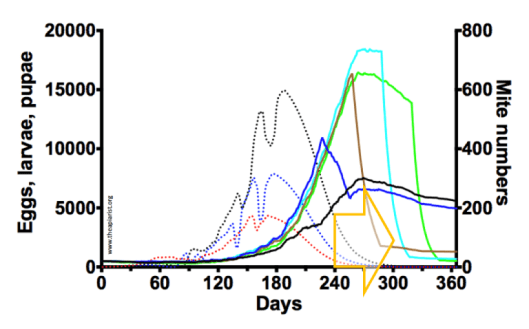
Presentation1-2-768x478

Below is an excellent article by David the Apiarist on understanding the varroa mite population cycle as relates to management of Varroa mites. Understanding the pest is key to maximizing the impact of the treatement. I’ve chosen to crosspost it on this date to benefit my readers in the Midlands of South Carolina as we enter the period of time when the presence of brood is at it’s yearly low. References to the Eagles and Don Henley are entertaining as well.

Why bother treating colonies in midwinter to reduce Varroa infestation? After all, you probably treated them with Apiguard or Apivar (or possibly even Apistan) in late summer or early autumn.

Is there any need to treat again in midwinter?

Yes. To cut a long story short, there are basically two reasons why a midwinter mite treatment almost always makes sense:

  1. Mites will be present. In addition, they’ll be present at a level higher than the minimum level achievable, particularly if you last treated your colonies in late summer, rather than early autumn.
  2. The majority of mites will be phoretic, rather than hiding away in sealed brood. They’re therefore easy to target.

I’ll deal with these in reverse order …

Read the full article at: Kick ’em when they’re down — The Apiarist

Feel free to share this on:

  • Share on Facebook (Opens in new window) Facebook
  • Share on X (Opens in new window) X
  • Share on Pinterest (Opens in new window) Pinterest
  • Email a link to a friend (Opens in new window) Email
  • Share on LinkedIn (Opens in new window) LinkedIn
  • Share on Reddit (Opens in new window) Reddit
  • Share on Tumblr (Opens in new window) Tumblr
  • Print (Opens in new window) Print
  • Share on Telegram (Opens in new window) Telegram
  • Share on WhatsApp (Opens in new window) WhatsApp
Like Loading...

Today we celebrate

30 Thursday Nov 2017

Posted by Beekeeping365 in beekeeping

≈ 4 Comments

Tags

beekeeping, beekeeping calendar

IMAG0207The other day I received an automated congratulations from WordPress.  It was the anniversary of this blog.  A little over a year ago this blog was created with the goal of capturing one complete year of beekeeping – trying to follow the seasons with corresponding articles, pictures, and posts – some original and many shared. My thanks to all of the contributors who allowed me to re-blog their articles along the way.

Where are we going from here? I’ll add more original blog posts and refine some of the current posts to be more informative to visitors. I’d like to add more very short snapshots of my daily interactions and beekeeping preparations. I’ll add more links within the posts for visitors to link to more information. I also hope to add more introductory comments to posts contributed by others. Posts from the past twelve months will be recycled into the current year to continue to provide an ongoing calendar-like diary of the beekeeping year with the improvements mentioned above.

Also in the plans I will be replacing Beekeeping Vocabulary on Sunday’s with Book of the Week. Our Saturday morning recipe post(s) will continue as it has become a favorite of many people and receives a good number of hits each week. Beekeeping Birthdays will also continue as I add more famous beekeepers. Those that wrote non-copyrighted books, pamphlets, and other written works will list links as I am able to find.

I hope you have enjoyed the ride this past year. I have, and in the process learned a great deal from you as well. Thanks!

Feel free to share this on:

  • Share on Facebook (Opens in new window) Facebook
  • Share on X (Opens in new window) X
  • Share on Pinterest (Opens in new window) Pinterest
  • Email a link to a friend (Opens in new window) Email
  • Share on LinkedIn (Opens in new window) LinkedIn
  • Share on Reddit (Opens in new window) Reddit
  • Share on Tumblr (Opens in new window) Tumblr
  • Print (Opens in new window) Print
  • Share on Telegram (Opens in new window) Telegram
  • Share on WhatsApp (Opens in new window) WhatsApp
Like Loading...

A Beekeeper’s Book Review of More Than Honey: The Survival of Bees and the Future of Our World by casula mellita

27 Monday Nov 2017

Posted by Beekeeping365 in beekeeping, book review

≈ Leave a comment

Tags

apiculture, beekeeping, book review

Markus Imhoof outlines many of the problems facing beekeepers today in his book More Than Honey: The Survival of Bees and the Future of Our World, which Imhoof had originally produced as a documentary. His slant is strongly pro-bees and anti-pesticides and, in conjunction, anti-commercial agriculture. In particular, I found his interviews with a large almond farmer and with a migratory beekeeper fascinating both for their own awareness about the problems that their businesses engendered while still maintaining their capitalistic outlook.

Imhoof includes information that is of an introductory nature to a backyard beekeeper, e.g., the breakdown of the various responsibilities by which bees in the hive, before discussing in detail some of the research that is being conducted in laboratories on how bees behave. This chapter was filled with engaging experiments and tidbits. For example, I learned that a particular bee, dubbed Red-23, had observed another’s waggle dance for a food source but had decided to return to its own previous food source, which the researchers had removed. Rather than return to the hive or search for another nearby food source as had been expected, Red-23 flew off to the location described by the other bee in its waggle dance, which Red-23 had observed at the hive. Not only did the bee preserve the memory of the directions in the waggle dance, but Red-23 had sufficient locational memory to fly from its location to the described location without returning to the hive first. Wow!

Read full article here: A Beekeeper’s Book Review of More Than Honey: The Survival of Bees and the Future of Our World — casula mellita

Feel free to share this on:

  • Share on Facebook (Opens in new window) Facebook
  • Share on X (Opens in new window) X
  • Share on Pinterest (Opens in new window) Pinterest
  • Email a link to a friend (Opens in new window) Email
  • Share on LinkedIn (Opens in new window) LinkedIn
  • Share on Reddit (Opens in new window) Reddit
  • Share on Tumblr (Opens in new window) Tumblr
  • Print (Opens in new window) Print
  • Share on Telegram (Opens in new window) Telegram
  • Share on WhatsApp (Opens in new window) WhatsApp
Like Loading...

Werewolves Not Vampires by The Prospect of Bees

26 Sunday Nov 2017

Posted by Beekeeping365 in beekeeping, varroa, varroa destructor, varroa mites

≈ Leave a comment

Tags

entomology, varroa, varroa destructor, varroa mites

Oh, had we but seen this video a few days earlier, in time for Halloween! A three-minute thesis competition is a contest for PhD students in which they condense their thesis into a three minute presentation comprehensible to an intelligent audience lacking any background in the research area. Doctoral candidate Samuel Ramsey was the winner […]

Read the complete article at: Werewolves Not Vampires — The Prospect of Bees

Feel free to share this on:

  • Share on Facebook (Opens in new window) Facebook
  • Share on X (Opens in new window) X
  • Share on Pinterest (Opens in new window) Pinterest
  • Email a link to a friend (Opens in new window) Email
  • Share on LinkedIn (Opens in new window) LinkedIn
  • Share on Reddit (Opens in new window) Reddit
  • Share on Tumblr (Opens in new window) Tumblr
  • Print (Opens in new window) Print
  • Share on Telegram (Opens in new window) Telegram
  • Share on WhatsApp (Opens in new window) WhatsApp
Like Loading...

Honey and ginger remedy by Honey Hunter

25 Saturday Nov 2017

Posted by Beekeeping365 in beekeeping, honey recipe, recipe

≈ 1 Comment

Tags

cough, flu, ginger, home remedy, honey, honey recipe, opinion, recipe

If you are feeling under the weather then look no further than honey and ginger. This combo is an autumnal flu fighter and life enhancer. Other ingredients that I take in abundance this time of the year are garlic and turmeric. However, my love of honey remains enduring. Honey is a favourite, winter, spring, summer or…

Read full article here: Honey and ginger remedy — Honey Hunter

Feel free to share this on:

  • Share on Facebook (Opens in new window) Facebook
  • Share on X (Opens in new window) X
  • Share on Pinterest (Opens in new window) Pinterest
  • Email a link to a friend (Opens in new window) Email
  • Share on LinkedIn (Opens in new window) LinkedIn
  • Share on Reddit (Opens in new window) Reddit
  • Share on Tumblr (Opens in new window) Tumblr
  • Print (Opens in new window) Print
  • Share on Telegram (Opens in new window) Telegram
  • Share on WhatsApp (Opens in new window) WhatsApp
Like Loading...

Baked Honey Bacon Benedict, a Buzzworthy Delight during National Honey Month by From Behind the Pen

25 Saturday Nov 2017

Posted by Beekeeping365 in beekeeping, honey recipe, recipe

≈ Leave a comment

Tags

bacon, benedict, breakfast recipe, honey, honey recipe, recipe

September is National Honey Month and a perfect time to celebrate HONEY! What a fabulous time to promote honey as a natural and beneficial sweetener, bee culture, as well as the beekeeping industry.

Read full article and recipe here: Baked Honey Bacon Benedict, a Buzzworthy Delight during National Honey Month — From Behind the Pen

Feel free to share this on:

  • Share on Facebook (Opens in new window) Facebook
  • Share on X (Opens in new window) X
  • Share on Pinterest (Opens in new window) Pinterest
  • Email a link to a friend (Opens in new window) Email
  • Share on LinkedIn (Opens in new window) LinkedIn
  • Share on Reddit (Opens in new window) Reddit
  • Share on Tumblr (Opens in new window) Tumblr
  • Print (Opens in new window) Print
  • Share on Telegram (Opens in new window) Telegram
  • Share on WhatsApp (Opens in new window) WhatsApp
Like Loading...

Comb Management Part 2: Comb size by Bee Informed Partnership

24 Friday Nov 2017

Posted by Beekeeping365 in beekeeping, comb, comb honey, drawn comb

≈ Leave a comment

Tags

apiculture, beekeeping, drawn comb, management

Artificial foundation was developed shortly after the invention of the removable frames. The first foundation frame was invented by Johannes Mehring in Germany (Graham, 1992). But as more people began producing artificial foundation for Langstroth hives, beekeepers began experimenting with different sized cells.  Fast forward to today; we see both small cell and standard comb, but why is that? Well, that is the topic of part 2 of this 4-part blog series.

  1. History of comb management- https://beeinformed.org/2017/09/14/comb-management-part-1/
  2. Cell size: why so much variation between producers?
  3. Management strategies of foundation
  4. Benefits of replacing old comb

In part 1, I wrote about the history of comb management. In part 2, I decided to write about cell size. Cell size is a highly heated and debated topic that I, as a former commercial beekeeper, did not know of until recently. As a commercial beekeeper, we would buy foundation in bulk, which had a “standard” cell size (5.2mm to 5.4mm). I had zero concept of small versus standard cell size, and I became curious about why beekeepers would use small cell instead of standard cell. So I did what any eager millennial would do- I googled it. I found Michael Bush’s (http://www.bushfarms.com/beesnaturalcell.htm)  and Randy Oliver’s post (http://scientificbeekeeping.com/trial-of-honeysupercell-small-cell-combs/) about small cell size (and I went down a few other rabbit holes), and I instantly became fascinated about small cell size. I hope you enjoy reading this blog as much as I enjoyed writing it.

In 1857, Johannes Mehring produced the first comb foundation (Graham, 1992). His goal was to provide bees with a template, which would encourage bees to build worker comb in the frames. From that day forward, artificial foundation became a part of beekeeping. However, beekeepers began to experiment with different cell sizes. In 1927, Baudoux hypothesized that larger cell sizes would produce larger bees, and based upon anecdotal evidence from his own colonies, he claimed larger bees produced higher yields of honey. Without scientific evidence, manufacturers in Belgium and France began to produce foundation with larger cells. These manufacturers asserted that bees raised in larger cells produced more honey and this concept took off (Grout, 1935). Those fallacies faded into history as cell size become standardized at 5.2mm-5.4mm.

Read full article with more detailed pictures here: Comb Management Part 2: Comb size — Bee Informed Partnership

Feel free to share this on:

  • Share on Facebook (Opens in new window) Facebook
  • Share on X (Opens in new window) X
  • Share on Pinterest (Opens in new window) Pinterest
  • Email a link to a friend (Opens in new window) Email
  • Share on LinkedIn (Opens in new window) LinkedIn
  • Share on Reddit (Opens in new window) Reddit
  • Share on Tumblr (Opens in new window) Tumblr
  • Print (Opens in new window) Print
  • Share on Telegram (Opens in new window) Telegram
  • Share on WhatsApp (Opens in new window) WhatsApp
Like Loading...

Comb Management: Part 1 by Bee Informed Partnership

23 Thursday Nov 2017

Posted by Beekeeping365 in beekeeping, comb, comb honey, drawn comb

≈ Leave a comment

Tags

beekeeping, comb management, drawn comb, honeycomb, management

Comb management is an important aspect of beekeeping, but comb management has not always been a management strategy of beekeepers. Rather, comb management is a fairly new concept. Beekeepers started managing comb with the invention of the Langstroth hive in the 1850’s. Today, comb management is a common practice for beekeepers, and an aspect of beekeeping beekeepers must be cognizant of. Because of the importance of comb management, I am writing 4-part blog-series on the subject. The blog-series is split into 4 parts:

  1. History of comb management
  2. Management strategies of foundation
  3. Cell size: why so much variation between producers?
  4. Benefits of replacing old comb

(cont.)

Read full article with more detailed pictures here:  Comb Management: Part 1 — Bee Informed Partnership

Part Two will be posted tomorrow.

Feel free to share this on:

  • Share on Facebook (Opens in new window) Facebook
  • Share on X (Opens in new window) X
  • Share on Pinterest (Opens in new window) Pinterest
  • Email a link to a friend (Opens in new window) Email
  • Share on LinkedIn (Opens in new window) LinkedIn
  • Share on Reddit (Opens in new window) Reddit
  • Share on Tumblr (Opens in new window) Tumblr
  • Print (Opens in new window) Print
  • Share on Telegram (Opens in new window) Telegram
  • Share on WhatsApp (Opens in new window) WhatsApp
Like Loading...

Honey and Keeping Bees in Slovenia by Tali Landsman

16 Thursday Nov 2017

Posted by Beekeeping365 in beekeeping, beekeeping history

≈ Leave a comment

Tags

bee art, beekeeping, beekeeping history, painted bee hives, Slovenia

SassafrasBeeFarm: Beautiful pictures accompany this blog post titled: “Honey and Keeping Bees in Slovenia.” Take a few minutes out of your day to appreciate the painted beehives and craftsmanship found here by following the link below.

Honey and Keeping Bees in SloveniaWhen I first saw the traditional beehives that beekeepers in Slovenia use to house their bees, I was in awe.

In most places around the world, beehives are kept in wooden boxes, which open from the top.

In some places they paint the wooden boxes in bright colors, to attract the bees.

In Slovenia, a traditional beehive is built like a beautiful cabinet, with many drawers and with a roof, to keep it dry.

The bees create their colonies inside those cabinet drawers, and the fronts of the drawers are elaborately painted with either religious scenes, or scenes from daily life.

The beautiful naive paintings were usually done by professional or semi professional artists, but some also served as church painters, while others were entirely self-taught.

The paintings were done to identify the owners of the beehives, and to bless the production of honey.

View much more of this beautiful artwork here:  Honey and Keeping Bees in Slovenia — Tali Landsman

Feel free to share this on:

  • Share on Facebook (Opens in new window) Facebook
  • Share on X (Opens in new window) X
  • Share on Pinterest (Opens in new window) Pinterest
  • Email a link to a friend (Opens in new window) Email
  • Share on LinkedIn (Opens in new window) LinkedIn
  • Share on Reddit (Opens in new window) Reddit
  • Share on Tumblr (Opens in new window) Tumblr
  • Print (Opens in new window) Print
  • Share on Telegram (Opens in new window) Telegram
  • Share on WhatsApp (Opens in new window) WhatsApp
Like Loading...

Beeswax Candles by the honeybeequeenblog

15 Wednesday Nov 2017

Posted by Beekeeping365 in beekeeping, beeswax

≈ Leave a comment

Tags

beekeeping, beeswax, candle making, products of the hive

This time of year beekeepers have a little more time available for things unrelated to tending the hives. One thing we do is render the excess wax obtained by scraping the various hive parts and the wax associated with extracting honey. Much of this has been saved over the past season, placed in buckets or otherwise stored until we have time to render it for our own use or for sale to others. The article below rings true to the efforts that are made to process this product of the hive and the work involved by both the bees and the beekeeper. Thanks to honeybeequeenblog for the pictures and article.

It’s been a long time since we’ve made any candles. I guess between the farm work, house work and school fun the fun stuff that I love has been pushed to the side. That plus the fact that we really needed a solar wax melter to render some more beeswax. He did get the […]

Read the entire article with lots of pictures here:  Beeswax Candles —

Feel free to share this on:

  • Share on Facebook (Opens in new window) Facebook
  • Share on X (Opens in new window) X
  • Share on Pinterest (Opens in new window) Pinterest
  • Email a link to a friend (Opens in new window) Email
  • Share on LinkedIn (Opens in new window) LinkedIn
  • Share on Reddit (Opens in new window) Reddit
  • Share on Tumblr (Opens in new window) Tumblr
  • Print (Opens in new window) Print
  • Share on Telegram (Opens in new window) Telegram
  • Share on WhatsApp (Opens in new window) WhatsApp
Like Loading...

Getting Bees Ready for Winter by Chautauqua Apiary

13 Monday Nov 2017

Posted by Beekeeping365 in beekeeping, beekeeping management

≈ Leave a comment

Tags

apiculture, beekeeping, fall management, management

The bees are looking good going into winter, been feeding right along as I’m raising bees and growing my apiary. So I still have a lot of brood and the drones are just getting pushed out. So I still have a late oxalic acid vaporizing treatment for mite control to get done on a good day. I have my mice guards on(I like 4″openings), inner covers flipped(hole taped), rigid insulation over the inner covers(outer cover on top), and providing wind breaks at my windy yards. I don’t do any wrapping but I might try bubble insulation on some of my single deeps and nucs to see if it makes a difference.

Read full article here: Getting Bees Ready for Winter — Chautauqua Apiary

Feel free to share this on:

  • Share on Facebook (Opens in new window) Facebook
  • Share on X (Opens in new window) X
  • Share on Pinterest (Opens in new window) Pinterest
  • Email a link to a friend (Opens in new window) Email
  • Share on LinkedIn (Opens in new window) LinkedIn
  • Share on Reddit (Opens in new window) Reddit
  • Share on Tumblr (Opens in new window) Tumblr
  • Print (Opens in new window) Print
  • Share on Telegram (Opens in new window) Telegram
  • Share on WhatsApp (Opens in new window) WhatsApp
Like Loading...

Chicken with tomatoes and honey by My Mediterranean Recipes

11 Saturday Nov 2017

Posted by Beekeeping365 in beekeeping, honey recipe, recipe

≈ Leave a comment

Tags

almonds, ginger cinnamon, honey, honey recipe, recipe, tomatoes

Put all the ingredients except the honey, almonds and sesame seeds in a large pan. Cook gently, covered turning the chicken gently until the flesh is tender – actually I browned the chicken thighs first.

Remove the chicken and reduce the sauce until very thick but take care not to burn. Stir in the honey, return the chicken and heat through. Serve covered with sauce and sprinkled with sesame seeds and almonds.

For full recipe with ingredients: Chicken with tomatoes and honey — My Mediterranean Recipes

Feel free to share this on:

  • Share on Facebook (Opens in new window) Facebook
  • Share on X (Opens in new window) X
  • Share on Pinterest (Opens in new window) Pinterest
  • Email a link to a friend (Opens in new window) Email
  • Share on LinkedIn (Opens in new window) LinkedIn
  • Share on Reddit (Opens in new window) Reddit
  • Share on Tumblr (Opens in new window) Tumblr
  • Print (Opens in new window) Print
  • Share on Telegram (Opens in new window) Telegram
  • Share on WhatsApp (Opens in new window) WhatsApp
Like Loading...

How should we train the newbees? by Rusty

10 Friday Nov 2017

Posted by Beekeeping365 in beekeeper education, beekeeping, beekeeping equipment, book review, equipment

≈ Leave a comment

Tags

beekeepers, book review, equipment, varroa mites

Tis the season. My inbox is flush with “amazing” deals. Unfortunately, many of the hard-sell marketers are heading straight for the wallet of the soon-to-be new beekeeper. I’ve watched wannabees, still unable to tell a honey bee from a cockroach, buying specialty hives, extractors, and vaporizers so they will be ready when their bees arrive.

The marketers are slick, many offering “free” courses with anywhere from a dozen to 150 lessons to help get you started. Of course, this is nothing new. I first complained about the “lesson plan” back in 2010 when I saw poorly structured tutorials, each designed to sell you one more thing.

How much stuff do you really need?

Okay, I’m not a minimalist. I find that tinkering with hive design, equipment, gadgets, and technology is enormously fun and educational. On the other hand, you can be a first-rate beekeeper without breaking the bank. No one should be guilted into buying something he can’t afford or doesn’t need. Your need for equipment will evolve as your hobby expands, but purchasing should not be rushed or haphazard.

And all those lessons? How discouraging! A hundred lessons on any subject would make me run. Instead, I recommend that beginners read two good books: one that covers basic beekeeping practices and one dedicated to honey bee biology. My recommendation for the basics is either Simple, Smart Beekeeping by Kirsten and Michael Traynor or The Beekeeper’s Handbook by Diana Sammataro and Alphonse Avitabile. If you are a visual learner, the full-color photos in the Traynor book could not be better. For honey bee biology, nothing comes close to Honey-Maker by Rosanna Mattingly. I refer to it constantly.

Read full article here: How should we train the newbees? — Honey Bee Suite

Feel free to share this on:

  • Share on Facebook (Opens in new window) Facebook
  • Share on X (Opens in new window) X
  • Share on Pinterest (Opens in new window) Pinterest
  • Email a link to a friend (Opens in new window) Email
  • Share on LinkedIn (Opens in new window) LinkedIn
  • Share on Reddit (Opens in new window) Reddit
  • Share on Tumblr (Opens in new window) Tumblr
  • Print (Opens in new window) Print
  • Share on Telegram (Opens in new window) Telegram
  • Share on WhatsApp (Opens in new window) WhatsApp
Like Loading...

A Potential New Tool in the Battle Against a Bee-Killing Bacteria by Meredith Swett Walker

09 Thursday Nov 2017

Posted by Beekeeping365 in beekeeping, diseases

≈ Leave a comment

Tags

AFB, American Foulbrood, Apis mellifera, beekeeping, diseases, honey bee diseases

American foulbrood is a bacterial disease afflicting honey bee (Apis mellifera) colonies. The Paenibacillus larvae bacterium germinates in the gut of a honey bee larva; dead larvae often decompose into a brown, gooey substance. New research suggests certain analogs to a molecule called indole may be useful in blocking the bacteria’s germination. (Photo credit: Wikimedia Commons/Tanarus, CC BY-SA 3.0)


It’s a beekeeper’s nightmare: She lifts the lid on her carefully tended hive and is greeted with a whiff of rotting flesh. Further inspection finds that the young bees of the colony, who should be plump, pearly-white larvae, have melted into a puddle of brownish goo at the bottom of their cells. This colony is infected with American foulbrood disease—most likely a death sentence.

Meredith Swett Walker

If she’s very lucky, she may be able to save the colony with a course of antibiotics, but the drugs don’t always work, and the disease is highly contagious. To save nearby colonies from infection, the beekeeper may be required burn the entire hive, bees and all.

American foulbrood disease, or AFB, is caused by the Paenibacillus larvae bacterium, a difficult-to-control and highly destructive pathogen found worldwide. In a study published last week in the open-access Journal of Insect Science, Israel Alvarado, Ph.D., and colleagues at the University of Nevada, Las Vegas (UNLV), explore whether blocking the germination of P. larvae spores is an effective way to treat this infection.

Read full article at: A Potential New Tool in the Battle Against a Bee-Killing Bacteria — Entomology Today

Feel free to share this on:

  • Share on Facebook (Opens in new window) Facebook
  • Share on X (Opens in new window) X
  • Share on Pinterest (Opens in new window) Pinterest
  • Email a link to a friend (Opens in new window) Email
  • Share on LinkedIn (Opens in new window) LinkedIn
  • Share on Reddit (Opens in new window) Reddit
  • Share on Tumblr (Opens in new window) Tumblr
  • Print (Opens in new window) Print
  • Share on Telegram (Opens in new window) Telegram
  • Share on WhatsApp (Opens in new window) WhatsApp
Like Loading...

Winter for the beekeeper: It’s time to think about spring, summer by Blount County Beekeepers Association

02 Thursday Nov 2017

Posted by Beekeeping365 in beekeeping, beekeeping seasons, management, products, seasons

≈ Leave a comment

Tags

beekeeping, management, seasons

From Blount County Beekeepers Association:

With winter approaching (in some places it’s already here), the beekeeper has two jobs:

  • Make sure the bees in your hives have plenty of food.Spring is the season the beekeeper should be planning for now.
  • Think about about what’s going to happen in your apiary in the spring and summer.

Neither of these jobs involves a lot of work at this point, but they shouldn’t be neglected. The main characteristic of good beekeepers is that they think ahead — one or two seasons ahead.

Now is the time think about your bees, the equipment you have and the general environment that will confront the bees when they start flying in the spring.

Will you need to order packages of bees or nucs to rebuild your apiary in the spring? That, of course, depends on how many of your hives make it through the winter. We don’t know what will happen in that regard at the moment, unless you have already experienced losses.

What we do know is that in Tennessee the winter losses for beekeepers have been about 30 percent during the past few winters. The smart thing then is to plan for that kind of loss and hope it doesn’t happen. Now is the time to get in touch with the folks who supply you with bees and see what their availability will be. Most of those people are starting a list now, and your name should be on it.

We’ll have more to say later about equipment and environment.

Right now, you should plan for some losses and think about how you will replenish your apiary.

Source: Winter for the beekeeper: It’s time to think about spring, summer

Feel free to share this on:

  • Share on Facebook (Opens in new window) Facebook
  • Share on X (Opens in new window) X
  • Share on Pinterest (Opens in new window) Pinterest
  • Email a link to a friend (Opens in new window) Email
  • Share on LinkedIn (Opens in new window) LinkedIn
  • Share on Reddit (Opens in new window) Reddit
  • Share on Tumblr (Opens in new window) Tumblr
  • Print (Opens in new window) Print
  • Share on Telegram (Opens in new window) Telegram
  • Share on WhatsApp (Opens in new window) WhatsApp
Like Loading...

Telling the Bees by Deborah Diggs

31 Tuesday Oct 2017

Posted by Beekeeping365 in beekeeping, folklore

≈ Leave a comment

Tags

beekeeping, death, folklore, telling the bees

12038100_10153746778124736_6936598331526167183_n

It fell to me to tell the bees,
though I had wanted another duty—
to be the scribbler at his death,
there chart the third day’s quickening.
But fate said no, it falls to you
to tell the bees, the middle daughter.
So it was written at your birth.

(cont.)

Read full poem here:  “Telling the Bees” by Deborah Digges — Words for the Year

From Trapeze by Deborah Digges.

Feel free to share this on:

  • Share on Facebook (Opens in new window) Facebook
  • Share on X (Opens in new window) X
  • Share on Pinterest (Opens in new window) Pinterest
  • Email a link to a friend (Opens in new window) Email
  • Share on LinkedIn (Opens in new window) LinkedIn
  • Share on Reddit (Opens in new window) Reddit
  • Share on Tumblr (Opens in new window) Tumblr
  • Print (Opens in new window) Print
  • Share on Telegram (Opens in new window) Telegram
  • Share on WhatsApp (Opens in new window) WhatsApp
Like Loading...

The Etruscans Were Expert Beekeepers, Ancient Honeycombs Suggest by Rossella Lorenzi

30 Monday Oct 2017

Posted by Beekeeping365 in beekeeping, beekeeping history

≈ Leave a comment

Tags

beekeeping, beekeeping history, food

The charred remains of 2,500-year-old honeycombs, as well as other beekeeping artifacts, have been discovered in an Etruscan workshop in northern Italy.

The findings included the remains of a unique grapevine honey produced by traveling beekeepers along rivers, according to a new study.

“The importance of beekeeping in the ancient world is well known through an abundance of iconographic, literary, archaeometric and ethnographic [or cultural] sources,” Lorenzo Castellano, a graduate student at the Institute for the Study of the Ancient World at New York University and first author of the new study, told Live Science. (In archaeometry, scientists use physical, chemical and mathematical analyses to study archaeological sites.)

Even so, since honeycombs are perishable, direct fossil evidence of them is “extremely rare,” he added.

Read full article here: The Etruscans Were Expert Beekeepers, Ancient Honeycombs Suggest by Rossella Lorenzi

Feel free to share this on:
  • Share on Facebook (Opens in new window) Facebook
  • Share on X (Opens in new window) X
  • Share on Pinterest (Opens in new window) Pinterest
  • Email a link to a friend (Opens in new window) Email
  • Share on LinkedIn (Opens in new window) LinkedIn
  • Share on Reddit (Opens in new window) Reddit
  • Share on Tumblr (Opens in new window) Tumblr
  • Print (Opens in new window) Print
  • Share on Telegram (Opens in new window) Telegram
  • Share on WhatsApp (Opens in new window) WhatsApp
Like Loading...

Roasted Sweet Potatoes with Honey and Cinnamon

28 Saturday Oct 2017

Posted by Beekeeping365 in beekeeping, honey, honey recipe, recipe

≈ Leave a comment

Tags

beekeeping, honey, recipe

Photo credit: Abigail Wallace

This time of year we have an abundance of sweet potatoes at our local farmer’s market. We love them; our dogs love them. It’s quite simple to place a sweet potatoes in water and boil, or the microwave, or oven. I like mine slightly undercooked. Upon removal the skin should slide off. Dice the potato and toss with some honey and cinnamon. I recommend sitting on your porch with a cup of coffee to compliment the experience. Enjoy!


Honey Cinnamon Roasted Sweet Potatoes

via:  Honey Cinnamon Roasted Sweet Potatoes — Abigail Wallace

Feel free to share this on:

  • Share on Facebook (Opens in new window) Facebook
  • Share on X (Opens in new window) X
  • Share on Pinterest (Opens in new window) Pinterest
  • Email a link to a friend (Opens in new window) Email
  • Share on LinkedIn (Opens in new window) LinkedIn
  • Share on Reddit (Opens in new window) Reddit
  • Share on Tumblr (Opens in new window) Tumblr
  • Print (Opens in new window) Print
  • Share on Telegram (Opens in new window) Telegram
  • Share on WhatsApp (Opens in new window) WhatsApp
Like Loading...

Michael Palmer and The Sustainable Apiary by Here We Bee

27 Friday Oct 2017

Posted by Beekeeping365 in beekeeping, beekeeping management, management

≈ Leave a comment

Tags

beekeeping, management, Michael Palmer, sustainability, sustainable apiary

Palmer has a direct, no-nonsense speaking style that gets right to the point and stays there. In the course of his decades long career in beekeeping he has listened, tested and learned…and fortunately for the rest of us is generous in passing along his field-tested findings.

It would not be possible to set down his points in detail: Palmer simply presented too much that was useful, often ground-breaking and always interesting. Hence the links, below, to his full lectures. But I will try to summarize his famous “Sustainable Apiary” approach and touch on any topic that as a beekeeper I found particularly valuable.

Read the full article here: Michael Palmer and The Sustainable Apiary — Here We Bee

Feel free to share this on:
  • Share on Facebook (Opens in new window) Facebook
  • Share on X (Opens in new window) X
  • Share on Pinterest (Opens in new window) Pinterest
  • Email a link to a friend (Opens in new window) Email
  • Share on LinkedIn (Opens in new window) LinkedIn
  • Share on Reddit (Opens in new window) Reddit
  • Share on Tumblr (Opens in new window) Tumblr
  • Print (Opens in new window) Print
  • Share on Telegram (Opens in new window) Telegram
  • Share on WhatsApp (Opens in new window) WhatsApp
Like Loading...

Preparing for Winter by Lazer Creek Apiary

26 Thursday Oct 2017

Posted by Beekeeping365 in beekeeping, beekeeping management, beekeeping seasons, management

≈ Leave a comment

Tags

beekeeping, fall management, management, seasons, winter management

It’s only 62 degrees this morning, but bees in the English hive are already out foraging.  It’s no wonder that these bees are well set up for the cold weather that is just around the corner;  of all our hives, they have the most honey stored.    This is our go-to hive for requeening because the colony has always been friendly, the queens have always been great producers, the bees are hygienic,  and the bees are the first out the door to forage.

At the other end of the spectrum, we have a hive that has no stored resources despite all the goldenrod that surrounds the apiary.   Our records show that they haven’t stored any resources since we brought them back from the sunflower patch — and they had nothing then.    If I’d been able to find the queen yesterday, I’d have combined them with another weak but productive hive.  Those guys have increased their numbers by a full frame of bees and they have nectar and bee bread stored.   I can’t risk combining them without eliminating the lazy-genetics queen, so they have two weeks to pick up their game!   We put a candy board on the hive yesterday (and reduced the entrance down to a single bee width), so maybe that will help them.   Maybe it will make them more dependent on us.

Read full article here: Preparing for Winter — Lazer Creek Apiary Blog

Feel free to share this on:

  • Share on Facebook (Opens in new window) Facebook
  • Share on X (Opens in new window) X
  • Share on Pinterest (Opens in new window) Pinterest
  • Email a link to a friend (Opens in new window) Email
  • Share on LinkedIn (Opens in new window) LinkedIn
  • Share on Reddit (Opens in new window) Reddit
  • Share on Tumblr (Opens in new window) Tumblr
  • Print (Opens in new window) Print
  • Share on Telegram (Opens in new window) Telegram
  • Share on WhatsApp (Opens in new window) WhatsApp
Like Loading...

Multiply by a thousand? by 67steffen

23 Monday Oct 2017

Posted by Beekeeping365 in beekeeping

≈ 2 Comments

Tags

beekeeping, ivy, photography

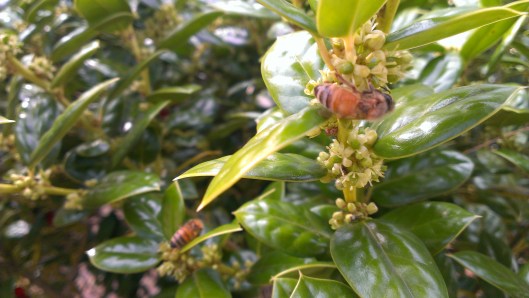
Nice picture from my beekeeping friend and photographer 67steffen:

Our backyard ivy remains abuzz with honeybees. I’d say multiply this shot by a thousand to get a sense of how many bees are at work. Their hive is only a few feet away, so this may explain the high activity.

via Multiply by a thousand? — 67steffen

Feel free to share this on:

  • Share on Facebook (Opens in new window) Facebook
  • Share on X (Opens in new window) X
  • Share on Pinterest (Opens in new window) Pinterest
  • Email a link to a friend (Opens in new window) Email
  • Share on LinkedIn (Opens in new window) LinkedIn
  • Share on Reddit (Opens in new window) Reddit
  • Share on Tumblr (Opens in new window) Tumblr
  • Print (Opens in new window) Print
  • Share on Telegram (Opens in new window) Telegram
  • Share on WhatsApp (Opens in new window) WhatsApp
Like Loading...

Pumpkin Biscuits with Honey Butter by Arl’s World

21 Saturday Oct 2017

Posted by Beekeeping365 in beekeeping, honey, honey recipe, recipe

≈ Leave a comment

Tags

beekeeping, honey, recipe

pumpkin

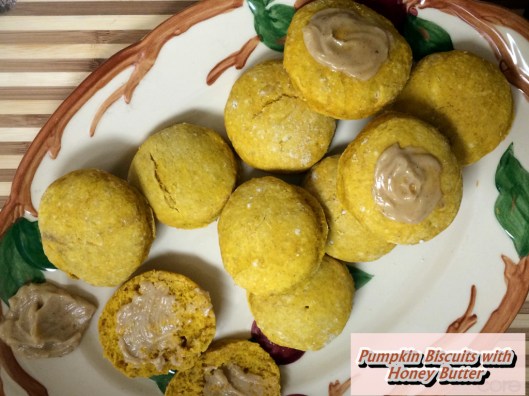
Love the color of these biscuits and how easy they are to make.  Not only are they a hit for breakfast …but they are also perfect by themselves.  The pumpkin in the biscuits and the honey butter are a great combination to stand alone for a mid morning snack or with afternoon tea.

via Pumpkin Biscuits with Honey Butter — Arl’s World

Feel free to share this on:

  • Share on Facebook (Opens in new window) Facebook
  • Share on X (Opens in new window) X
  • Share on Pinterest (Opens in new window) Pinterest
  • Email a link to a friend (Opens in new window) Email
  • Share on LinkedIn (Opens in new window) LinkedIn
  • Share on Reddit (Opens in new window) Reddit
  • Share on Tumblr (Opens in new window) Tumblr
  • Print (Opens in new window) Print
  • Share on Telegram (Opens in new window) Telegram
  • Share on WhatsApp (Opens in new window) WhatsApp
Like Loading...

Sex between species: what happens when invasive honey bees meet the locals? by Ros Gloag

19 Thursday Oct 2017

Posted by Beekeeping365 in beekeeping, biology, honey bee biology

≈ Leave a comment

Tags

apis cerana, apis melifera, biology, honey bee biology, honey bee genetics

Some social insects have proved to be adept invaders. Assisted by the international trade of the modern world, these species have spread far beyond the ocean and mountain barriers that once determined their distributions. In some cases, these range expansions have brought previously isolated sister species back into contact. What happens when such species try to mate?

We were interested in this question of interspecific mating in the case of two honey bees: the Western honey bee Apis mellifera and the Eastern honey (or hive) bee, Apis cerana. These species diverged from a common ancestor at least 6 million years ago, with A. mellifera native to Europe and Africa and A. cerana native to Asia and India. Western honey bees have of course since been transported, in association with agriculture, to every human-inhabited continent on earth. Eastern honey bees meanwhile, have been quietly expanding their range too in recent decades, invading both Papua New Guinea and Australia. Thus what were allopatric (or separate) ranges for millions of years have suddenly become partially sympatric.

Read entire article at:  Sex between species: what happens when invasive honey bees meet the locals? — insectessociaux

Feel free to share this on:

  • Share on Facebook (Opens in new window) Facebook
  • Share on X (Opens in new window) X
  • Share on Pinterest (Opens in new window) Pinterest
  • Email a link to a friend (Opens in new window) Email
  • Share on LinkedIn (Opens in new window) LinkedIn
  • Share on Reddit (Opens in new window) Reddit
  • Share on Tumblr (Opens in new window) Tumblr
  • Print (Opens in new window) Print
  • Share on Telegram (Opens in new window) Telegram
  • Share on WhatsApp (Opens in new window) WhatsApp
Like Loading...

Bees and Bee Boles at the Lost Gardens of Heligan by Adventuresinbeeland’s Blog

18 Wednesday Oct 2017

Posted by Beekeeping365 in beekeeping, beekeeping history

≈ 2 Comments

Tags

beekeeping history

I just can’t resist sharing this wonderful post by Adventures in Beeland. Facinating stuff!

Today we visited the Lost Gardens of Heligan and saw the old ‘bee boles’. These are recesses in a wall big enough to hold straw skeps. The wall would have provided shelter and typically would have been south or east facing. At Heligan most of the boles have removable wooden doors in place. I would be interested to know how the wooden doors would have been used. I’m guessing they may have been in place over winter to provide extra protection from the wind and rain and then removed come spring?

Read the entire article at:  Bees and Bee Boles at the Lost Gardens of Heligan — Adventuresinbeeland’s Blog

Feel free to share this on:

  • Share on Facebook (Opens in new window) Facebook
  • Share on X (Opens in new window) X
  • Share on Pinterest (Opens in new window) Pinterest
  • Email a link to a friend (Opens in new window) Email
  • Share on LinkedIn (Opens in new window) LinkedIn
  • Share on Reddit (Opens in new window) Reddit
  • Share on Tumblr (Opens in new window) Tumblr
  • Print (Opens in new window) Print
  • Share on Telegram (Opens in new window) Telegram
  • Share on WhatsApp (Opens in new window) WhatsApp
Like Loading...

The Science Behind Honey’s Eternal Shelf Life by BEEKeeperTom’s Blog

17 Tuesday Oct 2017

Posted by Beekeeping365 in beekeeping, honey, honey as food

≈ Leave a comment

Tags

beekeeping history, food, honey

Having delivered many talks to non/new beekeepers on honeybees and their importance, the Egyptian tomb honey question is asked more often than not.

Now Georgia (in the Caucasus region of Eurasia, not the US.) appears to trump Egypt by more than 2000 years!

Georgians have long laid claim to being the first winemakers in the world, but could they also be pioneer beekeepers? After a thorough examination of some five-millennia-plus-old jars unearthed in Georgia, archeologists have declared that the artifacts contain the world’s oldest honey.

The honey stains found in the ceramic vessels, found 170 kilometers west of Tbilisi, are believed to be made by bees that buzzed around in Georgia 5,500 years ago — some 2,000 years older than the honey found in Egyptian Pharaoh Tutankhamen’s tomb, which had been considered the oldest before, Rustavi2 proudly pointed out.

As in ancient Egypt, in ancient Georgia, honey was apparently packed for people’s journeys into the afterlife. And more than one type, too — along for the trip were linden, berry, and a meadow-flower variety.

Read the entire article at: The Science Behind Honey’s Eternal Shelf Life — BEEKeeperTom’s Blog

Feel free to share this on:

  • Share on Facebook (Opens in new window) Facebook
  • Share on X (Opens in new window) X
  • Share on Pinterest (Opens in new window) Pinterest
  • Email a link to a friend (Opens in new window) Email
  • Share on LinkedIn (Opens in new window) LinkedIn
  • Share on Reddit (Opens in new window) Reddit
  • Share on Tumblr (Opens in new window) Tumblr
  • Print (Opens in new window) Print
  • Share on Telegram (Opens in new window) Telegram
  • Share on WhatsApp (Opens in new window) WhatsApp
Like Loading...

Cinnamon, Honey and Hot Chocolate Recipe by Honey Hunter

14 Saturday Oct 2017

Posted by Beekeeping365 in beekeeping, honey, honey recipe, humor, recipe

≈ Leave a comment

Tags

beekeeping, chocolate, cinnamon, honey, honey recipe, recipe

Every struggled to fall asleep at night? Yep, us too. Here is a soothing cinnamon honey and hot chocolate recipe to relax your body and mind before getting under the covers. 1 tsp cocoa powder ½ tsp cinnamon powder A cup of milk (soy, almond or oat alternatives work just as well) 1 tbsp raw…

Read full recipe here: Cinnamon, Honey and Hot Chocolate Recipe — Honey Hunter

Feel free to share this on:

  • Share on Facebook (Opens in new window) Facebook
  • Share on X (Opens in new window) X
  • Share on Pinterest (Opens in new window) Pinterest
  • Email a link to a friend (Opens in new window) Email
  • Share on LinkedIn (Opens in new window) LinkedIn
  • Share on Reddit (Opens in new window) Reddit
  • Share on Tumblr (Opens in new window) Tumblr
  • Print (Opens in new window) Print
  • Share on Telegram (Opens in new window) Telegram
  • Share on WhatsApp (Opens in new window) WhatsApp
Like Loading...

Former Coal Miners In Southern West Virginia Spent Their Summer Learning How To Keep Bees Thanks To UD’s Debbie Delaney by Bee Culture Magazine

13 Friday Oct 2017

Posted by Beekeeping365 in beekeeping, ecology

≈ Leave a comment

Tags

ecology, entomology, environmental ecology, sustainability, West Virginia

Debbie Delaney


Ed. Note: What’s amazing, at least to me, isn’t so much the shift from coal mining to beekeeping. Rather it’s the reversal of the destruction that had resulted from mining. The return of bees to these areas actually changes the land. The bees support the flora which, in turn, supports various species of animals and other pollinators. A transformation begins to take place with the assistance of the honey bees.

Former coal miners or citizens whose lives have been shaped by the coal mining industry in southern West Virginia spent their summer learning how to establish and operate bee colonies thanks to help from the University of Delaware’s Debbie Delaney.

Delaney, associate professor of entomology in UD’s College of Agriculture and Natural Resources, spent her summer in Summers County working as a consultant through Appalachian Headwaters which is a non-profit organization that formed the Appalachian Beekeeping Collective. Delaney said that the goal was to help get the socioeconomic growth program up and running for displaced miners in 14 counties in southern West Virginia.

“We got about 500 nucleus colonies or nucs, which are small colonies of bees, and a queen and all summer we’ve been erecting bear fences and creating bee yards so we can grow the colonies over the season and get them through the winter,” said Delaney.

Beginning next year, local partners will come on board and get hives which will be a way for them to generate income.

Delaney said that how much income will vary depending on what kind of forage is available during that time of year—and that since the initial installation began after foraging season, they have had to feed the bees a lot to get them up to weight to make it through winter.

Read the full article here: CATCH THE BUZZ – Former Coal Miners In Southern West Virginia Spent Their Summer Learning How To Keep Bees Thanks To UD’s Debbie Delaney — Bee Culture

Feel free to share this on:

  • Share on Facebook (Opens in new window) Facebook
  • Share on X (Opens in new window) X
  • Share on Pinterest (Opens in new window) Pinterest
  • Email a link to a friend (Opens in new window) Email
  • Share on LinkedIn (Opens in new window) LinkedIn
  • Share on Reddit (Opens in new window) Reddit
  • Share on Tumblr (Opens in new window) Tumblr
  • Print (Opens in new window) Print
  • Share on Telegram (Opens in new window) Telegram
  • Share on WhatsApp (Opens in new window) WhatsApp
Like Loading...

Cross-kingdom regulation of honeybee caste development by dietary plant miRNAs by Save The Bees Concert

12 Thursday Oct 2017

Posted by Beekeeping365 in beekeeping, biology, honey bee biology

≈ Leave a comment

Tags

biology, honey bee biology, honey bee genetics, honey bees, queens

Honeybee larvae develop into workers but not queens, in part, because their diet of beebread/pollen is enriched in plant miRNAs. While miRNAs are generally negative regulators of gene expression in eukaryotes, they also negatively regulate larval development when honeybee larvae consume beebread/pollen and take up plant miRNAs. Xi Chen and Chen-Yu Zhang’s group in Nanjing University, report this finding on August 31, 2017 in PLOS Genetics.

How caste has formed in honeybees is an enduring puzzle. Although queens and workers are genetically identical, queens are reproductive and have a larger body size, develop faster and live longer than workers. Prevailing view is that differential larval feeding determines caste differentiation: royal jelly stimulates the differentiation of larvae into queen, whereas beebread and pollen consumed by the rest of the larvae lead to the worker bee fate. However, it is still not fully understood how alterations in diet modify so thoroughly the developmental trajectory of honeybees.

In previous studies, Chen-Yu Zhang’s group has reported a striking finding that plant miRNAs are ingested from plant diets and pass through the gastrointestinal tract, enter into the blood, accumulate in tissues and regulate endogenous gene expression in animals. Their findings suggest that ingested exogenous miRNAs can regulate endogenous gene expression and reshape animal phenotypes. Interestingly, since the components of beebread/pollen are mainly plant materials and royal jelly is a glandular secretion of nurse bees, the diets for worker- and queen-destined larvae are differentially derived from plant- and animal-sources. Therefore, Xi Chen, Chen-Yu Zhang and colleagues decide to investigate if miRNAs from different larval diets may have distinct impacts on honeybee development.

Here, they report that plant miRNAs are more enriched in beebread/pollen than in royal jelly. While plant miRNAs of beebread/pollen are fed to larvae, they cause developmental delay and reductions in body and ovary size in honeybees; in contrast, miRNAs in the royal jelly are not sufficient to reach a functional level, therefore queen-destined larvae evade this regulation. Mechanistic studies reveal that amTOR, a stimulatory gene in caste differentiation, is the direct target of miR162a. Interestingly, ingested plant miRNAs have a similar inhibitory effect on fruit fly development, even though fruit fly is not a social insect. In summary, this study uncovers a new mechanism that plant miRNAs in larval diet of worker bees delay caste differentiation and keep ovaries inactive, thereby inducing sterile worker bees.

The findings of this study are important for the following reasons:

Read full article at:  Cross-kingdom regulation of honeybee caste development by dietary plant miRNAs — Save The Bees Concert

Feel free to share this on:

  • Share on Facebook (Opens in new window) Facebook
  • Share on X (Opens in new window) X
  • Share on Pinterest (Opens in new window) Pinterest
  • Email a link to a friend (Opens in new window) Email
  • Share on LinkedIn (Opens in new window) LinkedIn
  • Share on Reddit (Opens in new window) Reddit
  • Share on Tumblr (Opens in new window) Tumblr
  • Print (Opens in new window) Print
  • Share on Telegram (Opens in new window) Telegram
  • Share on WhatsApp (Opens in new window) WhatsApp
Like Loading...

Where do bees sleep? by BEEKeeperTom’s Blog

11 Wednesday Oct 2017

Posted by Beekeeping365 in beekeeping, biology, honey bee behavior, honey bee biology, honey bees

≈ Leave a comment

Tags

honey bee behavior, honey bee biology, honey bees

A beehive is a busy place; many bees are working together to produce honey. Working so hard makes bees tired, and they need to rest. Lovely honeybee on a flower, pollen baskets loaded to the gunnels

Same as humans, bees get rest by sleeping. But, even though that seems logical, up until 1983 scientists didn’t know that bees sleep. The scientist who discovered that bees sleep is Walter Kaiser. He noticed that bees sleep by bringing their head to the floor and their antennae stop moving, some bees even fall sideways. The beehive seems like a hectic place, so it makes you wonder, where do bees sleep? But, before getting into that, we should explain why is sleep so important for bees. What happens if bees don’t sleep?

Read full article at:  Where do bees sleep? — BEEKeeperTom’s Blog

Feel free to share this on:

  • Share on Facebook (Opens in new window) Facebook
  • Share on X (Opens in new window) X
  • Share on Pinterest (Opens in new window) Pinterest
  • Email a link to a friend (Opens in new window) Email
  • Share on LinkedIn (Opens in new window) LinkedIn
  • Share on Reddit (Opens in new window) Reddit
  • Share on Tumblr (Opens in new window) Tumblr
  • Print (Opens in new window) Print
  • Share on Telegram (Opens in new window) Telegram
  • Share on WhatsApp (Opens in new window) WhatsApp
Like Loading...

Double or Nothing? by Bad Beekeeping Blog

10 Tuesday Oct 2017

Posted by Beekeeping365 in beekeeping, beekeeping management

≈ Leave a comment

Tags

beekeeping, fall management, management


A gentleman at our bee meeting posed a challenging question a couple of weeks ago: “What should I do with a weak hive? I think it might be queenless.” Well, it depends, of course.

I’m continuing with the series of questions which I overheard at a bee meeting not long ago. Today, it’s about weak/queenless hives. As in all bee questions, we are given just a bit of information. It’s not the beekeepers’ fault – they might not know what clues to look for and what information to bring to the club when they present their questions. (Actually, if they knew what information is needed to answer the question, they’d probably already know what to do.)

Read full article at: Double or Nothing? — Bad Beekeeping Blog

Feel free to share this on:

  • Share on Facebook (Opens in new window) Facebook
  • Share on X (Opens in new window) X
  • Share on Pinterest (Opens in new window) Pinterest
  • Email a link to a friend (Opens in new window) Email
  • Share on LinkedIn (Opens in new window) LinkedIn
  • Share on Reddit (Opens in new window) Reddit
  • Share on Tumblr (Opens in new window) Tumblr
  • Print (Opens in new window) Print
  • Share on Telegram (Opens in new window) Telegram
  • Share on WhatsApp (Opens in new window) WhatsApp
Like Loading...

Tips for a hassle-free honey extraction by The Beehive Jive

09 Monday Oct 2017

Posted by Beekeeping365 in beekeeping, beekeeping chores, extracting, hive products, honey

≈ Leave a comment

Tags

beekeeping, extracted honey, honey, honey extraction

It’s the time of year that we all love . . . Whether honey is a motivation for your beekeeping or not, it’s always exciting to see those shining jars full of beautiful honey from YOUR bees. Talk about job satisfaction! And yet a new beekeeper said to me the other day that they are…

Read more here: Tips for a hassle-free honey extraction — The Beehive Jive

Feel free to share this on:

  • Share on Facebook (Opens in new window) Facebook
  • Share on X (Opens in new window) X
  • Share on Pinterest (Opens in new window) Pinterest
  • Email a link to a friend (Opens in new window) Email
  • Share on LinkedIn (Opens in new window) LinkedIn
  • Share on Reddit (Opens in new window) Reddit
  • Share on Tumblr (Opens in new window) Tumblr
  • Print (Opens in new window) Print
  • Share on Telegram (Opens in new window) Telegram
  • Share on WhatsApp (Opens in new window) WhatsApp
Like Loading...

Clean Satay Chicken w/ Courgette and Carrot Noodles by thebeechick

07 Saturday Oct 2017

Posted by Beekeeping365 in beekeeping, honey, honey recipe, recipe

≈ Leave a comment

Tags

beekeeping, honey, recipe

Everyone loves a cheeky Chinese every now and then right? But how often do we make our own Chinese food at home? This is my adaptation of Satay Chicken – using all nourishing ingredients for your body and tasting ‘Friday-night-feasting’ mega good! This is a great meal full of healthy natural fats and protein – and is simple and quick…

Read full recipe here: Clean Satay Chicken w/ Courgette and Carrot Noodles — thebeechick

Feel free to share this on:

  • Share on Facebook (Opens in new window) Facebook
  • Share on X (Opens in new window) X
  • Share on Pinterest (Opens in new window) Pinterest
  • Email a link to a friend (Opens in new window) Email
  • Share on LinkedIn (Opens in new window) LinkedIn
  • Share on Reddit (Opens in new window) Reddit
  • Share on Tumblr (Opens in new window) Tumblr
  • Print (Opens in new window) Print
  • Share on Telegram (Opens in new window) Telegram
  • Share on WhatsApp (Opens in new window) WhatsApp
Like Loading...

AU BEES publishes paper on bee forage quality & pesticide contamination by Insect Pollination & Apiculture

03 Tuesday Oct 2017

Posted by Beekeeping365 in beekeeping, biology, honey bee biology

≈ Leave a comment

Tags

feeding bees, forage, honey bee biology, opinion

@AuburnAg‘s Bee Lab and biologists from @acadiauniversity recently published a paper in the journal Ecology & Evolution about the quality of food encountered by bees in agro-ecosystems.

Unsurprisingly, diet quality and pesticide exposure heavily depends on crop type!

Check out the full Open Access article here!

via AU BEES publishes paper on bee forage quality & pesticide contamination — Insect Pollination & Apiculture

Feel free to share this on:

  • Share on Facebook (Opens in new window) Facebook
  • Share on X (Opens in new window) X
  • Share on Pinterest (Opens in new window) Pinterest
  • Email a link to a friend (Opens in new window) Email
  • Share on LinkedIn (Opens in new window) LinkedIn
  • Share on Reddit (Opens in new window) Reddit
  • Share on Tumblr (Opens in new window) Tumblr
  • Print (Opens in new window) Print
  • Share on Telegram (Opens in new window) Telegram
  • Share on WhatsApp (Opens in new window) WhatsApp
Like Loading...

Changing of the Guard, Bee-Style by Longreads

02 Monday Oct 2017

Posted by Beekeeping365 in beekeeping, beekeeping management, biology, honey bee biology, queens

≈ Leave a comment

Tags

beekeeping, honey bee biology, management, queens

The death of a monarch is never simple. There’s a vacuum of power that needs to be filled, an anxiety of influence that requires the successor to establish their power quickly, and a challenging period in which the memory of the deceased is negotiated and shaped (in some cases — hello, French Revolution! — this phase can last centuries). In a lovely essay at Nautilus, John Knight explores the war of succession that followed the death of the original queen in his Brooklyn-rooftop beehive. It’s a conflict not just between a wannabe-queen and her reluctant subjects, but also between human and insect, each following their own complex protocols for survival.

Read the full story here: Changing of the Guard, Bee-Style — Longreads

Feel free to share this on:

  • Share on Facebook (Opens in new window) Facebook
  • Share on X (Opens in new window) X
  • Share on Pinterest (Opens in new window) Pinterest
  • Email a link to a friend (Opens in new window) Email
  • Share on LinkedIn (Opens in new window) LinkedIn
  • Share on Reddit (Opens in new window) Reddit
  • Share on Tumblr (Opens in new window) Tumblr
  • Print (Opens in new window) Print
  • Share on Telegram (Opens in new window) Telegram
  • Share on WhatsApp (Opens in new window) WhatsApp
Like Loading...

12 Game Day Recipes With Honey by Sue Bee Honey

30 Saturday Sep 2017

Posted by Beekeeping365 in beekeeping, honey, honey recipe

≈ Leave a comment

Tags

chicken wings, food, game day, honey, honey recipe, recipe, snacks, tailgating

12-Game-Day-Recipes-With-Honey

Create the ultimate spread for the Big Game using these delicious recipes for chicken wings, barbecue meatballs, party mixes and more that are sure to satisfy the hunger of your favorite team of armchair quarterbacks!

1.  Honey Glazed Chicken Wings
Get started with our delicious Honey Glazed Chicken Wings that have the perfect amount of kick!

2.  Apple Honey Glazed Chicken Wings
Here’s another tasty chicken wing recipe to try from Robin Spires. They were another entry in the Sue Bee Honey Sweet Eats Recipe Contest!

3.  Honey Mini-Meatballs
These Sue Bee Mini Meatballs are easy to prepare and your guests will love them!

4.  Petty Party Meatballs
Or you can give our other meatball recipe a try – this one happens to be a favorite of Richard Petty!

5.  Honey Ham Balls
If you want to add a tasty twist to the classic meatball, try making them with ham and following our Honey Ham Balls recipe!

6.  Super Bowl of Chili
Of course, it wouldn’t be game day without a bowl of chili. Our Sue Bee Super Bowl of Chili is the perfect way to warm up!

7.  Sassy Sweet & Spicy Chili
Or if you prefer your chili to have a little kick while still being sweet, give this recipe a shot!

8.  Honey Pretzel Bites
Our pretzel bites recipe takes the taste and flavor you’ve come to know and turns them into a bite-sized snack that’s perfect for any occasion.

9.  Honey Mustard Beer Brats
If weather permits, fire up the grill and make our delicious beer brats! You can also substitute the brat for a regular hot dog if you prefer.

10.  Honey Snack Mix
Fill a bowl and let party-goers load up on our snack mix throughout the day!

11.  Hot Honey Stingy Snack Crackers
Fill another bowl with this Sweet Eats Recipe Contest entry from Sheila Suhan!

12.  Finger Licking Good Cranberry Hot Wings
If you prefer your wings to have a little more heat but still maintain their sweetness, try Noreen Danek’s entry in the Sue Bee Honey Sweet Eats Recipe Contest!

Via: Sue Bee Honey

Feel free to share this on:

  • Share on Facebook (Opens in new window) Facebook
  • Share on X (Opens in new window) X
  • Share on Pinterest (Opens in new window) Pinterest
  • Email a link to a friend (Opens in new window) Email
  • Share on LinkedIn (Opens in new window) LinkedIn
  • Share on Reddit (Opens in new window) Reddit
  • Share on Tumblr (Opens in new window) Tumblr
  • Print (Opens in new window) Print
  • Share on Telegram (Opens in new window) Telegram
  • Share on WhatsApp (Opens in new window) WhatsApp
Like Loading...

Honeyed Mango Salsa with Salmon on Food Porn Friday by From Behind the Pen

30 Saturday Sep 2017

Posted by Beekeeping365 in beekeeping, honey, honey recipe, recipe

≈ Leave a comment

Tags

beekeeping, honey, mango, recipe, salmon

sweet-spicy-salmon-with-honeyed-mango-salsa

Check out this delicious, helthy dish Sweet Spicy Salmon with Honeyed Mango Salsa, courtesy of the National Honey Board.

Source: Honeyed Mango Salsa with Salmon on Food Porn Friday — From Behind the Pen

Feel free to share this on:

  • Share on Facebook (Opens in new window) Facebook
  • Share on X (Opens in new window) X
  • Share on Pinterest (Opens in new window) Pinterest
  • Email a link to a friend (Opens in new window) Email
  • Share on LinkedIn (Opens in new window) LinkedIn
  • Share on Reddit (Opens in new window) Reddit
  • Share on Tumblr (Opens in new window) Tumblr
  • Print (Opens in new window) Print
  • Share on Telegram (Opens in new window) Telegram
  • Share on WhatsApp (Opens in new window) WhatsApp
Like Loading...

WEDNESDAY’S WORD: MELLIFLUOUS by BARLEY DARTS

27 Wednesday Sep 2017

Posted by Beekeeping365 in beekeeping, beekeeping vocabulary, honey bee vocabulary

≈ Leave a comment

Tags

beekeeping vocabulary, honey bee vocabulary

Honeyed words or sounds; flowing sweetly.

via WEDNESDAY’S WORD: MELLIFLUOUS — BARLEY DARTS

Feel free to share this on:

  • Share on Facebook (Opens in new window) Facebook
  • Share on X (Opens in new window) X
  • Share on Pinterest (Opens in new window) Pinterest
  • Email a link to a friend (Opens in new window) Email
  • Share on LinkedIn (Opens in new window) LinkedIn
  • Share on Reddit (Opens in new window) Reddit
  • Share on Tumblr (Opens in new window) Tumblr
  • Print (Opens in new window) Print
  • Share on Telegram (Opens in new window) Telegram
  • Share on WhatsApp (Opens in new window) WhatsApp
Like Loading...

Dr. Elina L. Niño: Helping Our Fuzzy Little Friends by Snippets of Science

27 Wednesday Sep 2017

Posted by Beekeeping365 in beekeeping, beekeeping vocabulary, biography

≈ Leave a comment

Tags

beekeeping, beekeeping vocabulary, biography

It was an achingly hot Friday when Dr. Elina L. Niño welcomed me into her small but air-conditioned office at the E.L. Niño Bee Lab, housed at the Harry H. Laidlaw, Jr. Honey Bee Research Facility, before excusing herself to step out for a moment. “I need to get more coffee,” she said, holding up […]

Read more here: Dr. Elina L. Niño: Helping Our Fuzzy Little Friends — Snippets of Science

Feel free to share this on:

  • Share on Facebook (Opens in new window) Facebook
  • Share on X (Opens in new window) X
  • Share on Pinterest (Opens in new window) Pinterest
  • Email a link to a friend (Opens in new window) Email
  • Share on LinkedIn (Opens in new window) LinkedIn
  • Share on Reddit (Opens in new window) Reddit
  • Share on Tumblr (Opens in new window) Tumblr
  • Print (Opens in new window) Print
  • Share on Telegram (Opens in new window) Telegram
  • Share on WhatsApp (Opens in new window) WhatsApp
Like Loading...

The History of Bees – a book review in 200 words by ouroborosfreelance

26 Tuesday Sep 2017

Posted by Beekeeping365 in beekeeping, book review

≈ Leave a comment

Tags

beekeeping, book review

The History of Bees by Maja Lunde The History of Bees follows three distinct characters in three wildly disparate timelines: The whiny but lovable William, England (1852). A scientist with a large family and a seeds shop – he has been bedridden for an undetermined amount of time. George, a taciturn and stoic beekeeper, […]

Read the full review at:  The History of Bees – a book review in 200 words — ouroborosfreelance

Feel free to share this on:

  • Share on Facebook (Opens in new window) Facebook
  • Share on X (Opens in new window) X
  • Share on Pinterest (Opens in new window) Pinterest
  • Email a link to a friend (Opens in new window) Email
  • Share on LinkedIn (Opens in new window) LinkedIn
  • Share on Reddit (Opens in new window) Reddit
  • Share on Tumblr (Opens in new window) Tumblr
  • Print (Opens in new window) Print
  • Share on Telegram (Opens in new window) Telegram
  • Share on WhatsApp (Opens in new window) WhatsApp
Like Loading...

Peanut Butter, Honey

23 Saturday Sep 2017

Posted by Beekeeping365 in beekeeping, honey, honey recipe, recipe

≈ Leave a comment

Tags

beekeeping, honey, recipe

Peanut butter and honey on toast might seem like an odd combination but trust me, it’s a wonderful thing. I was first introduced to it by my old school friend Hina. Hina was (and still is I believe) Japanese and the Japanese like their peanut butter a bit sweeter than us Brits. So after school, […]

Read full recipe here:  Peanut Butter, Honey

Feel free to share this on:

  • Share on Facebook (Opens in new window) Facebook
  • Share on X (Opens in new window) X
  • Share on Pinterest (Opens in new window) Pinterest
  • Email a link to a friend (Opens in new window) Email
  • Share on LinkedIn (Opens in new window) LinkedIn
  • Share on Reddit (Opens in new window) Reddit
  • Share on Tumblr (Opens in new window) Tumblr
  • Print (Opens in new window) Print
  • Share on Telegram (Opens in new window) Telegram
  • Share on WhatsApp (Opens in new window) WhatsApp
Like Loading...

On teaching beekeeping by BBE-Tech

21 Thursday Sep 2017

Posted by Beekeeping365 in beekeeper education, beekeeping, education

≈ Leave a comment

Tags

beekeeping, education

As the beekeeping instructor and trainer at a few places around the Omaha metro area, I am always looking for new information, different methodologies, most current best practices and techniques. It’s my job. The way I see it, by even putting myself out there as an instructor means that there will be people who […]

Read full article at: On teaching beekeeping — BBE-Tech

Feel free to share this on:

  • Share on Facebook (Opens in new window) Facebook
  • Share on X (Opens in new window) X
  • Share on Pinterest (Opens in new window) Pinterest
  • Email a link to a friend (Opens in new window) Email
  • Share on LinkedIn (Opens in new window) LinkedIn
  • Share on Reddit (Opens in new window) Reddit
  • Share on Tumblr (Opens in new window) Tumblr
  • Print (Opens in new window) Print
  • Share on Telegram (Opens in new window) Telegram
  • Share on WhatsApp (Opens in new window) WhatsApp
Like Loading...

Raw Honey for Good Dogs by Knotty Toys for Good Dogs

19 Tuesday Sep 2017

Posted by Beekeeping365 in beekeeping, food, honey

≈ Leave a comment

Tags

beekeeping, food, honey

I think everyone loves honey, it’s so sweet & delicious. But it’s also very good for dogs. Suzie Q & I get a teaspoon of raw honey every day. To be clear, I’m talking only about raw, unpasteurized honey & not the processed honey you usually would find at the supermarket. Raw honey is rich […]

Read more here:  Raw Honey for Good Dogs — Knotty Toys for Good Dogs

Feel free to share this on:

  • Share on Facebook (Opens in new window) Facebook
  • Share on X (Opens in new window) X
  • Share on Pinterest (Opens in new window) Pinterest
  • Email a link to a friend (Opens in new window) Email
  • Share on LinkedIn (Opens in new window) LinkedIn
  • Share on Reddit (Opens in new window) Reddit
  • Share on Tumblr (Opens in new window) Tumblr
  • Print (Opens in new window) Print
  • Share on Telegram (Opens in new window) Telegram
  • Share on WhatsApp (Opens in new window) WhatsApp
Like Loading...

Raspberry and Almond Honey Tart by thebeechick

16 Saturday Sep 2017

Posted by Beekeeping365 in beekeeping, honey, honey recipe, recipe

≈ 1 Comment

Tags

beekeeping, honey, recipe

This little ‘tart of dreams’ is made of five wonderful natural ingredients, it is gluten free and refined sugar free – so you can feel guilt free munching away on it as a little sweet treat! You will need a mixing bowl for this recipe and a decent sized tart dish approximately 20cm – 26cm in diameter. Ingredients: Tart Crust:200g of…

Get the full recipe here:  Raspberry and Almond Honey Tart — thebeechick

Feel free to share this on:

  • Share on Facebook (Opens in new window) Facebook
  • Share on X (Opens in new window) X
  • Share on Pinterest (Opens in new window) Pinterest
  • Email a link to a friend (Opens in new window) Email
  • Share on LinkedIn (Opens in new window) LinkedIn
  • Share on Reddit (Opens in new window) Reddit
  • Share on Tumblr (Opens in new window) Tumblr
  • Print (Opens in new window) Print
  • Share on Telegram (Opens in new window) Telegram
  • Share on WhatsApp (Opens in new window) WhatsApp
Like Loading...
← Older posts
Newer posts →
Follow Beekeeping365 on WordPress.com

Enter your email address to follow this blog and receive notifications of new posts by email.

Calendar

October 2026
S M T W T F S
 123
45678910
11121314151617
18192021222324
25262728293031
« Sep    

Posts by Month:

  • October 2026 (26)
  • September 2026 (32)
  • August 2026 (7)
  • July 2026 (2)
  • June 2026 (1)
  • May 2026 (2)
  • April 2026 (2)
  • March 2026 (1)
  • February 2026 (2)
  • January 2026 (4)
  • July 2025 (1)
  • July 2022 (1)
  • March 2022 (13)
  • February 2022 (17)
  • January 2022 (4)
  • December 2021 (4)
  • November 2021 (4)
  • August 2021 (11)
  • July 2021 (18)
  • June 2021 (5)
  • May 2021 (2)
  • April 2021 (9)
  • March 2021 (2)
  • February 2021 (5)
  • January 2021 (16)
  • December 2020 (15)
  • November 2020 (5)
  • October 2020 (2)
  • July 2020 (1)
  • February 2020 (1)
  • March 2019 (2)
  • February 2019 (4)
  • January 2019 (1)
  • December 2018 (10)
  • November 2018 (8)
  • October 2018 (13)
  • September 2018 (18)
  • August 2018 (3)
  • July 2018 (11)
  • June 2018 (27)
  • May 2018 (33)
  • April 2018 (20)
  • March 2018 (20)
  • February 2018 (12)
  • January 2018 (22)
  • December 2017 (18)
  • November 2017 (15)
  • October 2017 (19)
  • September 2017 (17)
  • August 2017 (21)
  • July 2017 (29)
  • June 2017 (28)
  • May 2017 (19)
  • April 2017 (17)
  • March 2017 (19)
  • February 2017 (12)
  • January 2017 (13)
  • December 2016 (5)

Posts by Categories:

  • absconding (1)
  • africanized honey bees (1)
  • apitherapy (1)
  • bee health (7)
  • bee law (2)
  • bee lining (2)
  • bee removals (2)
  • beekeeper (5)
  • beekeeper education (18)
  • beekeeping (621)
    • South Carolina (4)
  • beekeeping author (10)
  • beekeeping books (12)
  • beekeeping calendar (14)
  • beekeeping chores (10)
  • beekeeping equipment (23)
  • beekeeping history (48)
  • beekeeping management (38)
  • beekeeping pest management (10)
  • beekeeping seasons (27)
  • beekeeping vocabulary (15)
  • beeswax (11)
  • biography (5)
  • biology (13)
  • birthday (37)
  • birthdays (31)
  • book review (16)
  • breakfast (1)
  • calendar (13)
  • CCD (1)
  • chores (13)
  • comb (6)
  • comb honey (10)
  • commercial beekeeping (1)
  • cutouts (2)
  • dearth (4)
  • defensiveness (1)
  • diseases (9)
  • drawn comb (5)
  • ecology (4)
  • education (31)
  • equipment (21)
  • extracting (1)
  • fall nectar flow (1)
  • famous beekeepers (26)
  • feeding bees (8)
  • first blog entry (1)
  • folklore (1)
  • food (7)
  • forage (4)
  • hacks (3)
  • hive inspections (6)
  • hive placement (2)
  • hive products (6)
  • honey (86)
  • honey as food (22)
  • honey bee anatomy (3)
  • honey bee behavior (23)
  • honey bee biology (43)
  • honey bee genetics (4)
  • honey bee losses (1)
  • honey bee nutrition (1)
  • honey bee photos (6)
  • Honey Bee Research (1)
  • honey bee vocabulary (11)
  • honey bees (15)
  • honey judging (3)
  • honey recipe (65)
  • humor (13)
  • inspections (9)
  • journal (1)
  • log book (1)
  • making increase (3)
  • management (91)
  • mentoring (2)
  • mites (4)
  • national pollinator week (2)
  • nectar flow (6)
  • nomenclature (1)
  • opinion (6)
  • out yards (1)
  • outyards (2)
  • package bees (2)
  • pears (1)
  • pests (17)
  • plants for bees (3)
  • polish (1)
  • pollen (4)
  • pollination (11)
  • pollinators (7)
  • product review (1)
  • production (1)
  • products (3)
  • propolis (2)
  • queens (17)
  • raw honey (6)
  • recipe (88)
  • removals (1)
  • safety (3)
  • sales (2)
  • season (2)
  • seasons (23)
  • sideliner (1)
  • small hive beetles (1)
  • spring buildup (4)
  • state fair (2)
  • sustainable (8)
  • swarms (28)
  • ursurpation (1)
  • usurpation (1)
  • varroa (20)
  • varroa destructor (11)
  • varroa mites (23)
  • Winter (6)
  • winter solstice (2)
  • woodenware (3)
  • yellow jackets (2)

Sassafras Bee Farm on Facebook

Sassafras Bee Farm on Facebook

Sassafras Bee Farm

Sassafras Bee Farm

Recent Posts

  • Happy Birthday Julius Hoffman
  • A pint is a pound the world around…
  • The Man Who Never Hurried
  • Journeyman Beekeeper Study Guide and Sample Test
  • Happy Birthday Juraj Fándly

Beekeeping365 on Facebook

Beekeeping365 on Facebook

Top Posts & Pages

  • The Russian Scion
    The Russian Scion
  • Autumn Absconding and Other Odd Events
    Autumn Absconding and Other Odd Events
  • An open invitation to my visitors
    An open invitation to my visitors

Blog Stats

  • 146,326 hits

Website Built with WordPress.com.

  • Subscribe Subscribed
    Beekeeping365
    Join 417 other subscribers

    Have a WordPress.com account? Log in now.

  • Beekeeping365
    View site in Reader
    Manage subscriptionsSign upLog in
    Report this content
    Collapse this bar
Loading Comments...
%d